After hours in the kitchen garden much remained to be done after Saturday.
Garden work began at 6 a.m. I moved to the kitchen at 3 p.m. and worked another four hours.
I was steadily busy throughout waking hours with only water breaks to sustain me.
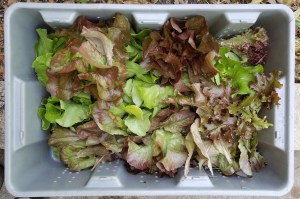
I harvested kale and weeded the plot, replanted a failed tomato plant, weeded carrots, dug up two small plots to plant cayenne pepper and eggplant, harvested collards and put temporary fencing around them. I mowed the fifth plot and spaded soil in about a third of it. With the near 90 degree temperatures, I picked lettuce before it had a chance to bolt.
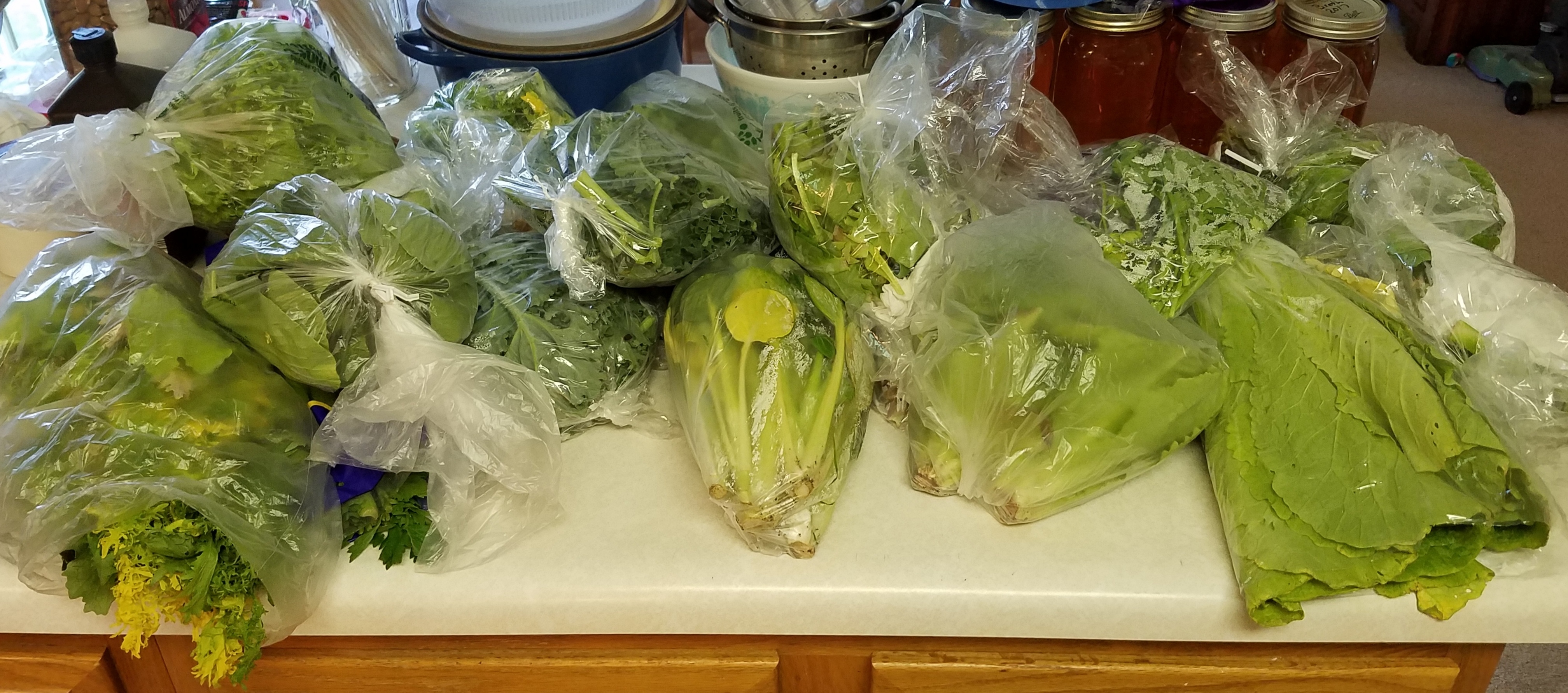
In the kitchen I cleaned lettuce, collards and kale and made dinner of a big salad. I steamed and froze the collards and emptied the ice box of every bag of greens and went through them. The goal was to make soup stock with the cooking greens. It was a dish too far. Organized, they went back into the burgeoning ice box.
Green Vegetables from the Ice Box
The highlight of the day was unexpected. The sugar snap peas are four feet tall and began to flower along the tops — as if an artist daubed white paint on a canvas, impressionist-style. I stopped and looked from different angles as sunlight faded flowery details. Beautiful.
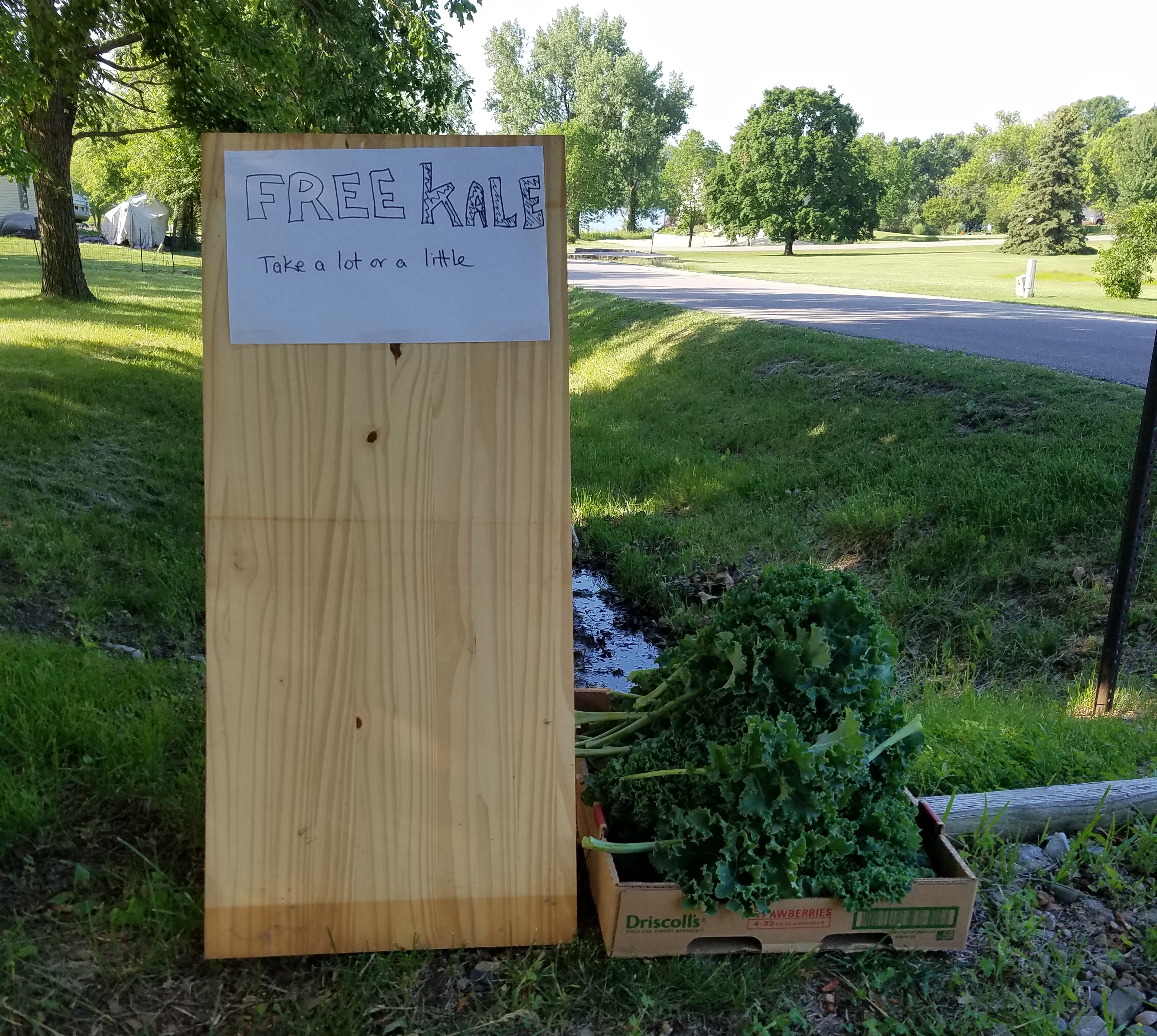
Roadside Kale Distribution
I harvested 12 kale plants and weeded the plot. It yielded two full tubs and more. I made a box of 24 leaves for the library workers and washed the small scarlet leaves to put them away.
I put some of the abundance by the road for neighbors and passers by to take. It was the city-wide garage sale day so the expectation was bargain-seekers would find this spot. It was gone in less than 15 minutes.
After a shower and clean sheets I slept eight straight hours.
On the plus side I was so engaged in our kitchen garden there was little time to think about much else. At the same time it was difficult not to feel like little got done despite evidence to the contrary.
Well-rested, the weekend cycle of watering, weeding and planting starts again. It’s what we do to sustain a life in a turbulent world.
Four of six garden plots have been planted and are doing well.
Weeds are also doing well.
I’m waiting for a break in the weather to coincide with my work schedule to finish the planting and mulching. This annual conflict was complicated by feeling under the weather on Sunday. I called off work at both farms and stayed indoors recovering. It felt like a lost day.
Saturday I harvested radishes, the last of spring spinach, some turnip greens for salads, and a tub of kale. We officially have more greens than can fit in the ice box.
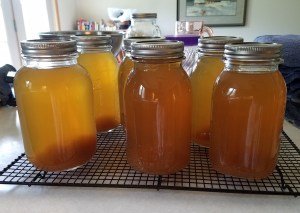
Spring Vegetable Broth
To use up some greens I made a batch of vegetable broth and canned it. During the next six weeks I hope to can 36 quarts for use throughout the year. There should be plenty of raw material, although carrots are last year’s crop and almost gone, Vidalia onions are from Georgia, and celery is from Earthbound Farms in California.
I’m not an extreme locavore and feel no guilt using a few imported items for a dish. My cooking style is derived from a local food culture which includes my garden and the farms where I work. Above all else, it is about using what is on hand in the ice box and pantry — a lesson learned from some of the best cooks I’ve met. If some non-local ingredients are needed and on hand to supplement a recipe, I’m okay with that. Besides, there aren’t Iowa carrots or celery to be had this time of year.
What to do with all the kale?
I reached out via email to find a home for some kale while it is still fresh. The rest will be preserved if I can make time after work.
I use three methods of preservation: freezing, canning and dehydrating. Until we get a separate freezer our capacity for freezing is minimal and saved for other favorites like broccoli, corn and bell peppers. I haven’t tried canning kale before, and the best use of canned kale seems to be soups and stews. I dehydrated in the past, then flaked it in a food processor or blender and stored it on the pantry shelf. Kale flakes are for soup.
A tentative plan is to take the kale remaining after the give-away and can a dozen pints to use in soups as an experiment. The rest will go into the dehydrator in batches. There is an urgency to getting this done as I planted enough kale to harvest a tub every week from now until late October. Keeping up with processing the crop will be a key dynamic in our kitchen-garden.
The 15-day forecast is for rain next weekend, so hope of getting the garden in before Memorial Day doesn’t seem realistic. Will have to find bits and pieces of time during the week to start turning soil in the last plots, and replanting where the early crops are finishing.
Importantly, I’m not freaking out over the amount of work in front of me. A person can plant only one plot at a time. Sanity comes from focusing on the gardening task at hand and executing it as well as we know how. We need sanity in this sometimes insane world.
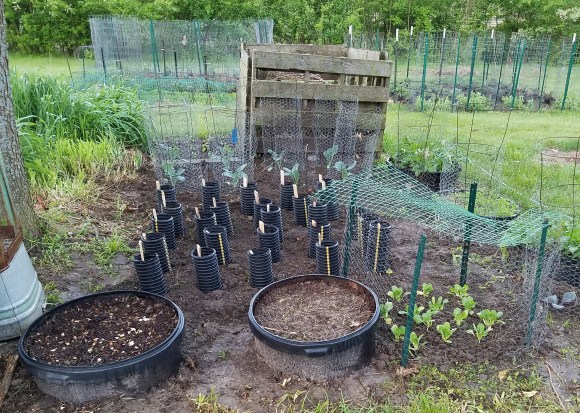
It took most of the day to plant the fourth plot in five varieties of tomatoes.
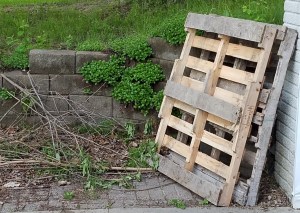
Using two pallets from Kate’s farm I sorted the metal stakes by size then pitchforked the grass clippings that have been on the plot since last fall.
There were numerous worms and grubs under the matted grass — a sign of soil fertility.
Once the surface was cleared, I spaded the entire plot and applied about 30 pounds of composted chicken manure. I broke up the clods of dirt with a hoe, then used a garden rake to till the soil further. I resist using a mechanical tiller, partly to disturb the soil as little as possible, and partly because the expense is more than we can afford. I took several water breaks to stay hydrated.
Tomato Diagram
Once the ground was broken and tilled, I measured. I grew eight varieties of tomato seedlings: Italian, German Pink, Amish Paste, Brandywine and Supersteak are slicers. Black Cherry, Gold Nugget and Saladette are cherry tomatoes. This plot is for the five slicers with the three cherry tomato plants going somewhere else. I’ll use these tomatoes fresh in the kitchen with canning tomatoes coming from my barter agreement with local farms.
I dunked each seedling in a water bath immediately before planting. I dug a deep hole with a trowel and broke up the soil by hand as finely as I could to cover them. I doused each planting with water so they wouldn’t crisp in the sunlight and 80-degree ambient temperature. I re-applied the mulch and caged them. It took 15 stakes to cage 25 plants. The planting is done.
When the sun comes up I’ll check to make sure every plant survived. If some didn’t there are plenty of extra seedlings in reserve.
Tomatoes are a highlight of our summer garden. Taking a full day to plant them is okay, and the precautions against failure are many. Over the years I’ve become a better tomato grower but everything is conditional — on weather, on soil fertility, and on gardening culture. Fingers crossed, this should be a good year.
Spring has been punctuated by conversations with scores of people in my neighborhood and beyond.
On Friday I spent two hours delivering handbills regarding a neighborhood public meeting. About 20 people showed up Saturday at the corner of our two main streets. The meeting was organized to elect trustees to our sewer district. I got a chance to review district history as we conducted official business. There was a solid exchange of information about wastewater treatment, something important to any home owner.
In this community organizing work the real world does not resemble my Twitter or Facebook feeds AT ALL. Conversations, in person, with real people, serve us better than any social media application ever can.
As my nine-day vacation from the home, farm and auto supply store winds down, farm and garden work have been the main focus. The garden is on schedule and about half planted — three plots in with three remaining. There are more seeds and seedlings than there will be room for. Hope for an abundant season is everywhere.
I’ve had numerous conversations about tomato planting. Consensus is we wait until today, May 15, to plant tomatoes. By then the risk of frost has passed. I hope to be planting some of mine soon.
In the meanwhile, the seedling cart is overflowing from new greenhouse arrivals. There is a tray of lettuce, some summer squash, and a tray of leftovers from planting to fill in gaps caused by plant predators or failures. The tomato seedlings germinated well and I’ll have 50 or so leftover. The pepper plants are as good as I’ve raised and offer a better prospect than in previous years. Bartering for greenhouse space took my gardening level up a notch or two — a better start means a better result in the ground.
The five years I’ve been working in community supported agriculture projects provided an education about gardening I couldn’t have gained elsewhere. I’m grateful for the time Susan Jutz, Laura Krouse, Carmen Black, Kate Edwards and others spent explaining agriculture to me.
The sun rose today at 5:46 a.m. and won’t set until 8:18 p.m. More sunlight for a more productive spring. What more could we ask?
The folks I hang with in the local food system are focused on product.
Is the asparagus ready? What about the rhubarb? When should I plant peppers and tomatoes? How much should we put into a member share?
I’m interested in the answers, yet those aren’t my questions. My work in the local food system is to inform and supply culinary endeavors in our kitchen. Technique and creativity seem more important than the fungible commodity fresh produce is becoming. Objectifying and standardizing things, an American obsession, plays a role in the kitchen. At the same time inspiration, creativity and technique seem more important than consumable objects. That’s where I live.
My questions are different from farmer friends. What food can be sourced locally? How can I use an abundance of spring greens before they spoil? What seasoning tastes best with scrambled eggs? What is the best way to preserve food in the ice box? How many pints and quarts of tomatoes shall I can this year? How do I combine bits and pieces from the pantry with fresh food to make satisfying meals? At some point, questioning must yield to creativity.
There is something about Saturday afternoon in the kitchen. It’s partly immersion into the cooking process and partly reliving memories. Saturday was a time to work in the yard and garage, then cook a meal while my spouse worked in town. I used to listen to Iowa Public Radio all day. Due to budget priorities, those programs are gone. Cooking time came with the beginning of Garrison Keillor’s A Prairie Home Companion which is gone too. I now draw life from the task at hand without musical accompaniment.
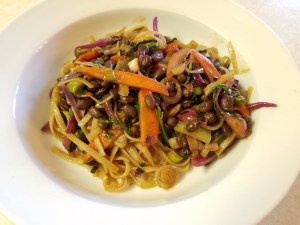
I made an Iowa version of pad thai last Saturday.
The dish has been in the works for a while. A couple of months ago I noticed the warehouse club sold USDA Certified Organic pad thai noodles for about $0.37 per serving. I bought a box on Friday.
With cabbage, onions and carrots from last season; a drawer and more of cooking greens from the farm; spring garlic from the garden; and bits and pieces stored in the ice box and pantry, the dish came together. The resulting meal was tasty, filling and seasonal — satisfying on multiple levels.
My kitchen experience made the dish as much as the ingredients.
I stock basic kitchen staples — high smoke point oil, salt, extra virgin olive oil, celery, onions, carrots and cabbage. Sources included retail merchants and local farms, however, the essence of cuisine is using what’s ubiquitous and on hand. It’s a fine distinction. Regardless of source, what’s in the pantry, ice box and garden now is what’s on hand. Creativity is in that moment.
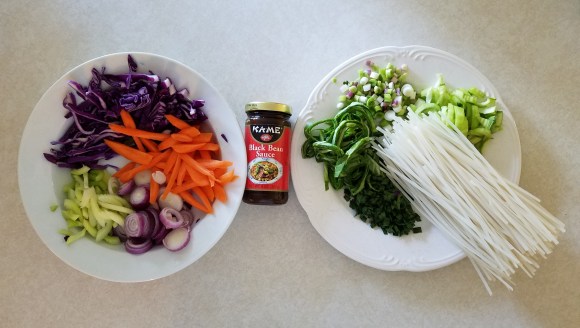
Except for the noodles, no specific shopping was needed to prepare pad thai. Canned black beans and a jar of fermented black bean sauce were the only prepared foods used and I stock both in the pantry.
Spring Garlic
Inspiration for the meal occurred at the intersection of discovery of a small patch of spring garlic in the garden and the memories it aroused. I recall a paper sack of garlic cloves brought home from the library and planting them more than a decade ago. The scent was intoxicating. I harvested enough for a meal.
Where is the creativity? Thinly cutting vegetables, sorting ingredients by cooking time, and measuring seasonings can all be taught. With an eye toward plating, carrots can be cut on the bias, green leaves julienned and celery stalks cut thick. Pad thai noodles are to cook 5-6 minutes, according to the package, then immersed in an ice water bath to stop the cooking. These techniques are like loading a palette with paint.
Creativity begins once the noodles are on and the wok is heated to high temperature. There’s no going back.
Using a high smoke point oil, onions, carrots, celery, cabbage go into the wok first. It’s “stir fry,” not “occasionally stir” fry, so full attention is required at the stove. Season with salt. Once the timer for the noodles expires, strain and dump into the ice water bath. When the first round of vegetables is tender and add plate two (spring garlic, garlic chives, sliced bok choy stems, and julienned bok choy leaves, stirring constantly. Add the drained and washed black beans and a generous serving of cooking greens. Once the greens are wilted, add a couple of tablespoons of fermented black bean sauce. Strain and add the noodles last, garnishing with a couple of tablespoons of extra virgin olive oil. Toss gently until heated. Plate and serve with your favorite sweet chili sauce.
Cheap, prepared food is everywhere in the United States. It’s convenient. It reduces time in the kitchen. It is engineered to appeal to our senses. Most of us eat at a restaurant or get help from the industrial food supply chain from time to time. However, there is no substitute for inspired cooking.
It provides engagement seldom found elsewhere in life. It’s a source of satisfaction hard to replicate. It sustains us in a turbulent world. This kind of inspiration and creativity is needed more than ever.
The first session of the 87th Iowa General Assembly adjourned sine die on Saturday morning after pulling an all-nighter to wait for Republican leadership.
The decision was about improving Iowa water quality and reauthorizing use of medical marijuana. They did nothing positive on water quality and may as well have let the current medical marijuana law expire, saving everyone the trouble. However, harassment by Iowa Republicans has become de rigueur.
The best part of this year’s adjournment is legislators won’t be in Des Moines doing more damage to family and friends. The dark cloud hanging over the capitol is they are just getting started and the second session could be worse.
“The final straw came this week when lawmakers decided that if my daughters become pregnant the state can force them to continue the pregnancy and give birth,” she wrote. “It’s a decision that sickens me to my very core, and not just theoretically.”
“I will not encourage my daughters to return or stay here, and I will hasten plans for my own escape,” she concluded. “Thanks to the General Assembly, Iowa is no longer a safe place for women or families.”
I’ll make my stand in Iowa. Unlike Lynda, I was born here and have nowhere else to go without being a refugee. At the end of this legislative session, we’ve weathered the storm and are beaten but not down.
It is fitting the session ended on Earth Day.
Around the world people rallied to support a scientific method in solving problems. Except for the Dunning Kruger effect, I’d recommend state legislators pay attention.
Apple Tree in Bloom
As has become custom on Earth Day, I minimized my carbon footprint and spent time in our garden. The calm winds and abundance of pollinators made conditions nearly perfect for setting apple blossoms. Small white petals already had begun to fall, giving hope that the new apple crop will eclipse all of the bad news from Des Moines.
I gardened. Except for collards, all of the cold weather vegetables are planted. There is plenty of remaining space for crops to be planted after the last frost. I transplanted peppers into larger soil blocks to provide nutrients before going into the ground in a couple of weeks. I cleaned up four soil block trays to take back to the farm on Sunday.
I wasn’t alone. While Jacque was at work I did some neighboring and heard the sound of children playing, birds singing and bees buzzing. People took advantage of perfect spring weather to get outside. Social interaction enabled me to stop thinking about politics and I could focus on simple garden problems which were eminently solvable. It’s easy to see that the support for the pea plants was off center, exposing them to predators. Adjusting it took only a few minutes.
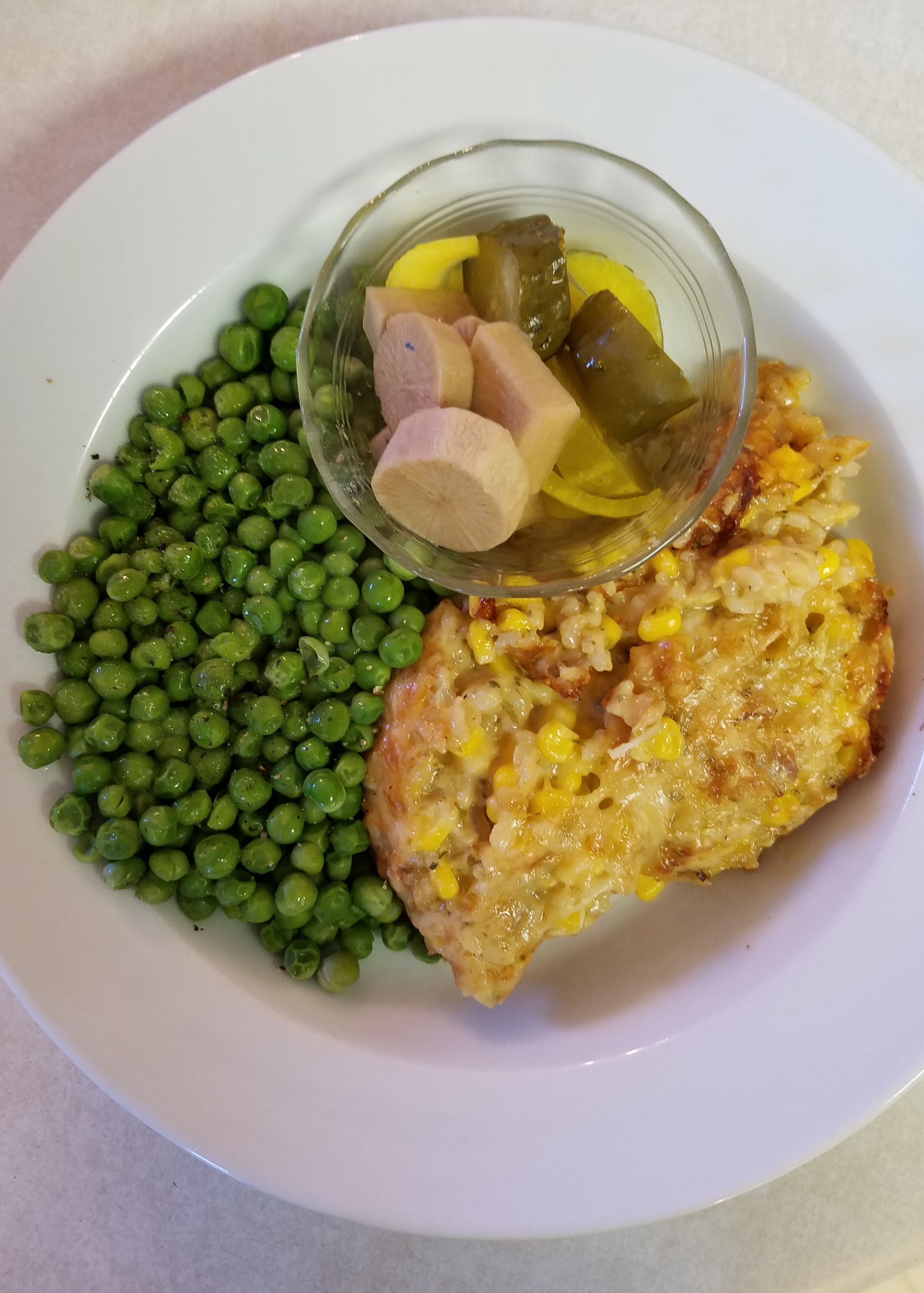
Corn-Rice Casserole, Peas and Pickles
Our garden and interaction with local food sources make the kitchen part of the garden. I made a simple supper of corn-rice casserole, steamed peas and a dish of home made pickles (onions, cucumbers and daikon radishes). Such meals go well in our household because they taste good with leftovers to be heated up for another meal.
As I entered the world of low wage work in 2013, I stepped back from most social commitments. It’s time to re-engage. This week I re-joined the home owners association board and was elected president. Comes a time for people to step forward and get involved in community. If we seek a better society, our work begins locally.
It’s part of what sustains us in a turbulent world.
Between arrival home from the home, farm and auto supply store and sunset were three hours to work outside. I did.
I watered the garden, rolled up the garden hose, repaired the bird feeder, and emptied the kitchen compost bucket.
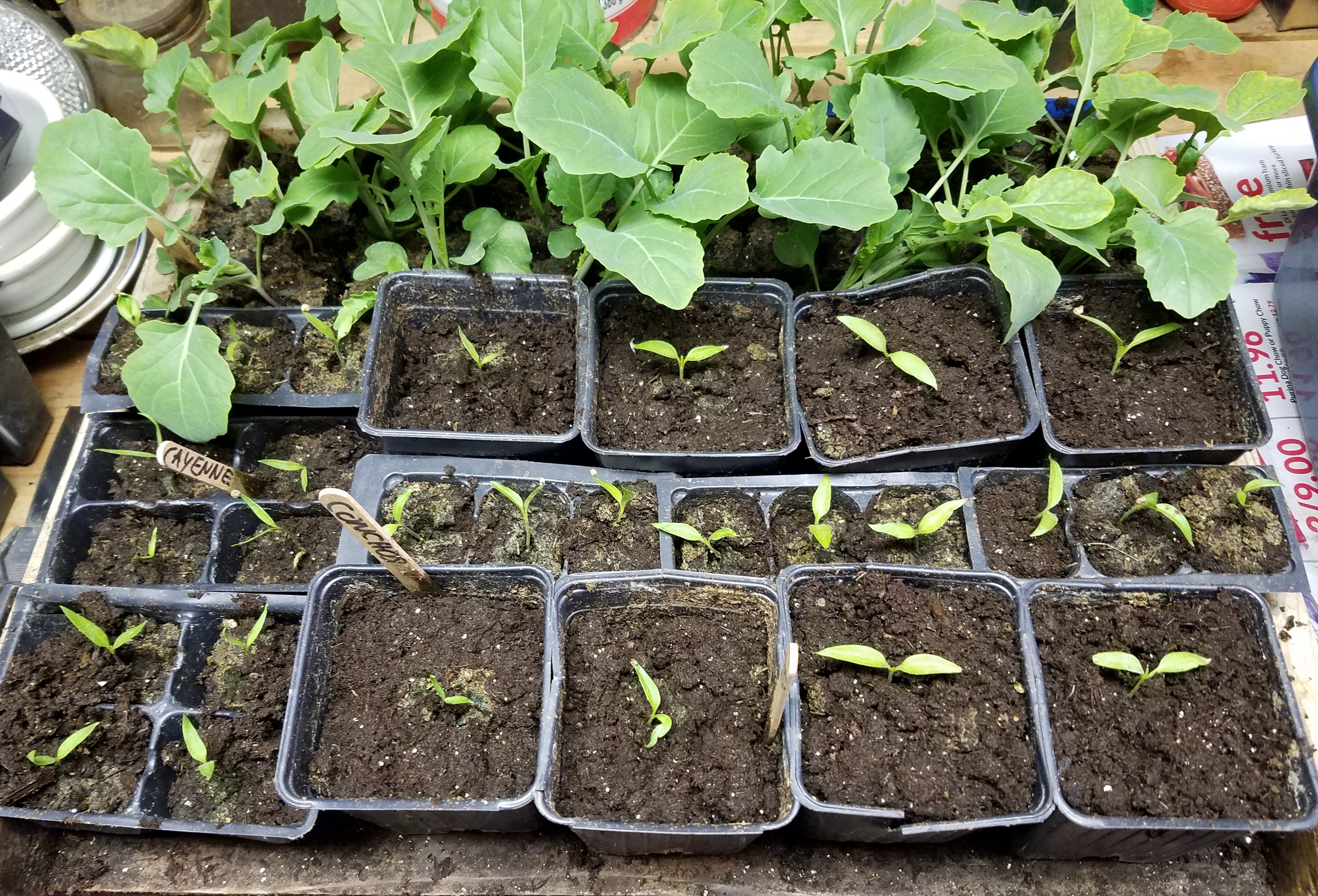
Broccoli and kale seedlings look good. After a third day of conditioning outside, they should be ready to go into the ground. I transplanted the hot pepper plants to larger containers. Three varieties in this batch: cayenne (8 each), conchos jalapeno (1 each) and early jalapeno (23 each).
It felt like I got something done. That’s saying something in a life consumed with work.
A gardener never knows what a season will yield. We keep busy planning and doing things to grow a crop to share with family, friends and neighbors. A window of daylight and temperate conditions can be well used on a week night.
It’s where we live — on the margin between hope and despair.
The weather on Saturday was perfect for getting into the field. Wind had dried the ground making it tillable.
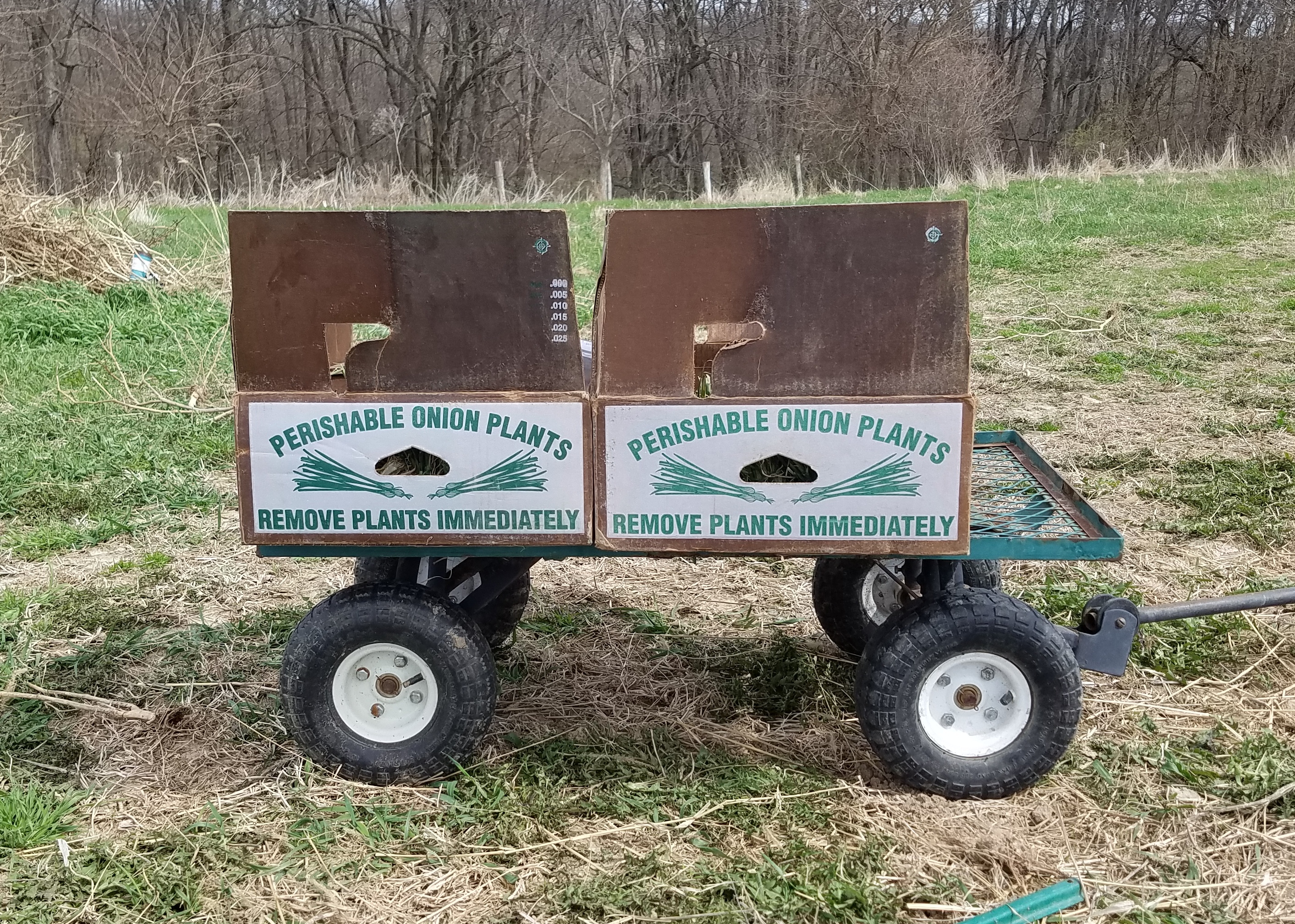
In the cycle of community supported agriculture projects, now is the time to plant onions — a key crop to share with members.
Most farmers I know were planting them — tens of thousands of onions.
I soil-blocked for the next planting in the germination houses — 4,608 at one farm and 4,320 at the other. I brought home two trays of kale, broccoli and hot peppers. The pepper plants will be transferred to larger soil blocks. The kale and broccoli will go into the ground this week after conditioning outside a few days.
Brought Two Trays Home for Conditioning
Saturday morning a group of about 20 people “pulled plastic” over a high tunnel damaged in a storm earlier in the year. We gathered at sunrise before the wind came up. I stayed until the bulk of the work was done. All the adults were either farmers or farm workers. Here’s what the new plastic looked like after the job was finished.
Repaired High Tunnel
I worked in the garden after returning home. There’s a lot to do. The carrots and lettuce are up. I planted potatoes in containers, peas in cages, and beets and radishes near the peas.
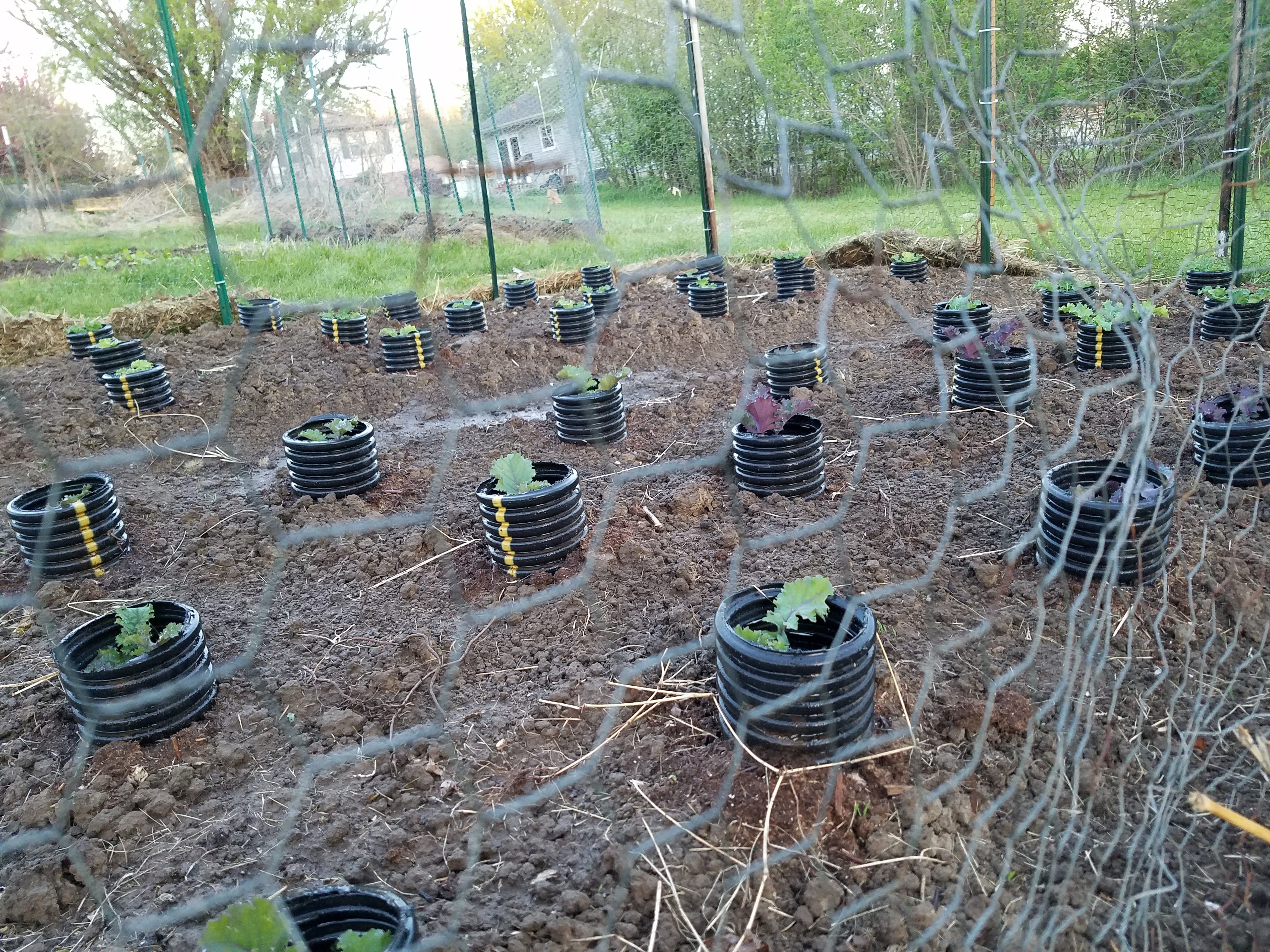
I measured the remaining space in that plot and determined 36 kale plants would fit. That’s the same number I planted last year, although I hope for a better yield this year. The kale plot will be 6 Vates, 6 Starbor, 12 Scarlet and 12 Darkibor. I grew way more than I’ll need and leftovers will be given away to friends and neighbors.
I decided to just keep working until I drop this year. Life is short and gardening and farming is a good way to use it. I was tired by Sunday night.
Rain kept vegetable farmers out of their fields. The rule of thumb is wait four days after a rain for fields to dry. It rained all day yesterday.
Equipment is ready, truckloads of seed potatoes wait in bags, and farmers want them in the ground.
Conditions are ready to plant any cold weather vegetable once soil dries.
Traditional potato planting day is Good Friday, and some gardeners, including me, continue to follow that timetable. I’m growing in containers this year, so feel good about planting a bit early this weekend. I grow them in containers to keep burrowing rodents from getting the first pick and last year the technique worked.
In the break room at the home, farm and auto supply store a case was made not to grow potatoes at all.
They are cheap at the store. There is little difference between a freshly dug potato and a proper storage potato, they said. They take up space that can be planted with more desirable crops like tomatoes, squash and cucumbers. Nutritionally, potatoes are carbohydrates shunned in many modern households.
Leek and Potato Soup
Nonetheless, I persist in producing spuds for fresh eating and cooking. They are a small crop in a diverse home garden.
Growing potatoes — gardening generally — is a statement of resilience. A personal action running counter to a political class with which we increasingly disagree.
Let them ask their questions. What is a leek? Why grow potatoes? While they do, a family can be sustained with leek and potato soup in a way hard to find during a time of pre-cooked meals and convenience store restaurants.
Thinking and talking about potatoes is sublime as gardeners head toward dry ground and the weekend.
A text message came March 20 while I was stopped at a traffic light in North Liberty.
“In total we need 22 120s this week so you actually might be able to do it all tonight!”
It was 4: 51 p.m.
The combination of daylight savings time and the vernal equinox provided a window to soil block at the farm after my shift at the home, farm and auto supply store.
Driving east on Mehaffey Bridge Road toward Solon and the farm, descending into the Coralville Lake and then the Lake Macbride dip in the road, I made mental plans on how to approach the work.
Pelicans had returned to the sand bars on the east end of the north branch of Lake Macbride on their annual migration. Their bright whiteness cheered the beginning of spring.
Sunset was at 7:18 p.m. It would be a push to get 22 finished by then. I made it, just barely.
I had planned to plant lettuce of my own, but waning sunlight made it difficult to see and separate the small seeds. I planted spinach instead. Chasing sunset is not always what we expect.
Garden Burn Pile
Yesterday I worked in the yard and garden, clearing one of the plots to make a burn pile.
The wind was negligible so I dumped a garbage can filled with shredded mailer envelopes and other paper at the base of the brush pile. It took one match to make the burn.
I got out the chain saw and cut down four volunteer mulberry trees that had grown 15 feet tall midst the lilacs. I hadn’t noticed them until last fall when sunlight from the Western sky highlighted them. They burned easily.
Tomato Cages Protecting Belgian Lettuce
I gathered the tomato cages and piled them over the Belgian lettuce planted in March. The seeds are germinating and popping through the damp soil’s surface. The cages will be there to protect the lettuce for three to four weeks before the tomato seedlings are ready to plant.
It was a great day to spend in the garden.
A neighbor visited. She said the president of our home owners association sold his house and was downsizing to move into town. There would be three vacancies on the board with other resignations. I spend 14 years on the board beginning in 1995 and told her I would consider joining the board for the third time. I explained that I would start working at the orchard again in August, returning to a seven-day-per-week schedule. She thought the board could cover my absence, if needed, for a while.
Early spring has been busy already. There is so much life in which to engage. Taking part is important and contributes to sustaining a life in a turbulent world.






 Journey Home
You must be logged in to post a comment.