It was an experimental change from store-bought to growing my own. I use okra mainly for gumbo and after this gardening season I have plenty sliced and in the freezer.
Okra is easy to grow and the plant produces for a long time. I now understand why so many people, especially those with limited financial resources, use it as a basic vegetable.
It’s not the most popular vegetable in Iowa.
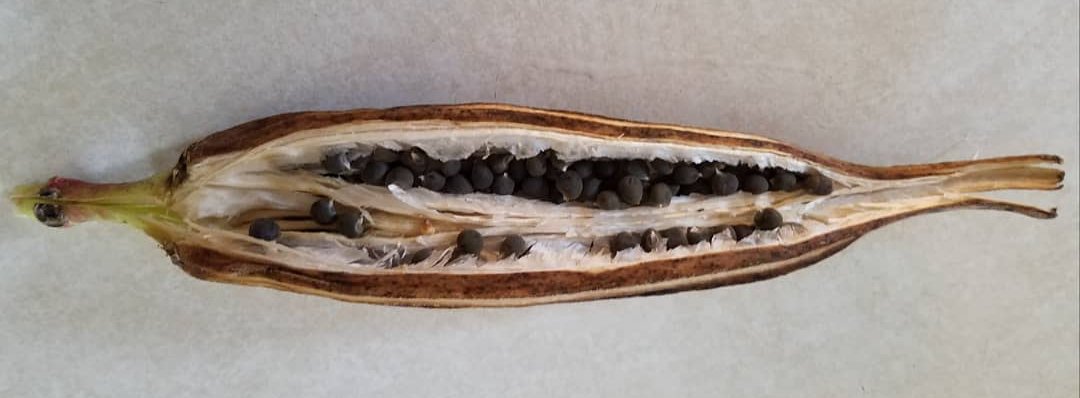
I acquired the seeds at the home, farm and auto supply store in a batch of end of season packets left in a cart in the employee break room. If the seeds hadn’t been free, I would not likely have grown the vegetable. The excess pods produce plenty of seeds for next year. If I grow it again, I’ll plant just a few of them.
The reason I make gumbo at all is from watching cooking shows on public television, then on Food Network. Justin Wilson and Emeril Lagasse were most influential, but neither of them uses okra in the gumbo recipes at the links. Here is the recipe I developed after a number of years of exposure to these chefs.
Paul’s Vegetarian Gumbo
Make a roux with four tablespoons each unsalted butter and all purpose flour. Cook to the blonde stage.
Cook 10 ounces vegetarian sausage, sliced on the bias, separately in a tablespoon of extra virgin olive oil. Drain and reserve.
Add one cup each diced celery, onion and bell pepper. Cook until the onions are translucent. Add finely chopped garlic to taste (Use spring garlic when available). Add a thinly sliced hot pepper if you have one from the garden (Serrano and Jalapeno are my favorites).
Add one quart of vegetable broth, one pint of diced tomatoes and one cup sliced okra. Bring it to a boil and turn down the heat.
Season with 1 teaspoon curry powder, ground red pepper, or cayenne. Add prepared hot sauce to taste.
Add one cup chopped fresh parsley plus the sausage and heat thoroughly until the broth thickens.
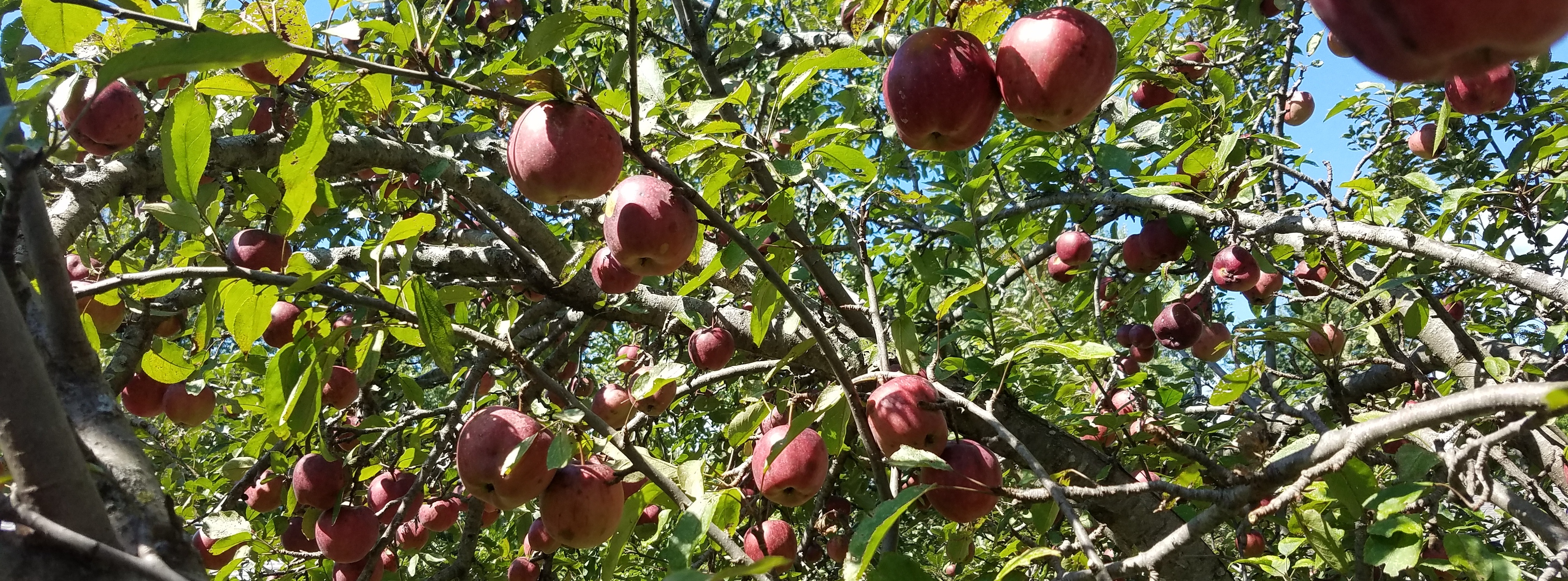
Monday I began harvesting Red Delicious apples from a tree planted on Earth Day 1995. This tree outlasted three others planted the same day.
Tuesday I completed a 350 pound donation to Local Harvest CSA, which has been my go-to outlet when there is an apple abundance. I kept three crates for the kitchen and many apples remain on the tree. Naturally, the best apples are furthest up and hardest to get. They don’t seem to be dropping like Earliblaze did so there is a chance to pick more… a lot more.
The question is always the same: what to do with the abundance? In the past I felt it important to use every apple possible. As a result of such compulsive cookery the pantry is well stocked with canned apple sauce and apple butter. I may can a batch of seven quarts of applesauce this year to refresh the stock rotation, but don’t really need it. With my current concerns about blood glucose levels, applesauce isn’t a go-to option for dessert even if I enjoy it.
Baked goods is an option. 2019 is busier than most years in politics so there are plenty of outlets for apple crisp, applesauce cakes and apple pies, including the county party’s annual fall fundraising barbecue. I can’t make it to the barbecue because of my work schedule but I’ll send in desserts for 24 or 36 people. I’ll also send an apple crisp to the Elizabeth Warren office in the county seat. We don’t eat much in this category, but at least one apple crisp will be for us as well as a celebratory applesauce cake.
This year I plan to dry more apples than usual. As a snack, dried apples are very sweet and something different. I have an old Ronco dehydrator purchased for a buck at a yard sale. It can dry a batch in a day or two.
I offered free apples to neighbors on our private Facebook page. I’ll fill any orders that come in on Friday. I’ll share with folks in town if they ask.
The bumper crop makes me wish we had a cider press. I’ll produce about two gallons of apple juice for additional apple cider vinegar making, but that work with a household juicer is too labor intensive to process all the apples. Maybe I can process a batch of seven quarts of sweet cider for special occasions.
When Johnny Appleseed planted his orchards, he did it for hard cider for settlers. My fermentation is to the vinegar stage, and for now I stay away from the hard stuff. That is, unless a gallon jug sits in the ice box too long and begins conversion of sugar to alcohol on its own. I’ll drink that. I’ve gotten to a place where I prepare our salad dressings using vinegar made in our pantry.
Living an apple life is pretty good. Maybe as good as it gets. It is work — the joyful kind. Thus far I’m nimble enough to scale the ladder and take in in the view for a moment before picking fruit. Apples are a way of dealing with life’s problems and an opportunity for self-improvement. I believe I’ll plant more trees next spring.
Left to right: Kidd’s Orange Red, Frostbite, Arlet, Robinette apples
We’re in the main season at the apple orchard.
We survived the madness of Honeycrisp weekend and can settle into some really great fruit like the four varieties of apples in the photo.
The Robinette was complexly flavored and super-delicious. That’s no apple joke.
The last two days of summer bring a lot of work. There are tomatoes to process, apples to pick, and a garden plot to prepare for garlic planting in a couple of weeks. The lawn is ready for grass collection once it dries out from the rain. Today thunderstorms are forecast so my shift at the orchard is doubtful. Outside work at home is also a bit dicey. Once the orchard shift is decided, I’ll plan the rest of the day.
Yesterday I took a quart or so of the small potatoes, cleaned and trimmed them, and put them into the slow cooker. I added carrots, onions, celery, some vegetable broth and a generous quart of tomato water to cover. By the time I returned from my shift at the orchard, it was ready to eat and so good. There are leftovers, including plenty of broth with which to start another batch of something.
I’ve been taste-testing Red Delicious apples for almost a month. The starchiness has passed and they are turning sweet. Not ready, yet close enough to start talking about containers in which to put the 350 pounds to be donated to a CSA. After that I have plenty of takers for what I don’t use in our kitchen. I plan two gallons of apple cider vinegar, a couple of gallon bags of dried apples for snacks, and a dessert for the county political party barbecue coming up next month. Will store as many as will fit in the ice box for later fresh eating. This variety is staying on the tree well, so there should be plenty.
Politics is taking more of my time. Yesterday I did a walk-through with the Solon School District to see if a facility would work for the February precinct caucus. It will. On Thursday I attended a town hall meeting with Elizabeth Warren in the county seat. The report was she stayed until 11 p.m. to meet everyone who wanted to meet her individually. Yesterday I introduced our newest Warren organizer to our local coffee shop and provided a couple of upcoming events to get on her radar. While I work on weekends until the end of apple season, the 2020 election is already ramping up.
We make a choice in life: engage in what’s good in society and work to make it better, or withdraw into our own family and lock the door against intrusions. When we enter the main season, it’s less of a choice. If we don’t work to make our lives better, there’s no one else who will.
This year has been an amazing year for garden tomatoes.
21 varieties with a total of 47 plantings produced beyond expectations and our household’s ability to use them. There are so many I took two crates to the orchard for folks to can, freeze, eat and share. I took flats of them to meet ups and shared them with neighbors and friends via Facebook.
Here are some tomato notes for fans.
Deer
As we reach peak tomato season neighbors complain about deer. This comment from a friend in our township is typical,
How do you keep the deer away. They graze on ours. They take a bite, decide they don’t like it and drop it on the ground. Then onto the next tomato. Bite, pick, yuk, drop, and repeat until no tomatoes are left.
My symbiotic relationship with deer includes a custom designed deer fence using common materials. I install a 4-foot chicken wire enclosure mounted on posts so the top of the wire is 5 feet from the ground. I plant the rows 36 inches apart — close enough for me to get in, and close enough together to discourage deer from jumping five feet high to get in. I leave enough space so I can move between the fence and the tomatoes. This is my second or third year of using the method and it works keeping the deer from ripe tomatoes, leaving more for humans.
Pre-season
There are so many varieties of tomatoes! I listed seeds planted in this earlier post. The selection process was intended to produce plenty in three categories: cherry, slicers and canning tomatoes. I had plenty of seedlings from the greenhouse, allowing selection of the best starts. If three trays of 120 blocks seemed like a lot at the time, it produced what was needed for the beds.
Canning tomatoes for work colleagues.
Plot preparation
For the second year I dug 3-foot trenches for tomato planting instead of digging and breaking up entire plots. I conditioned the soil with composted chicken manure and finished with a sprinkling of diatomaceous earth. The latter was intended to retard progress of tomato-loving insects.
Moisture
When there wasn’t rain, I watered with a garden hose daily, mostly in the morning. Half a dozen plantings on the north side of the plot developed blossom end rot. I suspect the problem was a mineral deficiency in the soil rather than inconsistent moisture. I had enough grass clippings to mulch the tomatoes to prevent weeds and retain excess moisture.
Stars of the show
Tomatoes with the best results and great flavor included,
Cherries: Clementine, Grape, Matt’s Wild, Jasper, Taxi and White Cherry. The sweetest were White Cherry, Jasper and Matt’s Wild.
Canning: Granadero produced many perfectly shaped, flavorful plum tomatoes. Amish Paste was also a strong performer. Speckled Roma was the most flavorful in this category. Other varieties of small, round tomatoes filled out the crop for canning needs.
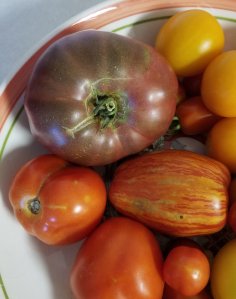
Slicers: German Pink and Martha Washington produced the best large slicers. Black Krim was unique with its dark color and tasty flesh. The Abe Lincoln plants produced consistent small round tomatoes which I used to dice for tacos and for canning.
Homemade Tomato Sauce
Uses
Eating and cooking fresh: What else is there to say but tomatoes on or in everything!
Sauce: With so many tomatoes in the house they had to be culled every couple of days for bad spots. These were trimmed and cut into large chunks to simmer until the flesh was soft and skin loosened. Next I put the whole lot into a funnel strainer and drained out tomato water. The garden produced a lot of this by-product so after canning 24 quarts of tomato water to use mostly in soups and for cooking rice, I discarded the rest. Once the water drained out, I used the wooden mallet to press out tomato sauce which I froze in one quart zip top bags to use later for pasta sauce and chili.
Diced tomatoes: I canned enough pint and quart jars of diced tomatoes to get us through the next year. I rotate stock so oldest ones are used first and still have a couple of jars from 2016 and 2017 to use first. Diced tomatoes include the skin for its nutrients.
Whole tomatoes: This year I took the skin off small round and plum tomatoes and canned them whole. There are about 24 quarts and 24 pints to last a year or more.
The 2019 garden was an unmitigated success in the tomato category. It is a feature of late summer in our household.
Slicers waiting for gumbo, sandwiches and conversion to sauce.
I had planned gumbo for a few weeks. Yesterday was the day.
Gumbo is a natural dish for our kitchen in late summer. There are plenty of onions, celery stalks, bell peppers, tomatoes, garlic and okra available from the garden. It is an easy dish to prepare after learning how to make a roux. Ingredient availability was not the issue.
I bought veggie sausages from the local food coop, harvested enough tender okra pods, and opened the hand-written recipe book to the page. I was ready.
I couldn’t, then sliced the okra, put it in a zip-top bag and tucked it in the freezer along with too many other bags of okra already there.
Not sure why I couldn’t, I recalled T.S. Eliot who put it thusly in “The Hollow Men:”
Between the conception
And the creation
Between the emotion
And the response
Falls the Shadow
Life is very long
During a month of reminders about end of life, my retort, “it’s not that damn long.”
My work cycle begins again this afternoon with a shift at the orchard for family night. After taking off work there, and at the home, farm and auto supply store, for a week, I’m ready to be among co-workers and guests again.
One hopes I will make gumbo before the end of summer vegetables. Maybe not yesterday, but it’s the best time of year for it. It would be a shame to waste our brief time among the living without it.
I want to write a nice summary of this year’s garden including successes, failures and lessons learned.
Instead of crafting something usable, I visited two of the farms where I work.
Knowledge lives within us more than in written words. Life doesn’t always proceed in a linear manner despite predictable changes in season.
Yesterday was about dealing with the abundance of Red Delicious apples ripening on the tree. I plan to give excess — about 350 pounds — to my friend Carmen for the winter share in her CSA.
At the orchard we did a taste test: the apples were too starchy. Then to Sundog Farm where we discussed how much for each share and a process for delivery once they ripen. I think we are set.
Over the years I’ve been able to develop a network of master gardeners, farmers and growers to provide feedback on what happens in our garden. I am a better gardener because of this work. I’ve come a long way since getting started with the process in 2013.
Two things added a unique layer to summer gardening: my spouse’s five-week trip to her sister’s home in July, and the 26-day interim between Mother’s death Aug. 15 and her funeral Monday. Both were unexpected and made a unique mental frame for what was already a weird gardening season.
While Carmen and I walked about her farm she showed off her lettuce patch in a high tunnel, and the abundance of tomatoes a crew was harvesting. We had a conversation about diversification. This year was a big tomato year for both of us, although that’s not been the case for everyone. We planted many varieties of tomatoes and while she has members to take the excess, my canning, freezing and eating has physical limits which will soon be reached.
I moved the cherry tomatoes to their own patch this year and it’s a better idea. They are all good, but my favorites were Jasper, Matt’s Wild Cherry and white cherry. I planted two rows of four plants and next year I will only plant one row to make it easier to harvest.
Among my trials this year were okra (easy to grow and a little goes a long way in our kitchen), Guajillo chilies (if they ripen well I’ll get a crop for making pepper sauce for tacos), Poblano chilies (did not produce much), red beans (I mistook pole beans for bush beans so they had trouble), and planting beets in flats before transplanting them to the ground (produced much better beets than sown seeds). I planted two types of broccoli in succession, but the second variety (Imperial) didn’t produce.
We had basil, parsley and cilantro in abundance. Basil goes into tomato dishes and parsley and cilantro are for eating fresh. Fresh cilantro is an important addition to tacos. I made a good amount of basil pesto and froze it. Even with lots of uses for basil, I let the second raft of plants go to seed because there was too much.
If there was a single most important lesson in gardening this year, it was to better tune what I grow to our cuisine. I’m not exactly sure what that means but Carmen and I discussed and agreed that is important for a gardener. As our family cuisine makes a transition, this will gain relevance when planning next year’s garden.
So that’s the story of the 2019 garden, which isn’t done.
Go-to Summer Meal – Sliced tomato, toasted whole grain bread, basil pesto , salt and pepper.
Our family cuisine is in transition. I’m hopeful for positive new menu items as summer turns to fall.
My spring diagnosis of high blood sugar brought changes. Through behavior modification I’ve been able to reduce key indicators and hope to continue to do so until the physician takes back his diagnosis of diabetes. At the interim check on Aug. 19, I was well on my way — solely by cutting the quantity of carbohydrates and exercising more.
Most nights it’s easy to get a meal ready for dinner. Our repertory includes easy and complex dishes which satisfy if done right. I prepare dinner for both of us four or five nights a week and we are on our own for breakfast, lunch and snacks. It works.
The cuisine we developed in Big Grove focused on techniques to use readily available ingredients to make repeatable dishes. We regularly eat pasta, pizza, macaroni and cheese, bread, chili, soup, casseroles, toppings with rice, and manufactured non-meat burger patties. Fresh and frozen vegetables are basic. Fruit is seasonal and desserts infrequently made or purchased. To meet a carbohydrate budget, I’ve had to regulate and mostly reduce portion size of these staple dishes. When I make a batch, I use a scale. Dishes last longer with leftovers for the next day or two.
When the garden comes in vegetables dominate the plate. Tomatoes are a favorite and we have fresh with most meals while they last. When lettuce comes in we make big salads for dinner. For the time being, I don’t bake bread very often, eschew meat and meat products, and use only a few manufactured products for their ease and serviceability within the context of our cuisine.
I’ve been cooking since I left home, although some of the dishes I prepared in the 1970s were hardly edible. My main cooking lessons began during a long assignment in South Georgia where I worked long days and crashed in the motel where Food Network was daily relaxation fare. The televised repetition of technique by multiple chefs helped me determine how they would fit in dishes I made. Every cook needs basic lessons in technique.
With the challenge of high blood sugar a new cuisine is in the works. Even if I beat the disease, permanent changes are required to prevent recurrence. Part of our aging in place will include development of a simple process to meet dietary needs in a tasty, efficient matter — focused increasingly on ingredients we produce or source locally.
My go-to recipes are memorized or written in a red spiral-bound notebook I bought on vacation in Stratford, Ontario. My go-to cook books are Julia Child’s Mastering the Art of French Cooking, Joy of Cooking by Marion Rombauer Becker, and a couple of others
Part of this means downsizing my collection of a couple hundred cook books. There is a lot of good stuff there, although a lot of repetition as well. Over the years I’ve been enthusiastic about certain chefs — Child and Rombauer Becker, Rick Bayless, Mario Batali, Giada De Laurentiis, Tamar Adler and, of course, my mother and grandmother. I’m hoping to find new inspiration in Anthony Bourdain, José Andrés, Sally Schneider and Nigella Lawson. In any case, the result I envision is a new repertory of about 25 main course recipes that have predictable nutritional value and can be made with mostly local ingredients. I also hope to learn new ways to prepare vegetables.
During the first seven months of 2019 we spent $124 on restaurant meals. I have a gift certificate to a highly acclaimed restaurant I won at a raffle last fall stuck to the refrigerator with no plans to use. Eating at home has been and will continue to be our focus.
Change is frequently unwelcome. In this case change is driven by health concerns about which I feel compelled to act. I expect it to be a good fall and winter sorting this out.
We have fresh tomatoes with every meal, for snacks, and with everything.
We aren’t sick of them yet and work to preserve some of them is imminent. There’s a lot going on in the kitchen garden this August.
Sweet corn is in. Our local farm has had a spotty year, yet we’ve been able to freeze enough two-cup bags to make it until next year. Last night for dinner we had corn on the cob with sliced tomatoes — a classic summer combination.
First up in tomato preservation is to make a dozen pints of diced. This, combined with a backlog from previous years is enough to run the kitchen. I’ll also make as much tomato sauce as I can. Last year I froze it and that worked well. The freezer is filling up already so I may have to can some of it this year. Last year I froze small tomatoes whole and used them during the year to make sauce. I may try canning them whole to supplement the diced.
Yesterday I picked about two bushels of the first apples. A lot more wait on the trees. Our early apple is sweet and makes a great base for apple cider vinegar. I make a couple of gallons each year and the jars to do so are empty and just need cleaning. Our cupboard remains full of apple butter and apple sauce, so maybe a few jars of each is all I’ll make this year. They are good for out of hand eating as well. I’ll need to find a home for some of them or leave them to wildlife.
I froze enough kale for the year early in the season. What I harvest the rest of the year will be to give away or eat fresh. There is enough vegetable broth for the year, frozen jars of pesto, frozen okra, frozen celery, grated and frozen zucchini, and the hot peppers are beginning to come in. It’s been a good year so far.
The garden didn’t produce green beans. The plants look healthy and there have been flowers. Almost no beans have been produced.
The variety of red beans planted needs to climb and I thought they were bush beans. There are bean pods forming, so there will be some harvest. Next year they need a fence to climb on, if I plant them again. I planted beans mostly to fix nitrogen in the soil.
It seems like there can never be enough beets. I started some in trays and those fared much better than the ones sown in the ground. Will do more of that next year. For now I have one jar of pickled beets to last the year.
The tomato and apple harvest signal the garden’s impending end. There’s a lot of work to be done, but we enjoy the taste of fresh tomatoes as much as anything we grow.
Mixing bowl with summer coleslaw made of local produce and my fermented apple cider vinegar.
Six weeks into summer 2019 we are over a hump, if not the halfway point.
I visited Paris in August 1974. It was hard to find a business open. Eschewing air conditioning we Americans find ubiquitous, Parisians fled the heat of August for the Mediterranean Coast and other breezy spots.
We could learn from that society.
My spouse visited her sister for the month of July. While she was gone I set the thermostat at 84 degrees compared to doing what we wanted in July 2018. The average monthly ambient temperature increased from 75 to 76 degrees Fahrenheit. Between running the air conditioner less and only one person active in the house, our electricity usage dropped by 37 percent in terms of kWh used. I appreciate the savings but I’d like her to return home more.
Summer in Big Grove Township has been reasonably nice with plenty of warm, sunny days, not enough rain, and an abundance from the garden. Friday the ditch had dried out enough I could mow the tall grass and get it looking more normal. The rabbit that lived there this year is likely frowning as rabbits do.
The yard grasses are in transition and need mowing, but not that much. I thought to do it yesterday and rolled up the garden hose near the house after watering in the morning. Not yet. Maybe today after my shift at the orchard. Maybe not as it is a low priority.
We planted our first garden in 1982 and grew or harvested something from our yard in the five places we lived since then. I’m getting better at it.
Cucumbers
We produced more cucumbers this year than we could eat and preserve. I determined a process using four varieties of seeds: two pickling, a Japanese-style cucumber and the utilitarian Marketmore. I made a gallon of fermented dill pickles as dill came in from my barter arrangement with Farmer Kate. The key to good pickles is the cucumber size. Once cucumbers get an inch in diameter they are too large for pickle making. Just don’t do it.
I made dishes of sliced cucumbers for potluck dinners, gave them away, and ate them as much as I could stand sliced raw, in mixed salads, and with lettuce greens when they were in season. There were plenty for sweet pickles but I overdid it last year and have more than a dozen leftover jars. I struck balance between the desire to use every bit of produce in the garden and how we eat them in season.
Tomatoes
As I posted a couple days ago, we are waiting for tomatoes. The cherries are coming in Jasper, Taxi, Matt’s Wild, Grape, White Cherry and Clementine. The White Cherry, Jasper and Matt’s Wild are surprisingly sweet and delicious. The single Early Girl and Black Krim plants produced fruit. I’ve had a couple Speckled Roma which I found to have tough skin.
This year as last, I planted the rows too close together. I crawled under the seven-foot indeterminate vines and inspected. A lot of good sized fruit waits to ripen under the foliage.
The plants have less blight this year than last. I don’t know why but two things are different. We had extremely cold weather last winter. Perhaps the cold killed some of it off. I also applied diatomaceous earth to the ground after tilling to keep down the crawling bugs that love tomatoes. Perhaps it had an effect on the blight. So far, so good and if all continues to go well, we will have plenty of tomatoes for fresh eating, canning and gifts to friends.
Green Beans
By now we’ve usually had green beans but there are hardly any on the plants. The foliage looks great. There are flowers. No beans. Other area gardeners are experiencing the same thing with a reduction in yield. I picked exactly two beans from a 15-foot row.
Apples
After nearly perfect pollination and fruit setting the invasion of Japanese beetles has the apple trees looking like dirty brown lace. I wait for the fruit’s background color to get right and have been tasting them every other day. The first of two varieties is getting close. Fingers crossed.
A friend sprayed his apple tree with Sevin to kill a Japanese Beetle infestation. The pesticide works although it contains carbaryl, a known carcinogen banned in some European countries. “Aren’t you worried about eating the fruit?” I asked. “Nah!” he said. I continue to refrain from using insecticides, which offer a temporary abatement to the detriment of the environment and apple eaters.
It’s a race to ripeness with popilla japonica. If bugs eat too many tree leaves, inadequate sugar is produced for fruit to ripen. If fruit gets ripe on the tree and they can penetrate the skin, they will mass on it and eat it. There appears to be enough green leaf left to absorb sunlight adequately to ripen the apples. I plan to pick them the minute I find them ripe and ferment the juice to make apple cider vinegar. The second variety, Red Delicious, is for eating out of hand, and everything else apple-related.
The Joni Mitchell song comes to mind, “Give me spots on my apples but leave me the birds and the bees.” In our garden there are plenty of apples and an abundance of birds and bees with whom I enjoy co-existing.
With late planting and heavy spring rain the garden has been a mixed bag. A highlight of every year is arrival of tomato season and planning the use of what I expect will be a good crop.
The first tomatoes have ripened, and now we wait for the slicers and plums.
We eat them fresh, give some away, and prepare canned sauce, juice and diced with the rest.
As my worklife slows down, it seems there is more work to do in the yard and garden. Growing tomatoes doesn’t seem like work.
My last summer post for Blog for Iowa runs Friday and I am ready for what’s next, including a return to my usual topics in this space. I cross post here what I write elsewhere so a trickle of BFIA articles will continue until they all have been posted.
I begin work at the orchard this weekend for the seventh consecutive season. Hopefully we’ll have ripe apples and great conversations with our guests. It is blueberry season in Michigan and this weekend we will offer them fresh for the last time this year. We’re hoping Pristine, Jersey Mac and Viking get ripe by the weekend so our guests can pick them.
In July I signed up for a nutrition class paid for mostly by Medicare. The goal is to watch my blood sugar levels and develop better eating and exercise habits. A by-product of the classes has been losing ten percent of my body weight. I feel better and hope to stave off diseases of aging such as heart disease, stroke, diabetes, eyesight deterioration, influenza, pneumonia and the like. Fingers crossed. I still have a lot I want to do and good health is an important prerequisite.
As the sun ascends on another brilliant Iowa day the garden needs watering, and I want to get a trail walk in before leaving for the home, farm and auto supply store. There is a long to-do list needing attention as well. Thanks for reading.


 Journey Home
You must be logged in to post a comment.