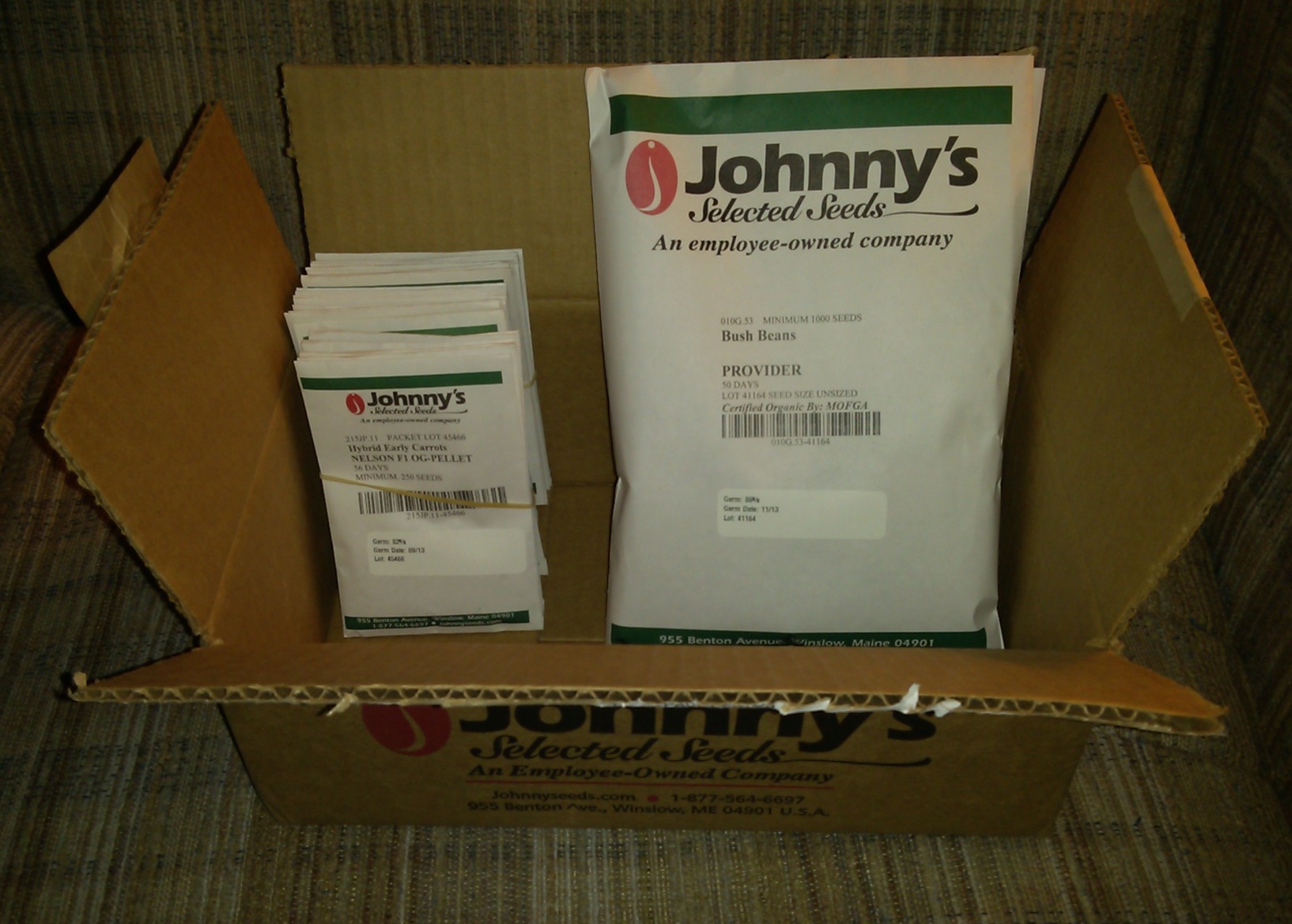
LAKE MACBRIDE— On Friday we diverted from planting in the high tunnel to harvesting cabbage at another farm: 400 heads of cabbage in 80 minutes plus travel and storage time. Frost is coming, and we need the cabbage for the fall shares. As we used to say as union workers in the meat packing plant, “it all pays the same.”
Actually, farm work doesn’t all pay the same. There is a complex web of reliance among farmers, and when one needs something, another reaches out to help, making a deposit in the relationship bank. Who knows when we may need to make a withdrawal?
There is a frost advisory Sunday morning from 1 until 8 a.m. Whatever plants need saving should be covered with the worn sheets kept for that purpose. Mostly, it is the leafy green vegetables and the pepper plants, since the tomatoes are done. Gleaning plot #3, and harvesting is on today’s agenda, so whatever might get bitten by tomorrow’s frost will come in. That is, except the greens, which will continue growing outside until the last minute.
The days are getting shorter, and attention turns toward inside work. There is a lot to be done before the end of the year. When isn’t there?
DES MOINES— In the wake of 2013’s extreme weather roller coaster, marked by the wettest spring on record, followed by the second-driest July through September ever, a statewide group of leading Iowa science faculty and researchers released the Iowa Climate Statement 2013: A Rising Challenge to Iowa Agriculture at Drake University in Des Moines on Oct. 18. Below is the text of the statement. The document with the names of Iowa scientists endorsing it is here.
Iowa Climate Statement 2013: A Rising Challenge to Iowa Agriculture
Our state has long held a proud tradition of helping to “feed the world.” Our ability to do so is now increasingly threatened by rising greenhouse gas emissions and resulting climate change. Our climate has disrupted agricultural production profoundly during the past two years and is projected to become even more harmful in coming decades as our climate continues to warm and change.
Swings from one extreme to another have characterized Iowa’s 2013 weather patterns. Iowa started the year under the widespread drought that began in 2011 and persisted throughout 2012. But the spring of 2013 (March‐May) was the wettest in the 140 years of record‐keeping, creating conditions that hampered the timely planting of corn and soybean fields. During those months, sixty‐two Iowa counties experienced storms and flooding severe enough to result in federal disaster declarations.
By mid‐August, very dry conditions had returned to Iowa, subjecting many of the state’s croplands to moderate drought. These types of weather extremes, which are highly detrimental to Iowa’s crops, were discussed in our 2012 Iowa Climate Statement, where we also noted that globally over the past 30 years extreme high temperatures are becoming increasingly more common than extreme low temperatures. In a warming climate, wet years get wetter and dry years get dryer and hotter. The climate likely will continue to warm due to increasing emissions of heat‐trapping gases.
Climate change damages agriculture in additional ways. Intense rain events, the most notable evidence of climate change in Iowa, dramatically increase soil erosion, which degrades the future of agricultural production. As Iowa farmers continue to adjust to more intense rain events, they must also manage the negative effects of hot and dry weather. The increase in hot nights that accompanies hot, dry periods reduces dairy and egg production, weight gain of meat animals, and conception rates in breeding stock. Warmer winters and earlier springs allow disease‐causing agents and parasites to proliferate, and these then require greater use of agricultural pesticides.
Local food producers, fruit producers, plant‐nursery owners, and even gardeners have also felt the stresses of recent weather extremes. Following on the heels of the disastrous 2012 loss of 90 percent of Iowa’s apple crop, the 2013 cool March and record‐breaking March‐through‐May rainfall set most ornamental and garden plants back well behind seasonal norms. Events such as these are bringing climate change home to the many Iowans who work the land on a small scale, visit the Farmer’s Market, or simply love Iowa’s sweet corn and tomatoes.
Iowa’s soils and agriculture remain our most important economic resources, but these resources are threatened by climate change. It is time for all Iowans to work together to limit future climate change and make Iowa more resilient to extreme weather. Doing so will allow us to pass on to future generations our proud tradition of helping to feed the world.
LAKE MACBRIDE— Embers of the brush pile marked the final cleanup after the Sept. 19 storm. Uneven spots remain where the tree fell, but the lilac bushes retained a nice shape and appearance after trimming the damaged branches. Next order of business is to mow the lawn, which is still partly brown after the drought, and collect the grass clippings to use as mulch where the burn pile is now. It’s been two months since the lawn was mowed.
The season’s canning is mostly done, and I posted this to Facebook yesterday,
All the canning jars in the house have something in them, more than 30 dozen. Tomatoes, applesauce, hot peppers, soup stock, sauerkraut, dill pickles and hot pepper sauce. There is apple butter, pear butter, peach, raspberry and black raspberry preserves, and grape jelly. The freezer’s full too. Plenty of potatoes and onions. We will have the beginnings of plenty of winter meals. All was grown locally and organically. Think I’m done for this canning season.
Herbs are drying in trays in the dining room, and a lot of produce remains in the garden. The counters and bins in the house are full of tomatoes, winter squash, apples, onions and potatoes. By Monday we should have a hard frost which will end most of the growing season. The historical first hard frost is around Oct. 7, so the growing season extended by about two weeks this year. It’s not clear what weather history means any more, except to point out how different things are getting.
A farmer was talking about the weather last night, commenting that it has recently been extreme, with nothing in between. He was referring to the early snowstorm that killed an estimated 100,000 cattle in South Dakota earlier this week. What we want is a steady, soaking rain for about 48 hours to bring up the moisture level in the ground. It hasn’t happened, and we are left with heavy downpours, flooding and fires in the great plains and upper Midwest.
For some farmers, the soybeans are in. While they had the potential for a big crop, the average yield was about 40 bushels per acre. The pods formed but didn’t fill for want of rain. The corn crop is still coming in, so if it rains, nature could wait until the rest is in. The variation in yield is between 40 and 200 bushels per acre. There aren’t many places producing the high end of the range and average is coming in around 140. There is some hesitancy to say until it is all in, but yield will be better than last year during the record drought.
Everywhere in the farming community, people are concerned about the extreme weather. Weather is always a concern for farmers, but this is different. People seem worried like they haven’t been before. There has been no mention of climate change in these conversations, and I don’t bring it up. No need to assert my views when the connection between extreme weather and climate change will become obvious with the persistence of trouble, and the expansion of knowledge.
While our cleanup is finished, the extreme weather seems like it is only just beginning. We use the same language, developed over generations, to discuss farming. But there is a sense, a resonance of worry, unlike what has been present before. It will nag at people and hopefully result in action to mitigate the causes of climate change before it is too late.
LAKE MACBRIDE— Being fully engaged at work is important. Without it, things start to slip. We get distracted, our morale slumps, and the benefits of a job are reduced to working for wages in a way close to enslavement. It’s better for us and for our employer when workers are fully engaged. This is not new. The idea of worker engagement as a business management concept developed during the early 20th Century.
In our local food system, the work requires full engagement. The size of the operation and community in which we live is such that if we don’t do something, or if we cut corners, the impact would have tangible results. If customers see an inferior vegetable selection in their weekly share, they have options. Their business could be lost the following season. If one person fails to turn off the irrigation, someone else must do it because some farm jobs have to get done. The need for worker engagement exists at every small business. It helps build the sense of being part of a team, which adds to the value of the enterprise.
If willingness to align worker interests with those of a business is important, there is a down side. Being fully engaged at work suppresses engagement in other things. In the case of seasonal or temporary work, worker engagement can use energy that should be spent finding work during the next season. As the author has experienced, lowly paid work at a number of companies can consume many hours during the week. The result can be feeling tired and worn out at the end of each day.
The better engagement is in our community. To the extent community life provides a means of economic support, we are better prepared to contribute and reinforce shared values. Worker engagement serves a purpose, yet broader engagement in the community of which we are a part is what we should be after. It is possible, but not easy.
Employment at a job has an arc of existence from getting hired until moving on to what’s next. There is always a what’s next, and the longer we are in the workforce, the better understood is the importance of full engagement. Experienced workers know we are the less if our focus has become the monetary income associated with our work.
As fall weather turns colder, and the garden activity is extended due to a late frost, the seasonal work for others comes to an end. It is a time to be thankful for community and the support it provides during the interregnum until the next paid work is found. It is a chance to re-engage in life for a while, and for that we can be thankful.
LAKE MACBRIDE— If there is a right to a standard of living in the United States, one wouldn’t know it. In vague cultural terms rests an idea of fairness, that each of us will have an opportunity to pursue our dreams as individuals. For so many, threats against our personal security, lack of economic means, and inadequate access to food, shelter, clothing, medical care and social services prevent the pursuit of anything but survival. For some, that has to be enough.
Government helps, but is constrained by what is politically achievable. During this year’s state of the union address, President Obama called for an increase in the national minimum wage from $7.25 to $9 per hour. He said, “we know our economy is stronger when we reward an honest day’s work with honest wages. But today, a full-time worker making the minimum wage earns $14,500 a year. Even with the tax relief we put in place, a family with two kids that earns the minimum wage still lives below the poverty line. That’s wrong… We should be able to get (an increase to $9 per hour) done.”
It hasn’t happened yet, and in any case, what a slap in the face. While raising the minimum wage would provide some help to people who are working poor, not enough help to reach a standard of living one expects in a nation like ours. Change the hourly amount to a so-called living wage, or a family wage, and it would not be much better. These things are intellectual constructs that have little to do with the way people live, and in any case there is more to life than wages in a system rigged to benefit the wealthiest among us.
According to Article 25 of the United Nations Universal Declaration of Human Rights, “everyone has the right to a standard of living adequate for the health and well-being of himself and of his family, including food, clothing, housing and medical care and necessary social services, and the right to security in the event of unemployment, sickness, disability, widowhood, old age or other lack of livelihood in circumstances beyond his control.”
In our country, government imperfectly picks up part of the responsibility for a minimum standard of living, and there are those who say government provides too much. That leaves provision of a standard of living up to each of us and to those we hold dear. As we consider standard of living as a human right we first have a duty to ourselves. It is to provide for ourselves so we can provide for others.
If you are reading this post, consider that you have a standard of living enabling you to give something to others. Give of yourself, to someone who needs it, be they family, friend, neighbor or stranger. We would do this not for ourselves, but to lift us all up in community. A place where standard of living would be measured by what we do together.
SOLON— The twelve hour weekend work days must be catching up with me, as I slept in until 5:30 a.m. Saturday morning and left home to work at the newspaper before having breakfast. The workload was light, so when I had a half hour before having to depart for job number two at the orchard, I went to the Solon American Legion for a quick breakfast.
I ordered a cup of coffee and three breakfast tacos, which were soft flour tortillas filled with a mixture of egg, sausage, cooked onion and pepper, and topped with cheddar cheese and a mild salsa for $5.50. Two would have been enough, and the total bill came to $7.48 plus tip, which seems like a lot for breakfast.
At least one of the people who opened the breakfast operation a year or so ago was present, indicating continuity. Regrettably, he was outside, idly leaning against the railing and looking bored when I drove up. It was a beautiful morning, but still.
The menu is standard Midwestern breakfast fare of eggs, potatoes, onions, peppers and breads done up in a variety of expected combinations. Almost forgot the meats, which appear to be typical food service fare. Like everything served, the food is made to order and appealing for palates acculturated to small town cuisine.
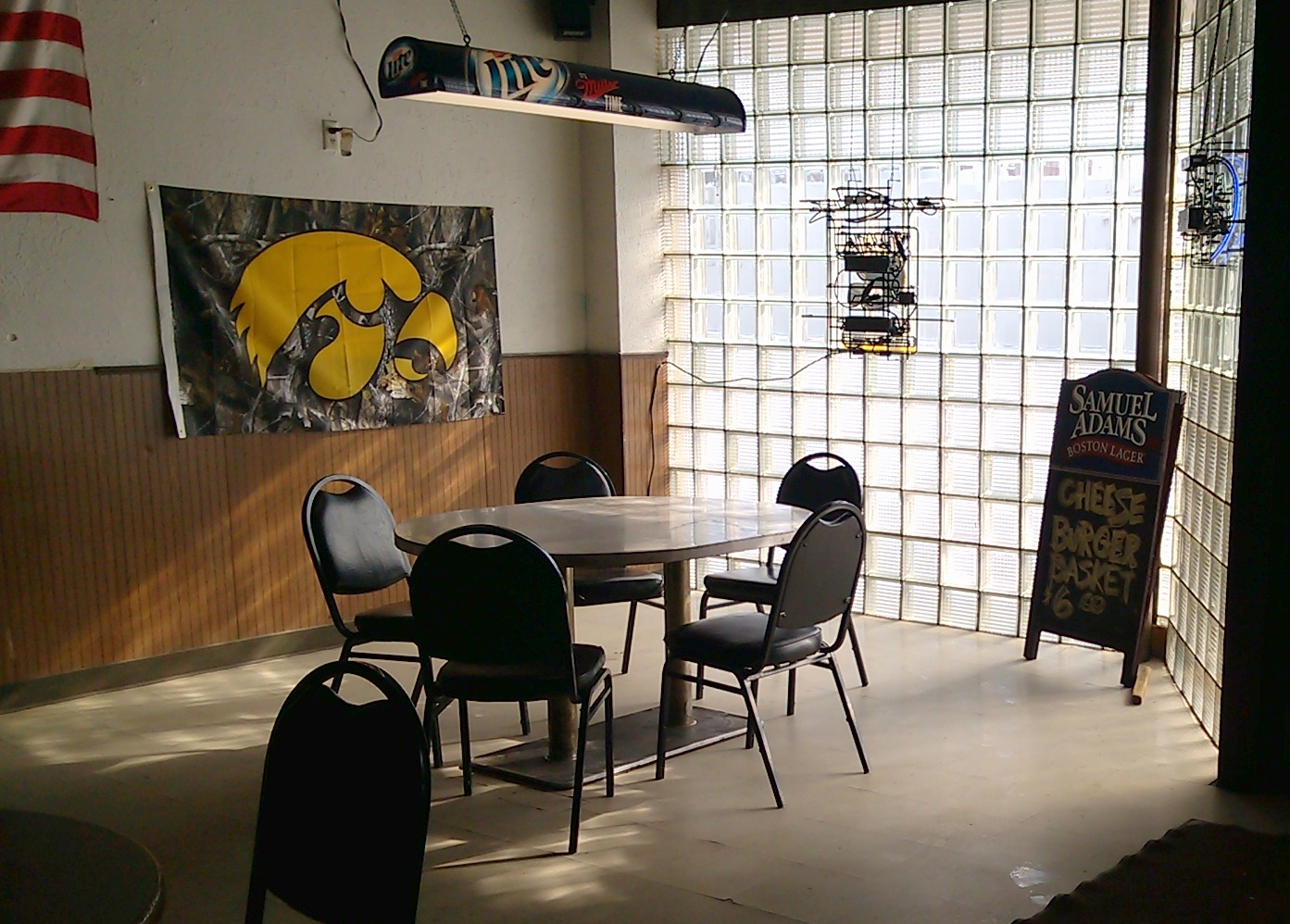
At 9:15 a.m., three other tables had patrons, with more expected after church let out. The decor was legion patriotic, with service flags mounted on one wall and a variety of other decorations occupying most places on the exposed walls. There was a notice of a flag disposal service and I considered bringing one of my faded and worn flags for disposal.
The legion is a place to grab breakfast from 7 until 11 a.m., and talk with a business associate or friend over coffee. It has been the most popular place to have breakfast in town, but since then a new restaurant opened for breakfast, will have some competition. The menu is not posted on line, and there was a sign indicating the full menu service is now available from 5 until 9 p.m. It is worth checking out if you need a bite to eat in town. The legion website is here.
SOLON— The first stop on our restaurant crawl was Nomi’s Asian Restaurant, 101 Windflower Lane in Solon. Nomi is the cook, and most nights her husband is the server at this Asian fusion restaurant. Nomi’s incorporated on Feb. 10, 2009, and by restaurant industry standards, having made it past year one, it seems well on their way to becoming a permanent fixture in town. Our family and friends have been regular customers since Nomi’s opened. It is one of the few restaurants in town that offers vegetarian entrees on the menu, and it is the only Asian cuisine in the area. They have an active take-out business, with a drive through window.
Both my spouse and I currently work on Saturdays, so when we don’t feel like cooking, Nomi’s is our first choice. When we arrived around 7:30 p.m., we were the only customers inside, although the drive-up window was busy. She ordered Vegetable Tofu, a mixture of broccoli, snow peas, mushrooms, green peppers, onions, carrots and tofu priced at $9. I ordered the traditional Korean dish, Chap-Chae, which is clear sweet potato noodles tossed with celery, carrots, green onions and pork, with steamed rice on the side, also for $9. Nomi’s offers a small selection of bottled beers and saki, and I ordered a Tsingtao to accompany the meal. A Golden Dragon® fortune cookie was served when the bill came.
The dining area is simple tables and chairs with three large flat panel television screens positioned in corners of the space, each tuned to different sports programs or stories about fishing and pawn shops. The restrooms were clean and handicapped accessible. The space is efficiently organized given the constraints of a strip mall space. What makes the restaurant is Nomi and the great food she prepares.
For more information about Nomi’s Asian Restaurant, check out their Facebook page, which includes a current menu, here.
LAKE MACBRIDE— After completion of the Sept. 19 storm cleanup, the monetary cost will be $230.50, including hiring an arborist to tend to two trees and a construction company to repair the fascia on the southwest corner of the house. It was not much, and a lot less expense than others in the neighborhood experienced.
I avoided the cost of disposing of the fallen branches by cutting them into two types: firewood to be sold, and brush to be burned. The cost is in time, with one or two more four hour sessions of cutting ahead, and at least two more burns when the wind dies down. We’ll evaluate the condition of the damaged trees and lilac bushes and make adjustments after the burning is finished. With pruning, the lilacs can be saved.
Burn Pile Site
Beside our checking account and labor, and a share of the bill for the damage in our subdivision, another toll from the storm lingers— the idea that this worst in 20 years weather event, coupled with recent severe drought and terrible flooding, is just the beginning of the effects of climate change on our lives. Whatever severe weather we might have had was intensified by the effects of global warming. That a monetary value can be assigned is a sign of things to come.
Farm and newspaper work continues over the weekend, so the cleanup will wait until next week. Cleanup displacing other things to be done to advance our socioeconomic status in Big Grove. The storm cleanup reinforces the idea that climate change is real and happening now. We need to do something to protect what we hold dear, we can’t be effective alone, and the time to act is now.
Jim Hightower and his speech, From Factory Farms to GMOs, The Upchuck Rebellion Is Taking Root, has top billing at the Occupy the World Food Prize event on Wednesday, Oct. 16, at 7 p.m. at First United Methodist Church in Des Moines. Maybe that position should have gone to the special guest, Ghanaian Cardinal Peter Turkson.
Leave it to the Roman Catholic Church to point out one of the evils of the agricultural revolution that is genetically modified organisms (GMOs): over-reliance on corporations during third world development. In an article in the National Catholic Reporter, Rich Heffern quoted Cardinal Turkson, “making growers reliant on proprietary, genetically modified seeds smacks of the ‘usual game of economic dependence,’ which in turn, ‘stands out like a new form of slavery.'” Few people I know are talking about GMOs in terms of slavery, but the type of dependency U.S. corporations seek to create in Africa and elsewhere is tangible, and a normal part of development. Cardinal Turkson is at the center of this issue. (For more information, click here).
Cardinal Turkson is president of the pontifical council for justice and peace, a member of the Roman Curia, and potentially the first black Roman Catholic pope. He will be part of the World Food Prize Borlaug Dialogues, and has accepted the invitation to speak at Occupy the World Food Prize. As the National Catholic Reporter pointed out on Oct. 7, he will be talking to both sides in the GMO debate.
During an interview with Des Moines activist Ed Fallon, Occupy the World Food Prize organizer Frank Cordaro said, “our lessons from the occupy movement have taught us that the global financial system controls everything… and lo and behold, we discovered this World Food Prize, and when you look under the covers, it is completely owned and scripted by corporate ag.” “It’s not a world food prize, it’s a corporate world food prize,” Cordaro told National Catholic Reporter in a separate interview.
This year’s World Food Prize laureates are three individuals who have been instrumental in the development of GMOs used by Monsanto and Syngenta Biotechnology, and their companies underwrite a substantial part of the costs of the World Food Prize. Their election to the hall of laureates appears to be self-serving of corporate interests.
Cardinal Peter Turkson is expected to speak against the use of GMOs during the Borlaug Dialogues, which are another attempt by corporations to control the message about their business through so-called opposing views. The dialogues are another in a series of corporate attempts to create a false sense of rational discussion, when, like this year’s laureates, it is self serving at best.
The event flyer for the Occupy the World Food Prize is here. The World Food Prize website is here.
LAKE MACBRIDE— As cleanup from the Sept. 19 storm continues, the weather has been almost perfect for outdoors work. The plants in the yard have come alive, and the garden generated a burst of food (collards, Swiss chard, turnip greens, arugula, herbs, tomatoes and peppers) as the first frost approaches. Days like these are as good as it gets.
Roof Damage
Slowly… systematically, evidence of the storm diminishes. Yesterday I cut up the locust tree and spread the branches in the back yard for easier final cutting. Today a construction worker comes to repair the corner of the house. All that’s left is to finish with the locust tree and replace one of the downspouts damaged during the storm. Then to glean the garden, mow the lawn, and collect the clippings for mulching the garden over winter.
What then?
Much as we relish our moments of sunshine in brilliant autumn days, there is work to do before the final curtain falls and we join the choir invisible.
Writing About Apples
My writing will continue. It has become subsistence, a part of me, like blood production in the marrow, a way to breathe life sustaining oxygen in an unsettling and turbulent world. It is not expected to contribute much financially.
Farm work and gardening, participation in our local food system will continue at a subsistence level. There is inadequate income to be generated in working for someone else, and farm work will always be lowly paid.
There is family life, but little role for that in the blogosphere. We depend on our families, and little more need be said here.
Mostly, life will be living as best we can during moments of brilliance and trouble. Like these days in early October, when worry seems far away, and life so abundant.
You must be logged in to post a comment.