Categories
Kitchen Garden Writing

Green Washing and a Local Food System

Spring Onions

Wind came up yesterday and would not relent.

I planted onions and cilantro in the garden, transplanted some seedlings to larger pots, but that’s about it. The septic tank service arrived and pumped our solids tank while I trimmed the lilac sprouts from the space in front of our house.

Constant wind beating against me took its toll.

The first of five spring shares was ready yesterday afternoon from our CSA: Bok Choy, Koji and Broccoli Raab.

Both CSAs where I work are running behind due to weird spring weather. Carmen Black’s newsletter summed up where we are nicely:

First of all I want to thank all of you for your patience and understanding in starting a week later than planned! As I’m sure all of you can guess this weather has been very difficult to deal with on the farm. Two weeks ago it snowed, and today it’s eighty degrees! In addition to the swings in temperature its been the driest April on record, which means that everything we’ve finally been able to plant has needed to be watered immediately. Through all of this weather stress I’ve been very grateful to know that you all are so supportive of this farm, and will understand the challenges we’re facing in organically growing local veggies this spring.

First Seasonal Salad

Dinner was a salad to go along with pasta last night. Three kinds of greens and this year’s spring onions along with odds and ends of cold storage vegetables. It’s why we invest our time and resources in a food ecology.

The words “local food” mean less today than they did, and not what we thought they meant. I discuss local food with farmers and gardeners and I’ve heard the usage it is a form of green washing. Is “local food” a form of green washing? Maybe.

I know the produce harvested in our back yard is local food. With each passing season I see less significance. We want food we serve at home to be fresh, tasty and pleasurable. When we take a dish to a potluck, using garden produce gives a personal touch to a classic casserole. A kitchen garden like ours serves those things well.

“Local government can make policy that makes it easier to grow and consume #LocalFood,” Johnson County Supervisor Kurt Michael Friese posted on twitter.

If anyone is familiar with the local food system, Friese, a long-time restaurateur and food writer is. He is well positioned to make and implement policy that supports local food. But what exactly is that?
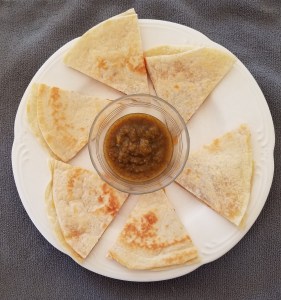
Breakfast Quesadilla with Homemade Salsa

Early on, local food referred to how and where food was sourced. There was talk about mitigating “food miles.” As I explained in a 2013 post, “Food distribution and related costs are a social construct that makes transportation seem inexpensive, or irrelevant to what we find in grocery store aisles.”

Where advocates of local food may have gone wrong is using the idea of food miles as a place holder for complex, flawed arguments. Costs are costs, and a producer has to recover his or her financial production costs when the consumer buys an item. Using any complex argument, including food miles, as a place holder seems a diversion. Such talk belongs more appropriately in a sales and marketing context as a form of puffery.

Read my entire set of arguments here.

The better framing for “local food” is to know the face of the farmer. Two years ago I wrote at length about what it means to know your farmer and practices they use. Here is the salient point related to green washing:

Driven in part by mass media, consumers are concerned about a wide range of food issues that include contamination with harmful bacteria; dietary concern about consumption of carbohydrates, fat and sugar; the way in which plant genetics are modified to improve them; and more. Partly in response to media campaigns, annual sales of organic food exceed $30 billion in the U.S. (USDA). The increase in organic market share from national advertising campaigns is significant. If you get to know your local food farmer, what you may find is they benefit from this marketing, but their customers come and stay with them because of a personal relationship with the farmer.

Local food is not exactly green washing, which is defined as “disinformation disseminated by an organization so as to present an environmentally responsible public image.” However, there is a lot of conflicting and sometimes contradictory information related to food. Plant genetics alone set off a firestorm of media and organizational controversy and spawned a new food labeling process under the aegis of the Non-GMO Project. Simply said, it’s complicated.

If a definition of “local food” is elusive, how our county defined a local food system may be as good as it gets:

In Johnson County we see the need to localize our food system – and we are working to create a healthy, intact system that lessens resource inputs, promotes worker’s rights and preserves the natural environment.

Yesterday’s wind blew a single-use plastic bag into our Ash tree where it got stuck and is flailing in the wind. Part of me is tempted to leave it there as a symbol of all that is wrong with our society. Then again, if I want it fixed, I’d better do something about it. So it is with the local food system.
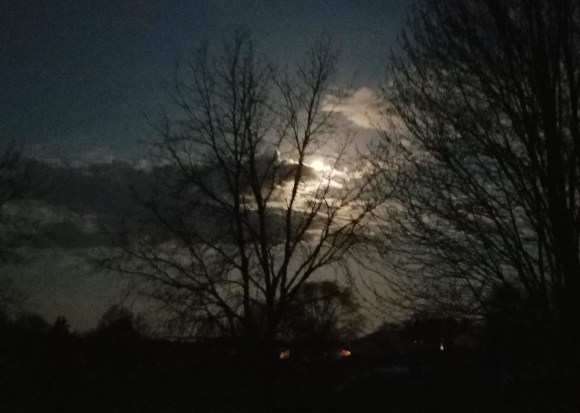
Full Moon Setting Behind Clouds


Categories
Kitchen Garden Writing

Back to the Garden

Spinach Seedlings

No food is more local than a kitchen garden. I’ve got to get moving on mine after a late spring.

Everyone was in a good mood at the farms when I soil blocked Friday and Sunday. My farmer friends caught up last week by finishing onion and potato planting. Trays of seedlings are moving to wagons and then into the ground, thus clearing the greenhouse for what will be June and July crops. I started zucchini and cucumbers Sunday in the greenhouse.

The first spring share is today and in honor of it I’m composting my over-wintered lettuce.

A neighbor and I had a conversation about spinach and how it grows. She is changing her garden around as last year the zucchini they love developed powdery mildew. Her tactic is to plant the whole garden in corn to give the soil a break and let the fungus dissipate. Here’s hoping that works.

As for me, Monday is mine to do what I want. This week that will include getting our septic tank pumped, writing off line, gardening and yard care. It’s time to put winter behind us.

Categories
Writing

A Sense of Place

Moon Setting

Hearing the laughter of children; seeing wildlife in the backyard; digging dirt turned to soil by one’s hands; feeling a breeze, getting frostbite, dancing in the rain, watering a garden with our own sweat.

They make a place if we are lucky enough to understand.

Among the lakes, creeks, forests, farms, cemeteries and subdivisions there is something. Something imperceptible but there.

To know it is a sense of place. It is not natural but has its rewards.

Hearing the laughter of children; seeing wildlife in the backyard; digging dirt turned to soil by one’s hands; feeling a breeze, getting frostbite, dancing in the rain, watering a garden with our own sweat.

Categories
Home Life Writing

Soft Landing

Burning Embers

It’s been 30 days since retirement and I’m up to my old tricks.

Like a hungry dog, I see things and want to be a part of them. “I’ll do this,” I say to myself and others. I run the risk of over-committing and letting people down. Importantly, I divert attention from priorities. New tricks should replace old but I’m not there yet.

Let the engine of life make a soft landing on this rain-soaked spring day. Focus until leaving for the farm in a few hours. In my second go-around at “retirement,” I’ve learned that lesson.

It’s not like I’ve kicked back in an easy chair. I agreed to stay on at the home, farm and auto supply store two days a week and never planned to give up farm work. I’ve written more and would like to write more still.

I’ve been in transition. Without good health life would be harder. I saw the dentist and tomorrow have an appointment with a physician for a physical. I got my car serviced, hair cut, and am planning a trip to purchase clothes. When I do, I’ll turn tattered attire into rags and recycle the denim and cotton. We’ve been living within our budget and the federal and state taxes are filed. The garden is behind this season, but there are seedlings in the greenhouse and garlic poking through the mulch. There will be a garden when the weather breaks. 2018 is a midterm election year and I plan to be more active this cycle than in recent years.

Days take on a rhythm and I’m no longer sure when a week begins and ends. Mostly, it’s been cold, I’ve felt it through to the bone, and there is so much to do before settling into a sustainable pattern. The weather will break and I feel ready to take off.

Slow down, you move too fast. Good advice for someone with my social style.

Categories
Work Life Writing

Feel the Breeze

Western Sky at Sunrise

I’d rather have spent both of this week’s days at the home, farm and auto supply store in our garden. Temperatures were warm enough to work in shirtsleeves and the garden is way behind.

Outdoors tasks occupied my work day: unloading field tile and plant trucks, rearranging the yard, and moving tall pallets of pine shavings, first outside while unloading the truck, and then back inside as I made room in the warehouse.  We had trucks of merchandise from our main warehouse, a load of feed, and a truck from Missouri with odds and ends of a retail operation: ladders, pipe, light bulbs and sundry stuff. It seemed like I was on the lift truck the entire time.

The best part of the days was feeling a breeze through my hair as I drove from one end of the lot to the other on the lift truck. Father died on a lift truck at the meat packing plant. That thought is never far from me as I finish my days in the work force.

Now begins the rest of today: coffee with an elected official in the county seat and a shift of farm work. If I have the bandwidth, and thunderstorms hold off, I’ll work in the garden later this afternoon.

Categories
Kitchen Garden Writing

Spring Burn Pile

Spring Burn Pile

Part of yesterday was spent outside — in the garden, working compost, cleaning buckets, collecting the bits of drainage tile used to support celery plants, tending the garlic, planting turnips and radishes.

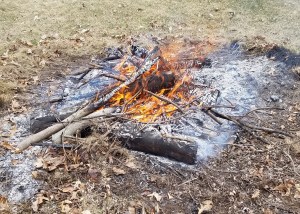
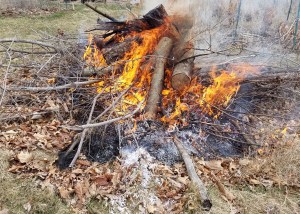
Using a bag of shredded office paper and a match, I started the burn pile created in the aftermath of an unusual wind storm last year. An arborist cut down the big branches and I sawed them into smaller logs and branches. The wood was dry and burned quickly even though it was covered with snow a couple days ago.

The first spring burn pile marks the beginning of gardening season.

I didn’t connect the garden hose as we are expecting freezing temperatures again this weekend. There is plenty of moisture in the ground to give the seeds a start.

A week ago I got a haircut. Partly it was too shaggy and in my eyes while working outside at the home, farm and auto supply store. Partly it was about casting aside the experience it represents for a new start.

My retirement March 16 has been something of a crash landing. Long anticipated, I know the major themes — writing, gardening, farm work, home maintenance and community organizing. I’ve had to add a need to deal with my aging frame and life systems. I made an appointment to see a medical doctor for a physical next week.

Even though I have more time, there never seems like enough to get what I want accomplished. With that in mind, I’ve come to believe what I said in February, that low income workers and retirees can’t afford social media. I posted this on Facebook this morning:

I’ve decided to end my relationship with the Facebook application on or about April 30. I joined in 2008 to follow our daughter and she deleted her account a couple of years ago. It’s not you fair reader, it’s me.

I listened to Mark Zuckerberg testify to Congress yesterday and his plans for dealing with public issues here. I have no interest in artificial intelligence reading my every post to determine if it is worthy according to Facebook criteria.

That said, I will miss the exchanges, likes and shares and appreciate your interest in what I’ve been doing. Facebook has been a creative outlet for me and I plan to channel those impulses elsewhere.

You are invited to continue to follow me elsewhere. I plan to keep my twitter account @PaulDeaton_IA and my WordPress account pauldeaton.com. If you are on WordPress click the button on my home page to add me to your reader, or click on the Follow Via Email button if you are not.

So that’s it. Hope to see you around… literally.

The burn pile was hot and I had to keep my distance while using a hoe to move partly burned branches to the top of it. By supper time it was a pile of white ashes with minerals returned to the ground and carbon released into the atmosphere. I plan to add another garden plot where the burn pile was.

We don’t know what tomorrow will bring. A burn pile reminds us all of the natural world is in transition. In a burn pile there’s no judgment, just the heat of released energy and beautiful, ever changing orange-yellow-blue flames.

In this moment that’s all we require to sustain ourselves.

Categories
Writing

Spring Reset

April Snowfall

We’re behind at the greenhouses.

The high tunnel is fully planted. The ground is too cold for transplants. Cooler temperatures retard growth of fledgling vegetable sprouts. There is no place to go with the trays of lettuce, kale and greens coming along. The greenhouses are full.

It made an easy weekend of farm work for me with 24 trays of soil blocks on Friday and 20 on Sunday, about half the usual volume.

My good news was after about four weeks, the celery seeds germinated! The depth of flavor of home-grown celery has become essential to our kitchen. Because I had given up on the first planting, ordered new seeds, and re-planted I was thrilled. I delayed planting pepper seeds as it is clearly not too late to get them started. Several inches of snow fell last night and dampened any prospect of gardening today.

What’s different this year is weather and work kept me out of the garden completely in late winter and early spring. In past years I’ve planted lettuce, potatoes, radishes, turnips and spinach by now. I’m past ready to get started. The cold temperatures look to break for a brief planting window tomorrow or Wednesday. I’m hitting the reset button on Spring.

Friends conversed about Facebook this weekend. So many want to delete their accounts. At the same time, we manage information and pages that make it seem important. We long for personal information posts and can’t give them up — a form of craving or confirmation bias. Our presence on the popular social media platform persists… for now.

24 days into retirement I’m not fully healed, but have bottomed out. I cleared the last hurdle of winter by filing our federal and state tax returns this morning. A path to creativity cleared of nagging concerns. Now for a slow, methodical climb to the light. A fall could be fatal. Hope springs if the season has not.

Daily writing is important. It provides a chance to work through wicked problems and understand, if not resolve them. It is also a chance to consider experience deeply. If this blog is a way of dashing off notes in the form of an electronic journal, I’m okay with that. I appreciate my regular followers and readers. There is something more. I’ve dedicated part of this new life to determining what it is.

On another day of waiting for Spring to break I’ll work at home and contemplate where I’m bound. Along with any view of the future is the baggage of a life lived. I’m not sure I need all that baggage any more.

Categories
Kitchen Garden Work Life Writing

Wanting to Wake Up

Community Pond

At retirement plus 19 days I thought I’d be more productive.

Yesterday, after a shift at my desk and an hour-long visit with a neighbor and a team of surveyors, I took a nap… with long, deep sleep. Groggy when I woke, the better part of the day had escaped me.

More time to heal after a life of work.

It’s not like the main spring work of gardening was doable. Rain and ambient temperatures in the twenties and lower thirties gave me a chill most of the day. My farmer friends take advantage of every micro dry spell to plant a row of seeds or plow a field. A home gardener needs an ample period of dry ground and time to get in seed potatoes, early lettuce, radishes, turnips, peas and the like. Thus far the burn pile remains and the ground is unbroken, indicating there was a garden but little else. On the other hand, when the weather breaks, I’m ready.

Boxes of canning jars pile up as we draw down the pantry.

Last night Jacque and I went separate ways for dinner. She prepared a pasta dish with pasta made from lentil flour accompanied with a side salad. I prefer pasta made with semolina flour. These days a salad is organic greens from a specialty grocer, carrots, celery and home made dressing.  When she finished in the kitchen I made a dish I had been thinking about for a week.

Mother made a simple gravy with bacon grease, flour and milk. My supper was a variation of that.

The gravy recipe is easy: three tablespoons fat, three tablespoons flour to make a roux then two cups milk simmered on low heat until thickened. We cook vegetarian at home so I substituted salted butter for the bacon grease. Mother added cooked hamburger to the gravy but I wanted more.

Dinner preparation began with diced storage onions, bell pepper from the freezer and a four ounce can of sliced mushrooms from the Netherlands sauteed in extra virgin olive oil, seasoned with salt and pepper. When the onions began to soften I added two finely diced cloves of garlic from Kate’s farm and incorporated them into the vegetables.

Next was two cups of Morningstar Farms recipe crumbles stirred in until thoroughly thawed and mixed. When the ingredients reached the proper stage I made a well in the center of the frying pan and added three tablespoons of salted butter to melt. I added an equal amount of flour to make a roux. When the roux had cooked for a couple minutes I added two cups skim milk and stirred the mixture until everything was incorporated. I brought it to a boil and turned down the heat to a simmer for about ten minutes until the liquid thickened.

I toasted a slice of sourdough bread, diced it, and spooned the mixture on top in a big bowl. That and a couple of raw carrots was dinner… with leftovers. Comfort food from memories of Mother.

In the annals of human history yesterday wasn’t much. Two people getting along in a place where we’ve lived for 25 years.

“I feel as if I’m fixin’ come out of hibernation and need to work with friends on something meaningful,” I emailed a friend. “What that is will eventually manifest itself… I hope we can recognize it when it does.”

For now I wait for the weather to break, rest and heal.

Categories
Environment Writing

Morning Coffee, Climate Change and the 2018 Midterms

U.S. Army Mermite Can

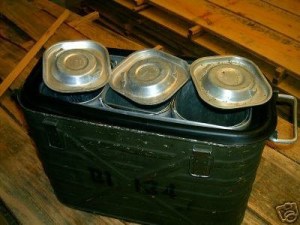
I first drank coffee in the Army… on top of a hill… during the dead of winter… from a mermite can.

Steam rising from the lid proved irresistible when ambient temperatures were below zero and we had just slept on the ground. What else were we going to do but drink coffee? It was there.

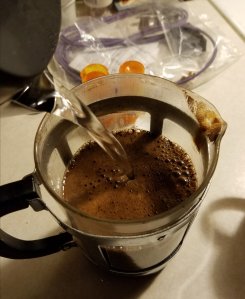
We each have a personal history of drinking coffee. I asked one of the greenhouse seeding crews if they remembered their first cup. Some had specific memories, others did not. For me, it was the windy hill in Germany back in 1976.

Coffee was first discovered in Ethiopia in the 11th Century and spread throughout the temperate zones of the planet. It is currently being grown in more than 60 countries. Brazil, Vietnam, Columbia, Indonesia and Ethiopia are the largest coffee producers by annual export weight. Coffee has become ubiquitous as any foodstuff can be.

Making Coffee

The sources of our coffee are under pressure because of climate change. Yields are declining in part because a warmer atmosphere holds more water vapor, creating unseasonable and extreme weather events. Likewise, warmer temperatures expanded the range of the coffee berry borer. Coffee rust is a detrimental fungus increasing its range as the planet warms and winters no longer kill it off in mountainous regions where coffee grows. The impact of global warming caused climate change is not trivial.

We would like to drink a cup of Joe without worry. When we go to the warehouse club there is a long, abundant aisle of coffee produced all over the world. A cup of coffee continues to be affordable at restaurants. It hardly seems like a problem. It isn’t… at least not now.

The science of global warming is virtually undisputed. What seems less certain is how it will impact our personal lives going forward. The Earth’s ecosystem is complex and specific regions have had different issues. We’ve had our share of droughts in Iowa, but there has also been enough rainfall to produce crops. Some days it seems the only persistent idea about Iowa’s climate is that rain remains. When it comes to coffee, what happens six inches in front of our noses is not as important as the global environment in which humans live.

There’s the rub.

With the 2016 election of a Republican to the White House, all eyes are diverted from our most pressing problems. Challenges to the study of climate change is one of those pressing problems and not only because I may be deprived of my daily cup of coffee.

The administration walked away from policy decisions we’ve made to reduce greenhouse gas emissions. It is cutting funding for climate research. It is censoring and targeting government scientists. One could reasonably say the government under Republicans has abandoned science as a consideration in policy-making.

As Americans, we know what to do. We must repudiate the direction Republicans are taking our society by voting them out in the 2018 and 2020 elections. I’d rather linger over my morning coffee than get involved in politics again. However, personal political engagement is the price of a livable future.

Categories
Home Life Writing

Healing in Big Grove

Along the Trail

A thick, wet snow blanketed the landscape overnight. Being a lifelong Iowan, driving on snowy roads across the lakes to today’s political convention shouldn’t be an issue if I take it slowly.

I am on the arrangements committee and have to be there at 6 a.m.

My mind is not on that, or the myriad other activities that filled my days since entering retirement a week ago.

After 50 years of work a person needs healing. That’s going to take longer than I thought.

On Monday I dropped my car for repairs in town and walked the three miles home along the Lake Macbride trail. The trail was pretty beat up with deep ruts from construction equipment along the entryway from town. Iowa Department of Natural Resources must be up to something. It looked like hell. Walking home was a mistake.

My plantar fasciitis has been in abeyance but the day after the walk, my heels started to hurt. It was exacerbated by standing to soil block at the farm yesterday, reminding me there is no such thing as “good as new” for a sixty-something.

More than physical ailments I need to heal my mind. When I entered the low-wage workforce back in 2013 it was hard to focus on bigger issues. Perspective was reduced to a few inches beyond my nose. Interaction with newly met people was framed by the idea I didn’t really want to be there. It tainted my perception, hopefully not permanently. It too will take time to heal.

There is a lot to get done during our brief time on earth. Sometimes we need to stop and just breathe. If we can manage that, perhaps our bodies and minds will heal.