It has been two months since the Iowa State Hygienic Laboratory in Coralville reported the first positive test results for COVID-19, the disease caused by the coronavirus.
We look forward to returning to a semblance of our pre-pandemic lives. We also know our lives won’t be the same as the pandemic could continue until there is a cure a year or two from now.
I could have continued to work at the home, farm and auto supply store. Because of my age I chose a voluntary COVID-19 leave of absence, then retired after the first thirty days ended. Not everyone has these choices.
One hopes a better society emerges from the chaos the virus and its inseparable economic depression have wrought. Our president’s reaction to the pandemic cost us the strong economy he inherited and caused preventable mass death. It is delusional to believe informed people will accept his work and re-elect him for another four years. We have to work to make sure someone else, presumably Joe Biden, is elected to stop the destruction caused by the current response to the pandemic.
There is also more to life than politics.
In a series of posts I plan to write about the worklife I have known and how it may change after the pandemic. There is a clear delineation of my personal work timeline into several periods.
When I began outside work in grade school as a newspaper carrier there were expectations of knowing what types of jobs were available and then securing them. After college graduation the workplace had changed, offering few positions in which I found interest. This led to frustration and then entering the military.
After returning from overseas I went to graduate school. When finished I found even less desirable opportunity than five years previously. When I eventually found work in the transportation and logistics field it was a compromise between what I wanted to do and producing enough income to support our young family. It was never the best, but it accomplished a degree of financial security.
When I took early retirement in 2009 I wasn’t sure what the future would hold. I used part of our retirement savings and entered a series of low-paying jobs that helped pay bills but did little else to advance us financially. I’ve written often about this and hope to bring a new perspective to it. During and after the pandemic there will be another phase of worklife. In some ways it is a journey home to being the person I was when this all began.
The president and governor say it’s time to reopen the economy and our lives. From my perch in Big Grove Township the economy never fully closed and the first wave of the pandemic is not finished. To understand how we can restructure our lives in society we must understand from where we are coming. That’s the hope of the next series of posts.
Friday J.C. Penney filed Chapter 11 bankruptcy, another victim of the coronavirus pandemic.
To say I disliked the in-store experience is an understatement. To say how much I loved the on-line experience is impossible. They are a great alternative to Amazon where we can find affordable attire. Fingers crossed they come out of bankruptcy.
What will a retail experience look like on the other side of COVID-19? I don’t think anyone knows.
I’m reading another Obama administration memoir, this one by Ben Rhodes. I also read Samantha Power, David Plouffe, Jill Biden and Michelle Obama. On the bookshelf waiting is Susan Rice… I’m just passing time though, until the big guy’s book is finished and released.
It’s hard to believe the Obama administration existed at all in the age of Republican control. It’s like an Arthurian legend we lived through except now it is transformed into myth. So much so it’s easy to believe it never happened. It did happen and the memoirs serve to remind us of another possibility than the one dominated by a needy president.
I stopped and stood outside the garage breathing the fragrance of lilacs. They are close to full bloom and won’t last much longer. It is difficult to stop and experience flowers yet we must. A lot depends on the fragrance of lilacs.
I participated in a Zoom conference with friends yesterday afternoon. We are on the last mile of cable with our internet provider and the connection is sometimes inconsistent. After being dropped five times during the call I gave up. It was good to see everyone again, even if intermittently.
Life on the other side of COVID-19 will be different. For me, it precipitated full retirement and that change alone is big. There’s more though, and not just about one person’s experience of the pandemic. If anything, we are getting used to living with less. That should be good for us, and good for society. I’m confident J.C. Penney will try to adapt to the new reality. If they don’t, the world will be the less.
When I was a grader, Mother would send me to the corner grocery store to secure provisions for the evening meal.
We had a corner grocery store. It was a block and a half away from home. There were no supermarkets within walking distance.
I don’t recall its name. A family owned it and the husband was the butcher. When it closed, run out of business by the multi-location Geifman Food Store that situated a block and a half away, they moved to the west end of town where the butcher was murdered in his store.
I was a paper boy for the Times-Democrat. The hyphenated name is from a 1964 merger into what eventually became part of Lee Enterprises and is now the Quad-City Times. I delivered the evening edition after school and the corner grocery was near the end of my route. At that time paper boys collected subscriptions directly from customers. When I finished weekly collections I’d stop at the store to buy a package of baseball cards or a candy bar. I remember a six-pack of 10 ounce bottles of Pepsi sold for 60 cents, the lesser known sodas bottled a few blocks away sold for 54 cents. Mother discouraged us from drinking soda.
The corner grocery store was an important part of our family life. Then it wasn’t.
Grandmother grew up on a farm and knew how to cook. She knew where food came from and how to prepare a live chicken. In our early years she lived near us, next door when I was a toddler, upstairs when I was in the first grade. After that she was a regular guest for Sunday dinners and special occasions like Easter when she checked in with her grandchildren and helped mom in the kitchen.
In the 1960s we began to eat more food prepared outside our home. Mom also began experimenting with different food preparations. We developed a taste for tacos and I recall the corner grocery didn’t carry some Mexican ingredients we liked, requiring me to walk to nearby Geifman’s. It was a sign of the end of the corner store.
In 1966 Joe Whitty moved to Davenport and ended up living with his young family in a rental the second house north from ours. It was across the street from a family that owned the dairy. He worked at the nearby hospital where I had been born, first as a baker, then as dietary director. He went on to establish a chain of pizza and ice cream stores. One of the ice cream stores ended up on the lot where the corner grocery store had been, although after I left Davenport.
On the other side of the church where I was baptized, about two blocks away from home and next to the Geifman Food Store, was a restaurant called Chicken Delight. They had a radio jingle, “Don’t cook tonight, call Chicken Delight.” The chain was founded in Illinois in 1952 and grew to have more than 1,000 locations. It was a take out and delivery only place and I don’t recall eating their chicken during the eleven years I lived at home there. Without the dining room we had little interest. If we had their product at home, I have no memory of it.
Chicken Delight was not known for its quality as each store followed their own cooking process, sometimes with their own equipment. That’s unlike the McDonald’s franchises which grew to prominence in the 1960s. McDonald’s prided itself on consistent quality in all their stores. They even had a “Hamburger University” near Chicago to train managers in how to operate with consistent results. Today there are not many Chicken Delight stores and most that remain are located in Canada. The women in our house knew how to make chicken and the family consensus was ours was better. Eventually one of the former neighbor’s pizza restaurants located in the Chicken Delight space.
That’s not to say we didn’t dine out in the 1960s, we did. We favored local, family run restaurants like Riefe’s Family Restaurant and Bell Eat Shop. Our parents knew both families. When McDonald’s built a restaurant on Brady Street we drove over there as a family once in a while. Their burgers and fries were different from Mother’s. They were cheap too. We ate in the car. We also drove to the A&W Root Beer stand where servers brought trays of food and drinks that hung on our car windows. The rise of automobile culture made home delivery pizza popular and inexpensive.
Grandmother would take us to Bishop’s Buffet on special occasions. We enjoyed being able to pick what we wanted from a generous selection of items like Mom and Grandmother made at home. In some ways it was a form of nostalgia. Grandmother insisted on paying the bill. These family events were important to her.
That’s the range of our 1960s dining experience outside home. A lot has changed since then. When Grandmother was born in the 19th Century people cooked most meals at home or took a dish to a potluck for weddings, funerals or other occasions where they ate what others had prepared. Prior to the current pandemic food prepared outside home comprised more than half of American diets according to the USDA. When the coronavirus recedes I expect there will be a rebound in restaurant eating.
It takes work to remember these things. Memories are not always accurate. What is important now may not have been important then. In the end, it is up to the author to research and present each story leaning on known facts. We must resist the temptation to tell a story only because the narrative flows or with ideological intent. It is hard to listen to one’s own voice and ignore what others may have experienced or have to say about something. We each own our memories even though there are shared experiences. We must be true to ourselves.
I’d like to be writing more pieces like this. I hope I will.
In an effort to move on to what’s next, here’s another post about the coronavirus pandemic.
Please bear with me. There is a “what’s next” although it will be different from what we would have expected a few months ago.
The threat of COVID-19 spreading into our household had me retire from the home, farm and auto supply store. It was inevitable I would do so soon. The pandemic flipped the switch. Now I’m done with outside-the-home work except for what I do in the local food system a few hours each week.
As I pointed out Thursday, we are in the pandemic for a couple of years or at least until a cure is in place. I believe there will be a cure in the form of a vaccine simply because there are so many bright minds and dollars being invested in this work. No one knows for certain how long it will take to develop and implement a cure, so if we’re smart, we will adopt a long-term perspective in order to keep our sanity.
For our household, with two retirees, resolution of the pandemic is to retire from society until there is a cure and life returns to some sense of “normal,” if that’s possible. While phone calls, social media, video conferences and the like will be an important means of communicating, it’s no substitute for every day activities to which we are accustomed. We yearn to return to those things and validate the Joni Mitchell lyrics from my college years, “Don’t it always seem to go that you don’t know what you’ve got ’til it’s gone.”
Returning to what was is not possible because the coronavirus is only the next in a series of pandemics expected as humans continue to exploit the natural environment and live in an increasingly connected society. To be resilient, our choices now have to prepare us for what I believe is that eventuality.
I don’t know what I would do if I were in my prime earning years like our daughter currently is. Our assumptions about what we are doing have to change. A simple truth is the life I wanted and thought I would have when I entered the post-college workforce was gone by the time I got there. What we’ve made for ourselves relies heavily on federal government programs of Medicare and Social Security. We are vulnerable to a major change in these programs, but so are a lot of people and I expect there will be sufficient political will to resist changes to the core programs of the pension and providing health care for the elderly.
For now, I’m working on projects: writing and gardening mostly. This in addition to checking in with key family and friends is a mainstay, one that will help me survive through the end of the coronavirus pandemic. If the future is uncertain, I am resolved to make it through. I appreciate readers sticking with me as I write to understand who I am and how we can adapt to the new world made for us in 2020.
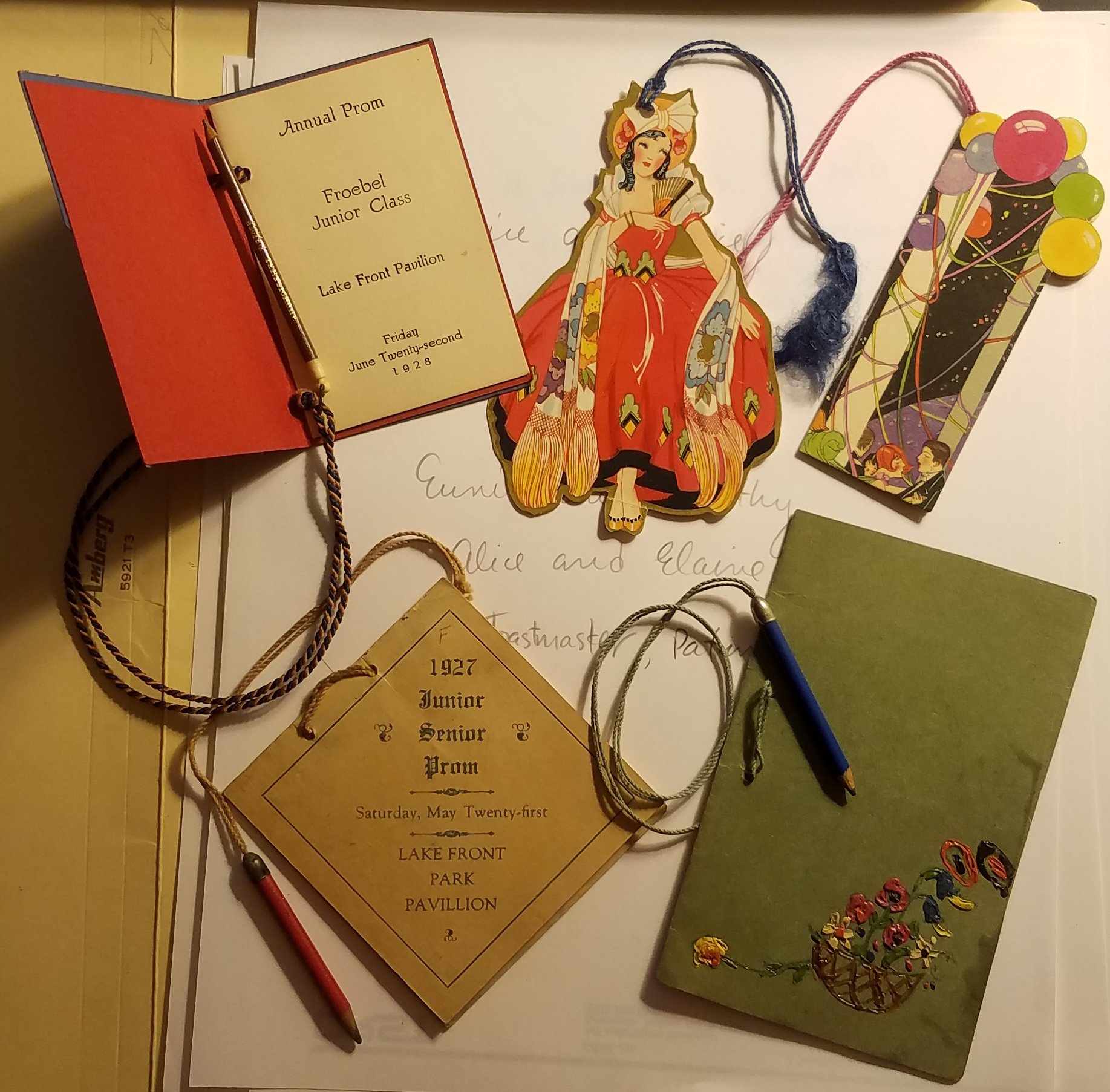
She danced with Rudy at the Junior Senior Prom on Saturday, May 21, 1927, in the Lake Front Pavilion.
They quoted Milton on the dance card, “Haste thee, nymph, and bring with thee, Jest, and youthful jollity.”
Rudy signed it ten times, although toward the end of the event he began using ditto marks. Maybe she wrote his name, it’s not clear. The enthusiasm of seeing Rudy’s name written waned by music from the Play Boy Orchestra near Lake Michigan. Ditto marks came to mean something else for the cohort of their children.
The couple married and lived a long life. The reason I know and have these souvenirs is they were abandoned in a box I bought for a buck at their estate auction.
I can’t keep them forever either.
Outside after waking, the sky was clear, the stars bright. A lone aircraft made its way to the Cedar Rapids airport, crossing the starry night southwest of me. It violated a serenity of wonder… about the stars, about the dancing couple before the financial crash that ended the era.
I’m left with signatures on a dance card, but not the dance. It would take a partner to reenact the dance. My partner is sleeping and I’m alone under this starry night still full of wonder.
At noon yesterday I decided to take a 15-hour break from reading news.
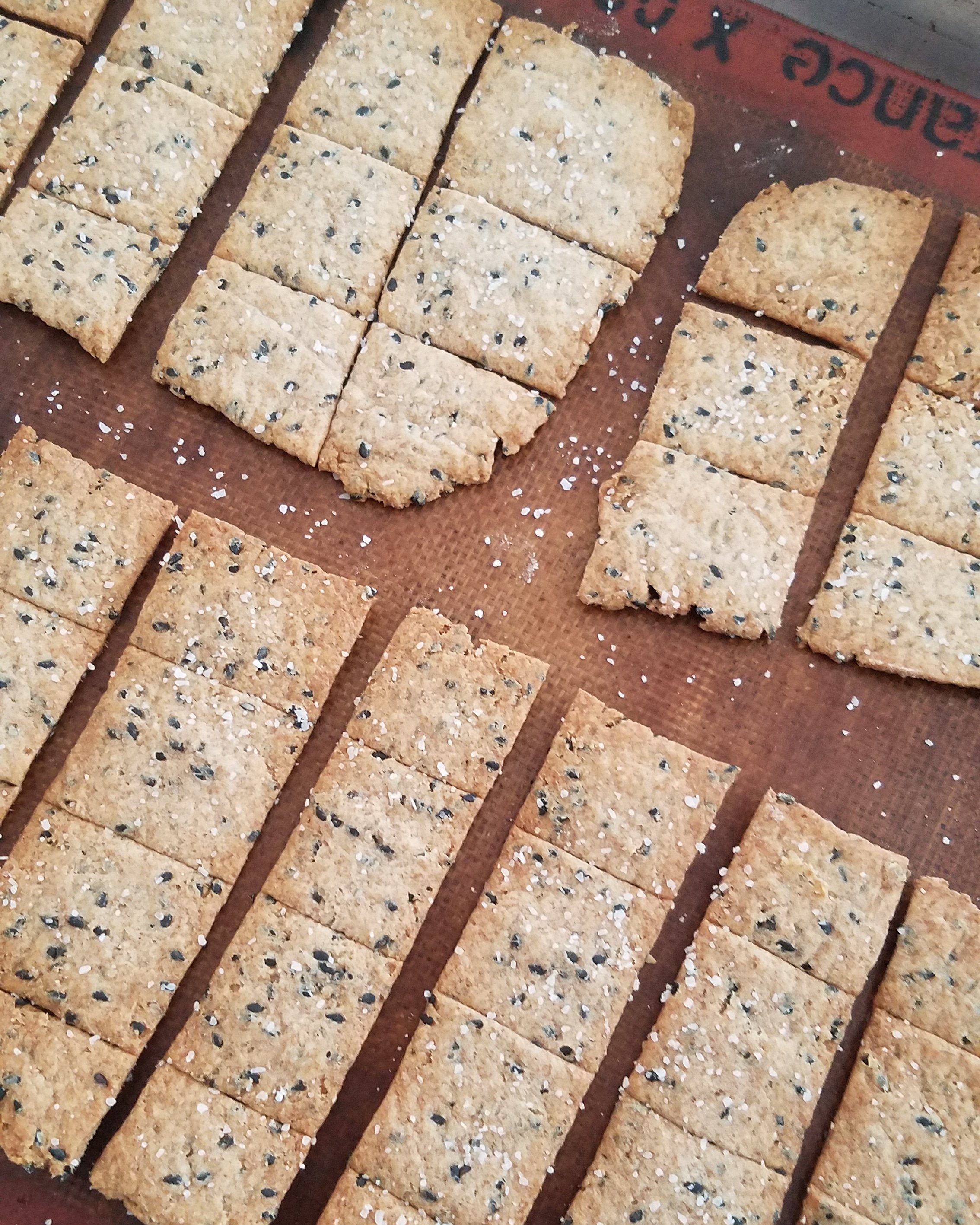
I got work done in the house, including making the crackers in this photo.
I slept through the night and feel ready to go. There is pent up demand to get outside in the garden, conditions are favorable, it’s all systems go.
Part of dealing with the coronavirus pandemic is managing time while social distancing. When the weather keeps us indoors for a couple of days we don’t want to go crazy. The news makes me crazy. Now that I recognize that, it’s possible to do something about it.
Once the sun comes up, it’s out to the garden I go.
The coronavirus changed and is changing how we live, temporarily and permanently.
Today we don’t understand what is on the other side of the pandemic nor when that will be. I’ve been working to figure it out.
Ambient temperatures were chilly all day yesterday with a strong, consistent breeze. The ground was too wet to dig in the garden. It was a sunny and picture book spring day. Even though there is a lot to do outside, Monday wasn’t a day to do it.
In the garage I planted a third flat of spinach for the garden:
Bloomsdale Long Standing Spinach, Ferry-Morse, 45 days.
As if to show the economy was still operating, the United States Postal Service delivered my Practical Farmers of Iowa Spring Issue, a Land’s End catalogue, and a box of onion starts just when I need to plant them. I know what politicians mean when they say “open up the economy,” yet ask how does one re-start something that never shut down?
U.S. Treasury Secretary Steven Mnuchin announced yesterday personal stimulus payments had begun to be issued in waves with 80 million of them to be sent by Wednesday. The government knows how to spend our money, that’s for sure. If our household receives what we hear in the news that would be equivalent to three months take-home pay at the home, farm and auto supply store. (While I was typing the stimulus hit our bank account).
I ran an expense analysis of our household budget while dodging the windy work outside. With or without the stimulus payment we would be able to pay regular living expenses for the rest of the year without sacrificing our lifestyle. The coronavirus has me asking whether I should even return to my part time job.
In Iowa we don’t know the spread of COVID-19. We aren’t doing much testing. We have little visibility into what the governor or the Iowa Department of Public Health are doing. Yesterday Katarina Sostaric, state government reporter for Iowa Public Radio posted on Twitter:
Iowa’s #COVID19 testing is still limited and actual case numbers are likely much higher than those reported by the state. Today Gov. Reynolds said, “We’ve been in substantial spread for quite some time…you should just assume it’s in your community no matter where you live.”
Based on Reynolds’ statement I’m not comfortable returning to work after my unpaid leave of absence which ends May 5. The terms of the program are if I seek additional time off, I will have to resign. If I want to return to work after that, I have to reapply. If I do resign the chances of me re-applying are pretty slight. There’s ample time to consider this. Resigning is how I’m leaning today.
What would I do if I quit? Go on living.
Since the coronavirus, combined with Republican efforts to kill the postal service, have them on the brink, I will buy some postage and send a few post cards. Not sure that will save them, but it’s something. Every bit helps.
A gentle rain fell after noon in Big Grove Township. Forecast to be a quarter of an inch, it continued into nightfall, slow and gentle. It was the kind of spring rain we need and have come to expect.
Neighbors worked in our yards in the morning: trimming trees, collecting brush, gardening and mowing. Children were supervised by parents and the sound of their laughter penetrated the neighborhood. With the coronavirus pandemic we checked in with each other, chatted some, maintained our distance, then returned focus to the work at hand.
After planting I picked up and cleaned garden fencing from where I laid it to prepare the garden plots. Rolled bundles are piled near the Bur Oak trees until needed. For now, nothing is growing above ground that wildlife will eat.
I seeded the last of the early crops in the ground before the rain started:
The portable greenhouse is filling so I consolidated seedlings to make room for what I’ll bring back from the farm today. I gave a tray of broccoli and kale to a neighbor for their garden. Later I’ll post an offer of free seedlings for neighbors on our social media group. Kale is not as popular as I’d like and not everyone gardens.
Inside, I made luncheon of a cheese sandwich with a single slice of bread, spooned out some pickles, and turned to what would be the afternoon’s work.
I have two archival-style boxes of postcards containing hundreds collected from all over, maybe a couple thousand in all. Some were sent to me. Some purchased while traveling in the United States, Canada and Europe. Some bought at auctions for a dollar or two bid per bundle. When I visited second hand stores, if they had a postcard section I browsed for good ones. Post cards are an inexpensive collectible.
At some point I segregated those with more personal meaning from the boxes and put them in trunks with other memorabilia from those periods of my early life. Our parents used to take us to Weed Park in Muscatine, driving along Highway 61 from Davenport in our 1959 Ford. I have a photograph of Dad, my brother, my sister and me standing near the car with the Mississippi River in the background. I put the postcards of Weed Park in the trunk from the time before Father died.
I went through both boxes and looked at every card during a single, four-hour shift.
What strikes me about those hours is the nature of memory. Not only do I have memories evoked by artifacts, I have the sense of being in those places literally.
For example, today is the 75th anniversary of Franklin Delano Roosevelt’s death in Warm Springs, Georgia. In June 1976 four of us left Fort Benning, Georgia where we were taking infantry officer training and drove the 45 miles to visit. We saw the chair where FDR died and I bought a postcard from the gift shop.
I found the postcard in one of the boxes last night. It had the date and names of the other three soldiers who went with me written on the back. I saw myself in that room again, just like it was in the present. What is that experience? I had to look it up.
After consolidation, long-term memories are stored throughout the brain as groups of neurons that are primed to fire together in the same pattern that created the original experience, and each component of a memory is stored in the brain area that initiated it (e.g. groups of neurons in the visual cortex store a sight, neurons in the amygdala store the associated emotion, etc). Indeed, it seems that they may even be encoded redundantly, several times, in various parts of the cortex, so that, if one engram (or memory trace) is wiped out, there are duplicates, or alternative pathways, elsewhere, through which the memory may still be retrieved.
Therefore, contrary to the popular notion, memories are not stored in our brains like books on library shelves but must be actively reconstructed from elements scattered throughout various areas of the brain by the encoding process. Memory storage is, therefore, an ongoing process of reclassification resulting from continuous changes in our neural pathways, and parallel processing of information in our brains.
Shorter version: the postcard caused a group of neurons which physically comprised the memory to recreate it in real time.
This is particularly important when writing a memoir. Perhaps the hardest part of my work has been to resist the influence of today’s life on memories retained. Historians refer to this as presentism, or an “uncritical adherence to present-day attitudes, especially the tendency to interpret past events in terms of modern values and concepts.” It is important to learn how to live from memories and experiences we’ve had. In our search for meaning today, it’s important to refrain from assigning arbitrary values to our past. We have to let the memories exist and pay attention to what they are.
In the 50 years since Father died I frequently revisited the memory of the night men from the meat-packing plant arrived at our home to console Mother while we waited in our parents’ bedroom for news. I suppose the worst parts of those days after his death are blocked, or whatever psychological term represents that. I don’t want to put a name to that blocking process because while other memories physically exist in my brain, over the years I’ve adopted a view, or perspective about what that memory is. While that may provide comfort, when writing autobiography we have to work at retrieving that contemporaneous experience. It must be what it is. That distinction between the memory told and the actual memory is at the core of what I’m about in my writing.
When I woke last night to use the bathroom I thought about what I would write this morning. The shift of postcards prompted something… a lot of somethings. It’s not that complicated. In the rush of viewing memories prompted by a thousand or more artifacts, in a single sitting, we must get a grip on the quantity and manage it. In the end, though, do we need to do that?
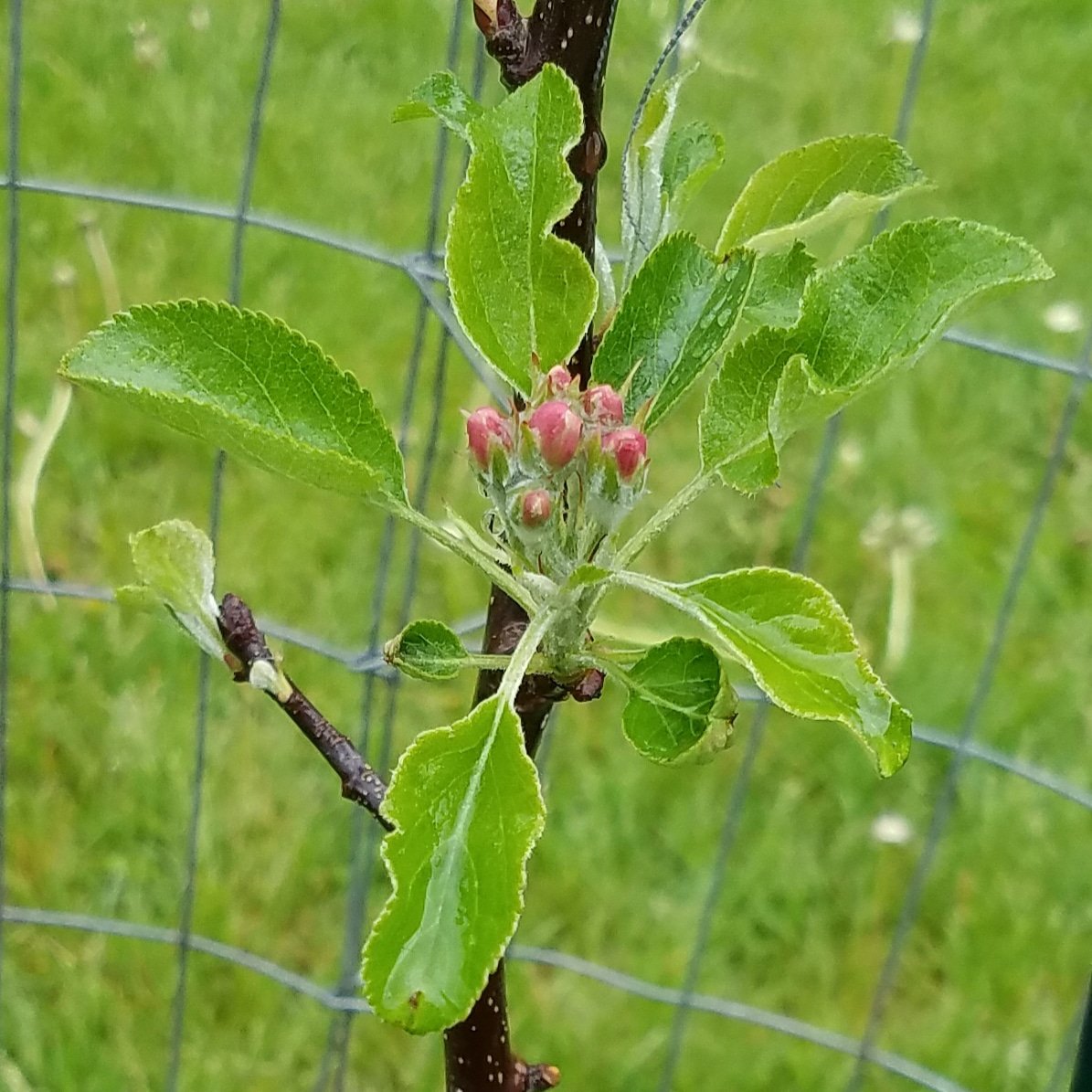
Is it better to live in a hurricane of memories and hope for survival? It is better to confront the wind than hide from it. That is my only conclusion today, except for the notion I must post a photo of our Bluebells for complicated reasons.
Tuesday was the last time I started the automobiles.
I plan a drive in each of them later today to make sure the batteries don’t drain. With gasoline selling for $1.259 per gallon I’ll don a protective mask and gloves and fill the one I missed while out to buy groceries.
It’s a maintenance mode of living as we wait out the coronavirus pandemic.
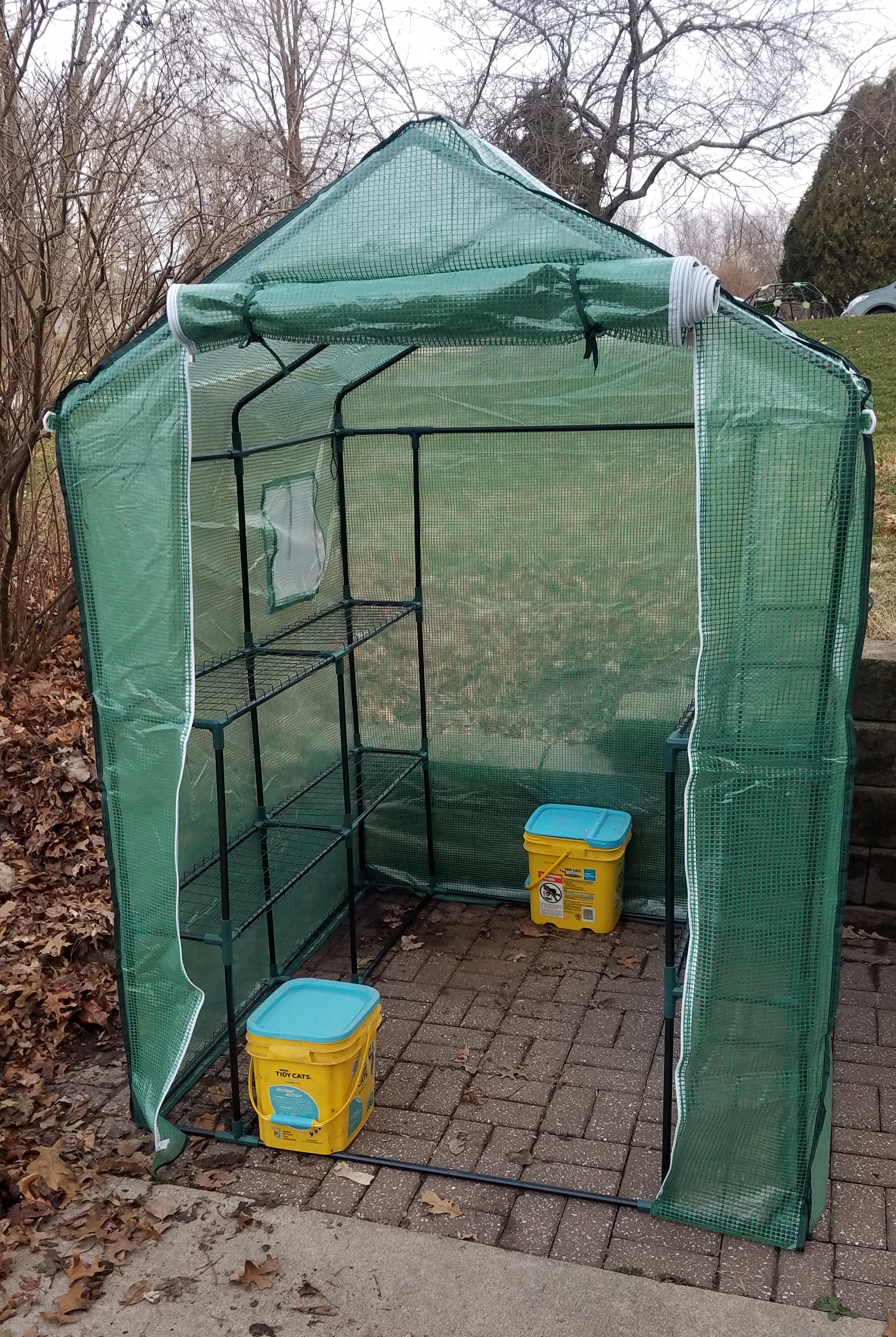
Strong gusts of wind had me bring the greenhouse seedlings into the garage yesterday afternoon. If it did blow over, I didn’t want to lose the work done since February. It’s still standing this morning.
Overnight ambient temperature dropped below freezing, so when I return the plants to their shelves after sunrise I’m going to run a space heater out to warm them. The forecast is ambient temperatures around 50 degrees after noon. The sun should take over warming by then.
The pandemic is real and people who own and operate small businesses are getting antsy. Under normal circumstances a small business owner is eligible for unemployment payments only if they pay in for themselves or their employees. Most sole proprietorship operators don’t.
There is discussion in the national media about stimulus bill funding for small business owner payrolls to make sure they make it to the other side of the pandemic. People I know in this situation, who have applied for unemployment to Iowa Workforce Development, had their claims denied. There is a lack of information about how this provision of the stimulus will work, or whether it even exists. Bottom line is the federal government’s response to the coronavirus pandemic has been too little, too late.
With non-essential business shut down three weeks ago, small business operators are having trouble making ends meet without their regular cash flow. Some are considering returning to work to resolve the stress. It’s easy to say that’s not a good idea during a period of contagion, but our household is financially stable and as such, mine is a perspective of privilege.
As retired workers, our family relies on our Social Security pensions. Politicians floated the idea of increasing Social Security payments temporarily this week. That doesn’t seem necessary. The main thing about Social Security should be to ensure that the trust fund is solvent now and beyond 2034 when if nothing is done it will begin to run out of money. That’s a worry for another day in light of the pandemic.
After Tuesday’s trip to the wholesale club we are provisioned so we can make it through the end of the pandemic. According to current projections the peak is expected to be April 27 although it will take some time past that date for the CDC or Iowa Department of Public Health to give us an all-clear.
For now, I’m focused on planting the garden. If the pandemic continues into summer, we’ll need the produce.




 Journey Home
You must be logged in to post a comment.