Categories
Writing

Snow in the Grove

Garden seedlings watching it snow from indoors.

Precipitation was forecast all day Wednesday so I did my exercising indoors. On Tuesday, I went to town and bought a Powerball ticket. I understand the odds of winning are against me. Most days I fail to match a single drawn number. Other days, I don’t buy a ticket. At least we can depend upon it snowing in early spring.

I’ve been working on our high school class reunion. We missed the 50th because of the coronavirus pandemic. We scheduled a 50th-ish reunion this July. The former classmates on the planning committee are all great.

When I think of high school, I return to the most dominant feature: the death of Father in an industrial accident on Feb. 1, 1969. Dealing with his sudden death occupied me during the remaining 16 months of school. It was a brutal and clear demarcation of my life. There was a before and an after which defined who I was, and who I would be.

High school was no fun. I checked things off while in school. Tried out for football and swimming and didn’t make either team. Played intramural basketball with some of my nerdy friends plus the one Hispanic person in our class. Sang in chorus all four years. Was inducted into the National Honor Society. Was on the stage crew. Got a part time job after school at a local department store. Bought a used Volkswagen Beetle to get around and began driving it to school. Practiced and played guitar, taking lessons from someone not far from our neighborhood. While this seems bucolic as written, whatever was pleasant about it vanished with Father’s death.

I was lucky to form a new group of friends after Father died. They helped me through a turbulent time. My new friends helped me cope with finishing high school, and getting through college. Not to mention their help with the pressures of a society in transition in the late 1960s and early ’70s.

I had only begun to discuss how I would live my life with Father when he did not return from the meat packing plant. He didn’t have any suggestions as we discussed college and beyond. I enrolled in engineering classes at university but couldn’t master calculus or the slide rule. Without my new friends, I would have drifted into oblivion. With their help, I graduated in four years with a degree in English.

It is good to remember all this about high school now. For that, the reunion and its planning will serve. I still have friends among former classmates. I enjoy thinking about them while stuck indoors during this spring snowfall. It will be good to see them again. The odds of that are better than winning the Powerball.

Categories
Writing

Turning a Corner

Draft chapter page April 1, 2024

With chapters of part one of my autobiography named and numbered, it feels I turned a corner from being stuck, to completing the narrative this year. As soon as I typed them all and shrunk them to fit on a single page, it became clear what I had to do next to produce the first volume.

In naming the chapters I re-read part one. The narrative seems sound. The story has defined beginnings, middle points, and an ending. The ending leaves enough suspense to engage readers until I finish part two. Finishing part one this year is definitely possible.

The next step is to return to the text and make a “final rough draft.” What that means is to edit chapter by chapter and resolve any open issues through editing. I had a tendency to defer open issues until “later.” With this phase of the writing, there will be no “later.”

On Tuesday I finished the Dedication, Preface and Chapter One. The early chapters have been worked the most so editing should proceed quickly. There are 62 chapters, so if I proceed with due haste, I should have a finished final rough draft by Labor Day. Some of the later chapters were rushed last year in the interest of “completion.” They will need more work than earlier ones.

Once the final rough draft is finished, I plan to find a reader or two to provide feedback. Many thanks to the three early readers. I don’t want to wear them out with this project so I’m picking new ones. I will also price a professional reader to go through and make suggestions. If I can afford it, I’ll go that route. Following the readers, there will be corrections, more editing and hopefully a “final” product..

At that point, I will need to weigh options. While there is finality in “final rough draft,” is a book ever really final? If any changes are needed — a chapter added, narrative clarified — that will be the time for it.

Once I settle on the narrative, formatting is next. The hodge-podge of cutting and pasting that produced it will have been pasteurized by then. I can focus on making paragraphs, quotes, punctuation, line spacing, chapter breaks, and spelling consistent throughout. This is a kind of work that should feel good when finished, but will be a bear while going through it.

I will need to decide what to call my maternal grandmother. I visit her character at least ten times in the narrative. She was referred to by her birth name Salomea,* nickname Mae, Mae Robbins, Mae Nadolski, Grandmother, and Busha over the years. This will be the time to decide usage so readers recognize her wherever she appears..

While we don’t know exactly what this year will bring, I’m hopeful that by early 2025 I will be holding this book in my hand.

*Footnote: It seems possible Grandmother was named for Salomea of Poland, a princess and queen during the 13th Century.

Categories
Writing

Weekly Journal 2024-03-31

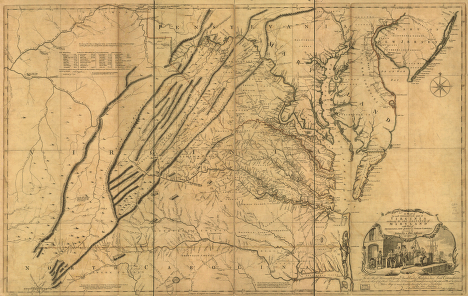
Early Virginia map.

It is difficult to grasp that one fourth of the year is gone. Days gallop by and run into each other. It is an acceleration I neither prompted nor enjoy. This week’s journal is a bit of hodge-podge. Sometimes that’s how the words fall.

Chapters

One of my early autobiography readers recommended breaking the narrative into chapters. This has been the single most useful piece of advice I received. With chapters, the stream of consciousness style – emulating Jack Kerouac – is parceled into understandable bits suitable for people with shorter attention spans. Likewise, it enables me to consolidate writing about specific topics in one place as appropriate. With chapters I have a better understanding of where the narrative is and is going. It will enable me to determine what’s missing and what needs cutting. Part I stands at 67,271 words, Part II at 60,950.

With that in mind, I plan to push through spring and summer to finish Part I, the story leading to 1982. If all goes well, I’ll self-published that part in early 2025.

Reading more, retaining less

I am reading more yet retaining less of what I read. I don’t like it. I have a shelf of recently read books and only a few scenes in a small number of them stand out. Not sure what, if anything, to do about that.

Reading 25 pages per day is a first priority. I make coffee, tend to chores and then read. My reading habits go way back. Here is an excerpt from my autobiography.

When I was an altar boy at Holy Family Church, Monsignor Barnes influenced me, although I didn’t realize it at the time. He taught me to structure things, with the most memorable advice being about reading. He said, set aside a goal in reading. Read 50 pages each day and stick to your goal. I have not followed that advice religiously, and lapsed in my reading, yet it became part of me, continuing into my seventies.

Unpublished autobiography.

There may be a self-improvement project in this. Unlike many, I won’t give up on reading.

The Jacob’s Ladder

In my quest to read one more book in March, I headed to my poetry shelves and picked Denise Levertov’s The Jacob’s Ladder. I wrote a brief review: “These poems are rooted in a post-war ecosystem of ideas, images, and language. As such, they are a snapshot of that period, and less relevant to the sensibilities of the third decade of the 21st Century. I don’t regret reading them. Some images stand out, especially in the namesake poem. Returning to them seems unlikely.” So it goes. Seven books read in March.

Disposing of Old Medicine

I took some old medicine to the United Methodist Church where pharmacy students from university would dispose of it. As I opened the door, about 15 sets of eyes greeted me, saying I was their first person. I felt obligated to sit down and talk about vitamins and medicine I am taking. It would have been rude to just drop my pills and leave.

The discussion went on to nutrition, dietary practices, sweet corn in the area, gardening, grocery shopping, everything a gardener would have to say about life. They offered choice of gifts and I picked a pill splitter over the multiple pill planning devices. They asked permission to use a photograph with me in it. I said okay.

Green Up

Leaves are budding on lilacs, fruit trees, and all around. Spring flowers pushed through the surface of the soil and flower buds have formed on some of them. This is a period of hope and promise. A cyclical explosion of greenery for which I’m ready.

The first time I heard the phrase “green up” was in the motion picture The Trail of the Lonesome Pine, based on the book of the same name, written by John Fox Jr. It is set near Big Stone Gap, Virginia, about 17 miles from Glamorgan where Father was born.

“I’ve been talking to your pappy,” Dave Tolliver said. “We’s going to get married.”

“When?” queried his cousin June Tolliver.

“Hog killing time. Your pappy has invited all the Tollivers. The whole kit and boodle of them.”

“I ain’t marrying till green up,” June Tolliver said. “Spring’s always the time to do them things. Then it’ll be next green up and the next. I don’t feel nothing.”

The Trail of the Lonesome Pine, Paramount Pictures, March 13, 1936.

Despite the speed with which time flies, I am leading a decent life. Decent enough to write about it a while longer. Thanks for reading.

Categories
Living in Society

20 Influential Books

Since I threw in with a bunch of readers, artists, photographers, and writers on social media, I’m learning a lot about being “social” in that context. Mainly, we have to interact or what’s the point? I also try to say positive things when I do comment about a piece of writing, painting, photograph or whatnot.

There are games. One of them was to post as follows:

The challenge is to choose 20 books that greatly influenced you. One book per day, for 20 consecutive days. No explanations, no reviews, just covers. (Unless you ask…)

Recurring meme on Threads. March 16, 2024.

I’m going to try this and see if it yields engagement. Positive engagement is what social media is all about. NOT in order of importance, but in the order I posted them:

  • Henderson the Rain King by Saul Bellow.
  • The White Album by Joan Didion.
  • The Politics of History by Howard Zinn.
  • Spring and All by William Carlos Williams.
  • A Prayer for Owen Meany by John Irving.
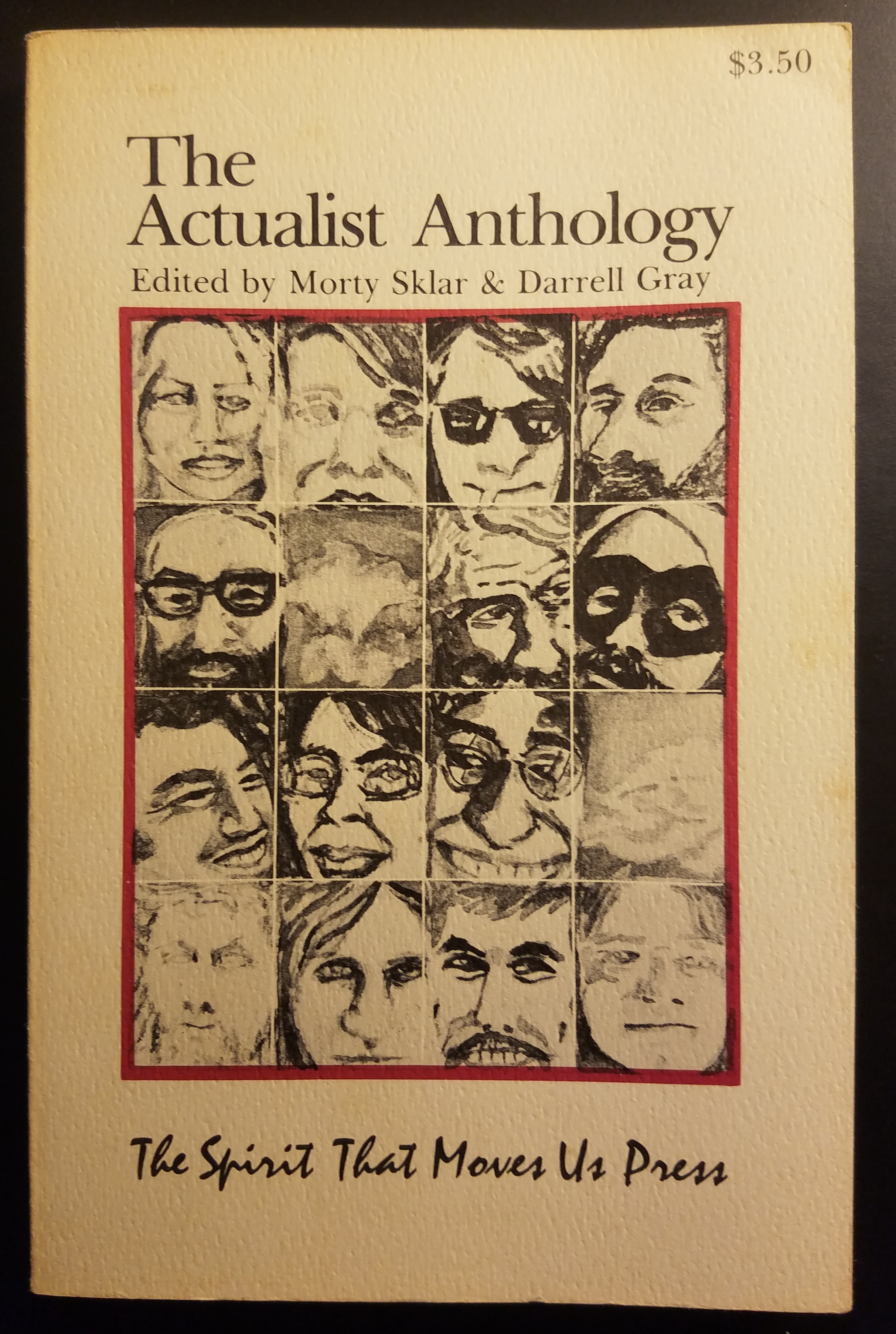
  • The Actualist Anthology edited by Morty Sklar and Darrell Gray.
  • Joy of Cooking by Irma Rombauer and Marion Rombauer Becker.
  • The Photographer’s Eye by John Szarkowski.
  • The Souls of Black Folk by W.E.B. DuBois.
  • Dubliners by James Joyce.
  • Adventures: Rhymes and Designs by Vachel Lindsay.
  • Complete Poems by Carl Sandburg.
  • Pablo Picasso: A Retrospective by New York Museum of Modern Art.
  • The End of the World as We Know It by Donald Kaul.
  • An Everlasting Meal: Cooking with Economy and Grace by Tamar Adler.
  • The Interpretation of Cultures by Clifford Geertz.
  • Lake Wobegon Days by Garrison Keillor.
  • The Assault on Reason by Al Gore.
  • What Is Cinema? by Andre Bazin.
  • I Seem To Be A Verb by R. Buckminster Fuller, et. al.

Editor’s Note: I posted through the 13th photo and this project is something of a fizzle. Threads views began minimally and decreased from there. I will finish out the series, but won’t try it again.

Categories
Writing

50 Years of Letters

Writing desk circa 1980.

I wrote my first letter to the editor of a newspaper in 1974, so I’m approaching my 50th anniversary of letter writing. What do I make of this?

I appreciate the editors of the Cedar Rapids Gazette for publishing a daily letters section. Fewer daily papers do that in 2024, if they even remained in business.

Before social media rose to fill our every need to chat, the Gazette rose to become a dominant Iowa newspaper by circulation. To a letter writer, that means a reach of more than 30,000 subscribers. Social media can’t compare to that for everyday folk like me.

The Gazette’s readers are engaged. I get feedback about my letters from community members in person, via email, and on social media posts. Over the years I had my share of anonymous hate mail based on something I wrote. A letter writer seeks such engagement if nothing else.

Finally, the opinion page editors will reject a letter that is poorly worded, or overcome by events. They exercise a gentle editor’s hand which improves my original composition. I rarely complain about editors and usually accept their edits as reasonable.

Who knows how long I will continue to write? I’m sure some have had enough of my opinions. In a society that is increasingly complex, where more people are having opinions, letters to the editor remain an important part of public dialogue.

I wrote 50 years worth. Now it’s your turn.

~ Published in the March 29, 2024 edition of the Cedar Rapids Gazette.

Categories
Environment

Naming Things

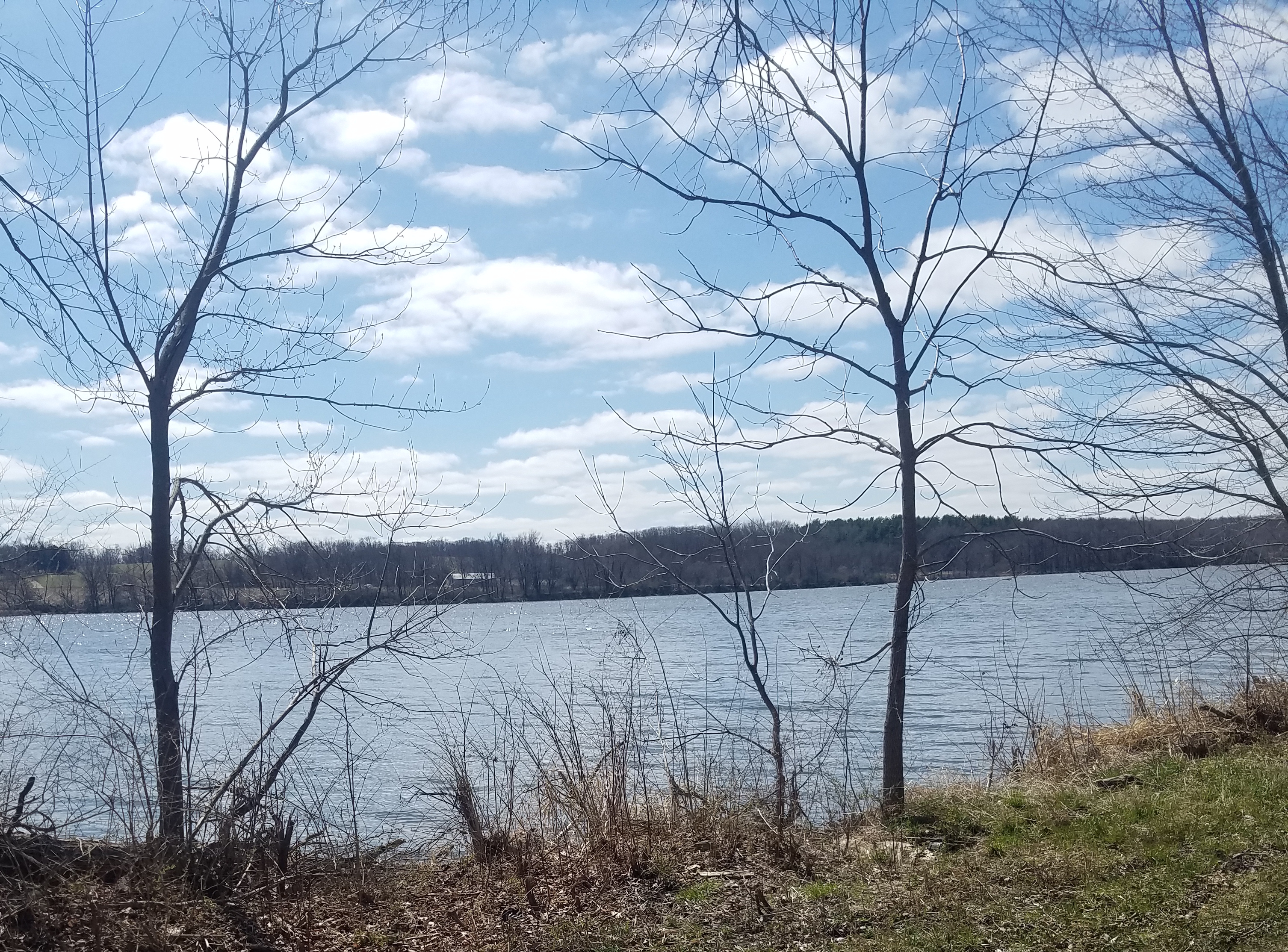
On the state park trail on March 18, 2024.

Naming things found in nature reflects an urge to own, control, or possess them. I have no interest in that. I seek to be outdoors and observe everything natural with all my senses. I don’t object to knowing the formal taxonomic classification of a plant, insect, animal or other living thing. With increased experience in nature, some knowledge of genus and species comes naturally. For example, when I see a Blue Jay, I know the name. What I don’t want is worry about naming everything in my environment.

I began using the Merlin Bird App last week to interpret which songbirds are nearby. Identifying bird sounds is a subset of ornithology. On Tuesday, the American Robin, Northern Cardinal, and American Crow showed up on a windy morning. The app helps me understand nature. While I’m working outdoors all kinds of sounds become a background noise for my activity: birds, vehicle traffic, weather, local human and animal activity, and more. I want to recognize when something different stands out from the background. What new bird might I see? What new world will be unveiled?

As a gardener, I care a lot about insect and plant life. Which insects are beneficial, which are predators in this specific vegetable garden? Which plants are weeds? Which are edible or poisonous? I’ve been gardening since 1983, and am getting better at identification each year. I see behavior of white butterflies that lay eggs on my cruciferous vegetable leaves yet have no idea what they are called. I’m not that interested in learning the name, just in identifying their behavior as a pest.

When I move indoors, my view toward naming is not much different.

I’ve been writing about my early life before the seventh grade. I’m lucky I didn’t obsess over the naming of things. My classroom focus was on the mysticism of the Catholic Church and stories told by my teachers and classmates. Charlotte’s Web in fourth grade was pivotal. I sang, learned to play music, and played games with classmates in the playground. We knew the game was called “Four Square” yet what mattered was getting a chance to play after waiting patiently for our turn in queue near the court painted on the asphalt. These activities didn’t require a name.

When I go to the pantry, I sometimes can’t recall what things are. I know we have almond and barley flour, yet to identify them takes tasting a pinch. Some in the household says I should label things. Maybe, yet I resist. I don’t know if my reasons are good, but I don’t want to be limited by the confines of having to know things by name. In the kitchen, imagination and improvisation are the key dynamics, even when it comes to the “science” of baking. Not once have I mistaken salt for sugar.

What is the story of nature? It is more complex than I can understand. I’d call mine a Cartesian outlook and that means I live in my senses most of the time. What may be “out there” beyond senses, we have no way of knowing. We are taught nature is out there. Equally so, there is no way to own, control, or possess things we sense with any permanence. Living this way is a matter of faith, not requiring any naming. We are better off by not naming things we experience.

As long as I’m getting along in society, I’m not going to spend undue amounts of time with this. I’ll be the better for that.

Categories
Writing

Last Day of Winter

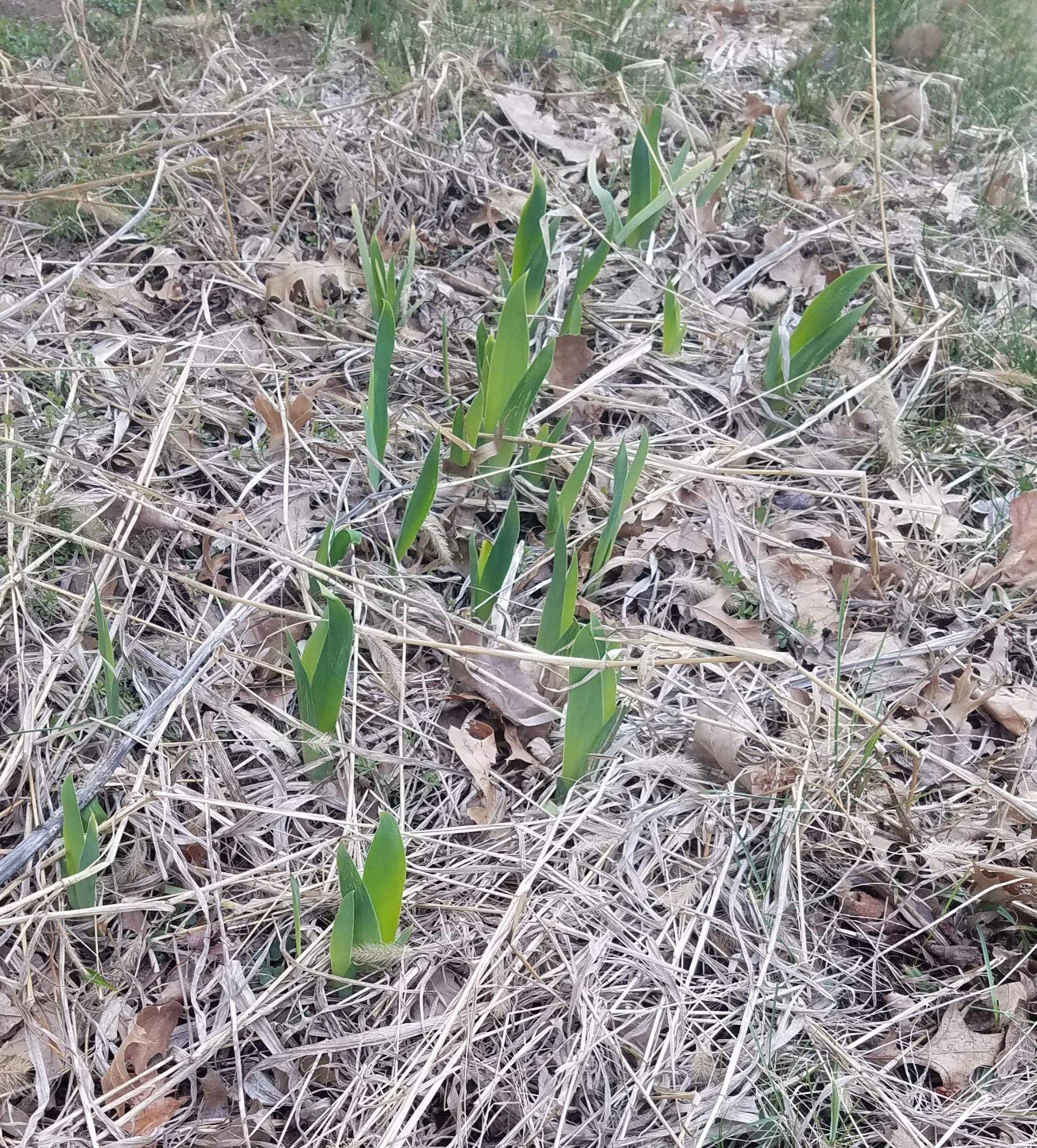
Iris poking through dead straw on March 18, 2024.

There were a couple of snowfalls this year yet we haven’t really had a winter. The vernal equinox arrives today at 10:06 p.m. Central Daylight Time. Spring is here, ready or not.

Four years ago, on March 11, 2020, the World Health Organization declared COVID-19 a pandemic. In so many ways, that changed everything. I’m still processing what happened. I’m also settling into the new life I created in the middle of the shutdown. It changed my attitude toward living.

People I know continue to get COVID, as recently as this month. While it is not the same as influenza, it appears to be as persistent. I am current on vaccinations for COVID (and everything else) yet the constant mutation of the coronavirus indicates there will be no absolute prevention.

I remember the spring of 2020 and it was similar to this year. About that time someone had left home to enter a nursing home and neighbors dug and split their iris plants. I got some bulbs and planted them. They come up every year. I hope to see them rise for many more. All we can do is marvel at their essential being and appreciate them for what they are.

Spring is here..

Categories
Writing

Weekly Journal 2024-3-17

Pizza at breakfast.

A friend returned from a trip to Thailand and we had a driveway conversation about it. We first worked together on a political campaign in 2004, so I’ve known her 20 years. We looked at photos and videos on a handheld device. One video had her swimming in a river with a five-year-old elephant. It was good to catch up.

The reason for the reunion was to collect signatures on an Iowa House candidate’s nominating petition. We have been working together so long, we speak to each other in shorthand about politics. Between us, on short notice, we collected 11 signatures. The candidate had more than the 50 required by the Secretary of State.

Later that day, another friend stopped by to pick up the petitions and deliver them to the candidate. We had a long conversation as well. I knew his father before him and the three of us all worked on Barack Obama’s 2008 campaign. Those were heady times. I wrote a post about this in 2008. We talked about the House District and who we might pull in to work on the campaign. This cycle, I plan to be a worker bee, not an organizer. I think people have heard just about enough from me. There is interest in doing better in the new district.

Living with a vegan makes for strange breakfasts. Any dairy products I consume happens mostly in the morning. Missing home made pizzas, I made one for breakfast. It is not a big change to cook a pizza for one. Instead of a cup of water I began with a generous half cup. It made a pie just the right size.

Since garlic was up, I dug around in the mulch to make sure the leaves were penetrating the straw. I planted about 100 head of garlic in October. I lost maybe two head under the mulch. Bodes well for the July harvest.

On Thursday I used my Merlin Bird ID app outside the garage. In a short time it identified these birds: Northern Cardinal, American Robin, House Sparrow, Blue Jay, White-throated Sparrow, American Crow, Red-winged Blackbird, House Finch, Tufted Titmouse, Eurasian Tree Sparrow, and Canada Goose.

Since I downloaded the app, I’ve taken to standing on the steps in front of our house each day and letting it record for a couple of minutes. It’s a way to see who is in the neighborhood and for what I should look when I start working outdoors. This is the most fun I’ve had in a while.

The week seemed productive yet I’m losing perspective. It’s like that Lynda Randle song Cousin Al used to play each day on the AM radio across the Alabama-Georgia line when I lived in Columbus, Georgia:

One day at a time, sweet Jesus
That's all I'm asking of You

Just give me the strength to do everyday
What I have to do

Yesterday's gone, sweet Jesus
And tomorrow may never be mine
God help me today
Show me the way
One day at a time
Categories
Writing

Stepping Back

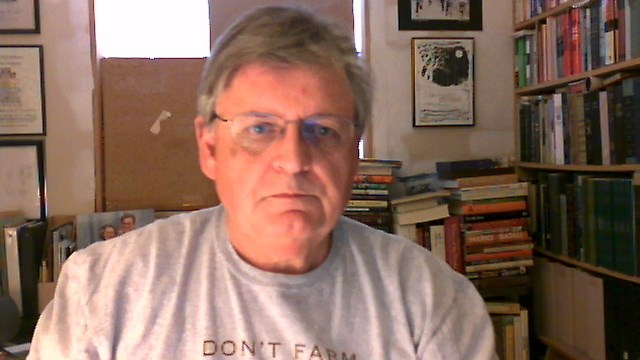
Selfie taken with computer video camera on April 28, 2020, the day I retired from paid work.

When the World Health Organization declared COVID-19 a pandemic on March 11, 2020, I began pulling back from engagement in society. That process continued when I decided to retire from work at the home, farm and auto supply store on April 28 that year. Since then, I have distanced myself from almost everything and developed a new way of engaging in society.

I don’t spend as much time with people as I did. My conversational style shows it.

The main part of my days is spent at home with a weekly trip to the grocery store and a couple other shopping trips each month. The automobile is not getting many miles. If there is a reason, I will travel to the county seat, to my home town, or to Chicago or Des Moines to run errands or visit family and friends. That is about it.

The last activity I dropped was membership in the county Democratic Party central committee. I led the January 15 precinct caucus and will be attending the county convention on March 23. After that, I will become a worker bee in politics, not an organizer. I’m good with the change.

A majority of my time will be divided between working to maintain and fix up our home, writing, and sorting through the accumulation of too much stuff. So far, that keeps me busy.

This time at home as a writer is what I worked for all my life. If I am stepping back from society, I am stepping into a new life lived the way I want. As long as my health holds and we have money enough to live, I’ll be alright.

Since I made it this far, I’ll quote Douglas MacArthur, “Old soldiers never die, they just fade away.” Already, I can hardly see my shadow on a sunny day.

Categories
Writing

To Be Read Stack

The author’s official, partial to be read stack.

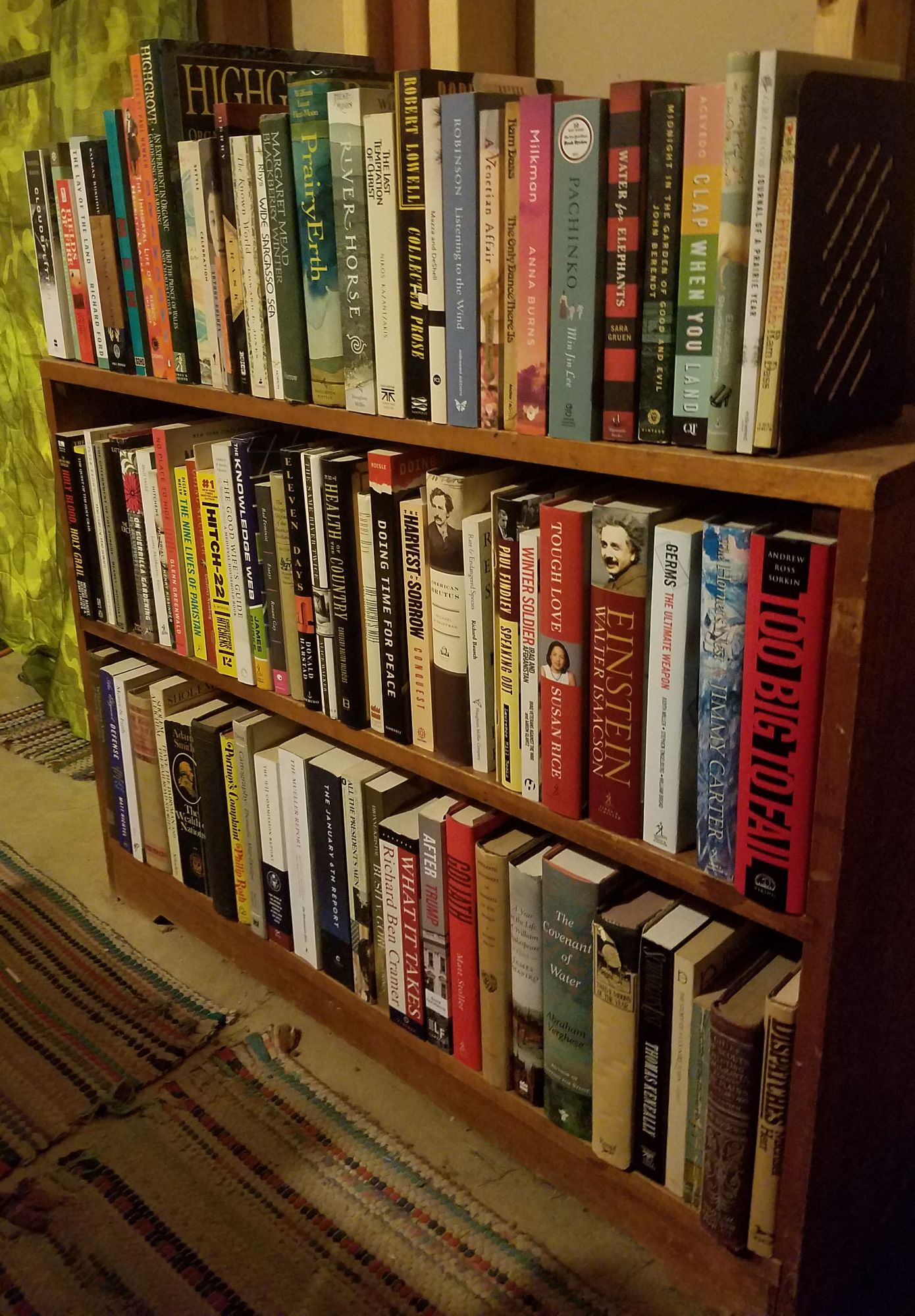
I threw in with a group of readers, writers, artists, and photographers when I joined Threads to replace my X account. There is a lot of discussion about books to be read stacks. You know what I mean: that pile of acquired books that grows and eventually might be read. What is the right number to have? 100? 200? More? Less? There is not a right answer. I have a completely full bookcase in one of the passageways leading to my writing room. When it’s time for the next book, I browse it like I am in a personal book store. To be read stacks got me thinking about how to select the next book.

Book selection is a hodge-podge process in my world. I diligently read at least 25 pages per day. When it’s time for the next book, sometimes I know what to pick up ahead of time and sometimes I don’t. I can be like a dog chasing a squirrel. There is little interest in being disciplined here. Less than there should be. I tend to pick recently acquired books for next.

At the same time, there are books I own I want to get to. For example, I’m building a collection of books about Florida, Virginia, Minnesota and other places important to my family history. Those are maybe 50 books organized on shelves for easy grabbing for research. Somehow those need to be worked into the rotation.

Referrals are the most important part of the process: referrals from friends, social media (Threads and Facebook mainly), from the footnotes of other books, and from what my pals on Goodreads are reading. I used to just buy those books and find a spot for them.

While I have more than a thousand books in my library to be read (maybe two thousand, who’s counting?), I slowed the purchasing process. When I find a book to read from any source, I put it in my Amazon shopping cart and remove it to save for later. That builds a reading list without buying a book. In the past, when I filled my cart, I used to just place the order. No more.

I have a Goodreads account with a few friends. The Goodreads to be read list exists yet I don’t find it as useful as the Amazon list. I use them both when I’m stumped.

When the next book is up, from any source, and I don’t have a copy, I check availability on the online catalogue at the public library. This is a new process. We are in a small community so sometimes they have it and sometimes they don’t. If they have it, I place a hold and pick it up on the next trip to town.

I keep nine shelves of more than 400 books of poetry. I use them to palate cleanse or for inspiration. There are so many unread poems they could keep me busy for a long time.

In terms of filling my life with reading, I would never have to leave the house for the 14 years left according to government life expectancy tables. Nonetheless, I want to stay current and as an avid reader of online publications I frequently encounter a new book I should read.

My bottom line is I like the hodge-podge of my to be read stack and its extensions online. With so many good books in the world, I don’t want to miss many. I don’t have enough perspective to know whether I have and a to be read stack is no answer to that problem.