Categories
Writing

Weekly Journal 2024-05-05

Lilacs planted shortly after moving to Big Grove Township in 1993.

The week began with delays getting into the garden. Life’s exigencies required attention and garden work was pushed back. There was also rain. There is time before last frost, but not much of it.

Dental Care

Tuesday began with a dental appointment. My dentist sold his practice to a large dentistry operation in 2017. I don’t like outlasting medical practitioners yet as a septuagenarian it happens more than I want. The new group, a large company based in Waterloo, seldom treats me with the same practitioner whether it be hygienist or dentist. Each appointment offers a different vibe and I don’t like it. I mean, I’m used to dentists practicing on their own or with a partner or two and not a constantly revolving carousel of practitioners. I don’t know their business model, yet I suspect the pay is low and the assembly line style of operations yields a lower cost for the owners. It is not patient-centered care.

Trip to Des Moines

It rained on Thursday, making it a good day to take my spouse to see her sister. The rain let up west of Williamsburg and water was standing in Iowa’s neatly rectangular planting areas. Looks like farmers had been in the fields and maybe planted some corn. As we progressed into Des Moines, the state capitol construction scaffolding had been removed from the smaller domes. It was an uneventful trip. The longer I drive, the more I like that.

District Convention

The First District Democratic candidate for Congress was not present at Saturday’s district convention in North Liberty. Iowa political districts are designed around the congressional seat and I have an old-school expectation of hearing from the candidate in person, and getting a chance for a brief side-conversation. I have become a dinosaur. It was not to be.

Absent the candidate, I’m not sure what, besides necessary elections to the state and national conventions, we accomplished. The morning was consumed by a presentation from a third party grassroots group, and an explanation about why we would be using ranked choice voting for the elections. We would likely have saved time if we had skipped these presentations and gone directly to voting.

The third party person gave a presentation that divided campaign work into three buckets: Grassroots groups who would do much of the work around getting voters to the polls, county parties responsible for centralized communication, fund raising, and party organization, and candidate campaigns, which work mostly on their own to secure votes needed to be elected. This division is both useful and problematic.

Do people need something to do in a political campaign? Beyond making sure one is registered to vote and casting a ballot, one can get involved with campaign work, if interested. When Iowa lost first in the nation status after the computer application debacle in reporting results to national media in 2020, we also lost funding from the candidates who spent heavily in the early states to garner attention for their campaigns. Likewise, because Iowa Democrats are in a significant minority, expenditures from the president’s national campaign are not expected. There is work to be done, yet it isn’t clear how such work should be described and assigned to mostly volunteers.

Endemic to the current party structure is a misdiagnosis of key issues to a campaign. More than anything else, politics has gotten local. In Big Grove Precinct, the electorate is divided. During the 2020 presidential election, Donald Trump won over Joe Biden 671 votes to 637. In 2016, Trump beat Hillary Clinton 575 votes to 529. Barack Obama won here in both 2008 and 2012. My precinct has a divided electorate and has recently been won by both Democrats and Republicans. While new people moving to our area lean Republican, the key issue is how does an organizer build a Democrat majority at the polls, recruiting votes regardless of party?

A speaker at the convention looked around the room and suggested the dominance of white-skinned, grey-haired delegates is the problem with the party. Whatever. Had rain not been forecast during the convention hours, I would rather have been working in our yard. The trouble, as I experienced recruiting a replacement for my position on the county central committee, is literally no one is willing to do the work to provide steady volunteer work for local Democrats. That’s a much different problem than skin tone and hair color among people willing to show up on a spring Saturday.

My problem at the end of this week was it was May 5 and so much work remained to get the garden planted. We may have had the last frost and I simply don’t realize it. I am determined not to be distracted during the upcoming week.
Categories
Writing

Blog Book Changes

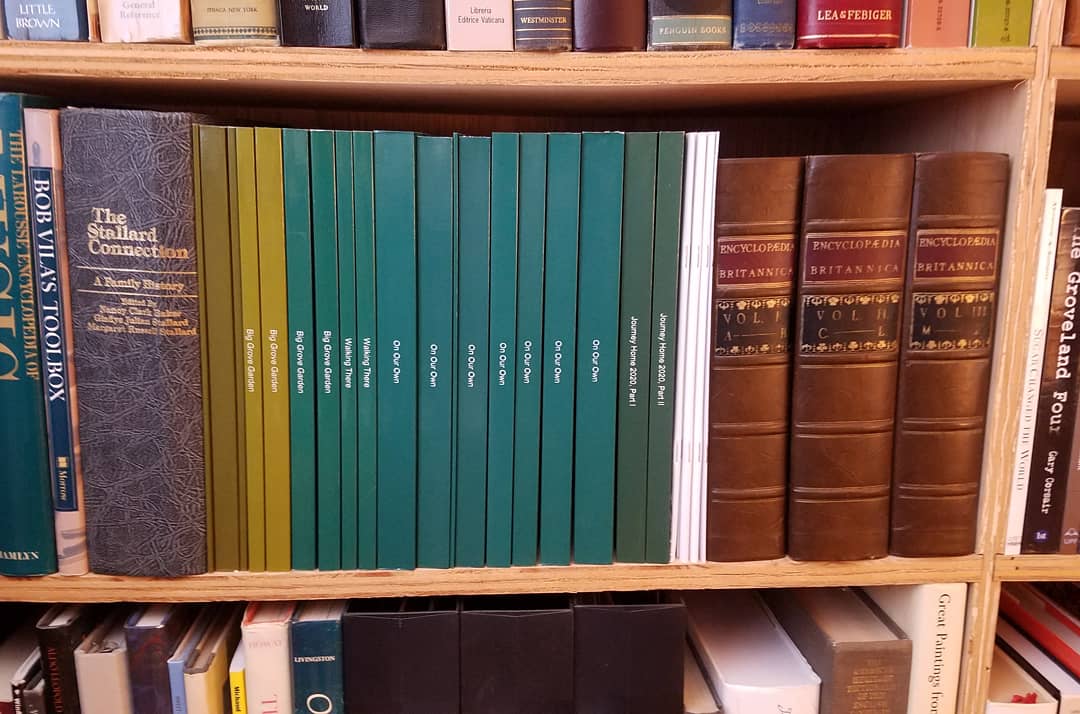
My 12-inches of blog books through 2020.

I use a service called blog2print to make a paper copy of my blog. That is, I used them until Tuesday. In an email, they wrote,

All good things must come to an end

After delivering hundreds of thousands of blog and photo books over the years, it’s time for us to say goodbye. Before we close our digital doors on May 15th, stock up and save 50% off everything!

I ordered books of my 2023 posts plus everything through April 30 this year. I like having matching sized, similarly styled books of what I posted. That won’t be possible going forward, at least through this company. The books are for the inevitable day when I make my exit from the online house I built.

I renamed this blog Journey Home on January 20, 2020. On March 11 that year, the World Health Organization declared COVID-19 a pandemic. Also that year, I made the last payment on our child’s student loan, and ended a long career of working for someone else to retire. 2020 was a year of change.

On Feb. 3, 2022, the governor extended the state’s Public Health Disaster Emergency Proclamation on Feb. 3, announcing it will expire at 11:59 p.m. on Tuesday, Feb. 15. After that, she said, the coronavirus became normalized in daily, routine public health operations. Whatever she said, the coronavirus lingers in society today.

It is time to re-brand this blog, not only to put the pandemic in the rear view mirror as much as is possible, but to mark a new purpose as I write. As I work in the garden this May, hopeful consideration will be given to what is next. The expectation there will be something next is the human condition. A gardener has confidence spring work will produce a fall harvest, and so it is with my writing.

I relish the changing patterns of life. It is possible to get too comfortable, so whatever the source of change, I expect and embrace it. While I don’t like changing how I save my work, I am also ready for the future… and to get the next garden planted.

Categories
Reviews

Book Review: Minority Rule

A decent history of American politics in the post-Obama era has yet to be written. One can’t rely upon any of the conservative principals to author one, because they have been drinking at the well of minority rule for too long. A Trump autobiography? He didn’t even write The Art of the Deal.

Enter Ari Berman’s new book, Minority Rule: The Right-Wing Attack on the Will of the People–and the Fight to Resist It, published in April. It provides a well-researched and relatable history of an issue that has been at the heart of modern conservatism since Pat Buchanan worked in the Nixon White House.

In a 1995 National Press Club address, Buchanan, then a presidential candidate, said, “If present trends hold, white Americans will be a minority by 2050.” This underlying fear mongering became endemic to Republican politics and drove the ascendancy of the 45th president. Irrational fears the United States would transform from a First World Power to Third World status drove conservative voters to the ballot box.

In my reading of books about the rise of Donald Trump as president, Berman is the first author to tell a clear, coherent, and relatable story of that time. Minority rule is at the heart of current Republican policy and behavior and Berman lays it all out for the reader.

While the 1965 Voting Rights Act broadened access to the ballot, conservative white folks were aghast and feared they would become a racial and political minority. During the Johnson administration, an emphasis on immigration of whites was transformed to a broader band of global populations. Enter Trump to both fan the racist, anti-immigrant flames, and get elected as a supposed fire fighter for the fires he started.

Berman outlines the constitutional and legal structure that enables minority rule in the United States. The conduct of the U.S. Census, having two U.S. Senators per state regardless of population, the growth of the filibuster, the electoral college, and drawing political districts in a way that disenfranchises non-white voters, all play a part in enabling minority rule, according to Berman.

While it may sound easy to keep the U.S. Census above politics, it was politicized during the 2020 census by the administration. Having two U.S. Senators, combined with the filibuster enables senators representing a minority of the population to set policy and block majority-favored laws they don’t like. Political gerrymandering, especially in states like Wisconsin and Michigan entrenched minority rule and blocked attempts for political districts to represent the people in the state. There is no magic bullet to fix any of these issues. Entrenched, minority rule makes it more difficult.

In Minority Rule, Berman outlines the role of The Heritage Foundation’s sister organization, Heritage Action, in our politics. Heritage Action is a 501(c)4 nonprofit conservative policy advocacy organization founded in 2010. The Heritage Foundation was restricted from advocating policy, so they created this offshoot, which has become one of the most powerful political lobbying groups in the nation. Iowa is one of the states where these dark money groups have been active.

Ari Berman gets a thumbs up for this book, and I recommend you read it yourself. Minority rule is endemic to the problems of politics in 2024. Berman helps us get a grip on it. He also provides hope the electorate can address the problem and embolden democracy going forward. He presents evidence such a movement has already started.

I also recommend Berman’s previous book, Give Us the Ballot: The Modern Struggle for Voting Rights in America.

Categories
Writing

Weekly Journal 2024-04-28

Onions Curing in 2010.

The week began with planting onions: Patterson (yellow) and Blush (red). In a kitchen garden one cannot grow enough onions to support meals. In my case, the garden has been hit or miss in producing a good onion crop. After planting six rows, I threw up a temporary fence before heading indoors for the rest of the day.

Legislature Adjourns Sine Die

By 4:25 a.m. on Saturday, April 20, the Iowa legislature adjourned and could do no further damage to regular folk. Shortly afterward, the Governor issued a press release touting their accomplishments. What stood out to me was this paragraph about charter schools,

Charter School Expansion: Adjusts per pupil funding to support educational freedom opportunities and allows vacant or underutilized public school district facilities to be available for lease or purchase by nonpublic or charter schools. (SF 2368)

Gov. Reynolds Statement on 2024 Legislative Session, April 20, 2024.

If there were any clearer message Republicans are going after public schools, I don’t know what it could be when they make provisions for disposal of public school property.

Blog for Iowa

Wrapped up my work filling in for Dave Bradley at Blog for Iowa while his family moved to a new home. During this tenure, I wrote 38 posts on a range of topics. Most of them were cross-posted here so readers wouldn’t miss any. It felt good to write on a regularly scheduled basis. It also feels good to be free of the commitment as garden planting ramps up and my work on an autobiography enters a new writing stage.

A Late 50th High School Class Reunion

Our high school graduating class missed our 50th reunion because of the coronavirus pandemic. We decided not to wait any longer and are holding it this July. I volunteered to work the interface between the reunion planning committee and our fellow high school classmates. From my previous experience, it is the best job. I’m enjoying reading the emails with RSVPs and the contact it brings. In this role, I am privileged to interact with almost every classmate engaged with the school, whether they plan to come or not. I expect to attend the main event in July.

Political Event

On Saturday, the Solon Area Democrats hosted a Meet and Greet at the public library. Eight Democratic candidates who attended are running in the June 4 primary. In our county, the supervisor primary is usually the determinant of the general election outcome. There are five supervisor candidates for three seats this cycle. They are all decent people. This was our kick off event for the November election. I’ll have more comments about politics as the campaigns progress.

The pressure to get plants in the garden soil is on. On a related note, I’m running out of indoors places to put seedlings. Here’s hoping for a productive time between now and Memorial Day.

Categories
Living in Society

Sunlight, Birds Singing

Trail walking in April 2023.

A walk on the state park trail is respite from working at home. These days I take the auto off property once or twice each week. The rest of the time is spent working at home or walking on the trail. A person needs sunlight and bird songs for many reasons. It is as close as it gets to feeling a part of nature.

We need respite.

A high school student came to the door seeking cans and bottles to return for the deposit — a fund raising project for the school band. We don’t consume much that comes in containers that can be redeemed for a deposit. I went downstairs and found a case of empty ginger beer bottles and turned them over.

I also found a case of Mexican beer with 15 bottles left from last summer. On hot days, I’ll ice down one or two to drink when I work up a sweat. This is enough to last into June.

These April days are slipping through my hands and there seems to be little to do about it. The garden seedlings are too many for the available indoors space and I haven’t been able to muster energy to assemble the new, portable greenhouse. Been feeling a bit punk, and that’s not helping either.

I spent part of Thursday morning unraveling loose threads that inhabit family lore. Here is how that passage ended.

Family lore is William worked in Mine 74 and in the Cherry coal mine. Other family lore suggests he didn’t mine coal but had an office job from a young age.

Inconsistent and incomplete tales are part of a problem with family stories. It affects how an author writes a modern narrative. In a later chapter, I present two very different stories authored by Mother in the form of a letter and email about the day I was born. We must consider such stories and proceed based on conflicting information, even when both versions cannot be true.

My view at this writing is Grandfather’s declaration of being a miner on the 1910 and 1940 U.S. Census records, my personal experiences with him, explanations from family about how he came to have black lung disease by inhaling coal dust in the mines, and the government awarding Black Lung Benefits based on his health, confirm he worked in the mines. I proceed on that basis.

We tell stories about our lives and repeat them. They harden and become the stuff of legend within a family. Just as Mae told and retold the story of her aunt and the piano, Mother told and retold the story of Grandfather being a communist. By focusing on family lore, and hardened stories, we tend to reduce how much we know about parts of our lives we didn’t directly experience. Expanding the universe of knowledge about our lives is the goal of this book.

Despite feeling punk, behind in the garden, and lacking energy, it felt I got something done. The idea in this passage is to weave explanations about complex and conflicting stories in the autobiography, one in each chapter. It is an improvement in the narrative that is possible. The purpose is to give the reader a guidepost on how to interpret what I write as they read it. I’m not aware of anyone else who writes this way. Will see how it goes.

I will soon need to get outside again for brief respite.

Categories
Writing

Weekly Journal 2024-04-21

Photo by Jessica Lewis ud83eudd8b thepaintedsquare on Pexels.com

Garden vegetables overwintered: cilantro, spring onions, kale, collards, and garlic. The garlic grew where it was planted last year, so I will pull it before tomatoes go into that spot. Main crop of garlic is about 12 inches tall. The last order of tomato seeds, cucumbers and squash arrived via USPS on Saturday. The shift from indoors to outdoors work is evident this week.

Electricity Outage

On Tuesday a big storm rolled in and took the electricity out for a brief moment. It was enough to risk losing the edits I was making on my autobiography. Luckily, my computer saved my then current work in the browser and I was able to restore it, rename it, and proceed on. Losing a day’s edits is unwanted, but a writer can recover from that. Luckily, because of technology I don’t understand, I didn’t lose anything when electricity failed and the CPU and screen died.

Optometrist

This week I had my annual appointment with an optometrist for a diabetes screening. It is remarkable how many tests and the diversity of equipment they used for this exam. With a special camera, the attendant took a photo of my retinas. There was almost no change to note year-over-year. I’m clear for another as far as diabetes is concerned until the next appointment in 2025.

The optometrist has been mentioning cataract surgery as a future possibility for the last few years. The thing is, while I experience some vision deterioration, the amount of change does not affect everyday activities like reading and driving. If doc recommends it, I am going to delay until there is some kind of actual problem. The annual screening is fine.

He wrote a new eyeglasses prescription, which I will not fill because I like my current glasses and the improved vision they provide.

Robotic Approach to Health

I had a robo-call from my prescription drug insurance company. The machine left a message on my mobile device. When I called back, it was a robotic reminder I needed to fill my prescription, accompanied by warnings about following doctor’s orders. The pharmacy had some kind of robotic reminder system that previously prompted me to refill my prescription. The reason I didn’t refill was my nurse practitioner quit when the university bought the private hospital system. He hasn’t been replaced. When I called the temporary clinic the next town over to discuss, they asked me how many pills I had left. Because of the robot, I had plenty to last a couple of weeks. When I get down to five pills, I’ll phone so they can reauthorize.

In the meanwhile, I met with a group of pharmacy students who suggested an over the counter drug instead of what I was taking. I have been thinking of stopping the prescription drug and self-treating. Did the robots know, and hence their concern?

Mushroom Hunters

While walking on the state park trail I encountered some neighbors I’ve known a long time. They were off trail and I asked if they were looking for mushrooms. Spring Morel Mushrooms are a well-loved delicacy in this region. He answered that was what they were doing. I stopped walking and we talked. The drought is too much for the mushrooms to grow, we agreed. When I hit the turn-around point and returned, they were both gone.

Another Edit Pass

I see an opportunity to improve the draft of my autobiography. When I started, my main concern was getting a story framed on a timeline. Now that it’s done, I want to emphasize my development as a story-teller. I hadn’t envisioned that when I began. I made some changes to the first chapter and now need to follow it through to the end. It was like something nagged at me. Now I know what it was. With gardening season here, I’m not sure how the new edit will be worked into the schedule.

Categories
Writing

Weekly Journal 2024-04-14

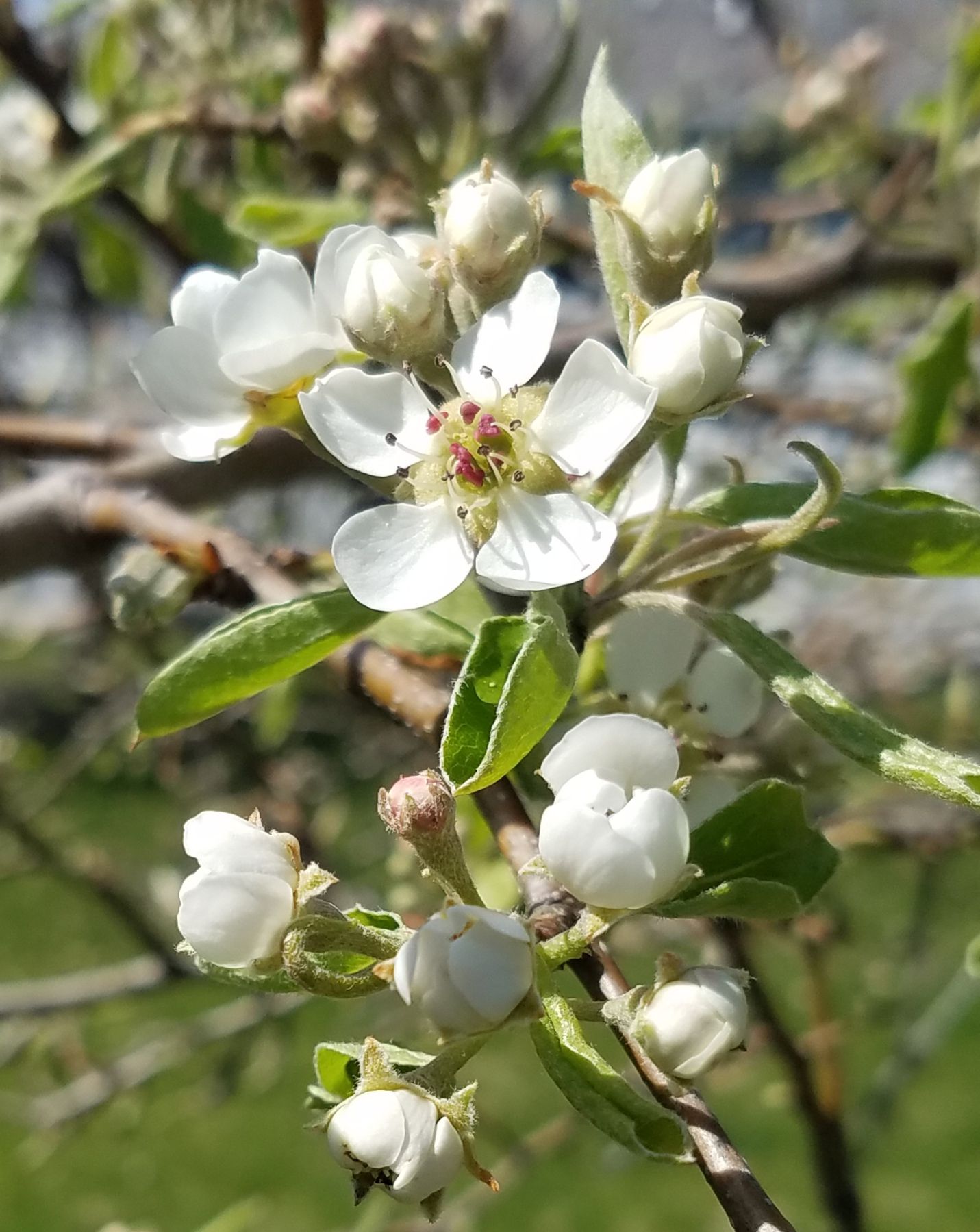
Pear blossoms.

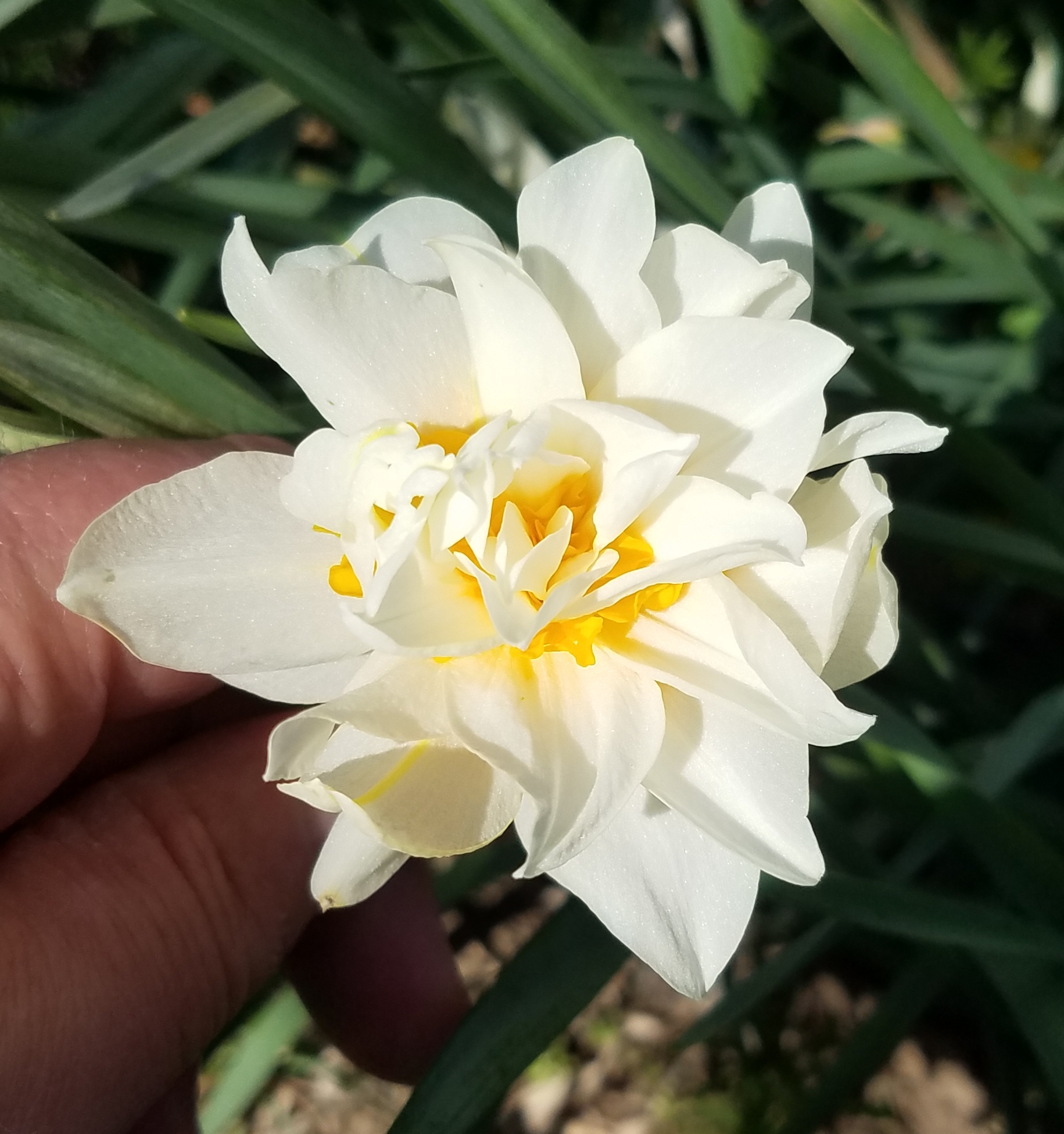
Bluebells, dandelions, double ruffled daffodils, and pear blossoms are in bloom. Spring arrived this week. Then, in a decidedly summery move, ambient temperatures rose above 80 degrees on Sunday. It has been a mixed bag of weather this week, yet I appreciate the blooming flowers.

Eclipse experience

Monday, April 8, was the total solar eclipse in North America. At our latitude, the eclipse was at 82 percent. I made a pinhole projector like I used as a grader to see the shadow of the moon covering three fourths of the sun. It worked just as it did in the 1960s. I also tore up old ground cover from the garden in the diminished sunlight during peak eclipse. No special glasses, no trips to exotic Missouri locales. I had the full Iowa eclipse experience, home style. We know not to look directly at the sun around here.

Onion sets and potatoes

Onion sets arrived via USPS on Monday, April 8. I need to get them in the ground. I’m waiting for the right combination of warm temperatures, no rain and no indoors work to do. The pressure to get them planted is palpable. They are laid out in bundles on newspaper covering my workbench.

Yukon Gold potatoes are planted in containers. I need to round up more dirt to cover them as they grow. A layer of mulch on top would help hold down weeds.

It is also time to assemble the portable greenhouse. These are all signs of the garden’s progress.

Let’s kill energy efficient home appliances

My member of congress spoke to the House Energy and Commerce Committee, which advanced H.R. 7637 The Refrigerator Freedom Act. She accused the Biden Administration of over reach. There was a tranche of related bills, including the “Hands Off Our Home Appliances Act,” the “Liberty in Laundry Act,” the “Clothes Dryers Reliability Act,” the “Refrigerator Freedom Act,” the “Affordable Air Conditioning Act,” and the “Stop Unaffordable Dishwasher Standards Act.” She asserted a form of logic that isn’t logic at all. It is an elected Congress doing the bidding of large-scale manufacturing firms. George Orwell couldn’t have written this script better.

The Pantry is Full

I skipped grocery shopping last week because the pantry is well-provisioned. Our main fresh foods are bananas, in season fruit, fluid milk, carrots, celery, onions and garlic. We had plenty to last until this coming week’s shopping trip. Our 2024 average weekly food and sundries spend is $111.47, so skipping a week of groceries helps with cash flow.

My spouse is helping family in the state capitol this week, so I made extra quarts of vegetable and bean soup to take on the trip. I used the last quarts of vegetable broth canned last year. This week, I plan to use some of the leafy green vegetables and celery from the freezer to make more. Using home made vegetable broth is a money saver.

Double Ruffled Daffodil, April 13, 2024.

I made good progress on my autobiography. As usual, it will be a rush of getting the garden in by Memorial Day. Maybe then, I can catch a breath.

Categories
Writing

End In Sight

My recipe book opened to apple butter.

I spent the last couple of days re-writing the end of part one of my autobiography. I am getting so close to finishing the narrative, I can visualize the printed book. Soon I’ll be proof reading for spelling and punctuation, setting margins, and picking a font.

It is the story I want to tell about my first 30 years. Some history, some background, some new writing, and many recycled passages from past writing. More than anything, the narrative is grounded in the reality that was my experience living through it. Writing chapter titles unleashed an avalanche that got this phase of the book finished six months earlier than I recently thought.

I can go into gardening season with the end of this project in sight.

Categories
Writing

Weekly Journal 2024-04-07

Organic juice section at the grocer on April 7, 2024.

It was a punk week as far as weather goes. Rain and snow kept me mostly indoors. My exercise log shows more indoors workouts which are never as much fun as walking on the state park trail. I managed as best I could.

Women’s Basketball

Sunday I turned on the television and found ABC which was carrying the NCAA Women’s Championship basketball game. Iowa lost to the University of South Carolina 75-87. It was the first time I tuned into a college sporting event since I watched the Iowa football team get shutout by Washington, 0-28 in the Jan. 1, 1982 Rose Bowl. The moral of the story is I shouldn’t jinx the luck by tuning in.

Our high school class reunion planning group was talking about women’s basketball at our meeting this week. I suggested we find one of the women who were leaders in high school to lead the formal program we have planned. One person asked if we had a women’s basketball team. Perhaps there would be a leader from there. We didn’t. We graduated high school before Title IX was signed into law.

Editing the Book

I finished the final rough draft of the first 38 of 62 chapters in my autobiography. This thing may not drag on until summer. My conclusion is I have been over the text so many times, it has become the story. There were some chapters that needed work, but it is a much better draft than what I finished last year.

One lingering concern is including long passages from my journal in the narrative without editing. Some of that writing is a bit rough. When I started journal writing in 1974, I was not very good at it. My argument to myself is that it is better to show the work than sand off the edges in a new narrative. In part, that is to show my progress as a writer in a work intended to showcase my writing. The long passage I wrote in France was particularly rough, yet it serves as an example of how my journal writing started. For now, I’m leaving it in.

The other question is about passages written about long ago events since I started this blog in 2007. There may be a case to just rewrite these. At the same time, they capture a moment in time that would vanish should I re-write them. I left them in at this point.

End of Life Planning

I read Mary Ann Burrows new book, The Last Hurrah: A Living Workbook for a Happy Ending. The book is about end of life planning, but not the kind I expected. She defers to others the tasks of financial and legal advice and writes mostly about how to turn our last days into a celebration. If someone knows me, they know I am not a big one to celebrate moments or have a big to-do about life’s events. The biggest events in my life were our wedding and its two receptions, and our child’s high school graduation. We had gatherings for them. So many of my good friends have died already, I’m not sure who would be left and in good enough shape to travel for a celebration. I started keeping my own obituary a number of years ago. It is pretty bare bones, and that’s the way I like it.

Clear Organic Juice

I went to the grocer to find clear organic juice for my spouse. She wanted organic apple juice, which wasn’t available. In typical (for us) form, I started sending images of various ingredient labels and products. I offered to get non-organic apple juice. In the end, I phoned her and said, “I’ve been waiting in this juice aisle and am starting to get thirsty.” We gave up and I brought home boxed vegetable broth instead.

It was unsettling to be unable to dig in the garden because of inclement weather. The seed potatoes appear to be doing well, and the seedlings are growing. Here’s hoping the coming week find me spending more time in the garden.

Categories
Living in Society

Creativity With Cameras

Kodak Instamatic 100 Camera. Provenance unknown.

Editor’s Note: This is a chapter from my autobiographical work in progress.

By 1962 I owned a camera and used it to photograph our neighborhood. It was an early form of creativity that stayed with me all my life.

I walked north from home on Marquette Street and took snapshots of the Levetzow’s holiday display at the intersection with High Street. They owned Model Dairy Company and at Christmas filled their whole yard with lighted Christmas decorations. On the southwest corner of their house was a large crèche. To its right was a lighted display of Santa, his sleigh, and reindeer. We viewed them as an affluent family, such affluence being on conspicuous display at the holidays. They had a kid-sized model of their dairy delivery van, although none of us local kids got to drive or play with it.

I photographed the holiday display at the house across the street to the south. This was a rental through which families moved frequently. Eventually, a young Joe Whitty and his family moved there when he worked at the nearby Mercy Hospital bakery. He later opened his own chain of pizza and ice cream restaurants called Happy Joe’s.

Using a camera was an inexpensive way to have fun. Because the process took so long, it seemed more creative: requiring thought, editing, and an ability to understand the camera viewer and how it would relate to the finished print. I did not crop many photos at first but accepted what the processor developed.

We posed for pictures with my film camera. I gave more thought to each frame than I might today because the results were not immediately available. There were only so many shots on a roll of film, so it felt necessary to get the framing and pose right. It was a process of experimentation and of managing expenses. Developing film could take a while, depending upon when the entire roll was exposed, and when one could get it to the drug store to be developed. Photographs were special and I believed they would have enduring value.

There is a photo of me in my altar boy cassock and surplus, one of us kids bowling, and many posed photos of all of us in the foyer. One favorite foyer photo is of Mother and Father dressed up in costumes to go out on New Year’s Eve in 1962. The following January, I captured my sister’s birthday party during which we all danced the twist. Mother took some of those shots. My parents had just begun listening to long-playing records at home and had copies of popular LPs by twist artists like Chubby Checker and Fats Domino.

In 1963 I began buying color film. Pictures survived: of Easter, my sister’s first communion, a trip to the park, Father standing next to the wrecked 1959 Ford. Mostly they were posed and signified a special event.

Mae was an influence on my photography. She purchased inexpensive cameras at the drug store and used them to record moments with the family. After researching the Polish community near Wilno, Minnesota, I came to believe her behavior with cameras in the 1960s had its roots in the inner cultural and spiritual realm filled with drama and emotion I described previously. The surviving photograph of her sister Tillie’s confirmation is one example of this. The desire to pose and capture a photo was something creative I didn’t understand at the time. We were plain folk and when we got dressed for church, or to attend an event, it was a big deal. Mae wanted to capture those moments on film, consistent with her Polish upbringing. It’s a natural impulse that presents an interpretation of who we were. Of course, we always wanted to put the best foot forward in these constructed frames.

Because photography was a technology with numerous steps, and there was a cost of film and prints, I don’t have many photos from my earliest days. However, I have a lot by comparison. The ones that survive tell me who I was and inform us about our family culture. They are an important part of remembering who we were. From that early time, I began thinking about how to narrate my life using a camera. There is a direct creative thread running from 1962 to the present and spun on my use of cameras.