Categories
Living in Society

A Church Gloms On

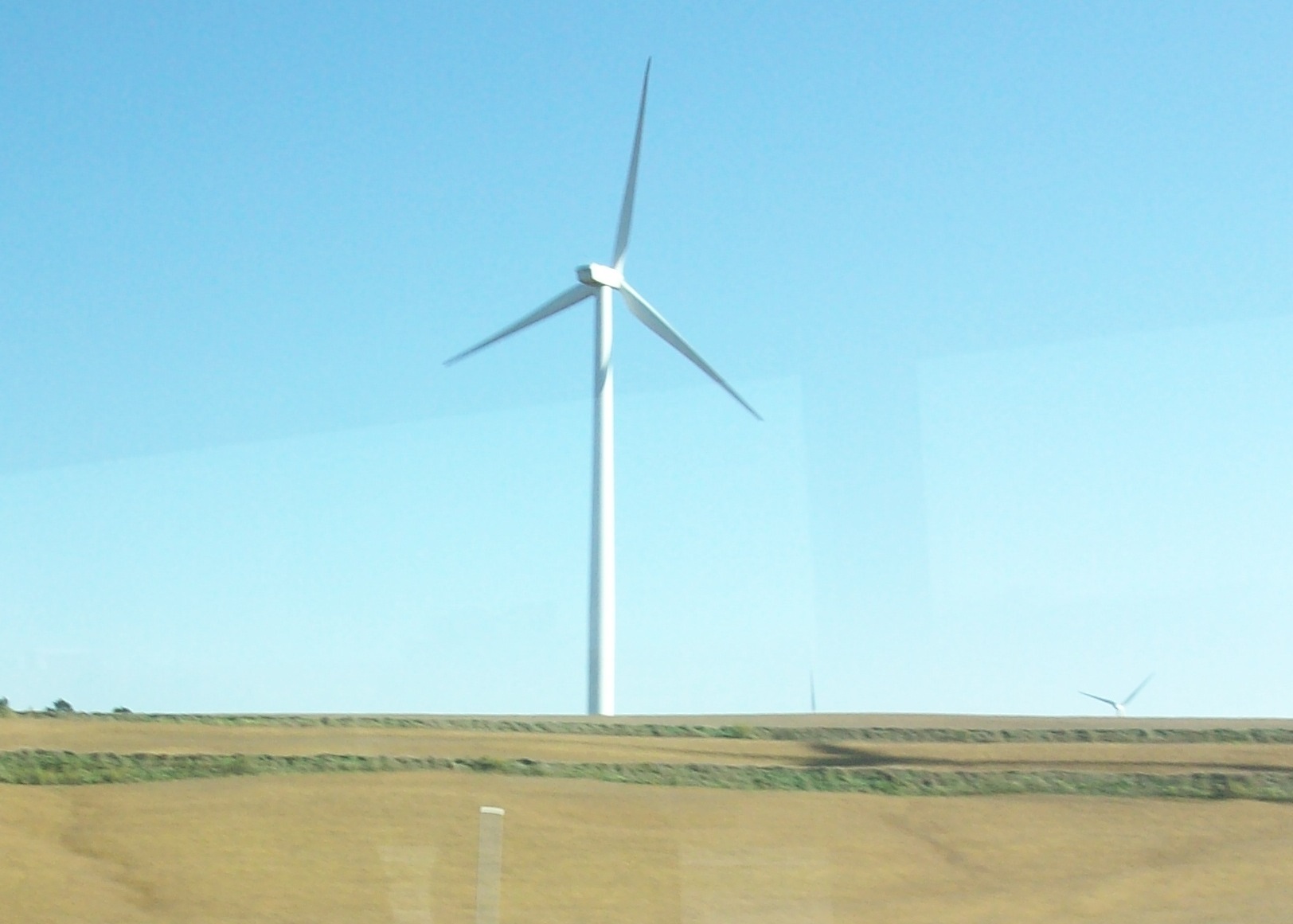
Soybean Field

A front-page headline in the Feb. 26, edition of the Solon Economist read, “City Council Debates with Jordan Creek Church Over Water and Sewer Services.” You didn’t need to be Jeane Dixon to see that one coming. The city made it clear a year ago that for the church to glom onto city infrastructure, the property must be annexed. No application for annexation has been submitted, according to the article. The 11.23 acres in question sits in the Solon “fringe area.”

Can’t we just hook on to the line you ran right past us to Gallery Acres West, a church representative suggested. The city is not having any of it. City council would have to approve connection to the Gallery Acres West line, something they would not consider without annexation. “We’re not in the business of just providing water and sewer for people who don’t want to be in city limits,” Mayor Dan O’Neil said.

Actually, the city is in that business to an extent. On Dec. 20, 2017, city council voted 4-1 to provide public water service to a subdivision called Gallery Acres West located west of Solon on Highway 382. The difference between Gallery Acres West and Jordan Creek Church is the houses were already built in the former, then the standards for arsenic contamination in public water systems changed and they did not own sufficient land to install a treatment facility. Running a water line to Solon was the best solution they could come up with. The site for the new Jordan Creek Church is presently a vacant field. The subdivision invoked “moral arguments” for the hook-up, yet there are no reasonable moral arguments for the church that hasn’t been built.

In June last year, the Solon Economist reported, “The city’s support for the Jordan Creek Church and their desire to build was stated by Mayor Dan O’Neil who noted the City’s concerns aren’t with the proposed church but rather to maintain “orderly growth and expansion of the city” while avoiding burdening the taxpayers by providing infrastructure the development (church) should fund itself.” The key word here is “orderly.” Implied is “who pays for infrastructure?”

Some members of council changed in the last election, but overall, council’s position has not. It is right for Mayor O’Neil to call for an orderly process in resolving infrastructure needs of the church. The city is open to receiving Jordan Creek Church’s request for annexation.

I spent more than 30 years dealing with small community public water and wastewater systems. When I saw the sign announcing the future home of the church, the first question I asked was about water and sewer. It seems clear from the news story, church leaders did not, and there’s the problem.

Categories
Creative Life

Embers of a Forgotten Fire

Remains of a brush fire.

Some days we feel spent. Our wood burned while leaving embers to warm us only for a while.

There is so much going on with writing this week it has taken most of my energy. Partly, the resolution is knowing when to set it aside and let the stories breathe within us.

On the plus side, celeriac is up. It’s tray partner celery is not. There will be arugula in a few weeks. The ground is frozen, yet the garden springs indoors.

A couple of photos for today.

2010 garden space.
Categories
Kitchen Garden

Food Algorithms — Getting Started

Stack of garden seeds.
Seeds arrived for the 2026 garden.

It’s cold outside, the kind of cold that stings my cheeks while walking on the state park trail. I’m standing at my workbench sorting seeds for early planting. The heat pad is already plugged in. Grow lights hang overhead. In front of me is a cabinet with last year’s leftover seeds, sorted by variety. On the bench are two dozen packets with this year’s seeds. I’m still looking through seed catalogues. It’s time to decide what to plant first, what to wait on, what to try for the first time, and what to abandon. Each small seed packet represents a choice made long before anything reaches the kitchen.

Every decision reflects a value. Food is no exception. In this series of posts, I will discuss the idea of a “food algorithm” to see where it goes.

Simply put, an algorithm is a repeatable sequence of steps used to accomplish a task. With food, this could be a recipe, yet that’s not what I mean. The intent is to take food from the seed, seedling, or cutting as the first in a series of decisions about what goes on a table.

Agriculture is a large field to consider, but food algorithms are individual. An active agent — a person — decides whether to plant a bean seed, use raw beans from a farmer, rely on prepared, canned beans from a retailer, or use beans that have been prepared with other ingredients. This decision is elemental and part of a discussion most cooks have when preparing a dish. My focus is at this entry point, not to gather and analyze recipes, although one could.

An algorithm is simply a structured way of getting from here to there. We use them constantly in many aspects of our lives. Following food from seed to table is a more comprehensive look at a process we follow, yet do so largely unawares.

I see three interlocking layers:

Biological logic — the natural requirements and rhythms of the plant or animal.

Human practice — the gardener’s labor, the farmer’s tradeoffs, the cook’s improvisations.

System forces — markets, logistics, regulation, energy use, and scale.

By showing how these layers interact, the discussion could make visible the hidden structure beneath everyday meals.

Taking steps in the process from seed to table represents ordinary choices that shape resilience, community, and ecological health. It could create awareness and the quiet power of understanding the paths food has taken before it reaches us.

The adventurer in me wonders what will be next. I hope readers will too.

Categories
Living in Society

Still Winter

Trail walking at sunrise on Feb. 22, 2026.

The weather this week looks dry and cold. It’s a good time to make chili and cornbread, at least in this Midwestern countryside. Short post and photo today. The week is shaping up to be busy indoors.

Hope readers find a warm place to hunker down and feel good about getting things done!

Categories
Living in Society

AI and the 2008 Crash

August Dreamscape

ChatGPT is offered as a free service across multiple platforms, with usage limits that eventually prompt users toward paid subscriptions. It responds with language similar to how queries are submitted, something humans rarely do. It is a small but telling sign of how seamless the technology has become. I use it for quick factual questions and longer processes, such as planning a garden season. Because it is free at the entry level, I feel free to use it. I suspect many people do.

Ease of access matters. When a tool is free and always available, people experiment. A person awake at 2 a.m. might reach for a phone and ask how to sleep through the night. If a solution seems helpful, word spreads. Usage grows not because of marketing campaigns, but because of social diffusion. This is how habits form.

The question is whether such growth — multiplied across millions — materially stresses infrastructure, including the electrical grid.

The U.S. Department of Energy reported in late 2024 that data centers consumed about 4.4 percent of total U.S. electricity in 2023 and could rise to between 6.7 and 12 percent by 2028, depending on growth scenarios. That range is significant. It reflects assumptions about adoption rates, model size, efficiency gains, and capital deployment. These are projections, not certainties.

In public discussion, however, projections often harden into inevitabilities. Upper-bound scenarios become planning baselines. Large numbers circulate with little context. Some usage statistics are widely repeated without clear sourcing. Investor forecasts about billions of weekly uses and massive subscription growth are forward-looking, not present realities.

This is where a larger question emerges:

Is enthusiasm for artificial intelligence and data centers outrunning prudence in financial investment? In other words, do investors have fear of missing out and therefore accept speculative arguments about market capacity more than they should?

Comparisons are sometimes made to the 2008 financial crisis. That collapse was driven by mortgage-backed securities embedded throughout the banking system, amplified by leverage and mispriced risk. Institutions such as Lehman Brothers and insurers like AIG were deeply exposed. When housing prices faltered, the system unraveled because debt was layered upon debt.

AI investment today differs in important ways. Much of it is equity-funded venture capital or corporate capital expenditure rather than highly leveraged household debt. Data centers, chips, and transmission lines are tangible assets, not synthetic securities. Losses, if they occur, are more likely to be concentrated among investors rather than embedded in consumer balance sheets.

Yet there are echoes worth noting. In both periods, capital flowed rapidly toward a dominant narrative. In both, optimistic forecasts shaped infrastructure decisions. In both, participants understood risk existed — but incentives encouraged staying in the game.

The concern is not that investors seek profit. We know that. The concern is whether optimistic projections become assumed outcomes. If infrastructure is built on the expectation of maximum adoption, and adoption plateaus or efficiency improves faster than expected, overcapacity can result. That is not necessarily a systemic crisis. It may be a costly misallocation of capital.

Critics such as Bill McKibben, citing technology writer Ed Zitron, argue that the economics of large AI firms may resemble a bubble: vast capital expenditures today justified by revenue expectations that may or may not materialize. That critique is itself an interpretation, but it highlights the degree to which AI investment rests on assumptions about future returns.

My own daily queries consume negligible electricity. The grid impact, if any, arises from aggregate industrial-scale deployment and the assumptions embedded in those decisions. Casual consumer use is a marginal contributor. Large enterprise integration and model training cycles are the dominant drivers.

So the core issue may not be whether AI will use more electricity — it almost certainly will — but whether forecasts are being treated as destiny. Markets routinely oscillate between overconfidence and retrenchment. The challenge is distinguishing durable growth from narrative momentum.

It is possible that artificial intelligence becomes foundational infrastructure, like electrification or broadband. It is also possible that investment temporarily overshoots practical demand. Both can be true at different stages of a technology cycle.

The prudent stance is neither inevitability nor collapse, but clarity: separate measured data from modeled projections, and projections from belief. When enthusiasm begins to substitute for disciplined evaluation, that is when risk accumulates unawares.

~This essay was developed with the assistance of ChatGPT, an AI tool created by OpenAI, which I used to test arguments, fact check, clarify projections, and stress-test comparisons. The ideas and conclusions are my own.

Categories
Environment

Open Water

Canada geese on the margin between open water and ice.

Things are happening in Big Grove Township. Songbirds are migrating, the ice cover on the lake is melting, and parts of the ground are thawing. Ambient temperatures hit 68 degrees Fahrenheit on Monday — it was shirt sleeves weather. Due to high winds and combustible material everywhere, the National Weather Service issued a special weather statement with elevated fire danger in the mix. Welcome to the new winter.

Each day I spend an hour or so outdoors clearing the garden. Once the ground thaws it will be more time than that. There is a lot to do, yet I’ve been to this rodeo. Steady work as the ground is ready gets the garden in.

Frost in the ground on Feb. 16, 2026.
Categories
Living in Society

Trip to the County Seat

Photo by Edmond Dantu00e8s on Pexels.com

I’m from the government and I’m here to help. Now that I on-boarded with the county auditor to be a poll worker, I can truthfully say that. Ronald Reagan made a joke about those nine words, yet voting is no laughing matter.

On-boarding consisted of driving to the county administration building, locating the appropriate area, entering data on their system, and providing my I-9 documents for photocopying. I completed a time sheet with ten minutes and 20 miles. Easy-peasy.

About eight of us used IBM Think Pads for data entry. IBM sold that business line in 2005 and the company that bought it soon discontinued the product. I’m glad to see our county government using technology to get every last penny from the investment. I had forgotten how to use the track pad, so needed help.

As is usually the case, I ran into people I know from politics. I maintain a friendly relationship with everyone I helped elect at the administration building.

I made two other stops while in the county seat.

On the way in, I stopped at the used book store to see if they had certain titles by John McPhee whose Draft No. 4 I just finished. They had a McPhee reader with parts of the essays I sought for five bucks. A while ago, I had asked them if they had a copy of Howard Zinn’s A People’s History of the United States. I gave my copy to our child and wanted a replacement. When they said they didn’t have it, I procured it elsewhere. On Friday, they had been unexpectedly holding a copy for me. I declined it in person, yet on the way home, reconsidered it. Surely I could find a home for it. I emailed I would buy it if they still had it.

The other stop was at the grocer. It is conveniently located on Highway One which leads to our home near the lake. It has long been a stop when I have something to do in the county seat. I like the wholesale club better, yet they don’t have the granularity of item selection a home cook needs to run a kitchen. This produce section is particularly loaded with organic fruit and vegetables, all in a single location with non-organic. Too, when I fill my cart, the total is usually less than $100. At the wholesale club it can be double or triple that with less items overall.

I won’t be lording my new government employee status over too many people. The small bit of income will easily find a home in our budget. In fact, even though the general election is not until November, the money is already spent.

Categories
Kitchen Garden

First Day in the Garden

Frost in the ground.

After struggling to get the fork into a pile of grass clippings, I gave up for the day. Everything was frozen solid, even after a few days with ambient temperatures well above freezing. Highs in the 40s and 50s are forecast the rest of the week. Maybe I will accomplish my goal of clearing one plot this week to use as temporary storage. Not that day, though.

I am in the garden way early this year, so there is time for preseason work. I seeded the first indoor trays last Saturday and by Tuesday some of the varieties already had leaves. I hope they all germinate by this Saturday when I prepare the next tray of seedlings. Warming pad space is at a premium the next eight weeks.

When we moved to Big Grove Township there were scrub grasses and a lone mulberry tree on the vacant lot we purchased. The tree appeared to have been planted by a bird’s droppings while it perched on a surveyor’s re-bar marker. The ground had a high clay content which suggested the farmer who made his farm into a subdivision had removed the topsoil before selling plats.

From that clay I built soil in a garden that now occupies one fourth of the 0.62 acres we own. When I started, the first plots were small with a large grass border around them. Today I can’t get the mower between the plots to cut foxtail grasses and other weeds that grow there. I got big after working on a vegetable farm for eight years, bringing home the skills and techniques I learned there. After years of expansion, it seems time to bring order to what I do. This is likely why I am outdoors in the garden the second week of February.

We did not set out to build habitat when we moved here. The decision to site the house closer to the north property line — as opposed to in the center — mattered more than I knew. Placement of the foundation determined what remained open, how wind would move, where trees should be planted. We were thinking of how to build additions when finances permitted. Now, a deer path runs the length of the lot on the south side of our home. When winds come from the west, there is a corridor on the north side where it sweeps through the fruit orchard, and into the back yard. Over the years wind has taken a toll on the many trees we planted here. We never built an addition, nor even a deck.

The abundance of wildlife remains mostly unseen. There have been birds of all kinds, opossums, foxes, and after many years of waiting for trees to grow, there are squirrels. There are too many deer, although by developing a path from their space in a nearby woods to an large apple orchard to the west, they mostly leave me alone.

As I contemplate today’s schedule I plan more time in the garden. Maybe the dead vegetation will have loosened enough to move it. Maybe not. In either case, there is plenty of time for preseason garden work.

Categories
Sustainability

When the Last Nuclear Limits Expire, Silence Is a Choice

B-61 Nuclear Bombs

For the first time in more than half a century, the world’s two largest nuclear powers are no longer bound by a treaty limiting their strategic arsenals. Last week, New START — the last remaining nuclear arms control treaty between the United States and Russia — expired.

What does that mean? It means that even countries long considered peaceful and stable, like Canada, are now openly debating whether to break with the post-war consensus and acquire nuclear weapons and delivery systems.

This outcome is no surprise. The arms control community sounded the alarm throughout last year. Their concerns are consistent and grounded: Russia and the United States possess roughly 80 percent of the world’s nuclear weapons, and without a binding arms control agreement, both nations are positioned for renewed competition in strategic forces. After the atomic bombings of Hiroshima and Nagasaki during World War II, the drive to reduce — and eventually eliminate — nuclear weapons was strong, producing decades of treaties and norms. Over time, that momentum weakened, leaving us where we are today.

U.S. Senator Chuck Grassley has long been skeptical of New START. In a recent email addressing the treaty’s expiration, he wrote, “I remain concerned about the effectiveness of the New START Treaty. I had reservations about the treaty when it was negotiated under President Obama and remain concerned today. From the beginning, the New START Treaty lacks the robust verification mechanisms that previous arms agreements imposed upon the Russian Federation, previously the Soviet Union.” His views reflect long-standing concerns about verification and enforcement.

While we do not agree on every point, Senator Grassley and I have maintained a dialogue on nuclear arms control going back to at least 2009. Where the senator could play a constructive role is in legitimizing concern about arms control beyond the small circle of activists who often take center stage, and into the offices where decisions about war, peace, and federal spending are actually made. I asked him directly to encourage the president to accept Russian President Vladimir Putin’s public proposal to extend New START for one year while a follow-on treaty was negotiated. Perhaps Senator Grassley’s influence is limited. Still, he takes arms control seriously, and that makes engagement worthwhile.

The financial consequences of abandoning arms control are also significant. According to the Congressional Budget Office, current U.S. government plans to operate, sustain, and modernize nuclear forces — and acquire new ones — would cost an estimated $946 billion between 2025 and 2034. The absence of a treaty increases pressure on nuclear states to expand or hedge their arsenals, even as both Russia and the United States pursue costly modernization programs. As nuclear budgets grow, they inevitably crowd out other national priorities.

A renewed arms race would not make us safer. The danger of unconstrained nuclear competition is not confined to Washington and Moscow. In a recent letter to the Toronto Globe and Mail, Dr. Tim Takaro of International Physicians for the Prevention of Nuclear War warned that even a limited nuclear war could leave billions dead and civilization in ruins. Deterrence, he argued, is not insurance — because failure is catastrophic. A world with more nuclear-armed states is not a safer one.

Senate Resolution 323 offers lawmakers a chance to state plainly whether they support renewed arms control or are willing to accept a future without limits. It calls on the United States to pursue new agreements with Russia and to reassert leadership in reducing nuclear risk.

When our collective resolve to pursue arms control wanes, silence itself becomes a choice. This moment calls not for resignation, but for engagement.

~ A version of this post appeared as a guest column in the Feb. 13, 2026 edition of the Cedar Rapids Gazette.

Categories
Home Life

In Mid-Winter

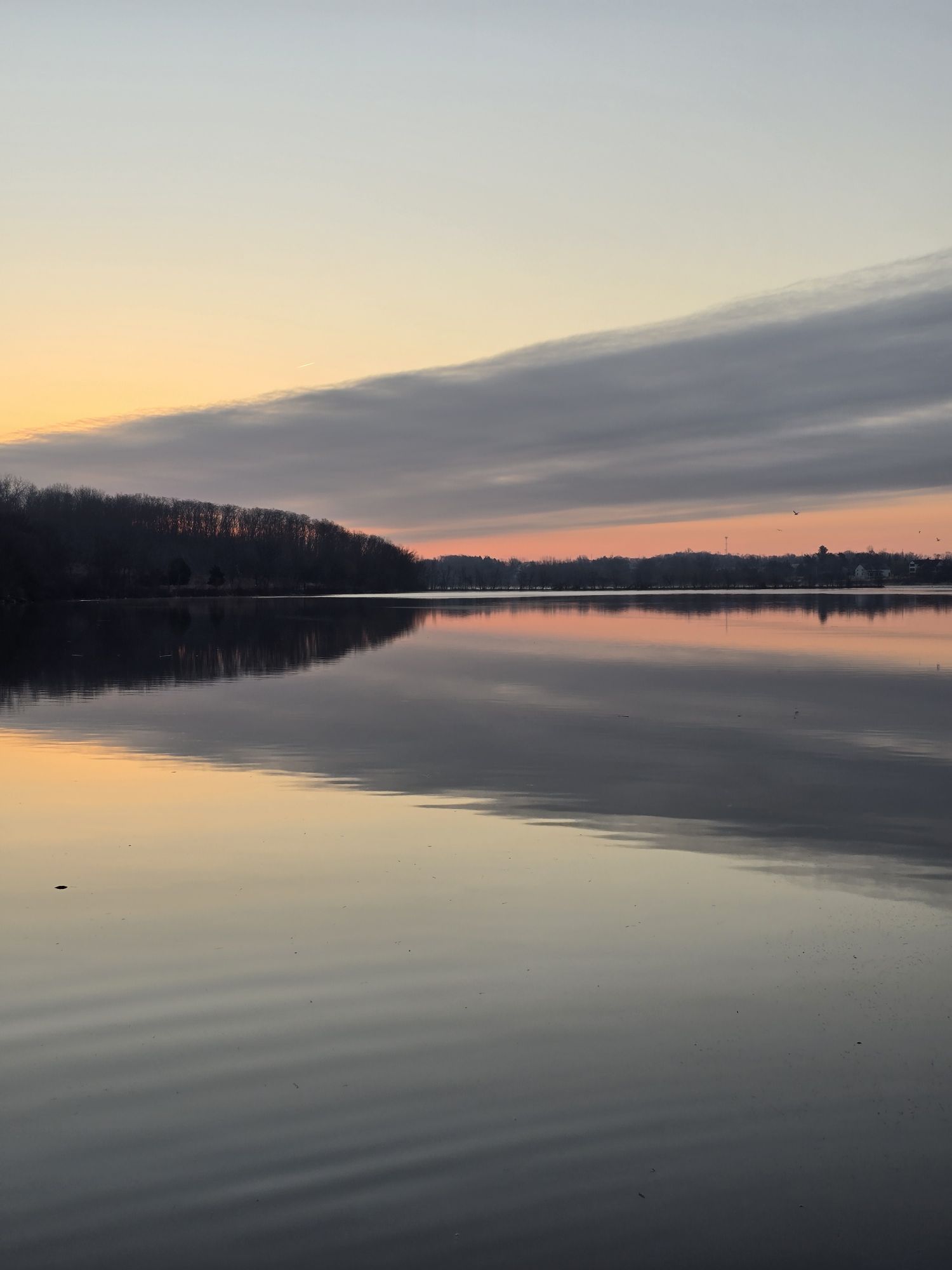
Before sunrise on the state park trail on Feb. 4, 2026.

It’s hard to believe half of winter is gone. Ambient temperature pushed toward freezing Wednesday afternoon, yet it didn’t quite make it. The lake remains frozen.

While I planned for it, political work on Sunday and Monday took a lot of energy. I’ve been recovering ever since. I finished the work by writing a personal note to each voter who attended caucus. The letter carrier just picked those up.

So today is a photo and a couple of paragraphs while I continue regaining energy. Life could be worse than that.