Categories
Environment

Earth Day 2023

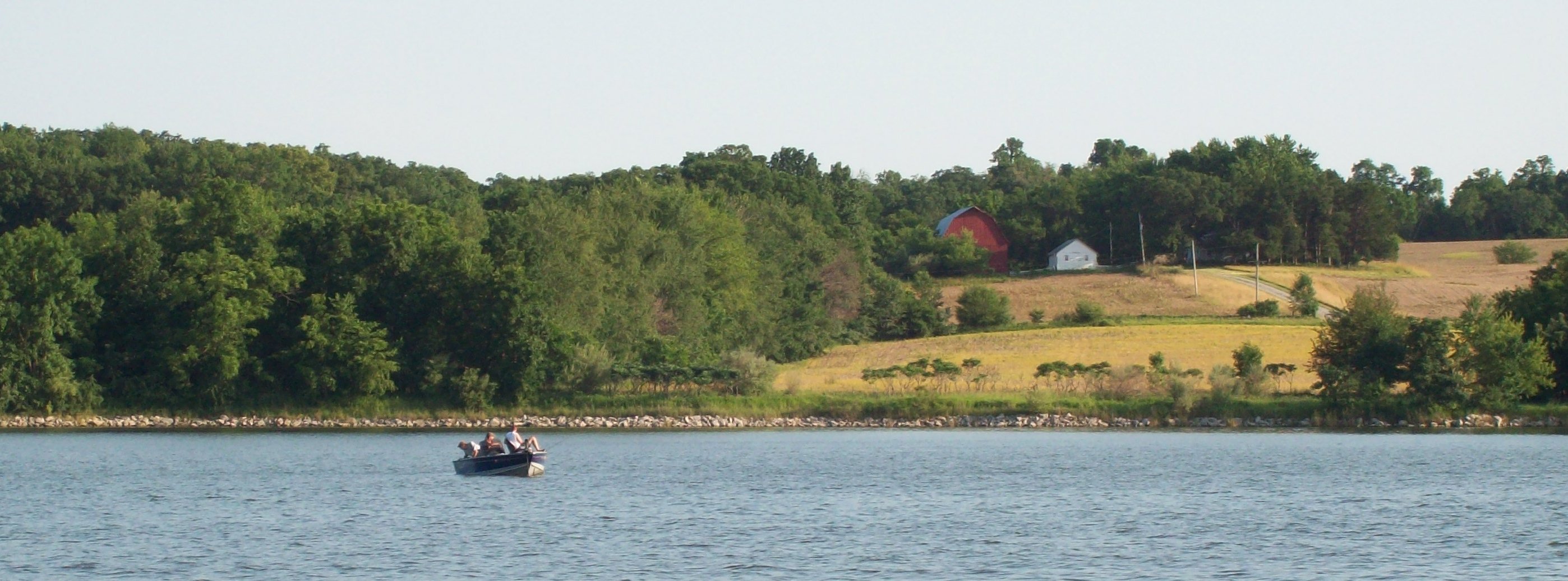
Trail walking at Lake Macbride State Park on April 21, 2023.

There is an official Earth Day website which indicates how far the observance has come since 1970. In addition, there are proclamations by governing bodies, festivals supporting “Mother Earth,” and oil and gas companies touting their actions to capture CO2 emissions and recycle plastics. I’m not sure any of this helps reduce the impact of humans on our shared environment, yet it may be better than a stick in the eye.

Exploitation of the environment has been basic to civilization, especially in the settling of North America. In the early days, North America was about land speculation and extraction of wealth from the so-called “newly discovered” place. It began with production of sugar, rice, cotton, tobacco and indigo, which required cheap land and abundant labor in the form of slaves or indigent white folks forced to migrate from Britain. We had and continue to operate an extractive economy supporting exports and consumers. Few want to give up their handheld mobile device or other modern conveniences to help save the planet, so the extraction part of the economy may grow along with the burgeoning population. By 2100 there are projected to be 10.4 billion people on our blue-green sphere, according to the United Nations.

People should do more to improve the environment than what each of us can do individually. It seems obvious that everyone: every business, organization, government, and individual must pull together to solve the climate crisis. Importantly, our political system must take the lead in climate action, regardless of the political outlook of individual elected officials. This holds true in authoritarian regimes where there are no elected representatives. When I wrote “everyone,” that’s what I meant.

What should we do? That’s an easy answer: support large scale, organized actions that will make a difference. If regulators say we should reduce CO2 emissions in new automotive products, then support it. If the Gulf of Mexico dead zones are a problem, then regulate the chemicals and processes that dump into the Mississippi River watershed. If our air is polluted by emissions from coal and natural gas-powered electricity generation, then convert to wind and solar. Solutions exist to clean up our air, water and land pollution. There are processes to develop new and better solutions to the climate crisis.

Every day I do something small to help mitigate the worst effects of the climate crisis. I reduce water usage, adjust the thermostat a few degrees, turn off lights when not in a room, and minimize the amount of driving I do in our personal vehicle. Every day is Earth Day in our home, so the annual remembrance is not that important to me. What matters more is finding common ground to enable more solutions, reduce pollution, and clean up our land, air and water.

Spend a few minutes reading the Earth Day website, located here. Then talk to someone you know about how important it is we take action today to rescue our much abused planet and make a livable home for our civilization going forward. It could make our lives better in the process.

Categories
Sustainability

Onion Planting 2023

Onion plot 2023.

It was 64 degrees at 3 a.m. Saturday morning. That’s weird.

A gardener contends with weather, so temperature anomalies come with the work. The vegetables I plant in my Midwestern garden have a wide range of tolerance to climate, moisture and light. They have been bred and propagated because of those qualities.

Potatoes and onions should be safe to plant now, and I did. I direct seeded spinach when putting in the onion sets. Garlic is doing fine after being uncovered from winter. There are many apple and pear blossoms in the early formation stage. Pollinators are already abundant, seeking the early purple flowers and dandelions in the lawn. The greenhouse is packed with seedlings. What could be wrong?

Regardless of weird weather, Spring has arrived and it would be difficult not to feel a part of it. I can see leaves on deciduous trees bud and burst into foliage in front of me. All is well in the garden, or at least as good as it gets.

What will weird weather mean this growing season? I don’t know. I am, however, both concerned, and getting used to it. The overall trend does not look good.

If you aren’t following Bill McKibben on the climate crisis, you likely should be. In yesterday’s edition of his substack, The Crucial Years, he wrote,

This week’s Fort Lauderdale rainstorm was, on the one hand, an utter freak of nature (storms ‘trained’ on the same small geography for hours on end, dropping 25 inches of rain in seven hours; the previous record for all of April was 19 inches) and on the other hand utterly predictable. Every degree Celsius that we warm the planet means the atmosphere holds more water vapor; as native Floridian and ace environmental reporter Dinah Voyles Pulver pointed out, “with temperatures in the Gulf running 3 to 4 degrees above normal recently, that’s at least 15% more rainfall piled up on top of a ‘normal’ storm.”

Get ready for far more of it; there are myriad scattered signs that we’re about to go into a phase of particularly steep climbs in global temperature. They’re likely to reach impressive new global records—and that’s certain to produce havoc we’ve not seen before.

The Crucial Years, We’re in for a stretch of heavy climate by Bill McKibben, April 15, 2023.

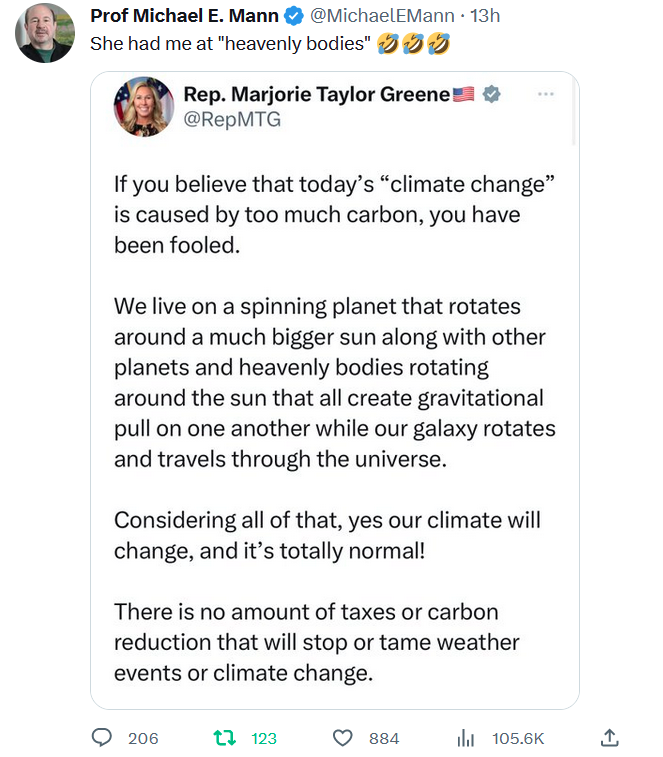
McKibben is not one to use hyperbole. He must realize the downside of doing so. In social media, instead of seeing McKibben’s work promoted, the right-wing spokesmodel for all things cultural was getting attention. Even climatologist and geophysicist Michael Mann snarked about the Georgia congresswoman’s comments.

It is getting difficult to follow the scientific discussion of the climate crisis. Partly, major news media find it too dull a subject for headlines. Partly, the right-wing media noise machine drowns out serious topics in public discourse. Yet we notice temperature anomalies when they happen, and wonder for how long we can go on the way we are.

While we wonder, we’ll need onions, apples and spinach.

Categories
Home Life

Iowa Spring – 2023 Edition

Trail walking on April 12, 2023.

My spouse and I noticed the mulberry tree on walkabout Tuesday afternoon.

The mulberry tree was damaged by the 2020 derecho and has begun to die. Branches high in the canopy are losing bark and not regrowing it. Soon it will need to be cut down and recycled. This is the only tree remaining from when we bought the lot in 1993.

We were discussing what to do with the yard. Mainly, we need to plant the area in front of the house where it was cleared last year. A flower bed of some kind will go there.

We took out the maple tree stump last year. We are considering replacement with some kind of tall bush rather than another tree, a forsythia or hydrangea, maybe.

More than half the Red Delicious apple tree is gone due to wind storms yet it seems very robust. Hard to tell if there will be an apple crop this year, yet under normal circumstances, there should be one.

Finally, the trays of seedlings are now outdoors in the greenhouse. It should be easier to water them. Next into the ground are onion sets, beets, and spinach. Hopefully there will be progress midst ambient temperatures in the 70s today.

Now to close this entry out and head for the lake trail for a morning walk.

Categories
Kitchen Garden

Garden 2023

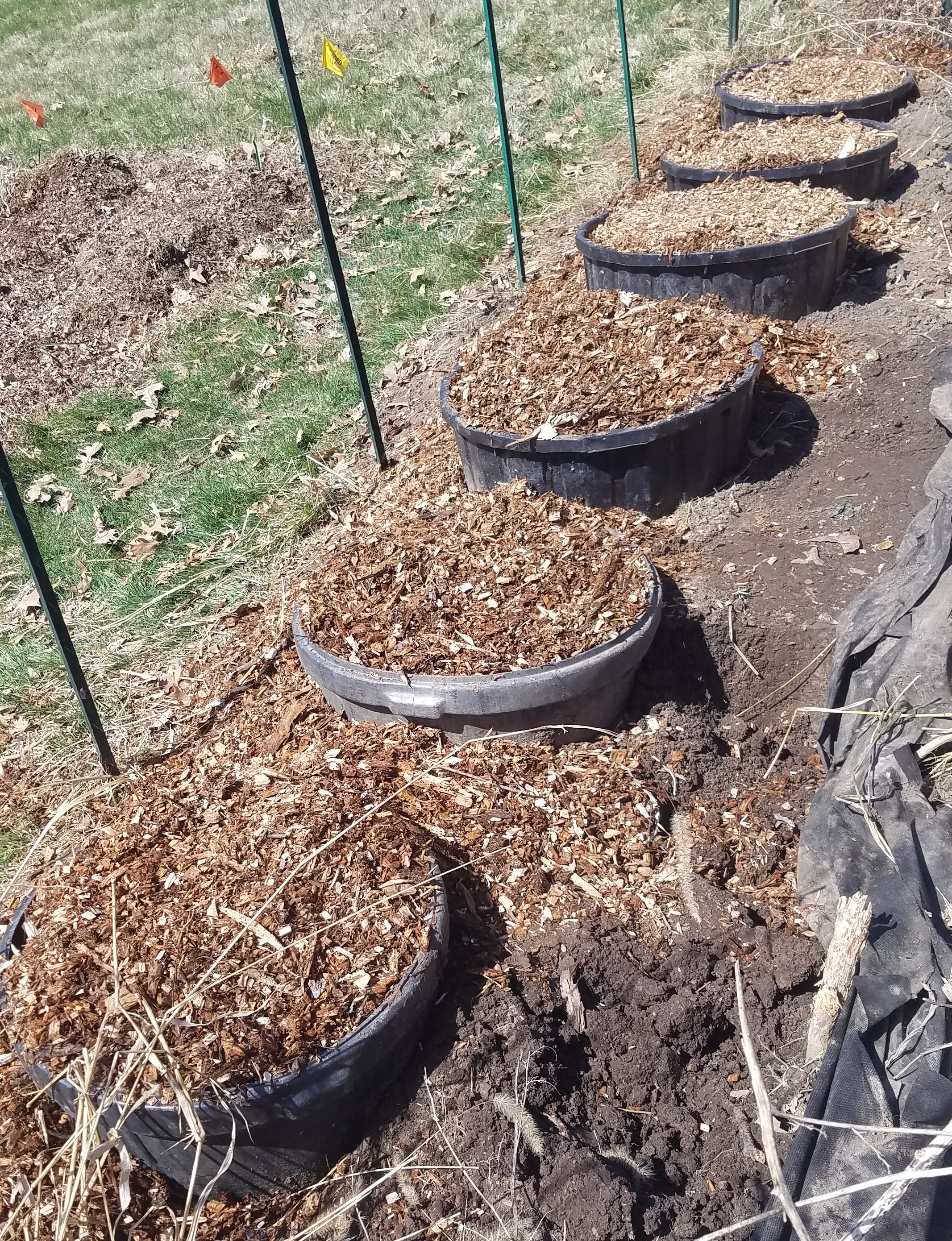
Potatoes planted on Good Friday, April 7, 2023.

Gardening began in the traditional way, with onions planted indoors beginning in December, and seed potatoes planted on Good Friday. Fourteen trays of seedlings are either on a table near the French doors or under a grow light downstairs. As soon as I can get the greenhouse assembled, cruciferous vegetables will head out there. Onion sets arrived Thursday and need to go right into the ground. Chives from last year are up and garlic is poking through the leaf mulch that covered them since October. Once again, I’m committed to raising food in 2023.

I plan to reduce the number of varieties of what I grow and grow more of it. The idea is to use or preserve what we can and donate the extras to the local food pantry. This year, the volume of clients visiting food pantries has risen significantly. We each must help how we can.

I need to make a trip to Monticello to buy fertilizer. It will be the same 50-pound bags of composted chicken manure that have become standard. I also need to visit Beautiful Land Products in Tipton and pick up a couple of bags of soil mix. I think I’m good for fencing this year, so it may be a low capital garden. I need one of those.

I will likely be sore in the morning, yet I relish the fresh air and sunshine. As we age, it is important to stay active. Gardening can be done at whatever pace we choose. Cheers to Garden 2023!

Categories
Living in Society

Pokey Pokey

Lake Macbride

The veins on my arms do not stand out. Ever. The clinic drew blood for my semi-annual checkup and it took two staff members four pokes to obtain a sufficient sample. I’m an adult and can stand the pokey pokey. I also know about my hiding veins.

The blood test results were posted same day on a health profile hosted by the hospital. Let’s just say I have some work to do after last winter.

My high school friend Mike Tandy died on Thursday. He was on stage crew and close friends with most of our 1970s band members. He occasionally played bass guitar. He was a teacher most of his working life. Rest in peace, buddy.

The last ten days have been relentless with deaths of people I knew well. Now that spring is here, maybe I’ll get some relief. In any case, I bookmarked the three funeral homes in my home town for easy reference.

A thunderstorm blew through Big Grove Township last night. It was severe enough for us to retreat to our safe place on the lower level. After the 2020 derecho, it was no biggie. A little hail and moderate rain fell. We lost electricity for an hour or so. When the lights and stove went out, I put away the dinner I was making and took the ingredients back out when electricity returned. I left the half-cooked brown rice on the stove and without additional heat, it turned out exceptionally well. We need to replicate that process without the loss of electricity.

I binged on poetry reading at the end of the month, finishing books by Czesław Miłosz, Alice Walker, Adrienne Rich, and James Wright. I liked each one in different ways. The fewer mass culture references in poetry, the better. None of them was clean enough for my liking. It bugged me a little that Walker repeated she was “writing poetry again.” Just show me, don’t tell me is a basic tenet of poetry.

The cleaning of an external hard drive proceeds a little each day. Unfortunately, there are unique and useful files on it, so the computer spends several hours each day with the transfer. My obsessive compulsion about saving my computer work paid off in the new finds I have made. It is a drudgery, though.

I don’t care about sports, yet last night’s win by the University of Iowa Women’s basketball team against number one ranked South Carolina was a big deal. I noticed in social media, some friends flew to Dallas for the game. We talk a lot about how divided the country has become. Yet, if one can’t get behind the success of this team, you may be the problem and need a look in the mirror.

It’s tomato and pepper planting day in Big Grove. I had better get after it.

Categories
Living in Society

The Great Shuffle

Filled Bankers Boxes.

The back seat of the Chevy Spark is loaded with boxes of books to be donated to Goodwill. Between this load and the previous two, I downsized by about 500 books. It doesn’t look like I made a bit of progress.

The goal is to reduce the library so it fits in my writing room, which holds about 2,000 books. Remaining books should be linked to some actual or potential writing project. I’m done keeping books because I might refer to them later. As I look at each book, this is a litmus test: am I going to read or use it now, or not. There is a long way to go to reduce the quantity to fit the space.

It snowed overnight and the ground is covered. It should melt during the next couple of days, yet today will be indoors work. I’m ready for spring.

The house is getting crowded with vegetable and flower seedlings. I finished with early planting yesterday. Next week I tackle tomatoes, peppers, arugula, and lettuce. Once there is a warm, clear day, I’ll move the mulch and set up the portable greenhouse so all the seedlings can move there. With the cold, wintry mix weather, I haven’t felt like outdoors work.

I drafted an obituary for my high school friend‘s widow this morning. It is difficult to compress 71 years of life into 500 words. This is especially true for a physician who has had countless contacts with people in the community, and lived a full life. An obituary still serves as a public notice of death and is important.

Facts need research before going to publication. In several ways, the obituary is a last chance to get things right. We owe getting it right to the deceased, and to the survivors. I tend to be less specific if I don’t know something with certainty. Thus far, no one has complained I left anything out.

I finished my 19th book of the year and need to browse the stacks for the twentieth. Lucky for me, there are still plenty of options.

Categories
Home Life

Morning Routine

Western Sky at Sunrise

To keep our sanity, some daily organization is needed. I have a routine, curated over a period of decades, and in retirement, I follow it closely. I had a thought on Saturday, I should post about it. So here it is.

My morning routine is typed and held by a clipboard near my writing desk. I typed it to make sure I don’t forget anything. Depending on the whims of each moment, I could easily get waylaid.

Whenever I go to bed, I sleep four or five hours and then get up to use the bathroom. I return to bed and attempt to sleep until 2:30 or 3 a.m. Occasionally I will sleep straight through. Infrequently, I’ll sleep until 4 a.m. or later. I feel like I get enough sleep.

Upon waking for the day, I sit up on the edge of the bed and take my blood pressure. I record the numbers on a mobile application and then shed my clothing to step on the scale and record my weight. As long as I have the mobile device in hand, I click on The Weather Channel application and check the hourly forecast for the day.

Next comes clean underwear and socks, and dressing in my at-home uniform of well-worn jeans, a t-shirt, and in winter, a sweatshirt. I make the bed, pick up my mobile device, turn off the light, and walk to the kitchen.

I turn on all the kitchen lights and make coffee with my Kenmore drip coffee maker. I take my morning pills, which are Vitamins D and B-12, plus a low dose aspirin. While coffee is brewing, I head downstairs to turn on the lamp in my writing space and power up the desktop computer. In winter, I tend to seedlings started on a heating pad under a grow light. I perform chores like taking the trash and recycling bins to the curb, checking the salt level in the water softener, and cleaning up projects on my writing table to prepare for the day’s work.

Climbing the stairs, I return to the kitchen and pour the first cup of coffee. I take it to the living room where I sit in my chair, check text and email, and view notifications in my Twitter account. I search for breaking news. Once finished, I read at least 25 pages of the current book on my reading list and record the results in the Goodreads application. I head back downstairs.

At my writing table I log in to the applications I will use that day. I do banking, pay bills, record information, transfer photos from the cloud into file folders, and read newspapers. If there are small tasks related to my writing, I take care of them at the time. For example, this morning, I remembered something that should be included in my autobiography, opened the document, and insert it.

When all of this is done, it is usually 5:30 a.m. and time for breakfast. For me, breakfast is the biggest meal of the day and I take time to make tasty food that will carry me until lunch time. Once breakfast is finished, I clean the kitchen, do dishes, brush and floss, and I’m ready for my day.

There is daily variation, yet I mostly stick to the routine. The first shift of writing after breakfast is the best part of my day. What happens after that is based on a to-do list. Yet on many days, it is free form. Regardless what I do, I feel better for having a morning routine.

Categories
Living in Society

Food Bank Shortfall

A message from CommUnity Crisis Services and Food Bank:

It’s difficult to find words for the situation our community is in right now. We are so grateful to receive incredible support from our community, and we’re lucky to be surrounded by people that truly care about their neighbors.

However, the current economic climate has created an urgent situation at our Food Bank. Food and financial donations are both down, and our inventory is scarce. In January, we had 1,640 more visits to the Food Bank than the month prior. And with everyone’s financial situation being affected by inflation in the past year, in-kind donations decreased from almost 15,000 lbs. of food in December to just over 5,000 lbs. in February. We are in need of Food Bank donations in order to keep our neighbors fed. We understand every budget shrank this year, but if you are able to help, we really need you right now.

If you can help with a financial donation, click here.

To learn more about CommUnity Crisis Services and Food Bank in Iowa City, click here.

Categories
Living in Society

Skipping an Annual Shopping Tradition

Tools

There is not a lot of money to spend on frills at the end of each month. I wrote about this before and while we hope to pay off our outstanding consumer loan this year, an unexpected expense could complicate things. Like many people we live on the edge between financial survival and ruin.

There are broader implications than our single household.

Last year, 48 percent of household expenses were programmed. That means property taxes, water, electricity, sewer, refuse hauling, road maintenance, insurance, telephone, cable T.V., car loan payment, and broadband. There is no escaping these expenses.

Sixteen percent of expenses were food, sundries, gasoline and cash expenses. One can economize here, but all of these categories are necessary. Our food expense is lower because we regularly use produce from the garden.

The balance of our expenses (36 percent) was what I call household operating expenses. This includes clothing, household repair parts, auto repairs, health co-pays, writing expenses, gardening, donations, and anything unexpected that pops up during the year. Sometimes things break and an outside contractor is needed to make furnace, electrical or other repairs. Contractors are not cheap.

I used to go shopping when the Super Bowl was televised. It was a tradition. I’d wait until the neighborhood got quiet, start the car, and drive to the mall to walk deserted passages and browse. It was my personal equivalent of Black Friday. I’m not sure how much I spent on such shopping trips, but not much. The message was more how anti-sports I became after seeing the Iowa Hawkeyes play with coach Ray Nagle back in the day. Sports was and is a waste of time in our household, unless someone we know personally is playing.

With no money left at the end of each month, and we had to take out a loan to pay for some unexpected expenses. Shopping out of tradition doesn’t make sense with a personal loan. It is better not to buy anything extra other than what we need to get by.

I compare this with the post-war boom during the 1950s when large companies banked on a consumer society. The population boomed and people were buying new homes and equipping them with modern appliances and furnishings. The car culture took off. Today, with so much of our expenses programmed and necessary, combined with replacement items, this has to be taking sales away from merchants who once relied upon them. We bought a used car last year, and will buy a major appliance or two this year, but such purchases can’t be driving the economy, at least not in the same way. Cars and appliances are made better to last longer these days and that has to hurt replacement sales.

We are going through the house to purge stuff we don’t need. So much of what we cared about for years, isn’t anything our child wants. We have the room to store old things, although there is nothing wrong with some empty space. I keep thinking I could need, use, or repurpose. I need to let go. It is hard to get a purge started, and we are not ready to call the waste management company to arrange for a dumpster. However; that day is coming.

The Super Bowl will continue to be a non-event here. We’ll make the usual meals, yet we won’t do any shopping outside our normal stocking levels to prepare. I’ll skip a traditional shopping trip that shouldn’t have been a tradition at all. I’ll be better for that.

Categories
Living in Society Writing

Jobs Aren’t the Issue

Working the Garden

The overlooked part of President Joe Biden’s remarks about the January jobs report is this, “As my dad used to say, ‘A job is about a lot more than a paycheck. It’s about your dignity.’”

Make no mistake that Democrats should tout the achievement in jobs growth accomplished during the Biden administration.

Next week, I’ll be reporting on the state of the Union.  But today — today, I’m happy to report that the state of the Union and the state of our economy is strong.

We learned this morning that the economy has created 517,000 jobs just last month — more than half a million jobs in just the month of January. 

And in addition, we also learned that we — there were half a million more jobs created last year than we thought, so the January report is updated.  I mean, excuse me, the December report is updated.

Add that all up, it means we created 12 million — 12 million jobs since I took office.  That means we have created more jobs in two years than any presidential term, than any time, in two years.

That’s the strongest two years of job growth in history by a longshot.

Remarks by President Biden on the January Jobs Report, Feb. 3, 2023.

I’m more restrained in my reaction to the jobs numbers because business continues to focus on deregulation, profit, and shareholders rather than employees. Having a job is good, yet what kind of work is it, and how long will it last? There are unresolved issues between capital and labor.

By the time I entered the workforce in 1968, the post-war economic boom was ending. We didn’t understand it at the time, yet business had resisted progress with workforce since the post-Civil War era when a few people — John D. Rockefeller, J.P. Morgan, Andrew Carnegie, Cornelius Vanderbilt, Jay Gould, E.H. Harriman, Henry Clay Frick, and others — tried to capture the entire economy to serve their own interests. While the Gilded Age capitalists, or Robber Barons as they are better known, were beat back through regulation, large corporate interests are again dominating the industrial landscape in today’s society. A small number of companies push the limits of anti-trust regulations to grow big and prosper anew. The same regulations that broke the monopolies.

After WWII, there was a business movement to create “good jobs.” Companies like General Electric, Kodak, General Motors and Coca-Cola were large scale employers who valued putting returning G.I.s back to work and created what today seems like exceptional benefits packages. Profit-sharing, bonuses, pensions, health care, and even a “guaranteed income” program were all part of generous perquisite packages for loyal employees. These actions were partly self-serving, i.e. to gain employee loyalty and support profitable business enterprises, yet these capitalists viewed employees differently than we do today. Growth in wage workers would fuel a consumer society bursting at the gills in the 1950s.

It is difficult to pinpoint one villain in the conflict between employers and employees in the post-Reagan era. In any case, I point to human resources management consultants. The 40th president set the tone by firing air traffic controllers during the PATCO strike. Much less flashy was the hiring of consultants and implementing ideas the main goal of which was to drive out human resource costs. Whatever romantic attachment to so-called “good jobs” persisted was underscored by the quiet changes by human resource consultants to remove the expense of employees from business operations large and small.

Yes, we should congratulate Joe Biden and company for the what they did to get people back to work after the coronavirus pandemic. At the same time, we should encourage the administration to tax business fairly, act on the climate crisis, and do what’s right for employees and retirees in a rapidly changing business environment. Jobs aren’t the main issue in society today. Regulating business is.