Categories
Home Life Kitchen Garden

Planting During Green Up

Storm Brewing

Green up is all around and it’s time to get tomatoes and peppers planted.

Sunday, in a long session, I planted tomatoes, peppers, tomatillos and eggplant — hopefully enough seedlings for our garden with leftovers to share with neighbors. I planted from seed:

Bell peppers:
Pepper Quadrato D Asti Rosso, Ferry-Morse, 95-110 days.
Garden Leader Monster Bell, Ferry-Morse, 75 days.

Hot Peppers
El Eden (Guajillo), Johnny’s Selected Seeds, 65 days green, 85 days red.
Baron (Ancho), Johnny’s Selected Seeds, 65 days green, 85 days red.
Red Rocket, Johnny’s Selected Seeds, 55 days green, 75 days red.
Pastilla Bajo, Ferry-Morse, 80-90 days.
Serrano Chili, Ferry-Morse, 73 days.
Bangkok, Johnny’s Selected Seeds, 75 days green, 95 days red.
Long Thin Cayenne, Ferry-Morse, 72 days.
Jalapeno Mild, Ferry-Morse, 72 days.

Slicers and Plums
German Pink, Seed Savers Exchange, 85 days.
Martha Washington, Johnny’s Selected Seeds, 78 days.
Black Krim, Johnny’s Selected Seeds, 80 days.
Amish Paste, Johnny’s Selected Seeds, 85 days.
Speckled Roman, Johnny’s Selected Seeds, 85 days.
Granadero, Johnny’s Selected Seeds, 75 days.
Brandywine, Seed Savers Exchange, 80 days.
Abe Lincoln, Ferry-Morse, 70-77 days.
Big Rainbow, Ferry-Morse, 80-102 days.
Aunt Ruby’s German Green, Ferry-Morse, 80-95 days.
Box Car Willie, Ferry-Morse, 80 days.
Pruden’s Purple, Ferry-Morse, 67-85 days.
Big Red, Ferry-Morse, 85 days.
Mortgage Lifter, Ferry-Morse, 83-90 days.

Cherries
Jelly Bean, Ferry-Morse, 70 days.
White Cherry, Johnny’s Selected Seeds, 59 days.
Red Pearl, Johnny’s Selected Seeds, 58 days.
Matt’s Wild Cherry, Johnny’s Selected Seeds, 60 days.
Jasper, Johnny’s Selected Seeds, 60 days.
Citrine, Johnny’s Selected Seeds, 60 days.
Taxi, Johnny’s Selected Seeds, 64 days.

Eggplant
Galine, Johnny’s Selected Seeds, 65 days.
Early Long Purple, Ferry-Morse, 75 days.
Black Beauty, Ferry-Morse, 85 days.

Tomatillo
Tomatillo Purple, Ferry-Morse, 75/85 days.

We had a wind storm last weekend and it shook the portable greenhouse so much the two trays on the top shelves fell to the ground. I was able to salvage much of what fell down. The three varieties of leeks will be difficult to distinguish when I plant them, because they went all over the place. Note to self: bring the trays inside during windstorms.
Categories
Kitchen Garden

Onion Experiments

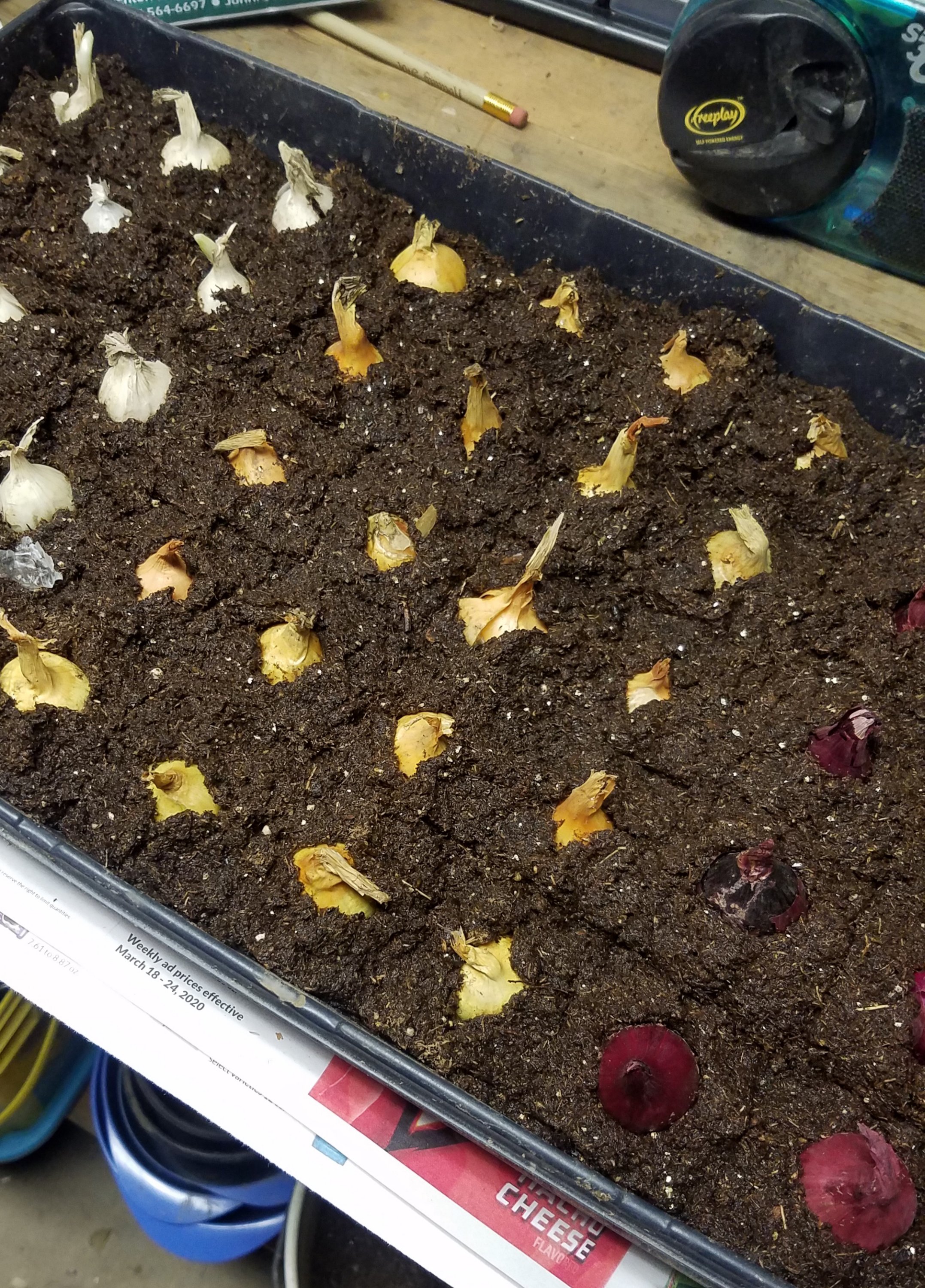
Onions planted in soil blocks.

Growing large storage onions has been challenging. I yearn to grow large onions and use them throughout the year.

Spring onions? No problem. Larger red, yellow or white, the kind we most use in the kitchen, have eluded me.

I’m determined this year will be different. Toward that end I’ve launched some experiments to see how I can do better.

Friday, Feb. 7, I planted Talon Yellow and Red Burgundy onions at home from seed. After six weeks the yellow germinated, the red did not. After chatting on line with another grower, they pointed out fresh onion seed is important. The Talon Yellow seeds were this year’s crop from Johnny’s Selected Seeds and Red Burgundy were end of season discards at the home, farm and auto supply store. Lesson learned: get fresh onion seeds.

That same day I split my Matador shallot seeds with the farm. They are growing their half in the same environment as the rest of their onions, I started mine in a tray at home. Mine don’t look that healthy although they germinated. If the targeted planting time is mid-April, there is time for them to grow and hopefully survive transplant. I’m looking forward to comparing results.

I bought red, yellow and white onions starts from the home, farm and auto supply store. These are the same variety I bought every year since working there. I divided them roughly in half and planted some in soil blocks to give them a head start, and reserved the rest to plant in the ground as soon as it is tillable.

This year I ordered some onion plants from Johnny’s Selected Seeds. They are to be shipped in a couple of weeks and then direct planted in the soil. The varieties are Ailsa Craig, Patterson and Redwing. While more expensive than seed at about 30 cents for each plant, I’m hoping to find something that works in trying it. I would much rather grow everything from seed yet I want other options as back up.

Finally, this morning, I planted six 3 x 3 containers with White Lisbon Bunching Onions from Ferry-Morse (60-110 days). I mixed both pelleted and non-pelleted seeds and broadcast them in the pots. If they germinate and grow, I’ll transplant the entire pots as groups of spring onions. It is a month behind where they should have been started, so we’ll see what happens.

The last part of my experiment is twofold. I am researching types of soil nutrients which support onion growth. My normal process is to hand till composted chicken manure into the soil before planting. If the several garden books in my library suggest another approach, I may try it as long as it is not a commercial, chemical fertilizer. This year I bought a small tiller which will break up the soil more thoroughly than handwork.

I am also planning a disciplined approach to watering and weeding the crop once it is in the ground. Because of our climate, I plan to mulch the crop to retain moisture in the soil. Weeding and regular watering has proven to be challenging, partly because weeding gets away from me and partly because my approach to watering is sparing. With a framework of “experimentation” perhaps I can do better.

I know growing storage onions is possible as I get them from the farms each year. With effort, maybe I can grow my own.

Categories
Kitchen Garden

Spring Song

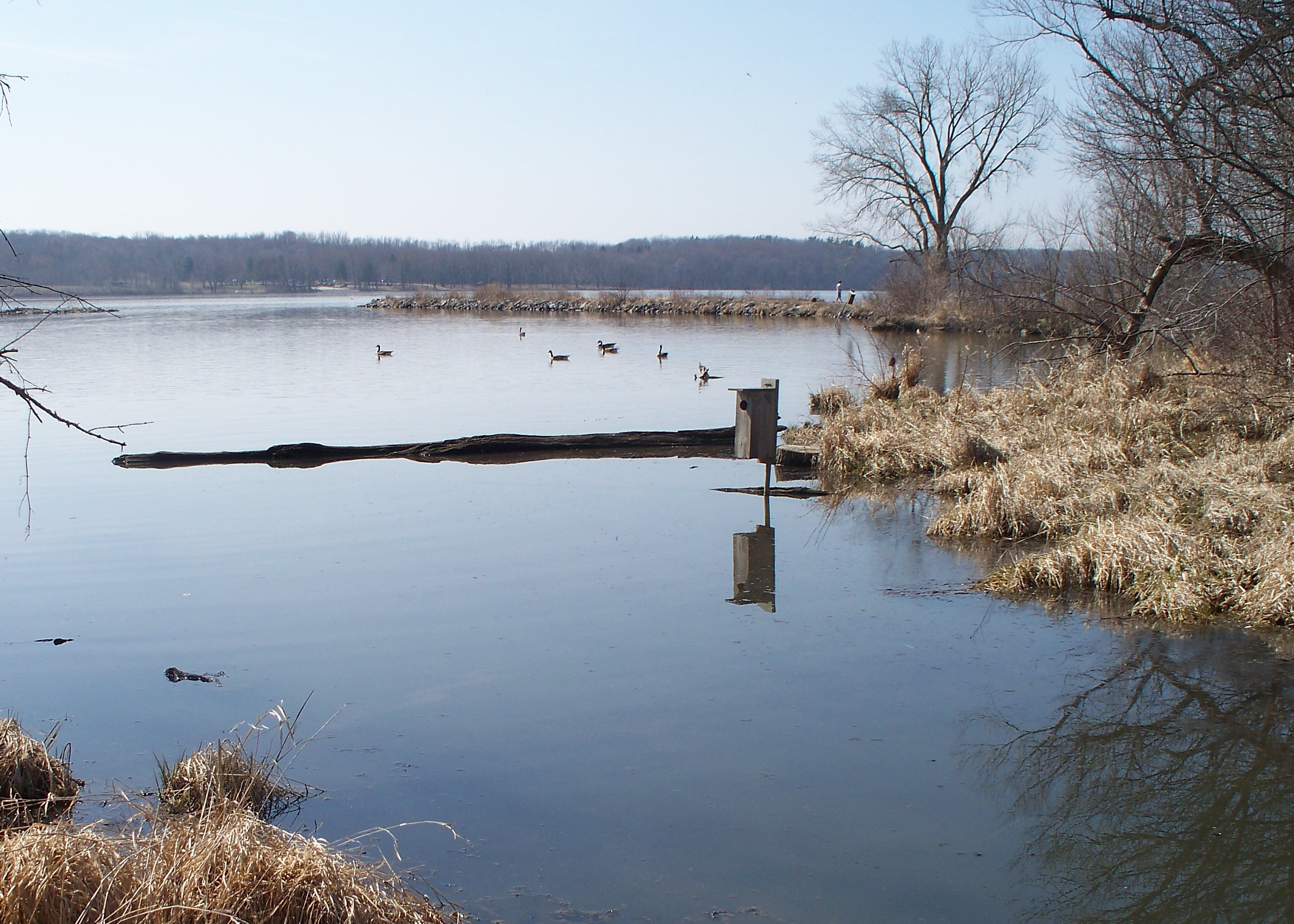
Spring on Lake Macbride

The surface of the ground crunched as I walked the compost bucket out to the bin. The ground was frozen.

Grass has been greening up with the recent rain and ambient temperatures above 70 degrees. The frosty morning wasn’t a permanent setback as green grass was visible through the glaze of frozen rain.

Farmers have produced first batches of maple syrup, so it’s undeniable spring is close by. This in-between time on the margin of winter is unsettling. I want to get going on the garden… but not yet.

The sound of bird songs returned. Voices of children playing outdoors are evident. The trickle of water in the downspout informs us of the spring melt, that despite crunching under my boots it won’t be long.

This is my spring song.

Categories
Kitchen Garden

Garden Notes — June 20, 2019

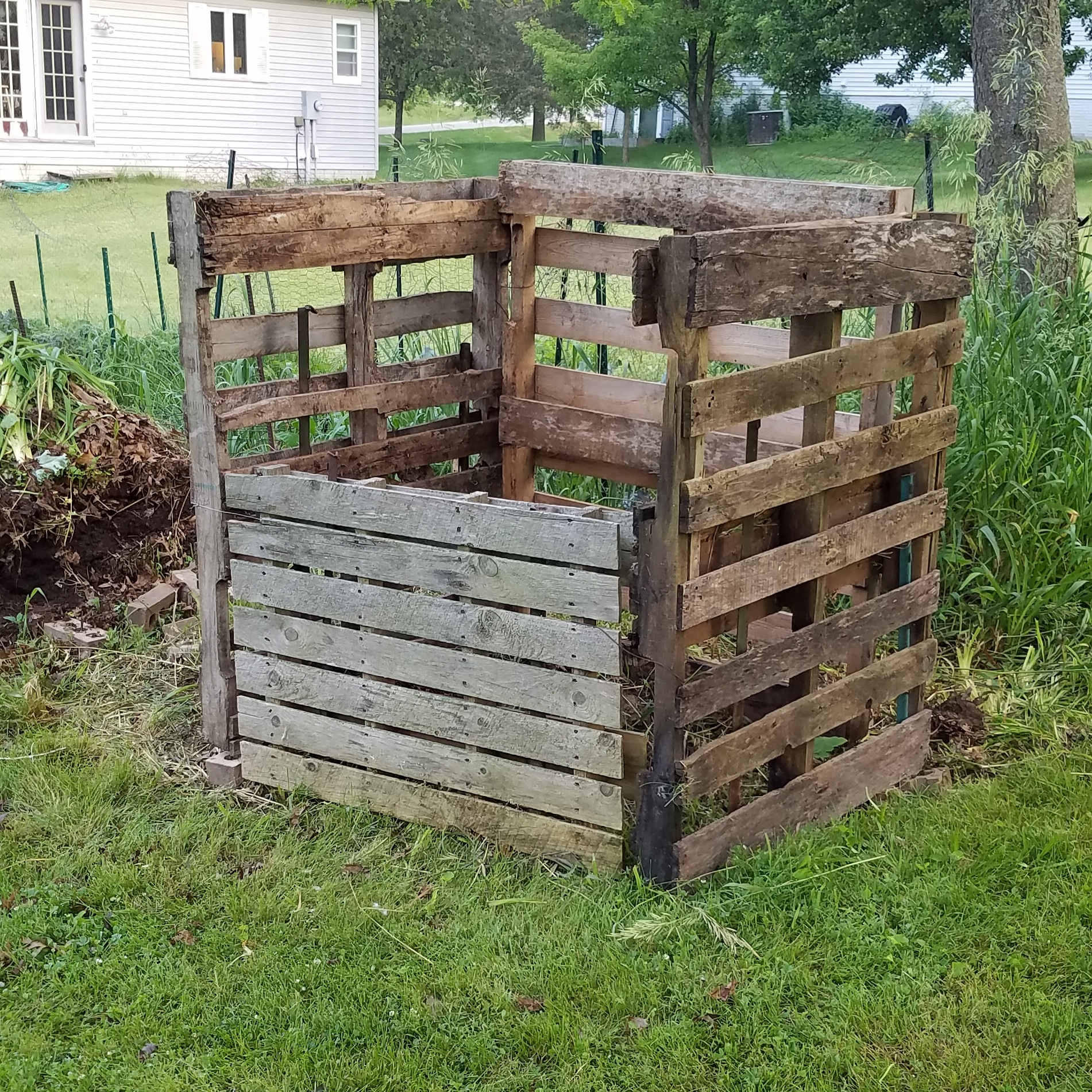
Open air composter

An innovation I discovered at a political event was an open air composter made from shipping pallets.

At Jean and Jix Lloyd-Jones home they had a composter similar to what’s in the image outside their kitchen door leading to the yard.

During the last few years I secured some pallets and made one. It works great for all the greenery I harvest and weed from the yard and garden. It was time to use the compost in the bin so I re-built the device on a different spot, replacing the pallets that were being composted from exposure to the ground. While portable, it’s a permanent fixture in the garden.

This year some garden experiments are worth noting.

For the first time my arugula is producing well. What got me going is starting the tiny seeds in soil blocks then transplanting the seedlings to a garden row. In the past I broadcast them and picked the leaves from a mess of weeds that joined them. The taste of fresh arugula is something distinct and I’m thankful to have figured out how to grow it.

As readers may recall we missed the March 2 planting date for Belgian lettuce and punted. The idea is to make an early patch of lettuce from which leaves could be harvested. I got the seeds as remainders of last season at the home, farm and auto supply store. Because of delayed planting the starts from the greenhouse produced better results while the sown seeds got lumped together rendering the patch difficult to manage. The lettuce process requires further refinement and will begin with more careful selection of varieties from a seed catalogue. I will likely plant Belgian lettuce again since that’s a tradition passed down from Grandmother, but with more reliance on conventional process using the greenhouse.

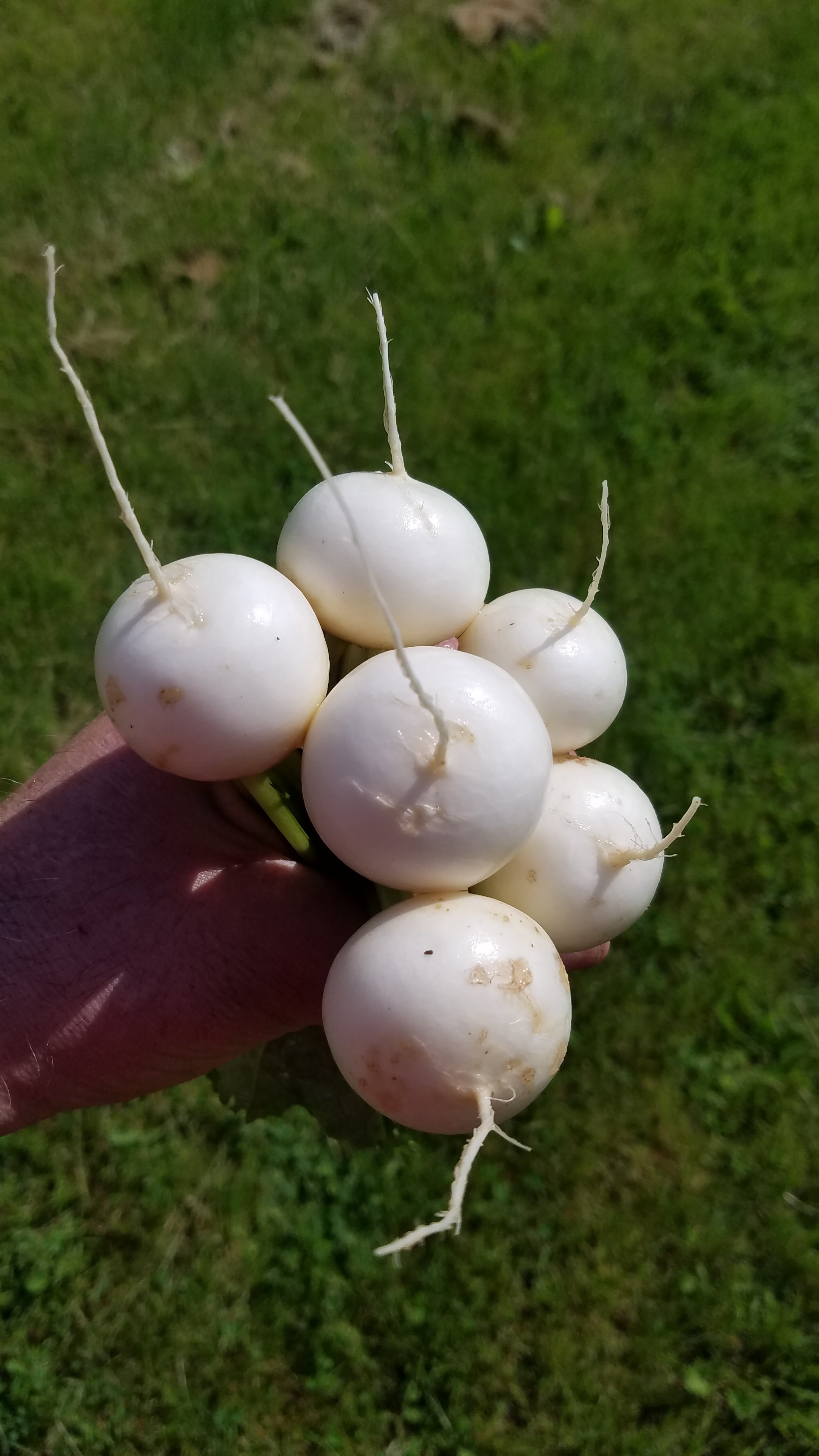
I added Hakurei turnips to my standard purple top white globes. They produced early, in abundance. They make a great snack or sliced thin and mixed with arugula, a delicious salad. Multiple varieties of turnip proved to be a good thing.

I changed how I used buried containers this year. I planted successions of radishes and used one for daikon radishes which continue to mature. When the radishes were done in one container, I planted basil seedlings. I also planted onions starts in succession for green onions. The production has been better than the potatoes of past years (which were the reason for getting the containers). If I want potatoes I will acquire them from a farmer friend through one of my barter arrangements.

I broadcast okra seeds in a two by three-foot section and they successfully germinated. The first thinning is done and another will be needed once the best plants self-identify. I put them along a fence, but am a little concerned with that decision because deer love okra. We’ll see how it goes. The germination was remarkable.

A main learning is to allow more space between garden rows, but gardeners likely know that. There will be more lessons as the season progresses.

Categories
Kitchen Garden

Spring Cooking Day

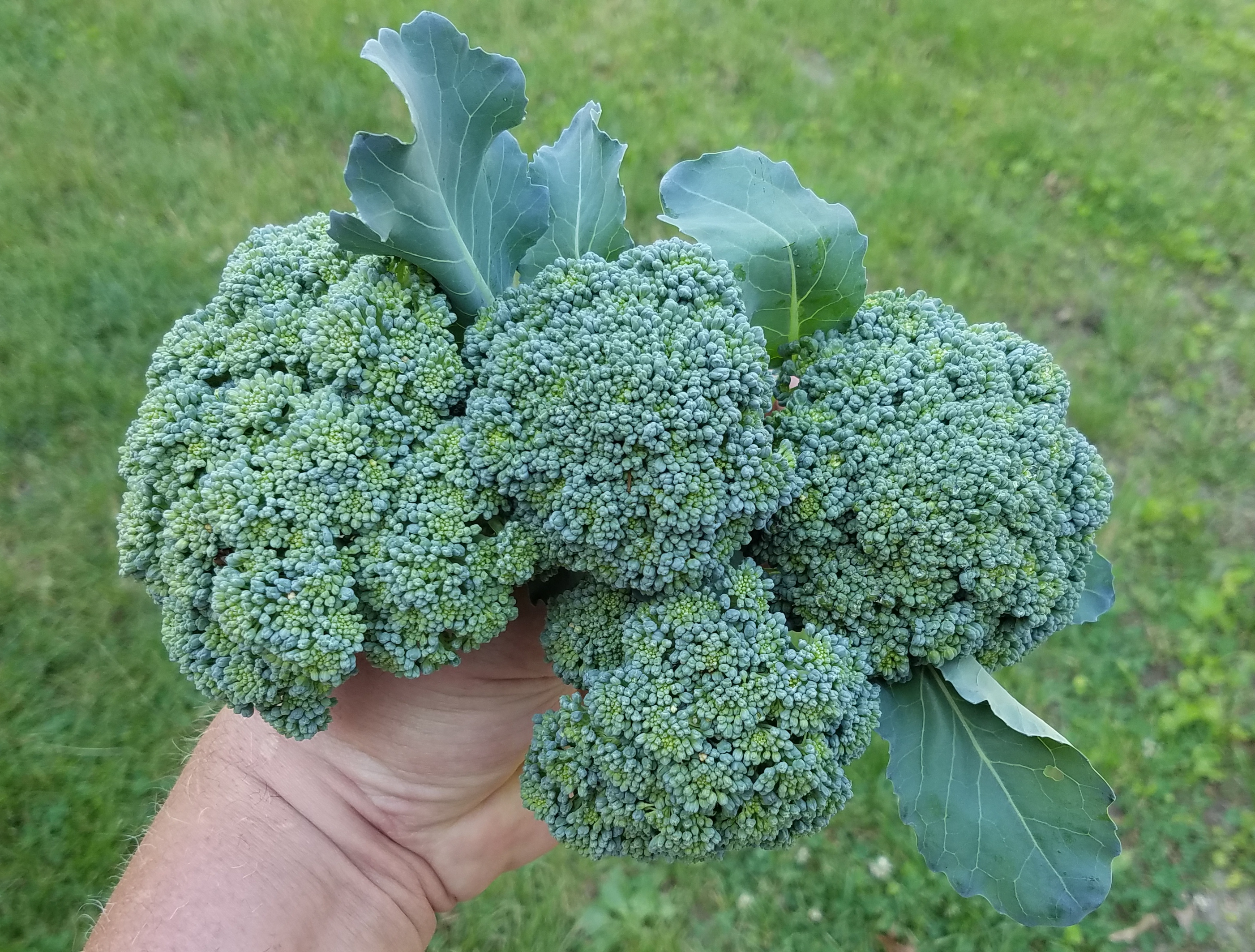
First Harvest of Blue Wind Broccoli

The rush to use ingredients is upon us and the garden isn’t even fully planted.

After watering I made the rounds of six garden plots and harvested radishes, turnips, spring onions, lettuce, broccoli and kale… lots of kale.

I had planned to take a big box of kale to a political event in Cedar Rapids yet forgot it on the folding table in the garage. Upon my return home I bagged it for delivery to library shift workers later today. For now, there is always a home for kale. It looks really good before the bugs and worms start to eat it.

Blue Wind broccoli is an early variety that requires close monitoring to pick it at its peak. Reserving some florets to be added to salads, I steamed it as a side dish for dinner. In fact a lot of kitchen work happened yesterday.

The first thing I did after waking was make pesto with fresh basil. It was the beginning of a day of cookery.

For breakfast I made a casserole using leftover brown rice and fresh spinach. While the casserole was baking I filled the Dutch oven with carrots, celery leaves, onions and turnip greens to make what has become a traditional spring vegetable broth. For dinner I heated a veggie burger and served it with the broccoli and kale.

My go-to kale recipe is simple. I de-stemmed and tore seven or eight kale leaves into 2 x 2 inch pieces in a stainless steel bowl. I heated a wok and added a tablespoon of extra virgin olive oil. I diced half a large onion and sauteed until translucent. I added five cloves of roughly chopped garlic and a quarter cup of pine nuts, cooking until the vegetables were tender and the aroma of garlic rose from the wok. Handful by handful I added the kale while stirring constantly. Once it was all in the wok I added vegetable broth to help cook the kale down. Once the liquid evaporated, I seasoned with salt and pepper to make two servings.

Perhaps the best meal of the day was lunch for which I toasted a slice of bread and spread pesto on it, serving with a cup of cottage cheese — simple pleasures in a time of abundance. We have to pace ourselves to see that as little as possible goes to waste.

Categories
Environment Kitchen Garden

Garden is Growing

Cherry tomato planting area: Clementine, Taxi, Jasper, White cherry, grape, Matt’s wild cherry

I ran into a couple of neighbors at the well house while receiving a shipment of chlorine for our water treatment plant. They were checking to see if the dehumidifiers had dried out the well pit after the rain. They had.

We got to talking about the wet spring, polar vortex and the weather generally and predicted we’ll be going into drought next. None of us were kidding.

Other than that I spent the day in our yard and garden. I finished planting the fourth of seven plots and have about a third of number five in. As long as the weather holds I’ll keep after it. The soil is a combo of dry and muddy which is the best we can do this spring.

It’s been five days since I left the property with my car. Spiders made a web in the wheel well.

I planted these seeds in the fourth plot on June 3:

Hidatsa Red Beans, Seed Savers Exchange, 80-100 days.
Emerald Okra, Ferry — Morse, 58 days.
Clemson Spineless Okra, Ferry — Morse, 58 days.
Cilantro, Ferry — Morse, 45 days.
Extra Triple Curled Parsley, Ferry — Morse, 70-80 days.
Hercules Main Crop Carrots, Johnny’s Selected Seeds, 65 days.

I’ve never grown okra before, so fingers crossed. For the plant to be productive, once it starts fruiting, pods are to be picked once they are three inches long. Gotta get from seed to plant before I worry too much about that. The two rows of beans are a lot. The main purpose is to increase soil nitrogen for next year… and of course we’ll eat or preserve them. It’s the first time planting red beans for drying and storage. I have seedlings of cilantro and parsley, so this patch is for later on, assuming they germinate. There are never enough carrots.

Monday breakfast of scrambled eggs and sauteed bok choy with spring garlic, topped with green onions (scallions).

I picked the first green onions and used them for breakfast. There is a lot going on outside.

I left some of the volunteer garlic in the ground so we can get scapes. If my garlic stock from last year lasts, I’ll plant them as seed later in the summer to supplement the volunteers.

I inspected the apple trees and they fruited nicely. Apples form clusters of five blossoms which get pollinated if we’re lucky. When the fruit forms and starts tipping up, and the calyx closes, you know there will be a fruit. When we get to this point it is the time to cull the extra or non-productive fruits so the ones left will get decently sized. Because this pollination persisted for so long, I believe nature took care of the culling for me and rejected later pollination because the fruits are nicely spaced on the lower branches. That would be your folk-apple theory.

I’ll have to check in with the chief apple officer at the orchard when I next see him. I hope that’s soon.

Categories
Kitchen Garden

June 1 was a Garden Day

Experimental row tillage to minimize damage to soil structure.

It was finally a day to spend outside in the yard and garden.

I planted Kentucky Wonder Bush beans (Seed Savers Exchange, 65 days) and transferred beets, arugula, lettuce and parsley into a single row next to the summer squash planted the previous day.

The garden plots have not dried out as well as I’d like. The urgency to get things in the ground had me doing the best I could to dig the semi-muddy soil and move seedlings and plant seeds in garden rows.

I’m using a technique I call “row tillage,” in which I dig more narrow rows to plant. I turn the soil with a spade, break it up with a hoe and then break it down further with a garden rake. Because the soil was still muddy, it didn’t break down as easily as I hoped but it got the job done. Hopefully soil structure is less damaged than if I were to dig up and rototill the entire plot. Because I mulch, there is no concern about weeds by leaving part of the plot untilled. If I had a mechanical tiller, I’d use it in the narrow rows. I may get one as I age or if garden tool-wielding bothers my shoulders or back. The technique worked last year with tomatoes, so I plan to use it more this year.

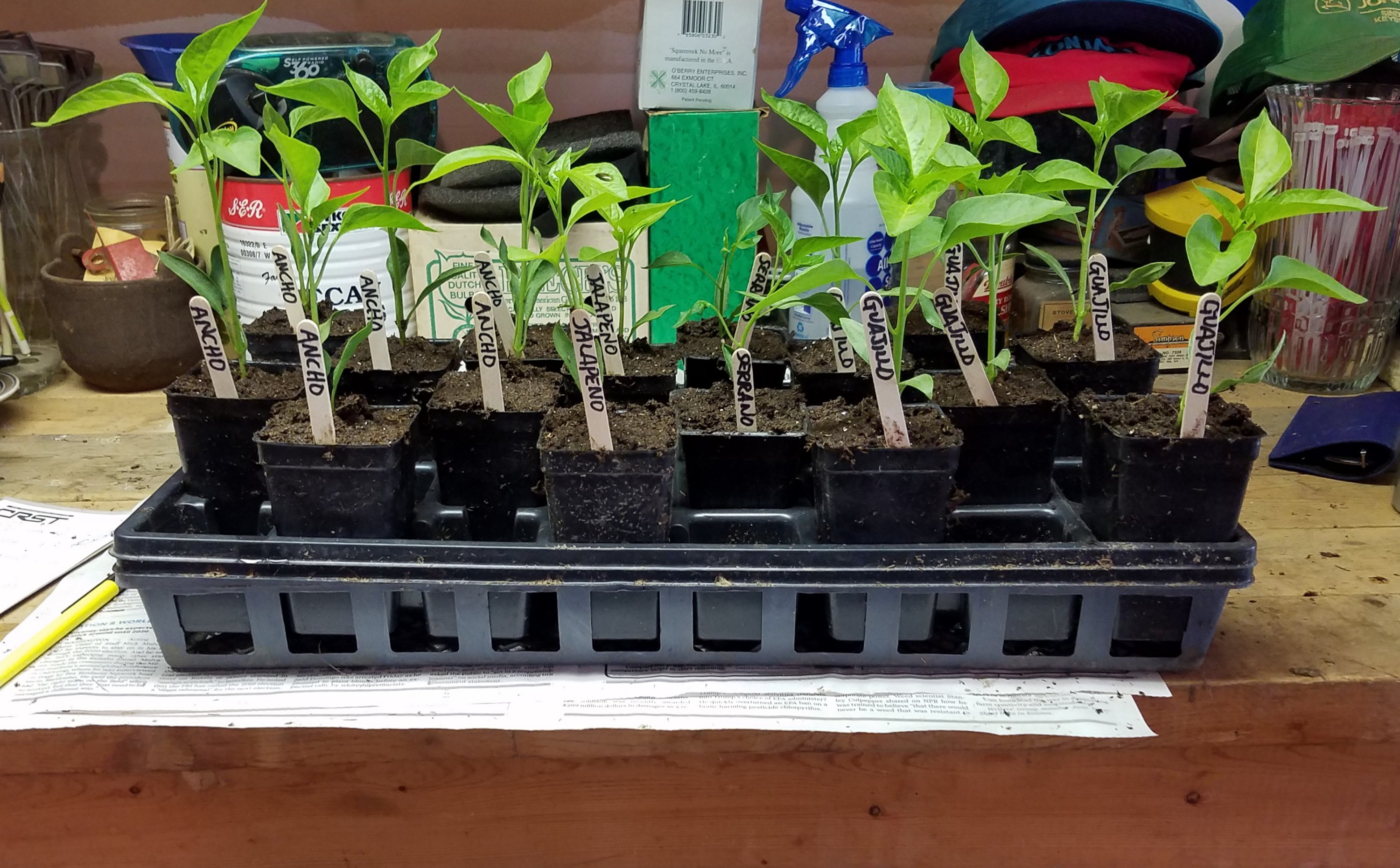
Culled hot pepper seedlings.

Culling hot pepper plants to pick the best starts is important. This year I plan rows with six ancho and six guajillo chili peppers. Seeds from Johnny’s Selected Seeds germinated well so there are extras. The rest — cayenne, jalapeno, Bangkok, Serrano, Red Flame and Red Rocket — will be planted two of each in a big bed. Ancho and guajillo are an experiment in Mexican cuisine. I use jalapeno and Serrano fresh and dry the rest. If the seasons proceeds well there should be plenty of them all.

Harvest was more turnips, parsley, beet leaves, and lettuce. I’m ready to spend another day and the forecast is clear skies. After a bit of desk work, I’m ready to make June 2 a gardening day as well.

Categories
Kitchen Garden

Thursday Between Storms

Onion Starts in Containers

The morning was brilliant. Not only the sun, but life all around us as I worked in the garden on what has become a rare sunny morning this season. The sky is now clouding up with scattered thunderstorms forecast this afternoon. We are in between storms.

I direct-planted Early Scarlet Globe Radishes from Ferry-Morse, 25 days. I also planted the last of the onion starts from the farm for scallions.

The ground is saturated. I took down the chicken-wire fence around the early spring plantings and water was evident near the surface — under the grass in the walkway around it. It felt squishy.

Footprint between turnips and carrots.

The plot urgently needed weeding. I obliged, filling my bushel basket with weeds several times. I harvested the last of the first radishes, turnips, arugula and four kinds of lettuce. Even with competition the original plantings are looking great: beets, turnips, sugar snap peas, lettuce, arugula and carrots. While ground moisture made it easier to weed, by walking on it I added to compression that already existed. The plants look robust but I’m not sure how the excess ground moisture will impact yield.

In the kitchen I’m planning some kind of turnip-arugula dish with dinner. A classic is shaved turnips with arugula tossed in a dressing of homemade cider vinegar, olive oil, honey, salt and pepper. I have plenty of turnips, but only two cups of arugula. (I had forgotten I planted arugula). The other option is to braise the turnips in butter then toss them with the arugula and maybe some other kind of cooking greens. Seems the dish would need garlic. Maybe I could make a dressing with the cooking remains, minced garlic and some cider vinegar. Or maybe I could toss the whole works with some of the lettuce harvested today. While there’s no certainty, there are possibilities. This is how a kitchen garden works.

Turnips

I’m not giving up on the garden. I considered mud planting the celery then thought the better of it. The ground is just too wet. So I wait.

It is surprising how just a few hours in the garden finds work for idle hands, clearing the fog of storm-related stress away. I’m not sure when the weather pattern began but is has been weird since the beginning of January. I expect we are only seeing the beginning of the weirdness. That is no reason to stop living.

I planted reserved seedlings of Blue Wind broccoli where others had failed. The plot is under the locust tree and one corner of it may be a problem for anything to grow. We should get some broccoli, and if the slow-starting seedlings mature, it will be in progression. We love fresh broccoli.

I find myself referring to these garden posts frequently to review when something was planted. There is value in trying to remember what I did on Thursday morning. There is hope of a delicious dinner made partly by the work of my hands. That’s why I am a gardener.

Categories
Environment

Climate Reality: It’s a Crisis

Scarlet Kale in My Garden

On Feb. 19 I submitted a vacation request for today and tomorrow at the home, farm and auto supply store so I could finish planting the garden if I hadn’t already.

Paid vacation is one of several perquisites of working for a mid-sized retail company. Such perks are a reason I linger there, even though I’d rather spend more time at home in my garden and kitchen.

As we now know, planting is behind during what may become the wettest Iowa spring in recorded history. People aren’t freaking out yet. Many I know, including all the farmers, are on edge. A lot is at stake when one’s livelihood is built around planting and growing foodstuffs. Non-farming people feel the oppressive weather as well. The continuing rain is not normal for east-central Iowa. I’m not sure my garden will get planted the way I expected in February when I submitted my vacation request.

Yesterday at Kate’s farm a thunderstorm rolled in and we moved the seeding operation into the barn. One doesn’t want to be inside a metal-framed greenhouse during a lightning strike. At home I left my trays of seedlings outside when I went to work and they survived the storm in good shape. I moved them into the garage as rain started again. There have been a lot of thunderstorms locally, which when combined with the recent polar vortex, heavy snowfall, rapid snow melt and wild temperature swings, indicate this isn’t a one-off weather event.

Around 1850, physicist John Tyndall discovered carbon dioxide traps heat in our atmosphere, producing the greenhouse effect, which enables all of creation as we know it to live on Earth. This and other scientific facts about physics, chemistry and biology are the foundation of analytical models that predict future behavior of the climate and its consequences for humans. As Katharine Hayhoe, an atmospheric scientist and professor of political science at Texas Tech University, posted yesterday in social media, “climate models are (not) some type of statistical random number generator.” The science of the climate crisis is the same science that explains why airplanes fly and stoves heat food. It’s science.

Consider the displeasure with which the administration greeted the Fourth U.S. National Climate Assessment which predicted dire consequences for sentient beings in coming years if greenhouse gas emissions continue the way they have been going. The president’s advisors now seek to change how the assessment is done, arbitrarily shortening the window of concern to a near horizon of 20 years. I’ve never seen an ostrich stick its head in the sand, but this is what it would look like. There is no scientific reason to shorten the horizon for considering the effects of the climate crisis in climate models.

I didn’t know what to expect in 2013 when I attended Al Gore’s training to join the Climate Reality Leadership Corps in Chicago. Among the benefits was by understanding the basic science of global warming it became easier to cope with the crisis unfolding in front of us now.

The reality is climate change is real if we have the education and awareness to understand what we are seeing. It is not only about science. As Carlos Castaneda suggested when a reporter questioned him about discrepancies in his personal history, “To ask me to verify my life by giving you my statistics … is like using science to validate sorcery.” So it is with our politics. Scientific facts do not address the politicization of science to serve interests that are indefensible in light of our commonality.

Mother Nature has been the victim of humans living on Earth, of that there is no question. Brutalized and violated, who can mend her broken body? I don’t know if it’s possible, there is no Denis Mukwege for her unless it can be all of us together. Who am I kidding?

The sun is rising after the latest thunderstorm moved on toward the Great Lakes. I’ll put seedlings outside again and hope for a break in the weather long enough to work the soil. While farmers need a good week of dry weather to get crops in the ground, I can make do with less.

I feel good about today but then I am human. Most of us can’t see but six inches beyond our nose, try though we might. To sustain our lives we must do a better job of living now while working toward a better future — despite the setbacks of our politics. What choice do we have?

Categories
Kitchen Garden

Gardening in a Wet Spring

Western Sky at Sunrise – Sundog Farm

Whether or not we get a garden in this year the stakes are not high.

Much as I enjoy produce resulting from my labor, I could get along without it a for a year, or two, if I had to. We are part of a strong food ecology and unlikely to go hungry or want for fresh vegetables.

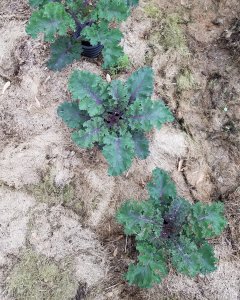
Eventually the ground will dry enough for planting and what has become a dozen trays of waiting seedlings will find a home. There have already been some successes: the kale looks great, radishes have been good, and the sugar snap peas will produce an abundance. I’ll do what I can, when I can, reflecting the position of most gardeners in my area.

The marker for end of spring is moving my vehicle back inside the garage. We are weeks away from that.

On Sunday I planted what will be the last tray of seedlings at the greenhouse. My work there wraps up at the end of June and already I am on every other week duties. Where did the first five months of 2019 go?

I planted,

Cilantro, Ferry — Morse, 45-75 days.
Imperial Broccoli, Johnny’s Selected Seeds, 71 days.
Genovese Basil, Johnny’s Selected Seeds, 68 days.

The Blue Wind broccoli planted earlier has been a disappointment with less than half of the seedlings planted now growing well. Blue Wind plays a role in larger operations as an early broccoli. We’ll see what it produces, but unless the heads are spectacular, it will be the last of this experiment. Late planting of Imperial will better serve our needs.

In other failures, tomatillos have done little. I may get one plant from the starts. Heirloom tomato starts were iffy, with a couple producing only one or two plants. Rosemary germinated, but growth hasn’t taken off. These failures combined with late, iffy planting take a toll. In the end it’s part of being a gardener.

I pulled apart last year’s tomato patch and mowed it flat. The plan is for cucumbers, peppers, squash, eggplant and sundry crops to go in there. The soil isn’t turned yet and won’t be until I get the previous plot planted.

While I’m struggling to get a garden in, larger scale conventional farmers are having a time of it. Spring rain has gone on so long some are debating whether to put in a crop at all. I posted a link to a story about the issue by Thomas Geyer in the Quad-City Times. My post made over 3,500 impressions on Twitter. Find the article here.

People who rely on their farms for a living have had a struggle of a spring. My friend Carmen at Sundog Farm wrote the following to her CSA members:

As I’m sure you’ve noticed there have not been very many windows of sunshine in between rainstorms over the past month and half, so we’ve been seizing every opportunity when its dry enough to get in the field to plant. Despite the limited opportunities and that planting sometime ends up looking more like wallowing in the mud, we’ve actually been pretty happy with our progress! We’ve also been grateful to have hoop houses where we’ve been producing most of the spring crops, and where we can plant even when it’s wet outside. We are a little behind in getting plants in the ground, but so far we are pretty close to where we want to be and hoping for the best!

Some seasons hoping for the best is what is possible.