Categories
Environment Home Life

Sunday Afternoon Drive

Flooding 140th Street
140th Street, June 2

BIG GROVE TOWNSHIP— When we were children, our parents used to take us out for a Sunday afternoon drive. A typical trip might include visiting Weed Park in Muscatine, friends of my parents in Blue Grass, or to the Niabi Zoo near Coal Valley, Ill. Today’s Sunday afternoon drive was not as much fun. I drove to 140th Street NE near Ely Road to see the progress of the flooding.

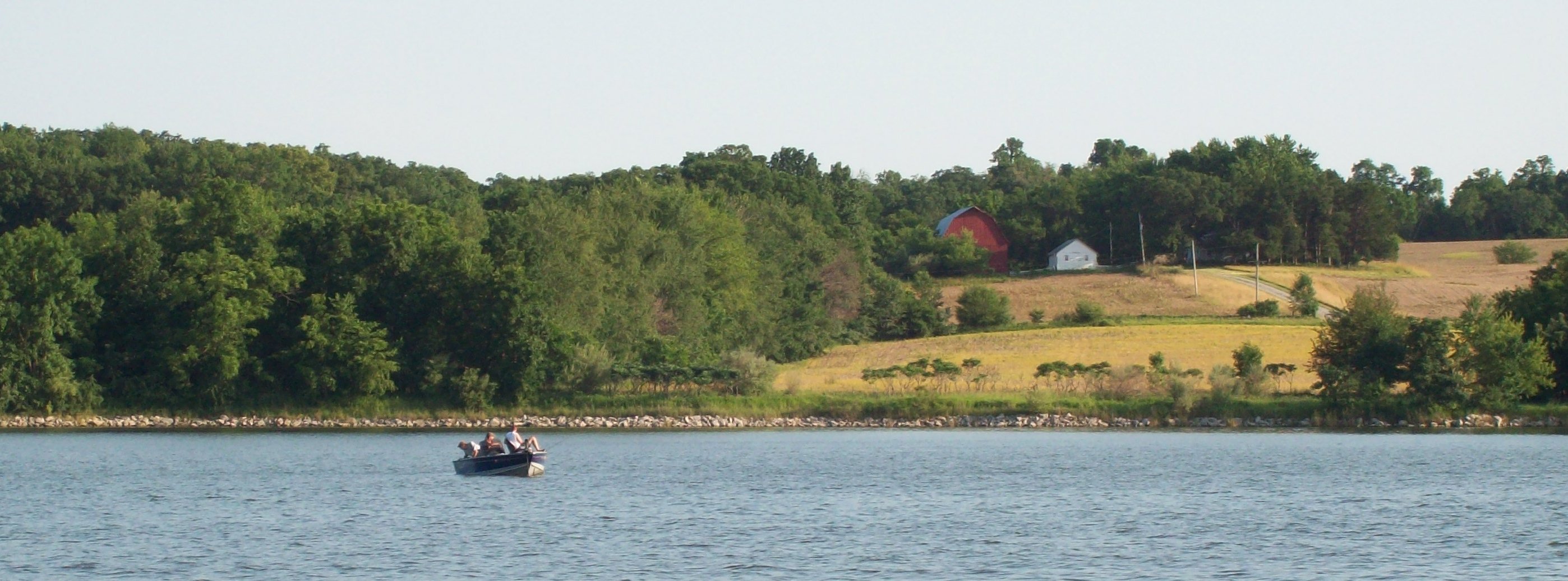
That is, not as much fun unless one is a fisher. When I arrived at the edge of the water, about half a dozen motor boats were out. Click on the thumbnail above, and the boats can be seen as small specks toward where the road rises out of the water. Word is out that striped bass, catfish and carp are biting. The reason I know is a neighbor mentioned it while I was working in the ditch in the front yard after the drive.

140th Street May 31
140th Street, May 31

The water has risen about four feet since Friday. Compare the two photos to see how the building is being submerged. If you would like, take a look. For me, I would not like. It is wearying to deal with the consequences of climate that changed when we should be advocating to change how society interacts with so-called nature turned into an owned and built environment.

Like this flooding, changing climate is hitting us where we live. In the water we use, the air we breathe, and the weather we experience. This weekend politicians sought photo opportunities to post on social media: of them helping sandbag buildings to protect them; of them inspecting the damage. What they should be doing is actual networking with their colleagues in government to find common ground and take concrete action to solve the climate crisis.

Some may not notice the climate crisis because they are so busy cleaning up in its wake, or in this case, trying to catch the limit of striped bass. Maybe they are taking a much needed Sunday afternoon nap. Eventually the frequency of these hundred year floods, at a rate of three in 20 years, will be noticed. It is not too late to solve the climate crisis, but we don’t know for how long.

Categories
Kitchen Garden Living in Society Sustainability

Farmers Oppose Nuclear Power

Nuclear Power? - No Thanks
Nuclear Power? – No Thanks

WILTON—About 65 people gathered at the Wilton Community Center last night to view a screening of the documentary, “The Atomic States of America,” hosted by the group Saving America’s Farmland and Environment (S.A.F.E.). Attendees also heard an update from two of the group’s co-founders Dwight and Dianne Glenney. S.A.F.E. began with a group of farm families who rose in opposition to MidAmerican Energy’s plans for a nuclear powered generating station on 150th Street near Wilton.

No surprise that a group of farmers would fight a large corporation in the biblical terms of David v. Goliath when MidAmerican Energy bought options on 729 acres of prime Iowa farm land in the middle of an established rural community to build a power plant. According to Glenney, the electric utility has three possibilities for the land should they exercise the options: build a nuclear powered generating station, build a natural gas powered generating station, or do nothing. S.A.F.E. is organized so their Davids can remove MidAmerican’s Goliath from their lives and the land options expire without action.

I first met some of the group in October 2012 when Iowa Public Interest Research Group hosted a community organizing meeting to oppose siting a nuclear power plant near Wilton. My advice at the time was, “your most effective voice is with your state legislators when they convene the 85th General Assembly… Let your legislator know you’re opposed to it.” Since then, members of S.A.F.E. engaged their elected officials, securing resolutions opposing nuclear power from the Cedar and Muscatine county boards of supervisors. They also recruited state representatives Bobby Kaufmann and Tom Sands to support their efforts. Membership is approaching 400 people who have signed their petition and joined S.A.F.E.

According to Dwight Glenney, the group has been researching nuclear power during the time since the October meeting. What they learned moved the group from a not in my back yard approach to more general opposition of nuclear power in Iowa, in the United States and globally. Glenney indicated there are options besides nuclear power to supply electricity to meet growing demand in the state.

He reported that MidAmerican Energy has completed their three-year study of the feasibility of nuclear power in Iowa and is expected to deliver the report to the Iowa Utilities Board this week. Dianne Glenney reported on grassroots organizing activity of fundraising, letters to the editor, production of an information packet, attendance at legislative forums and other items.

S.A.F.E. makes a strong point that they are not affiliated with any so-called “green” groups, and that is a strength of the organization. By remaining strictly grassroots, with members of the community effected by MidAmerican Energy’s plans for rural Wilton being the primary stake holders in the group’s activity, they have an independent and unique voice that dovetails with other concerns of rural Iowa.

What’s next? S.A.F.E. supports building any new electricity generating facility on existing power plant locations so that new land is not taken out of farm production. According to Dwight Glenney, it makes sense from the standpoint that the logistical support of transmission lines, roads and infrastructure is already in place. They also plan to advocate with the Iowa legislature for a ban on nuclear power, similar to what 13 other state legislatures have enacted. Such a ban may be permanent, or until the unresolved problem of disposal of radioactive spent fuel is addressed by the federal government. S.A.F.E. is working with their legislators to introduce bills regarding these issues during next year’s second session of Iowa’s 85th General Assembly.

Dwight said that if the issue is resolved, and MidAmerican Energy decides not to build a power plant near Wilton, any funds remaining in their bank account will be divided three ways and donated to local Future Farmers of America groups. For the time being, they asked for financial support and for people to join their growing membership. If you would like to learn more about S.A.F.E., email Dianne Glenney at diglenney@live.com.

Categories
Living in Society

On Senate Adjournment and Health Care

Dome IA State CapitolBIG GROVE TOWNSHIP— In her remarks before adjournment sine die of the first session of the 85th Iowa General Assembly, Senate President Pam Jochum made a statement that included the following, “the biggest challenge of this session was how to help Iowans who, despite working every day, still cannot afford health insurance.”

The Iowa Senate addressed the issue in Senate File 446, the health and human services budget, which was 60+ pages and reported from the conference committee late yesterday. Some house members wanted to read the bill before voting, and were concerned that there would be time. It was difficult determining the status of things in the wee hours of this morning, but the house adjourned until 9 a.m. this morning, giving legislators time to pull an all-nighter and read the bill.

At the warehouse where I work with some of the same people Senator Jochum referred to in her statement, there is neither a health care plan provided, nor is there adequate pay to enable workers to buy a health insurance policy. This forces employees to seek medical care in their social networks and on the open market, and is at the core of the problem SF 446 seeks to address. Like it or not, business interests drive dependence on programs like Medicaid.

It is unclear by how many layers temp jobs like mine get outsourced: at least two or three. The job is organizationally far removed from the parent company that ultimately buys our labor. American business, in its global footprint, bankruptcy declarations and restructuring, mergers and acquisitions, and increased outsourcing, successfully stripped away the part of employee compensation related to providing health care, while improving productivity and decreasing the cost of labor.

For a single person, buying private health insurance can cost $350 per month or more. For a family of two, a monthly premium can be more than $800. Do the math. At an hourly wage of $9.25, with limited overtime, and no paid holidays, disability insurance or sick leave, a person can expect to earn just short of $18,000 per year, taking home about $15,000. There is no room in the budget for health insurance.

Why do people take jobs like mine? Regardless of the social commentary about living wages, minimum wages, prevailing wages, and general working conditions, the money is green at outsourced jobs, and people need it to help get by. There appears to be no shortage of people willing to work slightly above minimum wage, without benefits.

My co-workers have no time to worry about getting sick, or about how to pay for health care. The presumption is any illness will get treatment in one’s social network, with a visit to a clinic, emergency room or doctor’s office being the last resort. Whatever the Iowa government does with the Senate’s health and human services budget, it will be a band aid on a problem that wants a better solution— one that lies more in the global business community and with workers than with government.

We’ll see the Iowa house reaction to the senate bill today. Presumably the conference committee had support for the bill before reporting it out of committee. Here’s hoping the legislative band-aid does some good if and when it is signed into law.

Categories
Living in Society

Passenger Rail and Eminent Domain Get Married

Iowa State Capitol
Iowa Capitol

LAKE MACBRIDE— What will it take for the Iowa House to get a bill considered on the floor of the Iowa Senate? Representatives Dave Jacoby and Bobby Kaufmann are hoping that pairing a Senate Democratic priority— funding passenger rail in order to be eligible to receive a substantial grant from the Federal Railroad Administration to upgrade railroad tracks to handle 79 mile per hour traffic— with House File 219— an act relating to eminent domain authority prompted by a controversy in Clarke County— will do the trick.

Rep. Bobby Kaufmann has invested considerable political capital in the eminent domain issue. A March 11 story in the Muscatine Journal provides some background information, including the fact that HF 219 passed the Iowa House 93-6. According to Kaufmann, he recruited Rep. Dave Jacoby to co-sponsor the eminent domain bill, asked Jacoby to help write the language, and has spoken publicly about his positive relationship with the popular Coralville Democrat. Eminent domain is one of Kaufmann’s signature issues this session, and he has a lot riding on the outcome, personally and politically. The text of their joint press release is below.

To outsiders, it is unclear what is the secret sauce for getting Republican house bills like HF 219 to an up or down vote in the senate.  What is clear is the process is complicated. Democrats can appreciate the complexity, and for the most part, the results of the Senate’s actions. In any event, how this bipartisan collaboration plays out will be something to follow in the closing days of the first session of the 85th Iowa General Assembly.

Kaufmann-Jacoby Joint Press Release May 21, 2013
Kaufmann and Jacoby offer a compromise to the Senate

Rep. Dave Jacoby (D-Coralville) and Rep. Bobby Kaufmann (R-Wilton) have offered an agreement on two key issues that have garnered a lot of interest in the last several legislative sessions.  “The eminent domain language passed the Iowa House four times this session, each time with over 90 votes,” said Kaufmann.  “There has also been much bipartisan support in the Senate, but it has not been brought up for a vote.”  The legislation ensures that land cannot be condemned for recreational purposes by skirting the 2006 law.  A controversy in Clarke County has been an impetus for the bill.

The passenger rail proposal which includes matching federal funding for an initial run between the Quad Cities and Iowa City (with possible expansion to Des Moines) has met with significant resistance.  The $5.5 million dollars would be a part of the state match.  “Passenger rail is an important initiative for my district, and our local Chambers of Commerce.  This compromise reflects the continuing spirit of all legislative districts being heard and I believe gives both issues new life and a new pathway into becoming law,” said Rep. Jacoby.

As the 2013 session winds to an end, proposals like this could very well be the lynch pin to adjourning.

Categories
Social Commentary

Getting Out

Tomato Cages
Tomato Cages

LAKE MACBRIDE— The last eight weeks have been a retreat from my recent life in society. Eschewing standing relationships, wrapped in a cocoon, endeavoring to earn money for the tax man, insurance companies and lenders, the universe of human contact has been reduced to a very small circle of family, close friends and work. I got out yesterday to attend a political meeting. It was a mixed bag.

On the positive side, I spent time with like-minded people I have known for a while, engaging in ideas and strengthening relationships. On the downer side, there is a lot of work to do to make social progress, and the voices heard often are the loudest, regardless of the efficacy of their arguments. My take-away was an unsettling feeling of cultural dissonance.

The droning of talking points— the would be muezzin called for prayer from a seat in the back of the room. Her schedule followed no holy book, her themes were less than holy— the whims and fancies of enthusiasms founded in self-identified diatribes. She leveraged the event to support her secular devotions. Absent another voice, it’s all those gathered would hear. We have to be an alternative voice to the vapid droning.

It cannot be that social progress can be made only by the affluent class, people that earn more than a living wage. But it takes an economic platform to be active in society— source of finance, a safety net. It is beyond the means of most people. Many struggle to achieve such a platform their entire lives, wrapped in a social cocoon, getting by as best they can.

We each feel a sense of dignity and worth that comes from our indigent circumstances. We live in a society that would suppress our native instincts and bend our will to meet the economic, social and political needs of others. We must resist with all of our strength, remaining true to ourselves.

There is a personal responsibility to contribute to social progress, and it is hard to do under any circumstances. After examining yesterday’s events, my conclusion is that I have to get out more.

Categories
Living in Society

Divided Government Comes Home

Morse Fence
Morse Fence

MORSE— State Rep. Bobby Kaufmann held a town hall meeting at the Morse Community Center, where 25 people gathered this afternoon to hear what is going on in Des Moines. He wanted to hear what we had to say, and some members of the audience had a lot of it. Kaufmann reported that local celebrity, Laurie Tulchin of the Newport Road clashes,  helped pay for the hall.

Johnson County Republican party chairwoman Deborah Thornton approached, after the formal part of the meeting, and asked me to sign a petition changing how we would be represented on the county board of supervisors. I don’t support the proposal and said so. She said, “that’s okay,” and moved on to others, after mentioning the Rand Paul event coming up in Coralville. It was an example of the new Republican diligence in what they may see as a Graham township opening to expand their base. Kaufmann won only 42 percent of the vote in Graham precinct during the 2012 general election. I know Graham precinct and believe her effort was futile. However, one had to appreciate her diligence and persistence.

I liked Bobby Kaufmann the first time we met, and still do. What is surprising is now that I have a Republican representative in the state house, I also like divided government. Even more than the so-called trifecta, when Democrats, under Chet Culver, controlled the governorship and both houses of the legislature. (Note: The three branches of government are executive, legislative and judicial. Legislators seem to forget the judiciary in their tripartite calculus).

In divided government people have to work together to conduct the state’s business, each holding the other party accountable. For a working stiff like me, that’s as good as it gets in government.

After the 2012 general election, I wrote in the Tipton Conservative,

“In the 85th Iowa General Assembly, House District 73 will be typical of Iowa, where our state representative and state senator, Democrat Bob Dvorsky, will be in the majority in their respective chambers. In order for anything to get accomplished, the senate and house must seek bipartisan common ground as a first step.

The mistake of past house Republicans has been to get some house Democrats to join in legislation, call it bipartisan, and lay blame in the other chamber when it was rejected. This went both ways.

Kaufmann has an opportunity to differentiate himself. If he rejects the stale blame game house Republicans have played with the Iowa Senate, and, as he promised during the campaign, works toward bipartisan solutions to get meaningful legislation passed and forwarded to the governor, then he will grow his base of support and help his re-election prospects.

However, if he plays the blame game, his prospects for re-election diminish.”

It is too early to tell how the session will play out, and for me, everyone is too chummy over in Des Moines. Today, Kaufmann demonstrated that whether or not he read my letter, he gets what I had to say and has been working toward getting something done in divided government. He repeatedly mentioned his relationship with Democrat Dave Jacoby of Coralville (and their seven lunches together this session). He gave Jacoby credit for helping craft bills that gained true bipartisan support when put to a vote. It is hard to legitimately complain about that.

As a citizen, I believe our legislature doesn’t need to do dumb things like prop up the nuclear power industry, support economic development deals like the one with Orascom, or turn away an expansion of Medicaid in some reasonable form. If I don’t agree with Kaufmann on some important issues, he is doing the work of representing the district. At the same time, my state senator is protecting me from Republican bad ideas.

Now that divided government has come home to roost, one finds it not very progressive, but better than expected.

Categories
Living in Society

On the Body Politic

Main Street
Main Street

LAKE MACBRIDE— Would that the body politic were a human, subject to purges and nostrums that would cure what ails it. Alas, there is no cure for the body politic or our role in it. On most days we accept politics for the diverse, desultory and sometimes malodorous reflection of society it is.

That is not to say politicians are smelly. The body politic is less about public office holders, and more about us. The politicians, elected officials and those who would be, are full of good intentions, and occasionally, will take a principled stand on an issue. But more than these visible manifestations of it, the body politic is all of us in our raucous cacophony and wide spectrum of interests. Part of the dynamic is being disengaged from politicians and politics, most of the time.

To lead a reasonably normal life, one must resist tendencies driven by political activists, and focus on a more general political life. I have a few things in mind.

Engaging in politics includes campaigns, but is mostly governance. The work of elected officials is to govern after being sworn in. Vigilance of their performance and participation in guiding their actions are important in the body politic. In Big Grove, we are represented by two Republicans and three Democrats between the Iowa General Assembly and in the U.S. Congress. Whatever we want to accomplish depends upon working with all of them. When a favored candidate loses an election, some activists turn immediately to working on the next campaign to supposedly replace the undesired elected official. This behavior misses the point of governance.

It is common knowledge that a U.S. Senator or Representative must constantly raise political contributions for the next campaign. For them, the campaign never ends when they have a targeted dollar amount to raise each day. An elected official’s life includes constituency work, public appearances, and maintenance of a public presence, in person and on the Internet. All of this is a form of campaign work. People might think anyone can run for office, get elected and serve, but the large number of lame candidates who have recently challenged the incumbent in our U.S. House district is testimony to the fact that not anyone can. If elected officials must be in continual campaign mode, most of us do not.

My experience during the last five election cycles is that people are interested in politics, but not that much, at least in public. The tendency is for people to change their voter registration from partisan to no preference, so much so that no preference registrations are the largest segment of voters in many districts. This reflects the practical desire to dissociate from the body politic, even if people take general elections seriously. Some register no preference for business reasons, some to hide their political beliefs from neighbors, and others to feign an objective stance when deciding for whom to vote. It is evidence of a curious dichotomy between abhorrence of things political, combined with sub rosa engagement.

Life is more diverse than seeking the next big political campaign. Rather than the body politic, we should think of political engagement as like shingles in society. Once one has had the pox, they are a carrier for life.

Categories
Work Life

Plasma Sales and Politics

LAKE MACBRIDE— The Cumulus radio station in Cedar Rapids was advertising how a person could earn up to $340 per month selling their plasma. It’s enough money that it was worth a look to see if plasma sales could fit into our bottom line. It sounds kind of grim, but people do it all the time.

Plasma is the pale, yellow liquid portion of blood that helps our bodies control bleeding and infection. When one donates plasma, our blood is removed and the plasma separated before blood is returned to our body. We generate more plasma within a couple of days so twice a week donations are usually possible.

Donating takes about an hour and plasma collection centers make it easy with a straight forward, step-by-step process. Importantly, they explain how payment is loaded on a debit card. It is literally using one’s body as an ATM.

Several self-employed and low-wage earners in my circle use plasma sales to supplement monthly income. Got a toothache? Better schedule some sessions at the plasma center to get dollars to pay the dentist. One suspects residents of our nearby college town use the cash for cigarettes, sugary drinks and beer, but in any case, plasma sales can be a reliable and steady source of income if one meets the requirements for donating.

The money could be put to good use. For example, it could be used for political donations. That way, when a political telemarketer called, I would know my approximate annual budget, and be able to say, “Yes. I’ll donate that $100, which will take me four plasma sessions.” Politics would literally be based on blood money then.

We could go a step further and say that all financial contributions to politicians had to originate in plasma sales. There would be a natural limit to how much a person could donate, and a restriction could be placed on corporations that said something like, corporations can make political contributions, but such contributions must be paid via the plasma of shareholders, imposing a natural limit to money spent by corporations during political campaigns. I bet corporations would exercise their free speech differently under such a rule.

If my modest proposal about political contributions through plasma sales seems a bit edgy, I am pretty sure it would work. Importantly, it would set a human limit on political contributions. Having skin in the game would take on a whole new meaning. Most Americans are asleep at the wheel of politics, and would not contribute, so there is little danger of a glut of plasma on the market.

If times get tough, I’ll re-visit adding a plasma sales income line to our household operating budget. For now, I’m just glad I don’t have to do it.

Categories
Living in Society

On the March 5 Special Election

002JOHNSON COUNTY— Voters elected the first Republican to the Johnson County Board of Supervisors since 1958 last night. There was no surprise.

In a county with better than a 2-1 Democratic registration advantage, the enthusiasm of general election years has been supplemented with paid staff. During the 2012 presidential election, the most paid staff ever dominated the local GOTV effort. Campaign work is mostly done by a local party organization in other counties. When the 2012 election was over, the exit of paid staff created a vacuum, which sucked Terry Dahm’s campaign into the vortex, leaving a weak party organization and John Etheredge as our new supervisor.

Dahms was not as exciting a candidate as Janelle Rettig was when she won the January 2010 special election, to which this contest has been compared. Etheredge was less a public lunatic than Lori Cardella was in 2010, and that served to his advantage. Local Republicans were slow coming to modern electoral political campaigning developed during the Howard Dean and John Kerry campaigns of 2004, but they have figured it out, and were able to win last night.

The snowstorm leading into the hours the polls were open didn’t help, but it was a minor problem compared to the lack of a party organization and related voter apathy among Democrats.

A Republican victory has been a long time coming to Johnson County court house races, and one supposes last night’s win is like a burr that will be sanded off in the carpentry shop of the 2014 general election, returning the board of supervisors to all Democratic. Such an outcome is predictable, but remains to be seen. Today’s congratulations go to the Johnson County Republicans for last night’s win.