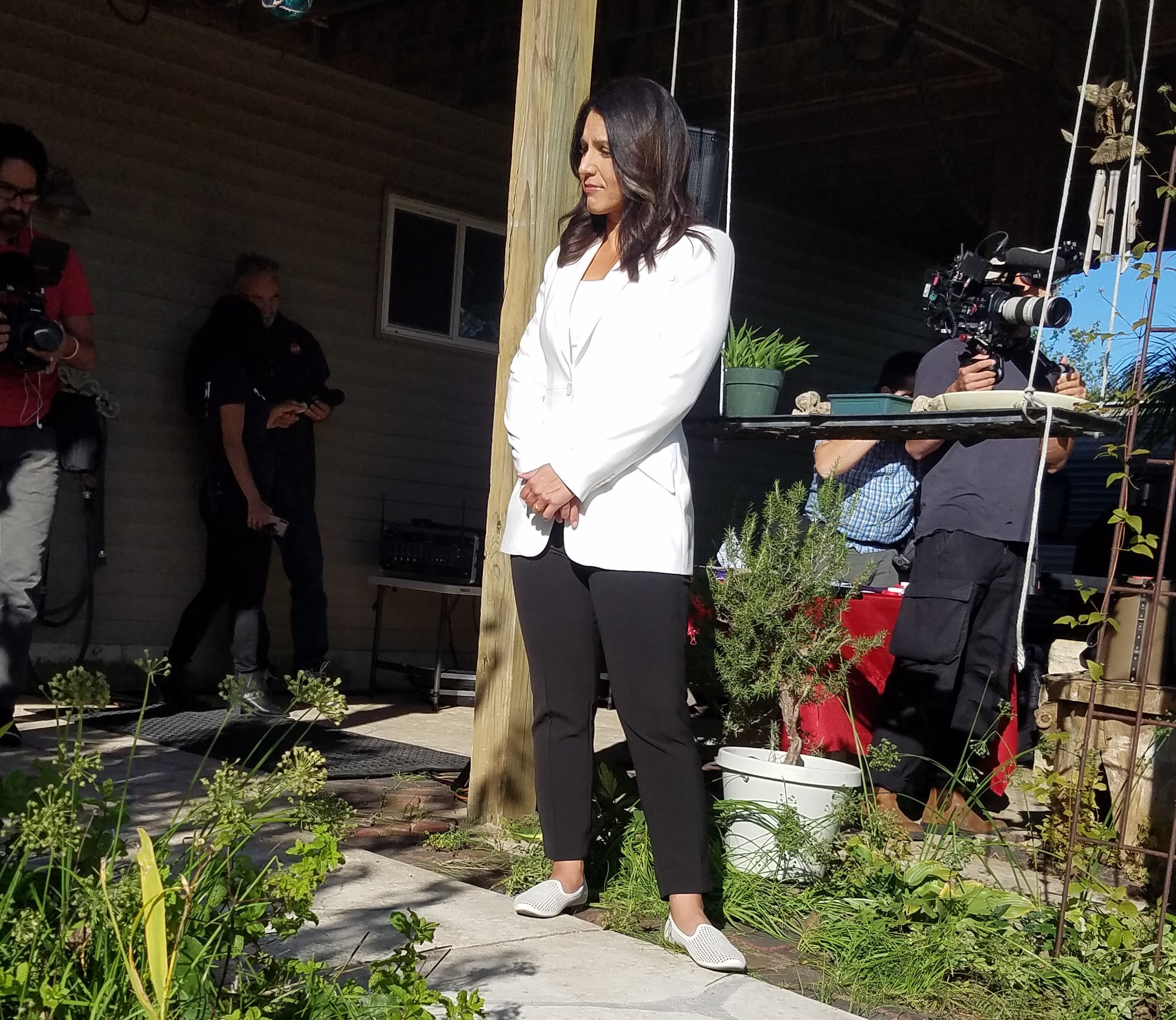
BIG GROVE TOWNSHIP — On Tuesday a neighbor hosted presidential candidate Tulsi Gabbard at his home.
On a large patio facing Lake Macbride, about 40 people gathered to hear what the candidate from Hawaii had to say. That is, 25 regular people along with sundry staff, volunteers, journalists, photographers, and videographers.
I invited the editor of our local paper, The Solon Economist, and he attended.
What’s newsworthy is it was the only presidential campaign event to be held in Big Grove Township, and one of only two in the Solon area this cycle.
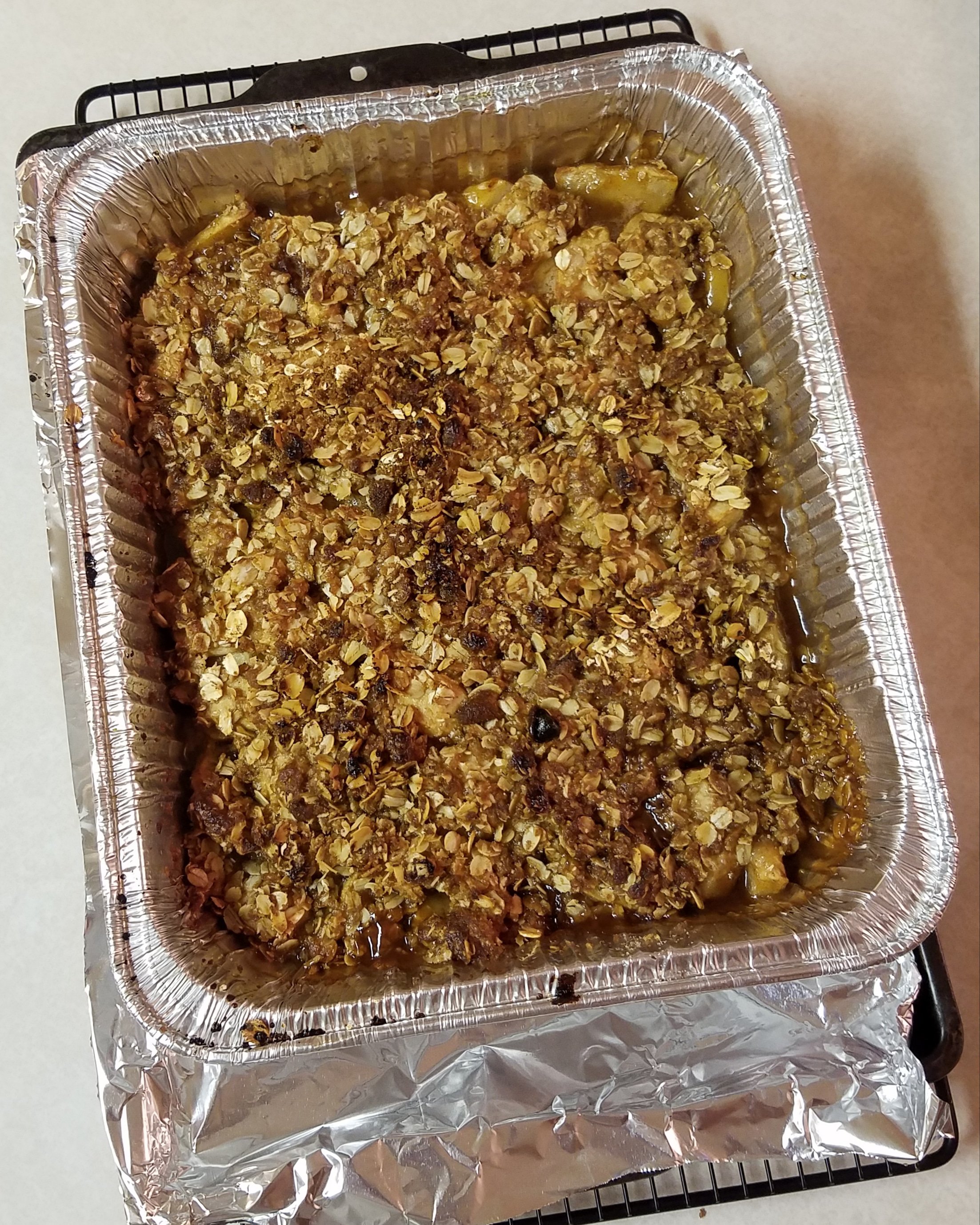
As a neighbor, I baked an apple crisp to serve at the event using Northern Spy, Macoun, and Red Delicious apples picked at home and at the orchard. My neighbor supports Gabbard because of her views on defense department spending. I was recognized for my apple work.
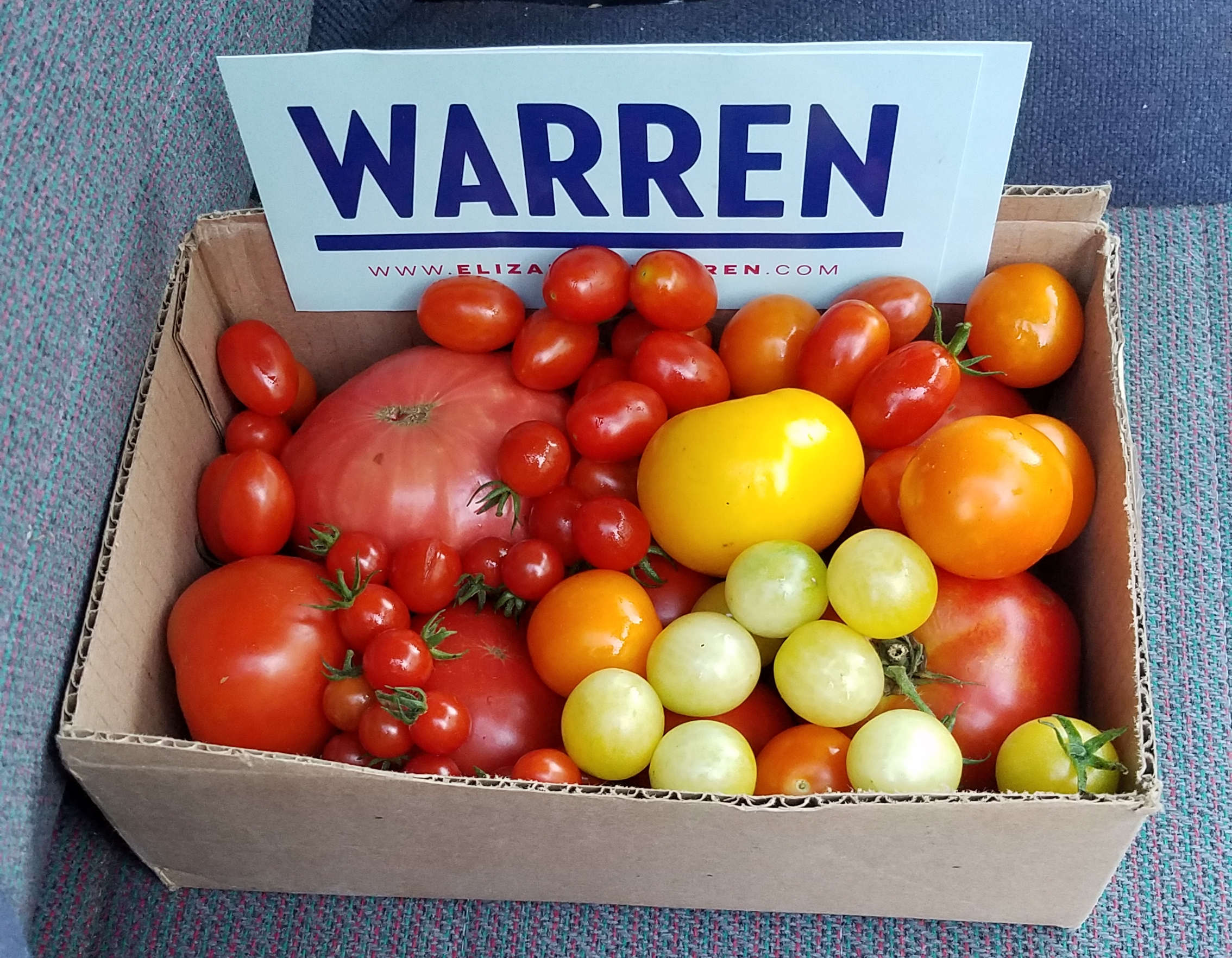
I met Gabbard the summer of 2016 at Congressman Dave Loebsack’s Brews and BBQ fundraiser a few miles away. She has yet to make a memorable impression, although I don’t feel negativity toward her as I did when I met Bernie Sanders in 2014. The brief speech under sunny skies was not enough to have me remove the Elizabeth Warren bumper sticker from my car.
It was a unique event in our neighborhood and I was glad to be part of it. Any time a sitting member of congress shows up here it is worth the time to listen and learn.
James Q. Lynch of the Cedar Rapids Gazette posted an article about the event here.
Now that Elizabeth Warren’s presidential candidacy is gaining traction among Democratic voters, in fund raising, and in a number of political polls, the knives are out.
The arguments against her seem without merit, although, like it or not de-bunked arguments often drive our politics in the 21st Century.
There are two main arguments advanced to harm Warren’s candidacy, the first is she is a woman.
Who will be the first woman elected president? None of us knows the answer and if the results of the 2016 election mean anything, it was a triumph of male dominance and an American patriarchy of moneyed interests that elected our current president. People often say Hillary Clinton was a bad candidate, however, I disagree. Whatever flaws her campaign had, she did the work and won the popular vote. Campaigns are always clearer in the rear-view mirror. If she’d approached a few states differently she might have won the Electoral College as well as the popular vote. There are no do-overs in national politics so the results of 2016 were the results.
I spend part of my time discussing politics with progressive Democrats. What gets said in private conversations is the United States is not ready to elect a female president. In both women and men it is a deeply held belief. My retort is if Democrats don’t run a female candidate we’ll never elect a woman president. Is Elizabeth Warren electable?
Johnson County Supervisor Rod Sullivan, a Warren supporter, laid out the argument de-bunking the idea a candidate is “electable” in an Aug. 20 letter to the editor of the Cedar Rapids Gazette titled “Electability is a Sham.”
“’Electability’ is not real,” Sullivan wrote. “It is a creation of pundits — pundits whose predictions are about 80 percent wrong. ‘Electability’ can only be measured after the fact — did the person in question get elected? Anyone who pretends to know something about ‘electability’ before an election is simply a fraud.”
It is time for Democrats to get over the idea a woman can’t be elected president by picking the candidate most closely aligned with our values regardless of gender.
The second argument often advanced to damage Warren’s candidacy is she is too liberal, another media-driven piece of buncombe.
I recently had coffee with David Redlawsk, Soles professor of political science at the University of Delaware. According to his official website, Redlawsk’s expertise includes being a political psychologist who studies voter behavior and emotion. He focuses on how voters process political information to make their decisions. He’s teaching this semester at the University of Iowa while studying the Iowa caucus process.
I’ve known Redlawsk since he was treasurer of Democrat Dave Loebsack’s first congressional campaign. What he said over coffee last week was similar to what he said back in 2006. The majority of liberals and conservatives will vote for the Democratic or Republican nominee for president respectively regardless of the nominee. This leaves a small slice, maybe 10 percent, who are persuadable and could determine the election outcome. This is a mainstream belief about elections and while Redlawsk was more nuanced, there is relevance to the 2020 presidential contest.
Enter the media. Over the weekend the Washington Post published an article by Michael Scherer and Matt Viser titled “Uncertainty takes over the lead in the Democratic presidential race.” In it, they quote former New Orleans mayor Mitch Landrieu on Warren:
“She has a plan for everything except for how to beat Donald Trump. That needs to get tested,” Landrieu said. “She says she can do all these things. There’s a thing called political reality. . . Aspiration is wonderful, but you can’t eat aspiration for lunch and send your kids to college on it. That’s a fundamental decision that Democratic primary voters need to make a decision on.”
As Redlawsk mentioned, liberals and Democrats will vote for Warren in substantial numbers in a match up with Donald J. Trump should she be the nominee. Most politically aware voters recall that Barack Obama struggled to get parts of his agenda done despite the brief period when Democrats held a majority in the U.S. House of Representatives and a filibuster-proof majority in the Senate. Whatever plans Elizabeth Warren has, and one of her taglines is “I have a plan for that,” there is a political reality as Landrieu mentioned. That’s not significant because it would be true for any Democratic nominee as it was when Obama won the presidency in 2008.
If someone came up with a reasonable argument when Elizabeth Warren should not be the 2020 Democratic nominee for president, I’d listen. In the meanwhile, I’ll persist in supporting her.
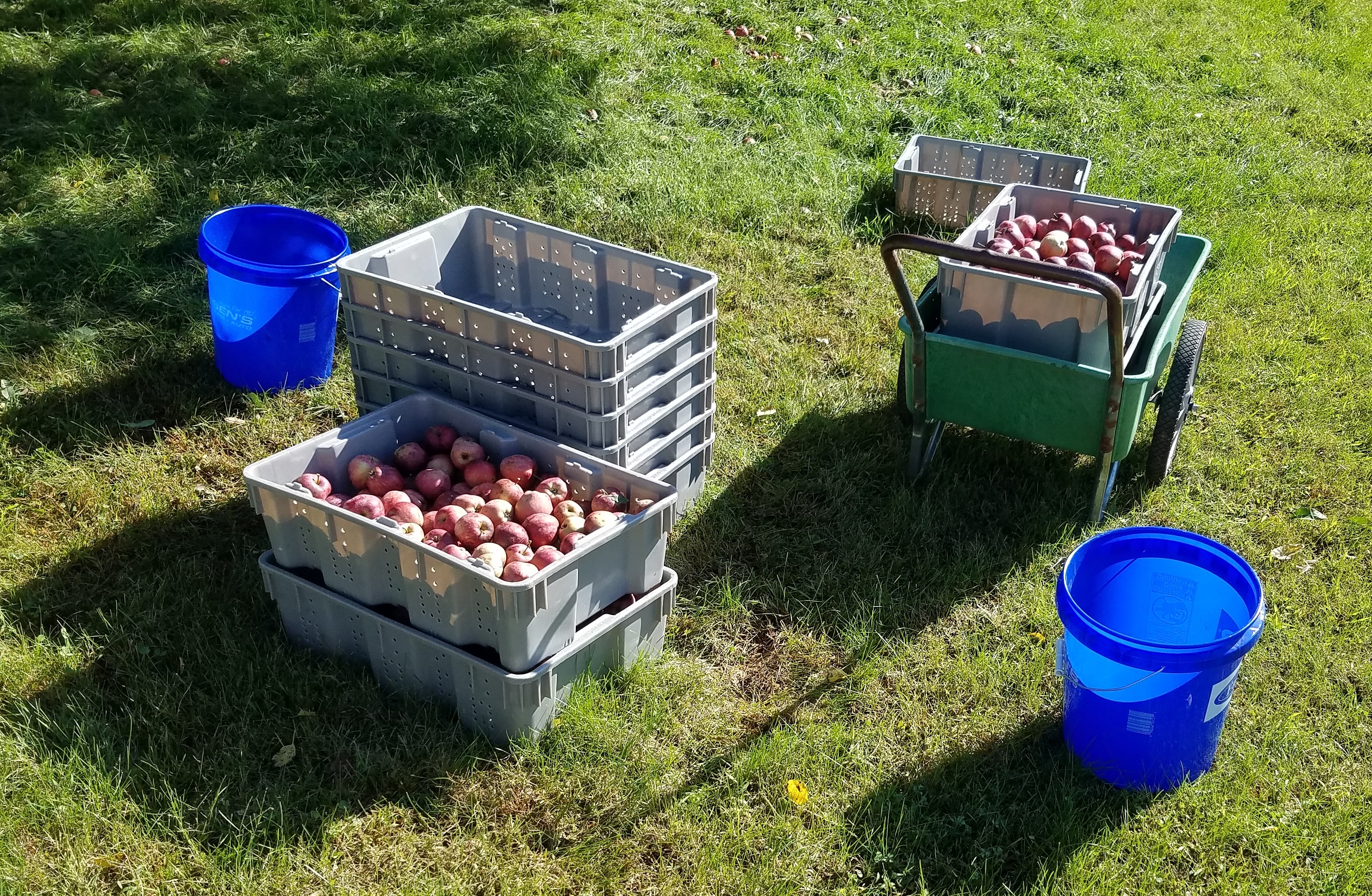
I picked low-hanging fruit from the Red Delicious apple tree last week. All that’s left is dangling red orbs high above the reach of my 20-foot ladder plus 10-foot picker.
Most of those apples will fall to the ground for deer and wildlife food.
I blame the nursery person who grafted this supposed “semi-dwarf” cultivar on the root stock. Either something was wrong from the git-go or the cultivar grew around the root stock and made it’s own roots in its 24 years since planting. The tree has produced in abundance — an investment that repaid itself many times over. I’m happy with the hundreds of pounds of apples I was able to harvest this year, even if I couldn’t reach every one of them.
It rained all day Saturday so I stayed home from the orchard. When touching base with my supervisor mid-morning, more staff than customers were in the sales barn. I used the day for house work, cleaning the kitchen, doing laundry, organizing recycling, processing the last batch of tomato sauce, cooking reading and writing. I also took a nap.
The rain is suppressing my orchard paycheck with take home pay down 30 percent compared to last year. Nonetheless, with good health, Social Security, and my spouse’s small pension we are doing alright financially. I can spend some of the apple money on books and political work.
Friday a copy of What I Stand On: The Collected Essays of Wendell Berry 1969-2017 arrived via letter carrier. It will make excellent winter reading.
This week I purchased some items for our political organizing office in the county seat: paper towels, trash bags, paper cups and the like. I baked a large apple crisp which was used at yesterday’s volunteer training. I also contributed to Brad Kunkel’s campaign. He’s running for Johnson County Sheriff in a contested primary next June and is purchasing his “cowboy cards” this week. These are reasons we work an extra job even if the weather keeps the amount down.
A neighbor is hosting 2020 presidential candidate Rep. Tulsi Gabbard next week, so I offered baked goods with apples for the event. I noticed one of the school board candidates will be in attendance. I support Elizabeth Warren, but I’m going because that’s what neighboring means.
With cooler overnight temperatures, the season is turning to fall in earnest. Soon I’ll glean the garden and prepare a bed for garlic planting. If it ever dries out I’ll collect grass clippings for mulch next year. I see a brush fire in the works to return the dead fuel of plants and trees to minerals for next year’s garden.
October is looking to be busy so I have to be organized, which is no hill for a climber. If only I could climb up and get those last dangling apples. The third month of apple season is another part of sustaining a life in a turbulent world.
Lest my silence be interpreted as acceptance of the 45th president and his administration’s actions in the run up to the 2016 election and during his tenure as president, let me make it clear.
Donald J. Trump should be removed from office as soon as is practical.
I don’t know if the current news about his work to get Ukraine to “do him a favor” will prove to be impeachable. What is certain is if it isn’t, he will do or has done something else that is.
The man has taken a wrecking ball to society and our government and I don’t believe our lives will be the same post-Trump. We’ll make the best of it when Democrats inevitably return to power, although some of the damage is permanent. Removal from office can’t come soon enough.
It isn’t just the president. He has the backing of moneyed interests to accomplish the agenda they want and have wanted since Franklin Delano Roosevelt was in office. The president is not skilled enough to come up with such a detailed, well-coordinated agenda on his own. He continues to be the yes-man for all that right-wing conservatives have asked in return for helping him rise to power.
The road back to power is difficult for reasonable people, including Democrats. Most I know seek out common sense in what the president is attempting to do. There is no sense to it. What we find is the incoherent raving of a man subject to right-wing power beyond his control. To make sense of it is also to unintentionally make a case for his actions when there seldom is one, at least one perceptible from the media circus.
There has been so much news this month I haven’t been able to keep up. I remember feeling this when Watergate began to break. I’ll do now what I did then: Let sh*t fall for a while and hope reporters and elected officials do their work. The main question I have is whether Congress will produce meaningful Articles of Impeachment from the coming Ukraine investigations. I hope so but it’s not assured and the president will fight them as best he can.
The pace of breaking news prevents me from processing it before the next brick falls. What else can I do?
What will convince enough people to remove the president from office? How will dissatisfaction with his performance register on the national agenda? What can rank and file voters do to raise meaningful awareness of this pressing need?
I don’t have answers yet, but behind my food and politics posts, I’ll be working on them.
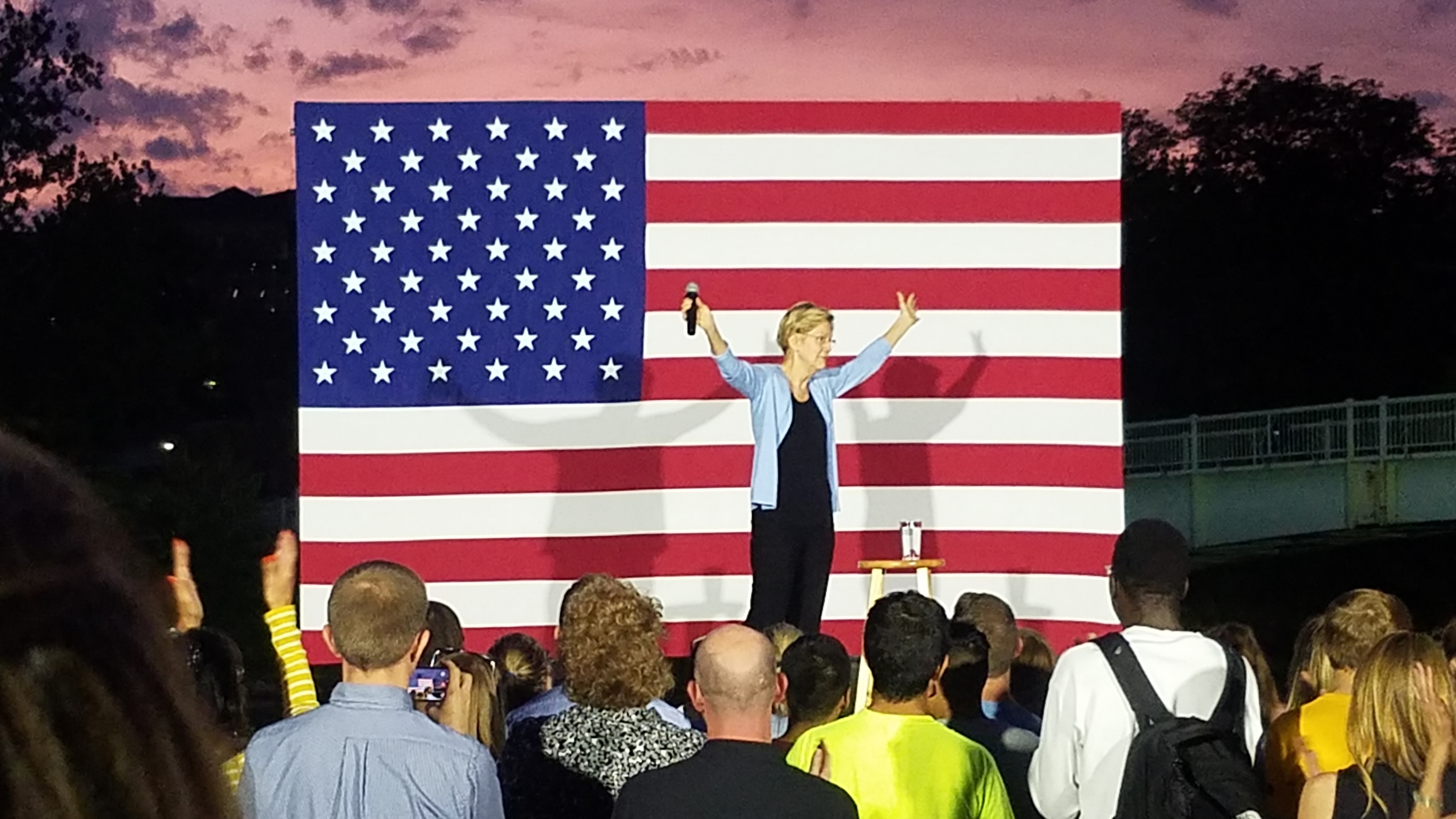
Elizabeth Warren not speaking for a moment at sunset. Iowa City, Iowa, Sept. 19, 2019
Even a grumpy Gus takes in the hoopla of the 2020 Democratic presidential nominating process going on in Iowa this weekend.
Ann Selzer’s Iowa poll, released last night, shows the top tier of candidates has been reduced to two: Elizabeth Warren with 22 percent, and Joe Biden with 20 percent. Warren’s lead is within the four percent margin of error for the poll.
The next nearest competitors begin with Bernie Sanders at 11 percent and results rapidly descended from there. If these results persist, and I believe they will, the two tickets out of Iowa, arguably the most important ones, belong to people who are definitely Democrats, and could be supported by rank and file.
The reason I get grumpy about Iowa presidential politics is it’s the rank and file that matter most. Despite thousands who traveled to the Polk County Democrats fall steak fry, and largely felt positive about our prospects in the general election, most rank and file Democrats don’t attend these sorts of political events.
A study of my precinct election results reminds me President Obama just barely won his 2012 re-election campaign here, and Donald Trump won in 2016. In 2018, Fred Hubbell beat Kim Reynolds by a handful of votes. I don’t know if this is a swing district or one that is steadily turning more Republican. While I work toward the former, it may be the latter and I’m just in denial.
To put the weekend — with its multiple forums, town halls and the big speeches by 17 presidential candidates at the steak fry — in context, there was enough news for rank and file to be aware of the activities. Hopefully there is or will be engagement in the selection process.
Elizabeth Warren’s rise to Iowa poll leader is due to the smart and challenging work of a campaign organization led by Janice Rottenberg. Rottenberg led the effort that gave Hillary Clinton the nod in Iowa in a close 2016 race. Her experience is paying dividends for Warren. My interaction with Rottenberg has been limited, but she is the type of person who makes the campaign interesting, engaging and sometimes fun. She knows how to “dream big, work hard and win.” Her campaign staff and volunteers have been enthusiastic, smart and accommodating whenever I encountered them. They listen.
I heard Warren speak in public twice this cycle. A key reason she is gaining traction in Iowa is her ability to frame the campaign as one of people first in a way that is meaningful. She is an excellent speaker with an engaging personal story to tell, one that includes her fight against corruption in politics and her plan to fix it if elected president. Because she has been in the public eye at least since 2012 when she was elected to fill Ted Kennedy’s U.S. Senate seat, we know she is as good as her word.
Warren stayed after her speech in Iowa City on Thursday to meet with individual voters and take a photo with anyone who wanted one. That meant an evening with voters (and staff) that continued until 11 p.m. This type of personal campaigning has been hard to do for presidential candidates spread thin over the four early states and the immediately following Super Tuesday ones. The only other candidate I’ve seen stay around like this to shake hands is Joe Biden. A personal connection with voters contributes to Warren and Biden leading in yesterday’s poll.
On the last day of summer I feel good about backing Elizabeth Warren in the February Iowa caucus. Because of her smart work and persistence, she seems increasingly likely to win the most convention delegates. With yesterday’s poll it seems clear she will get one of the tickets out of Iowa.
My comment from Facebook account: “IMO a single poll doesn’t mean much this far out, even if it is Ann Selzer. As I mentioned in my post, Warren’s lead is within the poll’s margin of error. It is accurate to say Sanders has slipped, not only in the polls. He began with a very strong list of 2016 supporters (~ 70,000, I heard), some of whom have become refugees to other candidates, including Warren, Buttigieg and likely others of which I don’t have visibility. I don’t see him picking up new support. I am skeptical of the “different kind of campaign” because when I discuss with Pete organizers and supporters, I don’t see much different about it. I will say Buttigieg’s supporters are very enthusiastic. As I said in my post, I’m more interested in rank and file Democrats than in people who engage in all the forums, speeches and events of this past weekend. What they do will determine the two or three tickets out of Iowa in February.
Left to right: Kidd’s Orange Red, Frostbite, Arlet, Robinette apples
We’re in the main season at the apple orchard.
We survived the madness of Honeycrisp weekend and can settle into some really great fruit like the four varieties of apples in the photo.
The Robinette was complexly flavored and super-delicious. That’s no apple joke.
The last two days of summer bring a lot of work. There are tomatoes to process, apples to pick, and a garden plot to prepare for garlic planting in a couple of weeks. The lawn is ready for grass collection once it dries out from the rain. Today thunderstorms are forecast so my shift at the orchard is doubtful. Outside work at home is also a bit dicey. Once the orchard shift is decided, I’ll plan the rest of the day.
Yesterday I took a quart or so of the small potatoes, cleaned and trimmed them, and put them into the slow cooker. I added carrots, onions, celery, some vegetable broth and a generous quart of tomato water to cover. By the time I returned from my shift at the orchard, it was ready to eat and so good. There are leftovers, including plenty of broth with which to start another batch of something.
I’ve been taste-testing Red Delicious apples for almost a month. The starchiness has passed and they are turning sweet. Not ready, yet close enough to start talking about containers in which to put the 350 pounds to be donated to a CSA. After that I have plenty of takers for what I don’t use in our kitchen. I plan two gallons of apple cider vinegar, a couple of gallon bags of dried apples for snacks, and a dessert for the county political party barbecue coming up next month. Will store as many as will fit in the ice box for later fresh eating. This variety is staying on the tree well, so there should be plenty.
Politics is taking more of my time. Yesterday I did a walk-through with the Solon School District to see if a facility would work for the February precinct caucus. It will. On Thursday I attended a town hall meeting with Elizabeth Warren in the county seat. The report was she stayed until 11 p.m. to meet everyone who wanted to meet her individually. Yesterday I introduced our newest Warren organizer to our local coffee shop and provided a couple of upcoming events to get on her radar. While I work on weekends until the end of apple season, the 2020 election is already ramping up.
We make a choice in life: engage in what’s good in society and work to make it better, or withdraw into our own family and lock the door against intrusions. When we enter the main season, it’s less of a choice. If we don’t work to make our lives better, there’s no one else who will.
SOLON, Iowa — Without fanfare I signed a caucus commitment card for Elizabeth Warren at a friend’s home last night.
The occasion was a meet up with our area’s new Warren organizer, Allison Hunt, with whom I’ll be meeting one-on-one later in the week.
I don’t want to make a big deal of it, but it is important to lay out why.
We need the strongest possible candidate to take on the Republican nominee in 2020. I believe that is Elizabeth Warren because she understands the the problems of money and corruption in our governance, she knows how to address it, and has the will and drive to do so.
I will support the eventual nominee at the July 2020 Democratic National Convention. I respect most of the people running for different reasons, especially the U.S. Senators who threw their hat into the presidential ring. Signing the card for Warren means I will work to make sure she emerges from the Iowa Caucuses on Feb. 3, 2020.
Elizabeth Warren is a woman and I’m not sure the American electorate is ready to elect a female president. We will never have a female president if we don’t elect one, so that is a non-issue for me. Her qualifications are as good as or better than any of the ten candidates who appeared in last week’s Democratic National Committee debate. We have to base our decision on qualifications and experience which Elizabeth Warren has.
Elizabeth Warren has organized for the early states as well as anyone since I became active again in 2004. With compression of the primary schedule between our caucuses and Super Tuesday on March 3, 19 states will hold presidential preference caucuses or primary elections. That means a candidate must scale up immediately, and campaign everywhere to capture a winning number of supporters. Early voting in California begins the Monday after the Iowa caucuses. The Warren campaign in Iowa set the standard and seems scalable.
Thursday, Sept. 19, Elizabeth Warren is holding an event in Iowa City near the Iowa Memorial Union. Hunt said Warren would stay until everyone who wanted to speak with her individually had an opportunity to do so. I won’t be in that queue, but I don’t need to be.
The challenge will be supporting Warren without disenfranchising Democrats who support another candidate. Like most everything, where there’s a will, there’s a way. The process begins by picking a candidate.
Democratic presidential candidates are roaming the state like a swarm of termites seeking an entry point into an American dream.
Thus far, Julián Castro found his way to Solon, although to my knowledge, no one else has.
This presidential election cycle seems different from 2008 and 2016 when there were open races among Democrats. What makes it different is Democrats tell me they will support the candidate who wins the nomination at the July 2020 Democratic National convention. Period.
A lot is at stake in our general elections. In Iowa with our unique caucuses? Not as much.
Things were different when the Democratic Party emerged from the disastrous 1968 Chicago convention. I could see from my perch in high school that Hubert Humphrey emerging from smoke-filled rooms was not a good thing. With leadership from George McGovern, Democrats changed the nominating process for the better, bringing, among other things, the importance of the Iowa caucuses.
While Iowa got the attention of presidential candidates this year that may not always be the case. What was Iowa and New Hampshire added South Carolina and Nevada by 2008. Now Super Tuesday on March 3, 2020 with Alabama, Arkansas, California, Colorado, Democrats Abroad, Maine, Massachusetts, Minnesota, North Carolina, Oklahoma, Tennessee, Texas, Utah, Vermont, and Virginia holding their presidential primaries compresses the whole schedule.
I haven’t picked a candidate to support this cycle. I may not before caucus. What I have embraced is a caucus process likely to change by the next presidential election.
~ Published in the Sept. 19, 2019 edition of the Solon Economist
When we moved to Big Grove Township we had expectations about building a life here. These expectations spoke to our shared culture.
We built a new home, settled into the public school community and began getting to know people as I worked a career that would eventually take me to a job in Eldridge, Iowa where I managed a dedicated fleet operation for a large steel service company. At the time I thought the 55-minute drive was a reasonable commute.
While there, in a staff meeting, news of the planes hitting the World Trade Center and the Pentagon, and crashing in a field in Somerset County, Pennsylvania began to emerge. I was scheduled to fly to Philadelphia that morning but the flight would be delayed. That day became part of an American cultural heritage.
The events of Sept. 11, 2001 were an opportunity for the country to pull together, to unite in shared values. It was squandered by our national leaders who used the terrorist attacks as sufficient reason to invade Iraq. Our disdain for the national culture has increased since then.
Participating in a national culture is made worse by growing income and wealth inequality. If comparisons of modern capitalism with the Gilded Age and the rise of Rockefeller, Morgan, Vanderbilt, Carnegie and others is apples to oranges, Republican leadership of the U.S. government is systematically undoing every constraint on wealth and business implemented since the 1890 Sherman Antitrust Act. This is intentional, and under a government subject to the unlimited financial contributions of businesses. In part, we can thank the U.S. Supreme Court decision in Citizens United v. FEC for unleashing the power of the wealthy in our governance.
Not only do we view the rise of the wealthy into power over our lives with disdain, we spend more time thinking about it because of new media available to us 24/7. We tend to forget our local culture, the culture we share with family, friends and neighbors — things that are shared, yet personal to us.
Mom’s funeral on Monday started an immersion into cultures I forgot existed. Greeting people from every part of Mom’s life at the visitation taxed my ability to remember. I don’t believe I come up short. At the Knights of Columbus Hall after interment I sat with three of my cousins and talked about things I’d forgotten existed. Aunt Wini’s wringer washing machine, Orsinger’s ice cream, Uncle Vince’s photography culture, Chicago steel mill culture, and more. I was able to keep up even though it has been years since I’d seen any of them. I could keep up because it is our shared culture.
Yesterday I took the crate of apples from the summer trees in our backyard and made a gallon of apple cider vinegar. By this morning the brewers yeast was working. After skimming the scum, I put the two half gallon jars on the pantry shelf to ferment. I got the mother of vinegar from a neighbor. His family had been making vinegar with it since the 19th century. The distribution of our vinegar is in a short radius with most of it used in our kitchen. I’d be willing to bet I’m one of a very small number of people fermenting vinegar in our township.
The point is we have shared cultures and the only way they exist, now and into the future, is by participating in them. The sad occasion of Mom’s passing was made better by the celebration of her life by the living. Our cuisine is made better by making our own vinegar for pickles and salad dressings. Eventually our national culture will regain its value but we are not there yet.
We chose this township based on the logistics of living. To make it meaningful we’ve had to participate in local cultures. As bad as the national culture is now, we can’t stop participating because so much is at stake. What happens near the lake ripples throughout society. If enough people engage, that could be life-changing for us, and for us all.
It’s been hard to figure if I should campaign for a Democrat for president before the February caucuses or whether I should remain neutral until the last minute to help our Big Grove precinct caucus go more smoothly.
Based on previous caucuses when there was a presidential preference, the precinct will not be close in 2020. Obama was a clear win in 2008, and in 2016 we had enough extra Hillary Clinton supporters to send a delegation over to Martin O’Malley’s group to make them viable and deprive Bernie Sanders of an extra delegate. At the convention, the O’Malley delegate came over to Clinton after the candidate dropped out of the race.
2008 got a bit ugly. I was the John Edwards precinct captain and was asked to be caucus secretary as I was in 2004. Throughout the difficult body counts and recounts people got impatient and things got a little heated and personal. It is a case for the temporary chair not to identify for a candidate until the last possible moment.
There is the issue of the work. In 2016 Team Clinton door-knocked and phone-called before the caucus like there was no tomorrow, hitting every part of our area, in cities and rural areas equally. I no longer do much of this work outside my own precinct but want to help. If I wait to declare, I’ll help a campaign in other ways.
In the run-up to the 2020 caucus most of the 20 or so candidates don’t have the management structure to canvass the way we did for Hillary. If we pick someone to support without adequate campaign infrastructure we’ll be on our own. That was the case in 2008 when hardly anyone caucused for Bill Richardson, Chris Dodd or Joe Biden. Between them there were about eight people in a caucus of 268 Democratic voters.
Local politics aside, I have been trying on t-shirts… it seems pretty clear Elizabeth Warren will be my pick if I do declare before the night of the caucus. Here’s my run-down of the field. Nota Bene: I will work hard and unconditionally to elect the eventual Democratic nominee regardless of who it is.
Based on Iowa polling, and according to 538.com, there are currently only five possible candidates who could win first place in the delegate count: Joe Biden, Pete Buttigieg, Kamala Harris, Bernie Sanders and Elizabeth Warren. If they had a breakthrough, which is possible this early in the cycle, Corey Booker, Julián Castro, Amy Klobuchar, Beto O’Rourke or Tom Steyer might be contenders for viability. My hunch is the first five could be viable and the top delegate getter will be one of them.
Narrowing it down, here’s where I land on the five most likely to be viable candidates in February 2020:
One knows there is trouble when Joe Biden’s campaign is weighing whether to scale back his public schedule so he won’t make so many gaffes. He is past his prime and every minute he stays in the race, he blocks others from advancing. I look around my precinct and don’t know who, except the 3-4 people who caucused for him in 2008, might do so now. One of the 2008 group died.
I like Pete Buttigieg but don’t feel he has the right kind of experience to be president. I heard him speak twice in person and each time I marveled at his oratory, but felt empty when he finished. He is clearly an up and comer in Democratic politics and his generational message is important. Sorry Pete, not this time unless you win the nomination.
Kamala Harris is the only one I haven’t heard speak in person. When she came to Iowa her campaign exhibited tremendous energy, of the kind one expects from a presidential campaign. She hasn’t been to Iowa that much. Friends of mine are ardent supporters and that matters in the caucuses. I have a few things to investigate, particularly her idea of privatizing Medicare, but specific policies don’t matter as much as the whole package. She gets positive marks for having won the U.S. Senate in the most populous state in the nation. I have no doubt she could scale her campaign to win the primary.
I haven’t liked Sanders since I met him in 2014. He’s more liberal than most and his policy positions haven’t changed much since he entered politics. I like some of his policy positions. We just didn’t click when we shook hands as he stumped for Bruce Braley. I also don’t see enough support as people who caucused for him in 2016 are finding their way to other campaigns this cycle.
That leaves Elizabeth Warren. I’ve been following her since she was elected from Massachusetts to the U.S. Senate. If she had run for president in 2016 I would have supported her. While concerned about a 70 year-old white woman president, her performance in Tipton allayed my concerns. She has a lot of policy statements and that matters little or not at all. I’ve watched her in the Senate and she supports legislation with which I mostly agree. Is the United States ready to elect its first female president? I have my doubts, but may be willing to throw in with Warren and try it again.
I’m trying on t-shirts, but the only one I bought has Warren’s name on it. If I declare, I’ll do it shortly after Labor Day. What I’ve found this cycle is there aren’t as many choices for president as it appears.



 Journey Home
You must be logged in to post a comment.