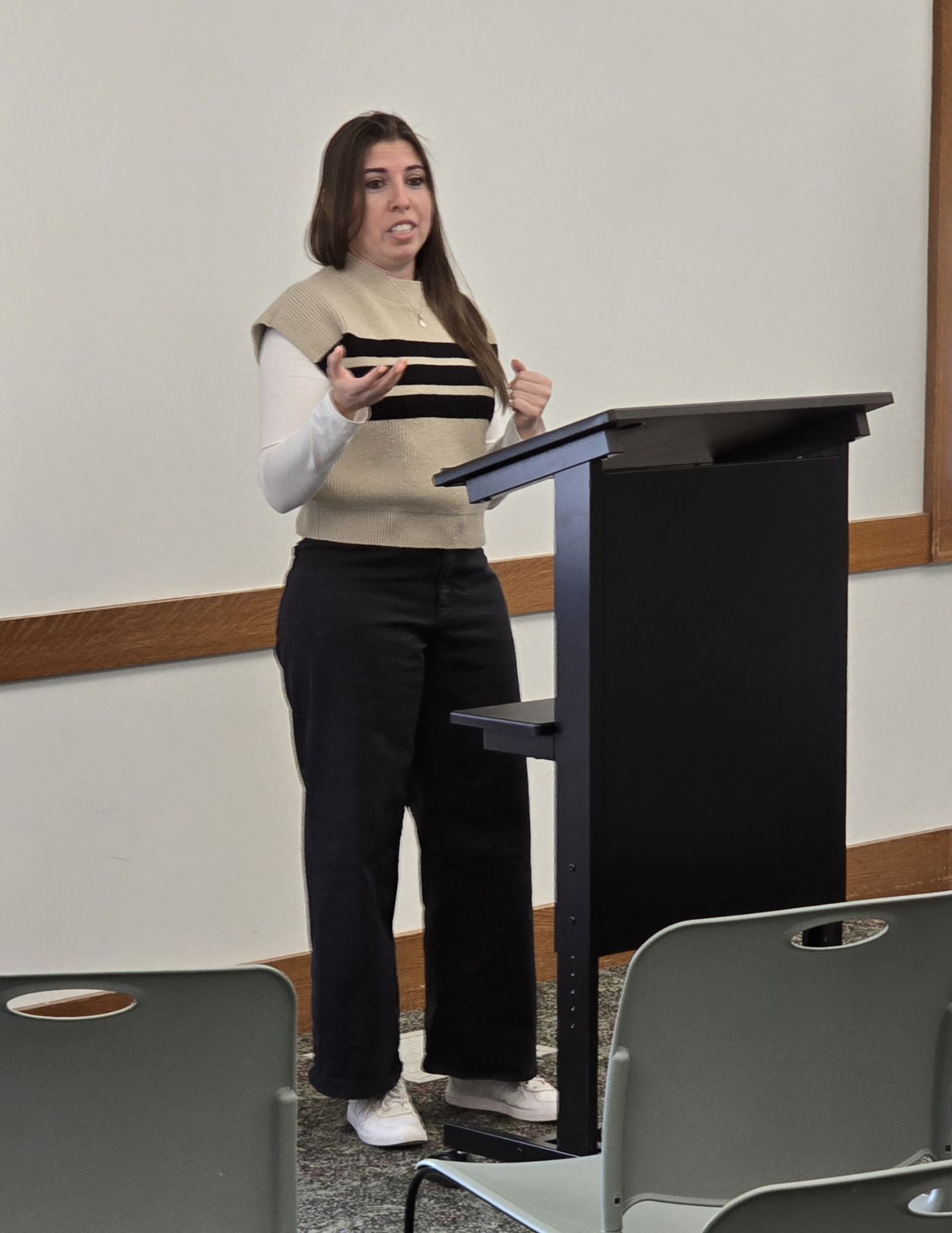
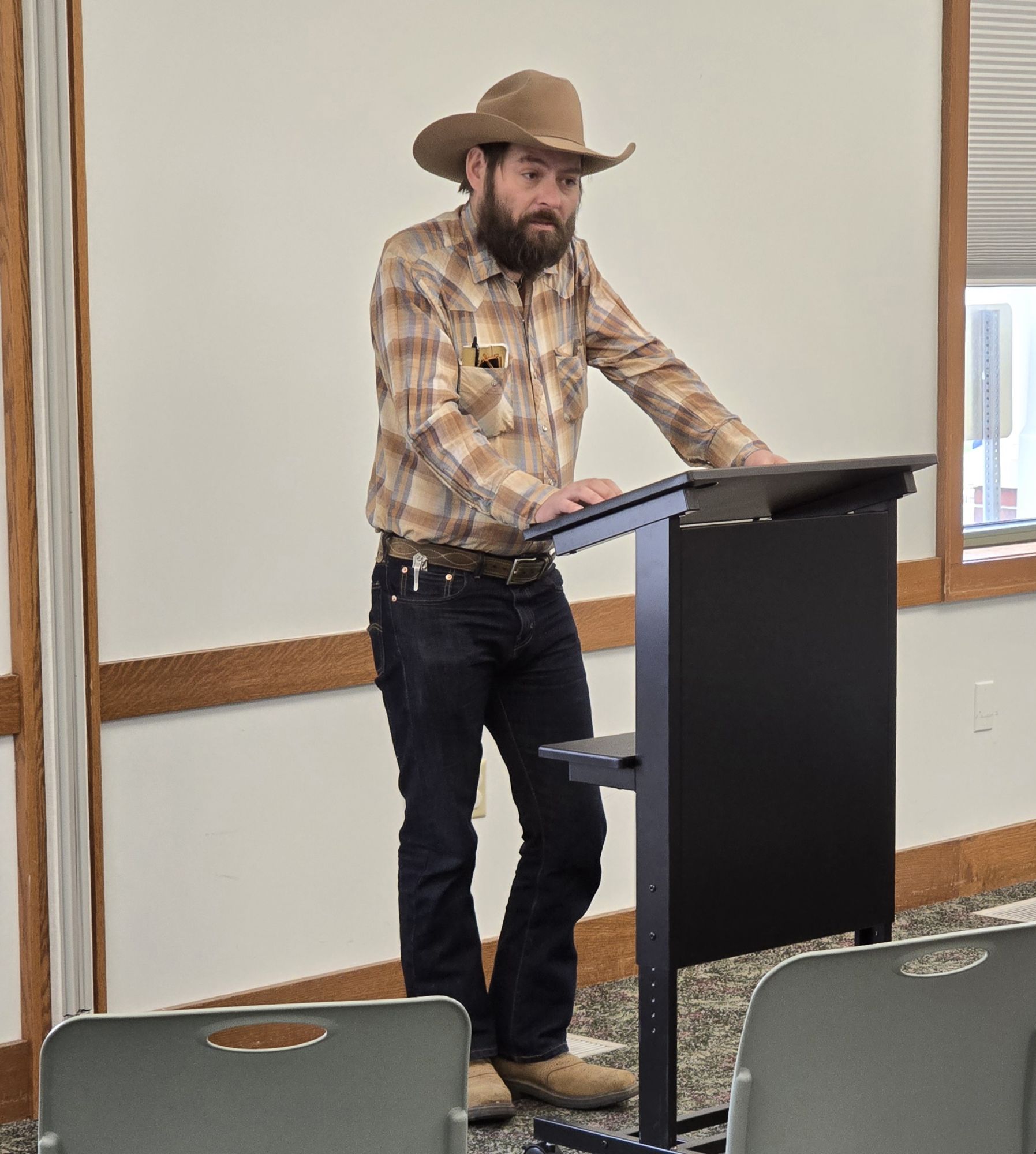
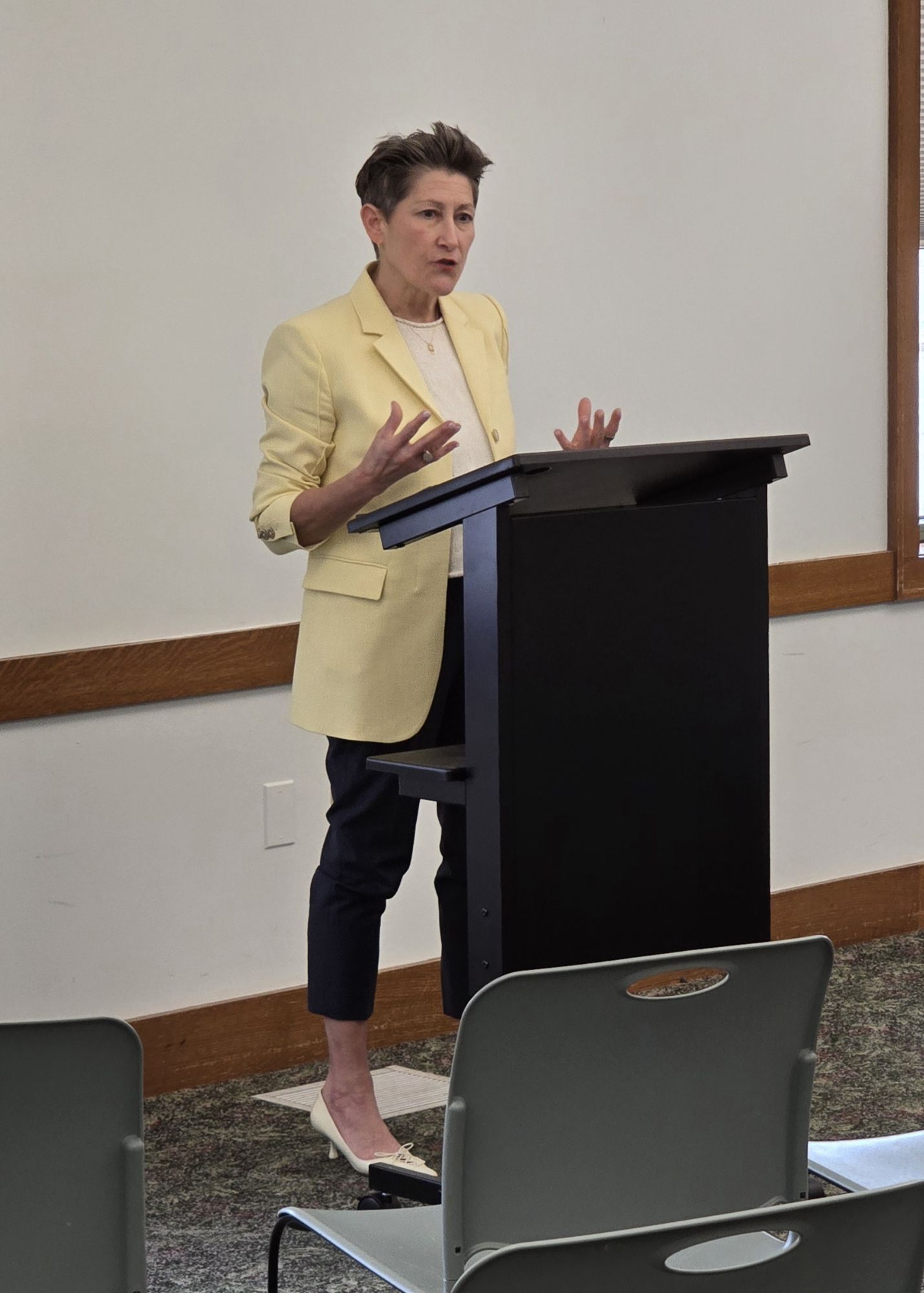
Jessica Andino, Jon Green, and Janet Godwin address Solon Area Democrats at a March 28, 2026, meet and greet at the Solon Public Library.
After talking with the three candidates for Johnson County Supervisor in District 2, I decided to support Jon Green in the June 2 Democratic primary. All three would make great supervisors, but Jon, the incumbent, is the person who worked to gain consensus among board members on building a new jail. That was difficult work, and I support his re-election so he can finish it.
It’s no more complicated than that.
The Republican in this race is Phil Hemingway. When I was covering Iowa City Community School District board meetings for the North Liberty Leader, I listened to him ask questions — often multiple ones at each board meeting. He was engaged and once won election to the school board.
I looked at historical voting numbers in the precincts that make up new District 2, and the votes are there to defeat Hemingway resoundingly in his sixth bid for supervisor — badly enough that he will never run for this office again. That would free him to return to automotive work until he retires.
I am working for Green to win the primary. If he doesn’t, whoever does will have my full support.
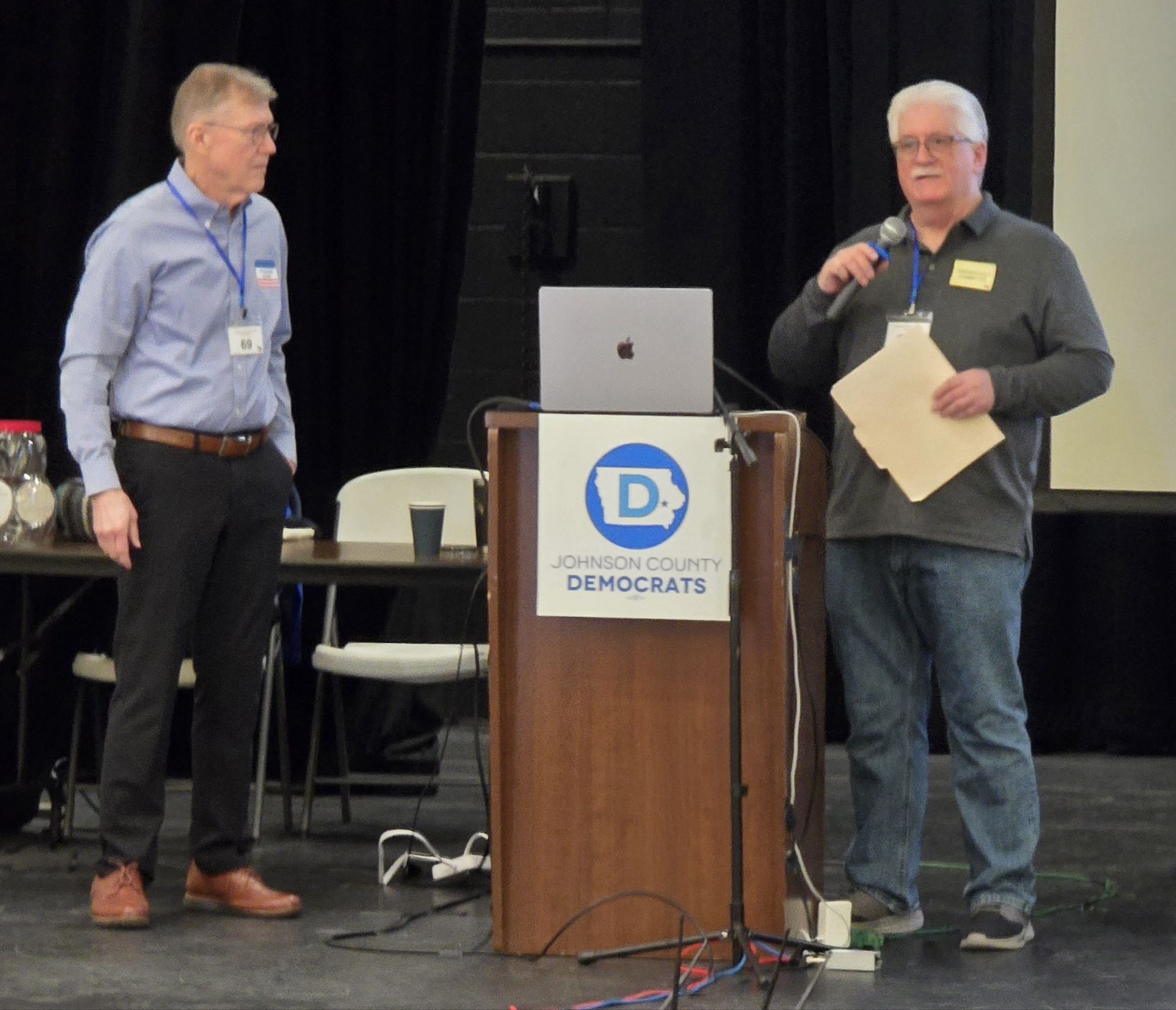
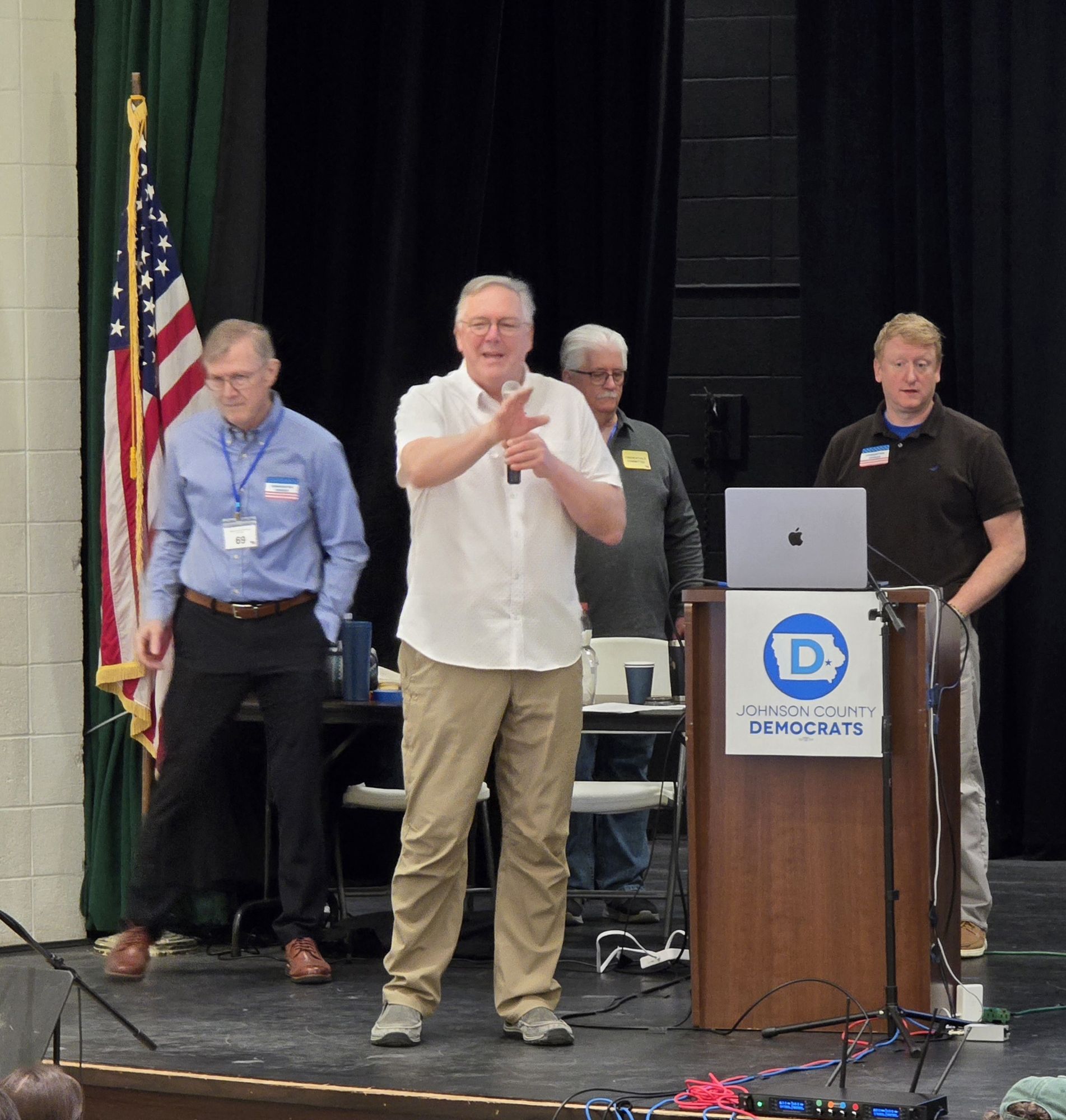
Ed Cranston and Tom Larkin announcing the number of delegates (114) attending the county convention on March 21, 2026.
With the county convention in the rear view mirror, it’s time to organize for the Democratic primary. Our votes are important, yet three races are at the top of the list here: the U.S. Senate race between Zach Wahls and Josh Turek, and the District 2 county supervisor race between Jessica Andino, Janet Godwin and incumbent Jon Green lead. The U.S. House race matters, yet Christina Bohannan is widely expected to win the primary over challenger Travis Terrell. It’s her third go-around, so she should. My main work this week has been organizing a supervisor meet and greet event this afternoon at the Solon Public Library. After that, it is a mad rush to the June 2 primary.
There was no competition in Johnson County to be a delegate to the district and state conventions and that’s okay. I decided not to advance to district either. There are too many other things begging for our attention to engage in rituals. The thrill is gone from Democratic conventions, and that too, is okay. Promoting Democratic policy in our communities is where most of the action will be in 2026, I predict.
What does that mean?
Partly, it means participating in campaigns. It also means talking to voters about the race and why it is important to support Democrats. The latter is not a given and this graphic of results from the 2024 general election in my precinct tells why:
Race
Republican
Democrat
President
Trump
Harris
699
598
U.S. House
Miller-Meeks
Bohannan
700
617
State Senator
Driscoll
Chabal
741
526
State Representative
Lawler
Gorsh
716
545
We voted Obama twice and Trump three times shifting from blue to solidly Republican. The numbers suggest it is possible to turn that around but not without significant work. My first order of business is to figure out which activists remain after we suffered some people becoming less active, moving out of the precinct, and dying.
Once more activists are located, the next step is finding ways to talk to neighbors and then convert them, if possible, to turn the precinct from red to blue.
There are two parts to this, in my precinct, and in the rest of the state and country. Both run through the ballot box.
The first is voting: making sure we take care of ourselves by checking our registration and then voting in person, either early or on election day. Encourage everyone we know to do likewise.
The second is changing the public narrative about life in Iowa and in the United States. We should not accept narratives being fed to us by media outlets, churches, interest groups, and political parties. Rather, we should develop our own new narratives that reflect how we live despite our differences. I predict this will change how we vote.
If we can do those things, there is a chance to make society a better place to live, possibly this election cycle.
Now it’s a matter of getting out there and doing it.
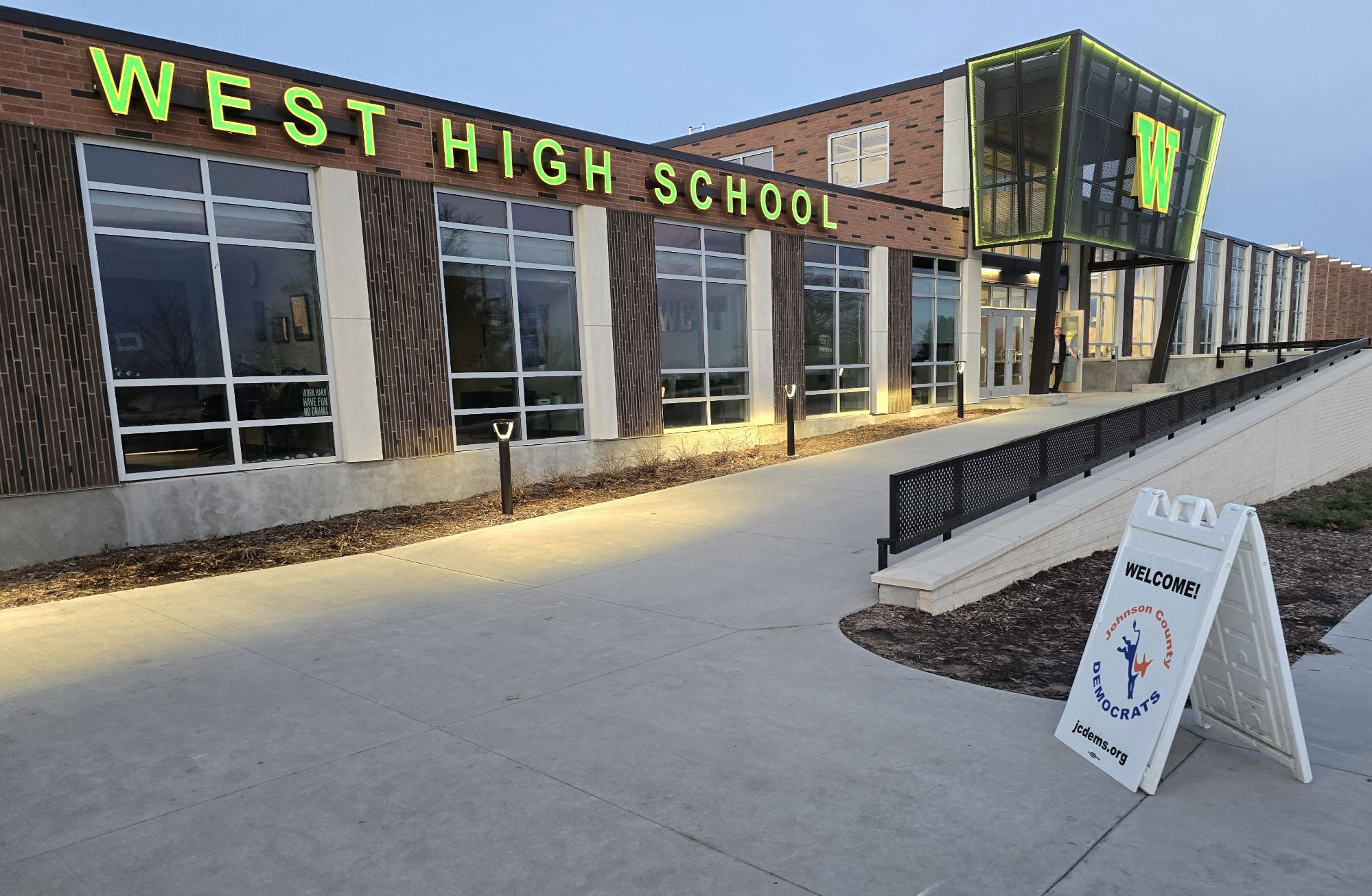
Iowa City West High School. Location of the Johnson County Democrats County Convention on March 21, 2026.
114 delegates to the Johnson County Democratic Convention gathered on Saturday, March 21, at Iowa City West High School. It was an intense day of political conversations, which physically drained me. Here are my favorite photos.
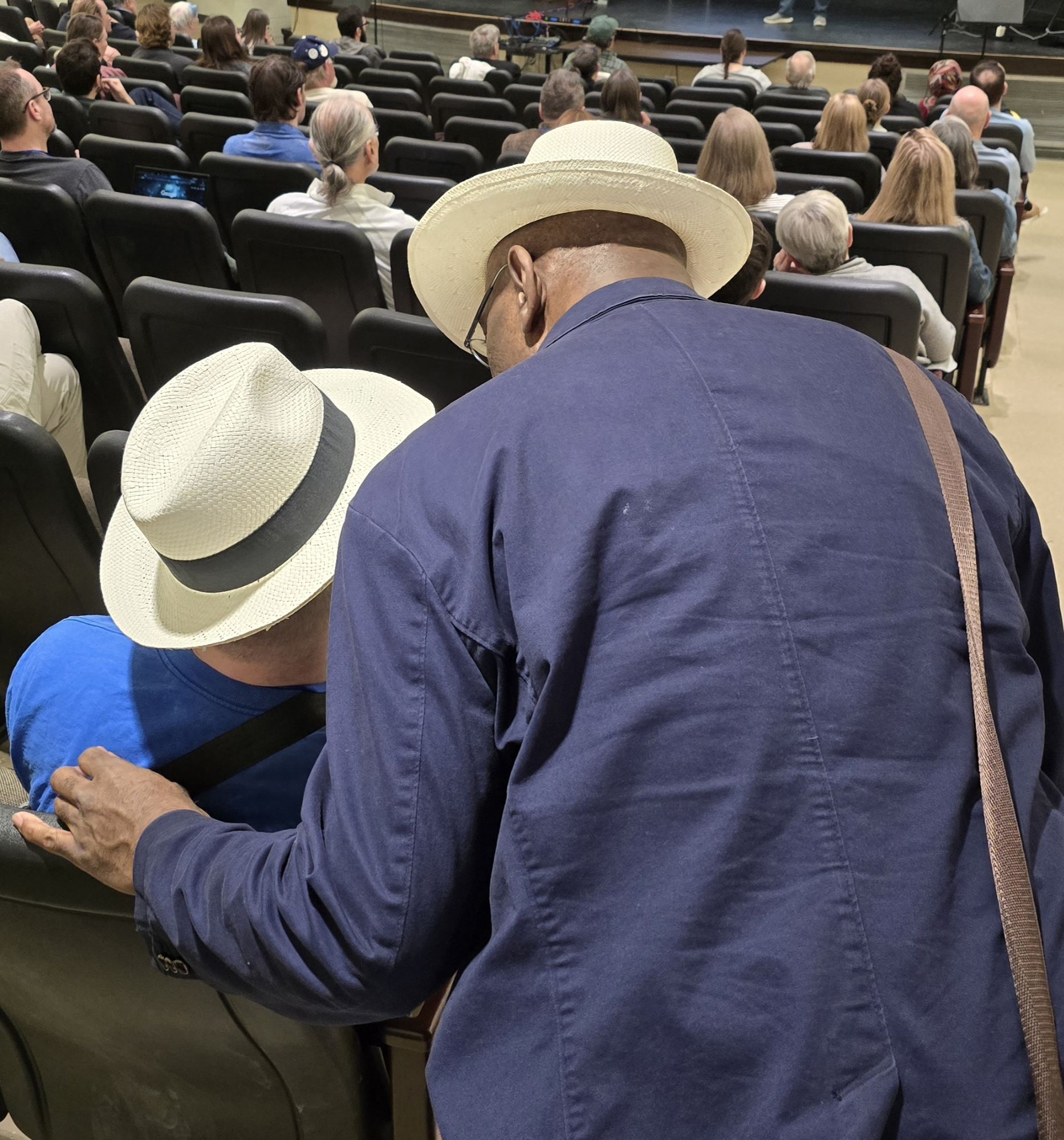
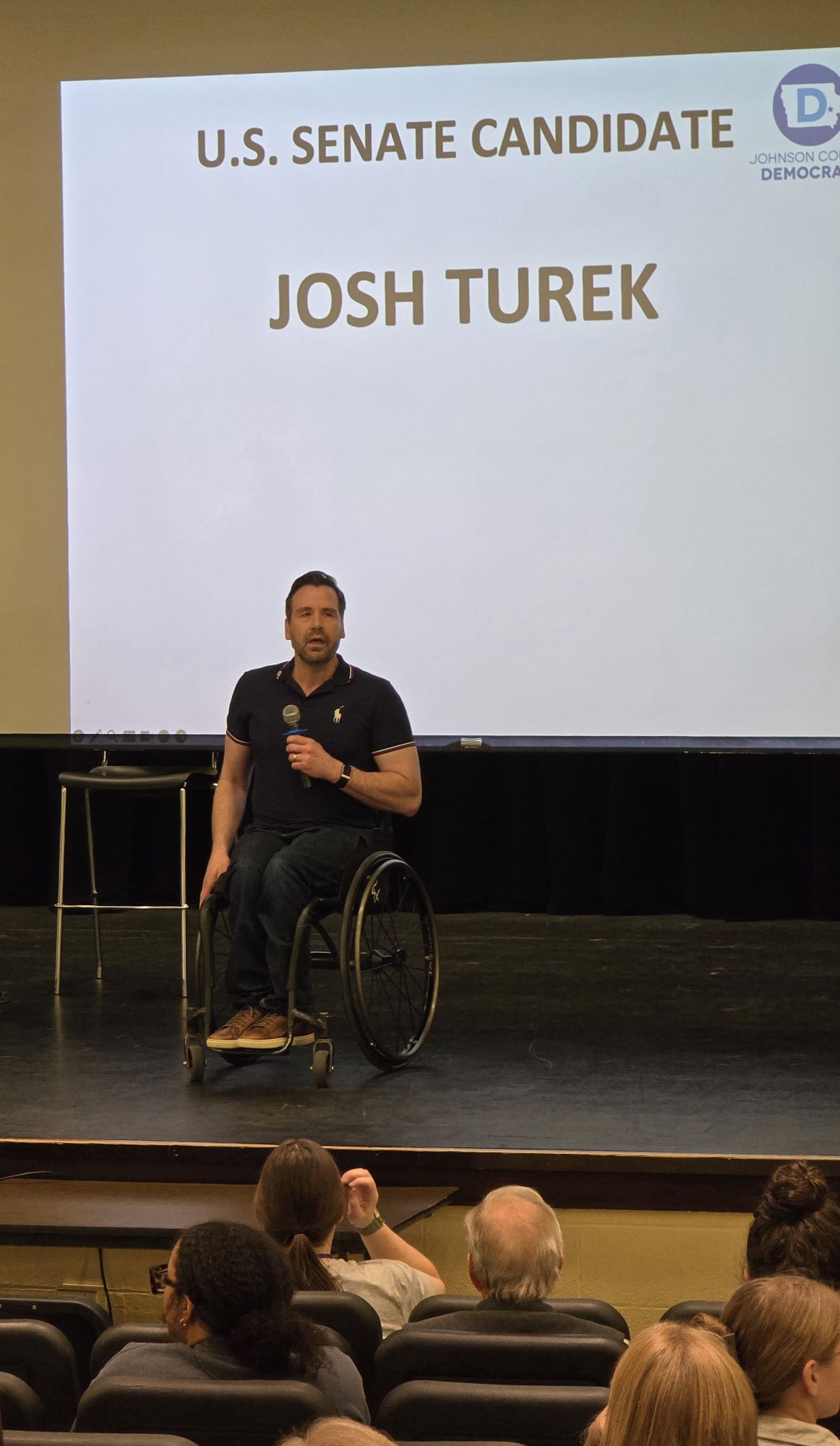
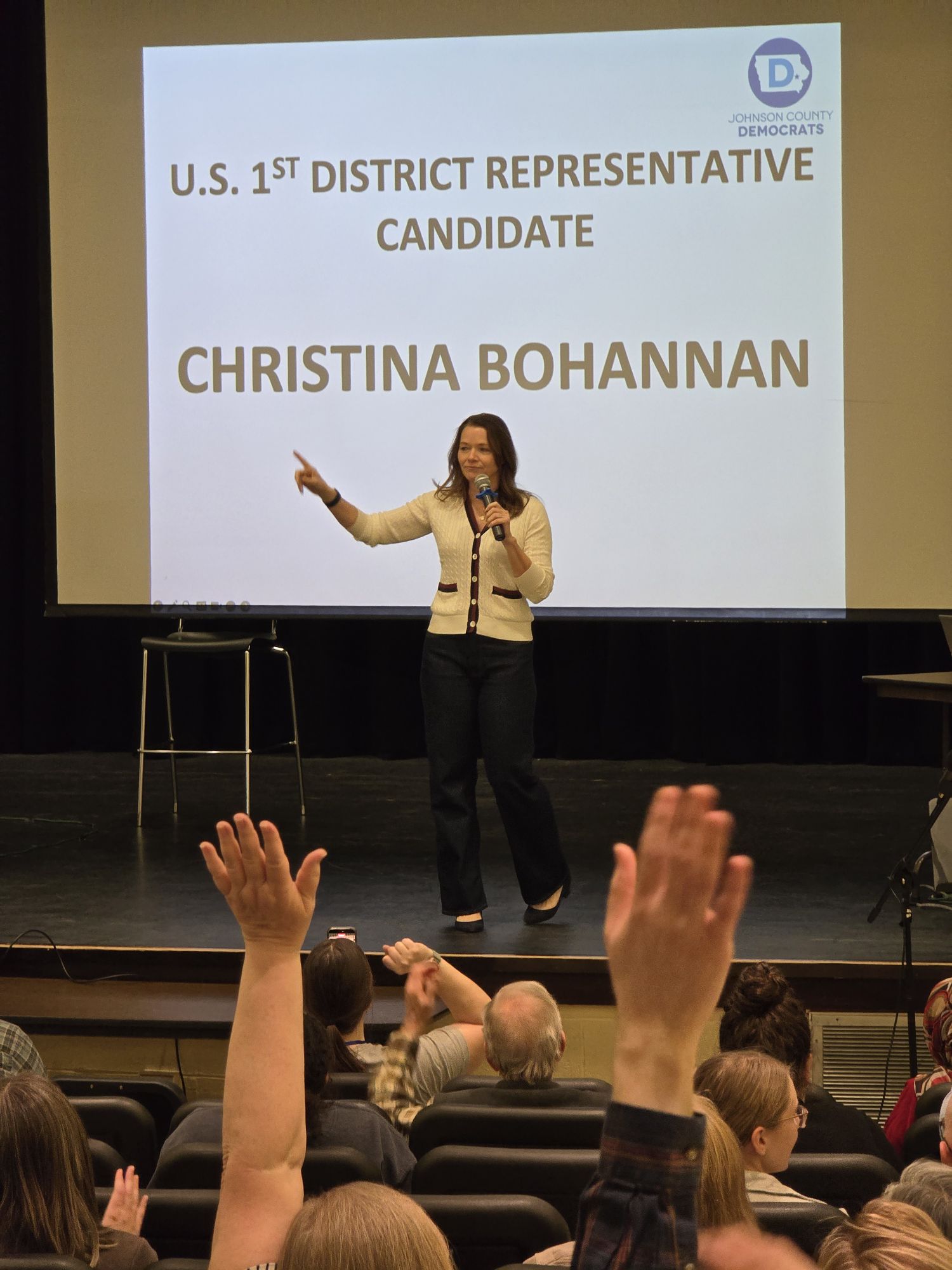
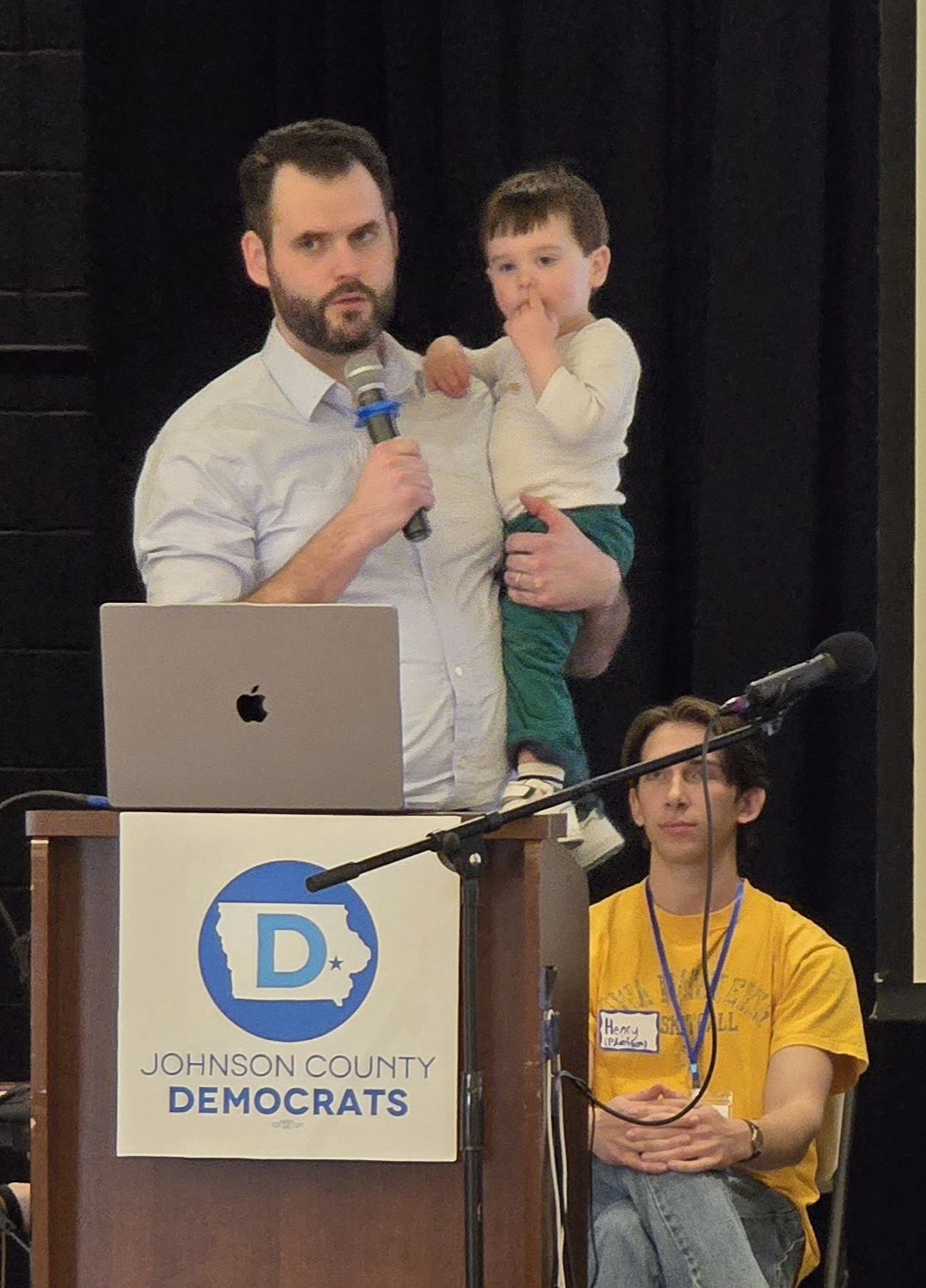
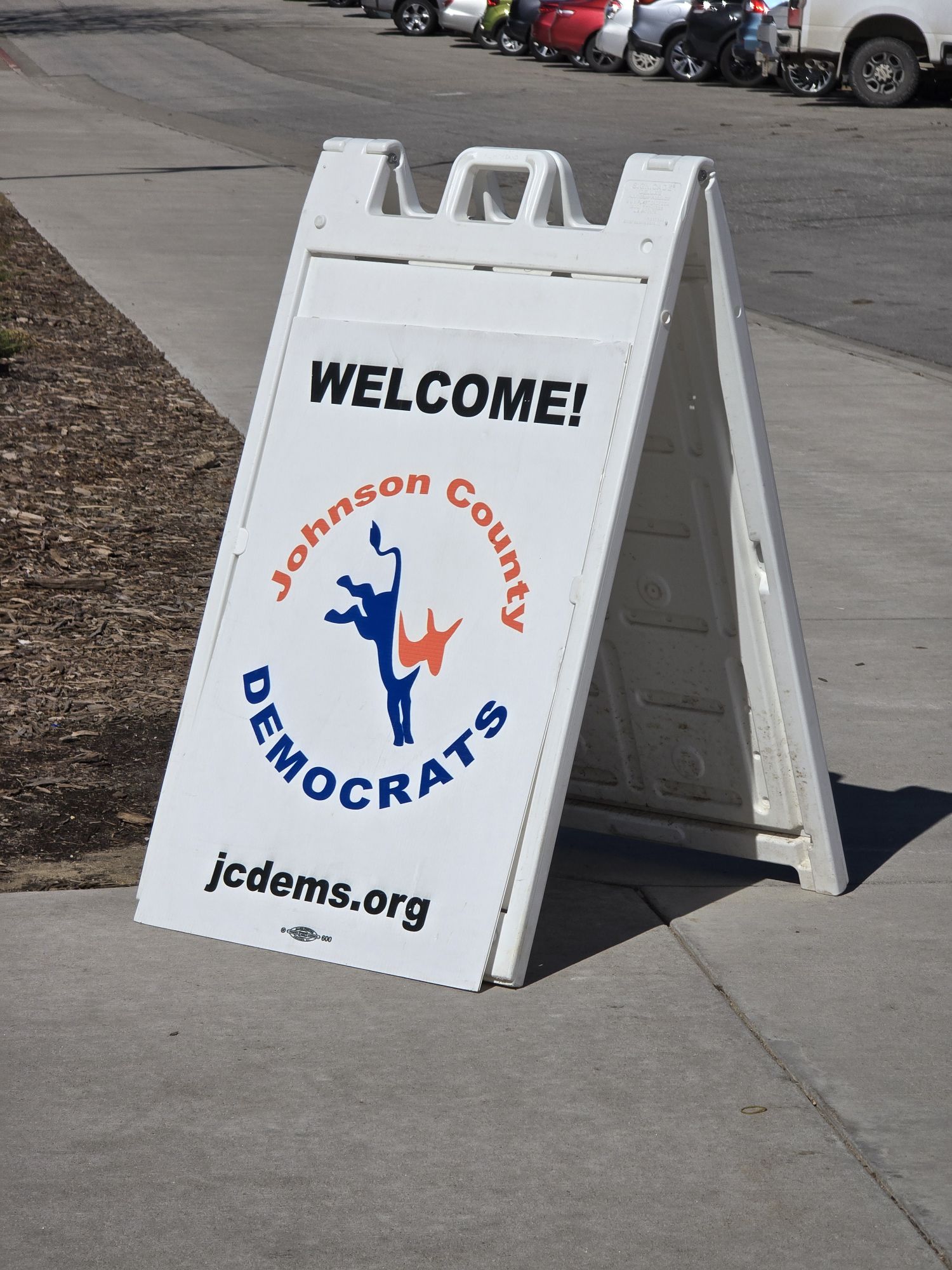
Party Chair Ed Cranston with Credentials Co-Chair Tom Larkin announcing number of delegates.Donation collection team with matching hats.Josh TurekChristina BohannanChris Jones for Secretary of Agriculture.U.S. Senate candidate Zach Wahls and son.Placard in front of West High School on March 21, 2026.
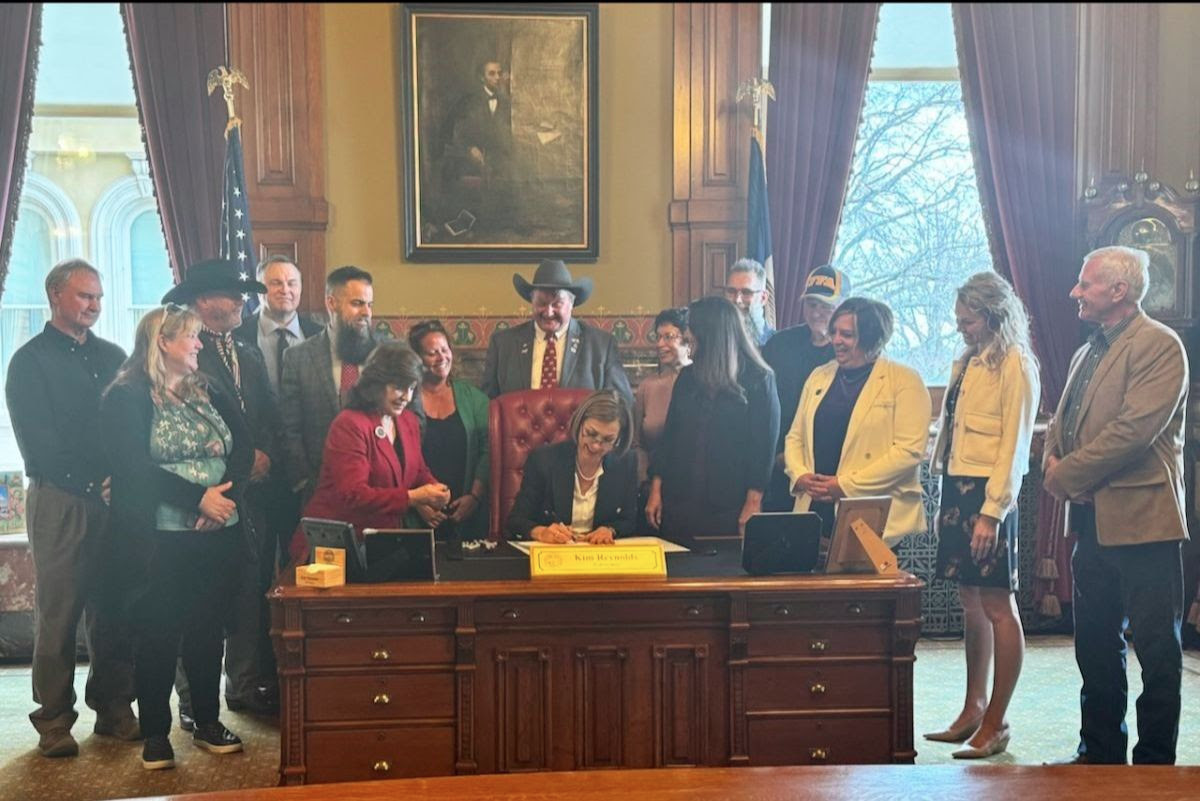
Governor Kim Reynolds signed into law Senate File 75 on April 11, 2025. Photo provenance unknown.
When Governor Kim Reynolds signed Senate File 75 into law on April 1, 2025, a crowd of Republican well-wishers was present.
Senate File 75 mandates that Iowa counties containing a Board of Regents university — specifically Johnson, Story, and Black Hawk — change their county supervisor elections from an at-large to a district-based system. The law has gone into effect and we are working through the new process.
Those at the signing ceremony included one Phil Hemingway who ran repeatedly and unsuccessfully for supervisor in Johnson County where I live. Hemingway backed this legislation. This week he filed for election to the Johnson County board of supervisors again, this time in newly created District 2. His is the bellwether race to see if Republican ideas on this prevail. Can they win a seat on the now all-Democratic board?
“Important to me personally was the passage of the county supervisor election reform bill,” Republican State Senator Dawn Driscoll said, “which protects the voices of our full-time residents in counties with large student populations.”
Driscoll’s colleague Republican State Representative Judd Lawler was not far behind.
“This legislation will improve local representation and accountability at the county level,” he said. “By using districts in these counties, the law promotes a more fair representation structure. This is particularly important in areas with highly transient populations, as it allows for better representation of all county residents, particularly rural and small-town residents.”
Driscoll and Lawler both represent parts of Johnson County.
Opponents, including local officials, argued the law targets specific areas and violates county home rule principles. A lawsuit filed in late 2025 challenged the law’s constitutionality, claiming it violates equal protection.
Iowa Attorney General Brenna Bird filed a motion to dismiss the lawsuit, arguing that the law does not impede any voter rights and that the state has a legitimate regulatory interest in differentiating counties that host a regents-led university. The court rejected the motion.
“While the matter may be appropriate for disposition on summary judgment, the Court is not persuaded that it is the exceptional type of case that is appropriate for dismissal at the pre-answer stage of litigation. Therefore, Defendants’ Motion to Dismiss should be denied,” the ruling states.
The district court also denied the motion for a temporary injunction which would have immediately blocked the law from going into effect. A non-jury trial is set to begin on March 3, 2027, long after the first election under the new process.
The horse seems out of the proverbial barn.
Even if plaintiffs win the case at trial, what happens next? That will be up to the judge. My Kentucky windage best shot is the new law is here to stay because if they were inclined to stop it, the court would have granted the injunction.
In the meanwhile, my small group of Democrats is organizing a get to know the supervisor candidate event in the new District 2, on March 28, at 1 p.m. at the Solon Public Library. Three Democratic candidates filed: incumbent Jon Green, Janet Godwin, and Jessica Andino. The winner of the June 2, primary will face Hemingway during the November general election.
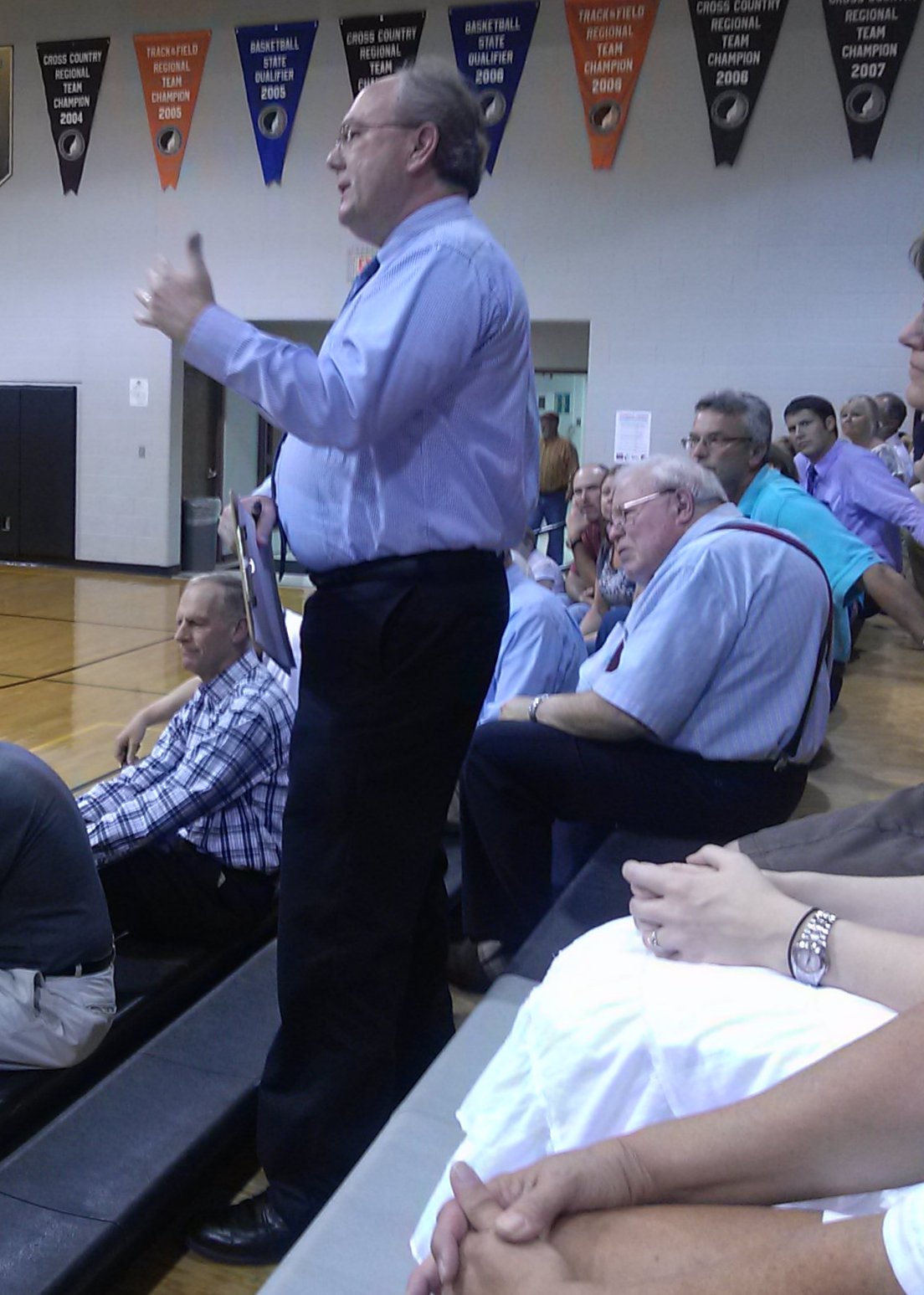
West Branch School Board Member Mike Owen at a public meeting with Governor Terry Branstad.
The Ankeny Community School District defined SSA (State Supplemental Aid) as the cost of living adjustment for school budgets. “To keep pace with rising costs, SSA needs to at least match inflation. If it does not, we would need to thoughtfully consider our budgeting strategy and staffing plans,” according to their website. Each cycle public debate is whether the amount approved by Republicans meets Democratic expectations to support public schools. Mostly it does not and Iowa Republicans have been in the majority longer than kindergarten students have been alive. They have the votes to pass what they will.
Tuesday’s front page headline that Iowa City Schools were years behind in audits is not making the case for more money in SSA. While next year’s level of two percent was approved in February, the financial issues cast a cloud over the school board’s independence. Republicans with a mind to consolidate government operations at the state level might be salivating at the prospects manifest in this local failure.
When I was covering the Iowa City School Board for the North Liberty Leader newspaper, I had a working relationship with their Chief Financial Officer, which I needed to write my stories. While the superintendent tried to maneuver him away from me, I usually got answers I needed. I spent decades in management at a large company and the district’s CFO was as good as any financial officer I have known. What happened, besides changing CFOs?
“The district’s most recent audit — completed two years after the end of that fiscal year — details corrective action needed, including previous district leadership not appearing to properly reconcile the district’s balance sheet,” according to the Cedar Rapids Gazette. “What reconciliations were available contained unknown variances.”
During a board meeting this week (March 5), board member Jayne Finch asked interim Chief Financial Officer Kim Michael-Lee to describe the status of the district’s books “in a few words.” Michael-Lee responded: “Unbalanced, unreconciled,” according to KGAN, the local CBS affiliate.
It’s not a good look found in a financial records audit by an outside firm just before a vote on budget cuts.
At a March 10, meeting, the school board voted to table a proposed $7.5 million budget cut until district finances could be presented in reasonable order. Because of inaccurately applying property tax revenue to appropriate budget line items, board members were unclear as to whether they could meet financial demands, including bond obligations, by June 1.
This is all a long lead in to: WTF Iowa City? Applying revenue to accounts is boilerplate accounting. If you can’t balance the checkbook, you keep working until you figure it out. Basic incompetence calls attention to the problems and when they see a problem like this, elected officials may use the only plan in their playbook: consolidate authority for school board finances at the state level.
Here’s hoping the Iowa City Community School District straightens things out in a timely manner. Let’s not give Des Moines any reasons to make Iowa more of a nanny state.
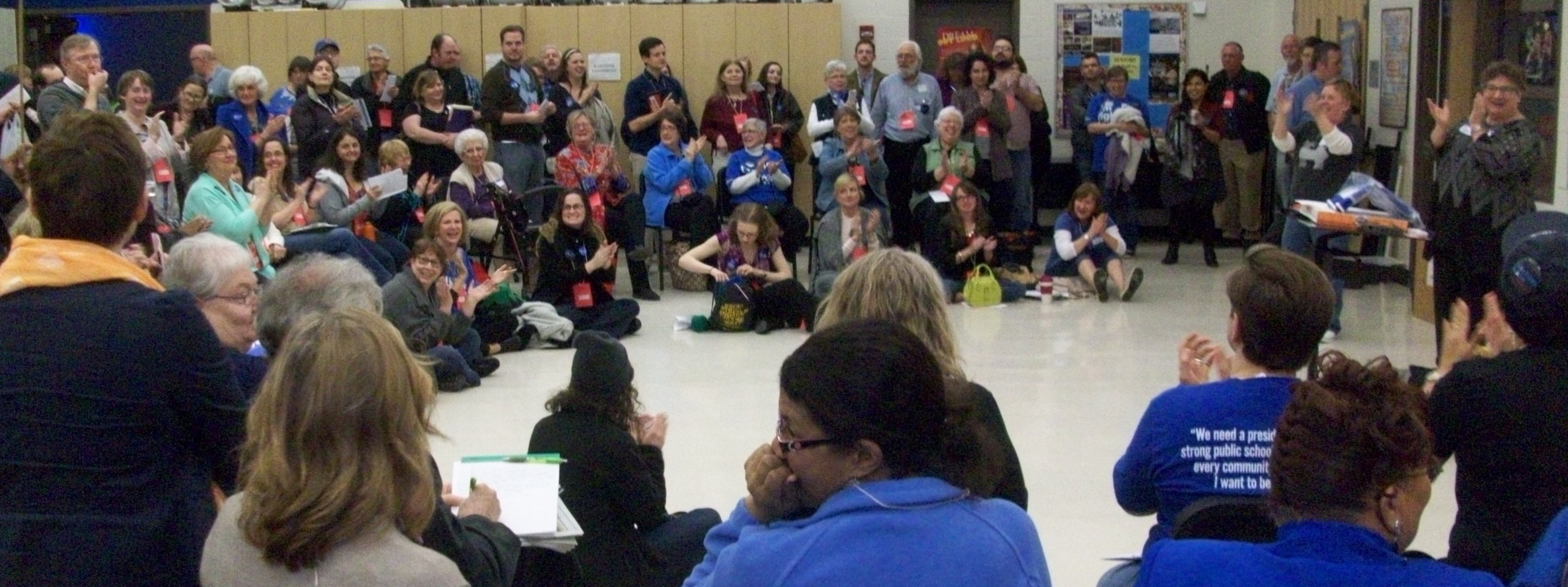
Hillary Clinton Delegates and Alternates at the Johnson County Democratic Convention March 12, 2016
My week in Iowa politics was about planning the county convention and finding a Democratic candidate to run for House District 91 and Senate District 46. One success and two failures.
At our precinct caucuses I volunteered to be on the committee on committees and attended the county-wide Zoom meeting. As in previous cycles, I volunteered for the Arrangements Committee where my background in transportation and logistics prepared me for anything that might happen. The co-chairs of the committee are great and the team put together what has the potential to be a valued convention. My first contribution was writing a paragraph about spreading contagious diseases for the convention booklet as follows:
Respiratory illnesses such as COVID-19 and influenza continue to circulate in our communities. To help reduce the risk of transmission, the Arrangements Committee will make face masks available at check-in for any attendee who wishes to use one.
I also volunteered to be an usher, directing people to designated sections of the seating area, to help set up and tear down, and be a general floater. We are almost ready with one week to go.
The search for candidates to run for the state house has been challenging. Because of a lack of interest in running for a seat currently occupied by a Republican, we have been seeking a person to prevent the Democratic ballot from being blank. In my experience, that’s not the best situation for voters or for candidates. While we are part of the so-called “liberal Johnson County,” our area has been trending Republican after twice voting for Obama as president and for Trump three times. I have been represented by a Republican House member beginning in 2013, and a Republican Senator after redistricting in 2023. Last cycle, no Democrat on the ballot was the top vote-getter.
In the 2022 Iowa Senate election, Republican Dawn Driscoll and Democrat Kevin Kinney duked it out in an expensive election to determine the future of the new district. The senate district leans Republican and Driscoll became our current senator, also defeating Democrat Ed Chabal in 2024. A few Democrats were kicking the tires on a run this year, yet no one is apparently collecting nominating petitions. Senate District 46 has no election in 2026.
Finding a Democrat to run in House District 91 has also been challenging. Elle Wyant ran in 2022, and Jay Gorsh in 2024. Both were great people who had commitments at work that held them from proper campaigning. As of the filing deadline, no one has stepped forward.
Even though the right candidate could beat Republicans in this district, after ten years of Bobby Kaufmann, and a new district favoring Republicans in 2022, I am resigned to work with Republicans to get anything done. My email contacts with my state senator and representative have been cordial and their responses quickly delivered. There is not much else to do if no Democrat will run.
Another local political issue took time this week: the event we are holding for Democratic candidates for county supervisor on March 28. Thanks to the Republican nanny state, we are electing supervisors in new districts instead of at large. The result is a slew of Democratic contenders to run against incumbents across the county. More on this next Saturday.
Keep working it, people. You know that’s the only way to win back our state!
The township where I live was established before Iowa Statehood. There were oak, walnut, hickory, ash, elm, and cottonwood thriving here among numerous pure springs. The first sawmill and grist mill was built in 1839 by Anthony Sells on Mill Creek. Put the big groves of trees together with the sawmill and you have us. The forests were long gone when we bought our lot here. What dominates the landscape is culture we and others brought with us to an area where all trees indigenous to this part of Iowa once existed in abundance yet no longer do. Part of that culture was roads.
HF2667 and SF2394 have been introduced in the Iowa Legislature. They essentially let industry interests, meaning real estate developers, the Master Builders, the Home Builders, and the Concrete and Asphalt Associations, mandate what cities and counties are allowed to do with regard to design standards for roads in new developments. On March 4, HF2667 passed in the House 61-36, so this week’s action is in the Iowa Senate.
The industry wants freedom to set very low road design standards. They want those standards to be uniform for all new development in the state. They want standards to ignore differing local conditions such as soil types and terrain. If local governments wanted better local standards, taxpayers would have to foot the bill, not developers. These bills are wrong for Iowa.
Iowa road design standards are currently developed by experts at the ISU Institute for Transportation. A proposed law would shift control of the program to the Iowa Department of Transportation. The bill would require statewide compliance and impose financial penalties for non-compliance, even when local governments make changes based on site-specific conditions. The fiscal note estimates the change would remove $450,000 in revenue from Iowa State University and require the DOT to hire two employees costing $231,000. Another concern is which private-industry representatives might serve on the new board overseeing the program.
If the new bills became law, that could enable developers to build subpar roads in new developments and prevent local governments from having control. It is part of the Republican agenda of making Iowa a nanny state.
Developers must address roads while planning a subdivision, at the same time accountants put a pencil to it and determine potential profit. Saving money on roads is part of extracting every last dime out of a project. When low-quality roads break down, the cost is paid by taxpayers and homeowners, not developers.
When our developer turned his farm into a housing subdivision, he didn’t know what he was doing. There was a lawsuit regarding wastewater treatment. He spent the least possible amount on our two miles of roads, using chip and seal pavement. Evidence of his lack of financial expertise can be found in his declaration of bankruptcy.
The building trades behind the new bills do know what they are doing: extracting every possible penny from a project for investors. If the bill passes, it would play right into their hands.
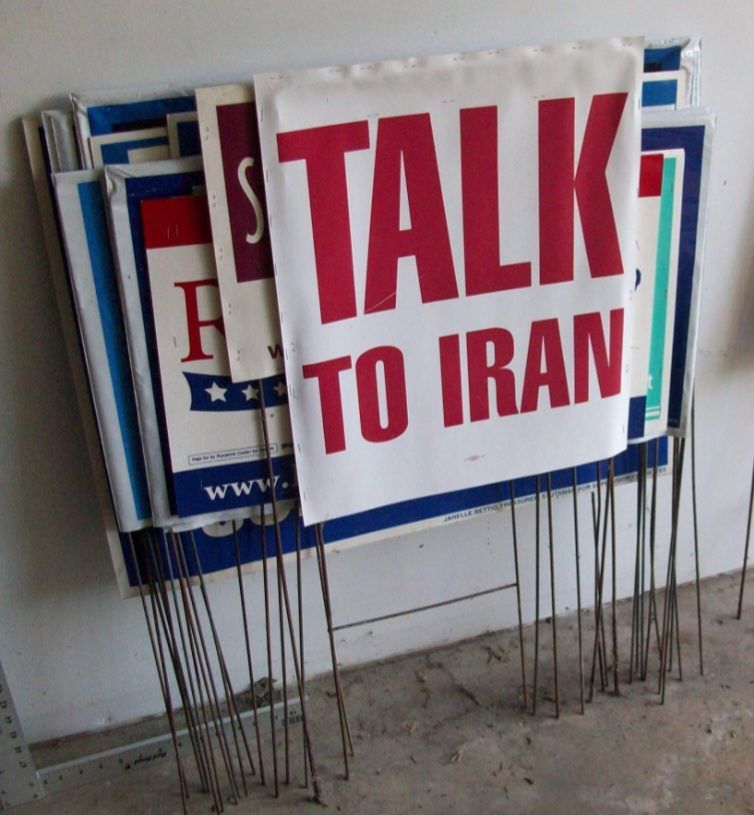
On Monday I sent emails to U.S. Senators Chuck Grassley and Joni Ernst as well as to U.S. Representative Mariannette Miller-Meeks on the subject of the U.S. aggression against Iran.
My message was simple: “I urge you to support the Kaine-Paul Senate resolution, S.J. Res. 104, the bipartisan war powers resolution that would prohibit strikes against Iran. Thank you for reading my message.” The email to Miller-Meeks referenced the House companion, the Massie-Khanna House resolution, H. Con. Res. 38.
The referenced resolutions are also simple: “Directing the President pursuant to section 5(c) of the War Powers Resolution to remove United States Armed Forces from unauthorized hostilities in the Islamic Republic of Iran.”
The vote was scheduled for Wednesday in the Senate and the votes for a simple majority were not there. The House also voted no. Now what?
Senator Grassley responded on March 6, 2026. Read his response here.
I reject the Iowa Republican position exemplified by gubernatorial candidate Brad Sherman, who wrote in part, “I support President Trump’s action against Iran. These actions are not an initiation of war, they are a response to a war already declared by Iran. This is the inevitable response to an evil regime that has openly and continually stated its goal is to destroy America and has actively sought the means to do so.” Was Iran attacking the United States? No. Is Iran an imminent threat to the United States? No. This position abandons the caution about foreign wars that once defined Iowa Republicans.
The president failed to address with the American people the reasons for attacking a sovereign country. On Monday, he said 49 top Iranian leaders had been killed, according to CBS News. The joint operation with Israel did kill key Iranian leaders. Anyone familiar with Iran’s political system knows new leadership can be approved quickly. No one I know gave the aging Ayatollahs high marks. They were easy targets for Israeli ordnance. The younger Iranian replacements will be formidable and could be worse. There has been insufficient public discussion of this.
Is the motivation to address the risk of a nuclear armed Iran with delivery systems? Give me a break. While Republican opponents of the Joint Comprehensive Plan of Action, commonly called the Iran Deal, felt it was insufficient, the agreement placed verifiable limits on Iran’s nuclear program. When the president tore up that deal, he lost standing to claim this action was about nuclear weapons.
Is the president part of God’s plan, being anointed by Jesus to light the signal fire in Iran to cause Armageddon and mark his return to Earth? The Military Religious Freedom Foundation reports receiving complaints from non-commissioned officers who say their commanders told them the Iran war is part of God’s plan and that Donald J. Trump was ‘anointed by Jesus’ to trigger Armageddon.” Read more about this here. They logged similar complaints across more than 40 different units located in at least 30 military installations. One NCO said their commander’s remarks “destroy morale and unit cohesion and are in violation of the oaths we swore to support the Constitution.” The Pentagon has not responded publicly to these allegations. Secretary of Defense Pete Hegseth should consider John Prine’s message, “Now Jesus don’t like killin’, no matter what the reason’s for. And your flag decal won’t get you into heaven any more.”
Is the Iran aggression solely to take attention away from the Epstein files? More than a few people are saying so, yet I don’t know that this war will accomplish that for the president. Maybe people in the administration can’t walk and chew gum at the same time but the American people can.
When the president admonished the people of Iran, “When we are finished, take over your government. It will be yours to take. This will be, probably, your only chance for generations,” he washed his hands of the consequences of this conflict. That is typical for Donald J. Trump.
Note: This passage was cut from my current autobiographical work, so I am posting it here.It is a bit dated.
I wrote about Father’s political work and before I close, I want to write about mine. I functioned at the lowest levels of politics and got elected one time to be a Township Trustee. The word “grassroots” is overly used, but that is where I functioned.
In the political world, so many people want to be strategists and speak at a high level about what is or isn’t the best thing to do in the elements of a campaign. It is the source of the increased swarm of media pundits and poobahs. It is the lifeblood of political bloggers. Political campaigns are not only about strategy.
The tactics of a campaign matter: messaging, voter contact, fundraising and public relations. Where strategy trumps tactics in importance is in defining the playing field. Strategies are too often based on false assumptions, and ragged history. The mistake is to take the external features of campaigning as the playing field. Avoiding mistaken strategy is the key to winning elections, something I hope my candidate will do no matter upon which election I am working.
The Rules and Bylaws Committee of the Democratic National Committee voted to advance a series of first in the nation states for the 2024 presidential nominating calendar. Iowa was not one of them. The plan includes South Carolina first, followed by New Hampshire and Nevada the following week, then Georgia, then Michigan. The plan is expected to be approved by the DNC early the next year.
If one didn’t know Iowa were to be booted from the early states, they had not been paying attention.
Iowa and New Hampshire, both of which have state laws requiring them to go first, are considering next steps. If either state chooses to disregard DNC and changes the schedule, there are penalties, including losing delegates at the Democratic National Convention. Delegates are the whole point of the nominating process. There may be state penalties for failure to go first, but let’s face it, any state could pass such a law and who would enforce it? What will happen next in Iowa is presently unknown.
In 1968, the Democratic National Convention was a disaster in several ways.
Outside the convention hall, anti-war demonstrators protesting the Vietnam War roamed Chicago streets. The Chicago police department, under the direction of Mayor Richard J. Daly, used force in an attempt to maintain control.
During the evening of Aug. 28, 1968, with the police riot in full swing on Michigan Avenue in front of the Democratic party’s convention headquarters, the Conrad Hilton hotel, television networks broadcast live as the anti-war protesters began the now-iconic chant “The whole world is watching.”
At home, I saw televised news reports from Michigan Avenue. A friend was inside the Conrad Hilton with Harold Hughes who ran for president that year. Bill hoped the nomination of Hubert Humphrey, in a smoke filled room away from the convention, was something that would never again happen. South Dakota Senator George McGovern was assigned the task of re-designing the nominating calendar and process, which he did. We have been operating under the McGovern plan ever since.
Most Americans of voting age participate in presidential politics. Here is a brief summary of my memories. Consider it my farewell gift to the Iowa caucus.
Harry Truman: I was 13 months old when Harry Truman left office. I have no living memories of his administration.
Dwight D. Eisenhower: Our family didn’t like having a Republican president yet were thankful for his plan to build the Interstate Highway System. I recall talking about how it was designed so that military vehicles hauling missiles could travel under the roads and bridges that crossed the Interstates. We didn’t like Eisenhower yet accepted his credentials during World War II yielded a competent chief executive.
John F. Kennedy: Father worked on the Kennedy campaign and shared some of that with me. If there was a Camelot, I’m over that now. I wrote previously about this. Click here to read that post.
Lyndon Baines Johnson: I stuffed envelopes for the 1964 Johnson campaign at the Democratic office in downtown Davenport. I came to expect that all elections would be like the Johnson landslide. I was young.
Hubert Humphrey: Based on conversations with my father, I felt the Humphrey nomination was tainted. Partly, I didn’t understand how the convention got so out of hand. I resented the corruption evident in Chicago Mayor Daly. Richard Nixon won in 1968.
George McGovern: My main memory of McGovern’s campaign was a rally before election day at the University of Iowa Pentacrest. I don’t remember if I voted. I wrote more extensively about the 1972 election here. Richard Nixon won reelection.
Jimmy Carter: I was in between finishing Officer Candidate School at Fort Benning, Georgia and traveling to my first assignment in Mainz, Germany during the 1976 presidential election. After Nixon’s resignation in disgrace, I literally didn’t care who was elected president that year.
Ted Kennedy: Turns out I didn’t care for Jimmy Carter enough to support him for a second term. I caucused for Ted Kennedy in Davenport and he wasn’t viable. I declined to join my union friends with the Carter group and went home.
George McGovern: My spouse and I caucused for George McGovern in 1984. We attended a forum in Des Moines where he, Walter Mondale, Jesse Jackson, Fritz Hollings, and others appeared. At the precinct caucus, I joined the platform committee and was selected to go to the county convention as a McGovern delegate. It was my first taste of Johnson County politics.
Michael Dukakis: We lived in Lake County, Indiana in 1988. I remember saying to myself during the June primary election, “Who’s bright idea was running Dukakis?” He lost to George H.W. Bush.
Bill Clinton: Still in Indiana in 1992, I supported Bill Clinton. I took our three-year-old daughter into the voting booth so she could press Clinton’s name on the touch-screen voting device for me. I didn’t devote a lot of time to Clinton’s campaign or to politics. Back in Iowa for the 1996 election, I continued to be inactive in politics. I judged Clinton could be nominated without my help and didn’t attend the precinct caucus. Clinton won Iowa 50.26 percent to Robert Dole’s 39.92 percent.
Al Gore: I skipped the caucuses in 1996 as I believed Al Gore would win the nomination without me. He did, and as we know, the U.S. Supreme Court stopped ballot counting in Florida during the general election, giving the win to George W. Bush.
John Kerry: I quickly came to believe the George W. Bush administration was the worst. In the first days after the Sept. 11, 2001 terrorist attack, I rallied around the president. It didn’t last long. I wrote about my transition here. All three of us attended the 2004 precinct caucuses in Big Grove Precinct together and caucused for John Kerry. I helped run the caucus as secretary that cycle. I joined the Democratic central committee again and worked on the Kerry campaign. I also decided that after his performance in the White Water controversy, long-time U.S. representative Jim Leach had to go. In 2006 we elected Dave Loebsack to the Congress.
John Edwards: Despite all the negativity that came out about John Edwards after his last presidential campaign, I have no regrets having worked to make him the Democratic nominee in 2008. I spent time with him, his wife Elizabeth, and their children. This precinct caucus was the best attended in my almost 30 years living in Big Grove Township — about 260 people. I served as caucus secretary again and it was challenging to make a count. There wasn’t enough room in the school cafeteria and some of the voters stretched out into the hallway. I recall Edwards had a contingent from the care center in wheelchairs and on gurneys. In the end, Hillary Clinton and John Edwards tied and Clinton won the coin toss. Barack Obama got the most delegates and won the general election.
Barack Obama: During the 2012 precinct caucuses I led two precincts other than my own: Cedar and Graham. The caucus began with live video of Obama, then we broke into precinct groups. There wasn’t anyone willing to lead the caucus among the eight people in each group. I convinced a friend to be secretary. Obama’s reelection was not a given yet his campaign was thorough enough to win a second term.
Hillary Clinton: I led the Clinton delegation to the 2016 precinct caucus. We had so many delegates we could send some to the Martin O’Malley group to make them viable and deprive Bernie Sanders of a delegate. I decided being a Clinton leader took precedence over running the caucus. It was a good decision. As we know now, Clinton won the nomination and lost the general.
Elizabeth Warren: I led my own caucus for the second time in 2020, supporting Elizabeth Warren for the nomination. I was well organized and the process proceeded smoothly. We split our four delegates with one each to Warren, Amy Klobuchar, Pete Buttigieg and Joe Biden. Biden placed fourth in Iowa. It wasn’t until South Carolina that the Biden train started to roll out of the station. Buttigieg won Iowa by a small margin yet any momentum was halted by a computer failure in the application we used to report our results. This disaster was likely a prime catalyst for removing Iowa from early in the nominating process this week.
Joe Biden: Joe Biden hasn’t announced whether he will run for president in 2024. One assumes he is in good health and will live long enough to serve a second term. If the DNC is successful in removing Iowa from the early states, as it appears they will be, presidential politics will be a lot different in Iowa. I hope it will be better.
It is recent enough as I type, we all know what happened next. I supported Kamala Harris for president.
Canada Geese finding open water as the lake re-freezes on Feb. 25, 2026.
When I began writing for Blog for Iowa in 2009, I covered individual political events like the state hall of fame ceremonies and the special election of Curt Hanson. In reading those old posts, I remembered I also wrote advocacy for nuclear weapons abolition and for improvement in the environment. Those kinds of posts remain viable and while I’m covering for Dave Bradley the next couple of months, I will revisit them from time to time.
At the same time there is a new politics around Iowans. So much of what we get from Republicans is vindictive. We feel that particularly well in Johnson County where I live. I mean, we need a law to force counties to follow the governor’s orders about flying the United States flag at half staff? HSB 634 does that and it cleared the first legislative funnel. The bill was in reaction to Johnson County Supervisor Jon Green defying the governor’s order to lower flags to half staff after the death of a conservative podcaster. Defending against Republican vindictiveness is a slippery slope. I, for one, decline to go there. Why slide down into the mud with them?
What is worth writing about? For me it is the several conversations I have each day with actual people about actual issues, regardless of our politics. Things like the ungodly amount of money our county spends transporting prisoners because there has not been public support enough to build a new jail. The presence of blue-green algae in the state park lake near where I live. The odor of concentrated animal feeding operations wafting over our homes on warm summer evenings. The covert work of fossil fuel money to kill one of the shining examples of what is good in Iowa: our support for electricity generated from wind turbines and solar arrays. These are things I hear from actual people and they will carry weight in how I pick my topics.
In a time of instant access to public media, the national news plays a role here. I wish it were buffered by distance, yet it clearly is not. We have a president and national media geared to dominating what we hear and see in public media. It would be dishonest to ignore all of those stories. So I will pick some.
I hope readers will stick with me. I hope to provide reasons why you should.



 Journey Home
You must be logged in to post a comment.