Categories
Kitchen Garden

Hot Pepper Paste

Hot pepper paste.

The fall abundance of hot peppers found its resolution in jars of homemade pepper paste. This thick, tangy blend of peppers, garlic, sugar, and salt—simmered in a vinegar-and-water solution—became the perfect answer to the bags of jalapeño, serrano, Santo Domingo, and Anaheim peppers piling up in the refrigerator. The cayenne peppers were easier: they went to the dehydrator and became red pepper flakes. Yet this hot pepper paste, the result of weeks of simmering, blending, and refining, was a more patient project—one that bottled the heat of summer for the cold months ahead. It may be a permanent resolution of fall pepper abundance.

As hot peppers came from the garden into the kitchen in late summer I tried things. First, I made a quart of salsa to put on Mexican-style fare. Next I sliced jalapeño peppers and pickled them in home made apple cider vinegar. Two quarts of pickled peppers stored in the refrigerator will provide condiments for a full year. Then I began taking excess to the food pantry. I made cold pickled serranos and jalapeños. This was only the beginning of the crop. What next?

After stemming and slicing the peppers in half, I brought each batch to a boil in a mix of 1½ cups 5% white vinegar and 1 cup water. Once boiling, I turned the heat down to a simmer and let them go for about 20 more minutes. At first, I strained away most of the vinegar-water solution and put the peppers in a blender and pulsed until they were pureed. This produced a thick paste to use on tacos, or as an ingredient to replace fresh hot peppers when the season is over. I felt I was on to something.

As harvest continued I tried different pepper blends and moisture contents. A number of experimental jars collected in the refrigerator. The concept seemed good, yet our refrigerator is already too full to handle the abundance. I decide to try water bath canning the product and learned about pH.

I made the final product with all but a few reserved hot peppers from the refrigerator and the solution described. To that I added six ounces of garlic cloves, generous tablespoons of sugar and kosher salt. Once simmered, I put the mix into the blender, liquid and all. The coloring is due to jalapeño peppers that ripened to red. I returned the puree to the cooking pot and took all the jars of earlier experiments from the refrigerator and stirred them in. Once warm, I put the paste into pint Mason jars and water bath canned them.

I don’t know how others deal with excess hot peppers, yet I don’t know how else I would do it. Experimentation is an important part of my kitchen-garden. This hot pepper paste is something I will use and probably use up before next year’s harvest. Everything about the process makes life better.
Categories
Kitchen Garden

Diary of Late Summer Kitchen Work

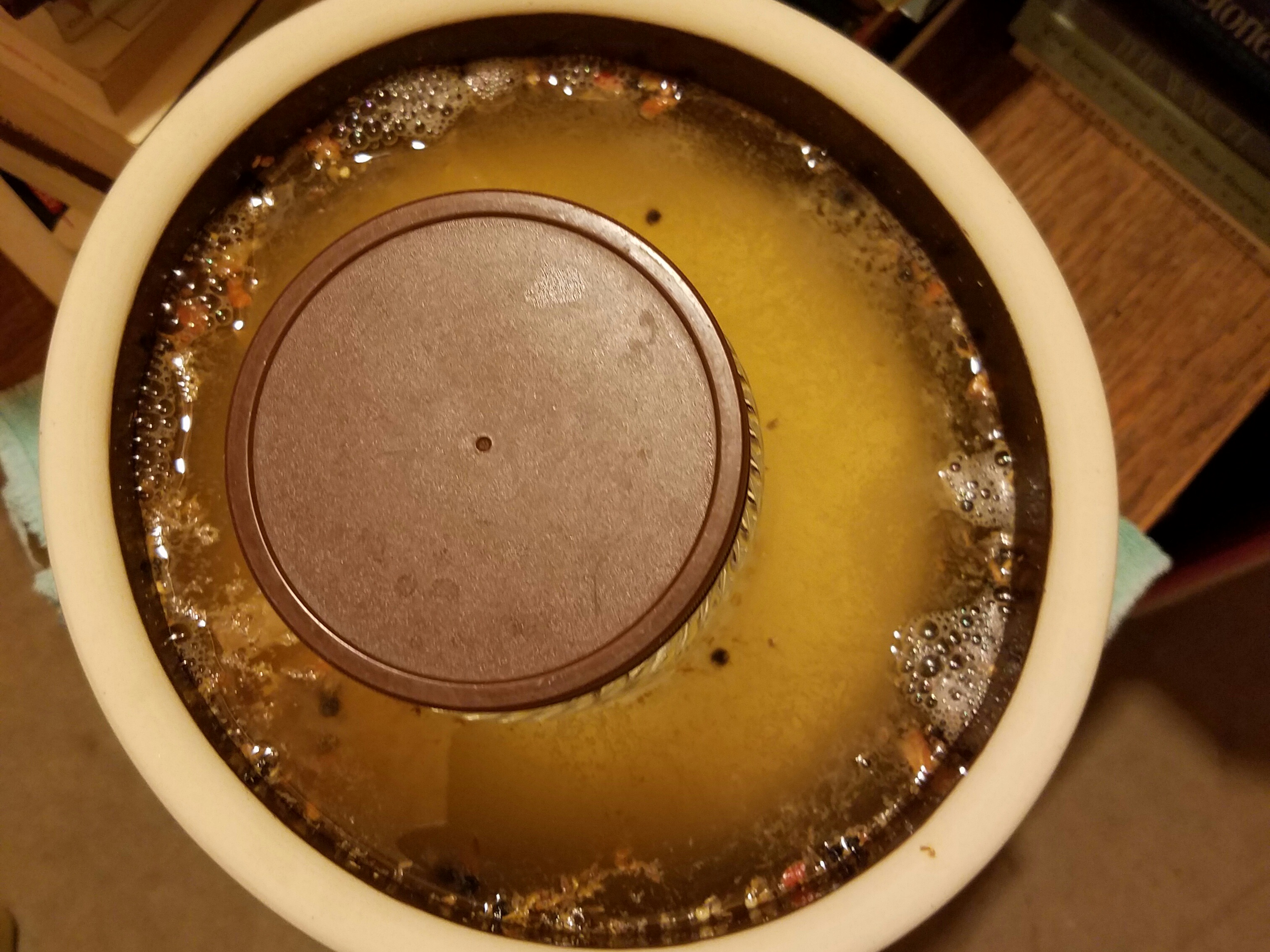
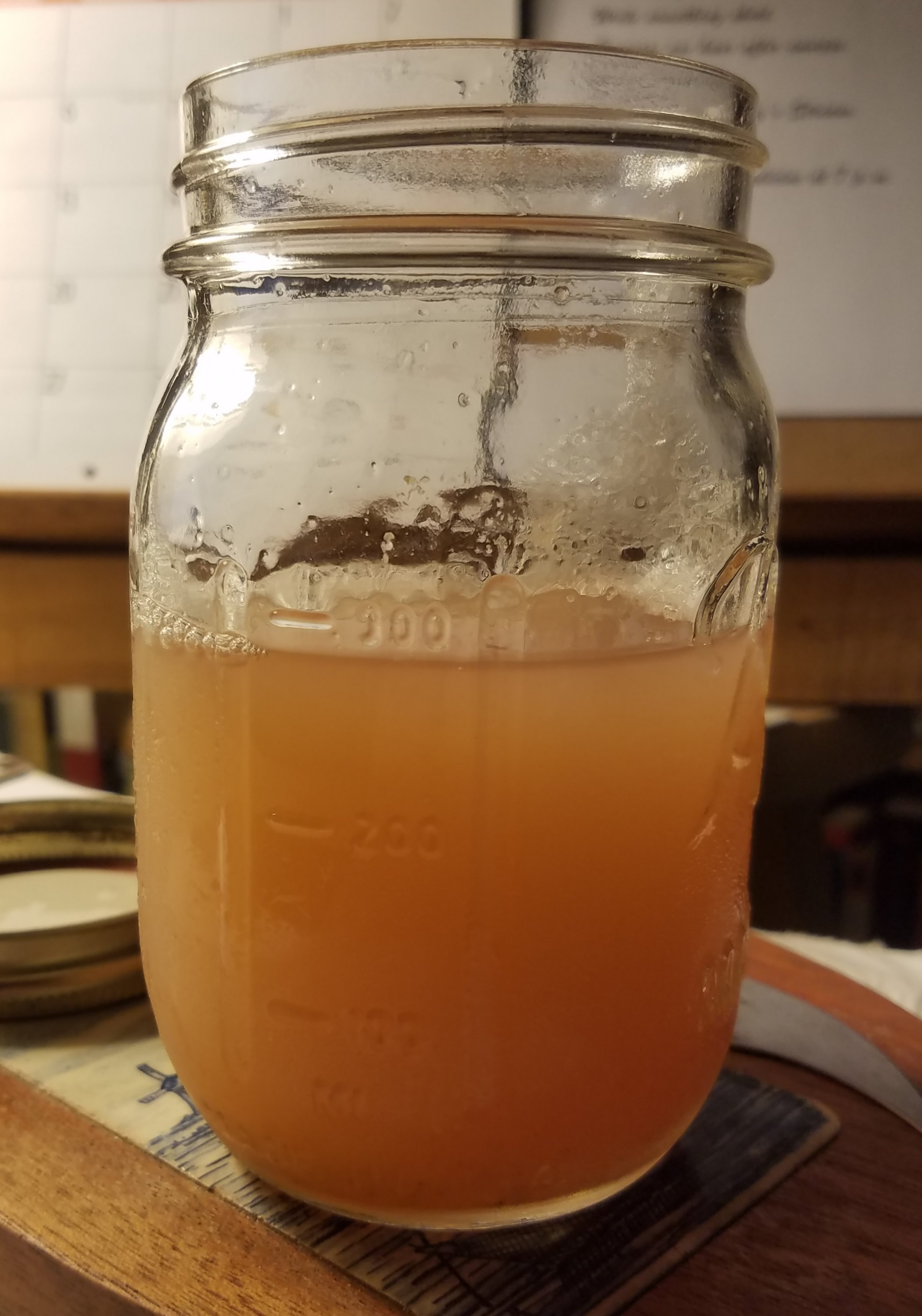
Apple beverage.

This is one tart, tasty apple drink. I’m not sure what to call it.

When I make applesauce, I steam cored apples in enough water to cover the bottom of a pan. Additional moisture is released from the apples. Everything goes into a cone sieve strainer resting on a large Rubbermaid pitcher. Once the liquid filters out I move the strainer to a second identical pitcher and separate the applesauce from the peels. The liquid goes into jars which are stored in the refrigerator until used. I made about a gallon of it already.

Every kitchen has the potential for unique culinary items like this. With the thousands of cookbooks out there, someone is likely to have described this apple beverage previously. It is one more way to use produce in a kitchen garden.

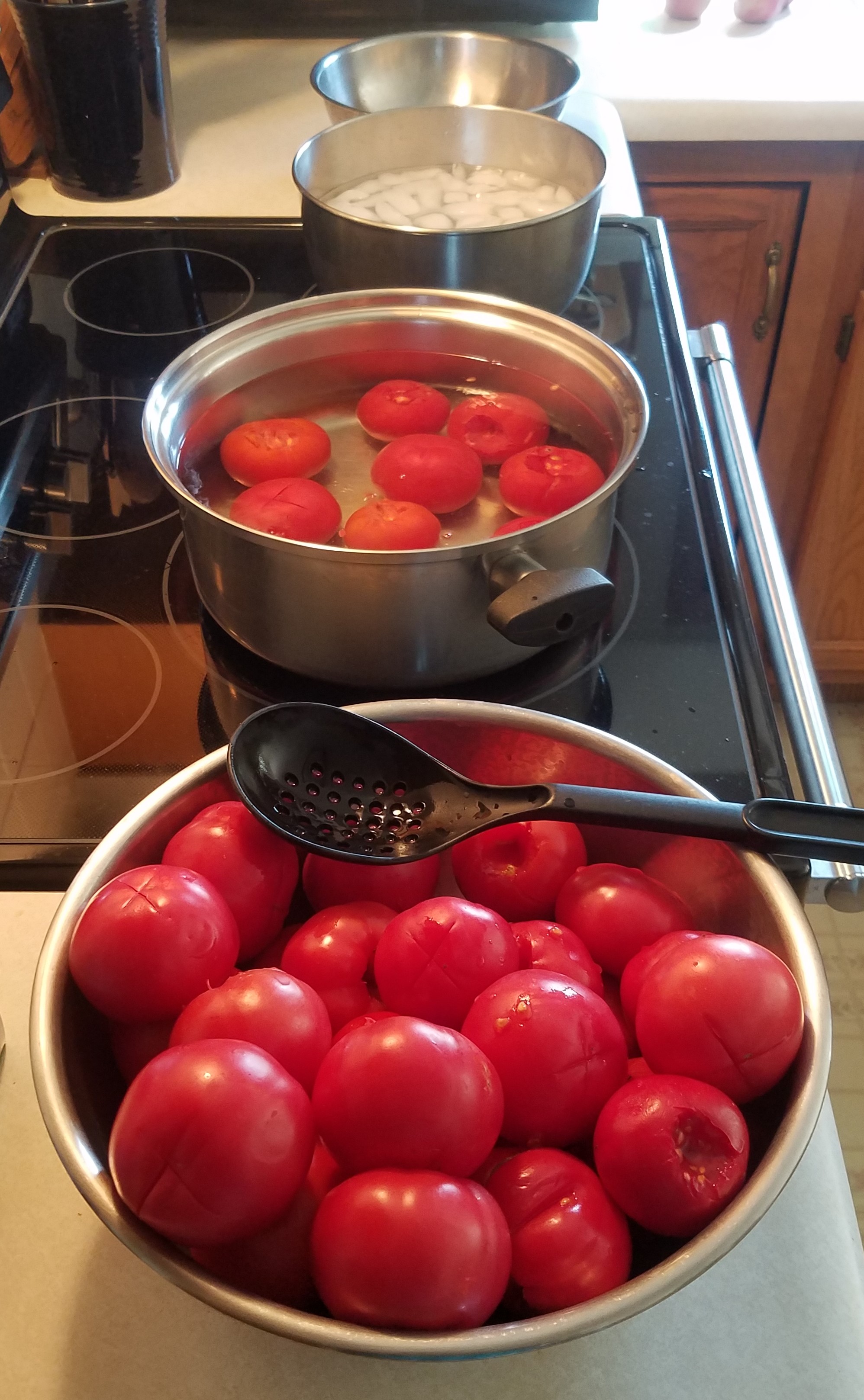
Tomato peeling for canning whole.

I grow enough tomatoes to sort them by size and type. Medium-sized ones are to be canned whole and the process is much like what exists in other kitchens. I core them and put a small X in the bottom. Dip them in boiling water for a minute or two and then cool them in an ice water bath before peeling. Next, I cram them into a quart jar leaving about an inch of head space. Once filled, they go into a water bath canner for 40 minutes. This is a simple, reliable technique.

Some people add salt or a teaspoon of vinegar to the tomatoes before canning. I rarely have an issue with spoilage, so I leave it out. I can’t recall how many quart jars of whole tomatoes I put up in 2022 yet I have a half dozen left.

I make tomato sauce. Most of the crop of Amish Paste and San Marzano goes into sauce. Similar to making applesauce, I steam cook the tomatoes until the flesh gives with a spoon without adding any liquid to the pan. Into the cone sieve strainer the whole thing goes where they sit while the juice drains off. The juice is canned until I have enough quart jars to last at least a year. It is mostly for soup making. In the second pitcher, I separate the skins and seeds leaving a rich, thick tomato sauce. This goes into pint-sized jars. It’s enough to make a batch of pasta sauce for two people. The organic tomato sauce I buy at the wholesale club costs about $0.75 per 15-ounce can. It is good, yet I like using my own first. I’m at the point of summer when I’m running out of new canning lids. When I went to the home, farm and auto supply store to get more last week, they were out as well.

The dehydrator is running with Red Rocket variety hot chili peppers. When these dry, I’ll crush them and use for red pepper flakes, replacing the ones from last year. Since my spouse doesn’t like hot stuff, a little goes a long way.

I picked a half dozen Red Delicious apples and while crunchy and sweet, they are not at peak sweetness. I’ll wait a while before harvesting for the kitchen. Apples and pears have been so abundant this year, most of the crop will feed wild animals though the winter. I need about three more quarts of applesauce. Then I’ll pick the best to eat raw for refrigerator storage and juice the rest until all the half gallon jars are fermenting vinegar. It has been a great apple year.

A couple of bananas were getting overly ripe. I made banana bread for the first time since I can’t remember. I used the King Arthur Flour Baker’s Companion cookbook for the recipe. It came out quite good. The challenge for banana bread in our household is to reduce oil and take out the eggs and milk products. The egg replacements I used previously haven’t really worked. I use applesauce instead of eggs to make cornbread. Maybe I’ll try that next time. Once I try a recipe that works, and this one did, I then start to tweak it to make it low oil and vegan. Eggs are so much a part of American cooking it is difficult to give them up. We do like banana bread.

For supper I made a pizza with home made dough, my tomato sauce, and toppings of sliced onions, jalapeno peppers and tomatoes from the garden. Cheese was mozzarella and a sprinkle of Parmesan. There will be leftovers.

So that’s what went on in our kitchen today. Despite outdoors temperatures around 90 degrees all afternoon, I made the best of it inside. It felt like a productive day.

Categories
Kitchen Garden

Hatch Chili Sauce

Hatch chili sauce using a blend of Hatch and Guajillo chilies.

A variety of dried chilies waits for me in the pantry. Yesterday I made chili sauce with the rest of the Guajillo chilies I grew, and some Hatch chilies from the grocer. It is a bit of a production yet this chili sauce is great on just about anything.

First put a kettle of water on to boil. Stem the chilies and split them to remove most of the seeds. Place them in a bowl and pour the hot water over them to enable them to hydrate. Cover with a plate to hold them under water. Soak for at least an hour or until they are flexible.

Place the chilies in a blender with a cup of the soaking liquid. Add whole garlic cloves, at least one large head. Add pepper and Mexican oregano. Blend until it is as smooth as possible.

Place a tablespoon or so of peanut oil in a frying pan and heat. Using a strainer, pour the sauce mixture into the frying pan, pushing as much through the mesh as is possible using a spatula. Set the strainer with bits of chili skin aside and stir the strained sauce.

Add a dash of salt and a teaspoon of sugar to bring out the flavor of the chilies. The idea is not to sweeten the sauce, but to make the chilies taste more fruity.

Stir and mix, mix and stir over medium low heat. Reduce the sauce until it is the consistency of a thick tomato sauce or tomato paste. Use the soaking liquid to dilute the sauce if it gets too thick. Make it the consistency you want.

Put it in a jar, refrigerate, and use it like you would any hot pepper sauce. If I had summer greens, I’d make a taco filling with it along with black beans. I’m the only person in our house who eats spicy things. All the same this Hatch chili sauce won’t last long.

Categories
Kitchen Garden

Gleaning in Mid-October

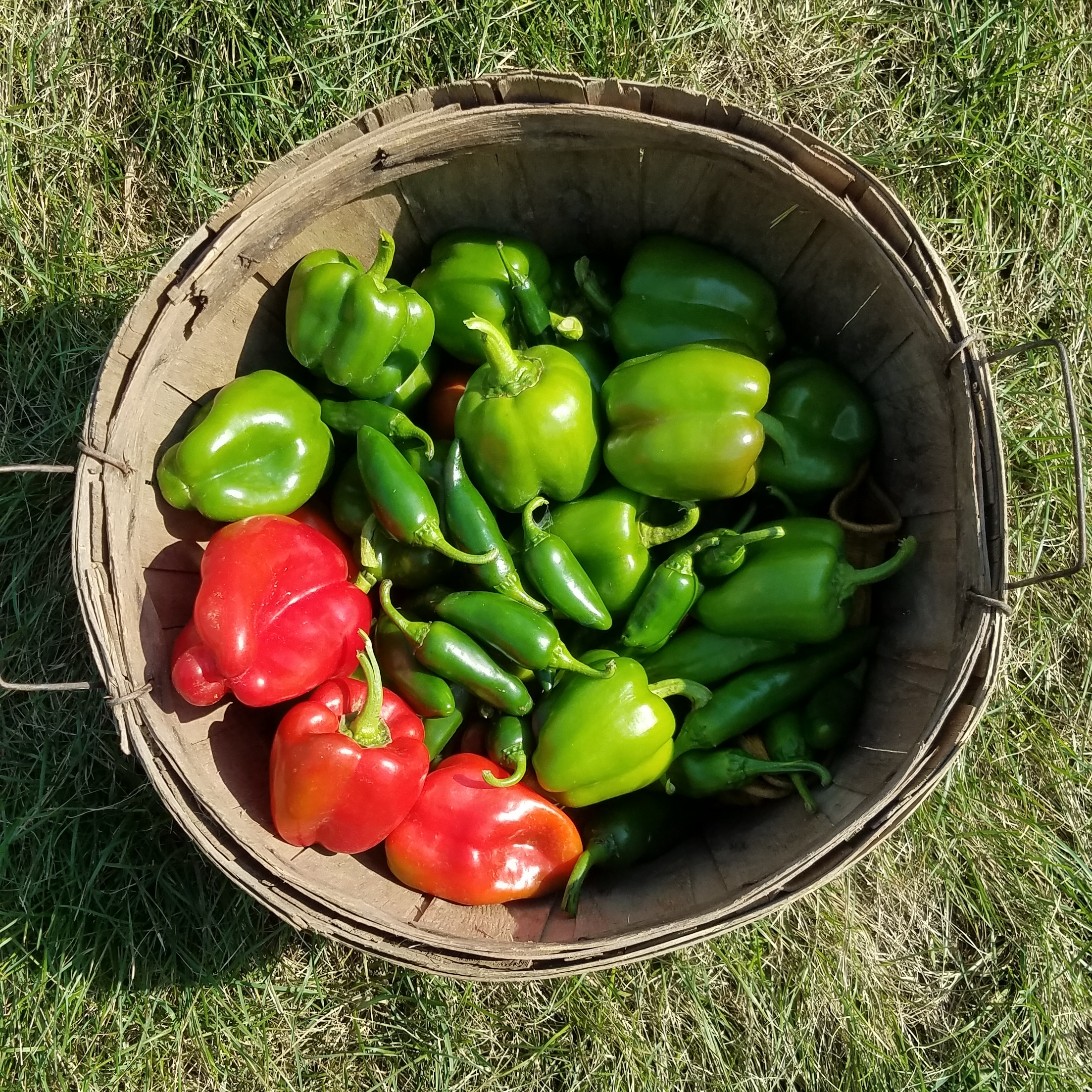
Five gallon bucket of mostly peppers: Guajillo, jalapeno, Serrano and sweet bell.

Some parts of Iowa had a frost warning last night but not here in Big Grove. At 3 a.m. ambient temperatures were in the 60s and all was well with the gardening world.

That is, except for little green worms devouring kale and collards as they do at the end of season.

Kale plant with little green worms.

Despite the kale infestation there was plenty of chard for the kitchen as I gleaned the garden Friday morning. The season is bound to be over soon, even if exceptionally warm temperatures due to climate change extended it.

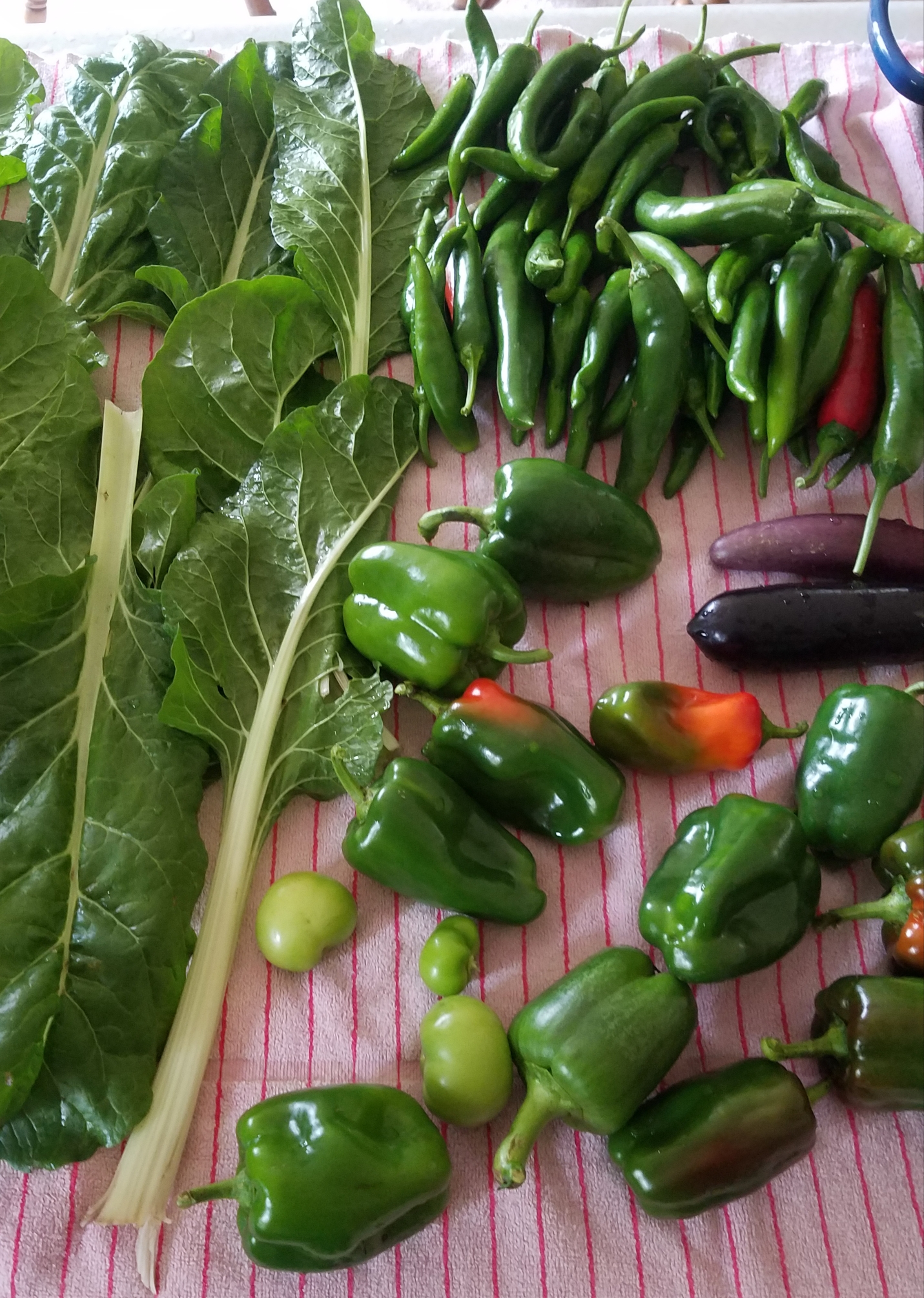
Chard, Guajillo chilies, eggplant, bell peppers and tomatillos drying on the counter.

There were a few tomatoes, mostly small versions of Granadero which produced well this season. The tomato patch is ready to be deconstructed, the fencing rolled up and stored for winter. The question is when I’ll feel like doing it.

Jalapeno and Serrano peppers drying, along with other garden items on the counter.

Partly because of the long season there are many peppers: Guajillo, jalapeno and Ace bell peppers grew better this year than ever. I’ll prepare Guajillo chilies with garlic and apple cider vinegar as a condiment for storage in the refrigerator. The jalapenos are a bit of a surprise as they didn’t produce much earlier in the season. They are big ones, so that increases the possibilities for cooking. My jalapeno needs have already been filled so I’ll have to get creative.

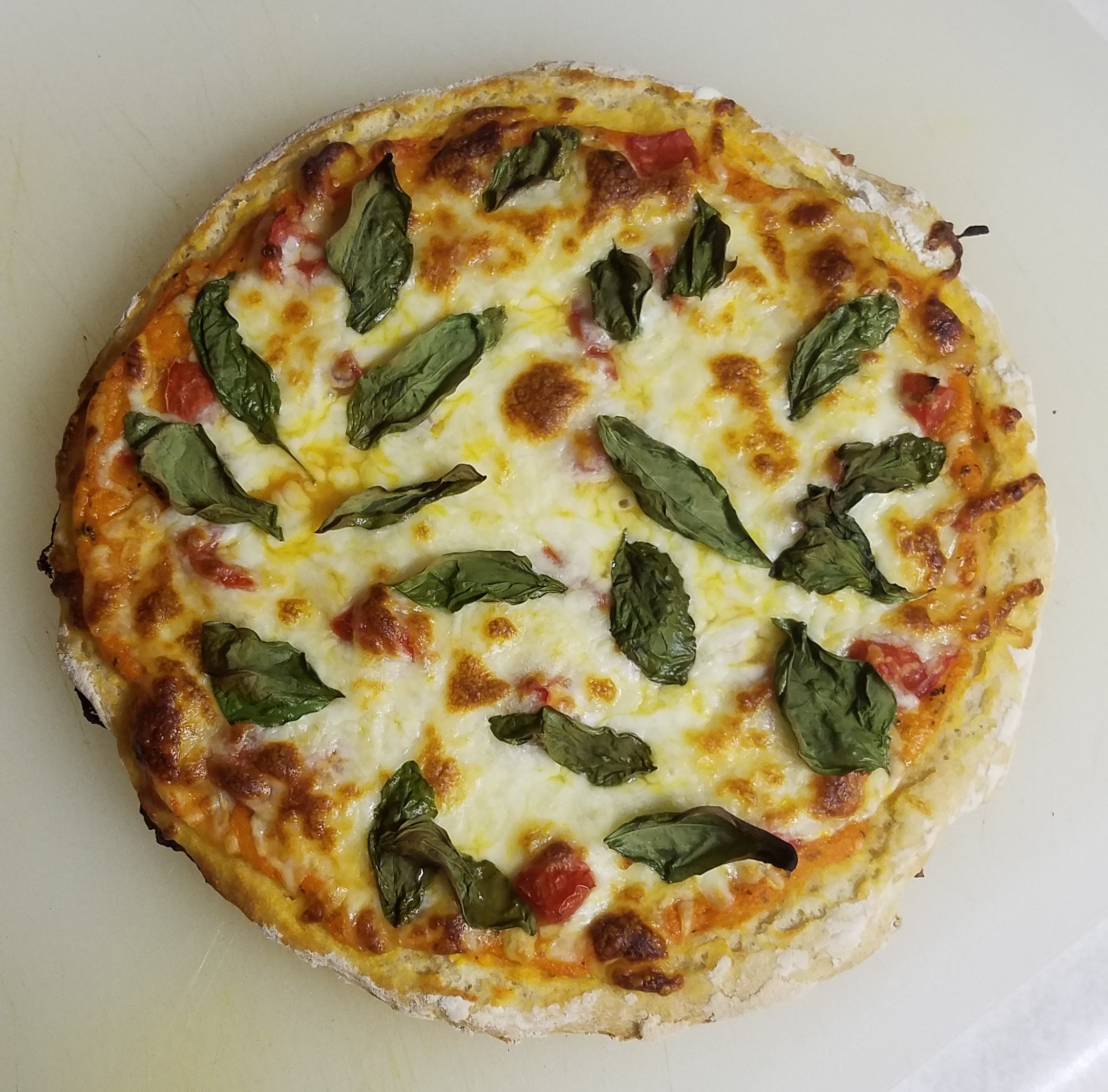
At the end of Friday I picked some basil for pizza making. Basil went into the sauce and whole leaves on top in a pseudo-Midwestern version of pizza Margherita. Fresh mozzarella would have been better, but we make do with what we have. If I try this again, I will wait to apply the basil topping until about a minute before cooking is finished. The pizza was eminently edible. This from a man who at a younger age would eat leftover pizza from a box left overnight in the living room.

Midwestern-style Pizza Margherita.

There is at least one more pass through the garden to get Brussels sprouts and maybe some more chard. The herbs under row cover could use another picking. There are plenty of pepper flowers but it seems unlikely they will make it to fruit. It’s been a good garden season and even the gleaning was bountiful. As fall turns to winter, I’m ready.

Categories
Kitchen Garden

Pepper Time

Variety of garden peppers.

As we turn toward autumn tomatoes are finishing and peppers are coming on strong. I put up a lot of tomato product and am well-prepared to make it until next August. There is always a question of what to do with peppers. This year there are some new ideas.

Pickled jalapenos and hot sauce are traditional. I’ll also grind up what remains of hot peppers and mix it with salt and apple cider vinegar to use in lieu of fresh peppers in cooking. This worked last year so a repeat is in order.

Hot sauce and pickled jalapeno peppers.

I am backlogged with dehydrated hot peppers so no more this year. The main use is to grind for red pepper flakes. I have plenty on hand. I will re-hydrate the old ones next spring and use them to deter pests in the garden.

I grew Guajillo chili plants. The yield wasn’t what I hoped but will roast what there is, skin and coarsely chop them, and mix with apple cider vinegar, salt and garlic to use in Mexican-style cooking. I buy a commercially prepared version of this, so the idea has been in the works for a while.

Bell peppers will be cleaned, sliced in half and frozen in zip top bags. I don’t need many of these as there are some remaining from last year. The main use for bell peppers is for an afternoon snack. At two per day I could make it well into September with fresh ones for out of hand eating and cooking.

Arrival of pepper time also means the end of the garden is near. It’s hard to believe we’re already at that point in the growing cycle.

Categories
Kitchen Garden

Spring Freeze

Tomato and pepper seedlings under a grow light, April 20, 2021.

I didn’t take any chances with a potential freeze last night. I set up a space heater in the portable greenhouse and took trays of tomato and pepper seedlings indoors to put them under a grow light. It doesn’t look like ambient temperatures made it down to freezing.

Better safe than sorry. Story of my life.

Categories
Kitchen Garden

Roasted Red Pepper and Tomato Soup

Bell Pepper Seconds

A gardener and farm worker has access to lots of summer vegetables, especially “farm seconds.” It is difficult to use them up before they turn to compost.

The recipe for roasted red pepper and tomato soup is simple and the results are sweetly tasty. It was born of an abundance of bell peppers and tomatoes.

I wouldn’t expect anyone to go to the market and buy ingredients for this dish. If one has the peppers and tomatoes, almost everything else is on hand in a well stocked kitchen.

Roasted Red Peppers

Make a batch or two of roasted bell peppers for the soup and to use in other dishes.

Preheat the oven to 450 Degrees Fahrenheit with the shelf in the middle position.

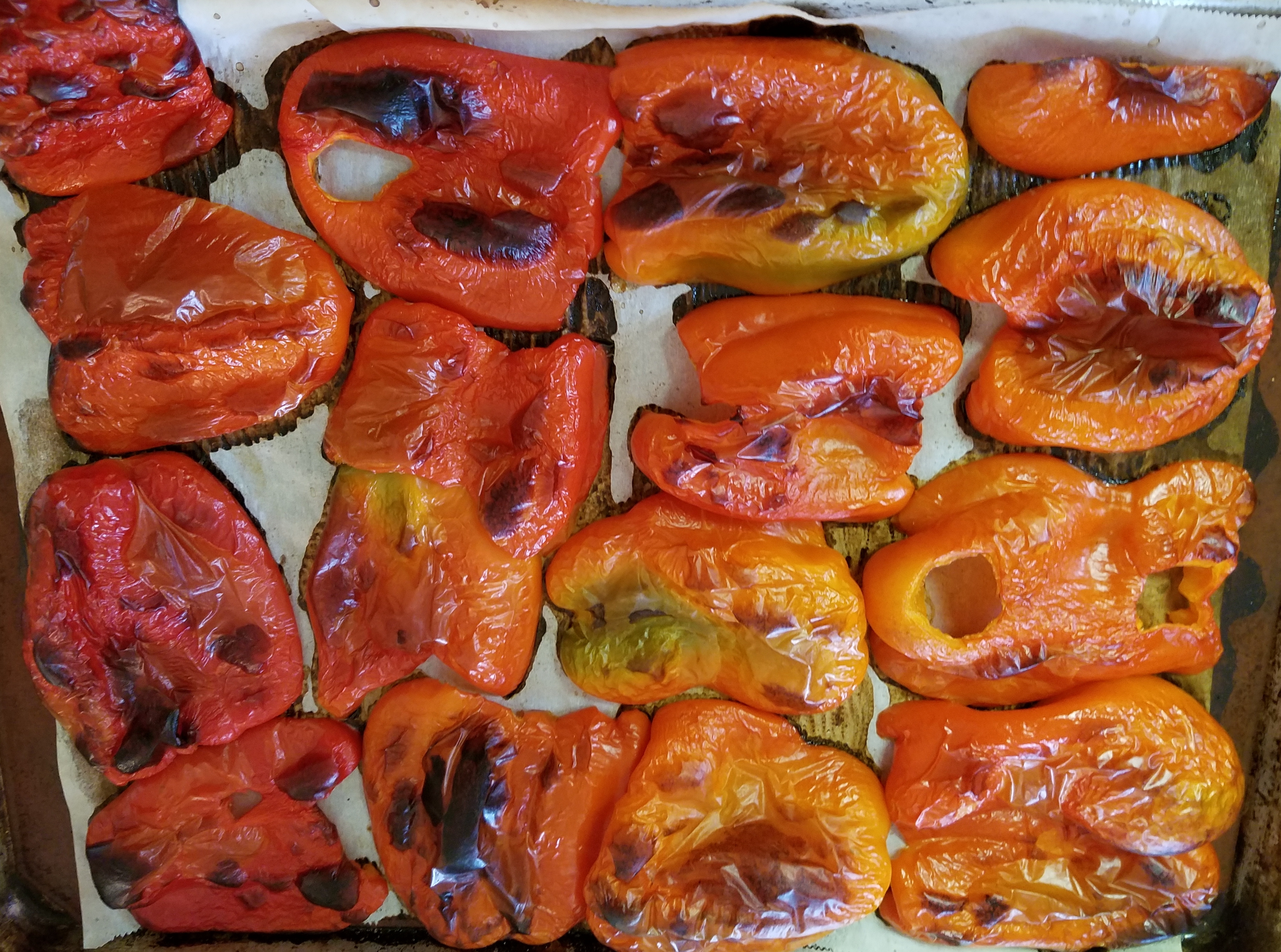
Cull the best red peppers from the lot, halve them and remove the membrane, core, seeds and any bad spots. Using a melon baller makes it super easy and more precise in removing all of the membrane. Peppers needn’t be perfectly halved. Put them skin side up on a piece of parchment paper on a baking sheet with sides. Nestle them close together to get as many as possible on the baking sheet.

Bake at temperature for 25 minutes and remove from the oven.

Using tongs, move the roasted peppers to a bowl and cover it with a plate. This process helps loosen the skin. Let them sit until they can be handled without burning fingers.

One-by-one take the pieces of pepper and remove the skin. Place them in a refrigerator dish and refrigerate until ready to use.

Roasted red peppers are an ice box staple during pepper season. For longer storage there are recipes for oiling and preserving them. They are so sweet and tasty they won’t last long in most households.

Roasted Red Peppers Before Removing Skin

Roasted Red Pepper and Tomato Soup

This recipe makes two quarts, enough to serve four – five people.

Add one cup vegetable broth to a Dutch oven and bring to a boil.

Add:

  • Equivalent of 5-6 large tomatoes, one-inch dice.
  • Enough roasted red peppers to approximately equal the weight of the tomatoes, maybe a little less.
  • Two tablespoons salted butter.
  • One six ounce can prepared tomato paste.
  • One teaspoon each dried spices including smoked paprika, granulated garlic and thyme. Fresh is better if you have it. Double the amount if you do. Herbs and spices are always to taste.
  • One tablespoon dried basil. Fresh basil is better. Double the amount if you have it.
  • Two tablespoons dried onion flakes.
  • One tablespoon sweetener. I used sugar because it was in the pantry.
  • Salt and pepper to taste.
  • Teaspoon of red pepper flakes, cayenne pepper or your favorite pepper spice (optional).

Stir to incorporate the ingredients, bring to a boil and turn down to a simmer. Cook until the tomatoes begin to soften. Don’t cook the tomatoes to death. You will want some bits of recognizable tomato granules in the final product.

Either transfer the mixture to a blender or use an immersion blender to smooth it to a pleasing texture. As mentioned, I like little bits of recognizable tomato and pepper.

Add one cup half and half and stir constantly until the soup is well-mixed and up to temperature.

Serve hot, garnished with fresh basil, a dollop of sour cream or snipped chives. Whatever looks appetizing and is available.

This recipe was fun to make and better than manufactured roasted red pepper and tomato soup in aseptic containers. Leftovers, if any, will keep for a couple of days.

Categories
Home Life Kitchen Garden Writing

Saturday at Home

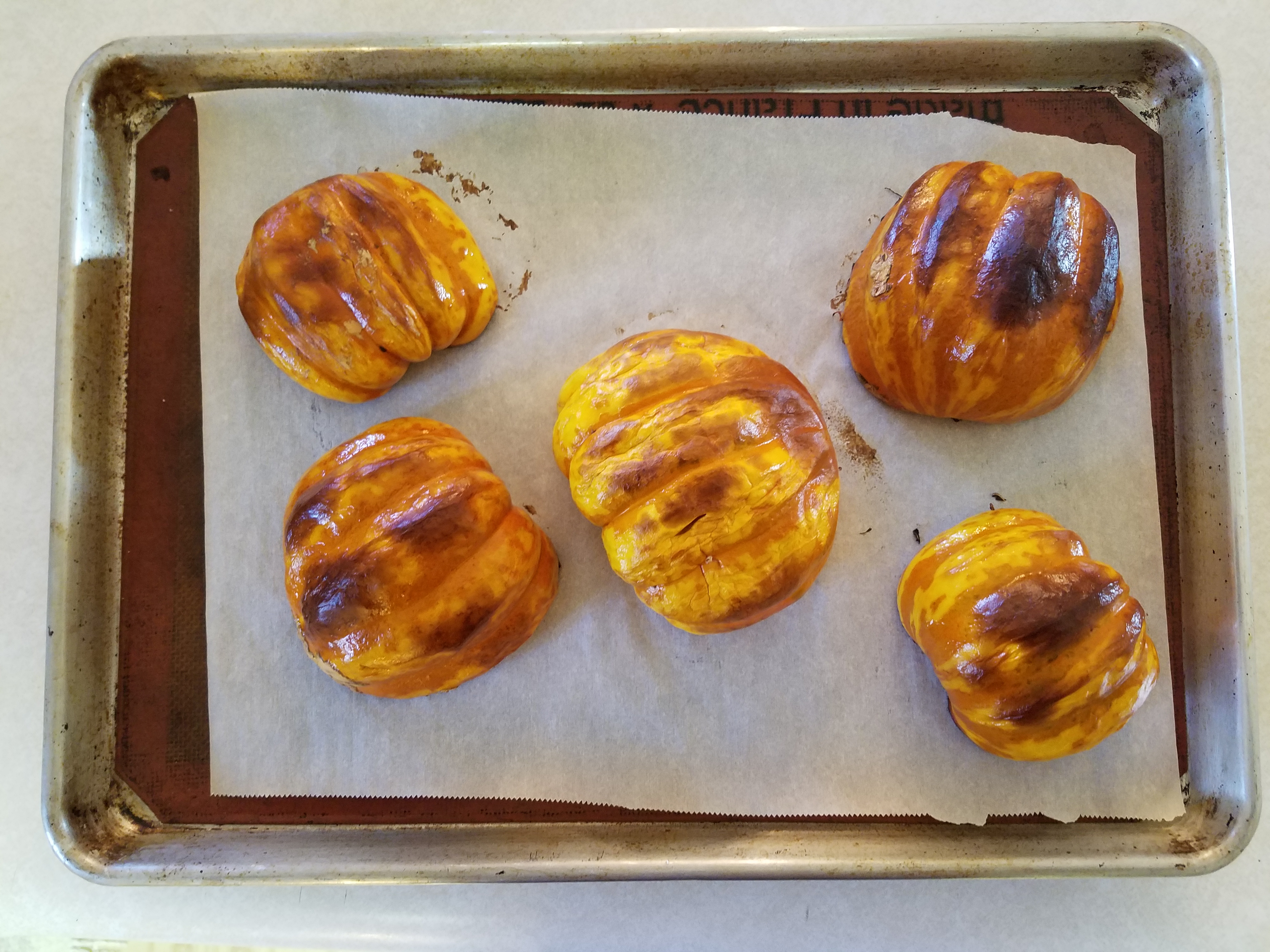
Baked Carnival Squash

After a Saint Patrick’s Day meetup with friends in Iowa City I drove home, parked my car in the garage and haven’t moved it since.

It was too cold for outside work on Saturday so I stayed in, did laundry, cleaned the bird feeder, wrote, read, and cooked dinner of bean soup, Carnival squash and applesauce cake.

The ambient temperature is expected to rise to almost 60 degrees, so I’m planning to work outside after a shift of soil blocking at a community supported agriculture farm.

I read Elizabeth Kolbert’s The Sixth Extinction: An Unnatural History in its entirety this weekend. Her combination of background information with personal stories of field trips is eminently readable. I can’t remember a day so absorbed in a book since leaving transportation. The main takeaway is how uncertain scientists are about changes in earth history over the long term and the consequences of our lifestyle.

Japanese Beetles

The broader meaning of words like “Anthropocene” is not settled, nor agreed. What I know after this immersion, and after reading Sapiens: A Brief History of Humankind by Yuval Noah Haran, I am ready to move forward with something other than narratives of how homo sapiens swarmed over the planet like Japanese beetles.

I buy more bird feed since working at the home, farm and auto supply store. Counting whole kernel corn, I have five different varieties in the garage. Each type attracts a different bird and we enjoy watching them through the French door off the dining area. Some days I feel like picking up a 20-pound bag on sale, and do. I went overboard with 50-pound bags of whole corn and millet, although sparrows seem to really like the millet. There is no science to my purchases.

Bartering is making this year’s garden planning a lot different. Part of the barter system is trading labor for a spring and fall share. Each side of the deal can be defined monetarily. I get a credit of $13 per hour for labor which is applied to retail price of the shares. I use greenhouse space and materials to germinate seeds and care for seedlings until planting in my garden. I will also acquire onion sets and seed garlic through the farms. Where there is a clear financial value, the barter system is simple and easy. This part of the exchange translates into things we can use in our garden or kitchen.

The exchange for specific produce is more complicated.

Canned Tomatoes

Tomatoes are a large part of summer. Last year I planted them in three different garden plots. This year I’ll decrease my plantings to what we’ll use fresh and rely on the farms for canning tomatoes. In 2013 the farmer provided crates of tomatoes which I canned. We split the canned goods 50-50 that year. That was a bit disadvantageous to me considering the amount of work. We haven’t finalized the split, but both farms I work on produce many more tomatoes than needed for their members. One farmer wants lots of canned tomatoes. Something can be worked out.

Bell peppers were a garden failure last year and for many previous years. I’m eliminating them completely. The farms produce bell peppers with a high frequency of imperfect fruit. I plan to trade labor for these seconds and get all of my bell peppers from them. In addition to fresh eating, I seed and freeze them to use throughout the year. We did a 50-50 split on these in 2013, however, this year I’m considering a straight trade of labor hours against a to be determined cost per crate.

There are a number of items we don’t use much in our kitchen but are abundant on the farms. I don’t plan to grow any kohlrabi or cabbage. Should be no problem getting what we need without occupying space in our garden. I’ll barter for some additional broccoli for freezing.

Likewise, I don’t plan to grow lettuce outside my small plot of Belgian lettuce. In between the spring and fall shares that’s coming from bartering.

Summer squash is abundant and available from the farms as are many kinds of greens: collards, chard and “braising greens.” I will grow my own kale and spinach, and everything else will be bartered from the farms.

Eggplant? If Johnny’s Selected Seeds proofs and sends Black Beauty seeds I’ll plant them along with Fairy Tale eggplant. The former can be sliced thick, baked and frozen. The latter are good for the kitchen while in season. There is always an abundance of eggplant at the farms.

Yesterday was the last winter Saturday of staying indoors. Going into the planting season it will also be my day off from the home, farm and auto supply store and the farms. Yesterday was a good day, made better by a feeling of accomplishment. As humans we sometimes need that.

Categories
Kitchen Garden

Poblanos, Onions and Pickles

Fermenting Dill Pickles

JOHNSON COUNTY, Iowa — In the margins of time between social engagements lives a local food movement available to all who seek it.

There is inadequate time in life’s span to become an enthusiast, however pursuit of local food culture is not only okay, it can be rewarded with meals that comfort more ways than imaginable.

While Jacque was in town with her sister, I made last night’s supper of seconds of poblano peppers and yellow onions from the farm, a couple of links of vegetarian sausage, and a variety of home made pickles.

After removing bad spots from the onions and peppers, I cut them into thin strips and piled them on the cutting board. I cut the sausages on the bias and browned them in a pan. Once finished, I removed them to a paper napkin sitting on a plate and began sauteing the onions and peppers in olive oil, seasoning with a bit of cilantro, granulated garlic, salt and pepper.

While the vegetables were cooking I arranged three kinds of pickles, sweet, dill and daikon radish in a bowl. Once the vegetable mix was finished I spooned it into the bowl beside the pickles and topped it with the cooked sausage. With a glass of iced water, it made a meal.

After dinner I went downstairs and checked the crock full of cucumbers. Fermentation bubbles had begun to appear after two days, indicating a successful pickling process. Patience is a key ingredient when making pickles. I hope I have enough of it on hand to make it 11 additional days when the dill pickles will be ready to eat.

Simple stir fries and pickles become a way of life when vegetables are available from the farm and garden in abundance. Cooking in the local food culture is an act of rebellion from a consumer culture that engendered us in the Western hemisphere. It represents taking control of our lives.

Do I always cook locally produced food at home? No. I pay attention to the seasonality of food and align with it as much as possible. I’ve found it makes for better ingredients and depending on the cook, for better eating.

There is more to the seasons of food than common affection for sweet corn and tomatoes. Learning more is a step toward living a better life and who doesn’t want to do that?

Categories
Writing

Roasted Pepper Garlic Spread

Cheese Spread with Pickles

The warehouse club sells packs of six 8-ounce bars of cream cheese. I bought one.

A basic use-it-up strategy is to make a spread for crackers and bread for after work snacking or luncheon. It’s easy.

Soften a bar of cream cheese on the counter until it reaches room temperature. Unwrap it into the bowl of a food processor.

On the bits and pieces shelf in the pantry locate some roasted bell peppers. Add about one whole pepper’s worth to the bowl. Roast your own if you have them, but in winter, who does?

Add one peeled clove of garlic and process until the texture is smooth.

The basic spread could be seasoned as you like it, although I found garlic is enough. Spread on crackers, toast or bread, Top it with pickled bits from the ice box: cucumbers, olives, beets or radishes and no finer winter snack can be found. If we lived in Russia a shot of vodka would be a mandatory accompaniment.

Much though I enjoy thinking and writing about cooking and processing food, it’s not why I blog. That is, the food’s not the story, the process is.

My first blog in 2007 was an effort to provide a place for our daughter to keep up with the home front. Not sure how much she reads it now, but she has been and remains a primary audience regardless of where I have gone with this writing. Luckily, I have grown a larger, supplemental audience.

Learning and writing about food preparation exemplifies a main process for understanding complex topics. There are few recipes simpler than the one above, but its simplicity belies complexity that led me to it. It is easy to collect recipes, more difficult to decide which batch of 25 will go into a seasonal repertory, and harder still to align a cuisine to seasonal, local food. Writing this blog helps with all of that behind the scenes, when all the reader sees is the end of the process in the form of a recipe.

So it is with the other main topics: sustainability, politics, the environment, worklife, climate change and local food. A constant trying-out of ideas and phrasing. Most of what I see in daily life is complex and simply recording what may have happened through a viewpoint not that interesting.

This blog is a process that leads hopefully to better living. I am thankful for anyone who follows along.