Categories
Kitchen Garden

Saturday Luncheon – Red Beans and Rice

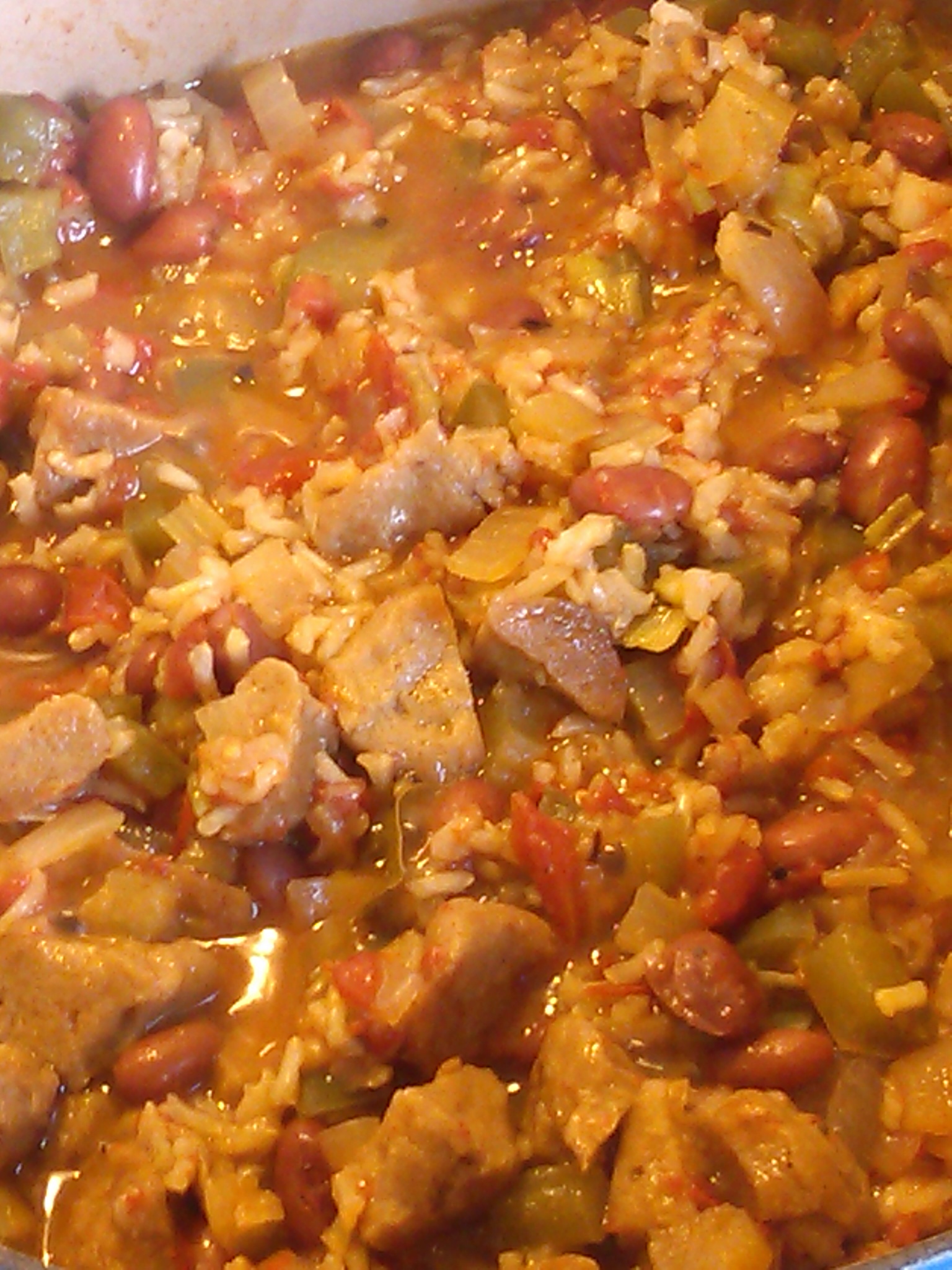
Red Beans and Rice

Preparing to cook red beans and rice has been a year-long process because most of the ingredients were produced in my garden or on farms where I work.

The garden produced red beans, okra, tomatoes and celery. Local farms produced onions, garlic and bell peppers. I also grew red pepper flakes and blended the powdered dry spices. Pantry staples of extra virgin olive oil, all purpose flour, and long grain brown rice were USDA organic but not produced in Iowa.

I invested several hours preparing a luncheon meal and time was worth it because of the flavor.

In the morning we discussed my 5-1/2 quart Dutch oven, the enamel of which is wearing off the inside. I’m don’t favor replacing it. Not because of the $350 price tag for a new one from Le Creuset. With a bit of cooking oil on the bottom to prevent rusting it will serve many more years. It is my go-to pan for making red beans and rice. It has been a reliable part of our kitchen.

Cooking is a ritual that evokes memory and skill in bringing a dish together. I soaked a cup of dried red beans in the Dutch oven overnight, then cooked them with half a diced red onion until tender but not mushy. I drained the beans and reserved the cooking liquid, letting them sit on the counter until ready to make the dish.

Around 10 a.m. I started work.

I fried a couple of home made vegetarian burger patties from the freezer and set them aside to drain. (Andouille sausage would be more traditional).

Heating the dutch oven, I added two tablespoons of extra virgin olive oil and cooked a generous tablespoon of red pepper flakes. I diced half a large onion, red bell peppers, and celery stalks and sautéed them in the oil-pepper mixture with a little salt. Once they began to soften I added two cloves of minced garlic and added home made seasoning — think powdered garlic, curry powder, paprika, and powdered hot, red peppers. I added a few dashes of prepared hot sauce from the refrigerator and stirred until everything was incorporated.

Next came additions. I deglazed the pan with a pint of diced tomatoes. Next, a cup each of sliced okra and long grain, brown rice. I stirred in two tablespoons of all purpose flour, then the cooked beans, until everything was incorporated. I tried not to bust up the beans.

What liquid to use was an open question. This time my answer was two cups of the bean cooking liquid (that’s all there was) plus two cups of water. Other options I considered were canned tomato juice and home made vegetable broth. The flavor of the bean cooking liquid made it a good decision.

Stirring everything together, I brought it to a boil then turned the heat down to a simmer, cooking until the rice was done and most of the liquid had been absorbed. Toward the end of cooking I crumbled the burger patties and folded them into the mixture.

It was ready to eat at noon, making four to five portions.

We seek opportunity to follow our creative impulses and cooking is primal. It provides an opportunity to shed anxiety from quotidian affairs, if only for a few hours. A recipe makes the experience replicable but not really. Cooking is a story of how we sustain ourselves in a turbulent world.
Categories
Kitchen Garden

Winter Thy Name is Denial

Squirrel Nest

What does a gardener do when winter arrives?

Despite the fact there’s snow on the ground, IT’S NOT WINTER! Please check back Dec. 21 for winter programming.

The apple harvest is finished and priorities shifted. While our orchard’s chief apple officer may favor kicking back creek-side for a post-season draw of Jameson Irish Whiskey, after apple season a home gardener must get busy doing everything neglected in better weather.

The inbox — digital and physical — overflows with unattended mail, outdoors work remains if snow melts and we get a few days of dry warmth. There’s laundry to do, winter reading to arrange, apples to preserve, a house to clean, and cars to winterize — a whole life compressed between first snowfall and January. Any remaining goals for the year need prompt action. November and early December can be a frantic rush to the finish line.

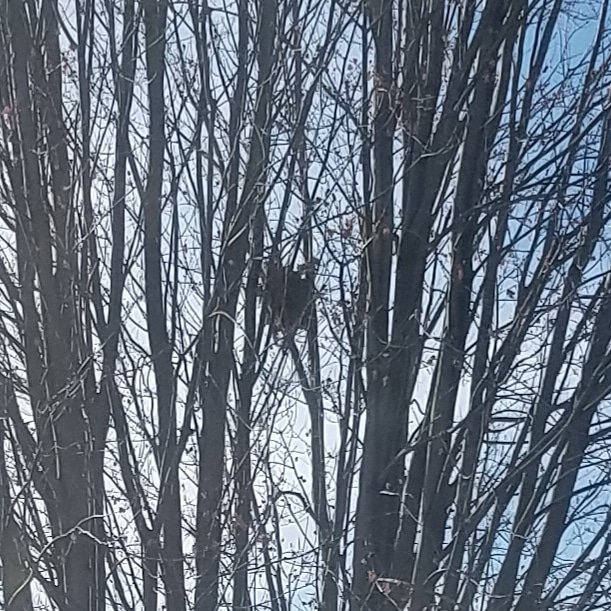
As leaves fell from deciduous trees a squirrel nest revealed itself high in our maple tree. I’ve hoped for this many years. What was a vacant, treeless place when we arrived in Big Grove has become a habitat. Wildlife sighting is frequent. In addition to newly resident squirrels, birds, foxes, raccoons, opossums, field mice and voles, deer, and every other type of animal native to the area shows up here and return. When I spend time in the garden or look through our windows to the yard I feel the community even if I’m the only human around.

I have a bottle of Jameson purchased years ago. It sits in a crate unopened because I have been too busy for kicking back and sipping. Maybe I need to take a lesson from the orchard operator and relax for a while. At least before accepting that winter will arrive and all that means.

Categories
Kitchen Garden

Meditation on Hot Sauce

Juan San Miguel’s Hot Sauce Recipe

After planting garlic last week I made hot sauce using leftover seeds: Jalapeno and Serrano peppers, tomatoes, onions, garlic, apple cider vinegar and salt.

The recipe evolved over time from one Juan San Miguel explained in 1977 when we both garrisoned in Mainz, Germany. Those were days before a four-foot section of assorted hot sauces became standard in supermarkets.

I lost contact with him yet the recipe persists. It is a rare day when there is no hot sauce in the ice box.

We carried the condiment in plastic milk jugs and put it on our army rations while on maneuvers in the Fulda Gap. It made our eyes water and changed regular food into edible fire. We laughed a lot in that peace-time army… and ate sandwiches of bread and hot sauce. I continue to make it mostly the way Juan taught me.

What role does tradition play in our lives? It is significant.

Who wants a life weighed down with endless traditions? I made hot sauce this year after planting garlic. Once is enough. There is little need to make it an annual tradition. If we eschew spontaneity in favor of pursuit of tradition we are the less for it.

I enjoy remembering days of subzero ambient temperatures inside tracked vehicles traversing central Germany and eating hot sauce. Juan’s wife made more than we could use on an operation, although as we returned to garrison some sought to use it up.

Obsession with tradition and it’s traveling partner ritual is not good. Like anything, a little goes a long way. If I could live without hot sauce, why would I want to?

Categories
Kitchen Garden

Post-frost Planting

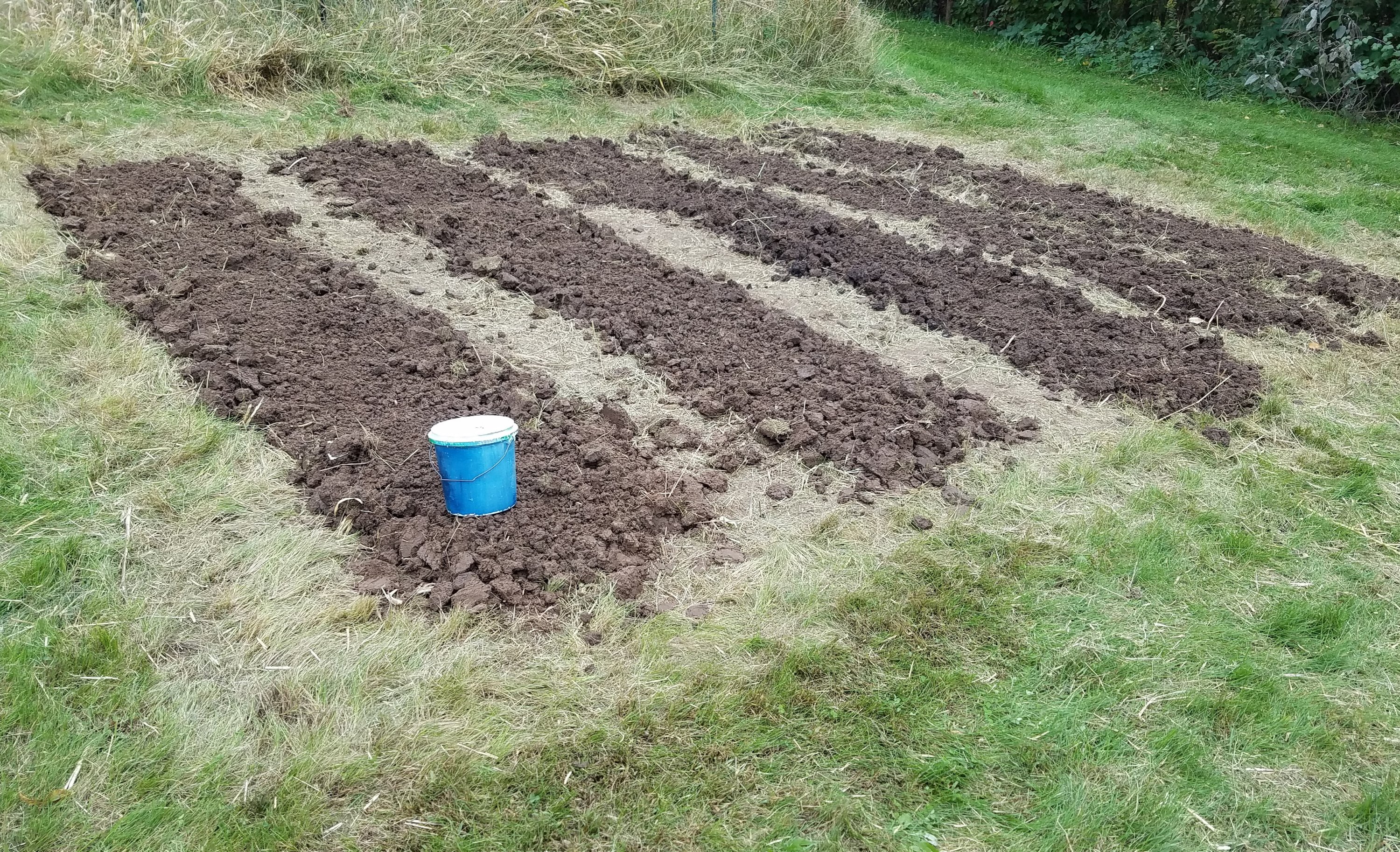
Garlic Patch Oct. 15, 2019

After missing last year I planted garlic on Oct. 15. A couple of clear days dried the ground sufficiently to mow the plot, turn it, and put seeds in the ground.

I increased the number of rows from two to five which if all goes well will yield plenty of scapes and about 60 head of garlic.

Whether I’ll harvest anything next July is always a question. A gardener learns to live with unanswered questions that remain so until season’s end.

This photo highlights a developing process of minimizing the amount of ground I turn over for planting. Garlic needs space with 18 inches between seeds and 36-inch row separation. There’s no good reason to plow up all the ground in the plot. Even though the soil was cold earthworms were near the surface. That’s not to mention the unseen organisms that make soil fertile. I no longer use a mechanical tiller and do everything by hand. It’s good exercise that doesn’t use fossil fuels.

Fingers crossed there is an abundant harvest.

At a meeting of our home owners association board, I announced I’m looking to exit responsibilities as board president. I’ll finish my current term, I said. If the other board members are nice to me I might be convinced to re-up for one more three year term. That would be it. I will have lived 68 years in December and it’s time to focus on other things.

Because of the board meeting I missed the televised Democratic debate. That’s a joke. I haven’t turned on our tube-style television in years. Now that Elizabeth Warren is leading in the polling averages the knives are out. Read last week’s post here for my take on why support for Warren persists now that she is the front runner.

As responses to my email to Solon School Board candidates come in, I’m impressed by the field. Three men and three women who would each bring something positive to the board. Because of a scarcity of information about the election, yesterday’s post really took off, becoming the most viewed new writing on this blog in 2019. The majority of views are coming from Facebook, but I don’t see much discussion in my feed. What that usually means is a group in the district has latched on to my post and discussed it in a private group. Last time that happened, someone trolled me with a letter to the editor of the local paper. Any discussion will be good for what is expected to be a low-turnout election.

I’m sitting on four bushels of apples and need to get to work processing them. It won’t be today or tomorrow as I’m back at the home, farm and auto supply store. I’m blown away by the quality and quantity of this year’s crop. Years like this make gardening rewarding. On deck are more dried apples, small batches of applesauce and apple butter, more juice for vinegar-making, and baked goods for potlucks. Some of the last-picked apples will go into sweet cider, and of course some of them will be eaten raw.

It is fall in the gardening year but even after first frost we are busy planting and processing the harvest. It’s how we sustain ourselves in a turbulent world.
Categories
Kitchen Garden

October Days

Sunrise over the garden, Oct. 10, 2019.

The forecast calls for 32 degrees tonight so tomatoes and peppers need gleaning from the garden.

There aren’t many left, maybe enough to make the effort useful. While at it, I’ll pick apples I can reach as well.

It is the end days for this year’s garden.

My farmer friends have already been through their fields. They remind me the garden season is not over as kale and other greens, root vegetables, and some squash will continue to grow. They have high tunnels which extend the season. I’m in the fall share with one of them and look forward to seeing what we will receive on Monday.

Last night I made a burger that violated Anthony Bourdain’s instructions on keeping it simple. Using a veggie burger, I thawed a frozen bun leftover from a potluck in the microwave. Buttering it, I placed it butter-side down on the frying pan with the burger patty. When it toasted, I removed it from the heat and piled on mustard, ketchup, a tomato slice, lettuce and onions. It stood three inches tall when fully assembled and hit all the flavor notes. It was a positive, day-ending meal.

Political interests turn toward the school board. One incumbent and five other candidates are running for two seats in the Nov. 5 election. I don’t know any of them very well and plan to attend a forum hosted by the Solon Education Association and the Solon Parent Teacher Organization on Oct. 22. Being on the school board is a thankless, unpaid job that requires a lot of engagement. People are upset with the way the board implemented recent changes to collective bargaining law. It is important to make an informed decision.

On Our Own has become something of a public journal, especially since Mother died on Aug. 15. I’m not sure of the future direction, but for now it serves. There is a lot to engage us in a busy society. Some of that needs consideration for further understanding.

Categories
Home Life Kitchen Garden

Inventing a Cuisine

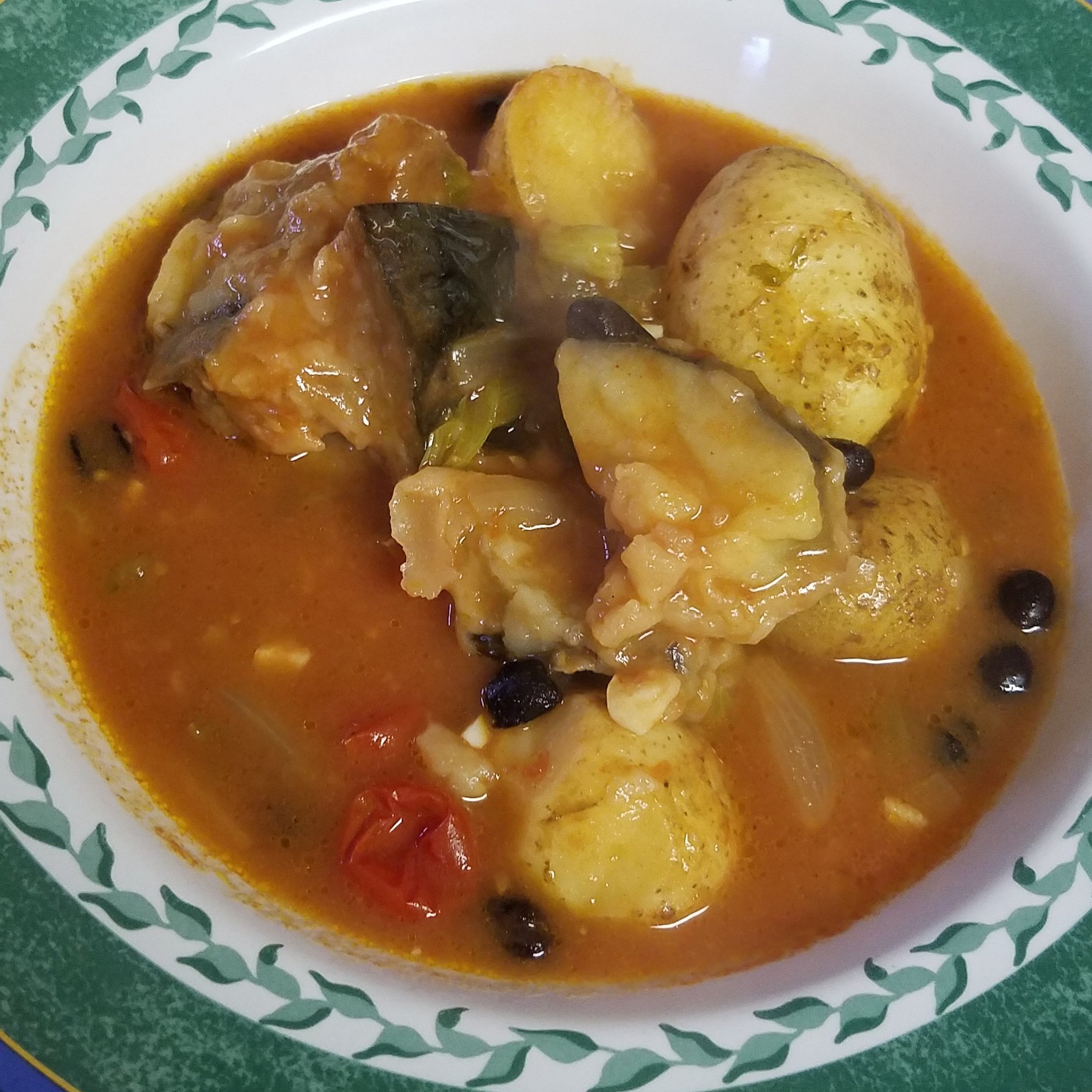
Stew of potatoes, eggplant, tomato, black beans and vegetables.

Who wants to reinvent home cooking every time they enter the kitchen?

Here’s a better question, how can I work to be present in the kitchen and produce tasty, nutritious food for our family?

While I have a strong memory of Mother’s cooking, I don’t recall many of the dishes. For me, home food begins in 1959 when we moved to Northwest Davenport where I lived at home until going to university in 1970. During those years Mom cooked what I believed was standard fare for working class people. If there was a typical dinner, it included beef or chicken as a main course, potatoes or rice, and a vegetable. Sometimes there was dessert. Dad got a discount at the butcher shop co-located at the meat packing plant where he worked. He brought home mostly beef and pork products, and we had plenty. Memorable tastes include liver and onions, beef vegetable soup served on white rice, and usual fare of hamburgers, grilled cheese and meat loaf. It was a staple cuisine that tasted good and provided nourishment.

When I became mostly ovo-lacto vegetarian in 1982, traditions associated with Mom’s cooking went out the window except when we visited her. I started cooking while I was in college and like most beginning home cooks was not very good at it. I recall serving Mother tuna and noodle casserole during the visit she made to my small apartment. I used her recipe, which included canned tuna and condensed mushroom soup. We got through the meal, one of the few during my life where she came to my place for dinner. I liked the dish with its savory richness. Today, I wouldn’t use tuna because of my mostly vegetarianism, but also because of over fishing of the species combined with the use of slave labor to harvest it in waters off Asia.

There is a utopian impulse in American society in which groups of people separate from social traditions and strike out anew. In that sense, a cook has a choice. Should we learn and perpetuate cooking traditions in our kitchen or improvise new meal solutions against a perceived and newly created blank slate? My choice is to make a cuisine from an ecology of food I identified and help create that borrows from everywhere to create new dishes. I may write a cook book to record the journey, but have little interest in creating traditions. A tasty, nutritious meal is enough.

In retirement for 16 months, I’ve found we have become increasingly isolated from society. Even though we rarely use the television set, I now understand the archetypal image of retired man yelling at the TV from a chair. It is harder than imagined to get out of the house for anything other than my part time jobs. The new paradigm has been good for our marriage and provides a natural break for utopian culinary endeavors.

The meal began with weighing out a pound of small potatoes from my barter arrangement with Farmer Kate. When I brought them to the kitchen, I didn’t know what I would do with them.

While looking through the weedy, end of season garden, I found three large Galine eggplants behind the foliage. I picked them and brought them inside.

On the counter was a good supply of garlic and cherry tomatoes. In the ice box was half a Vidalia onion, the last of the fresh garden celery, part of a bell pepper, some leftover black beans, and jars of thick tomato juice.

There was a meal in these ingredients.

After cleaning and trimming the potatoes I put them in a large sauce pan and covered them with tomato juice. My tomato juice is very thick due to a process I developed to use excess tomato water while canning. I brought the mixture to a boil then turned it down to simmer until the potatoes were fork tender.

I cut the eggplant with skin on into large chunks, soaked the pieces in room temperature tap water for 30 minutes, dredged them in flour, then fried them in two tablespoons extra virgin olive oil until browned on all sides.

In the Dutch oven I cooked the onion, bell pepper, celery and garlic in a tablespoon of extra virgin olive oil on high heat until tender. The only seasoning used was sea salt.

When the potatoes were done, I dumped the whole pan into the Dutch Oven, added the black beans and some cherry tomatoes, then added the eggplant. I scraped the bottom of the frying pan into the Dutch oven with a spatula to get all the flour and oil mixture and thicken the sauce.

I turned the heat to medium low and warmed until everything was evenly heated and the sauce thickened.

In retrospect, I could have added some frozen okra and seasoned it with red or green hot peppers. We keep the spicy dial turned to low in shared meals. It made four servings and was satisfying.

Humans consume only so many vegetables. 20 percent of an estimated 20,000 species of edible plants represent 90 percent of our food. Others may have made dishes similar to this potato eggplant stew. Each ingredient, each technique and each vegetable has its own detailed and unique history. There are a finite number of ways to pull them together into a tasty, nutritious dish. Improvisational cooking need not be unique, just as utopian living works to meet the same human needs as the rest of society. As a seasoned home cook, I no longer have to reinvent things. At the same time, improvising based on available ingredients renews our interest in cuisine.

It is okay to want that.

Categories
Kitchen Garden

Apple Share

Cart of Red Delicious apples harvested Sept. 30, 2019.

(Editor’s Note: This year I donated 350 pounds of Red Delicious apples to Local Harvest CSA for distribution in member shares. Here’s the note I wrote for weekly newsletter).

The apples in your share are Red Delicious variety grown from a tree planted on Earth Day 1995 by Paul Deaton in Big Grove Township.

Back yard apples are maligned for a couple of unjust reasons.

First, the State of Washington about ruined the Red Delicious, which was first discovered in Iowa, where it was called the Hawkeye by some. Growers in Washington decided this apple was the way to go because of its marketability. They went all in and devised techniques that took the flavor right out of the fruit, including picking before they were ripe, then “ripening” them in a chamber of ethylene gas before shipping. Applying science to the Red Delicious about ruined it and gave it a bad name.

Second, backyard apples have developed a number of “reasons” why people don’t want to cultivate them. If someone has an apple tree they inherited, they may make up a hundred excuses not to prune and take care of it. While these apples aren’t perfect, get a knife out, cut off the bad spots, and they make good eating if fully ripe. They make other fall apple things like crisps, cobblers, sauce, butter and dried apples.

Let’s face it, when Johnny Appleseed, born in 1774, came across the country he had one thing in mind as he planted apples by seed: enabling future settlers to make hard cider. Although the technique is making a comeback, many city-dwellers have forgotten that piece of apple lore. As long as the apple isn’t rotten, it can go into cider (press or many use a juicer for small batches) from which one can make vinegar, sweet cider or hard cider. If one is concerned about bacteria, get your cooking thermometer out and heat the cider thoroughly to about 165 degrees for ten seconds. It will kill the bad bugs and leave most of the flavor.

Hope you enjoy them!

Categories
Kitchen Garden

Okra Summer

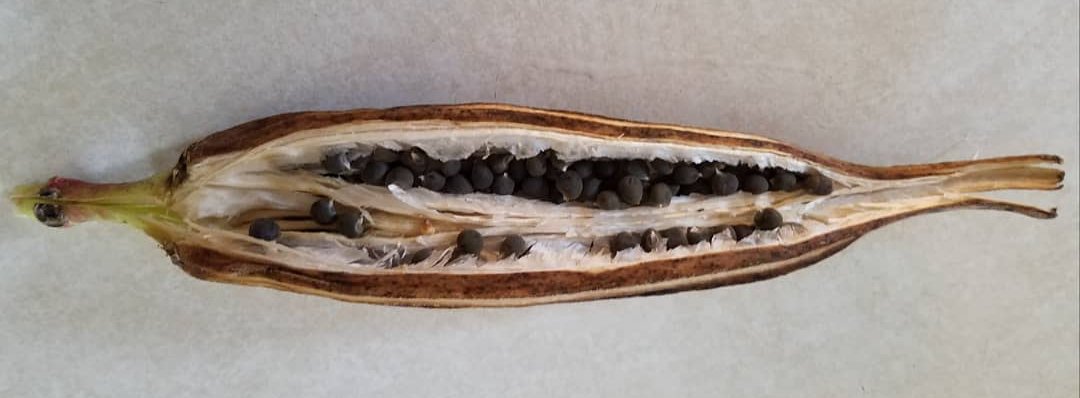
Okra Seeds

This year I grew okra for the first time.

It was an experimental change from store-bought to growing my own. I use okra mainly for gumbo and after this gardening season I have plenty sliced and in the freezer.

Okra is easy to grow and the plant produces for a long time. I now understand why so many people, especially those with limited financial resources, use it as a basic vegetable.

It’s not the most popular vegetable in Iowa.

I acquired the seeds at the home, farm and auto supply store in a batch of end of season packets left in a cart in the employee break room. If the seeds hadn’t been free, I would not likely have grown the vegetable. The excess pods produce plenty of seeds for next year. If I grow it again, I’ll plant just a few of them.

The reason I make gumbo at all is from watching cooking shows on public television, then on Food Network. Justin Wilson and Emeril Lagasse were most influential, but neither of them uses okra in the gumbo recipes at the links. Here is the recipe I developed after a number of years of exposure to these chefs.

Paul’s Vegetarian Gumbo

Make a roux with four tablespoons each unsalted butter and all purpose flour. Cook to the blonde stage.

Cook 10 ounces vegetarian sausage, sliced on the bias, separately in a tablespoon of extra virgin olive oil. Drain and reserve.

Add one cup each diced celery, onion and bell pepper. Cook until the onions are translucent. Add finely chopped garlic to taste (Use spring garlic when available). Add a thinly sliced hot pepper if you have one from the garden (Serrano and Jalapeno are my favorites).

Add one quart of vegetable broth, one pint of diced tomatoes and one cup sliced okra. Bring it to a boil and turn down the heat.

Season with 1 teaspoon curry powder, ground red pepper, or cayenne. Add prepared hot sauce to taste.

Add one cup chopped fresh parsley plus the sausage and heat thoroughly until the broth thickens.

Serve on its own or with rice.

Categories
Kitchen Garden

Apple Harvest 2019

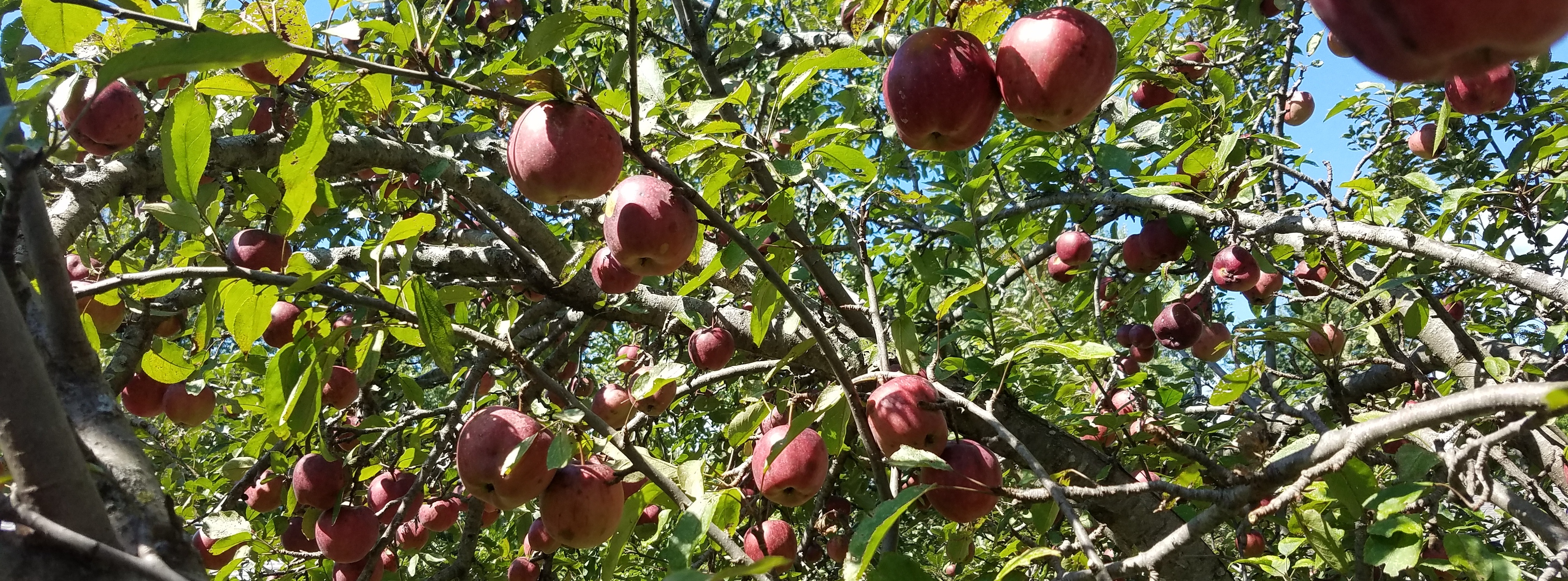
Apple tree viewed from top of a ladder.

The view from atop the ladder was pretty good.

Monday I began harvesting Red Delicious apples from a tree planted on Earth Day 1995. This tree outlasted three others planted the same day.

Tuesday I completed a 350 pound donation to Local Harvest CSA, which has been my go-to outlet when there is an apple abundance. I kept three crates for the kitchen and many apples remain on the tree. Naturally, the best apples are furthest up and hardest to get. They don’t seem to be dropping like Earliblaze did so there is a chance to pick more… a lot more.

The question is always the same: what to do with the abundance? In the past I felt it important to use every apple possible. As a result of such compulsive cookery the pantry is well stocked with canned apple sauce and apple butter. I may can a batch of seven quarts of applesauce this year to refresh the stock rotation, but don’t really need it. With my current concerns about blood glucose levels, applesauce isn’t a go-to option for dessert even if I enjoy it.

Baked goods is an option. 2019 is busier than most years in politics so there are plenty of outlets for apple crisp, applesauce cakes and apple pies, including the county party’s annual fall fundraising barbecue. I can’t make it to the barbecue because of my work schedule but I’ll send in desserts for 24 or 36 people. I’ll also send an apple crisp to the Elizabeth Warren office in the county seat. We don’t eat much in this category, but at least one apple crisp will be for us as well as a celebratory applesauce cake.

This year I plan to dry more apples than usual. As a snack, dried apples are very sweet and something different. I have an old Ronco dehydrator purchased for a buck at a yard sale. It can dry a batch in a day or two.

I offered free apples to neighbors on our private Facebook page. I’ll fill any orders that come in on Friday. I’ll share with folks in town if they ask.

The bumper crop makes me wish we had a cider press. I’ll produce about two gallons of apple juice for additional apple cider vinegar making, but that work with a household juicer is too labor intensive to process all the apples. Maybe I can process a batch of seven quarts of sweet cider for special occasions.

When Johnny Appleseed planted his orchards, he did it for hard cider for settlers. My fermentation is to the vinegar stage, and for now I stay away from the hard stuff. That is, unless a gallon jug sits in the ice box too long and begins conversion of sugar to alcohol on its own. I’ll drink that. I’ve gotten to a place where I prepare our salad dressings using vinegar made in our pantry.

Living an apple life is pretty good. Maybe as good as it gets. It is work — the joyful kind. Thus far I’m nimble enough to scale the ladder and take in in the view for a moment before picking fruit. Apples are a way of dealing with life’s problems and an opportunity for self-improvement. I believe I’ll plant more trees next spring.

Categories
Home Life

Rainy Weekend of Apples and Michael Twitty

Freshly picked Honeygold, Bert’s Special, Crimson Crisp, Jonagold, Daybreak Fuji and Alvin Gilliam’s Seedling apples.

My Saturday and Sunday shifts at the orchard were cancelled because of almost continuous thunderstorms during the weekend.

I’ll miss the income, although will get by.

Saturday I canned the next batch of tomatoes. With the pantry containing 24 quarts of whole and diced, 24 quarts of tomato water and 48 pints of whole and diced, there should be enough to last all of 2020 and then some. I didn’t mention the quart bags of tomato sauce in the freezer… or the four dozen fresh on the counter… or the next wave ready for harvest. We’re good on tomatoes.

Sunday was a punk day. To get out of the house and take my daily exercise I returned to the orchard and picked the apples in the photo… in the rain… wearing the wax jacket I bought in Stratford, Ontario during one of our summer trips when our daughter was in high school. The wax jacket worked as far as keeping the rain off goes. The plastic lining made it too hot for humans by the time I returned to the sales barn to pay for my apples. I lost count of how many varieties of apples I tried thus far this season, maybe two dozen. The Robinette and Alvin Gilliam’s Seedling were astoundingly flavorful. It would be tough for me to return to supermarket apples.

Every once in a while we are reminded of how little we actually know about our daily lives. While it rained I made it halfway through Michael W. Twitty’s book The Cooking Gene: A Journey Through African American Culinary History in the Old South. It is one of few books I know like it. Twitty presents expository words about his genetic history and how that influenced the culture of slavery from a culinary perspective. He brings together something worth studying if interested at all in the local food movement.

There is a lot in the book. Although I don’t consume much meat and no fish or seafood, I’ve been thinking about my approach to growing and cooking since I started the book. Twitty provides new insight into the idea of a kitchen garden and using food that’s found or produced locally. There is a lot of discussion of greens, the liquid they are cooked in, and staples like corn, rice and root vegetables. I consider my own culinary practices and it’s a hodge-podge of dishes, techniques and ingredients rather than something coherent as Twitty recounts.

Culinary times have changed since the 17th and 18th century through increased urbanization. If everyone that lives in the nearby cities of Cedar Rapids and Iowa City trekked out to the country to forage nuts, wild plants, fish and game on a subsistence basis, the land would soon be stripped clean. That’s not to mention land in private ownership with prime foraging areas and posted no trespassing signs. In that sense, only a small percentage of the population can return to that lifestyle. When the oceans are over-fished, and marine ecosystems are collapsing there is no reason to consume more fish and seafood. When poring over a menu that contains sushi, I shake my head and end up explaining to diners at my table why it shouldn’t be consumed. It doesn’t always go over well.

At the same time there is an ecology of food. If the cultural elements have changed, the instinctual behavior hasn’t. There’s a lot to learn and think about in The Cooking Gene. That’s part of why we read books.

Next I need another walk near the lake or through the orchard to let the ideas ferment. Only then will I see whether it is fleeting enthusiasm or something from which to make structural changes in my kitchen garden.