Two days of ambient temperatures in the 40s and 50s drew back snow cover to reveal a well-beaten deer path. Their droppings are scattered all over the ground. They hadn’t yet eaten tender young branches growing above the six-foot fence protecting two new apple trees. Maybe they won’t. Deer have become a regular animal in the yard. I don’t always look when I see them running down hill from the corner of my eye.
I walked around, picking up branches pruned from the fruit trees and placed them in a brush pile for spring burn. The ground didn’t give at all, remaining frozen. With temperatures today and tomorrow back in the single digits and teens, we are a distance from spring thaw.
I went to a grocery store. You know the kind. One that sells lots of different things. The organic kale looked great so I bought a bunch for stir fry and soup. I picked through the cauliflower for a clean head. Can’t remember if I ever bought kale in a store before. I don’t think so. Previously its been grown by me or my farmer friends. Frozen kale is used up, so a person has to do something to secure greens for winter meals.
One of the varieties of kale seeds didn’t germinate. The seeds are from the 2019 season, so it’s not a surprise. I’m putting together another order from my main seed vendor and expect it to be the final seed order for the 2022 garden. Seed catalogues are piling up next to the reading chair in the living room. Any more, I don’t spend much time looking at them as I know most of what I want.
A neighbor is planning an extended visit to relatives this summer. They offered me their garden plot, which is a nicely fenced area adjacent to our property. I’ve been thinking I could use more space. I’m considering it. I’d plant it with a uniform variety of vegetables, maybe fall crops of broccoli or cabbage, and adopt it for the season as the eighth plot. We’ll see.
It was good to get outside and exercise. It’s too early to begin turning dirt, so we wait. Parsley looks like it will over winter. It’s time to finalize plans for the garden.
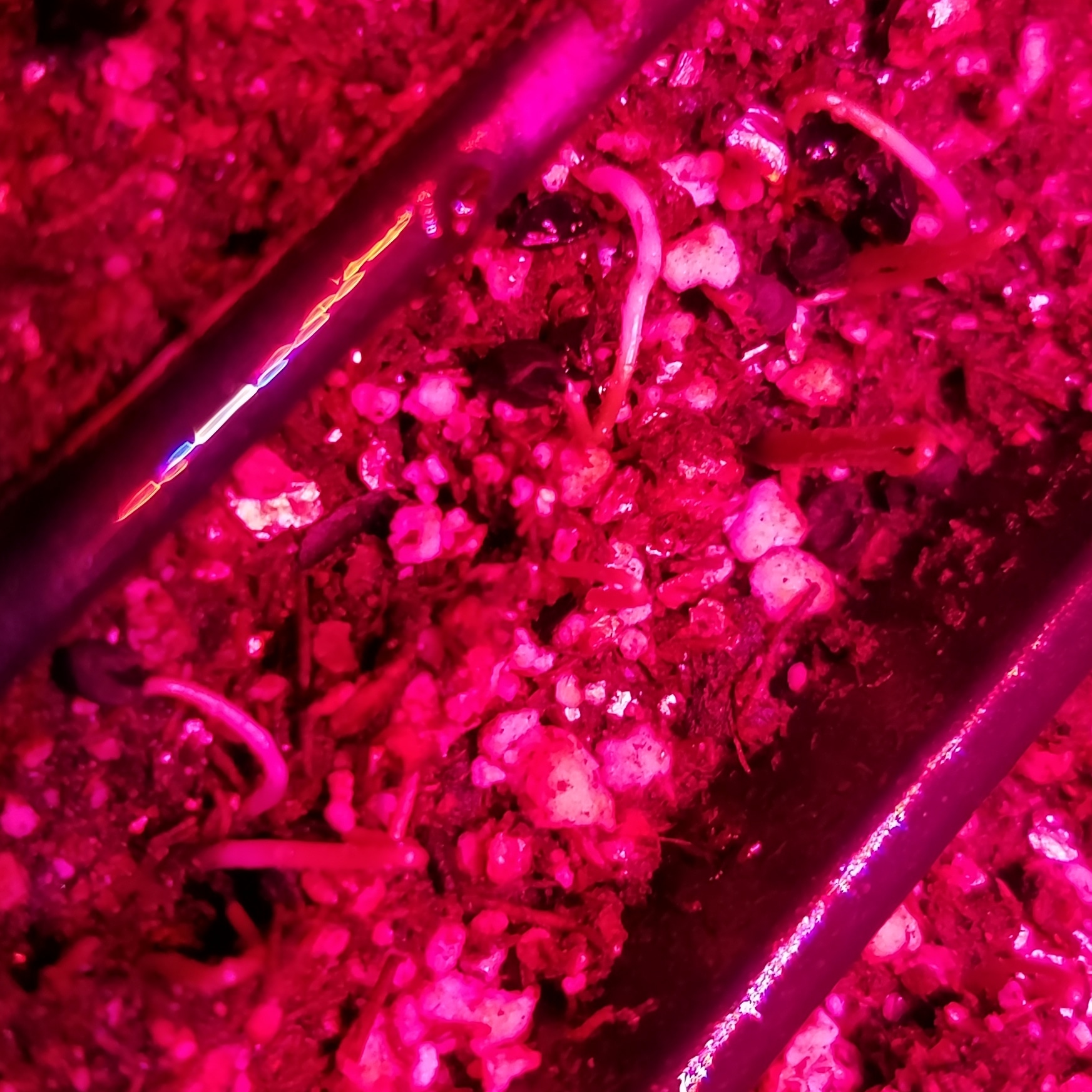
Onions and shallots planted Jan. 6 were ready to come off the heating pad. The only note is shallot seeds from 2020 did not germinate this year. Because I also planted new seeds, everything is fine. I replaced onions and shallots on the heating pad with a flat of kale, broccoli and collards on Feb. 6.
It doesn’t require much work at this point. There is soil mix from last season. Making and planting a flat of soil blocks took about an hour. The worst part was the garage was pretty chilly. I was able to stand the cold and finish the work.
About a dozen seed catalogues arrived since Jan. 1. I went through them yesterday and believe I have what is needed. I’ll take another look and order what may be lacking in my seed collection this week. I started older seeds on Sunday. There is plenty of time to see if they germinate. Once they do, I’ll plant the next flat of early seeds.
Snow remains on the ground. Since provisioning last Thursday, I haven’t left the house except to retrieve the mail and deliver the recycling bin to the street. I’m thinking by late March I can plant cruciferous vegetables in the ground. Once the snow melts there will be a lot of outdoors work. I’m ready for it. It’s time to garden.
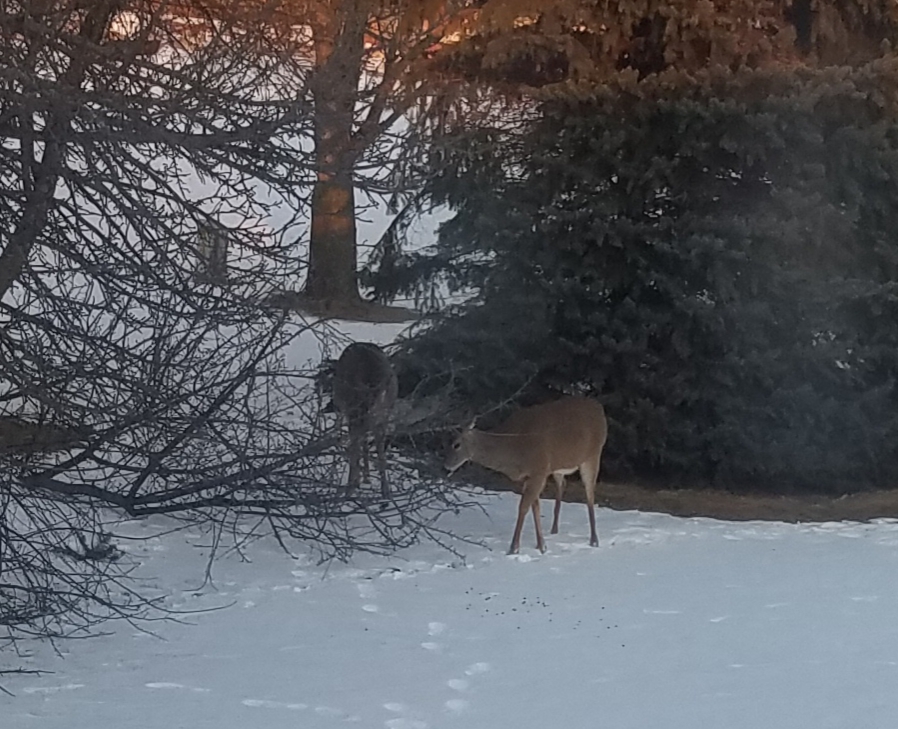
Deer eating buds and tender branches of a limb felled during apple tree pruning.
On the fourth day in a row of freezing and subzero weather I bundled up and pruned the pear and three apple trees. As the sprouts and branches came down, they were frozen: sap flow had ceased. That’s what we want during fruit tree pruning.
I pruned what could be reached. I used a ladder to remove a large branch that was crowding the spruce tree. With the bulky clothing I didn’t want to maneuver too much on the ladder, risking a fall. If the trees survive, there should be a crop in 2023.
Branches will remain where they fell until it thaws. In late winter or early spring, I’ll move the branches toward the brush pile, cut them up, and burn them, delivering their minerals to a garden plot. I enjoy the spring burn as much as anything I do in the garden.
A couple of hours after pruning, deer arrived to eat what they could of the fallen tender buds and first year growth. Food for them is scarce in mid winter.
I read my ninth book this month. In winter, when I’m not writing, cooking, sleeping, or shoveling snow, I’m reading. There is a list of my reading at the menu tab labeled “Read Recently.”
We have been avoiding public contact as much as possible during the surge in COVID-19 cases caused by the Omicron variant. The county Democrats decided to convert the Feb. 7 in person precinct caucuses to online because of the surge. My spouse hasn’t been out of the house in quite a while. I go to the grocery store once every week or two. I still drink fluid milk and have to re-provision from time to time at a convenience store. I frequented about half a dozen retail stores during the pandemic and organized my shopping so I spent the least possible time inside each.
Onions and shallots are doing well on the heating pad. When it’s time to plant the first spring seedlings, they come off the heat and get a trim. Last year I started cruciferous vegetables indoors on Feb. 7, so there are a couple of weeks to take care of shallots and onions.
Deer took an after dinner rest near the spruce tree. It is a popular spot for wildlife year around. Creating a habitat is one of the successes we have had. It is an accomplishment. Each time I see deer, squirrels, foxes, birds or an opossum, I consider how little wildlife there was when we built here. Hopefully the apple trees will survive long enough for birds to nest in them a few more seasons.
Hatch chili sauce using a blend of Hatch and Guajillo chilies.
A variety of dried chilies waits for me in the pantry. Yesterday I made chili sauce with the rest of the Guajillo chilies I grew, and some Hatch chilies from the grocer. It is a bit of a production yet this chili sauce is great on just about anything.
First put a kettle of water on to boil. Stem the chilies and split them to remove most of the seeds. Place them in a bowl and pour the hot water over them to enable them to hydrate. Cover with a plate to hold them under water. Soak for at least an hour or until they are flexible.
Place the chilies in a blender with a cup of the soaking liquid. Add whole garlic cloves, at least one large head. Add pepper and Mexican oregano. Blend until it is as smooth as possible.
Place a tablespoon or so of peanut oil in a frying pan and heat. Using a strainer, pour the sauce mixture into the frying pan, pushing as much through the mesh as is possible using a spatula. Set the strainer with bits of chili skin aside and stir the strained sauce.
Add a dash of salt and a teaspoon of sugar to bring out the flavor of the chilies. The idea is not to sweeten the sauce, but to make the chilies taste more fruity.
Stir and mix, mix and stir over medium low heat. Reduce the sauce until it is the consistency of a thick tomato sauce or tomato paste. Use the soaking liquid to dilute the sauce if it gets too thick. Make it the consistency you want.
Put it in a jar, refrigerate, and use it like you would any hot pepper sauce. If I had summer greens, I’d make a taco filling with it along with black beans. I’m the only person in our house who eats spicy things. All the same this Hatch chili sauce won’t last long.
Inconsistent winter weather disrupted fruit tree plans. On Wednesday snow melt began flowing in the gutters and downspout. It felt safe enough to make a trip through melting snow pack to the composter near the garden. A slushy mix returned to the end of the driveway. Weather has been weird.
It takes several days of subzero temperatures in a row to prune fruit trees. I prefer a week of ten or twenty below zero yet we haven’t had that. I also seek to harvest scions, (pencil shaped fruit tree cuttings) to graft on root stock. I would save the Red Delicious apple tree which was damaged in the Aug. 10, 2020 derecho. It served us well while it was whole. Trees need dormancy for scions to work and we haven’t had that either.
This week has been a fake spring. It’s still winter, for Pete’s sake! Yet the buds on trees look healthy, like they are ready to sprout. The lilac bushes were leafing just last month. I wouldn’t mind spring’s arrival yet I want a winter too.
At least the onions and shallots planted Jan. 6 are germinating.
We bunker in to avoid the coronavirus and wait for a deep freeze and dormancy it would bring. These days have been good for writing.
It is difficult waiting for winter and fruit tree work when what we really want is a normal spring. Today, I’d settle for a normal winter so I can harvest scions.
The gardening season kicked off in Big Grove Township with onion and shallot planting on Thursday. I planted two varieties of shallots and five of onions. After consultation with farmer friends, I decided to start earlier this year to see if my starts had a better result for planting in the spring. The trays will rest on a heating pad until they germinate. I ordered onions starts from the seed company again as an insurance policy.
Friday was the coldest day of winter thus far. It reached ten degrees below zero and ambient temperature is expected to remain below freezing until Monday when sub-zero temps return. If the forecast holds, I plan to be pruning trees Monday as the sap will have stopped flowing by then. Like with anything relying on weather, I’ll wait to see what happens.
Friday was trash pickup day. There was no trash in the trash cart and the recycling cart was less than a third filled. Because of the cold I left them in the garage this week. We are getting good at reducing our household waste.
We have provisions enough to last a couple weeks without leaving the house. This week, the county public health department suspended COVID-19 case investigation and contact tracing. They issued a press release, which said, in part,
During the past week, there has been a 250% increase in cases from the previous week. The total amount of cases in the past week reached an all-time high of almost 1,400 positive individuals. Due to this dramatic increase, Johnson County Public Health no longer has the ability to contact everyone who tests positive to conduct case investigations and contact tracing. JCPH will continue to monitor COVID-19 cases in high-risk groups and coordinate with organizations who experience a rise in cases, evaluate capacity, and keep the public informed of changes in our COVID-19 response.
Email from Johnson County Public Health dated Jan. 5, 2022.
This is what it looks like when a pandemic inundates the public health system. They can’t do their normal work because there are too many cases of COVID-19.
It is probably best, with the cold, the raging pandemic, and a full pantry and refrigerator, we stay home and bunker in. There is no lack of things to do. We want to live until spring to plant these onions and shallots in the ground. The 2022 gardening season has begun.
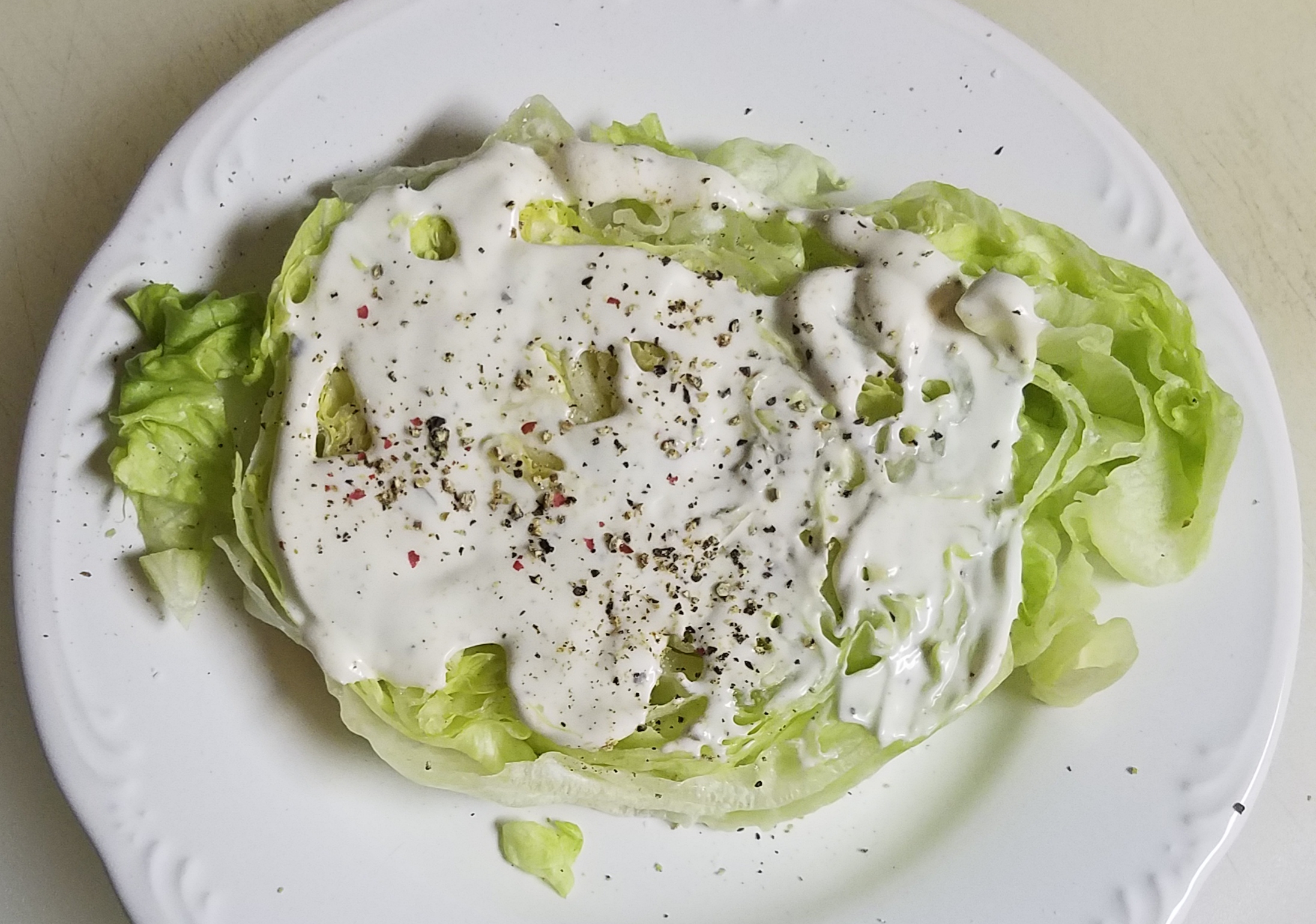
Iceberg lettuce with ranch dressing and black pepper.
When there were decent heads of organic iceberg lettuce at the grocer I bought one. We usually don’t eat lettuce unless we grow it. Iceberg lettuce is much maligned and actually pretty good. It made a nice winter treat.
I placed the unopened bag on a refrigerator shelf where it rested for a week. It yielded some wilted leaves for soup and four 3/4-inch slabs like the one in the photo.
We like the lettuce my farmer friends and I grow. With implementation of row cover in my garden, the kitchen had the leafy greens most of the season. I can’t imagine buying another bag of loose, mixed greens at the market. It is never as good as home grown and recalls for contamination have been too frequent. The whole head of iceberg was just the pick-me-up needed to inspire spring planting.
Garden planning is proceeding slowly yet I know what I’m doing about lettuce. I had about twelve feet of row cover last year. Under it I planted radicchio, lettuce and herbs. This year I have materials for 36 feet of row cover.
I expect to do a better job of rotational lettuce planting so I don’t have too many heads ready at the same time. I count nine varieties of lettuce in my seed drawer. Of those, Magenta is our favorite. I also have a stack of arugula seeds, six varieties. I’d like to get to the point where arugula grows wild so no planting is required. I hear tales of chefs who dug up wild arugula (a.k.a. Rocket) and transplant it to a raised garden plot where it thrives. If I could succession plant it this year, that would be good enough for 2022.
Lettuce is a cash crop for local farmers. They sell it to restaurants and make good margin. It seems normal to pay $5 for a bag of local lettuce at the farmers market. As long as I grow my own, it’s a bargain.
Because of high winds I’ve been indoors all day. Gusts approached 40 miles per hour, began around midnight, and continued all day. A small snow drift formed across the driveway.
I had the last of the iceberg lettuce for lunch. While eating it I thought I’m ready for spring.
2021 has been a great year of progress in the kitchen garden. As the seed orders find their way to us via U.S. Postal Service, some reflection on the positives seems in order.
Apples
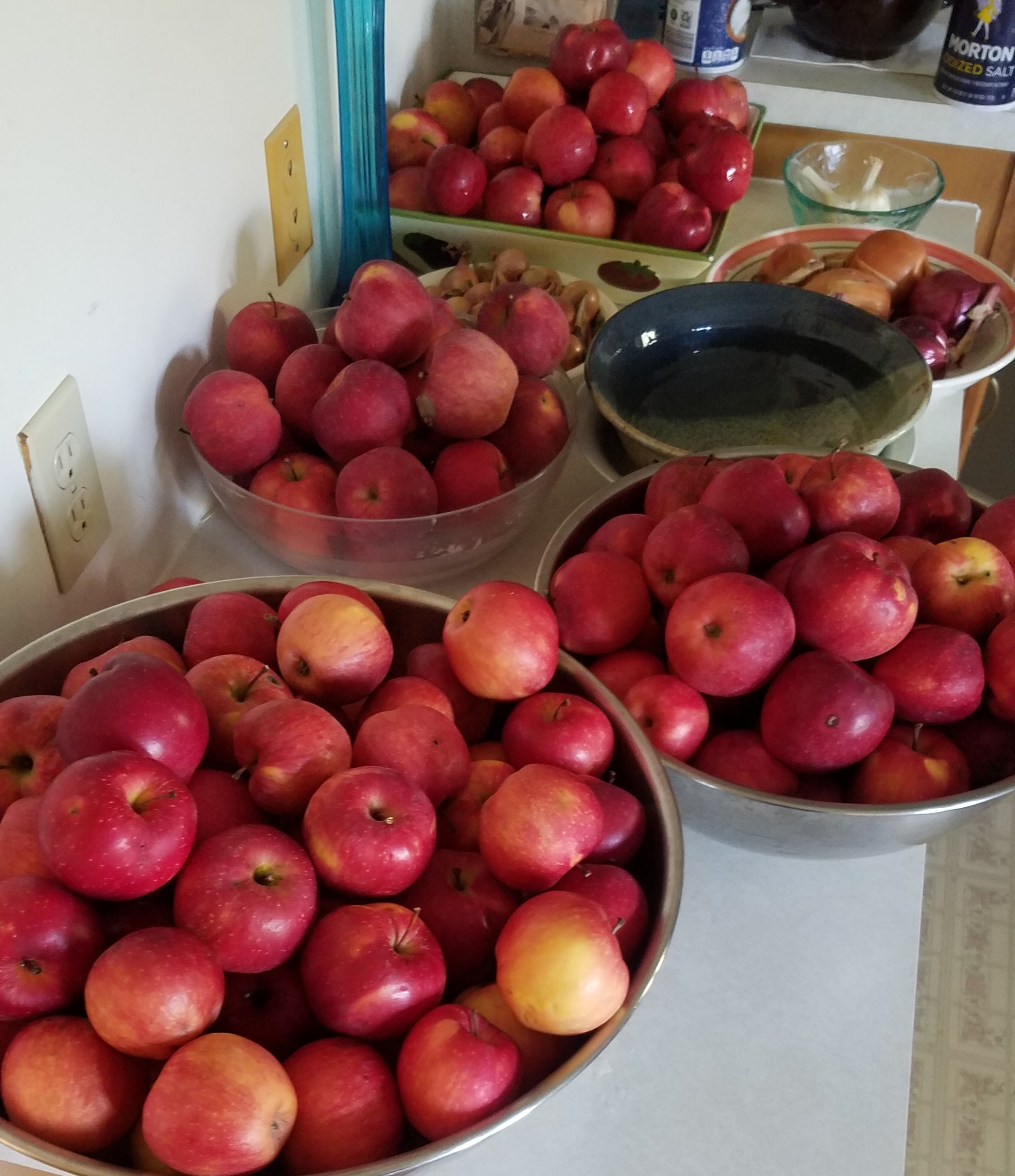
This has been one of the best years for apples. In our yard the three legacy trees bore abundantly and we used them for everything we needed. At the orchard (by this I mean Wilson’s Orchard and Farm, where I worked from 2013 until 2019) there was an abundant crop to supplement the two varieties that yielded here. The pantry is loaded with everything we need in terms of processed apples. We should have enough apple butter, applesauce, dried apples and cider vinegar to last two years until the next big crop. If our trees bear next year, that will be a bonus.
We had enough to take what we needed, let our neighbors pick some, and plenty for the deer once we harvested the best ones. The combination between our trees and a nearby commercial orchard meant we didn’t have to buy a single apple from the grocery store.
Vegetable broth
Each garden year begins with a couple dozen quart jars of vegetable broth. As I grow a diverse number of greens, I switch which ones dominate. Turnip greens have produced a consistently tasty broth, yet they all are good. We use this broth to cook rice, in soups, and as an alternative to using oil when frying vegetables for some dishes.
Guajillo Chilies
It took a few years but the integration of Guajillo Chilies into our cooking is complete. The main product is a cooked and preserved pepper combined with garlic, salt and apple cider vinegar in a food processor. Once the fresh chilies are gone, this becomes the main way I use chilies in cooking. I tried the technique with jalapeno peppers and while a little hotter, it also serves for our culinary needs.
Polish-style Soup
When growing up, Mom’s cooking was pretty “American.” That is, outside the occasional Polish-style ravioli brought home from visits to LaSalle, Illinois, Polish heritage cooking was absent. That was also true of memories of my maternal Grandmother who often found paid work as a cook in settings where American cooking prevailed. It was discovery of the cook book Treasured Polish Recipes for Americans by the Polanie Club that enabled me to come to terms with my heritage.
Based on studies of the soup chapter, I developed a consistent soup recipe that uses vegetables grown in our garden. The ingredients in the book were the same as what I have been growing for years. The main characteristics of the soups are they are thickened with barley, I add lentils as a source of protein, and use onions, celery, broccoli stem, parsley, grated zucchini and other frozen vegetables from the growing season. I use whatever greens are in season, and frozen kale if they are not. I also add potatoes, turnips, and whatever root vegetables are on hand. Settling on a soup recipe has been a long time coming.
Sweet Bell Peppers
After years of experimentation I finally produced enough bell peppers to eat raw, use in cooking, and preserve in the freezer. This was a watershed year.
Tomatoes
I grew the largest number of tomato plants ever and had plenty to eat fresh, can, freeze, and give away. The main successes were:
Developing a method to extract moisture and freeze the pulp into small servings using a cupcake pan was a breakthrough. The idea is to use a couple of tomato “buttons” to make pizza sauce for our weekly, home made pizza. I use them in everything to add a small amount of tomato sauce when needed.
I learned to grow enough Roma tomatoes so I can use them to can whole. I’m still working off a backlog of preserved tomatoes, but the system is in place for growing to match canning needs. Romas are the best to can whole.
Our local food bank welcomed my extra tomatoes. My weekly seasonal donations took the pressure off of using tomatoes in a timely manner.
I grew a wider variety of tomatoes this season, maybe 25-30 varieties. The benefit was I discovered some new favorites and we had tomatoes for every dish throughout the season.
I can extra liquid from tomatoes if I don’t use it fresh. I try to use everything and the canned liquid goes into soups.
I planted earlier than my peers in the local food movement and because of that, I had tomatoes earlier than they did. I risked frost only once or twice and using old bed sheets to cover the plants, was able to make it through without damage.
Squash, eggplant and cucumbers
I’m pleased with the way the squash came out. There was plenty of zucchini, and pumpkins and acorn squash produced beautiful fruit that tasted good. A little goes a long way with zucchini and I grew and preserved enough for soup all winter. I also froze cooked pumpkin flesh in one cup sized buttons to use in pumpkin bread.
A little eggplant goes a long way for us. I had six or seven varieties of seeds and planted some of each. I’m looking for enough to make one or two eggplant Parmesans and roasted rounds for the freezer. I had plenty this year.
The cucumber crop wasn’t as big as we’d like although it produced enough for plenty of canned sweet pickles to last us until next year. I’m on the way to striking a balance of varieties to meet our needs and this will be an ongoing experiment.
Garlic
The garlic crop was the biggest yet with large heads, about 75 of them. The disease that was prevalent last year was absent this year. That’s because I was particularly diligent to pick clean cloves for seed. The main uses are fresh in cooking and in the prepared chili sauces mentioned above. I still harvest enough green garlic from the volunteer patch I planted decades ago.
Celery
There was a new celery seed this year and it produced a better crop. We eat celery fresh in season and use it in cooking. The extra gets sliced in soup style and stir fry style and we produced a lot of it this year. We’ll be eating it all winter.
Greens Patch
I set aside a plot for cooking greens and the concept proved to be useful. We had greens for the entire season. The main change was cutting back the number of kale plants and planting chard , collards and mustard as alternatives. I also grew several kinds of cruciferous vegetables like kohlrabi and bok choy. I plan to further develop this concept.
Onions
I grew seven varieties of onions and shallots and would term it a success. It is the second year of having a big crop and the quality was quite good. I used a mixture of plants I started from seed and starts from the seed store. The starts from the seed store, along with the shallots, did the best. The challenge is picking storage varieties and then using the shorter storing onions first. This all worked out in 2021.
Herbs
I successfully grew parsley for the first time. There was plenty of it to use fresh and I used the cupcake pan method to freeze some in water to add to soups during winter. I also had plenty of chives, savory, rosemary and basil. I froze many parsley stems for use in winter cooking. I feel more confident after this season and will likely expand my herb growing next season.
Row Cover
I bartered for some row cover and used it to grow an eight foot row of lettuce and herbs. It made a huge difference. It enabled succession planting in a way I hadn’t had before. More planning is in order for 2022 to make row covered vegetables a bigger part of the garden.
Reverse side: Stella Marrs, P.O. Box 2273, Olympia, WA 98507.
I plugged in the grow light for the first time since summer to move a flat of Ajuga plants indoors. We reclaimed them from the yard, where they spread and spread, all the way down to the drainage ditch. We transferred them from my father-in-law’s home before he died in the 1990s. At the nursery Ajuga plants are quite expensive, maybe $6 per pot. We’ll have plenty at no cost but our labor if we take care of them. They grow like weeds.
On Thanksgiving I plan to lay out the 2022 garden and prepare the first seed order. Second seed order, actually, as I already have the onions and shallots to start in late December. I hope to clear the dining room table and sit down to consider what seeds we have and what we want to grow in consultation with my spouse. It could be a family tradition, one that means something special. We’ll see how it goes as I don’t want to get ahead of myself.
We are not big on year-end holidays and usually spend them by ourselves. Once we make that decision each year, everything hinges on how we feel. There is a slate of phone calls, emails and the like. Being a vegetarian household, the deer, geese and wild turkeys are safe from us as the meat culture is absent. Most people would call what we eat “side dishes.” At a point long ago we reviewed the nutritional values and found we had a well-balanced, if nontraditional Thanksgiving meal.
I don’t know where I got this postcard yet I like it. I do garden organically, although I gave in and started using composted chicken manure as fertilizer. It improved the yield. I don’t use manufactured herbicides or insecticides, organic ones work fine. I get organic seeds when I can find them. To see the face of the farmer, I look in a mirror.
Friday morning there was a partial eclipse of the full moon. It looked awesome set in a bed of bright stars. I couldn’t get a decently framed photo so I didn’t take any. Memory will have to serve.
We have provisioned up for Thanksgiving and have everything we need. If the orchard releases Gold Rush apples today, I’ll go get some along with a half gallon of cider. If the Gold Rush are not available, I’ll stay home and make my own cider for Thanksgiving. I saved enough garden apples in case I needed them.
With the holiday season upon us, the rush to year’s end has begun. 2021 is almost over and we are ready to begin again. I’m here for that. I’m looking forward to another gardening year.
Like most people, I want a decent meal when it is time to eat. In 2012, I launched a major study of the local food scene and was not disappointed in the results coming into and out of our kitchen. By working at a number of farms, growing and expanding our home garden, and participating in legislative advocacy, I learned so much about where food originates and conditions which engender growth of a variety of fruit and vegetables.
The impact of local food systems on our home life reached its peak in development of the kitchen garden idea. Now that the work is finished, I have less interest in writing regularly about food. It is an assumed part of a background against which I pursue other interests. I’ve learned what it means to know the face of the farmer. I maintain an interest in doing so. I just won’t write about it as often. Mainly, others are doing a better job of writing about our food system.
Food is basic to a life. It is not the most important thing. I am glad for the work I did, yet I feel it is finished. It is time to concentrate on more important aspects of life. It is time to keep a focus on life closer to home.






 Journey Home
You must be logged in to post a comment.