Someday I hope to visit Buffalo Ridge Orchard in Central City, which is near where my spouse’s family settled in Iowa after the Civil War. Their farm store is opening for the season today and this spring truism appeared in their newsletter, “This week we have all the makings for a wonderful salad and charcuterie board. We are well stocked with lettuce, radishes, salad turnips, Milton Creamery cheese, and Over the Moon salami.” While we don’t do charcuterie, the abundance of my garden overfills my salad bowl daily. Our grocer carries a good selection of organic vegetables like cauliflower and cucumbers to fill out the salad. We are living in the best times.
Back to work in the garden today. Hope you are finding local spring produce available where you live.
Editor’s Note: These short posts are intended to help readers follow along while most of my energy is diverted away from writing. Once the garden is in I’ll be back to normal posting.
Being a bit out of it yesterday after Satuday’s late (for me) festivities, I managed my daily walk on the trail and tended newly planted collards and kale seedlings. Last year was a garden bust for our favorite leafy greens. We are still living off frozen from 2023.
There won’t be much action here for a while. There is a lot to do during gardening season.
Plot #3 with seeds planted in the margins between sheets of ground cover.
Rain relented long enough to start planting. May 15 is the normal last frost, and it is Katy bar the door as far as getting things in the ground goes. Plot #1 was garlic planted last year with a strip for a covered row. Plot #2 was potatoes and onions. Plot #3 is radishes, green beans, turnips, Sugar Snap Peas and Snow Peas, along with whatever else I decide to put there from the greenhouse. If the weather holds, I should make fast work of the rest of planting.
This year I’m harvesting more than I can use from what over wintered. Collards, kale, spring garlic, green onions, and cilantro are abundant. Salad greens came from this year’s planting in trays. I haven’t been able to get them in the ground, so I just picked and washed them. Having so much early produce changes the dynamic of a kitchen garden.
For one thing, the season is extended. I enjoy fresh cilantro in my breakfast tacos and I’ve had it for more than a month. Fresh leafy green vegetables are always better than frozen, and we use them in everything. I’ve been using last year’s crop from the freezer to make vegetable broth and plenty remains. Having fresh from the garden vegetables in March and April is a definite treat resulting from just leaving the garden alone last fall.
In Plot #3 I laid down plastic ground cover and planted seeds around the edges. This technique enables me to get a bigger, more diverse crop out of the plot, in addition to easier spacing of crops. Last year this plot was in cruciferous vegetables and I’d like to rotate out of that. Once I inventory the greenhouse, I’ll know to what extent that is possible. For sure, I will place tomatillos, celery, and other types of seedlings. I’ll likely be left with a single row of kale, collards and chard just to fill out the plot. Wherever I plant broccoli and cauliflower in plot #4, I’ll plant more leafy greens. I like to keep cruciferous vegetables in as few spots as possible so I can monitor the little white butterflies and their progeny who like living with them.
Wednesday I got some things done while working up a sweat. My sense of where we are is that it will be a great growing year with healthy plants and an abundance for the kitchen. It’s why we garden.
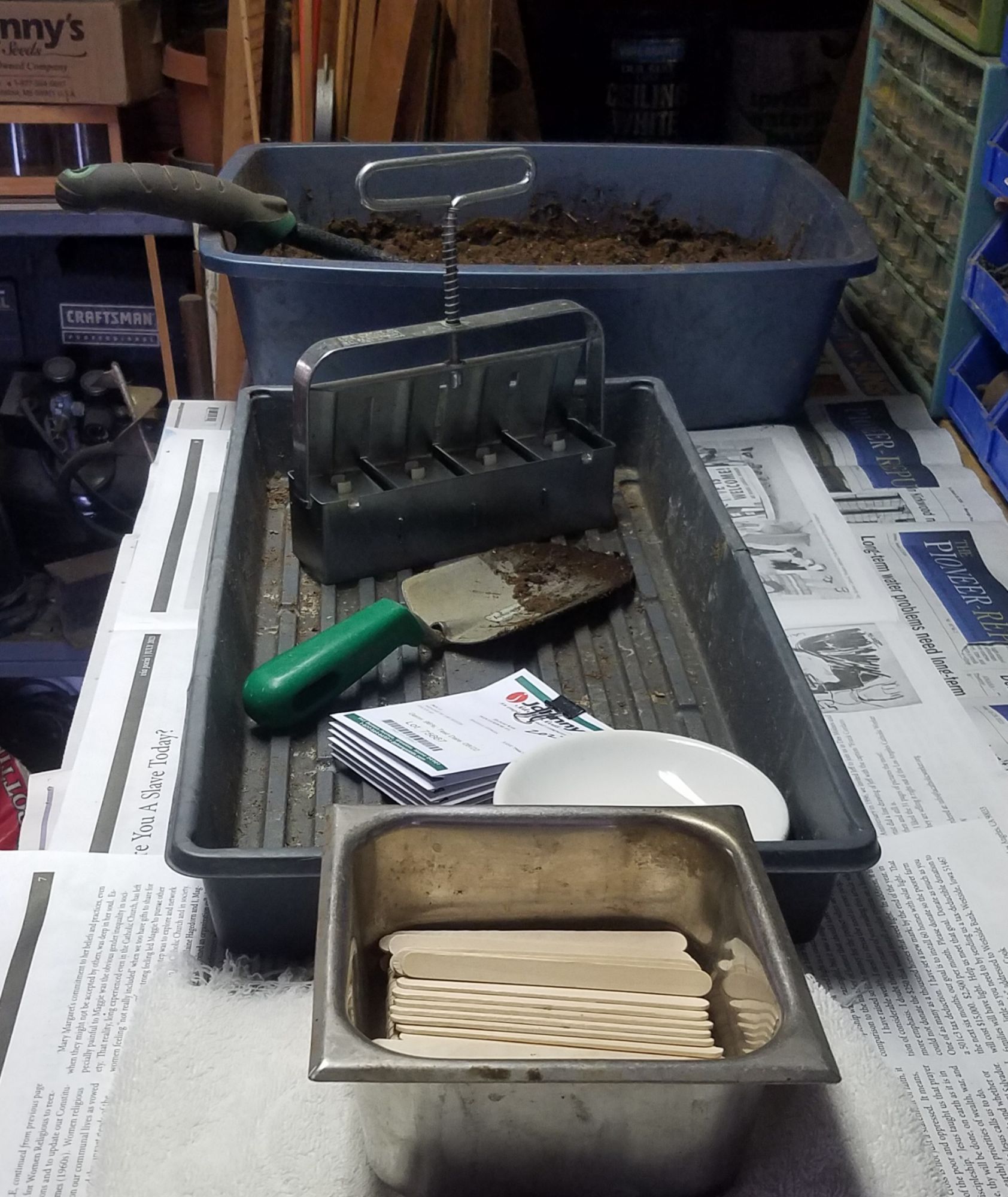
Tools to make the first tray of garden seedlings. Kale went in on Feb. 3.
I’ve been chatting it up with some neighbors on social media. There was consensus we hunkered down inside our homes for most of January because of snow and freezing ambient temperatures. There is hope for a break in winter and we’d just as soon move into spring. Personal productivity lags in winter. It’s time to step up the pace.
The idea of a “week” still resonates. Monday means start of the week, Friday is for closing down activities, Saturday is to perform a number of small household tasks, plus help our child with their small business. Sunday remains a day of rest, sort of. It’s not the same as when I worked full time. Then I knew that Friday usually meant casual clothes, voluntary trips to the office, and time to pursue my writing and family life.
I walked about the garden. The green I saw from the kitchen was collards that had been eaten more than I could tell from a distance. I had no interest in picking through the leaves, especially with a freezer full already available. I suppose the cruciferous vegetable-eating insects that survive the cold don’t have a lot to choose from in winter.
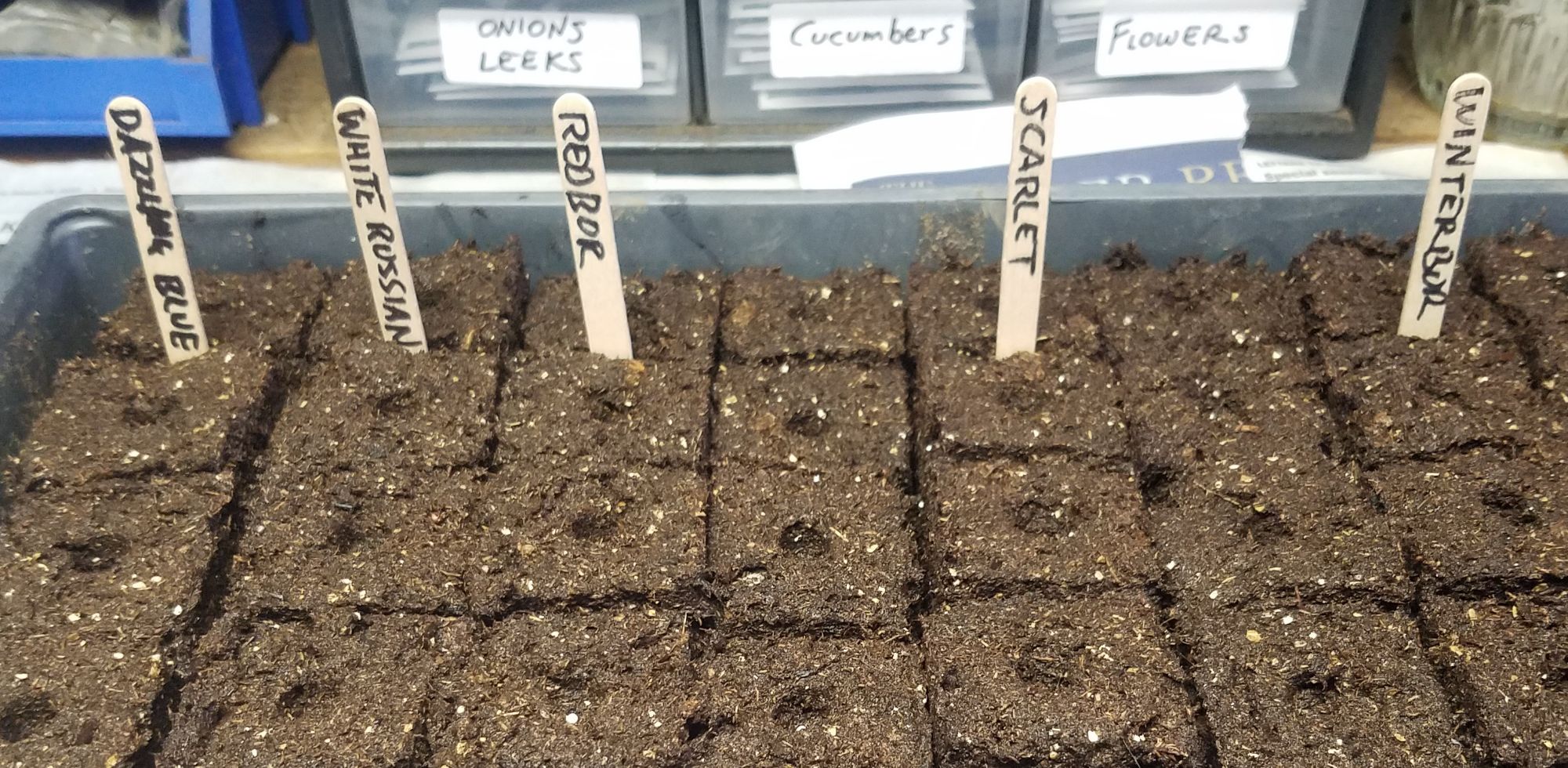
On Saturday I planted the first seeds for the garden and put the tray on a heating pad under a grow lamp. They are mostly last year’s seeds and that should not be a problem for kale. Kale is one of the vegetables I have mastered growing. It was something to see the tools lined up and ready to start. I worked with the garage door open for the fresh air and because we seem to be exiting the Iowa deep freeze.
February is an indoor planting month so I cleared the table where seedlings will go. First up this weekend is a tray of kale and selected herbs. Next it’s weekly planting until the garden soil is warm enough to sustain transplants or direct seeding. I bought new row cover as the old wore out and it helps grow herbs and lettuce like I never was previously able. Gardening 2024 has begun.
The Social Security Administration life expectancy calculator forecasts I will live for 13.9 more years. Based on that, and continued good health, I have 13 more gardens to grow. I already began scaling back.
Drip irrigation would make some vegetables grow better. Instead of learning about and installing it, I’m eliminating water-demanding vegetables like bell peppers, winter squash and carrots. None of these grew well here, and they are cheap to buy at the farmers market or grocery store. I’m focusing on what I grow best and leveraging the food system for the rest of our pantry.
A main driver in gardening changes has been changes in how we eat. My spouse changed to vegan during the coronavirus pandemic, so that changed how I cook shared meals. Cooking without dairy, especially butter, is a challenge. It renders large sections of cookbooks obsolete… especially the dessert section. We haven’t had meat in our home cooking since we married, so some of this is not new. Losing dairy makes a big difference, though, one to which I haven’t yet adjusted.
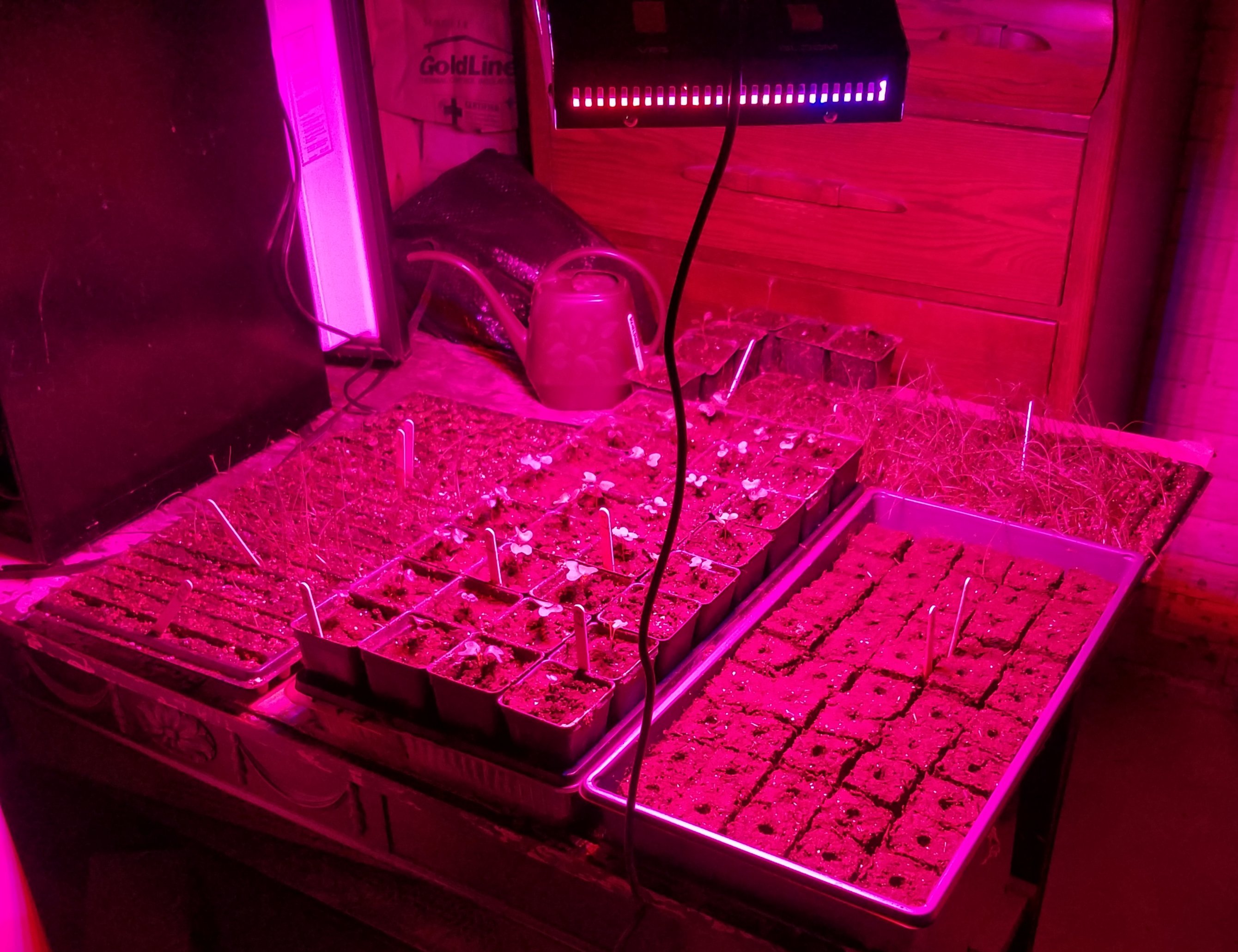
Nonetheless, growing a big garden is important to our way of life. The time to begin is now. I’m looking forward to the pinkish light illuminating trays of fledgling kale and broccoli.
Kale leaves from a single plant harvested Sept. 17, 2023.
Late season kale takes on a special quality when overnight temperatures get cooler or freeze. Toward autumn, I begin harvesting the whole plant and use the leaves until they are gone. Then I harvest another plant. The same goes for collards. I cut the stalk at ground level and take the plant to the composter where I sort through the leaves to pick the best for the kitchen. It’s another sign the season is turning.
Kale and collards are cold-hearty and can continue producing as late as November. The way things are going with weather, it could be until December this year. Occasionally, kale over winters.
Before joining Local Harvest CSA when we moved back to Iowa, I hardly heard about kale. I had never eaten it. When I worked on the farm beginning in 2013 I learned how to grow it. This year the bugs stayed away better than most years. Early season spraying with an insecticide containing Bacillus thuringiensis kurstaki (Btk), a naturally-occurring bacterium found in soil, suppressed green caterpillars which love kale. 2023 was a great kale year.
I freeze my allocation of kale early in the season. Once the freezer space is full, we eat it fresh from the garden or donate it to the food pantry. The plants produce so many leaves we always have plenty. Most people don’t know about kale and some don’t care for it. Our typical uses are as an ingredient in taco filling, smoothies, and in soups. We consume a lot of those menu items here in Big Grove. There are few better sources of leafy green vegetables than a kale plant. We are supposed to eat more of that than we do.
The cruciferous vegetable patch was a success this year with plenty of cauliflower and broccoli for freezing, a half dozen red and green cabbages stored in the refrigerator, and kale and collards as much as we want. It works better to keep all of those varieties together in the same plot. It helps focus the attention they need for successful growing.
Summer’s end is rapidly approaching. This morning I looked out the dining room window without my glasses and could see fuzzy stars in the clear, dark sky. There was an impulse to get my glasses from the bedroom, yet I resisted and stood there trying to take it all in before summer slips away. The progress of the kale patch is one more marker of summer’s end.
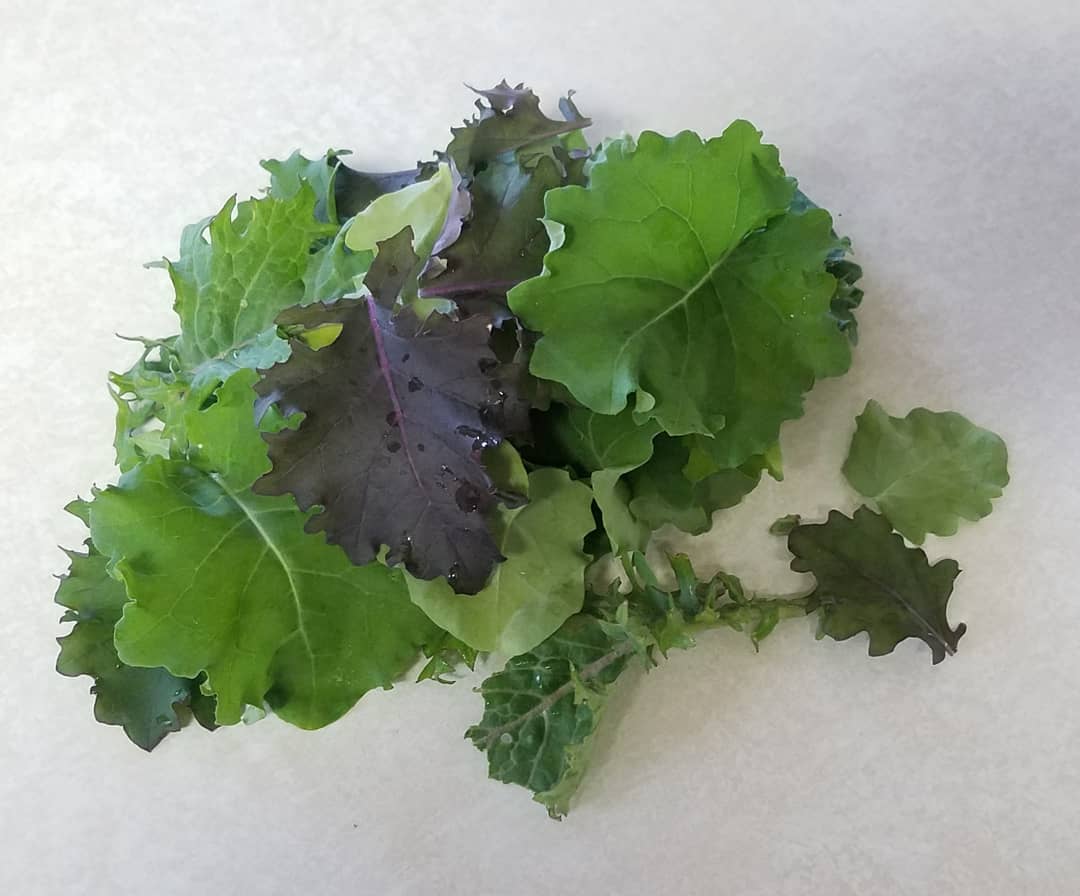
Cart of five varieties of kale picked June 17, 2023.
The best kale is harvested before the characteristic little green worms have a chance to establish themselves. I deter them from getting too far by a couple of applications of Dipel, an insecticide containing toxins from Bacillus thuringiensis kurstaki (Btk), a naturally-occurring bacterium found in soil and plants. Btk is not harmful to humans, to birds, or to most beneficial insects and pollinators. It is widely used by farmers who use organic practices. The truth is one has to do something about the little green worms to have a good crop. This year, because of these applications, the cruciferous vegetable patch of kale, collards, broccoli, cabbage, chard, and cauliflower looks quite good.
The spring greens harvest has two major purposes outside eating fresh kale and collards. I stem the leaves and put as many packages as will fit in the freezer. Less attractive leaves, as well as the stems go into canned vegetable broth. I have been following this practice since we got a small freezer during a power outage. Since then, we upgraded to an upright freezer. This enables us to eat greens all year, until next year’s crop. It is something that goes well in our garden. Something upon which we rely in our everyday cooking.
Based on the number of white butterflies spotted in the cruciferous vegetables yesterday, it will be hard to keep up with them soon.
We like kale, especially in stir fry, soups, and tacos. Many people do not care for it. I learned to grow it from my friend Susan back in 2013. I would stop eating it if I didn’t grow it myself and control all the inputs. Part of aging successfully will be figuring out how to continue the annual kale crop.
Onions and shallots planted Jan. 6 were ready to come off the heating pad. The only note is shallot seeds from 2020 did not germinate this year. Because I also planted new seeds, everything is fine. I replaced onions and shallots on the heating pad with a flat of kale, broccoli and collards on Feb. 6.
It doesn’t require much work at this point. There is soil mix from last season. Making and planting a flat of soil blocks took about an hour. The worst part was the garage was pretty chilly. I was able to stand the cold and finish the work.
About a dozen seed catalogues arrived since Jan. 1. I went through them yesterday and believe I have what is needed. I’ll take another look and order what may be lacking in my seed collection this week. I started older seeds on Sunday. There is plenty of time to see if they germinate. Once they do, I’ll plant the next flat of early seeds.
Snow remains on the ground. Since provisioning last Thursday, I haven’t left the house except to retrieve the mail and deliver the recycling bin to the street. I’m thinking by late March I can plant cruciferous vegetables in the ground. Once the snow melts there will be a lot of outdoors work. I’m ready for it. It’s time to garden.
A six-hour shift in the garden moved things along.
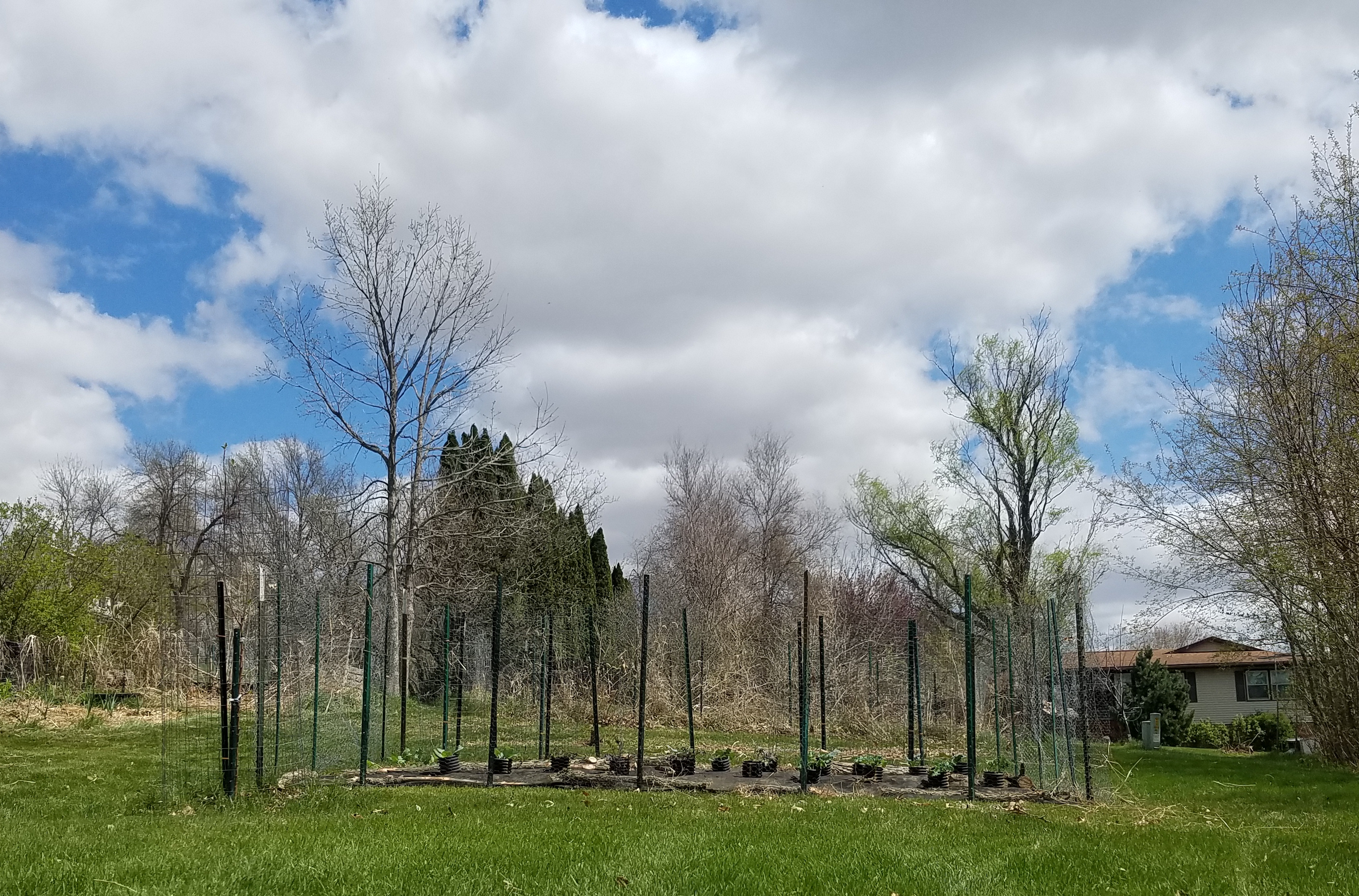
In that time I relocated tomato cages, tilled the soil, laid down garden cloth recycled from last year, and planted kale, collards, beets, kohlrabi and broccoli to join the peas, radishes, carrots and turnips already there. I left spots for chard and mustard greens, and once beets, radishes, carrots and turnips are done, other vegetables will be planted there.
When finished, I installed four-foot chicken wire fencing around the plot to deter deer and rabbits from the smorgasbord. It was a good day’s work.
Perhaps the best thing about Friday was working in the garden blocked out computer work on my desktop and mobile device. There’s more to life than constant engagement on line.
Red Russian kale over-wintered so we had fresh kale for our stir fry dinner Sunday night. I mixed it with some Winterbor and Redbor leaves collected while re-potting plants for final growth in the greenhouse.
This year’s garden work is just beginning.
I’ve been on spring break from writing my autobiography. If asked, I am working on the book. It’s been a long spring break. More accurate is the project is stalled and in need of a completed manuscript. It’s time to set aside new writing, crank up the engine, and edit what I have: some 170,000 unedited words.
Writing the book has been like mining a vein of coal to see where it goes. I often got caught up in its adventure and that part of the process is not finished. Why write an autobiography except to experience and find meaning in memories?
I spent Sunday afternoon considering two photo albums I made years ago. One of photos taken beginning in 1962, and another of images of Father taken over the years he and Mother were married from 1951 to 1969. I didn’t write anything. I simply looked at the images and tried to remember some of the moments. This is part of the autobiographical process, but doesn’t work toward a finished manuscript. More material from the vein to be sent above ground toward the tipple.
To get things on track, I will review the outline, then go through the words written. Last winter I spent time on the first five points of the outline. I previously wrote at length about the 1980s and 1990s. I know the story ends either at the beginning or end of the coronavirus pandemic, yet how it ends is unclear. That meaning must be extracted from the tumult and tension of daily living.
I don’t argue with other writers who say a daily goal with follow-through is needed. As today’s shift begins, gardening and writing are both on the schedule. I’ll add an hour to work on a plan beyond today.




 Journey Home
You must be logged in to post a comment.