During a brief appearance at Northeast Iowa Community College in Peosta on July 26, President Trump claimed a trade breakthrough with European allies.
“We just opened up Europe for you,” he said.
Not so fast!
On Saturday, European Union Commission President Jean-Claude Juncker, who met with Trump, said trade talks almost collapsed over U.S. agricultural demands.
Agricultural trade will remain off the table in any trade talks between the U.S. and EU, Juncker said, according to Deutsche Welle. A European commitment to buy more U.S. soybeans is driven by market conditions.
Europe is the second largest importer of soybeans after China and prices are low because of the U.S. trade war with China. In other words, after market conditions driven by the president beat the price of soybeans down, Europe sees a bargain. It is hard to fathom how Trump sees Europe “opened up” under these conditions. Granted Iowa farmers planted more acres in soybeans this year, but the president’s statement can only be seen as political posturing in advance of the 2018 midterm elections and everyone should know it.
There is a more significant problem with “opening up” Europe for agricultural trade — the issue of genetically modified organisms.
There are very few genetically modified crops grown in Europe compared to the U.S., according to a July 27 New York Times article. The reason is in 2001, the EU issued a directive about GMOs. From the early stages of research to the marketplace, these products would have to pass a series of tests for environmental risks and human safety. The consequence of the directive in Europe is few farmers produce GMO crops.
In the U.S., neither the USDA nor the National Academy of Sciences is concerned that GMO crops have any impact on consumers different from non-GMO crops, despite a slate of regulations. Driven by science, farmers embrace GMO crops because of their acceptance in the U.S. marketplace combined with the attributes of genetically modified seeds. Regardless of science, increasing the amount of GMO crops exported to Europe seems unlikely given the fact many European countries have banned GMOs.
Shorter version of Trump’s statement, “Farmers, here’s a bone.”
It’s hard to see how help for Iowa farmers will materialize from current discussions with Europe. The irony of increased soybean sales to Europe after Trump’s trade war beat down prices as something positive seems lost on his true believers. They may swallow this hook, line and sinker, but other sentient beings should not. It is another deception from a president with an unending supply of deceit.
I don’t know one person, acquaintance or public figure who thought the July 16 meeting between Donald Trump and Vladimir Putin in Helsinki went well.
The only people who found a ray of hope in the awkward encounter are those in the arms control community who pointed out some positives, not the least of which is an easing of tensions between the two nuclear powers evidenced in the meeting.
“It looks like Trump and Putin may have agreed in Helsinki to resume strategic stability talks.” Daryl Kimball, director of the Arms Control Association, posted on twitter. “One key issue: New START, which can be extended without complex negotiation, without further approval by Senate or Duma, and without Trump making unwise concessions.”
Such a move makes sense and would be an easy win for Trump. It may not be well received among Trump’s base supporters because, after all, the Obama administration negotiated New START. The 44th president called in his markers to get the U.S. Senate to ratify the treaty. Some of us felt he gave away too much with a complex offering of perquisites to Republican hawks led by Jon Kyl. Not the least of these was an expensive, unneeded modernization of the U.S. nuclear complex. The Trump crowd won’t like it, regardless of the efficacy of an extension, because of the association with President Barack Obama.
Republicans have expressed disappointment with Trump’s foreign policy, such as it exists. They may (publicly or privately) attempt to reign in the president. At some point the U.S. wants to address perceived Russian violations of the INF treaty negotiated between Presidents Ronald Reagan and Mikhail Gorbachev, signed in 1987. Russia has threatened to withdraw from the INF treaty for many years, according to the Bulletin of the Atomic Scientists.
As we look forward with trepidation to the next meeting between the two heads of state, the arms control community will be working to advance the causes of nuclear disarmament and abolition. It is something they do regardless which party has majorities in the Congress or who is president.
On June 14, 2018 PSR Board member Ira Helfand, MD met with South Korean Prime Minister Lee Nak-yeon in Seoul.
Responding to citizens everywhere who yearn for peace, political leaders in South Korea, North Korea, China and the United States staged a flurry of diplomatic activity this year to avert a Korean crisis.
We are not yet out of the woods. Physicians for Social Responsibility’s health professionals advocated for peace in Korea and will continue to promote diplomacy to denuclearize not only North Korea, but the rest of the world as well.
On June 7, PSR released and delivered to Congressional offices a “Health Professional Open Letter to Congressional Leaders” on Korea with signatures from 16 prominent health professionals including presidents of national physicians’ associations as well as deans and former deans of medical schools and public health schools. PSR members met with staff for their U.S. Representatives and Senators, placed op-eds at CNN.com, the Boston Globe, the Baltimore Sun, and Quartz (see In the News). Immediately after the June 12 Singapore summit PSR issued a statement welcoming the outcome..
PSR will continue to advocate for careful and deliberate diplomacy toward a genuine peace accord between the Koreas. The cancellation of joint U.S. – South Korean “Freedom Guardian” military exercises that were scheduled for August will surely help the peace process.
But for now, North Korea retains its nuclear arsenal, and eight other nations cling to their arsenals as well. The harrowing months of provocations, threats and counter-threats between the U.S. and North Korea showed once again that nuclear weapons do not provide security for any nation. As experts explored the possible military scenarios involving Korea, the world was reminded of the horrific humanitarian impact of modern warfare, especially if nuclear weapons come into play. To remove this profound public health threat, PSR joins with International Campaign to Abolish Nuclear Weapons in prescribing total elimination of all nuclear arsenals with a strategy of “stigmatize, prohibit, eliminate.”
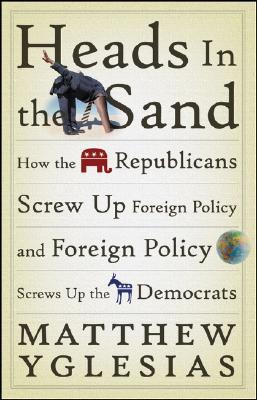
Yglesias’ book was a timely read in the context of the Trump administration’s forays into foreign policy, notably the April 13, 2018 bombing of Syrian chemical weapons capacity. Written before the Obama presidency, the lines of thought and policy started during the George W. Bush administration continue to the present. There is little evidence liberals received the author’s message or have done much to support a sustainable, bold foreign policiy. Rather they often co-opt neocon positions.
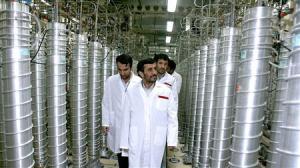
Iranian President Mahmoud Ahmadinejad visits the Natanz nuclear enrichment facility April 8, 2008 Photo Credit: Reuters
The 45th president doesn’t like the Iran Deal.
He campaigned against it. He begrudgingly certified Iran’s compliance with it after his inauguration. As additional 90-day certification periods passed, he didn’t. Neither did he move to end it.
With the installation of John Bolton at the National Security Council, and Michael Pompeo as Secretary of State, administration policy regarding Iran is expected to change.
The Iran Deal or Joint Comprehensive Plan of Action Regarding the Islamic Republic of Iran’s Nuclear Program (JCPOA) was the signature foreign policy achievement of President Barack Obama. The United States, along with the United Kingdom, Russia, France, Germany and China, stopped Iran from building a nuclear weapon.
In July 2015, Iran had almost 20,000 centrifuges used to enrich uranium in the cities of Natanz and Fordo, according to BBC News. Iran had been building a heavy-water nuclear facility near the city of Arak. Spent fuel from a heavy-water reactor contains plutonium suitable for a nuclear weapon. Iran agreed to restrict these activities in the JCPOA which brought a robust regimen of monitoring, verification and inspection designed to ensure Iran’s compliance with the deal. Every 90-day certification period, which is peculiar to the United States, international inspectors reported Iran maintains its compliance.
We should keep the Iran Deal. It’s not just me who says so.
“120 of America’s most respected national security leaders want to keep the Iran Deal,” wrote Joe Cirincione, president of the Ploughshares Fund. “Trump, Pompeo and Bolton want to kill it.”
The following message was sent to Senators Joni Ernst and Chuck Grassley, and to Congressman Dave Loebsack:
I urge you to protect and support the 2015 nuclear agreement between Iran and the P5+1 nations. Please refrain from any actions that would undermine it and encourage your Senate colleagues to do likewise.
I understand President Trump is expected to declare the Iran Deal is not in the U.S. national interest and withhold re-certification before the Oct. 15 deadline. If he does so, he would increase the threat of nuclear proliferation in an already dangerous world.
Four brief points:
1. A deal is a deal. There is no realistic option for renegotiating the current agreement, which is working effectively to block Iran’s pathways to a nuclear weapon.
2. Congress should not re-impose nuclear-related sanctions so long as the International Atomic Energy Agency confirms Iran is meeting its commitments under the agreement.
3. President Trump should focus on solving the North Korean nuclear crisis rather than provoking a proliferation crisis with Iran.
4. The administration should also focus efforts toward strengthening the Iran/P5+1 agreement with our international partners.
Thanks in advance for considering my message. Good luck with your deliberations on this complex topic.
Regards, Paul
Response from Senator Joni Ernst on Oct. 25, 2017:
Dear Mr. Deaton,
Thank you for taking the time to contact me about the Joint Comprehensive Plan of Action (JCPOA), commonly referred to as the “Iran deal.” It is important for me to hear from folks in Iowa on policy matters such as this.
On July 14, 2015, the Obama Administration announced they had reached a final deal with Iran on its nuclear program. At the time, I expressed concern that this agreement, which was reached as sanctions were crippling the Iranian economy, capitulated to Iran’s demands and threatened the security of the United States and our allies.
Overtly, the Iranian regime continues to exploit loopholes in JCPOA to advance its ballistic missile capability. Covertly, Iranian weaponization efforts are unknown, as military leaders have stated publicly they will refuse to allow International Atomic Energy Agency (IAEA) inspections of their sites. All the while, sanctions relief has fueled Iran’s support for its terrorist organization proxies engaged in malign activities in Iraq, Syria, Lebanon, Yemen, Afghanistan, and elsewhere – places where these groups are engaged in direct combat with American service members or our partners. Indisputably the JCPOA failed to meet its requirements to appropriately and proportionally contain Iran’s nefarious activities – the original purpose of the agreement.
As you may know, President Trump decided not to certify the deal under the Iran Nuclear Agreement Review Act on October 13, 2017. This action does not withdraw the U.S. from the JCPOA, but rather, it provides an opportunity for Congress to work with the Trump administration and our allies to fix the failures of the original agreement. I support the president’s decision and believe we will maintain a position of global leadership by upholding our obligations, while finally beginning to hold Iran accountable for not meeting the expectations of the international community.
I look forward to working with the Trump administration, my congressional colleagues and overseas partners to formalize a strategy that prevents Iran from obtaining a nuclear weapon and protects American interests. Feel free to contact my office with any further information, as I always enjoy hearing from Iowans.
Sincerely,
Joni K. Ernst
United States Senator
Response from Senator Chuck Grassley on Nov. 8, 2017
Dear Mr. Deaton:
Thank you for taking the time to contact me with your concerns. As your senator, it is important to me that I hear from you.
I appreciate hearing of your support for maintaining the Joint Comprehensive Plan of Action (JCPOA), otherwise known as the Iran nuclear deal. First, I’d like to take this opportunity to discuss the tenants of the Iran nuclear deal and why I have been against it from the beginning.
On April 2nd, 2015, President Obama and Secretary of State John Kerry announced the parameters for a potential deal with the Iranian government to end the country’s nuclear enrichment capabilities and attempts to obtain a nuclear weapon.
President Obama and Secretary Kerry both made important statements about the goal of negotiations leading to the conclusion of the JCPOA – the goal was to dismantle Iran’s nuclear program. Secretary Kerry himself said, in the fall of 2013, that Iran has “no right to enrich” and that a good deal with Iran “would help dismantle its nuclear program.”
In reality, the deal has failed to achieve its key objective of a denuclearized Iran. This deal, as it stands, puts Iran in a position of strength – economically and militarily – from which to further destabilize the Middle East.
The nuclear deal granted Iran a series of continuous sanctions relief in exchange for a reduction in nuclear enrichment capabilities while requiring the access of international inspectors to certify the country’s compliance with the deal’s terms. However, although the United States has granted Iran sanctions relief upwards of $160 billion dollars, the architecture of the agreement only requires Iran to temporarily reduce its nuclear weapons program. This temporary reduction in activities grants massive sanctions relief to a country which could ultimately decide to pursue its threatening activities once the agreement’s sunset clauses expire without any additional punishment.
Despite assurances that the deal would include “anytime, anywhere” inspections, the Obama administrated negotiated away from these provisions and provided Iran with a 24-day inspection delay following an announcement from International Atomic Energy Agency (IAEA) investigators of intent to inspect a site. Furthermore, the IAEA has not been able to conduct adequate inspections of Iranian Military sites where nuclear research is conducted. To a large extent, this deal requires the United States to accept, without good reason, that the Iranians are engaged in a good faith effort to not cheat.
On May 7th, 2015, the Senate passed the Iran Nuclear Agreement Review Act by a vote of 98-1 which provided an opportunity for Congress to express its approval or disapproval of the deal. Despite 98 Senators voting in favor of reviewing the agreement, a minority of Senators lead by then minority leader Senator Reid, voted to block debate, consideration and a vote on a resolution of disapproval.
Following the JCPOA’s implementation on January 16th, 2016, Iran has continued to engage in a number of activities violating key provisions of the agreement. Most notably, these include cheating on provisions requiring the country to limit its nuclear enrichment activities through centrifuge development, prohibitions on research technology procurement, and not adhering to limitations on the amount of heavy water that the JCPOA sets forth for Iran’s nuclear reactors.
On October 13th, 2017, President Trump announced his decision to decertify the JCPOA. President Trump asserted that the JCPOA does not address the full range of potential threats posed by Iran, or permanently ensure that Iran cannot develop a nuclear weapon. In short, Iran is not living up to the spirit of the deal and that continued sanctions relief provided to Iran is not “appropriate and proportionate” to the measures taken by Iran to terminate its illicit nuclear program.
President Trump’s decision to decertify the Iranian nuclear deal is in full accordance with the statutory requirements imposed on the deal by Congress under the Iran Nuclear Review Act. Under the Iran Nuclear Review Act, the President is required to recertify Iran’s compliance with the JCPOA every 90 days. The Iran Nuclear Review Act provides Congress 60 days to consider whether to re-impose sanctions waived under the JCPOA and or to modify the deal to ensure Iran’s compliance.
The United States has not formally withdrawn from the Iran nuclear deal. Rather, President Trump’s decision to decertify the deal now puts the onus on congress to address the shortcomings of the deal. Iran continues to be the world’s leading state sponsor of terrorism, and President Trump is right to point out the failings of the deal. I look forward to working with my colleagues to further curtail Iran’s dangerous and destabilizing behavior.
Rest assured, that as your senator I will continue to follow these developments.
Again, thank you for taking the time to contact me. Please keep in touch.
Sincerely,
Chuck Grassley
Response from Congressman Dave Loebsack on Nov. 2, 2017
Dear Mr. Deaton,
Thank you for contacting me about the Iran Nuclear Agreement, also known as the Joint Comprehensive Plan of Action (JCPOA). Your opinion is very important to me and my priority is to provide Iowa’s Second District with the best representation possible.
From the beginning, I have made it clear that I believe it is unacceptable for Iran to be allowed to develop nuclear weapons. Today, it is more important than ever that we continue to work towards that commonly held goal and ensure the safety of the American people.
Under the Iran Nuclear Agreement Review Act of 2015 (INARA), the President is required to publicly certify every 90 days that Iran is complying with the terms of the JCPOA. On Friday, October 13, 2017, President Trump announced that he is formally decertifying the nuclear deal with Iran. Decertification does not put the U.S. in violation of the JCPOA, but it does give Congress a 60-day window to reimpose the sanctions that were suspended by the deal.
I believe that the administration should be focusing its efforts on ensuring the conditions of the agreement are being thoroughly enforced. Instead, the administration has chosen to ignore the warnings of the White House’s own national security staff, sow uncertainty, and undermine our national security. I appreciate you reaching out to share your thoughts with me on the importance of the U.S. remaining part of the JCPOA. Please be assured that I will continue to monitor the situation closely, and will keep your thoughts in mind should legislation related to the JCPOA come before the House of Representatives for a vote.
Thank you again for contacting me about this important issue. I encourage you to visit my website at http://www.loebsack.house.gov and sign up for my e-newsletters to stay informed of the work I’m doing in Congress. I am proud to serve Iowa’s Second District, and I am committed to working hard for you.
What do U.S. nuclear abolitionists do when the administration has no plans other than vaguely stated goals of “modernizing the nuclear complex” and spending money on a missile defense system that has never been proven to work?
Focus on a long term strategy toward the goal of nuclear abolition, using the United Nations Treaty on the Prohibition of Nuclear Weapons as a hook and the consequences of nuclear war as the message.
It’s a tough row to hoe because the United States and other nuclear states stand in opposition to the ban treaty promulgated at the U.N., now open to signature.
A colleague in the nuclear abolition movement reported July 14 from New York:
The emotional electricity in the room was palpable. Everyone could feel that history was being made in Conference Room 1 at the United Nations headquarters in New York. And when the vote tally came in, it was followed with a roar of approval in the room. Bucking intimidation from the nuclear-armed superpowers, 122 nations voted to adopt the Treaty on the Prohibition of Nuclear Weapons with one vote “no” and one abstention. It’s official: nuclear weapons are illegal!
I’ve never felt hopeful about the ban treaty because President Obama and his successor both indicated they would modernize our nuclear complex, investing more than a trillion dollars. President Trump’s recent statement while taking questions at his golf resort in Bedminster, New Jersey is disappointing on multiple levels.
“We are going to be increasing our budget by many billions of dollars because of North Korea and other reasons having to do with the anti-missile,” Trump said. “As you know, we reduced it by five percent, but I’ve decided I don’t want that. We are going to be increasing the anti-missiles by a substantial amount of billions of dollars.”
Modernization is not really his decision because the Congress must appropriate funds for it. It’s the normal checks and balances designed into our government by the framers of the constitution. However, what is in President Trump’s control is launching a nuclear war within a few minutes at his sole discretion. That can and should change.
Once accepted without vocal opposition, the president having his hand on the nuclear button should be challenged. No president should have sole discretion to unleash a human Armageddon that could end civilization as we know it.
There is chatter in the news media that President Trump won’t complete his full, four-year term. The better bet is he will and will mount a formidable campaign for re-election. Republicans in the Congress won’t impeach, and the 45th president won’t resign.
We shouldn’t be distracted by the hope this presidential term will soon be over. Regardless of who’s president, if the U.S. doesn’t sign on to the nuclear weapons ban, as it currently appears we won’t; if we won’t fulfill our obligation under the Non-Proliferation Treaty to which we are a party; others should be included in any decision to use nuclear weapons.
That change is something nuclear abolitionists can and should work on now.
To learn more, click on Martin Fleck’s report from the UN here.
I can’t believe we have to cover this Iran sh*t again.
Point 1: The 45th president doesn’t like the Iran Deal. While he twice certified Iran’s compliance with the July 14, 2015 agreement between Iran, the P5+1 (the five permanent members of the United Nations Security Council—China, France, Russia, United Kingdom, United States—plus Germany), and the European Union, each time his State Department under Rex Tillerson undercut any positives.
“Today I’d like to address Iran’s alarming and ongoing provocations that export terror and violence, destabilizing more than one country at a time,” Tillerson said in April after the first certification. According to Time Magazine, he proceeded to lay out a long list of bad things Iran is doing, from sponsoring terrorism to oppressing its own people to violating U.N. constraints on its missile program. When it came to the nuclear deal, he said it failed to ensure Iran won’t become a nuclear state in the future and said the administration was conducting a “comprehensive review of our Iran policy.”
The comprehensive review was ongoing when Tillerson made the second certification last week. The 45 administration proceeded to impose more sanctions on Iran.
We get it. 45 called the agreement “bad,” “horrible,” “stupidest deal,” etc.
Point 2: There was no question Iran was pushing the limit of the Nuclear Non-proliferation Treaty (NPT). I posted about this March 5, 2010:
The reason Iran is in the news is reasonably straightforward. As signatory of the NPT, Iran has the right to the peaceful use of nuclear technology. The trouble is that in 2003, the International Atomic Energy Agency (IAEA) determined that Iran had not been forthcoming about its uranium enrichment program, as required by the NPT. The IAEA conducted an investigation and their Board of Governors reported Iran’s noncompliance with the NPT to the United Nations Security Council. The Security Council demanded that Iran suspend its enrichment programs. The Council imposed sanctions after Iran refused to do so. When the uranium enrichment facility in Qom was made public in 2009, this heightened awareness of Iran’s apparent belligerence precipitated the current discussions between the parties about further sanctions and/or diplomacy. The corporate media latched on to an easy news story.
Point 3: President Barack Obama chose diplomacy. He initiated discussions about nuclear non-proliferation with Iran. Crazy, no? To actually talk to Iran and engage the European Union and the P5+1 states in the deal. The deal was consummated and is in effect. It stopped Iran’s nuclear program. As 45’s administration indicated with its certification of Iran’s compliance, the Iran Deal is working.
Point 4: While 45 hasn’t fulfilled a campaign promise to dismantle the Iran nuclear deal, he remains deeply suspicious of it according to a Sunday article in the Los Angeles Times. The war hawks in Washington, led by former U.N. ambassador John Bolton wanted 45 not to certify compliance. On its own terms the agreement has accomplished its purpose of preventing Iran from enriching uranium to develop technology to make a nuclear weapon, things of which they were well capable in 2009.
On any given day one might say, “who knows what the hell Trump will come up with?” In a dangerous world we should be thanking President Obama for avoiding war with Iran and stopping its nuclear program, something that can’t yet be said about his successor in the Oval Office.
Civilian control of the military is an American value our president doesn’t appear to share.
A report last Friday from the American-led military coalition in Iraq indicated scores of non-combatant civilians huddled in basements for protection had been killed in U.S. bombing raids with as many as 200 casualties.
During a 2015 interview on NBC, candidate Trump made his intentions regarding Islamic State and their assets clear.
“With ISIS, you kill them at the head. You take the oil,” he said. “That’s where they’re getting their money. If you bomb the hell out of it, you bomb the hell out of it. You’ve got to stop their wealth. They have tremendous wealth.”
It is one thing to destroy the economic assets of the Islamic State and quite another to kill civilians as coalition forces attempt to drive them from Mosul.
The official government position is that rules of engagement with enemy combatants have not changed with the new administration. At the same time, coalition partners indicate the rules have been relaxed. In the fog of military explanations the truth is obscured.
If the report is true, we know why. It’s because the president turned our wars over to his generals and shouldn’t have. The president’s disregard for civilian control of the military is evidenced by the fact the Congress had to pass a law to enable former Marine Corps General James Mattis to become Secretary of Defense.
Our president should be hands-on when it comes to our wars in Iraq, Syria, Yemen and Afghanistan. There is little evidence he is and innocent people are paying the price.
In this final 2016 post it was easier than last year to outline my writing plans.
The work I do to pay bills and support my writing has been tough mentally and physically. To cope with an aging frame and occasionally distracted mind I have had to focus. That meant planning, and then with discipline, working the plan. 2016 was a mixed bag and I expect to do better in 2017.
I seldom post about my personal life and family — at least directly. That leaves issues I confront every day as grist for the keyboard.
There are four broad, intersecting topics about which I’ll write during the coming year.
Low Wage Work and Working Poor
Not only do I earn low wages in all of my jobs, I meet a lot of people who do too. During the last four years I developed a framework for viewing how people sustain their lives without a big job or high salary. A focus on raising the minimum wage, wage theft or immigration status may be timely but most of what I read misses the mark. Stories fail to recognize the complexity with which low wage workers piece together a life. This subject needs more exposition and readers can expect it here.
Food Cultivation, Processing and Cooking
Living on low wages includes knowledge of how to grow, process and prepare some of our own food. My frequent posts on this topic have been intended to tell a story about how the work gets done. I plan to grow another big garden in 2017 and perform the same seasonal farm work. I sent off a membership form to Practical Farmers of Iowa this morning and expect my experience with that group to contribute to food related writing.
Nuclear Abolition
I renewed my membership in Physicians for Social Responsibility. We have a global footprint and as a member I have access to almost everything going on world-wide to abolish one of the gravest threats to human life. The president elect made some startling statements about nuclear weapons this month. The subject should hold interest and perhaps offer an opportunity to get something done toward abolition. The United Nations voted to work toward a new treaty to abolish nuclear weapons. They did so without the support of the United States or any of the other nuclear armed states. In that tension alone there should be a number of posts.
Global Warming and Climate Change
My framework has been membership in the Climate Reality Leadership Corps. Like with Physicians for Social Responsibility we have a global footprint with thousands of Climate Leaders. We have access to the latest information about climate change and its solutions. The key dynamic, however, is how work toward accepting the reality of climate change occurs on a local level. What researchers are finding is skepticism about the science of climate change originates in the personal experience of people where they live. If the weather is very hot and dry they tend to believe in climate change. If it is cold, they tend not to believe. Thing is, climate change and human contributions to it are not a belief system as much as they are facts. Global warming and climate change already affect us whether we believe or doubt.
So that’s the plan. While you are here, click on the tag cloud to find something else to read. I hope you will return to read more in 2017.





 Journey Home
You must be logged in to post a comment.