Categories
Environment Kitchen Garden

Iowa’s Culture of Climate Change

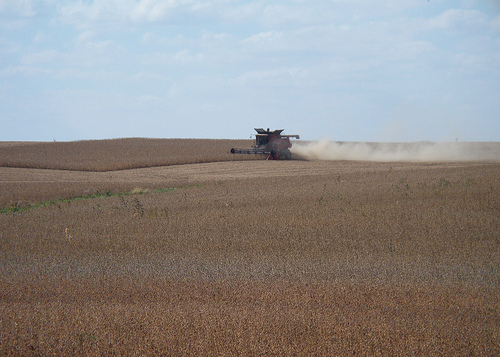
Harvesting Soybeans
Harvesting Soybeans

LAKE MACBRIDE— David Biello of Slate wrote an opinion piece in Newsday titled, “Why Don’t Farmers Believe in Climate Change,” on July 16. Link to the article here or here, but here’s a spoiler alert: it’s the Farm Bureau. I commented on the article, but my comment was removed because it violated Newsday’s conditions of use. It’s their world. What’s a blogger to do? If you’re reading this, you know the answer.

In the article, Biello wrote, “take, as an example of skepticism, Iowa corn farmer Dave Miller, whose day job is as an economist for the Iowa Farm Bureau. As Miller is happy to explain, it’s not that farmers in Iowa don’t think climate change is happening; it’s that they think it’s always been happening and therefore is unlikely to have much to do with whatever us humans get up to down at ground level. Or, as the National Farm Bureau’s spokesman Mace Thornton puts it: ‘we’re not convinced that the climate change we’re seeing is anthropogenic in origin. We don’t think the science is there to show that in a convincing way.'”

If there is a record drought like last year, large farmers will capitalize the loss over a period of years, plow the crop under and start over next season. For them, it’s just another aspect of dealing with farming as a business. This attitude is consistent with what I experienced when listening to row crop farmers in Iowa.

The idea,  “they think it’s always been happening and therefore is unlikely to have much to do with whatever us humans get up to down at ground level,” is ridiculous. Climate change doesn’t just happen— it happens for a reason. And today, the main reason is carbon pollution from dirty energy like coal, oil and natural gas.

I encourage you to read the article if you are interested in the interface between Iowa farmers, the Farm Bureau and the environment. There is a lot to learn before Iowa makes progress in protecting our environment. Some say the Iowa Farm Bureau runs the state of Iowa. I say it could only do so in a vacuum of action from people whose views are closer to the reality of climate change.

~ Written for Blog for Iowa

Categories
Kitchen Garden

Garlic Harvest on the Farm

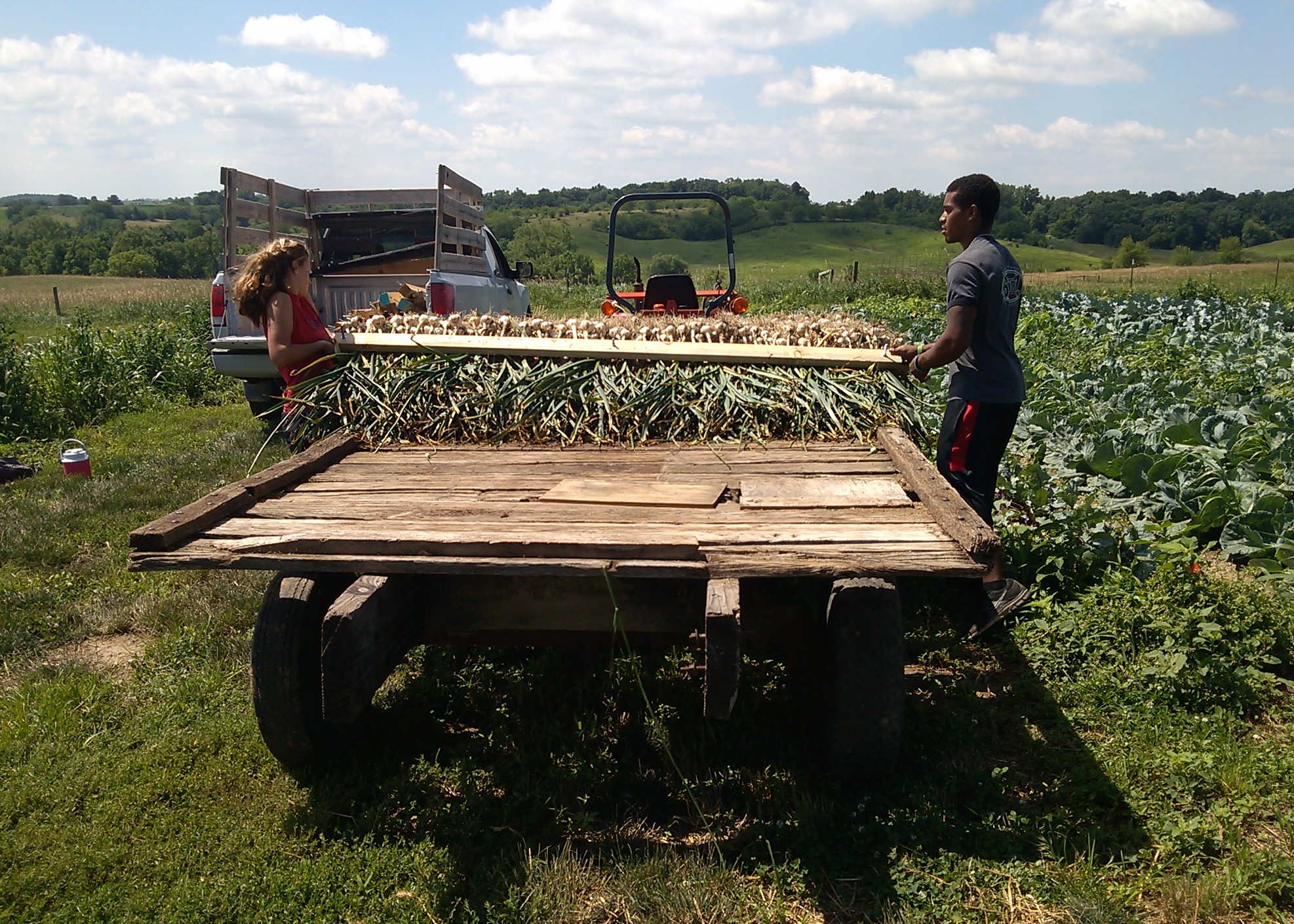
Garlic Diggers
Garlic Diggers
Lining up Garlic on Racks
Loading the Wagon
Loading the Wagon
Wagon Filling Up
Wagon Filling Up
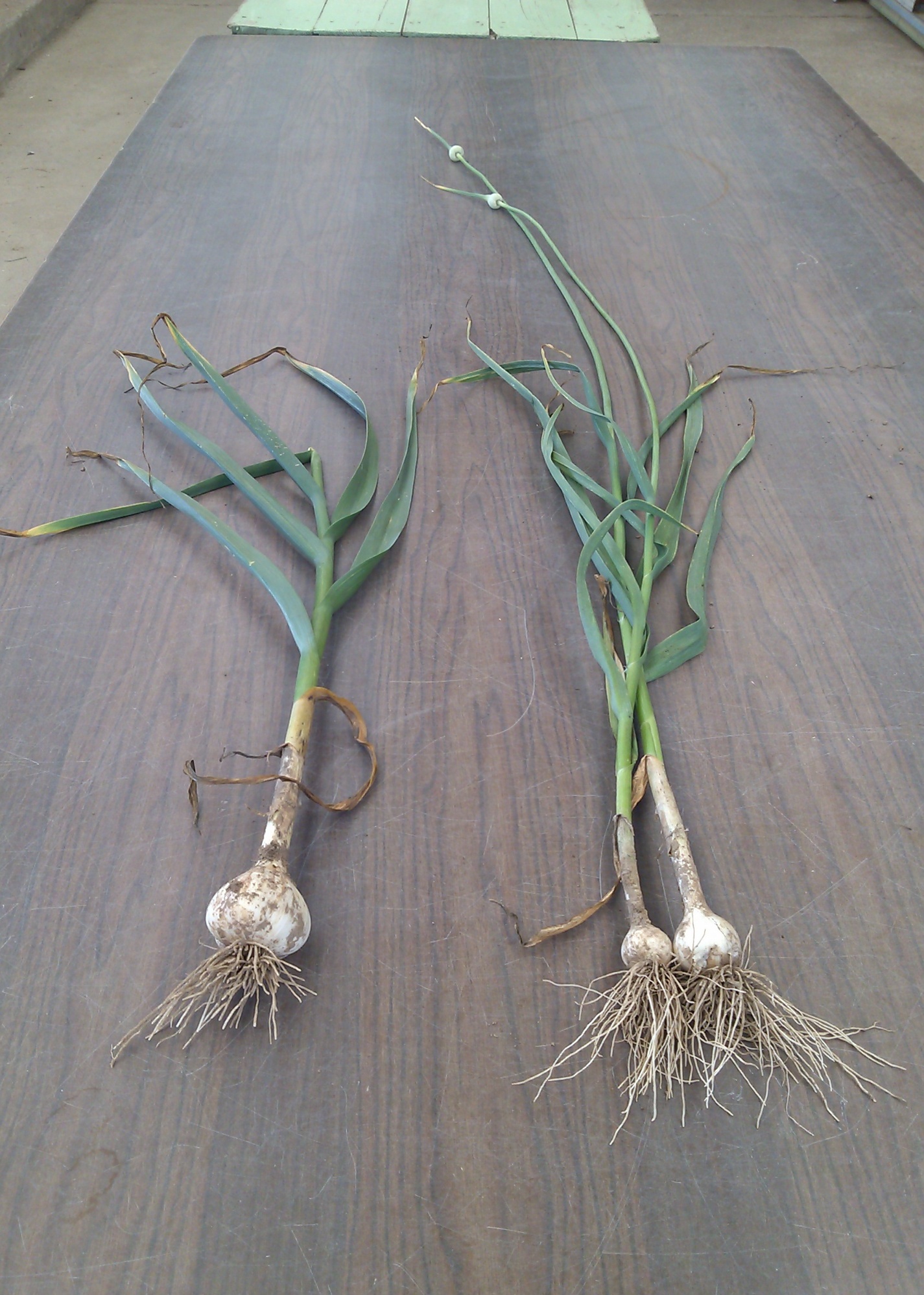
Left Cut Scape, Right Scape not Cut
Left Scape Cut, Right Scape not Cut
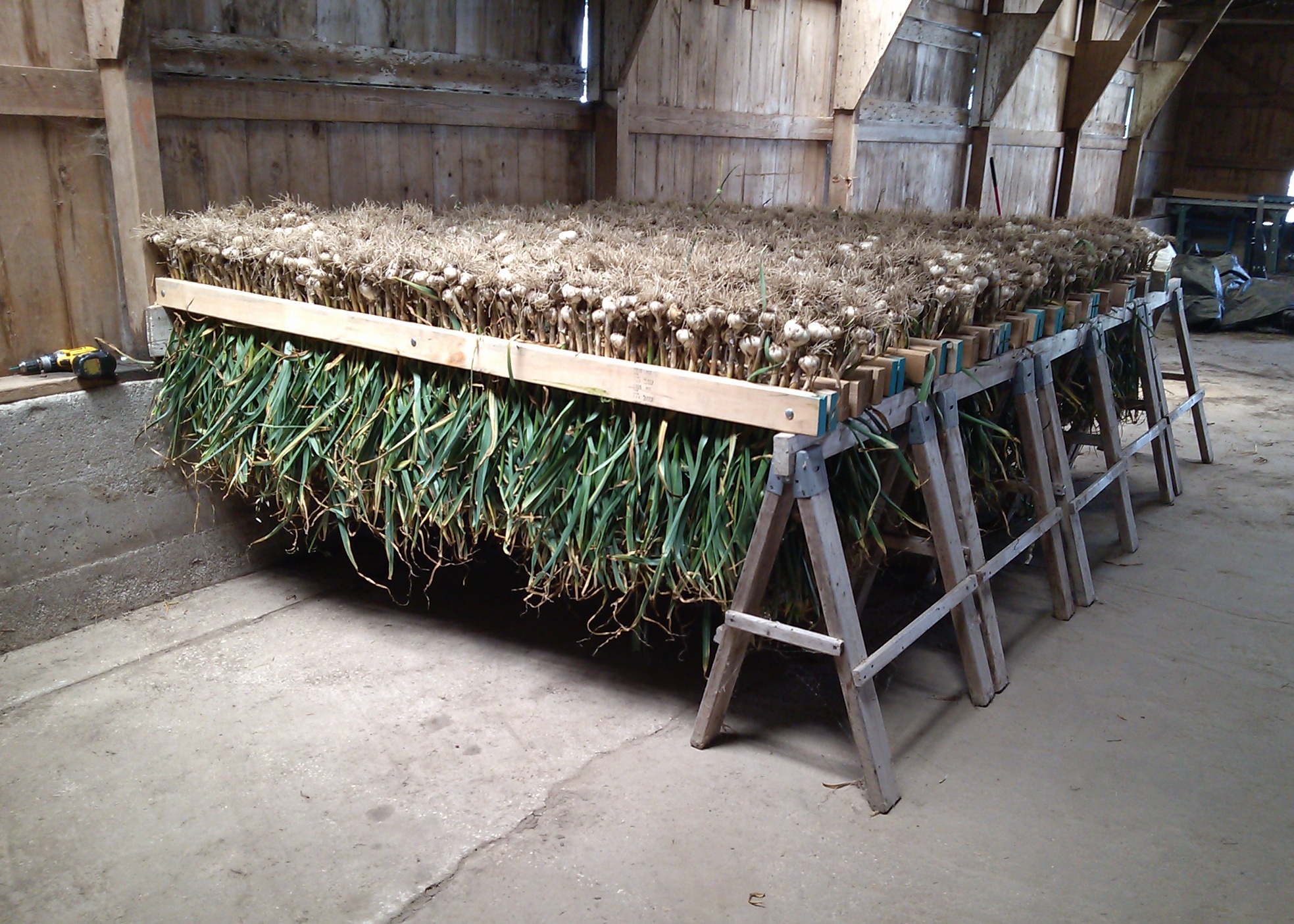
Garlic Curing in the Barn
Categories
Kitchen Garden

Harvest Day on the Farm

Local Harvest CSA
Local Harvest CSA

RURAL CEDAR TOWNSHIP— Having worked in the greenhouse, high tunnel or barn every week since early March, yesterday’s shift at the Community Supported Agriculture farm was pretty exciting— I worked in the fields for the first time. Because of the Independence Day holiday, beginning at 7 a.m., a large crew worked to get the shares ready for distribution a day early and take care of other farm work.

Four activities were mine: helping a crew of three harvest kale, harvesting, cleaning and packaging Swiss chard, making a basket of oregano for shareholders to select from, and planting a row of tomatoes with another person. Each activity provided a learning experience on how to work quickly, yet gently with the plants. In addition to that, I made a trip to the field to check on the quantity of sugar snap peas being harvested and to inspect the progress of the green beans (not ready). The work was steady, but not too hard. I appreciated the variety as my fingerprints filled deeply with soil.

The best part of the day came at the end of the shift when the crew gathered at the farm house for lunch. Thirteen of us went through the serving line set up on the kitchen island, and gathered around the table to partake of squash casserole made with Frisian Farms Gouda cheese from Oskaloosa, a slaw made with daikon radish and cabbage, and for carnivores and flexitarians, grass-fed lamb burgers raised on the farm. There was plenty of food and good conversation.

A neighbor had provided a kettle of fresh cherries. I’m not sure “kettle” is a unit of measure, but I brought back a sack of fresh cherries and made a cherry cobbler with dark brown caramelized sugar on top. I had it for dinner… and breakfast.

One of my work partners, a student from a neighboring state visiting a woman he was dating in college, had been persuaded to help out on the farm. He was bored as he dug holes for tomato seedlings. I thought of my solar powered Freeplay radio as we finished planting the long row. Maybe I should put it in the trunk of my car for times like this to assuage youth, but probably won’t. We talked instead.

Afterward, I thought of Nathaniel Hawthorne’s experience on the Blythedale commune. How he wrote in flowery language about it in The Blythedale Romance, only to find the reality of work more difficult than he expected or wanted. Hawthorne wrote of the commune,

Paradise, indeed! Nobody else in the world, I am bold to affirm—nobody, at least, in our bleak little world of New England,—had dreamed of Paradise that day except as the pole suggests the tropic. Nor, with such materials as were at hand, could the most skilful architect have constructed any better imitation of Eve’s bower than might be seen in the snow hut of an Esquimaux.

A day of work on a CSA farm may not be a trip to Eve’s bower, but it has its rewards and challenges— and plenty of hard work.

Categories
Environment Kitchen Garden

A Local Food Saturday

Saturday Farmers Market Produce

LAKE MACBRIDE— Herbs are abundant in the garden, so I have been making dishes that taste better with fresh herbs: red beans and rice with fresh thyme, pasta sauce with fresh basil, and bread with sun-dried tomato and fresh rosemary. Each iteration of a dish, prepared in a moment of time, has consequence in our lives. Every bowl of soup, sandwich and plate of pasta is different for a home cook. Sometimes the food is better than others— our homemade meals speak to who we are, what we want to be and what we can be.

The idea of local food Saturday is simple. In order for there to be a vibrant and sustainable local food system, individuals must want to find, purchase and cook with local food items. We have to make a market in the things we hold dear. That’s how I landed on the important role home cooks can play in sustaining a local food system. Saturday is a weekend choice that fits a lot of people. It’s not like I am the first to come up with this— I’m not.

It is possible, and rewarding, to change our outlook from a being a consumer who goes to market to being a producer of home cooked meals that includes local food. One could do as well to develop a meal plan that includes local food and local food outlets, since almost no one cooks all, or even most of their own food at home.

The act of buying is such a brief part of our lives. We should make the most of it by unchaining ourselves from the mega-mart and relegating grocery stores to a more proper role as supplemental sources of provisions. It costs nothing to change one’s perspective, and the financial and personal payoff can be superior.

What did I do with the items in the photo from last Saturday’s farmers market?

The turnips were an impulse purchase as I could have waited a week to get fresh from my garden. I cut and washed the greens, cutting about a cup into quarter inch strips for soup, and putting the remainder in a container to use as cooking greens later in the week. Using the bulbs, I made turnip soup that included a quart of homemade stock, carrot, onion, celery, the turnip greens and the finely sliced stalk of the broccoli in the photo. I added dried chervil, salt and a bay leaf to make four servings.

The kohlrabi was for an experiment cooking it with potatoes. There will be a number of kohlrabi from the CSA, and a couple are growing in the garden. I’m trying to figure out how to use them. They also go well in a salad, cut into raw, matchstick-sized bits.

The radishes, cucumbers and zucchini were for fresh salads. The garden and CSA are producing lots of lettuce, and we have salad almost every night— sometimes as a meal. Lettuce and other leafy green vegetables are an important part of a local food system, and because we produce our own, there are none in the photo. The yellow squash was to slice and cook with greens.

Broccoli was to steam with dinner as it is a favorite and the broccoli in the garden was not ready yet. One stalk is not much, so we also steamed the last of the fresh asparagus from the CSA. A vegetable side dish to soup and a salad seems a bit weird, but was delicious nonetheless.

Finally there is the local honey. I got it home and realized there was another open jar in the pantry. I made the previously mentioned bread with local honey, fresh rosemary, sun dried tomatoes and a custom mix of flours.

In all, I spent about two hours in the kitchen with local food preparation, not including the rising time of the bread. On average, people spend a lot less kitchen time in a day, but ganging up on the prep work on Saturday made for better meals later during the week.

The revolution in local food will come when we change our attitude from being a consumer of goods to a producer. There will be a time when our lives are more interesting than who gets booted on the television program “Chopped.” For some of us, that time is already here, at least on Saturday afternoons.

Categories
Kitchen Garden

A Shift at the Farm

Working in the Barn
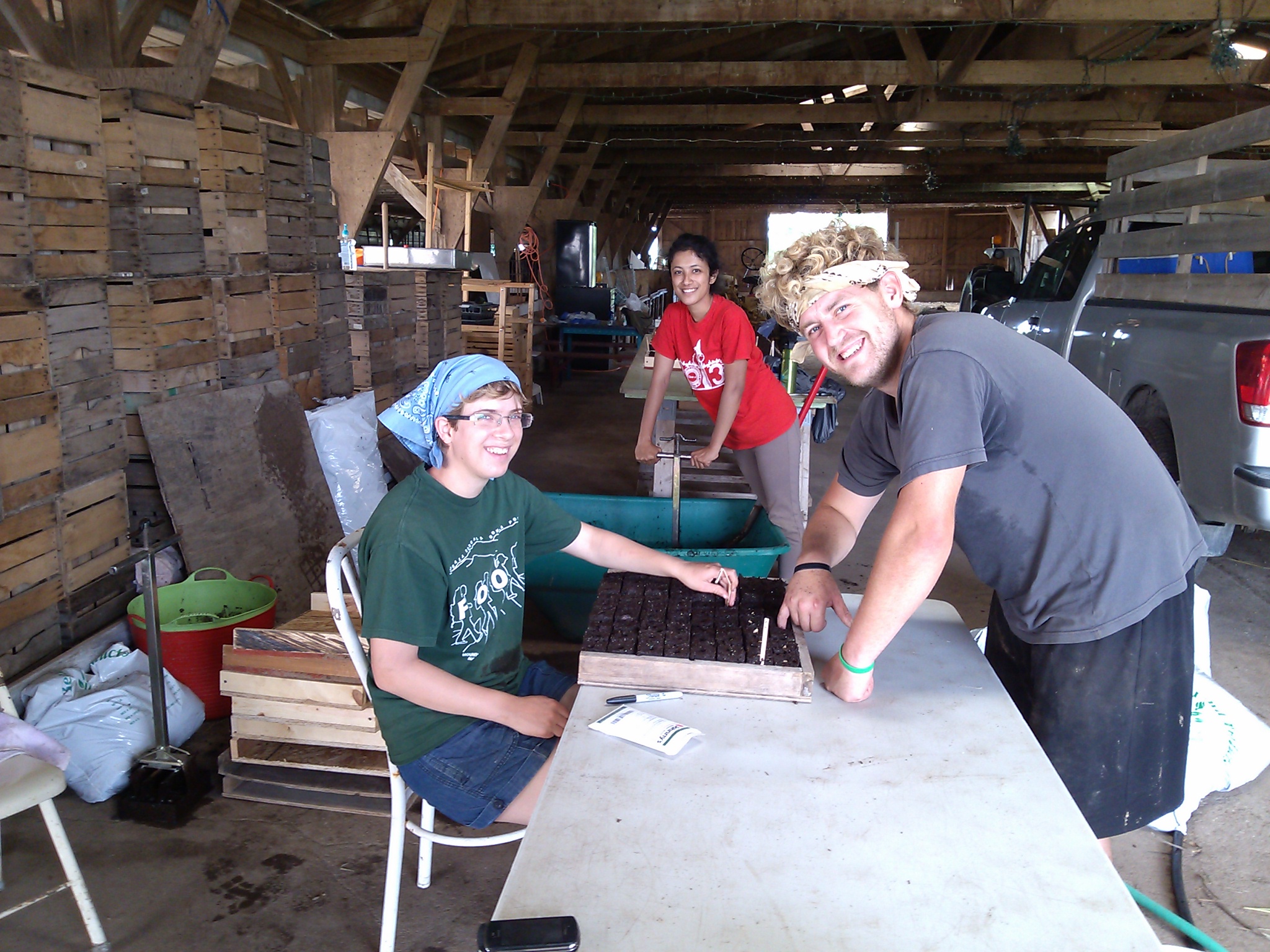
Soil Blocking and Seed Planting

RURAL CEDAR TOWNSHIP— A real concern about severe weather hangs over the farm. When there is a forecast of thunderstorms and gusts of high wind, we move cars, tractors, wagons with seedlings on them, and other equipment into the barns. The vegetables growing in the field stand on their own, and a crop failure for any reason would be disastrous. It’s too late to start over.

In a community supported agriculture (CSA) project, unlike with commodity producers, the risk of a crop failure is not only financial. Shareholders would have to find food elsewhere. When a person joins a CSA, the expectation is to share in good and bad outcomes. However, there is a practical aspect of crop failure in that people have to eat. Industrial food supply chains, against which CSAs compete, are diversified enough to provide food during hard times. The effect of a failure would be to erode some of a CSA’s hard earned loyalty of members. Yesterday’s storm passed without significant damage and concerns receded like the flood waters. Equipment came back out of the barn.

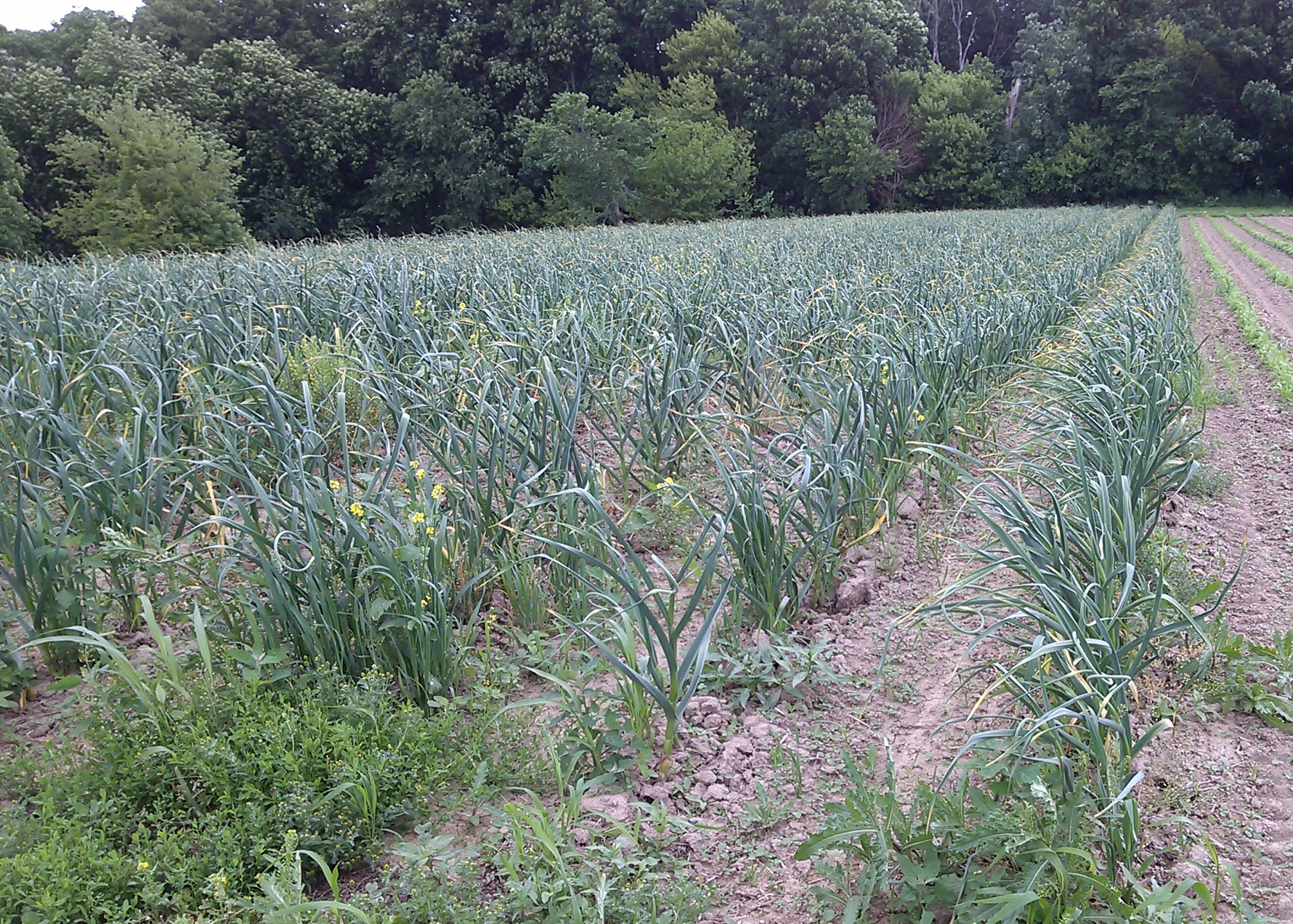
Field of Garlic
Field of Garlic

After my shift of soil blocking and planting, I walked among the fields to look at the progress. The scapes of garlic are forming, plenty of rhubarb remains, and the rainy spring has everything growing.

With some crops, a process of laying down irrigation lines and then plastic on top is used and was a learning experience. It makes sense to protect against drought in a farm business, and when customers have other options, irrigation can help ensure there is a harvest.

At home, I water my garden, but sparingly. Partly to conserve water, but also because the vegetables should produce on their own. Home gardening is more about living within the actuality of the season, rather than producing a fungible commodity. It’s not really about the vegetables, but a way of life.

That’s not to say I wouldn’t sell excess— I have. Having a harvest is important, but not critical. There is a part of us that wants to connect with the elements in a fundamental way. Gardening fulfills that desire. Knowing the face of the farmer and where food comes from is essential to maintaining sanity in a turbulent world. That there are risks is part of the paradigm.

Yesterday’s themes— risk, irrigation, coping with crop loss and customers— in the context of working on a CSA, served to instruct as another shift on the farm ended. The compensation for this work is not only in vegetables.

Categories
Kitchen Garden

Wednesday at the Farm

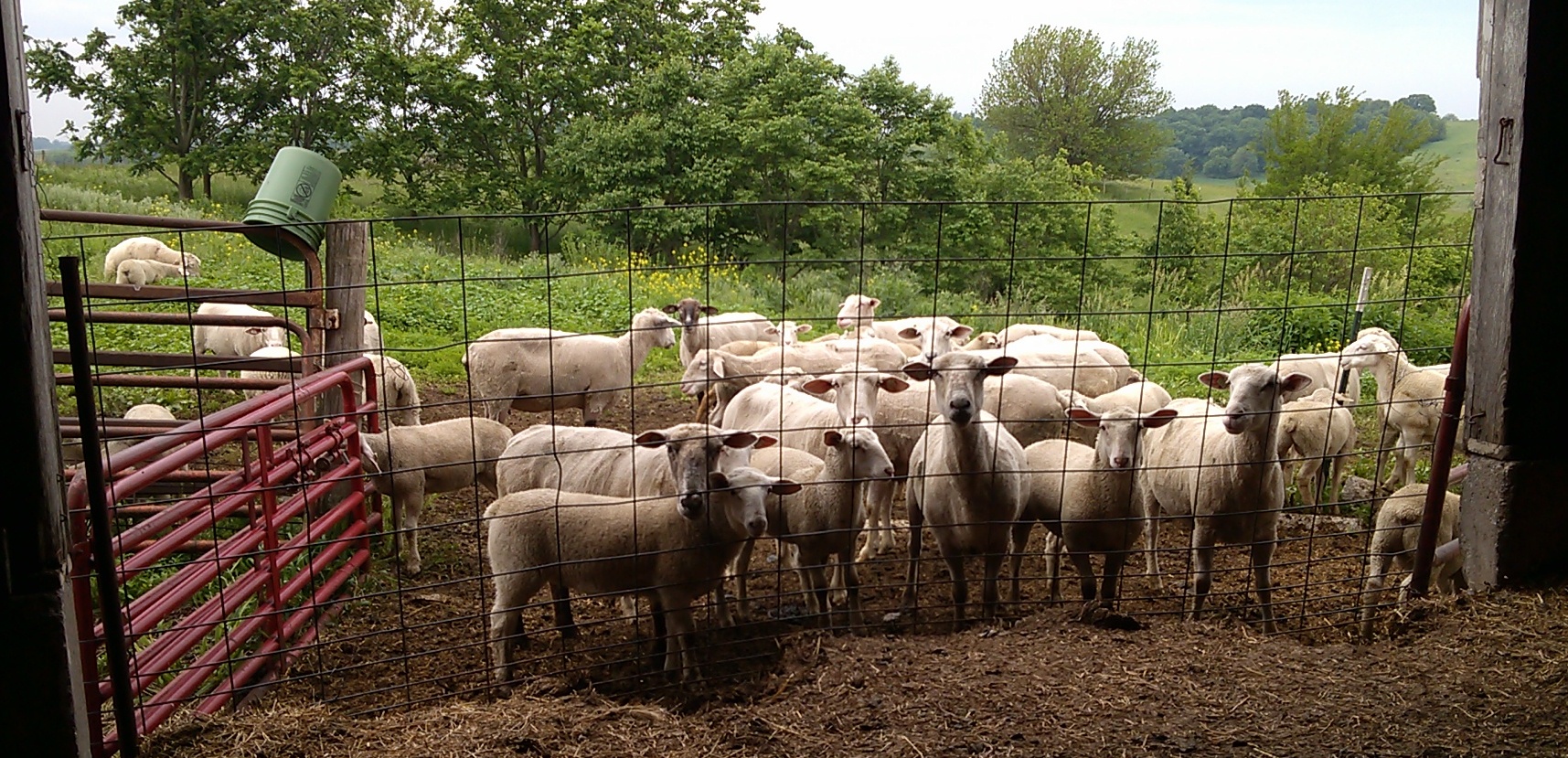
Sheep Looking into the Barn

RURAL CEDAR TOWNSHIP— A student from Nepal greeted me at the work bench where four trays of soil blocks awaited transplanted eggplant seedlings. She was like so many college students, alert, intelligent, and possessed of the confidence of youth. She asked me a lot of questions: where I lived and about local culture. So many, I didn’t get a chance to ask her about Nepal and her reasons for coming to the United States. She had just finished laying down mulch in one field and planting rows of eggplant in another with a group of farm workers. She was ready to call it a day and go on to what’s next. One of many chance encounters that have made the last 15 weeks of farm work an enriching experience.

When my work moved from the  germination house (formerly known as the greenhouse), to the barn, the sheep and lambs became occasional neighbors. The gentle bleating combined with bird songs made a soothing background while I made soil blocks, planted lettuce and transplanted seedlings. The two dogs hung out with me, napping most of the time. The intermittent encounters with other farm workers, combined with interludes of solitude in the barn—it is life as good as it gets.

Last week I brought jars of home made apple butter for the crew. My apple trees are expected to bear fruit this year, so the old stock needs circulation. To a person they liked it, making me happy to contribute to their farm experience.

There are apple trees on the farm, and if things work out, I’ll make apple butter from the fruit in exchange for some of the apples. My part time work on the farm has become a bartering process that gains complexity as time goes on.

There is something deep in meaning about this work. To see plants grow from seeds to seedlings to rows and then harvest is a connection with life itself. As the Nepalese student asked questions, I felt connected in a way that is hard to describe. Part of a sustainable and hopefully endless cycle of life on earth.

Categories
Kitchen Garden Living in Society Sustainability

Farmers Oppose Nuclear Power

Nuclear Power? - No Thanks
Nuclear Power? – No Thanks

WILTON—About 65 people gathered at the Wilton Community Center last night to view a screening of the documentary, “The Atomic States of America,” hosted by the group Saving America’s Farmland and Environment (S.A.F.E.). Attendees also heard an update from two of the group’s co-founders Dwight and Dianne Glenney. S.A.F.E. began with a group of farm families who rose in opposition to MidAmerican Energy’s plans for a nuclear powered generating station on 150th Street near Wilton.

No surprise that a group of farmers would fight a large corporation in the biblical terms of David v. Goliath when MidAmerican Energy bought options on 729 acres of prime Iowa farm land in the middle of an established rural community to build a power plant. According to Glenney, the electric utility has three possibilities for the land should they exercise the options: build a nuclear powered generating station, build a natural gas powered generating station, or do nothing. S.A.F.E. is organized so their Davids can remove MidAmerican’s Goliath from their lives and the land options expire without action.

I first met some of the group in October 2012 when Iowa Public Interest Research Group hosted a community organizing meeting to oppose siting a nuclear power plant near Wilton. My advice at the time was, “your most effective voice is with your state legislators when they convene the 85th General Assembly… Let your legislator know you’re opposed to it.” Since then, members of S.A.F.E. engaged their elected officials, securing resolutions opposing nuclear power from the Cedar and Muscatine county boards of supervisors. They also recruited state representatives Bobby Kaufmann and Tom Sands to support their efforts. Membership is approaching 400 people who have signed their petition and joined S.A.F.E.

According to Dwight Glenney, the group has been researching nuclear power during the time since the October meeting. What they learned moved the group from a not in my back yard approach to more general opposition of nuclear power in Iowa, in the United States and globally. Glenney indicated there are options besides nuclear power to supply electricity to meet growing demand in the state.

He reported that MidAmerican Energy has completed their three-year study of the feasibility of nuclear power in Iowa and is expected to deliver the report to the Iowa Utilities Board this week. Dianne Glenney reported on grassroots organizing activity of fundraising, letters to the editor, production of an information packet, attendance at legislative forums and other items.

S.A.F.E. makes a strong point that they are not affiliated with any so-called “green” groups, and that is a strength of the organization. By remaining strictly grassroots, with members of the community effected by MidAmerican Energy’s plans for rural Wilton being the primary stake holders in the group’s activity, they have an independent and unique voice that dovetails with other concerns of rural Iowa.

What’s next? S.A.F.E. supports building any new electricity generating facility on existing power plant locations so that new land is not taken out of farm production. According to Dwight Glenney, it makes sense from the standpoint that the logistical support of transmission lines, roads and infrastructure is already in place. They also plan to advocate with the Iowa legislature for a ban on nuclear power, similar to what 13 other state legislatures have enacted. Such a ban may be permanent, or until the unresolved problem of disposal of radioactive spent fuel is addressed by the federal government. S.A.F.E. is working with their legislators to introduce bills regarding these issues during next year’s second session of Iowa’s 85th General Assembly.

Dwight said that if the issue is resolved, and MidAmerican Energy decides not to build a power plant near Wilton, any funds remaining in their bank account will be divided three ways and donated to local Future Farmers of America groups. For the time being, they asked for financial support and for people to join their growing membership. If you would like to learn more about S.A.F.E., email Dianne Glenney at diglenney@live.com.

Categories
Writing

Transplant Promotion

Local Harvest CSA
Local Harvest CSA

RURAL CEDAR TOWNSHIP— A group of us transplanted eggplant seedlings from a sprouting tray into individual soil blocks. The work brought new learning about how to do this important work. Naturally, my native practices left something to be desired.

The key is to make sure the tap root of the plant, identifiable because it is very long, gets completely covered with soil. The other thing is to plant the seedlings with the first leaves as close to the top of the soil as possible. Previously, I left some of the stem exposed, thus making survival riskier. It goes without saying, and is likely part of genetic breeding, to pick the biggest seedlings for transplant. The new work was considered a promotion, although there was little rank among today’s group of workers.

After finishing transplanting some workers headed to the field to pick asparagus and I tagged along to see how they did it. Another learning process, and bonus dividend of this year’s work at the CSA.

The talk of the day included my onion patch, spring garlic, and questions about seedlings, basil, parsley, and the time to plant tomatoes. The farm began planting tomato seedlings yesterday, and based on our discussion, I am going to hold mine, at least until this weekend. They are about the point of being root bound in their cells, but I want to make sure we are past the frost.

Our household received a bulk mail post card from a competing business— someone who is taking market share from small CSAs like ours. We discussed it as a competitive reality to be dealt with.

There is not enough discussion of the impact of capitalization on local food, and I generated an idea for a future post. Between giant growers like Earthbound Farms Organic, and our CSA there is a middle range of farm operations that are well capitalized, and impact how local food is perceived. They trade on leveraging other growers, the previous marketing of local food, and consumers who have heard little about the local food movement. Watch for that one.

On the home front, the apple blossoms are falling like drops of silk, with or without a breeze, indicating the bees are doing their work. The lilac bushes are in full bloom, generating an aromatic that prompted memories of many happy spring days spent in Big Grove.

Categories
Sustainability Work Life

Revolution in the Home Kitchen

My Great Grandmother
Great Grandmother

LAKE MACBRIDE— The idea that a revolution should take place in the home kitchen is not unique to this blog. My focus on the relationship between the home kitchen and local food— that the latter won’t be viable in the way it could be without changes in the former— is not unique either. However, a recent New York Times article, “Pay People to Cook at Home” by Kristin Wartman demonstrates the disconnect between what is going on at the grassroots level regarding local food and priorities in urban cultural centers.

Wartman, a nutritionist and blogger, posits the following,

“Those who argue that our salvation lies in meals cooked at home seem unable to answer two key questions: where can people find the money to buy fresh foods, and how can they find the time to cook them? The failure to answer these questions plays into the hands of the food industry, which exploits the healthy-food movement’s lack of connection to average Americans.”

Her solution, as the title of the article suggests, is to pay people to cook at home, “(to place) a cultural and monetary premium on the hard work of cooking and the time and skills needed to do it,” including a government program. My suggestion is she hop on the shuttle from her home in New York City down to Washington, D.C. and witness the vast sea of farm industry lobbyists on Capitol Hill. She may then realize that hell would freeze over before any help in paying home cooks would be forthcoming from the federal government.

One can agree with the idea of placing a cultural premium on the value of home cooking, although we don’t necessarily want to return to the era of my great grandmother and her kitchen garden (see photo). The question is how, as a society, do we get there?

The future of local food and a revival of home cooking with whole foods is more dependent upon economics than upon time. If the economics are great, people will find the time. It is common knowledge among local food enthusiasts that the current economic paradigm regarding food, cooking and eating depends upon cheap energy.

Wendell Berry recently asked Michael Pollan, “what will be the effect on farming, gardening, cooking and eating of the end of cheap energy? Are physical work and real cooking going to remain optional?” Readers can listen to Pollan’s answer here. The gist of it is that as cheap energy fades from view, people will be required to become more self-reliant as a form of adaptation to the environmental crisis. This would likely drive more of whatever were least expensive, including local food and home cooking if they provided superior value, something it is not clear they do, at least for now.

The relationship between local food systems and cheap energy is important. I dismiss so-called food miles as an overly simplified argument. There is a complex but valid argument about the relationship between artificially low energy prices and high prices in local food systems that is worth pursuing. It is further complicated  by the fact that the end of cheap energy will be delayed due to the proliferation of hydraulic fracturing and the abundance of natural gas it produces. The complexity of the relationship between energy prices and local food requires further exposition in another post.

People can agree that obesity is a national and local problem. They can agree that chronic diseases, related to eating habits (including salt, sugar and fat consumption), drive a segment of higher health care and related health insurance premium costs. Where there is difficulty agreeing is in answering the question whether to take a homemade brown bag lunch to work, or spend the 30-minute break going to the gas station to have $1 per slice pizza for lunch. Today, the economics of direct food prices drives the decision at one of my workplaces.

The revolution in the home kitchen will begin once we deal with the environmental crisis, cheap fuel and the false notion that there is not enough time for what is important. The economics of food are driven by these things. That won’t happen anytime soon, not until the importance is escalated by some imminent, existential reality. It is not as simple an answer as creating another government program.

A better answer may be to seek ways to recognize the value of all work in society. That too is a complex problem wanting an answer. Something this blog is working toward.

Categories
Kitchen Garden

Planting Rows Straight and Long

CSA PlantngRURAL CEDAR TOWNSHIP— There was a palpable air of activity at the farm this week as planting the fields began in earnest. Rows were cultivated, marked with string in straight lines, and one-by-one, seedlings were lined up in measured intervals and put in the ground. The rows were straight and long, a display of spring’s hope and promise.

My role was to make more soil blocks and plant cabbage and broccoli seeds. The trays in the greenhouse were all used up, so as soon as the planting crew finished one, I secured the empty and replanted it. The greenhouse has become a brief way station in the life of the farm.

Seedlings Waiting Transport
Seedlings Ready for Transport

The CSA has begun distributing shares and this week included lettuce, Bok Choy and “grazing greens.” Because of the high tunnel, these varieties were available so soon after a wet, cold spring.

11 weeks into the work, I am beginning to feel a valued part of the farm operation. People work their whole careers in an office, or as a professional, and never feel that way. Caught up in tedious acts of drudgery— driving, shopping, waiting, social drama— feeling disconnected from the most important things in life. It is nearly impossible to feel that way when working on a farm. It give the phrase “will work for food” a new meaning. Finding meaning may be what life in society is about.