Categories
Writing

The Great Sort – Part II

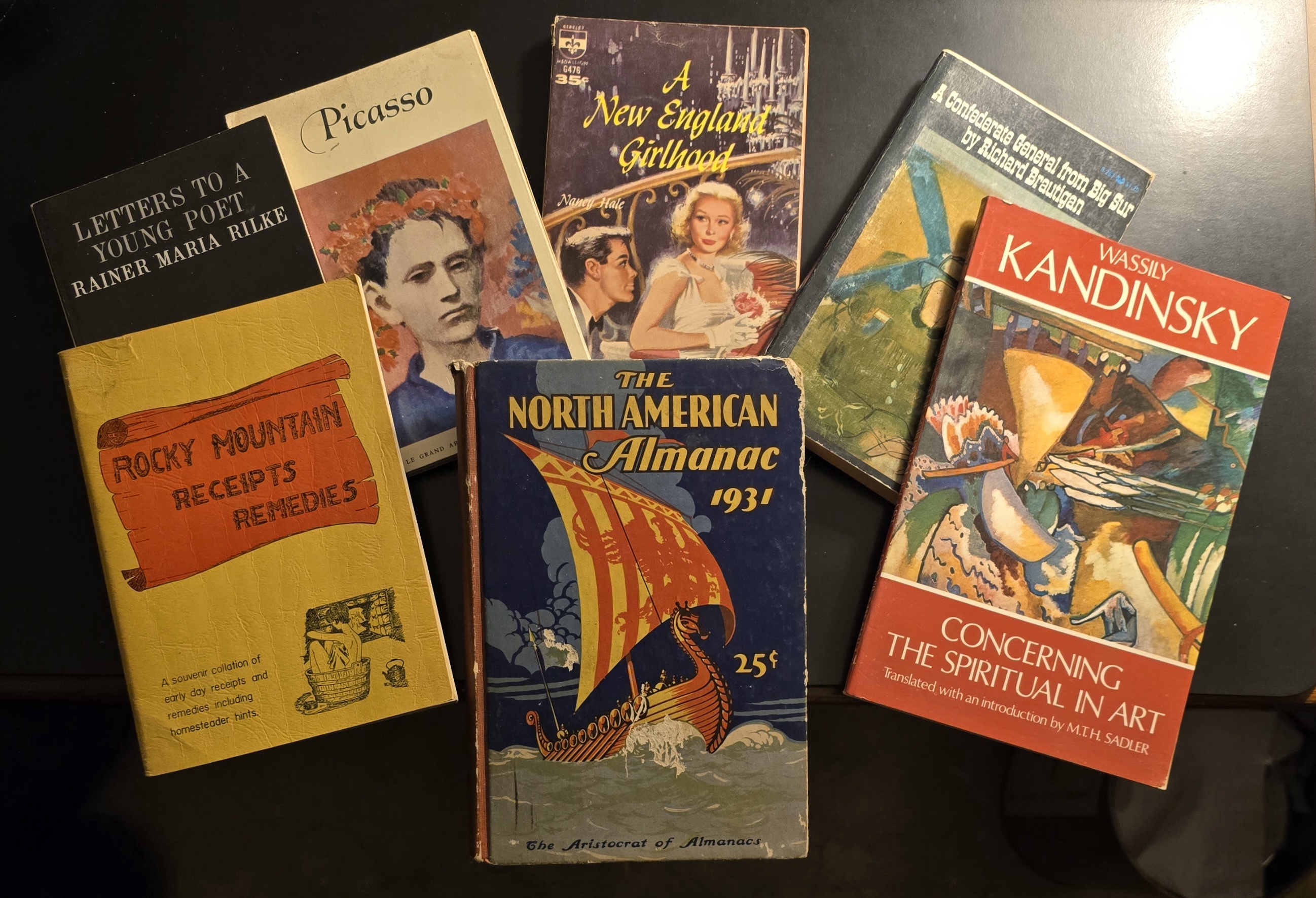
Books re-discovered during the Great Sort.

When handling hundreds of books long packed away, a few will stand out. Not only do I want to keep those in this photo, I want to read or re-read them next year. It’s part of the process of the Great Sort.

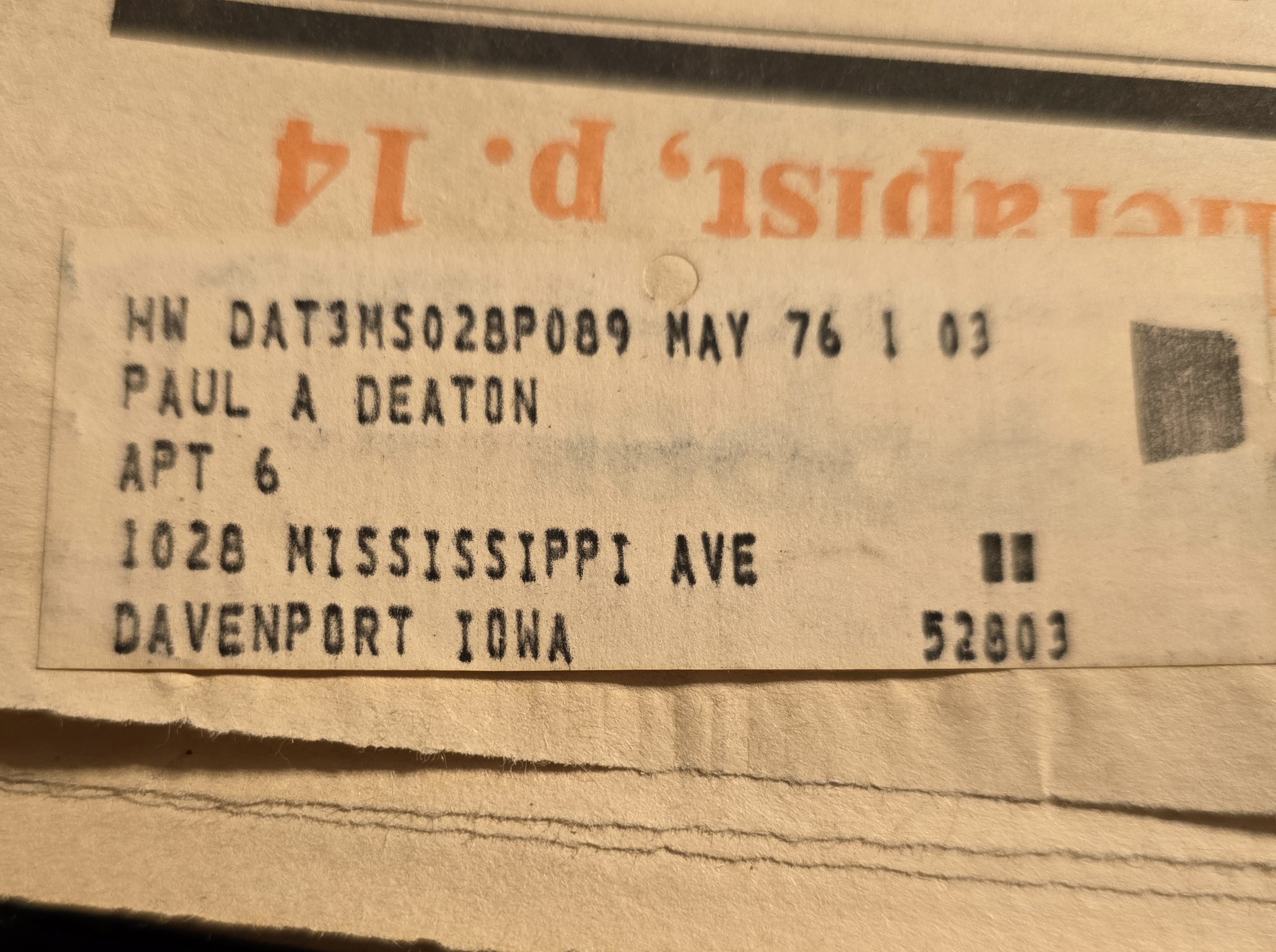
While living in Mainz, Germany, I had a stamp made with my military address and Social Security number on it. Back then, we viewed the Social Security number as unique to us and if we got separated from any possession, the rightful owner could be found. It was embossed into our dog tags. We put it on clothing, imprinted it inside field boots, in books, on everything that would take ink. That was short-term thinking from a perspective of how many people today would like to get hold of that number and use it for theft and other evil purposes. Wasn’t the best idea.

A substantial part of the Great Sort has been spent searching for these stamped locators and either blacking them out or cutting them off.

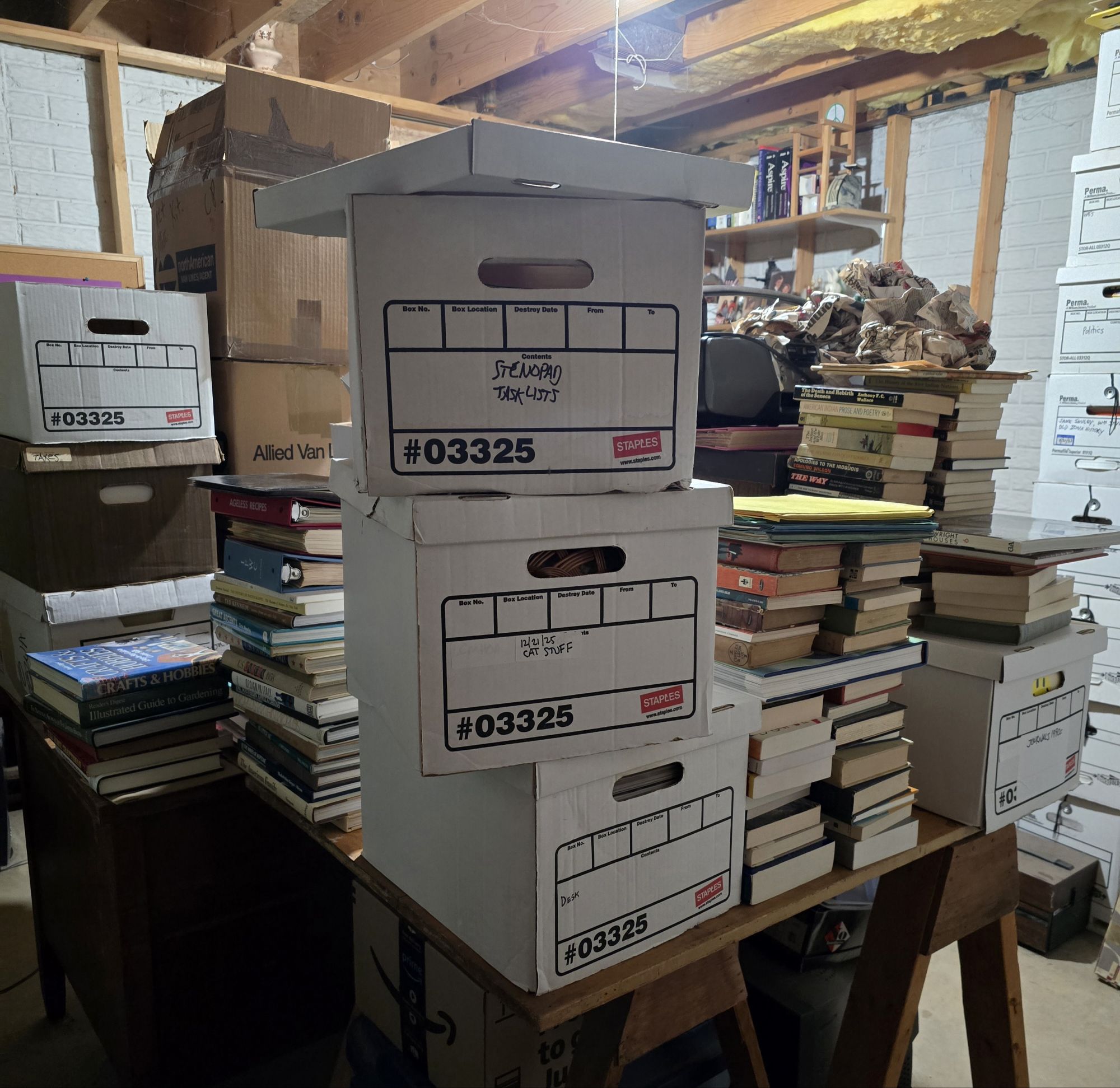
It has been hard to persist more than a few hours without getting impatient and stuffing books back into another box and into the new stacks I am building. At that point I must resist the urge, turn off the lights, and find something else to do. I want this to be a final sort. I’m labeling and dating the outside of the boxes so I know what’s in them and when I last touched the books. I doubt I will return to many of the boxes.

In the display area of my writing space I have about 3,000 books. I pulled out and boxed all the books of music. The vinyl long playing records will get boxed, reunited with the others I have, and then finally disposed of. This creates more space for active books and some of it will fill with the three-ring binders I am making as I write my autobiography. It should be a more useful (to a writer) library.

I want the Great Sort to be finished by Spring. I think that is doable even as I enter seedling planting time next month, especially if I stick with it a couple hours per day. The purpose of the work is to improve how I store research materials and become a better writer. I’m hopeful at this point. all of that will be the Great Sort’s outcome.

Mailing label from the first apartment where I wrote after university.
Categories
Writing

The Great Sort – Part I

Evidence of the great sort.

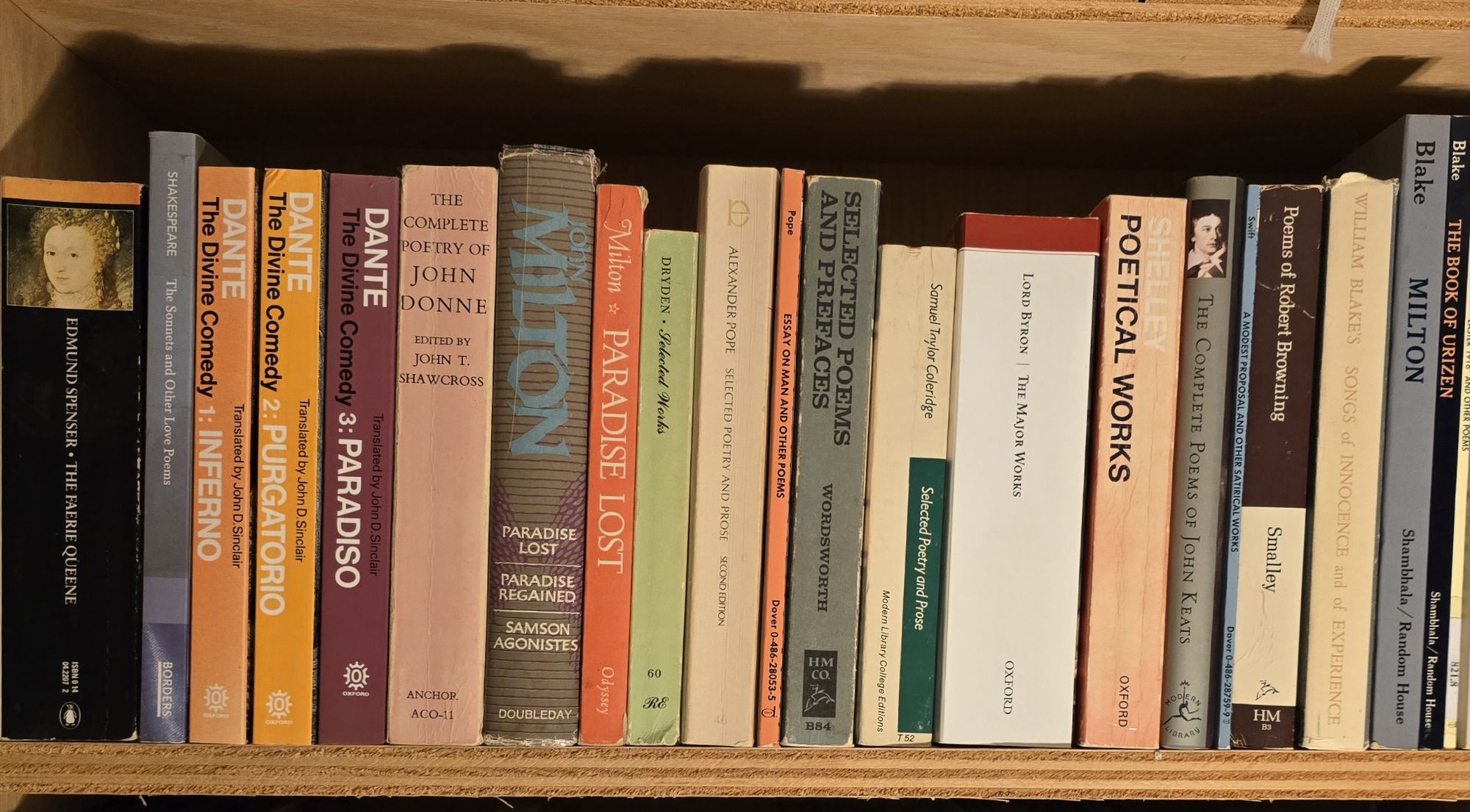
I spent two hours rearranging poetry books in my stacks. I decided eight 23-inch shelves was enough poetry and some had to go. Now there is an eight-inch stack of poetry books awaiting disposition. Poetry measured in inches.

I rearranged the poetry so more in which I have interest rest at eye level. On top are the smaller-sized books and below that is the canon. You know, Chaucer, Shakespeare, Dante, Donne, Milton, Dryden, Pope, Wordsworth, Coleridge, Byron, Shelley, Keats, Swift, Browning, and Blake. The exception is Chaucer and Shakespeare’s plays are across the room because the poetry shelves weren’t tall enough.

The other exception, or rather objection to the canon, is where are the women? You know, Charlotte Smith, Felicia Hemens, Mary Robinson, Anna Laeticia Barbauld, and maybe others. They were largely erased by the male authors of the canon. I don’t own any of them or I’d fit them in.

Don’t get me started on an American canon. Somewhere in the 20th Century that broke down and can never be repaired.

This is my current life when I am not writing. Opening about 100 boxes of books and deciding which to keep and which to donate. Already I’ve taken a dozen boxes to the library’s used book sale. There will be more.

I used to stamp my name and address in every book I bought. My hands have been on books from every place I lived this month. Some of the fifty year old paper has changed. Books from the 19th century crumble in my hands. I took one old book to a used bookshop to consult about the damage. This is a practical task that should involve logic. It’s more emotional than expected.

There is material for multiple posts in this project. I have to wait and see what I get into before knowing what their subject will be. I hope you are along for the ride.

The all-male canon.
Categories
Creative Life

A Life of Photos Part X

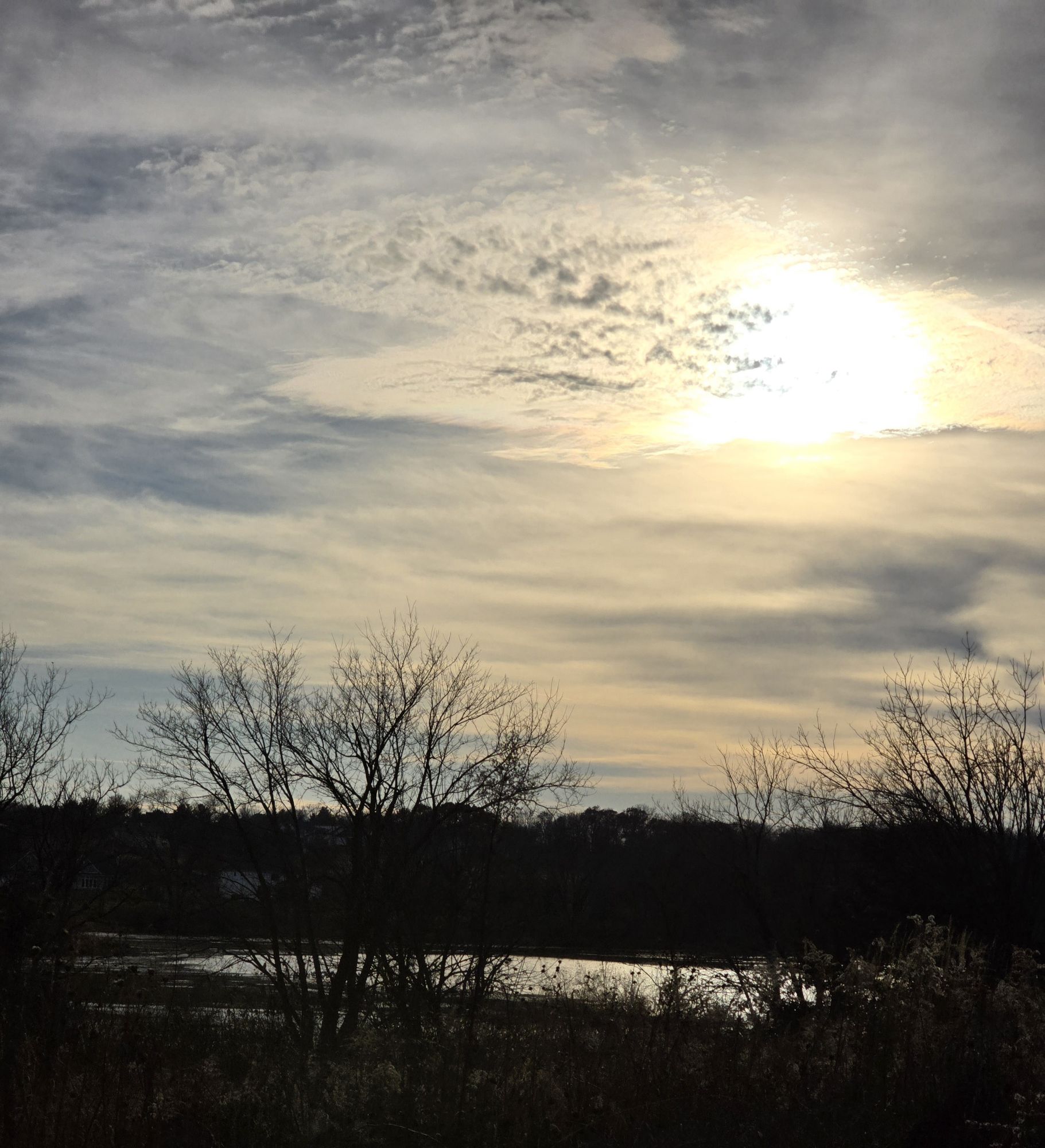
Sky coloration before dawn on Dec. 15, 2025.

Are photographs reality or not? My answer is yes, they are, despite all the self-aggrandizing selfies on the internet. Are artificial intelligence images reality? Yes, and are distinct from photographs. Is time spent off the internet reality? Yes, and not distinct from time spent on the internet. If it is possible to evaluate photography in light of the internet and artificial intelligence, we should. However, I believe we will have the same outcome, that all of it is a form of reality.

My belief runs against the pundits who say we should limit the amount of time we spend on the internet. If it is all a form of reality, then what does it matter that a person spends an equal amount of time sleeping, on the internet, and off the internet? There is a case to be made we shouldn’t worry about addiction to the internet. There is also a case to be made that we should. What I know is I need my daily trail walks to breathe fresh air and clear my thoughts while getting needed exercise. I mostly disconnect from the internet when I walk. If I see something that might make a good photograph, I take out my handheld computer, take some shots, and post the best image on social media.

Same image rendered by artificial intelligence as a watercolor painting.

From time to time, I enjoy getting out old photographs printed on paper. They convey a reality I experienced, although a focused aspect of it that hides much of what life was then. I used the photo below on the cover of my autobiography. It’s me standing on the back porch of the duplex where Mother brought me home from being born at a nearby hospital. I don’t recall her taking this photograph, yet I do recall a lot about living here. In particular, I remember the point at which memory began when confronted about something in the recent past I could not remember. This photograph serves as a mnemonic device.

On the Back Porch

Another type of photograph is the “artistic” one. That is, I took it as a form of creative endeavor with a specific intended outcome. For example, when I first got my Minolta SRT-101 camera, I drove my Volkswagen microbus out to the Coralville Reservoir and took photographs of the vehicle. Someone was with me as there were posed photos of me next to the bus. Those images stand distinct from the “artistic” photographs which were my main intention on the trip. Artistic photographs are a separate genre, one in which I have very little activity in 2025.

I have taken a lot of photographs to capture something about an event.

Montana Gov. Brian Schweitzer on Sept. 14, 2008 at the Harkin Steak Fry in Indianola, Iowa.

Like my early printed photographs, this one is a mnemonic device to recall that day in Indianola. The big Harkin Steak Fry had been in 2007 when six presidential candidates stood together on the stage just prior to the First in the Nation Iowa Precinct Caucuses that selected Barack Obama as the party’s nominee. Over the years, I captured a lot of politicians in photographs. These types of posed photographs are ubiquitous in social media. I’ve forgotten more than I remember about politics and these images help me re-live those experiences.

Are photographs posted on social media a throwaway? Often we take a photograph solely to post it on social media. It becomes a way of defining who we are. It also controls our self-image. For example, I rarely post a selfie, yet they are important in defining an “online presence.” I have been very bad at defining a self-image, which is why I don’t take or post many selfies. I could work on it, the way I worked on my restless nights to get better sleep, but why would I want to spend that time when everything, sleeping, waking, on the internet and off the internet are part of the same reality?

I may have more to say about how the internet changed photography. I need to study up, and that will take time. In the meanwhile, I plan to continue to take the kinds of photos I do and hope I won’t ruin them with too much study. Photography has become an important part of my reality.

Categories
Creative Life

Tools in Autumn

On the state park trail on Dec. 10, 2025.

After I finished the work table, I sorted stuff in the workshop. In other words, I filled the table with stuff thrown hodge-podge in every nook and cranny. This will be a long process, yet I am heartened by having another surface to use for this work. It is beginning with tools.

The table project was easy, with the radial arm saw and power drill being the main power tools. There were a few hand tools, but all of them are frequently used, and easy to find. That’s not the case with things tucked away in the workshop today.

I brought home a lot of tools when my father-in-law died. That was almost 30 years ago. I never really incorporated them into my workshop. As a result of this neglect, I don’t have visibility of every tool I own. When I’m starting a project I’m running blind. I hope to remedy that.

This tool visibility project began with my red Craftsman toolbox. It has three drawers and a compartment in the top. I took everything out of the drawers and rearranged it.

All the fixed wrenches went into their own tool box. I don’t use them as often as crescent wrenches and I’ll know where to find them when I need one. Crescent wrenches and pliers filled a drawer. One drawer has gripping tools. Most sizes of screwdrivers are on a pegboard, so the ones in the toolbox are either specialty drivers or extra. Screwdrivers get their own drawer, which isn’t enough space to accommodate them all. The solution to that will wait until I see what else I have. When I replaced some tools with others, the idea was to keep thosek most frequently used in the red toolbox.

There are also what I’ll call specialty toolboxes. One is full of drill bits of many kinds. I keep a separate drill bit holder on the bench so I can quickly find common sizes. There is a toolbox with woodworking tools. There are all kinds of them, although I am hardly a woodworker. One toolbox has a set of metric and imperial sockets. In the cabinet, there is another whole set of Craftsman sockets. This is just the beginning.

The main goal of this project is to gain visibility of what I have. I am tempted to acquire one of those tall movable toolboxes with many drawers. I hope that is a passing infatuation. For now, just knowing what I have should be enough to get started on new projects. The new table led to this, and who knows where the forking paths ahead will lead? Being aware of what tools I have is a good start.

I look forward to discovering where this goes.

Categories
Creative Life

Table From the Scrap Pile

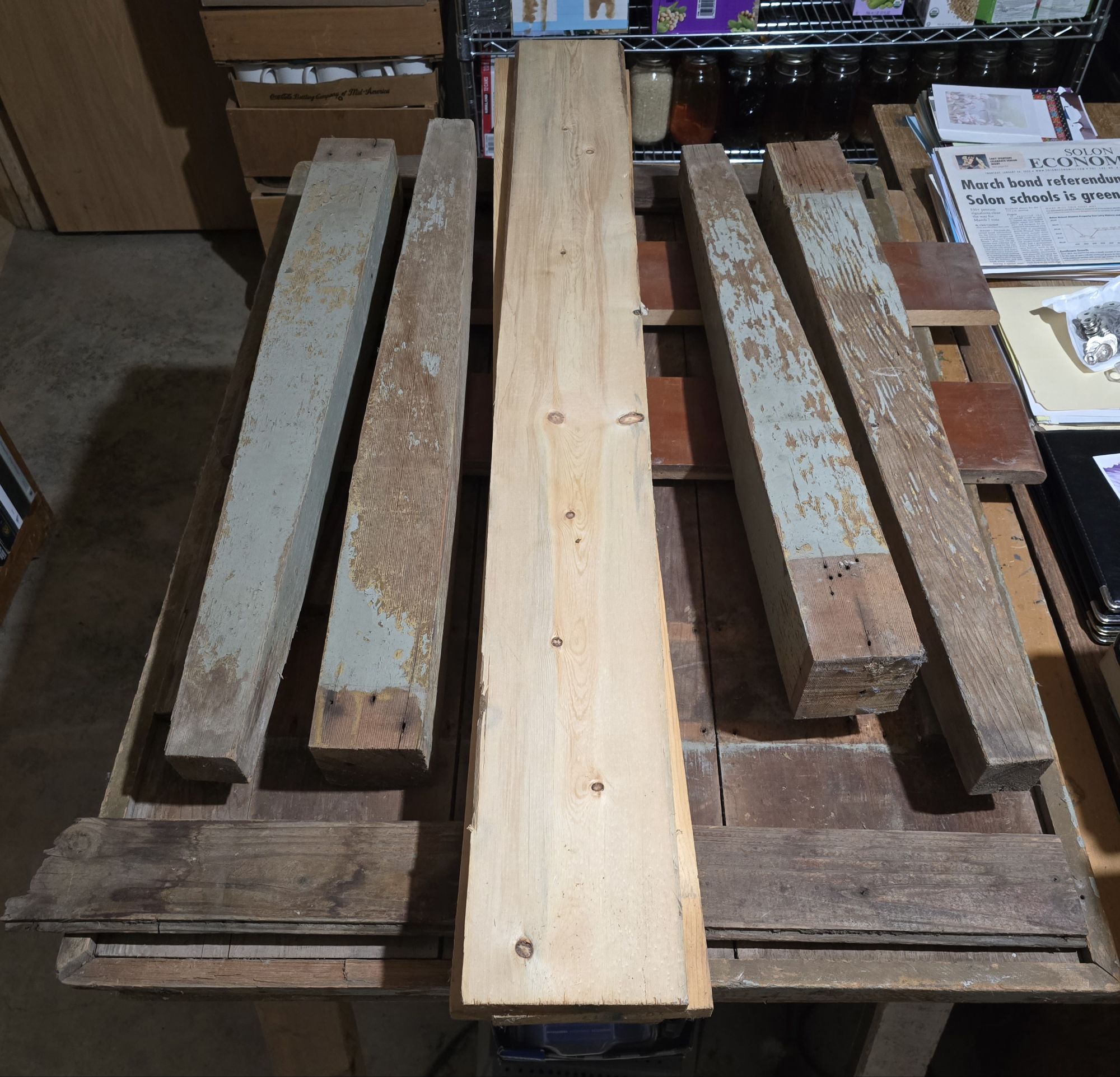
Lumber to make a work table for the garage.

There was a time when I attended estate and farm auctions and bought things on the cheap for later projects. The years since then can be measured in decades. At a point in my life when I have to either do something with stuff, or otherwise dispose of it, I got out the top and legs of a table I bought for a buck at auction. It was time to make something. Since I rearranged the garage, I have space for a work table that is shorter than the custom-height workbench I made when we lived in Indiana.

I went through the woodpile and found planks to make an apron and five of rescued lumber to reinforce the top. I laid the materials out on this workbench made of sawhorses and thought about what I would do for a couple of weeks.

After looking at local hardware stores and large online retailers, I finally found a packet of figure 8 steel desk top fastener clips with screws. They are not commonly available. To make a recess in the apron for the fastener, I got a 20 millimeter forstner drill bit. $20.12 all in.

After 12 cuts on the radial arm saw, I was ready to assemble. I spent about three hours on the project before my attention began to wander. I am better at recognizing when that happens, so I knocked off for the day. If everything goes together as planned, it will take an hour or two to finish assembly.

After a few hours of furniture building I had to take a break.

I don’t plan to refinish the wood. Inside the garage it will be protected from the elements. I expect it to get scuffed up with heavy use, so what’s the point of a coat of paint or finish? The wood it’s made of has been around for a long time, based on the assembly techniques my predecessor used to build it.

Fingers crossed the final assembly passes muster and I can begin using the new table immediately. One never knows about these things until the work is done and the piece is in operation.

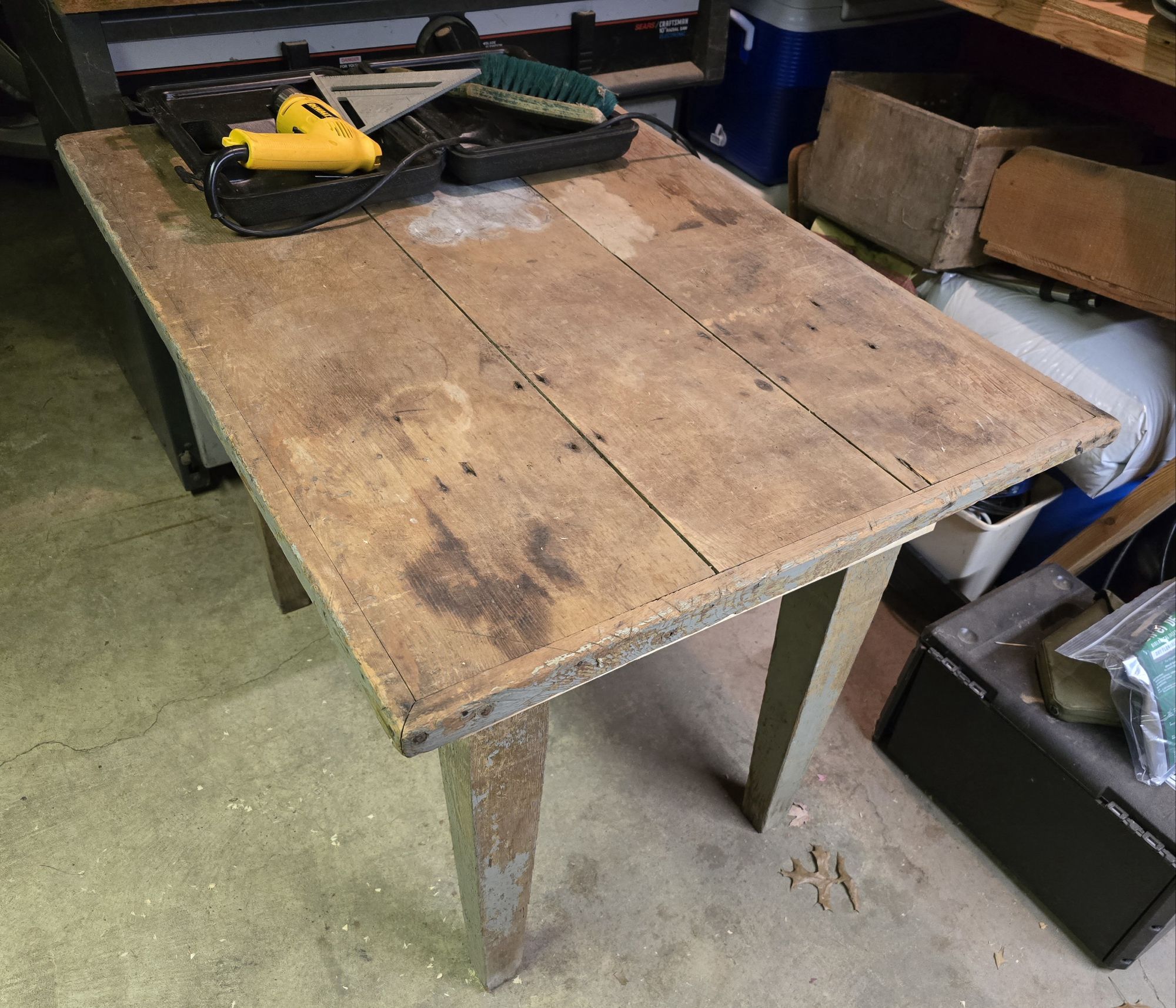
Here is the finished product in the garage.

Table made from a top, four legs and salvaged lumber.

It’s bigger than I thought, but I will adapt. No adjustments were needed.

Categories
Creative Life

Writing in Public

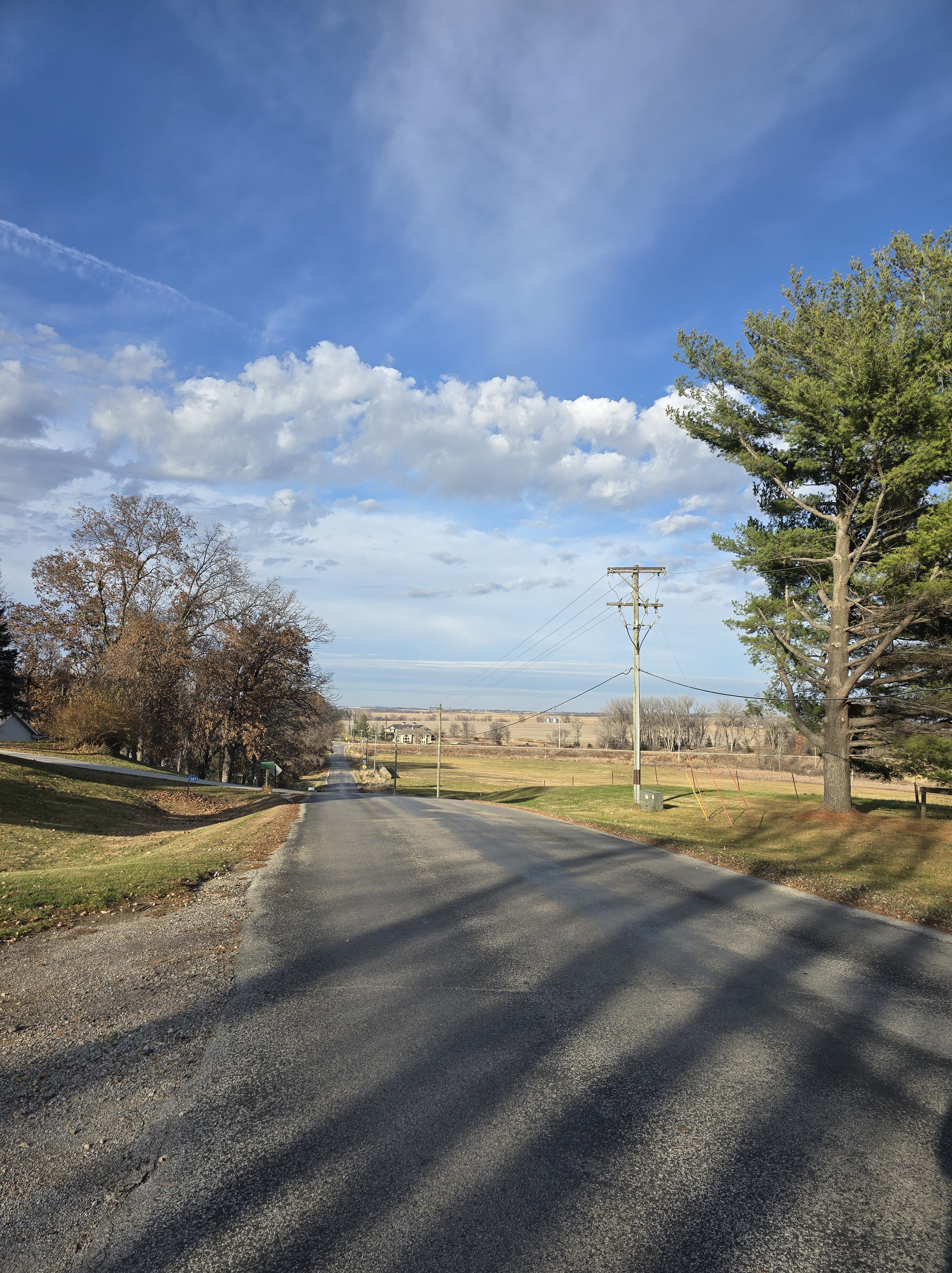
On the state park trail on Dec. 6, 2025.

This post is about social media and blogging. My perspective on these two technology tools is they both require a creative process of putting together meaningful words and photographs in a way that provides insight to readers. When I use them, I am a content creator, although those two words don’t really capture my vision for what I’m doing. I seek to bring understanding to the complex and ever changing world in which we live.

I joined Facebook March 20, 2008 to follow our child. They had graduated college and moved to Colorado in 2007. While I could easily drive in a single day to visit, it was a long trip to spend much time together. My reaction to Facebook? Yikes! Here is my blog post about joining:

Tonight I joined Facebook. Yikes! Facebook connects us to people we have not thought of in years. In some cases we haven’t made contact in over a quarter of a century. All within a couple of hours. From moment to moment, the number of “friends” builds. What to say on the site? What elements to show? What pictures to place? How much time to spend? When a friend accepts the invitation, it feels good. The wave has broken, now I’ll ride it in. (On Facebook, Big Grove News, March 20, 2008)

In the end, our child quit posting on Facebook and while I developed a Facebook life, it was not good for me. Social media introduced loneliness in my days, something with which I had little experience. It reinforced loneliness. As I mentioned in yesterday’s post, I am aware of being alone yet don’t experience much loneliness. I feel connected to the whole of society. If I continued with Facebook, even with all of the familiar faces and common experiences, I would feel how much apart we are. I deactivated my account in February this year.

After much experimentation, I ended up with an account on BlueSky, which is a text-based social media platform where it is easy to connect with like-minded people. My posts there have been hit or miss, yet I need the creative outlet. BlueSky is my only social media account.

My first blog post was on Nov. 10, 2007. I first titled the blog Big Grove News, then Big Grove Garden, Walking There, On Our Own, and now Journey Home. The purpose was always the same: provide an outlet for creative expression and pull in pieces I wrote for other purposes to make a record of them.

When I began blogging I had no idea where it would go. I wrote at least 5,600 posts since beginning. For a long time, it was the only writing I did each day. It has become a writer’s workshop to test ideas and how to express them. Some days the posts are cringe worthy. Some days I touch the sky. Part of me would return to handwriting paper journals the way I did before 2007. I may yet do that, but not in 2026.

In writing my autobiography I find I repeat topics often. For example, the story of the apartment in yesterday’s post has been written and re-written with different details and posted on my blog at least a dozen times. An early reader of my autobiography commented about my propensity to repeat myself. All I can say is I’m working on that.

I used to write blog posts in the early morning. Lately, especially since I began learning about circadian rhythms and tuning my physiological life to them, my best creative time is in the afternoon work blocks. I still work on creative writing in the morning but it is more the next chapter of my autobiography until that work is finished. I am more alert when I write blog posts. The quality of writing seems better. Like everything, it is a work in progress.

People do read my blogs. It is hard to believe the number of people in real life who identify me as a writer. A lot of this is due to letters to the editor and posts on Blog for Iowa. That type of feedback is rare and precious to me. It helps me feel like part of a community.

Is there a limit to the creative expression I put into my writing? If I have to get a job to make up for the percent of Social Security that will be absent after the trust fund runs out, there will be a loss of time for writing. For now, though, I’ll continue on.

Categories
Writing

Memorable Posts of 2025

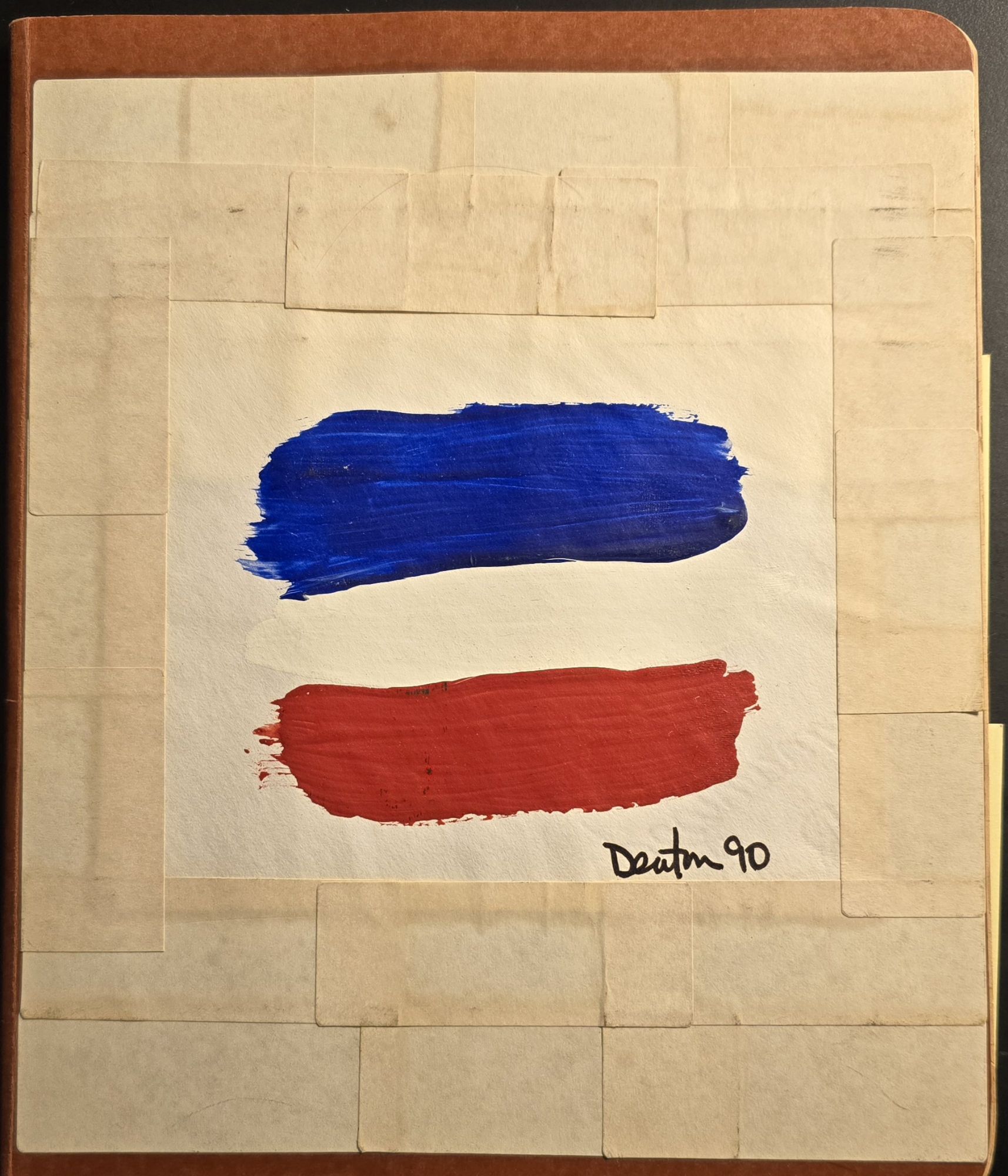
Booklet filled with automatic writing, September 1990.

2025 has been a decent year for my writing. I added 26,000 words to my autobiography, posted 20 times on Blog for Iowa, and produced more than 300 posts here, including cross posting my letters to the editor. It’s hard to digest everything, especially when I’m in the middle of writing more. This post is some links to posts I believe are significant.

On January 5, I wrote Right to Repair. This post starts with a high school friend and hot rodder who was building his own car to ride the ones in Davenport. It includes my maternal grandmother repairing her stove, and ends with her parents and grand parents settling land bought from the railroad in the late 1800s. Can we get back to a situation where people know how everything in their home works and repair it themselves? This post explores that idea.

If It’s About Workforce was posted on January 7. It’s about the Iowa Legislature restructuring the regents universities to purge diversity, equity and inclusion programs in education. Among the things they did was eliminate the American Studies Program from which I have a degree. There was talk about improving the workforce, yet I don’t believe higher education is about placing people in work. I also have a modest proposal.

2025 is a year I gave increased attention to photography. On July 24, I posted A Life of Photos, which serves as my introductory process. There was a time when popular photography was used primarily in two ways: it recorded memorable “moments,” and it provided a method and technology for creative expression. A third purpose has come into being and the series that began with this post explores what that is.

My 55th high school class reunion took place in September. Afterward, I posted In the Shadow of Hotel Black Hawk on September 28. This year’s reunion was better than others I attended in that by eliminating any formal program, the planning committee furnished a venue for classmates to socialize. I found the format refreshing and actually had a number of memorable conversations. This post remembers some of them.

Are people mixers or layerers? Eating Alone — Mac and Cheese, posted on November. 10, explores the difference and in doing so created a repeatable main course dish head and shoulders above the dozens of available boxed mac and cheese meals. I have become a layerer.

When I worked at the oil company I had no idea what was behind their big move to consolidate records in Oklahoma. Time to Change Hats, posted November 12, is about that and more. I wrote, “With increased visibility of my history, I should be a better family member, citizen, and writer. It should be easier to navigate through the stuff of memories.” I’m not yet on a single platform with visibility, yet that’s where I am heading. That’s what makes this post significant.

These posts only scratch the surface of my writing. I appreciate everyone who follows along here.

Categories
Creative Life

Taking a Different Trail

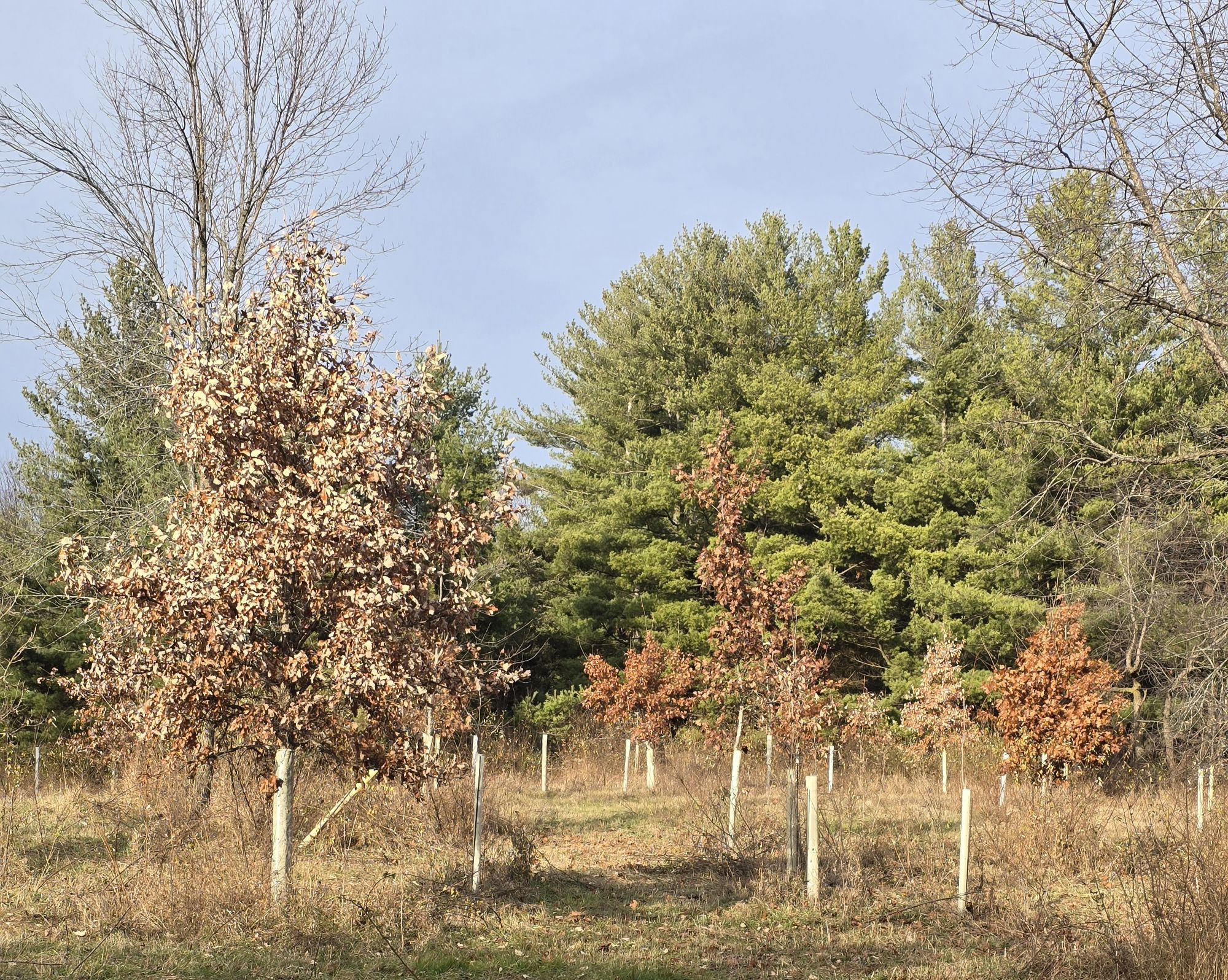
Stand of trees.

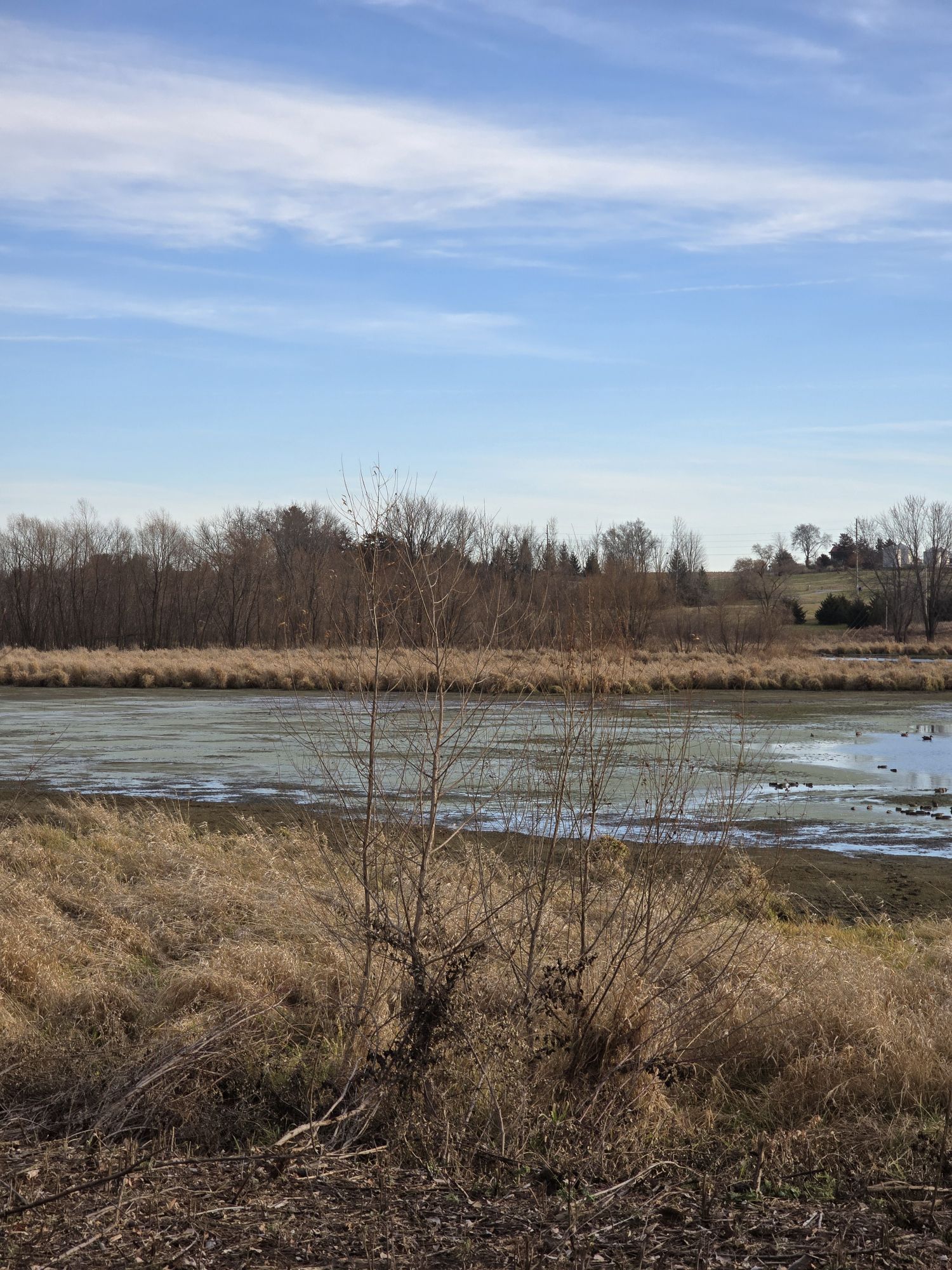
I’ve been meaning to get out on the eastern part of the state park trail and Saturday I did. When we moved here, I said to my spouse that all of the land between us and the nearby city to the east of us would eventually be developed. It didn’t happen in the first 32 years, yet it’s got a good start.

My normal walk is designed to be 30 minutes along the same part of the trail. The walk I took Saturday afternoon was much longer at 80 minutes. It was no hill for a climber.

Road leading to the Hoover Trail.

The Hoover Trail has been a tremendous perquisite for those living in the area. The paved trail is wide enough for bicycles to pass each other going in the opposite directions. It is also clean. During the coronavirus pandemic I rode my bicycle on it almost daily. One of the first things to see is this old barn.

Historic barn in Big Grove Township.

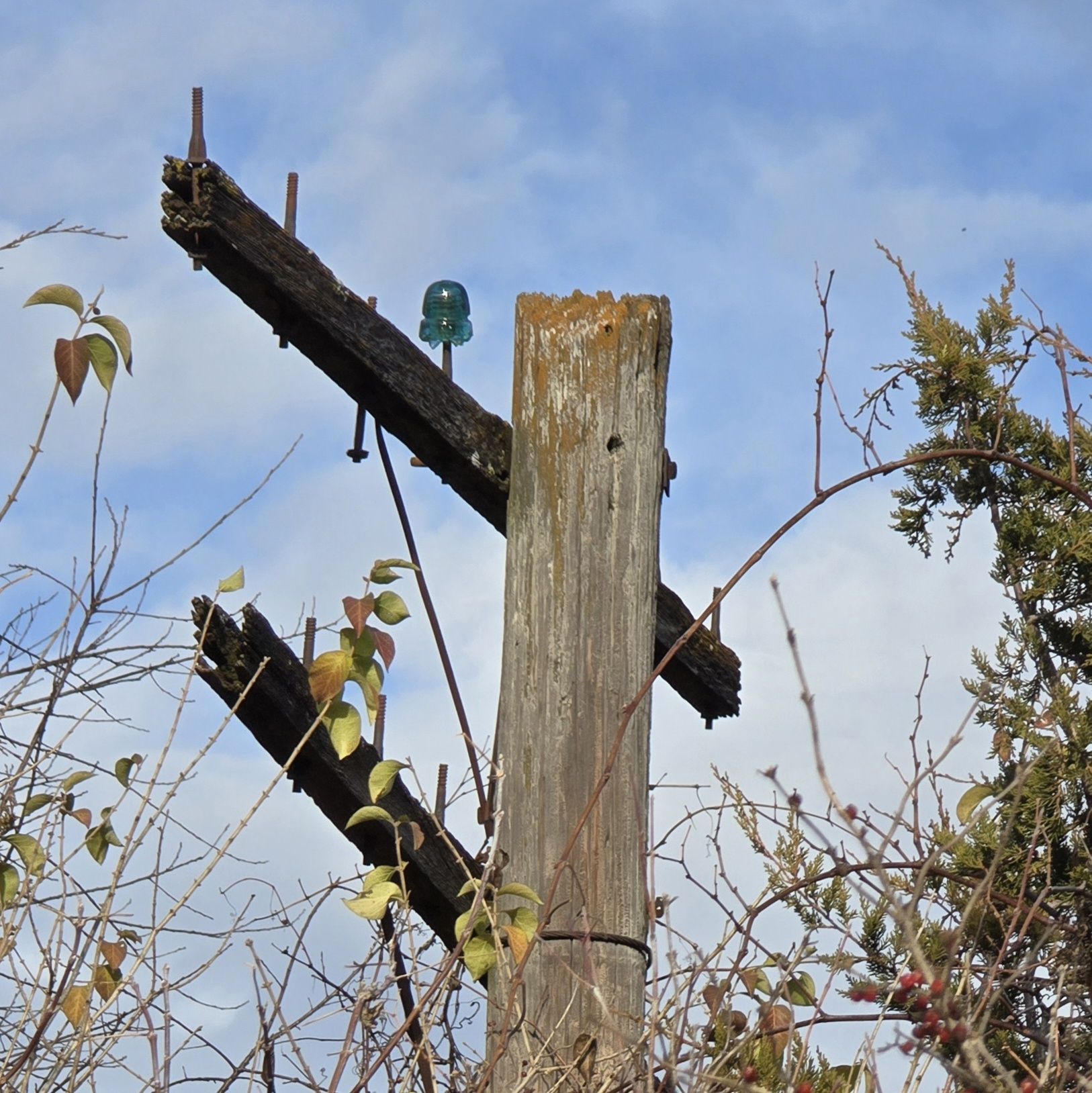
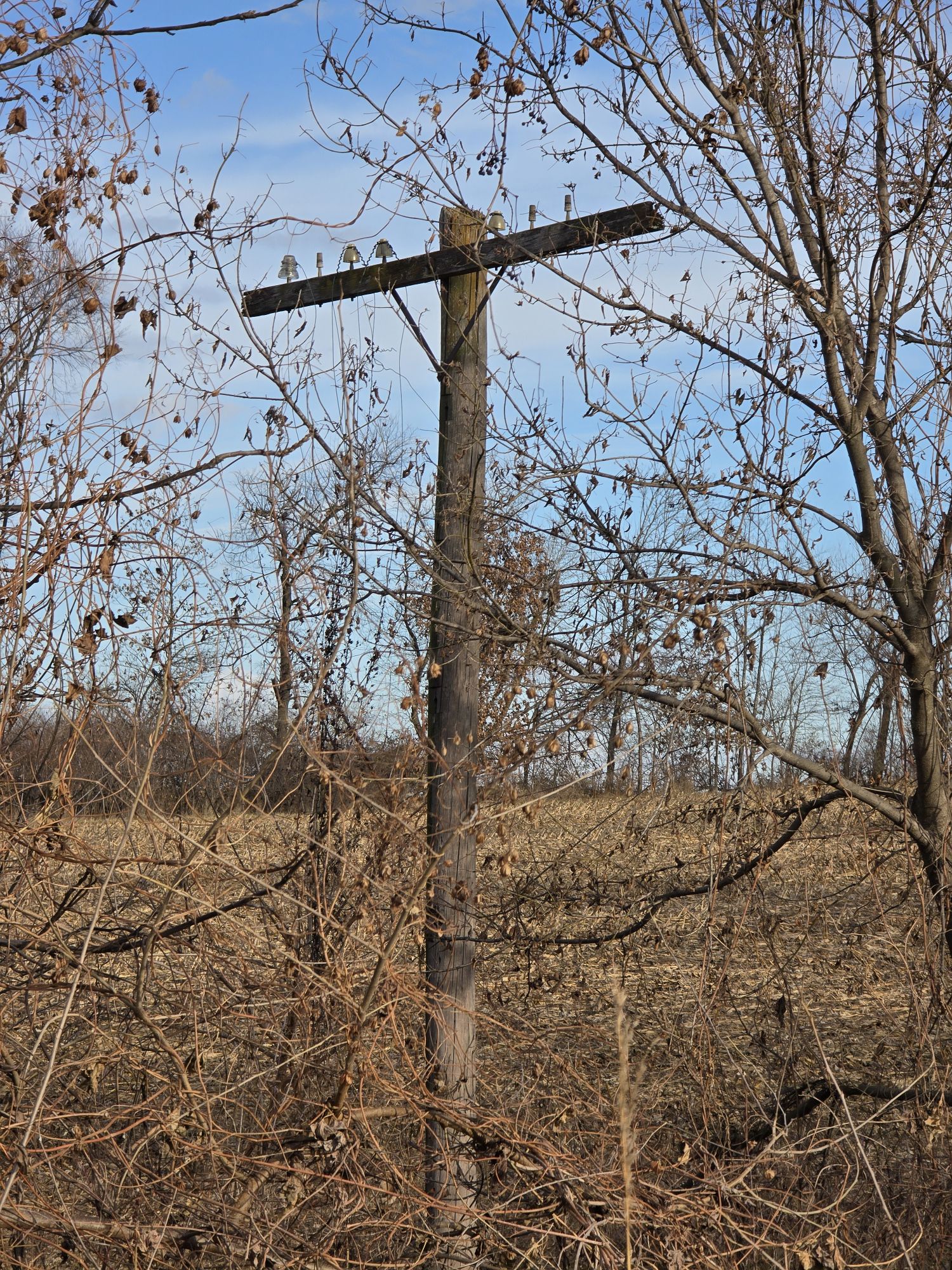
The trail was made in the bed of an old railroad track. The power lines have been moved, leaving the old poles to decay in the encroaching woods.

Trail runs along the former railroad tracks.

There are only a few glass insulators left on the poles. I found one blue one and these clear ones.

Note the clear glass insulators. These are some of the last ones left on a pole.

The worst part of the trail walk is the development. The homes in this photo were not there the last time I was on this stretch of trail.

This construction is all new since last time I was here.

In addition, a lot of the wooded and prairie areas were cleared and mowed. We are moving the opposite direction from a nature preserve.

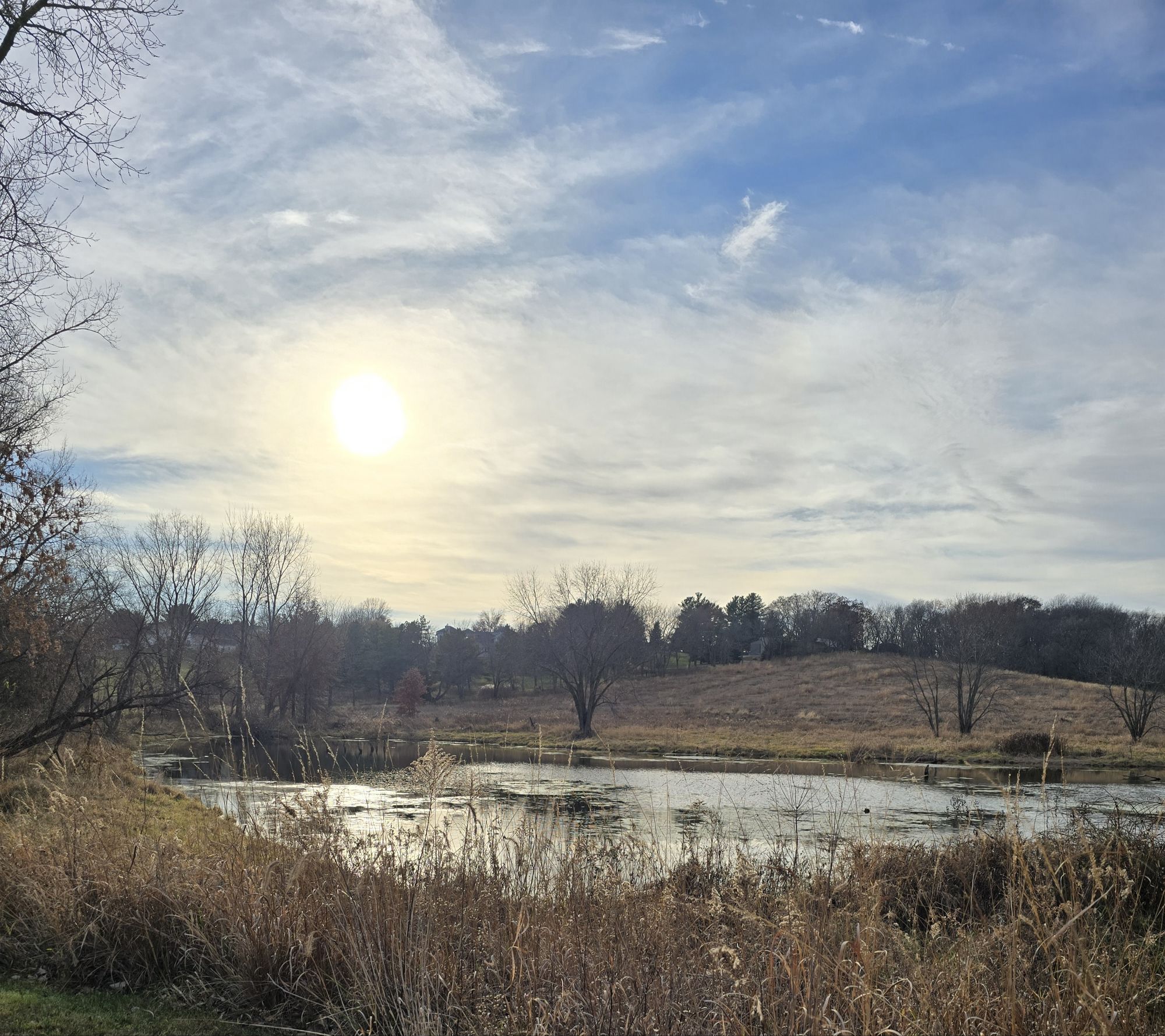
Pond near a rest area along the trail.

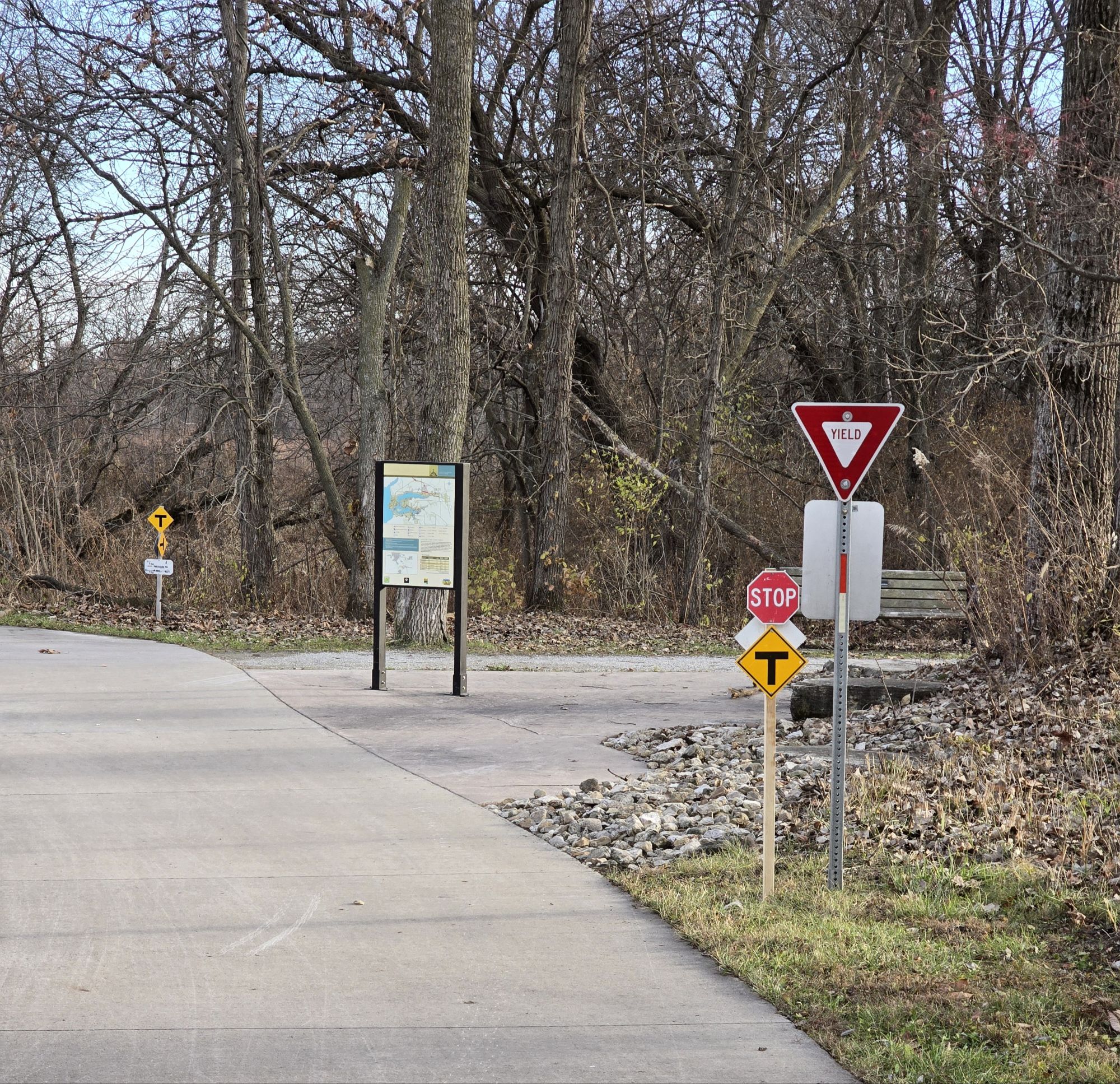
There is a fancy intersection where the Lake Macbride State Park Trail intersects with the Hoover Trail.

Busy trail intersection.

Waterfowl like the east end of the north branch of the lake. Probably because the growth prevents we humans from getting too close. That and the relatively shallow water makes it easier to catch fish.

Development may be encroaching, yet there are still plenty of good photos to be taken.

Categories
Writing

Sorting Tables

Sorting tables.

Our child brought home some unused bankers boxes which I quickly put to work storing all the stuff piled on these two tables. This is a place to layout projects. Importantly my writing project as I head into the final stretch of book two, but also a place to empty boxes and go through contents for disposition. A person needs surfaces like these.

The back surface is the oak desk I bought when I returned to Davenport after military service. It has been resting in this spot since 1993 where I assembled it after moving into our home in Big Grove Township. The front one is what appears to be the top of an old drafting table I bought at auction, standing on two saw horses I built. They have not been this cleaned off since we lived here.

With the sorting surfaces I’m ready to get back to writing.

I edited the outline for Part II of my autobiography yesterday and determined the break in the narrative will be when our child leaves home for college, and then leaves Iowa altogether after graduation. This decision has been hanging over me all year and for where I am in the narrative it is the right choice. So, chronological narrative through becoming empty nesters, and then being left behind by our progeny.

I’m still fussing with the order of chapters after that, yet it will include; development of the kitchen garden, community volunteer work, board of health, bloggery and social media, my first retirement, the year 2010 (which I believe was pivotal in multiple ways), newspaper writing, the environment, farm work, and maybe other chapters ending with new beginnings after the coronavirus pandemic. My problem is support documents and artifacts are mixed in with everything, with limited visibility. Enter the sorting tables.

I’m working on the same type of organizing surface throughout the house. In the garage I put everything on existing surfaces and set up a folding table. Now I need to organize. It’s the same thing: I want visibility of what I have so I can effectively use things. The major bedroom project was similar with the bed serving as the organizing surface. My clothing is now sorted and put away. Outdoors, I have a couple of places that serve as sorting places. Those change each season as the garden gets planted. Having a sorting station or surface made my life better.

It rained Monday night. We need rain. Indoors I’m ready to go with my newly cleared sorting surfaces.

Categories
Living in Society

Shoe Boxes and Avoidance

Storage shoe boxes.

I pulled out a shoe box filled with papers from around the turn of the century as an evening project. I find I need something to do after dinner that engages me in staying awake, yet does not engage too much. Sorting through old, unorganized papers is a low-stress thing to do. After the project, I took steps to stay awake, and managed to add 20 minutes to the end of my day. Hopefully that will build until I stay up until 9 p.m. like normal people do.

I said the papers were unorganized, but that’s not true. Some circumstance of time and place gathered them together until I couldn’t stand to look at the pile. At that point I got a shoe box and put them away. In other words, I avoided a better disposition. The shoe box became an unlabeled time capsule to be opened when a whim from the great beyond drew me again to it. Sunday night was that time.

What was in it?

There were a number of cards I received on “bosses’ day.” I didn’t recognize most of the signatures on them. There were work-related holiday cards. One included a photograph of the customer service staff at the trucking firm. It was apparently a time when women used curling irons to style their long hair. The person with whom I had the closest work relationship looked nothing like I remember them. Most men in the photo could not muster a proper smile.

There was a white envelope with 8 x 10-inch photographs. I thought I would frame and display them. Some were work related: an aerial photograph of the terminal I managed in Richmond, Indiana; a staff photo at the Schererville, Indiana terminal. Some were political: me, my congressman and a county supervisor at a parade; an autographed photo of my former state representative at a different parade. There is the portrait I had done of the county board of health when I was chair. There were two photographs from my walks on the state park trail. At this point in history, none of them will be framed.

Being on the county board of health was a big deal. During that time our director left to join a child in Colorado and we held a public search for his replacement. There were clippings in the shoe box. Some of the smartest people I’ve yet known were on that search committee. We got things done and became good friends.

Trust me, I’m not going to review every bit of shoe box content in this post. Suffice it to say that we live our lives in one direction and there is no going back. I found the brochure from the Georgia O’Keeffe retrospective at the Chicago Art Institute. I remember it like it was yesterday. It wasn’t yesterday and that is my point.

The idea is to place all my possessions on a platform where I can see their entirety. It means touching every document, every artifact, at least once. There are questions to answer:

Should I:

  • Put all the cards in one place or sort chronologically or by sender?
  • What about obituaries?
  • What about young people who invited me to their wedding and then divorced? Keep the souvenirs or discard?
  • Should the brochures from events and exhibitions go together or maybe in a book by the artists if I have one?
  • There are a lot of ticket stubs and programs from theater. What about all that?

The questions could be endless, yet paramount is to avoid just putting everything back in the same box and sticking it somewhere, likely inside another box.

It seems time to address all of this and stop avoiding responsibility. Yet shoe boxes are so handy… and not that big… what could it hurt? That is, unless one has dozens of them.