Categories
Work Life Writing

Writing About Work

Story Board

I began writing in grade school. The earliest remaining written document is a letter to my parents from YMCA Camp.

I reported having fun.

When reading those handwritten words, forgotten memories emerged. They reside in my brain like fossilized footprints from yesterday’s muddy garden. Such memories mean something. I can say with some certainty camp was fun.

When writing about worklife I seek several things. Partly I want to understand my own work history. It is more than a small chore to write a timeline of a life’s main events. Seeking that will aid telling my story.

More than a timeline I seek to understand why I worked and how it affected me. When I took my first job as a newspaper carrier the work was possible, something boys my age just did. I took a job in high school at a retail store called Turn-Style which was an entry into after school work life. It was possible and common among my classmates to have an after school job. Both of these early jobs funded activities that would have been less likely if I didn’t have income. The most significant activity Turn-Style funded was buying a used car and fuel to keep it going.

During the summer of 1971 I returned home from college. Like most of my male high school classmates I was able to find a summer job in industrial and manufacturing plants in the Quad-Cities. I landed at Oscar Mayer’s slaughterhouse working on the maintenance crew. It was dirty and hard work but in three months I made enough (at $4.04 per hour) to pay the sophomore year college expenses my scholarship didn’t cover. I learned how to clean a lard rendering tank among other valued skills.

After college the employment situation in Davenport seemed dire. Globalization was beginning to take hold, with some jobs moving to Mexico or overseas. It impacted the community with layoffs and those easy to find manufacturing jobs were less easy to secure three years later. I also did not want to get caught up in being a “shoppie,” working a career in manufacturing.

I didn’t have high expectations but after working a couple of low-wage jobs to make ends meet I enlisted in the U.S. Army and was gone for four years. Because of the G.I. Bill, I attended graduate school and got my M.A. in 13 months without other paid work. There were no good or exciting job options in 1981 after graduation so I applied and went to work at the University of Iowa.

After meeting my future spouse at the university, and getting married in 1982, I took a job in transportation and logistics with CRST Inc. in March 1984. I spent more than 25 years doing that type of work. I earned enough money so Jacque could work at home until she was ready to enter the paid workforce again.

Beginning in July 2009, I retired from CRST Logistics with a sheet cake and going-away gifts to enter a period of low wage work. In all I logged 24 different jobs and work activities since then — some paid and some volunteer. There was a lot of diverse experience in all that, about which I’ve written in this blog. What I’m left with today is being a blogger, writer, gardener and human.

While frequent blog posts are an important part of my writing, there is more. The coronavirus pandemic has been an opportunity to consider my writing and develop other projects including a memoir. I’m not finished working yet the number of paid jobs is close to zero as we enter the third month of the pandemic. It provides a perspective that might not have been otherwise possible.

As the sun rises on a forecast dry day I plan to work in the garden planting tomatoes, peppers and cucumbers. While I do, I will consider what’s next for me and the meaning of my years in the workplace. The pandemic isolation brings this into focus.

I hope what I write next is as meaningful as that letter to my parents written so many years ago. If it isn’t, at least we’ll have vegetables.

Categories
Living in Society Social Commentary Work Life Writing

New Chances after a Pandemic

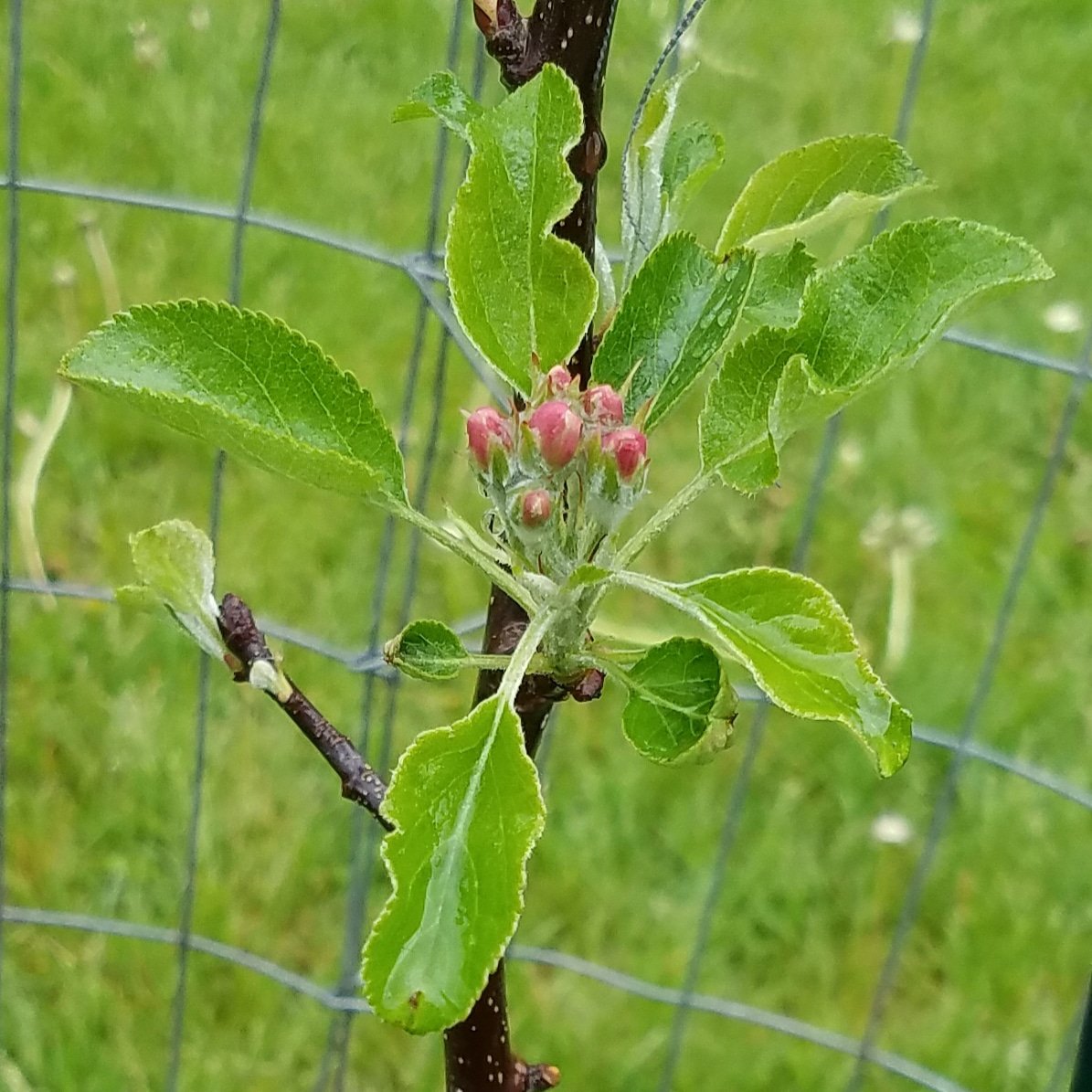
Apple blossoms ready for pollination.

It has been two months since the Iowa State Hygienic Laboratory in Coralville reported the first positive test results for COVID-19, the disease caused by the coronavirus.

We look forward to returning to a semblance of our pre-pandemic lives. We also know our lives won’t be the same as the pandemic could continue until there is a cure a year or two from now.

I could have continued to work at the home, farm and auto supply store. Because of my age I chose a voluntary COVID-19 leave of absence, then retired after the first thirty days ended. Not everyone has these choices.

One hopes a better society emerges from the chaos the virus and its inseparable economic depression have wrought. Our president’s reaction to the pandemic cost us the strong economy he inherited and caused preventable mass death. It is delusional to believe informed people will accept his work and re-elect him for another four years. We have to work to make sure someone else, presumably Joe Biden, is elected to stop the destruction caused by the current response to the pandemic.

There is also more to life than politics.

In a series of posts I plan to write about the worklife I have known and how it may change after the pandemic. There is a clear delineation of my personal work timeline into several periods.

When I began outside work in grade school as a newspaper carrier there were expectations of knowing what types of jobs were available and then securing them. After college graduation the workplace had changed, offering few positions in which I found interest. This led to frustration and then entering the military.

After returning from overseas I went to graduate school. When finished I found even less desirable opportunity than five years previously. When I eventually found work in the transportation and logistics field it was a compromise between what I wanted to do and producing enough income to support our young family. It was never the best, but it accomplished a degree of financial security.

When I took early retirement in 2009 I wasn’t sure what the future would hold. I used part of our retirement savings and entered a series of low-paying jobs that helped pay bills but did little else to advance us financially. I’ve written often about this and hope to bring a new perspective to it. During and after the pandemic there will be another phase of worklife. In some ways it is a journey home to being the person I was when this all began.

The president and governor say it’s time to reopen the economy and our lives. From my perch in Big Grove Township the economy never fully closed and the first wave of the pandemic is not finished. To understand how we can restructure our lives in society we must understand from where we are coming. That’s the hope of the next series of posts.

Categories
Home Life Living in Society Social Commentary

Pandemic Turning Point – What’s Next?

Lilacs in bloom.

Friday J.C. Penney filed Chapter 11 bankruptcy, another victim of the coronavirus pandemic.

To say I disliked the in-store experience is an understatement. To say how much I loved the on-line experience is impossible. They are a great alternative to Amazon where we can find affordable attire. Fingers crossed they come out of bankruptcy.

What will a retail experience look like on the other side of COVID-19? I don’t think anyone knows.

I’m reading another Obama administration memoir, this one by Ben Rhodes. I also read Samantha Power, David Plouffe, Jill Biden and Michelle Obama. On the bookshelf waiting is Susan Rice… I’m just passing time though, until the big guy’s book is finished and released.

It’s hard to believe the Obama administration existed at all in the age of Republican control. It’s like an Arthurian legend we lived through except now it is transformed into myth. So much so it’s easy to believe it never happened. It did happen and the memoirs serve to remind us of another possibility than the one dominated by a needy president.

I stopped and stood outside the garage breathing the fragrance of lilacs. They are close to full bloom and won’t last much longer. It is difficult to stop and experience flowers yet we must. A lot depends on the fragrance of lilacs.

I participated in a Zoom conference with friends yesterday afternoon. We are on the last mile of cable with our internet provider and the connection is sometimes inconsistent. After being dropped five times during the call I gave up. It was good to see everyone again, even if intermittently.

Life on the other side of COVID-19 will be different. For me, it precipitated full retirement and that change alone is big. There’s more though, and not just about one person’s experience of the pandemic. If anything, we are getting used to living with less. That should be good for us, and good for society. I’m confident J.C. Penney will try to adapt to the new reality. If they don’t, the world will be the less.

Categories
Kitchen Garden

Rainfall in Big Grove Township

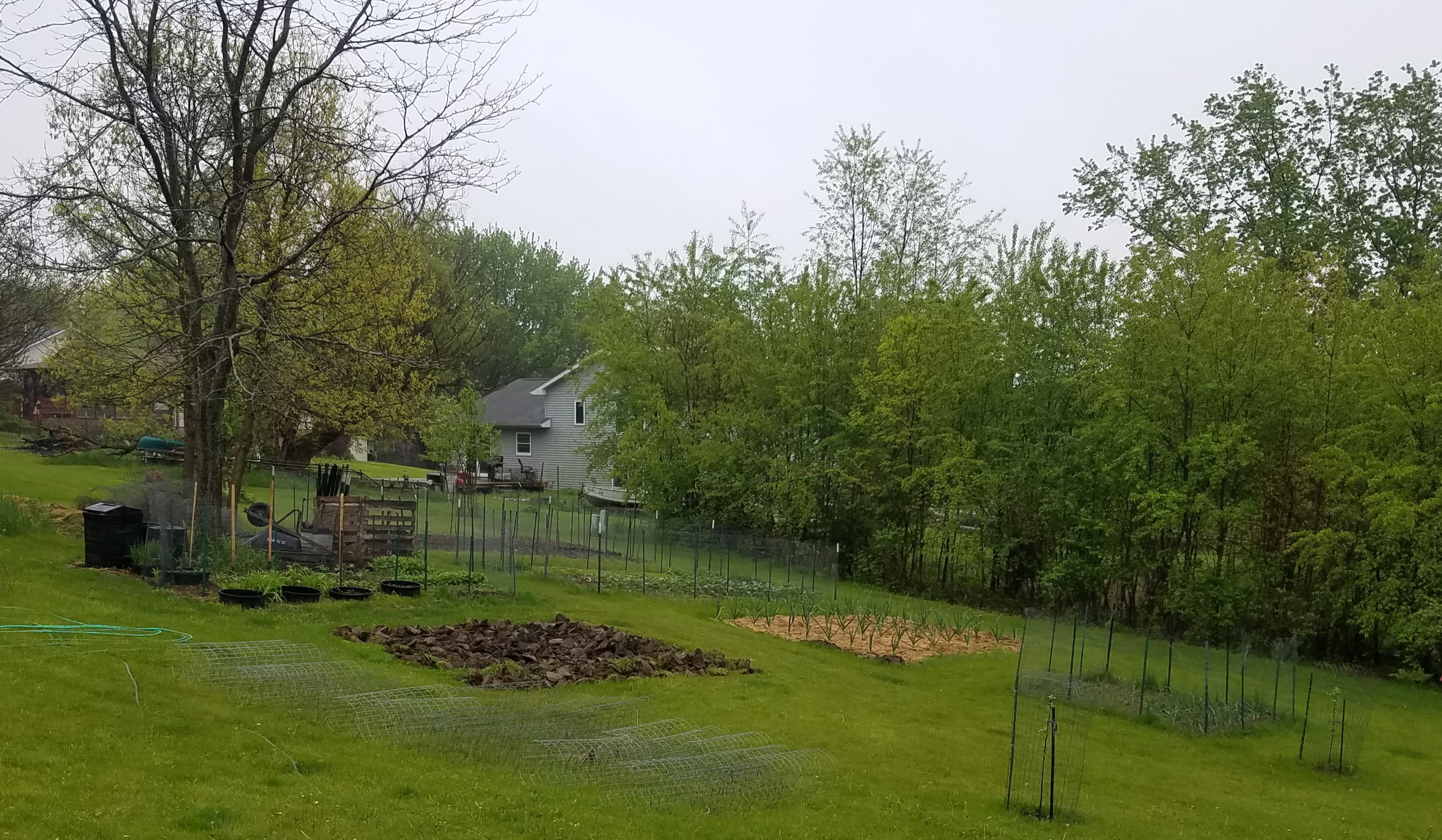
Garden on May 14, 2020, after the rain.

Rain fell on Big Grove Township last night and this morning.

Lilacs are in full bloom with branches weighed down by residual raindrops. It will be a day indoors to cook, to clean, to read and write.

The second batch of vegetable broth quarts has 20 minutes left in the water bath. Once sealed, cooled and dated they will join the others on the shelf. I heard one of them fracture when I submerged it in the hot water. Old Mason jars don’t last forever.

While digging in the cupboard to find 14 empty quart jars there was an old one with colored glass and a sharp edge on the lip. It had been chipped and was unlikely to hold a seal. I placed it in the recycling bin.

It’s another day in the coronavirus pandemic when we wait to see if the federal government begins to manage the crisis. Our governor gave the okay for beauticians, barbers, hair stylists and massage therapists to go back to work. I’ve seen a production of Sweeney Todd so I’ll continue with my aches and pains and let my freak flag grow back so I can let it fly once the rain ends and the pandemic has run its course.

Categories
Environment Kitchen Garden

At Low Level

Spring Garlic

The shoreline was exposed as I crossed Coralville Lake to secure provisions.

While it looks like we are in a drought, it is better to say we are ready for extra water coming from upstream snow melt and spring rains flowing into the Mississippi River basin.

Lake water level is decided by the U.S. Army Corps of Engineers, a function of their plan to mitigate flood damage. The experience was a reminder ours is a built environment.

I stopped at a chain drug store and at the wholesale club to stock up. I’ve been donning a mask and going shopping every other week during the pandemic. Most other people inside retail establishments wear masks. If I didn’t want dairy products or were vegan I’d go to town less often, maybe once a month.

We harvest something daily from the garden. This morning it was spinach. With a spring share from the farm, I’m getting backed up on greens. It’s time to make vegetable broth for canning. I’ll carry six quarts over from last season and want 20 quarts on the shelf to make it through another year. Broth has become a pantry staple. I use it to cook rice, make a roux, and add flavor to soup.

In addition to making broth, today’s work will be preparing the main tomato bed for planting. That means to spade lanes in the plot, rototill the lanes, rake the surface smooth, lay garden cloth on the surface and put enough grass clippings on top to hold it down until the seedlings are in. I’m short of grass clippings for mulch but tomatoes are a high priority and will take the entire stockpile.

My creativity is at a low level and I’m not sure why. Partly it is the coronavirus pandemic, partly something else. Perhaps I’m simply enjoying this glorious spring weather — the part before insects begin foraging every living plant. Spring serves as fit distraction for what ails us. One can do a lot worse than spring.

Categories
Writing

Adjusting to the Pandemic

Apple blossoms on trees planted in 2020.

In an effort to move on to what’s next, here’s another post about the coronavirus pandemic.

Please bear with me. There is a “what’s next” although it will be different from what we would have expected a few months ago.

The threat of COVID-19 spreading into our household had me retire from the home, farm and auto supply store. It was inevitable I would do so soon. The pandemic flipped the switch. Now I’m done with outside-the-home work except for what I do in the local food system a few hours each week.

As I pointed out Thursday, we are in the pandemic for a couple of years or at least until a cure is in place. I believe there will be a cure in the form of a vaccine simply because there are so many bright minds and dollars being invested in this work. No one knows for certain how long it will take to develop and implement a cure, so if we’re smart, we will adopt a long-term perspective in order to keep our sanity.

For our household, with two retirees, resolution of the pandemic is to retire from society until there is a cure and life returns to some sense of “normal,” if that’s possible. While phone calls, social media, video conferences and the like will be an important means of communicating, it’s no substitute for every day activities to which we are accustomed. We yearn to return to those things and validate the Joni Mitchell lyrics from my college years, “Don’t it always seem to go that you don’t know what you’ve got ’til it’s gone.”

Returning to what was is not possible because the coronavirus is only the next in a series of pandemics expected as humans continue to exploit the natural environment and live in an increasingly connected society. To be resilient, our choices now have to prepare us for what I believe is that eventuality.

I don’t know what I would do if I were in my prime earning years like our daughter currently is. Our assumptions about what we are doing have to change. A simple truth is the life I wanted and thought I would have when I entered the post-college workforce was gone by the time I got there. What we’ve made for ourselves relies heavily on federal government programs of Medicare and Social Security. We are vulnerable to a major change in these programs, but so are a lot of people and I expect there will be sufficient political will to resist changes to the core programs of the pension and providing health care for the elderly.

For now, I’m working on projects: writing and gardening mostly. This in addition to checking in with key family and friends is a mainstay, one that will help me survive through the end of the coronavirus pandemic. If the future is uncertain, I am resolved to make it through. I appreciate readers sticking with me as I write to understand who I am and how we can adapt to the new world made for us in 2020.

Thanks for reading.

Categories
Home Life Living in Society Social Commentary

Living with COVID-19

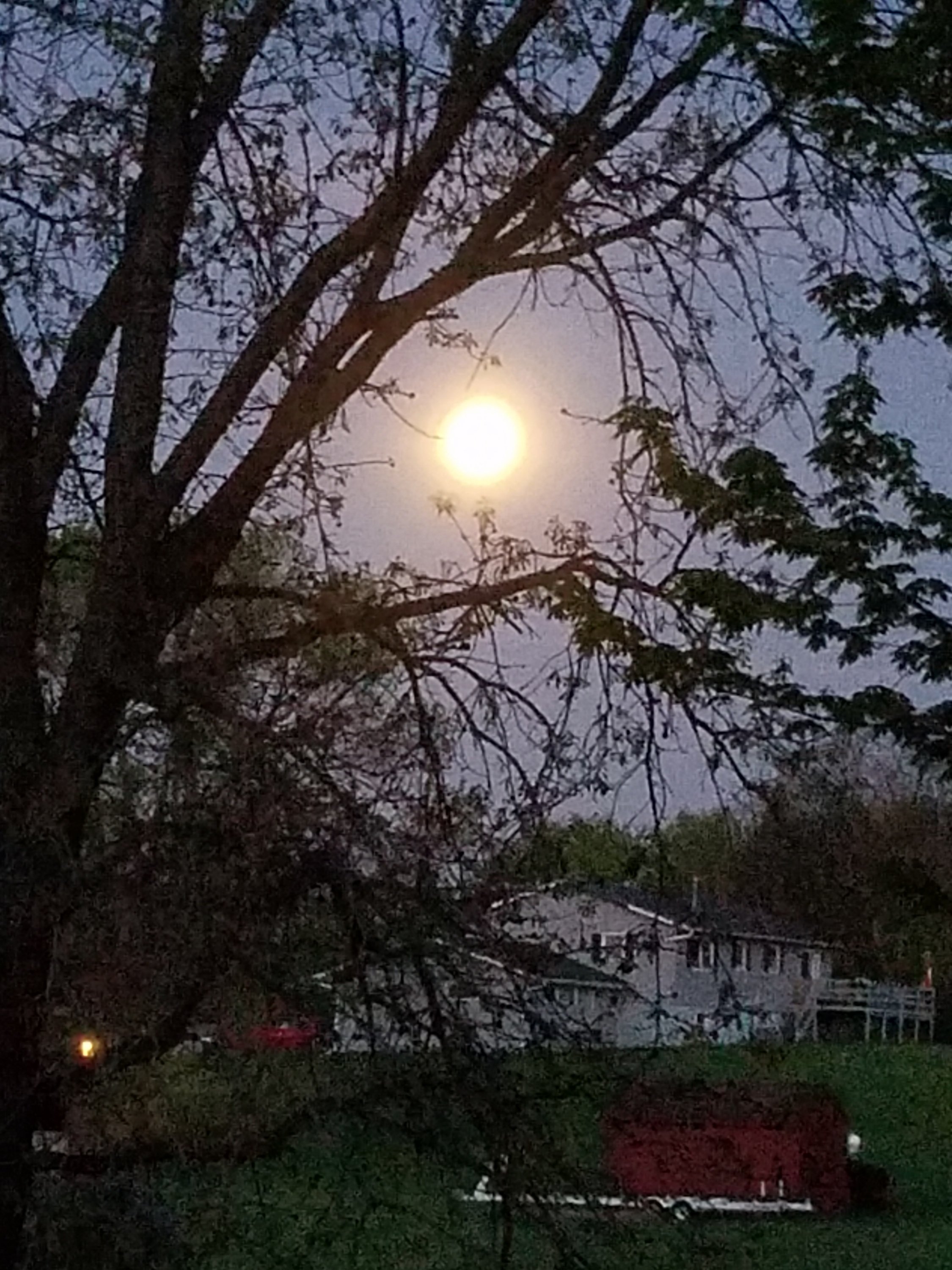
Supermoon viewed through the atmosphere, May 7, 2020.

I participated in a United Parcel Service webinar about challenges posed to supply chains by the coronavirus pandemic.

Rich Hutchinson of Boston Consulting Group presented an overview of our response to the pandemic that made plain, clear sense. He used three Fs — Flatten, Fight and Future — to frame his discussion.

We read and see a lot of information about the pandemic. In Iowa we fixate on daily reported number of cases and deaths. We need a break from that. The take away from Hutchinson’s analysis was as global corporations and mid to large size businesses use the pandemic to re-engineer their approach to supply chain and how they operate their businesses, regular people should be doing the same.

We understand what flattening the curve means, the first F. By reducing spread of COVID-19 we take the peak load off the bell curve of hospital bed usage and ventilator deployment so our health care system can handle the pandemic. In Iowa we began flattening the curve eight weeks ago with the governor’s March 9 proclamation of a disaster emergency due to COVID-19. Thus far the health care system has been able to handle the caseload. Hutchinson expected this phase of the pandemic to last several months with regional variations depending upon the extent of community spread of the disease.

Recent surveys show most people are not ready to end sheltering at home and restriction of business operations, although the president and the Iowa governor favor easing restrictions now. Governor Kim Reynolds issued new orders to ease restrictions yesterday. Whether we agree or disagree with elected officials’ approach, at some point people have to do more than shelter at home and shop on line or in limited trips to retail establishments that remain open. When the flatten the curve stage of the pandemic is over, COVID-19 will persist into the next phase. To cope with it, new approaches to what we previously took for granted about social interaction must be developed and adopted.

The second F, fight COVID-19, is not much discussed, but needs to be. Fighting the pandemic is expected to be book ended by an end to the first phase (i.e. the curve has been flattened) and development and implementation of either a cure or herd immunity. Policy implemented during the flatten the curve phase continues but will be relaxed. It could get ugly. Cases of COVID-19 continue to exist and spread during the fight phase, including additional significant outbreaks. The expectation is this phase will last another 12-24 months until there is a cure. This is the scariest part of the pandemic because as severe restrictions on business and social interaction are relaxed, identification of cases of COVID-19 and deaths are expected to continue in our daily reporting.

The most important phase is our future, the final F. I’m concerned about what the future will look like. My spouse retired last year and I retired last month because of risk of COVID-19 exposure. It seems likely my consumer behavior will change and be more limited than it was last year. With retirement this would happen without COVID-19. Society is not in a place where it makes sense for our political leaders to tell us “the economy is opening.” Nor would the advice President George W. Bush gave as we were coming out of the recession, “to go shopping,” make sense. I empathize with small business owners like cosmetologists, nail salon operators, and barbers who are itching to get back to work and generate operating income. At a minimum we need to deal with the pandemic for at least another couple of years and accommodate new behavior to protect us from the disease. How will businesses create needed changes in light of an extended pandemic? Our path forward is unclear at this writing.

If the question is whether workers will offer themselves as human sacrifice on the altar of late stage capitalism, Americans seem unlikely to do that. That’s not who we are. We expect more from our political leaders than they have given. The vacuum of leadership at the top — the president, the legislative branch of the federal government, and the Iowa governor — created a disconnect between corporations which can lobby government and people like me who lack such standing and may be forced to return to society beyond its digital aspects. My bottom line is no one is providing us with the type of information we need to make it to the new future us. That is as much a problem as the pandemic itself.

The first step in developing a future, post-pandemic life is recognizing our current location in the process. For a newly retired person it is easier to develop a future life than for those in their prime earning years. Our lives depended on so many beliefs and assumptions which have now been scrambled. If nothing else, Americans are a resilient people and we’ll figure it out together. Here’s hoping.

Categories
Living in Society Social Commentary

Meditation on the Coronavirus Pandemic

Fresh arugula from our garden.

“PPE is the scariest part,” an emergency room physician said during a conference call yesterday.

They wear an N95 mask until it wears out. They use one isolation gown per shift, introducing a risk that COVID-19 is transmitted from patient to patient by attending medical staff.

It is unbelievable that in the United States, during a pandemic, medical staff in a local hospital cannot get adequate personal protective equipment.

Where are our priorities?

I understand “flattening the curve.” It was an easy decision for the two of us to stay home as soon as the president and governor called for us to do so. If we don’t get sick, more hospital beds, ICU units, and ventilators are available for others. It’s not a long-term solution to the pandemic but it prevents hospitals from becoming swamped with patients, especially if more people do it.

As pensioners our lives are financially predictable and likely better for having to leave the property less often. The coronavirus pandemic became the tipping point in my career as I phoned the home, farm and auto supply store last Tuesday while on a COVID-19 leave of absence to announce my retirement. While we worked hard to get to this point in our lives, we don’t take it for granted. The challenge is determining how else besides sheltering at home we can contribute to society.

There is politics. We must summon the political will to change our governance to address not only the pandemic with its health and economic disruption, but the climate crisis, environmental degradation, economic injustice, an expensive and inaccessible health care system and more. That means all of us contributing to electing candidates with the backbone to do more than current office holders have. Political change is always an uncertain endeavor yet I feel a wind beginning to fill our sails.

How long should we shelter in place? It’s hard to say because of the opacity of the federal government. In March, administration models for the pandemic indicated between 100,000 and 240,000 Americans would die. The Washington Post yesterday indicated that’s about right. If we don’t address spread of the disease more than we have it could be worse.

The IHME model projects 1,513 Iowa deaths from COVID-19 by Aug. 4. The May 3 report was 188. The same model projects 134,475 U.S. deaths by Aug. 4. It’s no consolation to know the 1918 influenza pandemic was more severe with an estimated 675,000 U.S. deaths over its course.

Yesterday Steve Mnuchin announced the U.S. Treasury Department plans to borrow nearly $3 trillion between April and June to bankroll the federal response to the coronavirus pandemic. While the number is bigger than I can imagine it’s no surprise this increase in our national debt was coming. It makes me wonder about the stimulus bills.

These were junk bills, hastily created and influenced too much by lobbyists. They provided little real hope for people impacted by the coronavirus pandemic. I’m not impressed that we received an “economic impact payment.” I’m even less impressed that the president wasted resources by sending me his explanation of what’s going on during “this time.” Further into the descent of lesserdom, I’m not sure taking out a large loan was a good idea. The only conclusion I can draw is the politicians don’t know how to help real people.

My intent is not to complain. I present above a positive image of our garden arugula. Planted March 2, it is the best crop I’ve yet grown in terms of quality and quantity. Salads, pasta dishes, and arugula pesto are in process before this patch is finished. I have another batch of seedlings growing in the greenhouse for the next wave. Typical of these times, the best work we do is on our own. That’s not good enough to get ourselves out of the societal pickle we’re in. We will be stronger if we can come together in building a better future after the pandemic.

Yesterday a fight broke out near a liquor store in India as the government lifted stay at home restrictions. There is also pent up demand to do things here. My prediction is when the U.S. opens up, and people believe it is safe to return to normal, tattoo artists will be very busy.

Categories
Work Life

Retirement in the Coronavirus Pandemic

Detail of Garden Plot #4

I decided not to return to the home, farm and auto supply store after my voluntary COVID-19 leave of absence.

Whatever the cultural resonance of the word “retirement,” I’ll take my leave from the workforce without fanfare, without the customary sheet cake, and fade into the background of our life in Big Grove Township.

It’s been a good run. Whatever uncertainty lies ahead, I’m fortified by decades of experience in business and in living — the latter making the difference.

More than anything, our Social Security pensions make retirement possible. I made my first contribution to Social Security in 1968, thinking retirement was in the distant future. All along the way, in every job I held, I paid in. I paid in on my last paycheck on March 17. Of all the government programs that exist, Social Security, and its methodology of enabling even the lowest paid worker to save for retirement has been there. I hope it endures not only for my lifetime but for every American into a future as distant from today as is the teenage boy I was when I started.

What’s next? Subscribe to this blog or follow me on Twitter, LinkedIn or Instagram to find out.

Categories
Kitchen Garden

Spring Share and All

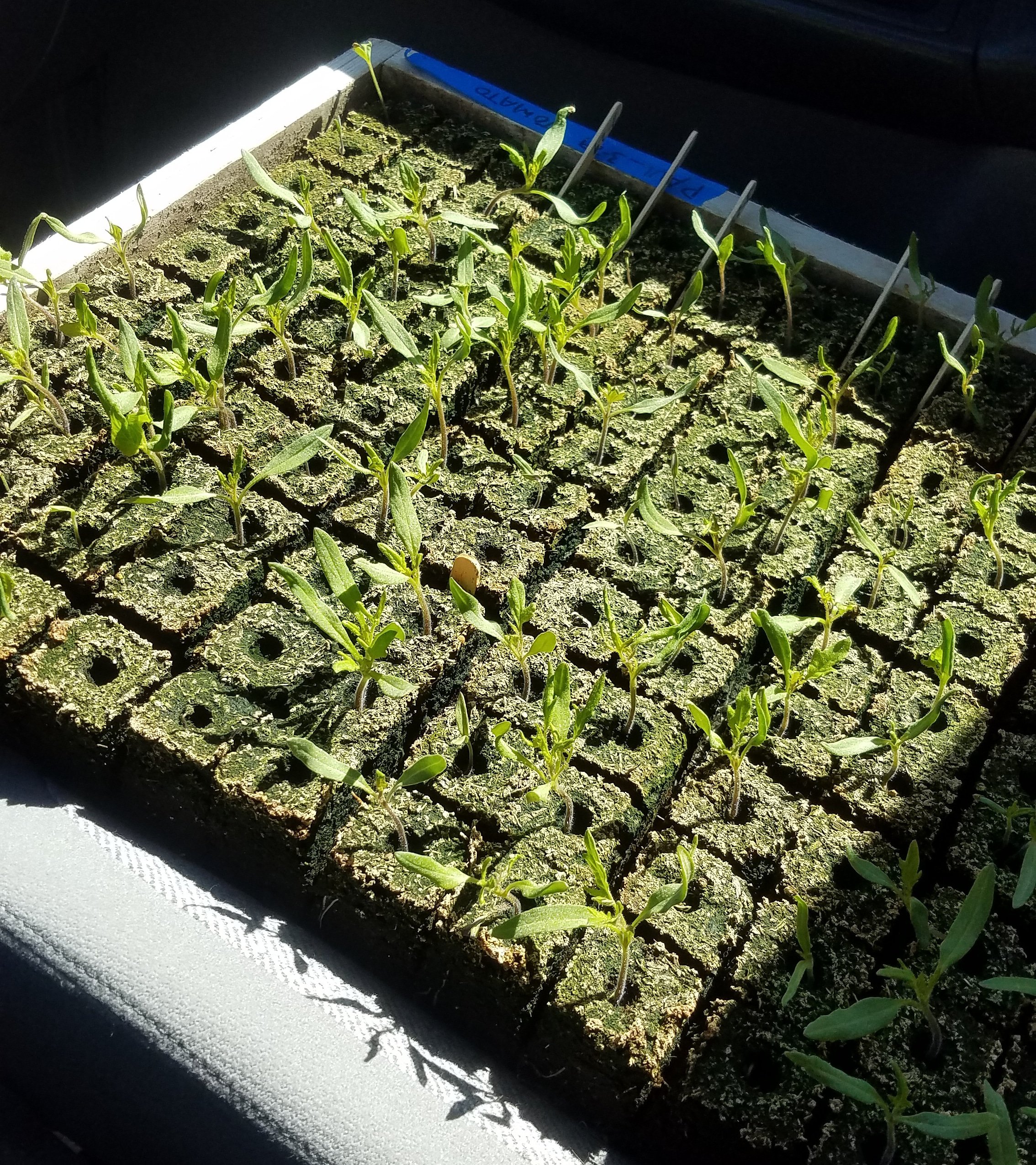
Tomato seedlings taking a ride home.

Today is the first spring share at our community supported agriculture project.

The farmers developed a no-contact method to deliver shares during the coronavirus pandemic. Each member’s share will be prepacked in a cooler and left under the oak tree that dominates the farm entrance.

No more self serve from bins in the walk-in cooler until risk of infection passes. With portable coolers there is less to sanitize after pickup.

Sunday was a drop-dead gorgeous spring day in Iowa. Cumulus clouds floated in blue sky and the temperature was perfect. Neighbors were outside working in yards, kayaking on the lake, and walking the roads and trails. There are only so many days like this each year before insects arrive to eat our greenery. Each leaf on each tree looked perfect in the mid day sun.

The first tray of tomato seedlings took a ride home in the passenger seat after my shift at the farm. The forecast is rain the next couple of days so I’m not sure when I will plant them. The portable greenhouse is getting full.

A group of friends from high school participated in a Zoom meeting last night. The host, who also played keyboards in our 1970s band, organized a weekly meeting using the service. I found value in the conversation.

One of the guys on the call is an unemployed nurse who found work last week helping a team from the Iowa Department of Public Health administer COVID-19 tests to slaughterhouse workers. Beginning Friday he spent three days in Waterloo with a team drawing blood and doing nasal swabs to about 3,500 people. Today they head to Columbus Junction for more. I’m glad he found work.

Whatever the reason for the governor’s hesitation, unchecked spread of the coronavirus happened in Iowa because of it. Chasing it in meatpacking plants and care facilities alone will be a major undertaking. She started this scale of testing too late to head off the worst aspects of the pandemic. We are in this until researchers develop a vaccine and distribute it world-wide. Word on the street is it will take three years to accomplish that.

Yesterday we completed our ballots for the Democratic primary. Like many, we are voting by mail because of the coronavirus. Primaries are the time to vote your beliefs. Once voters express their preference, we’ll support the nominees in the general election to retake our government. We can flip the Iowa House of Representatives this year, and if stars properly align, the U.S. Senate. It will be an unusual election because of the pandemic.

So much depends on so many things. Yet when spring is as glorious as it was yesterday the work ahead in politics fades from view. Our collective journey home continues.