After a shift at the warehouse, I stopped at the orchard to get Honeycrisp apples. Contrary to what one sees in the mega market, they are seasonal, and the season is short. We hadn’t had enough.
The orchard staff was busy with a tour group, so I went straight to the display near the cooler in the sales barn. Sad remainders, absent of value besides pressing into cider, I ventured into the orchard wearing my white shirt, black slacks and blue shoes from the warehouse.
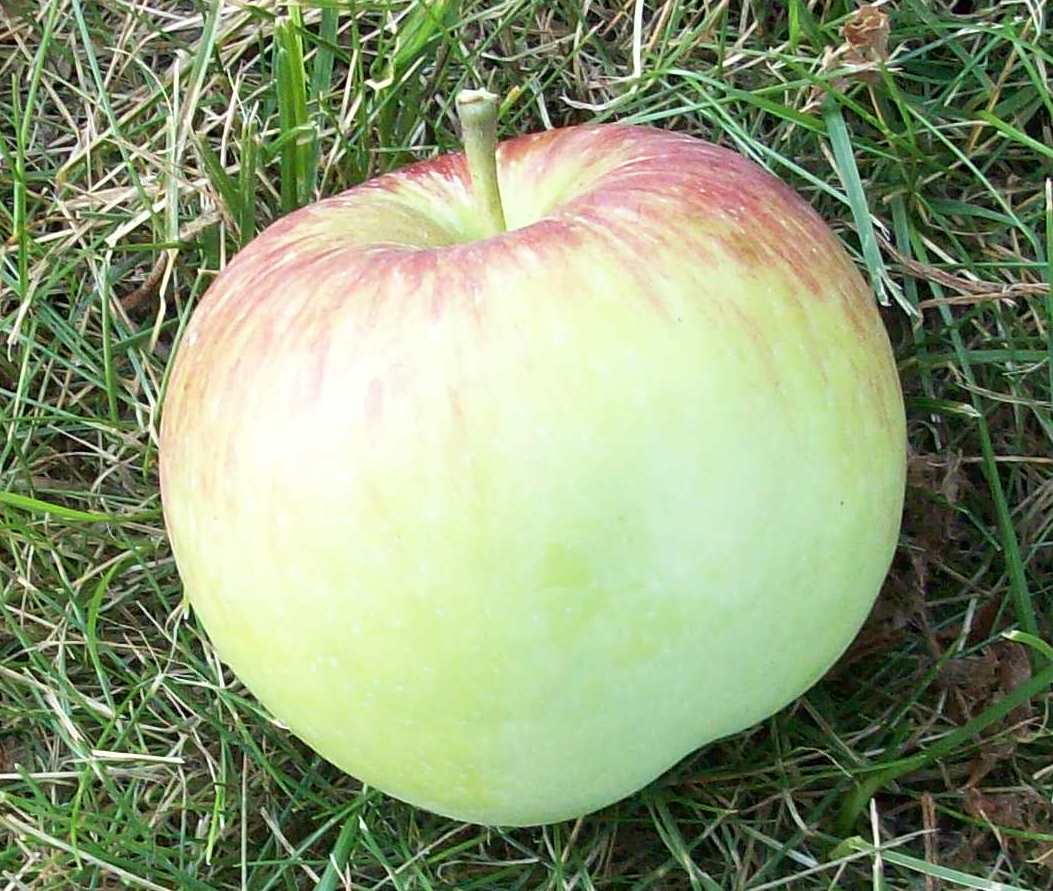
I had directed hundreds of people to the Honeycrisp groves the last two Saturdays. It was uncertain whether any could be found, but following my own advice, I looked near the trunk of the trees and was not disappointed. I picked eight pounds from two trees in a few minutes.
As I headed back, past the pumpkin patch, across the creek and up the hill, it was invigorating to be out in the orchard where ideas meet reality and bear fruit.
LAKE MACBRIDE— From the moment an apple falls from a tree, deterioration begins. Over 20 years of tending our small orchard, I learned to keep the ground under the trees picked up to discourage bugs and worms from spreading throughout the trees. Before the main crop is ready, there has been usable fruit on the ground. One recognizes when it is time to pick based on how many apples fall in a day. I brought about five pounds of apples to the kitchen to make vinegar.
Making vinegar is pretty simple. Core and cut away bad spots, including bruises, from a bowl of apples and juice them with a kitchen juicer. (One can also make apple cider, but securing and using a cider mill is a big production not suitable for small baskets of fallen apples). Strain the juice and pour it into a half gallon canning jar. Add part of the mother from the last batch, or a small amount of last year’s vinegar, and cover with a cotton cloth to allow it to breathe. I use a scrap of our daughter’s diaper, as the warp and woof is just right to let air out and prevent bugs from entering. Set the jar in a dark cupboard and leave it alone for a couple of months, inspecting it occasionally to see if the process is working.
A process byproduct is straining and bottling the last batch. A lot of mother was produced in last year’s effort, and what I couldn’t use went into the compost. The jars in the photo have vinegar from apple cider, the new batch and from apples juiced in the kitchen. The latter is by far the best tasting and most acidic.
Cucumbers and onions are in, so maybe a batch of refrigerator pickles to recipe test the results.
LAKE MACBRIDE— A friend was coming to overnight, so I baked a cake— an applesauce cake with rhubarb sauce.
The challenge of growing and preparing local food is cooking, and I don’t mean heating up the latest frozen concoction from H.J. Heinz. It is understanding what types of fruit and vegetables can be consistently sourced locally, then working those items into a localized cuisine— a micro cuisine specific to a household.
For example, we have four apple trees, and at some point we stopped letting them fall for wildlife and started processing them into food. Among other things, I make applesauce— quarts and quarts of it— from the Red and Golden Delicious apples grown on our trees. Are Red Delicious the optimal choice for applesauce? Probably not, but they are what we have.
Over the years I developed two critical things: a recipe for applesauce cake as a way to use up the abundance of canned sauce; and occasions like the visit of a friend to prepare and serve them. Both are important.
This spring we received an abundance of rhubarb from the CSA, so we needed a way to use it. A bag or two from last year is in the freezer, so we don’t need more there. Nor do we dip it in sugar and eat it raw, so I decided to get sauced, making a simple rhubarb and raw honey sauce to top slices of applesauce cake. The recipe is simple cutting, mixing and tasting.
Rhubarb Sauce
Finely dice a large bunch of rhubarb stalks and place into a saucepan.
Add a tablespoon of water to create the initial steam. The rhubarb will produce a lot of its own moisture, so much that most of it can be removed before adding the honey.
Add a generous amount of local honey to the cooking rhubarb. I used raw honey from the same farm where the rhubarb grew.
Stir until it is incorporated, bring to a boil, and then turn the heat to a simmer and cook. Taste the sauce and adjust honey. No spices are needed, but feel free to add if you like. The rhubarb-honey taste will carry the sauce as it is served.
Cook until the sauce thickens a bit. Serve hot or chilled.
Applesauce Cake
1 cup brown sugar
1-1/2 cups applesauce
1 tablespoon cinnamon
1/2 teaspoon ground cloves
2 teaspoons baking soda
1-1/4 cups whole wheat flour
1-1/4 cups unbleached flour
1/2 cup melted butter
1 cup raisins
Cook the raisins in water until plumped. Drain and set aside.
Incorporate applesauce, sugar, cinnamon, cloves and butter in a large bowl.
Sift the flour and raisins into a separate bowl and add the raisins. Stir until the raisins are coated with flour.
Add the dry ingredients to the wet ones and beat well until fully incorporated.
Line a cake pan with parchment paper and pour the cake batter in.
Bake in a 350 degree oven for 45 minutes.
Place the cake on a cooling rack.
Serving suggestion. Cut a 1-1/2 inch wedge and place on a small plate. Pour 1/4 cup rhubarb sauce on top and serve. Add whipped cream if you like, or decorate the plate with fresh fruit.
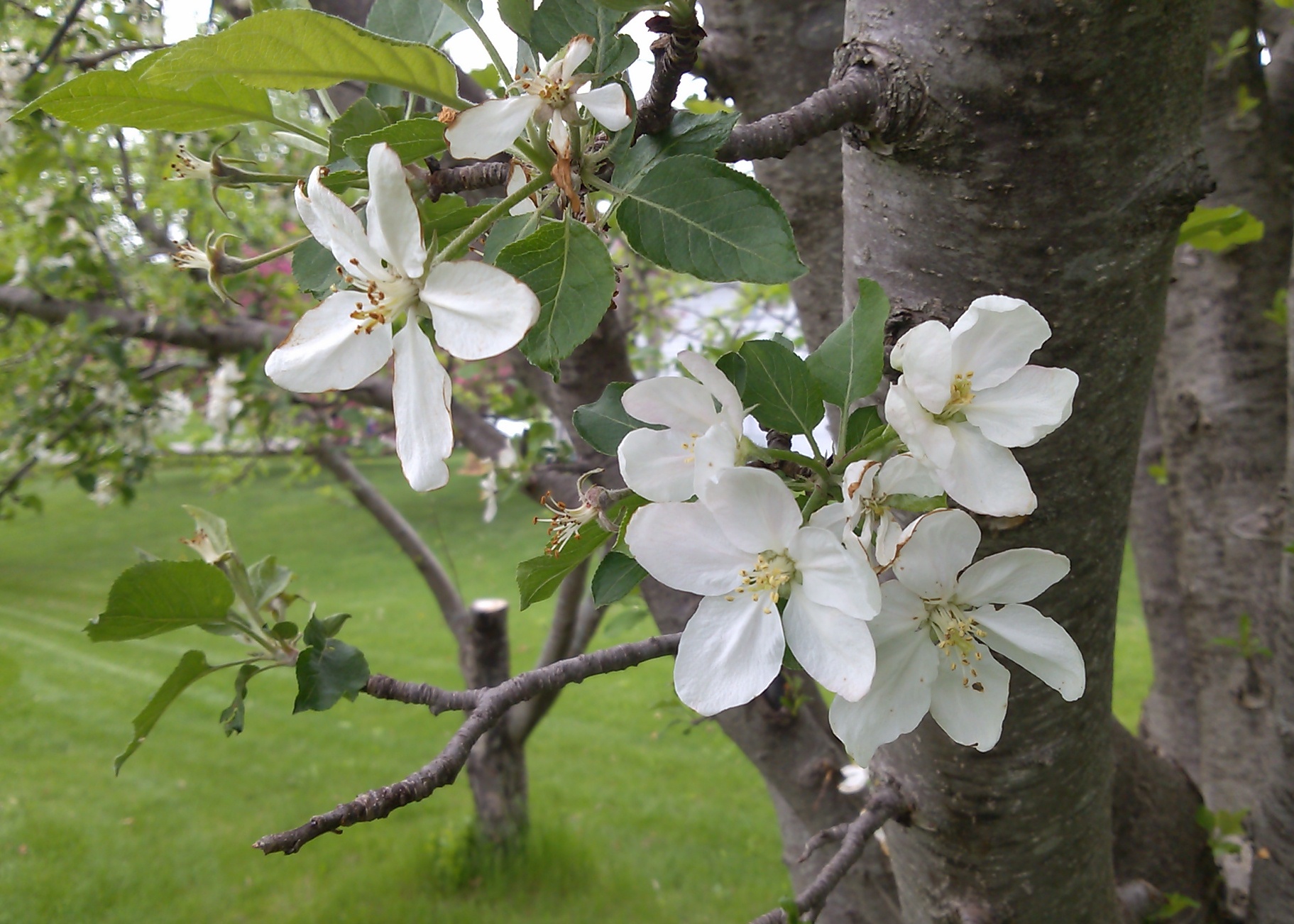
LAKE MACBRIDE— Apple blossoms are in full bloom, and it never lasts for long. Once bees pollinate, the petals fall in snowy softness, carpeting the ground as quickly as they went from pink to bloom.
One of the farms where I work is an apple orchard— a resource for learning about my four trees. I recently sent a question via email.
“Can last winter’s pruning cause a lot of blooms this spring?
I pruned my trees and the Red Delicious tree is loaded with blooms like it was last year. Not sure the pruning helped that, but I was expecting very little fruit because it was a branch buster last year.”
The answer came promptly:
“I spoke to my dad about your question. He said that pruning and the number of blossoms aren’t directly related. The exact reason is quite a long answer, but he said that you must just have a good tree!”
That’s a good enough answer for me, “it’s a good tree.”
I did my first experiment in making flour tortillas at home yesterday. They came out more flatbread than tortilla, so it needs more work. Trouble is we’re not running a test kitchen here and need to consume what we cook. We’ll enjoy the flatbread, but wait a couple of weeks for round two.
The dough recipe included some baking powder, which leavened the bread. Next time, I’ll omit it and see if the result is more tortilla-like.
There is a zero percent chance of precipitation through sunset today, so hopefully the ground will dry out, enabling preparation of more garden space for transplanting. There is a lot to get into the ground before Memorial Day.
The row croppers took advantage of last week’s drying conditions, and according to the USDA crop report, 70 percent of the corn and 20 percent of the soybeans are planted, putting spring planting right on its traditional schedule.
Reflecting on time spent with Physicians for Social Responsibility (PSR) last week, I am glad I participated in their national meetings. My primary interest in the group is their long history of nuclear abolition work. Dr. Ira Helfand from Massachusetts has been a prominent figure in the nuclear abolition movement, and it was good to spend some time with him. Likewise, the Washington, D.C. staff was there, along with chapter leaders from around the country. The organization has expanded its reach beyond abolition to include the relationship between health and climate change, and toxic substances in the environment.
I broached the topic of the effectiveness of non-governmental organizations (NGOs) in effecting policy change. In today’s political environment, more people associate with NGOs, and a lot of people make a living doing that work. My concern is that in the perpetual chase for grant money, the number of funders is reducing, and whatever may have been successful last year, is out of step this year.
In Washington, there is a small group of people working on nuclear disarmament and they talk among themselves constantly. This includes people in NGOs, the U.S. and foreign governments and citizen advocates. I met a number of these people during my treaty ratification advocacy work in 2009. However, there is a certain self-interest they have in keeping conversations alive that perhaps may be better off placed on the back burner.
We are entering an era when regardless of which political party dominates the Washington conversation, the same work goes on, and currently it is work that includes refurbishing the nuclear weapons complex with a great diversion of funds. A person can’t be happy about that.
Nonetheless, while NGOs may not be as effective as I would like, they are currently the only game in town, so I plan to re-engage with PSR over the near term. The work will include rolling out a program on nuclear abolition to local Rotary clubs, working in between gardening and yard care sessions.
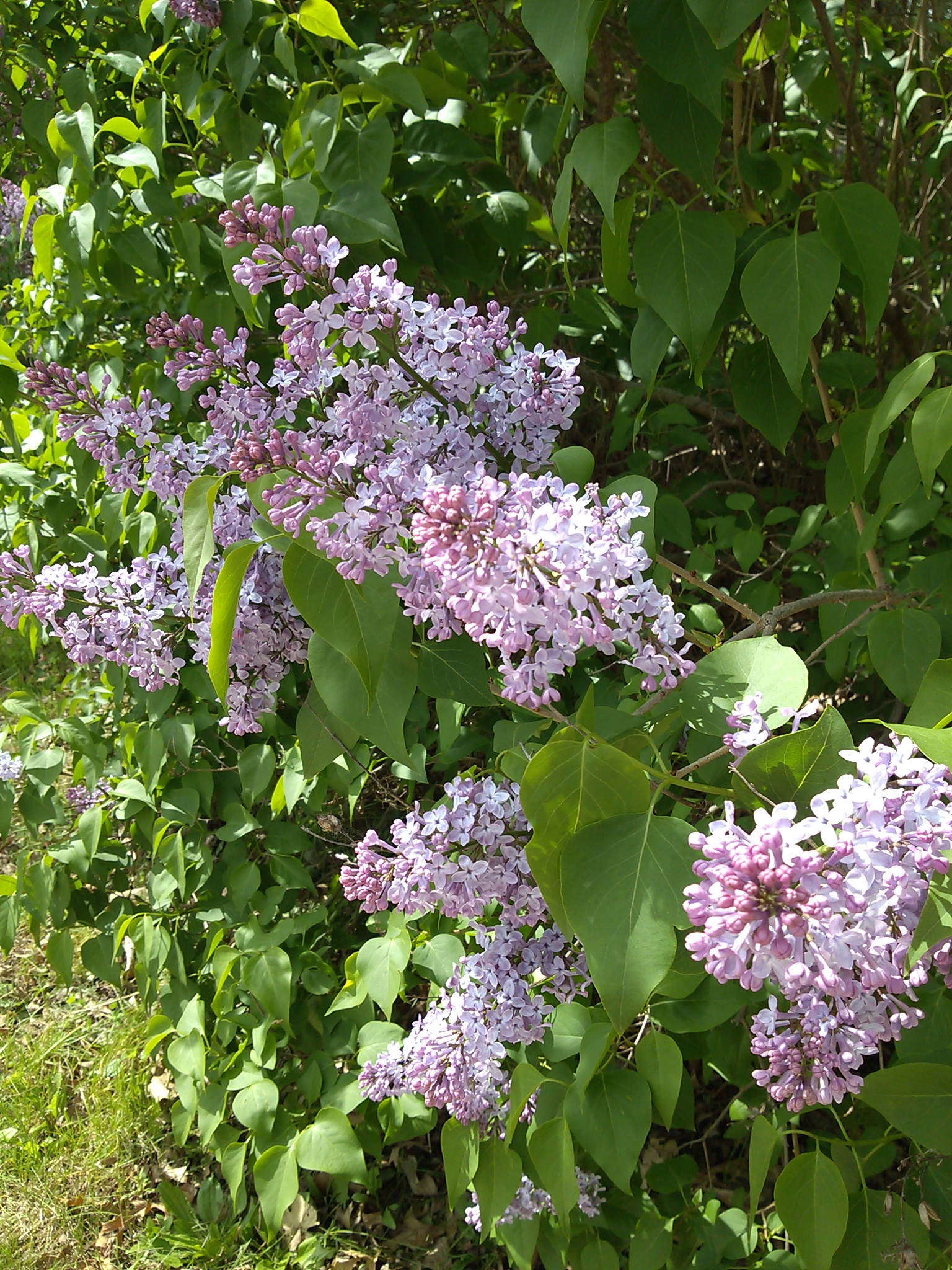
LAKE MACBRIDE— Taking photographs of spring flowers isn’t necessary. Nor does it record the pink, blue, red, white and violet petals in a way that persists like the collective memories of 20 years of spring in this place.
The Red Delicious apple tree has an abundance of blooms, just like last year. I thought 2014 would be apple bust because there were so many last year. It is very exciting to see blooms on two apple trees and on the pear tree.
I am lagging behind the neighborhood on making the first cut of lawn. I saw bumble bees in the dandelions— a hopeful sign. I want to give them as many pollinating opportunities as possible. We have a light carpet of violets among the blades of grass. I don’t want to cut until I need to mulch the tomatoes and peppers. It won’t be long, but not today.
The scents of the flowers are intoxicating. Anyone who doesn’t know what I mean should get outside more— now. The varied fragrances last so short a while, but we drink in their liquor like hikers after following the trace of Dillon’s Furrow from the city.
LAKE MACBRIDE— Tomorrow I’m doing something for me. I’m taking a three hour course in pruning apple trees at the orchard where I worked last fall. The cost is $10, but what is best is the opportunity to learn from people who prune apple trees for a living. There is a lot else that needs doing tomorrow, but the pruning class takes precedence.
There is also more to tell, but that will be later.
LAKE MACBRIDE— 2013 has been the best year for local apples since I planted trees. Every tree bore fruit, and around the county, everyone with an apple tree had a good harvest if they wanted to pick them. Yesterday I bought half a bushel of Gold Rush apples from the orchard, the last maturing fruit of the season. Because I work at the orchard during the peak season, I got a discount.
Dolgo Crab Apples
As winter approaches, the work has turned to making chunky applesauce a quart at a time with the ripest fruit. It’s delicious, if you know what I mean. The main uses for the bumper apple crop have been as follows:
Delicious Apples
Apple butter has become a staple for the last few years. I made a batch with the earliest apples, then a big batch of fallen apple butter from fruit knocked down by a storm. I also made apple butter from Dolgo Crab and Cortland apples purchased at the orchard. There was also a batch made from a mixture of 9 different varieties picked at the orchard. With what apple butter was leftover from last year, there is more than a two-year supply in the pantry.
Livestock Apples
The Sept. 19 storm brought a disappointing end to much of the large apple crop. In addition to apple butter, I made applesauce and apple crisp with fallen apples, and sent a lot of them with a friend who keeps livestock. She returned the favor with fresh eggs from their chicken house. A neighbor had borrowed a cider press and he and his children made about four gallons of apple cider from my fallen fruit. The fruit was all used, but it was a rush to get it done before they spoiled.
Apple Sauce
As summer turned to fall, I learned about longer keeping varieties, particularly the Winecrisp and Gold Rush apples. We don’t have the refrigeration capacity to keep them cool, but they are stacked in crates in the coolest part of the house and I’m hoping for crispy apples into winter. Since they are around, it’s likely they will all be eaten before going bad.
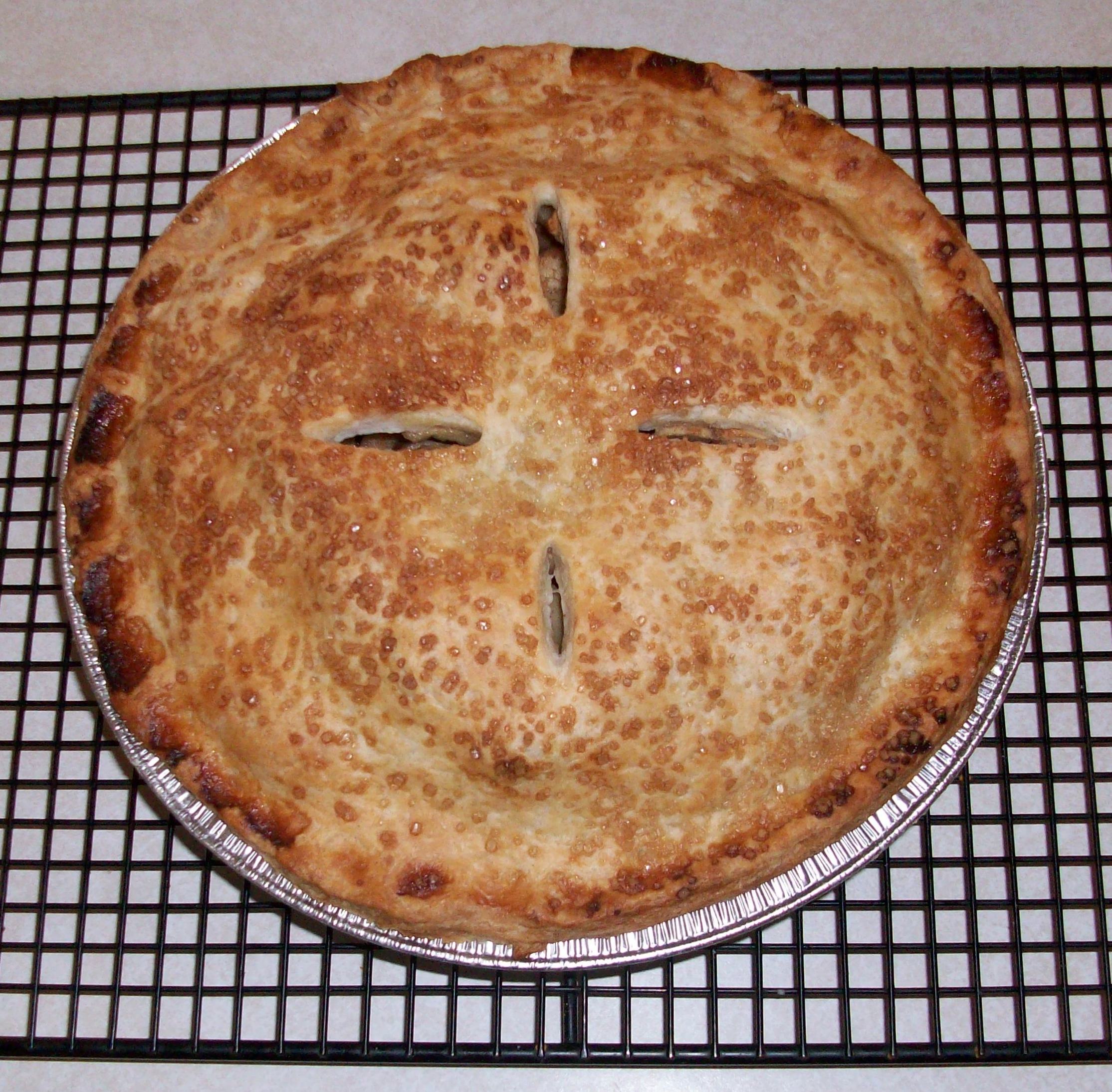
Thanksgiving Apple Pie
As December approaches, it will soon be time to prune. I took some photos of my Golden Delicious tree to the orchard where the chief apple officer gave me some pointers on how to salvage the tree. The expectation is that 2014 will be a bust year for home apples, but my four remaining trees have been little pruned, so I have some work to do.
My apple work will go on for a while, but it’s time for closure on a great season. Little by little, gaining an understanding of apples and apple culture has become a part of who I am. I am only just beginning to understand my apple life.
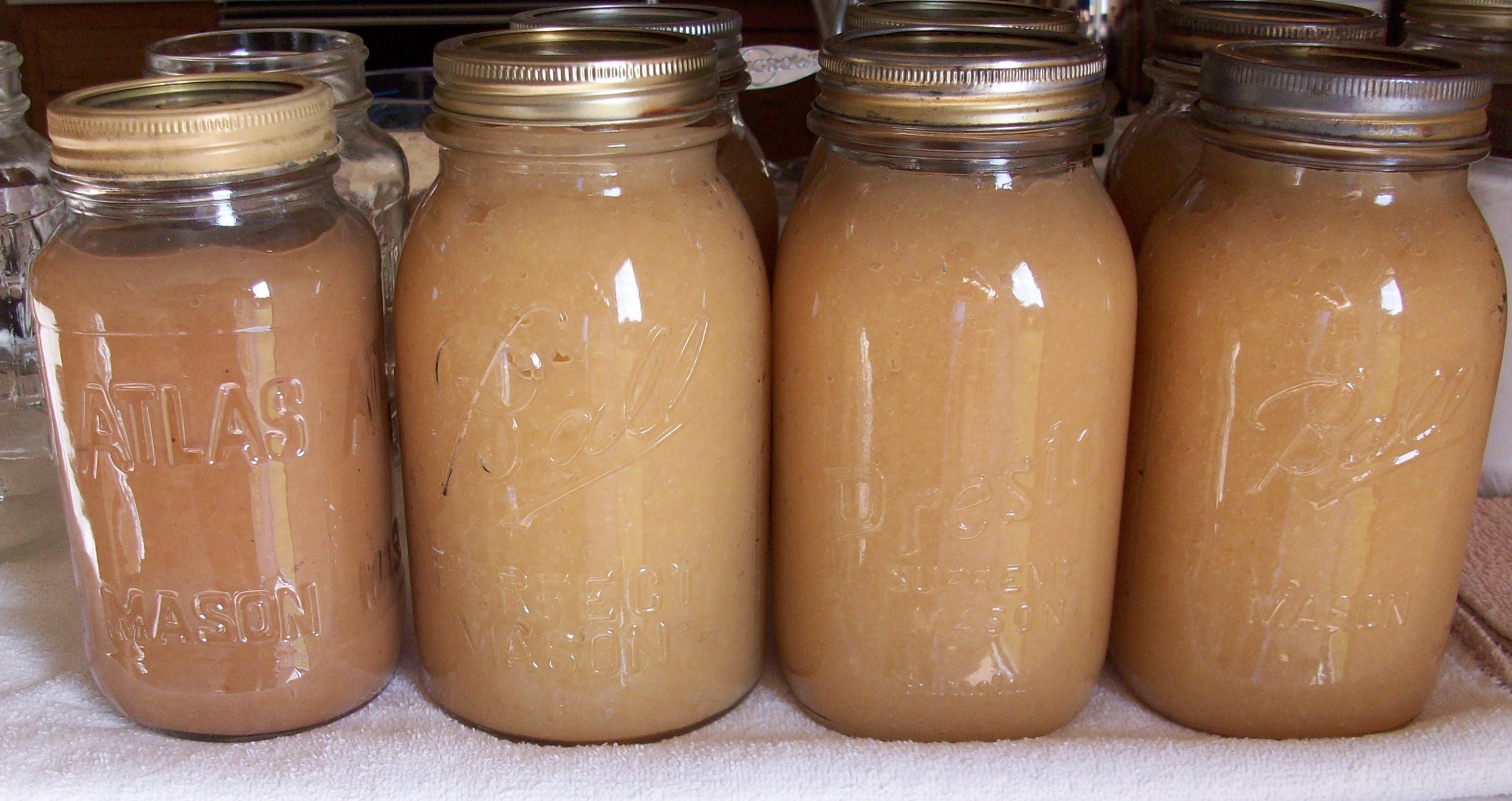
LAKE MACBRIDE— The afternoon was spent making applesauce with the last of the fallen apples from the Sept. 19 storm. They stored well, and six quart Mason jars and a pint are processing in the water bath canner. It’s local food more so than most: they fell about 30 feet from the kitchen window during the storm.
After experimenting with applesauce techniques, I cored, but did not peel the apples, cut each into about 16 pieces, steamed them in a bit or water until they released their own juice and begin to fall apart, and processed them through a food mill. I also made chunky-style apple sauce, using a potato masher before spooning it into a jar. No spices or sweeteners here. They can be added when serving, but this applesauce really needs no additives.
Is the story of my applesauce afternoon worth writing or reading? I don’t know about the latter, but the process of writing helps me understand life on the plains in a way that takes the rough, dull and lonely parts out, rendering it into a sweet pulp to serve to friends and family, and packaged to give as a gift. Seriously. Who wants to hear about the rough, dull and lonely parts of life anyway?
There is the actuality of the time spent and the image above. If that’s all there were in this post, an autobiography of a moment in time, it would not be worth reading. The hope is that by imagining a life, and writing it down, some value can be added, and if we are lucky, an epiphany reached.
According to WordPress, there are more than 72 million blogs on their site. Add in the other sites and there is a lot to read, many thoughtful, some hate-filled, and more than a person could ever consider. For the blogger, it is a way to write, an outlet for expression in a world where only a very small number of writers get read, and even less get paid. We need outlets.
There is a first draft quality to a blog post. A flawed freshness that can be like the life from which it is expressed. Sometimes it is sticky, syrupy sweet or messy, and that goes with the territory. We’re not the Scientific American or Harvard Business Review in the blogosphere. What we hope to be is an expression of the imagination. Taking the desultory moments of a modern life as the ingredients of something better, something universal. Bloggers mostly fail to reach the sublime, but once in a while, things come together.
So there it is, the ABCs of writing in autobiography, blogging and canning. Write about what one knows, do actually write on some platform, and think in terms of a finite product that is useful to someone, to nourish a body, but more importantly, one’s intellect and spirit. There are benefits, not the least of which can be jars of applesauce.
LAKE MACBRIDE— Politicians glom on to veterans like there is no tomorrow. Veterans vote, we live in society, and most of us served and left the military behind without comment or regret. Politicians should work to reduce the number of veterans we are creating as a society, rather than glomming onto our service for political reasons. That could be their service, and the nation would be grateful.
The newspaper work is finished for today. The focus will be on home work. The atmosphere is calm, so the brush pile can be burned, preparing a space for planting garlic tomorrow or next week. There are lots of apples for processing into applesauce, apple crisp and maybe some dehydrated apples. That is, once the dried herbs in the dehydrator are removed and cleaned. The last of the fresh tomatoes will be turned into a pot of chili for supper. There are more turnip greens for soup stock, and a drawer full of root vegetables in the refrigerator— plus whatever else is harvested today. There is a whole afternoon of kitchen work.
Having gone to town this morning I hope to remain on the property, or within walking distance. Maybe once the brush is burned, I’ll take a walk on the lake trail, but no further. It’s what’s called living, and we don’t do enough of it. And it’s time to get on with it.
RURAL CEDAR COUNTY— On a tour of an organic farm in Cedar County yesterday, talk turned to the impact recent unusual and severe weather events we have had. The story is similar to what others in the agricultural community have been saying.
Farmers are talking about two main weather events this year. The late, wet spring that delayed planting, and drought conditions during August and September. According to a recent gathering at the Farm Bureau, there will be more of the same during the next several years.
The late, wet spring caused some localized flooding on the property, but did not significantly impact the overall operations. They dealt with the weather. The apple crop was abundant because spring pollination conditions were almost perfect after a tough 2012, with the buds flowering after the last hard frost. A lot of apples were still on some of the trees.
Locally we lived through a period of six weeks without any rain. The effects of the summer drought on the vegetable crop were mitigated by irrigation using a drip tape system. There was plenty of water for irrigation, although like most farmers, he didn’t know how deep his well was dug. There was a farm pond should the well go dry.
Drought will reduce corn yield. We examined some ears on the stalk, and a second ear failed to form on many of them. What ears of corn were present did not fill out with kernels. Both conditions were attributable to the drought.
For the last several years, the ability to harvest vegetables later into the year exists because it was warmer later. Food can be harvested directly from the field, rather than drawn from storage and preserves during November and into December. My tour guide said he had only just begun to realize the persistent change, and was beginning to rethink his food planning for the 80 or so people who rely upon the farm for daily meals.
Farmers, more than most people, are sensitive to changes in the weather and climate. For 10,000 years the climate on earth has been stable, and this stability enabled the rise of agriculture, and along with it, our civilization. In Iowa, agricultural success is predicated on our assumptions about rainfall and the hydrological cycle. Things are changing, and what I saw yesterday is more evidence of that.
The era of climate stability is at an end, due largely to human activity. We continue to dump 90 million tons of CO2 pollution into the thin shell of atmosphere each day as if it were an open sewer. Without action on our part, adaptations like those on this farm will be ineffective over the long term. Whatever we were used to as normal has been disrupted by changing climate.
It may be evident to a farmer that the ecology of agriculture is changing in new ways. Yesterday’s farm tour was another example of why. Taking collective action to mitigate the causes of climate change has become the moral challenge of our time. We didn’t ask for this, but our personal involvement is as important as it has ever been as we work to sustain our lives in a turbulent world.






 Journey Home
You must be logged in to post a comment.