Categories
Kitchen Garden Writing

Bunkering in During Snowfall

Last of the Fresh Kale

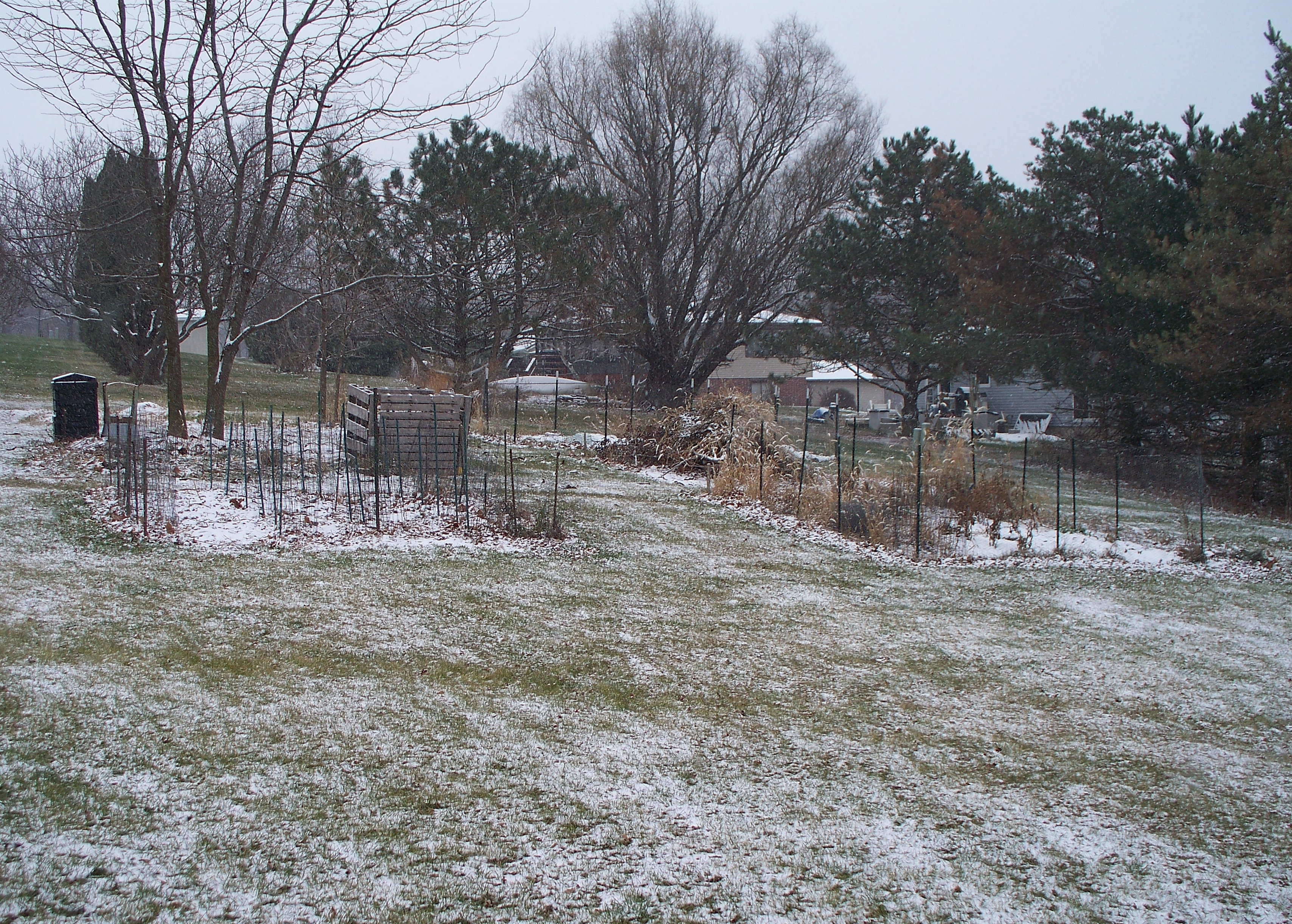
Snow began overnight and is expected to continue all day — the first real snow this winter.

We need more from winter, a week of subzero temperatures to kill bugs in the ground and to stop the sap flow in trees before pruning. Today’s snowfall gets us started, although the long-range forecast shows ambient temperatures well above zero the rest of the month.

We are ready to bunker in. We have reading piles, plenty of food, an internet connection, and an operational forced air furnace. I expect to drive my spouse into town for work so she doesn’t have to scrape windshields afterward. Having lived in Iowa and the Midwest most of our lives we know what to do.

Breakfast was kale cooked in a style of central Mexico with caramelized onions, finely chopped garlic and red pepper flakes. This recipe is worth trying because it allays the bitterness sometimes associated with kale, making a hearty and delicious vegetarian meal. Here’s what I did.

In a medium sized frying pan warm extra virgin olive oil on medium high heat. Cut three medium onions in half,  slice them into quarter-inch ribbons, and add to the olive oil. Salt generously to taste. Once the mixture is cooking, reduce the heat and caramelize the onions. Finely chop three cloves of garlic and add them to the caramelized onions along with red pepper flakes to taste. Mix and cook just until the garlic loses it’s raw taste. Add one half cup of vegetable broth and a generous amount of kale. Cover the pan with a lid and let it cook for five minutes on medium low heat or until the kale is tender. Mix the ingredients thoroughly. At this point I laid two home made bean burgers from the freezer on top of the kale and covered again until the pre-cooked burgers were warmed through and the moisture evaporated. (If you want to use the kale mixture as a taco filling, the bean burgers aren’t needed). Transfer the kale and a burger to plates and top with Mexican cheese and fresh salsa. If you have it, freshly chopped cilantro would be a nice addition. The breakfast of champions.

Five weeks remain until soil blocking begins at the farms. It’s a chance to garage the car for days at a time and turn inward as if there is just us in the world. The snow is getting deep enough to shovel the driveway before heading to town.

Already it is becoming a productive, mostly indoors day. Winter at its best.
Categories
Writing

Composing 500 Words

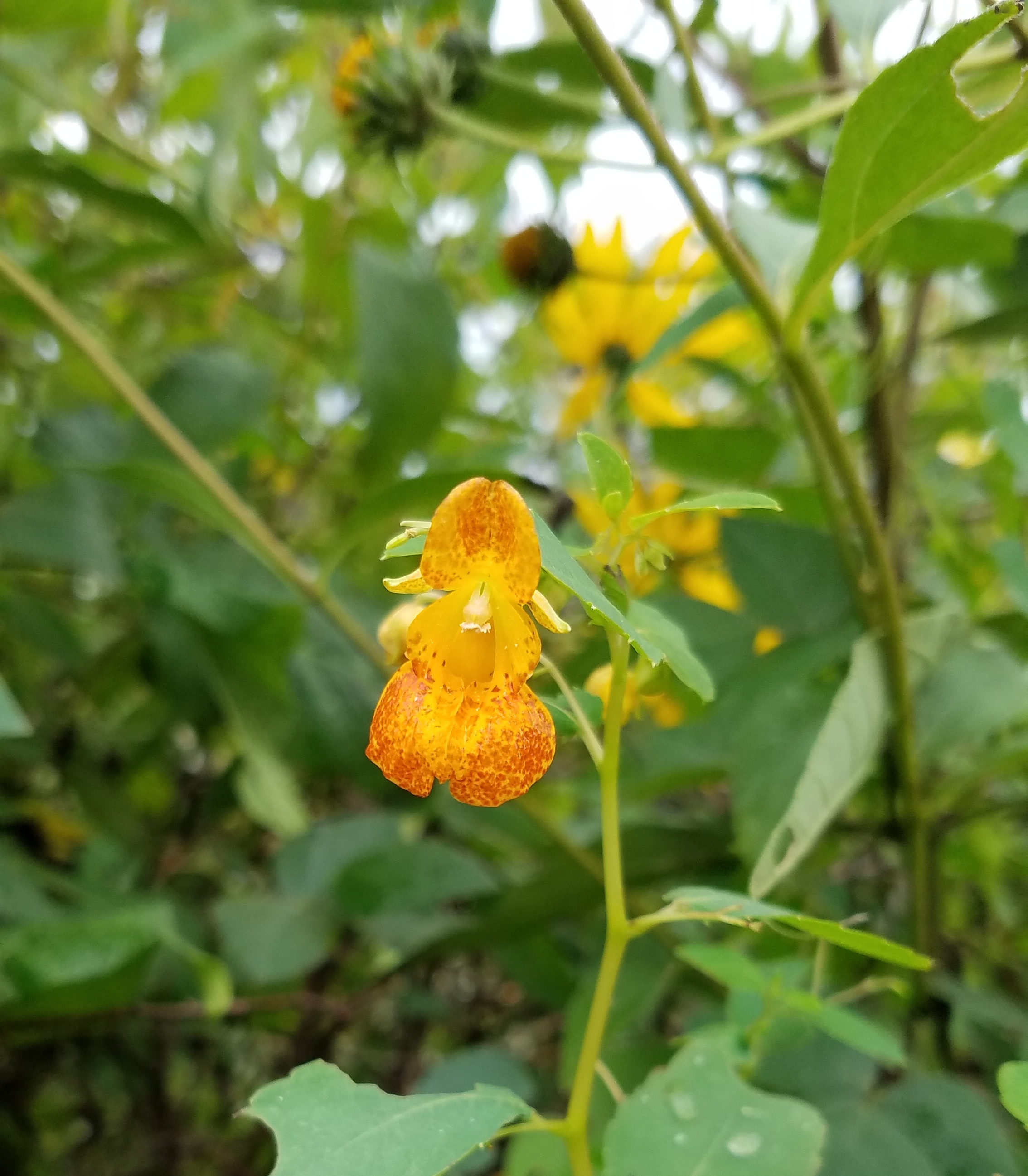
Jewelweed on the Lake Macbride Trail

Post today, move on to tomorrow, and for the most part, walk away once the post is up. That’s blog writing.

While a writer can improve his or her craft by writing regularly, the impetus to post on a blog can erode time normally spent editing and rewriting. As a result, blog writing can be hit or miss.

John Irving said, “More than a half, maybe as much as two-thirds of my life as a writer is rewriting. I wouldn’t say I have a talent that’s special. It strikes me that I have an unusual kind of stamina.”

Blogging is anathema to Irving’s kind of writing. As a result blogging builds bad habits. How does one break the cycle? The answer is not in more careful planning, writing, editing and rewriting 500 word blog posts.

My blogging process developed a template. After getting a bee in my bonnet I spend time framing 500 words. Next, I rewrite what I’ve written with the goal of lowering the word count and making better sense. How can I say something more succinctly? How can I avoid common problems? How can I avoid using certain words like “but” and “that” and eliminate clichés that mindlessly pop into the text? After a rewrite, I look at the content and make sure I’m drawing a conclusion — that I haven’t developed a cache of author-only supporting information off line. A once over for spelling and grammar, insert a photo, justify, tag it, and hit “publish.” Pretty straight forward. It takes about 90 minutes on a good day.

I’m more careful with letters to the editor and pieces I know will reach a broader audience. They more represent writing according to the Irving model. When I get a chance for 500 words in the Cedar Rapids Gazette, with a print circulation of more than 34,000, I spend more time making sure the writing is thoughtful, well edited, and cogently composed. I haven’t had much trouble getting my work accepted with minimal editorial intervention.

If I had unlimited funds, I’d pay for an editor to review everything I write. When I’ve had an editor — at the newspapers and at Blog for Iowa — my writing improved. For a low wage worker and pensioner, an editor is not an option very often.

Rewriting is important in my writing life outside blogging. However, when I write 10,000 words I often abandon the project until a “later” that doesn’t arrive. This requires fixing through diligence and Irving-like stamina. Perhaps it’s the next thing on which to work.

In my 12th year of blogging I developed a following and am grateful. I often meet people I don’t know who are regular readers. My number of WordPress followers has slowly grown since I made this site public. I am thankful for readers and hope to retain their interest. The way to do that is to constantly improve my writing. Few enjoy process posts like this one. From time to time they are needed.

Categories
Home Life

Cabin Fever

Garden in Winter

My to-do list has grown since retiring from my transportation career in 2009. The number of items on it was supposed to decrease yet it’s not.

After retiring that July 3, I engaged in life outside home in a way I hadn’t in a long time. I joined groups working on social issues. I joined the boards of some of those groups. I had a measure of freedom to pick activities from the broad palette found in a region with a large University town and Iowa’s second largest city. Almost ten years later I view that first retirement as a failure. I left a career and job but didn’t stop working.

This time, beginning with leaving full-time work last March and taking my Social Security pension, it is different. The stress of living paycheck to paycheck is relieved yet the to-do list sits quietly, awaiting action. I can’t get started and each day becomes a challenge to gain impetus on it. Why? I blame it on cabin fever.

“Retirement” is a story we tell ourselves in order to live. When I write, “career in transportation,” it stands for working 25 years in a series of jobs in that field. I worked to provide financially for our family. In quiet mornings of 2019 that narrative is stripped away leaving me mired in passing time. I have to work through it and get on track.

Part of the challenge is awareness. I’m of an age where every path chosen, every task undertaken, means another is pushed aside, maybe never taken up afterward. Perhaps it’s always been this way and I didn’t see it, wouldn’t acknowledge it. Choices made now have a different meaning — the bucket has limited capacity to hold our tears and sweat and I must choose carefully.

Of course that’s also some bullshit. That the door leading to the garage needs painting doesn’t go away. It will take several hours with buying supplies, prep, undercoating and finish. It can be fit into my schedule adding something positive to the quality of our lives. We only ever have the moment in which we live. There is no bucket of tears.

If I’m feeling cabin fever, not to worry. I’ve arranged start dates at the farms, and warmer weather will spark work on the garden. As warm as it’s been, I could work in the garden now, removing the weeds and fencing, organizing the plots. However, cold weather is coming, I hope. Once it gets below zero for a week, there is winter pruning to do… then a burn pile… then before you know it, back in the swing of things.

If we stay busy, cabin fever disappears. Our only challenge is to get started.

Categories
Writing

So It Begins

The holiday season is over and today I return for a shift at the home, farm and auto supply store. I’m fine… I’ll be fine.

Since the orchard closed for the season it has been two months of reading, writing and cooking in the kitchen. Existential errands have been run. There was a special election Dec. 18. I eschewed the company of anyone but those closest to me plus people I encountered in the world of commerce.

My daily journal of meetings with family, friends and acquaintances is the emptiest it’s been since I began keeping it. It has been the kind of holiday isolation a writer needs and appreciates. I’m ready for the holidays to be over, even as winter has just begun.

It was quiet on New Year’s Day. Using the rest of a jug of sweet cider and a packet of spices from the orchard, I mulled cider which was warm and comforting. The flavor of spices combined with local apples tasted just right.

I curled up with a book, a cup of mulled cider, and dwelt in the narrative that is Bruce Springsteen’s memoir. It was great escape. I wasn’t that familiar with him or his music. It was day to forget about the outside world before the 2019 maelstrom begins. 

Seven or eight weeks remain until soil blocking begins at the farms. With time on my hands one would think I’d have a better plan for the coming year. It’s sketchy at best. Time isn’t waiting for me to catch up.

So it begins, my 67th trip around the sun. Ready or not, here we go.

Categories
Work Life

Retail Rumors

Retail Space for Rent

After work at the home, farm and auto supply store I stopped at the warehouse club to get a few groceries. Shopping there is never a quick in and out because of my relationships with people from when I worked there. There’s is catching up to do every week and the expanse of concrete floor serves as our modern piazza.

A person can only get certain kinds of goods at a warehouse club, and some of my friends don’t have membership cards as they work there. A recurring conversation is about my 2015 move down the hill to the home, farm and auto supply store where the idea of pay with benefits takes on an other-worldly aura. My low wage colleagues shop there and like our store’s offerings. Yesterday’s conversation went a little differently.

We’re not over the closures of K-Mart, Sears and Paul’s Discount. We worry that J.C. Penney will close as well, concerns driven around available and reasonably priced goods. On low wages, we don’t shop at Tiffany & Company or Bloomingdale’s so it matters.

The rumor is a couple of shops at the outlet mall in Williamsburg are shuttering in January, and a couple more will close at the nearby Coral Ridge Mall. Consolidation and reduction of competition is not positive. Consensus was we’ll get by and pay more as we often do.

There is a certain inevitability to changes in retail. As stores carry a smaller number of items, it becomes inconvenient to drive here for one thing, there for another, making hard goods available on line more attractive and accelerating the demise of storefronts.

Chaos reigns in many retail establishments. We discussed nearby Kohl’s Department store where certain types of goods fall to the floor where customers trample them. That’s not a positive experience. If I had all day, we could have enumerated them all. Time drew short and we said pleasantries to end conversations in a sociable manner.

Our lives no longer inhabit the town square. In many modern cities, there is no town square. That’s so modern, so American.

Instead of spending time at the piazza we trade in rumors spoken among friends. Maybe society has always been that way and always will. It was yesterday, such self-awareness helping sustain our lives in a turbulent world.

Categories
Home Life

Winter Rain

Raindrops

We have yet to see our first winter snowstorm. Some of my neighbors would be fine if temperatures never got below freezing. As a gardener, I know the value of a long, deep freeze in killing insects, and enabling tree pruning the way I learned it at the orchard.

I relish a couple of cold spells each winter.

It’s raining now and expected to continue all day into tomorrow. The forecast has snowflakes coming, but that is laughable with all the heat in the ground. Maybe by Monday conditions will be right for some to stick. For now, we have winter rain.

Aside from a couple of errands, the next five days are clear to plan 2019. Maybe the rain and snow will precipitate some brilliant ideas on how to spend time. In some respects, there is not that much to plan.

Financially the only decisions are whether and when to move to full retirement. For the time being, a couple of days at the home, farm and auto supply store is useful, and the income finds a home every month. How the money is spent was predetermined by household decisions already made. Every bill payment is known, with anything left at month’s end going against debt. The main calculation is developing an escrow system that accommodates property taxes and several other categories of expense to even them out over the year.

The garden almost plans itself. Seeds have mostly arrived and how the seven plots will be planted consists of a vague notion to rotate different varieties of vegetables among patches of sunlight. As a soil blocker at the farms, I’m well in tune with which seeds need to be planted when, and like always, will follow their schedule. I have enough fertilizer for most of the first planting, and expect to use the spade and rake method for planting. I no longer dig up entire plots for planting, but narrow strips. The purpose is to preserve soil structure. Based on tomato production last year, it’s a viable method. Some thought will go into the garden, and it will require only a bit of energy to finalize it.

In the end, our financial picture and food ecology will take care of themselves with a combination of experience, habit and awareness to new opportunity. What’s left?

That’s what the next five days will determine.

Categories
Writing

Overcoming Inertia

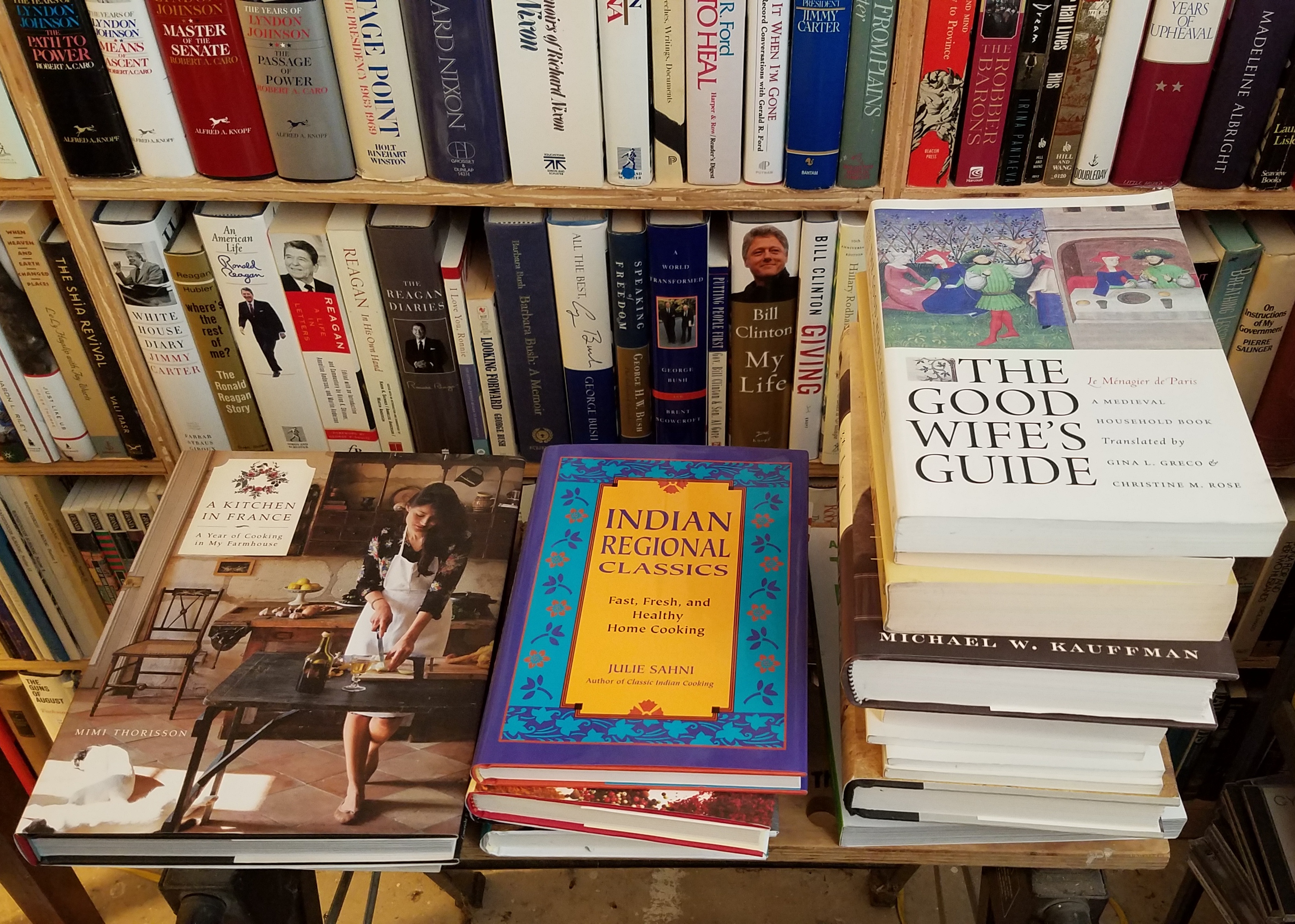
Book Bench

When I left full time work March 16 I had no expectations.

After all, there was work at two farms in spring and early summer, and fall weekend shifts at the orchard, all to keep me busy. That’s along with two days a week at the home, farm and auto supply store.

Once the farm work ended in October, my outside work schedule left me with five days a week at home. I didn’t know what to do.

I continued my habit of reading and writing in early morning. I read more full length books than I have in years. With my Social Security pension our household income rebounded to a livable amount. Our garden was the best ever and the extras from barter arrangements made a reduction in grocery expense possible. We cooked more meals at home and ate better quality food. The sum was that if I continued that direction, I could get by, and live well, but it wouldn’t be very good for my life in society. I’m not ready to settle into an easy chair and kick back during my remaining days.

I’m okay with slowing down and taking stock. It’s a luxury many people don’t have. It is time to overcome the inertia that’s settled in since October and get to work. The challenge is picking a couple of meaningful goals and bringing a reasonable level of focus to them. That’s where I’ve been stuck for a couple of months.

If I were to get a legal pad and write down tasks needing done it wouldn’t take long to fill several pages. Filling time and making lists is not the point. Finding meaningful work is the goal, work meaningful not only to me but to those around me. That is a harder planning session.

That’s where I land after 50 years of applying my driven personality to society in the workforce. What I do next is more optional than it has been since I was a teen. It will be work and I want to make sure it is the right kind of work for a sixty-something.

The remaining December days are a perfect time to set course for 2019 and beyond, and so I shall.

Categories
Writing

Holiday Writing

Writing About Apples

In May 1972, in the English Philosophy Building of the University of Iowa, professor David Morrell held up a copy of the book he published the previous year and asserted it represented the future of modern American fiction.

My high school friend Dennis was also in the class and we were skeptical. Morrell wasn’t wrong.

The book was titled First Blood and has been in continuous publication ever since. In 1982 it was made into a movie starring Sylvester Stallone. There were sequels. A student of Hemingway and John Barth, Morrell wrote First Blood while at Iowa where he taught English until 1986 when he gave up tenure to write full time. Last count he had written 32 books.

Morrell is the only undergraduate professor I continue to follow. That’s because when social media rose in the culture he adapted to it and is a constant presence on Twitter and Facebook. He’s easy to follow. Yesterday he posted a link to a video about writing which arrived as I’m figuring out what to write next year.

“The point is to have the passion and the drive to see in a book that it can make you a better person,” he said. “So that even if the book is not published you haven’t wasted your time because you wrote something that is truly important to you.”

That’s good advice. Write to make yourself a better person.

If I took any lesson from Morrell it was his practice of taking a deep dive into techniques he would depict in his fiction. Over the years he learned mountain survival skills, firearms handling, how to drive in emergency situations, and how to fly an aircraft. All of this training served his thriller writing. The take away for me was that writing must be grounded in experience. Not only so it reads well, but so we understand and can communicate life experiences faithfully.

During end of year holidays Big Grove and the lake district gets quiet as people settle into home, family and community. It is respite from the increasing turbulence we see in our politics and in society. I use this time to gain perspective on what I’ve done and written. Today the days start getting longer — an embarkation point for what’s next. Not sure what I want except forgiveness and redemption.

Midst gardening, farming and living there will be writing. I hope to improve my skills and stay grounded in reality… and to become a better person.

Categories
Environment Writing

Ice on the Lakes

Ice Skates on a Shelf

On early morning walkabout the moon and stars were out, casting silvery light on me and everything.

Yesterday a thin layer of ice rested on the lakes, its mirrored surface perfect for skating if it thickens. Based on the forecast, we’ll see more open water soon.

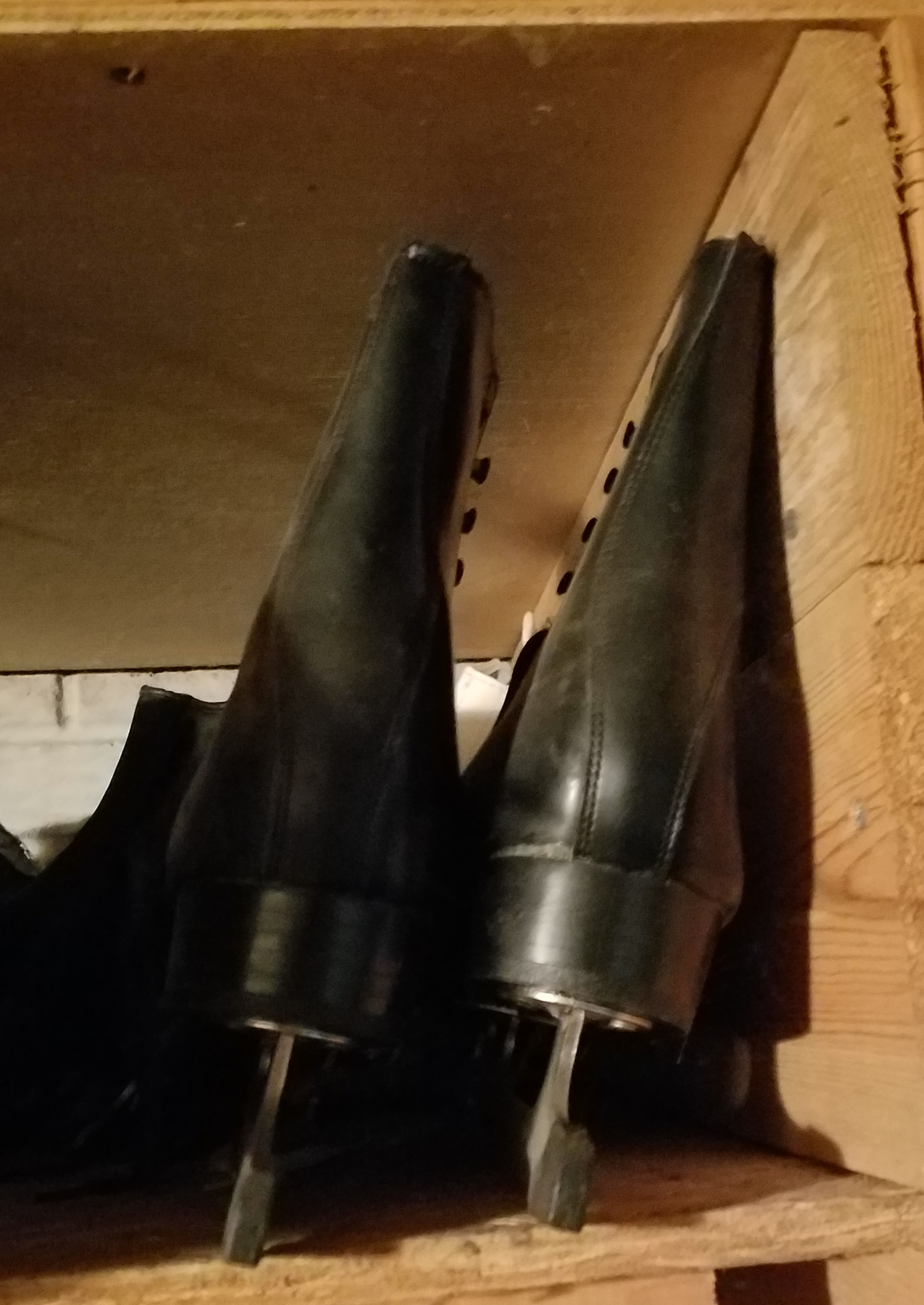
When our daughter was a grader and the lake froze we’d don ice skates and cut a path all the way to the other shore. When snowmobiles plowed by we could feel the ice moving up and down taking us with it. We keep the skates on a shelf in our garage.

We live in a cold middle place where it’s not quite winter and not warm enough to work long outside. Our attention turns inward and to the possibilities of next year.

The best part of the coming holidays is people engage in things. A calm quiet falls over the Johnson County Lake District. If it were snowing one could hear flakes fall.

It’s a time for planning and writing here in Big Grove. What few fresh vegetables are left in the ice box will soon be eaten up… well, except maybe the turnips. I’ve been watching videos of Indian street vendors making gigantic woks of chicken fried rice. There’s a tub of leftover rice and plenty of eggs so I’ll try that for lunch or supper. I forget eggs are chickens.

And so it goes. Vonnegut taught us death can be absurd, tragic and predictable. It seems mostly random and will eventually take us all. I’d like to get back out on the ice and cut its clear, smooth surface in long figure eights. I’d watch fish swim through the ice and hope the crazing wouldn’t result in my going to live with them. Not yet anyway.

The hope of this holiday season is we can do positive things next year. Isn’t that always the case? So it goes, and here we go. Gliding along the surface until we take a plunge, hoping for a resurgence of living each moment as best we can.

That’s optimistic. Increasingly, that’s who I want to be, who I am.

Categories
Living in Society Social Commentary Writing

This is not France

Protesters on the Champs-Elysees. Photo Credit – NBC News

We see a lot of customers wearing yellow safety jackets at the home, farm and auto supply store. Mostly they seek something to complete a project.

Road crews, construction workers, and tradesmen of every kind stop in wearing the bright, reflective safety gear. It is mostly men. Usually, they are in a hurry to get back to work.

The similarities between these Iowans and the French citizens protesting an increased fuel tax seem mostly external. The French are required to carry yellow jackets in their vehicles in case of a mechanical breakdown on public streets and roads. Before I began working at the home, farm and auto supply store I thought only fire fighters wore such reflective clothing.

What makes our yellow jacketed citizens different is the Trump administration is creating massive changes in financial matters that impact them and who cares? Where are the protests? For the most part Americans play the hand dealt in subservience.

Take interest rates. On our last statement before the president was inaugurated, our annual variable interest rate was 3.00 percent on our home equity loan, indexed to the Wall Street Journal published rate. Our current rate is 4.75 percent, an increase of 58.33 percent. Where is the outrage?

Take gasoline and diesel prices. On Dec. 10, the average U.S. price of gasoline for all grades was $2.511 per gallon with diesel at $3.161. During the same week in 2016, gasoline was $2.347 and diesel $2.493. The price of gasoline increased 6.99 percent and diesel 26.80 percent under this administration. With U.S. oil production hitting record high levels last month, why aren’t gasoline and diesel prices coming down?

I don’t really expect answers because I know them. Interest rates and oil prices are just not on the financial radar for most people. They are an assumed background noise. Something that has to be dealt with, but not very often. Importantly, American businesses have learned how to change things in their favor without precipitating the kinds of protests we see in France. It is a basic part of corporate pricing policies.

The protest in France is about fuel prices. During the first Gulf War I worked for Amoco Oil Company, where we were acutely aware of the global political situation as it related to discovery, development, refining and selling our products. I managed a small trucking fleet and fuel price volatility during the war led us to implement a fuel surcharge in our contracts with customers. We weren’t the first to implement a fuel surcharge but today they are a hidden part of almost every type of delivery service. Depending on a customer’s savvy, fuel surcharges can be negotiated to produce an additional margin for operations through various pricing schemes. As suggested, it’s just not on the radar for American yellow jackets. Interest rates? You gotta be kidding me.

It’s been a long time since I was in France.  I’ve never understood their politics the way I do ours. Is Macron good or bad, or just another president in a series of controversial figures? What I do know is Americans rarely make the news for our protests. That is more newsworthy than what the yellow jackets are doing in France.