Categories
Living in Society Social Commentary Writing

Unexpected Monday

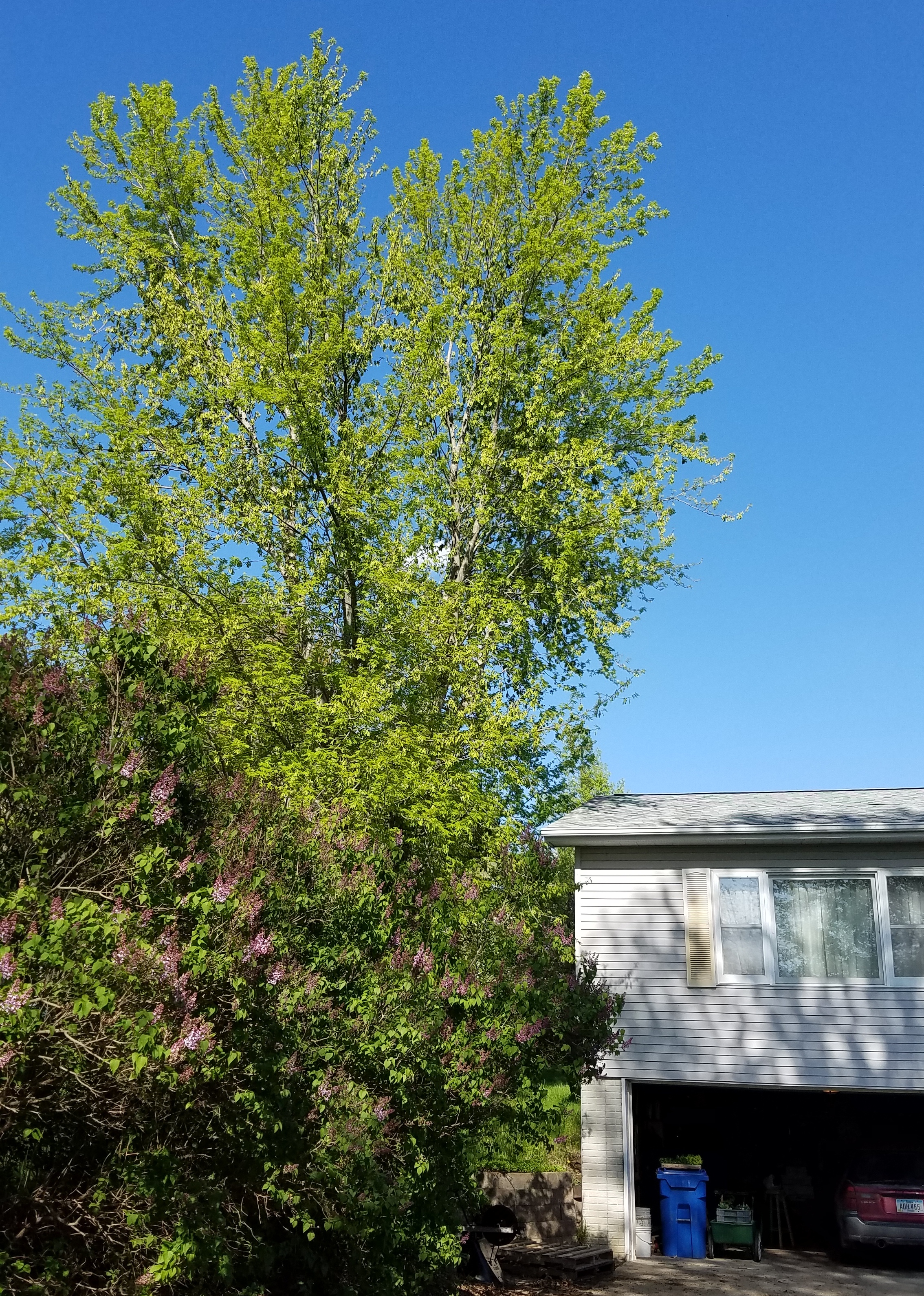
Maple Tree – Before

Monday didn’t happen as expected. There were three things involving arborists, health care and farming.

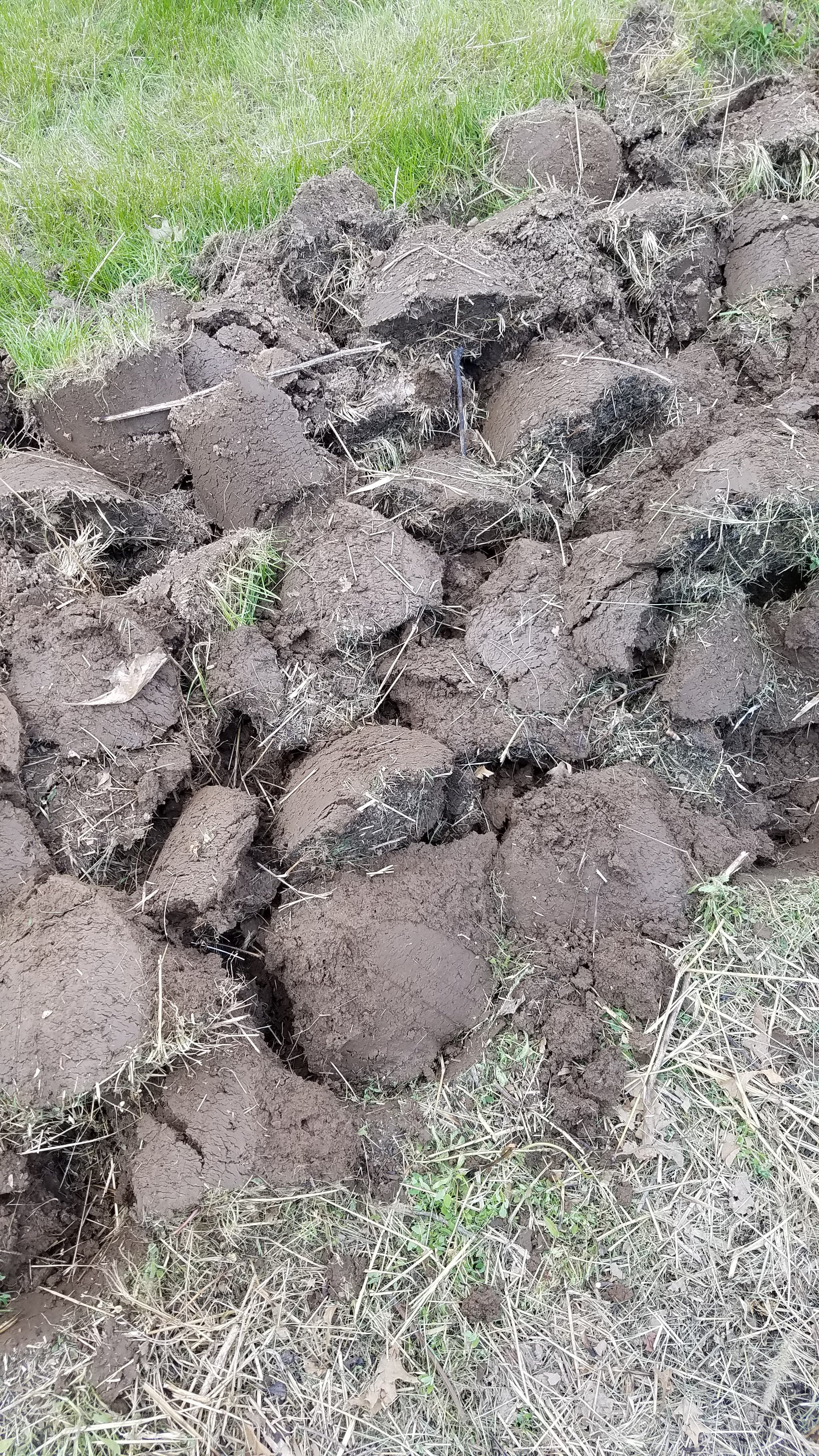
Without announcement, the arborist arrived to take down a maple tree I planted on the northwest corner of the house. Turns out I didn’t know what I was doing when planting the 12-inch, stick-sized sapling so close to the house in 1994.

Now fully grown, unusually strong winds already took out one of the main branches. We determined it would be less expensive to remove the tree than pay for a roof repair when limbs inevitably blew down on it.

It was a small way of mitigating the damage of the climate crisis.

The crew was four men with two pickup trucks to haul away brush and wood. The benefit of using an arborist instead of a tree service is the equipment is pickup trucks, ladders, and an array of Stihl brand chainsaws and old fashioned loppers. There is minimal soil compaction around the work site without heavy equipment and that’s important to a home owner.

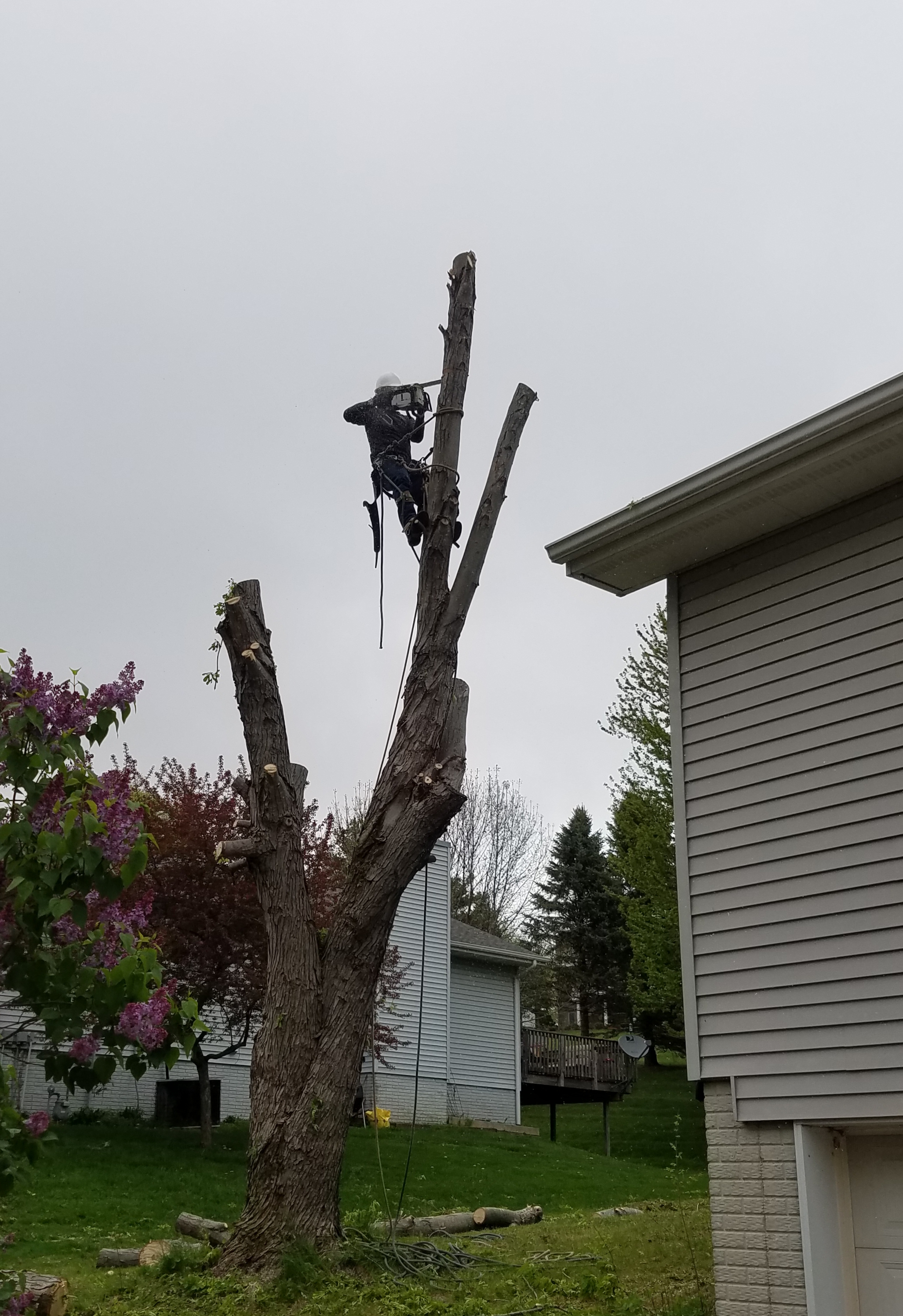
Arborists at Work

The arborists took out the maple and trimmed the pin oak, finishing well before noon. Our next door neighbor engaged them for tree trimming and by the end of the day our corner of the neighborhood was looking good.

Monday’s main event was a trip to the local clinic to get checked out.

Last Friday someone called, saying I was overdue for a physical exam. They had an appointment the following business day, which in a small city is disconcerting. The hospital managing the clinic is already having financial difficulties. The fear is the clinic will close, making it neccessary to drive to the county seat for health care. I took the appointment.

We no longer have two physicians at our clinic as one was replaced with an ARNP or Advanced Registered Nurse Practitioner. I get that the United States is facing a physician shortage, and our ARNP fills a coverage gap. It makes sense to differentiate the skills being performed in a local clinic and find practitioners that closely match them.

I miss what I had for a very long time, a doctor with whom I established a relationship and could get to know in our community. I’m not saying it was great, or that we should go back. I miss it but am ready to move on, seeking an answer to the question how do people get treatment in a scenario in which part of every office visit is talking about how to pay for services?

Arborist at Work

I liked my ARNP. He explained something I hadn’t considered. He said I was scheduled for a physical exam and there would be a significant cost. I explained that’s what the Friday caller said I needed so I went with it. He changed the billing code and said, once a person reaches a certain age, the better course of action when seeking treatment is to come into the clinic for specific maladies, without getting a traditional physical exam. I have a history already, which when combined with age and lifestyle risks, along with my complaints, can determine a course of care without physical examinations as I’ve had previously. What their team did today was little different from what the last physician did, with the exception the prostate examination was delayed until the results of a panel of lab tests he ordered were known.

At 3:40 p.m. I drove to the farm to pick up our vegetable share of Bok Choy and Koji, Leaf Broccoli, Mixed Greens, Lettuce, Spring Garlic, and Garlic Chives. Each year I secure onion starts for our garden leftover once the farm has planted theirs. It was time. Usually I get a bundle or two of starts produced in Texas, but Monday was different. The farmers gave me two trays of locally grown starts still in soil blocks. It seemed a generous gift considering the work that produced them. I was thankful to have them.

A day that started with a headache from a 12-hour fast before my clinic appointment turned out for the better. I had a cup of coffee after the clinic and the day got progressively better. It was one more day of sustaining a life in a turbulent world.

Categories
Environment

Climate Change, Roundabouts and Retail Stores

Rural Johnson County – 140th Street NE west of Ely Road on March 23, 2019.

During a tour of my usual spots to observe flooding it doesn’t look as bad as it has.

In 2008, the flood waters came to within 100 yards of our home before receding. We are nowhere near that now.

Yesterday afternoon Governor Kim Reynolds issued a press release saying the president had approved a major disaster declaration for 56 Iowa counties. Hazard mitigation funding became available for the entire state.

What’s going on?

“Are we just rolling snake eyes over and over or is there something happening here?” Erin Murphy of Lee Enterprises asked on Iowa Press this weekend.

“We have 147 years of temperature and precipitation records for the state,” Iowa State Climatologist Justin Glison responded. “The trend shows us warming and with the warmer atmosphere, a warmer surface temperature, we’re able to hold more water vapor in the atmosphere. That gives us a higher probability of having more precipitation events. What we are seeing over the past thirty years is that the intensity of precipitation events is increasing… Yes, we are moving into a new type of precipitation regime.”

No mention of the words “climate change” and that’s okay. Glison’s message is what I have been saying the last six years, and part of what Al Gore said the two times I heard him present his slide show. The current flooding is climate change happening in plain view. It is time to do something to mitigate not only the damage caused by climate change but the changing climate itself.

What should we do about climate change? Embrace the truth about what this scientist said. Then develop the political will to change human activities that contribute to global warming in a way that makes sense and creates a resilient culture.

The rest of my day seemed anticlimactic. While crossing the Cedar River bridge on Highway One I decided to visit the Ace Hardware Store in Mount Vernon to see if they had a replacement part for the faucet handle in the bathroom.

I entered the roundabout at the intersection of U.S. Highway 30 and Route One. It is a bit confusing but I was able to decipher the signs related to which lane was correct for my trip. I like the roundabout for intellectual reasons, although most locals hate it.

Before the roundabout was completed in October 2013, the intersection was one of the five most dangerous in the state, based on frequency of accidents. In the years since the new roundabout opened, the frequency of accidents remained higher than expected. The intersection is currently exhibiting a crash frequency of 16.8 crashes per year according to a 2018 study. The expectation was there would be from six to eight crashes per year. To make a 60 percent reduction in accident frequency, the study recommends better driver education and improved signage near the roundabout. In other words, Iowa drivers are not finding navigation of the roundabout intuitive and it shows.

I arrived in Mount Vernon and parked across the street from the small hardware store. The future of small city retail was on display as I walked through the entrance. As an employee of a home, farm and auto supply store my radar was up to take in the sales process.

Two cashiers greeted me as I entered and asked if they could help. They directed me to the plumbing aisles which were easy to find in the small space. I walked past a popcorn machine that offered fresh, hot popcorn to eat while shopping. Eating and retail seem inseparable in the 21st Century. I declined to sample a bag. I quickly found a selection of faucet handles.

Using my handheld device, I had taken a photo of the old handle with a ruler held up to it from two angles. I sought an exact match. Within a couple minutes, a sales associate walked up and asked if he could help me find something. I said yes as I wasn’t finding what I wanted. He confirmed the display represented what was on hand and led me to a dual-monitor computer where he researched alternatives. The idea was if we could find the part, the associate would order it on the spot. We looked through four examples, both the Ace and manufacturer brands and couldn’t match the size.

In my experience, expanding product offerings from a retail store’s physical inventory is essential to survival in small cities and towns. It harkens back to the early days of the Sears catalogue. While there were no mobile or home computers back in the day, modern retail at its best emulates the idea there is a broad array of available products that with time can be delivered just about anywhere. The difference between my experience at Ace Hardware and a large on line retailer like Amazon.com is the personal attention I received from everyone I encountered at the store. That service is what satisfies our human need for personal interaction, and is likely to make us a repeat customer. In doing so, local retailers can learn and work toward sustainability.

What do climate change, roundabouts and retail stores have in common? I’m not sure, but that was my day in society.

Categories
Environment Home Life Writing

Starting Spring

Buckets of sand and salt near the garage door.

It felt good to be outdoors on Friday. The sky was clear and temperatures warmed enough to shed my coat. Green-up has begun.

We filed our income taxes with the Iowa Department of Revenue and the Internal Revenue Service. Earlier in the week I paid the second half of our annual county property taxes.

This morning I plan to walkabout our subdivision, inspect roads, and address concerns about water and sewer leaks. With the hard winter and significant ambient temperature swings, there is damage. Whatever needs fixing requires a plan and a budget. As a board member and trustee of our home owners association and sanitary sewer district I share responsibility for both.

We’ve done our part to support government services. Now spring can begin.

Outdoor work was sweeping up enough sand from the road in front of the house to refill sand buckets used last winter. I haven’t purchased sand in about five years. Because of the hard winter there was plenty available. A 50-pound bag of solar salt filled empty salt buckets.

I found the fan to blow air across the damp garage floor. It took about two hours for moisture to evaporate. Baby steps to start spring 2019.

Governor Kim Reynolds issued a disaster proclamation for Howard County Friday afternoon. The number of counties under disaster proclamations is now 53 (of 99), according to the press release. Current estimates of damage exceed $1.6 billion according to this morning’s Iowa City Press Citizen, although counties reported they have yet to fully assess damage within their jurisdictions. Governor Reynolds proclaimed nothing about what government would do to help mitigate the deleterious effects of climate change going forward.

My farmer friend from the home, farm and auto supply store reported the ground needs drying before getting into his fields. While the weather quickly became spring-like, the usual issues for row-crop farmers remain. My specialty crop friends also found the ground too wet to work. They are planting in their hoop houses which are traditional season-extenders.

Spring began Wednesday and is just getting started. We’re ready.

Categories
Environment Writing

No Going Back to Coal

Coal Mine Demonstrators Going Down – 1950

On Aug. 10, 2016, Donald Trump appeared at a campaign event about 50 miles from my father’s home place in southwestern Virginia. He asserted coal miners would have one “last shot” in the election, cautioning that the coal industry would be nonexistent if Hillary Clinton won the election.

“Their jobs have been taken away, and we’re going to bring them back, folks. If I get in, this is what it is,” Trump said.

How do you tell if the president is lying? Check to see if his lips are moving.

There was no last shot. The coal industry is dying and the president’s efforts haven’t and won’t change that.

It is easy to dismiss his comments as campaign bluster. However, real lives are at stake and young couples are leaving Appalachia to find work in other professions and make a life. We are all driven by the need to make a living. Despite strong personal history and traditions in a place, the economics of living there may cause us to leave as it is doing in coal country where mining jobs continue to be in decline.

U.S. coal consumption is projected to decline by nearly four percent in 2018 to the lowest level since 1979, the U.S. Energy Information Administration said on Tuesday. At year-end, appetite for coal will be a staggering 44 percent below 2007 levels according to NBC News.

The cost per kilowatt hour of electricity generated by new solar arrays is less than those generated in existing coal-fired power plants. Cheap natural gas extracted by hydraulic fracturing has taken new coal-fired power plants off the drawing board. Right or wrong, the power industry is switching to gas. India, one of the top ten global carbon dioxide emitters, has cancelled plans to build nearly 14 gigawatts of coal-fired power plants with the price for solar electricity “free falling” to levels once considered impossible, according to Ian Johnston at the Independent.

There are no easy answers for people impacted by our changing energy economy. Families that relied on coal extraction to make a life will have to revisit their choices regardless of what the president does or says.

When I was coming up the home where I spent ten formative years had recently been heated by coal. When my parents bought it the large gravity furnace in the basement had been converted to natural gas. It was an inefficient way to heat our home, but it was very reliable, and natural gas was less expensive and more convenient than coal trucks plying the alley behind our house to deliver. There is no going back to coal in home heating, or anywhere else.

The sooner we generate our electricity from renewable sources, the better we reduce greenhouse gas pollution in the atmosphere. No amount of presidential bluster can save the old energy economy, nor would we want to. Our politics isn’t there yet, but we will act on climate change. There is an existential urgency that we do.


Categories
Environment

Environmental Issues 2018-style

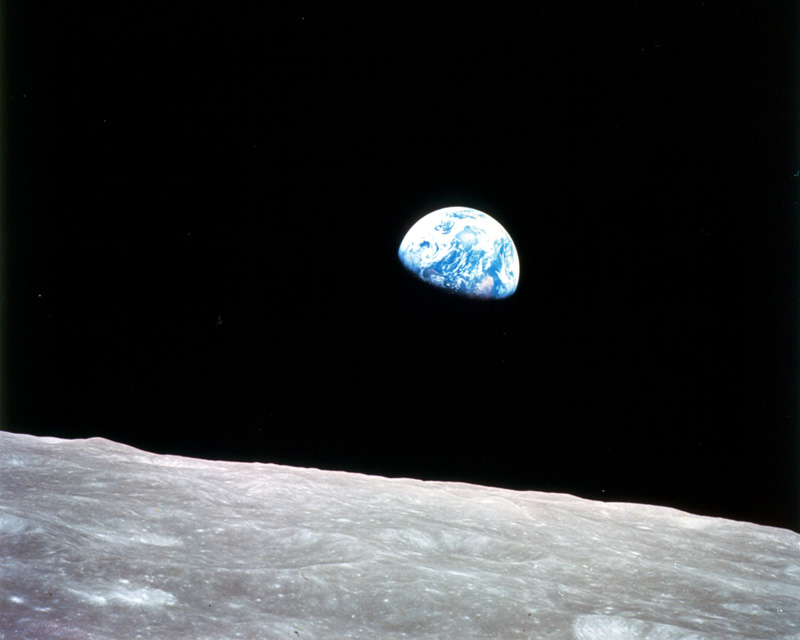
Earthrise by Bill Anders, Dec. 24, 1968

There was never any doubt that when Republicans won the 2016 election setbacks were in store for parts of the environmental movement that rely on government regulations.

Conservative think tanks like the Heritage Foundation were ready with swat teams to investigate every part of the executive branch and reverse anything and everything that could be to favor business interests during the president’s first term.

The funders of these operations have plenty to celebrate going into the new year. The rest of us took a step backward.

What I’ve learned in almost 50 years of being in the environmental movement is there is no parsing the actuality of environmental degradation. A person can summarize the greenhouse effect in as few as 200 words. The impacts of global warming are available to anyone who would recognize them. There is an inevitability of climate action with the main concern being we wait until it is too late to save ourselves.

The battle over the coal industry is being fought less by environmental advocates and more by market dynamics. So many electric utilities converted to natural gas because of its current low cost and availability. Why wouldn’t a utility want a thermal energy source delivered right to their door over a mineral that had to be delivered and handled by the rail car load at greater expense? Based on the home heating conversion of coal to natural gas, ongoing when I was a child, there is no going back to coal.

Natural gas is also a problem because of greenhouse gas emissions. While solar energy installations have stalled as a result of the president’s tariff policy, the market will figure it out to use the sun and wind directly. Renewable energy will prevail in the marketplace over extraction-based energy sources. Based on the science of climate change, they have to prevail if we hope to adapt to the deteriorating environment we created.

Symbolic gestures like the Green New Deal the House of Representatives is proposing are something. However, the problem of environmental degradation won’t be solved by governments alone. We need a resurgence of green habits. It is still too easy and inexpensive for someone to hop in the car and drive 20 miles to pick up groceries to expect them to change their behavior.

Progress made on environmental issues and policy during the Obama administration was no progress at all if it could be so easily reversed by the next administration. The idea a potential Democratic president in 2021 could reverse the damage done by Republicans is a shallow hope. We have to do better than this.

As 2018 draws to a close there is much to be done to reverse the deleterious effects of a changing climate. Some of it can’t be reversed yet we can’t lose hope. Despair is a form of climate denial.

“We do not have time for despair,” Al Gore said recently. “We can’t afford the luxury of feeling discouraged. Too much is at stake.”

Inside politics and out, now is the time for climate action.

Categories
Environment

COP24 and What’s Next

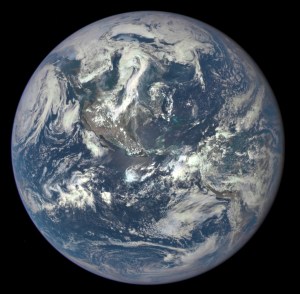
Image of Earth 7-6-15 from DSCOVR (Deep Space Climate Observatory)

Like others, I was skeptical the broad coalition to act on climate formed during and after the 21st Conference of the Parties to the United Nations Framework Convention on Climate Change in Paris would last. This week at COP24 in Poland, three top oil producing states, the United States, Russia and Saudi Arabia, along with number nine, Kuwait, blocked acceptance of the Intergovernmental Panel on Climate Change report the conference commissioned.

The four oil producers objected to “welcoming” the report and preferred the vague language of “noting” the report. Because the conference proceeds only after reaching consensus, and they couldn’t, the report was not adopted.

“Opposition to climate action is one of the issues motivating Trump’s cozy relationship with the corrupt leaders in Russia and Saudi Arabia,” State Senator Rob Hogg tweeted Dec. 9. “This is not who we are as Americans, and we need to put a stop to it.”

“Under Trump, instead of leading the world to act on climate change, the United States joined with Russia and Saudi Arabia to stop the recognition of a scientific report about the increasingly urgent need for climate action,” he tweeted.

Absent U.S. leadership on climate I expect further dissent within the coalition that reached consensus Dec. 12, 2015 with the Paris Agreement. Our politics, led by moneyed interests, hinders efforts to do what makes sense regarding climate change. We can’t even agree on the facts about climate change. Accepting the IPCC report, or “welcoming” it to use the vernacular of the conference, should be a non-issue.

Although President Trump announced his intent to withdraw from the Paris Agreement, the U.S. continues to be party to it. We live in a time when the truth has become unhinged from reality and it’s hard to see what path our country will take regarding our need to act on climate going forward.

What we see in Iowa is changing weather patterns enhanced and made worse by climate change. The 2012 drought was unimaginably oppressive and reduced corn and soybean yields. After local storms on Sept. 19, 2013 knocked trees down and damaged our home I wrote, “Everywhere in the farming community, people are concerned about extreme weather. Weather is always a concern for farmers, but this is different.” New research shows change in the atmosphere is reducing the nutritional content of foods we take for granted. None of this was expected. All of it hits home.

Whether people use the words climate change is less the issue. What matters more is our lives are changing, with tangible costs, and people are worried about it. Not only for the monetary damages of a storm, or for reduced crop yields, but for what it means for the future.

The aspiration of the Paris Agreement was noble, but likely unfeasible without leadership from the United States. Regretfully President Obama did not get buy-in from Republicans in government before he signed the Paris Agreement. Once he was gone, politics took over and his efforts to mitigate the effects of climate change are rapidly being rendered null.

There’s no easy solution to climate change. Was there ever? The truth before us is we must act on climate before it’s too late. Whether society is capable of doing so remains an open question. COP24 provided another setback to action.

Categories
Environment

A Reckoning Came

Hot Peppers from the Garden, Oct. 12, 2018.

Even if we knew our ecosystem was close to the tipping point of global warming and its consequences, it is hard to be ready for the recent Washington Post headline, “The world has just over a decade to get climate change under control, U.N. scientists say.”

The Intergovernmental Panel on Climate Change published its latest report a week ago. 10-14 years remain to address global warming and climate disruption to which it contributes, according to the authors. If our global society doesn’t address it, scientists find we will likely pass a tipping point toward climate breakdown from which there is no return.

Can we take adequate climate action in time?

“Even if it is technically possible, without aligning the technical, political and social aspects of feasibility, it is not going to happen,” said Glen Peters, research director of the Center for International Climate Research in Oslo. “To limit warming below 1.5 C, or 2 C for that matter, requires all countries and all sectors to act.”

I’m not hopeful society will react adequately.

Recycling programs are a case in point about society’s failures.

Driven by a desire to take volume out of waste streams, curbside recycling programs came up after the environmental awareness created by the Apollo moon flights and the widely circulated “Earthrise” and “Blue Marble” photographs. It just made sense to recycle materials like metal cans, cardboard, paper, glass and plastics that could be re-used. Along with that came a push by manufacturers to create containers that were recyclable. By any measure the programs were successful for a long time.

Time intervened and today, more and more communities are either scaling back or dropping their recycling programs. The reason? Contamination of waste, increased collection and processing costs, and lower sales prices for recycled material. Who is getting blamed? China. Here’s an explainer from a Pennsylvania television station:

The recycling markets, whether it’s paper, plastic, glass, or other items, are financially unstable now, local recycling coordinators said.

The cost of recycling, including collection and processing, is increasing, while the prices for recyclables sold is decreasing.

One reason, they said, is China. They control a huge portion of the world’s recycling markets and they now insist on taking recyclables that are not termed “contaminated,” meaning mixed with other materials. In fact, China is no longer accepting any recyclables from the United States.

Recycling is something individuals and families can get their arms around. To hear this story, Americans are no good at it. If we can’t do something as tangible as recycle plastics, cans and glass in a way to enable them to be recycled, how can we be expected to reduce vehicular fossil fuel emissions, use of lawn fertilizers, home heating oil and gas, and a host of other consumer products right in front of us? Take that to the next level and how are we to reduce greenhouse gas emissions in agriculture by changing our food choices to reduce consumption of meat, corn and soy found throughout grocery store aisles? What about the unseen manufacturing plants that use coal, oil and gas to create mundane products like cheap cat litter, toilet paper, hot dogs and home appliances?

What the IPCC is saying is time is short and we have a difficult task in front of us. It involves personal behavior which we have been no good at, and collective behavior that in the current political environment seems impossible.

An obvious precedent to these times is the extinction of Neanderthals after the rise of so-called “modern humans.” How they went extinct is not fully understood, but several theories have been advanced.

“Hypotheses on the fate of the Neanderthals include violence from encroaching anatomically modern humans, parasites and pathogens, competitive replacement, competitive exclusion, extinction by interbreeding with early modern human populations, and failure or inability to adapt to climate change,” according to Wikipedia. “It is unlikely that any one of these hypotheses is sufficient on its own; rather, multiple factors probably contributed to the demise of an already widely-dispersed population.”

Where do we go from here? The IPCC report is no surprise. It is a wake-up call for folks who haven’t engaged in mitigating the effects of global warming and climate disruption. At what point do we get enough people engaged? The day of reckoning has passed, now it’s up to us. We’ll see if we can become better at it.

Categories
Environment Work Life

Working in the Heat

Image of Earth 7-6-15 from DSCOVR (Deep Space Climate Observatory)

Independence Day at the home, farm and auto supply store was a time to catch-up with organizing the warehouse, process expired pet food, reposition tall pallets of wood shavings, and generally clean up. The usual receiving activities slowed down as delivery drivers had the day off.

The store was pretty busy and comme d’habitude, management tried to feed us lunch: fried chicken with sides from a chain restaurant headquartered in Orange City.

I resisted. I also didn’t criticize because they were trying to be nice on the holiday we all had to work. We all should be nice when we can.

A couple of projects involved being outside in the blazing heat and humidity. I persisted and got the work done.

When working outside at home I get done early in the day to avoid mid day heat. I’ll work outside all day when the heat index is up to 90 degrees, but that’s the upper limit. With the heat and humidity we’ve been having that meant days indoors even though the sky was clear. It was weird.

According to this morning’s newspaper heat records are being set all over the world. In the Northern Hemisphere we’ve had the hottest weather ever recorded during the past week as a massive and intensive “heat dome” settled over the eastern United States.

In addition, the northeastern Atlantic Ocean is cooler than normal. Partly this means there may be less hurricane-strength storms this season. My worry is it’s being caused by melting of the Greenland ice sheet. If Greenland goes completely, the historical record shows the Atlantic meridional overturning circulation (AMOC) will slow down significantly or stop. That could mean disruption of the growing season in Europe and of their food supply. According to Scientific American, AMOC is the weakest it’s been in 1,600 years.

“The grand northward progression of water along North America that moves heat from the tropics toward the Arctic has been sluggish,” wrote Andrea Thompson. “If that languidness continues and deepens, it could usher in drastic changes in sea level and weather around the ocean basin.”

I think of the blue marble and how all of us on earth are connected.

“No single record, in isolation, can be attributed to global warming,” wrote Jason Samenow in the Washington Post. “But collectively, these heat records are consistent with the kind of extremes we expect to see increase in a warming world.”

There are so many signals and indicators of climate disruption in the global environment that such disclaimers may serve some editorial purpose but are immediately useless. The world is warming and there are consequences.

It’s about more than working outside on a humid and hot day at the home, farm and auto supply store.

Categories
Environment Writing

Morning Coffee, Climate Change and the 2018 Midterms

U.S. Army Mermite Can

I first drank coffee in the Army… on top of a hill… during the dead of winter… from a mermite can.

Steam rising from the lid proved irresistible when ambient temperatures were below zero and we had just slept on the ground. What else were we going to do but drink coffee? It was there.

We each have a personal history of drinking coffee. I asked one of the greenhouse seeding crews if they remembered their first cup. Some had specific memories, others did not. For me, it was the windy hill in Germany back in 1976.

Coffee was first discovered in Ethiopia in the 11th Century and spread throughout the temperate zones of the planet. It is currently being grown in more than 60 countries. Brazil, Vietnam, Columbia, Indonesia and Ethiopia are the largest coffee producers by annual export weight. Coffee has become ubiquitous as any foodstuff can be.

Making Coffee

The sources of our coffee are under pressure because of climate change. Yields are declining in part because a warmer atmosphere holds more water vapor, creating unseasonable and extreme weather events. Likewise, warmer temperatures expanded the range of the coffee berry borer. Coffee rust is a detrimental fungus increasing its range as the planet warms and winters no longer kill it off in mountainous regions where coffee grows. The impact of global warming caused climate change is not trivial.

We would like to drink a cup of Joe without worry. When we go to the warehouse club there is a long, abundant aisle of coffee produced all over the world. A cup of coffee continues to be affordable at restaurants. It hardly seems like a problem. It isn’t… at least not now.

The science of global warming is virtually undisputed. What seems less certain is how it will impact our personal lives going forward. The Earth’s ecosystem is complex and specific regions have had different issues. We’ve had our share of droughts in Iowa, but there has also been enough rainfall to produce crops. Some days it seems the only persistent idea about Iowa’s climate is that rain remains. When it comes to coffee, what happens six inches in front of our noses is not as important as the global environment in which humans live.

There’s the rub.

With the 2016 election of a Republican to the White House, all eyes are diverted from our most pressing problems. Challenges to the study of climate change is one of those pressing problems and not only because I may be deprived of my daily cup of coffee.

The administration walked away from policy decisions we’ve made to reduce greenhouse gas emissions. It is cutting funding for climate research. It is censoring and targeting government scientists. One could reasonably say the government under Republicans has abandoned science as a consideration in policy-making.

As Americans, we know what to do. We must repudiate the direction Republicans are taking our society by voting them out in the 2018 and 2020 elections. I’d rather linger over my morning coffee than get involved in politics again. However, personal political engagement is the price of a livable future.

Categories
Environment Home Life

Inside Chores and Climate Marches

Overflowing and Neglected Inbox

Rain began mid-morning and is expected to continue until sunset.

Let it rain.

It’s an opportunity to work on inside chores before spring planting.

I’ll tackle a long-neglected inbox and use produce in the ice box and freezer to make soup. There’s plenty to do in the jumble the garage has become since winter — moving the lawn tractor toward the door, organizing the planting tools and cleaning shovels, rakes and bins for the season. I’m antsy about getting the garden planted — I accept it won’t be this weekend.

A few friends are participating in the People’s Climate March today. CNN and the Washington Post covered the District of Columbia march. There are several marches in Iowa and elsewhere. The key challenge for participants and other climate activists is determining what to do in a society where the importance of action to mitigate the causes of climate change garners slight interest.

“Surveys show that only about one in five adults in the United States is alarmed about climate change,” Jill Hopke wrote in The Conversation. “This means that if climate activists want this march to have a lasting impact, they need to think carefully about how to reach beyond their base.”

Collard Seedlings in the Rain

The unanswered question is how shall people outside the activist community be recruited to take climate action and by whom?

There are no good answers and no reason for climate activists to lead the effort. However, we can’t give up if we value society’s future.

The main issue is the increase in atmospheric greenhouse gases since the beginning of the Industrial Revolution. The good news is there are renewable sources of energy for transportation, manufacturing and electricity. How will society make climate change action ubiquitous with a majority of the world population?

Mass demonstrations can play a role in an effort to raise awareness about climate change. So can articles written by journalists, scientists, bloggers and organizations. At a minimum we can each strive to live with as light an environmental footprint as possible. We can explain to our friends, family and neighbors. Everyone has the potential to do something.

Today’s cool weather and gentle rain is a reminder.

“Staying out of the cold and warm inside? So are we,” Richard Fischer of Bernard wrote this afternoon via email. “Due to the weather we’re moving the event over to Convivium Urban Farmstead and Coffee shop, 2811 Jackson St., Dubuque.”

We must consider our lives in the built environment and let it rain. Have faith in today’s potential and adjust, knowing as long as rain comes and sustains our gardens and farms we too will be sustained.

There is much we can do when it rains. We can act on climate before it’s too late.