Categories
Writing

Toward a Local Food System

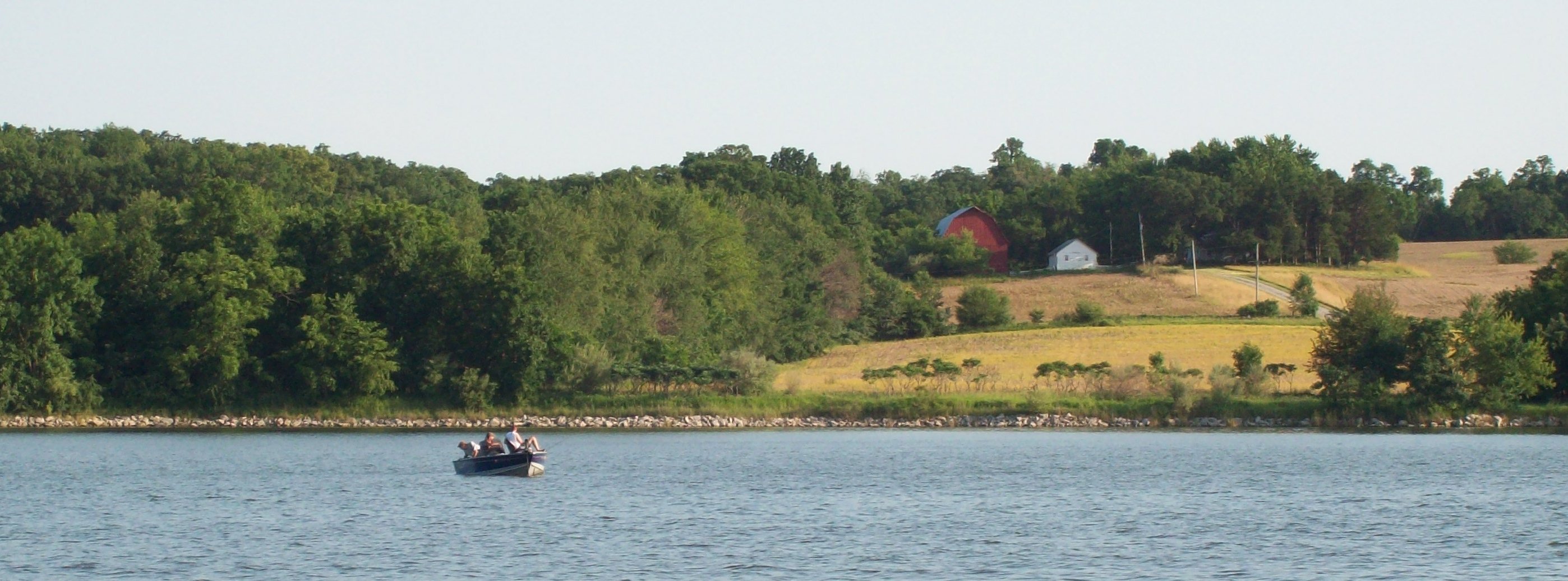
Lake Macbride
Lake Macbride

LAKE MACBRIDE— Writing about gardening, farm work, fermentation, soup-making, canning and cooking is personally satisfying, but what is the connection to our broader society? Why does one person’s journey in life with friends and family matter in the broader scope of things? With a global population of more than 7 billion, and expected to hit more than 9 billion by mid-century, life on earth is changing in ways that test the limits of our ability to comprehend. Will the lives of individuals matter as Earth reaches its tipping point, pushing the envelope of its geophysical limits?

American society, founded in part on the cultural resonance of eighteenth century agrarian individualism, promotes the moral worth of an individual. Independence, self-reliance, freedom and the ability to work toward self-realization are core values of our society. The idea that we can own a plot of land, grow some of our own food and prepare it in ways steeped in process, learning and tradition, yet how we want, is as American as the apple crisp I make from my apple trees. What is often forgotten is that individual lives occur in the context of a society that was founded during the Age of Enlightenment, and that society is coming apart at the seams.

If romantic concern for the good old days is what drives people to work toward a local food system, the idea is bound to be abandoned. In Iowa, we created the Leopold Center for Sustainable Agriculture at Iowa State University. The center has conducted hundreds of grant studies and reported on them with an eye toward sustainable agricultural practices. The Leopold Center is key to understanding our food system and providing reasons and process to create and strengthen community-based food systems. It is uncertain their work will take, despite the fact that locally grown food produced with sustainable practices is highly cost competitive with the products of the industrial food supply chain.

What makes a local food system possible is not the development of practices and high level theory, but the support behavior change receives in society. Behavior that congealed during the post World War II economic boom that included development of our industrial food supply chain. With population growth, society requires an organized mechanism to produce, preserve and distribute food to a growing population. In that sense, the industrial food supply chain is as necessary to a local food system as are the practices developed by the Leopold Center. To choose between them is a false choice.

Based on my experience with local farmers who use sustainable practices, there is tremendous capacity for improvements in efficiency, fuel use, water management, labor practices and mechanization that are untapped because of capital constraints. What the local food system may need most is an infusion of capital to create business incubation centers, sustainable water management systems, efficient farm to market systems, and most importantly, a sustainable source of labor that pays a living wage. The industrial food supply chain, because of its strong capitalization, has essentially blocked out competition from sustainable local growers who struggle to pay bills each month.

The question comes down to what individuals do in society with others, and there is no template for it. Stories about dealing with excess zucchini, kohlrabi and leafy green vegetables serve as examples of how to live with the challenges of a local food system. My garden won’t grow everything we need to provide all of our own food, so we leverage outside entities. Whether it is electricity to run the stove, cheese and milk from dairies, veggie burgers from Morningstar Farms®, or cooking oil from California, Italy and Iowa, how and why we leverage these entities and others matters a lot to a local food system.

That’s why I write about local food systems, as an example in which I hope others find value. If we’re lucky, and with collective action, tenuous local food systems will be strengthened as we work toward sustainability in a turbulent world.
Categories
Kitchen Garden

Processing Cucumbers and Other Things

Refrigerator Pickles

LAKE MACBRIDE— The dawn dew barely moistened my shoes while venturing to the garden to water the plants. Much needed rain failed to precipitate last night, and without daily irrigation, the produce yield would be reduced. The lettuce seedlings planted last week are surviving with twice a day watering. The morning shade of the locust trees protects them from the parching effect of the sun. The forecast is for zero chance of rain before noon.

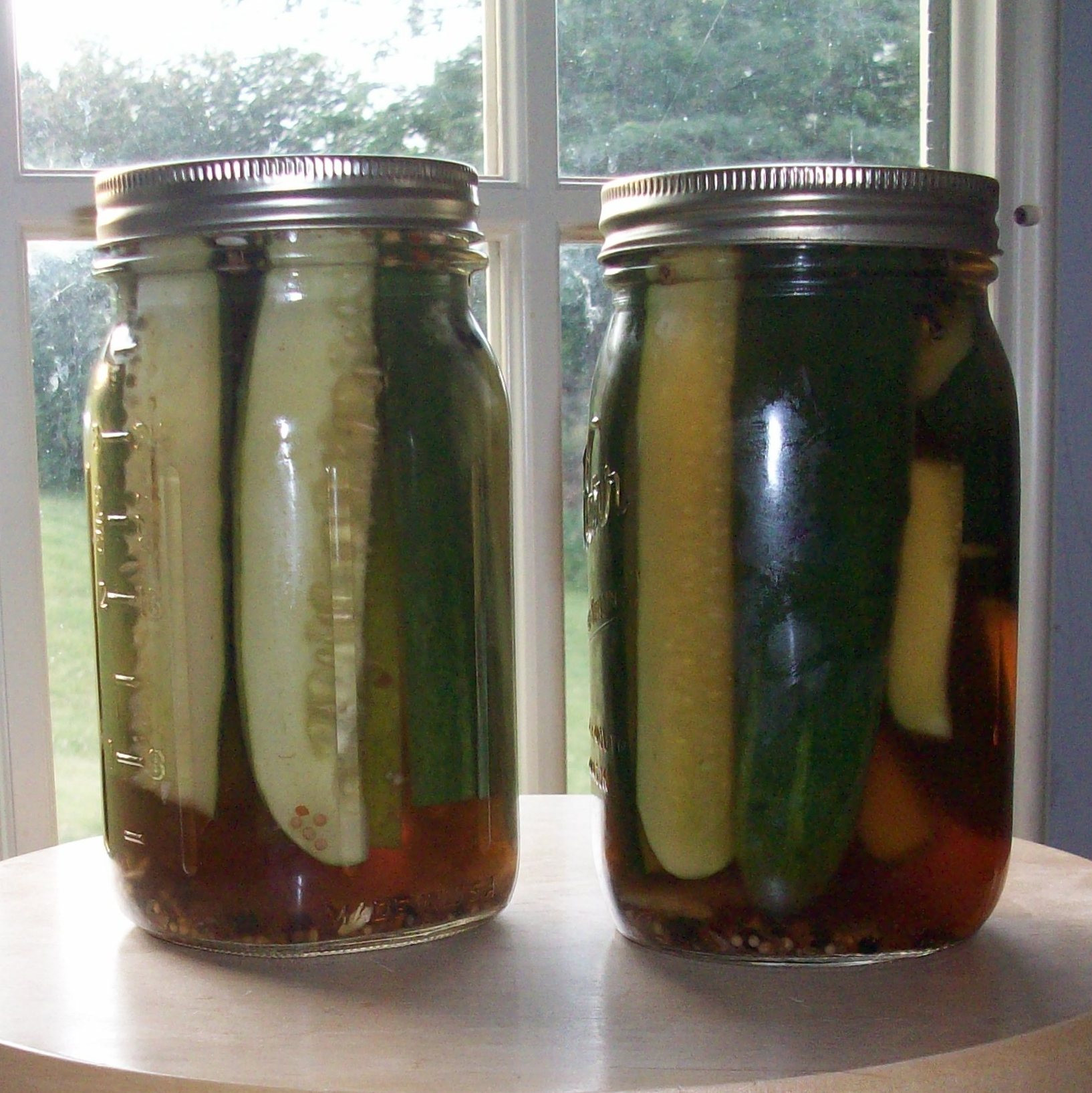
Last night I made two quarts of deli-style refrigerator pickles. The brine is the same as the one processing cucumbers in the crock, just that in the refrigerator they will be ready in four or five days. There are more cucumbers on the vine, and one kept fresh for salads. The flow of cucumbers through the kitchen has been about right.

The ice-box is packed and filling with food. I added a couple of more packages of grated zucchini to the freezer drawer and today’s plan is to make pesto to freeze. Produce rotation and preserving to prevent spoilage has become a thing around our household.

I decided to take down the advertising calendar on the bulletin board in the garage and replace it with photos. I spent an hour sorting through digital photos on my computer and ordered prints from Walgreens online. They were ready for pickup across the lakes in about an hour.

After making the pickup, I spent another hour selecting prints to post, and processing memories of our life since we became empty nesters. Better to be reminded of our family life than the days on a calendar. If one has children, it is a blessing to know them at all. Reflecting on who they have become is a luxury as good as gold.

No pickling brine will stop death’s inevitable advance.  As long as we can process— cucumbers, zucchini and basil, photographs and memories— we can go on living. As Walt Whitman wrote, “and as to you death, and you bitter hug of mortality . . .  it is idle to try to alarm me.” Fearless we enter the day, endeavoring to accomplish something with our lives.

Categories
Environment

Will it Rain?

Morning Harvest
Morning Harvest

LAKE MACBRIDE— The question at the farm today was “will it rain?” We hope so. This spring was the wettest on record, and gardeners are harvesting an abundant crop. The crops in the farm fields also look good. As someone posted on Facebook, “walk out to the garden with a shaker of salt and no fear. Ahhhhh Iowa summer.” But we have been in a dry spell since the season turned. The fear is last year’s record drought is part of a pattern that repeats this year.

Another drought would be disastrous for farmers that depend upon keeping customers happy with vegetables that are the opposite of fungible commodities. Crop insurance might pay the expenses, but customers who can buy fresh vegetables trucked in from Florida, California, Mexico, Texas, and as far away as China might get discouraged. They are all-in with the farmer to share in the risk of the season. In a consumer society that means they could find other sources of vegetables next season if things turn out badly.

The ten day forecast shows a 60 percent chance of scattered thunderstorms tonight and tomorrow. After that, the chances diminish to 10 or 20 percent. The prospect for rain is not good.

At my meeting in the county seat tonight the same question was asked. Will it rain? No one was optimistic.

I shared my garden’s abundance at the meeting, taking zucchini, yellow squash, kale, basil, flat leaf parsley and kohlrabi in a cooler. The basil and parsley were popular, with everyone taking some. Everything else, except one kohlrabi found a home. The fragrance of basil filled the room while we met— it was intoxicating.

My sense is we are in for another drought. It already feels that way, despite tonight’s forecast. I hope I’m wrong. We can irrigate if we have to. When the county studied the Silurian aquifer, there was plenty of water. But more is at stake than a single crop, or a couple of bad seasons in a row. The extreme variation in weather is concerning and is consistent with what scientists are saying about the effects of global warming. Let’s hope our questions will be answered, “yes, it rained.”

Categories
Home Life Kitchen Garden

Transition Kitchen

Morning Shade
Morning Shade

LAKE MACBRIDE— Scum is forming on the surface of the crock liquid, and that’s a good thing: a sign of bacteria working the cucumbers, transforming them into pickles. Sounds kind of gross, but hopefully fermentation is going as it should— there are only so many times one can check the progress in a day, then it’s time to move on to something else.

Saturday’s weather was hot, but otherwise gorgeous. The work outside was invigorating and sweaty. The pest du jour was swarms of gnats which, upon arrival in the garden, were a reminder to apply repellent. An application of imitation vanilla around my nose and mouth took care of the annoyance, and unintentional ingestion of gnat protein.

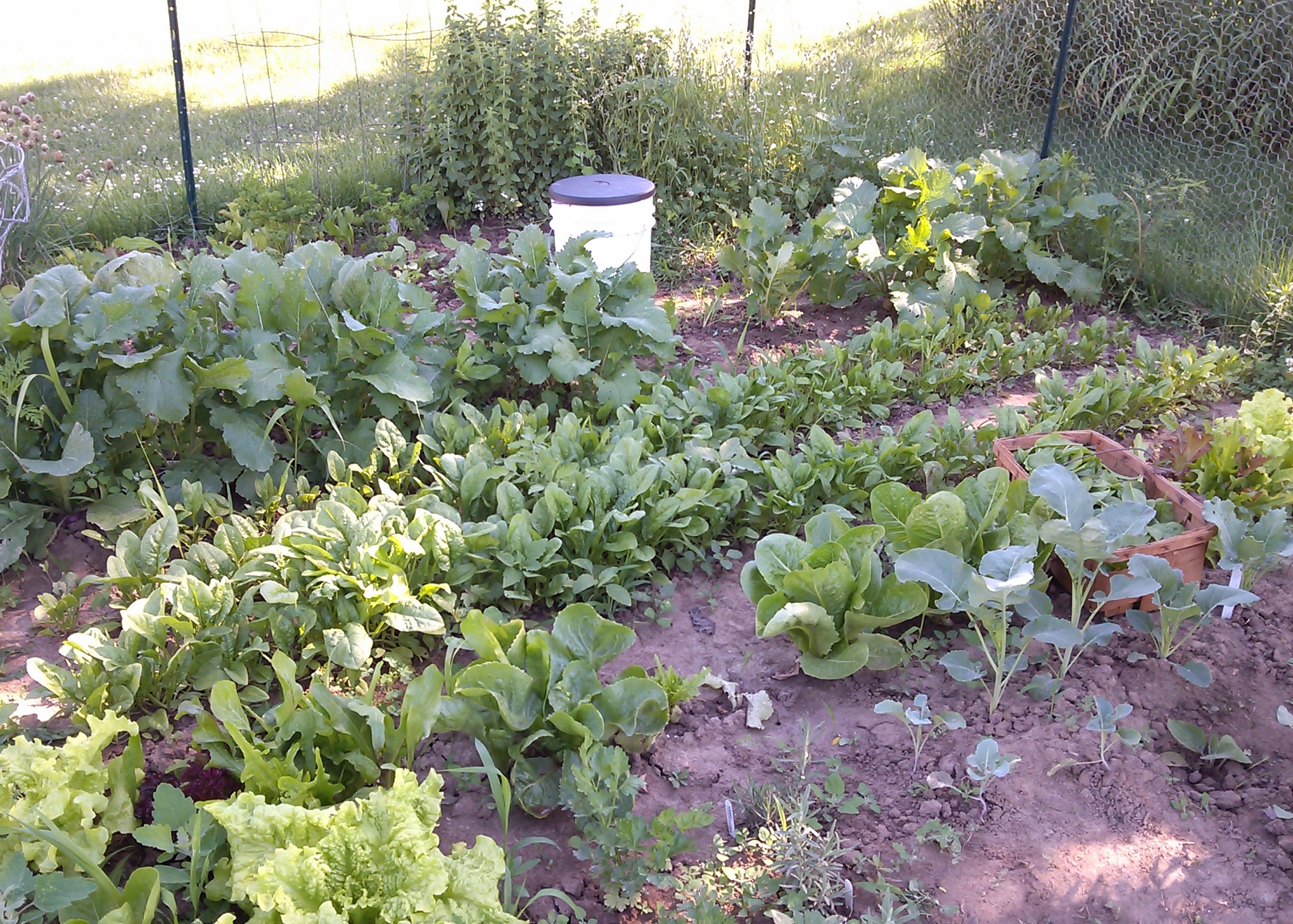
The main garden task was to turn over soil where the spinach and radishes were to plant lettuce seedlings. It seems hot to be planting lettuce, but with the shade of the locust trees protecting the plot in the morning, I am hopeful of another crop. Much of gardening consists of experimentation and my newly found ability to start seeds in the garage has me doing more of it this year.

I cleaned up the plot, removing the fence to cut the grass, weeds and small trees growing around its base. Then I picked a bushel of lettuce from the previous plantings, and sorted, washed and dried it to make two bags for salads. There were a couple of small turnips, one of which was later grated onto a dinner salad. When the work was done, the garden plot looked well groomed.

As the kitchen fills with food, it is time to process the new and do something with the old. I separated the leaves from the stems to make a quart jar of dried oregano for winter cooking. I cleared some space in the freezer by removing bags of last year’s Anaheim, Jalapeno and red and green bell pepper and cooked them in a Dutch oven in a cup of white vinegar. When they were tender, I ran them through a food mill and put the resulting green hot sauce in a Mason jar in the refrigerator to use in Mexican-style dishes.

Using four pounds of yellow squash and zucchini, I made a casserole, which will keep for a few days. The idea was to use the squash, and I made a large recipe with the idea of following the chef’s instructions to produce the desired result. Next time, and it won’t be long, I’ll scale it down to portions for a household of two.

How many kohlrabi can a person eat in one season? I intend to find out. I made mashed potatoes for dinner using leftover roasted turnips and two kohlrabi cut into half inch dice and cooked in a separate pan. When the potatoes and kohlrabi were cooked, I added them to a large bowl with the turnip and mashed them. Once the blend seemed right, I added some salt, butter, sour cream and chopped fresh rosemary. It seems wrong to mixed potatoes with cruciferous vegetables, but what came out passed the taste test.

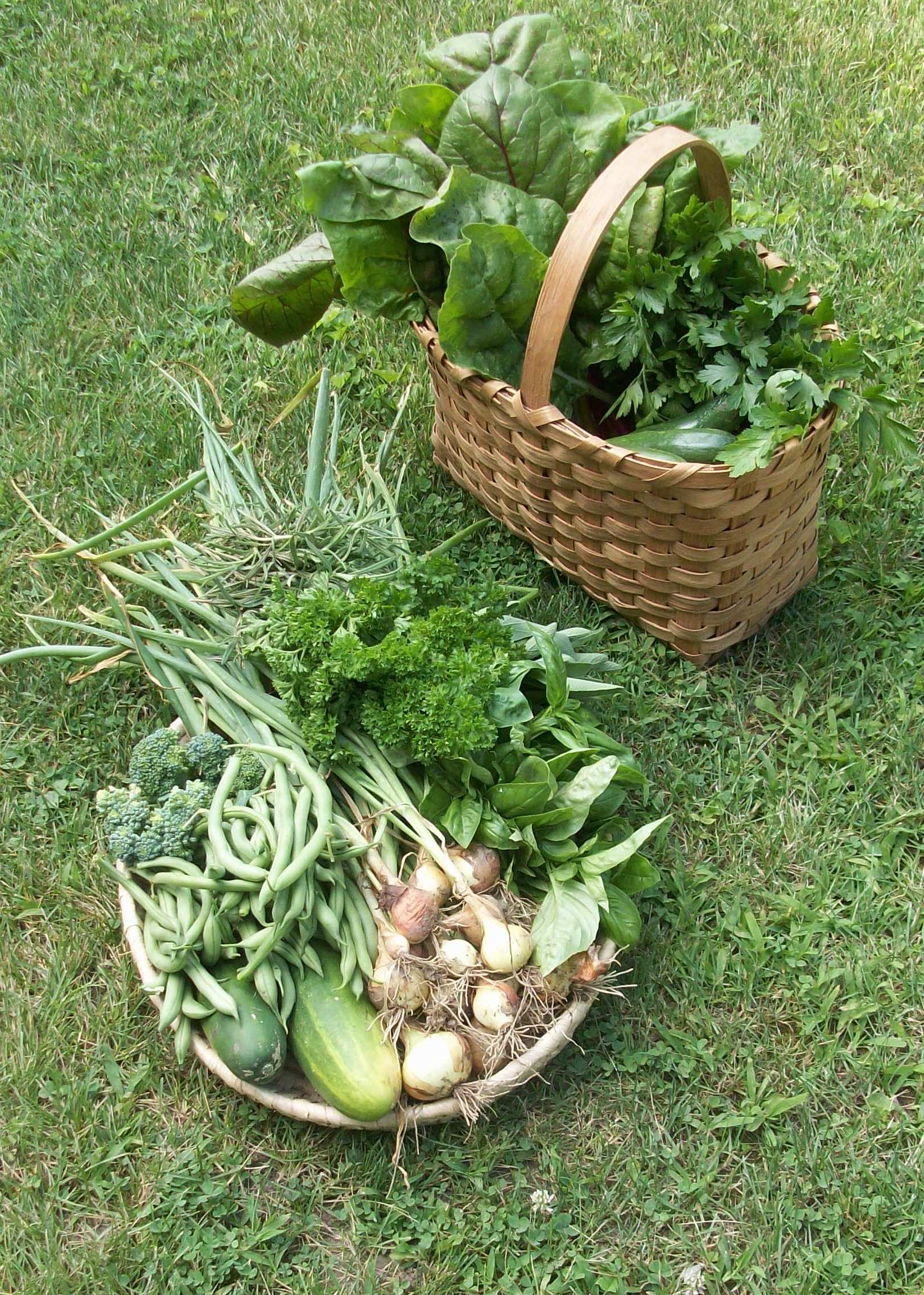
After dinner, I inspected and watered the garden. The new lettuce will need watering more often, and there is more to harvest Sunday: zucchini, green onions, herbs and broccoli. Chard and collards are plentiful, but there are enough leafy green vegetables in the refrigerator, so they’ll stay in the garden for now.

Septoria Leaf Spotting blighted some of the tomato plants. The ones with the first cherry tomatoes look like they will make it to harvest, but not much longer. I noted the last planted tomatoes have not shown evidence of the disease. Will observe them as the season progresses to see if any conclusions can be drawn. We are a week or two away from some ripe cherry tomatoes.

This is how it goes in a kitchen garden. A constant activity that is not tremendously exciting, but a template for living and eating well on mostly locally grown food and the work of our hands. Life could be a lot worse than this.

Categories
Writing

Guest Editor

Blog for Iowa

LAKE MACBRIDE— Trish Nelson, editor of Blog for Iowa, will be taking a summer break and I’ll be pinch hitting as weekday editor from July 15 until Sept. 2. I’m looking forward to regular posting on the Online Information Resource for Iowa’s Progressive Community.

The blog originated in the wake of the Howard Dean for President campaign when John Kerry won the Iowa Caucuses in 2004 and Dean dropped out of the race. Dr. Alta Price, a pathologist from Davenport, helped lead Democracy for Iowa, and decided to publish Blog for Iowa, a role she continues to play today. The first post is here, although what may be most relevant from it today is this statement, “we also seek to make Democracy for Iowa a place where all progressives and moderates are welcome, whether they consider themselves Democrats or not.” More than 5,000 posts later, Blog for Iowa continues to present a progressive viewpoint and maintain a friendly relationship with Democracy for America, the organizational successor to Dean for America.

When I write original content for Blog for Iowa, it will be cross posted on this site a day later. Among the topics will be the challenges of temporary workers in Iowa; implications for Iowa of the immigration legislation working through the U.S. Congress; Iowa’s role in mitigating and adapting to climate change (not the same thing); and occasional posts on energy policy, local food system issues, and peace and justice activities in the state.

I hope you’ll check in at Blog for Iowa from time to time, and continue to read my original content on On Our Own. It should make a great end to an already fine summer of 2013.

Categories
Kitchen Garden

Friday Fermentation

Cucumber Plants
Cucumber Plants

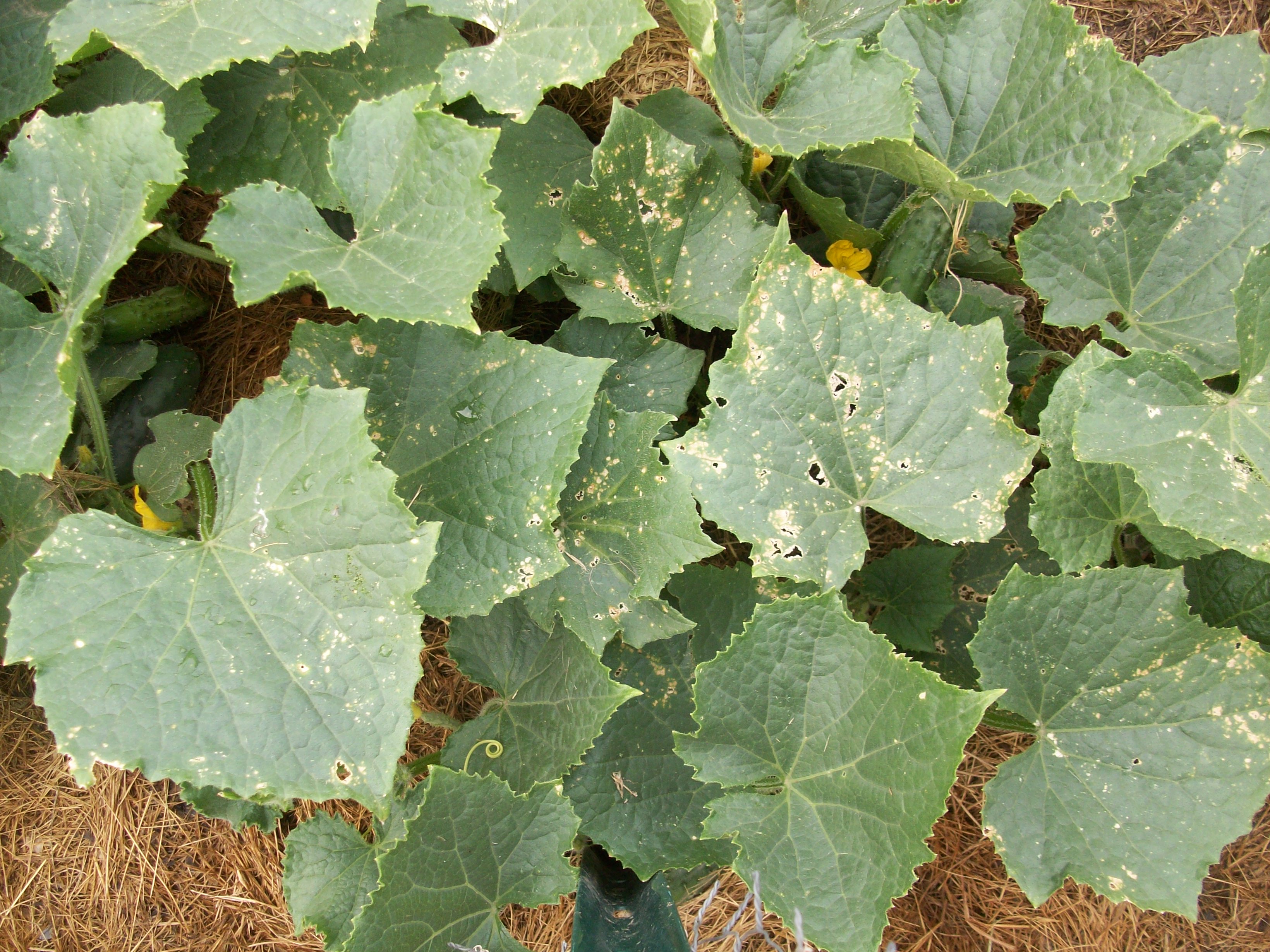
LAKE MACBRIDE— The crock on the lower level of our split foyer home showed evidence of bacterial action this morning. A small pool of bubbles formed on the surface of my first-ever batch of dill pickles— evidence of fermentation at work. Experiments with home fermentation began last year, when I made a large batch of sauerkraut and a jar of apple cider vinegar. It’s an arena about which I knew little and am not sure I know much yet. Hopefully practice will make perfect.

Using the first pick of the cucumbers, I cleaned up a crock, mixed five and a half ounces of pickling salt in a gallon of distilled water, added dill seed, crushed garlic, and peppercorns to the crock, then submerged the cucumbers in the brine. Next, I waited, hoping for what I witnessed this morning. It took about three days for the bacterial action to start.

More cucumbers are forming on the vine, so worries about losing the first pick for this experiment have subsided. One prepares for experiments to be a complete loss, paving the way for enjoyment if they turn out well. Nature is providing an abundant garden this year, so there is no worry about a shortage of cucumbers and other vine produce.

Now, more waiting and cleaning the scum off the surface each day. The smell is of dill, so things seem to be heading the right direction as the cucumbers pickle.

Categories
Environment Sustainability

Coralville Parade

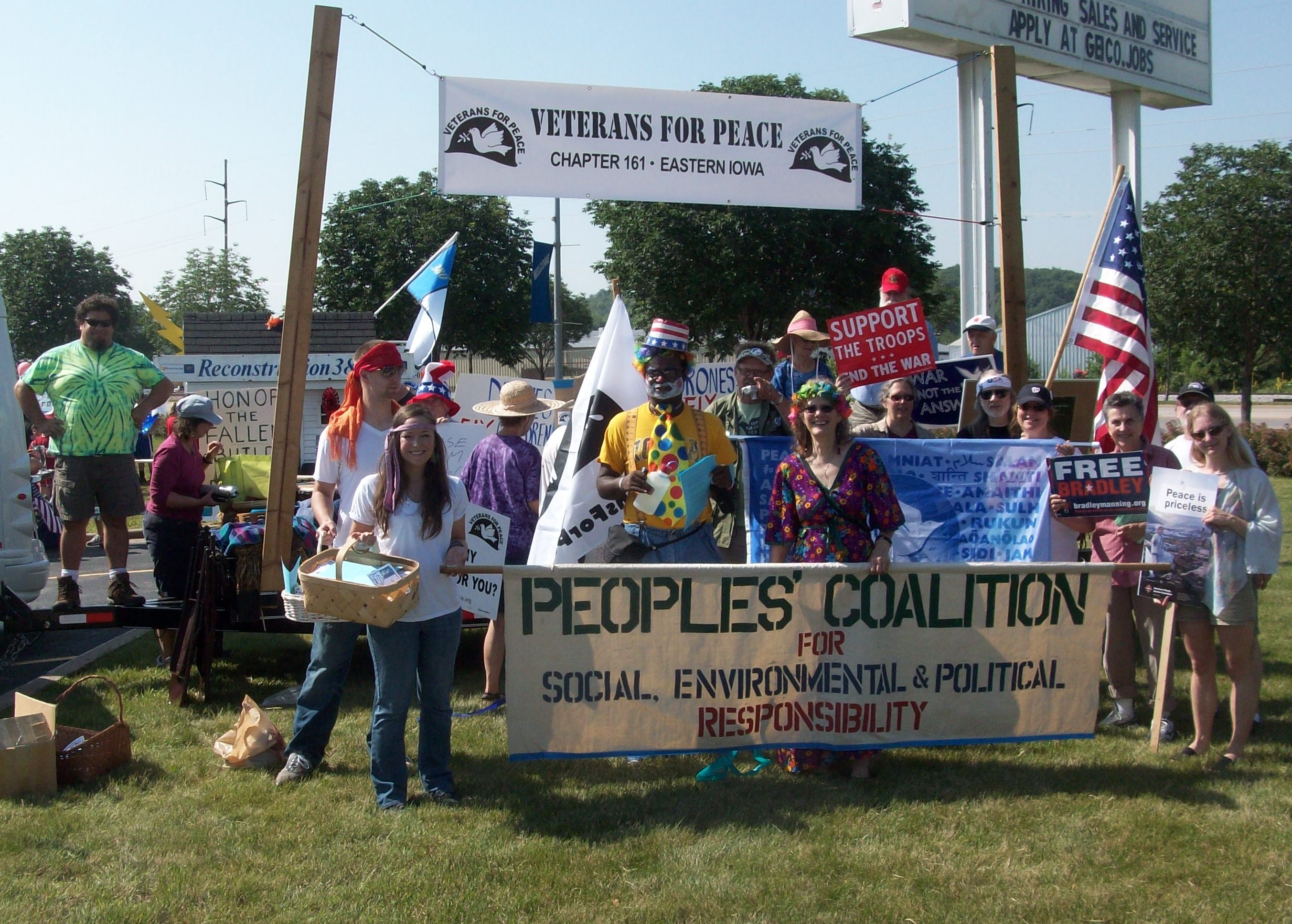
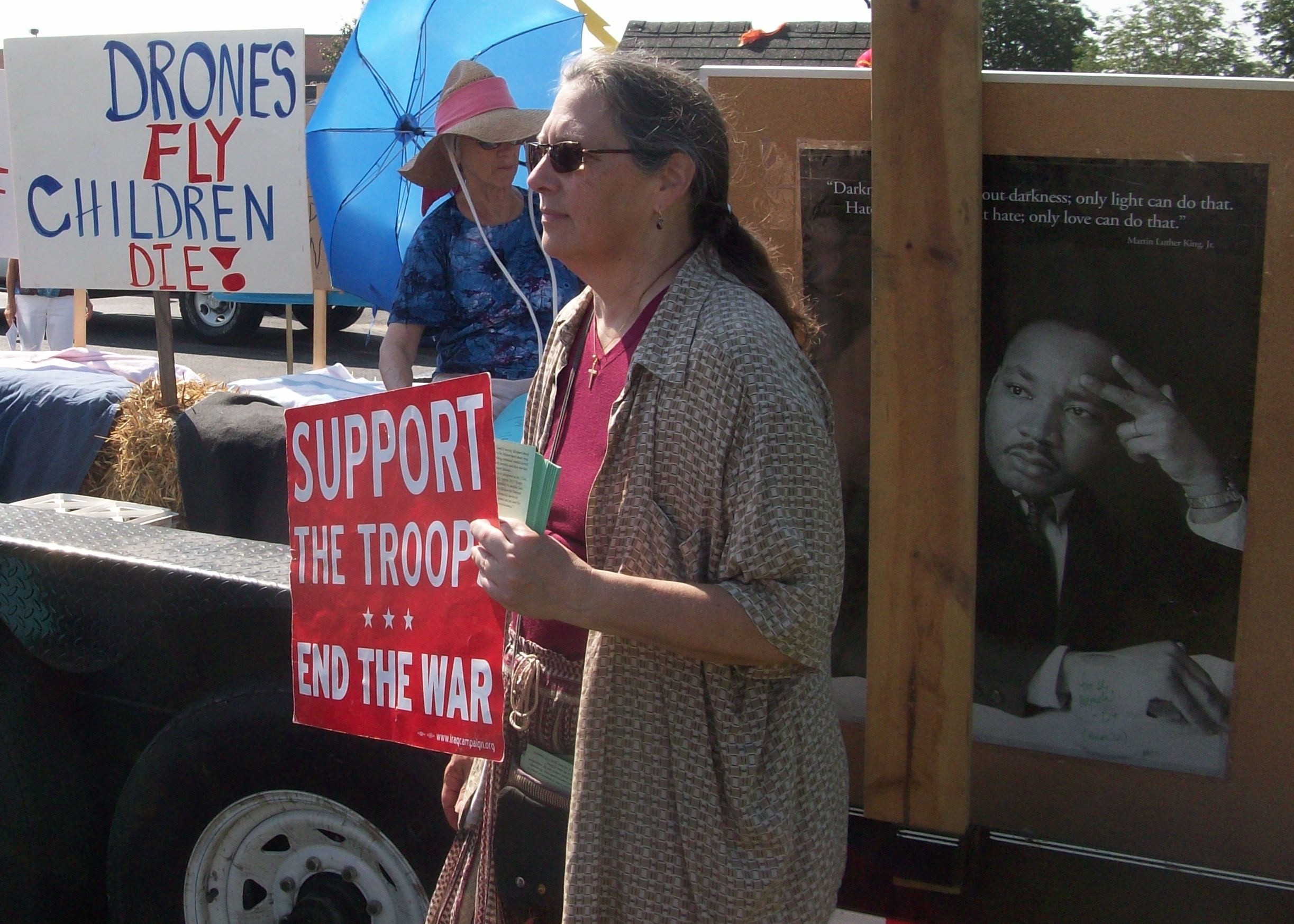
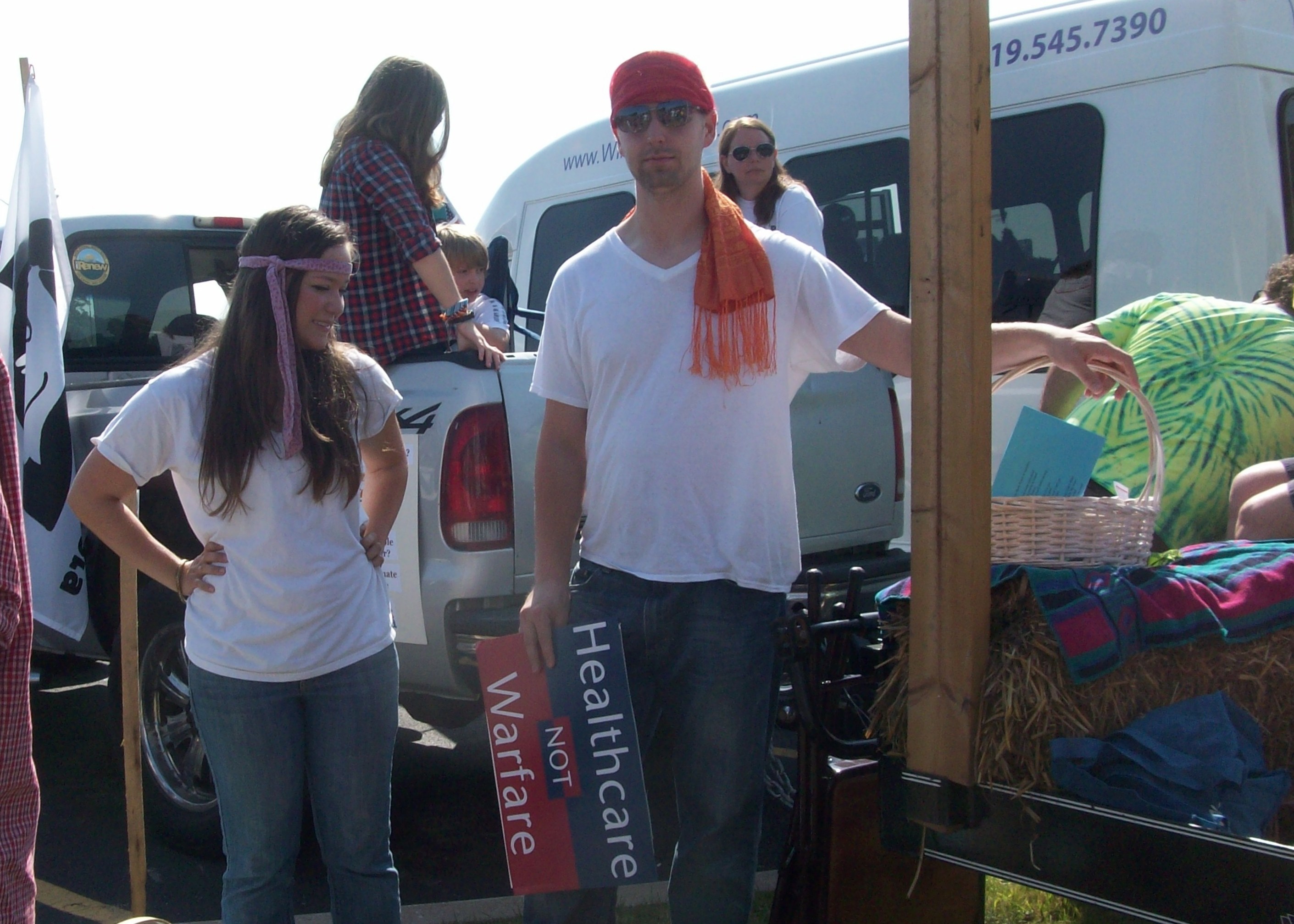
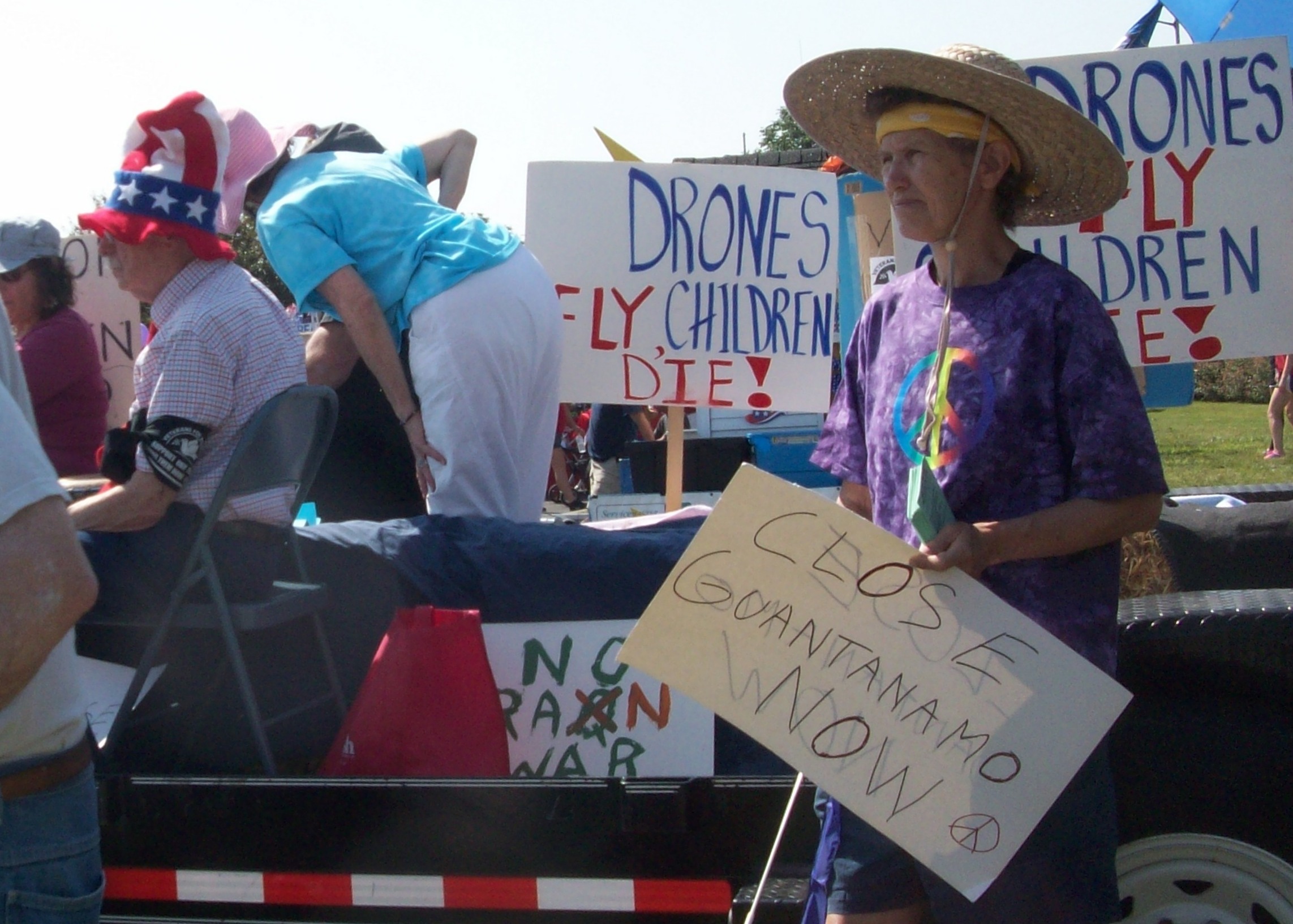
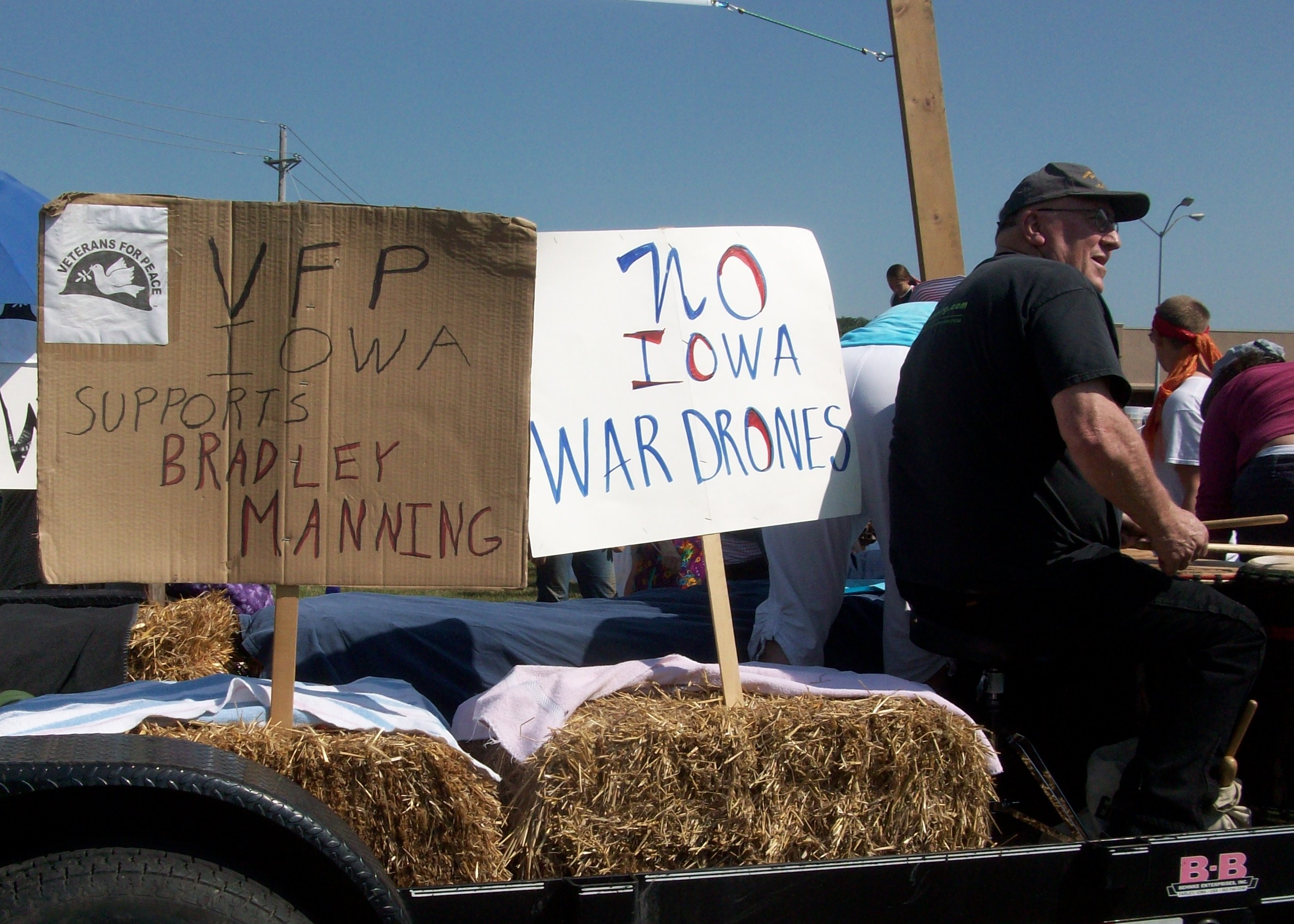
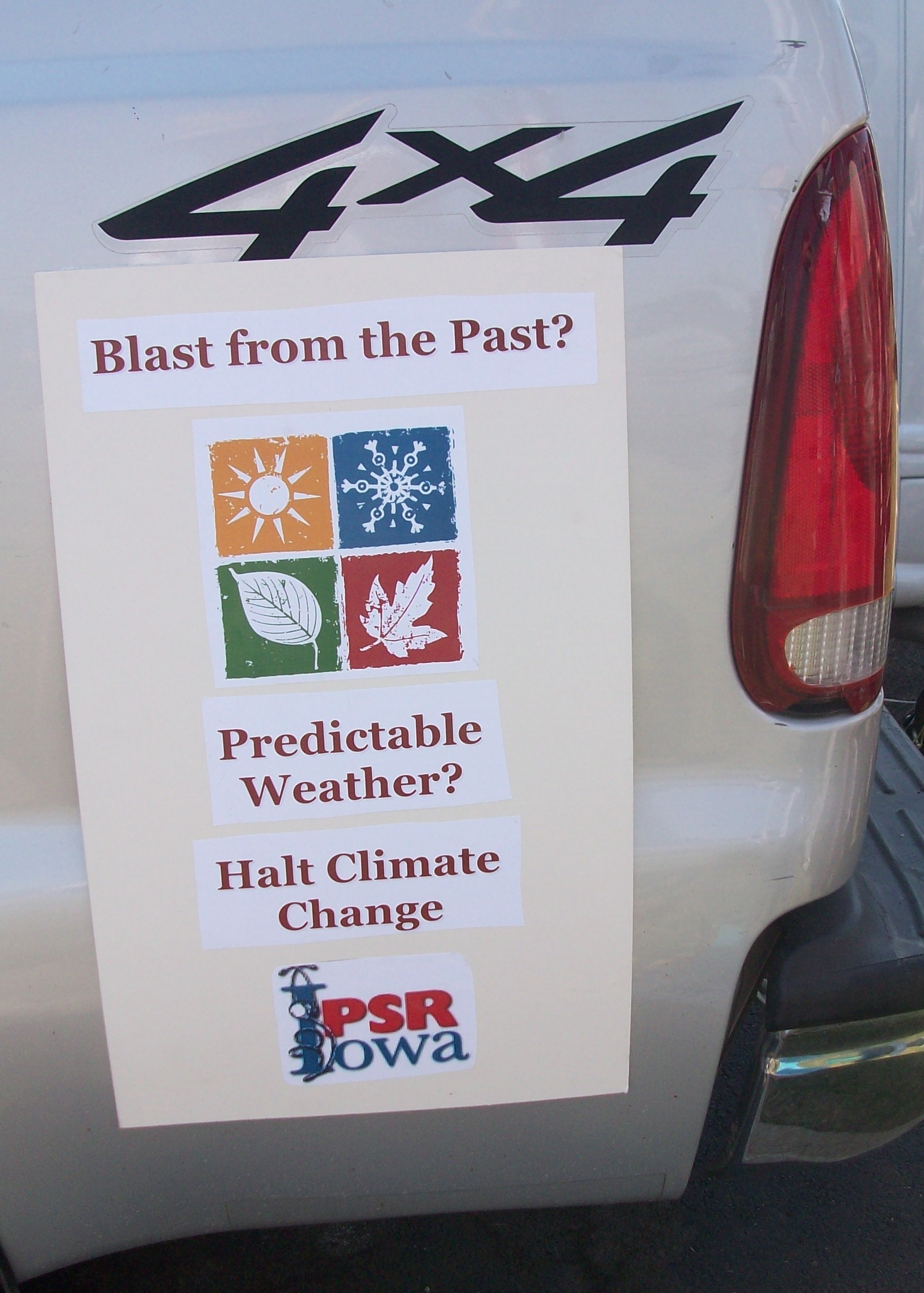
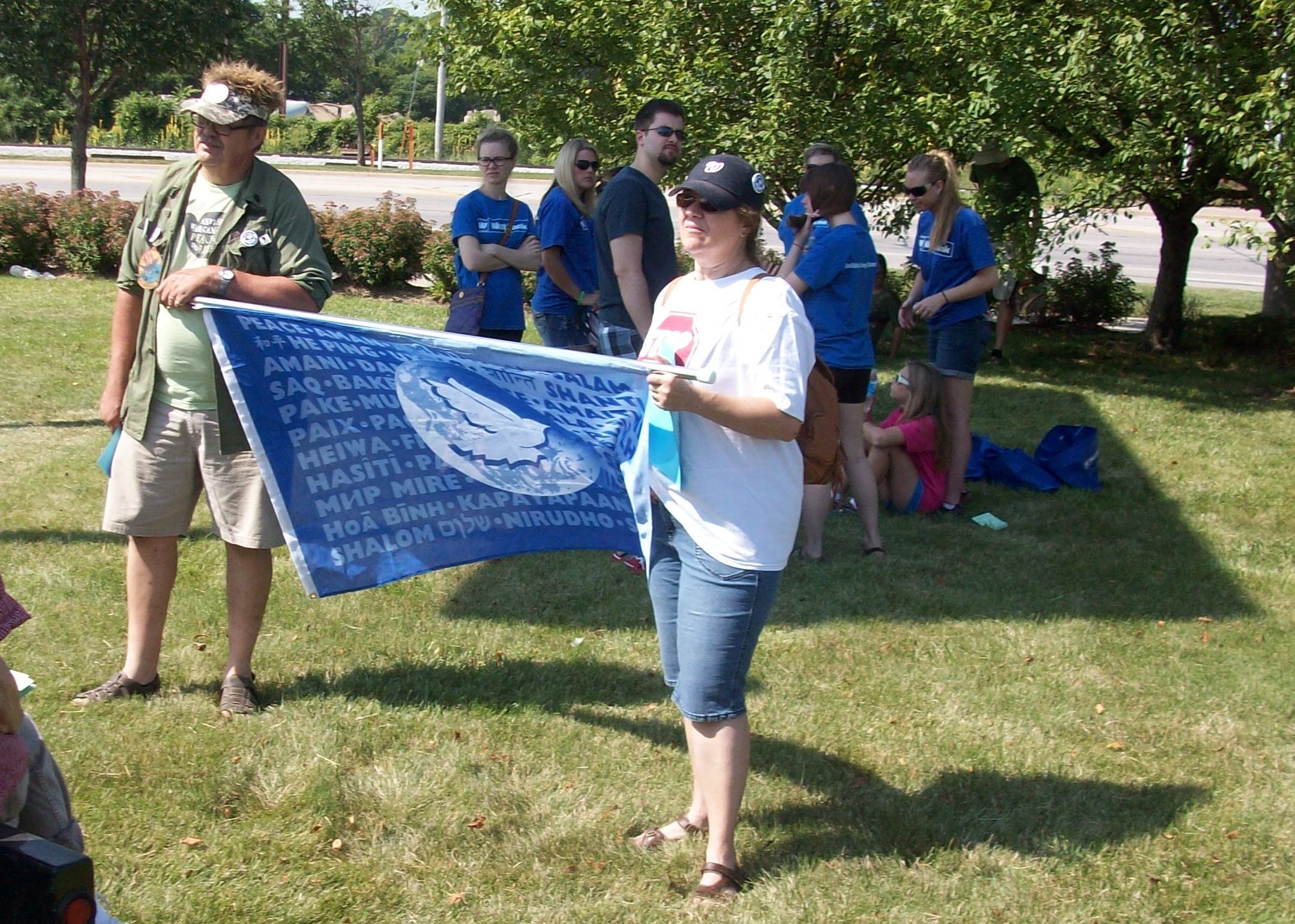
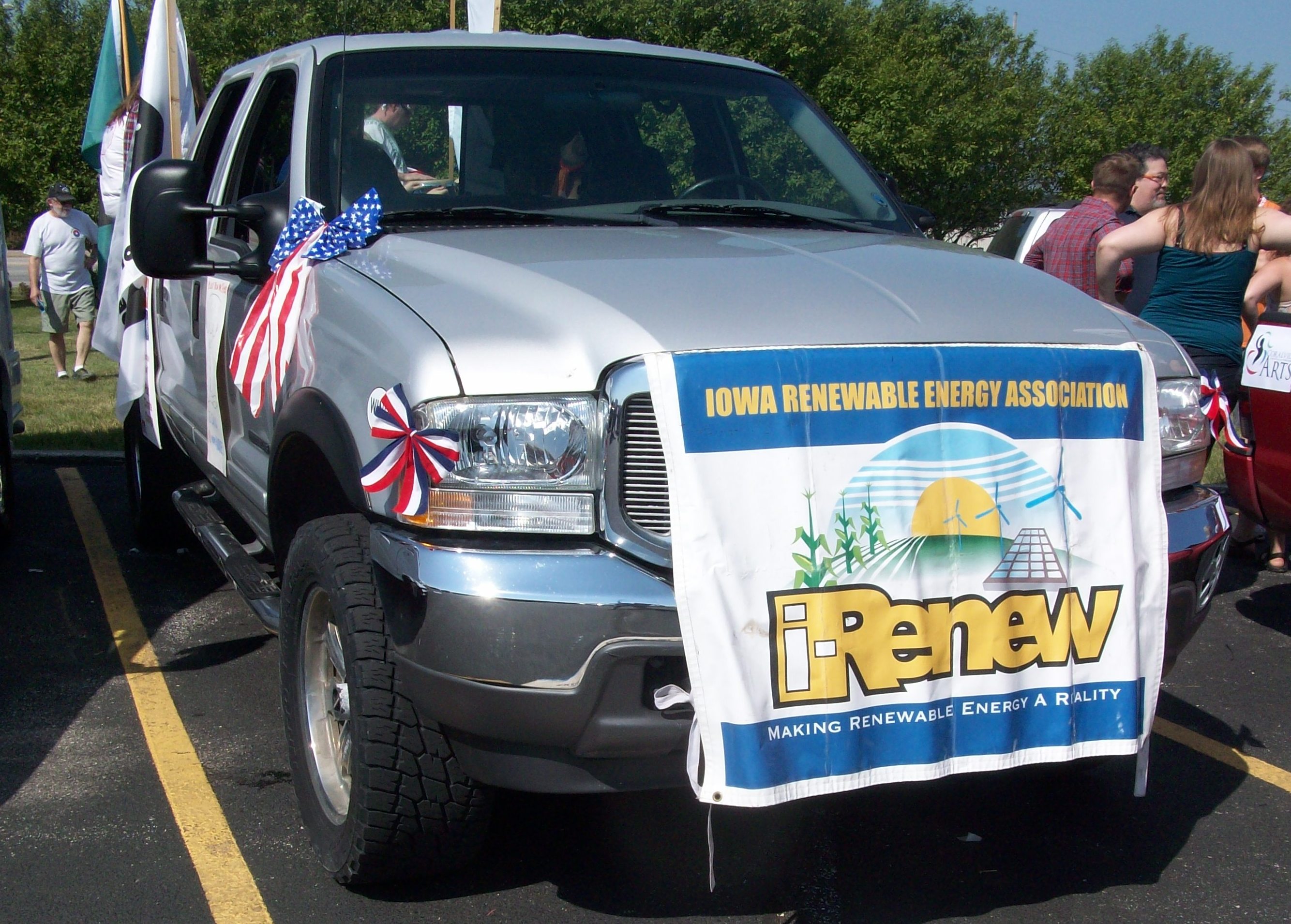
CORALVILLE— The Peoples’ Coalition for Social, Environmental and Political Justice walked in the July 4 parade here. The photos don’t include everyone, but you can get the flavor. The Peoples’ Coalition forms once a year for the purpose of getting peace and justice people together to interact with and get our messages to everyday people in the community. The parade entry was strong, with folks from Veterans for Peace, Iowa Physicians for Social Responsibility, PEACE Iowa, Yahoo Drummers, Green World Biofuels and others, all committed to peace, and social, environmental and political responsibility.

The Yahoo Drummers provided background during the entire parade route, and the group sang songs that included “We Shall Overcome,” “If I had a Hammer,” and “This Land is Your Land.” The songs were familiar and uplifting. Parade watchers joined in singing from time to time, and provided positive feedback to the group.

Contact Paul Deaton at paul.deaton@gmail.com if you would like to get involved with any of the groups, or be part of next year’s parade.

2013 Coralville Independence Day Parade.
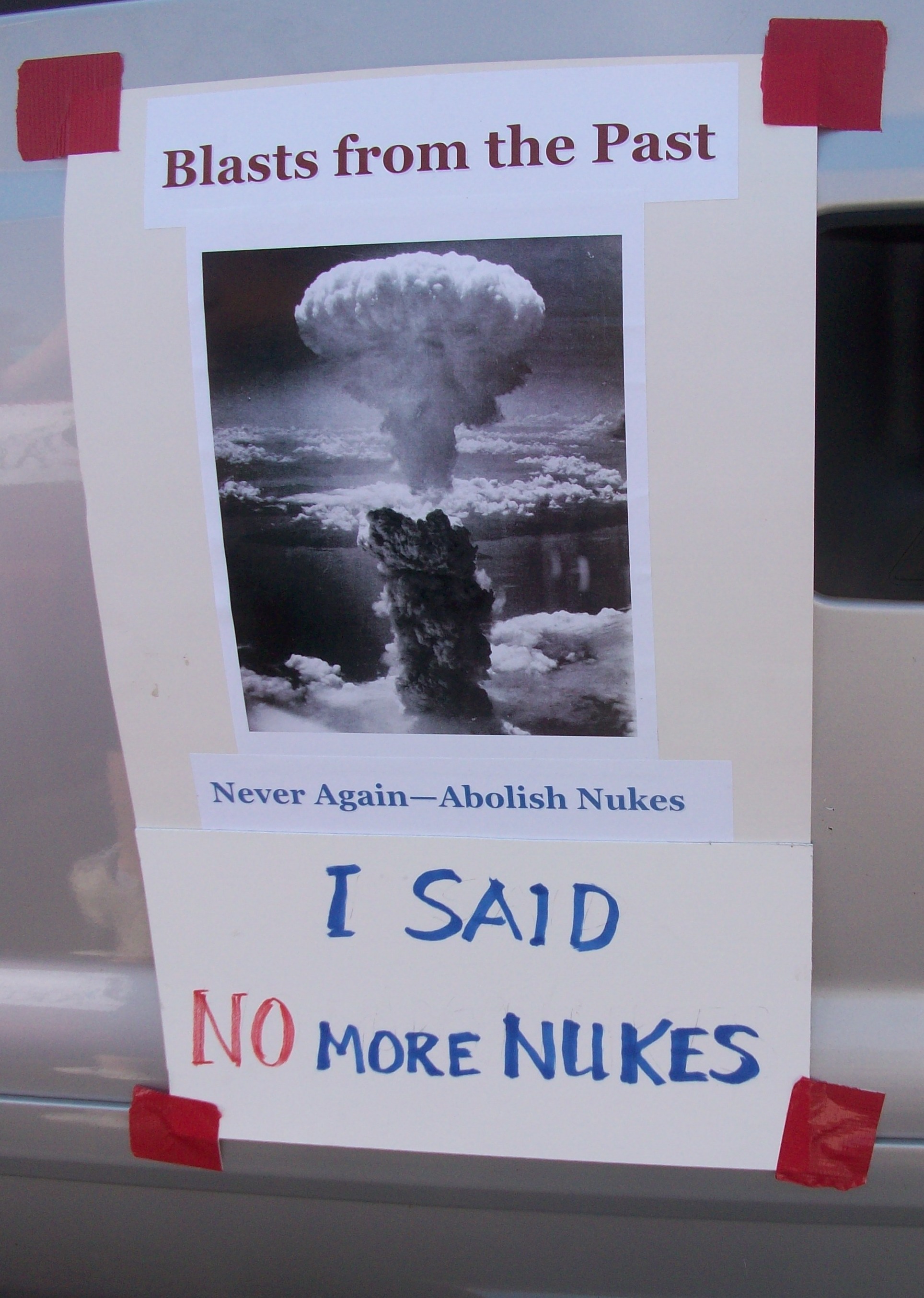
2013 Coralville Independence Day Parade. Theme was "Blast from the Past"
2013 Coralville Independence Day Parade. Theme was “Blast from the Past”
2013 Coralville Independence Day Parade.
2013 Coralville Independence Day Parade. Veterans for Peace was present in force.
2013 Coralville Independence Day Parade. Theme for the parade was "Blast from the Past."
2013 Coralville Independence Day Parade. Theme for the parade was “Blast from the Past.”
2013 Coralville Independence Day Parade.
2013 Coralville Independence Day Parade. Biodiesel powered vehicle pulled the trailer.
2013 Coralville Independence Day Parade.
2013 Coralville Independence Day Parade. Michael,  Dr. Maureen McCue and Dr. John Rachow, a nuclear family.
2013 Coralville Independence Day Parade. Michael, Dr. Maureen McCue and Dr. John Rachow, an anti-nuclear family.
Categories
Kitchen Garden

Harvest Day on the Farm

Local Harvest CSA
Local Harvest CSA

RURAL CEDAR TOWNSHIP— Having worked in the greenhouse, high tunnel or barn every week since early March, yesterday’s shift at the Community Supported Agriculture farm was pretty exciting— I worked in the fields for the first time. Because of the Independence Day holiday, beginning at 7 a.m., a large crew worked to get the shares ready for distribution a day early and take care of other farm work.

Four activities were mine: helping a crew of three harvest kale, harvesting, cleaning and packaging Swiss chard, making a basket of oregano for shareholders to select from, and planting a row of tomatoes with another person. Each activity provided a learning experience on how to work quickly, yet gently with the plants. In addition to that, I made a trip to the field to check on the quantity of sugar snap peas being harvested and to inspect the progress of the green beans (not ready). The work was steady, but not too hard. I appreciated the variety as my fingerprints filled deeply with soil.

The best part of the day came at the end of the shift when the crew gathered at the farm house for lunch. Thirteen of us went through the serving line set up on the kitchen island, and gathered around the table to partake of squash casserole made with Frisian Farms Gouda cheese from Oskaloosa, a slaw made with daikon radish and cabbage, and for carnivores and flexitarians, grass-fed lamb burgers raised on the farm. There was plenty of food and good conversation.

A neighbor had provided a kettle of fresh cherries. I’m not sure “kettle” is a unit of measure, but I brought back a sack of fresh cherries and made a cherry cobbler with dark brown caramelized sugar on top. I had it for dinner… and breakfast.

One of my work partners, a student from a neighboring state visiting a woman he was dating in college, had been persuaded to help out on the farm. He was bored as he dug holes for tomato seedlings. I thought of my solar powered Freeplay radio as we finished planting the long row. Maybe I should put it in the trunk of my car for times like this to assuage youth, but probably won’t. We talked instead.

Afterward, I thought of Nathaniel Hawthorne’s experience on the Blythedale commune. How he wrote in flowery language about it in The Blythedale Romance, only to find the reality of work more difficult than he expected or wanted. Hawthorne wrote of the commune,

Paradise, indeed! Nobody else in the world, I am bold to affirm—nobody, at least, in our bleak little world of New England,—had dreamed of Paradise that day except as the pole suggests the tropic. Nor, with such materials as were at hand, could the most skilful architect have constructed any better imitation of Eve’s bower than might be seen in the snow hut of an Esquimaux.

A day of work on a CSA farm may not be a trip to Eve’s bower, but it has its rewards and challenges— and plenty of hard work.

Categories
Social Commentary

Independence Day

Memorial Day Flags 2012We hear a lot about the founders today, and the truth is who they were, as people, is clouded in the river of time. One admires the portrait of John Adams written by David McCullough, and particularly the personal risk to which Adams put himself on his trip to France in the winter of 1777. In Thomas Jefferson’s Notes on the State of Virginia one can find a guide to living that serves in the 21st Century, with the notable exception that labor to maintain a lifestyle, once provided by slaves, must now be sought elsewhere through mechanization or wage laborers.

The more we study the opening of the Old Northwest Territory, and the land speculation related to it, we realize that Benjamin Franklin, George Washington and other founders who participated in this could easily have fit in with the gang on Wall Street that nearly brought down our global economic structure in 2008. But as was said, seeing who they were as people is a murky endeavor at best, so on Independence Day were can refrain from making judgments and be thankful for what we have as a nation.

What can be said is we often neglect to recall the dispossession of the natives in Iowa and further east, which amid today’s flag waving is equally important. Would Black Hawk and Poweshiek have ceded the land of the Black Hawk Purchase if they had fully understood what their signatures meant? We don’t know that either.

So what we are left with is history and documents from the times, all of which have their ideological outlook or viewpoint, or as Howard Zinn might have called it, “their politics.” Of interest is the following account of an Independence Day celebration in Jones County, Iowa shortly after settlement. Members of our family settled in Jones County shortly after the Black Hawk War, so this is a personal history as well. Happy Independence Day from On Our Own.

An Excerpt from The History of Jones County, Iowa, published Chicago, Western Historical Company in 1879.

“A grand county celebration of the Fourth of July, took place in pursuance of the resolutions and suggestions of the Board of Supervisors, made at their June meeting in 1861. The celebration was on Thursday, the 4th of July. 1861.

The perilous condition of the country brought men of all parties together to observe the anniversary of our national birth, and to repeat anew their vows to freedom. Early in the morning, teams, singly and in companies, began to throng from all parts of the county toward the point which had been designated by the Board of Supervisors, near the center of the county. At 10 o’clock, A. M., the scene was the strangest of the kind ever encountered in the West. The road ran along a high ridge, and on both sides of it and on each of the wide and gently sloping spurs, shooting out every few rods, were horses, wagons, buggies, carriages, men, women, children and babies by the thousands; and, in every direction, the American flag floated in the light and refreshing breeze, which, with the shade of the sufficiently abundant oaks, tempered the heat of a warm summer day. Such an assembly in a city is common enough, but this was an assembly in the wilderness. Not a house, not a sign that man had touched nature here was visible, save in the few brief days’ labor of the Committee of Preparation. It was a fitting place wherein to assemble on such a day and for such a purpose, when the nation was in its life and death struggle for existence.

The Committee of Arrangements had done as well as could be hoped for in the short time allowed them, and better than could have been expected. On the rather steep slope of a spur, north of the road, a staging had been erected facing up the slope, and, in front of this, seats sufficient to accommodate, perhaps, one thousand persons. Back of the stage, and at the bottom of the ravine, a well had been dug some ten or more feet deep, and, at the bottom, a barrel fixed. It was a comical sort of a well, but it served the purpose, in a measure, for some hours.

On another ridge and back of the wall, stood the six-pounder, manned by the Wyoming Artillery Company, in gray shirts, under Capt. Walker. The other military companies were the Canton Company, Capt. Hanna; they wore red military coats, were armed with rifles and were fine looking; the Rough and Ready?, of Rome, Capt. L. A. Roberts, with blue military coats, white pants and glazed caps, sixty-five men, also fine looking; Carpenter’s Company, Rome. Capt. Carpenter, eighty men, with gray coats, likewise made a fine appearance; the Greenfield Company, mounting eighty men, John Secrist, Commander: these were in frock coats and wore white plumes; they, too, showed well, and still more in drill and fitness for the most desperate fighting; the Scotch Grove Guards, from Scotch Grove. Capt. Magee, formed a large company; these wore no uniforms, but their appearance indicated they were the right men for fighting. There were six companies of young men, all formed and drilled, in the space of three months. It appears that all these entered the army in due time and did good service.

The proceedings at the stand were patriotic and entertaining. During the reading of the Declaration of Independence, the general attention was close, and the responsibilities of the hour seemed to impress all minds. The singing with the Marshal waving the star-spangled banner to the words, was very effective. The address was by a Mr. Utley— a good Union speech, and was very generally approved. Music by the various military bands was abundant and lively. The picnic that followed was much enjoyed by all who partook of the dainties provided for the occasion. The military went through with some of their exercises and then the proceedings of the afternoon began, which consisted of speeches from different persons, when, owing to a want of an abundant supply of water, the vast assembly was dispersed at a much earlier hour than it otherwise would have been.

It was evident that the loyalty of Jones County could be relied upon, and that her citizens were ready to do their full duty in crushing out treason.”

Categories
Environment

Climate Reality Leadership Corps

BadgeLAKE MACBRIDE— I was accepted to become part of the Climate Reality Leadership Corps and signed the training agreement yesterday. Signing obligates me to deliver ten related activities during the next year. Ten is not many. A person has to deal with and act on the reality of climate change and this will be one way of doing that.

Al Gore and his team will conduct three days of training in Chicago. The staff includes Maggie Fox, CEO of the Climate Reality Project; Larry Schweiger, president and CEO of the National Wildlife Foundation; John Vezner, Grammy Award winning songwriter; Mike McCracken, science adviser; and Kim Wasserman, 2013 Environmental Goldman Prize Award winner. I don’t know any of these people, so there will be an opportunity for learning.

1970 Earth Day Button

About 1,000 people from around the globe will be converging at a place to be announced, and the networking alone has the potential to benefit attendees. It will be what we make of it, and I will meet as many people as possible. (Note to self: find business cards).

The energy from the group on Facebook is palpable. The project staff did a good job of instructing us how to post, so the content is relevant and engaging.

My origins in doing something about the environment were in the first Earth Day in 1970 when a group of us participated in local events. While my participation has been off and on during the last 43 years, confronting the deceit and misinformation about changing climate promulgated in the corporate media has risen as key work to be done regarding one of the most significant threats to humanity. I am looking forward to Chicago.