Categories
Home Life

Tax Time in Iowa

Spring Flowers
Spring Flowers

It’s working folks who pay taxes and each year there are life lessons learned through this necessary intrusion.

We fund our government and help produce income that proceeds obviously and directly to the richest people on the planet. We make a life for ourselves while doing so.

As businesses have driven out operating expenses over my lifetime, the notion of security escaped into the ether. Everyone is affected, although there is a tremendous advantage to those whole own capital. When a person has capital, there is less worry about security from anything except populist uprisings.

For the rest of us, to sustain a life one must embrace living without security. It’s likely been that way for most people.

Our tax rate is 20 percent this year, including federal and state income tax and local property tax. It seems high and it was hard to come up with the cash despite a frugal lifestyle. As a result of hard work lasting decades, the checks are written except to the state where the filing deadline is April 30. I’ll likely pay that soon so the bill is not hanging over the household for another month.

This year’s tax cycle brought some learning.

Hidden from the analysis is the cost of health insurance. Because of our projected 2014 income level, we were eligible for a tax credit to subsidize our policy payments. Including the tax credit and what we paid, the premiums for a policy were $13,756 for 2014. Luckily I made more money in 2014 than projected. Unluckily we had to pay back part of the tax credit because of our success, creating a cash flow issue.

According to Medicare.gov, Medicare covered 48.7 million people in 2011 at a cost of $549.1 billion. Do the math and the annual cost per person was $11,275. Assuming health insurance providers have a better ability to manage their business, and the cost to provide care is substantially lower than what Medicare pays, the gross margin of providing health insurance must be about 20 percent or more. That is way better than being in the transportation and logistics business as I was for 25 years.

The numbers don’t include the billions of dollars being taken out of the health care system by the reforms of the Patient Protection and Affordable Care Act. The ACA should have reduced costs for health insurance providers. It is fair to say health insurance companies were handed an opportunity to do very well under the ACA, especially those that held firm on initial premium rates.

The other learning has to do with the life I led that year. At one point I worked eight part time jobs. In the end they did not produce enough income to make ends meet, which favors working less jobs that each pay more if that’s possible.

It felt unjust that for those that generated a 1099 I had to pay a flat self-employment tax, while those that paid me as a contractor but didn’t generate the form were taxed at a lower rate. Operationally there was no difference, but tax-wise, it was better when I didn’t receive a 1099.

Bottom line: more is not always better when it comes to working multiple jobs.

I like the ownership brought by contributing to society in the form of paying taxes. What I didn’t expect was that providing health security would be such a large part of our budget, or that compensation for doing the same work would be so uneven. As they say, live and learn.

I predict there will be more lessons as we sustain our lives in a turbulent world.

Categories
Living in Society

Two Things to Mend Politics

Work Gloves
Work Gloves

Some of my neighbors vote only in presidential election years.

How do I know? Using the county auditor records, which can be purchased in spreadsheet form for around $10, I’ve studied their voting patterns since reactivating in politics in the wake of the Gore v Bush election.

It’s not that I’m snooping, although in a way I am. As a precinct activist, it was important that everyone in the neighborhood be accounted for in every campaign. It still is.

I know who to ask what when it comes to politics, and have to live with my neighbors the rest of the year. There is a social courtesy as important as winning elections. What’s wrong with Iowa Democratic politics is a lack of focus on this basic aspect of living in society.

Jerry Crawford exemplifies the worst of it. He was on Iowa Press with Bonnie Campbell and Jessica Vanden Berg last Friday.

“In all the races I’ve been involved with of various kinds it’s not how you start, it’s how you finish,” Crawford said. “Iowa, the Iowa Democratic Party, our ticket in this state desperately needs the general election assets that Hillary Clinton will bring as our party’s standard bearer. That’s the way we recover from what was a very, very tough 2014 election.”

This quotation epitomizes the top-down strategy that has done some good things in Iowa Democratic Party history, but has become outdated and should be blown up.

Crawford’s bias toward party insiders is clear in his statement about the Democratic congressional race to challenge Rod Blum in the first district:

“Monica Vernon was first in up in the first congressional district,” he said. “There’s now some noise about Ravi Patel and somebody from Saturday Night Live whose name I can never remember, which is a clue. I do think Monica has an advantage going in up there because of the service she provided to the party as the lieutenant governor nominee when everybody knew that was going to be a tough slog.”

It is easy to review and criticize statements by public figures. No doubt Democrats would be suppressed if substantial financial resources were not forthcoming from a national candidate. Yet winning has become more difficult in an era where the Republican ground game has improved since the 2004 general election. Winning takes more than money.

What’s a person to do?

Giving up on the party is not a good option, but a change is needed. Just read this profile of Crawford by Ben Terris in the Washington Post or the article by Zalid Jilani on Alternet about his corporate clients and tell me why someone like Crawford represents the best direction for Iowa Democratic politics. He is the past.

Vanden Berg’s views on Iowa Press represent our future.

“There may be a difference between what Hillary needs to do to win and what Iowa democrats need to build our party,” Vanden Berg said.

What have Democrats done lately to build the party?

There is stuff going on. Bill Gluba, mayor of Davenport, State Senator Bob Dvorsky, House minority leader Mark Smith and Senate majority leader Mike Gronstal supported the recent trip to Iowa by Martin O’Malley in separate events. This is part of party building whether one supports O’Malley or not. More events like this would be helpful.

What matters more is the regular conversations individuals have with neighbors, friends and family about politics. It’s harder because people don’t want to talk about politics. At the same time, there is an open question of who might join an electorate that will support what’s best for Iowans.

Anymore, party identification isn’t the best indicator of who may join in supporting a candidate. People who will win elections will also engage anyone and everyone at some level. In the end, we all have a stake in every election.

Categories
Home Life

On Richard III and a Wintry Mix

410px-Royal_Arms_of_England_(1399-1603).svgIce covers my car— one of the risks of getting spring started in the garage. It looks like it hailed pellets the size of salt crystals, and they froze in place creating a bumpy armor on everything.

I’ll run the car engine for a while to melt enough for the drive to the warehouse.

It’s all good because the lettuce and radishes planted in the garden haven’t had moisture until now.

Richard III Cortege
Richard III Cortege

Yesterday began the procession of the remains of England’s King Richard III to his re-interment on Thursday in Leicester Cathedral. The story holds my attention like few others in the corporate media.

From the time his remains were found under a parking lot in 2012 until Leicester University packed them into a lead ossuary inside an oak coffin built by one of his descendents, the stories released provided one interesting bit after another of a part of history I knew only vaguely, and almost entirely through Shakespeare.

Shakespeare was in part an apologist for the Tudors who succeeded the last Plantagenet king. Leicester University’s DNA analysis and forensic study of the wounds incurred during the Battle of Bosworth Field revealed much about Richard, including identification of the blow that likely killed him—a sword or spike through the base of the skull that penetrated to the other side. While the video and photographs of scientists interacting with the old bones is pretty clinical, it told a new story of Richard unlike what we have come to believe—in my case from seeing performances of one of Shakespeare’s best plays multiple times. There are resonances in Shakespeare, but the emerging new story is more powerful.

There has already been a fight over the final resting place for Richard’s remains. The Plantagenet Alliance, a group formed by distant relatives, pressed to re-inter Richard III in York Minister. Even though a three-judge panel ruled in favor of Leicester Cathedral and said, “it was time for King Richard III to be given a dignified reburial, and finally laid to rest,” it seems unlikely we have hear the last dispute.

On Sunday, more than 35,000 people lined the route of the cortege, many in period clothing. There was a reenactment of the Battle of Bosworth Field. On Thursday, a statement from Queen Elizabeth will be read as part of the order of service, and Richard III will be laid to rest near where he died and, to many historians, brought the Middle Ages to an end.

Richard III Remains
Richard III Remains

There is a reality to history we often forget in our book-lined studies and very busy lives. The scribes, historians and writers who tell stories in our media have mostly good intentions, but are possessed of an inherent bias. They are in the business of writing.

“In a world where children are still not safe from starvation or bombs, should not the historian thrust himself and his writing in history, on behalf of goals in which he deeply believes?” asked Howard Zinn in his book The Politics of History. “Are we historians not humans first, and scholars because of that?”

This episode of discovery of Richard’s remains and their re-interment is very British. There is also a long back story that includes the search for Richard’s remains in Leicester. With their long line of kings and queens, a special interest arose, even if the monarchy becomes less relevant with each passing generation. Nonetheless, some shirttail relative of mine likely attended yesterday’s activities, although one wouldn’t know who it is by our very sketchy family tree going back to the Middle Ages.

We live here and now. Whatever intellectual curiosity was stimulated by these events, it is like the ice covering my car. A thick crust through which we must break and get on with our lives in society much closer than that famous death on Bosworth Field.

Categories
Kitchen Garden

While Hauling Manure

Compost Delivery
Compost Delivery

The weather was perfect on yesterday’s first day of spring/work day. While it was below freezing in the morning, by mid afternoon the ambient temperature had warmed to the 60s.

It was a fine day—with a gift of maple syrup.

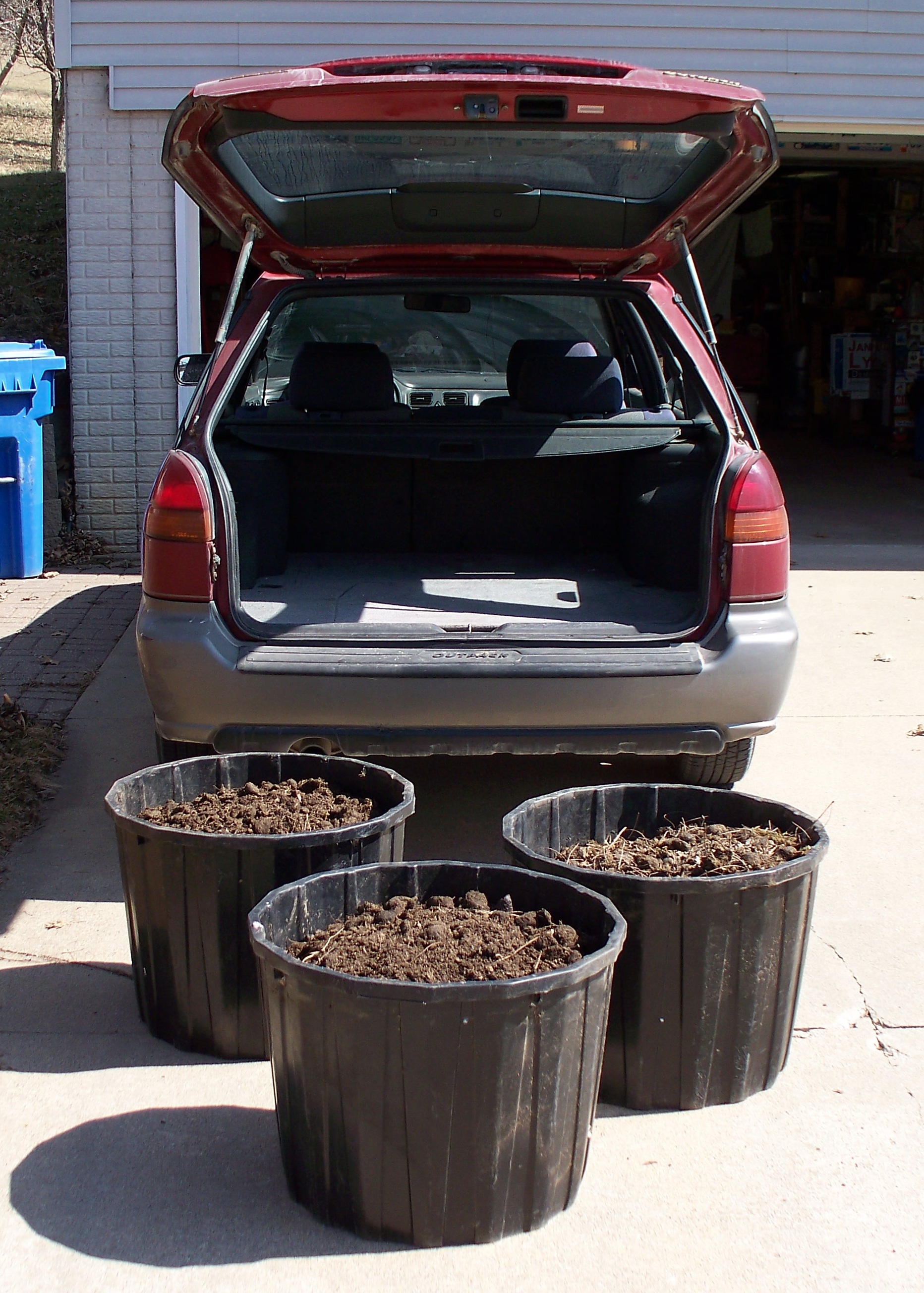
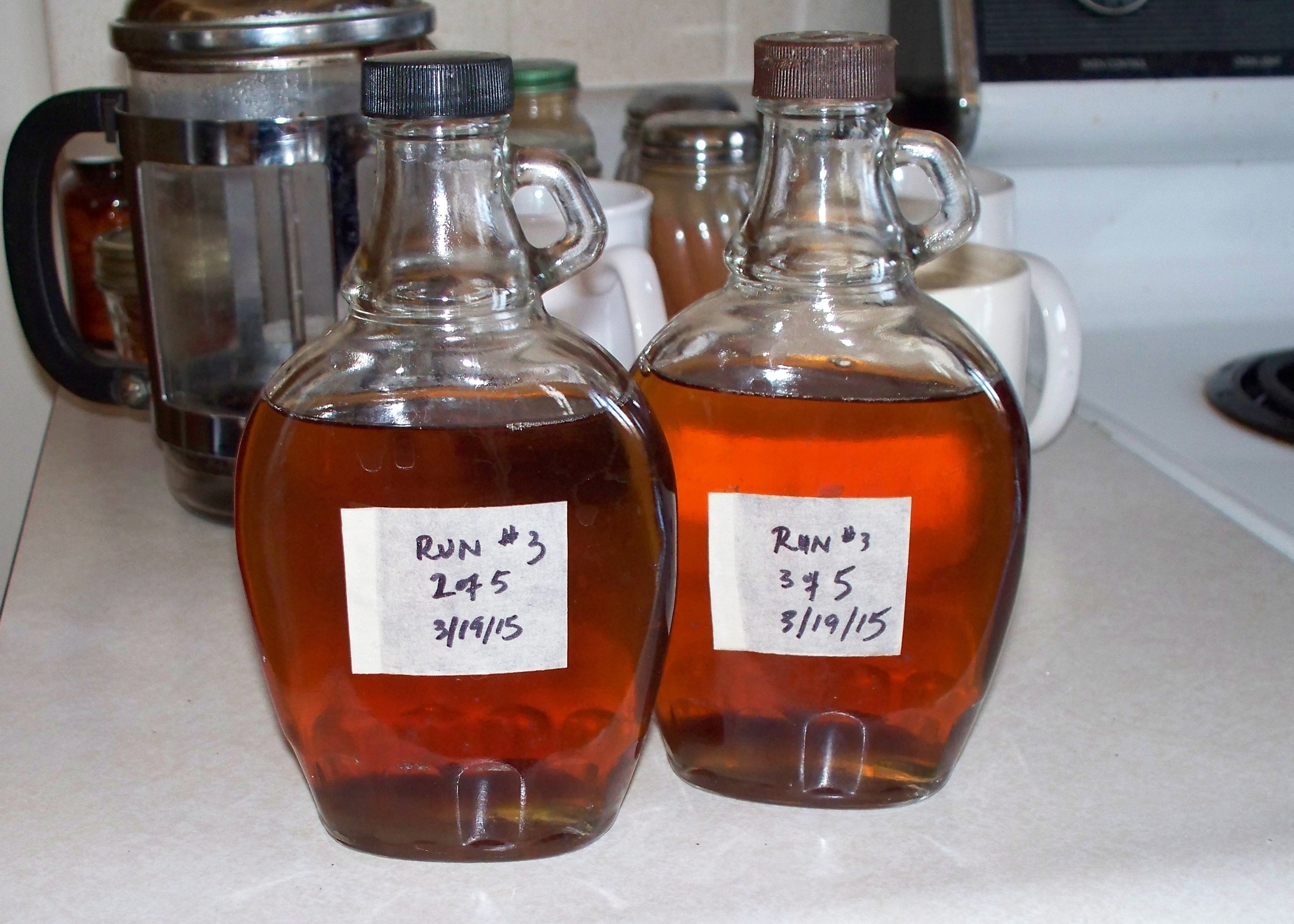
The maples have stopped running sap. Before we know it, what we waited for so long is done. A friend had already pulled his taps. When I picked up three barrels of composted horse manure, he gave me two bottles of the amber liquid which will be doled out for special and when I need a pick-me-up. Considering the work that goes into making maple syrup, it was a generous gift.

Maple Syrup
Maple Syrup

I placed the bottles carefully on the shelf with local honey and hot sauce—to wait for an occasion to crack one open. I expect it will sweeten steel cut oatmeal on a cold morning.

There is a lot to think about while hauling manure. Our family, it hopes and aspirations, figure prominently as the scent filled the car. Having cracked the windows, it wasn’t so bad, and truthfully, most of the odor was out of it. Still, it was present—a reminder of the fate of living things. While hauling manure one values what we have in this life for good or for ill.

Growing Burn Pile
Growing Burn Pile

I saw in social media that the local Community Supported Agriculture project is getting along without me. This will free time for my own garden and yard, which could use the attention. For the moment there is no farm work, and that’s okay.

My work at the warehouse doesn’t start until late morning or afternoon most days. This allows time to write, and a two hour work session in the garage, garden or yard. It is the beginning of a new pattern as I get into the groove of this season’s worklife.

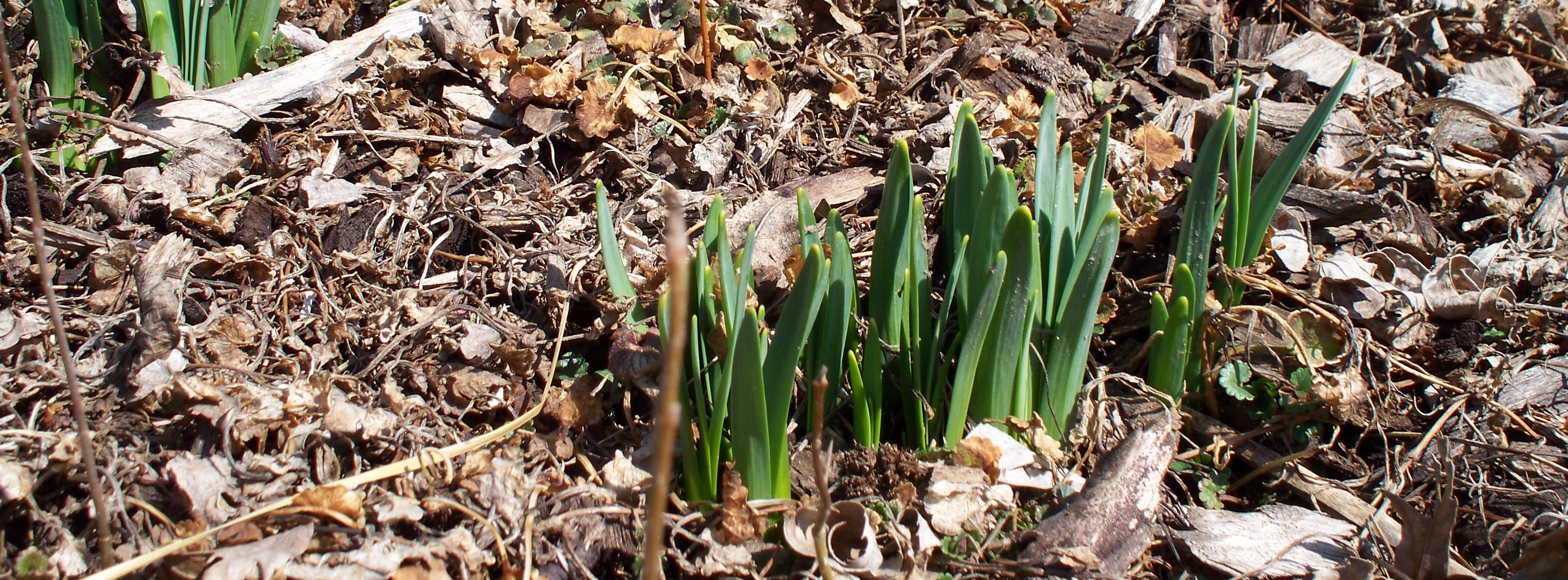
Green grass and flowers poke through the brown leaves and dead cover. Soon it will dominate the landscape. In hours captured from a too-busy day, I’ll make something of the brown spring days before flowers bloom and summer arrives. Bits and pieces of sustaining a life on the Iowa prairie—with essential ingredients of manure and maple syrup.

Spring Flowers
Spring Flowers

Categories
Kitchen Garden

Spring Work Day

Early Lettuce Patch
Early Lettuce Patch

After delays, the early lettuce is planted in two places. I raked a small patch of ground and broadcast four varieties with maturity days of from 45 to 50, and finished it with broadcast turnip seeds. If all goes well there should be lettuce by May and early turnip greens for stock.

I also tried something new.

Open Compost Pile
Open Compost Pile

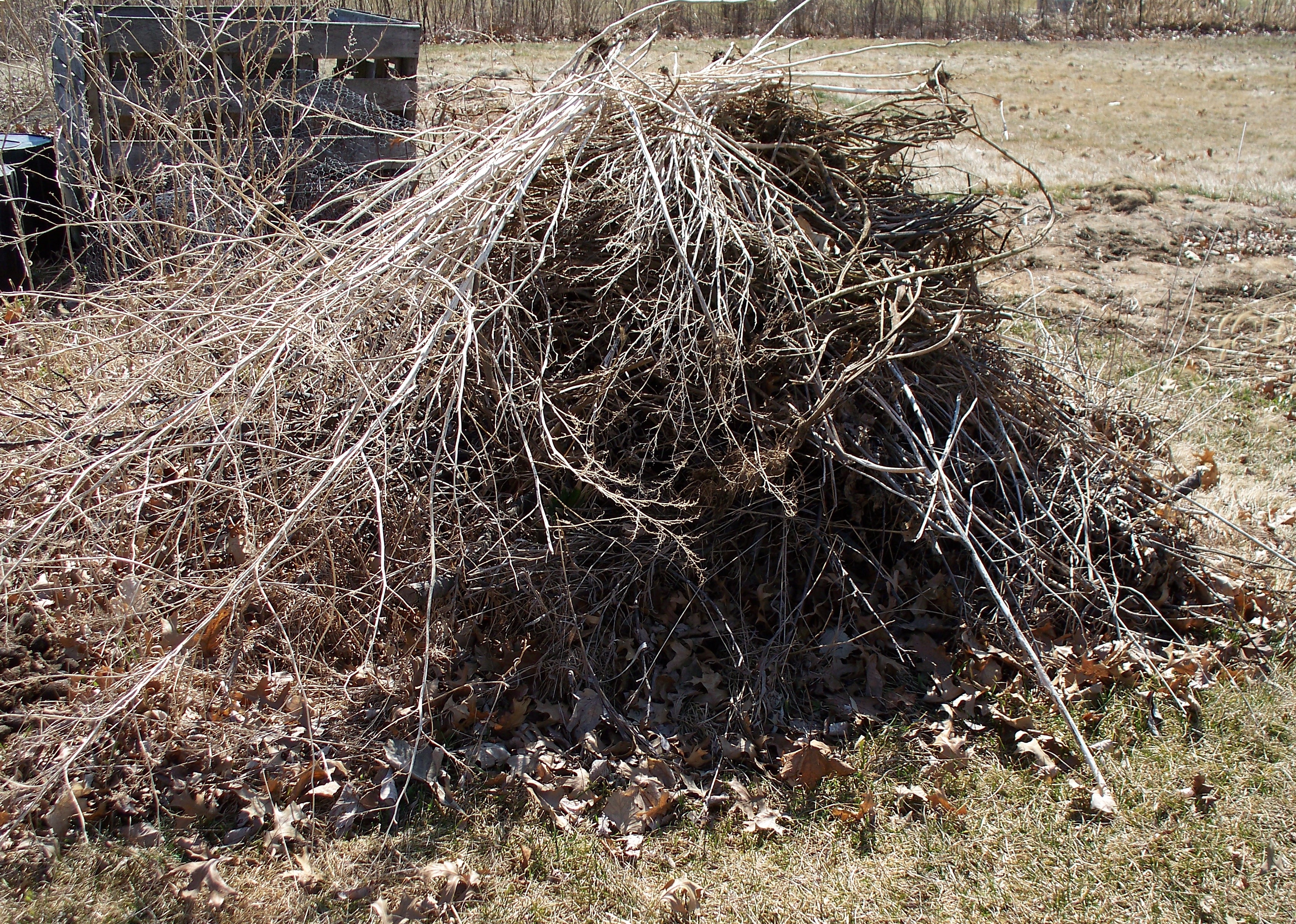
With three barrels of composted horse manure from a friend, I cleared out the branches and covered the surface of my open air compost heap with the organic matter. Then I broadcast some Nevada 56 days to maturity lettuce on top, along with the remains of 2013 French Breakfast Radish seeds. Assuming this goes as planned, there should be radishes by April 10, and lettuce afterward. I don’t know if this is a good idea, but I’m not ready to turn the compost and spread it on the garden, so let’s see if I can get some production beforehand.

Compost Bin with Manure

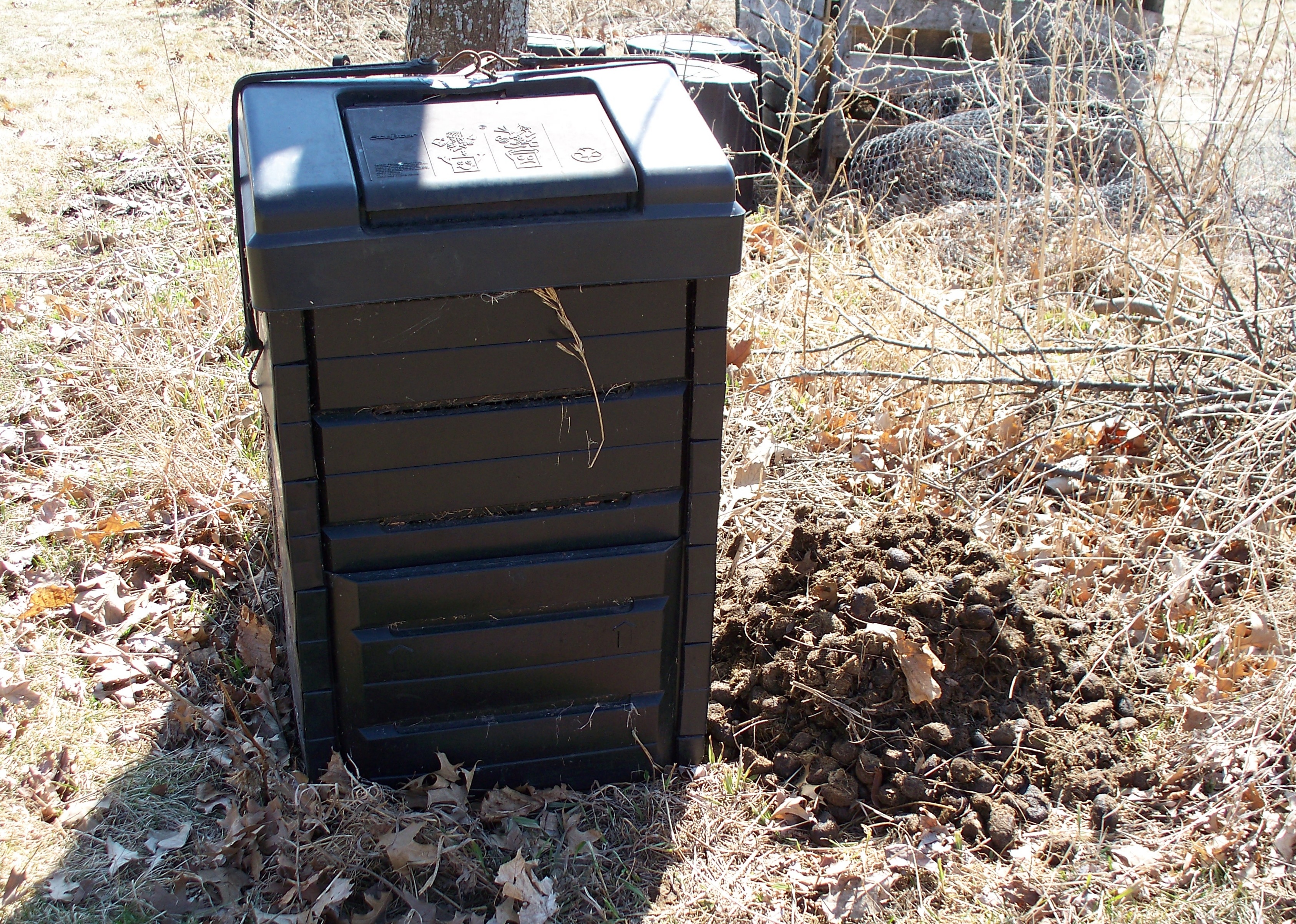
The rest of the compost—mostly dropped by horses the last couple of days—has been placed either inside or beside the kitchen compost bin and is already at work. As more kitchen scraps are added, I’ll use the manure to cover them.

Today was my first work day, and while I got some things done, I’m not in the groove yet. The productivity index is low. But like with everything just beginning, exercising diligence will get me into a groove before long. Maybe by the time the radishes are ready.

Categories
Environment

Interview with Ed Fallon

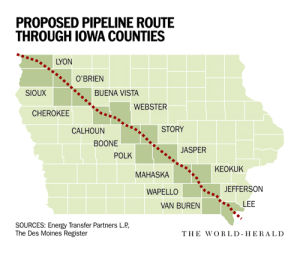
Bakken-Pipeline-Proposed-RouteBlog for Iowa caught up with Ed Fallon in Iowa City at a March 11 fundraiser for his Iowa Pipeline Walk along the proposed route of the Dakota Access oil pipeline from the Bakken shale formation through Iowa to Illinois.

Fallon presented a slide show of his experiences on last year’s Great March for Climate Action across the U.S., and answered questions during an event attended by about 35 supporters.

Discussions ranged over a variety of related topics. Two seemed most important: eminent domain and an environmental study of the Dakota Access pipeline.

Rep. Bobby Kaufmann (R-Wilton) is leading a bipartisan effort to restrict use of eminent domain by private companies like Dakota Access in Iowa.

“I intend to introduce legislation in the Government Oversight Committee,” Kaufmann said in an email to constituents. “My committee is funnel proof and next week I will introduce an Eminent Domain Omnibus bill that will attempt to address the numerous eminent domain abuses going on throughout the state.”

When asked about the legislation, Fallon acknowledged the several bills filed regarding eminent domain had not yet been finalized into one.

“My biggest hope is it defines public use so clearly that you can’t come in and build a pipeline across Iowa and use eminent domain to build that,” Fallon said. “Because it’s not oil that’s being used here, it’s not being produced here, it’s being refined in Texas and shipped for the most part overseas.”

A bipartisan group of legislators sent a letter to the Iowa Utilities Board asking the regulatory body commission an environmental impact study of the proposed Dakota Access oil pipeline.

According to the Cedar Rapids Gazette, the letter raised eight concerns:

1. Safety risks and hazards associated with the product(s) to be transported through the pipeline;

2. Potential damage to water, land, soil, water, air and wildlife/wildlife habitat during construction;

3. Threats to the environment, farmland, wildlife and public health as a result of spills or explosions;

4. Spill prevention and clean up provisions;

5. Liability for damages to both public and private property and sufficiency of resources to cover such liability;

6. Adequacy of inspection/monitoring/enforcement mechanisms and resources;

7. Responsibility for planning, training, and equipping for emergency response;

8. Indirect impacts of the oil extraction process facilitated by the pipeline that may affect public health and safety as well as environmental security.

“If studying the environmental impact is something we do before we decide to move forward on this, then that has value,” Fallon said. “But if it’s something we do after the fact, after the damage is done, after the decision is made, then it’s kind of a moot point.”

During the question and answer session, Jack Knight of the Allamakee County Protectors indicated that delaying the IUB approval process through an environmental study was a valuable tactic in preventing the oil pipeline from being built.

Opponents of the Dakota Access oil pipeline have a bigger issue and Fallon touched upon that during our interview.

“Based on what the entire scientific community is telling us, that oil needs to remain in the ground,” he said. “Really this conversation about the pipeline is a sidebar, but a really important one.”

For more information about Fallon’s work, Blog for Iowa recommends, “Hitting the Pavement,” in the March 16 issue of the Newton Daily News, or follow him on FallonForum.com.

~ Written for Blog for Iowa

Categories
Sustainability

Physicians Release ‘Body Count’

Body Count CoverDoctors group releases startling analysis of the death and destruction inflicted upon Iraq, Pakistan and Afghanistan from the “War on Terror” in Body Count.

WASHINGTON, D.C.– On March 19—the 12th anniversary of the onset of our country’s ill-fated military intervention in Iraq—Physicians for Social Responsibility (PSR) released the latest edition of Body Count for North American distribution.

The report, authored by members and colleagues of the German affiliate of the Nobel Prize-winning International Physicians for the Prevention of Nuclear War (IPPNW), is a comprehensive account of the vast and continuing human toll of the various “Wars on Terror” conducted in the name of the American people since the events of Sept. 11, 2001.

This publication highlights the difficulties in defining outcomes as it compares evaluations of war deaths in Iraq, Pakistan and Afghanistan.  Even so, the numbers are horrific.  The number of Iraqis killed during and since the 2003 U.S. invasion have been assessed at one million, which represents five percent of the total population of Iraq.  This does not include deaths among the three million refugees subjected to privations.

Dr. Hans-C. von Sponeck, UN assistant secretary general and UN humanitarian coordinator for Iraq (1998-2000) calls the report, “a powerful aide-mémoire of their legal and moral responsibility to hold perpetrators accountable.”

“With the U.S. and Canadian governments now poised to escalate its military  involvement in Iraq and Syria to counter the real and exaggerated threat posed by ISIS, the lessons of Body Count can contribute to a necessary conversation  regarding the extreme downsides of continued U.S./NATO militarism,” said Robert M. Gould, M.D., Physicians for Social Responsibility. “Hopefully it can help the North American public better understand the links between the devastation caused abroad and the escalating military budgets that lead to  increasing detriment of our communities and social fabric at home.”

Body Count takes a clear and objective look at the various and often contradictory—reports of mortality in conflicts directed by the U.S. and allied forces in Iraq, Afghanistan and Pakistan. The result is a fuller picture of the devastation and lethality to civilian non-combatants throughout these regions. Unfortunately, these deaths have been effectively hidden from our collective consciousness and consciences by political leaders seeking to pursue military solutions to complex global issues with little, if any, accountability.

Body Count underscores the scope of human destruction that helps fuel widespread anger at the Coalition Forces. It similarly provides the context to understand the rise of brutal forces such as ISIS thriving in the wake of our leaders’ failures. After an estimated cost of at least three trillion dollars over a decade of warfare, we need to fully account for our responsibility and learn the appropriate lessons to avoid a tragic exacerbation of the explosive situation we face today.

To download Body Count at the Physicians for Social Responsibility web site, go to: http://www.psr.org/resources/body-count.html

Categories
Home Life

Cusp of Spring

Bird Seed
Bird Seed

The garage retained enough heat to make predawn work tolerable. The ambient temperature is 31 degrees, climbing to around 45 by the time I leave for the warehouse. There is much to get done before starting the car.

Over winter tools get piled on the workbench instead of being put away. Perhaps it is too cold to be mucking about behind the table saw, wheelbarrow full of walnut firewood, and wagon full of junk. This morning everything is put away where it belongs, clearing a new space for new work.

Tomato Seeds
Tomato Seeds

Yesterday was tedious work of trying to understand our health insurance plan. Phone calls to the hospital and insurance company yielded partial understanding at best—at least enough to understand how our doctors applied charges. It is distasteful work, but the specialists to whom I spoke were cordial and professional enough and I made progress. Would that I never had to go to a doctor, not even for routine checkups.

And today is a day of hope for making a difference in life. Now that the tools are put away, it’s time to get them out again and make something of this brief interval between sleep and departure.

Tools
Tools

Categories
Kitchen Garden

Mining the Freezer

Tomato, Pesto, Parmesan Farfalle
Tomato, Pesto and Parmesan Farfalle

Our freezer shows a little space, but is still loaded with food.

I grabbed a pint jar of pesto and about three dozen cherry tomatoes from the freezer, some Parmesan cheese from the ice box, and a box of farfalle pasta from the pantry to make dinner.

It’s easy.

Cook the whole box of farfalle al dente. Strain and pour the lot into a big bowl. Spoon about half a pint of pesto on top, add the tomatoes (cut in half or peeled, the latter being easier with thawed, frozen tomatoes), and a cup of Parmesan. Stir gently with a rubber spoon, salt and pepper to taste, and it’s dinner.

Serve with a vegetable, some white wine, or lime sparkling water, and it is dinner, as good as it gets.

Categories
Kitchen Garden

Another Growing Season

Broccoli Harvest
Broccoli Harvest

The broccoli seeds I planted three days ago—a full tray of 96 cells—have begun to sprout.

This year we hope to harvest enough broccoli from our home garden to freeze some for next winter. It is a numbers game: starting a large number of seeds and devoting more work and space in the garden to tending them. We’ll see how it goes. With the newly sprouted life, I am hopeful. The down side is we never use chemicals, so there is risk of a poor crop even before we get started. That has never been a deterrence.

The Coralville Lake was mostly open water last night on my way home from the warehouse. The eagles have gone. A wild turkey was browsing near the roadway. That pretty much sums up modern life: we are left with the turkeys.

In the 1930s there was a sense that something substantial had been lost since the land was settled and converted to farms. The name of our township, “Big Grove,” refers to an ancient forest that stretched from the Cedar River to the Iowa River.

“Before the Louisiana Purchase in 1803, the land which is now Iowa was heavily wooded,” wrote Golda Leighton Jenkinson in her 1969 A History of Lake Macbride State Park. “As the time passed, it gradually became depleted until all that was left consisted of second and third growth, and even this was rapidly disappearing because of the owners’ need for cash, excessive pasturing and other forms of destruction.”

We take the current farm landscape and new growth trees for granted but it wasn’t always so. Today, local farmers are still removing buffers, installing tile, and keeping farmland empty of animals except for occasional post-harvest browsing. Most farming is about seed genetics and inputs these days, combined with managing a profit on thin, subsidized margins.

Our garden plot used to be part of the Kasparek farm. When we arrived, the topsoil was mostly gone and rumor was the best of it had been sold. Over 20 years, I’ve built back the soil so our garden is full of worms and other life. It was a long time coming with irregular progress.

Still there is hope. The sprouting seeds create a yearning to plant more, and it won’t be long until we are past the last frost and ready for the growing season.

Today’s sprouted seeds are a sign that hope is not lost. There will be another growing season—at least for another year.