McConnellville (Greensburg, Kansas May 7, 2007). Photo Credit – FEMA
Mitch McConnell must miss Harry Reid and Barack Obama.
Without their foil he’s got no one to blame but himself for failing to craft a legislative agenda to support the Republican president.
He tries to blame Democrats but it falls flat.
McConnell’s agenda is built on the flawed expectation that legislation can only be passed based on Republican priorities. The approach is bound to fail in a time citizens pay more attention to politics and increasingly hold members of congress accountable.
The majority leader gets credit for holding his caucus together when Senate Republicans were in the minority. His tactics were brilliant, however, since they won the trifecta in the 2016 general election he’s been like a ship without a rudder — demonstrating the craven, whining, victimized and ultimately ineffective strategy that has been present all along.
The same electorate that gave Republicans a big 2016 win will take their power away. Trouble is the corporate media narrative — that “Democrats don’t know what they stand for” will delay this inevitable outcome.
House Democratic Caucus Chairman Joe Crowley hesitated when asked about his party’s core message to voters.
“That message is being worked on,” the New York congressman said in an interview this past week. “We’re doing everything we can to simplify it, but at the same time provide the meat behind it as well. So that’s coming together now.”
The admission from the No. 4 House Democrat — that his party lacks a clear, core message even amid Republican disarray — highlights the Democrats’ dilemma eight months after President Donald Trump and the GOP dominated last fall’s elections, in part, because Democrats lacked a consistent message.
Many of us remember Bill Clinton’s famous campaign assertion, “it’s the economy stupid.” It made for good press stories almost three decades ago. Today the Democratic Party is both more diverse, and part of a larger electorate where party registration is less important. A simplistic and all-encompassing, “core message” would be so watered down as to render it meaningless. The fact there are political parties at all is less relevant than the cultural aspects of an electorate that can turn an Obama voter into a Trump voter. The narrative “Democrats don’t know what they stand for” is fake as a three-dollar bill. Just ask a Democrat and they will tell you what they stand for.
Democrats should not hope for relief from McConnell’s craven allegiance to libertarian financial backers. The Senate majority leader is a pawn in their game, one being played in shadows by a dark money network. A media narrative about Democrats lacking a consistent message plays to dark money strengths by asserting the problem in politics is us, not them.
In response to a Republican majority, Senator Chuck Schumer has been able to hold his caucus together, at least on the first couple health care bills. As Mitch McConnell’s tenure in the minority demonstrated, such tactics may create some wins, but are no substitute for strategy.
The trouble in McConnellville is different from the media narrative about Democrats. The majority leader’s expectation Democrats should join Republicans to craft legislation is laughable. The fact of voter engagement in politics by contacting elected officials effectively shut down the first three Senate proposals for repealing the Affordable Care Act. Voters are becoming more a part of the legislative mix than any political party is willing to acknowledge. Democrats should pay attention to this dynamic and leverage it for wins in 2020 and maybe 2018.
Here’s a core message for partisan elected officials, “we’re the party that doesn’t do stupid stuff.” That’s a message that makes sense. How I wish it were true.
It’s a scary article with frightful truths circulating on social media.
Half truths according to Michael E. Mann, director of Earth System Science Center at Penn State. Mann wrote onFacebook:
Since this New York Magazine article (“The Uninhabitable Earth”) is getting so much play this morning, I figured I should comment on it, especially as I was interviewed by the author (though not quoted or mentioned).
I have to say that I am not a fan of this sort of doomist framing. It is important to be up front about the risks of unmitigated climate change, and I frequently criticize those who understate the risks. But there is also a danger in overstating the science in a way that presents the problem as unsolvable, and feeds a sense of doom, inevitability and hopelessness.
The article argues that climate change will render the Earth uninhabitable by the end of this century. Extraordinary claims require extraordinary evidence. The article fails to produce it.
If we are clicking on New York Magazine for our information about the threats of climate change then now, more than ever, it’s clear mental health care is needed in whatever healthcare bill Congress passes this year.
Taking action on climate (or anything else) based on fear would be as scary as Wallace-Wells’ article.
On Sunday, Al Gore was in the news about his climate work.
“Those who feel despair should be of good cheer as the Bible says,” Gore told Lee Cowan of CBS News. “Have faith, have hope. We are going to win this.”
The need to act on climate is all around us according to Gore.
“It’s no longer just the virtually unanimous scientific community telling us we’ve got to change,” he said. “Now Mother Nature has entered the debate. Every night now on the television news is like a nature hike through the Book of Revelation. People who don’t want to use the phrase ‘global warming’ or ‘climate crisis’ are saying, ‘Wait a minute. Something’s going on here that’s not right.'”
Gore is right. Don’t despair. Act on climate.
If you don’t know what to do, The Climate Reality Project provides an action kit to get you started. Click here to find it.
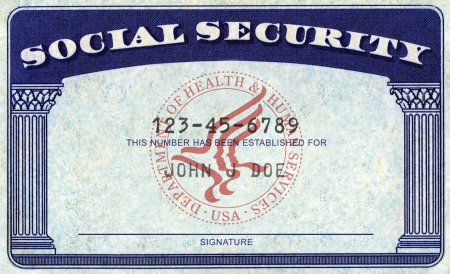
61 million beneficiaries — retirees, disabled workers, spouses and surviving children — will get an increase in monthly benefits. The forecast increase is 2.2 percent or about $28 per month on the average payment of $1,253. Not a lot, but something.
In low wage work world, where I spend a lot of my time, I meet sixty-somethings and we talk about Social Security. They have it figured out. They’d better take what they can from Social Security as soon as they can, because one never knows if the program will be around or for how long. The presumption is the Congress will do nothing to preserve it. I’ll tell you I’m living with a bunch of spoons. That’s to say, none of them is the sharp knife in the drawer when it comes to Social Security.
“Neither Social Security nor Medicare faces an immediate crisis — they both currently have surpluses,” Stephen Ohlemacher of Associated Press wrote. “But the trustees warn that the longer Congress waits to address the programs’ problems, the harder it will be to sustain Social Security and Medicare without steep cuts in benefits, big tax increases or both.”
Those “steep cuts” and “tax increases” need not come now, as some Trump Republicans have been suggesting. The program does need reasoned consideration about who we are as an American society and what, if anything we will do to keep people out of poverty as they exit the work force. The Congress won’t address it unless there is interest from the electorate. In a time when people have U.S. Senator phone numbers on speed dial, “interest” means often and specific contact repeated over and over.
Hillary Clinton concisely stated her position during her 2016 presidential campaign.
“We can never let Republicans cut or privatize Social Security — we should protect and expand it,” Clinton tweeted on June 3, 2016.
Clinton’s statement aged reasonably well despite other options. However, it’s useless for prominent personalities to address the long term issues Social Security faces if people who will use the program don’t speak up.
I encourage people to speak up about Social Security because its future is not guaranteed. A word of advice. Before you open your mouth and remove doubt you are an idiot, learn about the Social Security program here. No need to read all 269 pages of last week’s report, but familiarize yourself with the summary beginning on page two. Once armed with knowledge, and potential questions, contact your federal elected officials and suggest we should protect and expand Social Security now. You’ll be doing yourself a favor.
When people think of local food, most have seasonal sweet corn and tomatoes in mind. That hasn’t changed much in years.
The quest for good-tasting food that does no harm has also been around for a long time. Organic food production came up in the early 20th Century as an alternative to the rise in mechanized, industrial farming.
An organic food production system developed, although there is less clarity about it today than there was a few years ago. Organic certification has contributed to confusion.
The Organic Foods Production Act of 1990 and the National Organic Program were game changers that created a new certification process and, importantly, a greater market for organic food. Sales of organic food more than doubled during the period 2006-2015, according to the Organic Trade Association, reaching $43.3 billion in 2015. In its quest to bring standards and a market, the well intentioned government program suffered abuse in the form of government lobbyists from moneyed interests who diluted the meaning of “USDA Organic” many of us found inspiring in the 1990s. Under Sonny Perdue, the 31st U.S. Secretary of Agriculture, further erosion of the law’s original intent and the organic standard is expected.
“It seems that uncertainty and dysfunction have overtaken the National Organic Standards Board and the regulations associated with the National Organic Program,” Senator Pat Roberts (R-Kansas), chairman of the Senate Committee on Agriculture, Nutrition and Forestry, said recently according to the Washington Post. “These problems create an unreliable regulatory environment and prevent farmers that choose organic from utilizing advancements in technology and operating their business in an efficient and effective manner. Simply put, this hurts our producers and economies in rural America.”
Roberts statement is code for getting government regulations out of the way of large scale producers in the organic market. As the 2018 farm bill is crafted by the Congress, any meaningful regulation pertaining to organic standards is expected to be gutted by Trump Republicans.
What you see is not always what you get as organic food producers scale up to meet demand and work the system. Here are two recent examples:
Herbruck’s Poultry Ranch in Saranac, Michigan produces one in 10 organic eggs in the U.S. according to the Chicago Tribune. The linked article describes production processes indistinguishable from those of almost any Iowa confinement egg producer. Those eggs don’t seem organic despite assertions by the ranch. What does “organic” mean in this context. At a minimum, not what we expected.
In May, Peter Whoriskey of the Washington Post reported fraud in imported corn and soybeans. A large shipment of soybeans began as “regular” soybeans in Ukraine and changed to “USDA Organic” by the time it reached a California port, garnering an additional $4 million for the shipment because it was “organic.” Some doctored documents is all it took for a huge, fraudulent payday.
My perspective of organic food is from a backyard garden. Gardening is about changing one’s relationship with food as much as providing food for the table — process more than produce. Using organic practices comes naturally as gardeners are mindful of crop inputs that will land on the dinner plate. A common mistake is neglecting the social context of gardening. In most cases gardening includes family, fellow consumers, merchants, farmers and gardeners. A gardener has only slight intersection with government.
Once government got involved in organic food production a market became viable. That was a good thing for farmers who sought to make a living growing organic food. Organic food systems then merged toward commodification as they scaled to meet demand and that’s the sticky wicket.
An ability to increase organic food production without compromising organic standards has been difficult all along. When news stories raise doubt about the meaning of “organic food,” it’s one more burden for farmers to bear in a business where the challenges of producing organic food at a profit are substantial.
I work on farms that use organic practices and plan to resist compromise on organic standards in the next farm bill. If you care about what’s on your dinner plate, should too.
I’ll be filling in for editor Trish Nelson at Blog for Iowa the next two weeks while she takes a well-deserved break.
To meet a daily posting requirement I wrote four posts Saturday in between gardening, cooking, mowing and laundry. After the final edit this morning I counted 2,000 words! It felt like I accomplished something.
There is a lot to write about.
The challenge of writing is partly the craft. It is more the living. Without a perspective that’s unique or adds value to society, what’s the point?
The main thing in getting perspective is to shut up and listen to people, places and things around us. We Americans — and perhaps we humans — are not very good listeners so we need to work at it.
That’s how I plan to spend the rest of the day. Listening to the place I call home. That includes my spouse.
It’s been difficult to get a grip on our 45th president. I don’t mean a golf grip.
His first six months in office have been so different from previous Republican presidents there is no comparison. It is important to relate — on a personal level — to our president, something not possible with Donald J. Trump.
My living memory goes back to Dwight Eisenhower. Our family was not an Eisenhower fan because we were Democrats. At the same time, we talked about World War II and Eisenhower’s role in the D-Day invasion of France. It became the subject of our neighborhood play. We cut 34 some slack despite his Republicanism.
We began to like him after the Federal Aid Highway Act of 1956. Our family was excited by the prospect of traveling via Interstate Highway because it reduced the amount of time it took to visit relatives in Illinois, Virginia, Tennessee and Florida.
Even with Republicans I disliked the most I have been able to find a connection. Nixon created the Environmental Protection Agency and the Clean Air Act, Reagan worked with Mikhail Gorbachev to reduce the number of nuclear weapons, and I was willing to give George W. Bush and “compassionate conservatism” a chance before he invaded Iraq after Sept. 11, 2001. No such commonalities exist with Trump.
Barack Obama teed up the ball for the next president to lead at home and abroad. As a golfer, 45 should have known what to do. Indications are Trump has neither interest nor the capacity to be a world leader.
If there’s to be no personal connection my work will go on: protecting our interests in the commons, and in government of, by, and for the people.
Those are Democratic values that won’t fade regardless of who is president.
~ First published as a letter to the editor of the Solon Economist July 13, 2017.
I helped manage the political campaign of Democrat Dick Schwab for Iowa House District 73 during the 2012 general election. We worked hard but lost. I took the following three posts down with my entire blog Big Grove News in 2013.
They were written as a way of letting go of the fever caused by my complete engagement in the campaign. I re-publish them here as a political history lesson. They are unchanged except for some spelling errors I regret too much to let stand.
Buckshot and lessons learned, Nov. 8, 2012
One of the key lessons I learned during this election campaign was that the proper place for a barn sign on a gravel road is well off the highway on a knoll. That way, it can be seen for more than a mile and the shotgun buckshot may penetrate the plywood, but won’t obscure the message. Vandals are too lazy to climb the barbed wire fence to get off a close range shot. There were a few other things.
In 2012, the work of our campaign was mostly done by female volunteers. It is the grunt work of making phone calls, knocking on doors, preparing mailings and arranging events. Women were also more likely to sign the check for a political campaign donation. There were men involved, but fewer of them. At the door and on the phone, our voter targets were more often women as well. If politics is becoming a woman’s endeavor, then it is disheartening that there is not parity between male and female candidates.
Voter turnout was predictable in Cedar and Muscatine Counties, but more than expected in Johnson County. Before the election, I forecast voter turnout of 10,689 in Muscatine and Cedar Counties, and actual, based on unofficial results, was 10,682. This was as good as it gets in electoral politics. Johnson County was another matter. I forecast turnout of 4,519 and it came in at 5,339, or 118.2 percent. My gut feeling is that there were two factors: more people working with the Democrats and Republicans to get out the Johnson County vote, and a concerted effort by Republicans to suppress the margin in Johnson County through a vote by mail effort combined with increased, and more effective political activism. Once the breakdown of voter turnout by party is available, Johnson County voter turnout warrants additional consideration.
While Facebook and social media were abuzz this cycle, they had little impact on our campaign effort. If anything, websites, Facebook, Twitter and blogs were a distraction from the work of campaigns. We recognized this during the primary election campaign, and decided to do minimal work through these media. In retrospect, it was the right decision. It was particularly evident in fundraising where the power of personal networking far exceeded the value of posting a fundraising appeal online. Our voter support was also gained through personal contact, not through social media.
There are more lessons learned from this campaign, but only one more will fill out this post. It is the distinction between the hedgehog and the fox pointed out by Nate Silver in his book The Signal and the Noise: Why So Many Predictions Fail, but Some Don’t.
In our political campaign there were plenty of people who wanted to tell us what to do. Typically they were people with a driving social style, with lots of information about past campaigns, who offered capsules of specific and pointed advice about different aspects of the campaign. Silver would call these folks hedgehogs. To be successful in current politics, a campaign should listen to hedgehogs, but take any advice with a grain of salt. If Democrats want to win our house district in the future, the approach of a campaign must be more fox-like. By that, I mean accepting the diversity and uncertainty of the electorate, and using multiple approaches to building the coalition to win. This is what Barack Obama’s campaign did to build a winning coalition. The partisan aspect of local politics should be abandoned going forward.
Election of a state senator or representative is a personal decision for most district voters. Successful candidates accept this and figure out a way to relate to a majority of voters, as the Republican in our race did. A fox-like approach has little to do with party affiliation and more to do with interpersonal contact.
The best example of this is the down-ticket drop off in our district, where the margin between voters who voted Democratic for Barack Obama and Dave Loebsack and those who either did not vote in the house race, or voted for the Republican, was 1,946 votes. If voters had followed party preference expressed in the top of the ticket in the house race, the margins in the election would have been reversed, and the Democratic candidate would have won.
While there will continue to be political parties, the lesson from this campaign, reflected in the national races, is that being Democratic or Republican is no longer the key factor in local politics, if it ever was.
Dunbar’s number and 10,000 doors, Nov. 9, 2012
The Republican in our house race repeated mournful lamentations about our campaign, how we were not doing the work required, and along with his supporters, attempted to smear our candidate’s character and work, both on the telephone with voters and at their doors. Such jeremiads were evident among district voters all summer and intensified during the fall. When our campaign went to voters with his record of citations and one recent probation, he initiated a series of public complaints of victimization, beginning with the League of Women Voters candidate forum in Muscatine, where he said in his closing statement,
“I’d like to spend my last minute talking about civility in politics. In the beginning of this campaign, Dick and I agreed to run a positive campaign and I was really grateful for that. Saturday morning was a sad morning because I woke up to a piece of slanderous trash that had been sent out to thousands of people in this district. Now, in full disclosure, this piece was sent out by the Iowa Democratic Party. But I spoke with Speaker Paulsen today and he said that he has never issued a piece of mail without going by the candidate to getting his approval first. So Dick, did you break your promise, or are the party bosses in Des Moines making your decisions for you? I’m here to say that I’m at the crossroads of the campaign and I’m choosing the high road. I will not criticize my opponent, I will not go negative. I’m going to continue to talk about positive issues, continue to knocking on your doors and continue to talk about issues important to residents of House District 73?”
The last three sentences of this speech proved to be blatantly false. He had been going negative throughout the summer, so his new attacks were neither truthful nor unexpected. As the campaign drew to a conclusion, the jeremiad of Republican victimization continued, as did negative attacks, with the predictable mail pieces sent by the Iowa Republican Party, using the negatives about our candidate they poll-tested shortly after Labor Day. I was there, and know the veracity of what I have written, although the Republican would likely cry foul.
The most repeated jeremiad was a version of a statement that appeared in the Nov. 2 West Branch Times,
“My brother and I have knocked on over 10,000 doors and I have been to over 200 community events. I have poured my heart and soul into this campaign. There has been a deliberate attempt to paint me in a negative light so I just want to remind you what I stand for.”
Set aside the fact that the number of asserted community events attended varied, with statements of 600 one time, 400 another, and 200 when it came time to put the number into print. He did attend a lot of events, and his unspoken criticism that we did not was ridiculous. He repeated the phrase 10,000 doors often, and the number did not vary once asserted, sometimes including his brother, and others not.
The Republican did appear to be working hard during the campaign, and his victory confirmed that he worked smart, capitalizing on his family name, when he had no substantial reputation of his own. But there is a problem with the basic premise of his campaign, and the assertion about 10,000 doors, that he would be a representative voice in Des Moines for district residents. It can be explained using Dunbar’s number.
Robin Dunbar is a British anthropologist who posited the idea that there is a cognitive limit to the number of people with whom one can maintain stable social relationships. The commonly used number of relationships is 150, although the science is not exact. The simple truth is that the community of people with whom a house representative must maintain stable social relationships is small, and well identified before one knocks on the first door.
First, a house representative’s community includes members of their family. With this Republican there is a long lineage and a large, extended family. There was no discussion of his personal relationships during the campaign, as we considered that to be out of bounds. If there is a significant other or any children, he did not say, but family relationships all take up part of Dunbar’s number.
Second, the party caucus will include the most important social relationships a representative has. It appears there will be 53 house Republicans during the 85th Iowa General Assembly. The essence of political power in the Iowa legislature is bonding with one’s caucus. When house Republicans were in the minority, they stuck together, and exerted power to prevent the majority party from getting bills passed. When they were in the majority, they passed almost whatever bill they would, with little consideration of the fact that ours is a bicameral legislature, and consent of the Iowa Senate was a prerequisite to passing legislation. The 2012 property tax reform is a good example of this. House Republicans asserted that the bill had bipartisan support, but the failure to pass property tax reform rested on the fact they did not have bipartisan support in the Iowa Senate.
Third, there are the people who helped the candidate get elected. There is a deep pool of financial donors, who will be needed in future campaigns. There are notable party members that include Chuck and Barbara Grassley, Terry Branstad and Kim Reynolds. There is also a legion of volunteers who also must be heard and respected. So how much of Dunbar’s number is left for everyday people in the district? Far less than 10,000.
Now that the campaign is over, district residents are relegated to constituent services. The Republican said he would listen, and I believe he will try. I also believe he will try to respond to each constituent request, as his father dutifully did. But the exigencies of life in the legislature are that votes need to be taken in the present, and there is little time to solicit broad voter feedback on most of them. His social circle of a Republican caucus, family members and supporters will hold the biggest influence as the bills move and he makes his decisions. I don’t like it, but to the winner go the spoils, and this is the most fundamental aspect of partisan politics. Regardless of the assertions of bipartisanship, a state representative votes with his or her party, on most issues.
I hope my new state representative serves us well, and I will pray for him. I will also pray that I can remain open minded about his potential for efficacy with constituents who hold diverse and often opposing views. As they say, the proof will be in the pudding.
Throwing in with the boss, Nov. 10, 2012.
While Tip O’Neill wasn’t the first politician to say “all politics is local,” his words were relevant during the 2012 general election. The future of the top three candidates on the ticket, Barack Obama, Dave Loebsack and ours would depend on voters’ reaction to our campaigns as they played out in their communities.
I began running the numbers for our house race in late September, and over a two week period, ran more than 35 computer models, failing to find a winning scenario. This is when denial can set in, that all the hard work could not have been in vain. Shortly after the redistricting plan was approved, we heard the Republicans had developed a winning scenario, but in early October, we had come too far to do anything but press on.
We had done polling after Labor Day and were 22 points down in Cedar County, but solid in Johnson. At least we knew where we stood, and could design the rest of our campaign around the polling results. We concentrated our voter contact in Cedar and Muscatine Counties, virtually abandoning additional work in Johnson.
I rigged up a winning scenario as a goal for our efforts. We focused on West Branch, Gower/Springdale, Linn/Pioneer, Wilton and Tipton during the final five weeks of the campaign. The hope was that by having a candidate through the end of the race (something Democrats in Cedar and Muscatine Counties did not have in 2008), the percentage yield for our candidate would improve across that part of the district, and with work, we could win these targeted precincts (excepting Wilton) and Johnson County.
The election results showed we improved Democratic margin over the 2008 house race in Cedar County precincts by an average of 5.5 points, in City of Wilton by 15.0 points, and in Johnson County we lost margin by an average of 5.5 points. After the election, someone texted me that “the cake was baked before we had a candidate.” Knowing what we knew, I don’t see any other game plan we could have run, other than the one we did.
When a person talks to voters across the district, in rural and urban settings, one gets a sense of the electorate for which there is no substitute. We had this before the primary, when most targeted voters knew neither Democratic candidate, and to win, we focused on where we had the votes identified for our candidate. It proved to be a successful strategy.
In the general election, without the ids to win, we could only pin our hopes on getting the vote out for the ticket, which we did with enthusiasm. The hope of our GOTV effort was to ride President Obama and Dave Loebsack’s coattails. As mentioned in a previous post, the down ticket drop off was the difference between winning and losing, and our campaign failed to convince enough Obama/Loebsack voters that we had the better Iowa house candidate. If we had done a better job of this, we would have won.
Yesterday, I was at the Iowa City recycling center disposing of campaign materials and yard signs. The Republicans had beat me to the yard sign recycling bin, and the bottom was lined with Romney, Archer and Kaufmann signage. I dumped the ones I had collected on top, bringing a form of closure to the campaign.
Our county party chairman happened to be there, also recycling campaign materials. He offered his appreciation for our work and condolences for our loss. We talked about politics, specifically about the justice center, who will fill Sally Stutsman’s seat on the board of supervisors, and whether it will be by appointment or by election. There is always another campaign.
For me, the 2012 campaign was life changing in a way that is hard to explain. I am a better person for the experience, and have no regrets about what we did. As Dick Schwab was quoted in the West Branch Times last Wednesday, “I would have rather won, but life goes on.”
It’s been difficult to get a grip on our 45th president.
His first six months in office have been so different from previous Republican presidents there is no comparison.
An inability to relate to this president — on any level — contributes to a type of dissatisfaction that didn’t exist among ANY of his forebears.
My living memory goes back to Dwight Eisenhower. Our family was not an Eisenhower fan because we were Democrats. At the same time, talk about World War II and his role in the D-Day invasion of France became the subject of child-like war games in the neighborhood. We cut 34 some slack despite his Republicanism.
We began to like him after the Federal Aid Highway Act of 1956. Our family was excited about the prospect of traveling via Interstate Highway because it reduced the amount of time it took to visit our relatives in Illinois, Virginia, Tennessee and Florida. When we visited Gettysburg, Pennsylvania, we drove past Eisenhower’s farm and wondered if he and Mamie were home.
Donald J. Trump is no Eisenhower. He’s not a Richard Nixon, Gerald Ford, Ronald Reagan, George H.W. Bush or George W. Bush either. I found plenty to disagree with in Republican presidents but also found some common ground with each of them. It was hard with Nixon, Reagan and George W. Bush. Despite the atrocities of their presidencies, Nixon created the Environmental Protection Agency and the Clean Air Act, Reagan worked with Mikhail Gorbachev to reduce the number of nuclear weapons, and I was willing to give George W. Bush and “compassionate conservatism” a chance before he invaded Iraq post Sept. 11, 2001. No such commonalities exist with Donald J. Trump.
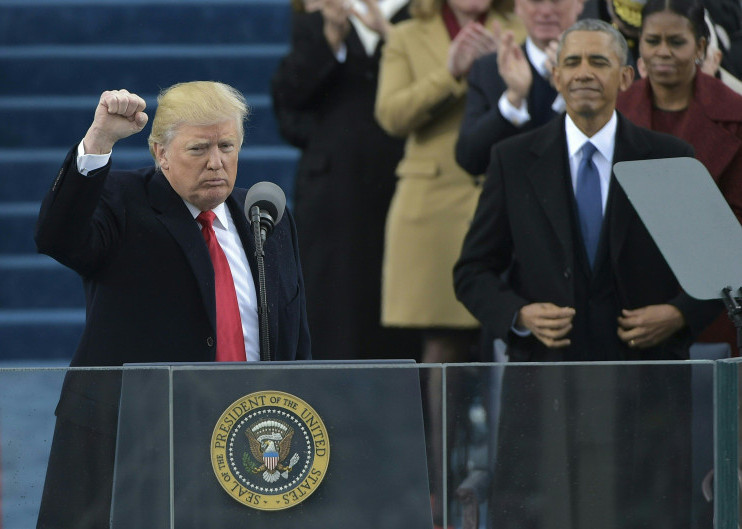
In January, I listened to a recording of 45’s inaugural address hoping for something positive to say about him. There was nothing. His assertions about “this American carnage” not only fell flat, I didn’t know what the heck he was talking about.
Barack Obama had teed up the ball for the next president to take a leadership role at home and abroad. As a golfer, 45 should have known what to do. Trump had neither interest nor the capacity to be a world leader. This was most evident during the recent G20 summit in Hamburg, Germany. Every participating state affirmed their commitment to the Paris Agreement within the United Nations Framework Convention on Climate Change. That is, every state EXCEPT the United States. 45 is even re-defining what “American exceptionalism” is.
45’s authoritarian style seeks to de-legitimize sources of information contrary to his assertions. He has little foundation to be an arbiter of truth or reality. He’s a man who perpetrated a lie about his predecessor’s birth in the United States. He goes on the attack against people with differing opinions, including governmental agencies, public figures, and members of the media. He is a septuagenarian who gets his news from cable television, more fit to be yelling at the TV than governing. His unscripted posts on Twitter make us cringe and provide distraction for a corporate media that could be better serving the public interest.
During a recent meetup some progressive Democrats were discussing the amount of work it will take to undo 45’s legacy, hopefully by winning the presidency in 2020. I differed. There is no undoing if the Secretary of the Interior enables fracking in the national monuments. There is no undoing if Medicaid is eliminated or hobbled with lack of funding. There is no undoing the damage caused by increased oceanic acidification and extreme weather events. There is no undoing acts of violence and hate crimes perpetrated in 45’s name.
There is no normalizing this president. Those behind the scenes in corporate board rooms, in moneyed resorts, and in every executive office in the government are like termites eating away a Democratic framework created through a lifetime of effort. I can relate to that, although not in a positive way. The termites are everywhere and we lack political will to hire an exterminator.
Even if I were a golfer, it would be difficult to get a grip on this president. It’s past time to accept that and work to protect our interests in the commons, and in government of, by and for the people. Those are Democratic values that won’t go away despite the solitary, authoritarian and incomprehensible figure the 45th president has become.
The leaves of potato plants are turning yellow so I dug one of our three tubs to see the progress. They are ready for harvest.
I’ll let others continue to grow until their leaves turn completely yellow. It won’t be long.
There is nothing like the discovery of beautiful spuds in the soil… except maybe eating them.
Deer found the garden and took a fancy to the heirloom squash plants and cucumbers. Enough of the cucumbers are protected inside cages so I’ll yield some. However, with the grocery store of our subdivision’s 25-acre woods I don’t know why deer have to eat our garden. It’s been worse, but I had great hope for the squash plants. They’re not completely gone, but well damaged.
Last night I met up with some blogger friends at a brew-pub in Coralville. The menu offered falafel tacos which seemed right up my alley and priced right at $5 for three. They were served on corn tortillas with a cabbage slaw. I use a recipe for baked falafel and this dish would be easily replicated in our kitchen. I predict it will be… soon.
Michigan cherries are available at the orchard and I’m planning to get some. It will be a good time to confirm my work there beginning when the season kicks off in August. Lodi apples are ready, although with 24 quarts of apple sauce in the pantry there’s no pressing need for this fine cooking apple.
The first broccoli pick is about finished. I’ll open the fence and look through the plants today and pick the main heads of what is left. This year I plan to get the plants out of the garden as soon as they finish producing. That’s a rule of thumb for cruciferous vegetables from my organic farmer friends. I’d like to plant a second broccoli crop. We’ll see how the day goes.
The forecast is expected to be in the mid-80s today so I’d better get back outside and finish the weeding before it gets too hot.
The campaign to survive after a transportation career turned the bend and is heading into the home stretch.
Economic realities we face as a family continue to exist, but the effort to cope — including 12 lowly paid jobs since 2012 — will find some relief as I reach full retirement age in December and with it eligibility for Social Security benefits.
Independence Day marked the halfway point of the year and I can see the finish line from here.
What does that mean for the future? Less time worrying about how to cover each month’s bills accompanied by more and better writing.
Later this month I return to daily writing for a couple of weeks. I’ll be covering Blog for Iowa weekdays from July 17 to 28. I’ve got something different to say about politics so stay tuned.









 Journey Home
You must be logged in to post a comment.