Categories
Kitchen Garden

Arrival in a Thunderstorm

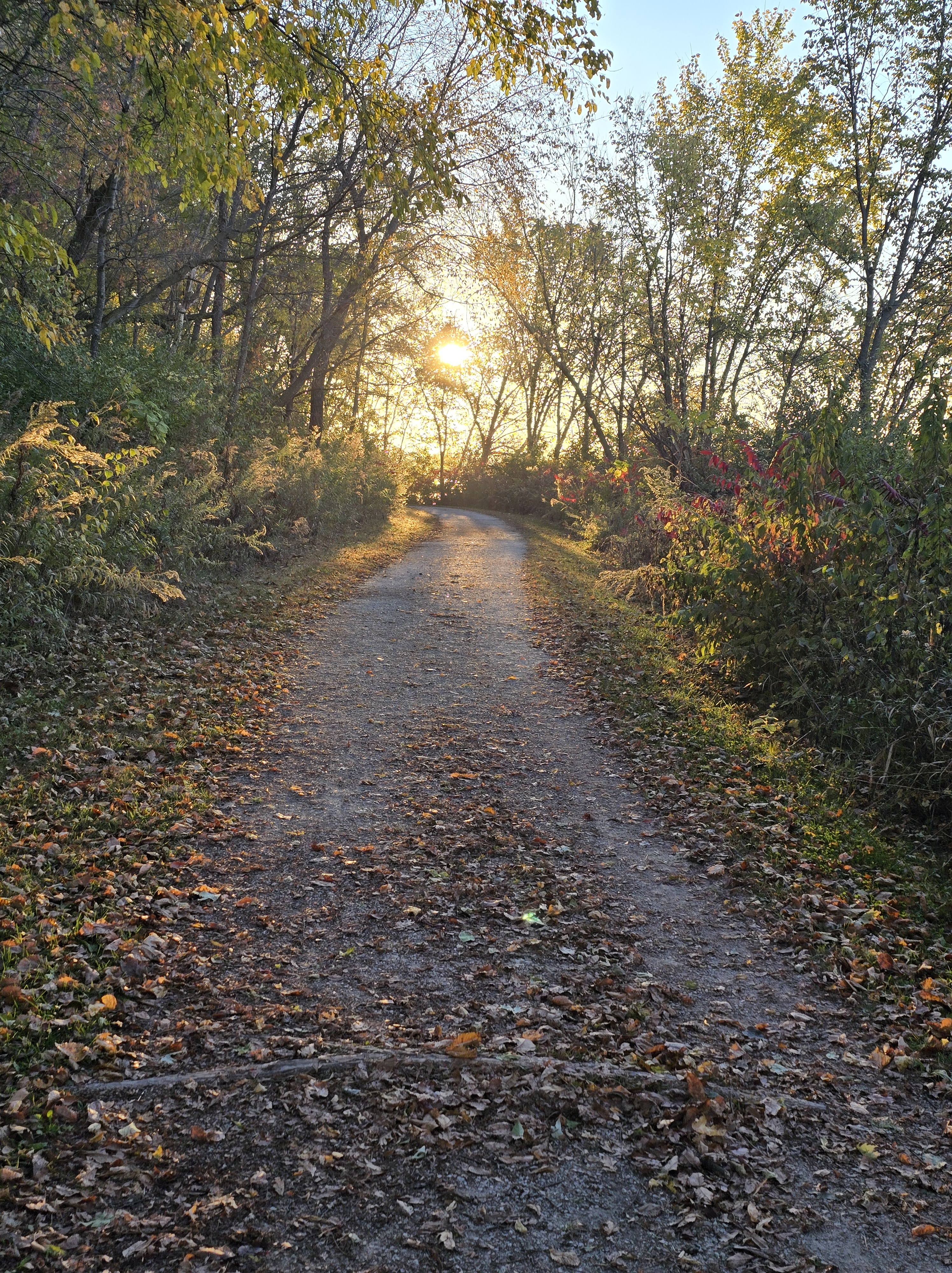
Sunset after a two-hour thunderstorm.

We have visitors from the east this weekend. On Friday they drove through an Iowa summer thunderstorm in an open-bed pickup truck laden with boxes of household goods for storage. The load was well tarped and secured. Some of the boxes got a few drops of rain, but mostly the first principle of transport came into effect: secure your load properly to avoid problems. We hardly used the tall stack of towels I got out to dry the boxes.

The lightning and thunder were exceptional. Enough of it to make a show. Not too much to worry. A few lightning bolts hit close to home, yet for the most part the storm did its work and moved through the area without incident. It saved me from worry about watering the garden.

These August days are busy in the kitchen garden. Apples, pears and vegetables are abundant and both the garden and kitchen are full of them. I enter either place, and suddenly, four hours filled with work rush by. Being engaged in the conversion of nature to foodstuffs seems righteous. Neither “farmer” nor “gardener” nor “cook” are the right words to describe this. It is an amalgam of living in the present, tradition, education, and experience. I don’t feel any specific descriptor is needed.

We cleaned off the dining room table to sit and talk. I made a simple repast of cut garden vegetables, fruit, cheese, and crackers for the visitors. We talked about what we would accomplish this weekend, not thinking too much about the future or the past. As the United States has its authoritarian moment, such discussions define us… help us cope… make us better people.

It is an escape from the storm that has already moved on and left us living.

Categories
Living in Society

Vegetable Prices Jump

Cherry tomatoes picked Aug. 14, 2025.

When a person grows a garden they don’t think much about the price of vegetables at the grocer. All the same, when the Producer Price Index for fresh and dry vegetables jumped by 38.9 percent in July, everyone should stand up and take notice.

“The increase is the biggest one-month move for a summer month in almost a century,” according to NBC senior business correspondent Christine Roman. Why? Unpredictable weather, including drought. The ongoing roundup and deportation of immigrant agricultural workers. Tariffs on food. It is a commonplace that margins in the grocery business are thin. These disruptions in the process that produces our food have and will cause a price increase for consumers as wholesale purchasers pass through some or all of their additional expenses.

When I return from the garden with a tub of tomatoes, apples, or greens, I have forgotten how much I spent on the seeds, supplies and equipment to produce it. I looked at my spreadsheet and found it was $921, thus far in 2025 for the entire operation, including the repair bill for my John Deere. Is it a bargain? That question is out of the scope of my gardening. Learning to produce a year’s worth of garlic is a skill that is hard to price. I generate my own seed garlic, so there is almost no financial cost to produce it. Sweat equity is also difficult to price.

The increase in the Producer Price Index for vegetables is a bellwether for other things going on in the economy. Climate conditions, labor, and tariffs will impact pricing on items other than food. The conclusion to be drawn here is everyone should begin conserving resources if they haven’t already. I doubt this once in a century price increase is the last, and we will need every dollar we can squeeze from our budgets. Hear of belt-tightening? Feel lucky you still have a belt.

For now, the refrigerator and freezer are full. The pantry is as well stocked as it has ever been. Produce continues to grow in the garden and will continue until the first hard frost. I knew living on a fixed income would be challenging. I just wish our government would take its knee off our throat, back off, and give us space to breathe.

Categories
Creative Life

Friday Gallery

Some of this week’s photographs.

Categories
Kitchen Garden

Final 2025 Garlic Report

2025 Garlic just in from the field.

This year, I produced 103 head of garlic from 103 cloves planted in March. Without doubt, a person can plant garlic in the spring and get a decent crop. I plan to return to fall planting later this year.

There were four or five wet stalks that pulled off, yet the rest of it looked as it should. If anything, there were more smaller heads. That is likely due to the shortened growing season. There are plenty of large heads to seed next year’s crop.

I racked them up in no time.

2025 garlic racked and in the garage.

Because of the moisture from recent rain, I set up a small fan to circulate air around them while they dry. Once they feel less “wet” I will put away the fan and let them cure without it. It usually takes about three weeks.

Small fan to circulate air between the racked garlic plants.

Growing my own garlic has been life-changing. There is no going back.

Categories
Kitchen Garden

Apple Management

Crimson Crisp apples from the garden, Aug. 12, 2025.

These two Crimson Crisp apples fell from the tree during Tuesday morning’s thunderstorms. They looked undamaged so I picked them up and ate one of them for an afternoon snack. “Delicious,” he punned. They need to be picked. Apples are beginning to back up in the kitchen, so I better get going with the process.

Stories of my father’s people were about apples. The women worked in an apple canning plant and grew multiple trees on their properties. My great aunt Carrie said she ate apples every day of her life. She passed on a simple recipe for fried apples. Of course the men worked mining coal. Father was lucky to escape such a future when he was a teenager.

I wrote before about my father and apples here. This is the salient memory from that post:

Father taught me to eat apples after a trip on River Drive to buy a bushel.

It seemed unusual to secure so many at once, but he knew someone, and with a limited weekly income from the meat packing plant, the family took what help he could find.

Dad used a knife to cut away bad spots and avoid eating worms. I remember him rocking in a chair eating apples with a paring knife after dinner. He didn’t call them “knife apples.” I coined that term when describing the fruit from our trees. (Knife Apples, Paul Deaton, Oct. 10, 2014).

When we moved to Big Grove Township, I planted six apple trees at the time of my mother-in-law’s death. Three of those remain, one Red Delicious, and two Earliblaze. They are all reaching the end of their lives, but as long as they produce, I don’t cut them down. Recently I planted one Zestar! and one Crimson Crisp in a different spot in the yard. This year is the first all four varieties are producing.

Now that I have a producing orchard, what next?

I grew out of the idea of processing every possible apple into something. Apples now get divided into three major categories. The best ones are tucked away in a refrigerator drawer for eating with a knife. Most of those do not have visible imperfections. The seconds are saved for making three major products: Apple butter (usually 12 pints per major harvest); apple sauce (a dozen quarts and two dozen pints); and apple cider vinegar to fill all my containers. I need about 3-4 gallons this year. When the vinegar jars are filled, I usually reserve a quart or two of fresh apple juice for drinking from the refrigerator. Any other apples are comprised of fallen fruit and the least desirable of what I pick (small or too many imperfections). These go in a pile near the lilac bushes on the property line. They usually sit there decomposing from now until winter, yet in the spring they have all been eaten by wildlife who need winter food.

I used to make dried apples in a dehydrator, but just don’t eat them. Once they get used up from last time, that will be the end. In short, I process to make what I make and anything else goes to wildlife. Extra apples are not usually shared. It takes a certain type of outlook to turn a gnarly apple into applesauce or vinegar. Wildlife don’t complain and eat everything I put out for them.

The main challenge in apple management is getting everything done before they start going bad. That’s where I currently am. The Zestar! have been processed, there are two containers of Earliblaze in the kitchen waiting for processing and a lot on the trees, I’ll pick Crimson Crisp today or tomorrow, and Red Delicious, which is my workhorse apple, are still ripening and won’t be ready for another month or so. Apple management is a process of continuous improvement. Re-defining and knowing what I want is important to keeping my sanity in this busy time of the garden year. Apples are worth the work.

Categories
Kitchen Garden

Garlic Harvest and Garden Stuff

Garlic harvest in 2021.

I spent part of Monday prepping the garage to receive two racks of freshly picked garlic plants for curing. In 2024, the harvest was July 12, so with spring planting this year, I’m running a month behind. The garlic plants look a bit weird — multiple flowers per head, small scapes — so I don’t know what I will get. Hopefully there will be enough good cloves to replant in the fall, with the rest to be used in the kitchen regardless of size. I have a dozen head of garlic left from 2024. Later this week I will grind them in the blender with some olive oil to store in the refrigerator until I use them up. My cooking life was forever changed when Susan Jutz taught me to grow garlic.

I made a batch of applesauce with Earliblaze apples and it was not as good as the batch made with Zestar! apples. If I get ambitious, I might cut down one or both of the Earliblaze trees and replace it with another Zestar! tree. I don’t see that happening this fall.

There does not look to be an abundance of tomatoes for canning. With 70 cages, there are plenty to eat fresh and cook with. Just last week I made a batch of chili using San Marzano tomatoes and it was distinctively better. This shows cooking with fresh tomatoes makes a big difference in taste. The tomato harvest is beginning to accelerate so we’ll see where it takes us.

Squash and cucumbers are pretty well done. A few green beans remain to be picked. Leafy green vegetables are aplenty, although the refrigerator and freezer are stocked with enough to last until next season. Hot peppers have just begun to come in. There will be some more eggplant and bell peppers. That is about it.

This is a snapshot of where things are in the garden. It has been a great year.

Categories
Living in Society

Democratic Primary

Rural Polling Place

The Iowa primary for the 2026 general election is on June 2, 2026. At the end of summer the year before the primary there is plenty of action among both Democrats and Republicans. This post is a recap of where I find myself landing in three races a long distance from the finish line.

The governor announced she is not running again, which leaves an open race. Multiple Republicans put themselves forward for governor. I notice superficial aspects of their action yet am more interested in what Democrats are doing. Brianne Pfannenstiel of the Des Moines Register is covering the governor’s race. I was able to get through the Gannett paywall to read her latest here. Rob Sand and Julie Stauch are running as Democrats and there is a no-party candidate, Sondra Wilson. I was an active participant in the 2006 election that made Democrat Chet Culver our governor. I don’t see that type of enthusiasm this summer. In particular, Sand seems a bit droll. The filing deadline for state and federal offices is March 13, 2026. A lot can happen between now and then.

The race for U.S. Senator from Iowa is where most of my interest lies. At the end of June I donated $10 each to the three then announced candidates, Nathan Sage, Zach Wahls, and J.D. Scholten. There are at least three more kicking tires on a run. That’s too many $10 dollar donations to make another.

While a lot can happen before the filing deadline, I believe Sage, Wahls and Scholten comprise the field. Of them I like J.D. Scholten best because of his experience of running against Steve King in Iowa’s fourth congressional district. In addition, he has been prominent in national news media, appearing on nationwide broadcast outlets and newspapers. Just last week he spoke at Netroots Nation. Likewise, he has the attention of Iowa-based political reporters. His ability to attract media interest in things like his recent farm policy statement is important in the primary because Iowa Democrats do watch national news reporting and read the newspaper. His strength in person-to-person campaigning honed during his race with Steve King, combined with media attention makes him a strong contender to beat the Republican nominee whether or not it is Joni Ernst.

I don’t know Nathan Sage, and haven’t heard him speak in person or viewed a media recording. I will do that eventually. He has been making rounds of state Democratic gatherings and keeps an aggressive schedule. I don’t rule him out at this point.

I’m not dismissing Zach Wahls either. His public campaign seems focused on messaging in a way to redefine who we are as Iowans, defining values we hold in common. Iowa needs more of that. Whether that is a path to winning the general election is unclear in August 2025.

So I lean Scholten in the U.S. Senate race.

I have no opinion about congressional races except for in the first district where I live. I attended the county Democratic Central Committee meeting last Thursday where we heard from three campaigns for congress. This race boils down to whether we accept Christina Bohannan’s argument that she lost by 799 votes in 2024, and she knows how to close the gap and win the third time around. She noted in her remarks early polling has her at a 4-point advantage over Mariannette Miller-Meeks.

I don’t know if I buy that argument. At the same time, she is the only candidate with several seasoned staff members from three general election campaigns. When I think of the district, I know many of those Democrats well. They lean more conservative than Johnson County where I live. Given what is known about Bohannan, they seem unlikely to take a chance on a newcomer when they have heard or met Bohannan during the last three campaigns. I didn’t hear anything from the other campaigns to break the attention I pay to Bohannan.

There are a lot of other important races this cycle. For me, though, the focus is on these three.

UPDATE: Since posting this, Jackie Norris and Josh Turek announced for U.S. Senate. I will do an update of that race in a new post once the other person kicking tires on a run makes a decision.

Categories
Creative Life

A Life of Photos – Part III

Coralville Dam and Reservoir circa 1973-4.

When in the 1970s I bought a Minolta SRT-101 35 mm film camera I took it on short trips to take pictures and see the results. Film and film processing were inexpensive. I felt I was a step above people who bought their Brownie camera at the drug store to capture moments of family events. I felt like a creative person with everything to gain by capturing images that weren’t necessarily of people, or remembrances of where I had been. So it is with this image which even 50 years later attracts my eye.

I don’t know why I drove by myself to the Coralville Dam and Reservoir that winter day. I have living memory of the experience. From looking at the dozen or so prints I took that day, I was trying something creative, the way an artist fills a sketchbook with drawings. I hadn’t given much thought to framing the image, or anything else a photographer might consider. I’m thankful I included the signage in the frame to help remember where the film was exposed.

The artist’s sketchbook is a good metaphor for these kinds of prints. While there is a result of the effort, namely the print, what is more important is the learning process I went through that day: the practice at capturing images. 50 years ago, I did a lot of practicing. When digital photography came along and became ubiquitous, we still practice, yet if we don’t like the frame we can immediately take another shot. With decades of experience, all of that practice comes into play with every shot we take.

These were days when we didn’t see the image until receiving the prints from the processor, maybe a week or more later. The disconnectedness of the print from the creative act added something. While there was living memory of the photo shoot, the printed result was divorced from that. The image stands on its own. That is one point of being creative.

When I received my share of the settlement with the elevator company related to Father’s death, I equipped our band with an electric guitar, amplifiers, a public address system and the Volkswagen microbus in this photograph. The photograph is proof the vehicle existed. The band equipment has long been sold, yet this photo remains as a reminder of what once was. It is also proof that I was learning a craft.

Check out Part I and Part II of this series.

Categories
Kitchen Garden

A Challenging Garlic Crop

First 2025 garlic.

I had COVID-19 in August and September 2024, so I did not get garlic planted before winter. Once recovered from the virus, I checked soil conditions each day into December and did not find them right for planting. One thing led to another, winter came and went, and I planted garlic on March 29. My friend Susan told me long ago garlic could be planted in the spring. Ever since I began growing it in my home garden I over wintered.

I began to freak out when the plants did not seem as tall as in previous years. On July 9, I ordered one pound of garlic seeds from Johnny’s Selected Seeds, the first time I ever did that. If my crop was a bust, I wanted something to start over. It was an expensive insurance policy.

When scapes emerged, they seemed of mixed quality. A few looked normal, yet some sprouted multiple scapes, and some were puny. They tasted fine, it’s just the overall volume for 100 plants seems lighter than in previous years.

By August, my garlic is usually harvested, racked, and curing in the garage on the special rack I made. I want the first couple of leaves to start turning brown before harvest, and we just aren’t there. Some are starting to turn, so harvest can’t be long. I dug one head (see photo) and it looked good. Maybe I’ll be alright.

It never occurred to me what life would be like without garlic. It wouldn’t feel like a real life. Fingers crossed I make it through a decent harvest and fall panting in October.

Categories
Creative Life

Changing Book Stores

Photo by Joshua Brown on Pexels.com

When the email from Macmillan Publishers arrived I knew I would purchase The Devil Reached Toward the Sky: An Oral History of the Making and Unleashing of the Atomic Bomb, by Garrett M. Graff. I immediately logged in to Amazon and found I could order it to be delivered the next day, on publication day (Aug. 5, 2025), for full price. I hit the pause button. Didn’t I tell myself I was going to slow down my ordering from the behemoth book seller?

Next I found the website for a local bookseller who was offering pre-order for delivery to the store also on Aug. 5. It was also full price, so I said what the hell. No time like the present and ordered it on their website. It was an experience compared to Amazon.

First, when I received my automated order confirmation, it was detailed, giving me everything I needed regarding the order: tracing, question outreach, price, and so on. One curious bit was the order showed being from an outfit called BookPeople, which is a large independent bookseller located in Austin, Texas. Austin is less like the rest of Texas, so I am okay with that. Besides, I assume my local bookshop does what it must to reduce acquisition cost and build margin on sale. Both of those are necessary to stay in business. So far, so good.

Next came the email from the local bookstore. It was sent by an individual at the store to advise me they would notify me when the book arrived. Nice personal touch.

All was going well when my contact reached out with this message: “The Devil Reached Toward the Sky has arrived and I have set aside a copy for you at the back information counter. All of the copies which we received were damaged so I picked out the least damaged one to set aside for you. Have a look at it and we will order another copy for you if you don’t like this one.” Seriously? Well, it is not my bookseller’s fault the book was damaged in shipment, so I started a string of emails, which turned into text messages. The text exchange took 30 minutes and included photos of the damage and discussion of price for damaged goods. We were able to work it out and I drove the 25 minutes to the county seat to pick up the book, paying cash.

If a book got damaged with Amazon, I know the drill. I contact them and would get disposition instructions while they credited my account and shipped another book. Most likely, if I had to return it, I would have had to drive to their return consolidation point at a local big box store. Goods damaged in shipping is always a hassle and the blame always lies with the party that packaged and did the shipping. It is a rare occurrence to receive damaged goods from Amazon.

I will just assume this situation is a one-off and will order new books I want to add to my library locally, especially when there is no price difference. I don’t like taking so much time dealing with a local store, yet hopefully we will get to know each other better and develop a relationship. When my annual book-related budget is about $1,000, it’s not like I am the biggest fish in the sea. It is one more way I can spend more of my life relating to people, even if it’s because of a glitch in the process.

I’m confident I can break my Amazon habit.