This is the first blog post I made about Christmas on Dec. 25, 2007.
The meaning of Christmas is derived from my remembrance of the priests at Holy Family Catholic Church in Davenport genuflecting while reading John 1:14 “And the Word was made flesh and dwelt among us…” There are many translations of this verse and the idea that an omniscient God would take human form remains a compelling idea. In order for our lives to have meaning, we should live them as Jesus did, through acts in human society.
If Jesus was the incarnate God, we are something less.
If the meaning of Christmas can be found in John 1:14, how should that affect us with our imperfections?
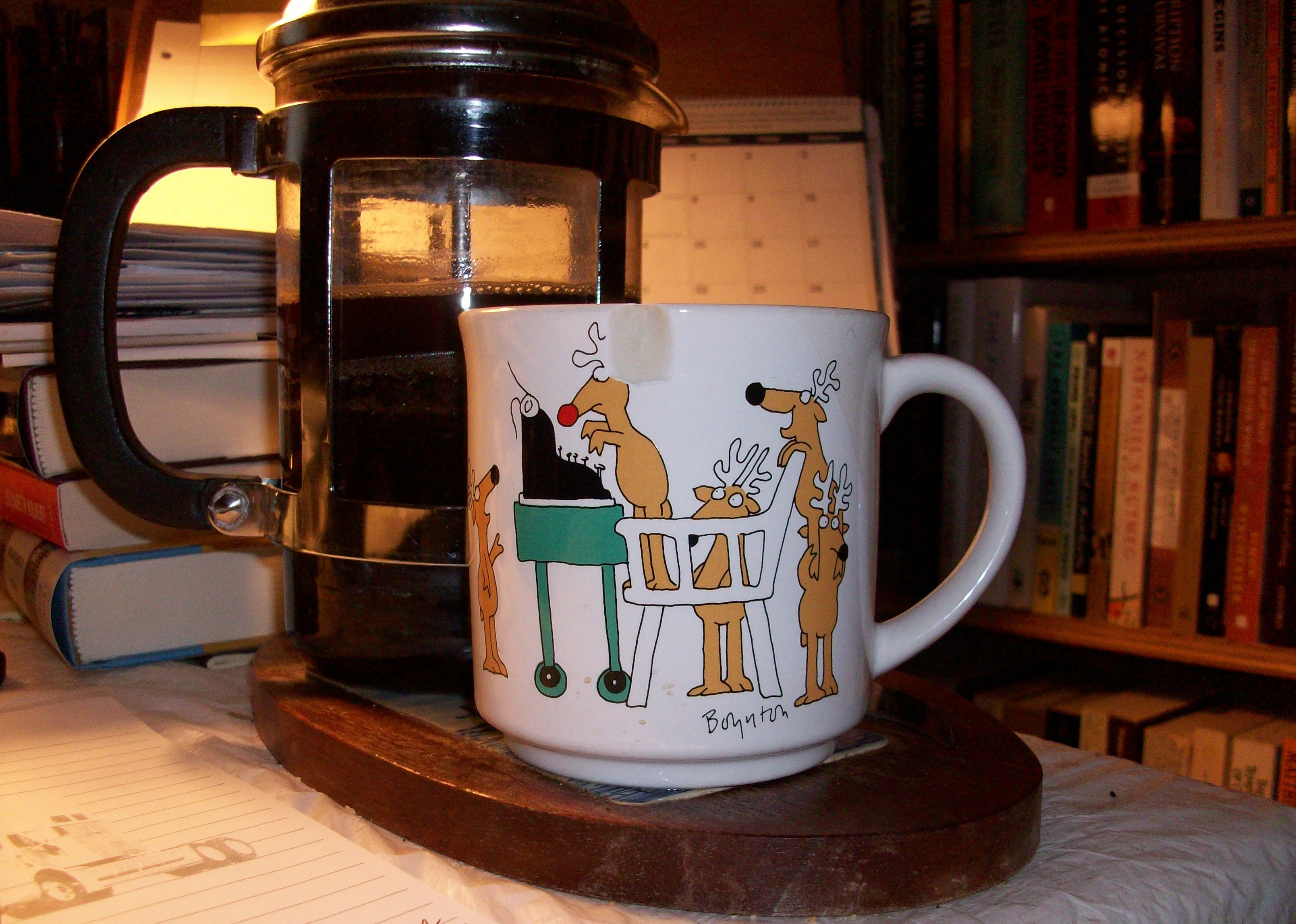
My Christmas story is about the coffee cup that we keep in our bins of Christmas decorations. It was a gift from Jacque and printed in the glaze are five reindeer around a typewriter consulting on a message. The reindeer at the keyboard has a red nose, and must be Rudolf. On the other side of the mug are misspelled the words “Merry Christmas,” presumably typed by Rudolf. At some point I chipped the cup and each year we discuss whether we should get rid of it because of the chip. I have always said no, although I should probably let go. The chipped cup with the animals trying to put a message into human language using human technology has become part of our Christmas tradition. Because it is so similar to the meaning of Christmas, I have trouble letting go of it. We have always ended up keeping the cup and I am using it now to hold the coffee I made this morning.
We humans can use some coffee on Christmas morning, and we need to put it in something.
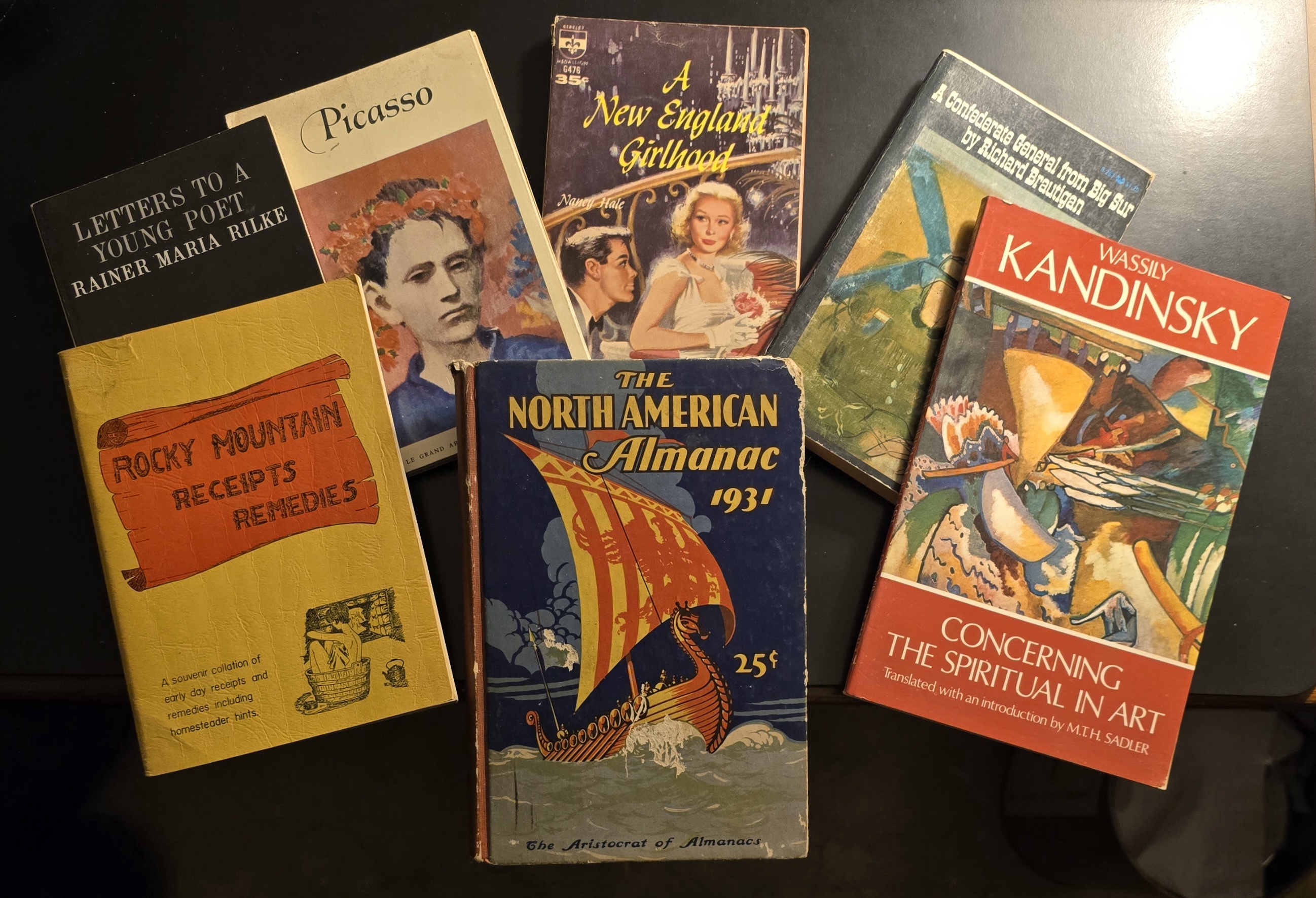
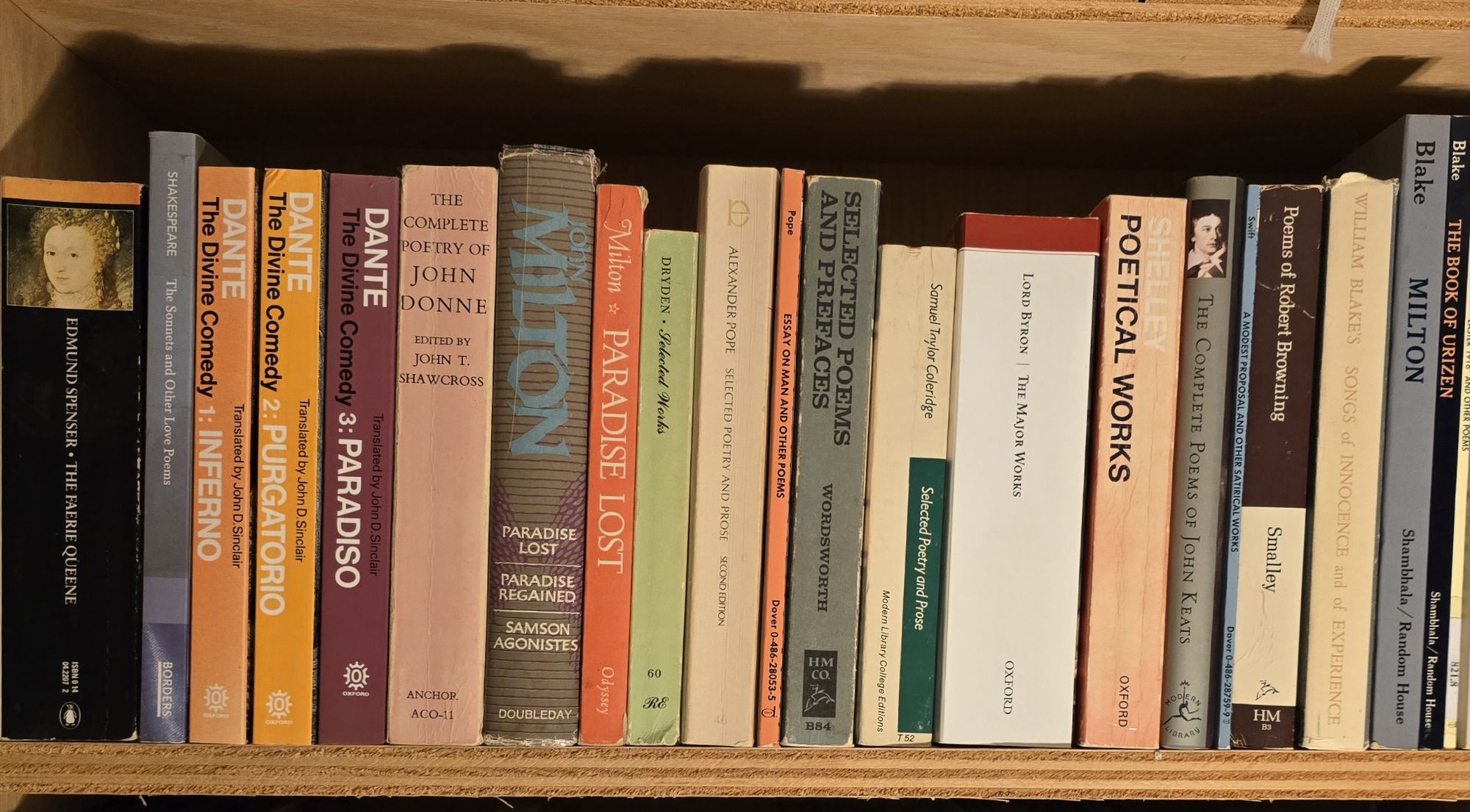
When handling hundreds of books long packed away, a few will stand out. Not only do I want to keep those in this photo, I want to read or re-read them next year. It’s part of the process of the Great Sort.
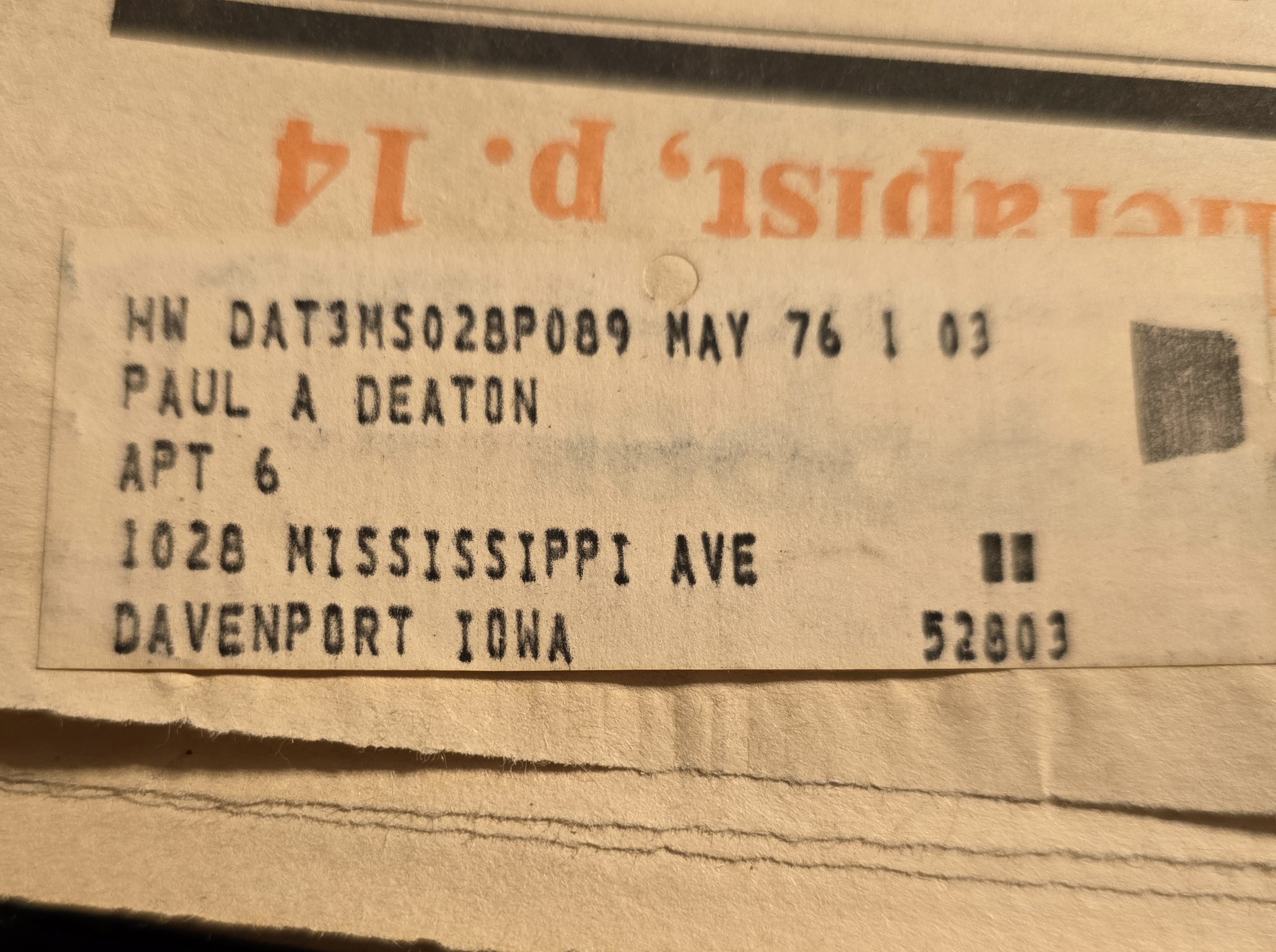
While living in Mainz, Germany, I had a stamp made with my military address and Social Security number on it. Back then, we viewed the Social Security number as unique to us and if we got separated from any possession, the rightful owner could be found. It was embossed into our dog tags. We put it on clothing, imprinted it inside field boots, in books, on everything that would take ink. That was short-term thinking from a perspective of how many people today would like to get hold of that number and use it for theft and other evil purposes. Wasn’t the best idea.
A substantial part of the Great Sort has been spent searching for these stamped locators and either blacking them out or cutting them off.
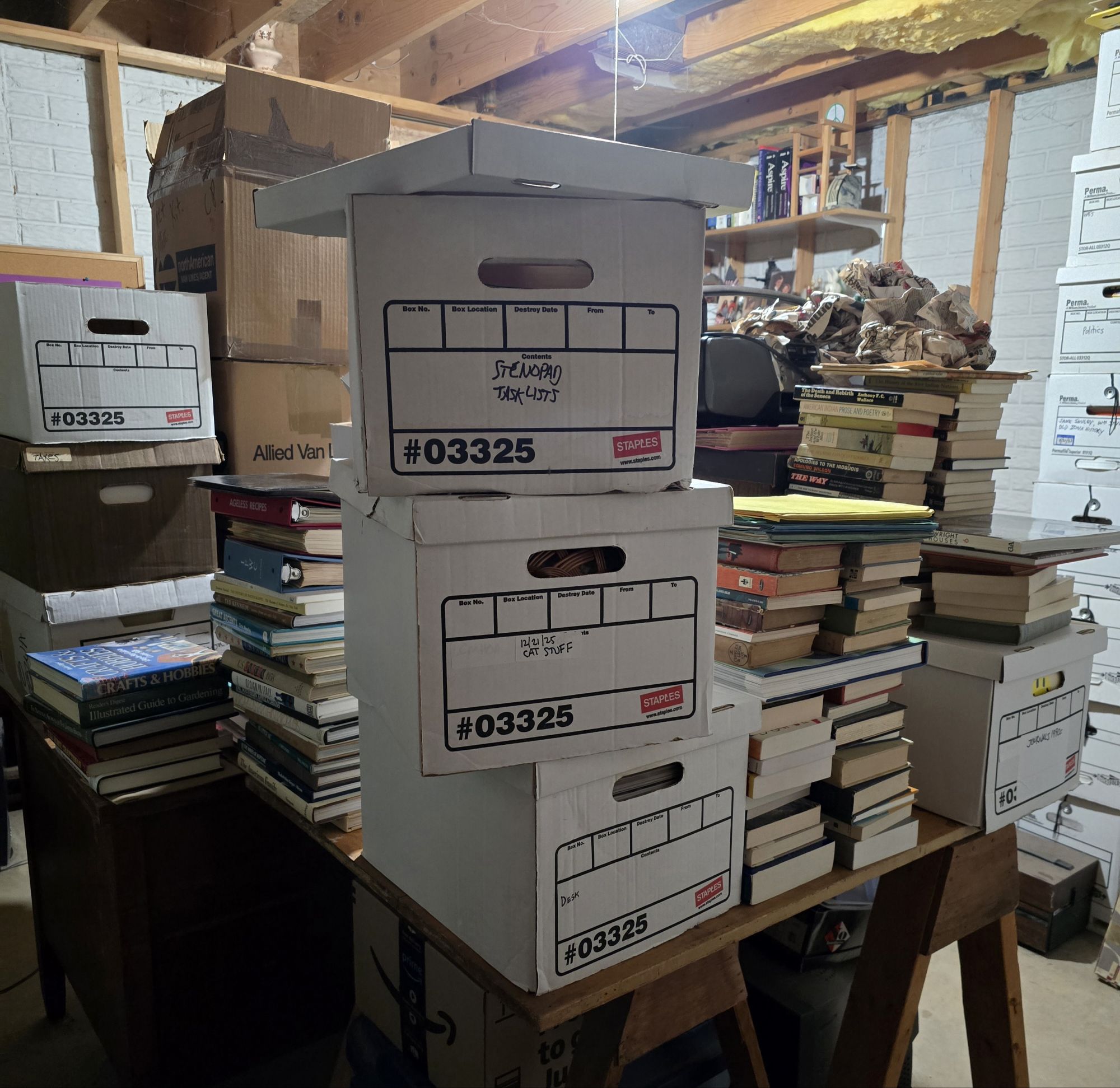
It has been hard to persist more than a few hours without getting impatient and stuffing books back into another box and into the new stacks I am building. At that point I must resist the urge, turn off the lights, and find something else to do. I want this to be a final sort. I’m labeling and dating the outside of the boxes so I know what’s in them and when I last touched the books. I doubt I will return to many of the boxes.
In the display area of my writing space I have about 3,000 books. I pulled out and boxed all the books of music. The vinyl long playing records will get boxed, reunited with the others I have, and then finally disposed of. This creates more space for active books and some of it will fill with the three-ring binders I am making as I write my autobiography. It should be a more useful (to a writer) library.
I want the Great Sort to be finished by Spring. I think that is doable even as I enter seedling planting time next month, especially if I stick with it a couple hours per day. The purpose of the work is to improve how I store research materials and become a better writer. I’m hopeful at this point. all of that will be the Great Sort’s outcome.
Mailing label from the first apartment where I wrote after university.
I spent two hours rearranging poetry books in my stacks. I decided eight 23-inch shelves was enough poetry and some had to go. Now there is an eight-inch stack of poetry books awaiting disposition. Poetry measured in inches.
I rearranged the poetry so more in which I have interest rest at eye level. On top are the smaller-sized books and below that is the canon. You know, Chaucer, Shakespeare, Dante, Donne, Milton, Dryden, Pope, Wordsworth, Coleridge, Byron, Shelley, Keats, Swift, Browning, and Blake. The exception is Chaucer and Shakespeare’s plays are across the room because the poetry shelves weren’t tall enough.
The other exception, or rather objection to the canon, is where are the women? You know, Charlotte Smith, Felicia Hemens, Mary Robinson, Anna Laeticia Barbauld, and maybe others. They were largely erased by the male authors of the canon. I don’t own any of them or I’d fit them in.
Don’t get me started on an American canon. Somewhere in the 20th Century that broke down and can never be repaired.
This is my current life when I am not writing. Opening about 100 boxes of books and deciding which to keep and which to donate. Already I’ve taken a dozen boxes to the library’s used book sale. There will be more.
I used to stamp my name and address in every book I bought. My hands have been on books from every place I lived this month. Some of the fifty year old paper has changed. Books from the 19th century crumble in my hands. I took one old book to a used bookshop to consult about the damage. This is a practical task that should involve logic. It’s more emotional than expected.
There is material for multiple posts in this project. I have to wait and see what I get into before knowing what their subject will be. I hope you are along for the ride.
Exterior of the State Historical Society of Iowa Research Center in Iowa City, Iowa, on Saturday, July 26, 2025. The closure of the State Historical Society Research Center in Iowa City was announced earlier this month, and its doors are set to close at the end of June 2026. The building, also known as the Centennial Building, houses millions of national and state records and is set to transfer its records to the State Historical Building in Des Moines amid funding issues for the Iowa City location. At the time of its closure in June 2026, the building will have been in use for 70 years. (Mitchell Brinkmeyer/The Daily Iowan)
It appears the State Historical Society of Iowa and the Department of Administrative Services will proceed on their plan to close the State Historical Society building in Iowa City to the public on Dec. 31. An update from Mary Bennett can be found here.
Despite the Oct. 24 temporary injunction issued by Johnson County District Court Judge Keever, based on a lawsuit filed by historians, archivists, donors, and community members challenging the shutdown and relocation; and despite an agreement between the University of Iowa and the State of Iowa to provide access to some artifacts; little has happened to resolve the conflict. According to Bennett, the best solution would be to reverse the decision to close the facility. Except for the outcome of the lawsuit, that seems unlikely to happen.
I am interested in Iowa history. I infrequently used the Iowa City facility for research, despite its proximity. In fact, it’s been more than 40 years since I set foot inside. I have little idea what content exists there whether related to my writing or not. One of the potential consequences of the closure is some historical records could be transferred to other institutions or deaccessioned under State Historical Society policies. That means, a researcher would lose access to what is currently available and it would be difficult or impossible (if they were destroyed as part of deaccessioning) to locate artifacts once housed in the Centennial Building.
I take the closure of the Centennial Building as an assault on our history, something Republicans in the government appear to feel is okay.
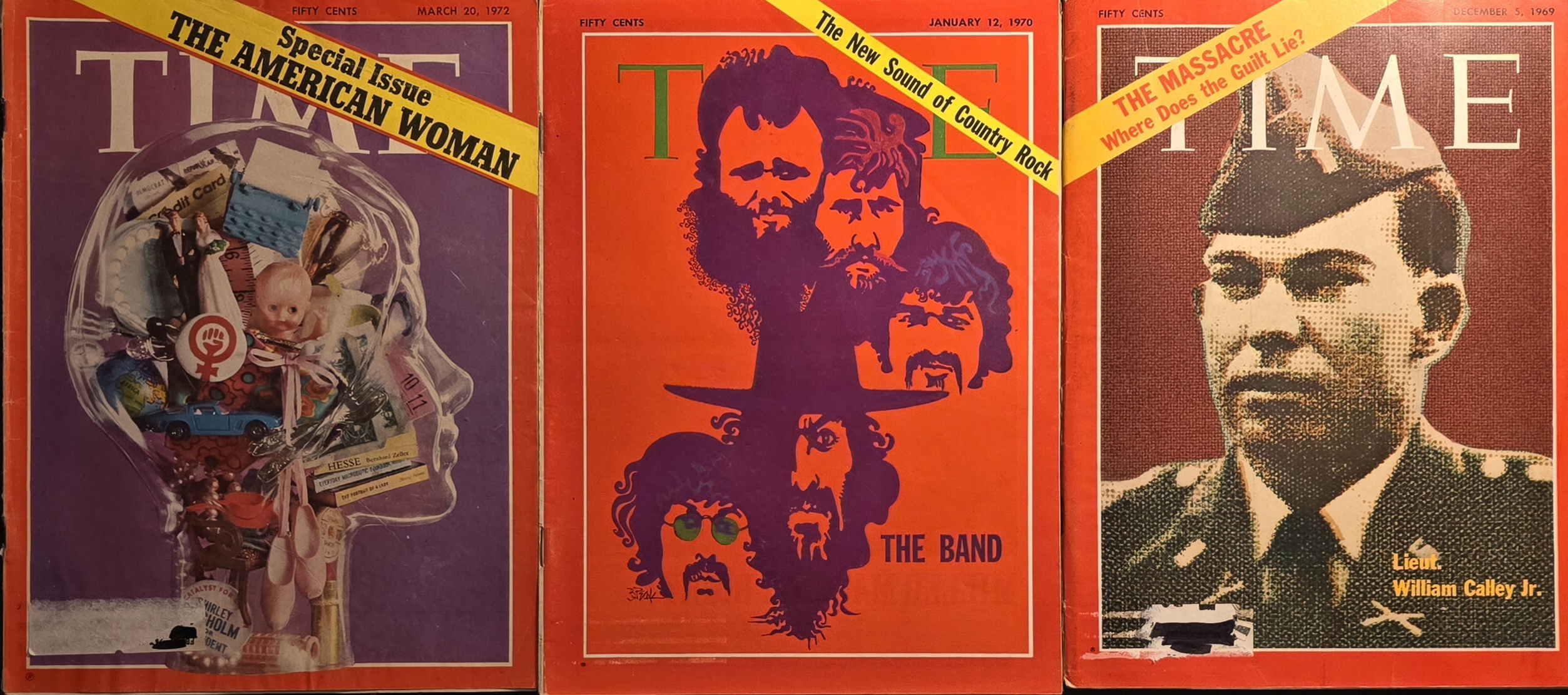
The mover’s box was quite heavy as I pulled it from the stack. Inside were mostly Time magazines from 1968 until 1972. At first they were addressed to Mother, and when I left for university, the mailing labels had my name. Teenager me thought the subscription would go on forever.
I divided them into two stacks: one in which I had some interest, and another in which I didn’t. I have interest in too many of them, so that stack will be divided again. The endgame is to pick a dozen issues to put in my trunk of souvenirs from that part of my life. I don’t want to repeat the two hours of sorting I invested on Friday by culling them again at some future date.
There were two distinct aspects of my K-12 and university education: what I learned from teachers in school and what I learned from the mass media, including television, radio, newspapers and magazines. Time had a peculiar view of national culture.
In the March 20, 1972 special issue on “The American Woman,” editors asked riveting questions such as, “What is it like to be Jacqueline Onassis?” and “How did Pat Nixon keep her cool while knocking back all those 120-proof mao-tai toasts in China?” It also provided updates on the failing marriage of Tiny Tim and Miss Vicki, Julia Child cooking at the Smithsonian Institution, and how French actress Catherine Deneuve expressed being liberated.
The issue reported, “As often as not, the New Woman was a masculine fantasy.” Leave it to Time to define women in terms of how men view them. There was the obligatory (for Time) image of Hugh Hefner with two women in short shorts.
One of the photographs in the cover story was of “Girls awaiting Miss Teen-age contest call in Houma, LA.” Beauty pageants have changed in recent times, yet they have not gone away. By Time’s depiction, the “new woman” was not so new, after all.
Somehow I survived having a subscription to Time. I’m certain I leafed through each issue as it arrived in the mailbox. I will likely get upset over the coverage of the other two issues in the photo: The story of The Band because Time reportage was part of the establishment and therefore suspect. The story of William Calley because they gave him the attention of two covers when he should have been in prison. I likely want those reactions. That’s why I kept the artifacts in the first place.
I knew I had these back issues of Time. I did not look for them even a single time in writing my memoir of the period. Like other media of the day, it was background noise shaping me in ways I did not understand. To the extent they reported on a “national culture,” Time failed. They were responsible for creating an environment where Ronald Reagan could thrive, and ultimately responsible for the election of Donald Trump as president. As Heather Cox Richardson wrote in her Dec. 12, newsletter, about the president’s recent speech, “It seemed to mark an end for the Reagan Revolution whose ideology Trump has pushed to its brutish conclusion.”
Most of my issues of Time are bound for recycling. In retrospect it was a subscription I should have canceled before I did.
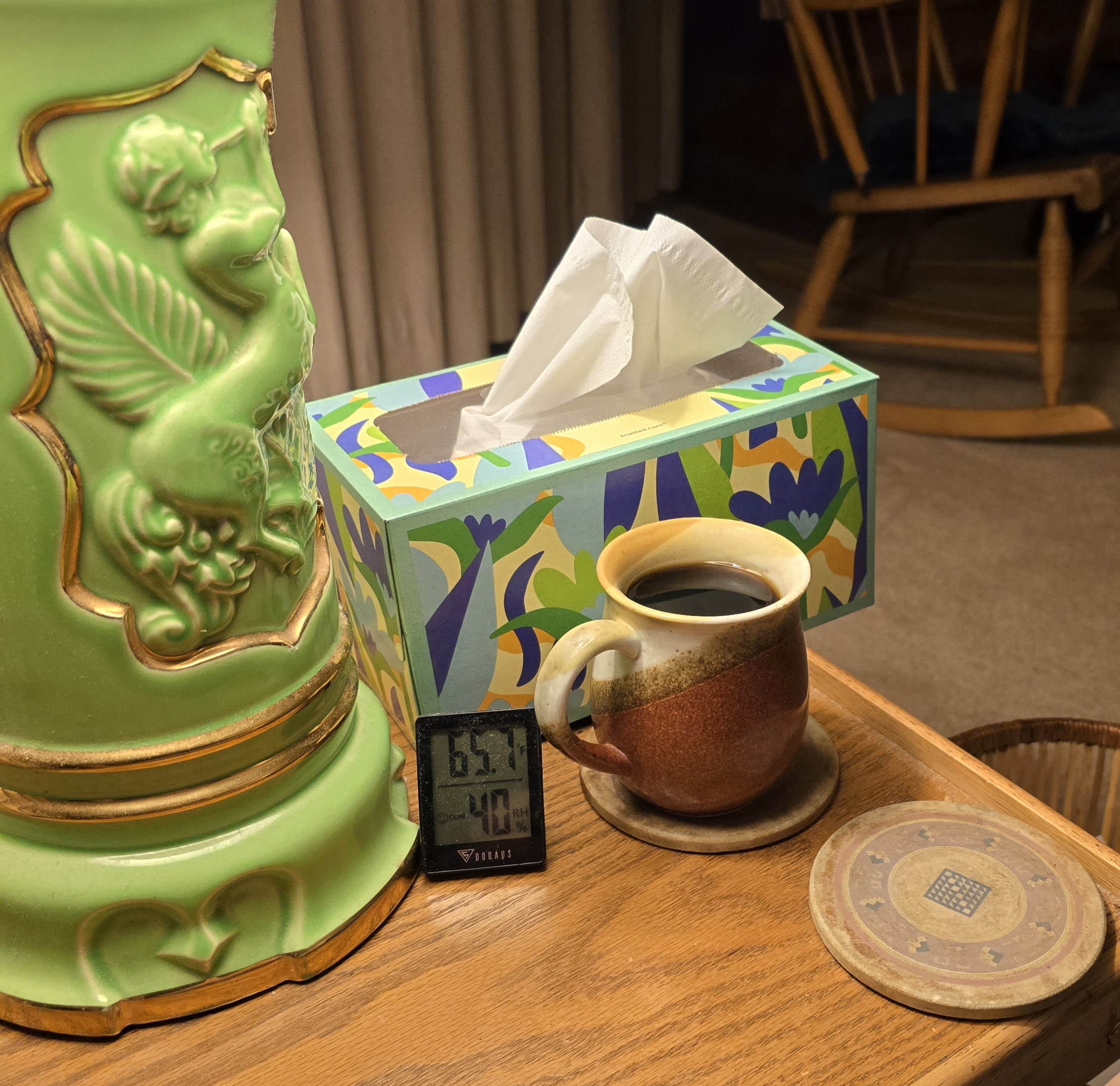
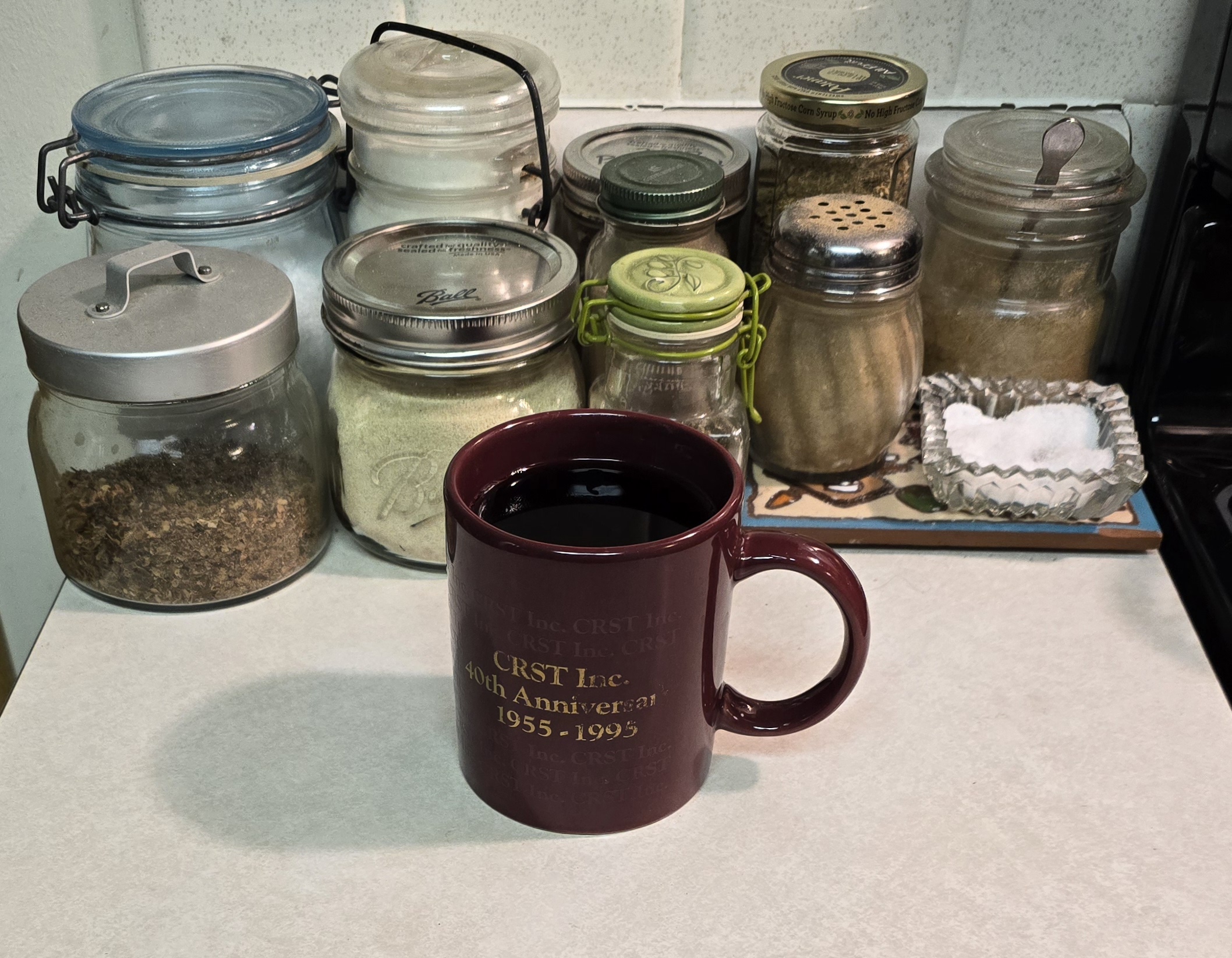
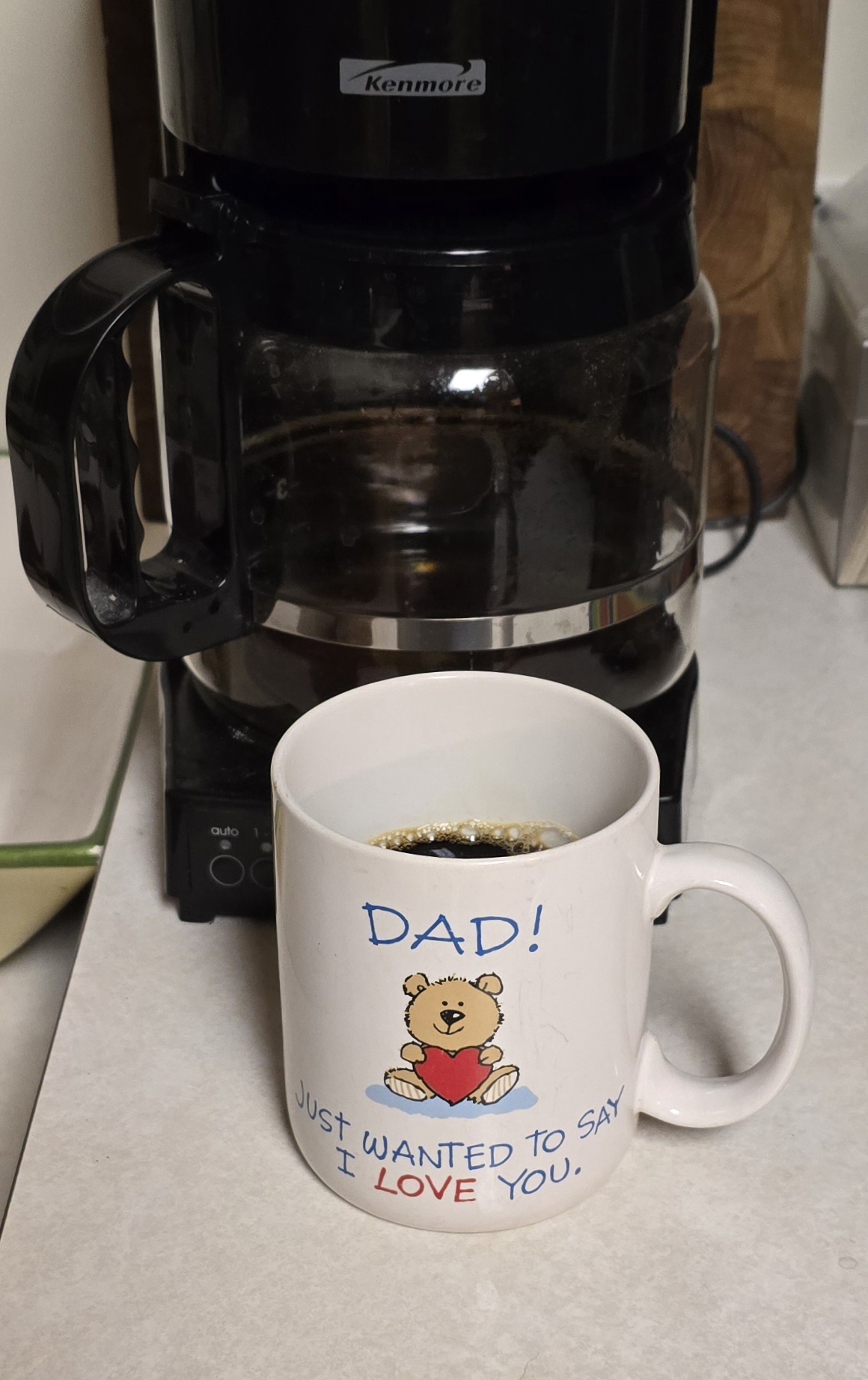
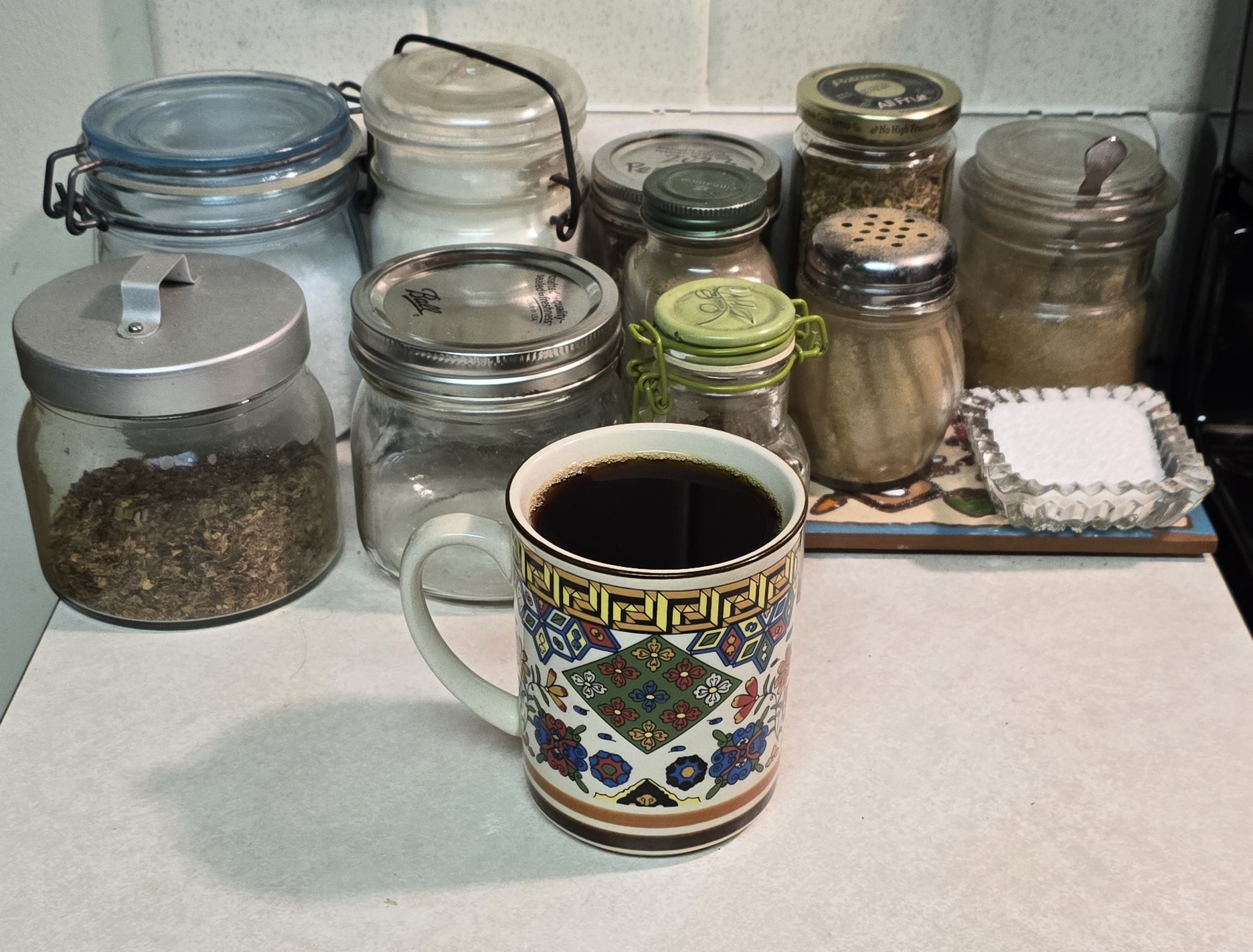
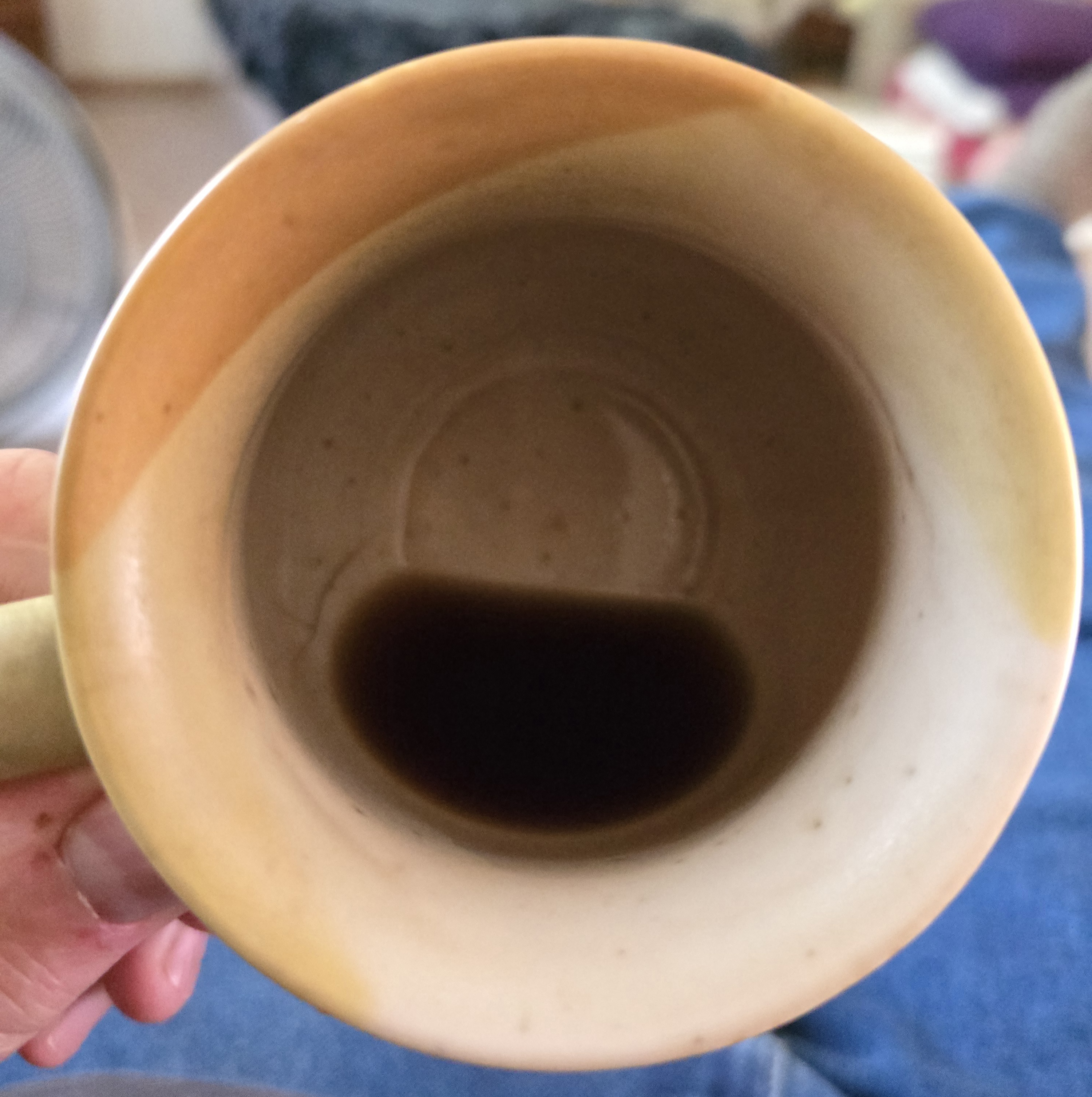
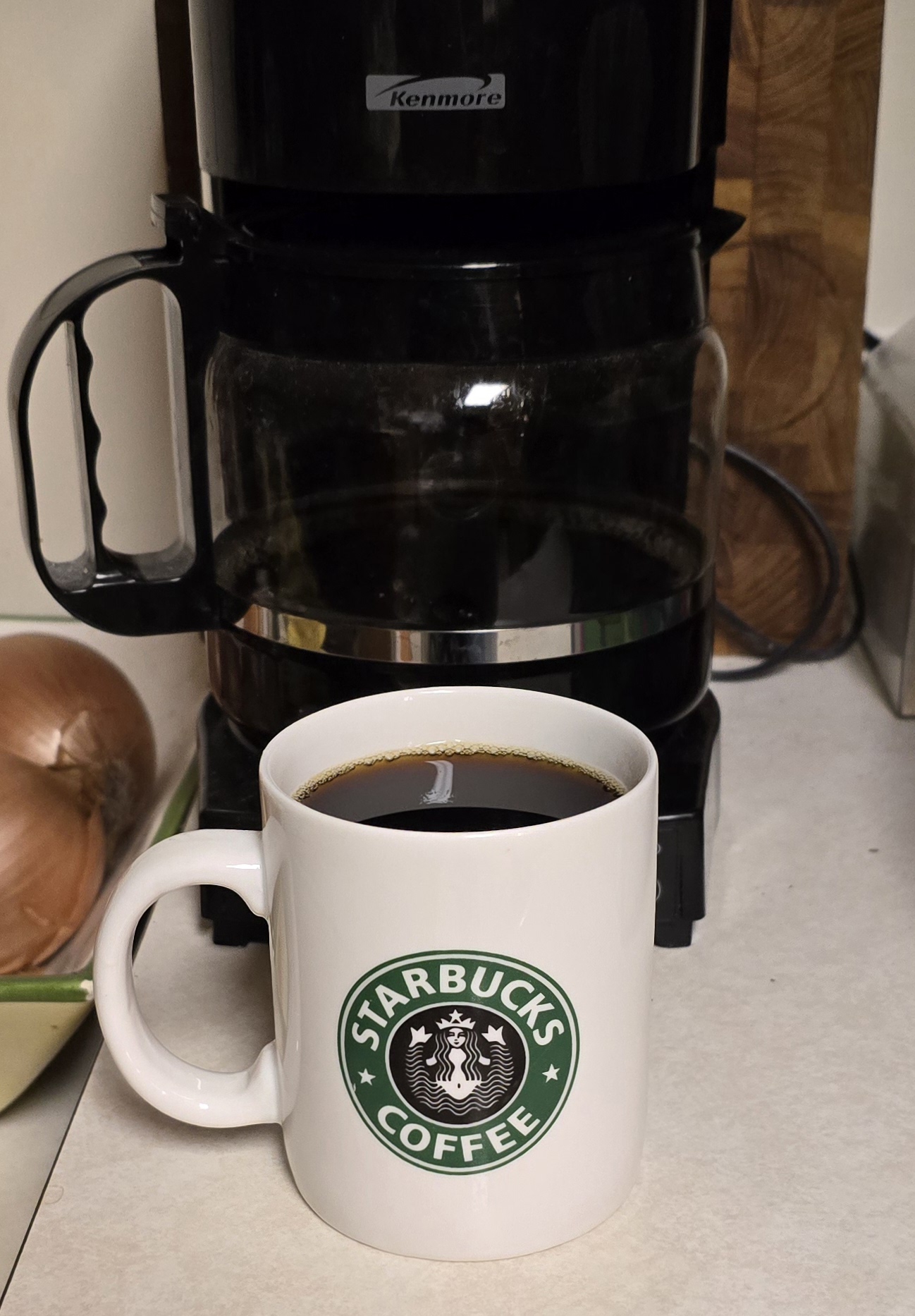
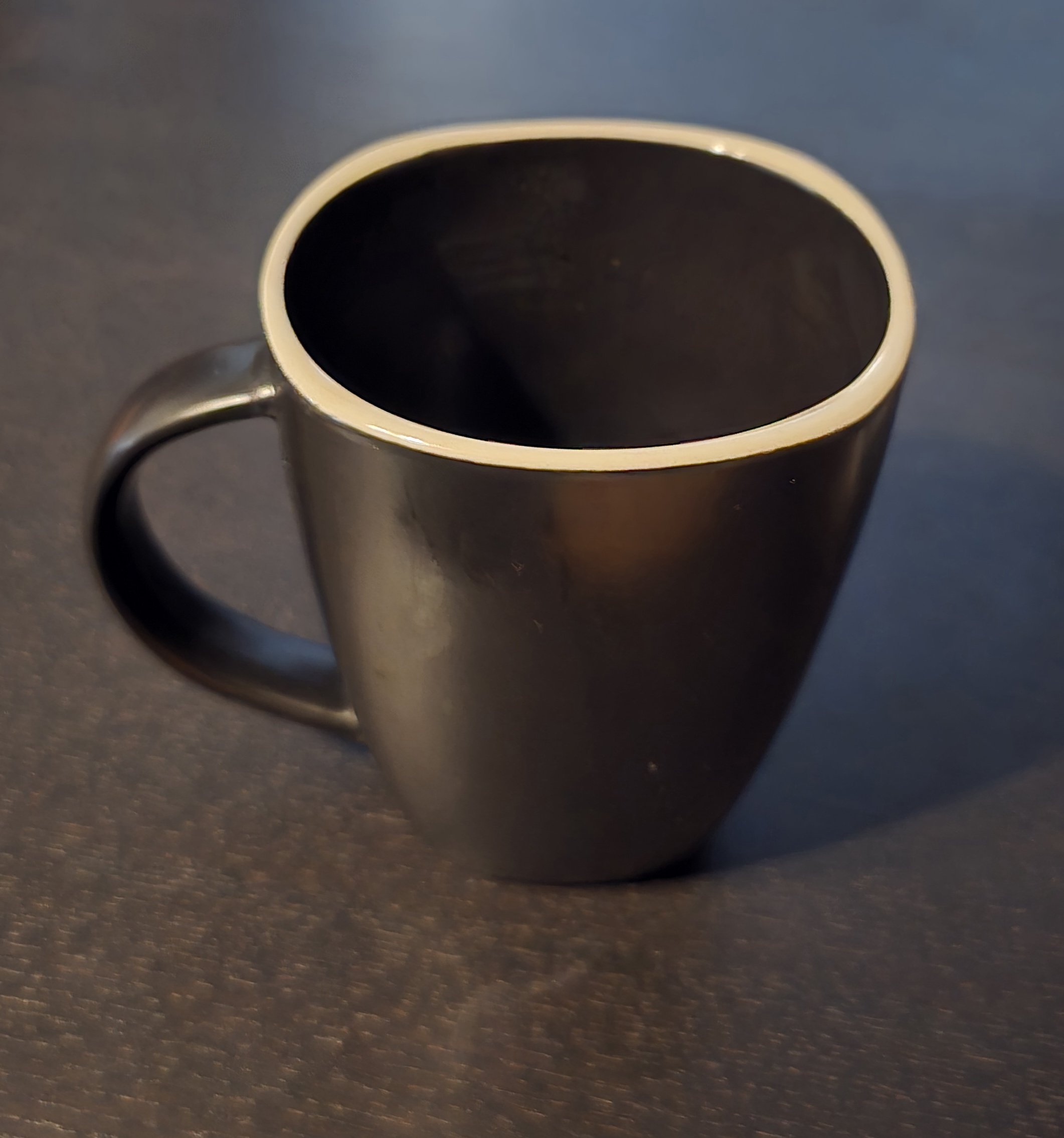
I drink a lot of coffee. At least one cup per day, mostly one pot per day. Each morning I usually post one picture of my daily cup on social media with a saying for the day. It makes a collection.
I recently met a friend for lunch. They read the chapter of my autobiography about time we shared on the county board of health, ending in 2010. Rather than continue a discussion on email, we decided to meet in person. Ambient temperatures were above freezing and that made for a sloppy day. The restaurant parking lot was full of puddles.
One of our joint projects was working to reduce toxins in the environment across the state of Iowa by advocating with other boards of health. As chair, I wrote a letter to every board of health in the state about reducing reliance on coal as a source of energy. Likewise the two of us made our case to several boards of health in person. It is difficult to know the impact we had, yet projects to build new coal-fired power plants in Waterloo and Marshalltown were killed by the public utilities after we began our campaign.
One board of health said they wanted to keep politics out of it. Is public health political? If you have any familiarity with a health department, you know it is. My friend emailed me the following after our meeting:
When we were talking about the folks in the other Health Departments I was about to say something then forgot. It was about “politics” er. the fact that public health is political — it is a social science and reflects competing interests of those who would choose to pollute with impunity in the name of their god-given right to pursue profit in their business, and the interests of the public that require clean air, water, and a livable climate.
If we don’t these days believe public health is political we never will. But, at the time, I thought it important to remind people of that simple fact because so often (not unlike now) people want to say things like, I understand you want to control or study or advise about…. but don’t make it political. Yikes. And that’s the whole story.
I think the word “political” was a precursor to “woke.”
There is nothing political about mobilizing a public health work force to deal with an infectious disease outbreak. Likewise, there is nothing political about providing clean water by using drinking water standards to regulate what is and isn’t in public water supplies. These procedures and regulations don’t come out of the blue. A political process is behind them.
Part of the board’s work was to lobby the Iowa legislature on multiple issues. I spent most of my lobbying time working to make Iowa a tobacco-free state with clean air. We also wrote letters to the editor on timely topics. When the Smoke-Free Iowa Act was signed into law, banning tobacco smoke in most public places, through effective political lobbying, the gambling industry got an exemption for casinos. We had to compromise to get the bill passed. Oh, yeah! It’s political.
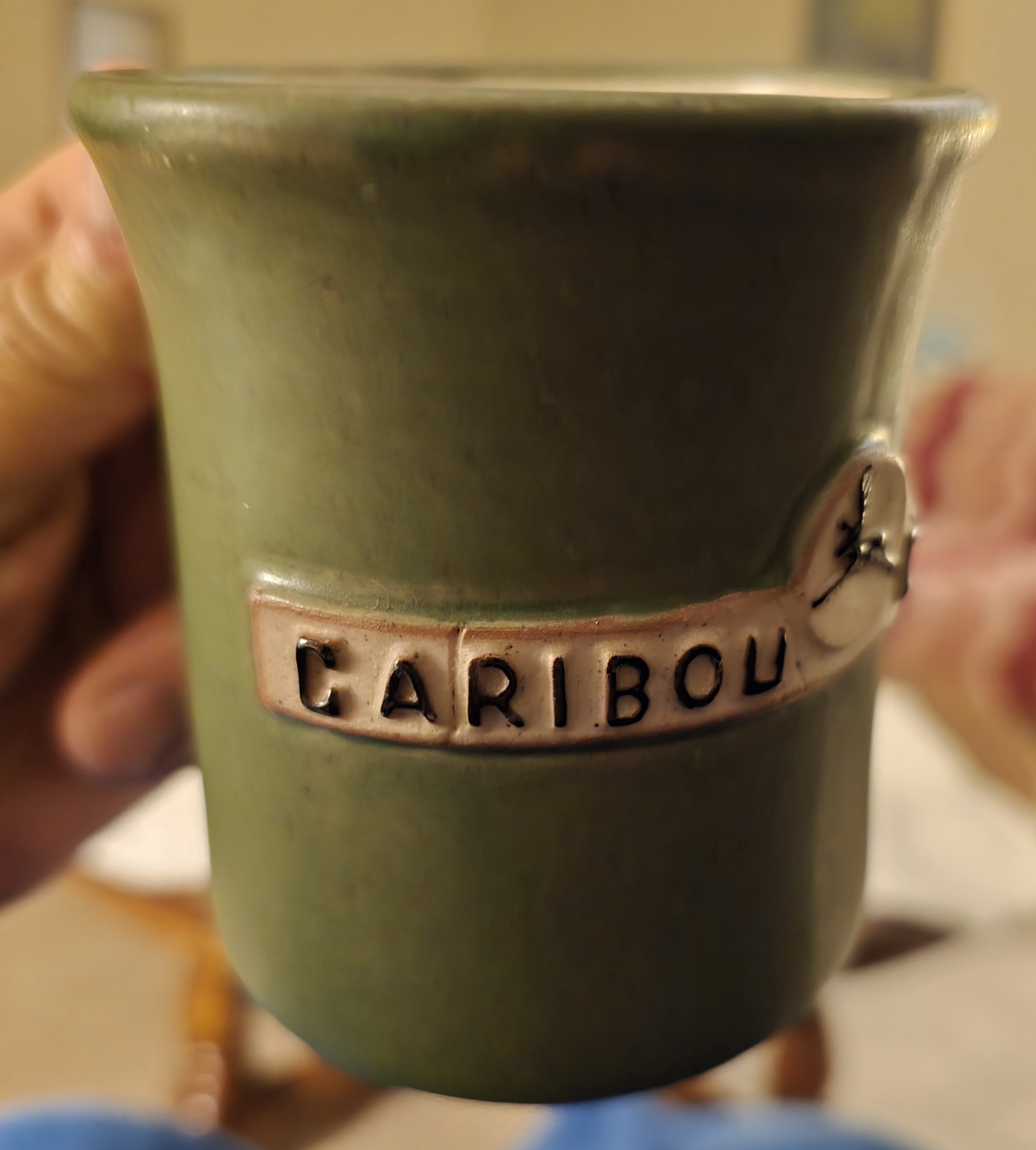
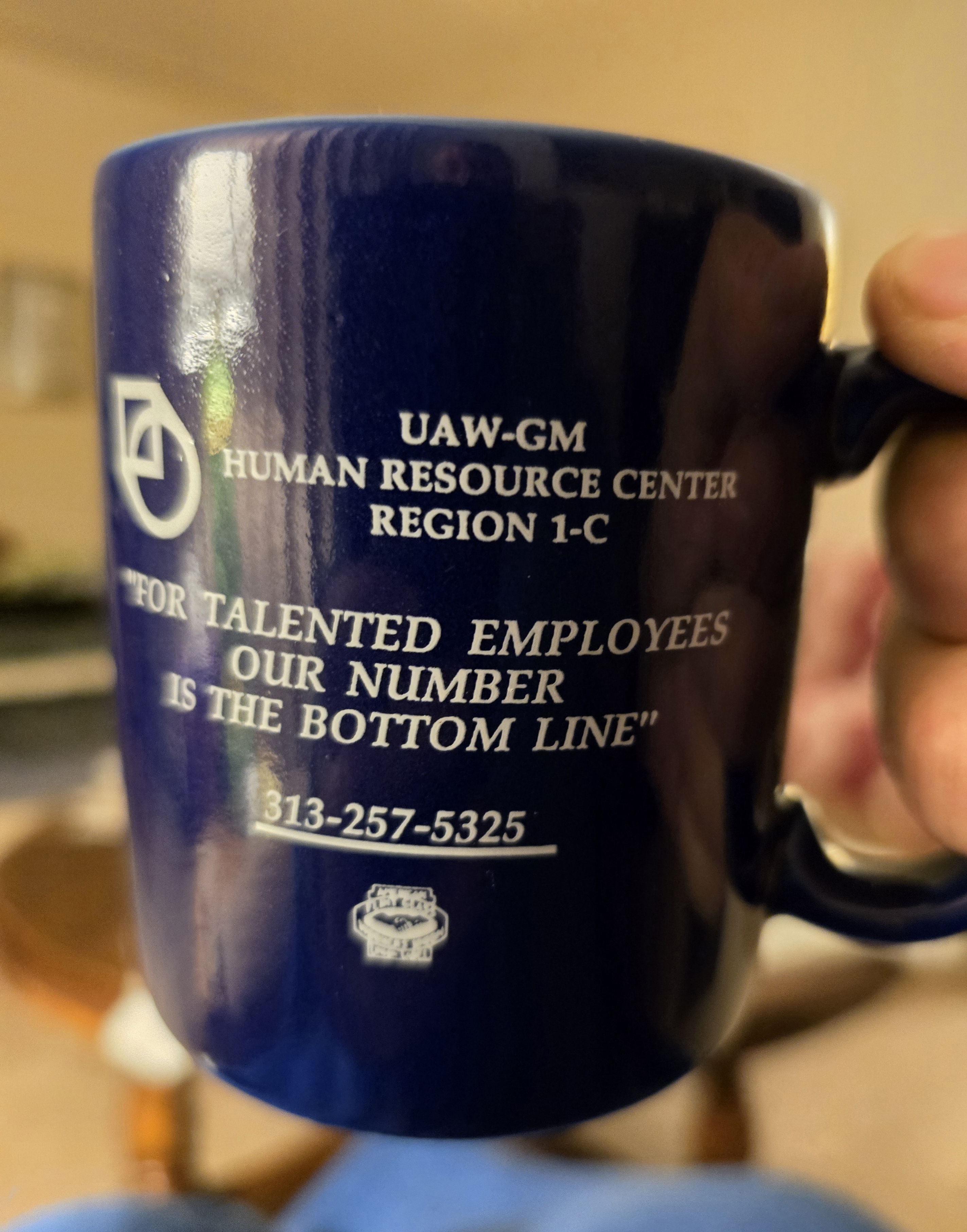
Our local boards of health have been charged with leading the effort to prevent disease and improve physical, mental, and environmental health in the community. Few members of the public attended our public meetings or offered comments. Citizens should be first in line to attend these meetings and offer solutions on how Iowa can improve its public health system. Until they do, volunteer members of boards of health do the best they can to promote health and prevent harm. We even had that printed on coffee mugs.
I don’t know if it’s political but there is one area that could improve: More licensed medical practitioner volunteers are needed to supplement the work of the public health system. In an era when government spending on public health can be expected to decrease, volunteers enable us to get more work done within the existing public health infrastructure. For the number of per capita medical practitioners in Johnson and Linn counties, our performance in this area has been disappointing.
So yes, of course, public health is political. It’s the nature of the beast, even if it is rooted in a time when there was a broad consensus about what government can do to further the public good. You know, back when we were Iowa nice. Sadly the sun set on that a long time ago.
Are photographs reality or not? My answer is yes, they are, despite all the self-aggrandizing selfies on the internet. Are artificial intelligence images reality? Yes, and are distinct from photographs. Is time spent off the internet reality? Yes, and not distinct from time spent on the internet. If it is possible to evaluate photography in light of the internet and artificial intelligence, we should. However, I believe we will have the same outcome, that all of it is a form of reality.
My belief runs against the pundits who say we should limit the amount of time we spend on the internet. If it is all a form of reality, then what does it matter that a person spends an equal amount of time sleeping, on the internet, and off the internet? There is a case to be made we shouldn’t worry about addiction to the internet. There is also a case to be made that we should. What I know is I need my daily trail walks to breathe fresh air and clear my thoughts while getting needed exercise. I mostly disconnect from the internet when I walk. If I see something that might make a good photograph, I take out my handheld computer, take some shots, and post the best image on social media.
Same image rendered by artificial intelligence as a watercolor painting.
From time to time, I enjoy getting out old photographs printed on paper. They convey a reality I experienced, although a focused aspect of it that hides much of what life was then. I used the photo below on the cover of my autobiography. It’s me standing on the back porch of the duplex where Mother brought me home from being born at a nearby hospital. I don’t recall her taking this photograph, yet I do recall a lot about living here. In particular, I remember the point at which memory began when confronted about something in the recent past I could not remember. This photograph serves as a mnemonic device.
On the Back Porch
Another type of photograph is the “artistic” one. That is, I took it as a form of creative endeavor with a specific intended outcome. For example, when I first got my Minolta SRT-101 camera, I drove my Volkswagen microbus out to the Coralville Reservoir and took photographs of the vehicle. Someone was with me as there were posed photos of me next to the bus. Those images stand distinct from the “artistic” photographs which were my main intention on the trip. Artistic photographs are a separate genre, one in which I have very little activity in 2025.
I have taken a lot of photographs to capture something about an event.
Montana Gov. Brian Schweitzer on Sept. 14, 2008 at the Harkin Steak Fry in Indianola, Iowa.
Like my early printed photographs, this one is a mnemonic device to recall that day in Indianola. The big Harkin Steak Fry had been in 2007 when six presidential candidates stood together on the stage just prior to the First in the Nation Iowa Precinct Caucuses that selected Barack Obama as the party’s nominee. Over the years, I captured a lot of politicians in photographs. These types of posed photographs are ubiquitous in social media. I’ve forgotten more than I remember about politics and these images help me re-live those experiences.
Are photographs posted on social media a throwaway? Often we take a photograph solely to post it on social media. It becomes a way of defining who we are. It also controls our self-image. For example, I rarely post a selfie, yet they are important in defining an “online presence.” I have been very bad at defining a self-image, which is why I don’t take or post many selfies. I could work on it, the way I worked on my restless nights to get better sleep, but why would I want to spend that time when everything, sleeping, waking, on the internet and off the internet are part of the same reality?
I may have more to say about how the internet changed photography. I need to study up, and that will take time. In the meanwhile, I plan to continue to take the kinds of photos I do and hope I won’t ruin them with too much study. Photography has become an important part of my reality.
When gleaning the garden I picked a number of green cayenne peppers. Not wanting to mix them with the red ones, I ground them into a fine powder and have been using it in lieu of hot sauce on Mexican-style dishes. It is an unexpected treat.
While making tacos on our Taco Tuesday, I used the last of the fresh kale from the refrigerator. We almost made it to 2026. Now we turn to the freezer for leafy green vegetables. There is plenty for household use.
We make tofu stir fry on rice as a main course. I have been experimenting with pureed garlic. It is made with extra virgin olive oil and garden garlic. In stir fry, it mixes with the water used as a cooking medium and forms a tasty sauce. I will be pureeing more garlic as we use up the initial batches.
It’s almost time for another pot of barley-lentil vegetable soup. I will raid the freezer for ingredients, including grated zucchini and summer squash, diced celery, prepared pumpkin, and collards. A warm bowl of soup is appreciated this time of year.
I cleaned off my writing table because I spilled a giant cup of coffee on it. The damage was minimal but the drop cloth that protects it got wet and is draped over the car to dry. I found a bottle of furniture cleaner and treated the surface. Nothing says you are ready for what’s next like a clean writing surface.
By late Sunday night, I was ready for the deathly weekend to end. An acquaintance my age, with whom I worked at a transportation and logistics firm, died unexpectedly of a heart attack. His obituary was in the Sunday newspaper. There were the shootings in the news: Brown University in Rhode Island, and Bondi Beach in Australia. Then came the apparent murders of Rob Reiner and Michele Singer in California. It was public death overload.
It didn’t help the bitter cold kept me inside most of the weekend. I cleared snow from the driveway, but that’s about all the time I was outdoors. The saving grace was the visit of our child beginning Friday. They couldn’t make it home on Saturday because of the blizzard. They left Saturday morning, then turned the vehicle around, and headed back when the Interstate proved to be impassible. The extra night was a blessing for parents.
Despite the deaths, things weren’t all bad this weekend.
The bean soup and cornbread tasted good and was well-received Friday night.
I finished reading The Frozen River by Ariel Lawhon. It’s the kind of novel I enjoy reading, set in a time before electronic devices dominate society.
I read Adrienne Rich’s 1991 book of poetry, An Atlas of the Difficult World: Poems 1988-1991. I found it hard to access yet there was at least one relatable poem.
Preparing enchilada sauce began a process of re-thinking how I make it. I tried substituting a slurry of all purpose flour, vegetable oil, and spices for arrowroot as a thickener. This approach has potential. More to come.
Used an aging can of pumpkin puree to make pumpkin bread. The results were so-so. Next time, I’ll use pumpkin I preserved myself.
I drafted another chapter in my autobiography.
Boxed up a donation of books for the public library used book sale.
Ambient temperatures warmed to the upper-20s on Monday, which meant a break from bitter cold. I’ll work to make this week better than the bitter weekend just past. Hard to keep a positive outlook sometimes, yet we must.







 Journey Home
You must be logged in to post a comment.