Editor’s note: This was gleaned from a March 20, 2009 post on my Facebook page. My work in transportation and logistics exposed me to the deepening relationship between Chinese manufacturers and American markets during the 1990s. It was in Louisville I attended some Elite Eight basketball tournament games while attending the truck show. I also attended concerts arranged by show management with Alabama, Kenny Chesney and Reba McIntire. While geared more toward independent contractors and small companies, I was able to meet with staff from our company’s major suppliers.
During our descent, I saw the white flowering dogwood spread over the city. Grass was green and skies clear, a great day for flying and learning about the culture of trade shows. Our host sent his concierge to pick us up at the airport and deliver us to the Mid-America Truck Show.
This trade show is a chance for manufacturers, insurance companies, massage therapists, truck stops, software companies, advertising outlets and everyone who seeks the dollars found in trucking to show up. Back in the 1990s, we bought a copy of the attendees list, and discovered that the vast majority of attendees come from within a 250 mile radius to the show. It is a big event, and local in focus.
Some folks plan to buy their new truck here. Hawkers demonstrate how to reduce knee and back pain. Recruiters hope to take a driver application. Truck stop operators hope to meet up with clients. There are too many booths to take it all in.
What I did notice was a number of booths set up by Chinese companies. In one, I found Buzz, a ten-year acquaintance, introducing the Chinese manufacturers to his American contacts. In others, five or six Chinese sat in small circles in the booth in front of their wheels or oil seals, looking like they were isolated from this sea of truckers, tattoos, and facial hair. That they were here is a sign of the times, and if their behavior seemed odd this time, I am confident that they will learn how to work this crowd. One of my traveling companions said that he was surprised to see the Chinese here, instead of working the OEM (Original Equipment Manufacturer) crowd: that is where their best impact could be made.
The Louisville Truck show is our industry writ large. It was okay to see it yesterday, for what may be my last time. Louisville in Spring is, for me, more about the dogwood.
Provisional Congresswoman Mariannette Miller-Meeks accused Rita Hart of choosing politics over the law in pursuit of an appeal to the certified results of the 2020 general election for Congress. That is ridiculous.
The law that covers the close race is the Federal Contested Election Act of 1969, and both candidates have been complying with it. It’s a given that this election contest is political. It’s about a close political election for Pete’s sake.
Rita Hart’s case hasn’t changed since she made the appeal: There are legally cast votes not counted. Count every vote.
The reason Miller-Meeks makes an accusation is to divert our attention from due process. She is justifiably concerned about losing her provisional seat if Rita Hart wins the appeal and replaces her in the Congress to represent Iowa’s Second Congressional District. If the U.S. House Administration Committee finds legally cast votes were not counted, as Hart did, and those votes show Hart won the election, she should be sworn into office. Just because there is hysterical Republican fear doesn’t mean the challenge should be withdrawn, or is somehow suspect.
The election was close. While the governor signed certification of the six-vote win for Miller-Meeks, there was no mandate from the electorate. She did not have a plurality. Now that Miller-Meeks’ call for dismissal of Hart’s appeal was rejected by the committee, the process should continue until its natural end. The next deadline is Monday, March 22, when briefs are due to the committee.
Senators Chuck Grassley and Joni Ernst issued a joint statement in which they assert Hart’s appeal is not legitimate. Here it is, but it is snake oil. Don’t swallow it!
Both the original vote count and recount confirmed Mariannette Miller-Meeks won her election. There are legal avenues through which candidates can litigate election disputes if they believe there are specific election irregularities. Rita Hart declined to take legitimate legal action in Iowa courts and instead chose to appeal to Washington partisans who should have no say in who represents Iowans. That’s an insult to Iowa voters and our nonpartisan election process. We are confident in the fairness and accuracy of Iowa’s election system.
In addition to Iowa’s U.S. Senators, a cast of the usual characters has been speaking on Miller-Meeks’ behalf. Among those who made public statements are Paul Pate, Kim Reynolds, Randy Feenstra, Tom Cotton, and former United Nations ambassador Nikki Haley. Miller-Meeks took her case to FOX News chat hosts Bret Baier and Laura Ingraham recently. The Republican outrage is universal.
Miller-Meeks also made a well-publicized trip to the U.S. – Mexico border to decry a “crisis” there. Not so fast!
Miller-Meeks told Radio Iowa on Monday that people should be outraged. I’ll tell you who has no reason to be outraged by Rita Hart’s pursuit of an appeal, it’s the half of the electorate who voted for Hart.
The Republican noise machine has been refined in recent years to dissemble, distract and mislead citizens when they don’t like what they see in society. The fact remains Miller-Meeks’ election was certified by the Iowa Governor as winning by six votes. Even if the House Administration Committee finds Hart won and flips the election result, the main point here is the election was exceedingly close. Neither Hart nor Miller-Meeks should be doing much celebrating.
I’d like to see Hart seated in the Congress. I have also been around Iowa politics long enough to realize a close election can easily turn the electorate that produced it. It could go either way.
In Marc Elias, Rita Hart hired one of the best attorneys in the country to represent her during the appeal. Democrats who seek to put Hart in the Congress for more than the remainder of the current term should be focusing attention on the 2022 general election. I predict that election won’t be close.
Click here for a news update from the March 20, 2021 Iowa City Press Citizen.
The schools and most of the neighborhood are on spring break so I’m taking one as well. I’m not sure when I’ll return to posting, and to be honest, I’m not concerned about that now.
I’m worn down by the coronavirus pandemic and need to give writing a rest. Friday we get our second dose of the Pfizer COVID-19 vaccine. By April the antibodies should have formed and I’ll be ready to go again.
As always, thanks for following and reading Journey Home. May this post find you well and strong.
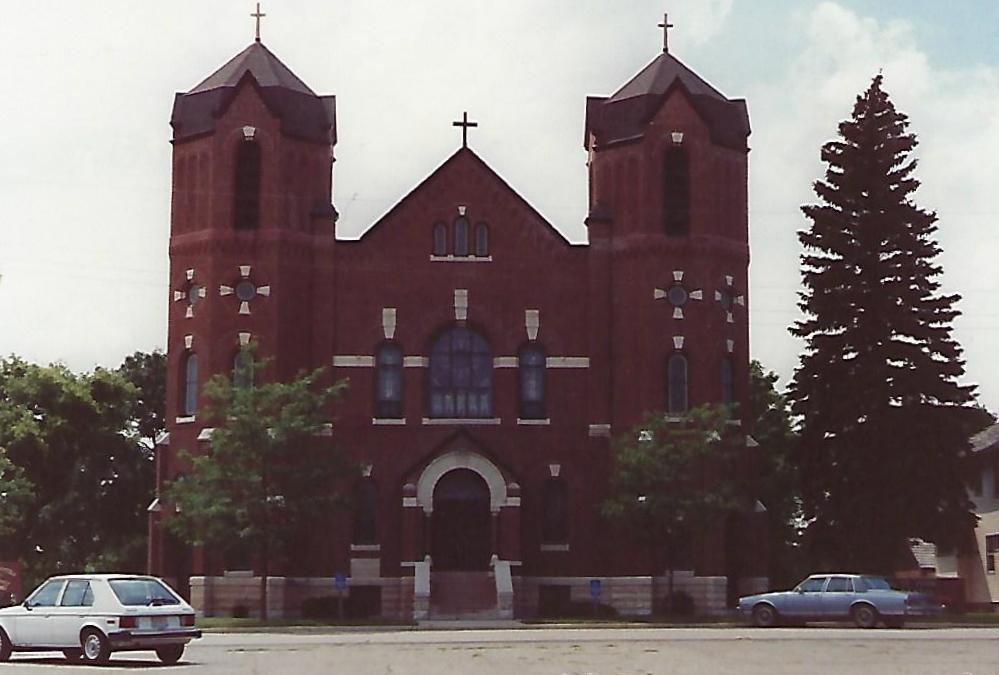
Saint John Cantius Catholic Church (rebuilt), Wilno, Minnesota, July 1991.
Editor’s Note: This is an excerpt from a memoir in progress during the coronavirus pandemic of 2020-2021.
The river between two hills, where a house would have been on either side, looked just as Grandmother described it. It was more stream than a river, though, and the land forms were rises in the prairie rather than hills. Nonetheless I recognized the place.
On an overcast rainy day in July 1991, I made my first and only trip to the Nadolski family home place in Royal Township, Lincoln County, Minnesota.
Maria Nadolski, Grandmother’s aunt, lived on the far side of the stream that separated the two houses. Maria owned a piano. Grandmother, Mae as we called her, wanted to learn to play that piano. Maria said no. Mae carried that story of rejection with her until the end of her life. Maria’s house and the piano are long gone.
On another rainy day in Davenport, not far from where I was born, Mae told a story about the stream flooding after a heavy rain, cutting the houses in Royal Township off from each other. She repeated the story from time to time, as she did the story about her aunt and the piano. I believe the remaining house I saw in 1991 is where Mae was born Salomea Nadolski on June 24 or 25, 1898.
After she died on Feb. 7, 1991, I made the trip to her birthplace. The trip was a form of summer vacation when we lived in Lake County, Indiana. After we had lunch in Davenport, we drove to Ames. We spent the rest of the day visiting our daughter’s maternal grandparents.
I provisioned up in Ames. Early the next day I drove to Pipestone National Monument where I toured the site and bought souvenirs, including a small turtle carved of pipestone. They were intended as gifts from near where the Nadolski branch of the family settled. I’m not sure if there was an actual connection between my family and the quarry.
“I drove into Ivanhoe about 1:30 p.m., to the county recorder’s office first,” I wrote. I discovered my great, great grandparents Maciej and Franciszka Nadolski had been landowners, and had two acreages in Royal Township.
Upon reviewing my trip notes for this book, I found I got a lot done those two days.
“From past trips I realize if I do not write down what happened soon, years from now I will not remember what happened,” I wrote. It was prescient. I would have forgotten much of the trip without the notes taken.
In Ivanhoe, the Lincoln County seat, I located the Roman Catholic priest who served the Wilno Church where Mae had been baptized. Father Paul Schumacher was at his church in Ivanhoe and we had a conversation outside the rectory. He was preparing to go somewhere. I wrote of our meeting:
The priest took a $20 stipend to say Mass for the members of the Nadolski family – living and deceased, and to defray postage costs, if any are needed, if he found any record of the wedding (of Frank and Katie Nadolski) or my grandmother’s baptism. He said he was very busy, and these things take time, but there may be nothing. I guess priests have much to do with the living, and the genealogist’s concern must seem a frivolous inconvenience. We’ll see if anything comes from him. Bread upon the waters.
The next day, July 11, 1991, Father Schumacher mailed Mae’s Certificate of Baptism by the Reverend J.F. Andrzejewski dated July 10, 1898 at Saint John Cantius Catholic Church in Wilno. The original church was built in 1883.
The certificate showed Mae’s birth date as June 25, 1898 and her parents as Frank Nadolski and Kat Sowinska. Godparents were Ladislaus Kuzminski and Maria Nadolski. Consistent spelling of names and event dates were not the strong suit of Nineteenth Century rural Minnesota. Great grandmother’s name has multiple spellings in different documents. Mae’s birth date and name have multiple variations as well. There was no mistaking who they were, despite the discrepancies.
Maciej and Franciszka Nadolski first settled this land. When I arrived, the current owner showed me the barn he had recently built and let me use his boots to walk around in the muddy fields. He clearly had plans for the property, and while he didn’t say it, I believed he was preparing to raze the old house. I walked in the field as far as the creek and took photos. Somewhere along the way I lost the lens cap to my camera. I picked up some smooth stones — brought there by a glacier.
The farmer let me go inside the house, which was one large room in the original structure and two bedrooms upstairs. At some point a kitchen had been built on. By any standard it was small for a family that produced many daughters and a son in a three-generation home.
More than anything I marveled at the small size of the home and wondered what kind of life they led. I don’t know, but assume their lives included family, church, farming, and relationships with people living near the unincorporated hamlet of Wilno. History shows they were part of a colony of Polish immigrants in 1883.
The name of Mae’s grandfather, Maciej Nadolski appears on a copy of an undated plat map I made during the visit. The road to nearby Wilno is evident on the map. A family story is Maciej traveled to Wilno for church, and was known to drink adult beverages and socialize in town. On occasion, when inebriated, he would fall into the wagon afterward and the horse would take him home.
Historian John Radzilowski wrote about the Polish community in Wilno in the Spring 2002 issue of Minnesota History:
Polish immigrants transformed their environs into places they and their children could call home. In addition, they created an inner cultural and spiritual realm filled with drama and emotion that helped them make sense of their new world. Far from home, amid Poles they hardly knew and strangers from other ethnic groups, they formed communities and a hybrid culture that blended American and Polish customs into a coherent whole.
During my trip I stopped at the Lincoln County courthouse and photocopied five different warranty deeds in his name concerning two parcels in Section 19 of Royal Township and four warranty deeds for two lots in the City of Ivanhoe. It is said Maciej Nadolski moved from the farm to Ivanhoe soon after buying the two properties.
Beginning in February 1882, 40 Polish settlers bought land from the railroad in Royal Township. Great, great grandfather bought his parcel on Sept. 22, 1883. Radzilowski puts these land purchases in context:
The Wilno colony in southwestern Minnesota’s Lincoln County was typical of Polish settlements in Minnesota. It was formed by brothers Franciszek and Grzegorz Klupp with the support of the Archdiocese of St. Paul and the Chicago and North Western Railroad. The archdiocese provided approval for the colony’s Polish parish and Polish-speaking priest, and the railroad sold land to prospective settlers and provided plots for a church and cemetery.
Colonists were recruited through newspaper ads and by agents who received commissions for the settlers they signed up. Franciszek Klupp canvassed the streets of Chicago and LaSalle, Illinois, and Pennsylvania’s coal-mining towns for Wilno recruits. Unlike settlements formed gradually by chain migration from the Old Country, planned colonies like Wilno were created almost overnight from immigrants living in American urban enclaves.
Maciej Nadolski was born in Poland. He emigrated through Philadelphia and took wage work as a coal miner in Allegheny, Pennsylvania. He was recruited from there to be part of the new colony near Wilno. In 1887, Marcin Mazany described the area in Winona’s Wiarus newspaper:
The Polish colony of Wilno, Minnesota, consists of 200 Polish families who work as farmers. The soil here is extraordinarily fertile, the water healthful and clear as crystal and the people are free; the land provides easy sustenance to those who are willing to work on a farm and who wish for clear air and a life that is more agreeable than in the great, overcrowded cities.
By 1888, the Wilno area was described in Wiarus as “a happy Polish settlement.”
When my maternal ancestors emigrated from Poland to Minnesota, Poland did not exist. It had been partitioned three times beginning in the late 18th Century and completely dissolved for more than the century before 1918. Serfdom had been abolished on May 3, 1791, yet the partitions mostly nullified abolition. Serfdom’s vestiges persisted into the mid-Nineteenth Century. My ancestors came from the cohort of former Polish serfs. Our stock was peasant subsistence farmers for whom life in Europe, especially after the end of serfdom, made them want something better.
Most of the Polish settlers in the new Wilno colony didn’t know each other before moving there. The organizing principle of the colony was for the Winona and St. Peter Railroad Company to deed land in Wilno for a Roman Catholic Church and cemetery to support a new, Polish-speaking community to whom they hoped to sell land. St. John Cantius Roman Catholic Church was built in 1883 and served to bring the community together. In this these Polish immigrants began a new, American life.
Lincoln County was one step out of the frontier in 1883. The first white child was born there in 1869. The first newspaper was published in 1879. In 1874 there was a grasshopper infestation that continued for a couple of years. The presence and perceived threat of Indians was real. There were wolves to contend with. If the Poles were coming to Royal Township to become subsistence farmers, the county had not previously seen a lot of success in it.
As I studied this period and culture, a couple of things were on my mind.
The historical accounts make scant mention of women. While writing about Nadolski land ownership and the Wilno colony for this book, I had an epiphany that Maciej was married to Franciszka Nadolski and her name appears on some of the deeds. It would be a mistake to leave women out of the story. After considering what artifacts survived from that time, the historical narrative makes more sense: there was a rich cultural life embedded into the hard work of subsisting on the Minnesota prairie.
Until writing this book, I did not understand there was a Wilno colony and what it was. When I visited Wilno in 1991, the place did not seem like much. That’s partly because automobile culture had been dominant for a long time since settlement. Early settlers just made do with what they had. The rise of mass marketing and consolidation of business and wealth was yet to come.
The colony developed indigenous solutions to common problems of commerce and agricultural cooperation. While the railroad said they might run the line through Wilno when the original plots were sold, they ended up platting a new town of Ivanhoe (a.k.a. New Wilno) to the south because there would be more land sales to benefit the railroad. As an inland community it is remarkable the hamlet of Wilno survived at all.
The Polish immigrants’ connection to the Catholic Church was a main part of the settlement. If the railroad had not given land to the church, there would have been no colony. While there were established settlers in the county in 1882, they were not Polish. As the Poles arrived, their common language and culture created insularity as they farmed, congregated, and socialized among themselves. Over time that changed, yet it was a cultural trait that persisted through my grandmother who was born there, and in some form was passed down to me.
As I wrote these paragraphs, I began thinking about how few cultural connections we have today. Anyway, we don’t have them the way the original Polish settlers of the Wilno colony did. We have many friends and some family. During the coronavirus pandemic we email, text, telephone, and video conference with them a lot. It’s not the same. Broader community connections especially like the church, although other cooperative ventures as well, have been broken by mass communication, consolidation of business, and concentration of wealth. While my ancestors may have escaped post-serfdom life as wage earners in partitioned Poland, in the United States today, with wages stagnant, unemployment high, and jobs that create a sense of community scarce, we may be returning to our serfdom roots.
As part of a new Saturday tradition, I made a pot of vegetable soup.
Mine is a variation of Krupnik, which is a thick Polish soup made from vegetable broth, containing potatoes and barley (kasza jęczmienna, archaically called krupy — hence the name). I modified the traditional recipe, eliminating meat, mushrooms and dairy, and adding dried lentils for protein. I also used up items in the freezer — shredded zucchini, leeks and green beans. It’s a thick, hearty soup that goes well with a slice of bread. It makes an easy dinner that can simmer on the stove all day, with leftovers. While Mother and Grandmother didn’t make the soup, they would likely recognize mine if they were still living.
On Friday we have an appointment to get the second of two doses of the Pfizer COVID-19 vaccine. It’s a necessary step along the way toward returning to a semblance of normal. It will take 10-14 days after the second shot for our bodies to build immunity. After that, we’ll follow CDC guidelines to begin to engage in society again. It’s been a long road.
There is not much unique about this information. It reflects a shared experience not only in the small community where we live, but by fall, for most Americans. President Biden indicated last week vaccines will be available for all who want it. We’re hoping enough people get vaccinated to abate the pandemic this summer.
With our only child living many miles away, our Sundays are usually just the two of us. There are phone calls and occasional video conferences, yet the isolation is palpable. I’m not sure that will change once the coronavirus pandemic is over. We developed new habits and a new way of living that folds into the isolation. It is good preparation for aging.
I’m glad to be finished with dangerous work. My days of working in steel mills, packing houses, and manufacturing plants are behind me. I didn’t realize the risk of infections that came with retail work until retiring. I haven’t been sick since leaving the home, farm and auto supply store. Likewise I haven’t flown on an aircraft in a long while. Last week, I bought gasoline for one of the automobiles for the first time since December. The reduction in work and travel-related risk is positive. Yet I yearn to be with people.
When the coronavirus recedes I plan to seek some form of work. Because of our pensions and relative good health we are okay without it. I want to interact with people, in person. For now I’ll tend my garden and conserve resources… and make Polish soup on Saturdays.
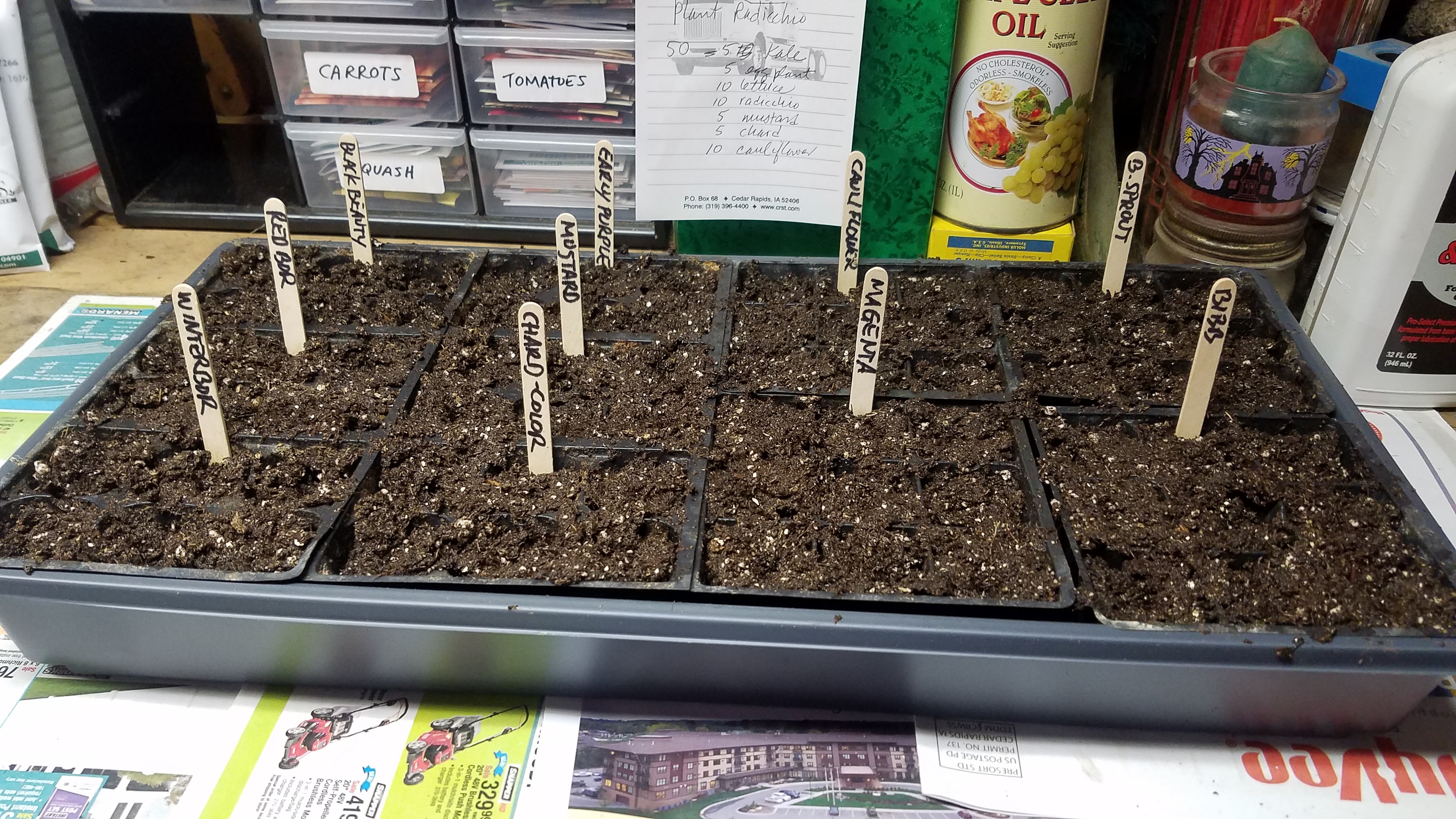
The manufacturer made some design improvements in the small, portable greenhouse I bought to replace the one destroyed in the Aug. 10, 2020 derecho. Because I did not return to the farm in February, this space is more important to my garden.
Each day I take walkabout on the property, observing the advent of Spring. I watch overnight temperatures in case frost is forecast. If it is, I bring trays of seedlings indoors. Since the greenhouse was assembled, there has not been a hard frost.
Even though the greenhouse is nice, the prime real estate for seedlings is the heating pad bought for germination. As soon as seeds emerge and have an extra leaf, I move them to the greenhouse to make way for the next wave of starts. I’ve become accustomed to leaving seeded trays at the farm and not thinking much about them. I like being closer to germination in the new process.
All of this brings the kitchen garden one step closer to full development. I don’t know how I did without a home greenhouse for so many years.
A year ago yesterday the World Health Organization declared the coronavirus a global pandemic. It has been a weird year.
March is full of anniversaries: March 7, the governor activated the state emergency operations center for COVID-19; March 8, the state hygienic laboratory reported the first three Iowa cases of COVID-19; March 9, the governor signed the first Proclamation of Disaster Emergency Regarding COVID-19; March 24 was the first Iowa death attributed to COVID-19; and March 29, the president extended the federal stay-at-home order until April 30. That’s in addition to the historic anniversaries like the beginning of spring, our daughter’s birthday, and recurring tasks of the month to begin planting for the garden, return to farm work, and sweep sand from the road in front of our house to use next winter.
The good news is our families and the families of friends well-survived the pandemic, thus far. Now that production and distribution of the COVID-19 vaccine has ramped up, there is a chance for every adult in the U.S. to be vaccinated by the end of May. That would make Memorial Day something worth celebrating.
How has my life changed during the last 12 months? There are some obvious ways. I left work I had been doing for others. My last day at the home, farm and auto supply store was April 2, 2020, then I did not return to the orchard in autumn or to the farm in late winter this year. I haven’t eaten at a restaurant — either dine-in or take out — since my friend Dan and I had lunch at Los Agaves restaurant on March 13, 2020 — no bars or coffee shops either. I started checking the air pressure on the auto tires because we went weeks without using one or the other. I moved all the neighborhood meetings to telephone conference calls and participated in any other groups to which I belong via video conference ( I am not a fan of Skype and Zoom meetings). I perfected a recipe for home made pizza and read 66 books. I began riding my bicycle. One of the few things that didn’t change was work in the garden, although it benefited by my being at home more.
There were less obvious changes:
Using up the pantry and freezer.
Reduction in food variety.
Wearing holes in my socks.
Laundry once a month.
Taking naps.
In beginning my autobiography, I wrote a lot of words. The value of the project has been considering where I came from and who I have become, with an eye toward the future. It is a fit undertaking for quarantined times.
The emotion I feel after a year of restricted activities is of longing. I’d like to get back to in-person society and social events. We are heading that direction with the Biden-Harris administration. It can’t come soon enough.
I don’t know if a celebration is in order. These anniversaries are more like the terrorist bombing of Sept. 11, 2001. We don’t like them but feel obligated to mention them. And so, it goes, in Big Grove Township.
(Editor’s Note: After finishing graduate school at the University of Iowa I made an auto trip to visit friends in Georgia, Alabama and Louisiana. South Georgia has a particular allure. I kept a travel journal and continue to be drawn there).
Journal entry written in Columbus, Georgia on May 28, 1981
Again, I’m in a fast food restaurant — McDonald’s. Something about this town draws me here. Is it the 280 bypass? All the colorful signs? The fact that I am an outsider? Well, whatever it is, I am here, drinking a cup of coffee.
Had a discussion last night with Greg and Kate about moving back to the U.S. Over in Germany we were pretty much satisfied with doing and being what we were. But not so here. As soon as the feet hit the soil here, the main concerns are with money. Instead of perceiving the culture around us for what it is, we start in worrying about maintaining an income. A dream house cannot be realized only because there is not enough money.
While I try to avoid this, I’m afraid I’ll be sucked into that drift like everybody else. But not without knowing what I’m doing, rather not without being aware of what I’m doing. (For some of the things we do we will never know).
For now, my $1.03 buys a cup of coffee and a big buttermilk biscuit with sausage, and space at this table to write these words. I’ll move on and someone else will use the table, that’s the American way. Like Lucius Quintus Carothers McCaslin said in Go Down, Moses, we act out our lives on tables put here, according to a plan designed by the unseen powers that be.
Later in a rest area near Eufaula, Alabama
If architecture is an indicator of culture, then the culture of this part of Alabama, and the South in general, is distinctive. Along the road there are many dilapidated buildings in which people live and they seem to be built in accordance with several general conventions of style. Perhaps the most common is the house that looks like this:
Journal entry, May 28, 1981
The recurrence of this pattern suggests people think a lot more alike here than they do in the North. It also suggests that people here have a quite different relationship to the mass media of communications. I believe the dilapidated nature of many of these buildings suggests that architecture is not so important to the members of this Southern society.
I wrote four posts tagged politics since Joe Biden and Kamala Harris were inaugurated. I feel we are in a new time, where politics matters less than other parts of society.
The longest piece was a dirge about losing a sense of community I barely got to know before it vanished. There were also two book reviews and a letter to the editor of the newspaper. Compared to where this blog has been in 14 years, that’s not many political posts.
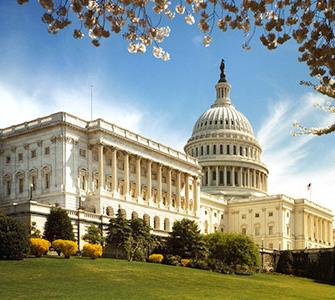
In the early days of the Biden administration something has changed about our politics. I can’t determine what it is. Our politics continue to matter and the slim majority Democrats hold in the Congress will likely pass the first major bill later today in the American Rescue Plan Act. The Senate passed it already and House Democrats say they have the votes.
Yesterday 13 non-controversial bills were pulled from the docket in the U.S. House. Rather than passing them on a voice vote in quick succession, a Republican asserted their privilege and called for a roll call vote on all of them. I’m not sure the purpose of this stunt which irritated both Republicans and Democrats. The roll calls would have delayed the vote on the American Rescue Plan Act and House Democrats would have none of that.
Biden’s history as Barack Obama’s vice president shows. He’s taking no quarter with malarkey. While Obama beat Biden by signing the American Recovery and Reinvestment Act on Feb. 17, 2009, 27 days after inauguration, negotiations for the Patient Protection and Affordable Care Act took a year by the time Obama signed the law on March 23, 2010. The lesson Biden learned from Obama was a new president does not have that kind of time to spend on a single bill. When we are a year into the Biden-Harris administration, the window of opportunity to pass substantial legislation may well be over. Biden appears to have taken the Rev. Dr. Martin Luther King Jr.’s words to heart:
We have also come to this hallowed spot to remind America of the fierce urgency of now.
This is no time to engage in the luxury of cooling off or to take the tranquilizing drug of gradualism.
Now is the time to make real the promises of democracy; now is the time to rise from the dark and desolate valley of segregation to the sunlit path of racial justice; now is the time to lift our nation from the quicksands of racial injustice to the solid rock of brotherhood; now is the time to make justice a reality for all of God’s children.
It would be fatal for the nation to overlook the urgency of the moment.
March on Washington Speech, the Rev. Dr. Martin Luther King, Jr. Aug. 28, 1963
Changed politics during the Biden Harris administration is a feature, not a bug.
We received a final tax document last week — an explanation of the coronavirus relief check sent on the last day of 2020. There is about a month to file taxes on time in the United States. I do ours and help our daughter with hers. It’s time to get to work on them.
The only time I had a problem with filed tax returns was when the accountant applied a tax credit incorrectly. We had to pay it back with a penalty. The following year, I decided to complete our returns myself. It was a good decision.
In other times I would post the YouTube video of the Beatles song Taxman from Revolver. The album was released Aug. 5, 1966, the summer before I started high school, in my second year of learning to play the guitar. I remember winning a copy of Revolver at a Freshman dance that year. I’m not sure it is an accurate memory. It was when I met my friend Joe, who would attend Georgetown after high school and then become a physician.
I had not worked a job that produced a W-2 form in 1966, and wouldn’t until 1968 when I earned $934 in taxable income working as a stock boy at the Turn-Style Department Store.
In the 21st Century gig economy I’m not sure how people contribute to Social Security and Medicare without employer deductions and taxes. The reason we are able to survive on our Social Security pensions is we contributed for most of our working lives and the benefit is based in part on how much one earned:
Social Security benefits are based on your lifetime earnings. Your actual earnings are adjusted or “indexed” to account for changes in average wages since the year the earnings were received. Then Social Security calculates your average indexed monthly earnings during the 35 years in which you earned the most. We apply a formula to these earnings and arrive at your basic benefit, or “primary insurance amount” (PIA). This is how much you would receive at your full retirement age—65 or older, depending on your date of birth.
Your Retirement Benefit: How It Is Figured, Social Security Administration, 2013.
In a gig economy the margins are often quite thin for gig workers. The idea of paying Social Security and Medicare taxes gets sanded off in the woodshed of economic survival. The government program worked for us and will — at least until 2034 when the trust fund is projected to begin losing value unless the Congress fixes it. However, it doesn’t work for individuals unless they pay in at a predictable pace. I haven’t read a study of the impact of the gig economy on Social Security and Medicare, but would.
In 1966 I wanted to learn: to play the guitar, do well in my studies, and get along with my cohort. The future was open ocean and my boat had been christened by grade school nuns as college bound. I can’t recall thinking about taxes during that time, not even once.
To participate in high school one required some cash. There were expenses, although not many. I had to give up my newspaper route after eighth grade, so I paid for dances, books, guitar strings, bus fares, and school activities with my savings and allowance. I was privileged to be able to live in Northwest Davenport where Father held a union job, I had access to funds, and the neighborhood was safe. Those were the best times, full of hope and opportunity. I thought to myself, maybe I could record an album like Revolver some day.
Whatever the combination of privilege, economic security, social stability, and a peaceful home created, I benefited from it. I continue to benefit. My life hasn’t turned out as expected, yet in 1966 my expectations had not been completely formed. I stay out of trouble today, in part because I realize I must pay income taxes. It is a baseline for participation in American society and I’m in.








 Journey Home
You must be logged in to post a comment.