Greg Brown’s story about Iowa is one I’d like to believe.
Categories
Greg Brown’s story about Iowa is one I’d like to believe.
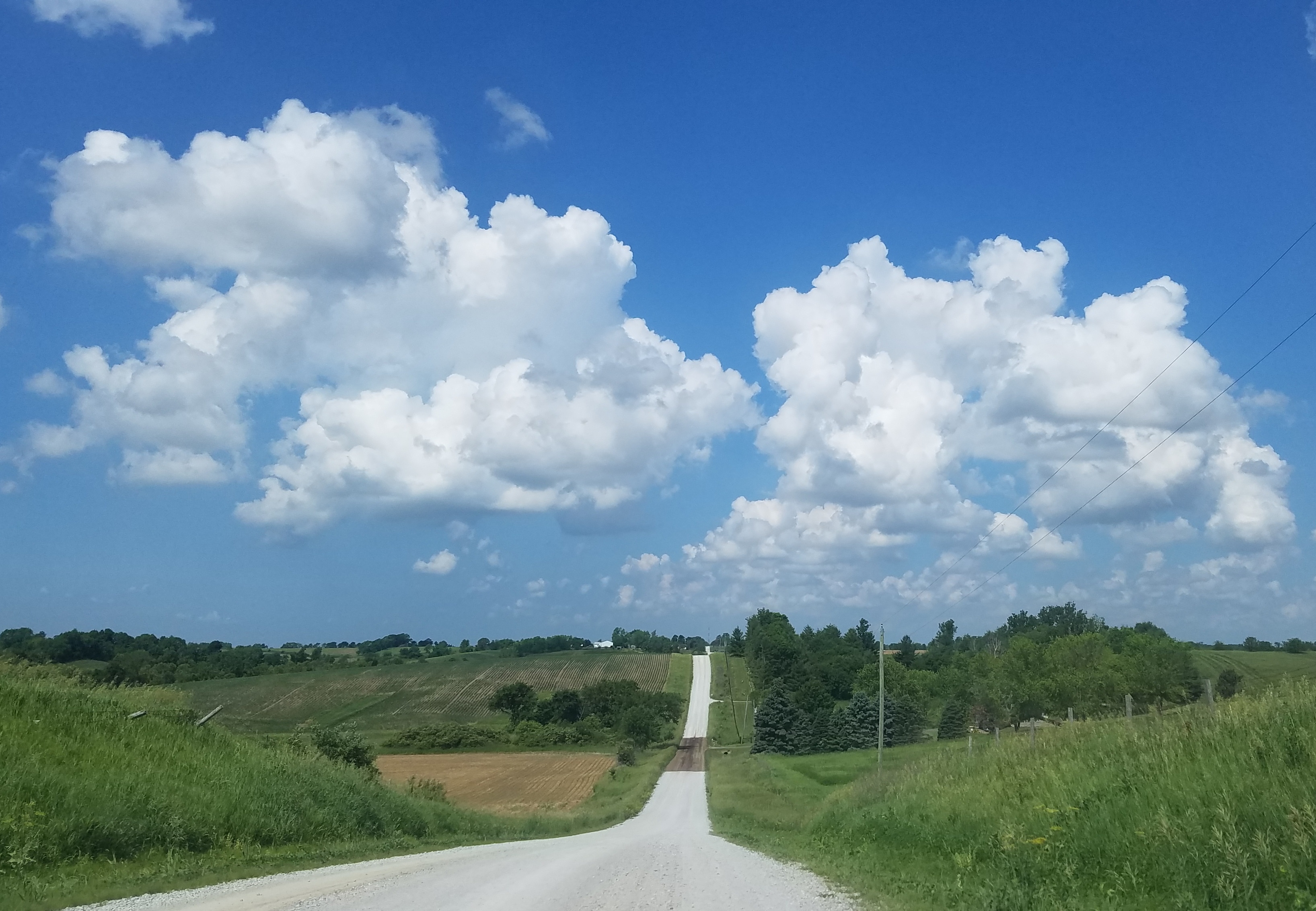
We rely on the county secondary roads department to keep farm-to-market routes in good shape. Each spring, gravel roads need grading and gravel application. While they are not well-traveled, people notice if they are in disrepair. Secondary Roads did a great job on those I use, like the one in the photograph taken after my shift at the farm.
My soil blocking at the CSA is winding down. Yesterday I started early because of mid day heat. I showered afterward and went to the wholesale warehouse to get provisions. That’s my work for the week so the next scheduled trip off property is not until Monday to deliver produce to the food pantry. That is, unless she calls ready to come home.
Having the house to myself is a little weird. I set up a music station on the dining room table. The three-in-one device plays radio, compact disks or audio cassette tapes. We keep things pretty quiet most of the time, so it is evidence of temporarily letting loose. Last night I played my Greg Brown CDs. Brown tells a story I’d like to believe about Iowa.
The menu I wrote for the both of us is out the window. There was leftover rice so I used it with other bits and pieces from the ice box to make a dish: leftover beans, kale, onions, bell pepper, and seasonings. That served as breakfast and dinner on Wednesday.
In addition to drinking a Coca-Cola on Tuesday, last night I drank the first beer since March 13, 2020 at the beginning of the pandemic. I bought a case of Stella Artois at the wholesale warehouse and with temperatures in the upper 80s, I relished the first taste.
There is a big bowl of limes to be used up. I have something mixed with vodka in mind, although I am no mixologist or hard-liquor-drinker for that matter. For complicated reasons I am reluctant to open the bottle of Stolichnaya Russian Vodka purchased at the Me Too grocery store in Cedar Rapids around 1986. I hauled it out to Indiana and then brought it back to Iowa. The label says, “Imported from the USSR” and that’s half the story of its travel. Once I open it it’s a matter of time before it will be gone. I’ll probably hang on to the unopened bottle a while longer. In all this time, only about an ounce has evaporated through the sealed cap. I’m not keen on vodka consumption anyway.
Peas are ready to pick in the garden, so that’s first up when the sun rises. Some kind of stir fry will follow. There will also be soup today. Ambient temperatures are forecast for the 90s this afternoon, so garden work will be finished early, and most of the day will spent indoors.
It seems too hot for early June. The drought in Western states is horrific. The Colorado River basin is disastrously low on water and it seems doubtful rain will come in needed amounts. My worry is the drought is creeping eastward. I lived through the 2012 drought and worked outdoors in it. I don’t want to repeat that experience, yet may have to. Fingers crossed we get back to normal weather before long.
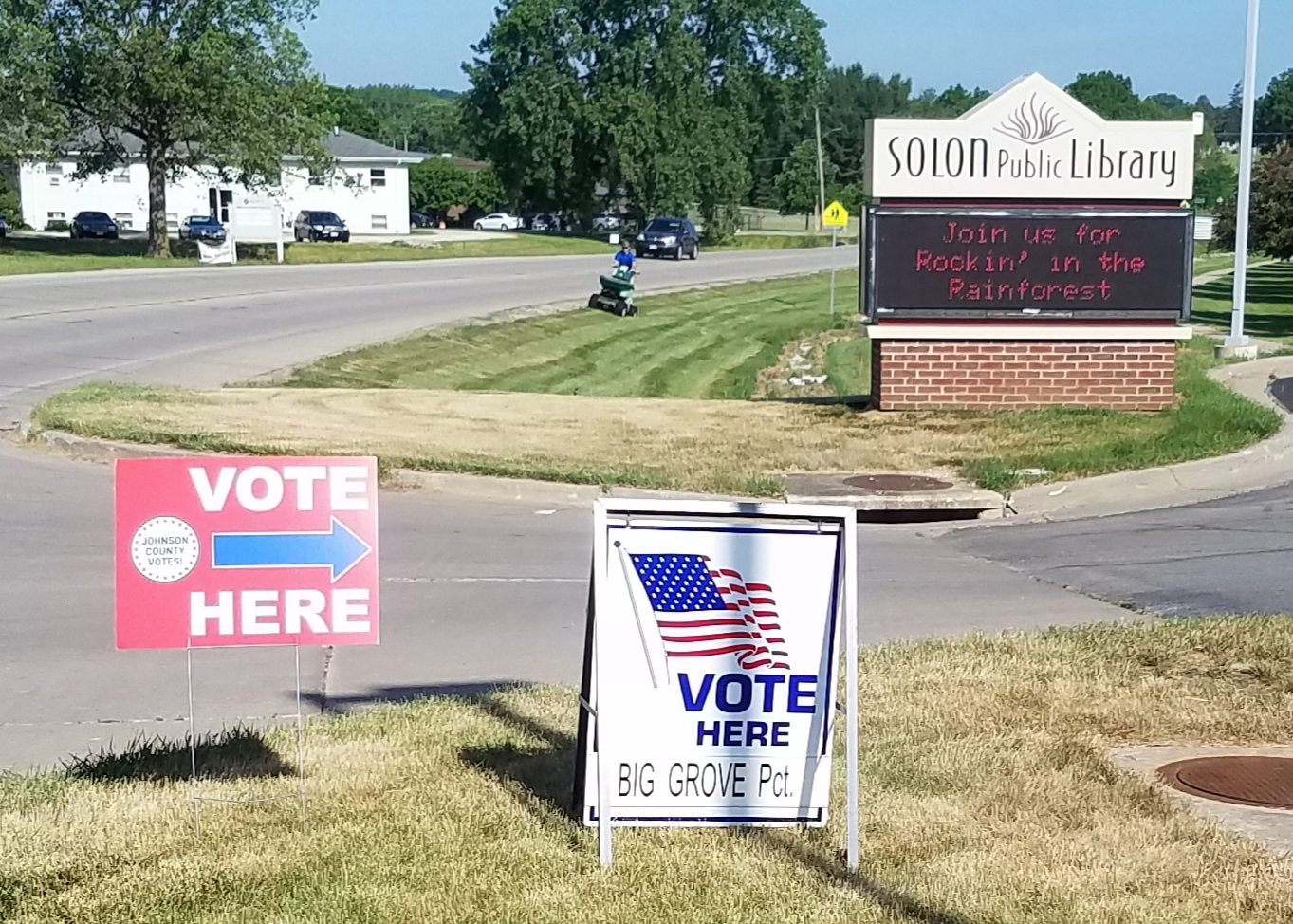
Tuesday was the day to take Jacque to her sister’s home in Boone. We began by voting in the special election for county supervisor. Our candidate, Jon Green – Democrat, won with 66 percent of votes cast. Voting together is an excellent way to start the day. It’s not really a date, but the experience was better than an actual date. After almost 40 years of marriage that’s how we are evolving.
We drove past the Atherton Wetland, up through Ely to Highway 30, which was the first transcontinental road for automobiles, dedicated in 1913. There are historical markers along the way, although I’m not sure the current Highway 30 is the actual Lincoln Highway. In fact, I’m sure it is not in some stretches. I hadn’t been out west on 30 since my in-laws’ estate was settled in the late 1990s.
I used to appreciate the drive, and seeing the patchwork of farms that make up rural Iowa. Yesterday’s weather, mostly clear skies with cumulus clouds, was perfect for travel. My observations were different this time.
The first thing I noticed was how large the acreages had become. There were so few homes, silos and other structures on so much land. It’s reflective of the need for less people to farm in 2021. Grain storage capacity had increased considerably.
As before, the diversity of crops was limited. I noticed corn and beans, and hay bales in abundance. Due to the drought, it is a good time to harvest hay. There was likely oats mixed in the fields, but my eyes aren’t trained well enough to differentiate it.
Maybe they were there 20 years ago, but I noticed a number of concentrated animal feeding operation confinement buildings. In the vast landscape they don’t look like much, yet livestock produces six of ten of Iowa’s top agricultural commodities. I did not see one hog, cow, turkey or chicken during four hours on the road. They were all indoors.
If I once thought the scenery bucolic, I no long do. It is a landscape of extraction, well organized and with purpose. While a natural process produces commodities, it is hardly nature or anything close to it. The lack of diversity among crops and the biome is remarkable once one is acculturated to recognize it. The unseen disaster is the flow of agricultural chemicals, manure and topsoil runoff into Iowa’s watersheds. Farmers say they want good water quality and rely on rain to produce it for corn and beans. However, the industry also relies on disposing of their waste downstream at no cost or responsibility to them. The current landscape and the farm operations on it are unsustainable.
We stopped for a rest break at the Meskwaki Travel Plaza in Tama. They have clean restrooms, clean everything. The signs on the entryway read “masks recommended.” No one, including us, wore a mask. There were no mask monitors and we are fully vaccinated against COVID-19 so are not concerned about contracting the coronavirus. We had our vaccination records with us, but preferred not to show them because of the brouhaha about “vaccine passports.” No one questioned us.
I’ve not been inside the nearby Meskwaki Casino and have no desire to experience it. Later in the day I did buy a Powerball ticket so I’m not a gambling purist. “Loose slots” has little intrinsic appeal.
Noteworthy is the Meskwaki Organix Store inside the travel plaza. It is the first tribal-owned CBD dispensary located on tribal land in the state of Iowa. The Meskwaki Nation set their sights on developing a hemp economy in which they would control the product from seed to shelf. The store is intended to pursue retail markets and will also play a role in market research and product development for CBD. The store opened in November 2020. We didn’t stop there either.
Boone is the birthplace of Mamie Eisenhower. There is signage about her along the main street through downtown. After dropping Jacque, I bought gasoline at a Casey’s store. I went inside and bought a regular Coca-Cola. I don’t recall the last time I drank a Coke, and despite the labeling “original taste,” high fructose corn syrup was used as a sweetener. It was nothing like my memory of going to the corner grocer and buying a 10-ounce bottle of ice-cold Coke after delivering my newspaper route. In Iowa, we are all about appearances, less about substance. We should keep our memories about good times to ourselves.
I will return to Boone to bring her home. I won’t be buying another Coke. It was a mistake to get it, although one that can be quickly forgiven. We’re in Iowa. High fructose corn syrup is what we do.

Most people believe learning is important. Yet “learning” is such an all-encompassing word its meaning get muddied. I’m not sure how much actual learning goes on in said people’s lives.
I hope to be a life-long learner and assume I will be. As a gardener, learning comes with the avocation so there is a process of getting better in producing vegetables, caring for the soil, and controlling harmful to humans inputs. As a writer, most of my time is spent editing words to determine what captures intended meaning, what sounds best, and figuring better ways to say more with less words. In December I reach another decennial milestone and enter septuagenarian status. In response, I’ve been considering what it means to be a learner in 21st Century society.
This post frames up a longer discussion of what learning means in the years ahead.
As young children we learn by nature and gain an understanding of how life works. Things like where food comes from, rules of behavior, when to expect a spanking, and from whom receiving a spanking is appropriate. As we age, we learn there are other options from what we learned as a toddler. It is possible to eat a healthy diet different from the culture in which we came up. Children can be raised without spanking. I find this kind of learning pretty dull because it is ubiquitous and necessary.
While there is significant learning once formal schooling begins, that too seems less interesting. I chose not to become a teacher early on, and that decision made the mechanics of pedagogy of fleeting interest. I had a long formal education, which includes Kindergarten through high school (1957-1970), college (1970-1974), a formal tour of Europe (1974) military service (1976-1979) and graduate school (1980-1981). While I had several paying jobs during these years, I considered everything part of my education. Learning is assumed during a formal education, it’s not the reference I am making in this post.
Learning occurs as a result of conscious intent. When I approached my friend Susan about working on her farm, in addition to financial compensation, I hoped to become a better gardener. As I planted the garden this year, I reflected on how much specific knowledge and technique I acquired since that initial engagement. My relationship with a community supported agriculture project made learning possible.
Over the summer I plan to set a new course for learning. Now that I retired from paying work, much of my time has been spent learning how to cope with my new status. Napping has been involved. That adjustment aside, I plan to review how I spend my time, what I have been working on, and what I should be working on. After doing that, I expect to embark on a new journey with learning at its core, one to carry me into my eighties.
I ran into one of my octogenarian friends at the food bank yesterday. She was the key organizer who started the food bank, found a permanent home for it, and continues to manage it. She is a living example of what it means to stay active in the community. My hope is I’ve learned enough to emulate her approach to living and learning. There are additional role models in life. Seeking them out will be part of the rest of my 2021.

The United Nations General Assembly declared June 7 World Food Safety Day. There is not much recognition of the event in the United States where there are programs to ensure safe food in the national production and distribution system.
Food safety is a shared responsibility between governments, producers and consumers. Everyone has a role to play from farm to table to ensure the food we consume is safe and healthy. Through the World Food Safety Day, WHO works to mainstream food safety in the public agenda and reduce the burden of foodborne diseases globally. Food safety is everyone’s business.
World Health Organization website.
In the United States, food safety is less of a problem until we get to large-scale agricultural operations. Even then, when there is an issue, such as the e.coli outbreak in lettuce from Arizona and California farms in 2018, news media and government are quick to take action to prevent spread of foodborne disease. Potentially bad lettuce was pulled from store shelves within hours of recognition of the outbreak.
I have little worry about the safety of food harvested from our garden or sourced locally. I learned enough about food safety to make sure meals cooked at home are safe. We have control of everything from garden to plate, making the risk of infection exceedingly small.
As vegetarians we have few worries about chicken, turkey, beef and pork. The world would be a better place if consumption of those proteins were reduced. As far as seafood is concerned, with imminent depletion of fisheries I don’t understand why anyone would eat any type of seafood. It would be good to give ocean life a rest so it can restore itself, if that’s still possible. The dairy industry is highly regulated in the United States. I use some dairy in our household and have had no issue with contamination or spoilage. I understand a large percentage of the population relies on fishing for subsistence, livestock as a main protein, and dairy products.
In an affluent country government has standards to ensure a safe food supply chain. Consumers are informed about the risks of foodborne disease. This may be why World Food Safety Day gets little attention here. Food safety should be the background hum in modern society, something we take for granted. For the most part, in the United States it is. That’s part of our American privilege.

My reading pace slows down in the summer. While I used to get summer started by re-reading The Great Gatsby by F. Scott Fitzgerald, the story has become so familiar I leave it on the shelf now. It’s close by in case I change my mind. I wrote about it here on the occasion of its copyright expiration in January. Here are nine books on my to-read list for Summer 2021.
Weather for Dummies by John D. Cox. I spend part of each day studying the weather forecast and living in the climate. I’ve become adept at interpreting available, free weather radar in terms of how the forecast might impact mundane tasks like mowing the lawn, walking or bicycling on the trail, and gardening. I need a more thorough understanding and Bill Gates recommended this book in his recent How to Avoid a Climate Disaster: The Solutions We Have and the Breakthroughs We Need. Gates’ book made me mad in a couple of ways, yet I’m taking his recommendation about this book.
Stuffed and Starved: The Hidden Battle for the World Food System by Raj Patel. In case you missed it, I post about food and the food system quite often. I noted Mark Bittman referenced Patel’s book a couple of times in his recently published Animal, Vegetable, Junk: A History of Food, from Sustainable to Suicidal. Since I already had purchased Patel’s book, I’m moving it into the top nine for this summer’s reading.
Devotions by Mary Oliver. A person needs poetry and there is so much from which to choose. I read Oliver’s American Primitive and liked it a lot, leading me to buy this collection of selected poems. I don’t think I can go wrong.
Land: How the Hunger for Ownership Shaped the Modern World by Simon Winchester. Winchester is among my favorite authors. Every chance I get to read for entertainment, I find one of his books and have not been disappointed. I particularly enjoyed The Alice Behind Wonderland but every one I read was memorable.
Unworthy Republic: The Dispossession of Native Americans and the Road to Indian Territory by Claudio Saunt. There has been much discussion about how terrible Andrew Jackson was toward native and enslaved people. It’s time I learned more than the brief study I gave him in graduate school.
World Vegetarian by Madhur Jaffrey. Of the many cookbooks in my collection what I need most is development of our vegetarian cuisine. I like Jaffrey’s writing and expect to explore her world this summer to find inspiration for our kitchen garden.
Trouble in the Stars by Sarah Prineas. I found this young adult book by my political pal Sarah Prineas surprisingly engaging. There is something about the style of young adult fiction that keeps the story moving quickly along. There is more to this book than the primary narrative. Take a look!
Turning Pointe: How a New Generation of Dancers is Saving Ballet from Itself by Chloe Angyal. Halfway into this book, I find it engaging and a bit of a stretch of my interests. (The only other book I read on ballet was Gelsey Kirkland’s memoir Dancing on my Grave). I met Angyal at a book event featuring Sarah Smarsh and Connie Schultz soon after she moved to the Iowa City area. Angyal spent most of her time here writing this well-researched and informative book. It’s my current read and I look forward to finishing it this summer.
Birds in the Morning, Frogs at Night: Sharing Life Along the Road by Maureen McCue. When Maureen and I met on the Johnson County Board of Health we started a friendship that led to public advocacy on the gravest threats to society: the climate crisis, nuclear weapons, and public health risks of how utilities generate electricity. This is her story. I’ll be sure to write more once I finish it.
What books are you planning to read this summer? If you’d like to share, please leave a comment. Happy reading!
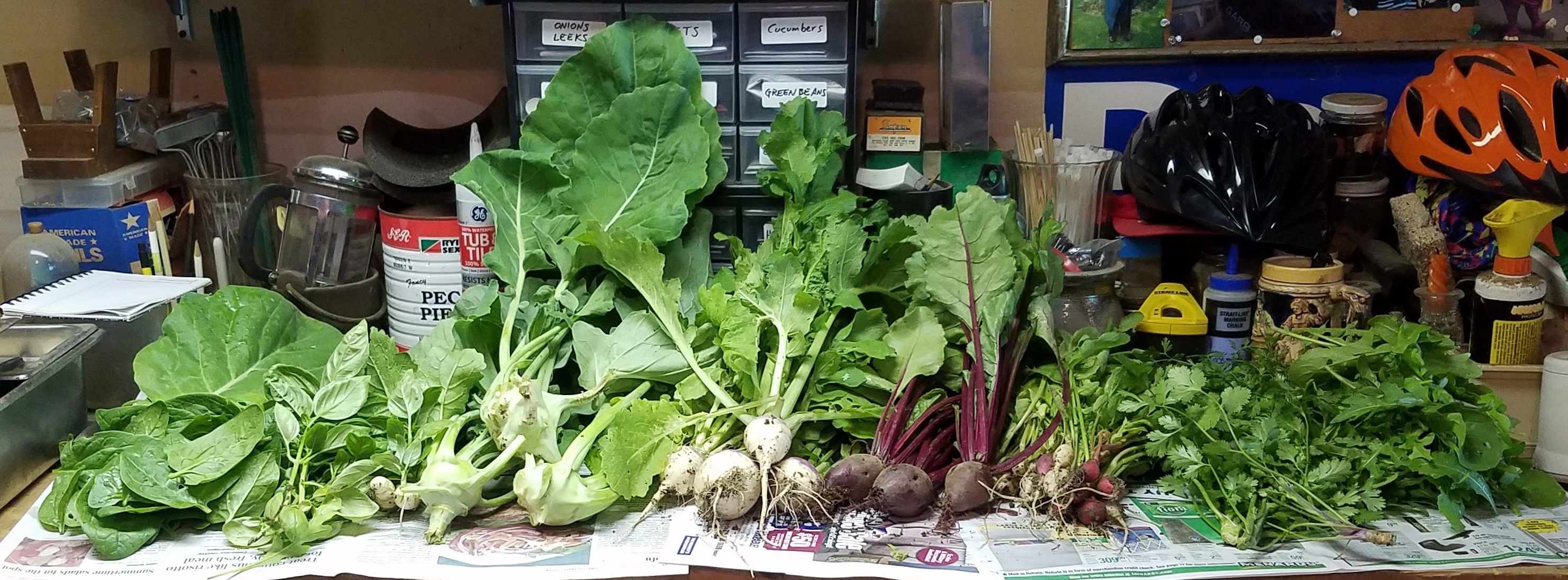
The Dutch oven on the stove top is bubbling with today’s vegetable broth. This batch is different because I used kohlrabi greens, which I usually compost, along with turnip and beet greens. The color is rich. Air in the whole house is imbued with the aroma of mirepoix combined with fresh greens. It is elemental.
By tomorrow night, part of the broth will be used to make dinner.
On trash/recycling day I walk the receptacles to the road when I wake so I don’t forget them after sunrise. There was a cool breeze with low humidity as I did it this morning. It felt good after yesterday’s high temperature close to 90 degrees. According to a local meteorologist, the weekend will be exceedingly warm, without precipitation. It’s a time for humans to stay hydrated and to water the garden enough to keep plants growing in the heat. During yesterday afternoon’s walkabout it appeared pumpkins, cucumbers and squash planted have become established despite the heat. It was touch and go for a while.
When I write about the kitchen garden it blocks other topics. For the time being it’s okay. In 2022 I’m planning a course of renewal as a septuagenarian, there’s more I want to accomplish during my days. For now, the scent of vegetable broth and small successes in the garden will sustain me.

I reached out to a long-time friend who manages the community food bank to ask if they would like some of my excess garden produce.
“We would be most grateful for your fresh produce!” they emailed.
I put a recurring event on my calendar to deliver something every Monday morning beginning June 7 through the end of season. I look forward to seeing her in person on Monday, for the first time since an event during the Elizabeth Warren campaign before the Iowa Caucus.
The goal of a kitchen garden is to match garden production with what a cook can use in the kitchen. Gardeners put a lot of promise in the ground and not all of it comes to fruition. When it does, though, it is time to share the bounty. What better way to do it than donate food to people who need the help of a community food bank?
I participated in a call this week where a group of white Iowans, most with grey hair like mine, were working on a political advocacy project regarding the climate crisis. Halfway through the call, I realized there was no discussion of economic justice, that the people most impacted by the climate crisis are low income, black, indigenous, and people of color. I raised the issue and was surprised by the response. The suggestion was the impact of the climate crisis on low income individuals was mostly in countries other than the United States. OMG! We have a long way to go. The moral is if we don’t raise the issue of economic justice, and its companion, climate justice, it won’t be addressed, even among climate activists.
Thursday was almost perfect, maybe a little hot with low humidity. It was the kind of day I remember from childhood, one without need of air conditioning, where the outdoors was a great place to spend purposeful time. As an aging gardener, I get most of my work done in the morning before it gets hot and humid. Even so, during peak temperatures in the high 80s, it wasn’t so bad.
In driving us to stay home more, the coronavirus pandemic provided a new perspective on daily life. We notice things that our busy lives hid from view. Things like the food bank, climate justice, and the condition of garden plants. That is a good thing.

This celery patch was revealed from among the weeds yesterday afternoon. In the background of the photograph is a pile of grass clippings with which to mulch the plants until mature.
I tasted a stalk right there in the garden. The flavor of home grown celery is unlike any of your store-bought, shipped from California celery. Much of this will grow to maturity and be processed frozen. The culinary use is mostly for winter soups. Integration of the growing patches with the kitchen is what a kitchen garden is.
I harvested the largest kohlrabi and cleaned it in the kitchen. The flesh of the bulb tasted almost like butter: soft, mild, and delicious. Gardeners keep saying the leaves can be eaten. That’s a true statement, yet there are so many greens available kohlrabi leaves get neglected… and composted. There are six more plants in the first succession. When I harvest them, I might use the leaves as the base for more vegetable broth. I might not.
The forecast is for rain beginning at noon. Once the sun rises I’ll head back out to continue weeding and mulching. It’s much of what gardeners do in June.
Associated Press ran a story on June 1, dateline Keokuk, Iowa, “Past the point of no return?” Iowa Dems hopes fading. It was a bit of a downer based on interviews with prominent Eastern Iowa Democrats bemoaning changes in the electorate that resulted in what we now know was a Republican rout in the 2020 general election.
The article featured the Second Congressional District race, which Republican Mariannette Miller-Meeks won by six votes. Even this week some Democrats grumble, “count all the votes.” The race is over and candidate Rita Hart has not announced a rematch in 2022. The contest should never have been that close.
Johnson County, where I live, may be a liberal bastion in the state, yet that has little relevance to statewide elections. Even my precinct, in Iowa’s most liberal county, felt the sting of across the board Republican wins. My neighbors chose Donald Trump as president, Joni Ernst as U.S. Senator, Mariannette Miller-Meeks as U.S. Representative, Bobby Kaufmann as State Representative and Phil Hemingway for County Supervisor. Had there been two more Republicans in the race for county supervisor, they would likely have won here too.
So yeah, we Democrats are licking our wounds. We believed the results of the 2020 election would be much better than they turned out. What we didn’t expect was Secretary of State Paul Pate’s decision to mail an absentee ballot request to all registered voters because of the coronavirus pandemic would net so many Republican votes. The trope that increased voter turnout helps Democrats turned out not to apply.
What else are Democrats doing? Life goes on. We’re re-grouping.
Like most everyone in the electorate, we have lives that take precedence over politics. In my community that means continuing work with neighbors that never stops for elections. Unless I look at the county voting records, I don’t know if many of my neighbors are Democratic, Republican or something else. We felt the coronavirus pandemic here. One neighbor died of the virus and at least half a dozen got COVID-19. The condolence card I sent to the widow was no different based on party affiliation. As more people get vaccinated against COVID-19, thanks to the Biden administration’s work on vaccines, we’ll exit the pandemic and take up many of the things we used to do in early 2020. A lot of my neighbors are presidential election voters, so politics is not a constant priority.
Most of my political friends are wondering which Democrats will run for office in 2022. The governor and U.S. Senate races are at the top of the ticket, and there are plenty of public sources for information about which Democrats may be running for what. Rank and file Democrats are keeping our powder dry until we know who will run to replace Governor Reynolds, Senator Grassley and Representative Miller-Meeks. There is only so much to do before there is a candidate.
We are all watching the national political scene because it impacts Iowa politics as much as anything. The expectation here is now that a grand jury has been convened in New York, Donald Trump will be brought up on criminal charges. I read an article about how he could run for president from prison. There’s no telling anything to true Trump believers.
As far as the national Democrats go, they struggle to get their voice heard amidst the noise of FOX News, talk radio, social media and, increasingly, at large employers who have disclosed their politics. According to these right-wing outlets, Democrats can do no good. I mean, God help us if the Vice President of the United States posts on Twitter, “Enjoy the long weekend.” The flippin’ sky must be falling to hear their side of it. Information about the good Democrats have done during the Biden administration — and there has been a lot of good — is being actively suppressed. Active Democrats I know are trying to understand what the administration is doing and find ways to inject that into the negativity so prominent in daily life.
To answer the AP article question, no, Democrats are not past the point of no return. We are living our lives, keeping our powder dry, and preparing for the next opportunity to mount a campaign to win in 2022. In a way, that’s what Democrats always do. We don’t expect to take guidance from the media or Republicans.
~ Written for Blog for Iowa

 Journey Home
You must be logged in to post a comment.