Categories
Writing

Tomato Sandwiches on RAGBRAI

Fresh Tomato Sandwiches
Fresh Tomato Sandwich

BUSSEY– Trish Nelson is enjoying RAGBRAI and sent a brief note with a couple of photos. Trish wrote on her mobile device, “another shot of the tomato sandwiches being made. Very Iowa. Selling like hotcakes at 2 bucks apiece as fast as they could make them. I haven’t experienced a more flavorful red juicy tomato like that since I was a kid.”

What else to say, but it is Iowa summer.

Making Tomato Sandwiches

~ Written for Blog for Iowa

Categories
Writing

Zucchini Madness… Again

Zucchini
Zucchini

LAKE MACBRIDE— More has been written here about zucchini than any vegetable of late. In an effort to figure out more ways to prepare and preserve it, I posted a note on Facebook. It proved to be beneficial.

Not only did I receive good suggestions on how to prepare the vegetable, several ways to dispose of excess were identified. This is an inherent part of a local food system— social networking to resolve issues like an abundance of zucchini.

It’s not that I have been short of recipes, I haven’t. So far, I have prepared crudites, toppings for salads, soup, zucchini fries, baked zucchini, a squash casserole, zucchini lasagna, mandolin sliced zucchini pasta, and as soon as there is eggplant, the classic zucchini dish— ratatouille.

There were new ideas for cooking. A friend wrote, “Oh and re. Zucchini— they’re never to big to stuff!  That’s what we do.  Cut in half length wise, core out the seeds.  In the depression add your favorite things  For us that’s lots of walnuts, mushrooms, celery, rice? and what ever else you have laying around— almost anything can make for a fine stuffing. Use favorite spices.  Melt Cheese on Top.   Enjoy again, and again.”

Here are other preparation suggestions:

“Sausage stuffed zucchini boats & zucchini fries.”

“A friend had a pretty good recipe for “mock apple pie” that was made with zucchini and a lot of cinnamon.”

“Sliced in half with some olive oil and garlic salt, then grilled. We’re also big fans of zucchini bread.”

“I just shared a thing about oven baked zucchini chips. never heard of them done that way before myself, but could be worth a try.”

What else to do with excess? There were people that wanted some to eat. Also here are some comments:

“Chop them up and feed it to the chickens. They love zucchini.”

“right to the compost”

“Sounds like you have the basis for a cottage industry… upgrade the packaging and sell frozen zucchini for those of us who aren’t in a position to have any in our own freezers!”

“Contact the veterans shelter house in Cedar Rapids, … they have storage and will distribute green grocery items to their homeless veterans.”

…and there is my favorite, trade zucchini as chicken feed for farmer’s eggs.

As we savor the most recent pick of zucchini, we’re far from exhausting the possibilities. And thanks to social networking, we’re better together.

Categories
Writing

Zucchini Days

Zucchini from the Ice Box

LAKE MACBRIDE— Yesterday zucchini came in from the garden, a lot of them. Knowing the CSA share would include more, I called a friend who manages the local food bank and arranged to donate freshly picked vegetables. Posting on Facebook, I encouraged others to do likewise,

Just donated ten pounds of organic zucchini and yellow squash to the local food bank. They really need our help. If you have garden extras, I hope you will pick up the phone and call the nearest food bank to see if they could use it. Willing to bet they will.

A commenter on this blog wrote,

It is the only time of the year you have to lock your doors when you go to the local drug store, grocery store or funeral parlor in a small town so you won’t receive the “bounty” of someones inexperience of planting way to many summer squash! If you aren’t cautious, they will hunt you down and fill your back seat in a New York minute!

It may be possible to have too much of a good thing, although I won’t admit it. Even though ten pounds was donated to the food bank, there is an abundance in the ice box and plenty more growing in the garden. Soon the recipe for zucchini chocolate cake will come out of the arsenal to be deployed in a last ditch effort to deal with the proliferation. Maybe I need to deescalate.

This is the first year zucchini growing has been an unmitigated success in my garden. It is attributable to working at the farm and seeing how professionals do it. In past years, I planted squash in mounds with a number of seeds in close proximity to each other. They grew in a tangled mess and never produced very well. This year was different.

Using some plastic trays provided by a friend, I planted the seeds in individual soil blocks. They germinated and grew well, and when the plot was ready, I transplanted them in tight rows next to a big patch of radishes. Once the radishes were harvested, the squash vines had room to grow. It may seem simple, but the results were dramatic.

As long as we repeat the same behavior, change is unlikely. More than anything else, a gardener should be a tinkerer with cultivation. Trying different tilling methods, considering shade that falls on the garden when planting, seed variety selection, row arrangement, and adjusting every possible variable in the garden. Most importantly, a gardener should let the seed genetics do their work after creating a suitable environment. If we sometimes hit the zucchini jackpot, then we learn from that and adjust next year.

With a bit of thoughtful work, it is much more likely to succeed in gardening than in winning the lottery of a random life.

Categories
Writing

First Tomato

Lake Macbride Beach
Lake Macbride Beach

LAKE MACBRIDE— The first two cherry tomatoes were ripe in the garden, so I picked them, along with three meals worth of green beans, two cucumbers, a bunch of kale, two stalks of broccoli and two kohlrabi. In addition, I planted more cucumbers and Swiss chard. There remains plenty to eat in our household.

It’s time to review the seed packets and plan the rest of the year’s planting. July 25 is the traditional day to plant fall turnips, and more radishes, green beans, cucumbers and spinach are in the works. The lettuce seedlings I planted about a week ago appear to be taking, and I’ll plant more before the summer is over. Because of succession planting, the salad days, where we can have fresh salads with dinner, may extend the whole summer. Here’s hoping.

When the morning garden work was finished, I cleaned up and drove to Lake Macbride State Park to sit on a bench and write. On an impulse, I stopped by a friend’s home where he was returning from a neighbor’s home with a bucket of just-picked Lodi apples. Lodi is one of the earliest producing cultivars, and the fruit is used in baking, applesauce and cider making. He offered and I took four to make a dessert. We chatted for a while, and then made arrangements to go foraging for black raspberries after supper.

Black Raspberries
Black Raspberries

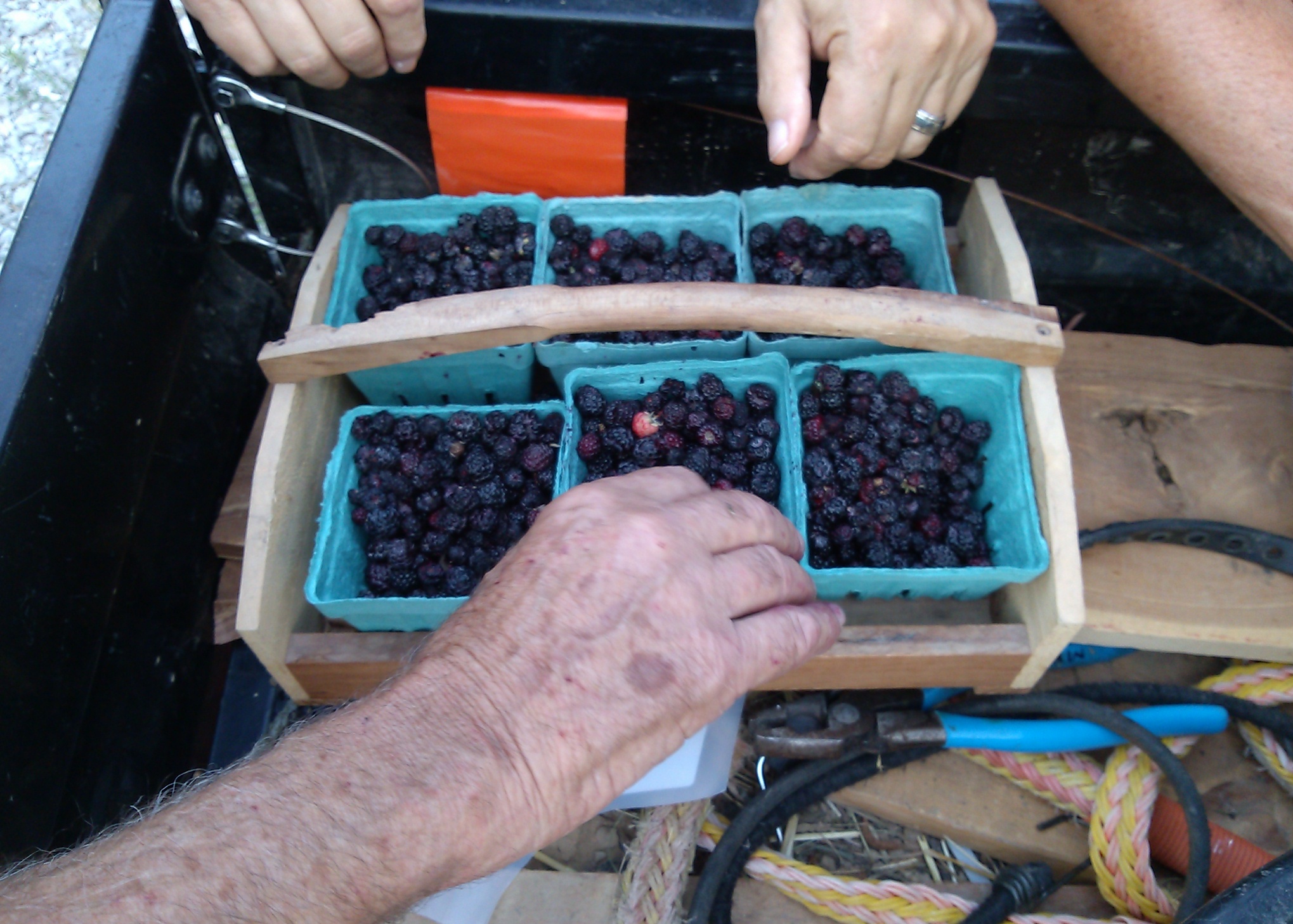
With the sun heading for the horizon, we met up and drove a few miles to a mutual friend’s acreage. We spent about 90 minutes trolling the wood line, where all kinds of produce was evident. Wild plums, hickory nuts, blackberries not ripe yet, and plenty of ripe black raspberries. We filled two gallon jugs and split the proceeds.

We toured the property owner’s garden and the apricots were ripe, falling from the tree. Like many gardens in the area, this year it is doing well.

On the drive home, we talked about the Michigan cherries due in at a local orchard on Saturday. I plan to stop by and participate in the summer cycle of fresh produce and the social life surrounding it. Not sure which I like better, and both seem inextricably intertwined.

Categories
Writing

Toward a Local Food System

Lake Macbride
Lake Macbride

LAKE MACBRIDE— Writing about gardening, farm work, fermentation, soup-making, canning and cooking is personally satisfying, but what is the connection to our broader society? Why does one person’s journey in life with friends and family matter in the broader scope of things? With a global population of more than 7 billion, and expected to hit more than 9 billion by mid-century, life on earth is changing in ways that test the limits of our ability to comprehend. Will the lives of individuals matter as Earth reaches its tipping point, pushing the envelope of its geophysical limits?

American society, founded in part on the cultural resonance of eighteenth century agrarian individualism, promotes the moral worth of an individual. Independence, self-reliance, freedom and the ability to work toward self-realization are core values of our society. The idea that we can own a plot of land, grow some of our own food and prepare it in ways steeped in process, learning and tradition, yet how we want, is as American as the apple crisp I make from my apple trees. What is often forgotten is that individual lives occur in the context of a society that was founded during the Age of Enlightenment, and that society is coming apart at the seams.

If romantic concern for the good old days is what drives people to work toward a local food system, the idea is bound to be abandoned. In Iowa, we created the Leopold Center for Sustainable Agriculture at Iowa State University. The center has conducted hundreds of grant studies and reported on them with an eye toward sustainable agricultural practices. The Leopold Center is key to understanding our food system and providing reasons and process to create and strengthen community-based food systems. It is uncertain their work will take, despite the fact that locally grown food produced with sustainable practices is highly cost competitive with the products of the industrial food supply chain.

What makes a local food system possible is not the development of practices and high level theory, but the support behavior change receives in society. Behavior that congealed during the post World War II economic boom that included development of our industrial food supply chain. With population growth, society requires an organized mechanism to produce, preserve and distribute food to a growing population. In that sense, the industrial food supply chain is as necessary to a local food system as are the practices developed by the Leopold Center. To choose between them is a false choice.

Based on my experience with local farmers who use sustainable practices, there is tremendous capacity for improvements in efficiency, fuel use, water management, labor practices and mechanization that are untapped because of capital constraints. What the local food system may need most is an infusion of capital to create business incubation centers, sustainable water management systems, efficient farm to market systems, and most importantly, a sustainable source of labor that pays a living wage. The industrial food supply chain, because of its strong capitalization, has essentially blocked out competition from sustainable local growers who struggle to pay bills each month.

The question comes down to what individuals do in society with others, and there is no template for it. Stories about dealing with excess zucchini, kohlrabi and leafy green vegetables serve as examples of how to live with the challenges of a local food system. My garden won’t grow everything we need to provide all of our own food, so we leverage outside entities. Whether it is electricity to run the stove, cheese and milk from dairies, veggie burgers from Morningstar Farms®, or cooking oil from California, Italy and Iowa, how and why we leverage these entities and others matters a lot to a local food system.

That’s why I write about local food systems, as an example in which I hope others find value. If we’re lucky, and with collective action, tenuous local food systems will be strengthened as we work toward sustainability in a turbulent world.

Categories
Writing

Guest Editor

Blog for Iowa

LAKE MACBRIDE— Trish Nelson, editor of Blog for Iowa, will be taking a summer break and I’ll be pinch hitting as weekday editor from July 15 until Sept. 2. I’m looking forward to regular posting on the Online Information Resource for Iowa’s Progressive Community.

The blog originated in the wake of the Howard Dean for President campaign when John Kerry won the Iowa Caucuses in 2004 and Dean dropped out of the race. Dr. Alta Price, a pathologist from Davenport, helped lead Democracy for Iowa, and decided to publish Blog for Iowa, a role she continues to play today. The first post is here, although what may be most relevant from it today is this statement, “we also seek to make Democracy for Iowa a place where all progressives and moderates are welcome, whether they consider themselves Democrats or not.” More than 5,000 posts later, Blog for Iowa continues to present a progressive viewpoint and maintain a friendly relationship with Democracy for America, the organizational successor to Dean for America.

When I write original content for Blog for Iowa, it will be cross posted on this site a day later. Among the topics will be the challenges of temporary workers in Iowa; implications for Iowa of the immigration legislation working through the U.S. Congress; Iowa’s role in mitigating and adapting to climate change (not the same thing); and occasional posts on energy policy, local food system issues, and peace and justice activities in the state.

I hope you’ll check in at Blog for Iowa from time to time, and continue to read my original content on On Our Own. It should make a great end to an already fine summer of 2013.

Categories
Writing

It’s Zucchini Time

Fried Zucchini
Fried Zucchini

LAKE MACBRIDE— It’s the time of year for zucchini, and they are coming in with bounty. What to do with them? Over the years, I have tried a lot of techniques, and here are some do’s and don’ts.

Don’t dehydrate them unless seeking to occupy space in the cupboard. I dehydrated zucchini as recently as last year, and either forgot they were there when making soup, or they weren’t the right ingredient. If one chooses to dehydrate zucchini, a little goes a long way.  Try making a quart Mason jar of quarter inch dehydrated rounds or half moons first. That has been more than enough to last the year.

Do use zucchini fresh in recipes, of course. When you or neighboring gardeners or farmers have a load of extra zucchini for cheap, get what you may need for the year, and using a box grater, grate them into one cup servings and freeze them in a freezer-style, zip-top bag. I started with six cups, and will see how long it lasts.

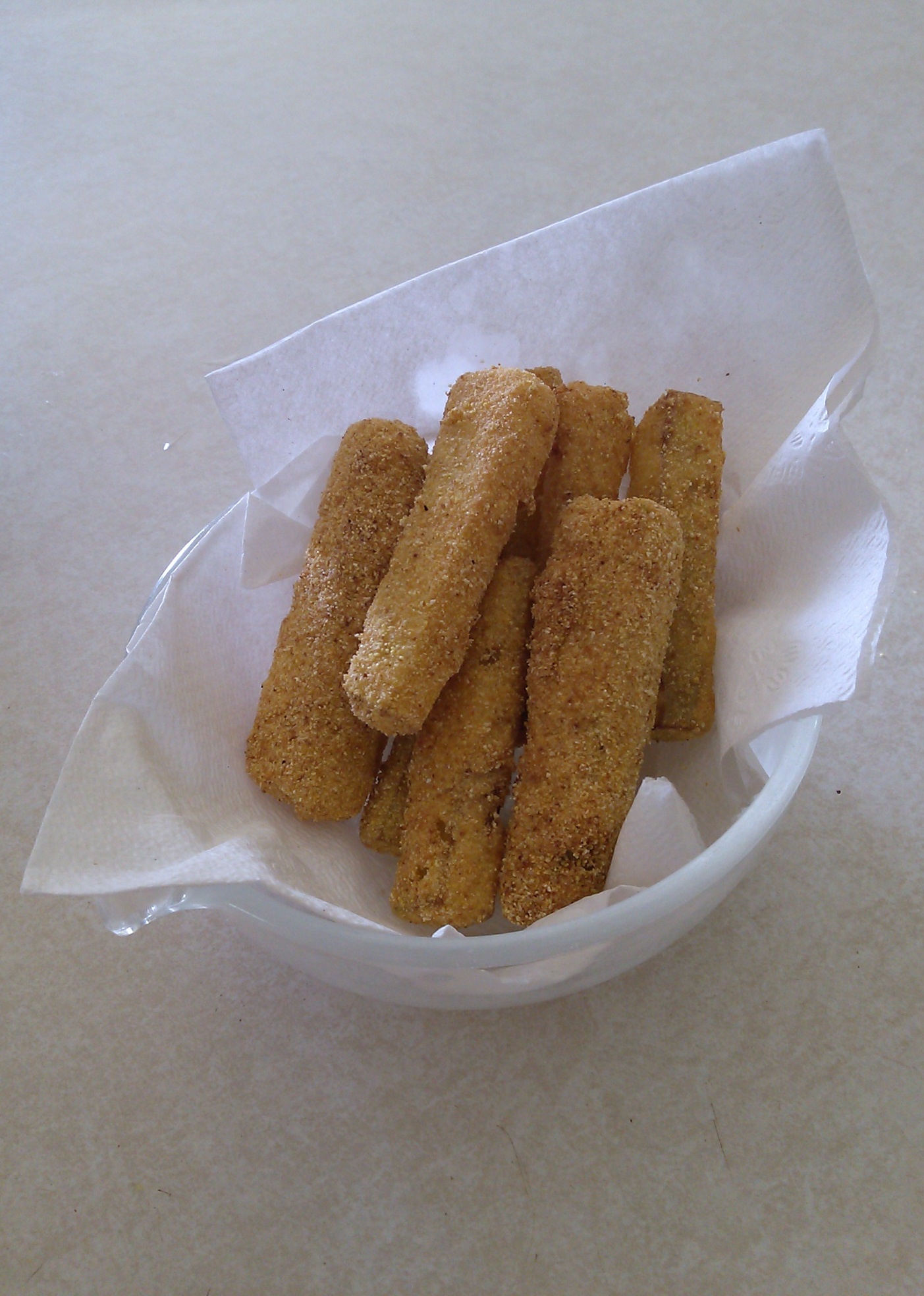
Do try new recipes. Today, for lunch I made fried zucchini (see photo) coated with corn meal. There are dozens of combinations of shapes and coatings, and they can be baked or fried. Once you get past inertia to trying out an idea, working with zucchini can be fun.

Realizing there is a seasonality to vegetables, and using them when they are in season is an idea at the heart of the local food movement. Zucchini is just one tasty example.

Categories
Writing

Turnip Harvest

Turnip Harvest
Turnip Harvest

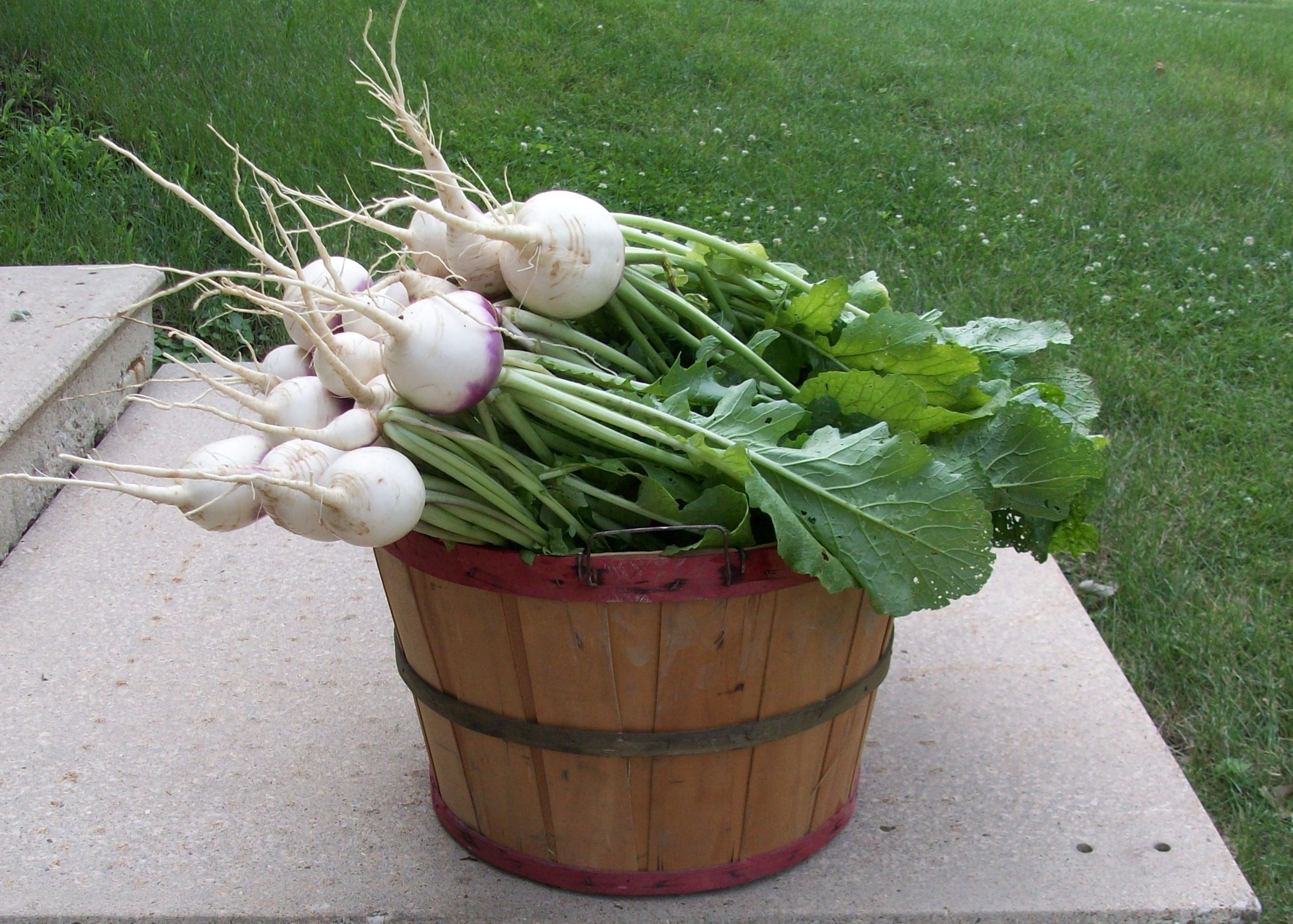
LAKE MACBRIDE— Today was the turnip harvest, and the crop was the best ever: plenty to use this season, and more to give away. There were so many greens that once I reserved a couple of gallons for soup stock, the rest went into the compost. It is turnip city over here.

We have a tradition to make soup stock in our household when the turnips are in. A large pot is coming to a boil on the stove. It includes, broccoli stalks, carrots, onions, celery, zucchini, yellow squash, bay leaves and importantly, the turnip greens which color the stock deep brown and add a delicious flavor. No salt is added until the stock is used in the final application. After cooking for a few hours, the stock will be turned off, to sit on the stove overnight, and canned in Mason jars tomorrow. In the past, I’ve used the cooked vegetables from stock making as a base for barbeque sauce, but I have several jars leftover from the last batch.

Great Grandmother with Turnips

With all of the large roots, we’ll have roasted root vegetables with turnips, potatoes and onions. If we had similarly size beets, those would be added. The recipe is easy— cut everything in half, approximately the same size. Coat with olive oil, salt and pepper to taste, and place open side down on a cookie sheet. Roast at 350 degrees for one hour or until done. It is a highlight of the season.

According to a CSA farmer, July 25 is the date to plant the second crop of turnips, and I’m about ready. One more row this year should be sufficient, and if I can find beet seeds, I’ll plant those as well. The question is how to arrange the spring vegetable patch for optimal July planting. A topic for another day as I bask in a successful harvest of a traditional vegetable in our family.

Categories
Writing

Consuming Local Food

Asparagus and Mushrooms

LAKE MACBRIDE— White butterflies have arrived to lay eggs in the cruciferous vegetable patch as spring enters its final days. Part of gardening is the notion that there is a world of deer, rabbits and rodents; caterpillars, beetles and aphids; microbes and bacteria; all ready to compete with us for food during the cycle that defines each year’s garden production.

Lettuce
Lettuce

A home cook who gardens is more acutely aware of this as a deer munches the top leaves of a pepper or green bean plant; as caterpillars make a home among broccoli and cabbage; or as potatoes considered from planting in early spring through growth and flowering are touched by Colorado potato beetles and the tuberous roots are eaten by rodents before we can dig them for the table. Application of chemicals is not an option in our garden, so more vulnerable crops like sweet corn and potatoes are leveraged from other growers, the bugs get picked off by hand, and complex webs of chicken wire and netting work to deter wildlife from access to garden plants— at least until after harvest time.

Broccoli
Broccoli

Gardening is a constant symbiosis that sustains a diverse and complex community of species in the context of an ever changing planet hurling itself into space. To say the future sustainability of local food systems rests in what home cooks do in their kitchens is putting a lot of pressure on a process that is far more complicated. Home kitchens are a part of the process, and human centered.

When considering a bigger picture, the assertion that home kitchens require a revolution to sustain local food is more a statement about marketing than anything else. What matters to sustainability of local food systems is how they fit into a broader context of a supply chain that includes grocery stores, pantries, gardens, farmers markets, CSAs, community food banks, government programs, neighbors and friends, and other sources of foodstuffs.

Bits and Pieces
Bits and Pieces

That said, farmers markets like the June 15 market in Cedar Rapids seem critical to sustaining a local food system. It is the behavior of a consumer society that attracts as many as 20,000 people to a Saturday market, and without consumers, there is no market for local produce.

One hopes that the cravings for sugar, salt and fat inculcated in us by industrial food processors get replaced with something better. However, changing how people behave regarding production and consumption of food is like piloting a large battleship in that changing course takes more than a few driving personalities asserting this or that needs to happen. Having a local food Saturday (or any day) in a home kitchen can work to correct a course currently fraught with obesity, chronic disease and ill health.

Supplies
Supplies

My recent local food Saturday is past and I look forward to the next. But before leaving it, there are some points  to be made about what it was and could be for others. By bearing witness to the efficacy of local food Saturday, perhaps readers will consider likewise. Like Scheherazade, I hope to keep you interested.

Categories
Writing

Local Food Saturday

June 15 Market in Cedar Rapids

CEDAR RAPIDS— If local food will gain market share from the industrial food supply chain, there must first be a fulcrum. A home kitchen may be that fulcrum— a place where our consumer society can pivot toward growing, buying and preparing more locally grown food.

The trouble is people spend so little time in the kitchen, and when they do, the industrial food processors have done a lot of the cooking for us. Whether it be a frozen pizza, bagged lettuce, peeled fresh garlic imported from China, green peppers and watermelons from Florida, strawberries from California, yogurt, breakfast cereal, canned soup, salted snacks, and increasingly, prepackaged, calorie-counted microwavable meals. The folks at the industrial food supply chain want us to cook less as it’s more for them.

Local Lettuce
Local Lettuce

In a previous post, I argued that a revolution should take place in home kitchens and that the relationship between home cooks and local food is essential to sustaining a local food system. That revolution may be as simple as going to the local farmers market on Saturday to buy what we don’t have in our gardens or pantry, then spending a part of an afternoon preparing and cooking a few meals for the week. It sounds too easy.

Farmer's Stand
Farmer’s Stand

I have been demonstrating food preparation and cooking for our daughter a long time, beginning at home. When she moved to Colorado after college, I would visit and cook a meal in her kitchen using what she had on hand. One time someone had given her a large box of Colorado peaches in season and I made a peach crisp for dessert. The only baking dish she had was a glass pie plate, and we had no recipe, but it was one of the memorable dishes there. On another trip she was preparing to move and I spent a day while she was at work cooking everything I could find and filling every container in the kitchen with leftovers. By the time I was done there were more than two dozen prepared meals ready for her to microwave or heat up.

Farmers Market Food
Farmers Market Food

Imagine my parental delight when she sent me this mobile phone photo of produce she bought at a farmers market. She is learning how to cook, and not every meal is drive through or a restaurant chain, something the parent of a millennial fears is only supplemented with sugary drinks and expensive coffees.

Market Sign
Market Sign

My point is few people are as busy as a millennial. If there is a process, like having a local food Saturday, an increased portion of local food can be added to our diet. After my work at the newspaper this morning, I took the idea for a test drive to Cedar Rapids and visited their periodic market which includes locally grown food and a host of arts, crafts, music and other products of home industry. During the next posts, I intend to write about my experience and how having a local food Saturday would work.

I believe local food Saturday can fit into the busiest of schedules and be cost effective. This addresses two of the most often heard objections people name when asked to consume more local food, “I don’t have time” and “local food is too expensive.” There may be a better way in local food Saturdays.