Categories
Writing

Bloggery

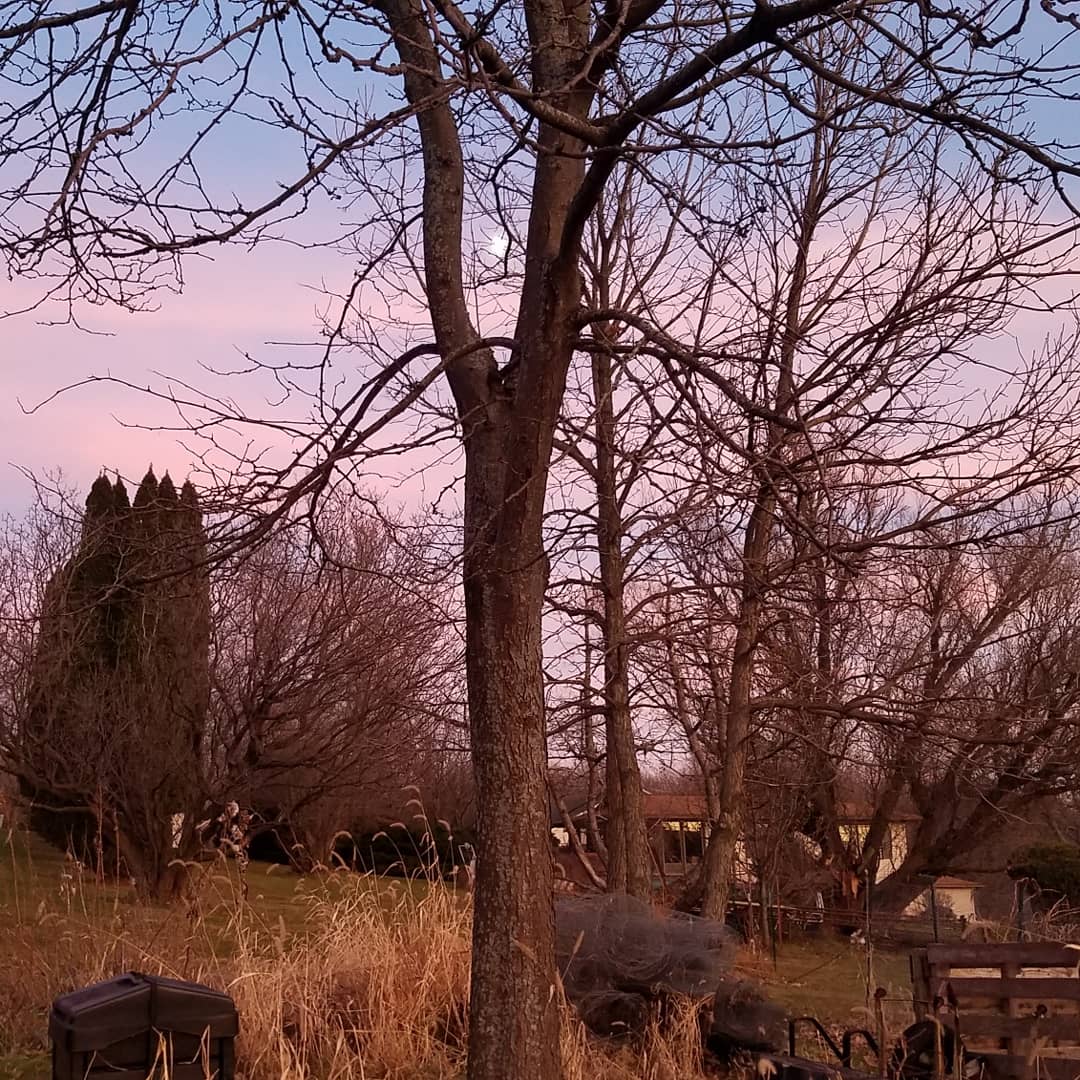
Walking on the Lake Macbride Trail Jan. 14, 2020.

I ordered a printed version of this blog through the end of last year. It’s the first step in changing the appearance.

The WordPress theme I use is free and serviceable. Maybe I’ve gotten used to it. I like the posts on the left and links on the right with a link to the about and reading list pages in the header. Clean and simple so readers can focus on the text. I want to change the photograph of the apple blossoms though.

Because of reduced personal cash flow I had gotten behind in making a paper archive. With a reasonable retirement income and a small amount from Mother’s estate I could get caught up. When the archive volumes arrive there will be about ten inches of blog books comprised of a few thousand pages on my shelf next to my hand-written journals.

I began blogging in 2007 after our daughter graduated from college. I didn’t understand it when I began but this writing would eventually take the place of journaling. Personal information is scrubbed off and each post was better proofed and edited than my hand-written diaries. It is a modern day instance of an English diary like those of Samuel Pepys who we studied in high school English class.

Blogging is among the most important things I do each day. My readership has grown, although for a long time I didn’t think I would find an audience. Everywhere I go in public I encounter people who are readers, indicating a reality of sorts. It is a gratifying feeling.

For the last ten years blogging has been a way to work through aspects of my life. Some things, like yesterday’s review of Thom Hartmann’s book, are specific and set in time. What is better has been the major topics about which I wrote in multiple posts, including the role of low-wage workers, challenges of a local food system, and trying to understand our national and local politics. Blogging is a formal way of writing that can yield a personal conclusion about life in society.

When we moved near the lake in 1993 I set up my desk about 20 feet from where my writing table is now. The desk is still there, although it is piled with stuff: old printers, boxes of documents and books, loose items — potential jetsam from a life weighed down by old artifacts. As my autobiographical work proceeds, the process includes going through every box and bag to re-purpose, recycle or discard everything I can bear to part with… after relevant stories have been extracted. I expect it to take a couple of years.

Other writers don’t keep a blog with so many posts as can be found here. To each their own. Blogging is a way to write that became primary. A place of my own where readers can stop by when something attracts their eye. It is a form of self-expression over which the author has uniform and almost complete control. Trying to make it worthwhile for readers creates an incentive to write better. Writing better has been my endgame.

I note from the clock on my computer it’s time to head upstairs, fix breakfast and get ready for a shift at the home, farm and auto supply store. During winter I want and need to get out of the house and into society. At the same time I’m tempted to call off work and persist in this bloggery through the day into nightfall. I won’t do that. I’m too much the product of an education in the 1950s and 1960s where I have a responsibility to social commitments. Still, I linger on a few more minutes in the glow of my desk lamp camped out on what remains of the Iowa prairie.

I have a sense today will be a good day. I can’t wait to find out.
Categories
Living in Society Writing

Grass Roots or Participatory Democracy?

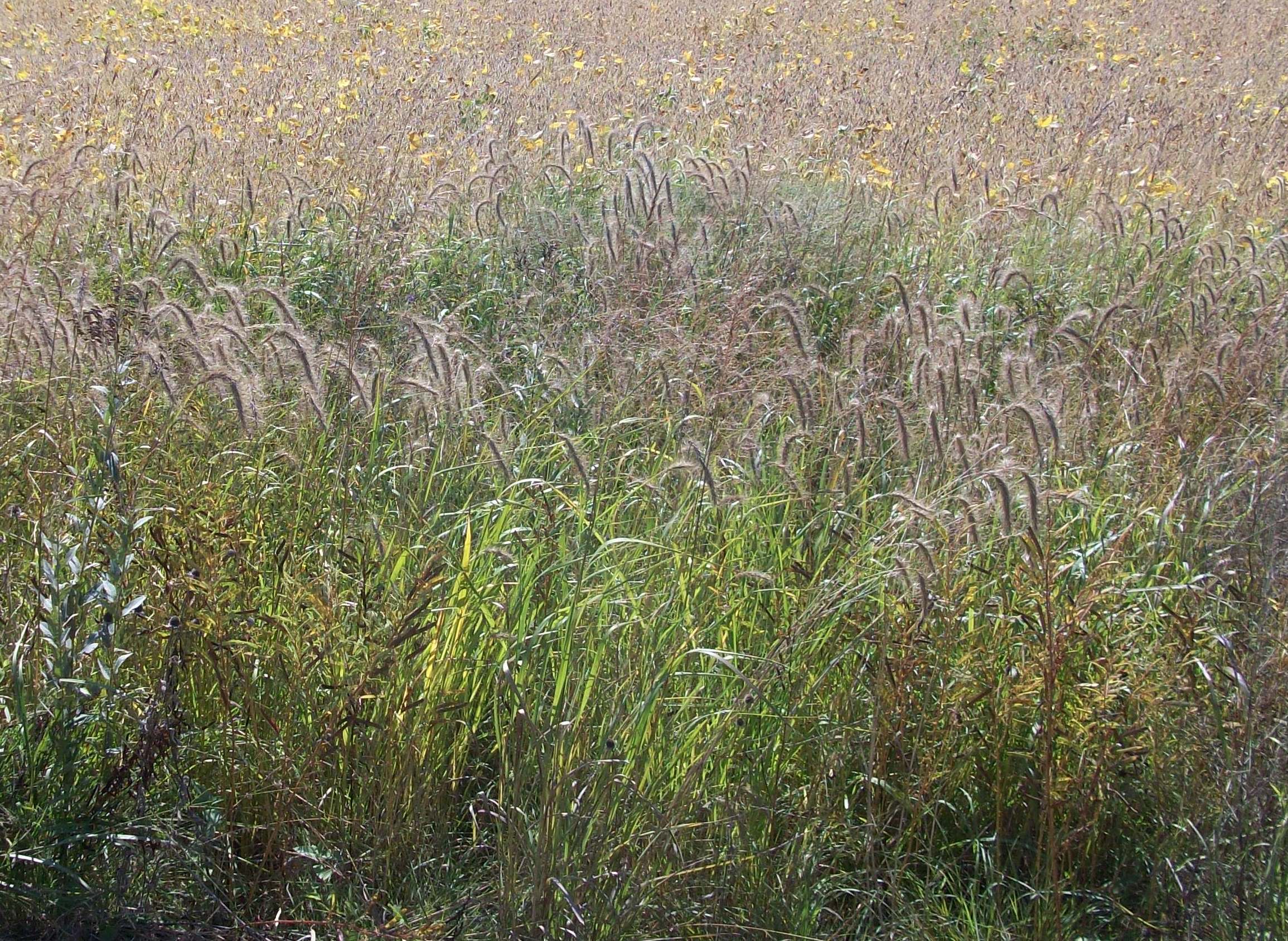
Prairie Grasses in Late Summer

It is a commonplace that effective organizations, especially political ones, should be “grass roots” driven. It is so commonplace the words are virtually meaningless.

Let’s think about this. What drove the election of the current president was a strong movement fed by the fertilizer of unlimited free speech in the form of dark money from a billionaire-led network. It was a grass roots movement supporting a demagogue. It yielded a predictable result, one we’d convinced ourselves wasn’t possible.

The basic validity of the movement to elect President Trump is hard to question. People are free to support political candidates and elect them to high positions including as president. The underlying efficacy of such movements is mitigated by deception and lies told to further its intent. Despite the number of presidential lies and false statements, people persist in their support of the president and the right wing propaganda machine provides many handles for voters to hold fast to the Trump train.

People mistake a participatory democracy as being grass roots driven. It isn’t necessarily. As Thom Hartmann points out in his book The Hidden History of the War on Voting: Who Stole Your Vote — And How to Get it Back, about six percent of eligible voters nominated Trump as the Republican candidate, eight percent nominated Hillary Clinton as the Democratic one. Hartmann’s message is more people should participate in elections.

Grass roots movements are important. Whether they can make needed changes in our governance is an open question. In our current right wing media-dark money-oligarchical society participatory democracy and being grass roots driven aren’t the same thing.

Our recent school board election is an example of a grass roots movement with more positive results. We had six candidates and the community joined together to vet them and pick two to serve. Our collective actions during the run up to the election made a change in the board’s composition. We elected a woman to serve with four other men. She has deep roots among families in the district and the electorate believed the board would be better for her service.

Does characterization of support for a political candidate as “grass roots” make a difference? Probably not. It becomes one more meme in a media environment of too many memes and not enough thinking. I get that tallgrass prairie plants have deep roots. If we hadn’t decimated the ecosystem in which they thrived it might be a more appropriate metaphor. Just like native prairies of Iowa meant something a hundred years ago, grass roots politics are rooted in an era of progressive politics no longer relevant in today’s ubiquitous right wing media and dark money environment.

Instead of coming up with descriptors, politically active people should encourage more people to participate in elections. What we know with some certainty is if everyone votes, common sense solutions to our problems are likely to prevail. Participatory democracy is the way to go.

Categories
Writing

Letters Home

Woman Writing Letter

Among the things I received from my late mother’s estate was a box of letters I wrote her.

A lot of my letters were from the period 1976 until 1979 when I was stationed in a mechanized infantry division in Mainz, Germany.

I read them last night. The topics were pretty mundane.

12 Nov 78
APO New York 09185

Mom,

Just a short note to let you know that I completed French Commando School without serious injury and in good spirits. In case you didn’t get my last letter I arrive in Moline 20 Dec 78 at about 8:30 p.m. on Ozark flight #873 from Chicago. I hope to be going to France again in the time before I return to Davenport. I will visit Normandy Beach and a number of the famous cathedrals. Til then keep the faith, drop me a line to let me know how things are going on the home front.

Love, Paul

I wrote her as much as she wrote me. I kept all of her letters and someday I’ll be ready to read those too.

As I followed the vein of letters over the last 24 hours I found a series written by my maternal grandmother while I was in Europe. They were mostly responses to mine, although what I wrote her did not survive. She was very good about writing me, and explained her health issues in great detail. She wrote often about my cousin Linda who was stationed in Spain at the same time I was in Germany. While Grandma was being treated for a heart attack her physician had a heart attack so she had to get a new doctor, she wrote. I like to think her writing letters to me helped her understand her condition. I know writing has that effect on me.

There was a flurry of letters from friends during the investigation to secure me a top secret clearance. I warned people the feds were coming and most of them wrote back after their interview. I got the clearance, although the information I was able to access was pretty dull. Just because it’s top secret doesn’t mean it’s that interesting. I remember their letters more than the secret stuff.

We are out of the age of many hand-written letters. With “forever stamps” I don’t even know how much posting a first class letter costs. Email is quicker, cheaper, and we get to save a copy if we choose.

Phone calls are also inexpensive. In Germany I did not have a telephone until my appointment as battalion adjutant. More people had to reach me after hours. If the balloon went up (meaning the Soviets crossed the border), we would be rounded up from the compound where Americans lived by knocking on doors.

How to use this archival material is an open question. I’m still trying to figure out what I have, what warrants writing about, and what fits in a 100,000-word autobiography. Some of the memories have me returning letters to the box to save for another time.

Whatever the outcome of this autobiography, the writing of it will be the thing. Part of the journey of life. A way to escape from the pressing society around me that doesn’t know when to relent.

Categories
Living in Society Writing

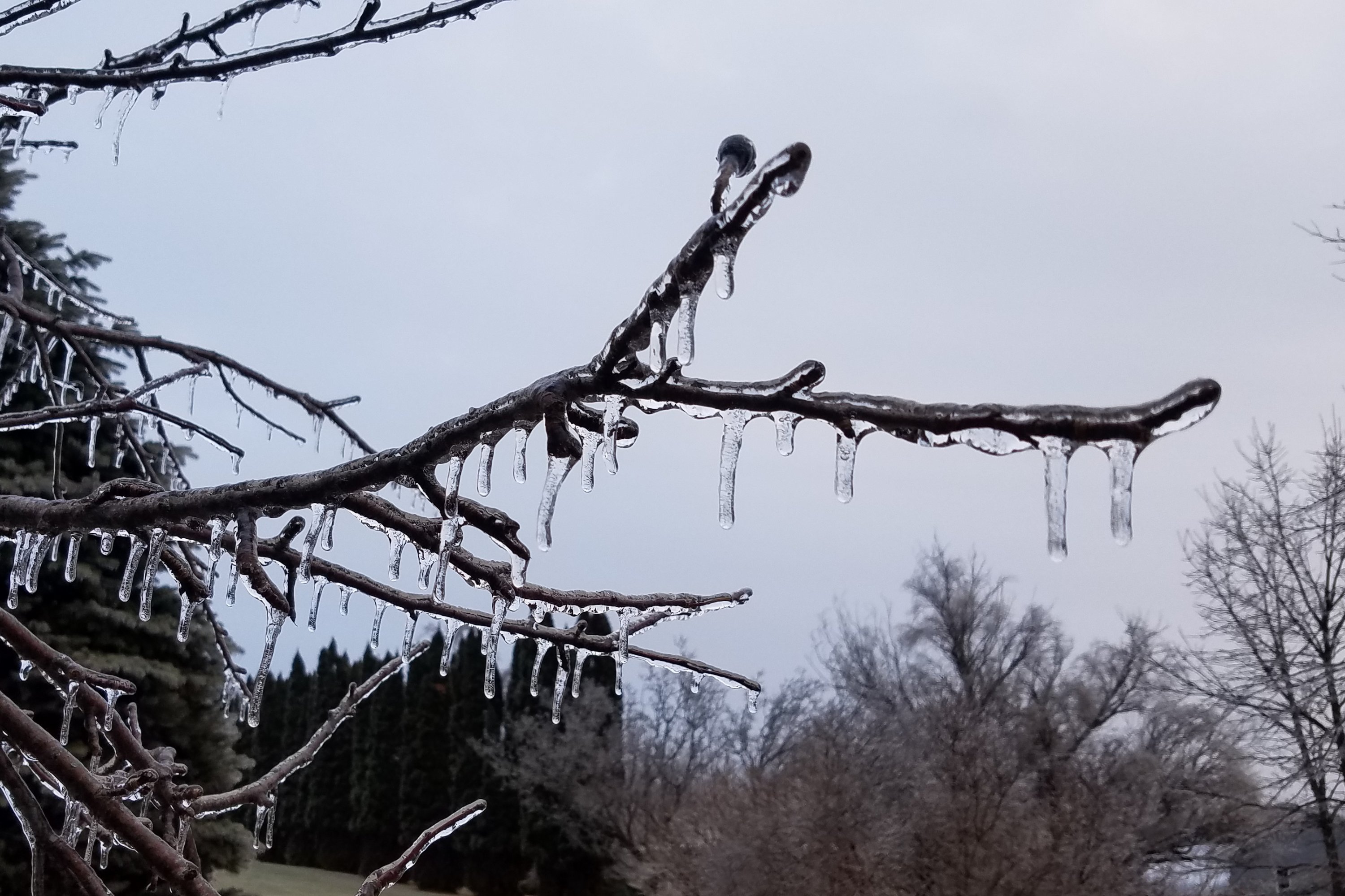
Freezing Rain

Freezing Rain Jan. 11, 2020

It’s been tense the first days of 2020 as Iowa voters prepare for the upcoming election cycle.

I’m temporary chair of our precinct caucus and there is a lot to pull together before Feb. 3, including finding a new location after one was cancelled last week. There are 23 days left until the caucus yet that’s just the beginning of what is expected to be an absorbing political year.

Politics will dominate social discourse if we let it. The U.S. Senate trial of the president, the remainder of the current session of the U.S. Supreme Court, the June primary elections, the Democratic National Convention, and then the November general election will make the time pass quickly. In the middle of that, our country’s foreign policy appears non-existent, creating tension in the Middle East, South Asia, and with China and Russia. It is the second session of the 88th Iowa General Assembly where Republicans hold majorities in both chambers of the legislature. They convene on Monday and are expected to further their conservative agenda. That’s only politics. I haven’t forgotten about climate change.

I also have a life with a to-do list filled with many items that are not optional. If 2020 has been tense at the beginning, it will continue to be so throughout the year.

That’s not to say we should all freak out!

The tips of long evergreen boughs touched the ground near the lane leading to the highway. Because of immeasurable leaf surface, they collected more weight in freezing rain than they could handle. Some broke from the trunks of trees and were scattered along the lane.

It’s expected to warm above freezing again so the count toward fruit tree dormancy will have to be reset before pruning. Maybe by the end of this rapidly filling month.

Meanwhile, snow has begun to fall.

Categories
Writing

Local Food System Fragment

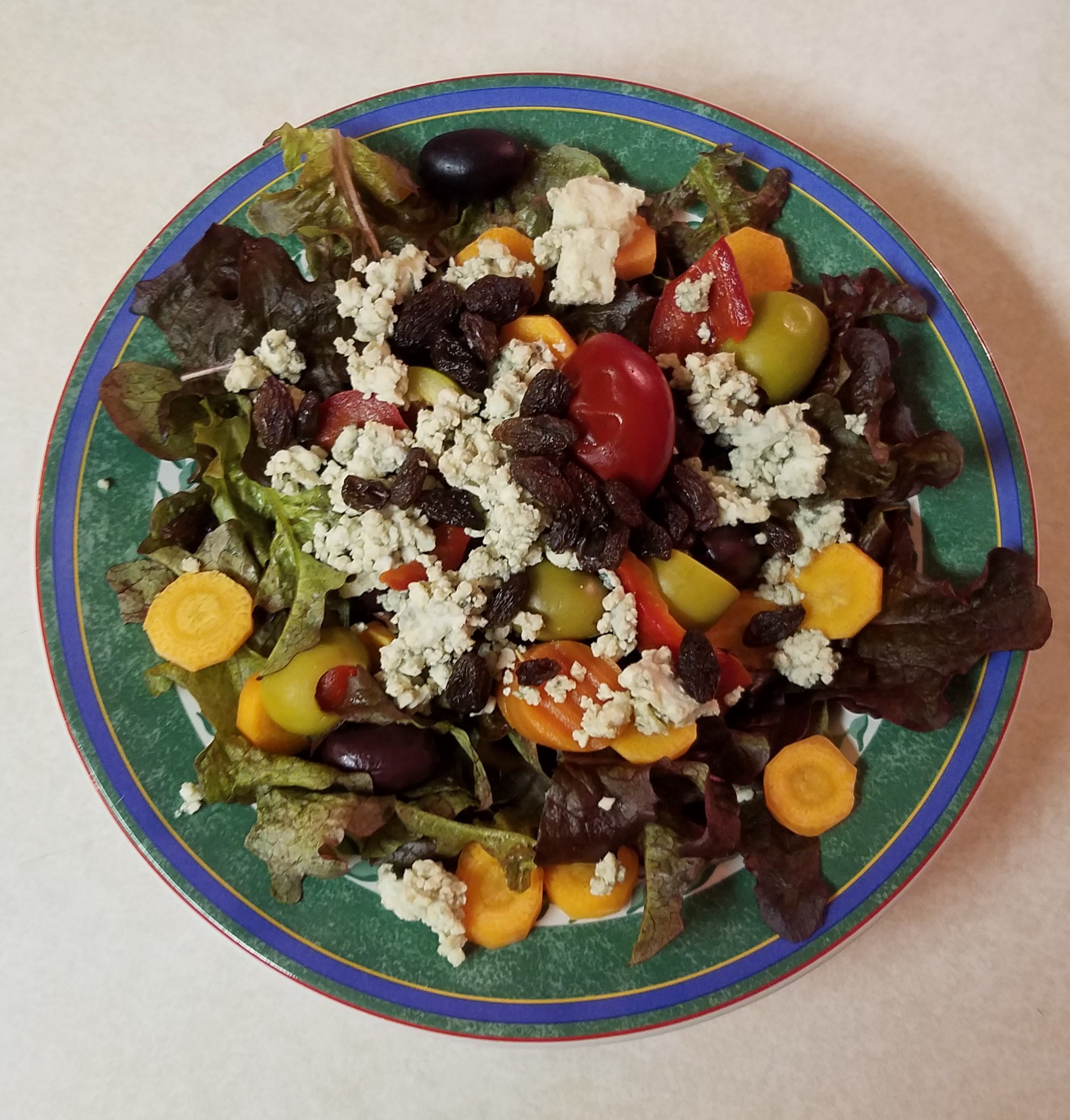
Winter lettuce salad.

When I left a 25-year career in transportation and logistics, food occupied part of my attention. Over the years my blood pressure and cholesterol levels had increased, and when I left transportation they quickly returned to normal, mostly by eating more regular food as opposed to restaurant food.

When we moved back to Iowa in 1993, growing a large garden was part of what I wanted to do with the land. We couldn’t afford an acreage, but managed to find 0.62 of an acre not far from the trail around the north shore of Lake Macbride.

I was ready to produce some of our own food, more than we had in Indiana, but not really ready to embrace local food as anything other than a kitchen garden.

The local food movement was a growing group of individual operators struggling to make a living and an impact in a turbulent world. It remains a nascent system directly tied to our consumer culture, dependent upon disposable income and open mindedness in meeting humankind’s most basic need.

I spent seven years working and living in our local food culture and can say food we consume is not all local and needn’t be. At the same time there are benefits of a local food system beyond living within the season, better taste, and knowing the farmer who produced what we eat.

In our home fall canning leads to a pantry full of soup, tomatoes, hot peppers, sauerkraut, vinegar, apple sauce, pickles and sundry items from the garden and farm. The freezer gets filled with bell peppers, kale, sweet corn, apples, broccoli, blueberries and raspberries. It is food – as local as it gets – driven by what is fresh, abundant and on hand.

Along with home processed goods our pantry has bits and pieces from all over the globe, with each serving a purpose in our culinary lives. Combining ingredients and recipes in a personalized cuisine is where the local food movement lives or dies.

More people seek processed or precooked food because of a perception there is too little time for cooking. If adding kale to a smoothie seems easy, making a stir fry using it is less so. Contemporary consumers want a quick and easy path to making meals and snacks, and don’t have the patience it requires to add many new recipes to their repertoire. Cuisine as an expression of local culture has been tossed out the window by many.

Having worked in the food system, whether at home, on a farm, or in a retail store, has been an important part of my life since retiring in 2009. I found it is a way of life to grow food for direct consumption or sales. It also became clear the local food system is a jumble, even if farmers and consumers want it to be more organized.

One operator runs a community supported agriculture project where members pay in the spring, then share in the luck of the farm, good or bad. Another sells chits to be used to buy farm goods at a local outlet framed as a “store.” Another grows specific crops to sell to restaurants, absorbing any financial risk. All of this and more leads us to a point where an onion isn’t only an onion anymore. In the end it’s not about the onion but the culture.

If someone could organize a local food system, they might make a living. That would miss the point. Local food systems are intended to cut out the middlemen in the food supply chain. At the same time, faced with a need for scalability and the tick tock of the growing season, operators might use the help of an intermediary for marketing and sales.

While some of the trail blazers of a sustainable, local food movement are well known – Alice Waters, Joel Salatin, Fred Kirschenmann, and others – a sense of coherence or agreement on basic terms seems missing among local producers. It is as if operators would rather work inside the bubble of what works for them personally as long as the farm to market system seems to work generally. In a way that is not much different from how corn, soybean, egg and livestock producers view their operations.

Where we go from here is uncertain, although I have some ideas about that based on my experience in our food system.

Categories
Living in Society Writing

It’s Not Really Winter

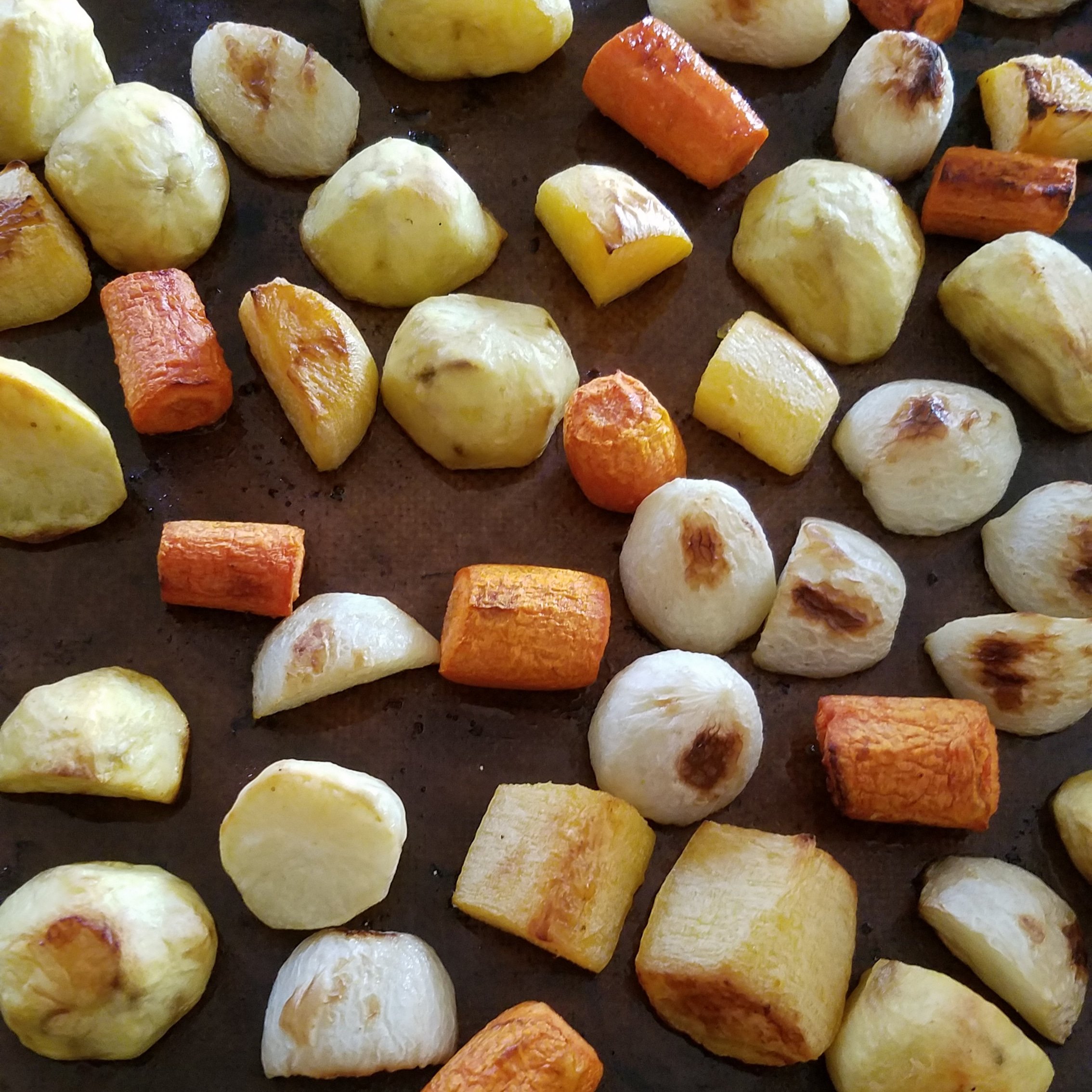
Roasted Root Vegetables: potatoes, rutabaga, turnips and carrots.

On Wednesday morning the ambient temperature is in the teens. By tomorrow at this time it will be in the mid-forties. I’m looking forward to a week of freezing temperatures so I can get tree pruning done.

Not yet.

What gripes me is there is limited work to do outside yet it feels like I should be spending more time there. Instead I write, cook, read, and do chores. It’s a winter life without the winter part of it.

I spent time Tuesday night following events in the Middle East. The Islamic Republic of Iran retaliated for the U.S. assassination of Qasem Soleimani by firing a 15 or so missiles in two volleys into Iraq where U.S. forces were staying. After the launches an Iranian government spokesman said they were done unless the U.S. retaliated with additional military action. They threatened to destroy the Israeli city of Haifa as well as Dubai where thousands of U.S. troops are stationed if we retaliated. It appears the president and his key leadership team stood down after the two volleys and neither Iraqis, U.S. troops, nor coalition forces suffered any casualties. Unrelated to the missile attack, a Ukrainian airliner crashed in Tehran last night killing all 176 people on board.

The Middle East action is a distraction from the president’s Dec. 18 impeachment. Senate Majority Leader McConnell announced yesterday he would proceed with the constitutionally mandated impeachment trail without an agreement to call witnesses. At present he has the votes to support his position although that could change.

Donald Trump is the 13th president in my lifetime and I don’t recall any predecessor who appeared so disorganized and superficial in their approach to international affairs. The conventional wisdom is he won’t be impeached, despite clear evidence of high crimes and misdemeanors, because his supporters in the U.S. Senate hold the majority. Based on everything we know, the two articles of impeachment, abuse of power and obstruction of Congress, are rightly promulgated. I was surprised other articles were not drafted, particularly one related to the emoluments clause of the constitution. My position is the president is as guilty as hell of the two articles of impeachment and I would like to see him removed from office even though from a policy standpoint, Vice President Pence could be a worse president.

The Republican Party has become the party of Trump and that’s not good for regular people like us. The corruption from money in politics has become overwhelming and it’s hard to see an end to it. Moneyed interests have a well-developed infrastructure to support what they want to achieve. Democrats have no equivalent response to it. If we can’t slow their progress by winning the presidency in November, it will be generations before a progressive agenda can be advanced.

What stood out to me over the weekend is about 100 people gathered in the county seat to protest the U.S. slaying of Soleimani. At the same time, that number and half again gathered for a nearby event with author Marianne Williamson who laid off her presidential campaign staff a few days previously. That tells me the populace is not engaged in the Middle East or in Trump’s incompetence.

Alice Walker wrote, “The most common way people give up their power is by thinking they don’t have any.” In a scenario like yesterday, where Iranians seem like reasonable people, it seems like we’ve given the president a blank check to have his way with the Middle East. I’d feel better about that if there was any shred of evidence he or his staff knew what they are doing.

It’s winter in America, but not really. Without it it’s an open question whether we will make it until spring with necessary chores completed. We will do the best we can.

Categories
Writing

Fragments in Search of a Narrative

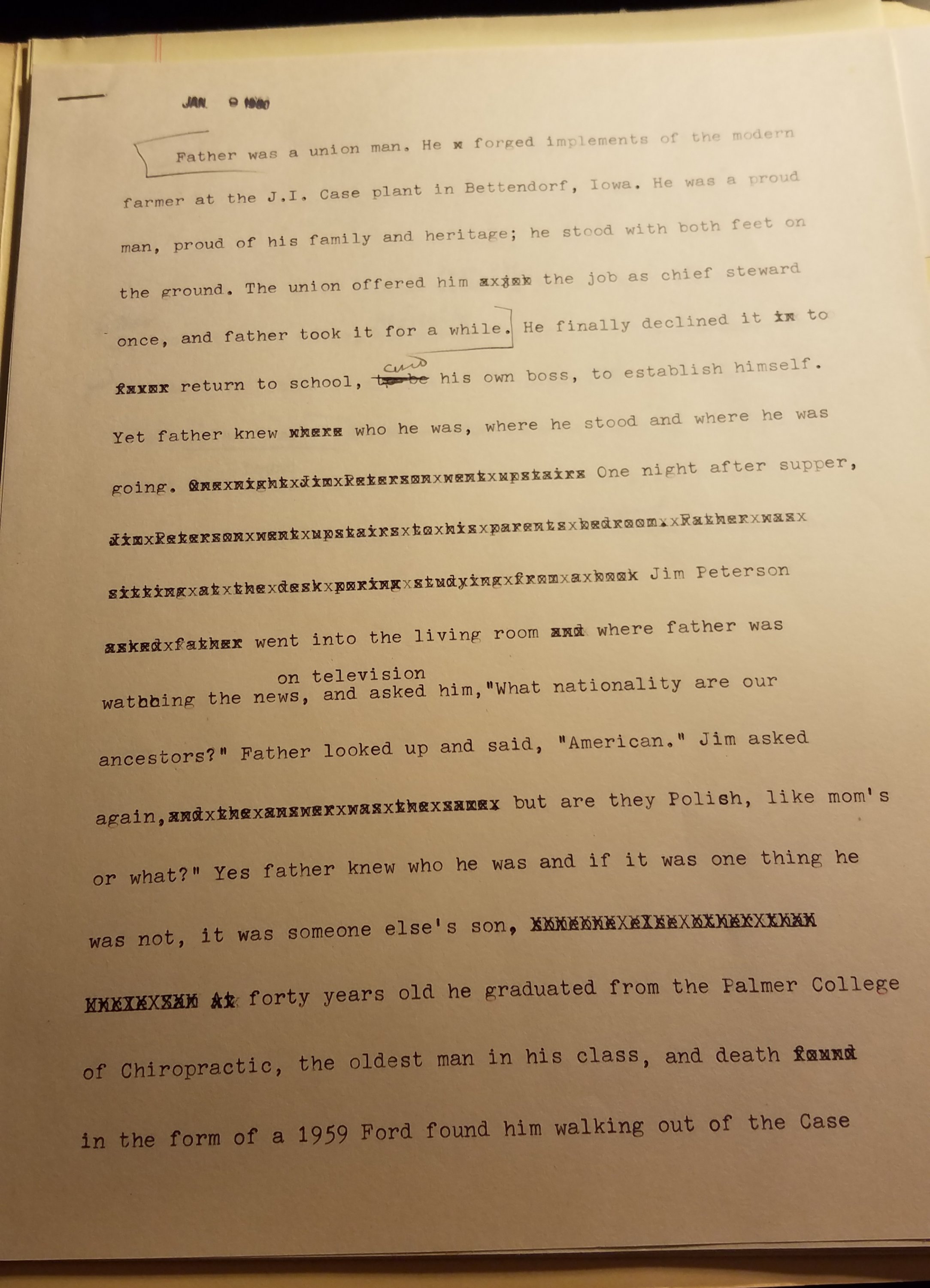
Draft in a Time of Typewriters

(Editor’s Note: Robert Caro instructs us to turn every page when writing biography. I don’t remember writing these fragments found in a folder with multiple typewritten drafts of each. Today they make me groan a bit. They are fiction with one foot in reality).

Fragment 1 – Jan. 9, 1980

Father was a union man. He forged implements of the modern farmer at the J.I. Case plant in Bettendorf, Iowa. He was a proud man, proud of his family and heritage; he stood with both feet on the ground.

The union offered him a job as chief steward once. He took it for a while, but ultimately declined it. He went back to school to get out of the plant and be his own boss, to establish himself.

He graduated in 1968, but death in the form of a 1959 Ford struck him as he walked out of the plant after his shift.

Those were hard years, but Jim Peterson was convinced his father knew who he was, and where he was going.

Fragment 2 – 1974

Danny Dziabas shut the door of his upstairs apartment and began walking to the sound of night creatures chirping near the house.Walking under the starlight of Orion rising. Walking from his apartment on Walling Court, near where Bix Beiderbecke had lived. Walking toward Locust Street where revving of car engines and laughter of young people muffled the night sounds. Where headlights and streetlights dimmed the rising hunter. Danny Dziabas walked to the Deep Rock Station and placed a call while a Corvette and a G.T.O. lined up at the intersection for a drag race.

As he finished his call, the traffic light changed to green and the two cars squealed away from the corner.In hot air, smelling of burnt rubber, Danny Dziabas began walking, away from the noise and light of Locust Street toward his nearly empty apartment on Walling Court near where Bix Beiderbecke had lived.

Fragment 3 – Dec. 25, 1974

When the time came Danny began looking up his friends. The first was Milton Murphy who was in possession of Danny’s books and record albums.

Danny and Milton had played together in a band called the Milton Murphy Moose Manglers. It lasted about nine months. Just as they were about to collect their pay from a party on a farm near the Wapsi River, a band mate carried the P.A. head 100 yards and threw it over the bluff into the river, ending both the evening and the band.

Remembering this and other episodes in the Manglers’ history, Danny questioned the sanity of leaving his possessions in Milton’s care in the first place. He knew it would be alright when he heard the dull beat of the base coming through the floor above the entrance hall.

Fragment 4 – Iowa City, 1973-4

In act of simultaneous co-creation Danny Dziabas skied the snow-covered slopes of Washington Street, mountainous mathematics to the left, his just crashed 1965 Volkswagen cavernous time away and in a ditch. Pirouetting on Madison Street, his toe reveals a greenery hidden by newly fallen snow.

Categories
Writing

Book of Mormon

Wise County Virginia Civil War Group

I’ve been using the free, on line service FamilySearch to research parts of my family history. It is funded by the Church of Jesus Christ of Latter-Day Saints.

I call it, in a respectful way, the Book of Mormon.

My reference library has a copy of the actual Book of Mormon, replete with a photo of the prophet Joseph Smith from whose translations it was made in 1830. I’ve already opened FamilySearch many more times than the worn copy of the religious text.

Stories about early gatherings of my paternal ancestors include one about the funeral for “Aunt Stella.” I have a photograph of Stella in her coffin with someone identified as “Granny Reed” nearby. Stella was my grandfather’s sister. Oral history is no one knew anything about Granny Reed except that’s what they called her. According to FamilySearch, in the 1920 U.S. Census she is listed living in the household of my great grandfather as his mother-in-law, with an estimated birth year of 1864. Her complete name was Josephine Reed. It has bothered me we didn’t know more. Now thanks to the Mormons there is a better narrative of who she was.

When I write “better narrative” I mean the story is and continues to be a human creation. While there are “facts” to support it, there are vagaries in the U.S. Census data and oral tradition that went unrecorded. The temptation is to take a fact like a U.S. Census entry and make more of it than it actually is. As I wrote this post I found myself rewriting that paragraph time and again to refine my understanding of who was Granny Reed. I’m not sure how much more this discovery changes things.

I love the name Josephine and had we known about it when our daughter was born, it may have been entered into the pool of family names from which we selected hers. Granny Reed was our daughter’s great, great, great grandmother. It’s a fun fact yet not that relevant to our daily lives.

Somewhere in box-storage is a trove of genealogy documents collected from a man named Howard Deaton during a trip to Saint Louis. His focus was on our surname, Some of his work is relevant to our line and some isn’t. Robert Caro advises us to turn every page when researching biography. I don’t know I will have time to go through documents I have, let alone the entire Book of Mormon.

These are decisions one makes in compressing the story of a life into a hundred thousand words. If anything, the challenges of crafting a story come into high relief. What I’m writing will by its nature be a story built today with a perspective of right now. I don’t see how any biography or historical work can be anything else. There is a politics of history, a minefield of historian’s fallacies. There is also a poetry of history. What we hope to do is create a narrative grounded in something real that transcends the lived life upon which it was based.

At age 68 there is an urgency to get something down, edited and finished.

Categories
Writing

Poetry in the New Year

Moon Rise Through the Locust Tree

The end of year holidays seem to go on forever.

With Christmas and New Year’s on a Wednesday, from Dec. 20 until Jan. 7 I will have worked only two days at the home, farm and auto supply store. Yesterday I needed to get out of the house.

I found a box and filled it with discards for the public library book sale, the second such box this winter. As soon as it was filled, I drove it in, donated the contents, and socialized with friends. There will be more donations by the time I get organized for 2020 writing projects.

Afterward I stopped at a convenience store to buy a lottery ticket before finding my way home. Restlessness abated.

Who reads poetry? Why do we read it?

These are not a random questions. I have a few hundred books of poetry I’m either going to read, re-read, or get rid of. I’m interested in the 21st century case for reading poetry in a time of social media. I believe there is one.

I read poetry. When I do it’s mostly because of how I connect to the poet.

I’m thinking of Lucia Perillo who taught at Southern Illinois University during the time I was regularly visiting the Shawnee National Forest. I’m not sure I met her but the creative community there was small and tightly knit. Her poetry resonates of that time.

I’m thinking of Donald Justice who I encountered at the UPS terminal in Coralville. He was shipping books to himself in Chapel Hill, N.C., leaving Iowa.

I’m thinking of Robert Laughlin, William Carlos Williams’ editor at New Directions, who spoke about his last times with Williams at an event at the Lindquist Center in Iowa City.

I’m thinking of poets who visited and stayed at our rental on Gilbert Court in Iowa City: David Morice, Darrell Gray, Pat O’Donnell, Jim Mulac, Sheila Heldenbrand, Alan Kornblum, and the rest.

I’ve noticed there are many bad poets and plenty of good ones. If we can find ways to connect with poets, it makes time engaging and worthwhile. It smooths off the rough edges. Poetry can give us a different way of seeing our lives. We can get lost in the words, conjured images, and emotions. We need that from time to time.

As we begin a new year filled with tumult and uncertainty, I am reading again. I’m not ready to give up on the imagination. It’s there we may find relief and salvation.

Best wishes for a happy new year from On Our Own.

Categories
Home Life Writing

Last Days of 2019

Front Moving East at Sunrise on Dec. 29, 2019

Snow flurried outside the dining room window for a while. I thought we might return to normal winter weather. The thought passed and snow stopped without accumulation.

We need a good streak of very cold days to prune the fruit trees. Last year it was difficult to find such a streak yet I’m hopeful this year. I’m not going to wait for ideal conditions. I’ll take what we get in our evolving climate.

This year’s reckoning with the past and planning for the future is taking more time and effort. It’s not because I did more. The process has been more organized and thoughtful than in recent years. I’m conscious of my age and weighing carefully which projects and activities will get my attention. At the end of it I want a definite plan with time lines. It’s a better process.

While our personal lives went okay in 2019, our participation in broader society was like the wafting odors from nearby feedlots. It was hard to stay separate from the international shit storm.

As Julian Borger pointed out in The Guardian, 2019 was the year U.S. foreign policy fell apart. “Donald Trump’s approach to the world is little more than a tangle of personal interests, narcissism and Twitter outbursts,” he wrote. That’s no way to run a country, even if a majority seeks to isolate American interests from the rest of global society. We can do better than this.

Steven Piersanti wrote on DCReport.org, “Under the bankrupter-in-chief, the national debt is skyrocketing while economic growth is lagging.” Trump is running the country just like he ran his failed businesses, according to Piersanti. “The country’s economic resources are being wasted and our economic health is endangered.”

“The next 12 months will determine whether the world is capable of controlling nuclear proliferation, arresting runaway climate change, and restoring faith in the United Nations,” Stewart Patrick wrote at World Politics Review. Those things matter to everyone and positive outcomes on any of them are dubious without American leadership. President Trump, ditcher of nuclear arms control agreements, critic of the need to address climate change, and bad-mouther of the United Nations does not appear to have an appetite or the capacity to lead at home or abroad. The prospects are bleak on these fronts and more until government changes hands.

It comes back to personal planning for next year. What amount of time will I devote to addressing these problems? The overarching motivation is to remove our current federal elected representatives from office and replace them with people who understand the importance of foreign policy.

At the same time, I can’t let politics be a single thing that absorbs all my time. Regardless of the Republican shit storm, we each need balance in our lives.

It’s taking a little longer to plan this year but the premise of it comes back to my tag line. How shall we best sustain our lives in a turbulent world?

A toast to 2019, an aspirin and vitamin for 2020, and off we go into an uncertain future with the potential for great things.