Categories
Writing

Cooking Memoir

Classic family breakfast

This image of a recent breakfast tells a story I’m the only one who hears.

Hashed brown potatoes, commercially prepared ketchup, two organic scrambled eggs, home made hot sauce, and a Gold Rush apple grown at a local orchard. Each part of this breakfast has its origins in the heart of my kitchen garden.

I watched my maternal grandmother make hashed browns many times and the way I do it is how she did. My earliest memories are from time in her small kitchen when she lived in a duplex where Mom, Dad and I occupied the other half. Cooking, growing, acquiring and preparing food ingredients would become a major part of my life, one that should be part of any memoir. Spending time with Grandmother during meal preparation has been influential and became part of who I am.

At the same time, Mother’s kitchen transitioned from meals cooked from many raw ingredients to ones that leveraged help from food processors. In the late 1950s and early 1960s we shopped at a corner grocery store. That gave way to a supermarket that sold many lines of products. Notable among these were bread baked at Wonder Bakery in town, and a Mexican food section where we could buy branded tortillas, sauces, spices and canned ingredients to make tacos and tostadas. Tomato ketchup was one kind of help.

Development of a recipe for tomato ketchup is attributed to Philadelphia scientist James Mease in 1812. The condiment became ubiquitous, including in our house. I have a few old cookbooks with recipes for tomato ketchup yet the idea of making our own wouldn’t stand the heat of August summer. Over the years, ingredients and process of commercial ketchup changed. Despite the use of high fructose corn syrup, we continue to use Heinz brand tomato ketchup on hashed browns. That’s what is in this photograph.

Scrambled eggs reflects many hours of watching cooking programs on television and YouTube. I sourced eggs from many places, although in recent years I buy organic eggs at the wholesale club or get them from local growers. Scrambling an egg is both easy and complicated. Very few times is the result inedible. Reaching culinary perfection has been beyond my reach with any consistency. Eggs are tolerant of erratic cooks. I continue to work to be better at it.

I recently wrote about hot sauce, something I learned to make from my platoon sergeant when we were stationed in West Germany. Over the years my recipe changed to include different kinds of hot peppers, tomatillos and occasional spices. What I used in this photo is similar to what I made in the 1970s when I discovered the condiment.

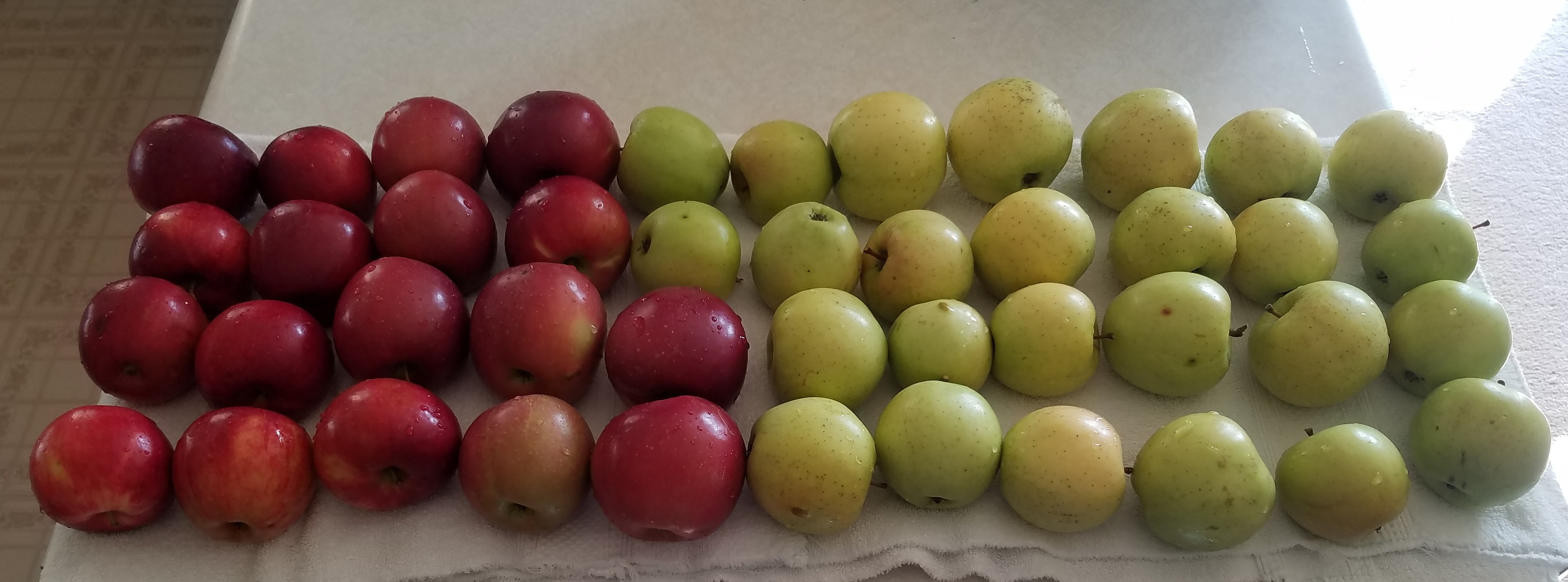
Finally, apple culture. Like many I came up on mostly Red Delicious apples. That’s one of the four varieties of trees in our current back yard. It was working at a u-pick orchard for seven years that taught me about apple culture. Even though I declined to return this year because of the coronavirus pandemic, I bought eight varieties for their different characteristics. That this breakfast was made in October is reflected by the presence of a Gold Rush apple which is among the last to ripen in Iowa.

How should I write about cooking in a memoir? Today that is an open question. Key cooking events will appear on any timeline I write as an outline for the book. It is unclear how information about cooking might be presented in the final product, whether in its own section or with stories dotting a beginning to end, chronological narrative.

It will be a part of my autobiography. Writing this post made me hungry.
Categories
Writing

A Personal COVID-19 Timeline

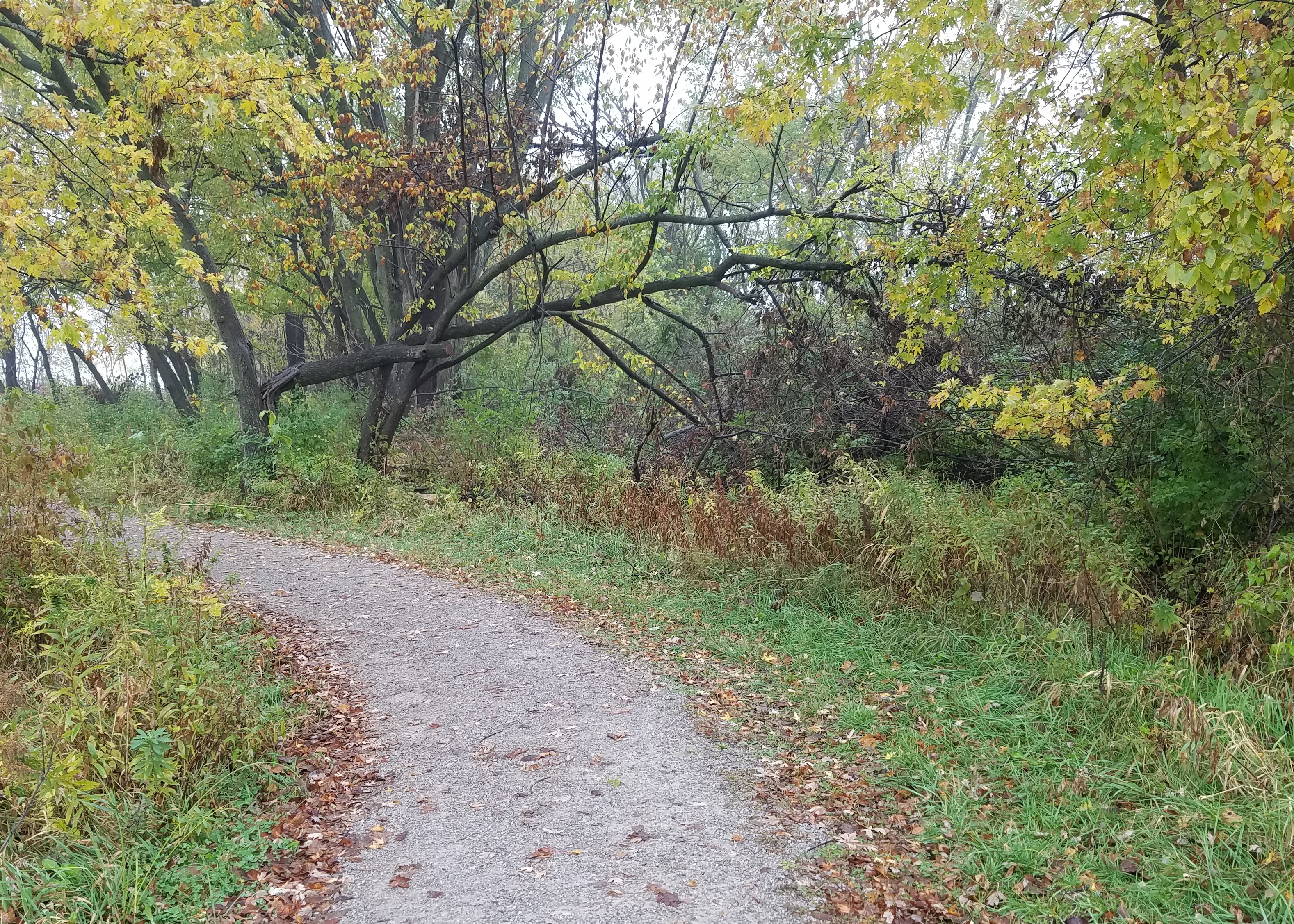
Lake Macbride State Park trail.

The coronavirus pandemic brought normal to a screeching halt.

On March 13 I spent the day with a friend I’ve known since grade school ending with a beer at a bar in Tiffin. After that there has been no normal.

My personal timeline went like this:

March 7: Governor Reynolds activated the State Emergency Operations Center for COVID-19.

March 8: Iowa Hygienic Laboratory reported the first three positive test results for COVID-19 in Iowa.

March 9: Governor Reynolds issued a Proclamation of Disaster Emergency regarding COVID-19.

March 11: World Health Organization declares COVID-19 a pandemic.

March 24: First Iowa death attributed to COVID-19.

March 29: President Trump extends federal stay-at-home order until April 30.

April 2: My final shift at the home, farm and auto supply store.

April 6: Began 30-day COVID-19 leave of absence from the home, farm and auto supply store.

April 11: Purchased poetry books via email from local used bookstore to support them during the coronavirus pandemic.

April 14: Received CARES Act coronavirus pandemic payment from U.S. Treasury.

April 16: Interviewed by Andrew Keshner of MarketWatch about the impact of the coronavirus pandemic on gardening.

April 21: Conducted first home owners association board meeting via conference call because of the coronavirus pandemic. Same with sewer district board of trustees.

April 28: Gave notice of retirement to the home, farm and auto supply store due to the coronavirus pandemic.

April 29: Statewide food policy council meeting on the CARES Act, via Zoom.

May 1: Iowa for Biden Round table on the Economic Impact of COVID-19 on Rural Families Moderated by Tom Vilsack, via Zoom.

May 6: Webinar on UPS Supply Chain Challenges during the coronavirus pandemic, via Zoom.

May 6: Arms Control Association meeting about COVID-19 and Global Security, via Zoom.

May 27: First COVID-19 screening (negative).

June 1: Prescription for cholesterol medicine during followup at local clinic. Socially distanced.

June 2: Began exercising for 25-30 minutes daily for health reasons and due to shelter in place because of the coronavirus pandemic.

June 15: Conference call with Vice President Mike Pence on COVID-19, other topics.

June 16: Second COVID-19 screening (negative).

June 18: Began bicycle riding for exercise.

June 28: Haircut at home because of the coronavirus pandemic.

July 13: 75th Anniversary of the Atomic Bombings – Deconstructing the Myths and Promoting a Nuclear Weapons-Free & Just World, via Zoom.

July 23: First garden donation to local food rescue non-profit.

July 23: Rita Hart meeting on re-opening the schools, via Zoom.

July 29: Dental appointment in Cedar Rapids. Partial treatment because of COVID-19 restrictions.

August 2: Bicycle crash on Lake Macbride Trail.

August 9: Op-ed in the Cedar Rapids Gazette, 75 Years After Hiroshima.

August 10: Derecho, lost electricity.

August 13: Bicycle crash on Polk Avenue detour because of derecho damage on the trail.

August 14: Electricity restored.

August 15: Discussion with the orchard about return to work for the fall season. Declined due to the coronavirus pandemic and high number of infections in Johnson County.

August 20: Third COVID-19 screening (negative).

September 10: Followup appointment at local clinic. Socially distanced.

September 13: Op-ed in the Cedar Rapids Gazette, Is Rural Iowa Different?

September 26: Pop-up event with Doug Emhoff (Kamala Harris’ husband). Drive through campaign sign pickup due to restrictions of coronavirus pandemic.

October 23: Washington Post reports, “America is poised to enter its worst stretch of the pandemic, with cases spiking and the country on the precipice of shattering its daily record for infections in the next few days.” In Iowa we have the eighth highest COVID-19 infection rate among the states. There have been 1,617 Iowa deaths linked to the coronavirus.

Categories
Writing

October Rain

Pelicans on the lake.

There have been Iowa rainstorms in late October for as long as I can remember. Rain is usually followed by a period of warming during which we can get the yard ready for winter. There is comfort in the repeated patterns of nature.

Rain recharges the Silurian Aquifer where we draw our water. The Iowa Department of Natural Resources recently renewed our permit to draw water for another ten years. We don’t worry about draining this aquifer because of its proximity to the surface and ability to recharge. Our temperate climate makes it more sustainable. Even during the most severe droughts, like in 2012, water supply is adequate, and rarely questioned.

Let it rain.

At the beginning of the pandemic I asked a local used bookstore to pick $100 worth of books of poetry for me with the main criteria being I didn’t already own a copy. I’m still reading from that stack and just finished Honest Effort by Michael Carey. In 1991, when the book was published, Carey was an Iowan transplanted from the East Coast who farmed his spouse’s family farm, writing poetry about his life. His Facebook page shows the farming thing, and his marriage, didn’t work out.

It’s clean verse, and by that I mean he brings very few objects of contemporary culture into the poetry. That creates a timeless quality and allows his unique voice to be heard. For a couple of hours he held me in his world. Highly recommended if you can find a copy. My recent reading list is here if readers are curious.

After my morning writing session the day is a blank slate. It’s Friday, one of the few days distinguishable from others because it’s the trash and recycling day. We also plan a pizza dinner on Friday. It’s raining so it will be an indoors day enlivened by the imagination, I hope. Thanks for reading.

Categories
Writing

So Many Letters

Morning in Iowa

Here’s a post I wrote about writing letters to the editor while working as a proof reader at a local weekly newspaper on Oct. 20, 2012. The newspaper in Iowa’s second largest city continues to print letters to the editor and guest opinions daily. The main newspaper in the county seat practically eliminated printing letters to the editor, now doing so maybe two days per week. Weeklies, like the one where I worked, are challenged with loss of advertising, consolidation with other newspapers, and an uncertain future. They welcome this free to them and engaging to their readers content. Letters to the editor of local newspapers play an important role in political campaigns and about anything else going on in small cities, towns and school districts. While it continues to exist, the letter to the editor is an effective way to gain readers’ attention. It reaches many multiples of the daily views a blog like mine or a social media post reaches.This is reprinted with limited editing.

Just returned from my job at the newspaper, where I had to work longer than usual to get through a spike in submitted letters to the editor… election and all. Many topics, some letters better written than others. Some writers I know well, others, not so much. More well written than poorly written, in fact all of them were understandable.

Which leads me to the question of why these same writers don’t take advantage of this forum, except when they have an axe to grind, cause to promote, or we are two weeks from a general election?

The small slice of the community that still reads newspapers is one of the most intelligent and articulate parts of our society, believe it or not. As a lowly proofreader, I earned extra pay for my time, so am grateful this day. But I know from experience the volume and time will drop off dramatically after the election.

So for Pete’s sake, spend 30 minutes a month and write a letter to the editor. You will feel better and it keeps us piecework wage earners in the green.

Categories
Writing

Preparing for Winter

Enterprise apples.

It’s time to prepare for winter.

A repair person is scheduled to inspect and clean our furnace next week. I got a navy blue wool blanket out of storage and put it between the sheet and comforter on the bed. On the doorway to my writing table I put an old pink, white and green bedspread, printed with ballerinas in pointe shoes, to hold warmth created by a space heater. Winter is about keeping warm in Big Grove Township.

It’s not winter yet. I hope for a few more days of bicycling on the trails, a few more jogs on my 2.5 mile course, before being relegated to indoors exercise. Winds calmed this morning so maybe another trip to Ely. We’ll see.

The Nov. 3 election and the coronavirus pandemic are always in the background. One of those dissipates in 15 days. The pandemic, however, will be with us for a while. Experts say throughout 2021.

I’m ready to write this winter. With the garden idle, government in transition, and a pandemic all around us, there is no better time to hunker down behind my ballerina-covered shield against the cold and figure out where I came from, what I’ve done, and importantly, what work remains.

I’ll be warm, if not as safe as I’d like.

Categories
Writing

Pedaling Against the Wind

Storage apples drying on the counter.

A steady, westerly wind blew the last few days making the daily bicycle trip more challenging. I wore a hat under my helmet, a pair of gloves, and a sweatshirt to hold against the chill.

It has been good riding on the trails near our home since I changed the front tire and tube on Monday. I’m finding a 40-year old bicycle needs constant repairs and enjoy diagnosing problems and resolving them.

I have been thinking about participating in an event-style ride next summer, although I need to train for it if I do. Maybe a century ride, or a day of RAGBRAI if they resume operations. For now my attention turns toward winter. The change of seasons is in the air.

The orchard has the last apples of the season available this week. I picked Gold Rush from trees and got Jonathan and Enterprise in the display cooler. Gold Rush and Jonathan are for storage and the Enterprise will be converted to apple crisp or apple sauce during the next couple of days. It is hard to believe the season is already at its end. I am happy to have the nearby orchard to fill gaps in our home apple growing culture.

With cooler weather I turn from finishing the work in the yard and garden to creative work indoors. I filled in a couple of blanks on my autobiography outline yesterday. I hesitated to re-start the project during gardening season because I didn’t feel ready. With the combination of the coronavirus pandemic, a forced retirement, and winter’s approach I feel more ready than in a long time.

Politics took a holiday yesterday. There were at least four televised events yet I viewed none of them. On my to-do list is to obtain a digital television and set it up. The analog ones don’t really work. I am loathe to turn them on. Because I voted already my interest in details of candidate positions is waning.

It will be different if Joe Biden wins the presidential election. Having someone who uses reason, logic and careful deliberation for process will be refreshing yet something to which we haven’t been accustomed the last four years. The coalition of supporters Biden brought together is broad and deep. There will be Republican resistance to a Biden administration, yet any more, that’s to be expected and most people realize it. The moderator of Biden’s televised town hall meeting asked him what he would do if he loses the Nov. 3 election. Biden’s response, “I won’t lose.”

There will be wind but no rain according to this morning’s forecast: a fine day for pedaling against the wind. Such resistance is important to human progress. It makes us stronger and builds stamina. Both are qualities needed for the road ahead.

Categories
Writing

Hot Sauce

Hot Sauce

Editors Note: This is from a work file that resulted in the photograph and related art pieces. The main object was a mason jar with a print of this photograph and a poem inside. The poem can be found by clicking here. I was employed at Amoco Oil Company at 200 East Randolph Street in Chicago on Oct. 27, 1990 when I wrote this. By leaving work with an Iowa-based transportation and logistics firm I really had cut the cord on my Iowa roots, intending to go on living with our small family in Indiana or wherever life took us. Part of that new life would be what I called creative endeavor, or creative work with specific outputs. This piece marks a significant commitment to creativity. The text below is transcribed from my hand written notes without changes. It is only part of the document.

This piece is about hot sauce, but about more than that. It is about my vision as a person, family member and citizen of the global village for the next five years. But it is about my recipe for hot sauce, how I first learned it, and about my philosophy of life and art. First there will be the mason jar. Acquired at auctions mostly, and stored in our house. A container in which to put hot sauce.

The photograph of the ingredients a moment in time with my camera in the sun. Specific pieces of vegetables that gain significance when I take their image down on film and reproduce it on film. The instructions, so someone could make the hot sauce, then my written piece about the genesis and my vision.

The aspects, combined with the mail package and handling by the U.S. Postal Service represent a product of my creative endeavor.The first creative work for presentation to my small group of friends.

Not true really. Next in a series of creative endeavors is more like it.

Coping with modern life. It is not easy. In modern life, I have chosen to be an original, and in so choosing, have limited my contact with people outside work. I have become accustomed to staying within the borders of our property here in Lake County. I have taken to gaining weight. I have a vision of being a creative person who makes a significant contribution to society. That has long been my goal. But as another warm season comes to a close, I see I have accomplished little. The work with Amoco takes much of my time. I need to do better, work smarter, to allow more time for these home activities.

And all the while I ponder these things we get older.

Categories
Environment Writing

Lilacs Bloom in October

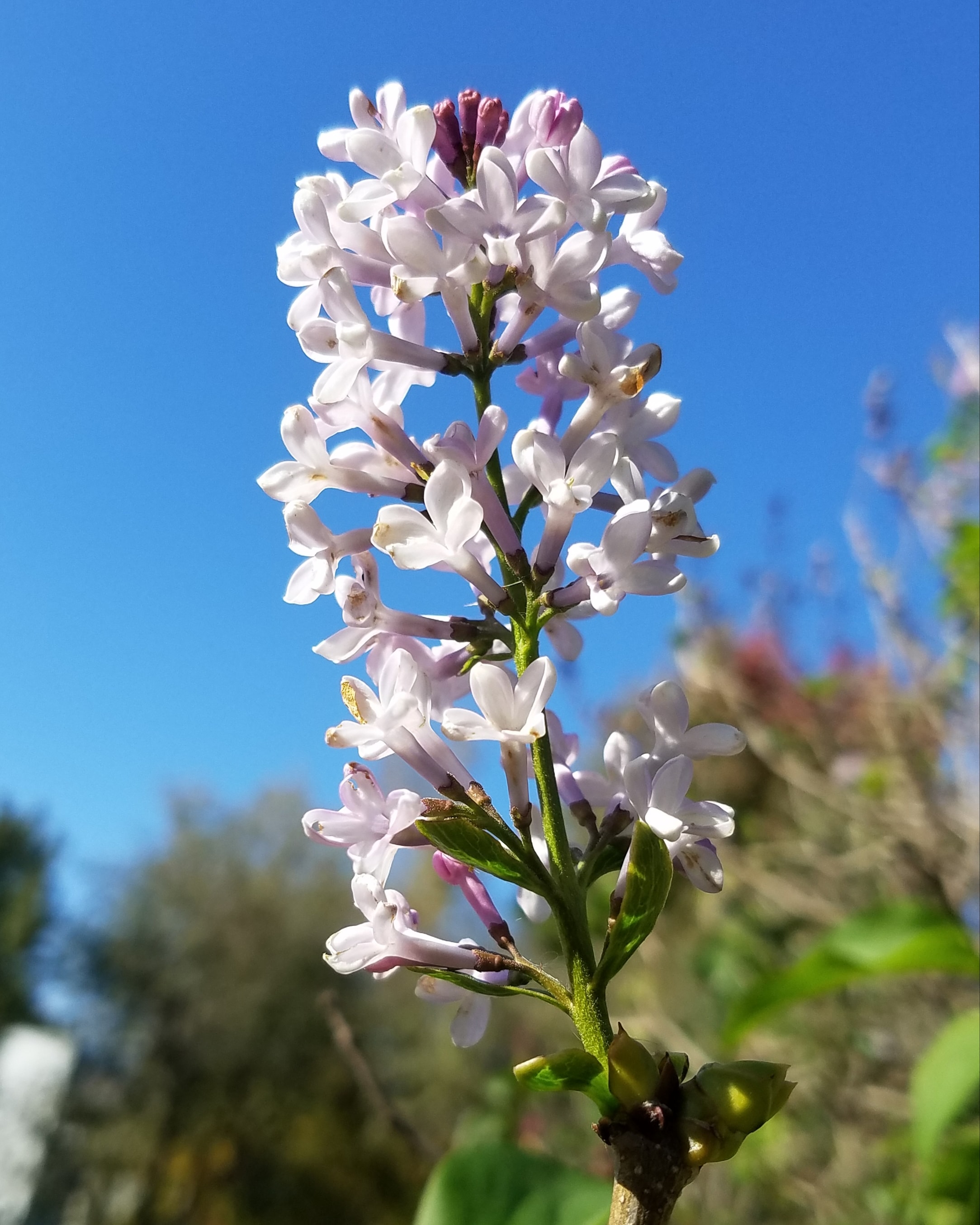
Lilac blooming on Oct. 6, 2020.

2020 has been stressful for trees and shrubs. Our lilac bushes are in bloom. It’s October.

I remember when autumn colors took my breath away. Stunning reds, yellows, greens and browns spread out across the other side of the lake.

It wasn’t breath-taking this year as I jogged along the state park trail.

The trees seemed sparse. More than last year. The yellow, brown and green colors were subdued or muted, as if the forest had one hella year like the rest of us. This side of the lake, tree damage from the derecho is everywhere. As winter approaches uncertainty abounds.

One hopes for catharsis on Nov. 3 yet I don’t know. Ticket sales from Broadway performances in New York have been suspended until May 2021. It seems like forever until then.

Categories
Writing

Neighborhoods

Turn around near Seven Sisters Road.

In his book What Unites Us, former CBS news person Dan Rather refers several times to the “neighborhood where I grew up” in Texas.

This narrative meme should be abandoned by anyone who is serious about autobiography because the plural form of neighborhood is more accurate. In addition, growing up is not a linear process. We don’t “grow up” in a single way or in a single place and magically become a “grown-up.” The communities that surrounded our lives in the 20th Century were not homogeneous. They were diverse and less rooted in place. To root autobiography in place seems arbitrary. The narrative force of this meme casts aside our diversity of experience. We shouldn’t do that if we seek to be true to ourselves.

Our mind doesn’t stop growing as Rather points out. I had formative early experiences and it seems normal to emphasize them. I’ve written about getting injured when a swing set collapsed on me at age three and a half. That experience combined with my arrival at the hospital, taking ether through a funnel, and a lengthy stay had an effect on me that persists. There was a lot else going on at the time. I like to tell this story yet is it most representative of what makes me who I am? Probably not.

Writing autobiography means setting aside favored tales like my injury and hospital stay. It would be hard to write a memoir and leave it out. However, there were more significant influences by 1955. By then our family had moved to Madison Street where we lived only a short time until I finished kindergarten. Next we moved to a rental near Wonder Bakery for most of my first grade year. Then, in 1959, we moved to Marquette Street where I lived through high school. The house on Marquette represents a significant amount of time yet to characterize it as the “neighborhood where I grew up” is not accurate. I was well into personhood by 1959.

Part of autobiography is a timeline. It doesn’t have to be the main attraction. I’ve struggled with the single, time-based narrative and seek a way to articulate something different about how I “grew up.” Rather’s book raised awareness that one should really use the plural form of the word neighborhood. Or use something different like communities, or cohorts, or cultural nests, or something. Growing up meant experiencing many different kinds of social settings.

When Mother attempted a memoir she rendered it to a single narrative. It really didn’t work and she abandoned the project after a few pages. While there is always a timeline to autobiography, I don’t feel that’s the hook on which to hang a life story. Passing time moves a narrative along but complexity is sanded off in the woodshed.

I like Rather’s book well enough. It cost $2.10 on Kindle (cheap). It’s an easy read that touches on many areas of modern life that seemed important in the last century and are diminished in this. To the extent it inspired this post it was worth the purchase price.

Categories
Writing

Introduction to a Memoir

Turn around, Ely, Iowa.

A high school classmate died on Sunday. In 2013 he sent a copy of a 54-page draft of his memoir for editing.

I didn’t offer much because his writing was good and it was his story, not mine. Our life experiences were different, tied together by four years we spent in high school together in a cohort of 262 students. If it weren’t for social media we would never have collaborated.

My life has been lived in the second half of the 20th Century and the first quarter of the 21st. I want to tell that story, although I’m not sure how badly.

I wrote many words about my life and part of the task of a memoir is pulling that writing together. It seems important, not urgent. I have a question: what have I done the story of which hasn’t been told by someone else? Not much when we think about it.

Today I see a memoir in two parts. One, a collection of past writing and historical analysis that tells the story chronologically. The second, an analysis of important life events from today’s perspective. Both parts will become big projects.

The first reason for a memoir is to record a history for our daughter. The second is to understand it myself. I doubt my life has much significance beyond family. Although I’ve done a lot, I’ve been a reflection of contemporary times rather than shaping them. I’ve been a regular guy trying to get along and that’s not too special in the broad scope of society.

For the time being I work on a couple of community projects and plan to address the memoir after the Nov. 3 election. A lot depends on the outcome of the election, including whether or not progress is made on a memoir. Here’s hoping for the best.