Editors Note: This is from a work file that resulted in the photograph and related art pieces. The main object was a mason jar with a print of this photograph and a poem inside. The poem can be found by clicking here. I was employed at Amoco Oil Company at 200 East Randolph Street in Chicago on Oct. 27, 1990 when I wrote this. By leaving work with an Iowa-based transportation and logistics firm I really had cut the cord on my Iowa roots, intending to go on living with our small family in Indiana or wherever life took us. Part of that new life would be what I called creative endeavor, or creative work with specific outputs. This piece marks a significant commitment to creativity. The text below is transcribed from my hand written notes without changes. It is only part of the document.
This piece is about hot sauce, but about more than that. It is about my vision as a person, family member and citizen of the global village for the next five years. But it is about my recipe for hot sauce, how I first learned it, and about my philosophy of life and art. First there will be the mason jar. Acquired at auctions mostly, and stored in our house. A container in which to put hot sauce.
The photograph of the ingredients a moment in time with my camera in the sun. Specific pieces of vegetables that gain significance when I take their image down on film and reproduce it on film. The instructions, so someone could make the hot sauce, then my written piece about the genesis and my vision.
The aspects, combined with the mail package and handling by the U.S. Postal Service represent a product of my creative endeavor.The first creative work for presentation to my small group of friends.
Not true really. Next in a series of creative endeavors is more like it.
Coping with modern life. It is not easy. In modern life, I have chosen to be an original, and in so choosing, have limited my contact with people outside work. I have become accustomed to staying within the borders of our property here in Lake County. I have taken to gaining weight. I have a vision of being a creative person who makes a significant contribution to society. That has long been my goal. But as another warm season comes to a close, I see I have accomplished little. The work with Amoco takes much of my time. I need to do better, work smarter, to allow more time for these home activities.
And all the while I ponder these things we get older.
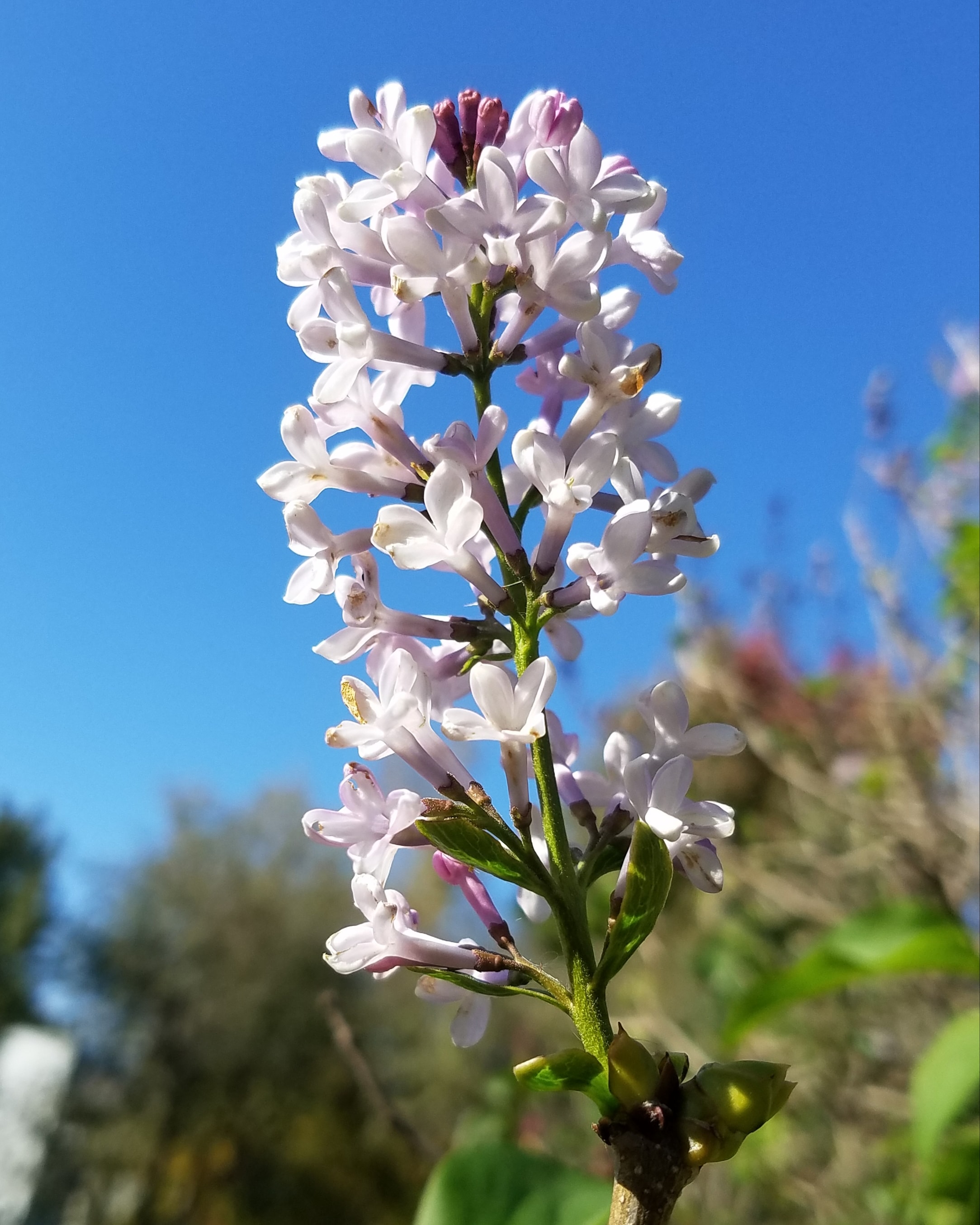
2020 has been stressful for trees and shrubs. Our lilac bushes are in bloom. It’s October.
I remember when autumn colors took my breath away. Stunning reds, yellows, greens and browns spread out across the other side of the lake.
It wasn’t breath-taking this year as I jogged along the state park trail.
The trees seemed sparse. More than last year. The yellow, brown and green colors were subdued or muted, as if the forest had one hella year like the rest of us. This side of the lake, tree damage from the derecho is everywhere. As winter approaches uncertainty abounds.
One hopes for catharsis on Nov. 3 yet I don’t know. Ticket sales from Broadway performances in New York have been suspended until May 2021. It seems like forever until then.
In his book What Unites Us, former CBS news person Dan Rather refers several times to the “neighborhood where I grew up” in Texas.
This narrative meme should be abandoned by anyone who is serious about autobiography because the plural form of neighborhood is more accurate. In addition, growing up is not a linear process. We don’t “grow up” in a single way or in a single place and magically become a “grown-up.” The communities that surrounded our lives in the 20th Century were not homogeneous. They were diverse and less rooted in place. To root autobiography in place seems arbitrary. The narrative force of this meme casts aside our diversity of experience. We shouldn’t do that if we seek to be true to ourselves.
Our mind doesn’t stop growing as Rather points out. I had formative early experiences and it seems normal to emphasize them. I’ve written about getting injured when a swing set collapsed on me at age three and a half. That experience combined with my arrival at the hospital, taking ether through a funnel, and a lengthy stay had an effect on me that persists. There was a lot else going on at the time. I like to tell this story yet is it most representative of what makes me who I am? Probably not.
Writing autobiography means setting aside favored tales like my injury and hospital stay. It would be hard to write a memoir and leave it out. However, there were more significant influences by 1955. By then our family had moved to Madison Street where we lived only a short time until I finished kindergarten. Next we moved to a rental near Wonder Bakery for most of my first grade year. Then, in 1959, we moved to Marquette Street where I lived through high school. The house on Marquette represents a significant amount of time yet to characterize it as the “neighborhood where I grew up” is not accurate. I was well into personhood by 1959.
Part of autobiography is a timeline. It doesn’t have to be the main attraction. I’ve struggled with the single, time-based narrative and seek a way to articulate something different about how I “grew up.” Rather’s book raised awareness that one should really use the plural form of the word neighborhood. Or use something different like communities, or cohorts, or cultural nests, or something. Growing up meant experiencing many different kinds of social settings.
When Mother attempted a memoir she rendered it to a single narrative. It really didn’t work and she abandoned the project after a few pages. While there is always a timeline to autobiography, I don’t feel that’s the hook on which to hang a life story. Passing time moves a narrative along but complexity is sanded off in the woodshed.
I like Rather’s book well enough. It cost $2.10 on Kindle (cheap). It’s an easy read that touches on many areas of modern life that seemed important in the last century and are diminished in this. To the extent it inspired this post it was worth the purchase price.
A high school classmate died on Sunday. In 2013 he sent a copy of a 54-page draft of his memoir for editing.
I didn’t offer much because his writing was good and it was his story, not mine. Our life experiences were different, tied together by four years we spent in high school together in a cohort of 262 students. If it weren’t for social media we would never have collaborated.
My life has been lived in the second half of the 20th Century and the first quarter of the 21st. I want to tell that story, although I’m not sure how badly.
I wrote many words about my life and part of the task of a memoir is pulling that writing together. It seems important, not urgent. I have a question: what have I done the story of which hasn’t been told by someone else? Not much when we think about it.
Today I see a memoir in two parts. One, a collection of past writing and historical analysis that tells the story chronologically. The second, an analysis of important life events from today’s perspective. Both parts will become big projects.
The first reason for a memoir is to record a history for our daughter. The second is to understand it myself. I doubt my life has much significance beyond family. Although I’ve done a lot, I’ve been a reflection of contemporary times rather than shaping them. I’ve been a regular guy trying to get along and that’s not too special in the broad scope of society.
For the time being I work on a couple of community projects and plan to address the memoir after the Nov. 3 election. A lot depends on the outcome of the election, including whether or not progress is made on a memoir. Here’s hoping for the best.
(Editor’s Note: This article was first posted Sept. 25, 2011 on my blog Big Grove Garden. It is about missing mainstream culture in the late 1970s and captures some of my life while living in West Germany and epiphanies while visiting San Francisco where I jogged on Market Street in the middle of the night, saw DEVO and Sir Elton John perform at the Cow Palace, and stayed in Chinatown while there to attend Oracle Open World in 2006. It is presented unedited.)
By the time I returned from a Cold War West Germany in 1979, I had missed a lot of the music, movies and other artifacts of popular culture of the late 1970s. Jackson Browne, Bruce Springsteen, Talking Heads, Blondie, Sex Pistols, the Cars, the Clash, The Ramones and DEVO, never heard of them. In movies, Blue Collar, Star Wars, The Deer Hunter, Kramer vs Kramer, Norma Rae, Taxi Driver, F.I.S.T., Saturday Night Fever, All the President’s Men, and Dog Day Afternoon were all beyond the ken as instead, we viewed repeated screenings of Patton in forests near the Fulda Gap, our projector powered by generators.
Most of us did not even own a television while we were stationed overseas, preferring to get together at the officer’s club or go hiking and rock climbing in the nearby Taunus mountains during rare times when, for a few hours, we could get away from being a soldier. My vacuum of experience in popular American culture is between the bookends of Jaws, which I saw with house mates when living in Davenport and Annie Hall which I saw in Amsterdam subtitled in Dutch while on leave from my post in Mainz just before returning to Iowa. In retrospect, missing these shared popular culture experiences was a formative influence. Even missing the start up of Saturday Night Live was important.
Instead of music and movies, I took in the stuff of life. The politics of being an occupying force leftover from World War II was real. One of my buddies went on missions to East Berlin where he talked with Soviet soldiers to see what they were up to. Mostly, it appears, they were drinking vodka and we never worried about the threat they may have posed to the West. One time we chipped in and he brought us hats made in East Germany. I still have mine in the closet, as it is very warm.
Our battalion had a severe drug problem. Almost every soldier had some connection to use of heroin or hashish. It was so prevalent, and our enforcement capability so limited, that we would bust someone caught in the act more to ruin their Friday night than send them to jail. Often soldiers caught using drugs in the military were sent to the Community Drug and Alcohol Counseling service. Turned out the counselor supplemented his military pay by selling heroin to his clients. Heroin purportedly coming from Afghanistan through East Germany. Looks like both sides of the Cold War had their problems with substance abuse.
By dealing with existential realities in the military, I was spared the evisceration of everything I knew from growing up in a union household. Popular culture reflected that. The late seventies were a prelude to Ronald Reagan’s supply side economics, and notably the PATCO firings that were a continuation of the assault on unions that began under Nixon. It would have been tough to witness all of that. While I missed the first run of DEVO, I did finally catch up with them.
I got a chance to attend Oracle’s Open World in 2006 while working at a logistics company. It was a time on the cusp of the explosion of hand-held devices and cloud computing we are in the middle of today. Gavin Clarke wrote about the event in The Register, whose tag line is, “Biting the hand that feeds IT.”
More than 40,000 delegates will flood downtown San Francisco’s hotels, restaurants, and transport system, drawn from the developer, customer, and partner ranks of the 21 companies Oracle bought since January 2005 plus those using Oracle’s own middleware and applications.
Keynotes from […] AMD’s Hector Ruiz, Cisco’s John Chambers, Hewlett-Packard’s Mark Hurd, and Sun Microsystems’ Jonathan Schwartz, plus Dell chairman Michael Dell, and Network Appliance president Tom Mendoza who will no doubt pay some kind of homily to the power of their relationships with Oracle on servers, virtualization, and software […]
Even the entertainment is big: […] it’s the rocket man himself Sir Elton John.
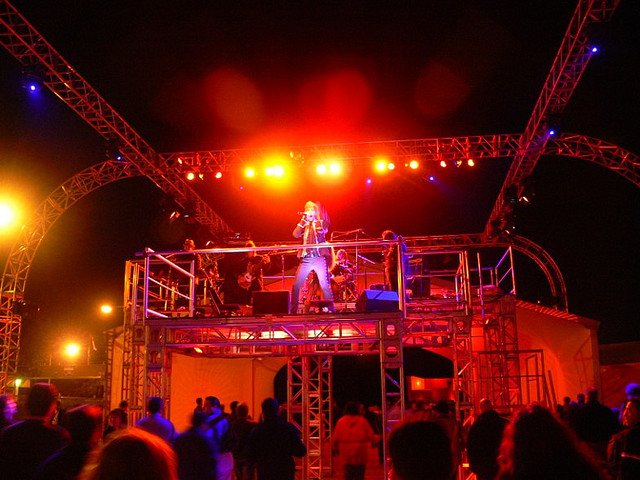
Somewhere on one of the numerous venues arranged by the conference organizers within San Francisco’s Cow Palace, along with Sir Elton John, a dozen bands, circus acts and contortionists, I saw the band DEVO perform for my first and only time. They played Secret Agent Man among others I did not recognize. It made me glad I missed the 1970s culture of the De-evolution of American life that was tied so closely to corporations making things like Goodyear tires in DEVO’s home town of Akron.
I was still on Iowa time at my hotel in Chinatown near the Moscone Center. I went jogging on Market Street in the early morning, encountering an army of homeless people, socializing and sleeping in cardboard boxes and under blankets on the sidewalks. As I ran, I wondered how the popular culture of the 1970s became one more thing to be marketed and bought by consumers. In doing so, it bred a deep cynicism that penetrates our culture today. It also gave rise to today’s self purported “new revolutionaries” of the Taxed Enough Already party, who too have become one more thing to be marketed by the corporatists at Fox News and NBC Universal.
As the sweat built and I headed back to the hotel, missing the late 1970s popular culture did not seem so bad. It enabled me to hope that as a society we were better than this, and that life was about more than militarism, poverty, sex, drugs and rock and roll. For that I am grateful.
A breeze blew off the lake as I walked the mail to the box on the road. It didn’t rain last night and we really needed it.
The garden is getting close to the end although I’d like to get more peppers, tomatoes and greens before the drought destroys it. I water daily, yet a good soaking rain would be better.
There is almost no chance of precipitation in the next 24 hours although the cold front moved in as forecast. The path of hurricane Laura, now a depression, turned east at Cairo then is following the Ohio River valley across West Virginia and Virginia to the Atlantic coast. We missed any rain from that system.
It will be a day to catch up on outside work.
A couple from the COVID ravaged metropolis around the county seat stopped by our house to deliver campaign materials. We all wore masks. I gave them garden tomatoes. Progress toward the Nov. 3 election continues.
Our county has a high COVID-19 infection rate, the highest in the state. Iowa leads the United States in infection, which leads the world. Our local epidemiologist said what we are seeing “is unchecked spread without a statewide prevention plan.” The governor reiterated yesterday, “I’ve been very clear on that.” There will be no statewide mask-wearing mandate and only selected restrictions based on criteria that targets certain counties. The state universities brought students back this week. It was an unmitigated disaster at all three of them.
Our family had a chance to catch up on video conference yesterday. We noted that Florida has given up its position as worst in the coronavirus pandemic to Iowa. Not really good news for any of us. The government’s handling of the pandemic has been bad at the state and federal levels. Florida’s economy relies on tourism which the pandemic hit squarely. Just as I refrain from visiting the county metropolis, people are avoiding trips to Florida for vacation. I don’t know how the tourism and entertainment industry finds it way out of the pandemic despite the fact smart people are working to figure it out.
Except for my daily exercise I don’t plan to leave the property today. What I’m hearing is the pandemic will continue until at least Easter and maybe longer. We have five homemade masks and should make more.
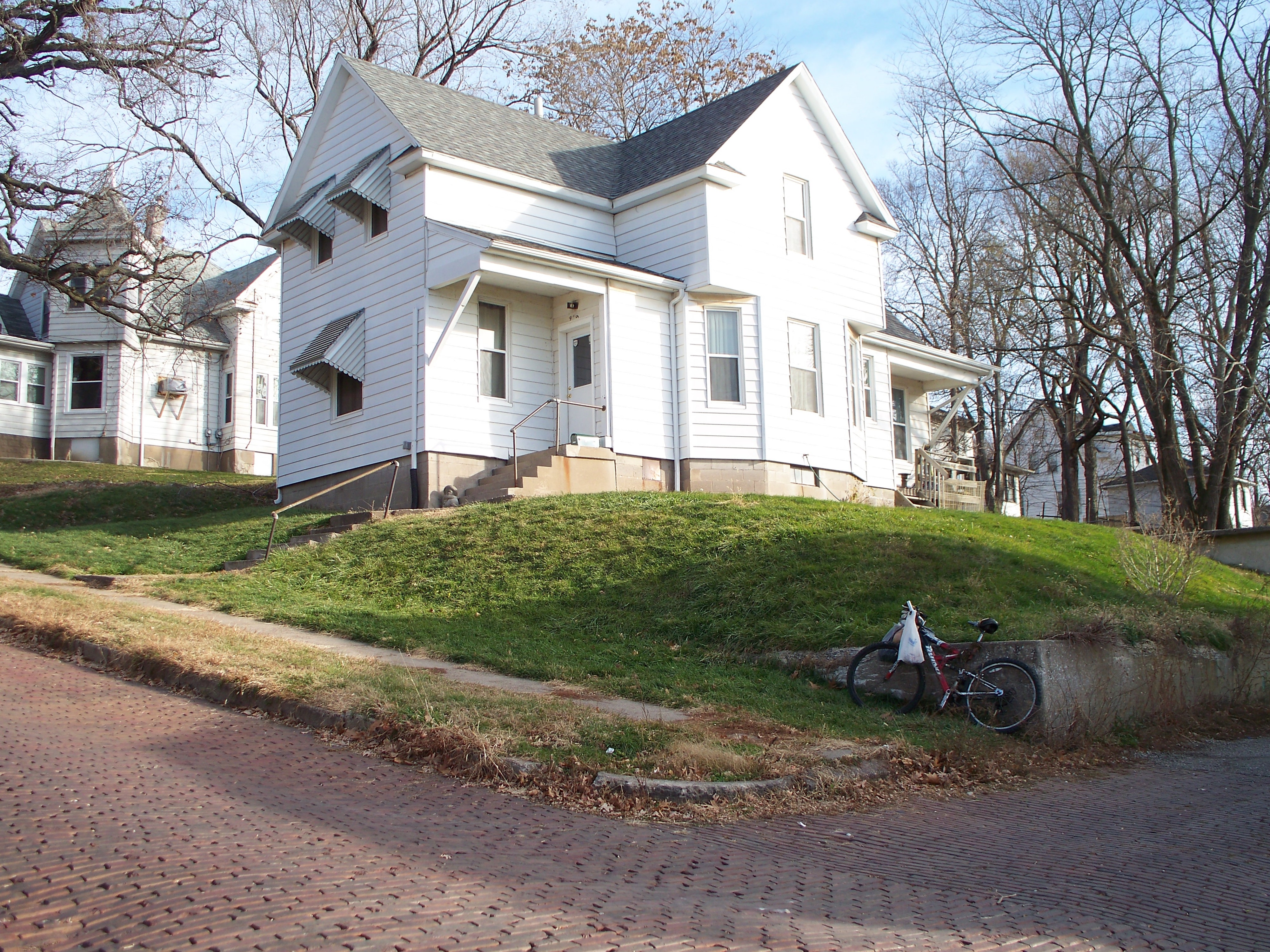
This house is the second place I remember living. When I talk about the 1950s this place was seminal. It was recently on the real estate market with a gallery of photos. It remains inside and out much like it was when we lived there.
My sister and brother were born at local hospitals while we lived here. I started kindergarten from here in 1957. When Father went hunting or fishing with his buddies he brought back game to process it on the back porch. I learned about television, family traditions, and had my first and only pet dog named Lassie. I kissed a girl for the first time in the backyard. It was her idea. Memories return, of doing things in every part of the yard and indoors. A few photographs of the time survived.
Our maternal grandmother lived with us for a while and her ex-husband, our grandfather, visited from time to time. He was a demonstrator at the coal mining exhibit at the Chicago Museum of Science and Industry. He had coal worker’s pneumoconiosis from working mines in Cherry, Illinois. When he visited he would spend long periods in the bathroom coughing up phlegm. When he died of black lung disease I recall being in LaSalle, Illinois for the funeral but staying at my aunt and uncle’s home while adults attended services. Much later, during the Carter administration, Grandmother received black lung benefits from the federal government.
Father set up a swing set for me in the basement. It collapsed, resulting in my being rushed to the hospital for 50 stitches to sew my forehead back together. There are vivid memories about being injured and the time spent in the hospital. People don’t notice the scar any more yet it seemed prominent for many years.
I remember being with neighbors, sometimes inside their homes. We developed a sense of neighborhood. Not far away there were two parks: Fejervary Park to the west and Lookout Park to the east. We sledded on snow in the former and rode inside cardboard boxes down the steep hill of the latter. Occasionally I went wandering down Madison toward downtown and my parents had to come find me and bring me home.
As I revisit these years there are more memories than expected. How to approach them for an autobiography is an open question, one I need to answer. Part of me doesn’t want to organize these memories.
There is something to learn about how this pre-consumer society impacted who I am today. In the iconography of my life, this place remains important and merits consideration.
We’re well into tomato season in the garden. Not to the point of hurling them at passersby, yet close.
Amish Paste, German Pink, Mortgage Lifter, Black Krim, Speckled Roman, Granadero, Boxcar Willie, Abe Lincoln, Martha Washington and other tomato varieties sound exotic. Each is vying for best of crop and a repeat planting next year.
The hard work of the garden is finished. With temperatures in the 90s, we stay indoors and dream most of each day.
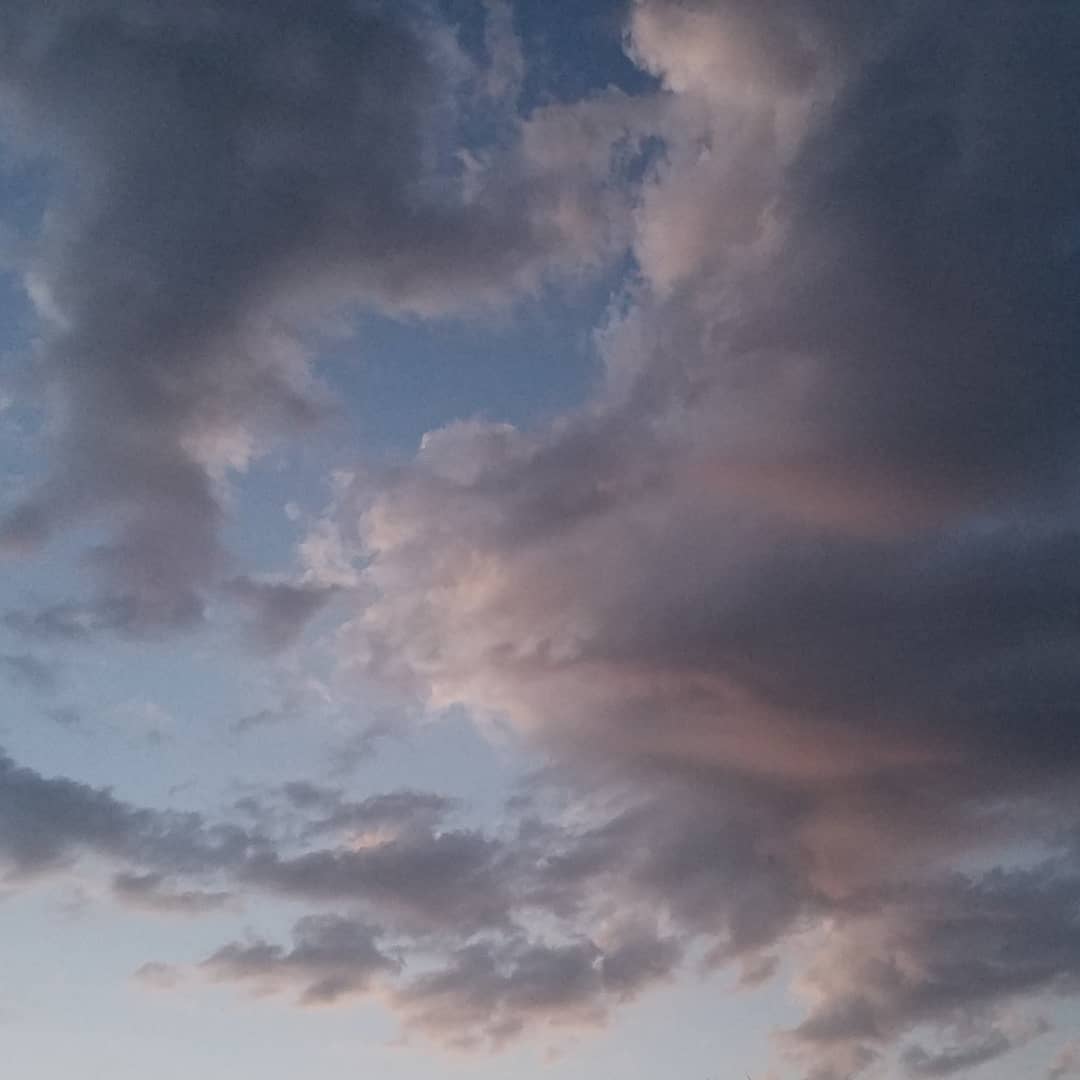
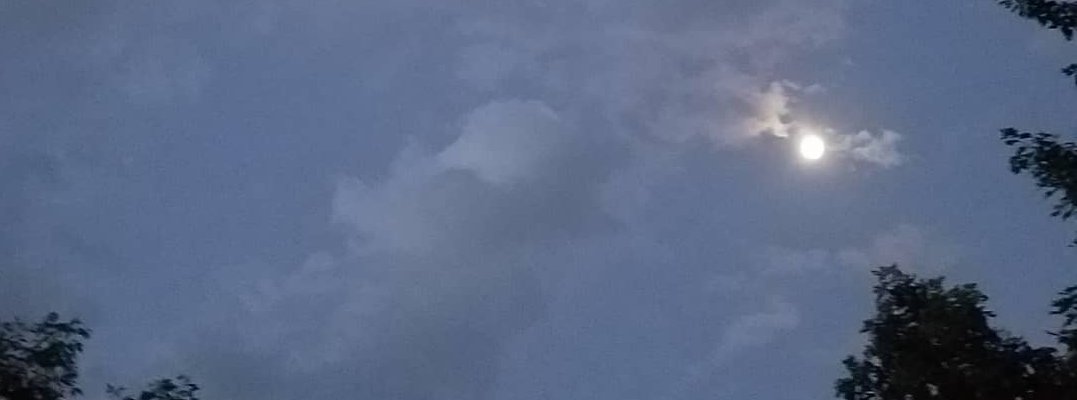
I’ve taken to looking at the sky. It is a reminder of how small humans are, how Earth is a single ecosystem. I could look at clouds all day, at least until a nagging human condition urges me to do something else.
Most of us will get through the coronavirus pandemic. What then? We’ll need August dreams to find out.
Iowa has been slow in containing the coronavirus pandemic.
Last night the president said during a press conference the virus will just go away. The Iowa Governor released an “Open Letter to Iowans on COVID-19” earlier in the afternoon, in which she said, “But normal during a pandemic isn’t the same normal as before. COVID-19 is still a reality, and circumstances still demand we do everything within our control to contain and manage it.”
While Kim Reynolds’ response to the pandemic fell short of expectations she’s at least pretending to be a leader. There is plenty about which to criticize her, yet her response is better than that COVID-19 is going to magically disappear.
After declaration of an emergency on March 9, an unwanted retirement on April 28, and Thursday’s approval of a face covering regulation by the county board of supervisors, it seems like the pandemic is only just beginning.
We Americans have been bad at preventing mass infections and deaths related to the coronavirus. This trait of our national character ranks right up there with yeoman farmer, chattel slavery, indentured servitude, genocide of the natives, and exploitation of the environment. It weighs heavy on the scale of justice when we consider the many good things our country does.
Like many, after an initial reaction to the coronavirus I’m reinventing myself for the future and that includes how I write in this space.
Old categories no longer seem relevant. I use the word “category” both as an organizer on this blog, but more generally in life. The top ten categories with the number of posts in parentheses tells a story:
Politics (435) Local Food (311) Garden (299) Home Life (277) Writing (276) Environment (247) Worklife (166) Social Commentary (149) Cooking (129) Farming (83)
Even these ten seem like too many as I pivot through the pandemic.
I created the current blog in December 2008. With tens of millions of bloggers, I felt support for the WordPress platform would be better than Blogger which I began using in November 2007. I didn’t think much about how to organize the writing.
After my July 2009 retirement from transportation and logistics I settled into the pattern that resulted in this categorical breakdown. The adjustment now is to distill these categories. Here is my thinking: I find four categories of life worth living.
I define myself as a writer so the first category is Writing. That includes posts about writing like this one, but also excerpts from other writing I’m working on, including autobiographical work.
My posts about cooking, gardening, farming and local food have been popular. Using an integrated approach, I created a new category to be used going forward: Kitchen Garden. This category is designed to discuss every aspect of putting meals on our home table.
When I post about a political event few others are, it gets a lot of views. Politics is much broader than election and government, and includes most aspects of our lives. For the time being I will use the broader category Life in Society. Some of the previous categories will continue to exist but won’t be used.
Finally, my work with others includes mitigating the existential threats posed by nuclear weapons, climate change and conflicts in the form of war and social injustice. This specialized work merits its own category: Sustainability.
Who knew the pivot point of the coronavirus pandemic would be toward fewer categories? I’m sure it is the first of many adjustments we’ll make going forward.
It took the cable guy about 15 minutes to get us back on the internet nine days after another cable guy unknowingly cut the cable to our house.
The cable business does not use scientific protocols while conducting operations, apparently.
The technician tested the service from the main line and it was okay. The underground cable to the house was not. The tracked cable laying machine nicked the wire to our house and that of a neighbor. He dropped new cables for both of us and yet another cable guy will return in a week or so to bury it. No excuses now for not working.
No profound revelations from me nor did I experience any epiphanies while using my mobile device to get on line for nine days. It has been a backup plan and it worked better than going completely dark.
I wrote more in my paper journal and a couple of letters and cards. I was also able to write and submit an op-ed piece on the 75th anniversary of the atomic bombing of Hiroshima on June 6 for the Cedar Rapids Gazette (Read it here tomorrow). It’s not often the newspaper contacts me for an op-ed so I figured out a way.
I read more poetry (check out my Reading List), worked in the garden, and bicycled. On Sunday I crashed the bicycle. A few abrasions resulted and sore shoulders. My ego suffered the most damage. I got back in the saddle Monday and reduced my speed from 18 to 12 miles per hour on those downhill slopes on the gravel trail. Now that I’ve had a crash I can stop worrying about having one.
There is a job in fixing the inefficiencies of business. My previous work in transportation and logistics was exactly that. All the same I have little interest in helping the cable guys do their work more efficiently. I’m just glad we have service again and ready to move on to what’s next.



 Journey Home
You must be logged in to post a comment.