The race to 2026 begins. As we age, time seems to move faster. On days like today I want to slow down and breathe.
We cope by taking one day at a time and living it as best we can. That doesn’t mean we eschew longer term goals. Rather we live consciously in the moment and make what good from life we can. It takes awareness to experience success at this. I decided long ago to make things from the experiences and artifacts of my life and put them out in the world. That is a main reason I became a blogger and have persisted.
My to-do list for this fall is short: Continue to finish daily chores. finish apple season, plant garlic, close down the garden, maintain health, and resume writing my autobiography. These things should be familiar to readers of this blog. I need to take up a new task: combating falsehoods clogging our information wavelengths. How I will do that is a work in progress.
I’m having a bit of a China issue. As I write, my blog has had 1,545 September views originating in China compared to 343 in the United States. I recognize many international visitors here, yet not like this. Something is going on, and I don’t understand the increase in views. The increased China traffic started August 14.
I’m familiar with the “Great Firewall of China,” designed to restrict access to the global internet within the borders of the Chinese mainland. Apparently there is a leak. The way views tally up is one at a time at a rate of 3-6 per hour. Seem like if a machine were training artificial intelligence with my posts, it wouldn’t be so slow. The other thing is Chinese “viewers” are seeing older posts and downloading a lot of files stored in my media file. In particular, files relating to climate change and nuclear power have been download quite a lot. The downloads otherwise seem somewhat random and related to specific posts. In the scope of the Chinese population, a couple thousand views per month is insignificant. Yet, it has me worried.
Bloggers make a decision to post our content on websites like WordPress. From the beginning we understood the possibility of piracy, yet I’m not writing posts for which I expect to get a Nobel Prize in Literature. If I determine the risk is too great, I will transfer my website address to one of the spare blogs I keep hidden and reduce the amount of public access to the old stuff. Who is really interested in what I wrote twelve years ago? That was when I took the whole blog down and started anew.
Anyway, this autumn is a time for writing. I hope to get back in the saddle with regular posts here, beginning today. It feels like fall. “God’s in his heaven— All’s right with the world!” ~Robert Browning
An early reader of my autobiography asked about this paragraph.
When I was born, Davenport was already a tired town. I hadn’t realized it, of course, because my family life was positive and supportive. I felt I could be anything I wanted, and this notion was reinforced once I started school. I grew up in a time of hope, despite challenges. We had vague knowledge of Davenport’s beginnings. I came to believe while being from there, I was not of there. (An Iowa Life by Paul Deaton).
“I am most surprised by your statement that you did not believe you were ‘of there.’ Looking for more explanation here,” they wrote.
In response, I wrote:
My mother and father brought a defined culture with them when they moved to Davenport and I was born. I came up in that culture, which for Mother was based in rural Illinois where she was born, and for Father, it was in western Virginia. In going through the history for this book, it occurred to me that I did not experience any culture indigenous to Eastern Iowa, but rather what my parents brought with them and lived. Yes, I was from Davenport, but not a person who grew up in a culture that was local. I contrast that with Provincial France where people are a literal extension of the soil, the sea, and the air. Mine was a distinctly American experience. (Letter to a friend, Sept. 6, 2025).
When I re-write the book, which I will once its companion is finished, I plan to add this explanation. As long as we live in a consumer society where the work to produce our lives lies in places, corporations, and people with whom we have no relationship, except for a commercial transaction, we cannot be of there, much though we yearn to be.
Green slime on the state park lake due to over-application of nitrogen in the watershed.
Weeds will grow anywhere in Iowa with open ground. I use plastic fabric to suppress weeds in the garden, yet a weed will find even the tiniest pinprick, plant itself, and grow. The purpose of weeding is to favor one side in the competition among plant life and improve crop yields.
This post isn’t proceeding how I thought it would. I am from an agricultural state, so when I think of weeds, I think of how it impacts row crops, corn and soybeans. I feel obliged to discuss that first.
On Sunday crop dusters flew over the house most of the day. It’s time to spray pesticides and herbicides, I guess. In 2024 Iowa corn yield was 211 bushels per acre according to the Iowa Department of Agriculture and Land Stewardship. According to Farm Progress, failure to control weeds, especially early in the crop cycle can lead to anywhere from 20-40 fewer bushels per acre. When the corn is taller, and has established a canopy, competing weeds can reduce yields by about 3 bushels per acre for every day they are left uncontrolled, according to Iowa State University. Corn farmers live on tight margins, so they usually don’t hesitate with a generous application of glyphosate. Those 20-40 bushels can mean the difference between a good year and a bad one.
I have been reading Chris Jones’ book The Swine Republic. In the way the universe sometimes comes together, Monday morning’s reading happened to be the chapters on glyphosate and Dicamba, two herbicides widely used in Iowa. I was already writing this weedy post, so it added a certain something to my mood. This isn’t the rabbit hole I intended when I began.
I would use the weed paradigm differently. Whenever I enter the room where most of my artifacts live, they compete for attention. By getting rid of some, they would be out, freeing me to follow the vein of an idea where it may lead without distraction. Part of me doesn’t mind the diversions. Empirical me understands I only have so much time left on this jumping green sphere and I’d better make the best use of it.
I should weed out things of marginal interest to the broader thrust of my work. I don’t want to. My wants and urges have little to do with logic. They arise from a complex experience of a life that seldom conformed to social norms for their own sake. This is part of what makes me unique. Unwillingness to execute a plan to downsize possessions is a feature of my creative life, not a problem. Rational me understands the house will explode if we try to fit much more in it. Creative me says if it will, let it explode and we’ll see how it unfolds.
When I’m in the garden I pull weeds as I go. This is especially important as soon as seeds germinate and emerge from the soil. Like the corn farmer, I know this is the time to eliminate competition for nutrients, light and space. It is better to do it before seedlings emerge. I do what I can to produce a bountiful harvest. My creative issue is the seedlings in my life emerged long ago and have grown to become part of the living landscape. Weeding the stuff would create a new way of seeing. What if I don’t like it?
Maybe I’ll feel better about weeding my stuff after I finish the autobiography.
Anyway. It’s time to set all that aside and get to weeding. We can’t take it with us and don’t want to leave a big mess for my heirs to clean up.
Donation to the community food pantry on July 14, 2025.
Writing can be divided into two large categories: public and private. Most of us spend time in each domain. The obvious difference between public and private writing has to do with audience. Most of what I write is for public consumption, which means I have a responsibility to use logic, facts, and verifiable truth as tools to make my language more effective. This blog is public writing, as are letters to the editors of newspapers, and the books I am writing. Private writing includes journals, emails and letters, and to some extent, exchanges on private servers. Public writing is my main concern.
Why am I writing here, in public? Part of it is self-expression, a basic human need. Part is using language to understand complex social behavior. There was a time — thinking of 1974 — when I hoped to influence the direction of society. That is, I assumed society had a direction and momentum that would improve how we live. To some extent, that outlook continues in published letters and on this blog. I am no longer sure of the role of individuals in this.
To effect change in 2025 society, it seems clear it takes a broader, more diverse movement. Movements need a voice, yet not only one. The democratization of expression has given everyone who wants it a voice in the public square. We may not like what we read and see, yet in the end, democratization of expression is a net positive. The 500-1,000 word essay is a perfect medium for working through ideas. That’s one reason I’m here after beginning this blog in 2007.
Book writing presents a special challenge. In autobiography one hopes to depict a personal history with some verifiable accuracy. There is also a didactic principle at work. The example of a single life may have broader meaning in the culture and that is what we hope. At least that’s the goal of my longer works. It became evident this week there is much to do to make my autobiographical work more meaningful beyond my circle of friends and family.
I opened part two of my autobiography and started reading from the beginning. I have been writing forward, without looking back, since the beginning of the year… to the tune of 86,728 words. The idea was to get a story down and return to edit. There is a lot of editing to do, in addition to new writing. I hope to finish the book by year’s end, yet don’t want to finish just to finish. The narrative should mean something beyond personal reminisces. Defining a broader moral lesson is the challenge as the memoir progresses. Simply put, working through that is why I’m here.
U.S. Capitol. Photo by Trev W. Adams on Pexels.com
I wrote Senators Grassley and Ernst to advocate for their NO vote on the One Big Beautiful Bill Act. The legislation is expected to come up for a vote in the U.S. Senate today. Here’s what I messaged them:
I’ll be brief. I’ve been following the reconciliation bill’s progress in the U.S. Senate and nothing that has changed in the bill to change my mind that it should be rejected out of hand. Two main reasons: The Congressional Budget Office now indicates the bill would increase the federal debt by more than $3.3 trillion over the next ten years. Changes to Medicaid would result in millions of people losing their health care because of withdrawal of federal financial support. Neither of these outcomes is wanted. Vote NO on The One Big Beautiful Bill Act. Thank you for considering my message.
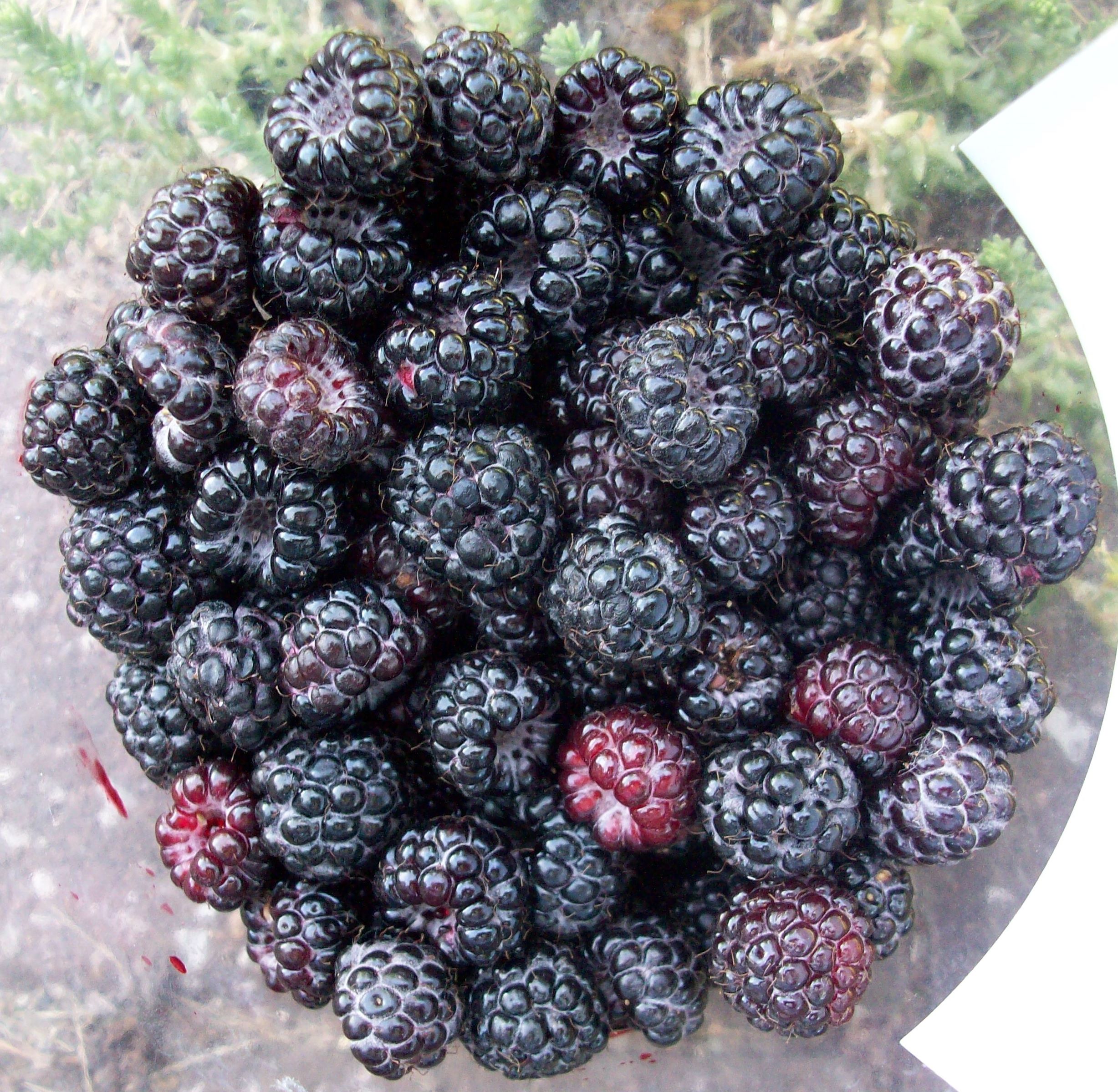
Wild Blackberries ripening around Independence Day.
On July 2, 1995, when our child was ten years old, the two of us rode our bikes to Solon on the state park trail. We read the newspaper and ate breakfast at the Country Café. On the way home we stopped to pick wild blackberries growing along the trail. I made blackberry jam with some of them. It was hard not to eat them all as we picked them.
We then rode to watch the Freedom Festival regatta by the public boat landing. The sky was clear blue with a few cumulus clouds. Sails billowed in a breeze imperceptible from the shore.
Summer days like that are a reminder life is always just beginning. We live in each moment yet look forward to every new day with the hope that positive things will take place. Chance plays a role, although we must be active agents in making our future the best it can be.
Big Grove Township was established before Iowa Statehood. The first sawmill was built here in 1839 by Anthony Sells on Mill Creek. Put the big groves of trees together with the sawmill and you have us. The oak, walnut, hickory, ash, elm and cottonwood that once thrived among numerous pure springs were gone when we bought our lot here. What dominates is the culture we and others brought with us to an area where all trees indigenous to the Northwest once existed in abundance yet no longer do. There is something essentially American in that. We moved to Big Grove Township in August 1993.
There is a subdivision named Mill Creek today, suggesting this history. Throughout the area, people refer to early settlers and builders of homes instead of the people who now own those homes and live in them. The names Cerny, Beuter, Andrews and Brown persist, as does the more recent name of Don Kasparek upon whose former farm our home is situated.
On the vacant lot we purchased, there were scrub grasses and a lone mulberry tree. The tree appeared to have been planted by a bird’s droppings while it perched on a surveyor’s re-bar marker. The ground had a high clay content which suggested Kasparek had removed the topsoil before subdividing the plats. When he died in 2003, I recognized him in our association newsletter. We speak of him from time to time in the neighborhood, although not always in a positive way.
I looked at an old picture of a building on Main Street in Solon, the nearest city. In sepia tones, seven teams of horses and wagons are lined up in front of the building on the dirt street. We can make out the lettering on the shop windows: Cerny Bros Grocery, Cerny Bros Hardware, and Cerny Bros Feed. While the roads have been paved for many years, much of downtown and the surrounding area resonates with the area’s origins in history before automobiles.
We built our home during the record-breaking floods of 1993. Governor Terry Branstad described the extreme weather event as “the worst natural disaster in our state’s history.” At one point that summer, it rained 50 out of 55 days. The Des Moines Register published a commemorative book titled Iowa’s Lost Summer: The Flood of 1993. Extreme weather delayed construction of our home that summer, causing us to stay with relatives and in motels for about a month after we moved from our house in Indiana. We finally moved in, the same day technicians were hooking up electricity and cable television. I was used to severe flooding from growing up in Davenport where the 1965 Mississippi River flood broke records. I was not used to flooding, 1993-style.
I couldn’t believe who I was expressed itself in any of local history. My culture was what I brought with me, rooted in coal mining, factory workers, farming, home making, and the rural cultures of Virginia, Minnesota and Illinois. Our history as a family goes back on both Jacque and my families to the Revolutionary War. My line in Virginia goes a hundred years prior to the revolution. This seemed to have little relevance to local culture in Iowa.
That my ancestor Thomas Jefferson Addington is a common ancestor to the Salyer girls of the Salyer-Lee Chapter 1417 of the United Daughters of the Confederacy stands in contrast to the story of Maciej Nadolski working in coal mines in Allegheny, Pennsylvania after the Civil War and then buying land from the railroad in Minnesota. What of my father’s birth in Glamorgan, Virginia? What of the suppression of Polish culture by the Russians after 1865 that led to a massive migration of Poles to North America? If I weren’t here, we wouldn’t speak much of these things in Big Grove Township. Perhaps with time we will.
Dear Dennis,
The pioneer spirit! So much of popular culture lauds these people. Their hard work, and inquisitiveness have been amalgamated into a hagiographic portrait: the very founders of modern society. I take exception to this, rather, the importance and interest of the pioneers is over-emphasized. They struck new settlements in the wilderness, stayed 3-5 years, then sold out to move to Kentucky, then Indiana, then Iowa, then beyond. Restless, not enduring, their influence has been too much. I’d rather look at those who followed in their footsteps. Those who took the broken wilderness and made something of it, in many places the wilderness is, figuratively, still broken, transients residing there, waiting development. (Letter to Dennis Brunning, April 19, 1986).
If the 1980s was a time of our getting started, the 1990s were a time of work and supporting our family. We saved for our child’s college, and for our retirement. During the flood, we established ourselves. The time here was one of making a career and making time for family. We bought the home we could afford, and proceeded to fill it with boxes of stuff, many of which we do not now have a clue about what is inside. We are working on that as I write.
We took vacations, supported our child in high school activities, and took them to college. I worked for the income but took two long hiatus periods because of a nagging dissatisfaction. I had a retirement party and a cake in July 2009. We had been able to establish a financial foundation that, while not luxurious, was okay. All three of us were trying to make our way in a world that did not appear to care whether we succeeded or failed. I believed we were succeeding.
Iowa was one of the last areas settled by horse and wagons. If the United States is provincial when compared to the cultural centers of Europe, what then of us, twice removed from Europe? New York and Washington seem as removed as Paris and Bonn. So, culture in Iowa, even as we sit in Big Grove Township is not an indigenous thing. It is derivative, just as the language I write in is English. What I do, and experience from that point of view is indeed, as so many have said, provincial. But what about this? I cannot say because my life is based on study of western civilization. My view is it is no less pure, and beautiful and useful than the rigid cultures of Europe or the East Coast of the United States.
When I wrote journals, they were not the kind written by Samuel Pepys, or Henry Adams. They do follow journal forms as they came down. To say something new, and private: a creation in its own right. That’s what my writing was about. If it accomplishes nothing more than the calming of a Sunday afternoon, then it will have been of some use.
Creativity in Iowa often takes something of outside origin and incorporates it into a new creation, that is fed from the soil yet showing the genetic traces of the ancestor. This journal might be recognized as something it is not by an easterner or a European. Though nature has presented what it will, we must and will nurture nature’s presentation to our own new, creative intentions. I did not recognize this as we moved to Big Grove Township in 1993, yet that’s how things evolved.
By Aug. 6, I had begun journaling again:
I stopped keeping a journal some time ago. But now, in the basement of our unfinished house I take pen to paper and begin it anew. Here, in Johnson County, I hope for good things to take place.
I notice now… the ringing in my ears, the sounds of birds, and a car now and then driving in front of the house. It is a quiet place. There is much to do to make it a productive place. (Personal Journal, Big Grove Township, Aug. 6, 1993).
In late Spring 2025, while I’m digging in a garden plot or walking on the trail, my mind is consumed by how to pull everything in my autobiography together and bring the narrative to a close. Up to the time we moved back to Iowa, a chronological narrative seemed appropriate. Beginning here, in this place that was a vacant lot when we arrived, life got complex to an extent a time-based narrative doesn’t really capture those 32 years. There was no single narrative. And so it shall be in these closing chapters of this book.
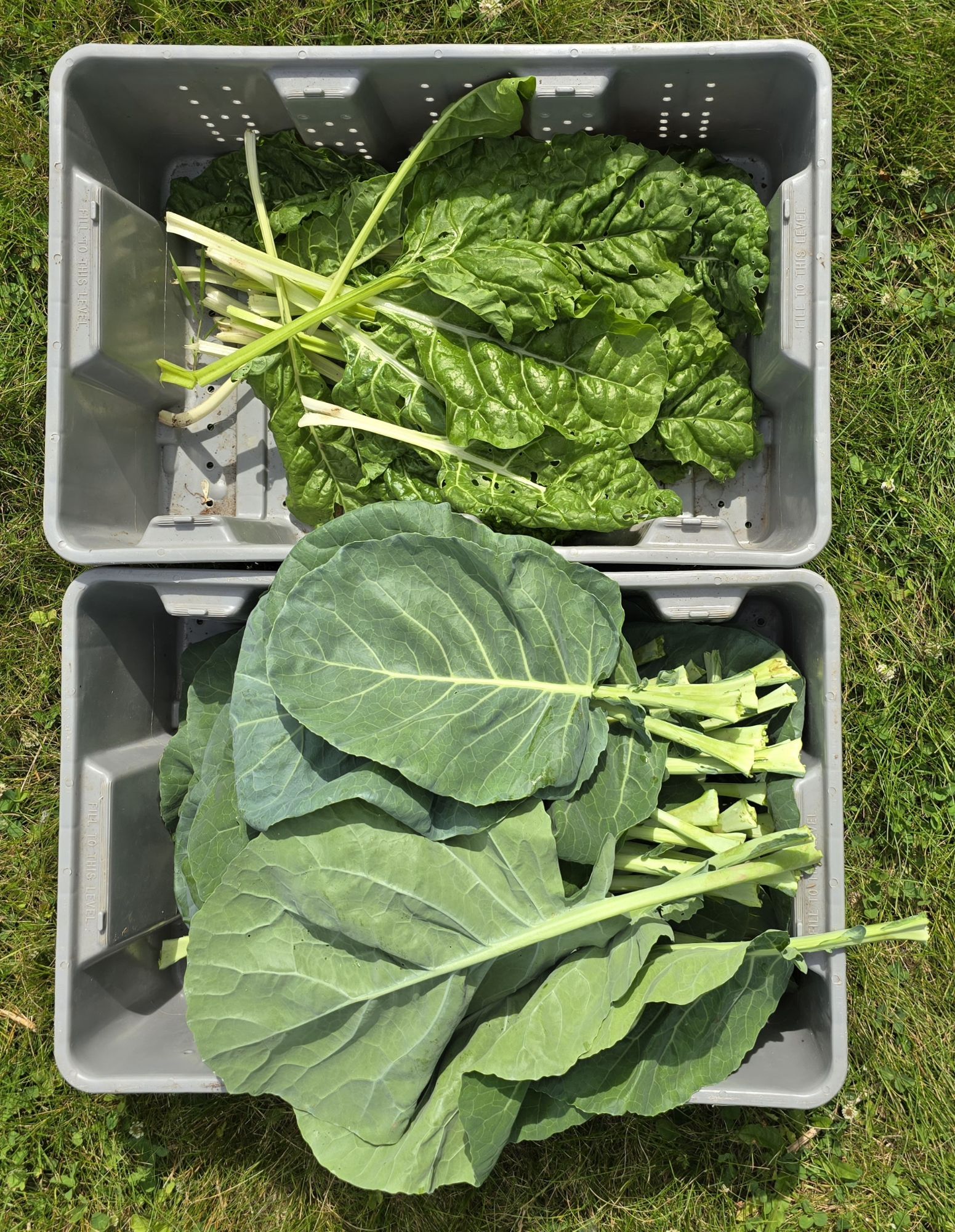
Swiss chard and collards donated to the North Liberty Food Pantry.
After an overnight trip to Chicago to visit family and friends, I’m ready to begin summer writing. Ideas have been percolating all spring. It’s time to get them down and make something of them.
I enjoy the Chicago suburbs of Oak Park, Skokie, and Forest Park where I have been spending more time the last couple of years. It is remarkable how from the ground it looks exactly like you’d expect after seeing it countless times while taking off from and landing at O’Hare and Midway. I stayed with someone who lived his whole life in close proximity to where he was raised in Oak Park.
The main summer writing challenge is determining a schedule. I want to get into the garden early in the day to weed and harvest. I don’t want to spend all my energy there. I plan to shake up my daily outline and routines. The re-engineering process should be fun, and easy to accomplish by Friday.
Tuesday morning I took excess chard and collards to the food pantry. The receiver told me, “Those will go fast.” I always feel good when I donate produce I grew for food insecure people.
There are a lot of positives in the waning days of spring. If we can only take the time to recognize them.
It’s been two weeks since I opened my draft autobiography. With the end of garden planting in sight, it’s time to turn back to that work. When I read what I’ve already written it seems like magic. Who wrote all of that? Me. It was me, as unlikely as that sounds.
There are a few kinds of writing on this blog and I’ll be considering them as I go about another day in the garden. The last few weeks have been what I would call “moment capture writing”: I write about a significant event that happened in a few, brief paragraphs and move on. In many ways, these are my favorite posts to read because they tell of moments in my life that might otherwise be forgotten.
Hannah Ritchie wrote a Substack post called “Under-the-hood of writing on Substack.” In it she opines about the type of writing that’s needed on Substack (or blogs). She wrote:
If you do have some tolerance for criticism and have ideas to share, I’d tell you to consider doing longer-form writing. By “longer-form” I just mean more than social media posts or comments; 1,000 to 2,000 words that lets you craft a narrative and explain your thoughts with nuance.
This reflects my blog-writing approach. I’m almost always working through some intellectual puzzle. More on that later. For the moment I must use the last remnants of a very warm night to take care of indoor chores so I can get out to the garden after sunrise.
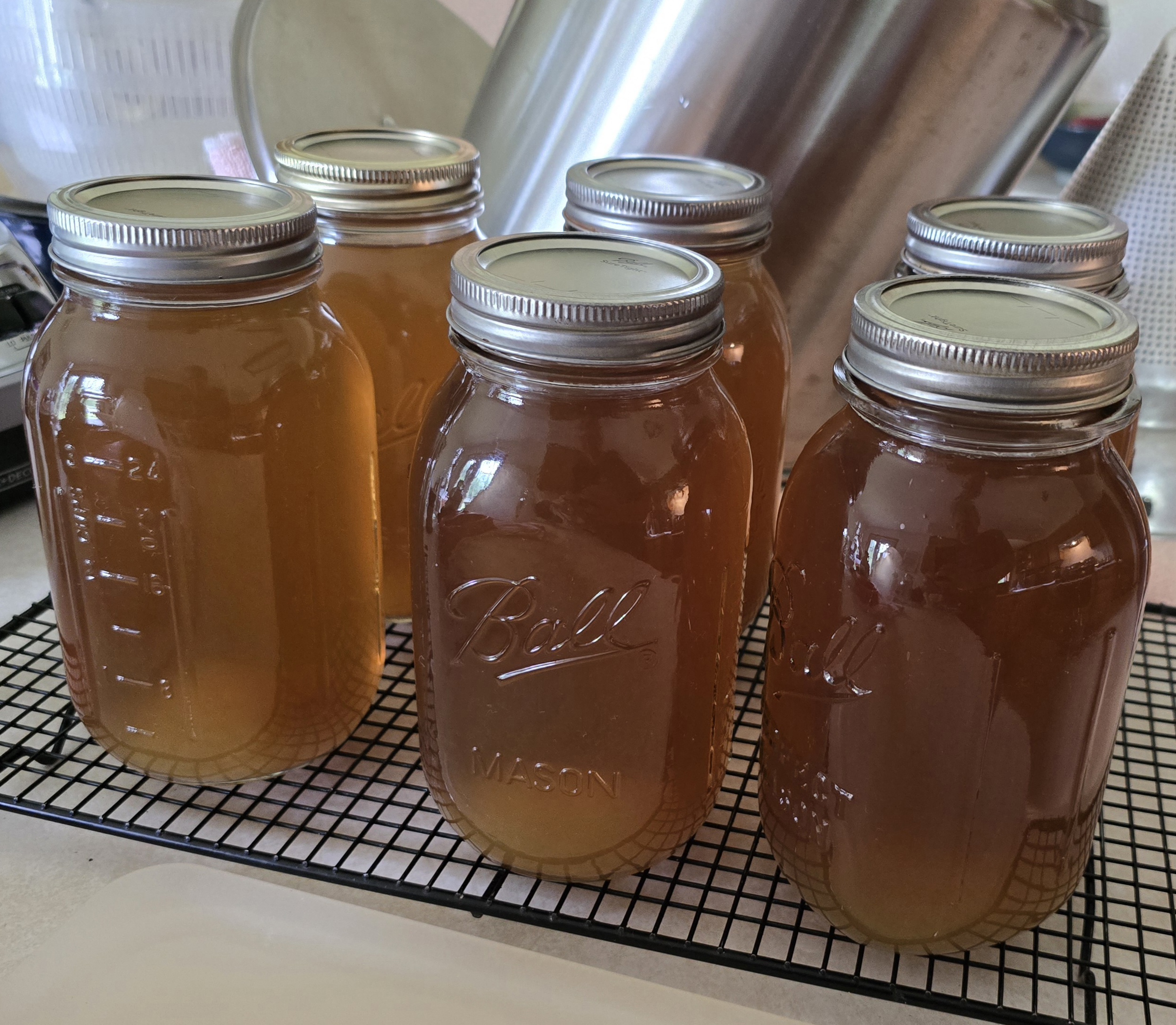
Six quarts of vegetable broth. The spring version helps clean out the freezer.
While working in the garden, hiking on the trail, cooking, or resting, I’m thinking about my return to writing once the garden is planted. It is particularly important to finish the second book this year and then decide whether or not to put both books in places where people can buy them in 2026. Having a schedule is part of the process. Doing the actual writing is another.
I mentioned that a chronological narrative beginning with arrival in Big Grove Township is not appropriate to this part of my autobiography. On May 25, I wrote:
Up to the time we moved back to Iowa in 1993, a chronological narrative seemed appropriate. Beginning here, in this place that was a vacant lot when we arrived, life got complex to an extent a time-based narrative doesn’t really capture those 32 years. There was no single narrative.
There are some stories I want to tell. Family life after the move back to Iowa is important. My work in transportation and logistics after 1993 covered a lot of territory, yet I want to reduce this to some major stories along with a summary of all I did after returning to Big Grove. Work has been important in my life, so a long chapter about that is in the offing. Becoming empty nesters was a profound change and that merits its own chapter. There was a long period when our child lived in Colorado and Florida, which made frequent visits difficult. My work in environmental activism, on the board of health and in the local food system all are worthy topics with personal meaning. When the money ran out in 2013, and how I coped with that seems important. There is a lot here, yet a lot gets left out by covering these topics. Sorting through all this has been on my mind.
Another writing-related thing is answering the question, What to do about Substack? I don’t post frequently there, but when I do, I get a lot of organic views, more than I do here. Now that the print service I was using to make hard copies of this blog went out of business, I haven’t found a suitable replacement, and maybe it is a good time to move. More on this topic as the summer continues.
Editor’s Note: Still planting the garden and making short posts as I can. It won’t be long before I’m back to normal posting.




 Journey Home
You must be logged in to post a comment.