Categories
Writing

Holiday Notes

Sunset from our front steps, Dec. 19, 2021.

The coronavirus pandemic continues during a second holiday season. I had hoped to be done writing about that by now. The omicron variant of the virus informed me, “No, you are not done.”

Dr. Anthony Fauci, the nation’s leading infectious-disease specialist, said yesterday on CNN, ā€œUnfortunately, I think that (record numbers of coronavirus cases and hospitalizations are) going to happen. We are going to see a significant stress in some regions of the country on the hospital system, particularly in those areas where you have a low level of vaccination.ā€

We had already cancelled a Christmas trip to be with our child and their close friends, because of increased incidence of COVID-19. Today I’m making a list for a trip to the grocery store to provision up with fresh vegetables so I don’t have to leave the property until the new year. I seek to minimize our exposure to the new, highly contagious variant of the coronavirus.

ā€œIt is going to be a tough few weeks, months, as we get deeper into the winter,ā€ Fauci said.

Merry f*cking Christmas, y’all.

The Christmas Holidays in my childhood home were mostly a product of my maternal grandmother’s imagination. She was born and grew up on a remote farm in rural Minnesota. At a young age, she moved to Minneapolis where she worked as a servant. She and a man got together (and presumably married) and had two children. Her plain, difficult life was punctuated by the special occasions of weddings, baptisms, first communions, and religious holidays, especially Easter, yet Christmas too.

Part of her Christmas holiday culture was creating a tableau of the nativity, with a manger and ceramic figurines she molded, glazed and fired herself. My inheritance from her includes this sort of creating something from the dross of daily life, something in which we could participate and enjoy. She recognized the fleeting moments of those special days and the work that went into making them. Without her, the Christmas holiday would have been much different.

End of year holidays have been secularized. Instead of making tableaux from home made things as a celebration of religious culture, we insert figurines that came down from grandmother in what has become a hollowed out, personalized family tradition. These are essentially habits repeated for lack of something better to be doing. Am I cynical? No, not really. When we put out decorations, we enjoy the time remembering where special artifacts originated. With the decline in participation in formal religion, people now craft their own end of year holiday occasions which may or may not include such traditions.

Americans’ membership in houses of worship continues to decline, dropping below 50 percent for the first time in 2020, according to the Gallup organization’s eight-decade polling trend. That year, 47 percent of Americans said they belonged to a church, synagogue or mosque, down from 50 percent in 2018 and 70 percent in 1999.

In our household a number of special occasions mark the end of the calendar year. First is our wedding anniversary on Dec. 18, followed by the winter solstice, this year on Dec. 21. Christmas Eve is a time to make chili and cornbread, and on Christmas Day we make a special meal. If others are in the house, we may exchange gifts. My birthday follows on Dec. 28 which leads into New Year’s Eve. Dec. 31 involves a weak effort to stay up until midnight to ring it in. I usually have a drink. New Year’s Day is another special meal and by then all the leftovers from Christmas have been eaten. This year I plan to start a new tradition of starting onion seeds indoors on New Year’s Day.

As I age, there is a sense of loneliness and sadness as I survive more people I knew with each passing year. Coping with aging is increasingly present during the holidays. There are holiday phone calls, video chats, texts and emails. If we weren’t in the worst of the pandemic, I could engage with a local organization to help others. Such communication helps us cope.

Staying busy also helps. Garden planning is a natural undertaking for the holidays. I placed my first three seed orders and will work on another. In addition, I began a project in the garage to organize everything. Yesterday I discovered a drawer that was crammed full of telephone wire and connectors brought back from my father-in-law’s home in the late 1990s. He owned and operated a rural telephone company and I don’t recognize half of the tools and supplies. Land line telephones are in decline, so a lot of it will be sold at a yard sale or pitched. There is also plenty of reading and writing to be done to cope with loneliness.

The end of year holidays are much different from what I recall from childhood. I no longer believe there is a Santa Claus, even though I remember seeing him and the reindeer flying in the sky when I was in first grade. As we discover the new, electronic globe in which we find ourselves, there will be other changes. I predict end of year celebrations will continue. I expect to note the annual rites for many years to come.
Categories
Writing

Writing Forecast for 2022

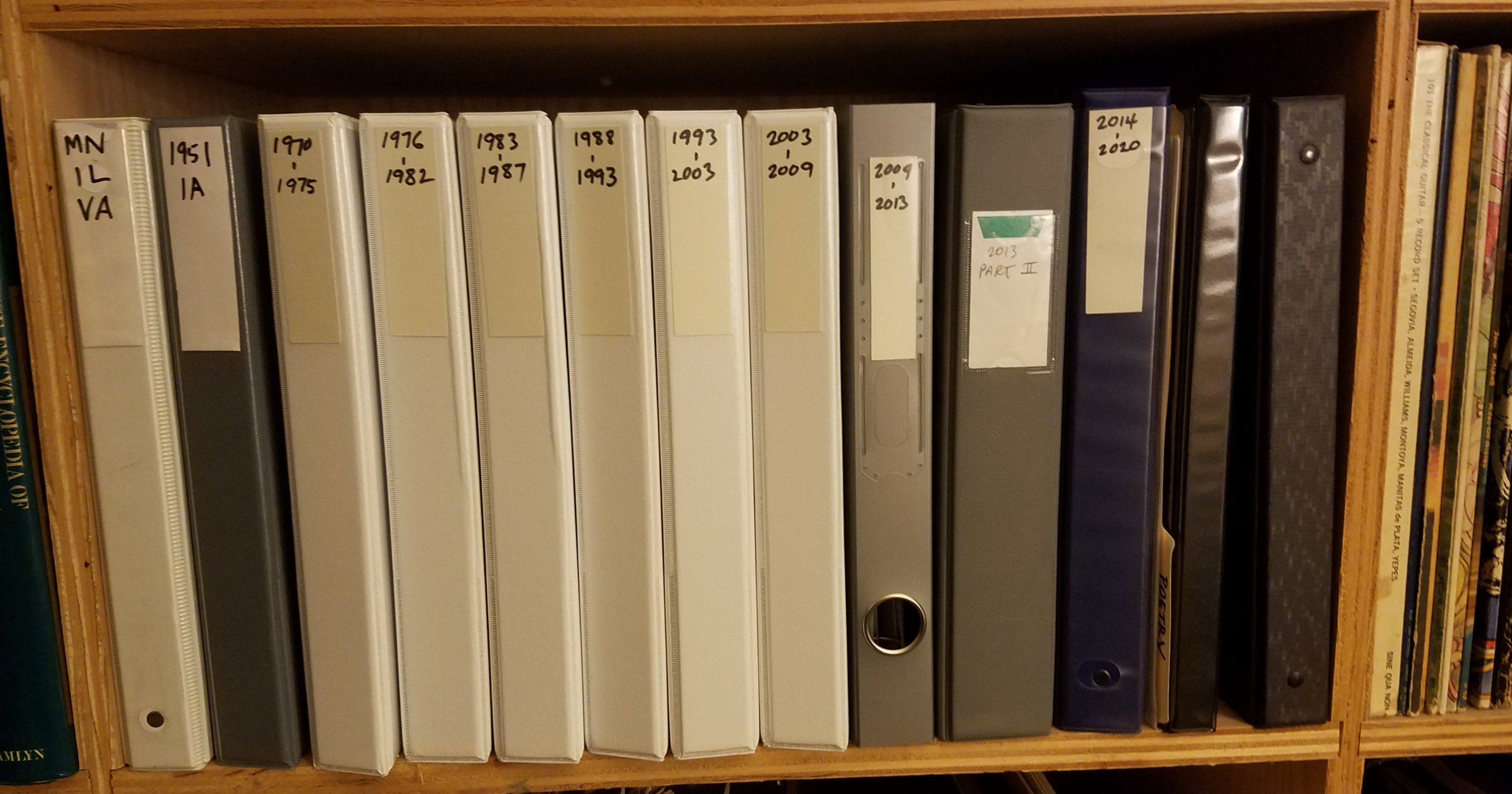
State of my autobiography, Dec. 15, 2021.

There is no getting around it: writers write about writing from time to time. Because of the coronavirus pandemic, writing and related tasks like reading, exercise, gardening and cooking have become my sole occupation. As I consider what is possible in 2022, writing and all that surrounds it will be a main part of my daily routine.

Work continues on the multi-year project that is my autobiography. The 13 three-ring binders in the photo are the containers for the first rough draft. The main 2022 project is filling them with a narrative. A key challenge is reviewing the source material in the form of files, journals, public writing, and internet searches. There is a lot of source material and a lot of reading ahead. Last year I wrote at least 1,000 words per day until April, then slowed down. Next year I hope to continue my progress almost every day until the first draft is completed. That may be in 2023 depending upon how 2022 goes.

For now I continue to write blog posts which are published here, on Blog for Iowa, and on a couple of other sites. The subjects have been varied yet they are comprised of two main topics: stories dovetailed into my autobiographical work and current affairs with an Iowa focus. I will have written about 350 posts in 2021, although I expect to slow down next year to focus on autobiographical writing.

At least once a month I plan to write a letter to the editor of the local newspapers. I may branch out with submissions to other papers in Iowa’s new First Congressional District, yet the best impact is closer to home. My primary topics are nuclear disarmament, the climate crisis, and current affairs. When I write to our local newspaper, the Solon Economist, the topics expand to more local issues like the fire station or recognizing local activities. All of my letters are cross-posted on this blog.

I am an email writer and occasional letter writer. I adopted email when I worked for the oil company beginning in 1989. From the beginning I saw it as a valuable medium. It really took off when we bought our first home computer in 1996. While I don’t have copies of most of my work emails, there is a trove of emails relevant to my autobiography dating to 1999. I will continue to write emails as a creative outlet, in addition to taking care of quotidian affairs.

I continue to maintain the journal started after college graduation. With the exception of the bound journal stolen from me in Calais, France, I have them all. I use it to record personal things that aren’t suitable for public consumption. Increasingly I monitor my health there.

Lastly, social media is a form of writing although we tend to view it as throw-away texts of little significance after posting. I expect to continue to post on Instagram, Facebook and Twitter. According to Twitch TV, in 2021 I posted 8,075 chat messages on the platform. My main goals for social media posting are to be kind, honest and thoughtful. I will also endeavor to re-read every post before hitting send.

I am lucky to have stable, adequate pension income after more than 50 years in the workforce. When the pandemic slowed everything down and raised a real risk of contracting COVID-19, stepping back from paid work was possible. For the coming year, I don’t foresee an initiative to take paid work as the coronavirus is still with us. That will enable me to focus on writing.

The forecast is fair writing weather ahead, depending upon what weather in real life does.

Categories
Writing

Blog Year In Review – 2021

Looking at the moon rising in the east at sunset.

Eight of the top ten new posts on Journey Home were about the Solon School Board election. It demonstrates that when a blogger covers something in which people have interest, there will be views. I’m thankful for people who follow all of my writing.

To get a fairer picture of which blog posts garnered views, I include my work at Blog for Iowa. If I mix the two together, here are my top posts for 2021.

10. Book Review: Equity. Aug. 30, 2021, Journey Home. A book review of Equity: How to Design Organizations Where Everyone Thrives by Minal Bopaiah.

9. 2021 School Board Candidate Forum. Oct. 21, 2021, Journey Home. This post was coverage of the only school board candidate forum prior to the election. It includes a link to video of the forum.

8. Solon School Board Election. Sept. 19, 2021, Journey Home. My first post about the Solon School Board election.

7. Here Comes Carbon Capture Technology. Nov. 24, 2021, Blog for Iowa. One of a series of posts about Carbon Capture and Sequestration plans of Summit Carbon Solutions and Navigator CO2 Ventures in Iowa.

6. The Climate Crisis is Accelerating – Now What? July 6, 2021, Blog for Iowa. Encouragement to act on the climate crisis. “While we need to do everything possible to avert the worst effects of the climate crisis, the longest, most complicated journey begins with a single step.”

5. Solon School Board Election Update. Oct. 3, 2021, Journey Home. A newsy post with facts about the Solon School Board election.

4. Is Jessica Reznicek a Terrorist? July 15, 2021, Blog for Iowa. “Jessica Reznicek, a 39-year-old environmental activist and Catholic Worker from Des Moines, Iowa, was sentenced in federal court June 30 to eight years in prison for her efforts to sabotage construction of the Dakota Access pipeline.”

3. SSB Candidates Respond. Oct. 9, 2021, Journey Home. A verbatim reprinting of Solon School Board candidate responses to my questions via email.

2. Book Review: The Hidden History of American Oligarchy. Jan. 19, 2021, Blog for Iowa. “In The Hidden History of American Oligarchy: Reclaiming Our Democracy from the Ruling Class, Thom Hartmann recounts three periods of increased hegemony of oligarchs in American society.”

1. A Nonpartisan School Board. Sept. 25, 2021, Journey Home. A look at the Solon School Board election through a partisan lens. Disclosure of party registration of the seven candidates.

Thanks for reading. Hope you will continue in 2022.

Categories
Writing

CCS Push Back & Climate Change

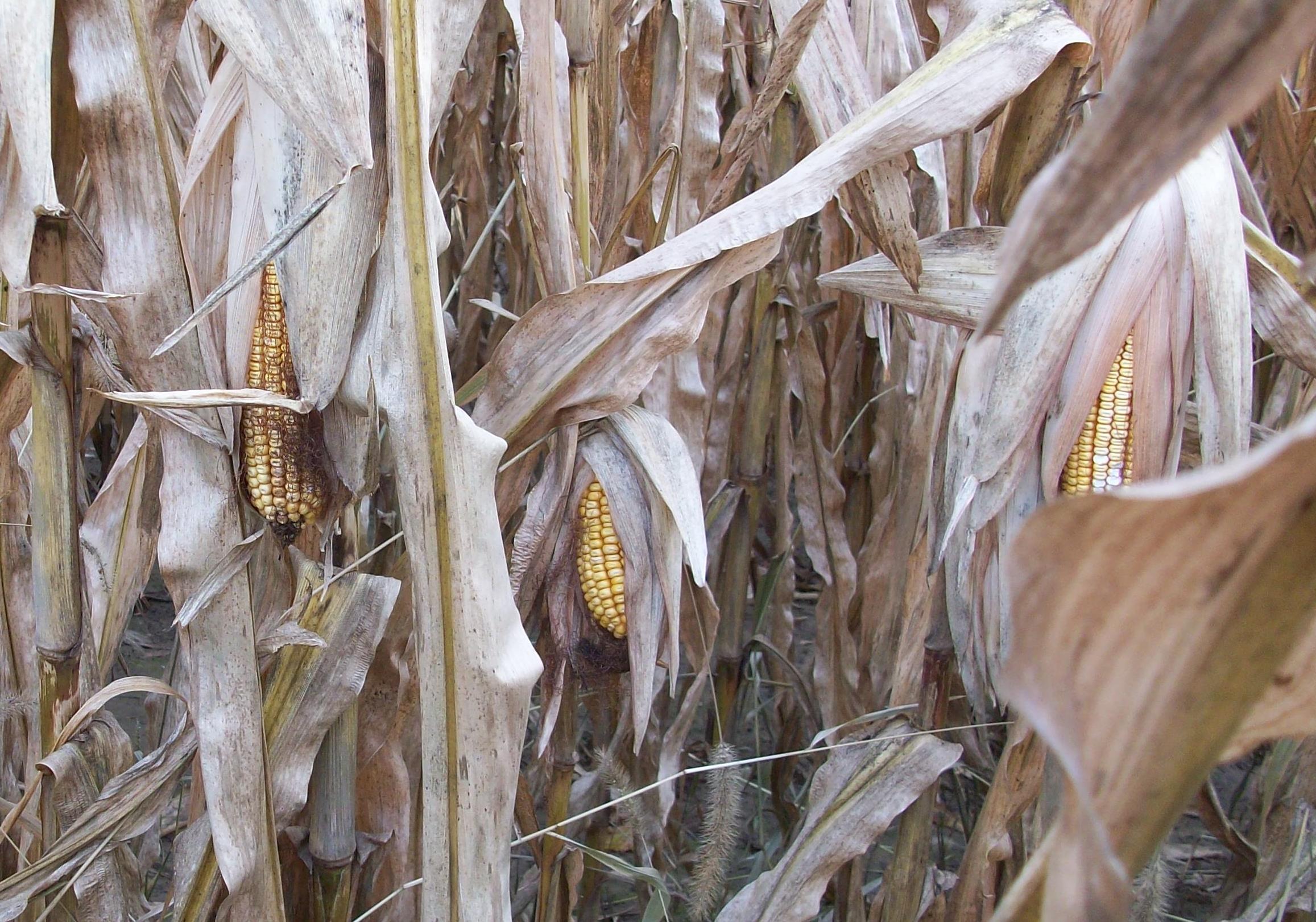
Field Corn

When we took the land after the 1832 Black Hawk Purchase, it was decimated to make neatly cut rectangles of farmland. People are used to that now. Today Iowa farmland is used mostly as a production landscape for hogs, cattle, corn and beans. For too long, Iowa’s air, water and land have been used like an open sewer to support these operations. Farmers are used to what they know and don’t want to change. That’s true for people besides farmers.

Iowa is not an empty place where someone can do what they want with the land. A utility should not be able to build pipelines and transmission lines, or construct large-scale wind farms and solar arrays with impunity. The current crop of Iowa farmers is possessive of the right to their land and to use it as they see fit. They believe they know better than government what works here and what doesn’t. They don’t want infringement on their rights. The myth of farmers as the original environmentalists persists despite evidence to the contrary.

When solutions to the climate crisis require cooperation between large corporations and Iowa farmers there is resistance.

The new carbon capture and sequestration proposals of Summit Carbon Solutions and Navigator CO2 Ventures will confront these well-established beliefs. Even though a prominent farmer, Bruce Rastetter, is behind Summit, the rollout will follow a path familiar to anyone who knows the history of electricity transmission lines and oil pipelines here. Farmers will push back.

Donnelle Eller of Gannett stated the obvious about Summit in Monday’s Iowa City Press Citizen, “The company, a spinoff of Bruce Rastetter’s Alden-based Summit Agricultural Group, says the project would help ethanol and other energy-intensive ag industries remain viable as the nation seeks to cut greenhouse gas emissions in half by 2030 to address climate change.” The Iowa governor spoke about a low carbon economy, but failed to mention climate change or how CCS fits in such a framework. This underscores a key problem with CCS. They are just out there and bottom line, it’s backers don’t give a hoot about climate change. It’s another opportunity for capital investment which could yield big profits.

The sides are already lining up for this fight.

Opponents of CO2 pipelines have also been opponents of the Rock Island Clean Line and the Dakota Access Pipeline. Rural Iowans do not speak of one mind on this yet a common theme is big money, not farmers, are behind these transmission schemes. They claim the voices of farmers are not being heard. They also claim climate change is a lie.

What is the purpose of CCS if not to address climate change? That’s the wrong question. These projects are about investing capital to get a return on investment. If the government is a source of start-up capital, more’s the better for investors. The words “climate change” aren’t needed in this transaction.

“The world must reach net-zero CO2 emissions by 2050 in order to achieve the 1.5 degree Celsius global average temperature increase limit,” according to Summit’s website. “A dramatic increase in carbon capture and storage (CCS) is crucial to achieving net-zero CO2 emissions.”

The second sentence is unlikely to be accurate. The problem is Summit and Navigator seek to change nothing about industrial use of fossil fuels. They seek a profit from ethanol plants and other CO2 emitters who keep on doing what they are doing now. CCS has become a gigantic boondoggle instead of a solution to climate change.

“Climate and other environmental and public safety concerns about CO2 pipelines are important,” Ed Fallon wrote in a Nov. 11 email. “But as with Dakota Access Pipeline, in terms of mobilizing the broadest possible coalition of opponents, the strongest argument is the abuse of eminent domain.”

In a filing with the Iowa Utilities Board, Janna Swanson, whose land the Summit pipeline would cross, had this to say about the project and climate change:

There are a whole bunch of plans to mine our tax money for revenue and the excuse is Climate Change. When using that as an excuse then any action against humans is justified.

Summit Carbon Solutions will want the right of eminent domain. They will say that because of Climate Change that their business model is for public use.

When one paints with that wide of a brush then no one’s property is off limits for anything. No one has rights.

Iowa Utilities Board filing ID 4277288 under HLP-2021-0001 by Janna Swanson

Let’s be clear. Summit and Navigator are in the CCS business to make money, as much of it as they can. Comments like Swanson’s are setting up climate change as a talking point instead of the reality of extreme weather it is and that must be dealt with.

It is early in the process yet already many comments have been made to the Iowa Utilities Board regarding the potential CCS proposals of Summit and Navigator. If you’d like to make a comment, here’s the information.

Written comments or objections to the proposed pipeline can be filed electronically using the IUB’s Open Docket Comment Form, by email to customer@iub.iowa.gov, or by postal mail to the Iowa Utilities Board, Attn: Docket No. HLP-2021-0003 (Navigator) and/or Docket No. HLP-2021-0001 (Summit) , 1375 E. Court Ave., Des Moines, IA 50319.

The downside of the CCS approval process is it turns rural Iowans against a second science-based phenomenon. Only 56.5 percent of Iowans are fully vaccinated against the coronavirus. There is no inoculation against extreme weather made worse by climate change that Iowans already experience.

The resource page I wrote recently has been updated with new information. Check it out by clicking here.

~ Written for Blog for Iowa

Categories
Writing

Shifting Gears

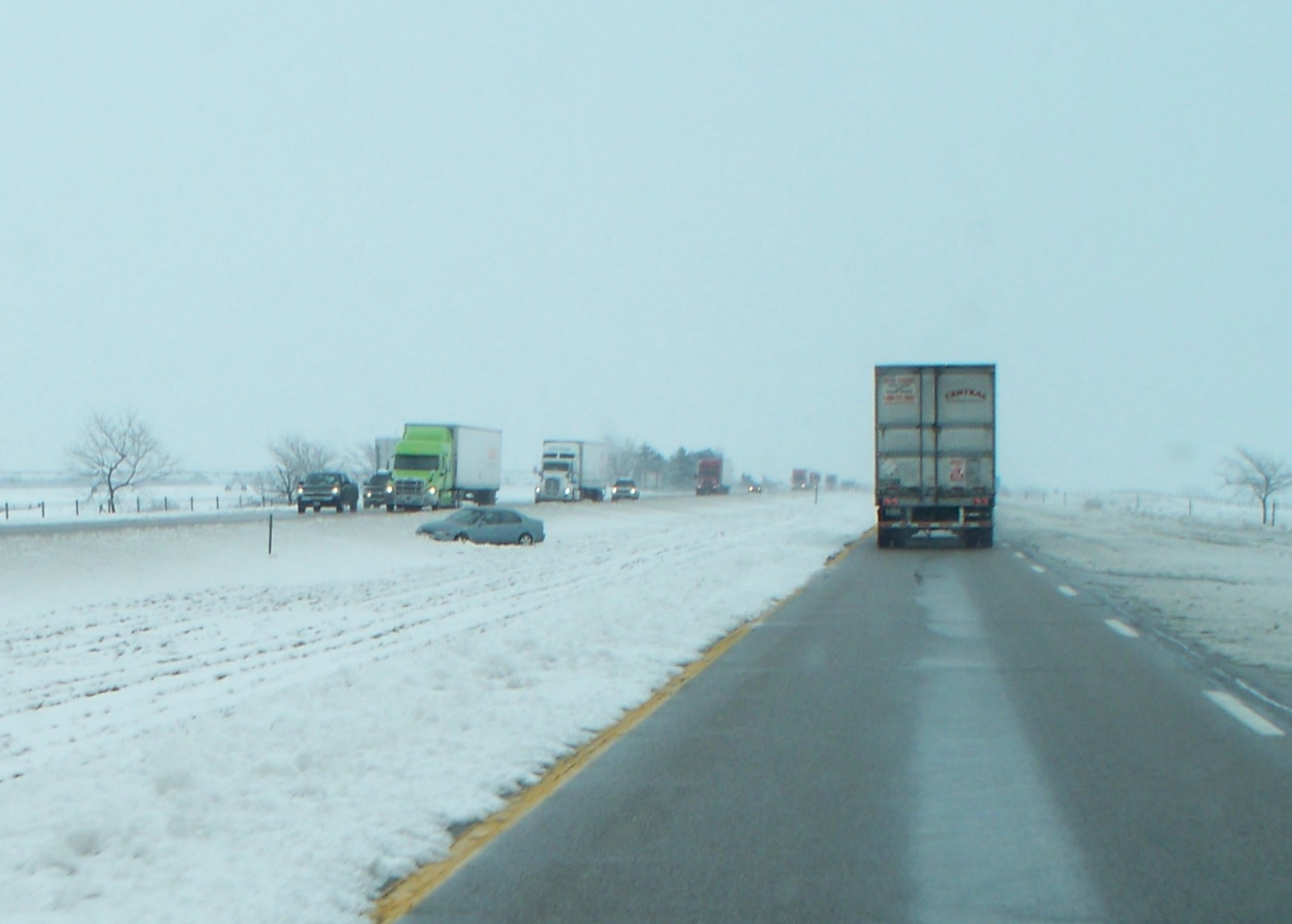
Interstate 80 in Nebraska, Winter 2012.

Beginning today, I’m spending less writing time here and more on other projects. Due to the coronavirus pandemic, I’ve gone long stretches of posting every day. The uninterrupted string of posts may end soon, even if the pandemic doesn’t.

I’ll continue to cross post from other platforms, although my main work lies elsewhere, at least until spring.

Now that the end of year holidays kicked off with Thanksgiving, I’m ready to go. However you celebrate year’s end, have a good one.

Thank you for reading Journey Home. Hope to see you on the other side.

Categories
Writing

2022 Garden Seeds Ordered

2015 Seed Catalogs

In between kitchen duties of helping prepare our Thanksgiving meal, I spent time finalizing a seed order for the 2022 garden. Between Johnny’s Selected Seeds and Totally Tomatoes, I found most of what I needed to adjust the seed inventory before next year’s planting.

When our daughter left Iowa we lost our way during the holidays. Old habits fell away and Christmas decorations we displayed each year after Thanksgiving remain in storage as they have for the past several years. Given the changes, it is hard to determine the meaning of the end of year holidays. What they meant isn’t any longer. For the most part we embrace the change… and plan the next year’s garden, and other activities.

Behind these blog posts, a lot is happening related to my writing. Last winter’s work was one of getting words down on a page, an average of 1,218 per day during the first half of this year. This winter I’m putting together the structure and plugging drafts into slots on the narrative frame. I cleared a shelf which now contains a dozen empty three-ring binders. Inside them will go the draft book, along with key reference material. I hope to fill those binders during the coming months. I will have a better idea of what progress is possible after the first pass.

The days after Thanksgiving are a quiet time. We all need a break and thrive in peacefulness. On April 21, 1996 we bought our first home computer. During the last 25 years, we learned how to spend long periods of time in front of a computer screen. Most of that time is dull, yet occasionally we find something of interest. Something engaging is always a click away, or so we believe. The information comes at us so quickly on line. One story after another piles up, invoking rage, happiness, and joy, but seldom denouement or catharsis. When we are sitting, looking at a screen, we often get tense or anxious. Sometimes we are outraged, which causes us to stand up and converse with others, to let off steam, to slow things back down to a normal pace. We appreciate the relative quiet in between times.

This Thanksgiving weekend is an in between time. Now that seed orders are placed, the next main event will come along soon enough. It’s getting so I no longer look forward to “main events.” I would much rather be in between.

Categories
Writing

Retro Post: Day After Thanksgiving

(Editor’s Note: The events in this retro post occurred on Friday, Nov. 25, 2011. I refer to my photo blog on Flickr, yet that has been deleted like all of my Yahoo accounts. I remember this home town adventure like it was yesterday. Many thanks to my friend Dan for taking the photos).

For a number of years, a grade school friend and I have been getting together in Davenport to talk and go to Blain’s Farm and Fleet the day after Thanksgiving. In a change of habits, except we did go to Farm and Fleet, we created a project to visit some of the places I have been posting about in my photo blog on Flickr and shoot photographs. We started at 8 a.m. when I picked him up at his parent’s home. A cup of coffee in tow, we got right to work, driving past his former home on Fillmore to my birthplace in this parking lot.

At My Birth Place

The parking lot is actually an upgrade from the vacant lot that sat for a number of years where the old Mercy Hospital was torn down. We both shared our experiences there, and then moved over to the church where I was baptized two blocks away.

Holy Family Church

When I secured a copy of my baptismal record to apply to the Bishop to attend seminary, I found they got my middle name wrong. In my experience in dealing with record keepers, this type of error occurs frequently. What is a person to do, as the wants of historical revisionists are not wanted by record clerks, most of the time. The historical record is what it is. After this, we continued South on Fillmore Street.

At the intersection with Locust Street, I pointed out the place where I heard JFK had been shot in Dallas. Continuing South on Fillmore we passed the duplex where I lived during my first year.

Fillmore Street Duplex

Continuing on, we came to the building where I attended grades two through six. It looks abandoned and the window in the room that was second grade was broken.

Broken Second Grade Window

We walked around the building and headed back to the church where I had parked my pickup truck.We drove by the former Geifman Foods, Northwest Bank and Trust and headed to Five Points where the Spudnut Shop used to be. It was gone, as were so many other neighborhood businesses from the old days.

We ended up by the old Turners Hall, which was a combination gymnasium and social club created by German immigrants and modeled after the Turnhalles in Germany. It too had fallen into disrepair.

Near the Turners Hall

Next we went to Fejervary Park which has long been a place for family gatherings. We checked out Mother Goose Land and Monkey Island and both looked to have renovations in progress. I found the stand of woods where my great grandmother’s family used to set out a picnic and converse in Polish.

Traditional Family Picnic Area

We drove past the place where my friend’s first house in Davenport had been located. It had been torn down. We drove past the Bishop’s old residence wondering if the Catholic Bishop still lived there. Next stop the place we moved after Fillmore Street at 919 Madison.

919 Madison Street

The hill is so steep on Madison I set the parking brake for the first time in over a year. We took lots of photos here, and the brick-paved street was particularly photogenic.

Madison Street

Next we drove downtown to River Drive past the old city cemetery where the cholera victims are buried in a mass grave. Turning left, we headed to Oscar Mayer.

Oscar Mayer Davenport Plant

I posted another photo of Oscar Mayer on my photoblog.

From here, East on River Drive, past KSTT Radio to where we lived behind the Wonder Bakery, now called Continental Baking. The house had been converted to a parking lot. Leaving there, we drove to Mississippi Avenue and stopped at the building where I had an apartment before leaving for the Army. I lived in the apartment in the second floor, far right window.

Apartment on Mississippi Avenue

As long as we were in the area, we stopped by the apartment on Walling Court where I lived with a high school friend while I was waiting to enter the seminary. It is located near where the jazz musician Bix Beiderbecke was born. From here, we wove our way around Grand and Farnum to Central Park and then the Village Inn on Harrison where we stopped, drank a cup of coffee and had bagels while we loaded the photos on my computer and reviewed them.

From here we went to Farm and Fleet and browsed the farm clothing. My friend bought some tins of popcorn for work presents and we dropped them back at his parents home where the women of the family were having a wedding shower. Threatened with our lives for intruding on the long planned, all female event, we headed over to the other family house, a few blocks away, where the men were gathered watching the Hawkeye v. Corn Husker football game, eating Kielbasa, bologna and ham salad sandwiches and drinking Kamikazes. We had lunch and I headed back to Big Grove around 1 p.m. It was a day about as good as they get.

Categories
Writing

November Trail Walking

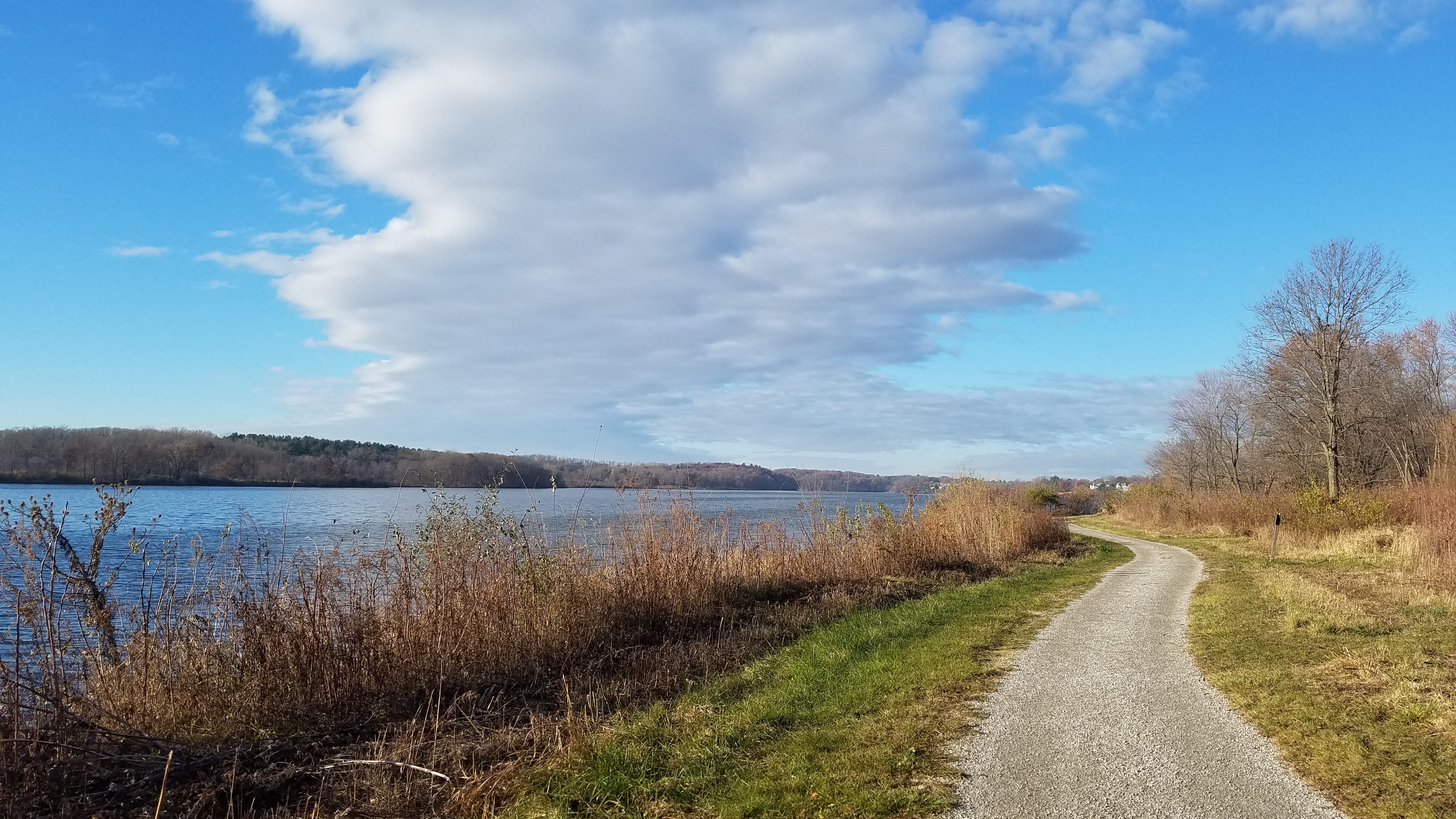
Lake Macbride State Park trail, Nov. 21, 2021.

Days of the week have been differentiated. Defining a “week” with no work outside home seems essential to emerging from the ongoing coronavirus pandemic. Where are we on the pandemic?

According to CDC, less than 10 people died of COVID-19 in our county during the last seven day period. The actual numbers were “suppressed” on their website. The rate of admission to hospitals for COVID-19 is three per day for the same period. Our county has a high level of community transmission of the virus compared to most other counties in Iowa which are described as “substantial.” The percentage of positive tests for COVID-19 is on an upswing and expected to get worse as the end of year holidays are upon us. The county health department encourages us to get vaccinated if we aren’t, and to get a booster shot before December if we are eligible. The vaccine is available on a walk-in basis at pharmacies. We appear to have reached a period of stasis in the pandemic.

Some days of the week are better defined than others. Mondays are about catching up on desk work and starting new projects. Wednesdays are for shopping in person if needed. Fridays are for finishing up the week’s work, and the weekend is back to being the weekend with less travel and most activities occurring at home. Without effort on my part days would have continued to blend into an endless series of indistinguishable sunrises and sunsets. It is important to impose structure on our lives, so I have.

Every day I attempt to exercise. Of late, most of it was walking on the state park trail. When we chose to build our home here, proximity to the state park was an attractive feature. Not only is the trail well-maintained, the abundance of wildlife can be astounding. Waterfowl and birds alone are a constant source of wonder. The point is the exercise, though, and the trail serves.

We don’t know if or when the coronavirus pandemic will end. What you see is what you get, I suppose. Maybe it is over and we just haven’t said so. I plan to continue to wear a mask in public, especially when shopping, long after the threat of COVID-19 has diminished. There are plenty of other colds, viruses and contagions to avoid. If this is an eccentricity of the elderly, then so be it. I embrace it. I’m at a point where I don’t care that much how people view my appearance. I do want to fit in when in social settings, but there are lines to be drawn. I have plenty of N-95 masks.

The weather has been delightful this fall, with more temperate, clear days than we deserve. I’m planning to hike the trail again today, partly for the exercise, and partly to see the activity of a society of people and wildlife in transition. Here’s hoping there is change for the better.

Categories
Writing

Writing About Politics

Iowa City political event during the 2010 campaign. Note U.S. flag incorrectly displayed. We fixed it before the event began.

Voting and politics have been part of my life since the earliest days. I remember discussing Dwight Eisenhower with my parents. He was a Republican and we didn’t like him for that. When he started building the Interstate Highway System, it had a direct impact on our lives. We revised our position to say he wasn’t so bad and looked forward to cutting down the time it took to drive to my aunt and uncle’s home in Nashville, Tennessee.

Harry Truman was president when I was born. I have no memory of him in that role. I recall seeing news footage of Truman taking a walk from his retirement home in Independence, Missouri. Mostly, I reference his memoirs to see what he had to say about decisions he made as president. I’ve read the passage about his decision to drop the atomic bomb several times.

Father campaigned for John F. Kennedy in 1960. He had mimeographed canvass sheets he got at the union hall and diligently filled in the names of everyone on our block and how they would vote. When he finished our block, he worked on nearby ones. Kennedy lost Iowa to Richard Nixon and, as we know, won the general election.

The 1964 election of Lyndon B. Johnson framed the way I thought Democrats should govern. LBJ had a big majority in the legislature and was able to pass legislation. In his book The Vantage Point: Perspectives of the Presidency 1963-1969 he listed them inside the front cover. It’s a long list. If his political legacy is tainted by the war in Vietnam, it is dominated by many policies and legislation that changed the United States for the better. I was shocked when Hubert Humphrey failed to win the 1968 election as I felt he was cut in the LBJ mold and would be a great successor. Nixon beat Humphrey 301-191 in the Electoral College. It wasn’t even close.

I have nothing good to say about the Nixon years. 1972 was the first year I was eligible to vote and I don’t recall if I did vote for George McGovern. I remember some confusion about whether I could vote in Iowa City, where I attended university, or whether I had to vote at home. I recently wrote about the 1972 election and McGovern here. Nixon was a liar and it was with a sigh of relief I welcomed his resignation in 1974. I didn’t care who was president. Gerald Ford? Fine.

I didn’t vote in the 1976 election as I was engaged in military training. We were rid of Nixon, so I didn’t much care who was elected. My thinking was “America, figure it out.” From my perch in Mainz, West Germany I thought Carter was doing an okay job. I felt he was unjustly criticized for lack of support for the military when I saw the results of his policy and spending not far from my caserne. During a major field exercise in which I participated, our commanding officer would travel back to the states each week to provide an update to the White House. I saw some of the ideas we discussed in a tent in Germany turned into policy in Washington. It was a heady feeling.

Reagan was the beginning of the decline of America’s greatness with its focus on reducing the power of the central government, favoring the rich. Maybe we were just receiving a comeuppance after the LBJ years. The Reagan administration began overturning reforms of the New Deal, something that would persist with every subsequent Republican president. Each played a role in dismantling the social fabric we had come to depend upon. The years since then left us with with hyper-partisanship and a flow of wealth to a small percentage of people.

My early years, through exiting the military in 1979, were formative. It would be difficult to write about the politics as a separate topic in an autobiography. The challenge is to incorporate these stories in the flow of the book without having them dominate. Figuring this out is where I am this Monday morning.

Categories
Writing

Postcards from Iowa #13

Copyright: Joan Liffring Zug, photographer.

Reverse side: Made by Dexter Press, West Hyack, New York. Published by Mennonite Historical Society of Iowa, Kalona, Ia. 52247. Old Order Amish and conservative Mennonite daughters wear traditional plain homemade dresses familiar throughout 450 years of Anabaptist history. These are the children of a buggy maker living and working near the Kalona Cheese plant of Twin County Dairy, Inc., Highway 1, Kalona, Ia.

Two girls posing for a photographer who had permission to take their picture. There has been more than a little controversy about photographing Mennonites and Old Order Amish. It is permissible with the former, and against views about graven images with the latter. The images are well-circulated.

I used to visit the Twin County Dairy when bicycling from Iowa City. Cycling alone for the exercise, I would stop and buy cheese curds at the dairy. That is, if it were open. Often my trips were predawn when the glow and flicker of kerosene lamps came from house windows and the doors of barns. I no longer travel to Kalona as I learned how to produce almost everything I formerly bought at Stringtown Grocery and other shops scattered in the rural area.

Twin County Dairy, established by a group of Amish and Mennonite farmers as a cooperative in 1946, was shuttered in 2014. Kalona Creamery, a part of Open Gates Business Development Corporation bought it the following year. Their businesses included Kalona OrganicsĀ®, Kalona Farms, Farmers Creamery, Awesome Refrigerated Transit of Iowa, and Provision Ingredients. I don’t know if they have a retail store that sells cheese curds. Since there is a creamery a few miles from home, I have no need to go and find out.

Author David Rhodes wrote about the area in his novel Rock Island Line. I have a library copy of the first edition, published in 1975. No doubt I bought it at a thrift shop. There is a rubber stamp inside the front cover that reads, “Outdated Removed from Circulation.” Young girls in the Mennonite community and their photographs won’t become outdated any time soon.