Categories
Writing

Retro Post: Day After Thanksgiving

(Editor’s Note: The events in this retro post occurred on Friday, Nov. 25, 2011. I refer to my photo blog on Flickr, yet that has been deleted like all of my Yahoo accounts. I remember this home town adventure like it was yesterday. Many thanks to my friend Dan for taking the photos).

For a number of years, a grade school friend and I have been getting together in Davenport to talk and go to Blain’s Farm and Fleet the day after Thanksgiving. In a change of habits, except we did go to Farm and Fleet, we created a project to visit some of the places I have been posting about in my photo blog on Flickr and shoot photographs. We started at 8 a.m. when I picked him up at his parent’s home. A cup of coffee in tow, we got right to work, driving past his former home on Fillmore to my birthplace in this parking lot.

At My Birth Place

The parking lot is actually an upgrade from the vacant lot that sat for a number of years where the old Mercy Hospital was torn down. We both shared our experiences there, and then moved over to the church where I was baptized two blocks away.

Holy Family Church

When I secured a copy of my baptismal record to apply to the Bishop to attend seminary, I found they got my middle name wrong. In my experience in dealing with record keepers, this type of error occurs frequently. What is a person to do, as the wants of historical revisionists are not wanted by record clerks, most of the time. The historical record is what it is. After this, we continued South on Fillmore Street.

At the intersection with Locust Street, I pointed out the place where I heard JFK had been shot in Dallas. Continuing South on Fillmore we passed the duplex where I lived during my first year.

Fillmore Street Duplex

Continuing on, we came to the building where I attended grades two through six. It looks abandoned and the window in the room that was second grade was broken.

Broken Second Grade Window

We walked around the building and headed back to the church where I had parked my pickup truck.We drove by the former Geifman Foods, Northwest Bank and Trust and headed to Five Points where the Spudnut Shop used to be. It was gone, as were so many other neighborhood businesses from the old days.

We ended up by the old Turners Hall, which was a combination gymnasium and social club created by German immigrants and modeled after the Turnhalles in Germany. It too had fallen into disrepair.

Near the Turners Hall

Next we went to Fejervary Park which has long been a place for family gatherings. We checked out Mother Goose Land and Monkey Island and both looked to have renovations in progress. I found the stand of woods where my great grandmother’s family used to set out a picnic and converse in Polish.

Traditional Family Picnic Area

We drove past the place where my friend’s first house in Davenport had been located. It had been torn down. We drove past the Bishop’s old residence wondering if the Catholic Bishop still lived there. Next stop the place we moved after Fillmore Street at 919 Madison.

919 Madison Street

The hill is so steep on Madison I set the parking brake for the first time in over a year. We took lots of photos here, and the brick-paved street was particularly photogenic.

Madison Street

Next we drove downtown to River Drive past the old city cemetery where the cholera victims are buried in a mass grave. Turning left, we headed to Oscar Mayer.

Oscar Mayer Davenport Plant

I posted another photo of Oscar Mayer on my photoblog.

From here, East on River Drive, past KSTT Radio to where we lived behind the Wonder Bakery, now called Continental Baking. The house had been converted to a parking lot. Leaving there, we drove to Mississippi Avenue and stopped at the building where I had an apartment before leaving for the Army. I lived in the apartment in the second floor, far right window.

Apartment on Mississippi Avenue

As long as we were in the area, we stopped by the apartment on Walling Court where I lived with a high school friend while I was waiting to enter the seminary. It is located near where the jazz musician Bix Beiderbecke was born. From here, we wove our way around Grand and Farnum to Central Park and then the Village Inn on Harrison where we stopped, drank a cup of coffee and had bagels while we loaded the photos on my computer and reviewed them.

From here we went to Farm and Fleet and browsed the farm clothing. My friend bought some tins of popcorn for work presents and we dropped them back at his parents home where the women of the family were having a wedding shower. Threatened with our lives for intruding on the long planned, all female event, we headed over to the other family house, a few blocks away, where the men were gathered watching the Hawkeye v. Corn Husker football game, eating Kielbasa, bologna and ham salad sandwiches and drinking Kamikazes. We had lunch and I headed back to Big Grove around 1 p.m. It was a day about as good as they get.
Categories
Writing

November Trail Walking

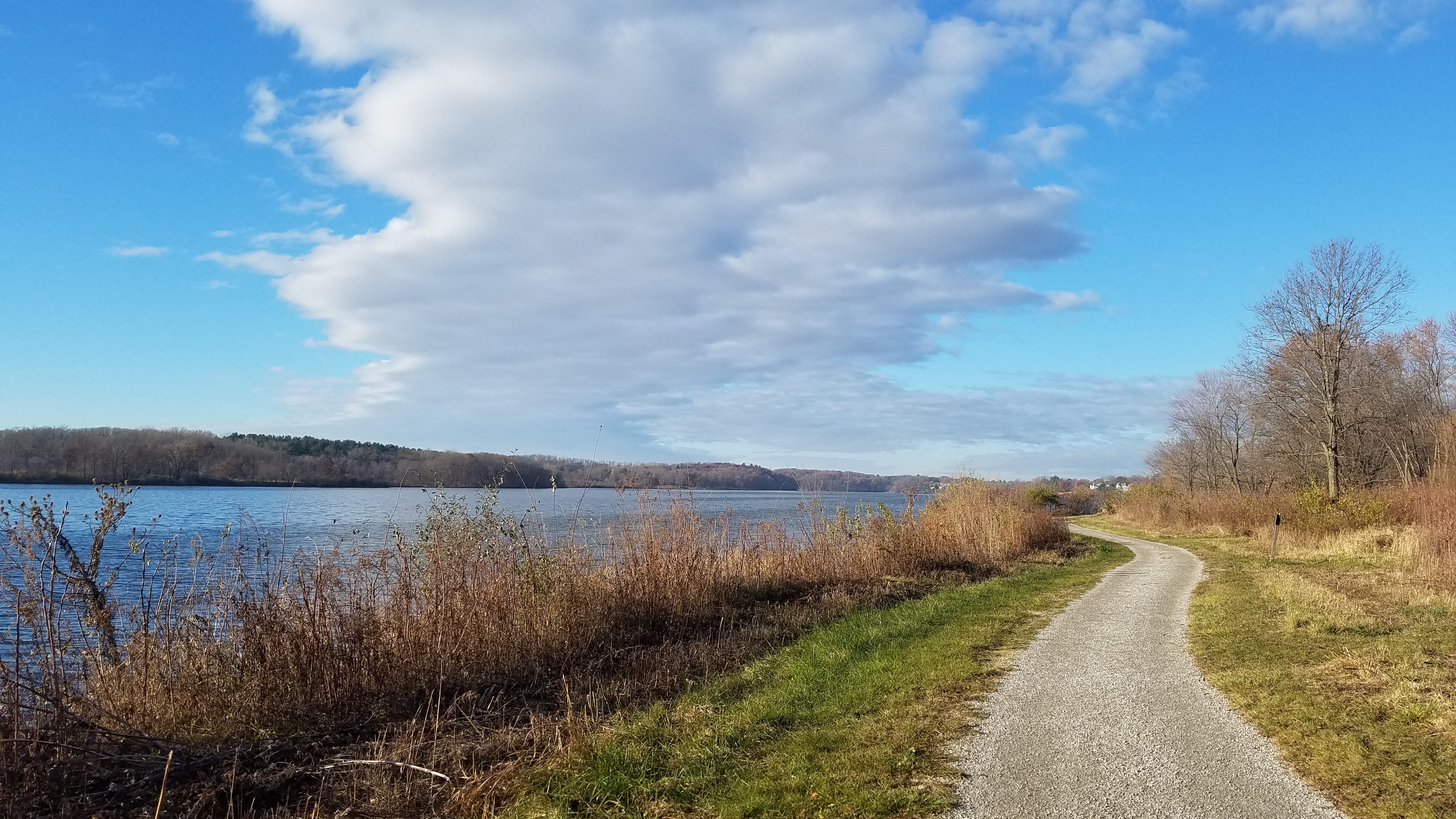
Lake Macbride State Park trail, Nov. 21, 2021.

Days of the week have been differentiated. Defining a “week” with no work outside home seems essential to emerging from the ongoing coronavirus pandemic. Where are we on the pandemic?

According to CDC, less than 10 people died of COVID-19 in our county during the last seven day period. The actual numbers were “suppressed” on their website. The rate of admission to hospitals for COVID-19 is three per day for the same period. Our county has a high level of community transmission of the virus compared to most other counties in Iowa which are described as “substantial.” The percentage of positive tests for COVID-19 is on an upswing and expected to get worse as the end of year holidays are upon us. The county health department encourages us to get vaccinated if we aren’t, and to get a booster shot before December if we are eligible. The vaccine is available on a walk-in basis at pharmacies. We appear to have reached a period of stasis in the pandemic.

Some days of the week are better defined than others. Mondays are about catching up on desk work and starting new projects. Wednesdays are for shopping in person if needed. Fridays are for finishing up the week’s work, and the weekend is back to being the weekend with less travel and most activities occurring at home. Without effort on my part days would have continued to blend into an endless series of indistinguishable sunrises and sunsets. It is important to impose structure on our lives, so I have.

Every day I attempt to exercise. Of late, most of it was walking on the state park trail. When we chose to build our home here, proximity to the state park was an attractive feature. Not only is the trail well-maintained, the abundance of wildlife can be astounding. Waterfowl and birds alone are a constant source of wonder. The point is the exercise, though, and the trail serves.

We don’t know if or when the coronavirus pandemic will end. What you see is what you get, I suppose. Maybe it is over and we just haven’t said so. I plan to continue to wear a mask in public, especially when shopping, long after the threat of COVID-19 has diminished. There are plenty of other colds, viruses and contagions to avoid. If this is an eccentricity of the elderly, then so be it. I embrace it. I’m at a point where I don’t care that much how people view my appearance. I do want to fit in when in social settings, but there are lines to be drawn. I have plenty of N-95 masks.

The weather has been delightful this fall, with more temperate, clear days than we deserve. I’m planning to hike the trail again today, partly for the exercise, and partly to see the activity of a society of people and wildlife in transition. Here’s hoping there is change for the better.

Categories
Writing

Writing About Politics

Iowa City political event during the 2010 campaign. Note U.S. flag incorrectly displayed. We fixed it before the event began.

Voting and politics have been part of my life since the earliest days. I remember discussing Dwight Eisenhower with my parents. He was a Republican and we didn’t like him for that. When he started building the Interstate Highway System, it had a direct impact on our lives. We revised our position to say he wasn’t so bad and looked forward to cutting down the time it took to drive to my aunt and uncle’s home in Nashville, Tennessee.

Harry Truman was president when I was born. I have no memory of him in that role. I recall seeing news footage of Truman taking a walk from his retirement home in Independence, Missouri. Mostly, I reference his memoirs to see what he had to say about decisions he made as president. I’ve read the passage about his decision to drop the atomic bomb several times.

Father campaigned for John F. Kennedy in 1960. He had mimeographed canvass sheets he got at the union hall and diligently filled in the names of everyone on our block and how they would vote. When he finished our block, he worked on nearby ones. Kennedy lost Iowa to Richard Nixon and, as we know, won the general election.

The 1964 election of Lyndon B. Johnson framed the way I thought Democrats should govern. LBJ had a big majority in the legislature and was able to pass legislation. In his book The Vantage Point: Perspectives of the Presidency 1963-1969 he listed them inside the front cover. It’s a long list. If his political legacy is tainted by the war in Vietnam, it is dominated by many policies and legislation that changed the United States for the better. I was shocked when Hubert Humphrey failed to win the 1968 election as I felt he was cut in the LBJ mold and would be a great successor. Nixon beat Humphrey 301-191 in the Electoral College. It wasn’t even close.

I have nothing good to say about the Nixon years. 1972 was the first year I was eligible to vote and I don’t recall if I did vote for George McGovern. I remember some confusion about whether I could vote in Iowa City, where I attended university, or whether I had to vote at home. I recently wrote about the 1972 election and McGovern here. Nixon was a liar and it was with a sigh of relief I welcomed his resignation in 1974. I didn’t care who was president. Gerald Ford? Fine.

I didn’t vote in the 1976 election as I was engaged in military training. We were rid of Nixon, so I didn’t much care who was elected. My thinking was “America, figure it out.” From my perch in Mainz, West Germany I thought Carter was doing an okay job. I felt he was unjustly criticized for lack of support for the military when I saw the results of his policy and spending not far from my caserne. During a major field exercise in which I participated, our commanding officer would travel back to the states each week to provide an update to the White House. I saw some of the ideas we discussed in a tent in Germany turned into policy in Washington. It was a heady feeling.

Reagan was the beginning of the decline of America’s greatness with its focus on reducing the power of the central government, favoring the rich. Maybe we were just receiving a comeuppance after the LBJ years. The Reagan administration began overturning reforms of the New Deal, something that would persist with every subsequent Republican president. Each played a role in dismantling the social fabric we had come to depend upon. The years since then left us with with hyper-partisanship and a flow of wealth to a small percentage of people.

My early years, through exiting the military in 1979, were formative. It would be difficult to write about the politics as a separate topic in an autobiography. The challenge is to incorporate these stories in the flow of the book without having them dominate. Figuring this out is where I am this Monday morning.

Categories
Writing

Postcards from Iowa #13

Copyright: Joan Liffring Zug, photographer.

Reverse side: Made by Dexter Press, West Hyack, New York. Published by Mennonite Historical Society of Iowa, Kalona, Ia. 52247. Old Order Amish and conservative Mennonite daughters wear traditional plain homemade dresses familiar throughout 450 years of Anabaptist history. These are the children of a buggy maker living and working near the Kalona Cheese plant of Twin County Dairy, Inc., Highway 1, Kalona, Ia.

Two girls posing for a photographer who had permission to take their picture. There has been more than a little controversy about photographing Mennonites and Old Order Amish. It is permissible with the former, and against views about graven images with the latter. The images are well-circulated.

I used to visit the Twin County Dairy when bicycling from Iowa City. Cycling alone for the exercise, I would stop and buy cheese curds at the dairy. That is, if it were open. Often my trips were predawn when the glow and flicker of kerosene lamps came from house windows and the doors of barns. I no longer travel to Kalona as I learned how to produce almost everything I formerly bought at Stringtown Grocery and other shops scattered in the rural area.

Twin County Dairy, established by a group of Amish and Mennonite farmers as a cooperative in 1946, was shuttered in 2014. Kalona Creamery, a part of Open Gates Business Development Corporation bought it the following year. Their businesses included Kalona Organics®, Kalona Farms, Farmers Creamery, Awesome Refrigerated Transit of Iowa, and Provision Ingredients. I don’t know if they have a retail store that sells cheese curds. Since there is a creamery a few miles from home, I have no need to go and find out.

Author David Rhodes wrote about the area in his novel Rock Island Line. I have a library copy of the first edition, published in 1975. No doubt I bought it at a thrift shop. There is a rubber stamp inside the front cover that reads, “Outdated Removed from Circulation.” Young girls in the Mennonite community and their photographs won’t become outdated any time soon.

Categories
Writing

Postcards from Iowa #12

Buzz Aldrin on the Moon, July 20, 1969 – Apollo 11. Photo credit: Neil Armstrong.

Reverse side: Cumquat Publishing Co. P.O. Box 4932, St. Louis, MO 63108

When considering this photo the isolation stands out. Besides Michael Collins orbiting the moon while waiting for their return, Buzz Aldrin and Neil Armstrong were alone. The sense of isolation is profound.

They were trained to deal with the mission and by all accounts did well. It was a unique moment in history, one in which many Americans took pride.

I witnessed what I could on television when it happened or on replay. I remember grainy images, a reality that seemed surreal.

It is a great photograph. One I’ll think about all day.

Categories
Writing

Postcards from Iowa #11

Photo Credit: The American Scene Collection, American Oil Company 1969.

Reverse side: Washington Skyline, Washington, D.C. Located on the axis of the Lincoln Memorial and the Washington Monument, the Capitol Building is shown in the foreground with the Washington Monument illuminated in the background. See the U.S.A. in a Chevrolet. As you travel ask us.

Life would have been simpler if I had stuck to the same path as friends in high school. Maybe follow a narrative such as after school and military service find a job, raise a family, work it until retirement, then settle back and relax in the golden years. Simple.

Actual living was not simple. While many in my cohort married and started a family immediately after high school, I did not and that made a difference.

The trauma of being injured while young, and the subsequent hospital stay, removed me from conventional pathways. I wrote about it in 2009:

My earliest defining moment was the day, at age 3-1/2, when a swing-set set up in the basement of our Madison Street home collapsed and injured my head. My parents were horrified. I remember the pool of blood on the basement floor, holding the thumb of the ambulance driver, taking ether dripped into a funnel to anesthetize me for the stitches to mend my gashed head. I am lucky to be alive. What I learned through the injury and recovery in the hospital was that there is an infrastructure of knowledge and caring to support us when things happen. I watched the routines of the hospital staff, the doctor checking up on me, changing room mates and bed linen, daily visits from my parents and the handling of my propensity to get out of bed and walk around. This experience assured me that although we are vulnerable, we are not alone.

Over the years, Doctor Kuhl would examine the scar on my forehead and talk about my recovery when I visited him in his office. Today, I don’t think of the scar, and suspect most people do not even notice it. What I do think about is that while we are not alone, we must be part of a society that helps protect those who are most vulnerable, including the injured and infirm. When I was very young, I made a withdrawal from this bank and now the debt needs repaying.

Big Grove News, Jan. 18, 2009.

Little has changed since I wrote this. While I relied on the infrastructure of society, at high school graduation I had neither the interest nor skills to get married and start a family. I went to college instead.

In late 1968 or 1969, I sought Father’s approval while figuring out what to do after high school. Maybe I would study engineering, I told him. The practical, rational approach of an engineer to problem-solving was appealing. He neither approved nor disapproved. He looked surprised it was on my mind. He was completing his own education and perhaps was preoccupied. He would be gone soon afterward.

During senior year in high school we made a class trip to Washington, D.C. and New York City. It was my first trip on a commercial aircraft. We saw the U.S. Capitol and Washington monument depicted in this postcard at about the time it was printed. We played cards for nickels and dimes in our room each night. My winnings paid for incidental expenses through New York. In some ways the class trip was the beginning of living on my own and experiencing the world outside my home town. It seems appropriate it would start with the nation’s capitol.

My life divides into segments: preschool, education, work and family, moving to Indiana, and moving back to Iowa. Each was important for different reasons. As I went through time I didn’t know how each step would unfold.

My education, including military service and graduate school, had the momentum of youth. When I finished school at age 29, I was ready to do great things. Available opportunities were a disappointment. The trajectory of youth found me alone and unsettled, without a career or path forward. I would have to make my own way and that complicated things. In retrospect it was a good complication. If I hadn’t left my home town permanently for university, life may have been simpler.

I’m glad my circumstances gave me the chance to leave home and be different.

Categories
Writing

Before the Hard Frost

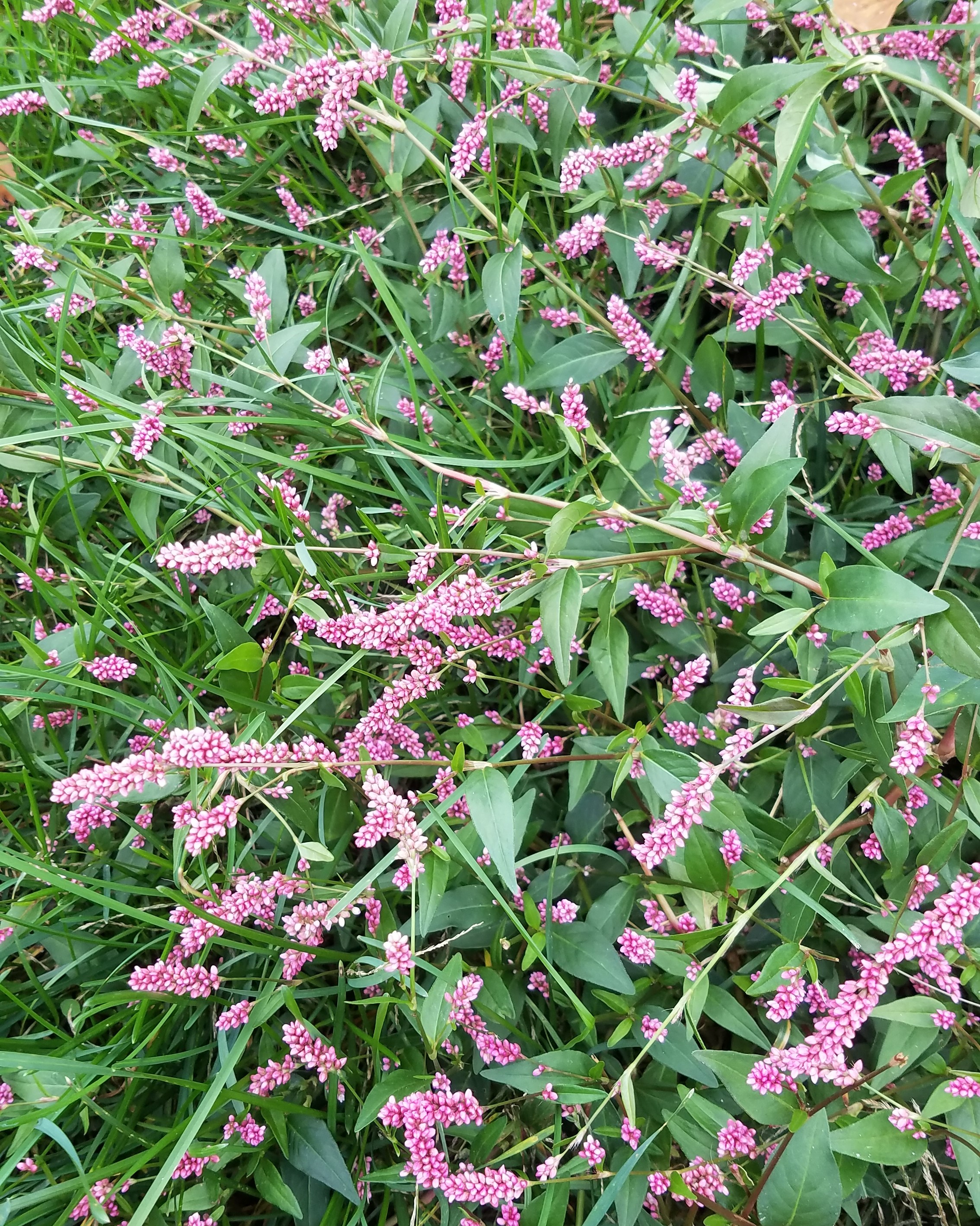
Volunteer weeds

A hard frost is coming. This is Iowa and it has usually been here by now. We wait.

Lilacs near the front door are beginning to bud, so it’s crazy warm. Rain is in the forecast, although chances seem slight. A dry spell would be better so the lawn can be mowed one last time. Outside my personal world, we could use more rain. We could also use a hard frost. I went walking on the state park trail since we had neither.

Determining where I left my autobiography this spring is not as easy as I thought it would be. I know where the major documents are located and the ideas I had for structure (sigh of relief!) yet things migrated elsewhere in the intervening months. The main trouble is when one has written consistently since 1974, and has access to much of that writing, it is hard to get through it to see where the narrative should go. These things don’t write themselves, I’m finding. At present I want it grounded in some kind of reality. That could change, yet not now.

Year two of this autobiographical writing will proceed differently. I must lay out a timeline and hang documents and artifacts on it. I accumulated stacks of three ring binders for the purpose. I wrote extensively about some key moments in my life, others come to mind frequently, and some I haven’t even touched. Need to organize, fill our the voids, and pare down repetition. If by spring I have a set of binders on a shelf with documents arranged in chronological order in them, this year’s writing will be deemed successful.

Friday was good. I have positive feelings about the coming weekend. We will make through winter again, I believe. On the other side awaits a new garden and fresh opportunity of the kind spring in the Northern Hemisphere can bring.

We anticipate the renewal which begins here and now. Yet first we want a hard frost.

Categories
Writing

Embers of the Derecho

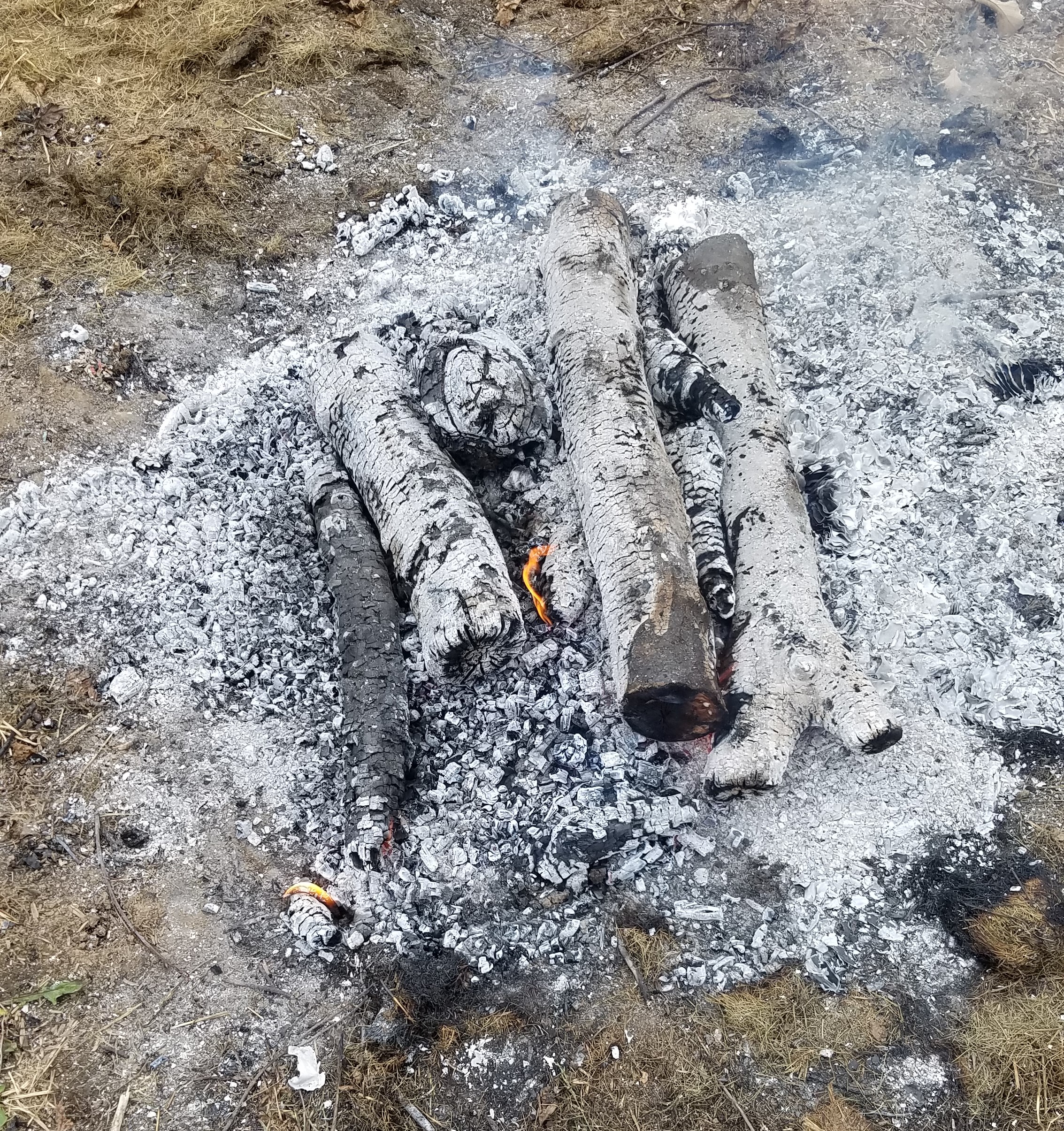
Embers of a brush pile on Oct. 27, 2021.

The brush pile included the last branches blown down by the Aug. 10, 2020 derecho. With enough rain to sate the drought, it was time to burn it. By nightfall it was reduced to ash, then a steady rain fell until morning.

One more mowing and I will get the John Deere serviced. After that, it will rest in the garage until spring. Deconstruction of the garden is ahead. I’ll need the mowed lawn to spread things out and organize for winter storage. I want to salvage and reuse landscaping fabric and the staples used to hold it in place.

The compost piles need to be moved and turned. I want to clear the garden plot where they are for more productive use. As my gardening skills improve I want more planting space next year. I have many wants.

I sat on the grass and watched the fire burn. I re-stacked the burning logs with a garden hoe and reduced the perimeter of the fire as it burned. I used old business cards mixed with shredded paper to start the fire. A pile of them lay under the burning branches. Once I turned them over they ignited.

We had an unexpected overnight visitor. I made a pot of chili using a fresh tomato, canned whole tomatoes, two kinds of frozen tomato sauce, and a can of organic tomato paste. It provided flexibility for supper time so we could focus on conversation.

A new day begins in our post derecho lives. The brush pile is gone, preparing a path toward garden’s end and winter.

Categories
Writing

The Journey Home

Trail walking at Lake Macbride State Park on Oct. 25, 2021.

By the end of the year I will be seventy years old. More than anything, I’m glad to have lived this long. The plan is to go on living.

My work life ended last year because of the coronavirus pandemic. I would like a new source of income to supplement our pensions, yet there is only slight financial pressure to locate one. I am not ready to return to retail or any public-facing job as I’m not convinced it would be good for me. Each day without work outside home seems a little weird. I’m trying to adjust to a new path. It isn’t going well.

There is no bucket list because I did most of what I intended going through my days. The list of things I want to accomplish isn’t long: organize and write an autobiography; maintain good health and a decent quality of life. I need to be here for those who depend upon me.

How childcare was handled during my life helped me become who I am. Mother stayed home with us while Father worked at the meat packing plant. She was there for most of the important moments of my life. I don’t know how they made it on less than $100 per week yet we had a good quality of life even after Dad died and as I left home for college. When our daughter was born, I earned enough for my spouse to provide full time childcare while I worked outside home. It freed me for jobs that demanded time and energy. I was able to travel much of the country and see things of which I had no idea. My life would have been different had these childcare arrangements not existed. Now my concern is who will care for me as I become infirm.

Having taken a course on aging in America in graduate school, I feel ready for what is ahead. Coping with sadness and loss is here. So is dealing with physical limitations. I can sense the isolation and loneliness coming. With turbulence in society there is concern for our physical security. Most of all, changes in the environment, in our neighborhood, and in myself will require attention I hadn’t anticipated. For the time being I feel hope these changes can be adequately addressed.

Today it feels comfortable to get in the car and go on a couple hundred mile trip. That won’t always be the case and I’m ready to let go of driving when the time comes. For the moment, our 2002 Subaru won’t last another five years so it will need to be replaced. I did a study of how much we can afford to spend on big purchases over the next ten years based on our income. It is not as much as I would have liked. Fingers crossed, it will be enough.

What I’ll do with my remaining time is unknown. The framework is two stages: the next ten years, and those afterward. If I maintain my health and avoid common diseases (cardio-respiratory, cancer, diabetes, dementia and Alzheimer’s disease, and depression) the septuagenarian years will be a time of getting bigger projects done: writing, home repair and refurbishing, and gardening. After age eighty, should I live so long, the pace of things is expected to slow down. Both my mother and maternal grandmother were mentally alert and active until age 90 so I’m hopeful.

Time goes so fast!

I walk on the trail as often as I can. It is exercise. It is a chance to reflect on my life. It is an opportunity to consider the future. Mostly, though, it is walking. As long as I’m doing it I feel I’ll live forever, even if I know differently. It is always a journey home.

Categories
Writing

Postcards from Iowa #10

Reverse side: illegible postmark and message written in pencil.

This postcard is intended to be a joke. I love it for its gossipy nature. It was written in pencil and the script has all but faded away. The postmark and address are illegible. If there was a written message, it is gone. Names are written next to the figures in the image, but can’t be read. It is reflective of a forgotten time of white privilege.

What world does this represent? The man and women are unlikely married and that alone is noteworthy according to the sender. If Facebook existed at the time of the postcard, an appropriate comment and discussion thread would be forthcoming.

I have used Facebook since March 2008 to stay in touch with our daughter after her move to Colorado after college. She encouraged me to join. I have no regrets.

To feel better about Facebook, I limit use of the platform. I cross post from Instagram, serve as admin for two private groups, and occasionally post some of my writing there. Most of my daily activity is checking notifications and responding as briefly as I can. I respond with a vague notion that friends who show up in my timeline will be those with whom I interact.

As part of my usage, I curate the “life events” part of my profile some Sunday afternoons. At first it was a timeline of selected musical concerts I attended. Eventually I added other significant events like an audience with Pope Paul VI, buying our first home computer, and selected key moments of engagement in society. I work on it from time to time and it encourages me look up dates and record them as a reference for my autobiography. Because I isolate myself from most of what is toxic about the platform my list of grievances is short. The private group with neighbors is particularly useful in my role as president of our home owners association.

While white privilege persists, societal attitudes reflected in this postcard do not. The circle of people with whom one might share such a titillating message is limited to a small subset of those we know. Most think the better of mocking young love in an age where joy is stripped from many aspects of life. We encourage behaviors of white privilege and keep such thoughts to ourselves. The better behavior would be to determine how to recognize and purge white privilege completely from our thoughts and deeds.

The postcard is distinct. Coming from the time it does, I appreciate the ideas behind it. That taunting, juvenile assertion more often found on the playgrounds of graders than in adult society.

To read all of my posts in the series, click on the tag Postcards from Iowa.