Categories
Environment Home Life Kitchen Garden

Gardening in End Times

Japanese Beetles Enjoying a Pear

I’ve been a gardener since we got married.

We planted a few tomatoes near the duplex we rented in Iowa City the spring after the wedding. As we lived our lives, raised our daughter, and sought economic stability, we either planted a garden or harvested what was there. When we owned a home, first in Merrillville, Indiana, and then in Big Grove, the garden got bigger and I became a better gardener. There is evidence in this year’s abundant harvest.

It didn’t come naturally even though gardening is elemental. The brief narrative of my gardener’s life.

As I step back from the working world to focus on home life what seems clear is society is moving at a startling pace toward disaster. Our industrial society consumes everything useful in nature, leaving us with foul air and water, depleted soil, polluted and acidified oceans devoid of marine life, and a warming world with all the consequences that yields. The earth will survive as it has. We people seem to be on the downside of our prominence. In multiple ways these are end times.

The Slovenian philosopher Slavoj Žižek asserts there is a chance for a new beginning in the terminal crisis in which human society finds ourselves. His arguments are not convincing to us regular humans.

What do we do?

What we have done is argue about approaches. Should we have a carbon tax? Should we ban abortion? Should we ban plastic straws? Is wind, sun, nuclear or natural gas a better source of electricity? Should we cut taxes and reduce government’s role in our lives? Should we become socialists, or even worse, democratic socialists? Should we let go of Hillary’s emails? Should we all just try to get along? Approaches don’t work and we should let go of them all.

The better question to ask is what story do we want to tell? As others have said, notably author Joan Didion, “We tell ourselves stories in order to live.” What narrative will take us out of the current crisis?

For me it’s “I’m becoming a better gardener.”

Regardless of pending social collapse we must go on with our lives. Partly to keep our sanity, and partly — importantly — to take steps toward a more livable world. We will never go back to the Iowa of 1832 before the great division and clear cutting began. What we can do is plant the seeds of a better life where we live. Our forebears left us a disaster. What can we do about it? Make the best of it with forward-looking narratives for the next generations.

I get it that many people don’t have means to do more than survive. When I see the abundance of our garden it’s hard to believe people go without a meal. Yet they do, in large numbers. We can feed a couple of them, but is that enough? It’s something.

The essence of the narrative is the verb to become. “I seem to be a verb,” R. Buckminster Fuller wrote. I seem to be that verb. We are not predestined to anything except our human span of nine decades, and that only if we are lucky. We live in an imperfect society that beckons engagement. I’m not sure working toward perfection is as good as doing something positive is. Knowing what to do requires a better narrative. One that hasn’t been invented for the 21st Century and beyond.

I plan to work on a better narrative, although garden in end times doesn’t seem too bad.

Categories
Environment Living in Society

Reynolds Proclaims Weather Disaster – 11 Times

Front Moving In

Governor Kim Reynolds proclaimed counties in Iowa to be a disaster because of severe weather. It is time to act on climate.

Tornadoes tore through Marshalltown, Pella and Bondurant last Thursday as I got off work at the home, farm and auto supply store. It doesn’t appear anyone was seriously injured or died, although damage to the communities was substantial. Photos and video posted on social media depicted a horrible scene.

Are these storms due to climate change? We know Governor Kim Reynolds issued 11 disaster proclamations since June 11 for severe weather, heavy rains, storms, tornadoes and flooding. Something is different about our weather. Even a casual observer understands our climate changed and contributed to these extreme weather events.

Additionally, the seasons have been out of wack this year. A late spring, early high ambient temperatures, and more frequent storms make our weather exceedingly weird. Iowans have noticed and are talking about it. It’s not a random occurrence.

Ben Santer, an atmospheric scientist at the Lawrence Livermore National Laboratory, led a study of four decades of climate data that concluded human activity is disrupting our seasonal balance. That is, the seasons don’t proceed through time the way they did. Eric Roston at Bloomberg wrote a more accessible article about the study here.

“Poring over four decades of satellite data, climate scientists have concluded for the first time that humans are pushing seasonal temperatures out of balance — shifting what one researcher called the very ‘march of the seasons themselves,’” Roston wrote. “Ever-mindful of calculable uncertainty and climate deniers, the authors give ‘odds of roughly 5 in 1 million’ of these changes occurring naturally, without human influence.”

While an individual study is one thing, the science of climate change is clear. I wrote about it in 2014:

People seeking scientific proof of anthropogenic global climate change are barking up the wrong tree. The goal of science is not to prove, but to explain aspects of the natural world. Following is a brief explanation of climate change.

Around 1850, physicist John Tyndall discovered that carbon dioxide traps heat in our atmosphere, producing the greenhouse effect, which enables all of creation as we know it to live on Earth.

Carbon dioxide increased as a percentage of our atmosphere since Tyndall’s time at the beginning of the Industrial Revolution. As a result, Earth’s average temperature increased by 1.5 degrees Fahrenheit.

The disturbance of the global carbon cycle and related increase in carbon dioxide concentrations in the atmosphere is identifiably anthropogenic because of the isotope signature of atmospheric carbon dioxide.

We can also observe the effects of global warming in worldwide glacier retreat, declining Arctic ice sheets, sea level rise, warming oceans, ocean acidification, and increased intensity of weather events.

It is no wonder the vast majority of climate scientists and all of the national academies of science in the world agree climate change is real, it is happening now, it’s caused by humans, and is cause for immediate action before it is too late.

To learn more about what you can do to help solve the climate crisis, go to The Climate Reality Project.

~ First posted on Blog for Iowa

Categories
Environment

Ed Fallon, Bold Iowa and the Dakota Access Pipeline

Ed Fallon in His Garden

Ed Fallon lives and works in Des Moines and has long been a friend of Blog for Iowa. Here’s an update on Ed’s current activities from an interview conducted last week via email.

We noticed you are affiliated with Bold Iowa. What is Bold Iowa and what attracted you to pitching your tent with them?

I continue to host the Fallon Forum and direct Bold Iowa. Bold Iowa grew out of the Bold Alliance, which was formed after the Keystone XL fight. Just a year after the alliance started, Jane Kleeb, founder of Bold Alliance, abandoned Alliance chapters in Iowa, Louisiana, Oklahoma and Virginia. We now operate as an independent organization.

What are you working on this summer and why?

We’re focused on supporting the landowners who have filed a lawsuit against the abuse of eminent domain to build the Dakota Access pipeline. Sierra Club is part of that suit. One of the ways we are supporting landowners is to raise awareness of the suit through The First Nation — Farmer Climate Unity March. We are also hosting a series of community forums, setting up editorial board meetings, sending out press releases, and encouraging people to write letters to the editor. If landowners and the Sierra Club prevail in the lawsuit, it could stop the oil from flowing through Iowa, North Dakota, South Dakota and Illinois.

Climate change has been in Iowa news this year more than recently. Have you noticed? If you’ve noticed, to what do you attribute the increased mentions in social and conventional media?

I’ve noticed, although the uptick has been small. Mostly, it seems some editorial boards and a few reporters are beginning to understand that climate change is not just another issue, that it’s a crisis that demands immediate attention.

What would you like our readers to do to support your causes during the remainder of 2018?

March with us Sept 1 – 8 from Des Moines to Fort Dodge, following the pipeline route through Story, Boone and Webster Counties. Contact media about the importance of the lawsuit and the urgency of climate action. Most important, vote in November for candidates who take climate change seriously.

Listen to the Fallon Forum live Mondays, 11:00-12:00 noon CT on La Reina KDLF 96.5 FM and 1260 AM (central Iowa). Add your voice to the conversation by calling (515) 528-8122.

~ First posted on Blog for Iowa

Categories
Sustainability

Break In At A Nuclear Weapons Storage Facility

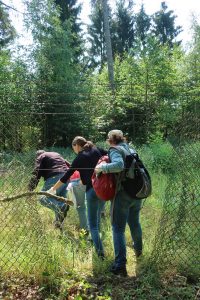
Photo Credit – Pressenza International Press Agency

Last week, a group of peace activists gained access to a site on a German Air Force Base where 20 U.S. nuclear weapons are stored.

“The peace activists cut through razor wire and some other fences and several made it to the runway; three activists walked to a nuclear weapons bunker, and climbed up to the top where they were undetected for an hour,” according to the International Press Agency. “All 18 were eventually found by soldiers, handed over to the civil police, ID checked, and released from the base after 4-½ hours.”

This was personal.

One of the many jobs I had while serving in the Cold War Army was to standby in the event a nearby nuclear weapons storage facility suffered a break in or terrorist attack.

I was there when the Baader-Meinhof Gang, later known as the Red Army Faction, rose to prominence. I was stationed at a kaserne on the Rhine River during the “German Autumn” when Baader Meinhof and others committed murder, kidnapping, hijacking and more. Here’s a taste of what it was like where I lived from Wikipedia:

The German Autumn (German: Deutscher Herbst) was a set of events in late 1977, associated with the kidnapping and murder of industrialist Hanns Martin Schleyer, president of the Confederation of German Employers’ Associations (BDA) and the Federation of German Industries (BDI), by the Red Army Faction (RAF) insurgent group, and the hijacking of the Lufthansa airplane Landshut by the Popular Front for the Liberation of Palestine (PFLP). They demanded the release of ten RAF members detained at the Stammheim Prison plus two Palestinian compatriots held in Turkey and $15 million in exchange for the hostages. The assassination of Siegfried Buback, the attorney-general of West Germany on April 7, 1977, and the failed kidnapping and murder of the banker Jürgen Ponto on July 30, 1977, marked the beginning of the German Autumn. It ended on Oct. 18, with the liberation of the Landshut, the death of the leading figures of the first generation of the RAF in their prison cells, and the death of Schleyer.

Those were tense times. I remember German police cars on every corner and at every Autobahn exit during key moments in the drama that fall. Our unit was often on alert for potential response to an incident.

We were never called to secure a terrorist attack site. However, yesterday’s incident raises some questions about our deployment of nuclear weapons in Germany.

Why isn’t the United States working toward fulfilling our agreement in the Nuclear Non-proliferation Treaty (NPT) to eliminate nuclear weapons? Not only do we have a legal obligation, there is a moral imperative to do so.

Is Germany permitted to deliver U.S. nuclear weapons with their aircraft as part of NATO? Quoting from the article, “On this air force base, German pilots stand ready to fly Tornado fighter jets with U.S. B-61 nuclear bombs and could even drop them, on orders from U.S. President Donald Trump on targets in or near Europe.” Since Germany is not a nuclear state recognized in the NPT, it may be illegal for them to do so.

The incident at Air Force Base Büchel is not getting much press in the wake of today’s Donald Trump – Vladimir Putin meeting in Helsinki. Maybe it should.

~ First posted at Blog for Iowa

Categories
Environment Living in Society

The Great American Give Away

Coyote Natural Bridge, Grand Staircase-Escalante National Monument, Utah. Photo Credit – Wikimedia Commons

The Trump administration is giving away access to our public lands for discovery and exploitation of minerals and fossil fuel reserves. Conservatives and mining interests are setting a place at the table to get their share.

“Trump signed a pair of proclamations late last year reducing the size of the 1.35-million-acre Bears Ears National Monument by 85 percent and the 1.87-million-acre Grand Staircase-Escalante National Monument by roughly 50 percent,” according to Huffington Post. “It was the largest reduction of national monuments in history, with more than 2 million acres losing protections. Prohibitions on new hard-rock mining claims in those now-unprotected areas were lifted in early February.”

The administration’s assault on national monuments is upsetting on a number of levels. It is the culmination of an effort by conservatives to divest government control over national parks and monuments, something most of us thought was long settled.

It’s not settled at all.

A Canadian mining firm, Glacier Lake Resources, Inc., has staked a claim on land that was, until recently, part of Grand Staircase-Escalante National Monument in Utah. The Vancouver-based company said in a press release it plans to mine copper, cobalt, zinc, and other minerals from the Colt Mesa deposit about 35 miles southeast of Boulder, Utah.

On Feb. 2, four members of the Lamoreaux family, which owns a small mineral company called Alpine Gems LLC, staked an 80-acre claim near Butler Valley, southeast of Cannonville. On May 9, Alpine Gems staked three 20-acre claims in that same area.

Last week, Utah Senator Mike Lee introduced the Protecting Utah’s Rural Economy Act in the Congress. He explained in an opinion piece he wrote for the Deseret News. Here are two excerpts that provide the gist of it:

The looming danger for Utah’s rural communities comes from the Antiquities Act of 1906, which was originally intended to protect objects of historic and cultural interest, such as artifacts and religious sites.

Unfortunately, what was once a narrowly targeted tool for preventing looting on federal lands has become a weapon of faraway elites to use against hardworking rural Americans.

That is why I am introducing the Protect Utah’s Rural Economy, or PURE, Act. This bill would protect Utah from future abuses under the Antiquities Act by prohibiting the president from establishing or expanding a national monument in Utah unless the proposed monument has been authorized by an act of Congress and the state Legislature.

Rural Americans want what all Americans want: a dignified, decent-paying job, a family to love and support and a healthy community whose future is determined by local residents — not their self-styled betters thousands of miles away.

Lee’s argument is a genome away from political theorist and the seventh vice president of the United States John C. Calhoun’s arguments in support of slavery and state’s rights. Calhoun is remembered for defending slavery and for advancing the concept of minority rights in politics, which he did in the context of defending white Southern interests from perceived Northern threats, according to Wikipedia.

The Wilderness Society is challenging Trump’s proclamations in court and monitoring the progress of the companies seeking to extract minerals. It may not be enough.

Read more about The Wilderness Society’s efforts to protect our wild areas and fight back against the anti-conservationist movement at wilderness.org. If you are in a position to help financially, here is a link to donate to the Wilderness Society.

~ First posted on Blog for Iowa

Categories
Sustainability

Why Stop Denuclearization at North Korea?

On June 14, 2018 PSR Board member Ira Helfand, MD met with South Korean Prime Minister Lee Nak-yeon in Seoul.

Responding to citizens everywhere who yearn for peace, political leaders in South Korea, North Korea, China and the United States staged a flurry of diplomatic activity this year to avert a Korean crisis.

We are not yet out of the woods. Physicians for Social Responsibility’s health professionals advocated for peace in Korea and will continue to promote diplomacy to denuclearize not only North Korea, but the rest of the world as well.

On June 7, PSR released and delivered to Congressional offices a “Health Professional Open Letter to Congressional Leaders” on Korea with signatures from 16 prominent health professionals including presidents of national physicians’ associations as well as deans and former deans of medical schools and public health schools. PSR members met with staff for their U.S. Representatives and Senators, placed op-eds at CNN.com, the Boston Globe,  the Baltimore Sun, and Quartz (see In the News). Immediately after the June 12 Singapore summit PSR issued a statement welcoming the outcome..

PSR will continue to advocate for careful and deliberate diplomacy toward a genuine peace accord between the Koreas.  The cancellation of joint U.S. – South Korean “Freedom Guardian” military exercises that were scheduled for August will surely help the peace process.

But for now, North Korea retains its nuclear arsenal, and eight other nations cling to their arsenals as well. The harrowing months of provocations, threats and counter-threats between the U.S. and North Korea showed once again that nuclear weapons do not provide security for any nation.  As experts explored the possible military scenarios involving Korea, the world was reminded of the horrific humanitarian impact of modern warfare, especially if nuclear weapons come into play.  To remove this profound public health threat, PSR joins with International Campaign to Abolish Nuclear Weapons in prescribing total elimination of all nuclear arsenals with a strategy of “stigmatize, prohibit, eliminate.”

For more on this story, see a list of relevant current Congressional legislation, a PSR report onWhere Do We Go From Here?” and an overview of reactions to the Trump-Kim Singapore summit across the American political spectrum.

If you’d like to stay in touch with Physicians for Social Responsibility’s subscribe to the activist list by clicking here.

~ Cross posted from the Physicians for Social Responsibility blog which can be found here.

Categories
Environment Work Life

Working in the Heat

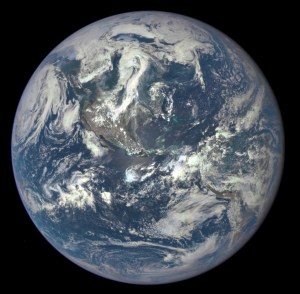
Image of Earth 7-6-15 from DSCOVR (Deep Space Climate Observatory)

Independence Day at the home, farm and auto supply store was a time to catch-up with organizing the warehouse, process expired pet food, reposition tall pallets of wood shavings, and generally clean up. The usual receiving activities slowed down as delivery drivers had the day off.

The store was pretty busy and comme d’habitude, management tried to feed us lunch: fried chicken with sides from a chain restaurant headquartered in Orange City.

I resisted. I also didn’t criticize because they were trying to be nice on the holiday we all had to work. We all should be nice when we can.

A couple of projects involved being outside in the blazing heat and humidity. I persisted and got the work done.

When working outside at home I get done early in the day to avoid mid day heat. I’ll work outside all day when the heat index is up to 90 degrees, but that’s the upper limit. With the heat and humidity we’ve been having that meant days indoors even though the sky was clear. It was weird.

According to this morning’s newspaper heat records are being set all over the world. In the Northern Hemisphere we’ve had the hottest weather ever recorded during the past week as a massive and intensive “heat dome” settled over the eastern United States.

In addition, the northeastern Atlantic Ocean is cooler than normal. Partly this means there may be less hurricane-strength storms this season. My worry is it’s being caused by melting of the Greenland ice sheet. If Greenland goes completely, the historical record shows the Atlantic meridional overturning circulation (AMOC) will slow down significantly or stop. That could mean disruption of the growing season in Europe and of their food supply. According to Scientific American, AMOC is the weakest it’s been in 1,600 years.

“The grand northward progression of water along North America that moves heat from the tropics toward the Arctic has been sluggish,” wrote Andrea Thompson. “If that languidness continues and deepens, it could usher in drastic changes in sea level and weather around the ocean basin.”

I think of the blue marble and how all of us on earth are connected.

“No single record, in isolation, can be attributed to global warming,” wrote Jason Samenow in the Washington Post. “But collectively, these heat records are consistent with the kind of extremes we expect to see increase in a warming world.”

There are so many signals and indicators of climate disruption in the global environment that such disclaimers may serve some editorial purpose but are immediately useless. The world is warming and there are consequences.

It’s about more than working outside on a humid and hot day at the home, farm and auto supply store.

Categories
Environment Home Life Writing

Under a Rainbow

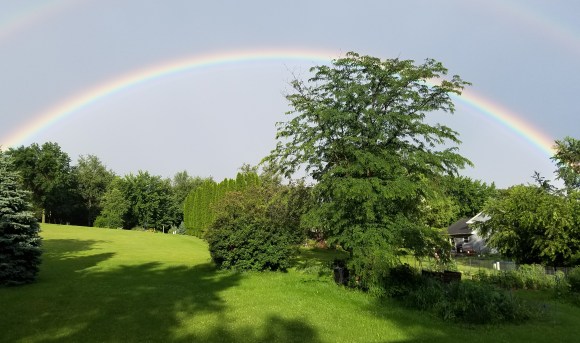
Rainbow Framing the Garden

Clouds broke while I watched it rain through the west-facing garage door. It was a slow, steady, gentle and soaking rain of the kind remembered from childhood.

Realizing there might be a rainbow I rushed upstairs and looked out an east-facing window. I saw a double rainbow framing the garden plots and our back yard.

The colors were as intense as I remember ever seeing. A sign the shit-storm of American politics would eventually end and our lives might heal.

Earlier I’d been on the roof cleaning gutters. A tree branch had blocked one of them, collecting leaves and impeding water flow. The view of the nearby lake was obscured by trees and vegetation that had grown up since we moved here. In the beginning there had been a clear view of the lake from the roof peak. We, people and plants, are older now.

Refraction of light through rain is simple and powerful physics. Outside quotidian affairs of which lives are mostly made, a rainbow brings hope. For a few fleeting moments we marvel at the colors and reflect upon the role rain and recovery can play in our lives. We notice.

Rain clears the air and washes away dust created by simple lives. On days like that, a better life seems possible. We weathered the storm and that may be enough.

A rainbow reminds us of that.

Categories
Sustainability Writing

Patriotism

Still in Service

Patriotism does not belong to a political party. Veterans pay attention to where the country is going, engage in public discourse, and believe it is our responsibility to do so.

Patriotism, concerns itself with ethics, law, and devotion to the common good. As a young Army officer, I understood the meaning of patriotism in three words, “duty, honor, country.”

There is a new form of patriotism that is unacceptable: patriotism that proclaims “country first.” New patriotism concerns itself with moral responsibilities toward members of “our” group and by definition diminishes responsibilities toward non-members. New patriotism manifests itself in English only legislation, poor treatment of battlefield casualties, and blindness to the effects of war on foreign populations. New patriotism can accept extreme poverty, famine and the genocides in Darfur, Rwanda, Bosnia and Myanmar. New patriotism asks, “what’s in it for me?” without regard for the impacts on the rest of society.

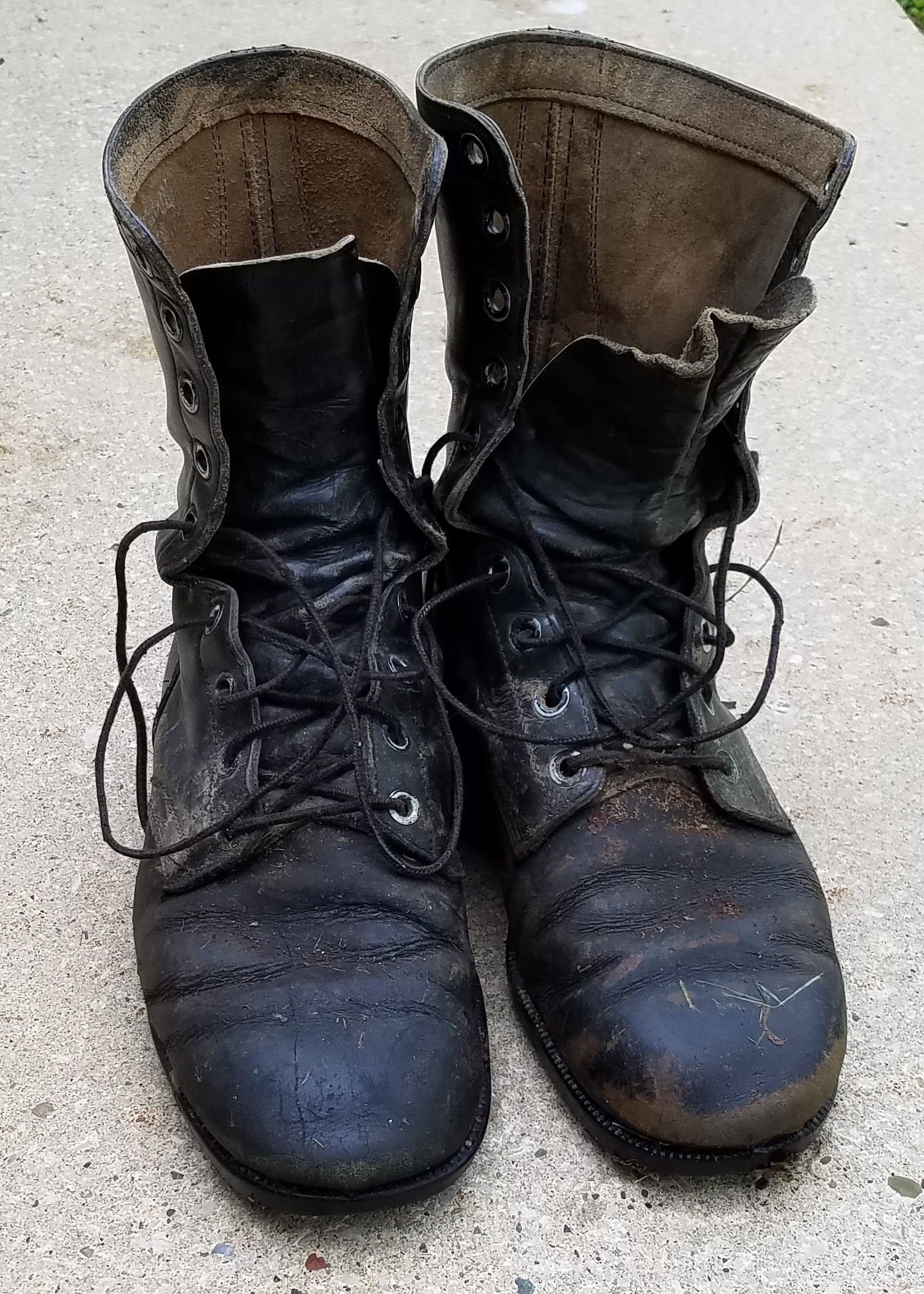
My uniform doesn’t fit, but I keep it in a trunk with my fatigues, compass and decorations. From time to time I get out my compass and am reassured that patriots will never lose their way in this complex and changing society. It is up to us to speak out and watch over the country, just as we did on diverse and distant borders long ago.

Our country needs us now as much as ever.

~ From a letter to the editor submitted to the Daily Iowan on Sept. 29, 2008.

Categories
Sustainability

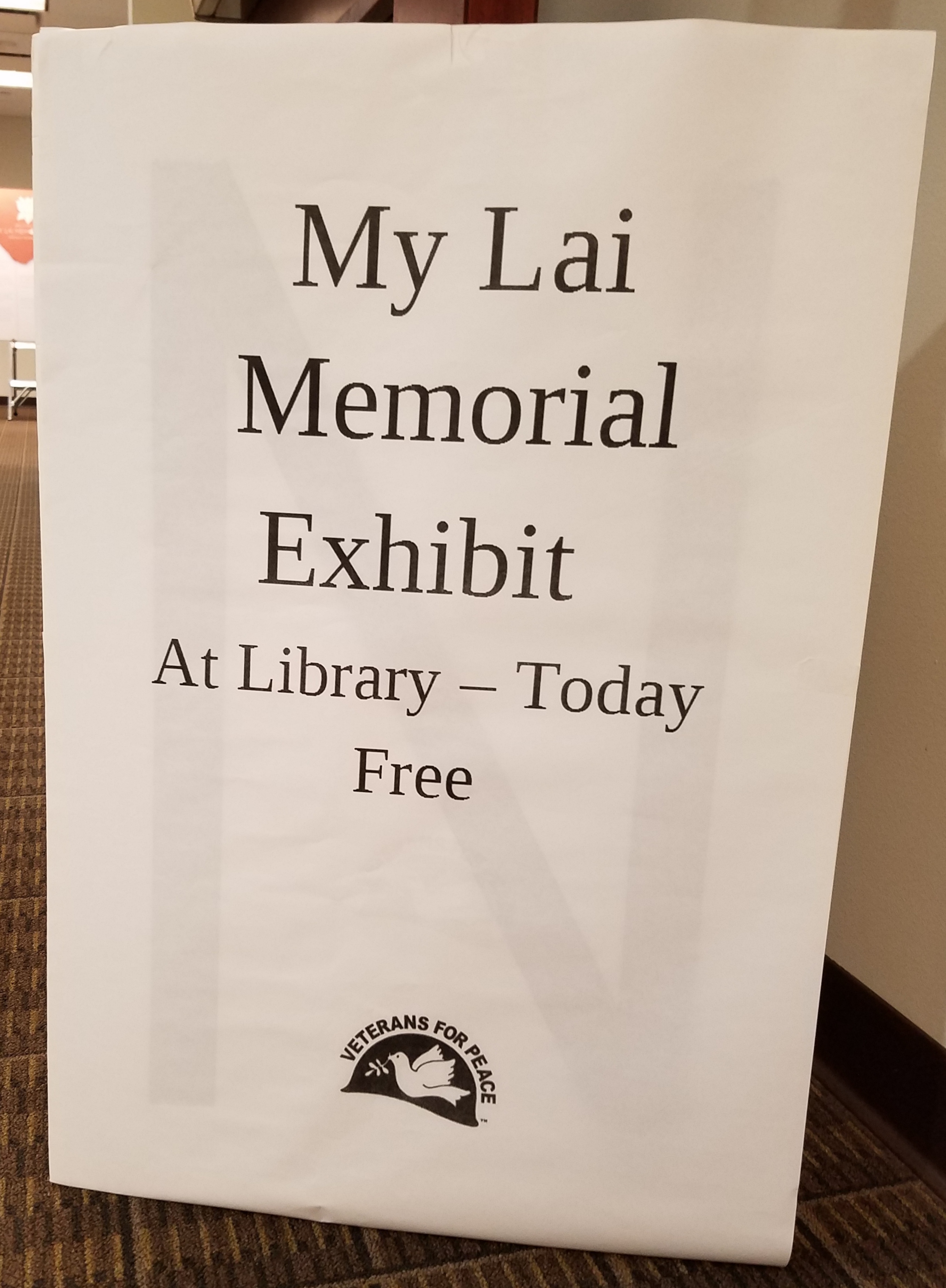
My Lai 50 Years Later

Coralville Public Library, June 15, 2018

After a shift at the farm I drove to the Coralville Public Library to see the exhibit about the My Lai massacre on March 16, 1968.

Created by Mac MacDevitt, and sponsored by the Chicago chapter of Veterans for Peace, the exhibit consisted of a couple dozen tall panels with text, photographs and analysis related what happened over several hours during the Vietnam War.

My Lai, and Nixon’s pardon of William Calley, led to my personal participation in the anti-war movement while I was in high school and college, and then to my enlistment in the U.S. Army in October 1975.

Like any reasonable person I found the military action which killed men, women and children to be morally reprehensible and believed as a society we could do better than the soldiers of Charlie Company. My response was to make changes in the military through my participation.

Calley was the only person convicted of murder during the operation, although it is clear other crimes were committed. Nixon’s pardon reinforced what was commonly believed among service members — that Calley was “just following orders.” While I was in officer training school at Fort Benning, Georgia we debated the efficacy of Charlie Company’s actions that day. My peers sided with Calley.

“Progress, far from consisting in change, depends on retentiveness,” wrote Italian philosopher George Santayana.  “When change is absolute there remains no being to improve and no direction is set for possible improvement: and when experience is not retained, as among savages, infancy is perpetual. Those who cannot remember the past are condemned to repeat it.”

As I stood in my dirt covered jeans, T-shirt and farm shoes looking at the pastel panels I remembered My Lai. Society hasn’t forgotten about My Lai, its context in the Vietnam War, and the cover up afterward. The next generations never learned about it.

One role for veterans is to help us remember what happens in war. My Lai was the military at its worst. We can and should be better than that.