The amount of snow and ice melt in the Midwest is monumental.
Iowa Governor Kim Reynolds issued disaster proclamations for 41 counties because of flooding (Click on the map to see details).
News photographs show Offutt Air Force Base in Bellevue, Nebraska, home of the U.S. Strategic Command, is one third underwater with at least 30 buildings damaged.
Where did all the water come from?
Warmer atmosphere held more water vapor which was dumped on Iowa and surrounding states in the form of snow and rain during recent polar vortex events. Wild swings in temperature, sometimes as much as 70 degrees in less than 24 hours, combined with rain quickly melted the snow. Because of deep frost in the soil, there was nowhere for the water to go but downstream. Iowa is used to spring flooding, but not like this.
Climate change created conditions for this flooding, both by enabling a warmer atmosphere to hold more moisture, and through warming in the arctic, which destabilized the trade winds and made the polar vortex. It has been depressing to live through this winter. The damage we see on our small lot in rural Iowa is minuscule compared to the bigger picture.
Last week, Al Gore and the Climate Reality Project trained another 2,000 leaders in mitigating the effects of climate change. News media cover climate change now more than in recent years because viewers and readers experience its effects every day. Climate change is real, it is happening now and we hope it’s not too late to find the political will to do something about it.
The state is watching how our governor and other politicians react to this iteration of flooding.
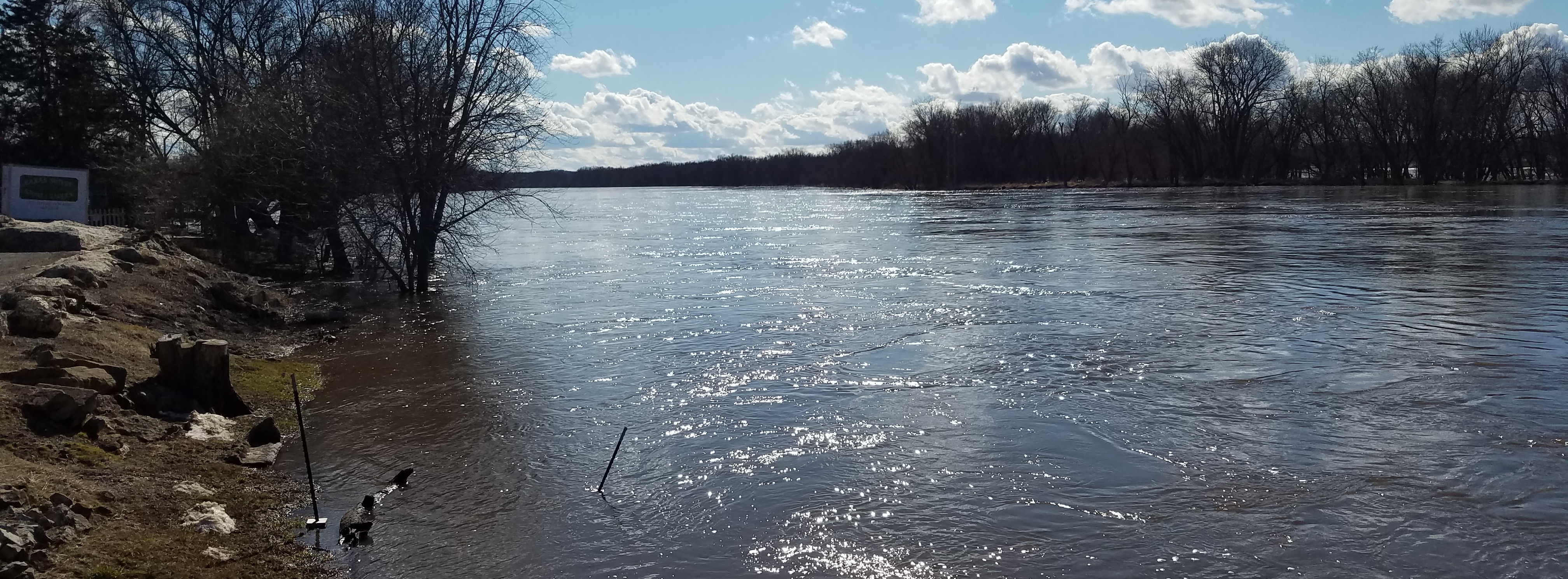
Cedar River at Iowa Highway One Sept. 27, 2016 at 11:36 a.m.
Mill Creek swelled its banks swamping nearby farm fields. It looks like the nearby city sewer system was spared inundation… for now.
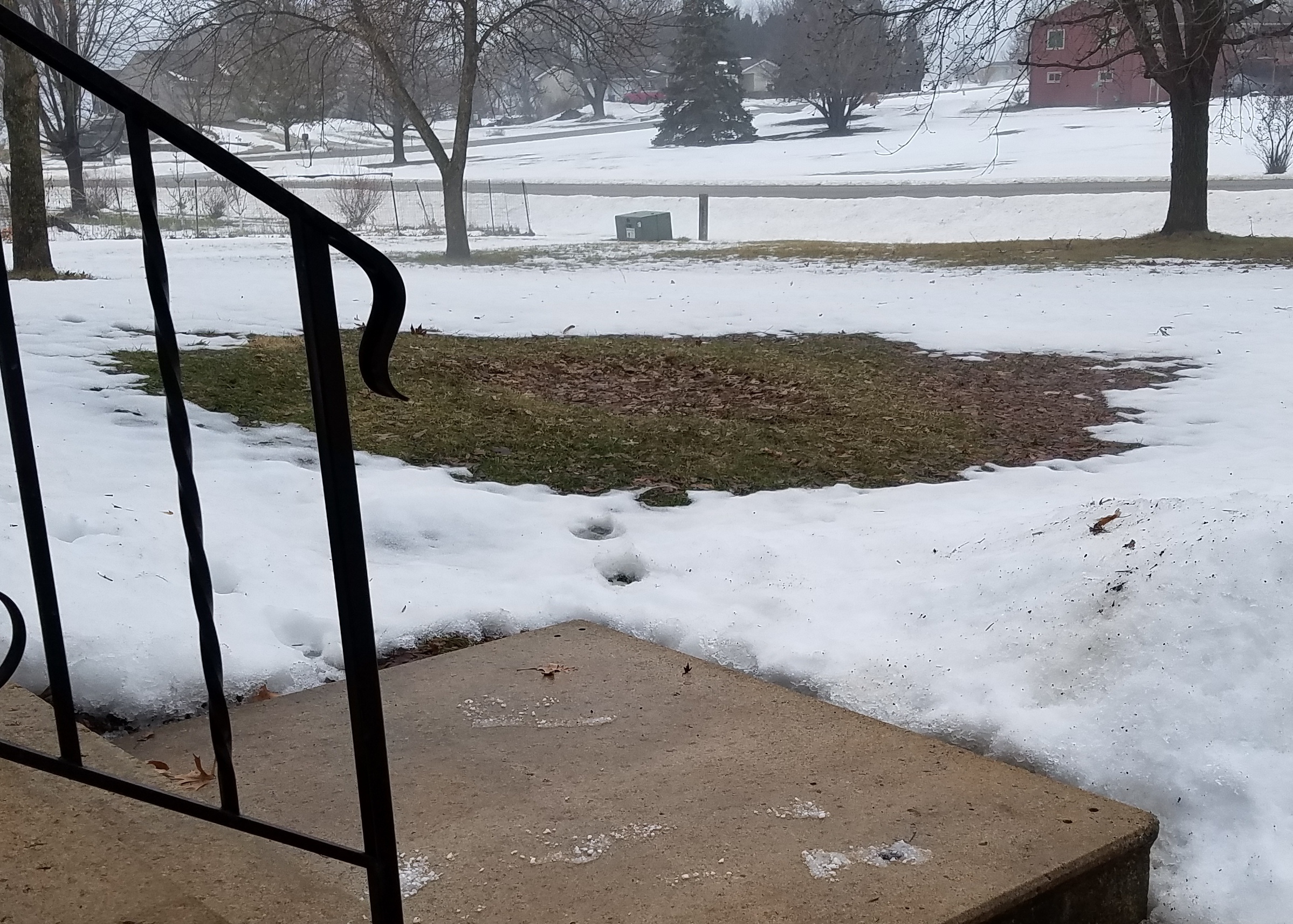
Snow melt is everywhere in the county. Inches of packed snow yielded to ambient temperatures in the 50s and continuous rain. After a frigid, snowy winter the ice and snow pack is melting all at once. Snow was here Sunday and now is mostly gone.
Winter’s damage is being revealed. Our driveway buckled with the big swings in temperature. In one event, ambient temperatures swung more than 70 degrees in a day. Ice melted, then refroze under the cement, buckling the slabs leading to the road. Yesterday’s rain diverted inside the garage because of a buckle, requiring clean up to prevent further damage. Whether the buckled driveway will settle back down as it has before is unknown. It’s never been this bad.
The scale of the melt in a short period of time is what has Mill Creek flooding. Farmers removing buffer strips to grow a few more rows near the creek will take topsoil and farm chemicals downstream. It was foolish to sacrifice topsoil for a few more bushels of corn or beans. Farmers who did this likely didn’t see it that way even though flooding is not new to the area. Topsoil can’t be easily replaced but chemicals can.
Is this about climate change?
“A historic March blizzard is taking shape across Colorado, Wyoming, Montana, Nebraska, South Dakota, and North Dakota,” according to the National Weather Service. “Between one and two feet of snow is expected in some locations with wind gusts as high as 80 MPH.”
It is called a “bomb cyclone.” With hurricane strength, it has been forming over the Rocky Mountains and Great Plains, creating blizzard conditions and stranding hundreds of motorists.
“During the first 10 days of March, the Colorado Avalanche Information Center recorded more than 500 avalanches statewide (a record number),” wrote Jonathan Romeo in the Durango Herald. “For the season, a total of eight people have been killed in avalanches.”
Issues abound. Icebergs and open water were found on Norton Sound near Nome, Alaska where the Ititarod Sled-Dog Race finished this week. It’s raining in Greenland when it shouldn’t be. Global oceans are at the highest heat content on record. The planet is warming, there is no doubt.
It won’t take long for water to recede into the banks of Mill Creek. When everything melts at once, immediate damage is exacerbated, the duration shortened.
My colleagues with The Climate Reality Project are meeting this week in Atlanta to train another group of leaders. As newcomers join thousands of others, let’s work to mitigate the effects of climate change on humans. March has been a month where the evidence of climate change has come to the forefront. March has run only half its course.
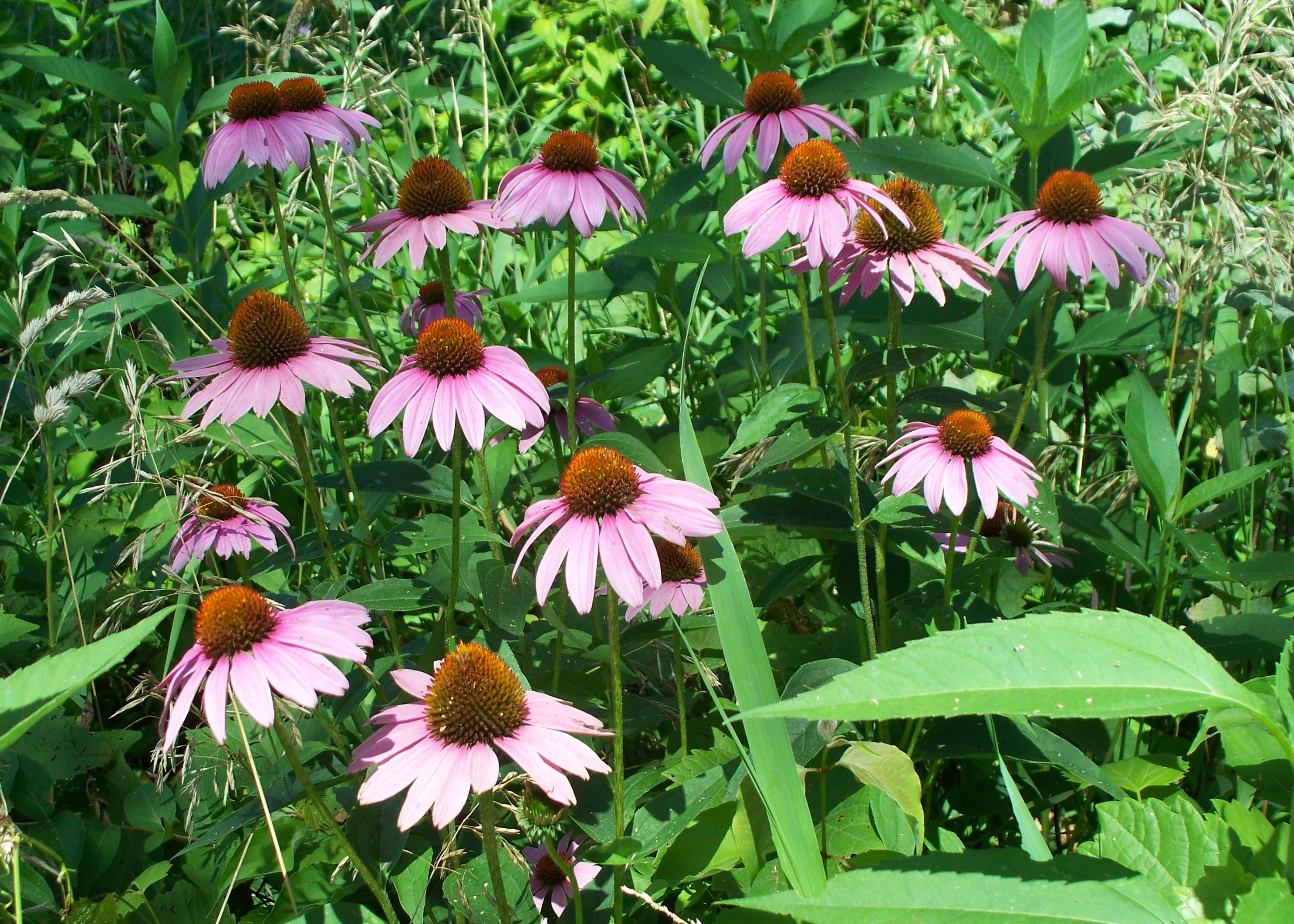
Reading a book about tall grass prairie and savannas has me wondering why people bother preserving them.
Prairie used to cover more than 85 percent of Iowa land, according to the Neal Smith National Wildlife Refuge. Today less than one tenth of a percent of original tall grass prairie remains in the state.
In that context, the Iowa legislature considered a bill to prohibit setting aside new land for conservation with state money. After a popular outcry, the bill was suppressed last week before the first legislative funnel. There is substantial support among a diverse constituency for conserving prairie, savannas and woodlands. Such support drags political will along as best it can.
The Neal Smith National Wildlife Refuge is mostly replanted, which suggests human cultivation rather than a naturally occurring ecology. Which parcel is one of the many original prairie fragments at Neal Smith, and which a human tall grass garden? Presumably guides can point them out. There were no guides when tall grass prairie dominated Iowa landscape.
Either one participates in the culture of tall grass prairie or one doesn’t. It is a culture rather than nature. Throughout the state people and groups work to “restore the prairie” or “restore woodlands.” What does that even mean except as a style of gardening? Partly it means pulling garlic mustard plants and other invasive species during their early growth period. It means cutting down selected mature trees so saplings can survive to replace them. There is enough garlic mustard to make pesto for the whole state if such a delicacy were desired — all this cultivation is a lot of work. A lot of human work doesn’t seem natural.
The ecosystem that was our tall grass prairie relied upon burning the prairie to remove dead plant matter and stop the growth of trees that would shade plants growing close to the ground. Naturally occurring burns have been replaced with prescribed burns which are diligently considered and executed in a way that doesn’t catch whole neighborhood landscapes on fire. A local fire department has been summoned to put out a prescribed burn that got out of control more than a few times. Without burns a parcel of prairie or woodlands would cease to be what humans intended. I don’t know if a new and different ecosystem would be better or worse. If one is a believer in tall grass prairie, different is viewed negatively. Is that hubris?
We tend to forget the role vast herds of buffalo and other grazing animals played in the formation of tall grass prairie. Hooves kicking up dirt contributed to creation of the unique prairie biome. Animal grazing helped shorter plants gain access to sunlight and thrive. Animal droppings helped fertilize. Most of the land is fenced now with buffalo herds diminished and relegated to a form of domesticated hides, steaks, ground meat and sausages.
We are at the end of nature, Bill McKibben wrote in his 1989 book of the same name. There may be something to learn from remnants of tall grass prairie. There may be a human use for seeds from plants that survived and thrived on the prairie. If one is interested in the survival of tall grass prairie it is important to follow the work of people engaged in it. There is also a question.
How will we use our lives to mitigate the effects of global warming? Managing tall grass prairies is one check box on a long to-do list. My answer to “why bother” is that every bit of carbon sequestration has value and that’s what tall grass prairie accomplishes. My problem is under current land ownership policies and practices increasing the amount of tall grass prairie is not scalable quick enough.
I encourage people who seek to preserve parcels of prairie and woodlands to continue. If nothing else, it will improve our personal well-being and that is worth something in this turbulent world.
While eastbound on Highway 382, a large bird lifted from the ground within my headlights and dropped a recently killed rabbit. It hesitated, perhaps wanting to return to its prey, but not long enough for a collision.
I don’t know what species it was, but suspect it was an owl since it was two hours before sunrise. Owls live all around us in Big Grove and at night use the peak of our roof to observe the neighborhood and dine on small rodents.
As I continued around the lakes, then westbound on Mehaffey Bridge Road a deer crossed the road in front of me. I tapped the brakes. It was less dramatic than the bird of prey. I’m used to living with wildlife after so many years. I know what to do.
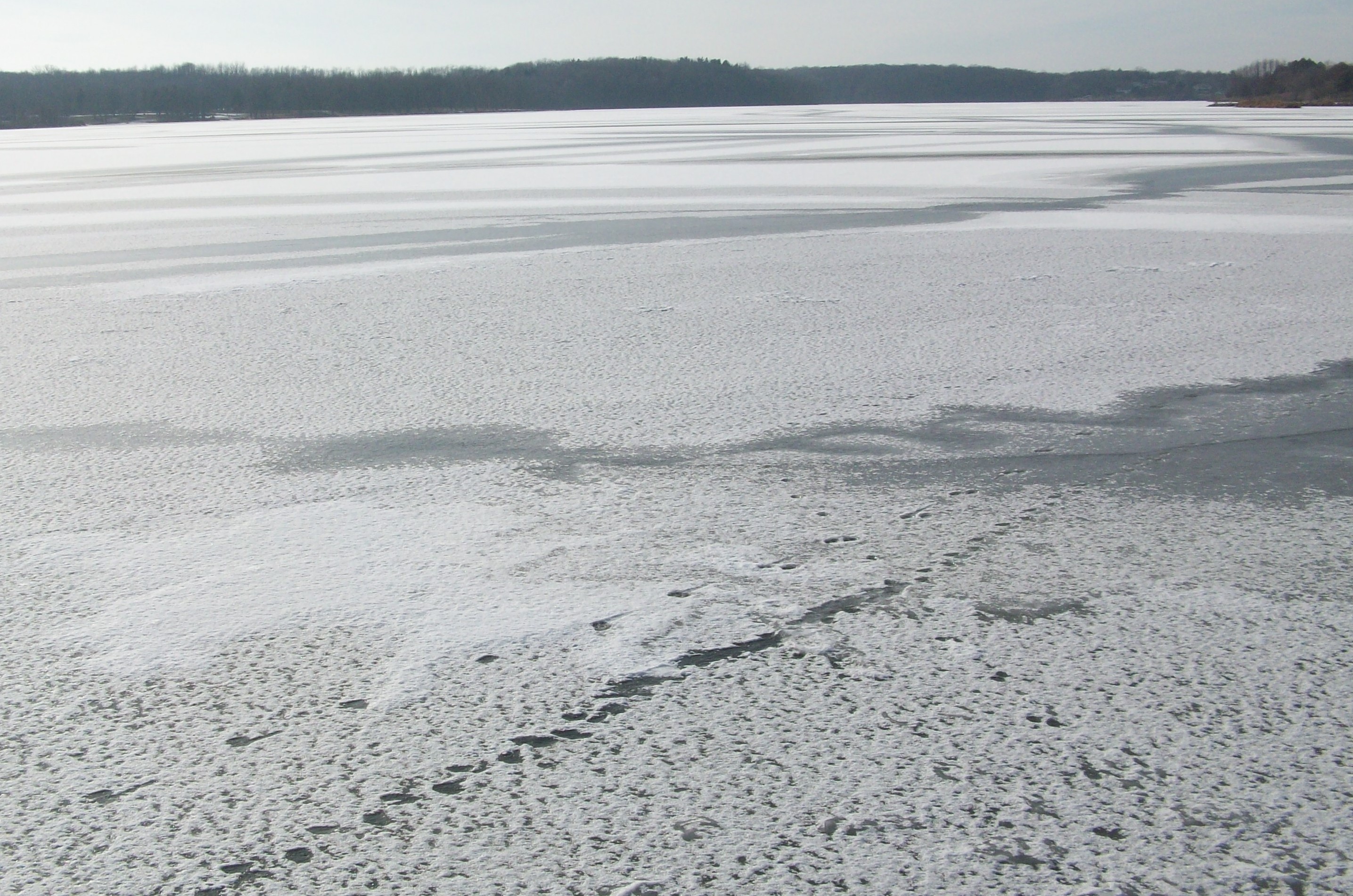
The lakes are covered with a smooth surface of ice, perfect for skating. With a couple more days of deep freeze, conditions should be excellent. The problem is no one I know ice skates any more and it is not a solitary activity. Time was we would clear a rink and sometimes start a bonfire. Importantly, it was fun. We’re getting older and other things occupy neighbors, busy looking at screens, I cynically suppose.
Wildlife appears to be flourishing. Maybe I’m just noticing. It is possible to step away from the screens and observe nature… a nature adapted to the built environment humans made since settling here in the 1830s. There was no risk of roadkill when there were no motorized vehicles or roads.
I don’t have much to say about the world outside our ecosystem today. Aren’t others saying enough? Suffice it that the 25-minute trip to work provides a window to the world around us.
The store manager from the home, farm and auto supply store phoned Sunday afternoon to ask me to work on Monday. The colleague who assumed my full time job last spring was visiting family in Nebraska and bad weather closed roads across the state, including Interstate 80. She couldn’t make it back in time for her shift.
In Iowa, helping out is part of our culture. I said yes I’d work and rearranged my plans so I could.
In addition, the farmer decided the weather was bad enough she didn’t want people venturing out to the farm. The roads were iced over and the wind howled at 30 miles per hour all day. Her sister, the shepherdess, posted social media photos of installing a new anemometer and weather station. Its LED panel displayed the digital message, “hold onto your hat!”
As I was settling in last night, the Washington Post put up an article about White House plans to form an “ad hoc group of select federal scientists to reassess the government’s analysis of climate science and counter conclusions that the continued burning of fossil fuels is harming the planet.”
In other words, the Fourth National Climate Assessment told the story of how dire our future could be without climate action. Rather than doing something, the administration is arguing with their own scientists that global warming is not caused by burning fossil fuels. These are times that will fry men’s souls.
Which part of yesterday’s howling wind was an amplification caused by global warming? The answer doesn’t matter because it’s the wrong question. We know the deleterious effect of burning fossil fuels. We also know thawing permafrost, agriculture, methane releases during oil production, building construction, manufacturing processes, air transport, deforestation, landfill decomposition and other human activities contribute to greenhouse gas emissions and global warming. We can’t get bogged down in details when the bigger picture is we have an obstructionist government led by Republicans and their conservative, dark-moneyed think tanks who would interpret the howling wind as something else. The better question is when will voters do something to fix this?
Yesterday’s wind was the kind that calls for hunkering down until it ends. Eventually we will have a calm, sunny day and the opportunity to work as normal. Or maybe it is something else, as Bob Dylan sang in the 1970s,
Idiot wind, blowing like a circle around my skull
From the Grand Coulee Dam to the Capitol
Idiot wind, blowing every time you move your teeth
You’re an idiot, babe
It’s a wonder that you still know how to breathe.
This weird weather is unsettling. Wild variations in temperature made it a damaging winter… it’s not over.
The driveway buckled a few feet from the garage door because of temperature swings. Water must be trapped underground with inadequate drainage before refreezing. The buckled pavement is directing rain under the door, flooding the car park.
Everything is off the floor as I advance plan for water emergencies. I found all the parts for the wet/dry vacuum and removed about 60 gallons from the floor. I let the water settle for a while, then will go at it again.
I’m supposed to soil block at the farm today. Temperatures are dropping and a coat of ice is expected on roads, on everything, as the wind howls 30 miles per hour until sunset. I’m to text the farmer before leaving for my shift to make sure roads are passable.
With the ground still frozen, snow melt and rain have nowhere to go. It is pooling near the main intersection a few dozen yards south of our home. The culvert under the road must be blocked with snow and ice. There will be river flooding later in the week as everything drains to the Mississippi basin.
I’m not freaking out… yet. I don’t know what to do but mitigate water damage and wait it out. Fixing the cause of this weird weather is not something to address in a day or two.
Media discussion of climate change seems more frequent. I reviewed Google Trends and there was a spike in searches about global warming the first week in February. Every day or so local newspapers carry a story about climate change. A lot of it has to do with the Green New Deal resolution proposed in the U.S. House of Representatives. Who doesn’t like what the resolution says? It seems toothless until a Democratic majority returns to the U.S. Senate. We are at least two years away from the possibility of that happening.
What will the Congress do to act on climate? More importantly, what will they do that the president will not veto? These are dark times if we rely solely on politicians.
Water may have settled in the car park, so it’s time to vacuum up a few more five-gallon buckets. Hopefully spring is on the horizon, even if it hasn’t arrived.
Ice turned to mush as rain fell Thursday morning. The surfaces of Lake Macbride and the Coralville Lake appeared to remain frozen as I drove on Mehaffey Bridge Road.
When I arrived at the home, farm and auto supply store it continued to rain. By the end of my shift a layer of ice had formed on my windshield and morning slush had frozen.
I started the engine and chipped at the ice. It took half an hour to gain enough visibility to drive. I decided to skip a monthly political meeting, emailed the secretary of my absence, and headed home.
Iowa is a red state now. Voters had an opportunity to return balance to state government in 2018. Instead they chose Republican control of the governor’s office and state legislature. Taking advantage of their mandate, Republicans plan to take more control of the appointment of judges by changing the composition of a commission that selects nominees for Iowa courts. We’re a red state now, and we don’t like it.
We’re not leaving the state. To even consider it would be an anomaly in lives we’ve come to accept. In the end, politics is something, but not everything. It is definitely not important enough to get stuck in the county seat as the world freezes.
I’m interested in what the Congress does to mitigate the impacts of climate change. Yesterday New York Congresswoman Alexandria Ocasio-Cortez introduced a resolution recognizing the federal government has a duty to create a Green New Deal. A draft of the resolution indicates the following goals for a Green New Deal during a ten-year national mobilization period:
to achieve net-zero greenhouse gas emissions through a fair and just transition for all communities and workers;
to create millions of good, high-wage jobs and ensure prosperity and economic security for all people of the United States;
to invest in the infrastructure and industry of the United States to sustainably meet the challenges of the 21st century;
to secure for all people of the United States for generations to come—
(i) clean air and water;
(ii) climate and community resiliency;
(iii) healthy food;
(iv) access to nature; and
(v) a sustainable environment; and
to promote justice and equity by stopping current, preventing future, and repairing historic oppression of indigenous communities, communities of color, migrant communities, deindustrialized communities, depopulated rural communities, the poor, low-income workers, women, the elderly, the unhoused, people with disabilities, and youth (referred to in this resolution as ‘‘frontline and vulnerable communities’’).
Who wouldn’t like these goals? Senator Edward Markey introduced the same resolution in the U.S. Senate.
It doesn’t take an advanced degree to understand a Green New Deal is dead on arrival in Mitch McConnell’s senate. While such goals need to be met to slow global warming, politics has ceased to be an endeavor of doing what needs to be done to ensure our mutual survival. Success of any legislation designed to advance a Green New Deal depends on recognizing the threat the climate crisis poses to society. Today, more people recognize there is a climate crisis. Our politicians, not so much.
Al Gore remained positive in his press release supporting the resolution:
The Green New Deal resolution marks the beginning of a crucial dialogue on climate legislation in the U.S. Mother Nature has awakened so many Americans to the urgent threat of the climate crisis, and this proposal responds to the growing concern and demand for action. The goals are ambitious and comprehensive – now the work begins to decide the best ways to achieve them, with specific policy solutions tied to timelines. It is critical that this process unfolds in close dialogue with the frontline communities that bear the disproportionate impacts today, as this resolution acknowledges. Policymakers and Presidential candidates would be wise to embrace a Green New Deal and commit to the hard work of seeing it through.
Failure to act on climate is the same as denial. I’ll support a Green New Deal while recognizing we can’t place all our hopes on a single, political solution. As we discovered during negotiations leading up to the Paris Agreement under the United Nations Framework Convention on Climate Change, political solutions are far from perfect. They may be inadequate. Yet they are something and have value if they can be achieved.
The ambient temperature is 45 degrees, a 73 degree swing since early Thursday morning. Warming is part of the polar vortex, just as the cold was. Temperatures are forecast to return closer to normal after tomorrow.
I had planned to prune trees today but am concerned about rapidly changing temperatures. If the sap starts flowing the purpose of waiting until winter to prune would be defeated. Maybe next week will be better once temperatures stabilize below freezing for a week or so.
Feb. 5 is the Iowa Environmental Council’s lobby day in Des Moines, followed by the Sierra Club’s lobby day the 6th. I noticed IEC scheduled 30 minutes for discussions with legislators. That’s about right because very little gets decided in one-on-one lobbying sessions, regardless of whether one’s legislators are supportive of climate action. What’s needed for change is a broad coalition and a dominant issue.
With the polar vortex we are living in a changed climate. Mitigating its effects is beyond the scope of the Iowa legislature. What can be done?
“In my view, the actions we take over the next 2-3 years are critical,” State Senator Rob Hogg wrote in an email. “The need for climate action has never been more urgent. Please take action personally and in public. Invite more people to get more informed, more involved, and do more.”
Hogg was trained by Al Gore as a Climate Reality Leader in 2008. He enumerated ideas with which to approach legislators for climate action, including “energy efficiency, renewable energy, electric vehicles, forests, prairies, soil conservation, and pre-disaster hazard mitigation to safeguard our people and our property.” Each of these items has its own constituency and many of the groups supporting them will be at Tuesday’s lobby day. What will get done?
There is a stability of operations among IEC members that works against substantial change. Some organizations, including some to which I belong, seem caught in a rut around a specific solution to the climate crisis. These formal, recurring events seem ineffective to me. I wrote about a 2015 trip I made to a similar lobby day in the Iowa City Press Citizen here. I’m not sure what, if anything was accomplished.
Some advocates believe climate denial among members of the legislature and elsewhere stands in the way of changing human behavior regarding climate change. I believe it is something different.
“I’m convinced that the greatest threat we face isn’t climate change denial,” climatologist and geophysicist Michael Mann wrote. “It is the weaponization of ignorance and apathy that is at its core…”
The weaponization of ignorance and apathy is something better to work on than any pet project. How does one do that when calcified lobbyists and citizen advocates petition the legislature for such issues? We need a more diverse group of stake holders than are in the IEC. Something bigger needs to happen to bring people together. I don’t know if the polar vortex is big enough even if it should be. What I know is if we wait to address climate change until it is too late the question will be moot.
This polar vortex is drawing to a close but it’s easy to predict there will be others. Many will have forgotten the polar vortex as they get absorbed in the big football game this afternoon. It is up to us to remind people of our common interest in sustaining our lives in a turbulent world. If we don’t, who will?
Editor’s Note: This email was sent to members of our home owners association at the beginning of the polar vortex of 2019. As I write this note, the outdoors ambient temperature is 26 degrees below zero and one person in the county seat has died from exposure.
Member,
As you likely know, ambient temperatures are forecast to get down to -25 degrees by 8 a.m. tomorrow morning and to -30 degrees overnight tomorrow. After that temperatures are expected to warm through Saturday and Sunday when it is forecast to be in the 40s.
That’s a seventy degree swing in a couple of days, which can be hard on things like water and sewer lines.
19th century British prime minister Benjamin Disraeli said, “Be prepared for the worst and hope for the best.”
We will do everything reasonable to get service back up as soon as possible if it is interrupted. Asking a contractor to work in wind chills like we haven’t seen since we moved here is not reasonable. I plan to contact our main contractor Wednesday and discuss the situation so we know our options in the event of a breakage.
What you can do to prepare for a potential outage is keep a temporary water supply if you don’t already.
In our household we keep a large Rubbermaid beverage container filled with water to use for washing hands and cooking in case we lose water.
We used to buy bottled water to have on hand but quit doing that over the years. It is an option.
If we know there will be an outage ahead of time, we fill up our two stock pots and keep them on the stove to be boiled and used to wash up in lieu of a shower, or as otherwise needed. We have also filled up coolers in the bathtub to use to flush the toilet.
Fingers crossed we will make it through the cold spell without a line breakage.
If something does happen, the procedures for reporting a water problem are below.
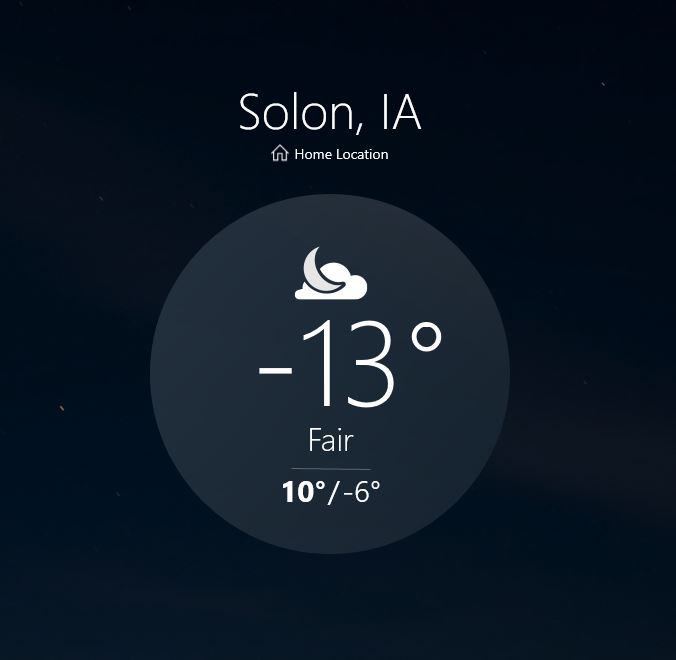
Outdoor ambient temperature Jan. 26, 2019, at 6 a.m.
Images depicting ambient temperature reports have been ubiquitous on social media the last few days.
According to the Weather Channel, temperatures plummet to 25 degrees below zero by Tuesday thanks to a polar vortex.
It’s what I’ve been waiting for to prune apple and pear trees as sap flow is halted by the temperature. Considering the forecast, the best day to prune will be Friday, Feb. 1.
Not everyone likes the cold but I don’t mind. I’ve never had frostbite or chilblains, even while living outdoors in subzero temperatures for a week at a time during military service in Germany. If one takes precautions, risks are minimal.
Once trees are pruned, I’ll be ready for it to warm up.
The cold spell began just as my shifts at the home, farm and auto supply store ended. We are bunkered in with plenty of food, a working furnace and water supply, and an internet connection. As president of our home owners’ association I worry that cold weather will cause a water line break, so fingers crossed. Later today I’ll drive my spouse to work in town so the car doesn’t sit in the snowy cold while she’s there.
Today’s cold weather is like what I recall from childhood. If there is no wind, it is tolerable and welcome. Like every year, winter will turn to spring and everything that means.
 Iowa Governor Kim Reynolds issued disaster proclamations for 41 counties because of flooding (Click on the map to see details).



 Journey Home
You must be logged in to post a comment.