Categories
Category: Living in Society
Politics mostly social commentary.
Categories
Juke Box — The Dolphins
Categories
Friday in Iowa: Summer Reading

The phrase “summer reading” evokes when we took off from school, and had leisure time between Memorial Day and Labor Day. For some it still involves barbecuing, boating, swimming, vacations and a host of activities tied to youth. Today, people continue to summer, but briefly and in competition with the constant clamor of the exigencies of modern life. People are busy trying to survive and get ahead, all the time, and there is less time for reading. Here are a few of my picks for reading during summer 2014.
Books
The classic novel of summer is The Great Gatsby by F. Scott Fitzgerald, and I recommend a second look.
My summer fiction reading will include The Home Place by Carrie La Seur. La Seur is the founder of Plains Justice and a practicing attorney in Billings, Montana, where she has family roots. The Home Place is La Seur’s first novel, due to be released July 29. A section of the book, can be found in New Voices in Fiction Sampler: Summer Selection, which can be downloaded free for Kindle here.
On the wonky side, check out Capital in the Twenty-First Century by Thomas Piketty, translated by Arthur Goldhammer. Piketty writes that the main driver of inequality is return on capital exceeding the rate of economic growth. Check out a section from the introduction here. Also a bit wonky, but very readable is Eric Schlosser’s Command and Control: Nuclear Weapons, the Damascus Incident, and the Illusion of Safety.
If you have not read Maya Angelou’s I Know Why the Caged Bird Sings, it is worth the time, even though it was published in 1969. “The first in a seven-volume series, it is a coming-of-age story that illustrates how strength of character and a love of literature can help overcome racism and trauma,” according to Wikipedia.
Poetry
Pick one poem, any one, and read it… aloud. Then read another. Go to the public library and find the poetry section. Spend an hour browsing through whatever comes into view. Readers will develop their own interests, but in my to-read pile are The Oldest Map with the Name America by Lucia Perillo, Collected Poems by Vachel Lindsay, Miracle Fair by Wisława Szymborska-Włodek, The Spirit Level by Seamus Heaney, An Inconvenient Genocide by Alicia Ghiragossían, and Scattered Brains by Darrell Gray.
Screen Time
Turn off the television. It won’t kill you. In our house, we haven’t disconnected from cable, but we shed the premium channels, including MSNBC, long ago. We rarely turn on the T.V. and life has been better. I suppose if we cared about the World Cup, we’d watch more.
That said, we have screen time, and using it efficiently is an important endeavor, equal in importance to the time we spend in the real world, talking and listening to real people. In many respects, time in front of the screen has replaced television and print media and can provide value.
This summer, Blog for Iowa recommends you check out some new authors who post on the Internet, including current fave Art Cullen of the Storm Lake Times, and the blogs Leaf and Twig, A Buick in the Land of Lexus, and ICI & LA NATURE PICTURES: Walk and Bike in France.
Best wishes for great reading this summer. Don’t forget to bookmark Blog for Iowa and check back often.
~ Written for Blog for Iowa
Categories
Small Town Dairy Queen
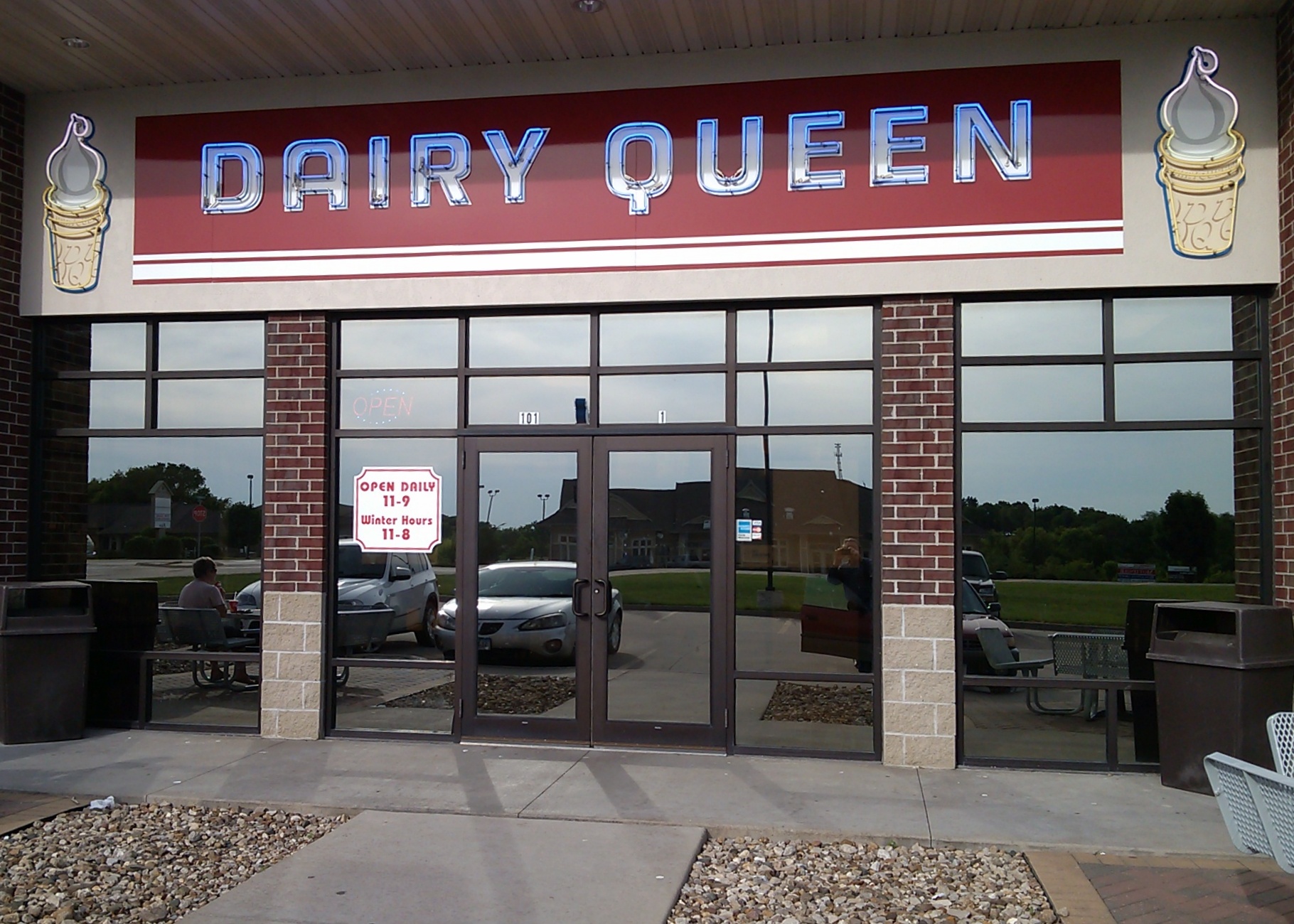 SOLON— Warren Buffett’s Berkshire Hathaway bought Dairy Queen in 1998, and after that, it became easy to associate the purveyor of dairy treats, Coca-Cola, burgers, hot dogs and fries company with his corporate governance. It is our local outlet in the industrial food chain with ties to the deepest memories of growing up in the late 1950s and 1960s, when the stores closed down at the end of each season— the owners packing it in for Florida or other warm places to avoid Iowa winters. Like a sundae topped with Buffett’s intellectual construct.
I stopped on my way to the county seat to get a vanilla cone. I was loathe to do so because the restaurant is less about food and more about the cognitive dissonance created when juxtaposing childhood memories with a strip mall experience. If I dined at our Dairy Queen on fare other than cones and Dilly Bars, the experience was forgettable.
Six illuminated menu boards above the transfer space from the kitchen to the order prep area display the offerings. There has not been much change in the staple lunch and dinner items since they were developed. The changes in food occur in the supply chain leading up to this Buffett cultural outlet.
On the positive side, the staff was friendly, courteous and efficient. I had my cone in a matter of minutes and the cool, soft experience evoked memories the way a Madeleine might over tea. Perhaps that’s the point.
The trip to Dairy Queen is one I delayed for as long as possible on the restaurant crawl. Except for memories, there is little reason to stop by, even if locals have made ours one of the longer term restaurant successes in town. There are likely other Buffett outlets in town, but none so conspicuous as this summer treat full of memory tainted by its association with the fifth largest company in the world. It is part of our small town dining experience, where the food is local, but not “local.”
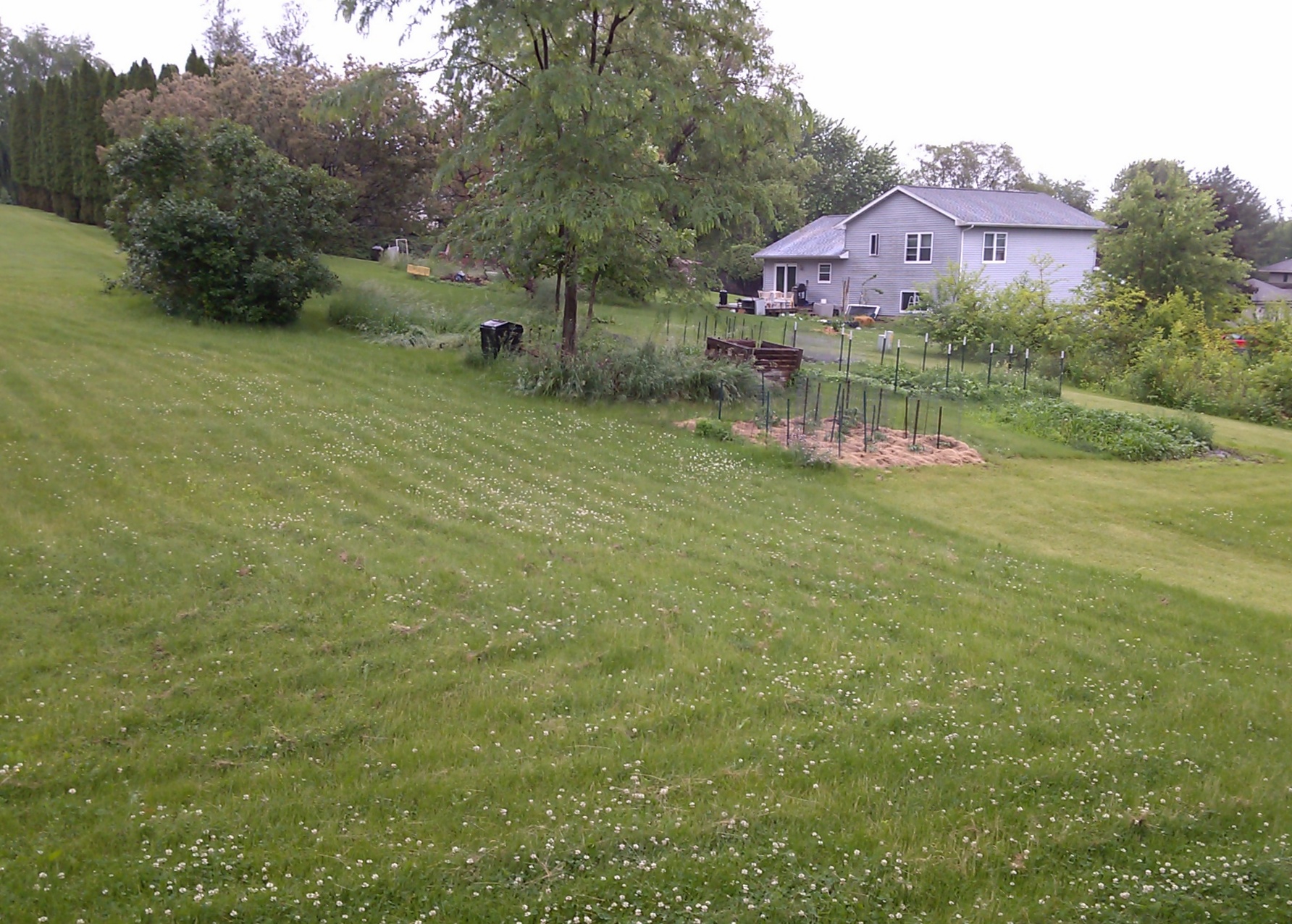
LAKE MACBRIDE— It rained on plans to work in the garden and yard. So now, the long lawn will wait until the next dry, sunny day; weeds are getting respite from being chopped; and the garage is clean enough for one auto. After the last, I went upstairs to the kitchen and processed vegetables for a meal— dinner of fresh asparagus, rice, salad greens with chopped vegetables and a veggie burger. And radishes. And spring onions. And soup stock with vegetables past their prime— mixed greens, asparagus stems, onion, celery, carrot and bay leaves. Simple fare for a simple life.
I have written about 2,000 words in two articles today, making this my third. Writing brings a sense of calm and I need that now. Better medicine than the antibiotics for my frying pan burn or the iced tea with blended whiskey. Writing works through our tension and helps release one’s cares, at least for a brief time. We write to clarify things. To straighten out a turbulent life, and by creating a narrative, yield understanding. That’s what we hope.
It doesn’t always work that way. But for now… rain came, dinner’s ready to cook, and what else is there to do on the Iowa prairie?
Categories
Plenty of Jobs

LAKE MACBRIDE— My patience is worn out with the talk of minimum wages, living wages, and all else hourly wage related. Depending on what one wants to do in life, the discussion matters a little or a lot. For me, not so much, as I previously explained.
I’ve written about worker engagement and dealing with low wages. A post illuminated low wages, and I wrote about my experiences assembling kits for Whirlpool Corporation for a very low wage, no benefit job in North Liberty. The practical result of all this thinking, writing and doing has been a focus on finding enough work to keep me busy and aggregate enough income in the form of wages, fees and bartered goods to sustain our lives on the Iowa prairie. I’ve found there are plenty of jobs.
Farm work
Working on farms and in our garden eliminates hunger. We continue to purchase dairy products, bakery-made bread, rice and sundry items from merchants, but since beginning work on two community supported agriculture projects there has been plenty to eat and enough to share with friends and neighbors in a micro-culture of food. There is a shortage of people willing to work on farms, and this creates an opportunity to meet a basic need.
Farm work can also be flexible. My sawyering work illustrates the point. There is a quarter mile fence line to clear of dead trees, and my initial estimate was a job of more than 225 hours. The property owner is not in a hurry, so I can work as I have time and weather permits. This job is paid in cash, but its flexibility provides a premium that fits into the broader picture of sustainability I am trying to paint.
Warehouse work
Large corporations have plenty of opportunities for low wage, part time help. Finding the right situation, one that provides a steady, reliable paycheck and accommodates my aging frame, took a while, but finally materialized in the form of warehouse work.
The physical demands of building kits for Whirlpool were too much. The minor supervisory role I now play at a warehouse club is better suited physically, and provides the flexibility I need to put the rest of a sustainable job portfolio together. One has to love the constant interaction with warehouse club members as a perquisite of the job.
Presently the wages from warehouse work make a substantial contribution to paying monthly bills like utilities, communications, fuel and debt servicing, accounting for more than half of our cash income needs. The long range plan is to replace this work with a better opportunity for income. Because the work is flexible, regularly and predictably paid, and has considerable social interaction with members and co-workers, it provides a stable platform for change.
Non-governmental organization work
I’ll sign a fourth contract with Iowa Physicians for Social Responsibility on Monday. The first was almost five years ago, shortly after exiting my highly paid, full time work in transportation and logistics. The work functions at a high intellectual level and is engaging in a way few other jobs are. For that reason, the project will receive high value in my jobs portfolio.
Like with corporations and farm work, NGOs are constantly seeking low wage workers to accomplish the deliverables of grants received each year. Because the work is contractually defined and the pay is predetermined, administrative variables are minimal, enabling a focus on the work.
The new contract is to organize a series of presentations on the humanitarian impacts of nuclear war to Rotary clubs over a six-month period. It is great work if one can get it, and because of the ebb and flow of the work process, there is adequate flexibility to accommodate the rest of my jobs portfolio.
Writing and editing work
Being a writer is a tenuous endeavor in the age of social media. It seems unlikely writing will pay enough to reduce the number of jobs in my portfolio, but there is beer money to be made if one is willing. Such income is still cash income, meager though it may be, and contributes to paying monthly bills not limited to summer beverages.
My main work is the unpaid writing at this site. There are currently three other distinct writing jobs for monetary compensation: proof reading for a local, regional newspaper, correspondent work for the same newspaper, and being summer editor of Blog for Iowa. As with the NGO work, these jobs function at a high intellectual level, and receive high value in my jobs portfolio. The thing about them is with each article I write, my skills improve, so the work feeds upon itself.
Business development work
In March, I described the process of business development and the Sumitomo Quadrant. With the jobs listed in this post, there are enough to plug into the tool to figure out next steps. That is, next steps after figuring out how to get all the work these jobs are expected to generate finished over the coming six months. Business development, like gardening, has become a necessary, but important unpaid job in itself. One that most low wage workers I know don’t give adequate attention.
Conclusion
Plenty of jobs are available if one wants the work. Whether creation of a jobs portfolio will also make life sustainable is an open question. The aggregate monetary compensation of this portfolio is enough to get by. It doesn’t translate easily to a framework of minimum or livable wages and that’s the point. In order to sustain a life, we sometimes need to take chances, and work how the jobs become available. This includes uneven compensatory rates, bartering and organic work like gardening and business development.
To make the paradigm work, jobs that have flexibility and will contribute to financial and intellectual needs take priority. Above all else, a job has to enable me to go on living, or else what’s the point?
Categories
Summer Politics Kickoff

The Associated Press released a summary of the Iowa primary races over the Memorial Day weekend and tomorrow the voting will end, framing the summer and fall campaign. Going into election day, here is what to watch for:
The front window race is for U.S. Senate, between Rep. Bruce Braley and whoever emerges from the field of five Republicans. State Senator Joni Ernst of Red Oak is leading former business executive Mark Jacobs in the polls. Both of them are ahead of the remainder of a field that includes Sam Clovis of Sioux City, Mark Whitaker of Ankeny and Scott Schaben of Ames.
“My opponents will be tripping over themselves to see who can come up with the most extreme ideas to get their base riled up,” said Braley in a recent statement. “Iowa could very well determine control of the Senate this year. We are the force that could stop extreme Republicans from taking over.”
Considering the Iowa electorate and our relatively close margins in recent presidential years, an Ernst nominee from the Republicans would be better for Braley’s campaign because of the need to appeal to voters in the middle of the political spectrum. Ernst would polarize, Braley would draw from the middle. As Braley’s recent television commercial indicates, his appeal is to the middle.
It is not clear any Republican Senate candidate could garner the required 35 percent to win the nomination during the primary. For those with the stomach for it, the Iowa Republican’s Kevin Hall discusses this Republican issue here. Blog for Iowa will cover Braley’s race closely.
Here is a breakdown of the other primary races for federal office:
First Congressional District:
Democrats: Swati Dandekar of Cedar Rapids, Anesa Kajtazovic of Waterloo, Pat Murphy of Dubuque, Dave O’Brien of Cedar Rapids and Monica Vernon, also of Cedar Rapids. Blog for Iowa believes Swati Dandekar belongs in the Republican primary due to her close ties with conservative business interests. This is not a new opinion.
“Dubuque businessman Ron Blum leads a Republican field that includes Cedar Rapids businessman Steve Rathje, who has run unsuccessfully for U.S. Senate and House, and Marshalltown lawyer Gail Boliver,” according to the Associated Press.
Second Congressional District:
Democrat Dave Loebsack will face the winner of a Republican field that includes Mark Lofgren, Mariannette Miller-Meeks, and Matthew Waldren. Miller-Meeks seems convinced she will win. A MMM primary win would be welcomed by Team Loebsack because there is nothing new to see there, except ferreting out the extend of her involvement in the settlement scandal.
Third Congressional District:
Former Democratic State Senator Stacey Appel of Ackworth will face the winner of a Republican field that includes six candidates: Bob Cramer, Joe Grandanette, Monte Shaw, Matt Schultz, David Young, and Brad Zaun. The Republican nomination seems unlikely to be decided tomorrow, and may go to convention.
Fourth Congressional District:
Democrat Jim Mowrer will face incumbent Steve King in the general election, as both are unopposed in the primary.
Please click on the follow button to stay updated on Blog for Iowa’s for continued coverage of the 2014 midterm elections in Iowa.
~ Written for Blog for Iowa
Categories
On Spain

LAKE MACBRIDE— King Juan Carlos I of Spain announced this morning he would abdicate the throne in favor of his son, Crown Prince Felipe. Having visited the country during the dictatorship of Generalissimo Francisco Franco, Juan Carlos made a favorable impression on me from the first days of his reign. Until recently, he held the favor of a large majority of Spaniards. There are not many countries where this type of transition of power holds a place in personal memory.
What makes Spain stand out is my encounters with the Guardia Civil, Spain’s national police force. Under Franco, they had a reputation for brutality among the populace. As a foreign visitor, I was aware of this and came under their scrutiny several times. That the Guardia operated in mostly rural and isolated parts of the country increased the risk of police violations of individual civil rights through lack of supervision and accountability. I did whatever I was asked by them without commentary.
My most significant encounter with Franco’s regime was on a train trip leaving Madrid for France. Basque separatists had set off a bomb in what I now know was the Cafetería Rolando bombing on Sept. 13, 1974. I arrived in Madrid shortly after the blast and was staying at an inexpensive hotel with a number of other international travelers. I had come all that way to see the Prado and was determined to continue my itinerary. I didn’t understand what the attack meant, and after a couple of days, decided to cut short my stay.
The Guardia Civil inspected my rail car. Every passenger was closely scrutinized and questioned. It seemed they spent a long time with me, a long haired, supposed student with a U.S. passport and a Eurail pass. It was probably no more time than with anyone else. It was a visceral experience of a police state, something we talk about but rarely experience. It seems like yesterday.
Whatever troubles King Juan Carlos may have today, I wish him well and the same for his son. An unusual wish coming from the Iowa cornbelt this rainy spring day.

CEDAR COUNTY— Two white horses came down the hill and grazed around my temporary work site. I had forgotten how large an animal horses can be. Before long, they walked up the hill toward the barn where there was likely better repast. I continued to saw timber.
Who knew I would become a sawyer, even if only for a season?
Categories
Plenty of Radishes

LAKE MACBRIDE— After work at the CSA, and on a new sawyering job in the next county, I harvested radishes— lots of radishes. It was a reminder of how far behind the garden is this year. There are still seedlings planted in March that need to go in the ground, and now a third crop of radishes needs be planted. While it is cold comfort, every local foods grower in the area is also running behind— only the row croppers are on schedule.
As days fill with paying work from multiple sources, evaluating new opportunities has become a key skill. My main considerations are reliability of payment, flexibility of hours, and steady work that matches my physical capabilities. All of this at an acceptable rate of compensation. Mastery of time management and scheduling is also a key skill.
Yesterday found me explaining why services cost more if compensation was in money rather than bartered goods and services. Bartering income may be taxable, but the tax implications are not much outside bartering exchanges. If there is non-employment cash income, a tax of 13 percent comes off the top, hence the up charge.
These discussions with potential clients are not part of a person’s education and training. Most seek a single job, or maybe one full and one part time one, but that seems unsustainable, especially as one nears traditional retirement age of 68. Food for thought to compliment the radishes.
 Journey Home
You must be logged in to post a comment.