Categories
Kitchen Garden

Cook Not A Chef

Italian Spaghetti

Is there a difference between being a cook and a chef?

An immediate answer has to do with training, tutelage, apprenticeship or working in a professional capacity. I know several chefs, and they are among the best in the area. I eat at their restaurants, appreciate their presentations, and respect what they have learned.

Cooks know their limits. My main goal is to get a satisfying meal on a plate, matched to the individual tastes of diners. Even in a small gathering there is rarely a single taste. Working with well-known diners, attempting the satisfying rather than the sublime, makes me a cook first — a journeyman raw food processor if you will.

Understanding flavors that produce great meals is important and flavor is foremost in the mind of a cook. Will the diners welcome a dish? What from the repertory will please? How do I use a seasonal vegetable? Will diners notice when the flavor stands out? Above all, will they eat it? We worry less about replicating specific dishes and more about the making the routine sublime.

I recently bought a large bag of Mexican oregano on line. Used in many dishes now that it is on hand and convenient, it is mostly an experiment with taco fillings, red sauces and stir fry. I like it because of the mild citrus flavor it imparts. Although I’ve been using it a couple of months, the experimentation is just getting under way. A cook’s process can be quite long.

Cooking has to do with ingredient sourcing, cooking techniques and trying dishes with varying seasonings. I feel little pressure for repeatable tastes so a dish can be listed on a menu. Being a cook is living life in each moment, a prepared dish as its own reward.

If I am a cook, not a chef, then so be it. I’d rather be a journeyman and get the work done.

Categories
Kitchen Garden Writing

Soup for the Polar Vortex

Vegetable Soup on a Wintry Day

Monday I made a big pot of vegetable soup using what has become a standard process.

Mirepoix of onion, celery, carrot and salt sautéed in a couple tablespoons of vegetable broth.

Potatoes peeled and cut in large chunks, a 15 ounce can of rinsed, prepared beans, a pint of diced tomatoes, a quarter cup of barley, a half cup of dried lentils, a few bay leaves, two cups frozen sweet corn, a quart of home made tomato juice and vegetable broth to cover. I added lots of potatoes and carrots for texture and flavor. Toward the end of cooking I added a cup of frozen peas.

The soup cooks up thick and hearty, just the thing for subzero temperatures the polar vortex is bringing our way tonight and tomorrow.

Other soups I make are similar, adding every kind of vegetable we have on hand — after harvest or after cleaning the refrigerator. The limited number of ingredients in this recipe standardizes the outcome into something recognizable and delicious. Importantly, it is repeatable.

Over the weekend I sorted recipes, an act of curation. I found I’m much less attached to dessert recipes. Over the course of a year I make a few batches of cookies, an apple crisp or two, maybe a spiced raisin or applesauce cake. Those recipes are well used and written in my red book. I love dessert, but not that much.

The dessert recipes I kept included blueberry buckle, a seasonal item we serve at the orchard after the first blueberries come in from Michigan. The recipe our bakers use is called “Betty’s Blueberry Buckle,” but the one I have will serve.

While in graduate school I conducted a series of interviews with a subject for a class on aging. She had a letter from William F. Cody inquiring about his legacy in Davenport. I kept her recipe for custard for the memory, although I’m not sure if and when I might use it.

I find it hard to dispose of artifacts of consumption, although about half of the unsorted pile of recipes went into the paper recycling bin. That I got rid of anything is a sign of progress. So many things compete for attention that piles of artifacts, like these recipes, sit around indefinitely.

Winter is a great time to enjoy a bowl of soup and sort through the detritus of a life on the prairie. I look forward to spring.

Categories
Kitchen Garden Writing

Bunkering in During Snowfall

Last of the Fresh Kale

Snow began overnight and is expected to continue all day — the first real snow this winter.

We need more from winter, a week of subzero temperatures to kill bugs in the ground and to stop the sap flow in trees before pruning. Today’s snowfall gets us started, although the long-range forecast shows ambient temperatures well above zero the rest of the month.

We are ready to bunker in. We have reading piles, plenty of food, an internet connection, and an operational forced air furnace. I expect to drive my spouse into town for work so she doesn’t have to scrape windshields afterward. Having lived in Iowa and the Midwest most of our lives we know what to do.

Breakfast was kale cooked in a style of central Mexico with caramelized onions, finely chopped garlic and red pepper flakes. This recipe is worth trying because it allays the bitterness sometimes associated with kale, making a hearty and delicious vegetarian meal. Here’s what I did.

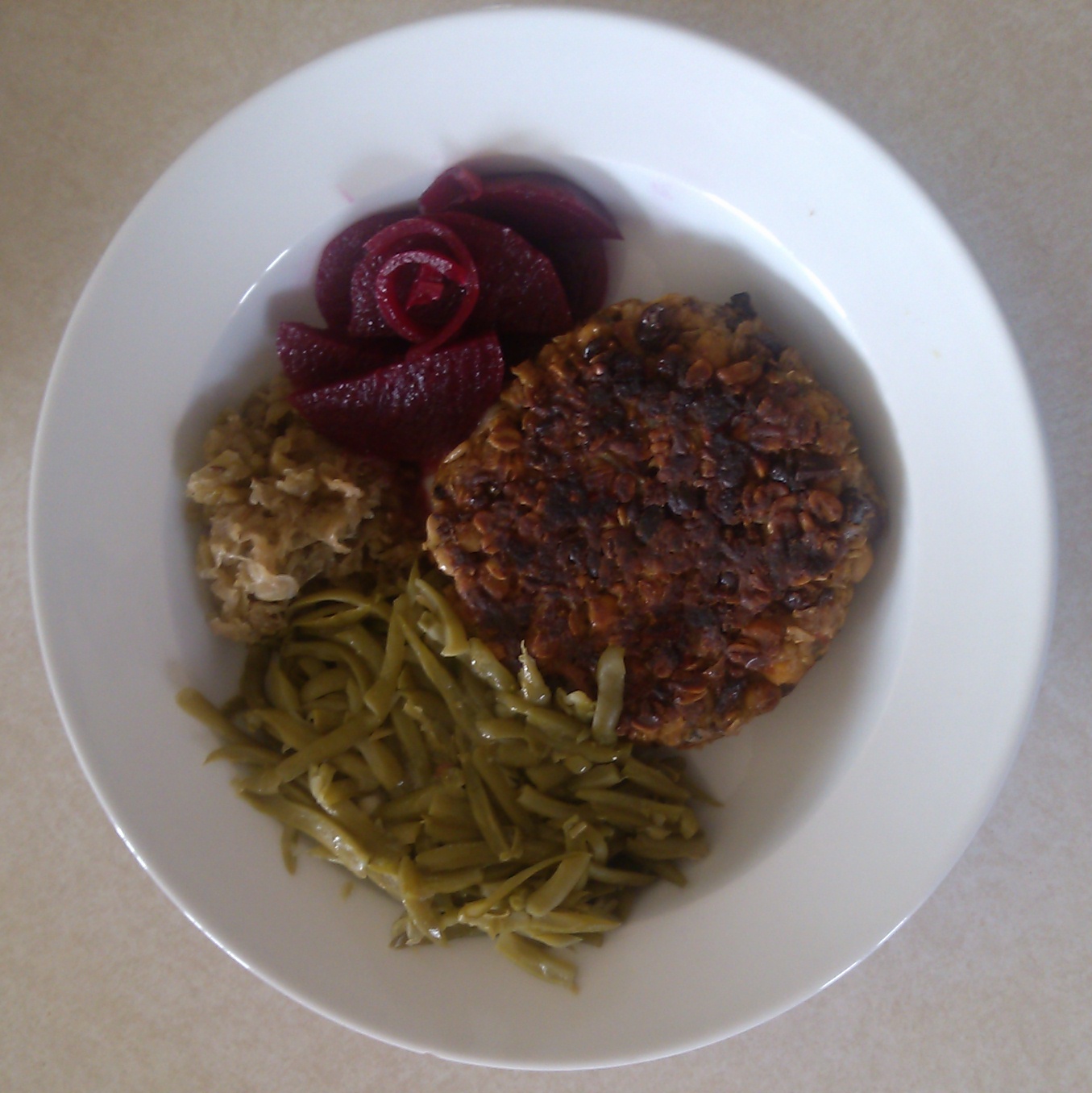
In a medium sized frying pan warm extra virgin olive oil on medium high heat. Cut three medium onions in half,  slice them into quarter-inch ribbons, and add to the olive oil. Salt generously to taste. Once the mixture is cooking, reduce the heat and caramelize the onions. Finely chop three cloves of garlic and add them to the caramelized onions along with red pepper flakes to taste. Mix and cook just until the garlic loses it’s raw taste. Add one half cup of vegetable broth and a generous amount of kale. Cover the pan with a lid and let it cook for five minutes on medium low heat or until the kale is tender. Mix the ingredients thoroughly. At this point I laid two home made bean burgers from the freezer on top of the kale and covered again until the pre-cooked burgers were warmed through and the moisture evaporated. (If you want to use the kale mixture as a taco filling, the bean burgers aren’t needed). Transfer the kale and a burger to plates and top with Mexican cheese and fresh salsa. If you have it, freshly chopped cilantro would be a nice addition. The breakfast of champions.

Five weeks remain until soil blocking begins at the farms. It’s a chance to garage the car for days at a time and turn inward as if there is just us in the world. The snow is getting deep enough to shovel the driveway before heading to town.

Already it is becoming a productive, mostly indoors day. Winter at its best.

Categories
Environment Kitchen Garden

Gathering on a Farm

Farmer Kate’s High Tunnel

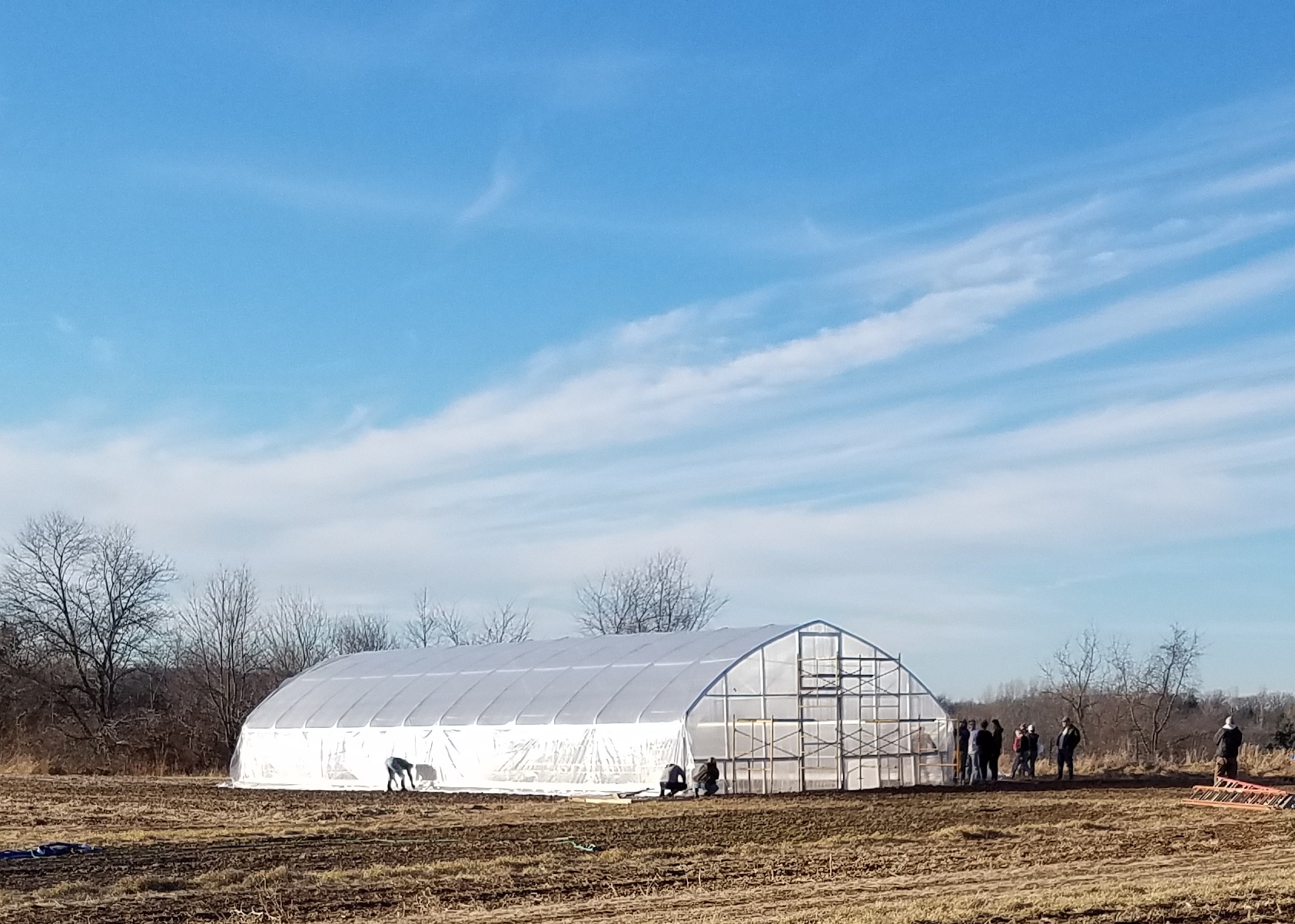
A lone bald eagle soared over Rapid Creek north of Wild Woods Farm. We were pulling plastic over the new high tunnel.

The eagle lofted in the wind as if it were summer. We would rather the wind died down until we finished. The project was well-organized and it took an hour and a half for 20 of us to get the plastic stretched over the aluminum frame.

Someone asked how many inches of frost were in the ground. That struck me as funny while standing in two inches of sloppy mud. We have yet to have a hard freeze this winter. Vegetable farmers have ordered seeds and as soon as they arrive plan to plant onions in trays. Spring planting will begin soon enough. With the ambient temperature at 50 degrees it doesn’t feel like we’ll have a winter even though an extended hard freeze would be good for farmers.

The fact of a warming atmosphere is all around us. Eagles attracted to open water in January is just part of it. Climate has changed, disrupting weather patterns we learned to expect coming up. Local vegetable farmers dealt with the weird weather last season and could use a break back to “normal” this year. A 50 degree January day may be a fluke — a welcome one for this project — but there have been too make flukes.

During wait time I finalized a spring soil-blocking schedule at the two farms. It was a productive day of catching up with friends in mid-winter… talking about spring.

Categories
Home Life Kitchen Garden

Winter Soup to Relieve Punk Times

Garden in Winter

The end of year has been punk times without relief.

Some blame it on social media.

Social media users post they need a break. They want to cleanse their mind of the drivel, hostility and tumult often found in feeds they scroll.

How is “cleansing” possible? Social media is an addiction and once hooked, that’s it. Few want to make a permanent break from social media, so what’s really the point of a cleanse? A better idea is to exercise moderation when using social media. I think the ancient Greeks said something like this.

Some blame it on our president.

Sequestered in the White House, his spouse in Florida with their son, a phone nearby, he waits for Democrats to call. The current stalemate is the president’s doing, so why would they call? He lashes out with ill-informed, ill-mannered tweets. I don’t know anyone who would object if he took a break from Twitter.

Relief from punk times can be found in getting busy. Today I made a hearty winter soup.

Butternut Squash and Turnip Soup

  • One medium butternut squash, peeled and cut into half inch cubes.
  • Two large turnips peeled and cut into quarter inch cubes.
  • One cup thinly sliced celery.
  • One cup medium dice onions.
  • One quart tomato juice.
  • Vegetable broth to cover.
  • Quarter teaspoon each of ground nutmeg, allspice and coriander.
  • Teaspoon ground cinnamon.
  • One large bay leaf.
  • Salt and pepper to taste.

Cover the bottom of a Dutch oven with vegetable broth and add the celery and onion. Stir until the onions start to soften. Add the turnips and squash. Add a quart of tomato juice and spices with vegetable broth to cover. Bring to a boil then reduce heat to a simmer and cook until the vegetables are soft. Remove and discard the bay leaf. Use a blender to smooth the mixture and serve with a dollop of sour cream and finely chopped parsley or chives.

Warm winter soup to chase away these punk times.

Categories
Kitchen Garden

Very Late Fall Cookery

Garden and Farm Vegetables

With winter solstice tomorrow afternoon, it’s getting late to be calling this autumn.

There are still fresh vegetables in the ice box and plenty of ideas for what to do with them. On Monday and Tuesday I binged on YouTube videos about street food in Pakistan and India, which led me to make a batch of egg fried rice.

To begin, I am shocked by how much oil or butter is used by these street vendors. It is well known that restaurateurs use a lot of butter in cooking. Eating in diners accepts a high level of saturated fats in food. But these videos? Oh My God! A quart of vegetable oil? Two or three cups of butter? It’s enough to give a person a heart attack… literally.

In an American home we don’t use so much cooking oil yet there are lessons to be learned here. I got out the wok and spent about half an hour prepping vegetables.

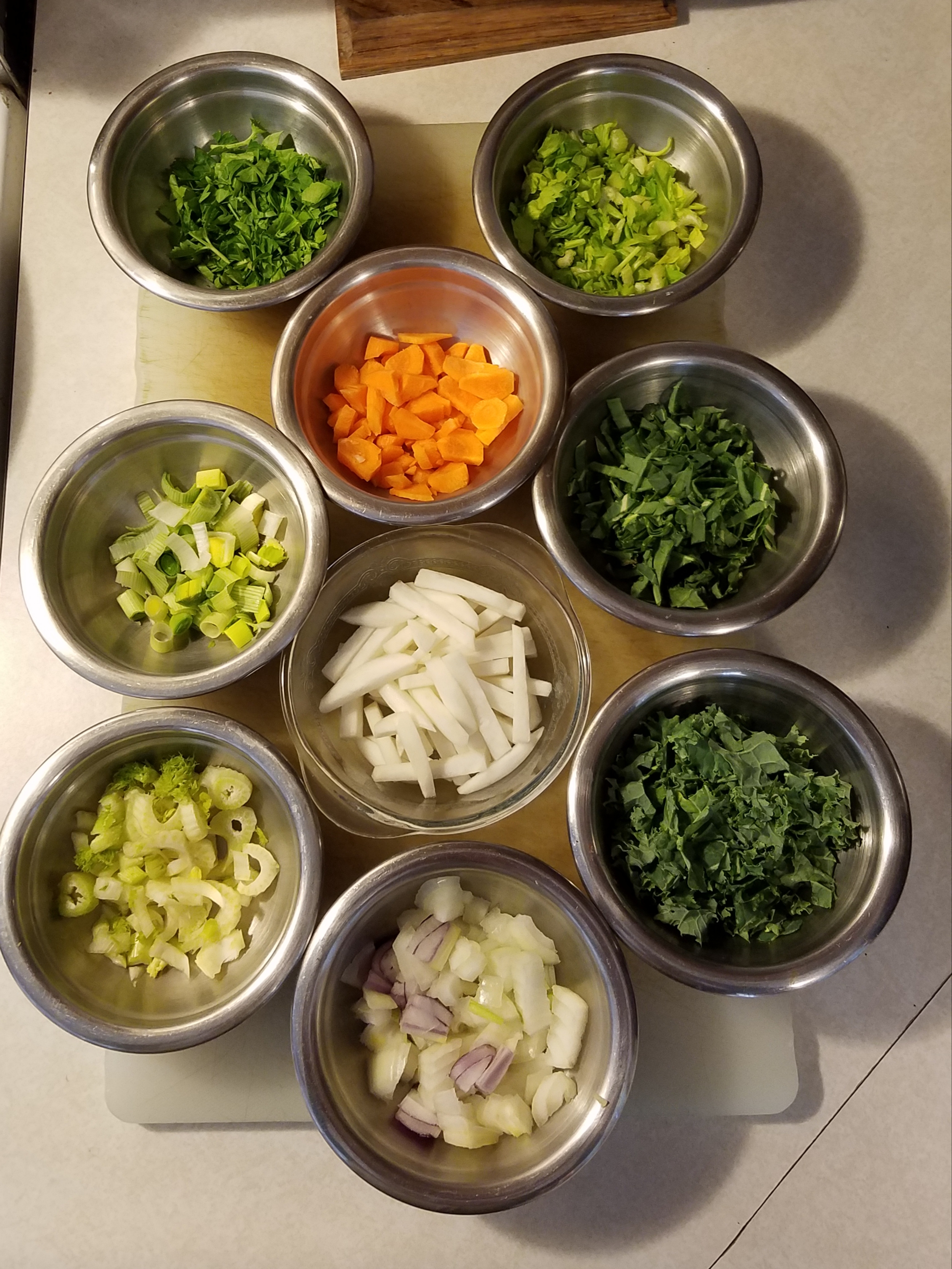
I found parsley, carrots, onion, celery, turnips, kale, collards, garlic, fennel and leeks and diced them up for stir fry. There was about four cups of leftover, cooked rice, enough to use four eggs.

If I keep making this dish I need to work on seasonings. I was tempted to add red pepper flakes to the oil in the beginning but resisted the heat to see what the other flavors would lend to the experience. I kept it simple with salt, ground black pepper, ground cumin and smoked paprika. It was good without hot peppers. 

Egg Fried Rice with Local Vegetables

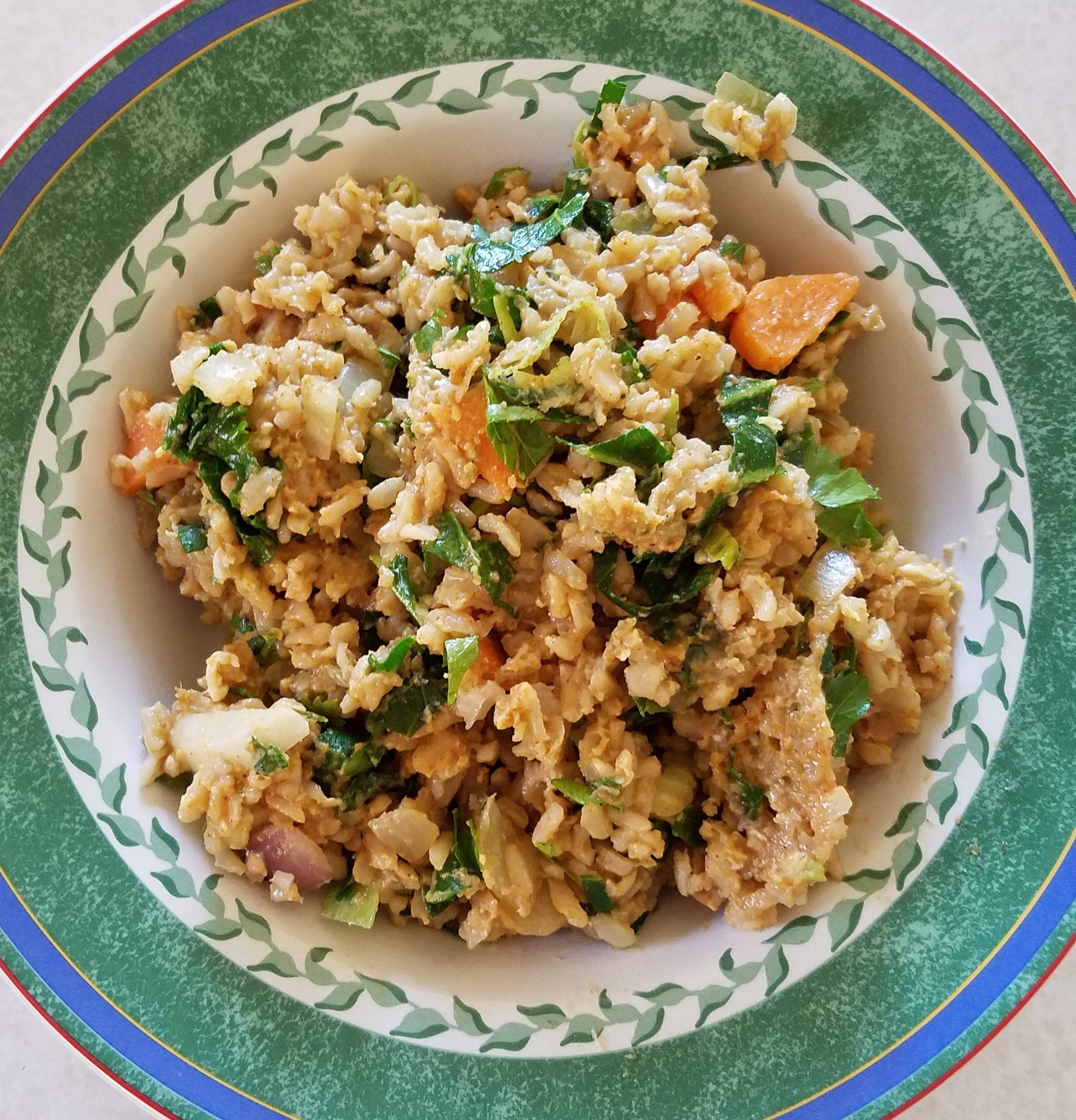
The rest is pretty easy. Place about four tablespoons vegetable oil in the wok and heat to temperature. Add vegetables one dish at a time in cook’s order (those needing most cooking first) reserving the parsley for finishing. Sauté and stir constantly until the vegetables begin to soften and add the eggs. Street vendors crack eggs directly into the wok, but I beat lightly in a dish and added them all at once. Stir constantly until the eggs begin to cook. Add the cumin and paprika at this point and incorporate. Add the rice and stir until the eggs are cooked and everything is incorporated and heated evenly. Add parsley and serve. Made four generous portions.

The kitchen was filled with the aroma of chopped fennel all day. In the finished dish it added a brightness that’s hard to describe. Stirring constantly helped prevent the eggs from creating a crust on the bottom of the wok and made cleanup easier. If I were to serve this as a side dish I’d reduce the number of vegetables to basic aromatics and some greens, maybe add some pine nuts. Stir fry is a flexible dish that can use up what’s on hand.

As fall turns to winter egg fried rice helped transition from ice box to pantry for food sourcing. I felt I learned from the experience of making it. In our kitchen, that’s what cooking is all about.

Categories
Kitchen Garden

Lazy Vegetarian

Home Made Veggie Burger

We are an ovo-lacto vegetarian household, although Morningstar Farms makes me a lazy vegetarian at home.

In our ecology of food we still purchase mass-produced, vegetarian burgers, recipe crumbles and chik patties. It’s an easy dinner to warm one up, prepare a couple of side dishes, and call it done.

I came up in a household where variations of hamburger played a number of roles. Mother made burgers, chili, taco meat, meat loaf, meatballs, and many other dishes using various cuts of ground beef. To a large extent, our current use of meat substitutes is to evoke memories of that long ago childhood.

A couple of homemade vegetarian burger patties wait in the freezer, and I look forward to finding or inventing a recipe that hits all the notes of satisfaction. Maybe then we can quit using outside products. In the interim, manufactured meat substitutes create a predictable, inexpensive, convenient source of food comfort.

I recently read Anthony Bourdain’s book, Appetites, in which he wrote about hamburgers. I don’t know if he approved of manufactured burgers, but using inexpensive buns from the wholesale club, I took his written explanation and videos and made a hamburger sandwich that proved to be quite delicious. A burger and fries (made from local potatoes parboiled and frozen after harvest), with home made dill pickles, is my go to dinner when my spouse is working. The manufactured burger patties fit the recipe just right.

I mentioned the Bourdain story to a friend. His response? “You do know he committed suicide?” Guess I’m not too worried about that possibility. For now, meat substitutes remain in our food ecology.

Tradition and memory play a role in our food culture. It wouldn’t be that difficult to figure out the nutritional content of food products and construct a generic meal designed to meet nutritional needs. The dialectic between nutritional science and memory waxes and wanes, and a desire to serve memory seems unlikely to be suppressed. As Chef Matt Steigerwald said, “Food is important.” I submit a corollary, “Food we grew up with is also important.”

I’m not really a vegetarian, except at home where I am a lazy one. From time to time, at social events, or when I’m in a hurry, I’ll eat something containing meat. Suffice it that the industrial meat complex is not sustained by my meager consumption of its products.

When I worked a summer job at a meat packing plant, one of the measures of our work among summer help was whether or not we’d eat what we made. That depends, I said. We made things like fertilizer, rendered lard, chitterlings, organ meat and other exotica which haven’t had a place on my plate ever. Back in the day, when I was single, I occasionally bought white bread, packaged bologna, and yellow mustard to make sandwiches, although those seem like ancient times. There were enough FDA inspectors around the plant to engender a feeling that the food products were safe to eat. I’m not sure that remains the case and my exposure to it is minimal.

It doesn’t seem human to be regimented or formulaic in the kitchen. If it were, why wouldn’t we have a home robot prepare all our meals? I’m no robot and flourish in an environment where each kitchen session is a blank slate. There are also times when a burger, fries and a dill pickle make me feel like home. That has little to do with nutrition.

Categories
Home Life Kitchen Garden

Tofu Mole – Not a Recipe

Mole and Adobo Paste

I found jars of mole and adobo paste in the pantry. They expired a long time ago but that didn’t stop me from re-hydrating a jar with home made vegetable broth and making a dish with tofu.

Using prepared mole paste makes the process easy. Layer drained and washed black beans, cut corn and cubes of firm tofu in a casserole. Next, pour mole sauce all over and bake in a 375º oven until thoroughly heated and bubbling, about 35 minutes. Top the casserole with sliced green onions and fresh cilantro if available. Spoon the mixture on brown rice to make a satisfying meal.

This is not a recipe as there is no intent for readers to prepare the dish. I’m capturing a moment in time. I’m not even sure I will make Tofu Mole again once the jars of paste are used up.

It’s another idea on the current excursion into Mexican flavors. It is all uncharted territory and that makes the journey engaging.

Categories
Home Life Kitchen Garden

Into the Light

Black Friday, 4:30 a.m., at the home, farm and auto supply store

I spent much of Black Friday loading customer vehicles with large, bulky items that were on sale. It was often a three-person job.

Management had us come in an hour before the store opened at 6 a.m. to put the final preparatory touches on what is one of our biggest sales days of the year.

A crowd of shoppers waited when we opened. Given the types of merchandise we carry and aggressive pursuit of Black Friday market share, it was no surprise.

Throughout my shift shoppers arrived in vehicles containing bags of merchandise from other stores. We helped fill them up and all was good in retail world.

I was tired when I arrived home at 2:30 p.m., more because my early morning schedule was disrupted than the work I did at the home, farm and auto supply store.

First thing I did was make a batch of red chile sauce using dried New Mexico chilies.

We continue to have kale in the garden so the day before I planned a last-minute dish for our Thanksgiving dinner. Before I forget, here’s what I did:

Saute a diced medium onion in a frying pan. Add a couple of cloves of diced garlic. Once the onions and garlic are tender, add a pint of diced tomatoes and a tablespoon of Mexican oregano. When the sauce comes together, add a large amount of sliced kale leaves with the stems removed. I used three big leaves but more is okay because it will cook down. The stems can be sliced finely and added for more texture. Add a drained and rinsed can of prepared black beans. Season with salt to taste. Reduce heat to a simmer until the liquid has evaporated and serve hot as a side dish.

I had dinner of Thanksgiving leftovers and went to bed early. There will be a lot to do as we come into the light of this weekend.

Categories
Home Life Kitchen Garden

Into the 2018 Holidays

Wild Turkeys in the Johnson County Lake District

This year’s holiday season is just beginning. I’ve been reluctant to turn the page on a year of transition and hesitate still.

We’re writing a Thanksgiving Day menu together and thus far know there will be our special recipes for wild rice and cranberry relish, along with sweet potatoes, green peas and an extensive relish tray split between crudités for her and pickles for me. There are roasted pumpkin seeds.

Yesterday I went to the orchard to buy Gold Rush apples for the cranberry dish. It was the last chance to catch up with my orchard co-workers until mid-December. I bought frozen Montmorency cherries from Michigan. The retail merchandise on display is dwindling down, soon to be placed in storage until next year. Should I get another frozen pie or two to last through winter? I don’t know but we have peach, cherry and apple already and once we get past the holidays anything that’s left will likely rest in the freezer. We are not dessert people and potluck season is drawing to a close.

Seventeen degree weather ended the kale run. I cut the number of plants in half this season and we still had more than could be used in a single household. We have fresh kale in the ice box and will use it in some to be determined dish on Thanksgiving. The point of all the food is the leftovers, and not having to cook for a few days.

My orchard supervisor asked me what I was doing with my weekends now that the season is finished. I didn’t have a good answer. I’ve been napping more, reading too, and preserving the abundance that still lives in our ice box. At some point I must turn the page. She asked how many we were having for Thanksgiving dinner. Like always, it’s just the two of us.

Until soil blocking begins at the farm in late February my weeks are two days at the home, farm and auto supply store and five days to do what I will. Three months to make progress on home projects among which writing is most important to me. To begin planning would be turning the page on life, something I’m not ready to do.

By Wednesday I should feel more in the holiday spirits as I have dinner planned with a friend. I’m not one to linger in uncertainty, at least I didn’t used to be. I’ll take these days into the 2018 holidays one at a time. Focused on the present, rooted in the past, and hoping for a better life afterward. Sustaining a life in a turbulent world.