They say if you bring something good to a potluck you’ll have to bring the same dish to every potluck from now on. I don’t make the rules.
When I attend a potluck, with or without my spouse, I take something we can both eat. Sometimes it is popular, yet mostly it is not. I overestimated the degree to which other people’s like for kale would match mine. I no longer take kale dishes. Whatever is not eaten goes into our rotation of leftovers. Live and let live. Life is good.
When the garden comes in, I make something for potluck with fresh ingredients, maybe potato salad. It is important to keep anything with eggs in it chilled. During apple harvest, some sort of baked apple dish is the norm, something like apple crisp. Thus far, my dishes haven’t been described as good very often, so I’m free to experiment. And I will.
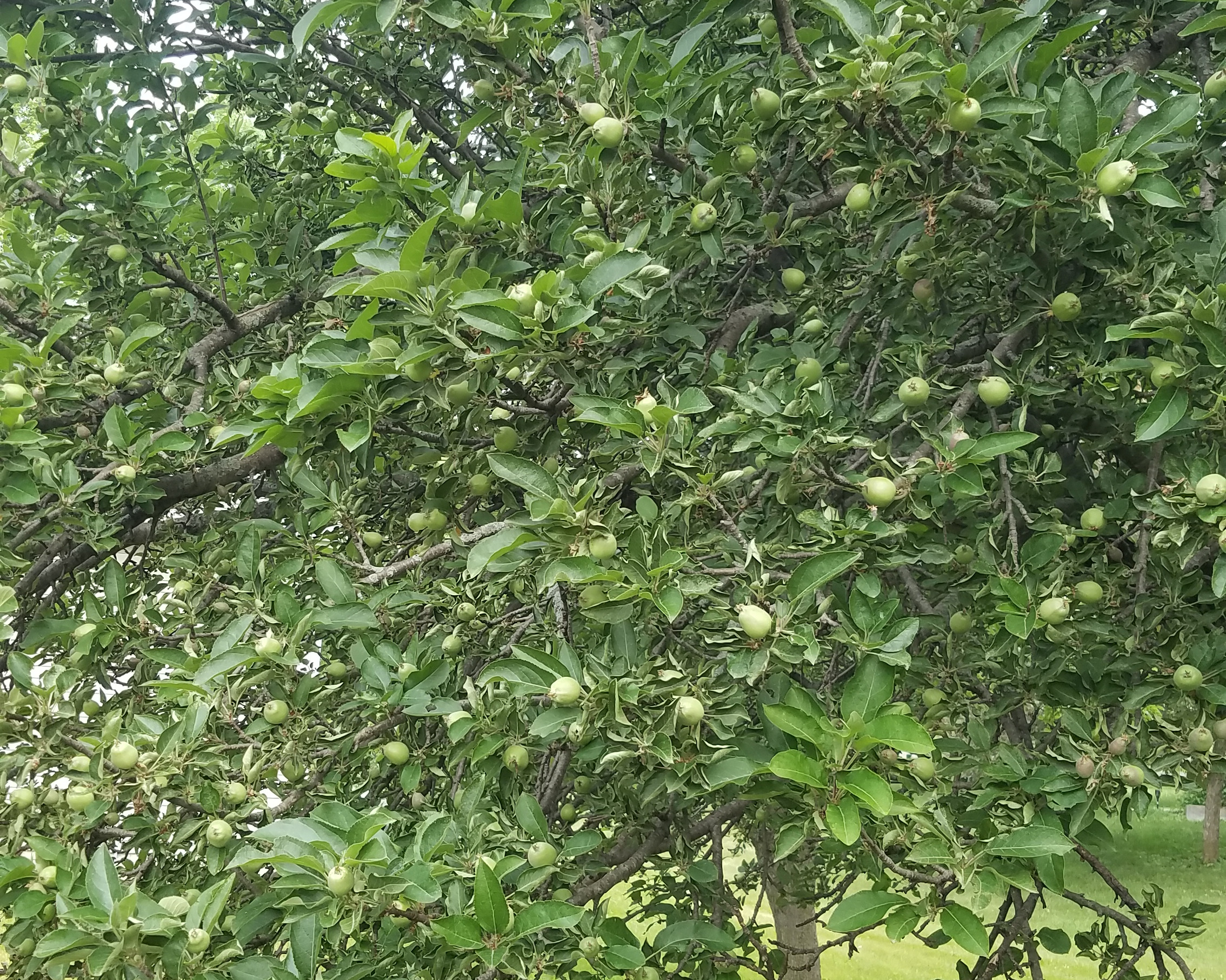
In mid-June we have a good idea if there will be an apple crop and how big it may be. This year’s apples look to be plentiful. Typically, earliest apples go to sauce for fresh eating, and apple cider vinegar. Depending upon how they taste, I may make some apple butter with early apples. Mostly I wait until the September-October harvested ones for the main batches of canned sauce and butter. I also fill up the cider vinegar jars in the pantry. Each year I learn a bit more about processing the abundance when there is one.
The two newest apple trees are unpredictable. One has a couple of fruits forming, and the other has a lot. I can’t remember which is Zestar! and which is Crimson Crisp. Either would be welcome this year.
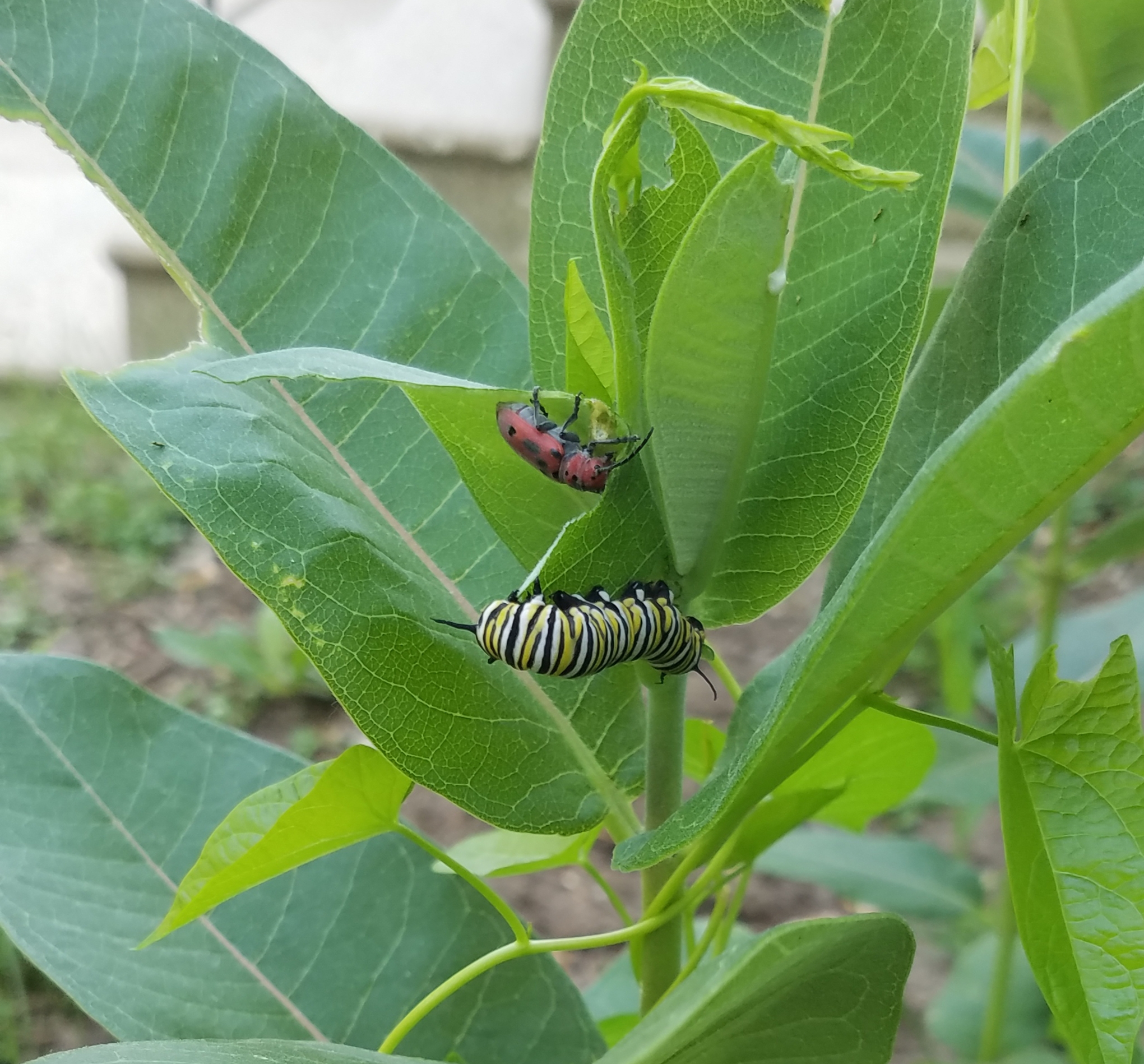
I toured the garden this morning and besides weeding, things look alright. There was not much caterpillar damage on the cruciferous vegetables. In the front yard, I saw a Monarch caterpillar and a milkweed bug having breakfast together. Late spring is a great time of year.
There have been two points of catharsis this year: finishing winter writing and sending the draft of my autobiography to a few friends, and finishing initial garden planting last week. Heading toward summer, new things are on the horizon.
More than at any time during the year summer is an opportunity to take on long-standing projects. I expect there will be plenty to do, including cleaning and organizing the garage, landscaping the yard, and tending neglected home maintenance tasks. We spent a lot on home appliances in the last month, so there is no extra money to take a vacation. We haven’t taken a vacation since our child was in high school 20 years ago. There is no pressing need either.
Summer was the time for political activities such as walking in parades, barbecues and picnics, and listening to speeches. Our political activities have become separated from most of society and these old-time activities have become irrelevant to winning elections or much else. If I had a business, I’d enter a float in our local parade. Otherwise, I’ll avoid town the day of parades. There are no planned trips to the many parades, festivals and activities planned in our part of the state.
Each summer I debate reading The Great Gatsby, my favorite summer novel. Most years I re-read it, although that decision is not made for 2023. Since I set a daily goal of reading 25 pages, the question now is which book will go into the rotation next. I’m so familiar with Gatsby it is a one or two day read. If I missed this summer it would be no loss. There are plenty of other good books to read in my library.
The garden has been producing for about a month so cooking has changed with fresh vegetables. Greens are on the table almost every meal, and when tomatoes, peppers and cabbage come in, I’ll consult my personal recipe list and prepare some seasonal dishes.
Summer is about freezing, drying, and canning food from the garden. I need a dozen more quarts of vegetable broth and this will be the year to replenish the pantry with all things apple. Tomatoes are the other main canning item. I process them whole and in the form of sauce. It was a struggle to get tomatoes to take in the garden, yet they are growing now and there should be a good harvest. Canning alone will fill any voids in the schedule.
Before we realize it, summer will lead to autumn and harvest. It’s time to enjoy life while we can. Happy summer!
Red Delicious and Earliblaze apple trees in bloom, May 3, 2023.
Four days into the main apple tree bloom it looks to be a banner year. No hint of frost since blossoms opened and plenty of native pollinators work the flowers. Yesterday flower petals began to fall to the ground, indicating successful pollination.
I planted these trees on Earth Day in 1995. It was a roll of the dice because a gardener never knows how they will fare in Iowa. The Red Delicious was a cultivar taken from the original one discovered in Iowa. For $18.75 each in 1995, the trees have returned many times the purchase price. They already exceeded their life expectancy of around 25 years for a semi-dwarf tree, so anything else is a bonus.
The goal this year is to put up at least 24 quarts of apple sauce, a dozen pints of apple butter, Refill the half-gallon jars of apple cider vinegar, make a couple of gallons of sweet cider, and fill the refrigerator drawer with the best of the crop for storage.
A lot can happen between now and harvest, with wind storms representing the biggest threat. The Red Delicious tree lost several major limbs, including the northern half of the tree during the Aug. 10, 2020 derecho. It is blooming today like there is no tomorrow. One never knows if that is a reaction to imminent death, or just another year. In any case, the new Zestar! and Crimson Crisp trees planted in 2020 are coming along. I might get a real crop from them this year.
Yesterday I planted the row of herbs and vegetables with row cover. From time to time, I looked up at the blooming apples trees and what they represent: another year’s spring promise.
Gardening began in the traditional way, with onions planted indoors beginning in December, and seed potatoes planted on Good Friday. Fourteen trays of seedlings are either on a table near the French doors or under a grow light downstairs. As soon as I can get the greenhouse assembled, cruciferous vegetables will head out there. Onion sets arrived Thursday and need to go right into the ground. Chives from last year are up and garlic is poking through the leaf mulch that covered them since October. Once again, I’m committed to raising food in 2023.
I plan to reduce the number of varieties of what I grow and grow more of it. The idea is to use or preserve what we can and donate the extras to the local food pantry. This year, the volume of clients visiting food pantries has risen significantly. We each must help how we can.
I need to make a trip to Monticello to buy fertilizer. It will be the same 50-pound bags of composted chicken manure that have become standard. I also need to visit Beautiful Land Products in Tipton and pick up a couple of bags of soil mix. I think I’m good for fencing this year, so it may be a low capital garden. I need one of those.
I will likely be sore in the morning, yet I relish the fresh air and sunshine. As we age, it is important to stay active. Gardening can be done at whatever pace we choose. Cheers to Garden 2023!
We accumulate empty canning jars as a result of winter cooking. As the integration between our garden and kitchen continues, I’m learning which things we will use and which not so much. I’m also comparing various ways to preserve vegetables. It has been a good winter of meals.
Canned and frozen tomatoes, garlic, vegetable broth, frozen kale, apple sauce, apple butter, and dried herbs are most used. There is plenty of each to make it to next season.
The flavor of what we ate improved. We recognize when the flavor of a dish is sub-optimal. There is a long way to go, yet growing awareness of flavor will be good for our life and diet.
Making vegetable soup uses the largest variety and amount of preserved vegetables. Soup is based on a mirepoix of carrot, celery and onion with a few bay leaves. I start each batch with a quart of canned tomato juice or vegetable broth. This is where the stems of leafy green vegetables get used, along with their leaves. Barley thickens the soup and lentils add protein. If there are root vegetables, especially potatoes, they get peeled and diced, and go in. I preserved parsley in ice cubes and a couple of those go in. Whatever is available goes in. Soup makes many a winter meal.
My project to make hot sauce by using up old jars of preserved hot and dried peppers has been a roaring success. The flavor is better than anything store bought. After extracting the sauce, I blended and froze the pulp in a muffin tin. That has become a useful ingredient in fried rice and other spicy dishes. Home made hot sauce is superior in flavor. There is enough of it to last until the next pepper harvest.
We make a lot of taco filling. Our vegan, non-spicy version has bell pepper, onion, garlic, black beans, leafy green vegetables and tomato sauce. When I’m cooking for myself, I use guajillo or hatch chili pepper sauce instead of tomato, and lots of red pepper flakes. We buy our tortillas raw from the wholesale club. We like them because they have simple ingredients and no additives. The addition of white miso and Mexican oregano elevates the dish.
I use garlic in everything and there is plenty left from the July harvest. Home grown garlic proved to be the best.
We began to use apple sauce more quickly because we put it in vegan cornbread. After opening a quart jar, the rest gets eaten. Apple butter remains aplenty. Going forward, I don’t need to make so much of either when our trees have a bumper crop of apples. A dozen jars of apple butter serves through winter and gifting to next year’s harvest. Maybe two dozen pints of sauce, and a dozen quarts. The rest can go to sweet cider and apple cider vinegar.
We miss fresh vegetables in winter, yet we get by with flavorful meals. As a cook I am learning to adapt to the availability of vegetables.
During the coronavirus pandemic I began cooking most of the dinners in our home. There were challenges, yet after leaving paid outside work on April 28, 2020, I adapted. My repertory is not huge, yet with a substantial kitchen garden, there are always good ingredients on hand for meals.
Regular readers may recall my recent posts about cookbooks. To what extent do we rely on other people’s recipes and techniques? Once one gets practice, not much.
I posted on Facebook about baking bread:
I’m getting off store-bought bread, maybe permanently: baking my own. It’s been a thing to practice and develop a recipe I like. I found mixing the water, yeast and sugar in a separate container to let them proof, then pouring it into a bowl on top of the flour and salt produced bread with a nice crumb. Am working on oven temperature, yet I start it on 400 degrees for ten minutes or so, then lower to 375 degrees to finish.
What are your tips for bread-making?
Paul Deaton Facebook page, Jan. 19, 2023.
In a day I got 26 comments in which people shared how they make bread. There were ingredients, and recipes, and much personal information about process. Importantly, I learned how bread fits into my friends’ lives. These kinds of posts are the best part of being on Facebook.
Part of my interest in bread making is the process of waking up, washing my hands, and having the dough rising in the oven by 3:30 – 4 a.m. I enjoy kneading dough very much, so I wouldn’t consider a bread machine or other process that did not include kneading. Instead of personal grooming, or putting on makeup to be ready for my day, I knead dough as a way of waking up into a world where much work is required. Bread making is part of a process of crafting a livable life going forward. When I’m finished re-inventing my bread making I won’t need a cookbook very often, if at all.
I cooked meals with my maternal grandmother many times. She never once used a cookbook. From a young age, she worked as a cook in private homes, and in restaurants. She also cooked for her five children, and when she had one, her husband. She learned how to incorporate a kitchen garden into her menus, and later, ingredients available at the Walgreens within walking distance of her apartment. That’s something I aspire to.
Grandmother made lemon chicken for me when I returned from military service on leave. The kitchen in her one-room apartment was minimal and she used an electric frying pan rather than a stove. I enjoyed talking with her as she prepared our meal. These meals are among my fondest memories.
After supper, I asked her to write down the recipe for lemon chicken so I could prepare it. The funny part was she forgot to include lemon as an ingredient on the written recipe. No cookbook for her.
You can’t take it with you, so my cookbook collection will be reduced in number to a few to pass on to our progeny. I donated more than 200 to the local library book sale and to Goodwill. I have a couple hundred more to deal with. At some point this cookbook collecting got away from me.
I hope to get to the point where I can say, “No cookbook for me.”
Go-to Summer Meal – Sliced tomato, toasted whole grain bread, basil pesto , salt and pepper.
We make about two dozen regular meals based on what is available from a well-stocked pantry, refrigerator, and freezer. In season, we adjust meals to include fresh vegetables from the garden. Cooking has become ingredient-driven in our kitchen garden. If we have an ingredient on hand, it is likely to go into a meal. That is different from the way Mother put food on the table when I lived at her home.
I do seek new recipes. If one comes along requiring a special ingredient we don’t stock, it is usually discarded as I move on to one that fits into our food universe. Seldom do we adopt new recipes without modification to accommodate our outlook about cooking process and vegetarian cuisine. Our meals are pretty basic and that is a good thing.
For example, I don’t follow a recipe for making bread. Water, all purpose flour, yeast, sugar, and salt can make a decent loaf. I start by measuring hot water from the tap into a bowl. I measure a teaspoon or so of dried active yeast and a scant teaspoon of sugar, whisk, and let sit for the yeast to activate. Then I add the flour with a pinch of salt, and knead it into a ball for the first rising. After it doubles in size, I turn it out on the counter and knead a few minutes. I form it into a loaf and put the bread pan into a warm oven for the second rising. Once doubled in size, I take the pans out, turn the heat to 375 degrees, and bake for 30-35 minutes. The result is almost always good.
There isn’t a bread recipe, yet maybe there is. The picture I have of myself while making bread is of interaction with ingredients rather than following a recipe.
Beginning after World War II, changes in the availability of processed food and the rise of community cookbooks reflected a new era of home cooking. Review some of the recipes in these cookbooks and find reference to gelatin, shortening, instant pudding, boxed cake mixes, sweetened condensed milk, and other processed foods. Ingredient measurements for a recipe assumed a certain sized bag of frozen vegetables or can of beans before a time of larger purchases from wholesale clubs like Costco and Sam’s Club. In part, this is due to the rise of larger grocery stores with diverse supply chains. In part, it is due to a growing population influenced by television advertising and national brands. As we are coming to recognize, it is part of a movement toward consolidation of the food production industry into a small number of large, integrated companies. We had 15.5 ounce cans of beans because that is what the manufacturer made and was available at the local grocer. It is easier to use canned beans than preparing dried beans, so we did. Having read dozens of community cookbooks, I found recipes in them were often quite similar to one another.
The advent of short-form video about cooking may be influencing how we cook. I viewed hundreds of cooking videos on YouTube, Instagram and TikTok. What I found is while some of the ingredients changed, common threads run through a majority of them. The substance of food preparation was similar and came from a relatively small list of ingredients. Additionally, a video presentation was not a “recipe” but more the idea of a recipe. I wrote about this in September. I believe our cuisine is poorer for dealing with ideas rather than the taste and economics of actual dishes on our plates.
There is a dynamic between a new recipe, our habitual cuisine and our pantry. Because of my experience as a cook, I am more likely to take the idea of a recipe and use it to make a meal than I am to use a recipe as a starting point for grocery shopping and process control. Making three meals a day is not that complicated, nor does it take a large variety of recipes.
It is normal to adjust recipes. A well-known recipe is for Toll House cookies printed on the Nestle brand of semi-sweet chocolate chips. When I made this recipe, I added a tablespoon of flour to the cookie dough to produce a firmer cookie. Cooks everywhere make such minor adjustments to recipes.
The key transformation as a cook is to stray from recipes completely. To become like that bread-making cook I described and visualize what the dish will look like using techniques needed to create the dish. They say we shouldn’t stray too far from the reservation. Straying from recipes may be the best way to cook.
For a few years I over-wintered garlic. Since then, there has been something going on in the garden year-round. Yesterday I planted onion seeds and situated them on the heating pad. If they sprout, I’ll have a couple hundred starts to transplant into the ground this spring.
It seems early to plant anything, yet I checked with a vegetable farmer and they agreed Dec. 28 was just fine for onions. Their farm needs to get things rolling for their much larger onion and herb operation. But first, the person who is staying in the onion room needs relocating.
I had very few onions last year. I couldn’t keep up with the weeding. There is a better plan this season. We eat part of an onion almost every day, so it’s an important crop to successfully grow at home.
Between Christmas and the new year is a quiet time. We decided on a menu for this coming weekend when we expect visitors. Today I plan to provision to match the menu. There are a few errands to run as well.
Ambient outdoors temperature is already up to 45 degrees. It appears it will be another weird weather January. For now, I enjoy the quiet and take each day as it comes. I relish the last of the quiet days before the new year.
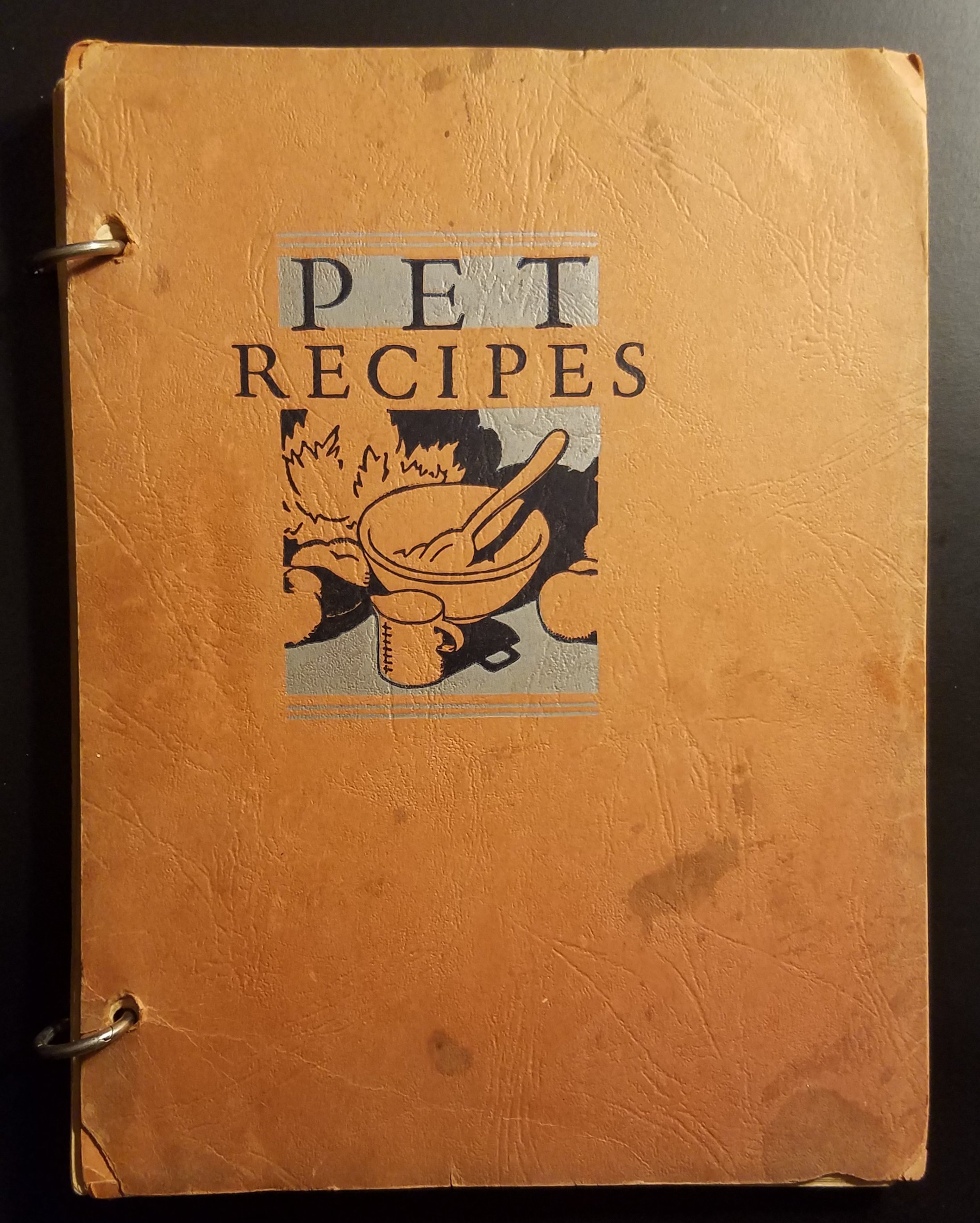
Not for recipes on how to prepare your pet dog or cat. It comes from the PET milk company.
Clearing space to put large format signs and maps piled on top of boxes of cookbooks was a start. I had the project of reducing the number of my cookbooks in mind for a while. It began with a question. How many cookbooks does a home cook need? Not as many as I currently have.
The end result will be a shelving unit in the dining area with the consolidated collection nearer to the kitchen. The goal is to review hundreds of cookbooks one last time, reduce them to as few as 20, and sell the rest at a garage sale, donate them to the library, or give them away. The project forces me to think about what cookbooks mean in my kitchen garden.
According to author Nichole Burke, “The kitchen garden is a small-scale version of the vegetable garden that enables you to experience the magic of growing and enjoying some of your own homegrown herbs, greens, and vegetables, but that gives you the convenience of requiring just a few minutes or hours of your time each week.”
My idea of a kitchen garden is different. I seek to incorporate what goes on in the kitchen more closely with the garden so they become one coherent whole. I began a couple of years ago and each season the two entities are closer to integration. As a result, more of what our household eats comes from the garden.
My garden is larger than what Burke suggests. In addition to patches gleaned for daily meals as she suggests, there are rows designed to grow and preserve vegetables for winter. Examples are peppers, tomatoes, garlic, onions and broccoli. Cookbooks are useful as a way to help determine which vegetables should be grown in larger quantities for preservation and storage.
The Inspired Vegetarian by Louise Pickford is a themed cookbook. The theme is eating vegetarian meals and it is designed to provide examples of a variety of vegetarian dishes for adoption in a home kitchen. It seems unlikely I would follow her recipes exactly, yet when she presents the idea of a vegetable cassoulet, for example, I know what that is and can take it as a starting point to create a version that fits into the world view and produce of my kitchen garden. The recipes may encourage me to grow different vegetables so I can prepare dishes we like.
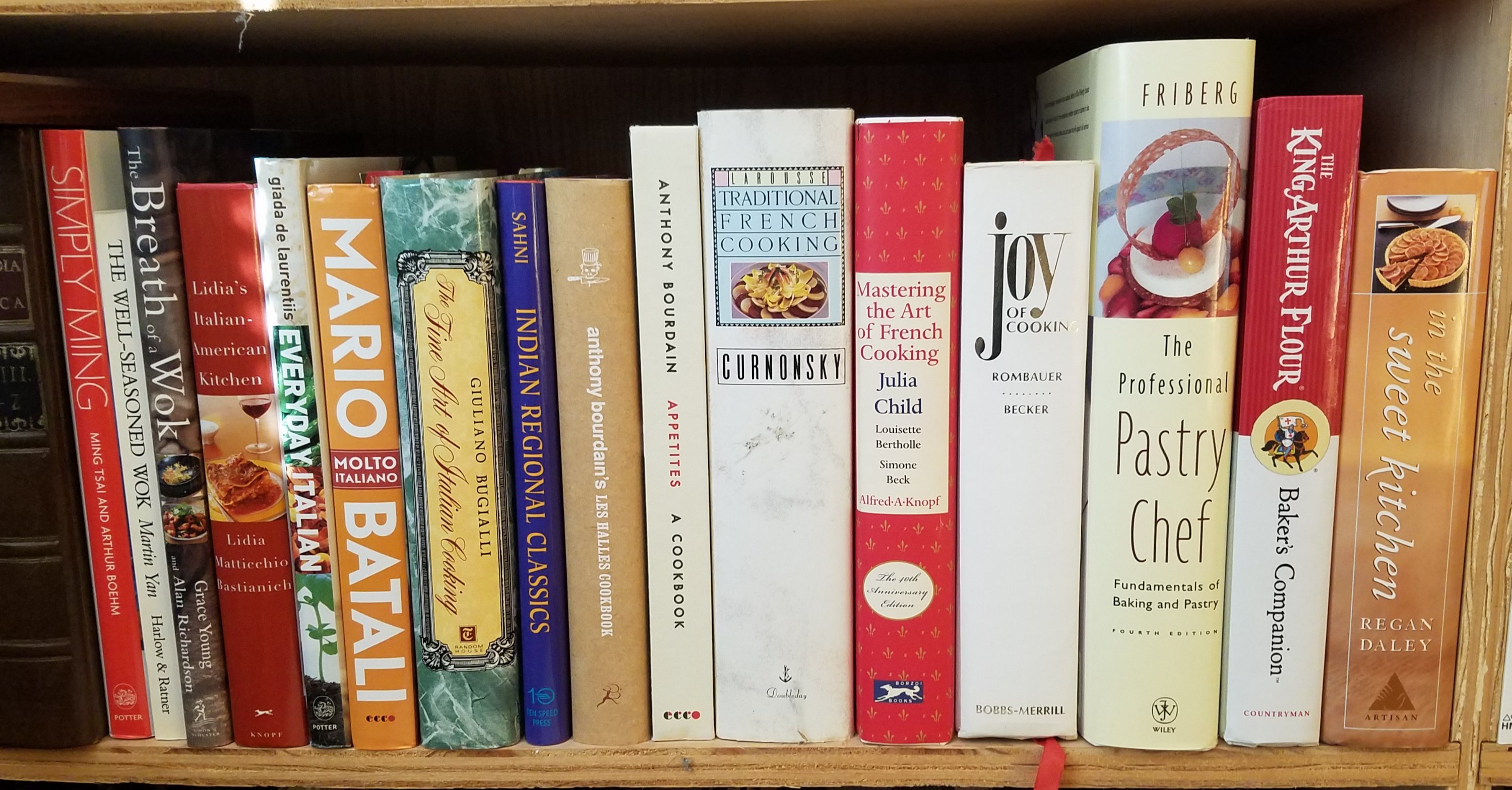
Big decisions are easy. I’ll keep Joy of Cooking, Julia Child and company’s The Art of French Cooking, and Larousse Traditional French Cooking. There will be one or two “American” cookbooks even if there is not really an American cuisine outside fast food. The King Arthur Flour Baker’s Companion is essential, along with one or two other baking references. These alone would be enough for endless meals.
When on long-term work assignments in South Georgia, Pennsylvania, and Texas I spend idle hours watching Food Network. I expect to keep volumes by Anthony Bourdain, Mario Batali, Rick Bayless and Giada Di Laurentiis. Also in the mix will be Jeff Smith (The Frugal Gourmet), Ming Tsai, Martin Yan and José Andrés. Celebrity chef cookbooks have accessible recipes. I expect them to be a third of the final collection.
Another section of retained cookbooks will be those created by a community of which I was a part. My collection includes cookbooks from the hospital where I was born, the church where I was baptized, and other coherent groups to which I belonged as I proceeded through life. I read The Iowa Writers’ Workshop Cookbook edited by Connie Brothers over the weekend. It is an example of why certain communities shouldn’t produce a cookbook. I mean, some of the recipes seemed like outrageous inside jokes. I did enjoy seeking out authors with whom I interacted or saw at events in Iowa City in the cookbook. Most of the workshop mainstays provided recipes a person could actually use.
Another main use of cookbooks is in my writing. I intend to write about a trip I took to New Orleans. I read Lucy Hanley’s book New Orleans: Cookin’ in the Big Easy, which provides simple recipes of classic New Orleans dishes along with a list of local restaurants. The recipes and images evoked memories in a way that will be useful to my writing. While I spent only a few days there in 1981, the cookbook helps me remember. The same holds true for other regional or city-specific cookbooks.
With the rise of internet search engines, one questions whether cookbooks are needed at all. When I’m looking for ways to use radicchio, for example, it is easier to do an internet search than pore through a number of general purpose cookbooks searching for recipes. At the same time, there is something about having a book.
Gold Rush apples at Wilson’s Orchard and Farm Oct. 22, 2022.
On Saturday I made the last trip to the orchard this season. There were lots of Gold Rush on the trees and I picked 32 of them. The refrigerator bin is now full of apples, enough to last into 2023.
There are also a few Honeycrisp and Snow Sweet apples in the bin, yet Gold Rush is the main event for storage. They keep surprisingly well for fresh eating. As long as the orchard continues to operate, I needn’t plant my own trees.
It is noteworthy the fate of orchards isn’t always growing apples and other fruit. When we were married, well before Wilson’s Orchard and Farm was planted, we went to the Sand Road Orchard south of Iowa City. A family of Dutch immigrants operated it and featured Dutch chocolate as an added item for sale. The property was sold for development. It appears Wilson’s Orchard and Farm is sustainable. It is always an open question when development seeks to fill in all the blank spaces on the fringes of the county seat, and farming can be a dicey business.
We live in the present, and this year there are Gold Rush apples.
My spouse has been at her sister’s home for three days now. The main change is the quiet, which I don’t relish. My diet has turned to using more hot peppers along with the contents of the pantry, refrigerator and freezer.
I ground up most of the remaining hot peppers from the garden and froze them in a cupcake pan. The small portions are just right to use in dishes that call for hot peppers. I also froze the remaining fresh parsley in the cupcake pan, covered with water. A couple of these parsley cakes will go well in winter soups. There are two bags of Winterbor kale and with the warmer weather there may be another harvest. I have to use up the sweet bell peppers, yet there were so many of them this year, if a few go bad I’ll tolerate it. I struck the third garden patch yesterday. Four more to go.
Laundry is caught up, even the garage rags. Rain is forecast today. That may enable me to burn the brush pile tomorrow. For now, there is plenty to do before she returns home later this week.






 Journey Home
You must be logged in to post a comment.