A person wouldn’t know it in Big Grove Township yet today has been designated a Global Day of Action Against Nuclear Weapons by the International Campaign to Abolish Nuclear Weapons (ICAN). This is in advance of the upcoming Second Meeting of States Parties to the Treaty on the Prohibition of Nuclear Weapons (TPNW) which convenes tomorrow in New York.
All around the world, people will be taking action to demonstrate to meeting delegations that we expect them to be bold, courageous and use the TPNW to dismantle nuclear deterrence, and make sure the rest of the world is paying attention to this crucial opportunity. “Your action can take whatever shape you can pull off,” ICAN said in a statement.
Absent interested others near me, this post is what I can pull off.
While the TPNW entered into force on Jan. 22, 2021, it has not been ratified by the countries that possess nuclear weapons. The United States has turned a blind eye to TPNW. It does not appear any of the nuclear states will break the silence and ratify the treaty any time soon.
During negotiation of the Nuclear Non-proliferation Treaty (NPT), signed in 1968, it was agreed by the parties nuclear weapons should be eliminated and the parties should work toward that end. If anything, the risk of detonation of nuclear weapons is as great as it has been. The conflicts in Ukraine and the Middle East created risk that one of the players (Russia and Israel particularly) will use nuclear weapons. People forget the devastation in Hiroshima and Nagasaki in 1945 so we may be bound to repeat that error.
While our lives are complex and possess numerous challenges, nuclear abolition should be on our radar. One single activist won’t bring about the change we need. Working together, we might. It is worth the effort.
Ahead of Joe Biden and Xi Jinping’s Nov. 15 meeting at the Asia-Pacific Economic Cooperation conference in San Francisco, the parties pledged to strengthen their cooperation on climate change. The U.S. State Department released a statement detailing areas of agreement. Both presidents pointed to the importance of the upcoming Conference of the Parties (COP 28) that begins Nov. 30, in Dubai, United Arab Emirates.
The luster has gone off the Conference of the Parties, as hundreds of fossil fuel lobbyists participate as delegates to impede progress toward conference goals of eliminating use of fossil fuels. Biden and Jinping’s mentioning COP was important to regenerate interest. Their agreement on climate change was significant, yet hardly noticed in major media.
Members of the Climate Reality Leadership Corps, part of The Climate Reality Project founded by former Vice President Al Gore to address the climate crisis, seeks three outcomes of COP 28.
During a year of record-breaking temperatures and climate disasters, we cannot afford to stay silent. We must ensure that global leaders convening in Dubai hear our demands for an agreement at COP 28 to:
Phase out fossil fuel emissions and stop funding fossil fuel projects.
Increase funding for climate solutions in countries that need it most.
Email from The Climate Reality Project, Nov. 14, 2023.
Fossil fuel interests are fighting any and every advance that leads to a true net-zero economy. My Congresswoman Mariannette Miller-Meeks (R-IA01) has taken the fossil fuel companies’ positions and attended COP 26 and COP 27. In a newsletter earlier this year, she wrote:
Americans have suffered the consequences of reckless and misguided energy policy. From day one of his administration, President Biden has waged an all-out war on American fossil fuel production that has contributed to record inflation and weakened our national security.
Miller-Meeks Weekly Script, April 16, 2023.
Miller-Meeks couldn’t be more wrong. The Washington Post recently called out people like her regarding the so-called war on fossil fuels:
Former vice president Mike Pence framed the issue in one of the presidential debates: “On day one, Joe Biden declared a war on energy, which was no surprise, because when Joe Biden ran for president, he said he was going to end fossil fuels, and they’ve been working overtime to do that ever since.”
It sounds just awful. But I have good news for Republicans: U.S. fossil fuel exploitation is pretty much booming. Here are a few stats from this supposed war’s front lines:
After plummeting early in the pandemic, U.S. crude oil production has been climbing and is now back near record highs. That’s according to data released by the U.S. Energy Information Administration. The agency also projects that oil production will hit new all-time highsnext year.
U.S. natural gas production has also been hovering around record highs.
To date, the Biden administration has approved slightly more permits for oil and gas drilling on public lands than the Trump administration had over the same periods of their respective presidencies, according to Texas A&M professor Eric Lewis. (My Post colleague Harry Stevens has previously covered this in depth.)
If “energy independence” means exporting more than you import, we’ve achieved it in spades. The United States has been exporting more crude oil and petroleum products than it imports for 22 straight months now, far longer than was the case under Trump.
When fossil fuel interests and Republicans who parrot their talking points focus on the so-called war on fossil fuels, it distracts society from pursuing solutions to the climate crisis. There are viable solutions to ridding the world of man-made greenhouse gas emissions caused by burning fossil fuels without compromising our quality of life. They distract us because distraction is a time-tested method of furthering their interests while seeking to avoid blame for causing the the climate crisis.
As society races toward exceeding the 1.5 degree Celsius limit in increasing global temperatures since the pre-industrial era, it seems increasingly evident we will wait until it is too late to take action. While Biden and Xi call our attention to COP 28, it seems doubtful the conference will accomplish what is needed. The United Nations Framework Convention on Climate Change is all we currently have to address the climate crisis as a global society. Individual countries doing so is not enough. We’ll see if delegates get serious this December. I am hopeful they will.
We collaborated on the Thanksgiving Day menu yet I did most of the cooking. I made baked beans, wild rice, steamed broccoli, sweet potato and apple sauce. No specific dessert yet the baked beans served double duty because of how much brown sugar was in them. I made applesauce in the morning from the last of the cooking apples in storage. It was prelude to making apple sauce cake, yet I didn’t get that far.
I used the Social Security Administration life expectancy calculator and found I can expect to live 14 more years based on gender and birth date. One presumes the SSA has more data than most to make this calculation. It doesn’t seem like a lot: 14 more Thanksgivings, 14 more garden harvests, 14 more springs and summers, 14 more winter writing sessions… I don’t look forward to reading all the obituaries yet I will. Hopefully my name won’t be among them until the statistics have been borne out. Fourteen is a finite number. As we all should know, it is 14, plus or minus.
Over time I watched the 1994 film The Shawshank Redemption multiple times. As the character Andy Dufresne said in a letter to his friend Ellis Boyd Redding, “Remember Red, hope is a good thing, maybe the best of things, and no good thing ever dies.” That is, unless one consults with the Social Security Administration. After which we’ll have a pretty good idea when death is near.
The character Dufresne also famously said, “Get busy living, or get busy dying.” It’s good advice, especially as winter approaches and we get on with our lives.
Geese hanging around, waiting to fly south, Nov. 22, 2023.
Stars were bright at 4:45 a.m. despite a neighbor’s holiday lights interfering with the darkened sky. Orion and Ursa Major were easily evident, as were outdoors lights in the yards of distant neighbors. Points of light all jumbled together to create a personal galaxy. So began a day of cooking for us and countless others scattered across the landscape. It is American Thanksgiving and eating well is a main part of the holiday.
Shortly after Threads launched on July 5, 2023, I signed up for an account. I deactivated my Twitter account yesterday after giving Threads a thorough test drive, investigating the consequences of switching, and saying my goodbyes to those left on the decimated platform who still followed me. I’ll be fine. It was time to choose and I could not adapt to the social media platform Twitter became after its acquisition by Elon Musk.
I tried out all the social media groups to which I belong. Everything I don’t use is tucked in a bookmarks folder. Threads will be my main microblogging site. It’s different going from 1,348 followers to 100, yet I’m committed to change and already am getting to know people behind accounts on the new platform. Friends from other platforms are joining us.
This week, Joe Biden, Kamala Harris and others in the administration joined Threads. Secretary of Transportation Pete Buttigieg has been on the platform as long as I have. I suspect these new presences will release a number of people who have been holding back in making a change. News media and corporate accounts may be the last to arrive because they continue to prefer to present breaking news on X. They will come around, I predict, because the eyeballs will increasingly be on Threads.
So, that’s that. I’ll say no more about social media for a while.
Yesterday marked 60 years since the JFK assassination. I have living memory of that day, which means I see my former self in those moments related to the news spreading to Iowa. I am still standing with the crossing guard at Fillmore and Locust Streets when she tells me the news. I am still walking south on Fillmore toward the school. I am still sitting in the darkened classroom waiting for news as to whether the president would live. These memories seem likely to stick with me as long as I am sentient. They say the book Case Closed: Lee Harvey Oswald and the Assassination of JFK by Gerald Posner is the final word on who killed JFK. When I get time and resources to buy a copy, I will. I know how the book turns out.
I’m going outdoors to do some star gazing before heading to the kitchen. The world remains full of wonder and with our engagement, decisions can be made. We pick our battles, hopefully decide well, and move on.
The year has been okay, yet nothing to write home about. In fact, most of the year was spent at home with three months of my spouse being gone to help her sister. Whatever happened mostly happened in Big Grove Township.
Each year, beginning at Thanksgiving, I review my life. In the past I reviewed my most viewed blog posts. There are additional highlights to include this year.
Writing
My most viewed blog post was History of a Wing Nut published Aug. 25, on Blog for Iowa. I wrote, “(Mariannette) Miller-Meeks has become a wing-nut institution. Iowans deserve better.” I reviewed the influence of the fossil fuel industry on her work in the Congress, as well as her six congressional campaigns. It was the third most popular new post on Blog for Iowa this year.
On Journey Home my remembrance of friend since high school Joe Garrity was the most popular post. Joe died March 22 of complicated health issues triggered by COVID-19. It makes no sense this post would get so much traffic, except for the fact his obituary was not widely published. I continue to miss Joe and our many conversations, letters and emails.
The worm turned for me regarding the climate crisis this year. In a Sept. 21 letter to the editor of the Cedar Rapids Gazette, I wrote, “Environmental activism seems unlikely to solve the climate crisis. All the talk about climate change distracts us from the fundamental problem: the effect of unmitigated capitalist growth ravaging the resources and systems of the earth and its atmosphere.” The words “climate change” have become a lightning rod for people who seek to sustain the unsustainable status quo. A single activist can do little unless they team with other, like-minded people. In the meanwhile, Earth is experiencing it’s hottest temperatures on record in 2023.
Health
My almost 72-year-old frame still carries me along. I developed a regimen of exams, tests, and monitoring. If I’m not in perfect health, I feel aware of my deficiencies. I can no longer jog the way I did and now walk 30 minutes daily along the state park trail. The path is similar each day and I have been able to watch the turning of seasons up close.
In our household, my spouse is vegan and I am ovo-lacto vegetarian. We’ve been working through menu planning since she decided to eat vegan during the coronavirus pandemic. We developed a core ten or so dishes which we prepare in rotation. We need more than that. This was an unexpected development, yet there is unique engagement in trying new things while shifting our diet. Much more to come from the kitchen on this next year.
Reading
As of today I finished reading 62 books in 2023.
In fiction, my favorite was Whose Names Are Unknown by Sanora Babb. I also enjoyed The Last Chairlift by John Irving, and American Dirt by Jeanine Cummins.
None of the poetry stood out particularly. I read Plantains and Our Becoming by Melania Louisa Marte. I believe she has a bright future and look forward to her next book. I revisited Adrienne Rich’s Diving into the Wreck. I first read this in graduate school. She’s an important poet, although reading her is a bit like taking medicine.
More than half of what I read was nonfiction. I interviewed Thom Hartmann regarding his new book The Hidden History of American Democracy and published my review here, on Blog for Iowa, and on Bleeding Heartland. I asked if this would be his last in the Hidden History series and he said he didn’t know but is negotiating with his publisher.
Timothy C. Weingard’s Mosquito: A Human History was likely the best nonfiction of the year. Other top nonfiction includes The Farmer’s Lawyer by Sarah Vogel, A Fever in the Heartland by Timothy Egan, Democracy Awakening by Heather Cox Richardson, and White Trash: The 400-Year Untold History of Class in America by Nancy Isenberg. Each of the nonfiction books I read had redeeming qualities. That’s likely because of how I selected them.
Three other books stood out yet defy category. I re-read Martha Paulos’ Doggerel. Martha and I were friends at university and we had constant conversations about art, literature, and living a creative life. Someone had given a mediocre review of the book on Goodreads and I felt I had to balance it with a positive one. Marilynne Robinson’s When I was a Child I Read Books was exceptional. I’m not a fan of some of her work, but this one… holy cow! The other was William Styron’s Darkness Visible: A Memoir of Madness. I had no idea of his problems when I heard him read in the English Philosophy Building at the university. We often live for such reading experiences as these three books represent.
Kitchen Garden
For the first year, deer got into the tomato patch. I changed the fencing to allow more space between rows and it was a disaster. Deer were able to land between rows and eat the tender leaves of recently planted tomatoes. Once inside the fencing they couldn’t figure out how to get out and bent the stakes over to make their exit. I’m going back to the old way in 2024.
Bell peppers were poor quality and cucumbers, zucchini, and cruciferous vegetables thrived. There was a bumper crop of hot peppers and fennel. There was a problem with the garlic mulch which cut production by about 20 percent. There was still enough garlic to last the full year.
We had all the pears we could eat. All four varieties of apple trees produced something and two were abundant. I put up all the apple cider vinegar, apple butter and apple sauce we would need for a couple of years. We filled the produce drawer of the refrigerator to preserve fresh apples, and there remains a bushel with which I need to do something soon. I didn’t hardly touch the production of Earliblaze and Red Delicious apples. The deer made out with nightly visits for an apple feast.
The portable greenhouse didn’t make it through the season and will have to be replaced in the spring. Row cover was great for herbs and lettuce, although the fabric saw its last crop in 2023 and will be replaced. The freezer and canning jars were filled early in the season with leafy green vegetables and vegetable broth. I figure I have 14 more seasons in the garden before age catches up with me, at least according to the Social Security Administration.
Overall the garden was a success, as was the use of produce in the kitchen. I put 100 cloves of garlic in the ground in October for next July’s harvest.
Photography
My Instagram account is a record of the best photos I’ve taken. The subjects are the kitchen garden, hiking, and sunrises, with a bit of travel and indoors shots thrown in. The quality of photos produced by the camera in my mobile device is remarkable. What once was a throw away snapshot process is now something more.
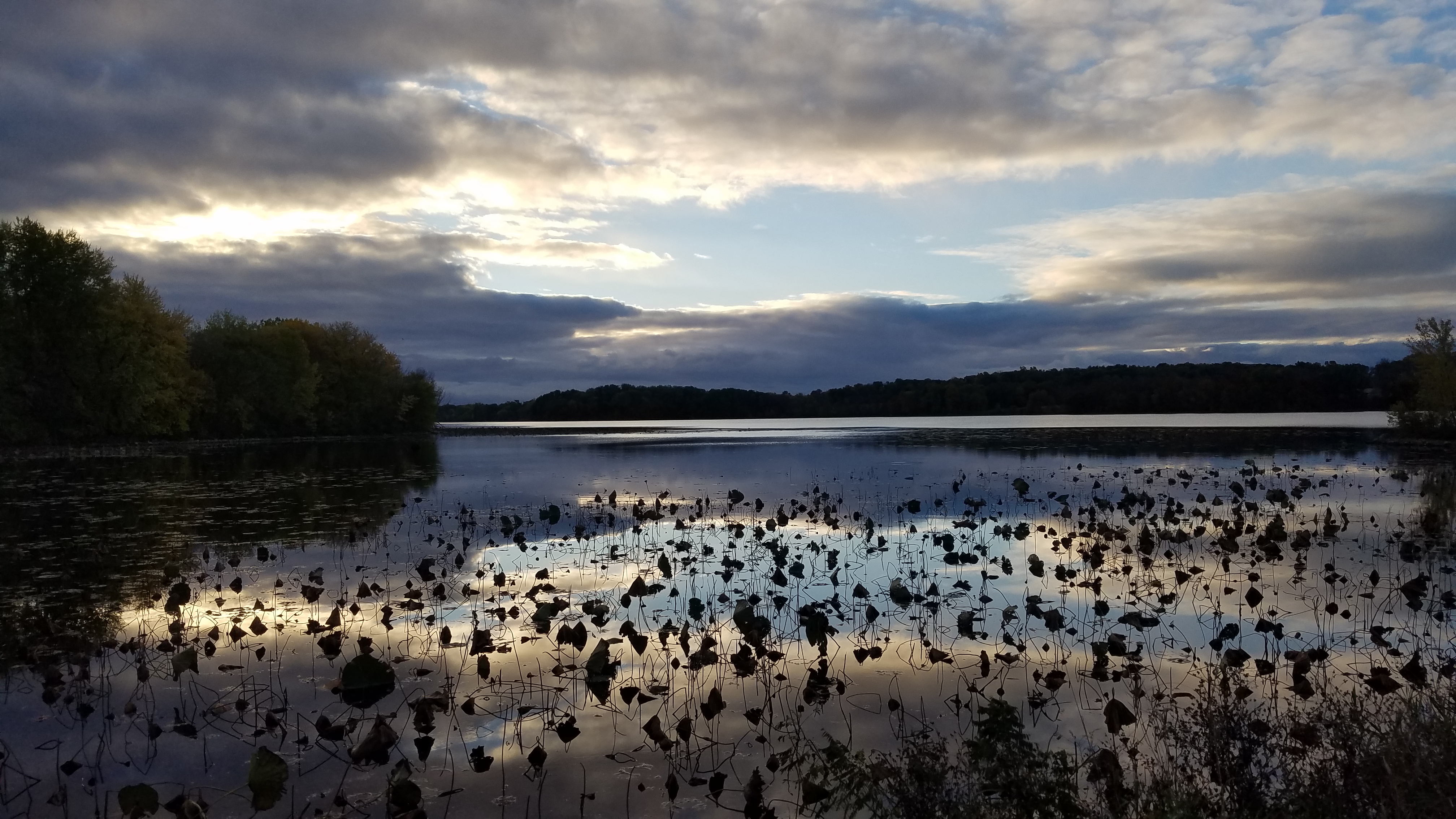
Sunrise on Lake Macbride October 2023.
Financial
Living on our pensions was a struggle so we had to borrow money. Maybe it’s because the mechanical systems in our home were mostly the original ones installed in 1993 and needed replacing this year. We are also living with a car loan for a couple more years. There are some health care bills but most of those expenses have been covered by insurance. Compared to most Americans, we are doing okay. There wasn’t as much discretionary spending in 2023. There will be less in 2024.
Compared to previous years, this one wasn’t stellar. All the same, it is important to give thanks for our many blessings this time of year.
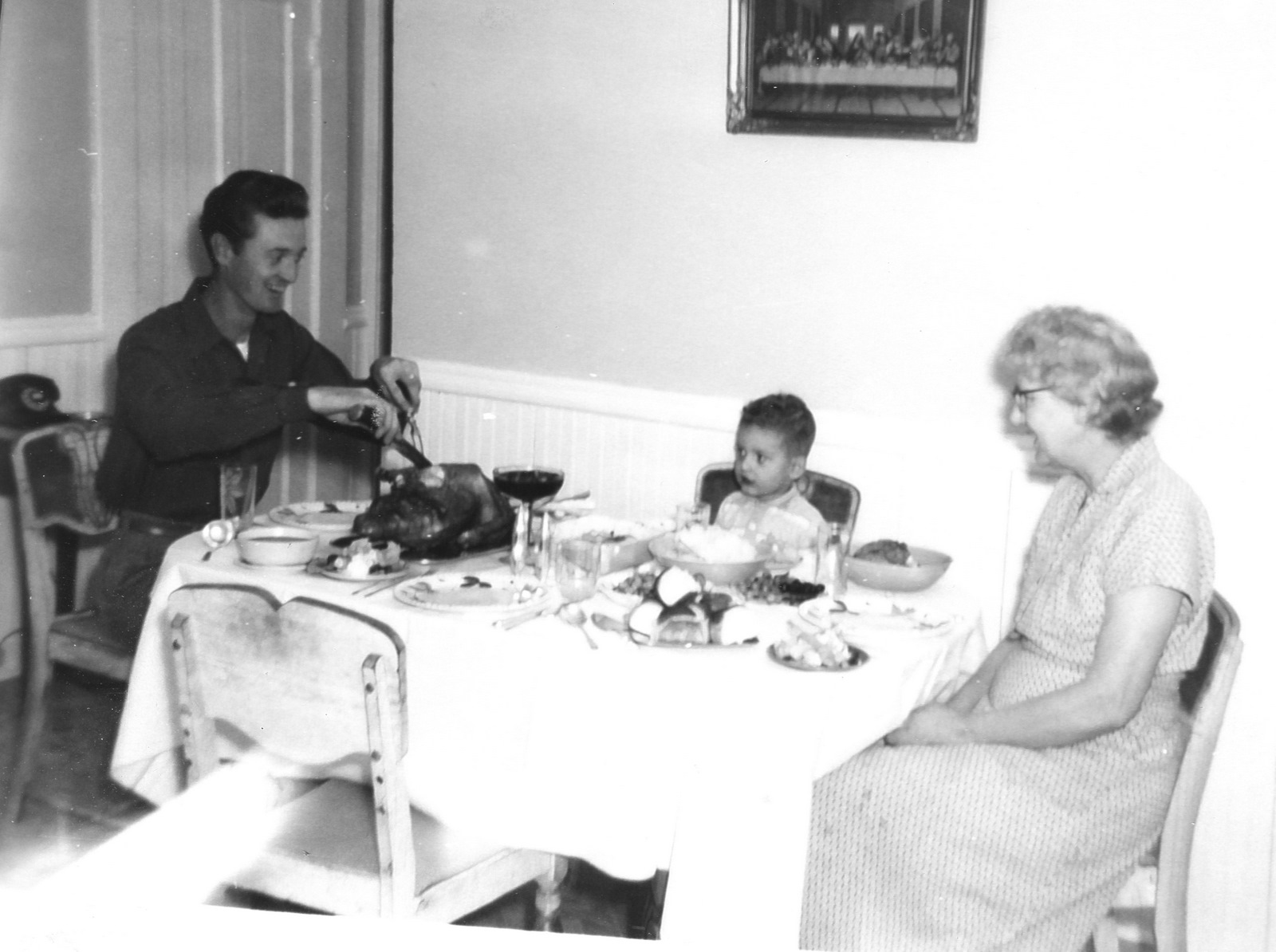
The author’s first Thanksgiving in 1952 with Father and my maternal grandmother. Photo by Mother.
It would be great to write just one more post about Thanksgiving and be done with the holiday. Aside from the fact certain relatives get time off because of it, Turkey Day serves no useful purpose.
Politicians make hay over the cost of Thanksgiving dinner. The American Farm Bureau Association reported a 4.5 percent drop in price for the meal this year compared to last. The average cost of a dinner for ten people was $61.17, they said, although the longer term trend is an increase since 2019. Democrats focus on the price decrease, Republicans nit pick the data and find incremental increases, regardless of AFBA reporting. For example, the price of sauces and gravies is up 7.5 percent, reported my congresswoman. I think the purpose of the holiday is to be thankful for what we have and make sure everyone eats this day regardless of means. That gets lost in our politics.
There is social pressure to develop a narrative in response to the question, “How was your Thanksgiving?” Times I responded with “we didn’t do anything special,” killed the conversation. Years we prepared a special meal were at home, my spouse and myself. Because our child works in the entertainment industry, they usually had to work Thanksgiving. Who needs such social pressure? I’d rather discuss more important matters.
Thanksgiving is a boon to retailers and if one ventures out during the days before the holiday, a well-curated shopping list combined with excellent knowledge of store layouts is essential to maintaining good mental health. I went out on Monday and the stores were already crowded. Our specialty items for the big meal — sweet potatoes and wild rice — were already in the pantry so I stocked up with a 20-pound bag of organic rice, salt for the water softener, items for the freezer, and plant-based beverages. We were almost out of some items, otherwise I would have avoided shopping completely.
While growing up, Thanksgiving was a big deal and a living celebration. After Father died in 1969, the holidays weren’t as much fun any more. Eventually my side of the family just stopped celebrating Thanksgiving. In retrospect, my maternal grandmother was the person who held this tradition together. She died in 1991.
I no longer feel particularly alone on Thanksgiving, even if my spouse is away from home. With telephones and video conferencing, they day is highlighted by such contact and the opportunity to get caught up with each other. Anymore, contact doesn’t always happen on that Thursday, but during the days before and after.
Below is a Thanksgiving dinner we prepared for the two of us in 2013. We had leftovers for a week. We no longer prepare such massive feasts. Rice and beans makes a complete meal. Throw in a sweet potato and a relish tray and we are good to go.
Thanksgiving dinner in 2013.
I wish readers a happy holiday season. Hopefully we each have plenty for which to be thankful. Thanks for reading.
I’m cautious when I write the first Goodreads review of a book that has been published for more than 20 years. That I read The Wide-Brimmed Hat at all is attributable to finding a first edition copy in a thrift shop or used book sale, and that it was written in and largely about Iowa and Midwestern values. I knew Susan Kuehn Boyd by name yet had no prior knowledge of her as an author before seeing this book.
The most interesting part is excerpts from Boyd’s May 1970 diary during the anti-war protests at the University of Iowa where her spouse Willard (a.k.a. Sandy) was president. I was a senior in high school that year and what I knew about that period was there were protests and the university closed early for the academic year because of them. Protesters occupied the president’s office in May 1970.
In her diary, Boyd shows a privileged life in the university community. During the protests, she and her family moved out of their home for security reasons, attended group luncheons as usual, and ate gourmet food, all well removed from main protest actions. She mentions both her spouse and D.C. Spriesterbach, who both have written about May 1970 in their books. Susan Boyd’s narrative adds another layer of perspective and I’m thankful to have found it.
The stories, play, and poetry that comprise the main part of the book are better suited to magazines like Mademoiselle which published some of her work. The book was readable and if one enjoys the kind of stories anthologized in short story collections, there is something here for you.
Elon Musk’s purchase of Twitter led me to a dismal place regarding social media. Whatever I thought I had before him no longer exists. The whole idea of social media seems bankrupt. There is some good in that, accompanied by a lot of bad.
A couple of weeks ago I logged into every social media account I have and tried posting on them at least daily to see what best served my needs. The list is as follows:
Facebook
Instagram
Threads
X
Post
Blue Sky
Spoutible
LinkedIn
It is time to make some decisions, and here they are.
The trio of Meta applications is going to stay. I use Instagram to post an almost daily stream of photos about my life. Most of it is gardening and trail walking, with a few other things added as serendipity provides. These are all cross-posted on Facebook and are my main contribution there. A lot of people comment to me they like my photographs, both on the platforms and in real life. I publicize an occasional event on Facebook or post a link to a blog post I wrote. I also created Facebook groups to support my high school class and the home owners association where we live. Facebook and Instagram are mostly outlets for my creativity, not sources of news outside the two groups mentioned.
Threads is new with new opportunities. I plan to stick it out there until the inevitable advertising begins and things shake out as to whether or not I will develop the same kinds of relationships I had on X before Musk. In general, there are a lot of people posting as it relates to their jobs, and I fell into a place where creatives hang out and for now am enjoying the vibe of sharing less job-related stuff. The app is clean and easy to use. Because of habits developed at X, I don’t hesitate to block people/bots/porn sites as needed. I am open to staying or leaving, whichever is best for my mental health.
LinkedIn is the odd duck. I discover a lot of useful information there and connect with people I’ve known for decades. I keep saying to myself now that I’m retired and printed my LinkedIn resume there’s no further use for it. Right after that someone from a past life surfaces wanting to get in touch. Will let LinkedIn ride for now.
I haven’t been able to get any meaningful traction on Spoutible, Blue Sky, and Post. I won’t close my accounts, yet likely won’t use them much either.
I need to pull the plug on X. What keeps my account active is relationships formed over the 15 years I have been on the platform. The trouble is Musk’s politics and attitudes as manifest on the site. He is a bad egg and poisons the entire experience. Who needs that?
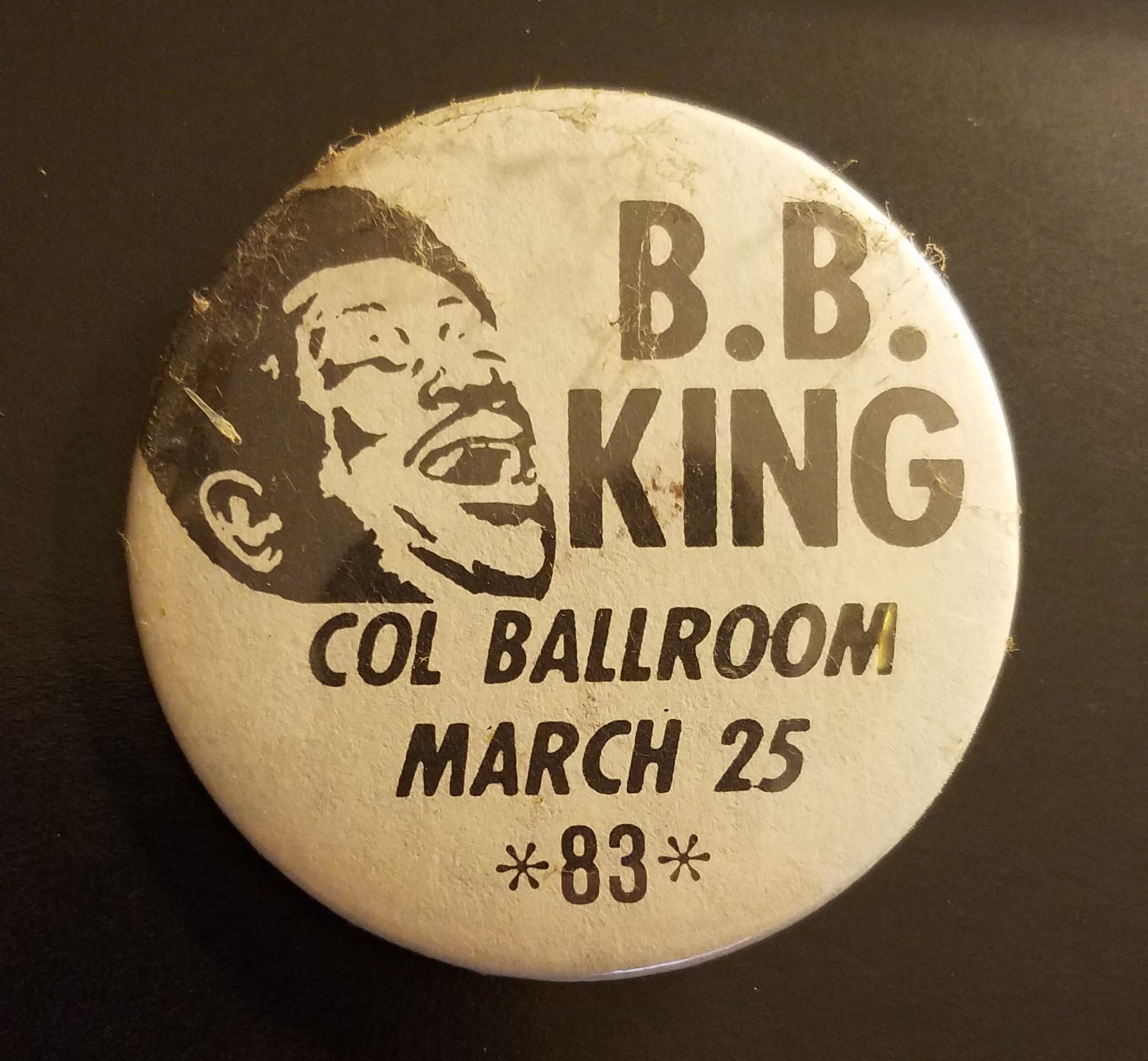
The one time I heard B.B. King sing Thrill is Gone live was at the Col Ballroom in my hometown of Davenport. My sister and I went together and a grade school friend from our neighborhood was the opening act. It was a great evening. I don’t know how he did it — maybe that’s part of his genius — but King put feeling into every song he sung. Here’s the money verse. May you have happy landings on social media.
You know, I'm free, free now, baby
I'm free from your spell
Oh, free, free, free now, baby
I'm free from your spell
And now that it's all over
All that I can do is wish you well
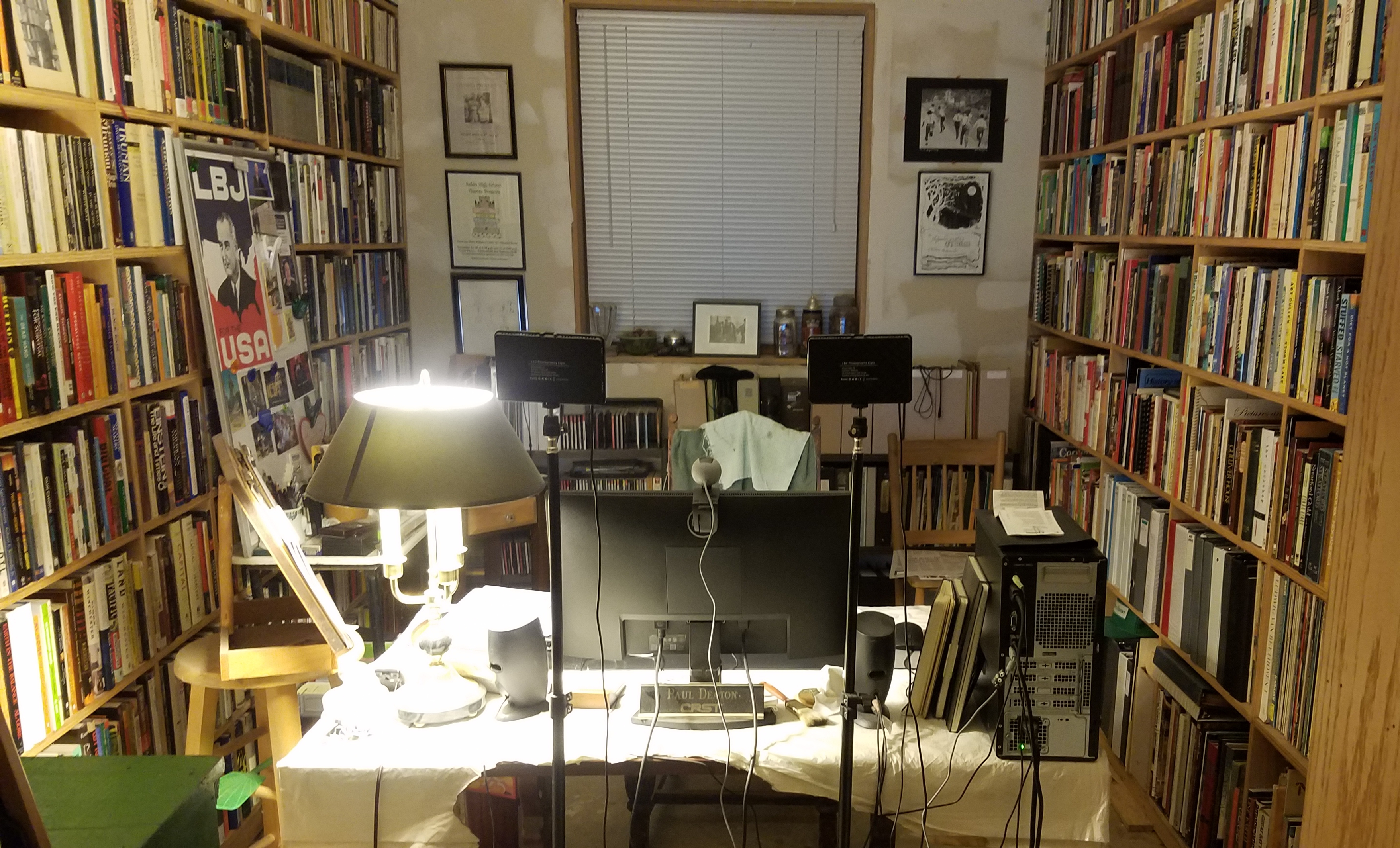
A library is curated, which means it inherently contains the biases of the librarian or curator. How will books be organized? When space is at a premium, which go to a thrift shop and which go into a box for potential future use? Which books should be acquired and which checked out of a library? I have a lot of books — a few thousand in my writing room alone. My collection of books, papers and other media is idiosyncratic. That’s as it should be. The meaning of the collection goes little further than the door through which I took this photo. My library mostly serves my writing.
As winter approaches, the pace of my reading increased. I’m reading about 50 pages a day and more if the text is engaging. Since the coronavirus pandemic began I read an average of 58 books each year. A recent Gallup poll found Americans started 12.6 books per year and finished five of them on average. This chart from the poll tells the story that reading books in America is in decline:
When I retired during the pandemic I adopted a firm rule that no matter what, I’d read at least 25 pages per day. This is harder when garden work is in full swing, and easier when I’m more home bound in winter. What I didn’t plan is how to curate the books and papers accumulated since the 1950s. Curation includes acquisition and disposal, two skills I haven’t practiced with consistency in decades.
I used to buy books at thrift shops and yard sales, but I haven’t been to one of those in years. I do buy new books, mostly based on recommendations from people I know on social media or related to my writing projects. The whole thing is hodge-podge and it shows.
Work on my autobiography energized the curating process. In addition to telling my story, writing includes going through possessions the way a Forty-Niner panned for gold in the California Gold Rush. The yield has been more than a few good nuggets.
In addition to preparing a bound book, I hope to reduce possessions by 75-90 percent. You can’t take it with you and our millennial child may never be able to afford a house. Nor would I want them to accept and store all my stuff. When they visit, we discuss what is of interest and what is not. It is a recurring thing we do that I enjoy.
Who knows when I’ll need to refer to a 1920s book titled Rural Sociology? I want to be able to find it when I do. Will I ever need to refer to my facsimile of the 1771 edition of the Encyclopaedia Britannica? With Google I likely won’t need it to gather information, yet there are reasons to keep it… idiosyncratic ones. Should I keep my copy of Charles and Mary Beard’s The Rise of American Civilization, purchased at the local library used book sale to which it was donated by the estate of Alexander Kern? Kern was one of the first American Studies professors in the program in which I matriculated. His more important papers reside in the University of Iowa Special Collections. Don’t get me started on the problems with the Beards’ book. I feel I should keep it just for those issues.
Using the verb to curate is not likely the intended use for what I do with my collection of stuff. Cataloguing the books is out of the question. Like most people, I seek truth and meaning in my life. Part of that is dealing with too many books, papers and media by making something of them the way my forebears mined coal. I want a work product both recognized and useful to others.
Based on the numbers in the Gallup Poll, I’m different from most Americans when it comes to reading and collecting books. I’m okay with being different.
It is totally shocking that I’ve been procrastinating getting back to work on my memoir. It’s not like there is anything better to do.
Today I started with a small piece of editing. The task has been languishing on my to-do list and now it’s done. I decided to work on Part II, which is my life after university and military service, beginning the summer of 1981.
After graduate school, I took a trip, found a job, and met my future spouse. I wanted to stay in Iowa and Johnson County is an oasis in a cultural desert of corn, soybeans, hay, oats, hogs, cattle, and sheep which was and remains Iowa. I had no interest in returning to my home town of Davenport. There was really no other place to live in Iowa, I reckoned. The challenge today is memory and artifacts from the second part of my life are too numerous to mention them all in a book. I don’t relish going through everything to cull items for the narrative. Hence the procrastination.
I worked as an admissions clerk at the University of Iowa Dental Clinic after graduate school. We saw patients from all around Iowa — wealthy patients with private insurance, indigents with limited means, and everyone in between. Anyone who came to my desk was accepted for treatment. The exposure to people from diverse backgrounds was inspiring. In 1981 I didn’t worry about much beyond getting to work on time, learning what I could about people, and doing my best.
Outside my admissions work I put hours and hours into researching and writing fiction. I developed a couple of frameworks, read lots of books, and viewed countless movies. Somehow I failed to realize that writing means producing a certain number of words on a regular basis. I know that now and thus far produced about 127,000 words of an autobiography. All the same, I’ve been avoiding the big task of culling things into a viable narrative. I feel there are one, maybe two chances to go through everything while I’m alive. I want to gain what insights I can and get the story right.
I wrote a task for tomorrow: read the next 100 pages of the draft and take notes. This will lead to updating the outline and help identify where the narrative devolves into a series of snippets from journals and cut and paste paragraphs. The best way to get going is take one step each day and make sure it gets done. I don’t know any other way to get started, and time’s a wasting. This is what I mean by it’s time to get to work.







 Journey Home

You must be logged in to post a comment.