Categories
Living in Society

The GDP and Me

Coffee Talk.

I searched “How is the GDP doing right now?” The answer returned from the internet was “U.S. GDP or Gross Domestic Product is the total value of goods produced and services provided in the U.S. It is at a current level of 27.94T, up from 27.61T last quarter and up from 26.41T one year ago. This is a change of 1.19% from last quarter and 5.80% from one year ago.” I’m not sure what this means to an ordinary guy like me.

I’m most interested in our family income, our consumption of goods and services, and the quality of life we produce for our family and in roles we assume among the rest of society. The group French President Nicholas Sarkozy put together at the time of the 2008 financial crisis thought like I do. Such items should be part of how we measure performance of the broad economy. That GDP doesn’t is part of the problem with using GDP. The committee enumerated such concerns in their recommendations and pointed out obstacles to accurately collecting this data and conveying it in a generic report. It’s been more than ten years and I don’t know if anything came of it.

My life sometimes seems like it is on generic autopilot, continuously moving from one task to the next, with little emotion and a hope to make it successfully through each day, week and month. I made it so far. There has to be more in life.

Because we live on a fixed income, tasks I undertake are devoid of financial concerns. They are weighted toward what has to be done and what I want to do. I know which activities are too expensive and which must be delayed until they will fit in the budget. This knowledge creates a quality of life.

For example, after replacing some major appliances (stove, washer, dryer and furnace) our electricity expense reduced by 20 percent year over year. Replacing decades old appliances was something we would not have done except for the fact they couldn’t be cost-effectively repaired. In the case of the furnace, replacement parts were simply not available. We had to replace them. Money saved on electricity will be assigned other uses. It will be a non-item in the bigger picture. Our quality of life is better for having new appliances.

Our health care is in turmoil right now because the University of Iowa bought Mercy Hospital. The practitioner I saw in town already jumped ship. Staff at the clinic seemed uncertain what would be next and reported some people were keeping options open on a month-to-month basis until a transition plan was known. This tumult is part of the story of our financial condition as it relates to health care.

The rest of the health care story is that since getting on Medicare, I’ve had very little to co pay. If it was $10 over the years, that would be a high estimate. My insurance comes from Medicare, which deducts the premium from my Social Security payment, combined with a supplemental health insurance plan and a Medicare Part D prescription drug plan. My experience is different from my cohort who belong to Medicare Advantage programs. It is different from people who are on Medicaid or on private health insurance. The country needs to convert to Medicare for All and do away with private insurance completely. How differently people solve health care needs creates a challenge when it comes to measurements like the GDP.

Household maintenance and health care are two measurements of our financial and personal condition. There are others like our health, who does household tasks like simple repairs, grocery shopping, cooking, cleaning, laundry, and care giving. We also measure net worth, monitor loans, and prioritize major repairs around the property. We keep a balance sheet. When it comes down to dust, I feel like we are doing alright, yet have no real idea whether we are.

I am glad the GDP is rising… except for the way the environmental costs of exploitative industries are omitted… except for the way the numbers favor large business and government interests. Production looks good this quarter. How will it look to our children ten or twenty years from now?

I have a sketchy relationship with GDP. The more I learn, the less I like it. I need to develop my own narrative of how things are going.
Categories
Living in Society

A Day Near the Lake

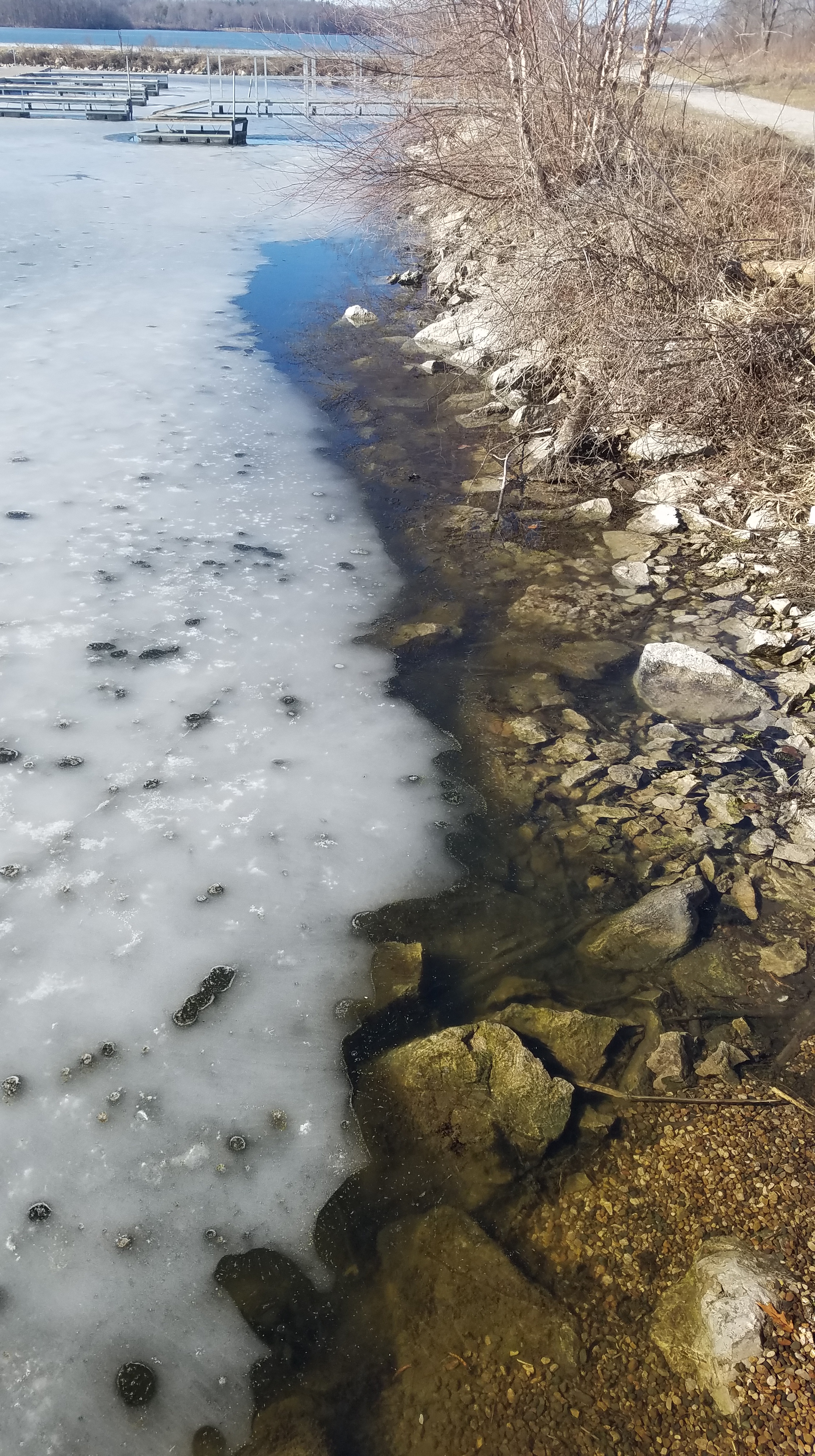
Lake shore during the big thaw, Feb. 9, 2024.

It is good to begin walking the lake shore trail now that most snow melted. Getting outdoors and breathing fresh air is a boon to our existence. Not that many in modern American society care much about that.

How do we measure happiness? Certainly, the GDP (Gross Domestic Product) doesn’t adequately factor it in. Neither does the CPI (Consumer Price Index). Maybe these indices should consider human welfare instead of production numbers and the price of things. There are ways to do that.

Not holding my breath.

As far as being a human, living in the United States, I’m doing fine. We have adequate retirement pensions, plenty to eat, basic necessities, and a positive net worth when the value of the house is added. We get along better than billions of other humans do. But am I happy? I don’t know, which by default is a no.

The next time I walk on the lake shore trail I’ll have to give the matter of personal happiness some thought. Not too much thought, though. That would be just another job.

Categories
Living in Society

My Pandemic Story — Part 1

COVID-19 home test and home made facial mask.

When I was on the county board of health we updated our pandemic response plan multiple times. It was all in a day’s work, although most revision work was done by staff. The board was expected to agree. I read the document and it looked okay to me. That was ten years before the coronavirus pandemic entered society. At least the public health department had a plan.

Before too much time escapes, I want to write my story of what happened during the pandemic. A basic framing of the pandemic is as follows:

  • 3/11/2020 WHO declares COVID a pandemic.
  • 2/15/2022 Pandemic normalized by Iowa Governor Kim Reynolds.
  • 9/18/2022 “The pandemic is over,” Joe Biden said.
  • 5/11/2023 Federal COVID-19 public health emergency declarations ended.

COVID lingers in society. People continue to get the virus and die from it today. There are tens of thousands of COVID-19 admissions to hospitals each week. The coronavirus remains with us and it looks like it will be with us for a long, long time.

Soon after the WHO declared COVID-19 a pandemic, on March 13, 2020, I got together with a grade school friend in the county seat. We had lunch in an almost deserted restaurant, then ended our day together at a bar in Tiffin. Patrons crowded around the bar while my friend and I took a table at some distance from them. There were many more empty seats than people that afternoon. We had little idea what the coronavirus would mean to our daily lives.

By March 18, the coronavirus was spreading throughout the county. News media reported most deaths were among people over age 60. I was in reasonably good health but I didn’t want to take chances at my retail job where I was exposed to and had contracted all sorts of viruses. They offered an unpaid leave for the duration of the pandemic. There was no argument at home when I decided to take it. They optimistically gave me a month, by the end of which we expected the public health emergency to be over. I then decided we were making it okay on our pensions and retired on April 28, 2020.

During the time since March 2020, I wrote 307 posts tagged coronavirus. I also kept a journal in which the coronavirus was a constant presence. Thus far we avoided contracting COVID-19. I wish I could say the same about everyone I know but can’t. Both friends and neighbors died of COVID-19.

I want to write at least a few thousand words about the pandemic for my autobiography. The main changes brought by the early pandemic were concerns about having enough food, maintaining isolation at home, leaving paid work, and figuring out how to best cope with the virus. I will spend some time reviewing the impact of social media and video conferencing technology. I became familiar with Zoom, Google Meet and Discord as a way to participate in meetings remotely. Video conferencing had a long-term effect on how we live.

As far as today’s pandemic goes, we are still coping with information about the spread of new virus strains and surges in case counts. I want to stay current on COVID-19 vaccinations. If I hear there is a surge in case counts, I’m more likely to wear a facial mask when grocery shopping or in an indoors public space.

I have homework to do before finishing this story. There will be a Part 2, and as many parts as needed to tell the story. This post is a way to get started.

Categories
Writing

Not a Painter

Self portrait.

When I review my 50 years of writing I find recurring stories. For example, the one I tell about Father’s political organizing during the John F. Kennedy campaign was repeated at least a dozen times. As I write my autobiography is seems better to distill those versions into a single narrative, one for the record, one which becomes the story. When I’m gone, who will have time or make it for all those versions? What are those previous efforts? They record a narrative that is part of me the way an artist makes sketches in a notebook.

Most of my writing is unpaid. I don’t seek financial return for investment in narratives. Writing helps me understand a complex world and my role in it. It provides a way of seeing the world outside living memory. When I pass, my living memory goes with me, except for the renderings I make as artifacts. Even then, only the writing would remain. I am not a famous person so the narrative may well end with me.

Writing this blog, journaling, and posting on social media are all rough drafts. Some are better than others. None of them is an autobiography the way my actual draft autobiography is. It is important to keep writing and re-writing our history in hope of getting a version that seems right. In the end, I’m not sure that is possible. In the end, the version will be final, like it or not.

Creative endeavor is important in every life. I systematically explored various creative outlets outside writing: playing music, drawing, painting, ceramics, photography, cooking, gardening, and others. To support these endeavors, I studied the world through travel, visiting museums, visiting cities, formal education, living in a foreign country, working a career that involved meeting thousands of people, and reading more than most people. Creative endeavor means different things, yet for me it was always being an artist, at least in part.

It seems important not to muddle things. While I painted a bit, I am not a painter. I made ceramic pots, yet I am not a potter. I devoted long hours to playing the guitar, and am not a musician. I am a writer. Knowing that, the next step is being the best writer I can be. I discovered it takes a few rough drafts.

Categories
Writing

Nuclear Disarmament — Get a Grip

Trinity Marker near Bingham, N.M.

There is not much traction in Iowa for nuclear disarmament causes. Iowans are occupied with a state government taking public money away from public school systems and giving it to private ones. In several important ways Iowa is becoming a paternalistic, uneducated, and cruel place to live and that occupies a lot of our bandwidth. All the same, Iowans know the risk posed by nuclear weapons. If used, they could disrupt society all over the globe. Few, if any, people want that.

“Presidential leadership may be the most important factor that determines whether the risk of nuclear arms racing, proliferation, and war will rise or fall in the years ahead,” Daryl G. Kimball, Executive Director of the Arms Control Association wrote. Most Iowans are aware of the existential threat posed by nuclear weapons. However, they don’t vote for a president based on nuclear weapons policy positions. In fact, Republicans no longer write a national platform, so who knows what their policies are? Elections today have become more tribal in nature and much less issue oriented.

A lot is at stake regarding nuclear weapons proliferation during the 2024 election. As the primary season began in Iowa, the expected nominees for president are Joe Biden and Donald Trump. We have a good idea how they will address nuclear weapons related issues based on their past behavior. Biden would follow time-tested methods of controlling nuclear weapons at home and abroad: through negotiations, treaties and agreements with nuclear armed states and with those like Iran and North Korea that develop nuclear weapons capabilities. Trump is belligerent and it’s hard to know what he would do. The uncertainty about his potential actions if elected president is itself a nuclear risk. A crucial factor in whether one of today’s nuclear challenges erupts into a full-scale crisis, unravels the nonproliferation system, or worse will be the outcome of the U.S. presidential election.

“Russian President Vladimir Putin’s full-scale attack on Ukraine and threats of nuclear use have raised the specter of nuclear conflict,” Kimball said. “To his credit, Biden has not issued nuclear counter threats and has backed Ukraine in its struggle to repel Russia’s invasion.”

Well before Putin’s nuclear rhetoric regarding Ukraine, Trump engaged in an exchange of taunts with North Korean leader Kim Jong Un in 2017. In response, North Korea pursued its own nuclear weapons program, creating more risk of a nuclear detonation.

Trump hasn’t seen a long-standing international agreement he likes. The New Strategic Arms Reduction Treaty expires in 2026. Trump didn’t agree to an extension in 2021 when he was in office. Biden extended it by five years just under the wire. If elected, Trump seems unlikely to sign a new agreement with Russia. Biden, on the other hand, proposed new talks with Russia on a post-2026 nuclear arms control framework.The war in Ukraine seems likely to delay progress on such talks.

In November, senior Chinese and U.S. officials held the first arms control talks in years. Progress seems possible with Biden. Trump? Not so much.

Iranian leaders continue to increase capabilities to produce weapons-grade uranium in response to Trump’s 2018 decision to withdraw unilaterally from the 2015 Joint Comprehensive Plan of Action. He proposed imposing tougher U.S. sanctions to pressure Iran into negotiating a new deal. They now are threatening to pull out of the NPT if the United States or other UN Security Council members snap back international sanctions against Iran, according to Kimball.

The U.S. has not ratified the Comprehensive Nuclear Test Ban Treaty. The Trump administration did not help when in 2018 it declared the U.S. did not intend to ratify the treaty, and in 2020 when senior Trump officials discussed resuming explosive testing to intimidate China and Russia. Biden, on the other hand, has reaffirmed U.S. support for the treaty; and his team proposed technical talks on confidence-building arrangements at the former Chinese, Russian, and U.S. test sites.

How do nuclear disarmament activists get a grip on the need to disarm, both in the U.S. and abroad? Article VI of the Nuclear Non-proliferation Treaty already called for elimination of nuclear weapons. The question is one of political will. On that, we look to the November elections to see if the country will have any.

~ This article was first published in the February 2024 edition of The Prairie Progressive.

Categories
Living in Society

Political Action in 2024

Photo by Element5 Digital on Pexels.com

There are two parts to turning the country around and both run through the ballot box.

The first is voting: making sure we take care of ourselves by checking our registration and then voting in person, either early or on election day. Encourage everyone we know to do likewise.

The second is changing the public narrative about life in Iowa and in the United States. We should not accept narratives being fed to us by major media outlets, churches, interest groups backed by wealthy people, and political parties. Instead, we must develop new narratives that properly reflect how we live despite our differences. I predict this will change how we vote.

If we can do those things, there is a chance to make society a better place to live. I believe this is possible in 2024.

In Iowa, the political strategies and tactics Democrats used during the 2006-2008 election cycles have become obsolete. Not because talking to people lost importance to winning votes, but because we, as a society, have grown ever more suspicious of people we don’t know. Have to ask, what happened to Democrats after Obama won his first presidential election? We may feel we have to ask, but that’s the wrong question. What was an ability to win elections in 2006 and 2008, was an all in, once or nothing endeavor whose usefulness waned by 2010 when Republicans began re-taking control of state government.

I door knocked for Democrats during the 2022 election cycle and can attest the game changed since 2008. In the Johnson County part of House District 91, Democratic voter registrations outnumbered Republican and Democrats still couldn’t win that part of the district. At the doors, I heard people have complicated lives where voting was not among the highest priorities. I did the best I could, yet my efforts and those of fellow Democratic canvassers couldn’t get the job done. It wasn’t from a lack of effort.

How do we change the narrative about how we live? There are no easy answers. Recognizing how important this is to the process of taking back our government is a necessary first step. I’ll make sure my personal network votes in November. Every other political energy I expend will be devoted to changing the narrative. I believe it can make a difference.

Categories
Sustainability

Why Eat Less Meat?

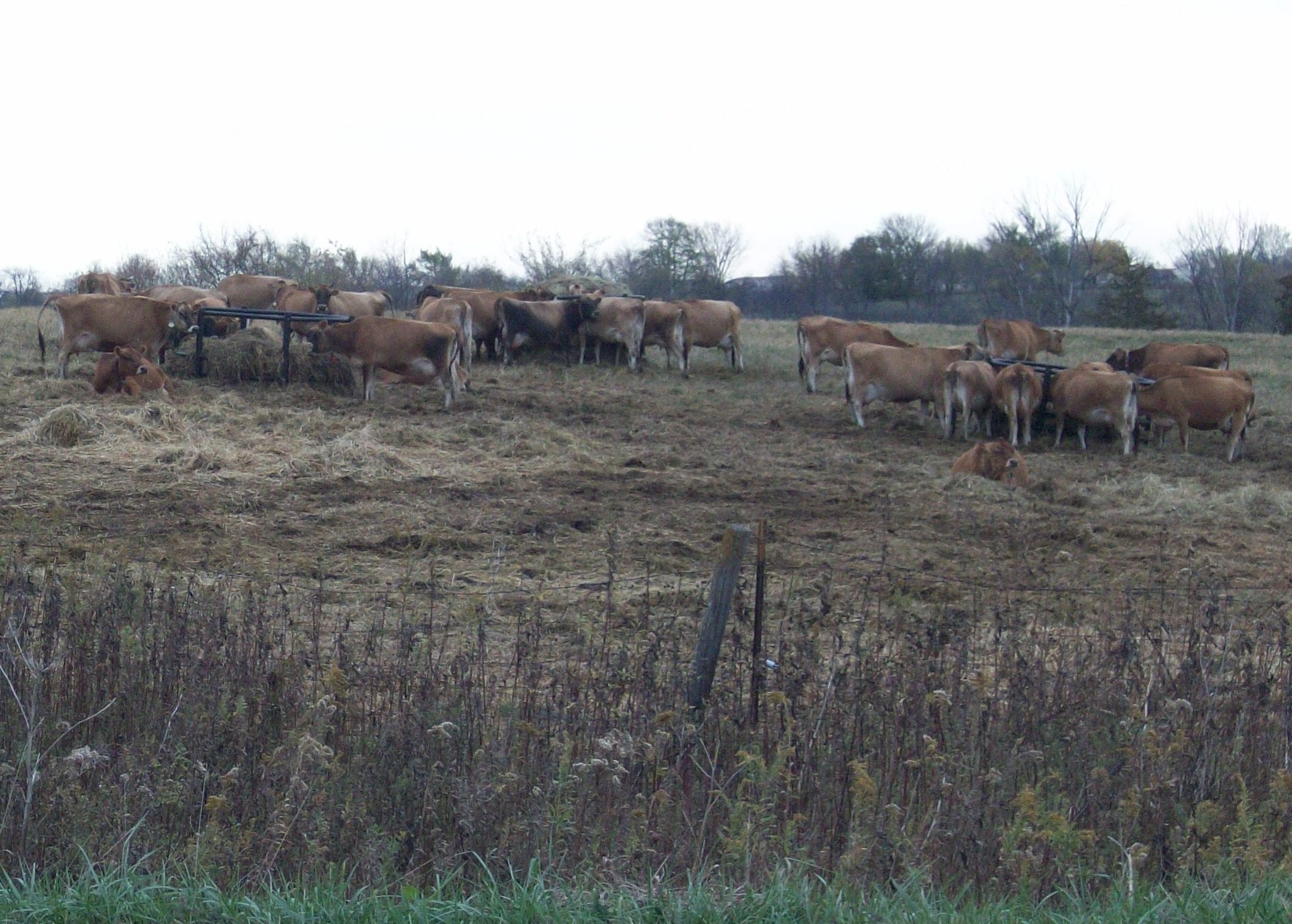
Grass Fed Dairy Cattle

We, as a society, should be eating less meat. Why? Producing meat is an inefficient way to make food. Much of our agricultural production goes to animal feed where most calories are wasted because animals have lives to live. For example, for every 100 calories a cow eats, it produces three calories in meat. It’s not much better for sheep, dairy, pigs and chickens. Not only is meat-production inefficient, it requires a lot of land: half of the world’s habitable land is used for agriculture. Three quarters of that is used for livestock. (In Iowa, half the corn crop is used to manufacture ethanol). Add it all together — greenhouse gas emissions, land use, water consumption, and air and water pollution — and there is a strong case for meeting human nutritional needs other than from livestock.

R. Buckminster Fuller was the first person I read who said there is enough food produced in the world to feed everyone comfortably. He canceled the notion there wasn’t enough. What nature couldn’t provide, science would, he said, in the form of improved fertilizers, plant genetics, better land use, and distribution and packaging. Where we are each day is a beginning point for the rest of our lives. Each generation develops new insights into what makes our world work and how to improve it, including food production and distribution. Humanity is fraught with potential to feed ourselves.

“Man is a complex of patterns, or processes,” Fuller wrote in I Seem To Be A Verb. “We speak of our circulatory system, our respiratory system, our digestive system, and so it goes. Man is not weight. He isn’t the vegetables he eats, for example, because he’ll eat seven tons of vegetables in his life. He is the result of his own pattern integrity.” Understanding our “pattern integrity” and how it relates to the physical world is a key challenge of agriculture. It is also a source of planetary degradation because of how we pursue agriculture, especially through livestock culture.

Hannah Ritchie points out in her book, Not the End of the World: How We Can Be the First Generation to Build a Sustainable World, “Our battle with agriculture has been centered around one thing: having enough nutrients in the soil at the right time.” During the early 20th Century, German chemists Fritz Haber and Carl Bosch developed what is called the Haber-Bosch process which converts nitrogen and hydrogen into ammonia which can be used as fertilizer. The advances in plant genetics developed by Norman Borlaug are well known. Between Haber, Bosch and Borlaug, they created the Green Revolution which enhanced food production three-fold from historical levels. This is the kind of science to which Fuller referred.

Changing how we live regarding agriculture is about more than personal choices. I have no regrets choosing a mostly ovo-lacto vegetarian diet beginning in the 1980s. In the early period, there was no strict line between meat culture and vegetarianism. I did not eat meat at home, and when I was out, especially with business clients or close family, I sometimes did. It was a non-issue. I guess you would call 1980s me a casual vegetarian.

As I age, I have less interest in eating meat: partly because it is expensive to buy, and mostly because it has no viable role in the cuisine I developed in our kitchen-garden. The issue with personal choices is they are not scalable to a level where it would make make a significant change in land-use policy. It would take a lot of people leveraging the power of the pocketbook to turn things around regarding consumption of meat and associated environmental degradation.

When addressing global environmental problems we can lose hope because of their scale. By identifying a big part of the problem has been livestock and meat production, we have something tangible to grasp, something within our control. By reducing consumption of meat we contribute to a solution to our environmental crisis. There is something good in that.

Categories
Writing

In Living Memory

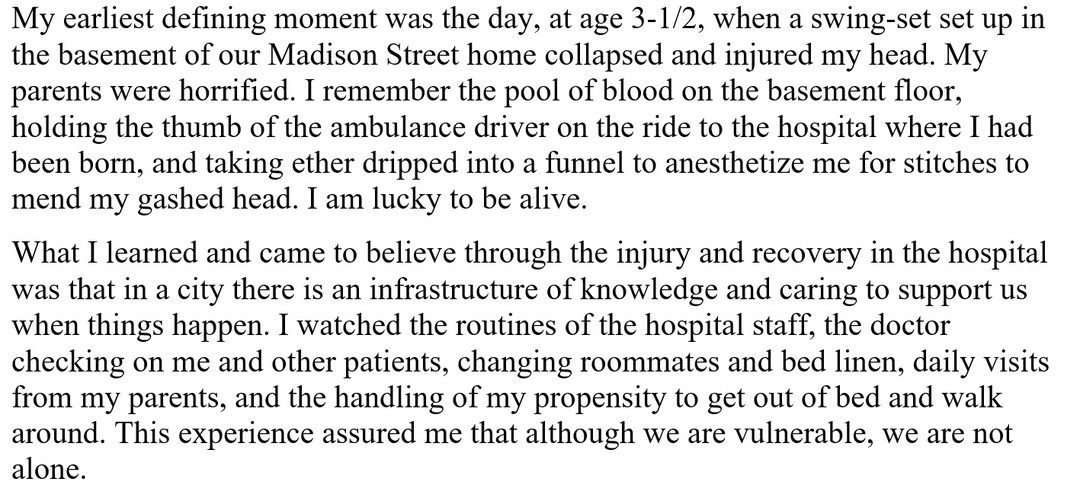
Cautiously, I’m sharing bits of my work in progress that readers of this blog may have heard about. I shared the image above with a Canadian poet on Threads in response to a question, “What did you learn from your childhood experiences? It was different from other garnered responses, and it stands alone. I think the writing here was solid.

It took a good while to write those two paragraphs. Because they originate in living memory, outside of language, I understood what happened and assigned meaning only after repeated drafts preceded by long consideration. Probably why it takes me so long to write autobiography.

That I called this experience a defining moment means, at least in part, I thought about what happened a lot. There is a scar on my forehead to remind me of it every time I look in the mirror. Any more, I don’t think about the scar and what caused it, but over a lifetime I remember those days, what happened, and what the experience means to me now.

How does one communicate about living memory? These paragraphs are one way, and as written, I don’t have any revisions. I captured something that resonates. Over the years, I wrote a lot about René Descartes, including this passage:

I studied René Descartes at university and spent substantial effort considering his first principle, cogito, ergo sum, or in English, “I think, therefore I am.” I wrote about my Cartesian outlook toward life. We are isolated beings, wrapped in a veil of humanity, closer to God, or its divine essence than we realize. Such veil, metaphorical or not, is woven of delicate threads, like the lace of Morbihan, or silk from China. We could spend a lot of time marveling in its delicate needlework or shimmering surface. Yet we are compelled to reach out beyond the veil.

Attending University, Blog Post, Feb. 19, 2022.

If I entered a funk about my work in progress after having some people read a draft, then I am now coming out of it feeling ready to begin anew. There is a story, more than one, residing in memory. I felt compelled to start that story. 127,511 words in, the compulsion to finish it strengthens. There is little timing of my creative endeavors. I only know, for this work, the time is now.

Categories
Kitchen Garden Living in Society

Exiting the Deep Freeze

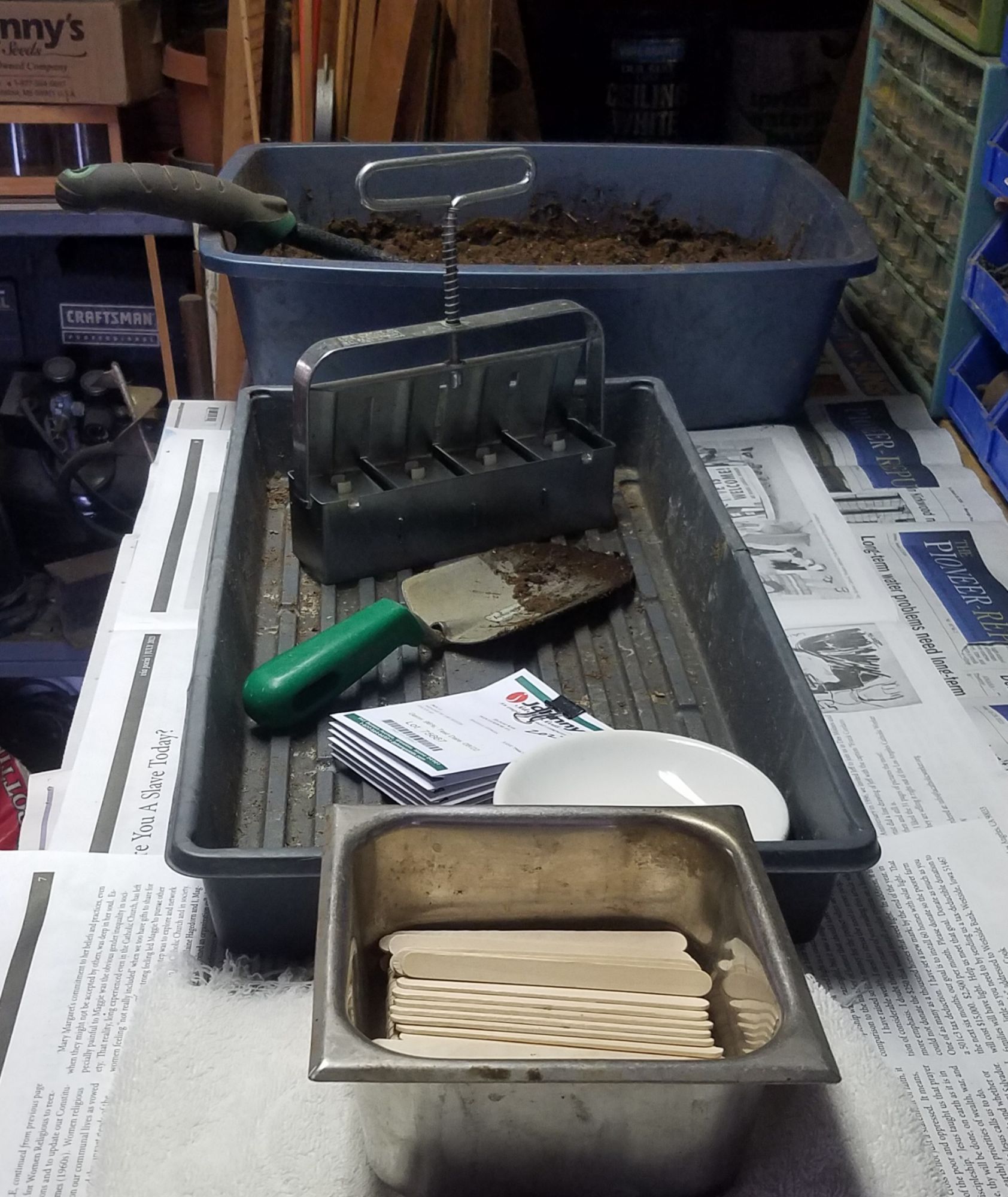
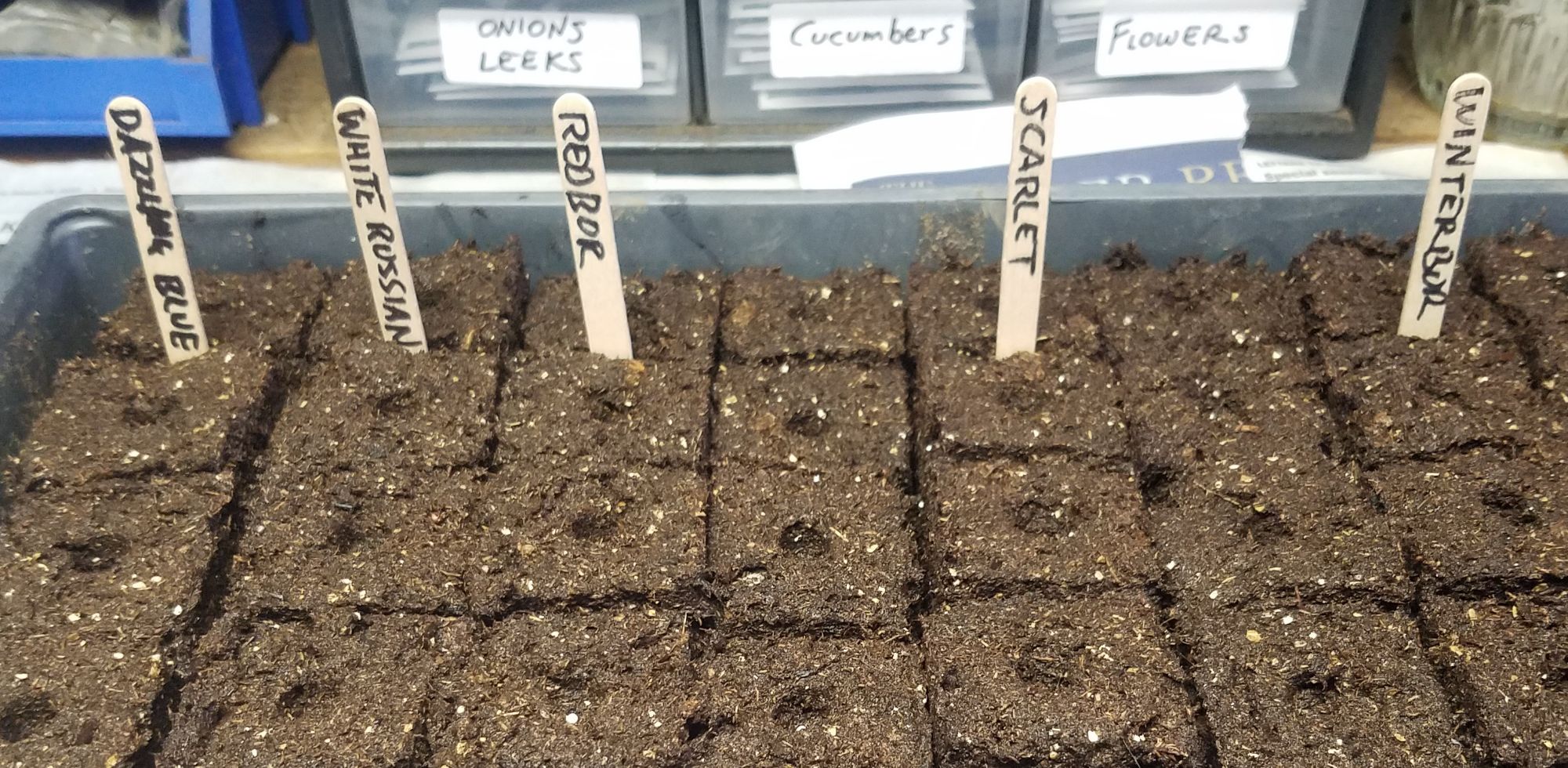
Tools to make the first tray of garden seedlings. Kale went in on Feb. 3.

I’ve been chatting it up with some neighbors on social media. There was consensus we hunkered down inside our homes for most of January because of snow and freezing ambient temperatures. There is hope for a break in winter and we’d just as soon move into spring. Personal productivity lags in winter. It’s time to step up the pace.

The idea of a “week” still resonates. Monday means start of the week, Friday is for closing down activities, Saturday is to perform a number of small household tasks, plus help our child with their small business. Sunday remains a day of rest, sort of. It’s not the same as when I worked full time. Then I knew that Friday usually meant casual clothes, voluntary trips to the office, and time to pursue my writing and family life.

I walked about the garden. The green I saw from the kitchen was collards that had been eaten more than I could tell from a distance. I had no interest in picking through the leaves, especially with a freezer full already available. I suppose the cruciferous vegetable-eating insects that survive the cold don’t have a lot to choose from in winter.

On Saturday I planted the first seeds for the garden and put the tray on a heating pad under a grow lamp. They are mostly last year’s seeds and that should not be a problem for kale. Kale is one of the vegetables I have mastered growing. It was something to see the tools lined up and ready to start. I worked with the garage door open for the fresh air and because we seem to be exiting the Iowa deep freeze.

Kale seeds planted Feb. 3, 2024.
Categories
Living in Society

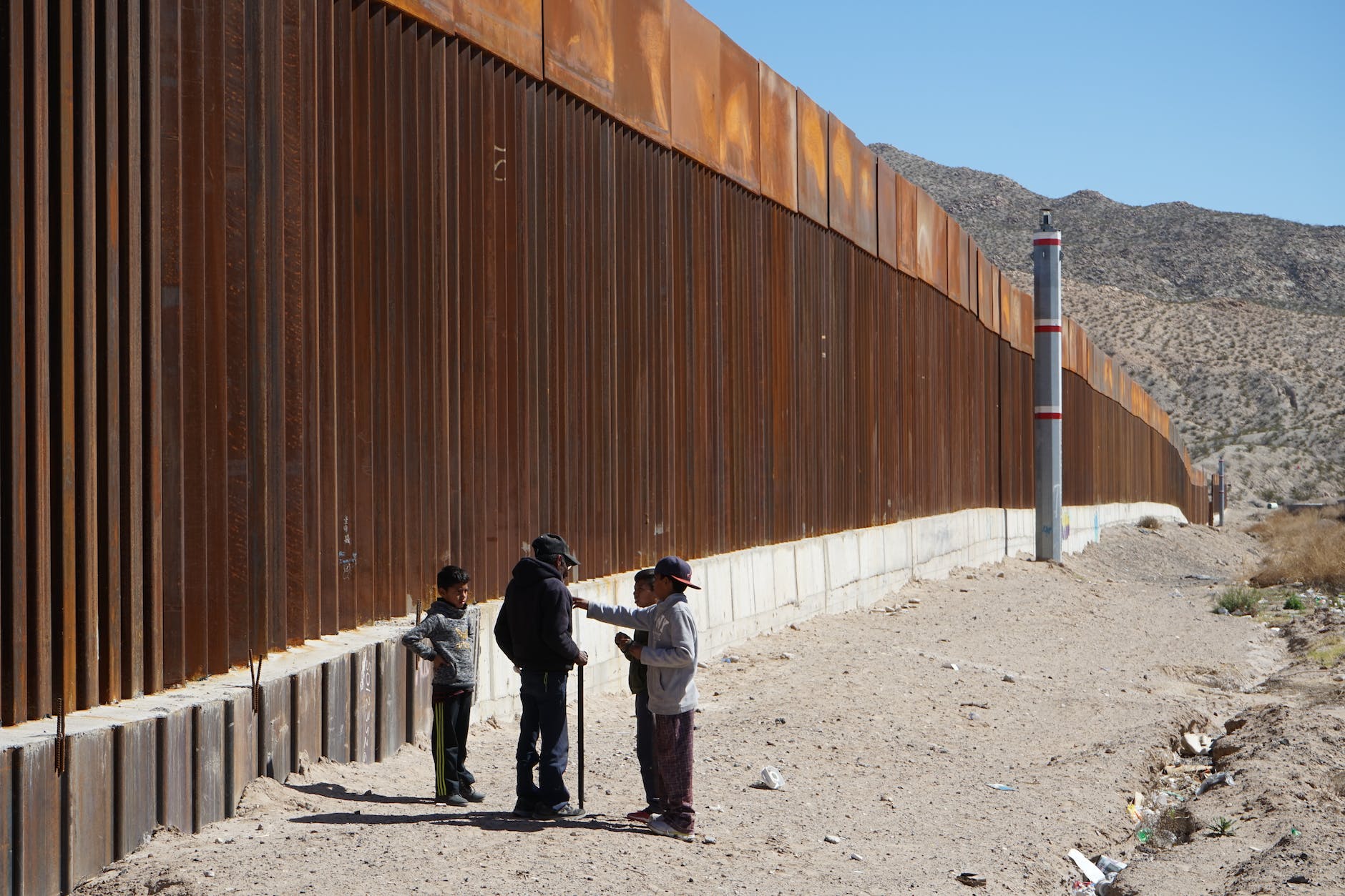
Ukraine, Not Immigration

Photo by David Peinado on Pexels.com

I am a Cold War warrior. I was in the U.S. Military during the period NATO stood down Soviet forces at the West German border. Based on intelligence received from friends who spied on Soviet troops, we believed we could whip their collective asses on any given day. That was likely our youth speaking. In 2024, Russian progress in Ukraine brings me chills. Russia could win that conflict, annex Ukraine, and commit genocide on the Ukrainian population. To a Cold War warrior, those are real and concerning possibilities. They should be the same for every American.

I wrote my U.S. Senators, Chuck Grassley and Joni Ernst, about the stalled supplemental aid bill for Ukraine, Israel, Taiwan and other items. Congressional Republicans insisted on tying passage to immigration reform and when they did, the supplemental hit a logjam. After emphasizing to my senators the importance of aid to Ukraine, I wrote they should sever the immigration portion of the bill and pass it separately to free up passage of the military aid bill. I’m not the only one with this opinion.

“It’d be nice to change the status quo on the border, but if there’s not the political support to do that, then I think we should proceed with the rest of the supplemental,” Sen. John Cornyn, R-Texas, told reporters. “I don’t think we have any real choice (but to do so).” A Thursday headline in the Cedar Rapids Gazette read, “Deal on wartime aid and border security stalls in Congress.”

What is going on? Grassley spilled the beans Wednesday on NBC while answering reporter questions about a tax bill.

“Passing a tax bill that makes the president look good — mailing out checks before the election — means he could be re-elected, and then we won’t extend the 2017 tax cuts,” Grassley told a reporter.

The bill does not include checks for Americans; what it includes is a tax credit. Republicans don’t want President Biden to “look good” on any front, including by passing aid for Ukraine and immigration reform, both of which have strong bipartisan support.

It is irritating Grassley and Ernst dodged the supplemental aid issue in their response to my note. I told each of them I needed no response, that I would watch how they voted. They quickly responded with a full page of comments without mentioning Ukraine, Israel or Taiwan.

I have had reasonable interaction with both Senators Grassley and Ernst. I don’t always agree with them, yet they usually respond to my queries and if we disagree, they tell me why. They have been courteous when we interacted personally, even when disagreeing. In a red state that’s the best we can expect.

For her part, Ernst acknowledged the oversized role played by drug cartels on the southern border, and listed some legislation she introduced or sponsored to address the situation. She asserted there is a humanitarian crisis at the border. I don’t disagree, only it’s not the kind she’s talking about.

Chuck Grassley has been my Iowa U.S. Senator all the time since I married in 1982. I left the state for six years, and he was still there when I returned. I lost count of how many times I met with him or his staff.

Grassley’s approach is similar to Ernst. He lists legislation he supports to address issues at the southern border. He briefly mentioned the House Speaker’s concerns about the border bill, and accused the Biden Administration of “abusing the parole system” to enable admission to the country of large groups of people outside “established pathways.” In a self-serving way, he times the start of the border problem as beginning when Biden took office. As I wrote in my note to him, immigration has been an issue in the United States almost since he was first elected to the Senate. We seem no closer to changing it in a way that will make sense to most Americans. We’ll recognize something went right when Dreamers have a path to citizenship.

Author Tom Nichols summarized the political situation in The Atlantic.

At this moment, the United States is on the verge of failing a challenge of will and commitment, much to the delight of the neo-fascist Russian regime that has turned Ukraine’s fields and homes into an immense abattoir. President Joe Biden, most of NATO, and many other nations recognize the crisis, but the world could face a Russian victory—and an eventual escalation of Russian aggression against Europe—solely because of the ongoing drama and inane bickering within the Republican Party.

Ukraine needs American weapons, not more GOP drama by Tom Nichols. The Atlantic, January 31, 2024.

Immigration reform is a distraction from the importance of America’s leadership role in the world and our support for Ukraine. For those of us who wore a uniform and remember the wind-swept hills and plains of the Fulda Gap, it is critical we pass the current supplemental.