The purpose is to make a conscious decision to reduce how many times I post here and use that time to advance my autobiography. With spring arriving in four weeks, I need more writing time. I debate changing how I describe my autobiography to my “WIP,” or work in progress like all the cool writers do on Threads. Autobiography seems like too big a mouth full and I don’t like “memoir.”
On Saturday and Sunday, I’m filling in at Blog for Iowa for a while, and those posts will be cross posted here without comment. I strive for a broader audience and put more effort into selecting topics for those Iowa readers. I’ll also cross post any writing that gets published in the newspaper, or other places in the real world, also without comment. A letter to the editor is often a re-working and shortening of something else I posted here, so it seems like duplication to publish the letter like the one that made last Thursday’s Cedar Rapids Gazette here as well.
I’ve pretty much given up on a range of topics that used to be important to me. Cooking, recipes, gardening, local food, and others remain parts of my life. I just don’t feel I have anything new to say. I am weary of writing about “organic practices” when so many people are food insecure. I plan to give those a rest unless I prepare a great dish and want to preserve how I made it. I may highlight unique ways I find to increase food security among those who need it.
I’ve been taking a lot of photos of morning cups of coffee. I post them on my Threads account, tag them a certain way, and there is a group that goes into a frenzy of liking them. These posts get, by far, more views than any others I put up. It’s sad, but it’s something.
That’s it for this week. Let’s all make it a great one next week!
Despite these tangible contributions to improving the lives of Iowans, why doesn’t the president get more public credit for his work? I submit the reason is citizens just expect infrastructure things to happen. It is government acting as it should be and therefore if nothing seems broken, no worries. No credit for elected officials either.
At the same time infrastructure improvement happens, there is a coterie of Congress-people sowing chaos in the U.S. Capitol in an obvious, although ill-advised, attempt to re-elect indicted criminal Donald J. Trump as President. I don’t know if Matt Gaetz is the ring leader, yet he is at the center of efforts to disrupt our government and economy at the bidding of the 45th president. Gaetz was recently profiled in The New Yorker.
In seven years in Congress, Gaetz has helped make the institution even more dysfunctional than it already was, threatening to shut down the federal government and force a default on its debt. Gaetz is a paradox: he is determined to attack the modern democratic state, but he harbors ambitions that only modern American politics can satisfy. He articulates an idea of the country that seems so negative—ridiculing his colleagues, trashing the welfare state, scorning embattled democracies abroad—that it is sometimes difficult to see what he stands for. And yet the more Gaetz tears down, the more his supporters love him.
I recommend reading the entire article at the link.
I have confidence in the American people and in Iowans. The Iowa Democratic Party is on the right path with its People before Politics campaign. As an Iowan, everywhere I turn in state government there are problems with its current direction.
For example, I currently need a certified copy of a birth certificate for the new Real ID program, which adds a gold star to my driver’s license. I don’t like flying in commercial aircraft, yet may have to in event of an emergency. Real ID or additional documents will soon be required. The needed certified government document was available at the county recorder’s office, yet when I called them to ask questions, they referred me to an outfit called VitalChek to get it. “You can order it from us by mail and you can also just call them and they will send it to you,” the person answering the phone said. That’s fine if the outsourcing of normal government functions saves money for the state. What VitalChek does is add a substantial fee to the request, in addition to the charge for the document. Perhaps some government staffing was reduced in this move, but the expense was transferred directly to citizens in the form of extra fees. Pile on enough stuff like this, and the people of Iowa may get irritated enough to vote Republicans out of office. Maybe then Iowans will recognize the good work Democrats can and in Biden’s case are doing.
To leave on a positive note, I linked to this video about broadband in Iowa. Whatever you do in the near future, be sure to give the Biden Administration credit for the good work they are doing.
Stock photo of a “nonbinary person.” Photo by RDNE Stock project on Pexels.com
Editor’s Note: This post contains material of a highly sensitive nature including description of events leading to the death of Nex Benedict that may be triggering for some individuals.
U.S. Senator Elizabeth Warren describes how many of us feel about the death of Nex Benedict after a beating in a school bathroom in Owasso, Oklahoma.
The killing of Nex Benedict is gut-wrenching and underscores the danger of extremists who are dehumanizing kids with anti-trans hate in Oklahoma and across the country. Every student should feel safe at school and supported for who they are. Nex deserves justice.
U.S. Senator Elizabeth Warren on Threads, Feb. 21, 2024.
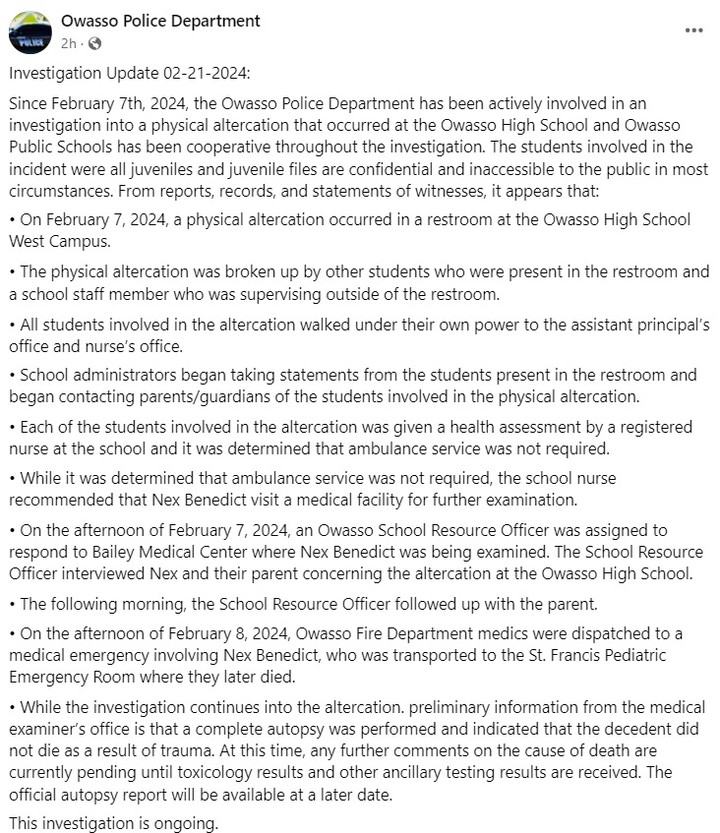
Oklahoma Republican state legislators passed a bathroom bill. Now a nonbinary kid is dead. A definitive narrative of what happened has been slow to emerge. An autopsy was being conducted to determine cause of death. Authorities are waiting for the results of toxicology studies. Here’s part of what we know from the local police department investigation:
This story is complicated and reports in media are not uniform. Likewise, there is public skepticism about the police statement “the decedent did not die as a result of trauma.” The toxicology report as well as the complete Medical Examiner’s report will show the cause and manner of death and that could still be weeks away. On Thursday, Feb. 22, the Owasso Police executed a search warrant at the school and collected evidence to be used in the investigation.
One of the things we do know is the state passed a book ban law and the school district that includes Owasso High School hired the producer of a conservative, right wing website, Libs of TikTok, to oversee the process. After work began, the Libs of TikTok website featured a video with one of the school teachers who they characterized as a groomer because they disagreed with books selected for exclusion from classrooms and the library. That teacher subsequently resigned. Who would want to attend a public school with this type of environment?
There are reports Nex Benedict was harassed for a year before their death. School harassment is common in the United States. In many cases, it is parents and other adults who bear responsibility for such harassment by giving permission to school children to harass people who are different. Some say the Libs of TikTok is culpable in creating an environment where harassment was more likely. In any case, Nex Benedict is dead after being harassed.
When asked about the death of Nex Benedict, Oklahoma State Senator Tom Woods said,
We are a Republican state – supermajority – in the House and Senate. I represent a constituency that doesn’t want that filth in Oklahoma. We are a religious state and we are going to fight it to keep that filth out of the state of Oklahoma because we are a Christian state – we are a moral state. We want to lower taxes and let people be able to live and work and go to the faith they choose. We are a Republican state and I’m going to vote my district, and I’m going to vote my values, and we don’t want that in the state of Oklahoma.
Nonbinary people tell me the thing they fear most about living in America is that a segment of the population wants LGBTQ+ people completely erased from society. Dead would be preferable, they said. If there is one certain lesson to learn as this story develops, it is nonbinary people deserve to live.
Below are links to some of the major stories about this death, which readers can review for themselves.
It was time to get soil mix for seed starting. The amount leftover from last year wasn’t enough to get through this weekend’s planting of herbs, cauliflower and broccoli. I emailed the dirt company (yes, we have those in Iowa) to make sure they had what I needed and drove over near Tipton yesterday to get it. The sun was so bright I had to wear sunglasses.
I enjoy that drive. When I was a paid political campaign consultant I got to know Cedar County quite well, both cities and rural areas. I could name the owners of some of the farms as I passed. The direct route to the dirt company is over gravel roads. While the car needs a wash when I finish the trip, I feel comfortable in that geography without a map. I have driven those roads so much I don’t need one.
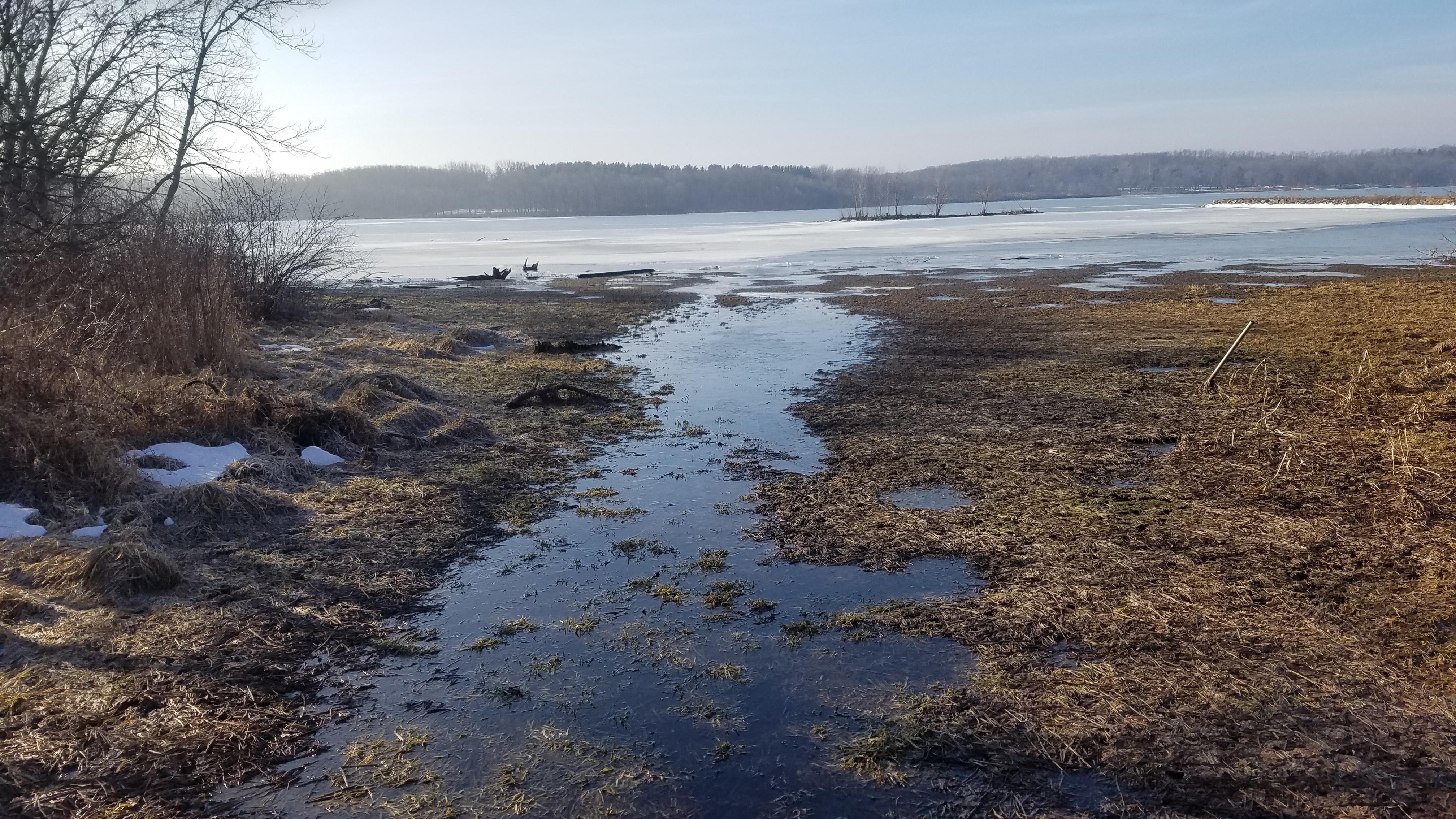
It was also a great day to be outdoors driving along massive fields coming out of winter. There were a few pieces of farm equipment on the roads, yet most of the fields haven’t been touched this year. Corn stubble left from the 2023 harvest was everywhere. The Cedar River seemed lower than usual, likely a result of continuing drought conditions. It seemed like the end of winter, although with spring not far away.
It has been more than ten years since I had a pickup truck. I miss those days. To get the soil mix to fit in our subcompact, I had to remove the shelf in the back window and flip down the seats. I laid a couple of towels over everything so it wouldn’t get dirty. The subcompact held to the roads pretty well as I am an experienced rural driver.
I figure there are 14 more gardens in me before I get too old to grow them. Back in the day when we first married I just stuck tomato plants in the ground and hoped they produced. I added some skills in the 41 years since those first plantings. It helped to work on a vegetable farm for eight years.
The new portable greenhouse arrived, my fourth since I began using them. One was damaged in a straight line wind storm, the next by the August 2020 derecho, and last year the zipper tore loose. With a new one, this year should be fine. I’d prefer a permanent greenhouse yet even with the replacements it has been much cheaper to use the portable ones. We have plenty of uses for any extra cash, so the savings is welcome.
The kale seedlings are sprouting their third leaves so it’s time to put them in a bigger container before planting. With new soil mix in the garage, I’m ready.
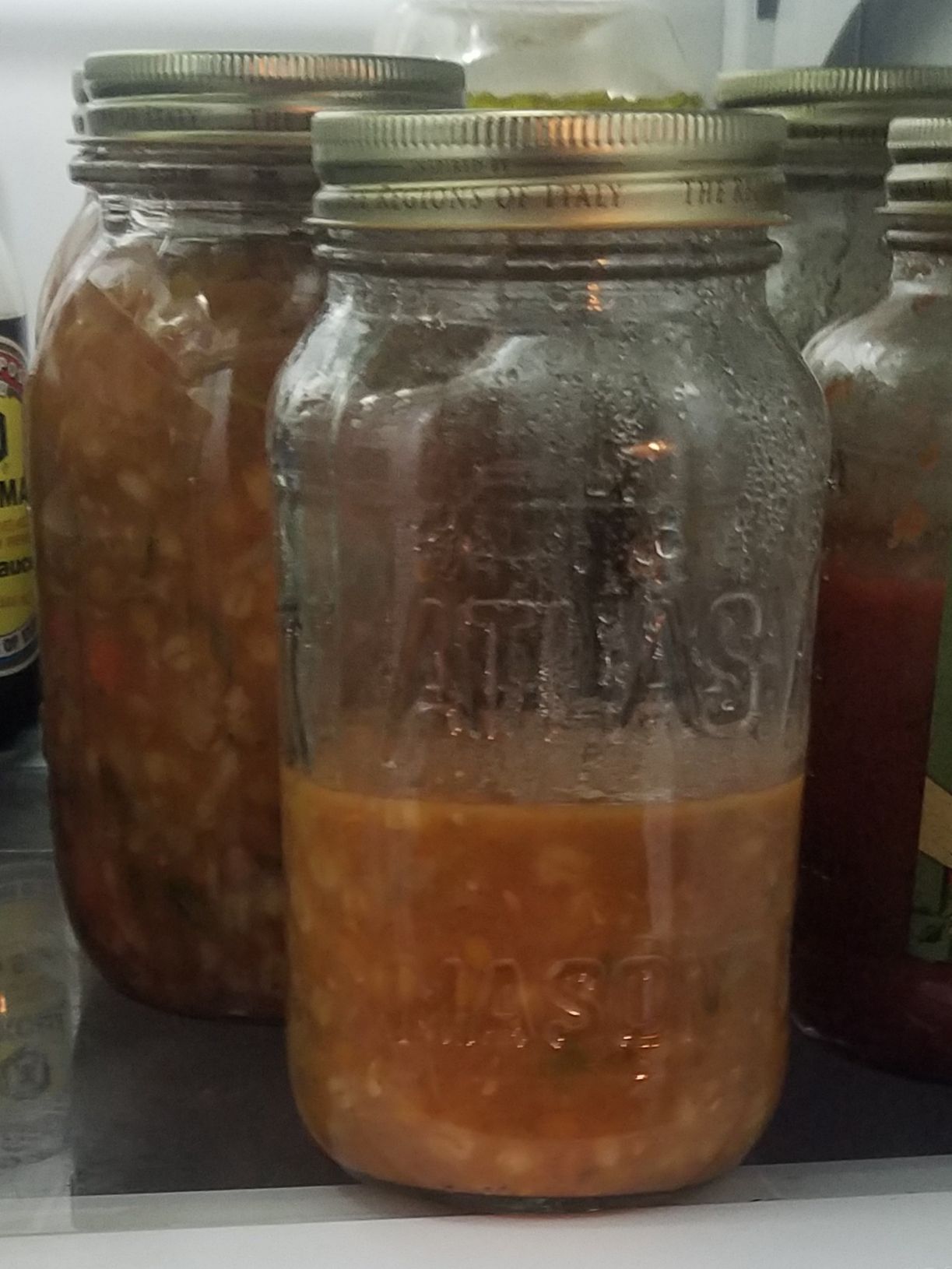
I made lentil soup for dinner last night. With a slice of bread, it made a satisfying meal. What distinguished this pot of soup from more generic vegetable soups I make was the restricted number of ingredients. Here’s how I made it.
I covered the bottom of the Dutch oven with tomato juice and brought it to temperature: enough juice to steam fry the vegetables. We use tomato juice instead of oil to reduce our consumption of cooking oil. My tomato juice is a byproduct of making tomato sauce from the garden.
Next came finely diced onions, carrots, and celery, the mainstays of any soup. I added three bay leaves and salted. Then I diced three medium potatoes and added them.
From the pantry I added one and a half cups of dried lentils and three quarters cup pearled barley. Cover with tomato juice and set to medium heat.
From the freezer I added two one-cup bags of shredded zucchini and two frozen disks of fresh parsley. By now, the lentils and barley were absorbing the liquid so I added tomato juice and one quart of water to cover. I used a total of three quarts of tomato juice and one quart of water.
Two or three cups of chopped, fresh leafy green vegetables from the garden. I had collards for this pot of soup, but kale, collards or others will serve. Frozen is fine also.
Once the pot boils, reduce the heat and let it simmer until the lentils, barley and potatoes are tender. This process yielded a meal for two people plus three and a half extra quarts of soup for leftovers.
It is the kind of meal regular folks like us appreciate.
By 1962 I owned a camera and used it to photograph our neighborhood. I walked north on Marquette Street and took snapshots of the Levetzow’s holiday display. They owned Model Dairy Company and at Christmas filled their whole yard with lighted Christmas decorations. On the southwest corner of their house was a large crèche. To its right was a lighted display of Santa, his sleigh, and reindeer. We viewed them as an affluent family, such affluence being on conspicuous display at the holidays. They had a kid-sized model of their dairy delivery van, although none of us local kids got to drive it.
I photographed the holiday display at the house across the street to the south. This was a rental through which families moved frequently. Eventually, a young Joe Whitty and his family moved there to work at the nearby Mercy Hospital bakery. He later opened his own chain of pizza and ice cream restaurants called Happy Joe’s.
We posed for pictures with my film camera. I gave more thought to each frame than I do today because the results were not immediately available. There were only so many shots on a roll so I felt I had to get the framing right before exposing film. It was a process of experimentation and expense.
Having a camera was complicated because one needed film and never knew how photographs would come out when taking them. Developing film could take a while, depending upon when the entire roll would be exposed, and when one could get it to the drug store to be developed. Photographs were special. I possessed a sense they would have enduring value.
There is a photo of me in my altar boy cassock and surplus, one of us kids bowling, and many posed photos of all of us in the foyer. One favorite foyer photo is of Mother and Father dressed up in costumes to go out on New Year’s Eve in 1962. The following January I captured my sister’s birthday party during which we all danced the twist. Mother took some of those shots. My parents had just begun listening to long-playing records at home and had copies of popular LPs by twist artists like Chubby Checker and Fats Domino.
In 1963 I began buying color film. Pictures survived… of Easter, my sister’s first communion, a trip to the park, Father standing next to the wrecked 1959 Ford. Mostly they were posed photos signifying a special event.
Using a camera was an inexpensive way to have fun. Because the process took so long, it seemed more creative: requiring thought, editing, and an ability to understand the viewer and how it would relate to the finished exposure.
My grandmother was an influence in my photography. She purchased inexpensive cameras at the drug store and used them to record moments with the family. The desire to pose and capture a photo was something creative I didn’t understand at the time. We were plain folk and when we got dressed for church, or to attend an event, it was a big deal. Grandmother wanted to capture those moments on film. It’s a natural impulse that presents an interpretation of who we were. Of course, we always wanted to put the best foot forward in these constructed frames.
Because photography was a technology with numerous steps, and there was a cost of film and prints, I don’t have many photos from my earliest days. However, I have a lot by comparison. The ones that survive tell me who I was and inform our family culture. They are an important part of remembering who we were. From that early time I began thinking about how to narrate my life using a camera. There is a direct creative thread running from 1962 to the present and spun on my use of cameras.
The atmosphere was particularly clear Saturday night. Moon bright, stars twinkling. A fine time to be outdoors despite the cold. On Sunday, for entertainment, I read The Movie Ad Book by Malcolm Vance, a book with 120 full page, color reproductions of classic motion picture posters.
My canon of movies makes a short list. Chronologically, World War II movies I saw in downtown Davenport were formative. Saturday morning I picked up the city bus near the hospital where I was born and rode downtown to pay my newspaper bill. After hanging out for a couple of hours, when theaters opened, I saw matinees of The Great Escape, The Longest Day, and other films about the war. I grew up in a culture where World War II veterans were everywhere.
Grandmother took the whole family to see The Sound of Music during 1965. She particularly identified with the Maria Rainer character. Of course, this was also a film about World War II. It was the only time I remember going to a movie theater with her.
I saw early James Bond films in Davenport, beginning with Goldfinger, released in 1964. Dr. No and From Russia With Love made return engagements, so I was able to see them. Even then we expected all of Ian Fleming’s Bond books to be made into films. The last Saturday matinee of a Bond film I saw was Thunderball, released in 1965. It was a special time for a young newspaper boy.
I have little remembrance of films I saw from beginning High School in 1966 until returning from military service in 1979. I remember seeing The Graduate in a Quad Cities theater, likely in 1968. While serving in Germany, our battalion showed Patton repeatedly while we were in the field. It was always a challenge to keep projector light bulbs going because generator surges caused a couple to burn out during each screening. In garrison I remember seeing Superman with Christopher Reeves during its initial release, and Close Encounters of the Third Kind at a theater in Wiesbaden, dubbed in German and subtitled in English. During a trip to Holland, I saw Annie Hall in an Amsterdam theater in English with Dutch subtitles while the buddies I traveled with went to the red light district.
When I returned to the United States, I saw Apocalypse Now which made an impression on me. So did The Deer Hunter. When I entered university for my graduate degree in American Studies, I became completely absorbed in seeing every possible film. It was a way of understanding film as an expressive art form to enhance my writing. I sought every film by Rainer Maria Fassbinder who was at his peak creativity. I saw most of his feature film movies during that period. During our first year of marriage I saw the entire Berlin Alexanderplatz series. It was surprising when he died in summer 1982 of a drug overdose.
The first time I did anything with my future spouse, we went to see Blade Runner in 1982. We also saw Tootsie and Out of Africa in theaters. Most of the long-form movies we saw were on VHS and CDs checked out from a library or commercial video rental store. For a while we made movie-watching a regular family event at home. Of the films seen during that period, I would watch the first film in The Matrix series again. Another keeper is Michael Moore’s Roger & Me about the auto industry in Flint Michigan. I spent a lot of time in Flint when I worked for a transportation firm.
Of the 120 movie posters in Vance’s book, I saw about 30. I was serious about film study in graduate school, but the 40 years since then eroded my interest. These days, I can hardly picture myself sitting still 120 minutes at a time to watch a movie. I’ll be sending my copy of The Movie Ad Book to Goodwill to be recycled with another reader. It was a fun Sunday thinking about films and how they affected my life.
Like in every year since 2017, when Republicans gained majorities in both chambers of the Iowa legislature, there is a voting bill this session, House Study Bill 697. A person could set their clock by this behavior. The impact of the annual process is to make elections more difficult for Iowans. Changing the duties of the Iowa Secretary of State and how elections are conducted is a feature, not a bug, of Republican governance.
While the majority party continues to ratchet down election restrictions, they apparently don’t understand that whatever scheme they devise will serve Democratic success in re-taking control of the legislature. Democrats did required analysis of the election process and designed the work needed to win during the 2008 election when Barack Obama won Iowa. They can and eventually will do it again.
Republicans can dink around all they want. It won’t mean diddly-squat when the Iowa population moves to replace them. The movement will be bigger than only what Democrats want. I believe the day is approaching.
There was drama during the Iowa House State Government Subcommittee over House Study Bill 697, as Trish Nelson pointed out. Rep. Amy Nielsen and Chair Bobby Kaufmann entered a heated exchange about the bill which ended with the two Democrats on the committee, Nielsen and Rep. Adam Zabner, walking out before the subcommittee meeting finished, according to the Cedar Rapids Gazette. The subcommittee advanced the bill to the full committee in their absence. On Thursday, the full committee approved the measure.
Democrats have it wrong if their response to yearly voting restrictions is to bemoan loss of the halcyon years of the Obama campaigns when we could elect Democrats to statewide positions and award our electoral college votes to a Democrat. The kind of work we need to do is not complicated. Figure out who in the Iowa population will vote for our candidates, understand the new rules for voting, and persuade our people to vote. Strategies like this hopefully exist, are kept secret, and have already been implemented by the Iowa Democratic Party.
All you Republicans who are tinkering with the voting process, beware. Iowans are are coming to replace you and it may be as soon as in November.
I hope everyone reading this post is already helping Democrats get elected in November. The time to engage is now.
There are two parts to turning the country around and both run through the ballot box.
The first is voting: making sure we take care of ourselves by checking our registration and then voting in person, either early or on election day. Encourage everyone we know to do likewise.
The second is changing the public narrative about life in Iowa and in the United States. We should not accept narratives being fed to us by media outlets, churches, interest groups, and political parties. Instead, we must develop new narratives that properly reflect how we live despite our differences. I predict this will change how we vote.
If we can do those things, there is a chance to make society a better place to live. I believe this is possible during the 2024 election cycle.
Political Canvassing
In Iowa, the political strategies and tactics Democrats used during the 2006-2008 election cycles have become obsolete. Not because talking to people lost importance to winning votes, but because we, as a society, have grown ever more suspicious of people we don’t know. Have to ask, what happened to Democrats after Obama won his first presidential election? We may feel we have to ask, but that’s the wrong question. What was an ability to win elections in 2006 and 2008, was an all in, once or nothing endeavor the usefulness of which waned by 2010 when Republicans began re-taking control of state government.
I door knocked for Democrats during the 2022 election cycle and can attest the game changed since 2008. In the Johnson County part of House District 91, Democratic voter registrations outnumbered Republican and Democrats still couldn’t win that part of the district. At the doors, I heard people have complicated lives where voting was not among the highest priorities. I did the best I could, yet my efforts, and those of fellow Democratic canvassers, couldn’t get the job done. It wasn’t from a lack of effort. The centralized, targeted canvassing of the past no longer works.
Changing the narrative
How do we change the narrative about how we live? There are no easy answers. Recognizing how important answering this question is to the process of taking back our government is a necessary first step. Our media, in many ways, is the public narrative. It is messed up when one can say, “…the best way to reach the maximum audience is to give Republicans what they want and drive liberals to hate reading, hate sharing, and even hate subscribing. Because even by rebutting them, you spread and strengthen them,” as Jason Sattler wrote on FrameLab. There has to be a better way.
From ten cycles of door knocking for Democratic candidates, I found the narrative voters told me at the door was one of two kinds. The first was a simple statement about the moment in which we found ourselves. Those conversations were pleasant and whether we agreed or disagreed about our politics, we each took something away from the door. The second was less pleasant, as if someone just left a television set where FOX News was spreading misinformation and running down the Democrats. What I heard in both cases was the raw energy of an electorate in motion. It was clear the narratives Iowans lived by were sourced from places other than the issue list I carried at the door. Minds had already been made up.
The coronavirus pandemic had a substantial impact on our politics. Where I live it cemented the Republican majority. When Governor Kim Reynolds normalized the pandemic on Feb. 15, 2022, more than a year before Federal COVID-19 public health emergency declarations ended, she had developed a narrative about her role, which she repeated in an Aug. 30, 2023 news release, “Since news broke of COVID-19 restrictions being re-instated at some colleges and businesses across the U.S., concerned Iowans have been calling my office asking whether the same could happen here. My answer—not on my watch. In Iowa, government respects the people it serves and fights to protect their rights. I rejected the mandates and lock downs of 2020, and my position has not changed.” This narrative won her some votes. Set aside the science of a pandemic, or what actually happened, and it might sound pretty good. It is disconnected from reality.
Iowa legislative Democrats have a good idea. “People over Politics” is the right narrative for this campaign because it hits on the need to address the majority of Iowans’ needs and wants, rather than a small minority. After all, 3.2 million people live in Iowa. That’s a lot more than the 15 percent of registered Republican voters who attended their 2024 precinct caucuses. What we Democrats understand is it is not enough to repeat the slogan, check off the box, and return to politics as usual. Our narrative needs development and has to change. I’m confident our legislative leaders are doing that.
There is an easy and a hard part of the 2024 election. I’ll make sure my personal network votes in November. Every other political energy I expend will be devoted to changing the narrative. I believe it can and will make a difference.
It snowed overnight, meaning winter is trying to maintain its grip. The forecast is for snow to continue until 10 a.m. It will all melt, maybe later today, tomorrow for sure.
I reread wrote here yesterday’s post and stand by it. There is more work to do to flesh out what happiness means in measurable ways. It has to mean more than staying busy. I need to get busy with that, though.
There is lots to do today so I’ll leave this piece I wrote in 2012. Guess I’m feeling somewhat indigenous today.
At some level, we belong to an indigenous population. We are not that different from everyone else. I grew up in a neighborhood, and socialized with a cohort with whom I continue to have occasional contact. While elementary school teachers did their best to break us from our tribal leanings, some of us gripped our native culture, and the idea that we were all on the same footing. We wouldn’t let go as the teachers attempted to split us into groups, a talented tenth, and everyone else. I continue to have a strong sense of the culture shared with my cohort, even after so many years, and diverse experiences since the sixth grade.
Regular readers may be familiar with my usage of the “what’s in it for me” culture. This mindset is present in society, especially in business, but in other places as well. Where people have reasons for participating in things, and growing out of the need to make a profit, behaviors turn utilitarian, and therefore alienating. If there is nothing in a behavior that serves to profit me, why do it? In this scenario, the question, what’s in it for me requires an answer.
Individuals should strive for self-sufficiency, but not to the detriment of society and the commons. This includes managing our lives so we give more than we take from society. It includes managing the vast sea of words seeking its way to our consciousness. It includes dealing with tough problems that are greater than any individual, in concert with others. It includes the idea that there is no individual without the one of which we are all a part.








 Journey Home
You must be logged in to post a comment.