Categories
Writing

Sea of Humanity

Work Bench
Work Bench

Each week I dive into a sea of humanity and end up alone, in the morning, writing about what I have experienced.

Whether the output is political, journalistic, scientific, culinary, agricultural or just being alive, what I write is grounded in a contemporary life viewed through sixty-plus years of personal experiences. It’s all the same process.

Humans are a rough and rowdy bunch. It’s challenging to capture modern life in a way that does justice to its complexity. Photos are not enough, naturalism is fraught with issues. Endemic to it all is the platform and perspective our lives create which position us to view society in the raw.

It can wear a person out. It can also invigorate us.

Each week I’ve been exposed to thousands of people from all walks of life. It is difficult to understand every experience, nor would I want to. It is hard not to cling to positive experiences and ignore negative. Some I meet don’t get outside home much. Others spend much time in the public arena. There are friends, neighbors and relatives with everyone mixed into a seasonal soup of life. Each week represents different ingredients, different flavors.

What matters more to a writer is having something unique to say. We know better what is not unique — set pieces, articles written on contract, photos of cats posted in social media. What it is, and should be, is articulation of experience that creates an understanding of an aspect of a complicated society on our only home and water planet.

It is modern to take raw materials of life and craft them into something readable, usable, and of value. The process is not always positive and writers should be cognizant of their impact in a constantly changing society.

I recall June Helm with whom I studied anthropology. It is impossible for an anthropologist not to influence the culture he or she studies, Helm told us. I took two lessons from this. The transient writer must tread lightly where we travel and work hard to do justice to what has been studied and experienced. The emphasis should always be creating something of value to subjects and readers alike.

As I prepare for this week’s dive into humanity I’m not nearly rested enough. My bones and ligaments ache from age and overuse. My cardio-vascular system seems okay, but one never knows. I can’t see as well as I once did and the looking I’ve developed has me ignoring much that would engage me previously. Imperfect though my platform and perspective may be, I’m ready to jump from the cliff it represents, hoping to avoid the rocks, and go deep into the sea of humanity once again.

Categories
Kitchen Garden

Garden Plot Two 2016

Frost Under the Locust Tree

Garden plot two was productive this year.

Nothing but prairie grasses was on this, or any of the garden plots when we moved here in 1993. Shortly after we dug plot two, I planted mail order trees about 12-inches tall to grow them for transplanting. Due to neglect, the locust trees grew and grew and became a 40-foot giants. One of them blew over in a 2013 extreme storm that passed through. I cut it up and sold it for firewood. The remaining locust tree provides shade for the three northern plots, and adds value to the backyard landscape.

Hosting the two compost piles, the locust tree, and a bed of day lilies, plot two is challenging because of the tree root structure. Pieces of roots as big a two inches in diameter had to be removed for planting. The tree suffered no apparent ill effects after cutting some of the roots.

Radishes and turnips were the first crop, followed by onions. All produced well. After the root vegetables finished, I installed four four-foot tall meshed wire containers to grow cucumbers — pickling and slicers. They produced well. High winds blew one tower over, pulling the roots from the ground and killing some plants. Lesson learned from this experiment is to spread the cages out more and better stake them. After 2016 there is no question cucumbers grow better in the air than on the ground.

Kennebec and Yukon Gold potatoes were planted in big plastic tubs as an experiment. I got the tubs from a friend who gets them with her animal feed. The technique served the purpose of keeping rodents from eating the mature vegetables before I did. Production was okay, although we don’t eat a lot of potatoes in our kitchen. It was enough. I’m not sure the soil composition in the containers was the best. It was mostly compost with some dirt spaded in. Harvest was easy once I turned the weighty tubs over and picked through the dirt for the potatoes. There was no fork or shovel damage to the crop because of the technique.

Burying four more containers about 12 inches in the ground, I planted four types of carrots. The purple ones were a disappointment, but the others produced enough to justify another year. I made a second planting of daikon radishes which produced enough for eating fresh and pickling.

Plans for next year: think and plan more about this plot; move the compost bins to different locations; dig up and move the day lilies to a more decorative place in the yard; plant Belgian lettuce and other early greens; re-mix the soil in the containers and move them along the southern border of the plot for potatoes and carrots; plant radishes and turnips again, adding beets; a second planting is in order after the greens and root vegetables: more thought needed on that. These ideas may change as I give the plot additional consideration.

Categories
Kitchen Garden

Garden Plot One 2016

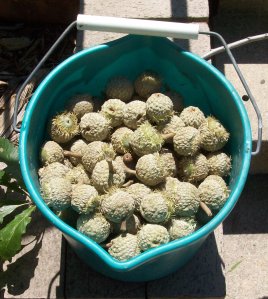
Bur Oak Acorns
Bur Oak Acorns

It’s time to write about this year’s garden — plot by plot.

Dedicated gardeners reflect on the past year and I am mostly serious about gardening.

As the garden has grown, so has my knowledge of how to care for the soil and grow crops. Evaluation of the year just past is part of learning.

Plot one was the first dug during spring 1994.

It is dominated by three Burr Oak trees planted from acorns collected the year our daughter graduated from high school. One tree for each of us. It is adjacent to a row of lilac bushes plants in 1994.  As drought conditions often plague Iowa, accompanied by scorching heat, it is better to plant some vegetables in a partly shady area. Shade creates a longer growing season for lettuce and reduces the amount of watering needed. The three oaks and lilacs are staying for now, although eventually may be thinned.

On the north side of the plot are some spring flower bulbs transplanted from the Indiana trucking terminal where I worked. They grew in the ditch near Highway 41 and were likely planted by a previous owner. They bloom faithfully each year and need to be dug and separated.

Next to the flowers is what used to be a row of iris. They are dying and what’s left needs to be dug and separated. Only an occasional flower now appears.

The rest of the plot was planted in garlic rescued from the town library. It eventually spread to cover the entire plot. A few years ago I placed tarps over the middle of the garlic patch to store stakes, cages and fencing. Each spring garlic pops up around the tarp perimeter. I harvest it for spring garlic, otherwise let it grow wild.

This year I pulled up one of the tarps and planted Turk’s Turban and Acorn squash. Both produced and some wait on the counter to be used.

This is the first year I tried an annual crop in plot one, and based on the results, I might try more. The near continuous shade makes crop selection the essential dynamic. While we enjoy the spring garlic, we should convert production to a regular, annual cycle of planting and harvesting garlic cloves. It is not too late this year, but with continuous daily work outside home until November, it is doubtful I’ll get a crop in.

Plans for next year: dig up the bulbs, separate and move to a more decorative spot in the yard; try an early spring crop like turnips, beets or radishes; till the entire plot after spring crop, evaluate, and likely plant beans to fix nitrogen in the soil; plant garlic in the fall.

Categories
Living in Society

Full Ballot Box, Coming Frost

Vote Democratic
Vote Democratic

I drove to the county seat to vote after my shift at the home, farm and auto supply store. There were six or seven poll workers — plenty of staff to handle the day’s last half hour of early voting at the auditor’s office.

The orange ballot box was so full the poll worker had to jostle it for mine to fit in.

Surprisingly, or not, this shit show of an election didn’t pull the final curtain after casting my ballot. The proscenium arch has no curtain after this godawful exposition of what politics has become. Trump may burn the theater down before he is through. Throngs of his supporters would cheer.

My next door neighbor called out as I arrived home. In jeans, a sweatshirt and stocking cap she was gleaning her garden before an imminent frost. She offered hot peppers. I declined as our ice box already has more than needed for winter. We conversed for a while about produce and ideas. We didn’t talk about politics.

This morning I left the glow of the computer screen to go outside.

It’s not going to frost this morning. My weather app tells me 32 degrees in the last half hour before sunrise. Ambient temperatures may dip to freezing, but not long enough to damage much in the garden. Experience tells me it won’t get that cold in the micro-climate of our yard. There’s less chill in the air than when I spoke with my neighbor.

As days move through the calendar experience also tells me election day won’t bring the end of politics as we know it. The body politic is ever changing, ever re-inventing itself, sometimes by design, sometimes by unintended consequences. Those of us who believe the framework of society is enduring also see an opportunity in today’s bedlam for positive change.

Not the hope and change Barack Obama touted in Iowa eight years ago. His administration will leave us with mixed reviews and something different. The clear knowledge that for change to come, we can’t lose hope. At the same time, we must work for change that is much needed in the American society we call home. Many of us will find hope in the ashes of the 2016 campaigns and are willing to work to bring change we know is needed.

Our work has already begun.

Categories
Living in Society

Toward Election Day

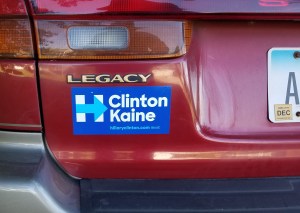
Bumper Sticker
Bumper Sticker

People are weary of the 2016 presidential campaign.

Voting began Sept. 29 in Iowa and we can’t get to Nov. 8 quickly enough.

For the most part, decisions about who to support are made. While there have been many surprises this cycle, and might be more, not much can change minds as we move toward election day.

The strength of Clinton’s campaign is in its organizers.

I met Janice Rottenberg more than a year ago in Iowa City. Today, she’s leading the Clinton organizing effort in Ohio, where Clinton stands a 60.6 percent chance of winning 18 electoral votes.

I worked with Kate Cummings, senior program director for Florida Democrats, during the 2012 cycle, She was also in Iowa for the 2016 Iowa caucus campaign. Clinton stands a 71.2 percent chance of winning Florida’s 29 electoral votes.

Some swing state numbers are looking good for Clinton Pennsylvania 86.6 percent, Colorado 84.1 percent, North Carolina 66.7 percent, Michigan 90.0 percent, and even Republican-leaning Iowa shows her with a 55.4 percent chance of winning. Overall, Hillary Clinton stands an 83.5 percent chance of winning the electoral college with 334 votes. That Clinton tapped the best organizing talent in the country to staff her campaign is making a difference.

For his part, if Donald Trump has political organizers it’s not clear who they are or what role they play in his media based campaign. He’s running as if it were a professional wrestling promotion. The WWE hall of famer knows how to run down and dirty and would drag us all to his level if he could. If the Commission on Presidential Debates would allow it, I expect he would call for a 1960s-style professional wrestling cage match like I saw with my father at Municipal Stadium in Davenport. Trump is more a promoter like Vince McMahon than a politician.

George Will wrote this week the Republican post-campaign autopsy can likely be written Nov. 9 in one sentence, “Perhaps it is imprudent to nominate a venomous charlatan.” I’m confident a majority of Americans feel the same way.

It’s all over but the voting, and if there are some surprises, the biggest one will be that Donald Trump receives tens of millions of votes. Republicans who plan to vote for him do so with a sense of duty to their party. After all, the Republican grass roots had the candidate they voted for and feel some obligation to vote for him in the general. They own that and many of us won’t let them forget.

As for Hillary Clinton, it seems like nothing will stop her now. It’s not over, but it’s over.

Categories
Kitchen Garden

Season’s End

Kale
Kale

Yesterday’s harvest yielded kale, some cucumbers and hot peppers.

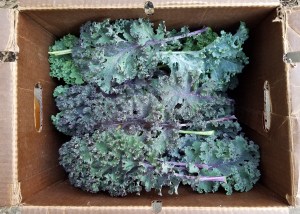
I sent another box of kale to the library for workers. It has been filled with kale countless times in recent years. It’s better quality than what’s available at grocery stores and they use it almost every day — good use for an abundant crop.

The aroma of Bangkok peppers in the dehydrator pervaded the kitchen air as I prepared a simple dinner of spaghetti with tomato sauce made of canned tomatoes, garlic, onion, basil, olive oil and oregano. I peeled and diced cucumbers to make a salad with Kalamata olives, feta cheese, olive oil and balsamic vinegar. There was fresh apple cider from the orchard.

I tasted the pickled red onions and decided to stop at two half-gallon jars. There are plenty to last until spring. Three crates of onions remain — more than enough for our small family.

The solace of kitchen work occupies hands and mind to help us forget what seems intolerable in society. At season’s end it is welcome relief.

Categories
Living in Society

Into the Hurricane and Presidential Politics

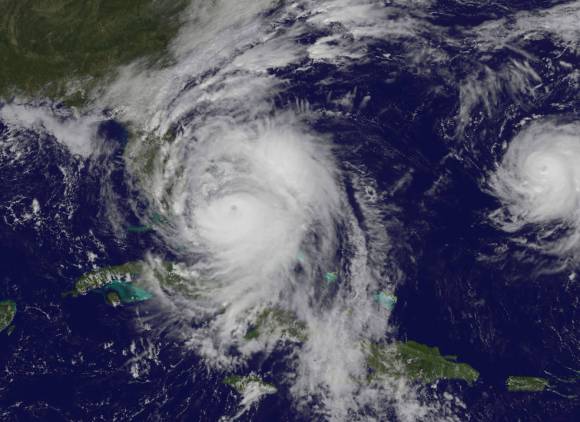
Hurricane Matthew Oct. 6, 2016 Photo Credit - NASA/NOAA GOES Project
Hurricanes Matthew and Nicole Oct. 6, 2016 Photo Credit – NASA/NOAA GOES Project

Millions of people began evacuating Florida, Georgia and South Carolina in advance of hurricane Matthew. Hundreds are reported dead in Haiti.

Downgraded to Category 3, Matthew began hitting Florida Thursday. It’s expected to pick up velocity.

During the most recent communication with our child in Orlando, she was soaking wet. After determining she had a safe place to stay, I reminded her of Florida’s Oct. 11 deadline to change her voter registration. She’s good in more ways than one.

With Hillary Clinton Jan. 24, 2016

My support for Hillary Clinton began as she declared for president April 12, 2015. There was never a question she would win in our precinct, except by what margin. The margin was enough to win two delegates and make Martin O’Malley viable. When O’Malley dropped out of the race after the Iowa caucus we picked up his delegate at the county convention making us three of four for Hillary. My support for Hillary Clinton has not wavered.

The Des Moines Register asked Donald Trump on June 28, 2015 what he would do differently if elected president.

“I would probably comb my hair back,” Trump said. “Why? Because this thing is too hard to comb. I wouldn’t have time, because if I were in the White House, I’d be working my ass off.”

This election is more about hurricanes than hairstyles.

What brought us to the odd and irritating presidential election campaign of 2016 is continued, intentional obstruction of Democratic administrations by moneyed interests beginning with the 1992 election of Bill Clinton. A case can be made this started with Franklin Delano Roosevelt after World War II, but the Bill Clinton administration was a time when Republicans held an ongoing witch hunt working to find something wrong. Politics changed under Clinton and not in a good way.

Hillary survived multiple attacks from Republicans since then, each time ending with a finding there was little or nothing there, including the recent investigations of Benghazi and her email management process while Secretary of State.

We hear about dark money in politics, but it really isn’t a question that Charles and David Koch are key organizers among wealthy people trying to influence, if not buy elections. They and others like them are behind the continuous obstruction of anything in government that doesn’t serve their interests. They have plenty of resources to make their case and taking money out of politics isn’t a long-term solution. I don’t believe it is possible. We should accept that there will always be moneyed interests whose political activities require more sunshine.

Unlike Republicans, Hillary Clinton has been doing her job. She is better prepared to be president than any candidate. The constant attacks and obstruction have made her stronger. It is telling of her strength that Republican Party of Iowa chair Jeff Kaufmann, with little positive to say about Trump, constantly criticizes Clinton.

“The American people have had enough of failed status quo policies which have left them less hopeful for our country’s future,” Kaufmann said in an Aug. 10 press release. “They have had enough of serially dishonest, corrupt, and self-interested career politicians like the Clintons.”

Former Tiffin mayor Royce Phillips’ comments at yesterday’s debate with North Liberty mayor Amy Nielsen in House District 77 represent the accommodation Iowa Republicans make for Trump.

“Do I agree with everything the man says? Of course not,” Phillips said of Trump. He then drew a false equivalency between Trump and other politicians, cozying up to his nominee with every breath.

I call bullshit on Kaufmann, Phillips and other Republicans like them. Kaufmann is a successful campaigner but represents moneyed interests in the presidential race more than he does Iowans. He is experienced in campaigns and must realize that to win he has to keep attacking Hillary Clinton with his every breath regardless of the truth. For Kaufmann and his ilk the election is only about winning and there’s the rub.

Whatever the outcome of the 2016 presidential election, Americans will have reaped what they sowed. My hope is the electorate will send Hillary Clinton to the White House.

In a weird comment during the first presidential debate, seeming to promote his new Washington D.C. hotel, Trump said, “I’m going to get to Pennsylvania Avenue one way or another.” Expect obstruction of Democratic administrations by the richest Americans to continue if Hillary is elected Nov. 8.

For the rest of us, this election will soon be over. We know how to deal with a hurricane by evacuations or by hunkering down in a safe place. We know how to clean up the aftermath and rebuild.

What we don’t know is how the 2016 political campaign will leave us in its wake. Expect the damage to extend well beyond Florida, throughout the country. The rebuilding materials won’t be found at local hardware stores.

Categories
Environment

Letter to the Des Moines Register

(EDITOR’S NOTE: I send more letters to the Des Moines Register than get printed. This topic has been well covered in the news, so I doubt they will run it. Will post a link if they do).

There’s a bitter irony in the letter Iowa’s two U.S. Senators sent the U.S. Army Corps of Engineers Sept. 27 regarding $73 million in funding for a Cedar River project for flood risk management authorized but not funded by Congress in 2014.

The tough, clear message from Senators Grassley and Ernst to the Corps is find the money for the project in your budget. The irony is there will be no specific appropriation by the Congress to meet the needs of Iowa’s second largest city.

The Iowa Department of Natural Resources indicates on its website that eastern Iowa can expect increased frequency of precipitation extremes that lead to flooding. The need for the project is real.

While Iowa’s Senators have taken the Corps of Engineers to task for not prioritizing the Cedar River project, their effort to tie the Corps to the whipping post are transparent in this election year.

The letter is what austerity policy looks like. It’s not good for the people of Cedar Rapids or for other flood impacted areas in Iowa.

Instead of drafting terse letters, show us how Cedar Rapids gets funding for the Cedar River project.

Categories
Living in Society Social Commentary

Can Hipsters Live With Congolese Cobalt?

Youth cleaning cobalt ore Photo Credit - Getty Images
Youth cleaning cobalt ore
Photo Credit – Getty Images

The lithium ion battery is becoming ubiquitous.

These rechargeable, portable batteries power our mobile phones, tablets, laptops and cars, providing longer battery life, low self-discharge, better recharge life and comparatively low weight.

Many of us take these benefits for granted, not thinking much beyond the brand of our phone, computer or car — other than the fact it is better with a lithium ion battery.

There are issues with cobalt, a key element in lithium ion batteries, mined and produced in the Democratic Republic of Congo.

According to the Washington Post,

The world’s soaring demand for cobalt is at times met by workers, including children, who labor in harsh and dangerous conditions. An estimated 100,000 cobalt miners in Congo use hand tools to dig hundreds of feet underground with little oversight and few safety measures, according to workers, government officials and evidence found by The Washington Post during visits to remote mines. Deaths and injuries are common. And the mining activity exposes local communities to levels of toxic metals that appear to be linked to ailments that include breathing problems and birth defects, health officials say.

“60 percent of the world’s cobalt originates in Congo — a chaotic country rife with corruption and a long history of foreign exploitation of its natural resources,” Todd Frankel of the Washington Post wrote. “A century ago, companies plundered Congo’s rubber sap and elephant tusks while the country was a Belgian colony. Today, more than five decades after Congo gained its independence, it is minerals that attract foreign companies.”

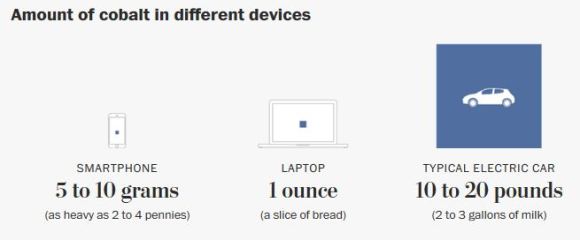
Image Credit - Washington Post
Image Credit – Washington Post

Cobalt is not covered under U.S. law regarding conflict minerals. When Congress passed the Dodd-Frank Act in 2010, it directed the U.S. Securities and Exchange Commission to draft rules for companies that use conflict minerals — tantalum, tin, gold and tungsten — when deemed “necessary to the functionality or production of a product.”

“Congress enacted (this section) of the Act because of concerns that the exploitation and trade of conflict minerals by armed groups is helping to finance conflict in the DRC region and is contributing to an emergency humanitarian crisis,” according to the SEC web site.

Some advocate inclusion of cobalt in Dodd-Frank rules.

Conditions among cobalt miners in the Congo are deplorable compared to hipsters who use phones in part produced by their hands. Can hipsters live with Congolese cobalt?

Our social responsibility regarding Congolese extraction and production of cobalt is unclear. Like much of the work that supports our global supply chain cobalt mining has been out of site and out of mind. There is no adequate, intuitive answer. Nonetheless, users of lithium ion batteries share responsibility for the conditions in Congo whether we are aware of them or not.

To learn more, read the entire Washington Post article, The Cobalt Pipeline: Tracing the path from deadly hand-dug mines in Congo to consumers phones and laptops, by Todd C. Frankel, Michael Robinson Chavez and Jorge Ribas.

~ Written for Blog for Iowa

Categories
Home Life Writing

Last Bits of Work

Bangkok Peppers
Bangkok Peppers

Two hours before my shift at the orchard I was feeling punk. I went to work anyway.

While ringing up a dozen customers I felt light headed and a bit nauseous so my supervisor sent me home. She didn’t want whatever I had to infect other workers. Good call on her part.

After two four-hour sessions of sleep, I feel much better and am ready to head over again later this morning. Before I do, some last thoughts about this 96-hour staycation in Iowa.

I’m lucky to have worked a full career that paid our mortgage and helped put our daughter through college. There are plenty of people who work low-paid jobs like mine who don’t have that kind of financial platform for support. To make up the difference between income and operating expenses we’ve taken on some debt. We feel it’s manageable and have a plan to pay it off. Like most anyone should, we watch our cash flow. We also have been able to weather multiple challenges in recent years that would have sent others to the poor house if such a thing still exists.

Everything on my “deal-with list” has been addressed. Some things — car repairs, understanding and signing up for Medicare, writing about the Cedar River flood — came easily. Others — financial planning, longer writing projects, producing value from life as a sixty-something — present longer term challenges. What I wrote on Sept. 11 proved to be useful.

The key to dealing with this and everything else on my deal-with list is to take care of myself and not freak out. That I have this blog helps with the not freaking out part. There is solace in work.

I haven’t freaked out and am taking better care of myself as the staycation ends.

Sliced Red Zeppelin Onions

Canned goods were moved to the lower level where the storage rack is once again full. The production was less than in previous years, but focused on items we will use well over the coming months. Gardening is a perpetual process and this year produced in abundance. The trouble was August when I worked four jobs without adequate time to reap what I sowed. It was a learning point more than disaster and local farmers helped me make up for what was missed at home.

Remaining is fall yard work, home maintenance, financial planning, and most importantly writing. The reason for retiring in July 2009 was to enable my writing. I’ve gotten better at it and am ready for something longer, maybe book-length, which can be promulgated. That and ensuring our sustainability in a turbulent world remain on the deal-with deescalated to to-do list on my white board.

Better prepared to tackle today’s challenges, I’m hopeful. Hopeful about the lives of family members. Hopeful about the community of friends and acquaintances we’ve built here in Big Grove. Hopeful our country will make sound decisions during the Nov. 8 election.

Whatever the outcomes, the brief vacation this week helped get me back to who I am. I’m thankful for that and ready to engage in society again.