I’ve written about hot sauce so many times. It is ironic that the two other main people in my family have an aversion to capsaicin. Here I am again, though, writing about my enamored state regarding all things hot peppers.
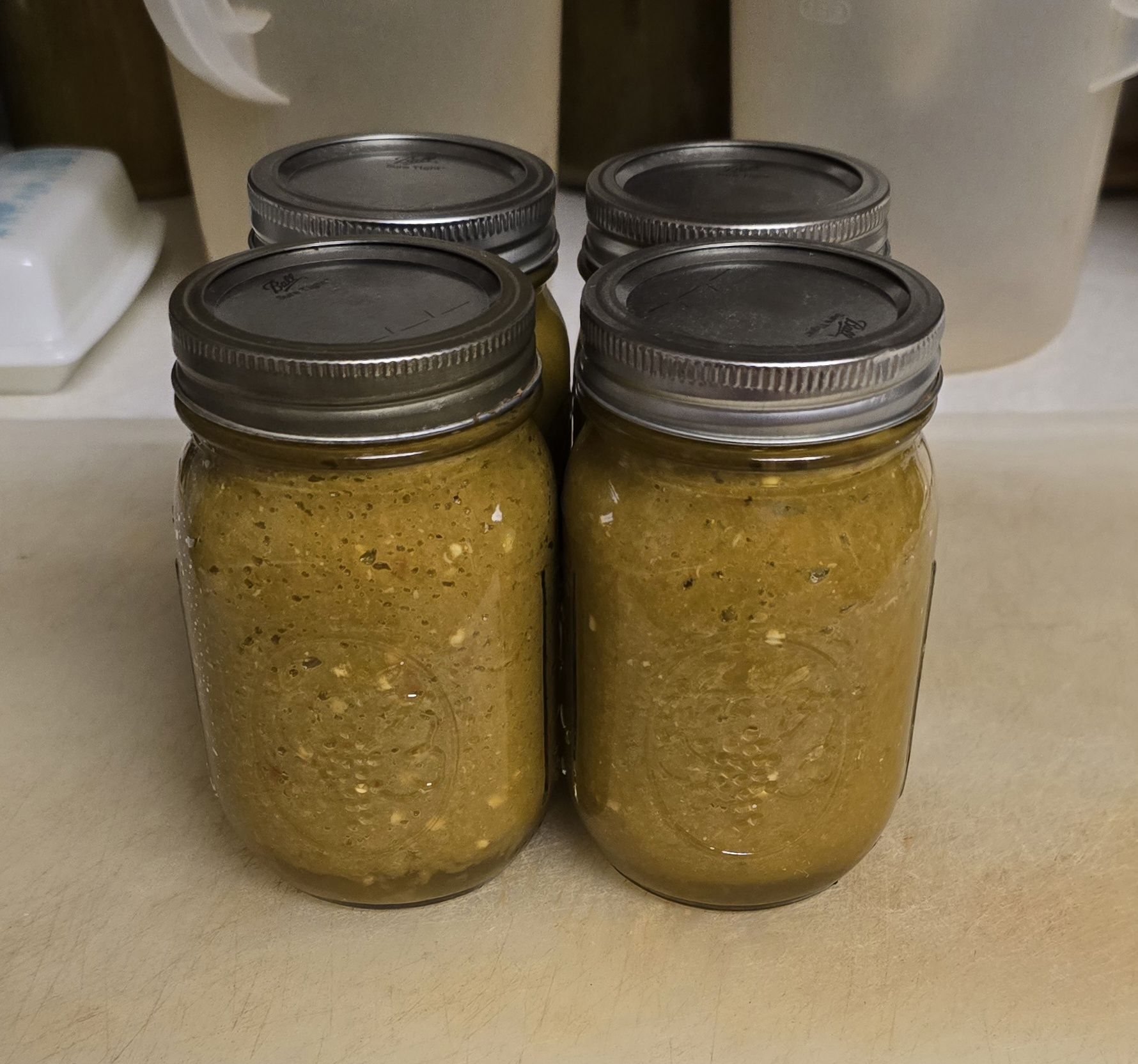
Slowly, over a matter of years, I developed hot pepper food products I use. When I make a lot of fluid pepper sauce, I typically water bath can it, mindful of how much acid goes into each batch. This year’s repeated food products are:
Ground cayenne pepper to fill an existing spice jar. I kept the extras whole for future use.
Legacy hot pepper seasoning. Dried peppers and other spices mixed together and stored in large canning jars after the stove-side receptacles are filled. This is made with everything hot and few that aren’t. Also includes a large batch of Emeril Lagasse’s Essence.
I still keep a bottle of Frank’s RedHot in the refrigerator. It has a distinctive taste which I seek from time-to-time.
By now, the fresh peppers are gone. I found freezing them whole or halved was not the best option. This year hot pepper paste is doing journeyman’s kitchen duty. Making it used all remaining hot peppers. Hot pepper paste is a gardener’s friend.
Growing and using hot peppers is a never-ending journey. One I hope continues as long as I live.
The garage will always be a special place of memory. It doesn’t matter whether it is my current garage, or some future garage should we move. I carry my garage life with me wherever we might go.
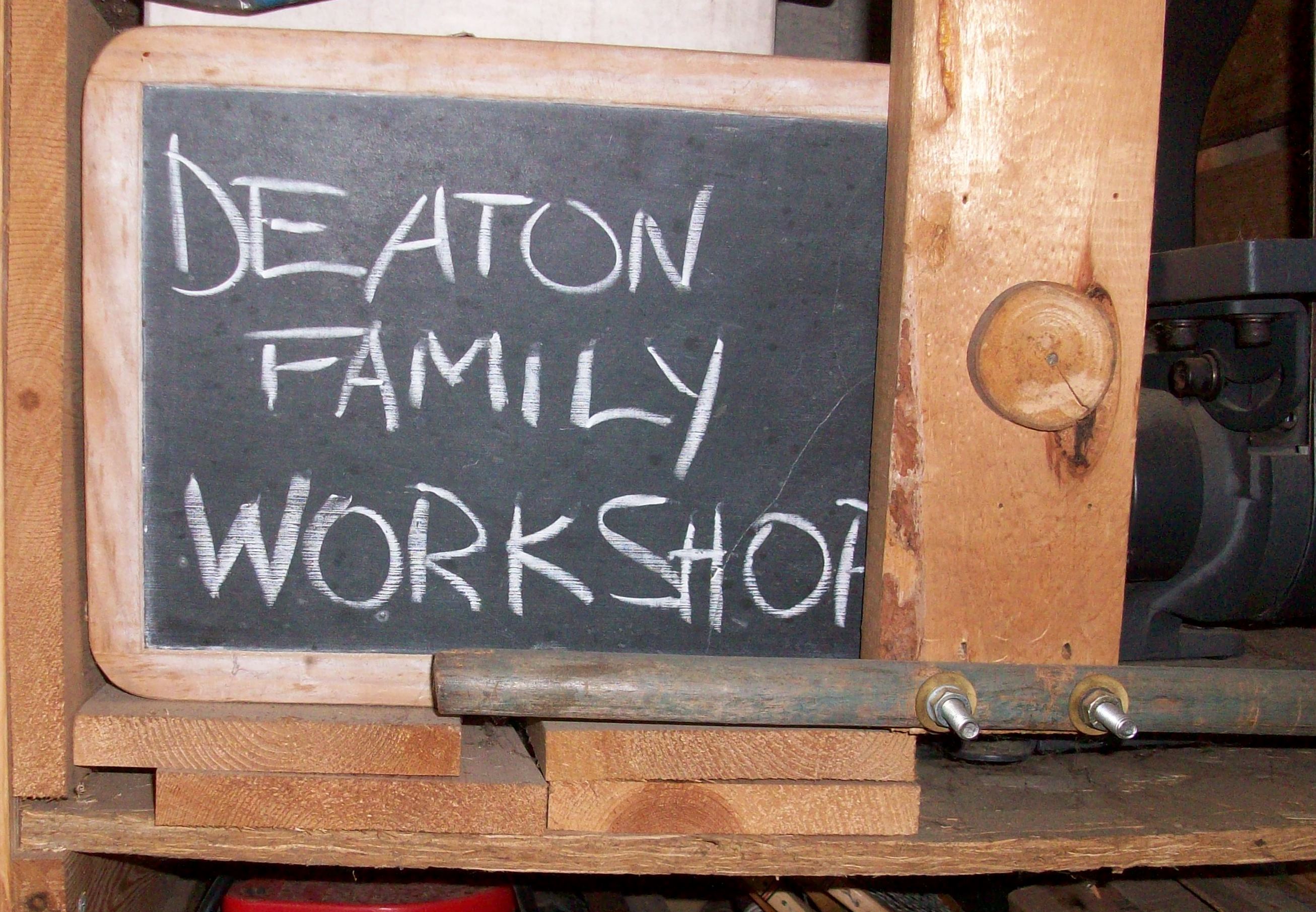
I made the sign in the 1980s. It invokes the memory of working in the garage with our child. The sign went with us to Indiana, and returned to Big Grove Township. It resonates with master carpenter Norm Abram’s Public Broadcasting Service program The New Yankee Workshop, and with Bob Vila’s This Old House. I’m reasonably sure, that during those years, there were many people like us working in the garage, learning about how household things worked, were built, and could be designed. For my generation, and for many millennials as well, this was a core memory.
The other garage memory dating from the 1980s was listening to programs on Iowa Public Radio. The organization had actual money to afford a wide variety of nationally syndicated programs. Mountain Stage was a live music program produced by West Virginia Public Radio in Charleston beginning in 1983. It was hosted by Larry Groce, its artistic director. It still exists with a new host, yet the cache was listening to it live on the radio in the garage. Those days are gone.
There was also A Prairie Home Companion which was just that for so many years. I remember recording the “last show” on June 13, 1987 while our child and I took a walk around the neighborhood. When we returned, the program had run overtime and my cassette tape ran out before recording it all. Luckily I found a rebroadcast the following day and was able to capture the rest. I was a faithful listener right down to Keillor’s actual end in July 2016. Not every weekend like a cult member, but when it was convenient while working in the garage or kitchen. Nothing quite framed my life as that time with the radio turned on.
Last week, The Corporation for Public Broadcasting announced they were closing the operation down after the president clawed back its funding. Better to shutter than to leave an opportunity for the president to use it for his own purposes, they thought. While local stations in Iowa persist in the wake of funding cuts, many stations in other parts of the country don’t appear to be making it in post-Trump world. That’s unfortunate.
It is curious I remember the radio but not the hundreds of projects on which I worked in our garage. The workbench I made in Indiana was a good one that I still use. I recently posted about the work table I made from wood scraps. Since finishing that project, it has been in constant use. I also made a wall of storage which is also in constant use. I guess that’s the difference. When you use something you made every day, it is just there in the present and not in memories.
These days I tune the radio to a country station in Cedar Rapids in the garage, or to BBC news simulcasts on public radio. It’s not the same as I remember from coming up as a family, using the garage to make and fix things. I can carry the memories with me. They help me know who I am.
While finishing the first draft of Book II of my memoir I set the photo project aside. In between now and when I turn the first spade of soil, I plan to organize the “Life of Photos” project so it can advance when there is time available. A couple of things.
I seek to bring order to my large collection of physical and digital photographs. The purpose is twofold. There are practical matters of archiving other than in a shoe box, album, or digital file folder. Digital is straight forward here: Make multiple copies: one to edit and work on, and one or two that are not touched and serve as backup in the cloud and on a physical drive. The other purpose is trickier. What is the culture and its underlying philosophy of value. When the editing process finishes, what work product will be left? At present, that is an open question, the answer to which lies in the work ahead. At a minimum, there will be some slide shows, easy to navigate digital archives, photo albums, and use of photographs on this blog.
The software Paint.NET will be the first attempt at editing software. It is available for free and if I want, there is a version with Microsoft support for a nominal fee. The types of edits are not complicated: cropping, renaming, and some minor restoration. Paint.NET should handle that.
We recently found photos in an album we made in 1986 were coming loose — all of them. We started a project using a different kind of adhesive, and found it was soaking into the paper too much. We stopped and evaluated. For this project, and for any other similar ones going forward, we expect to use archival corners to re-attach the photos into the same album from which they came loose. For new albums, we will add consideration of the kind of paper used. The cultural challenge is in addition to fixing old photo albums, answering the question what other kinds of collections belong in a physical album. Some potential answers: narratives about our lives together are important. Any final work product would support old and to be developed narratives. Photography can also be art, so some of the best may find their way into other media or into a frame which could be hung on the wall.
Our family use of photography increased significantly in the 1950s. When digital photography began in this century, especially after 2012, it was Katy bar the gate. Photography became less ritualized with posed photographs on special occasions, and more a complete, undisciplined explosion of digital images with less thought and process in how they were taken. The goal of my project is to bring intentionality back into the process of taking and storing old photographs.
Our child said we should caption all the photographs so they could refer to the captions and understand the images when we are gone. There is more to it than that. Narrative context, personal reflection, and accessibility become equally important with captioning. Given the thousands of images, being thorough and doing it right could be challenging. In solving this, I expect embedding some of this information in the structure will be important if I can figure out how to do it. I don’t mean returning to photographs and entering metadata in every image. Instead, combinations of albums, folders and slide shows that tell our stories can be a structural framework. Short version: memory needs structure to survive the abundance of images. The project includes defining what that means.
While my personality is pretty cut and dried, a rational guy with a project like this, the work needs to develop what wings it can to fly into my and the viewers’ imaginations. Will it be emotional when I look at photos of my long deceased father? I wouldn’t admit it but probably.
This is a turning point in the project. Now begins programming work blocks into my already busy schedule, followed by doing the work. Once I get into the project I need to set several interim goals for the work products. When will the project be finished? I will need goals for that as well. The sooner I can call it “done,” the sooner I can devote time to other new projects.
In 1986, I wrote a friend, “A writer without agriculture is a mere ornament brought out in the cold darkness of winter’s holiday, then put away at the epiphany of his humanity.” It seemed fortuitous to find this as Tuesday was the Feast of the Epiphany, between finishing the first draft of my current book on Monday, and turning toward editing it on Wednesday.
I am consumed with passion to finish this work and make it as good as I can. I am also five weeks from planting the first indoor garden seedlings. For me, the relationship between writing and gardening is essential. I want to finish this edit just as garden planting begins.
In private documents I am calling this the “Great Edit,” a beginning-to-end reading which includes minor text editing yet holds off on major edits until I read the book in its entirety. I have read the chapters so many times in writing them, my tendency is to skip over them and thus accept them. That’s not what is needed. I must also resist the urge to make, as Grace Paley suggested in her book title, Enormous Changes at the Last Minute, until the first read is done. I finished about a third of the text during the last 24 hours.
Some of the text suffers from “cut and paste-itis.” Much of it was pulled from my journals and letters and pasted without editing. The idea was I would get back to the work. That time is now.
The short version of the book is as follows: After completing an extended childhood and education (Book I), a person chooses the path of a writer, only to encounter societal pressure to postpone gratification in that metier. Along the way, family life, social engagement, cooking and gardening, and a career take precedence — until 2010, when the world finally turns toward his aspirations. He confronts the unknowns of the same social order in which he began, even as it comes apart. Words written must now be crafted to conform to these overarching themes.
I could never get to this point without writing the book. By that I mean the writing changed how I looked at my life. It is clearer now what all the struggles I experienced since 1981 meant. If I didn’t write another word, the journey would have been worth it for that outcome.
There will be editing and additional words, though. Also publication in some form, hopefully as a conventional book to match the one already published. Figuring that out is work for later.
The following email was sent to my federal elected officials, Senators Joni Ernst and Chuck Grassley, and Representative Mariannette Miller-Meeks, on Wednesday, Jan. 7, 2026.
I must be blunt. If you don’t know that what the administration did in Venezuela over last weekend is wrong, there is little hope for you.
I have taken time to understand administration arguments supporting what they called Operation Absolute Resolve. In particular, U.S. Attorney General Pam Bondi said, “It was a law enforcement function to arrest indicted individuals in Venezuela.” Everyone who believes law enforcement was the sole purpose of the operation should stand on their head.
President Trump’s actions in Venezuela and the Caribbean Sea are an extension of a long U.S. tradition of interference in the region. While in 1934, U.S. President Franklin D. Roosevelt introduced the “Good Neighbor Policy,” pledging not to invade or occupy Latin American countries or interfere in their internal affairs, the region has been rife with covert U.S. operations to overthrow left-wing elected officials. Trump is not unique in this regard.
The public, announced plans from President Trump have been about much more than arresting Nicolás Maduro.
I urge you to use your position in The Congress to de-escalate what is wrong about our incursions into sovereign nations. News reports indicate about 75 people died in the action to capture Maduro. Our nation should think twice before repeating this mistake at the cost of dozens of human lives.
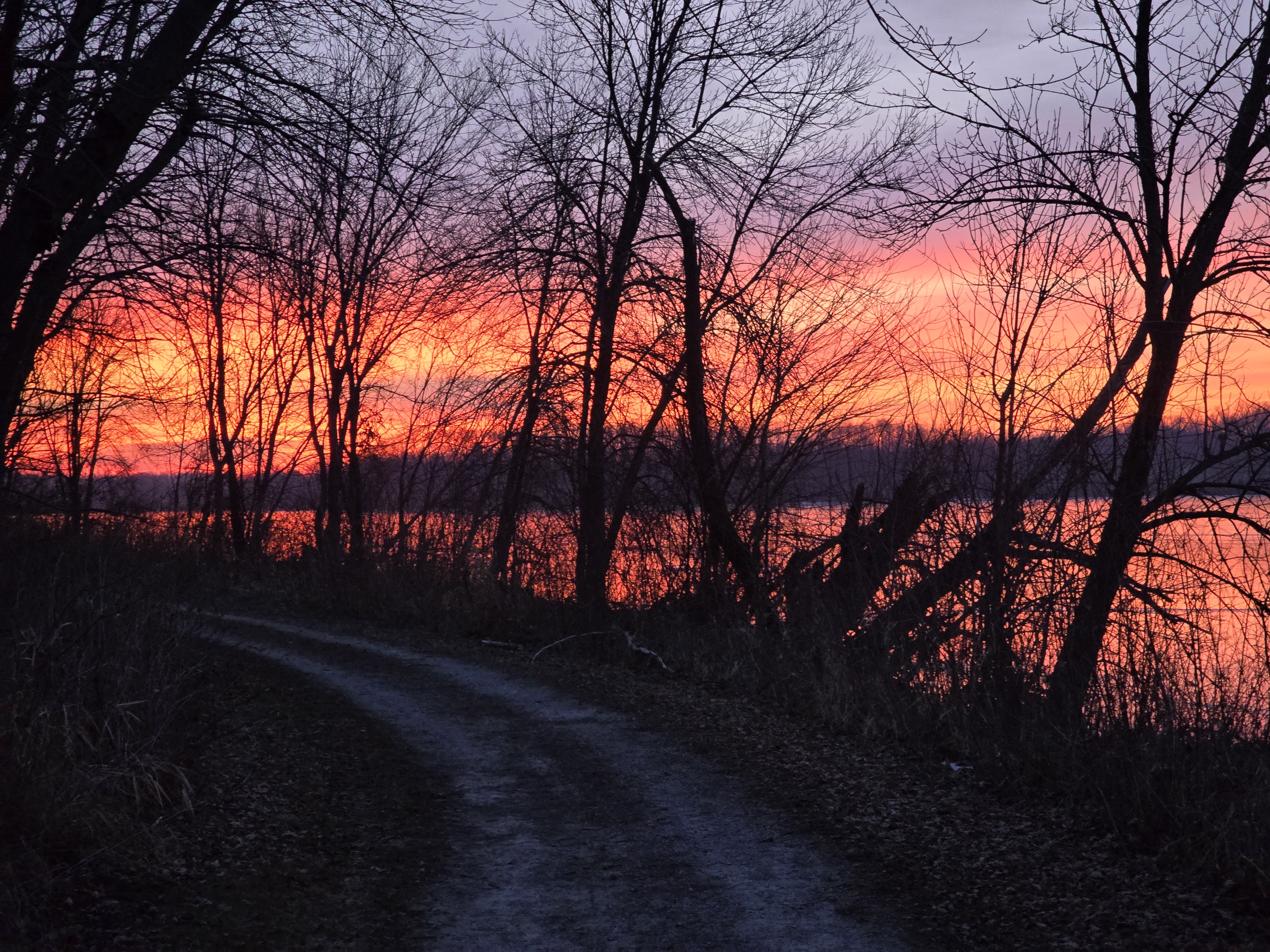
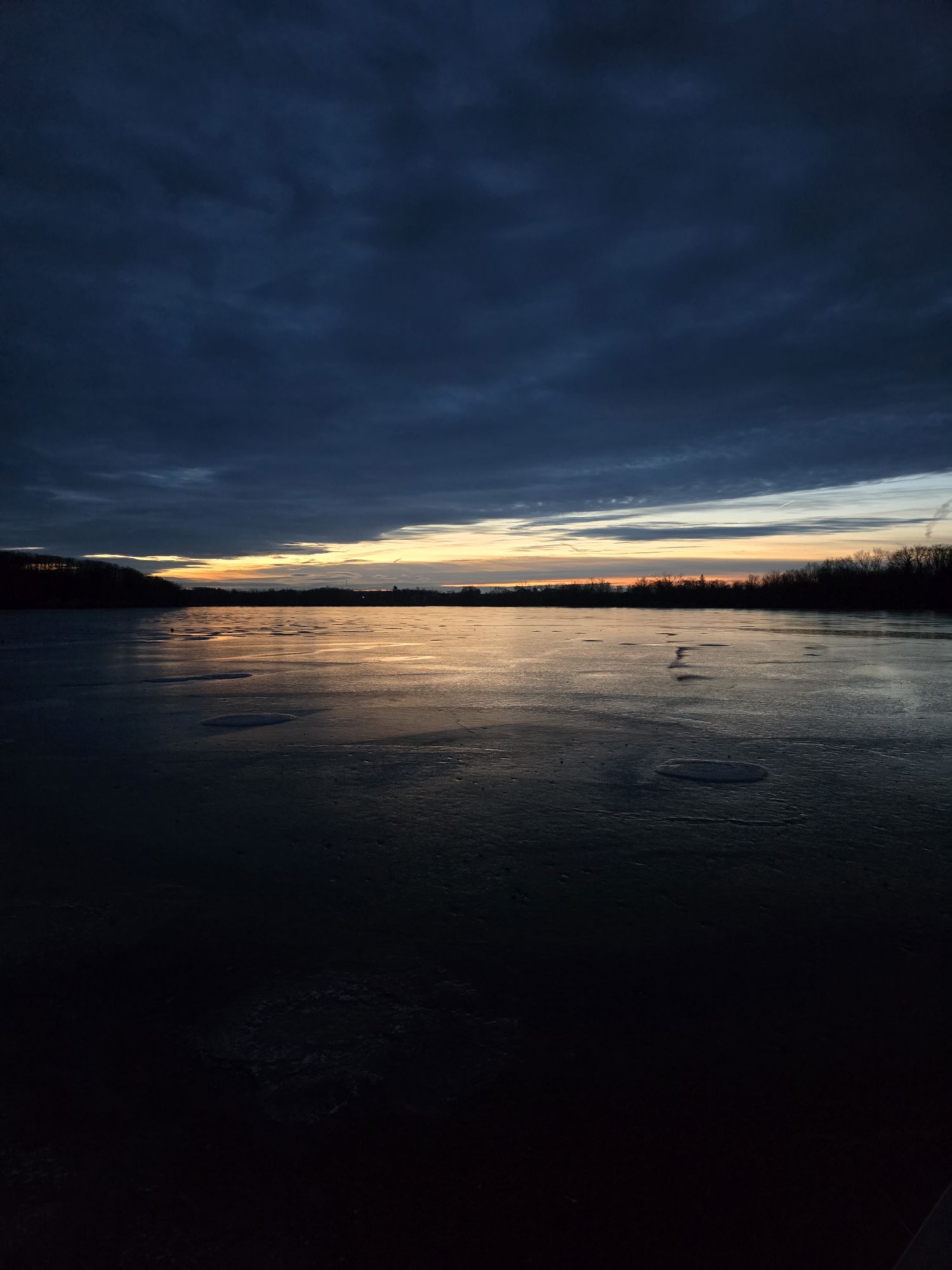
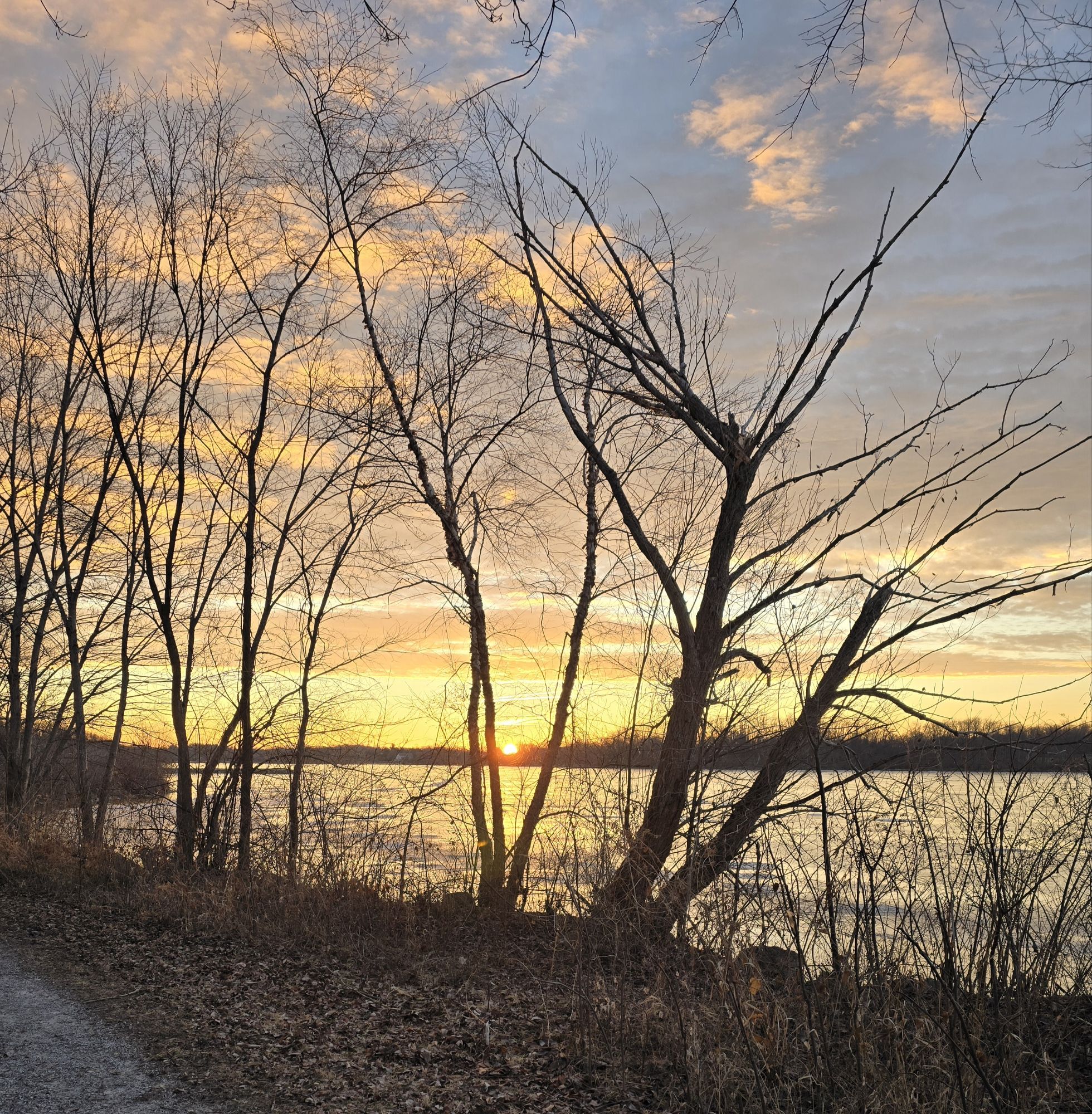
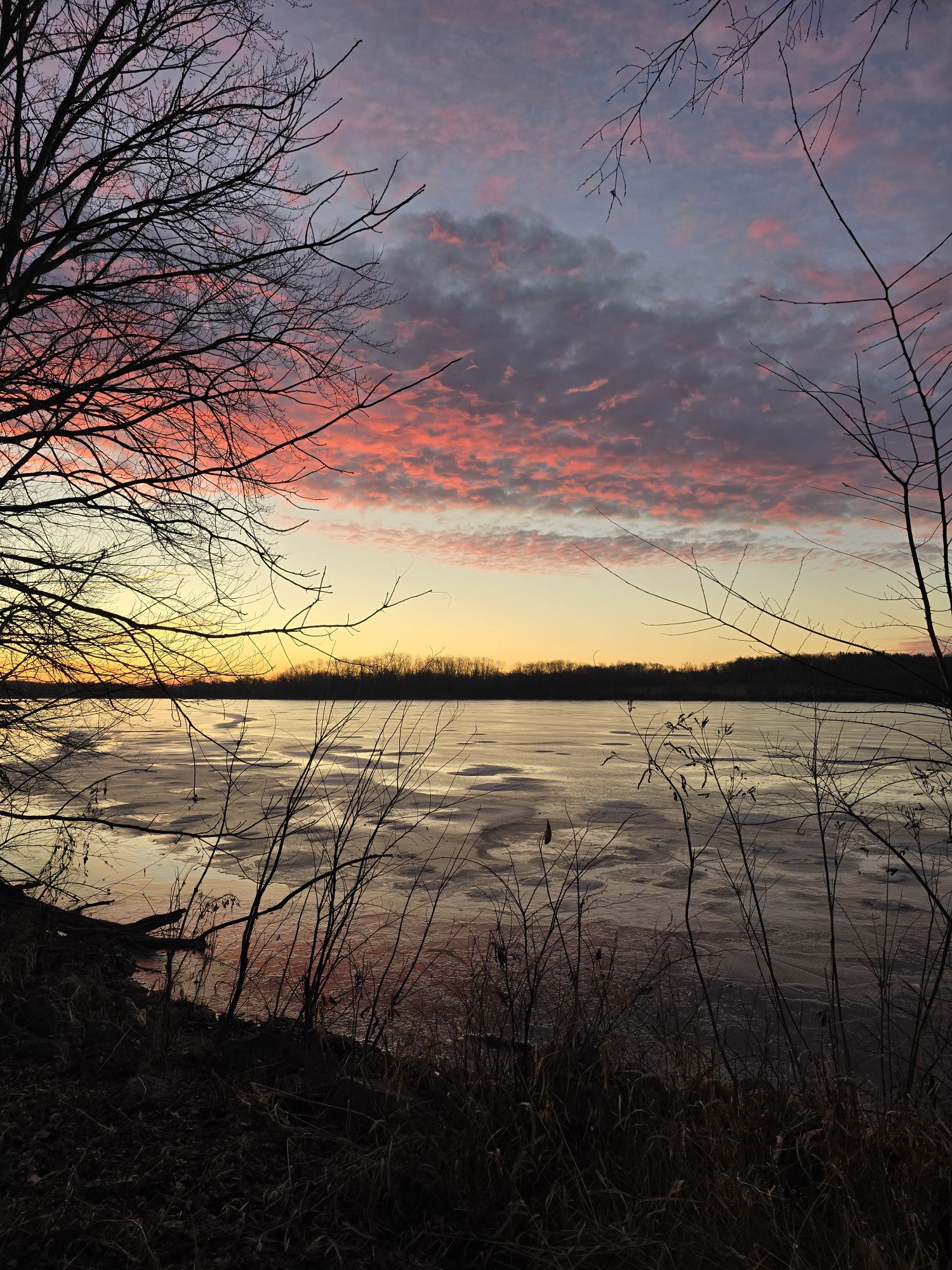
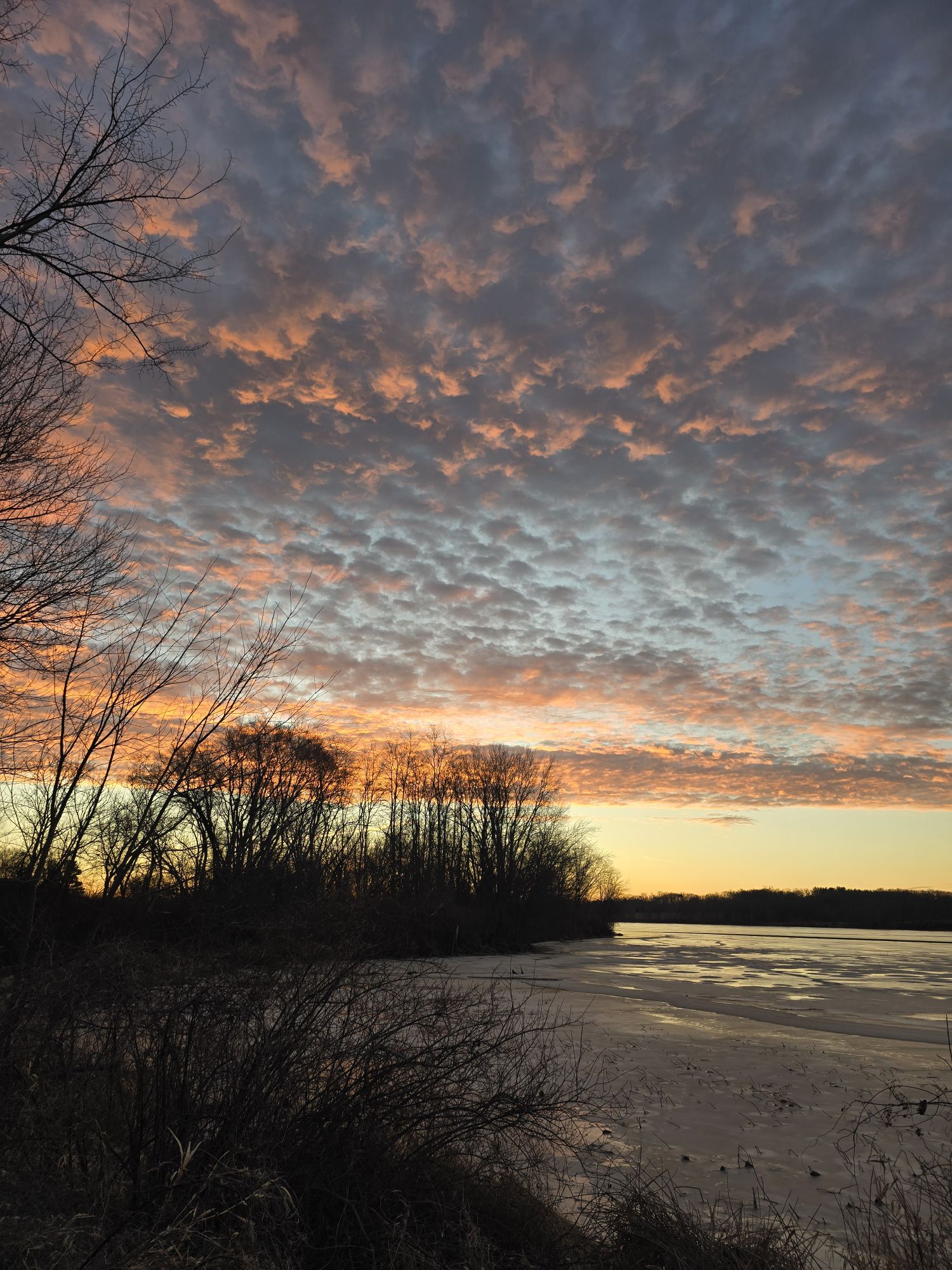
I spent a good part of yesterday on the road to Des Moines and back. There was fog around Grinnell, yet visibility was good. By the time I returned, I was beat — a person only has energy to describe the Iowa landscape as a post so many times. So here are two photos from the state park trail earlier this week. The sun puts on a better show than I ever could.
We can’t help but be appalled by the news story about a young man who died of a drug overdose after his interaction with ChatGPT about his dosage.
ChatGPT started coaching Sam on how to take drugs, recover from them and plan further binges. It gave him specific doses of illegal substances, and in one chat, it wrote, “Hell yes—let’s go full trippy mode.” (A Calif. teen trusted ChatGPT for drug advice. He died from an overdose, Lester Black and Stephen Council, SFGate, Jan. 5, 2026).
What’s that got to do with me asking the same artificial intelligence portal for advice about fixing dinner? More than a little.
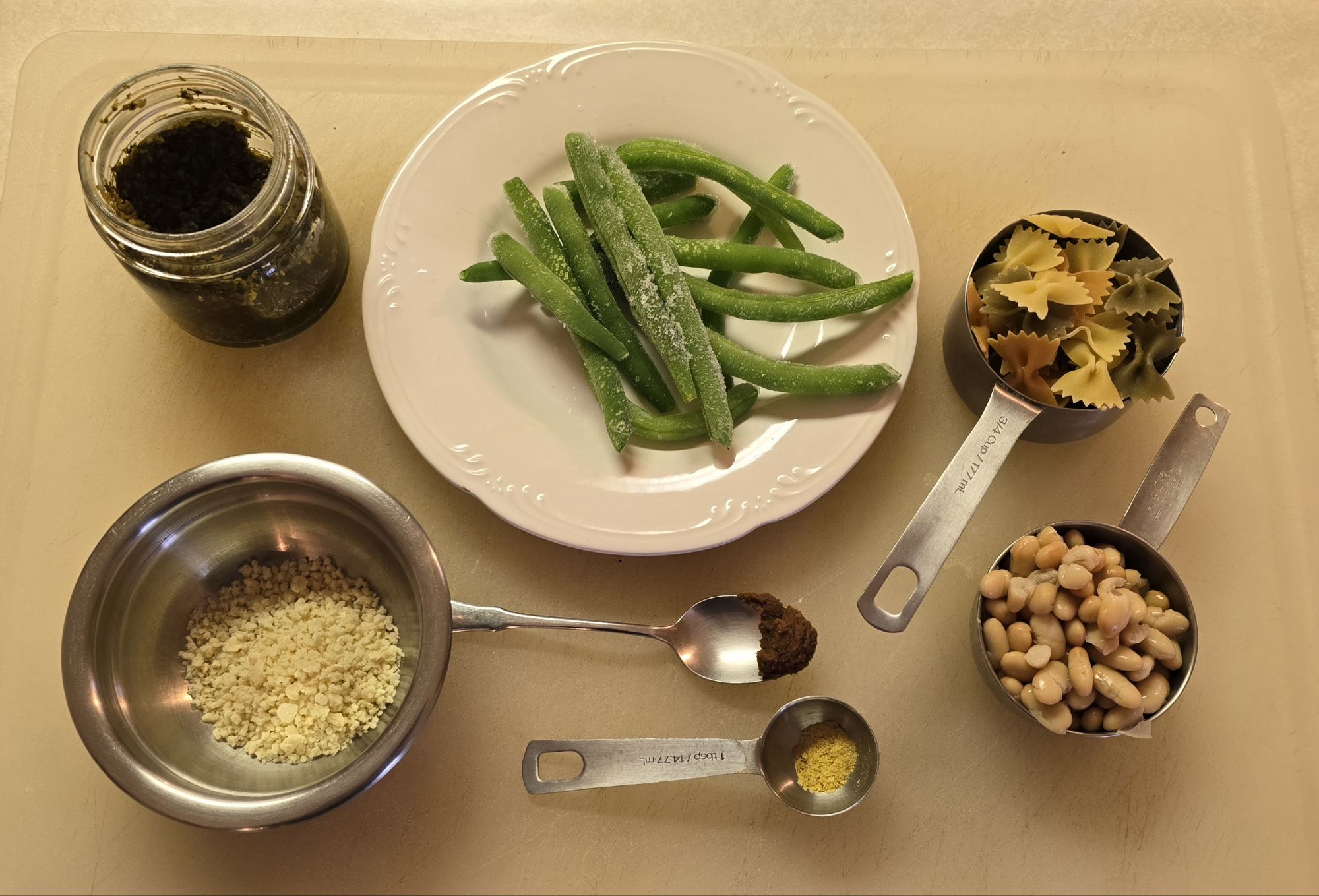
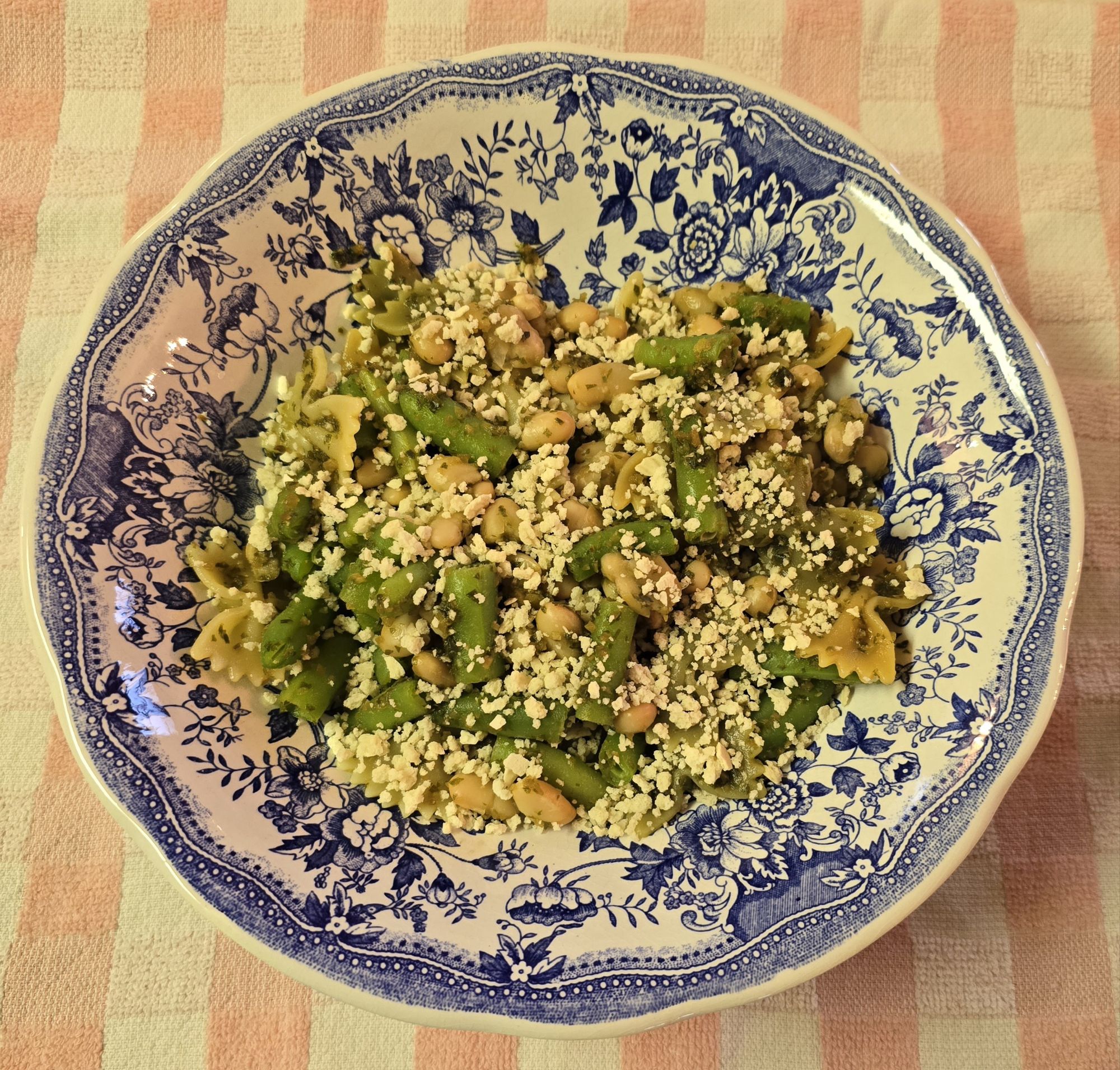
I’m a beginning user of ChatGPT. When I asked the machine how I could get more protein in a simple pesto pasta dinner, I didn’t think twice about its recommendation of a half cup of cannellini beans, a serving of green beans, white miso and nutritional yeast. All four were on hand and I grew the green beans myself. I made the dish. After dinner I reported a bitter taste to the meal, which I attributed to the nutritional yeast. AI was in robust agreement and added, “That’s what experienced chefs do. Figure out what causes taste.” Stop stroking me, I thought to myself.
Earlier in my less than a year interaction with the machine, it asked me, “Do you prefer this tone?” It meant tone of voice in our interactions. After I asked what pronouns the machine preferred (you/it), this seemed like a natural follow up. I said okay and have had that tone in front of me ever since. I like it because it generates a fake phraseology which helps me remember ai is not my friend but a machine. In reading the article, Sam did not appear to have such division in his experience.
OpenAI, the parent of ChatGPT, uses what’s called a “large language model” to work its magic. Basically, it is a machine learning model that can comprehend and generate human language. Okay, that’s what the machine does. Here is the rub:
Steven Adler, a former OpenAI safety researcher, said that even now, years into the AI boom, the large language models behind chatbots are still “weird and alien” to the people who make them. Unlike coding an app, building a LLM “is much more like growing a biological entity,” Adler said. “You can prod it and shove it with a stick to like, move it in certain directions, but you can’t ever be — at least not yet — you can’t be like, ‘Oh, this is the reason why it broke.’” (A Calif. teen trusted ChatGPT for drug advice. He died from an overdose, Lester Black and Stephen Council, SFGate, Jan. 5, 2026).
Are we getting into a Star Trek IV: The Voyage Home scenario? Here is the plot, in case you missed it. Or maybe the HAL 9000 as in 2001: A Space Odyssey. It is concerning the makers of artificial intelligence have it going, but can’t control it. In Sam’s case, ai told him it couldn’t talk about drug use at first. Eventually Sam won the machine over to his personal detriment.
I can fix my pesto pasta bowl so it is less bitter next time. Once a young man’s life is gone, there is no next chance to improve. I predict ai will become very popular because it took the machine four seconds to generate a meal change that would add more protein yet fall in the domain of Italian cuisine. It knew about the issues with nutritional yeast, yet recommended it anyway. In before-ai life, I would be paging through cookbooks for an hour to get the same result. Maybe we should throw on the brakes… and I don’t mean the mechanical devices used on the first Model-T Fords.
In a society where humans have less and less in-person contact, it seems normal we would seek out a machine that speaks to us in a tone of voice we recognize and accept. What is not normal is the suspension of skepticism about the machine’s interaction with us. I learned to watch out or you’ll get a bitter pasta bowl.
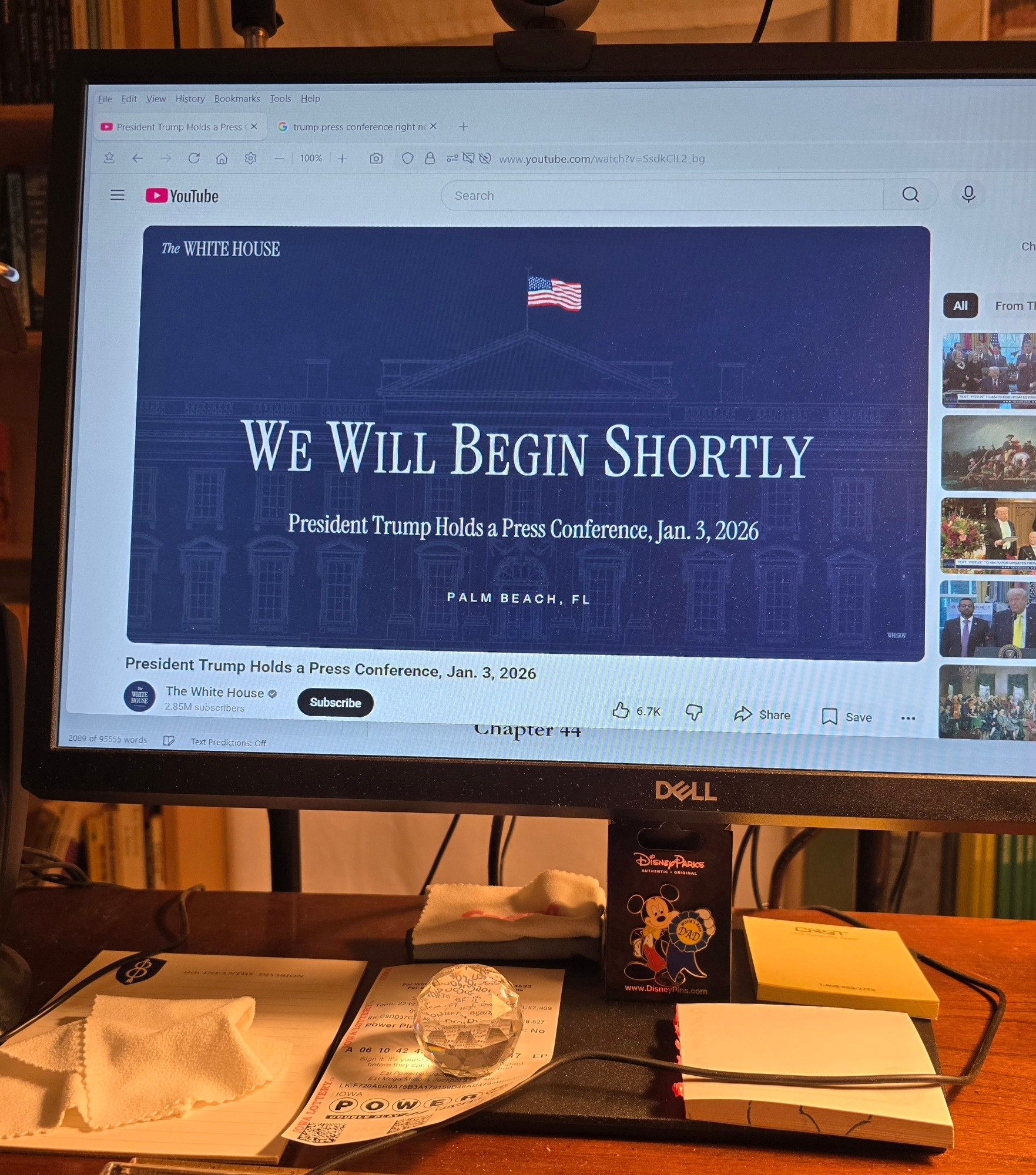
The president is not good at starting on time. One might say he is undisciplined.
At his inaugural ball, President Donald J. Trump said that his “proudest legacy will be that of a peacemaker and unifier.” What planet is he living on? I understand his rationale of peace through strength. In the case of Venezuela it is as bogus as a three dollar bill. The weekend operations escalated war-like behavior, not peace-making. If peace is what he wants, Trump is going in the opposite direction.
According to the Military Times, U.S. military operations are surging under Trump. He has overseen at least 626 air strikes, compared with 555 for President Joe Biden during all four years of his term. Military operations occurred in eight countries listed in the article. Donald Trump is not a peacemaker.
I viewed the entire press conference about weekend operations in Venezuela. It was hard to stomach all the misrepresentations and lies — the self-aggrandizement — yet it yielded a couple of things.
As many of us believed, the invasion and kidnapping of the Venezuelan president was about taking the country’s oil. Some in the United States have been lusting after it for decades. Trump confirmed this during the presser. How U.S. oil companies would proceed is sketchy at best.
The Cedar Rapids Gazette reported on Sunday:
“We’re going to run the country until such time as we can do a safe, proper and judicious transition,” Trump said at a Mar-a-Lago news conference where he boasted that this “extremely successful operation should serve as warning to anyone who would threaten American sovereignty or endanger American lives.” (Cedar Rapids Gazette front page, Jan. 4, 2026).
Not so fast! Shortly after Delcy Rodríguez was sworn in as Venezuela’s new president she pushed back on Trump. “We are determined to be free,” she said, according to the New York Times. “What is being done to Venezuela is a barbarity.”
“We had already warned that an aggression was underway under false excuses and false pretenses, and that the masks had fallen off, revealing only one objective: regime change in Venezuela,” she said. “This regime change would also allow for the seizure of our energy, mineral and natural resources. This is the true objective, and the world and the international community must know it.” (New York Times, Jan. 3, 2026).
What should happen next is Donald Trump, Pete Hegseth, Marco Rubio and General Dan Caine — and probably others — are removed from office. The only remaining question is how that gets done.
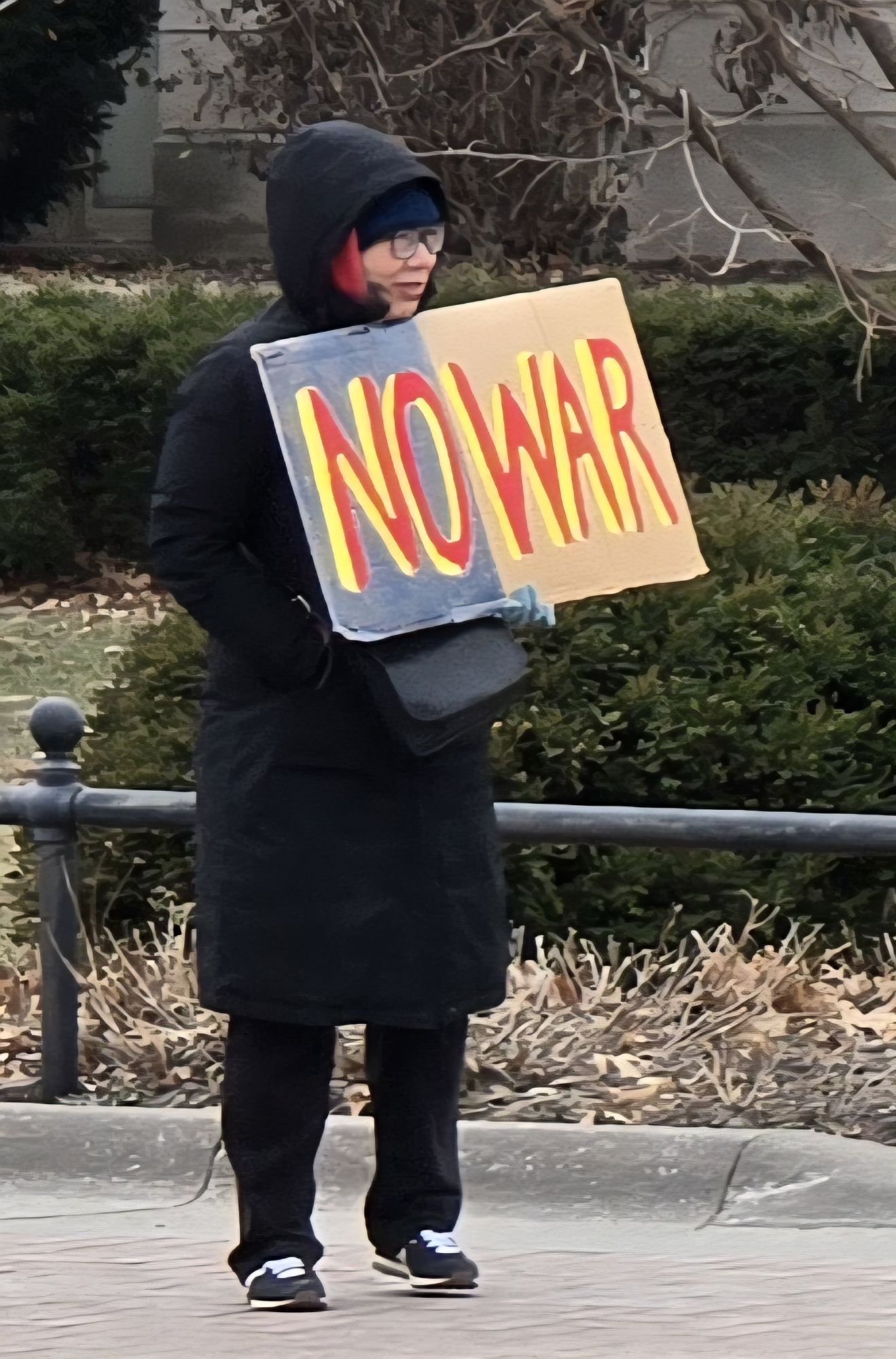
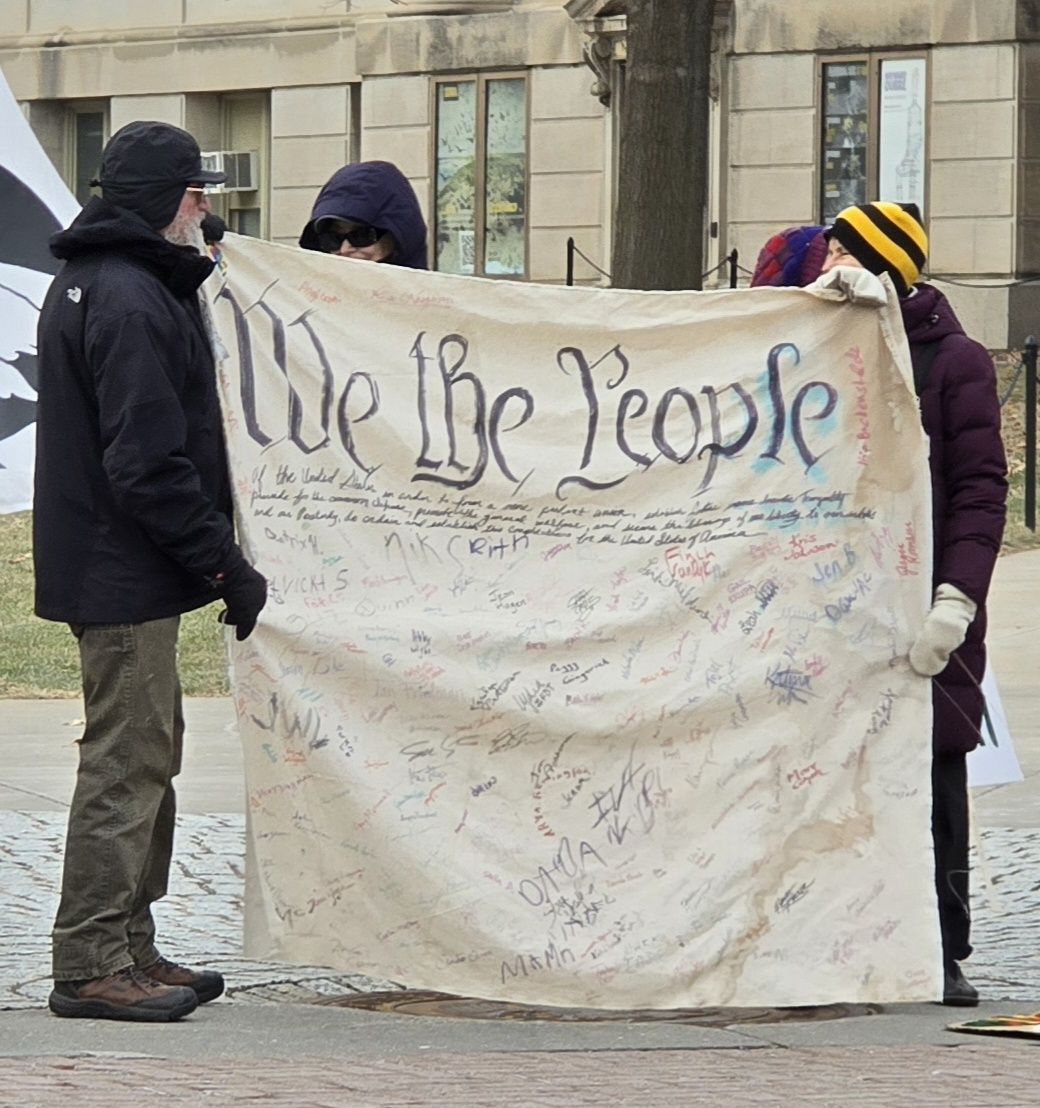
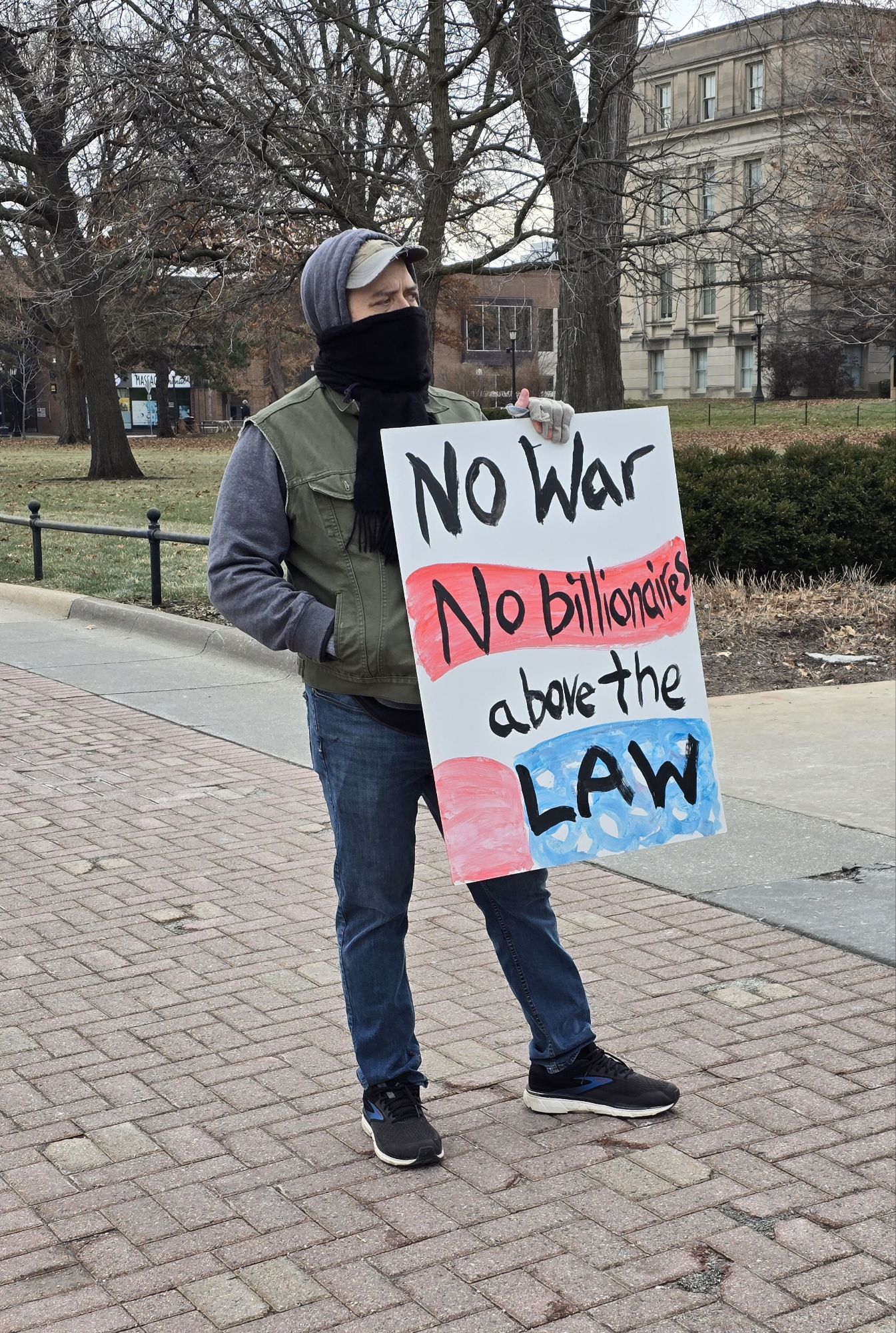
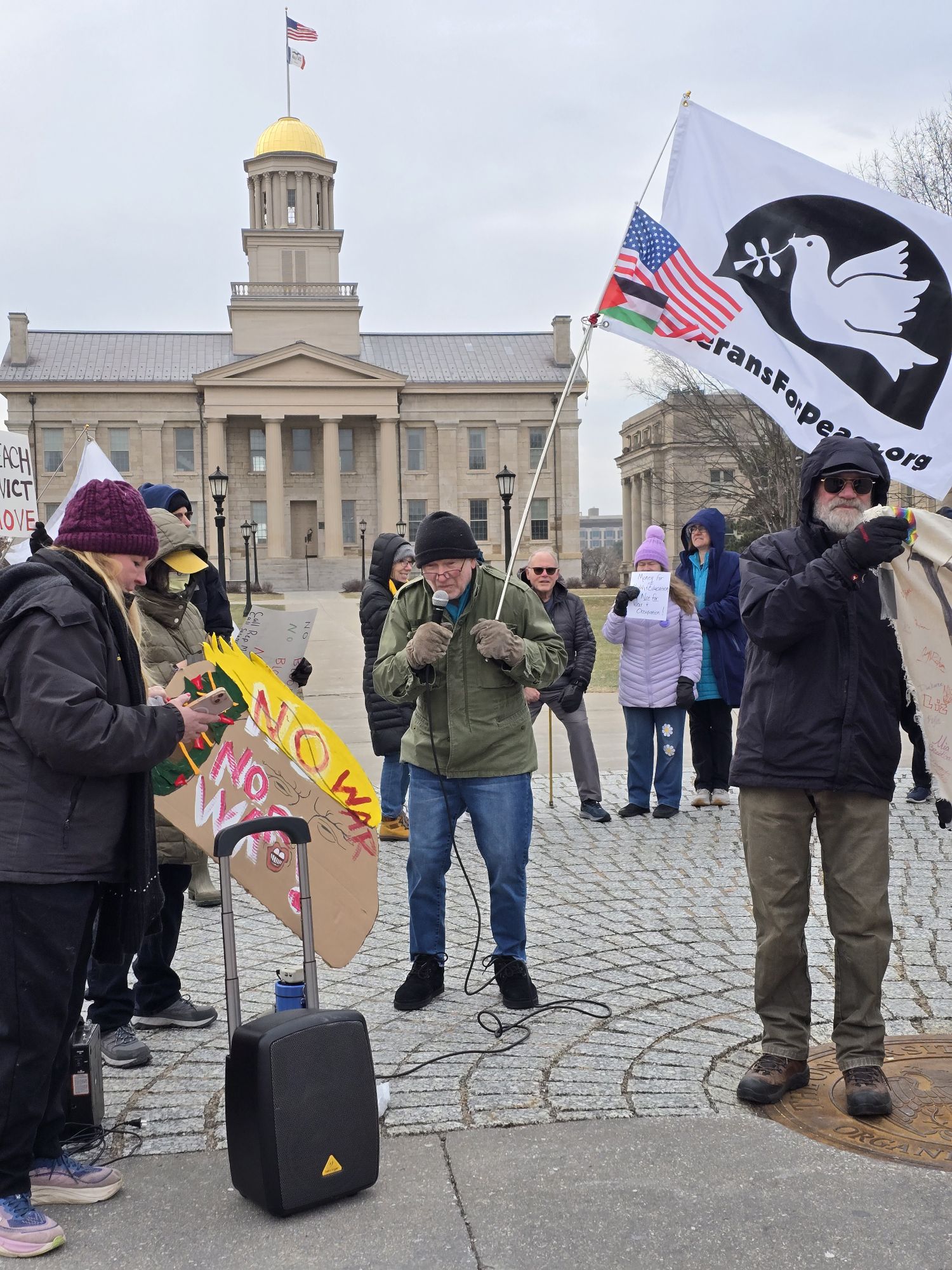
On Sunday, Jan. 4, Veterans For Peace was part of an anti-war demonstration in Iowa City. Here are some photographs I took.
No War.We The People.No War. No billionaires above the law.Ed Flaherty of Veterans For Peace speaking at the anti-war demonstration on Jan. 4, 2026.
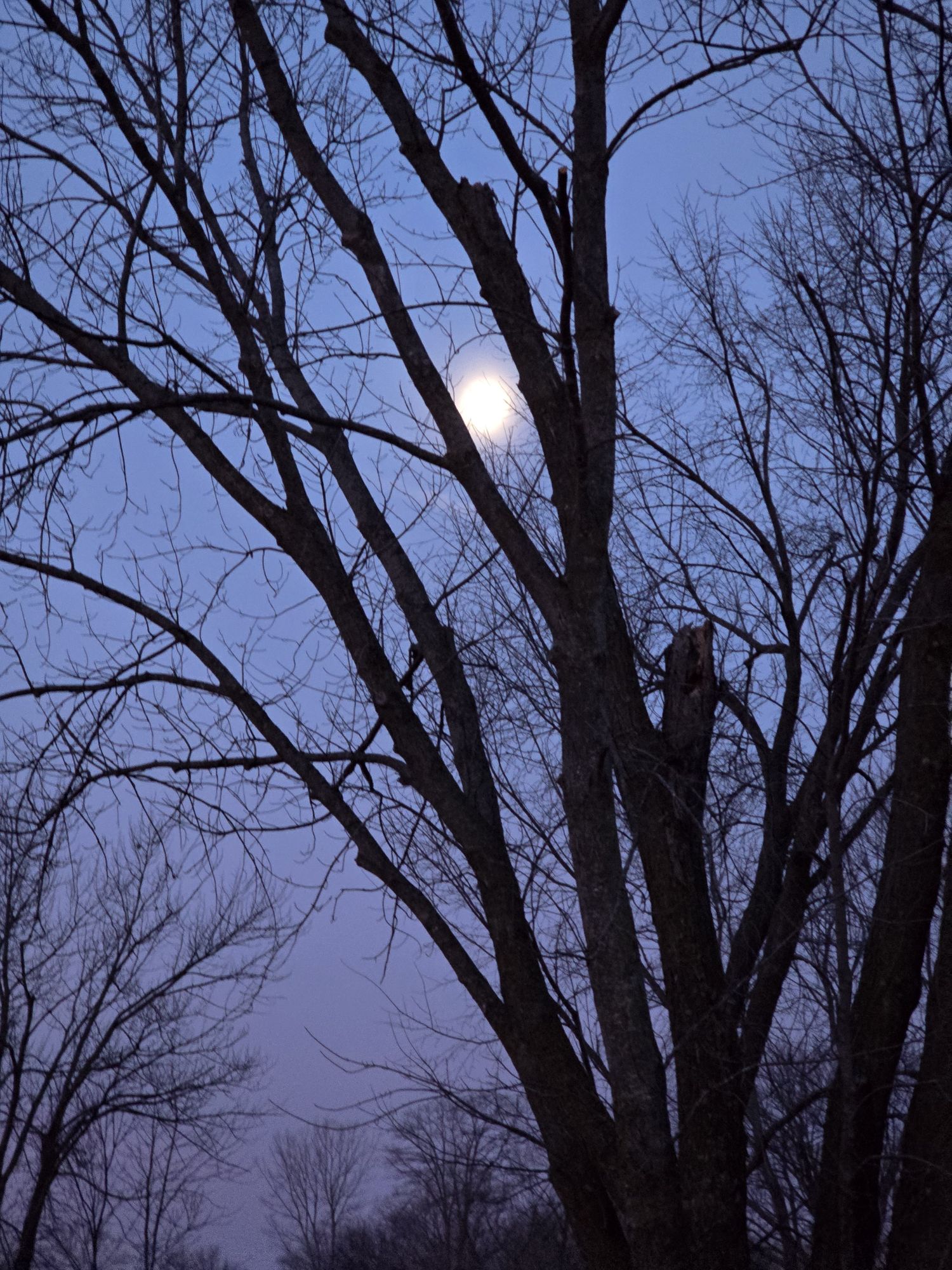
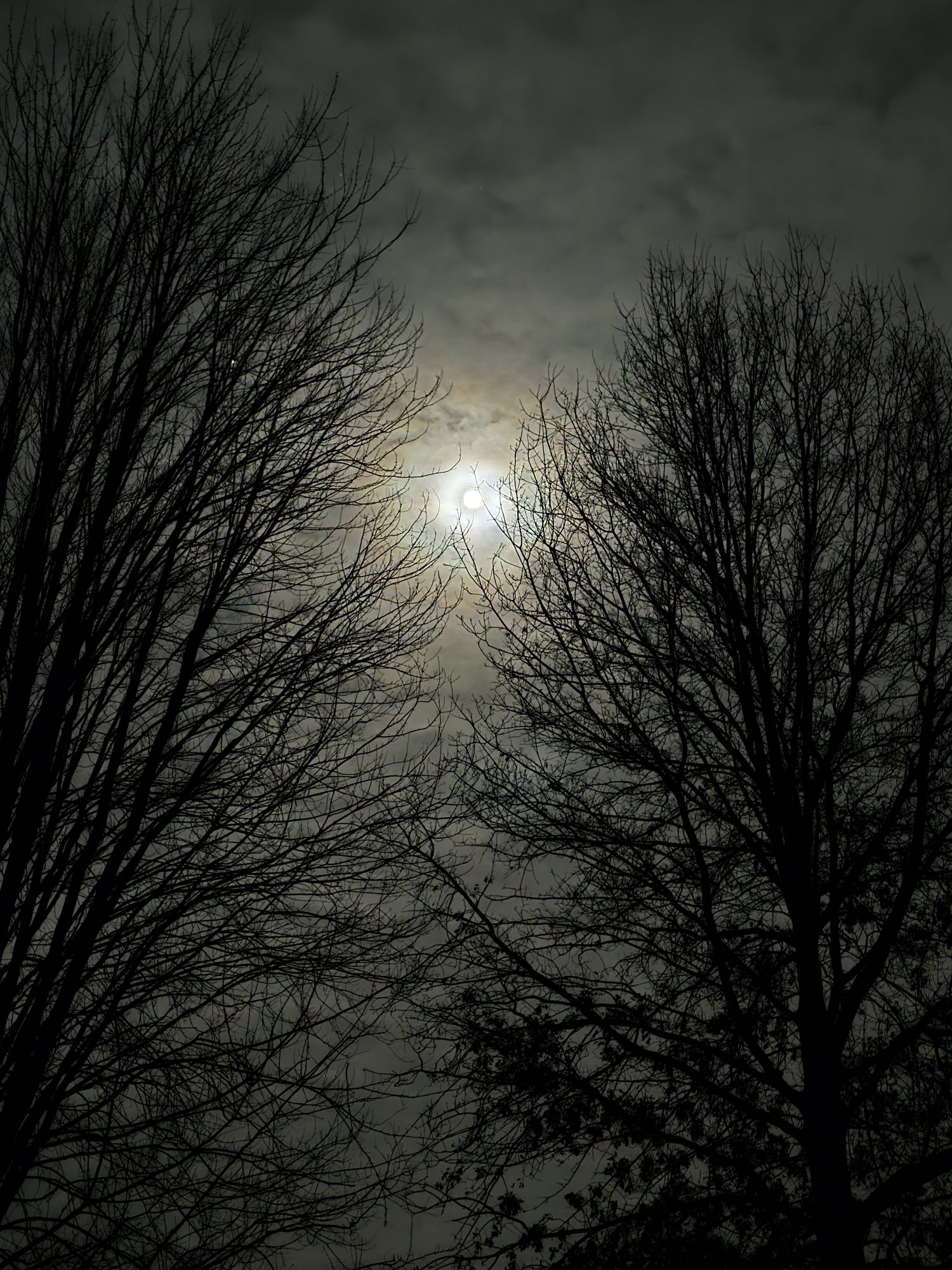
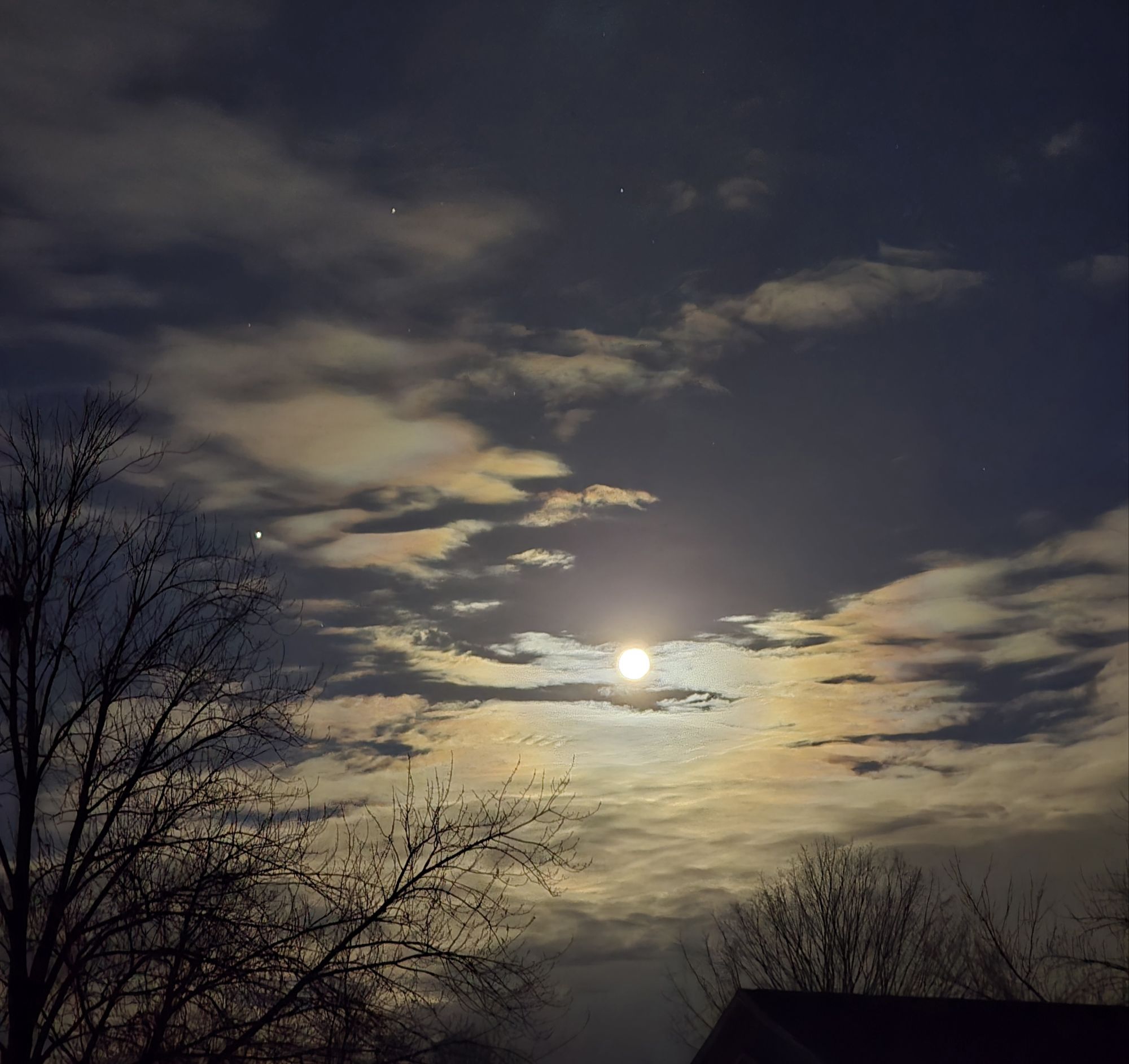
A few photos from the first days of the year. The moon shots were one night when I couldn’t sleep so I went on a very early trail walk before sunrise.
Before sunrise.Before sunrise on the state park trail.Moon setting in early morning.On the state park trail.Moon setting in early morning.Sunrise on the state park trail.
With holiday season schedule deviations, I have a difficult time remembering what day it is. My spouse will be away at least for a week, and that makes daily life even more detached from society’s time line. I know I need to get to work and am doing so, despite the weekend. It’s Saturday, by the way. I knew that.
There are tasks and projects demanding my time on the third day of the new year. I spent this week reviewing them. Some got pitched, some moved up in priority, and others were declared finished. Importantly, I decided to continue this blog for another year. The other firm goal is to finish the rest of my autobiography in the first half of the year. What else?
I need to take care of me first because without personal health and a positive frame of mind it is difficult to get anything done in society.
Life’s too short to be bitchy, so I plan to strive for positive interaction with my fellow humans. I will express the occasional curse word, though.
I already wrote about continuing my reading program. I’m setting a new goal of finishing one book per week with the hope of beating it.
Exercising and being outdoors continues to be a high priority. Trail walking and gardening are the two main ways this manifests.
I want to live a simple life by reducing the amount of time spent on things other than friends and family, writing, and food production.
I wrote about using artificial intelligence in regular life here. The projects currently in queue are related to household operations, food production in the garden and kitchen, and living better. If a computer can help me be better with any of those, I’m willing to listen. The machines don’t really know me yet they give perspectives I hadn’t previously considered. At this point, the service is free. I experimented with giving ai a writing assignment. Mother of Mercy! It doesn’t know what in Hades it is doing there. That wasn’t a poem it wrote! It was a bowl of word salad and the bowl has a hole in it.
Our home has four functional places where I work indoors: Garage, lower level storage, kitchen, and my book room with a writing table. Each has goals for 2026. I mentioned the writing goals above. Here are the rest:
In the garage my work is primarily projects in one corner and garden prep in another. I am working on rebuilding a cabinet damaged in a move. I need to dispose of a lot of unused stuff to make room for the garlic harvest in July. When one project finishes, another immediately steps into place. I fix a lot of stuff on my workbench.
The main goal for lower level storage is to reduce the number of things stored. Our child is using part of the space after their apartment building caught fire last year. The rest of it is the parents who have way too much stuff. Creating open space here is a goal heading for reality, not a dream.
The kitchen must produce meals every day. In that constant activity I’m developing new dishes. One category is those we liked until one of us became vegan. The latest experiment is taking a casserole we made for many years and replacing the eggs and cheese with something else to make it vegan. It will require at least two trial runs before it goes into the meal rotation. This is not a quick fix project because taste and nutrition are both important. Another category is called “use stuff up.” An example of this is I got quite a few pounds of quinoa at a very low price. Figuring out what to do with it was delayed, but now I would like to get things going. I discovered a little goes a long way because of the expansion while cooking. I have three dozen quinoa disks in the freezer waiting for an application.
If we don’t have goals, we won’t accomplish much. These are my beginnings.





 Journey Home
You must be logged in to post a comment.