Categories
Living in Society

Archiving Twitter

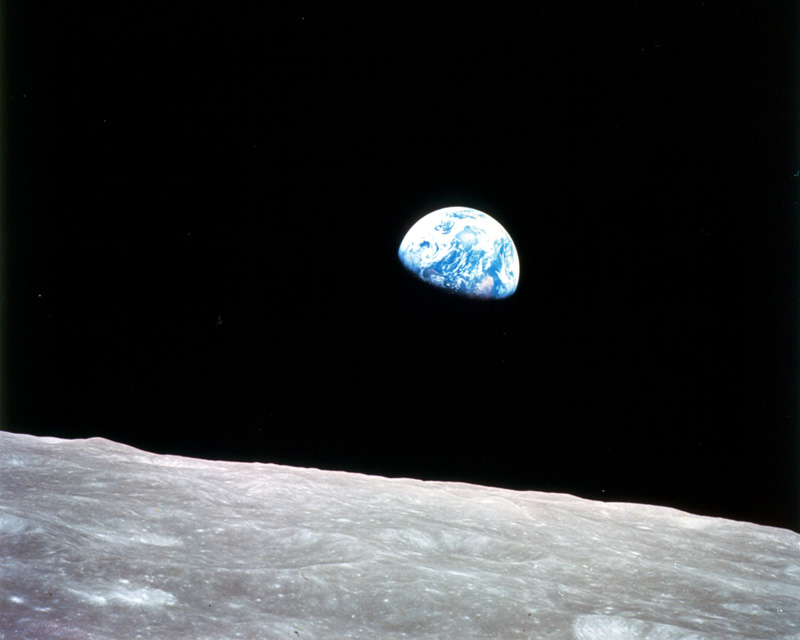
DPRK Twitter Image

I heard about the Library of Congress partnership with Twitter to archive all of Twitter, past, present and future since its launch in 2006. I hadn’t heard the project went bust with insufficient funding in 2017. Too many tweets, one presumes.

Should we care? We should, but not because there is profound knowledge on Twitter.

Yes, noted scholars create multi-tweet threads with reasoned arguments, citations, and links to references. Yet what role does that play in advancing learning? The potential audience seems limited on Twitter. Wouldn’t the same argument inform more effectively in a newspaper, blog, or scholarly journal? It would be more targeted, for sure. Such targeting would garner better impact on learning than the transitory ephemera of Twitter..

News writers use tweets as a source of quotations from prominent people. A quote is a quote, I guess. It’s easy, which prompts the related sentence, “they are lazy.” What point are they making? Why not get an actual quote from a news maker? I know the answer: access is easier on Twitter. Definition of the word “access” is peculiar here.

With hundreds of millions of tweets per day, who could read all of that to glean valuable content? Some form of artificial intelligence or tweet-bot, maybe. Not a human. I can’t think of who would want to review all of that. I hardly look at my own tweets from yesterday, let alone something I posted in 2008. There are three hundred million or more tweets per day.

If a user considers their universe in Twitter, a time line can be carefully curated. It is only within this curation that any of it has much meaning. Archiving Twitter would seem to preserve little of that personal vantage point. Tweets are a fungible commodity only to the extent an individual user loses their individuality. We Americans resist that.

The role for libraries and archives with regard to Twitter and other social media platforms is to push governments to define better laws regarding collection, archiving, and ownership of our posting. As the example of Cambridge Analytica during the recent presidential election illustrates, there were few rules about scraping the internet to collect detailed voter information and using the aggregated data to influence the election. At what point does that become an illegal invasion of privacy? The answer hasn’t been defined and doing so falls in the wheelhouse of people who spend their lives compiling archives of information and documents.

When we examine the history of libraries and archives, my bet is as much that was important has been lost as was saved. I think of the Protestant Reformation and its raiding of libraries and archives to destroy the physical records of the Catholic Church. There are plenty of other examples. Regarding Twitter, if the Library of Congress can’t preserve it, then who can and to what end?

With planetary warming, we may not have to trouble ourselves with these questions for much longer. If archives exist to tell the story of humanity’s demise to beings living multiple millennia from now, there is no point. Like us, I doubt future such beings will be much interested in those billions of tweets.
Categories
Writing

Double Dipping on Carbon-Capture

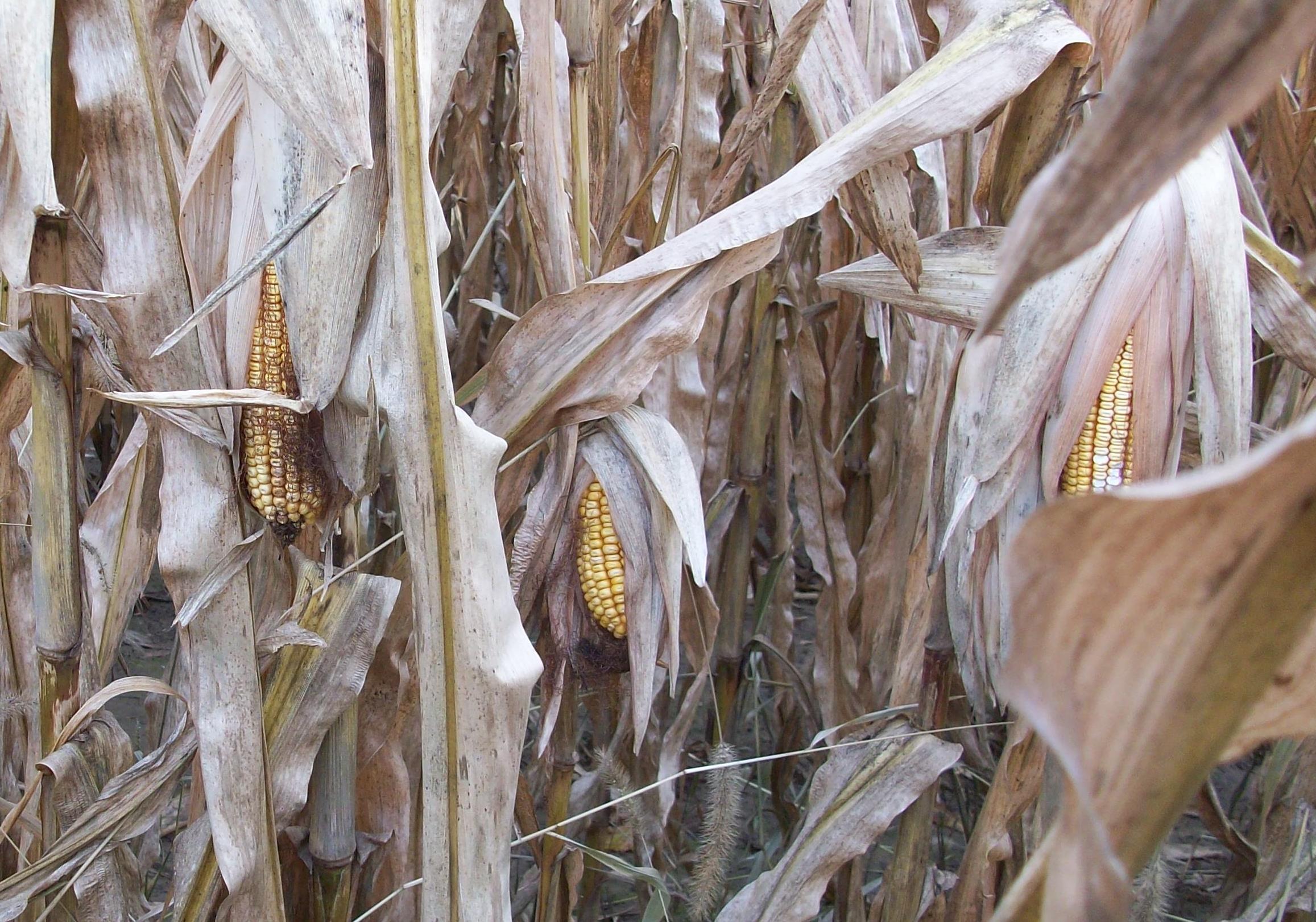
Field Corn

Governor Kim Reynolds mentioned carbon-capture in her condition of the state address during a segment on renewable energy.

I am introducing new legislation that will improve access to E15 and B20 and upgrade Iowa’s fuel infrastructure to offer higher blends. And I’m proposing that we invest in carbon-capture solutions to sustain and build on our leadership position in renewable energy.

Governor Kim Reynolds Condition of the State Address, Jan. 11, 2022.

To be clear, the governor supports carbon-capture to protect Iowa’s investments in ethanol and bio-fuels. It has nothing to do with addressing the climate crisis, and everything to do with continuing to grow corn for ethanol. We are not sure if carbon-capture even works.

“The U.S. Department of Energy invested $684 million in unsuccessful carbon capture and storage demonstration projects at coal plants under the 2009 stimulus package, a U.S. Government Accountability Office audit found,” according to Karin Rives at S&P Global. “This time, the DOE has close to $1 billion from the 2021 infrastructure law earmarked for large-scale carbon capture pilot projects, as well as $2.5 billion for carbon capture demonstrations.”

If DOE spent $684 million on carbon capture and it failed to capture carbon, why would our government increase the amount to be spent? To address the climate crisis, ethanol and bio-fuels need to go out of business. Society should develop true alternative fuels that free farmer fields to grow food crops and don’t rely on release of carbon dioxide to produce ethanol.

Fool me once on carbon capture, shame on you. Fool me a second time, shame on me.

Read all of my posts on carbon-capture at this link.

Categories
Living in Society

Plans for 2022

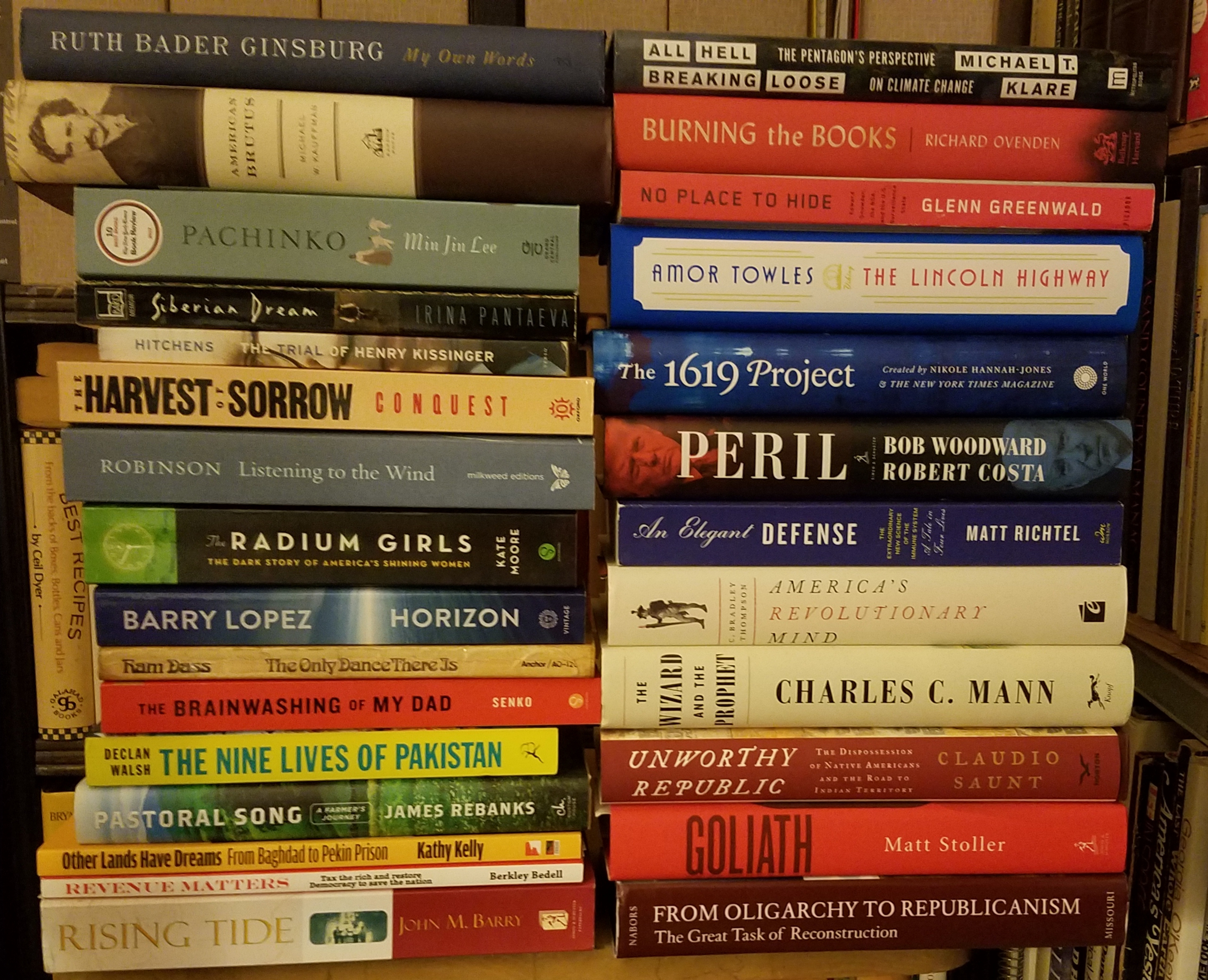
Book queue for 2022.

As long as my eyesight holds, I will continue to read books. As a newly minted septuagenarian I’ve had a discussion of eye deterioration with my ophthalmologist multiple times. When Mother’s eyesight began to fail, she converted to audio books and that’s where I’ll likely go when I can’t read anymore. For now, though, with some adjustment there is plenty to read.

About half the projected reading for 2022 was chosen when I didn’t get to a book in 2021. Going through my stacks would fill out the other half, although I have to leave room for books published in the new year. Now that I am motivated, and my vision passes muster at the eye doctor’s office, I’m enjoying reading.

I have plans besides reading books.

The time between our wedding anniversary and New Year’s Day has been traditional for reflection and consideration. This year ideas are settling without much action. To make every day count, I need a good idea of where I’m bound. First impressions are not enough by which to plan. When ideas come to mind, they ruminate. If they are any good, they persist.

I know the formats for writing in 2022. The next steps are determining topics, then schedule. That’s a lot of what occupies these quiet holidays. Rather than set goals, I’m leaving the mind open until the next project comes to me. It might be today, or maybe in the next couple of months. I know it will arrive and await patiently.

The sun rose on walkabout. Winter skies have been colorful at dawn and dusk. Around the perimeter of our property, deer and other animal tracks are frozen in the snow. It was a busy place the last 24 hours, and it shows after a snowfall. It is cold enough I won’t exercise outdoors today.

That leaves me reading, writing and working on indoors projects. It is a good life, one worth living. The rest before the storm 2022 is expected to be.

Categories
Living in Society

List of Things — 2021

A vegan Christmas dinner, 2021.

The year began with the Jan. 6 attempt by President Trump and his supporters to overturn the results of the 2020 presidential election. Those events confronted us with the possibility the work of our founders, to create a society built on new foundations contrary to a monarchy, may fail. It was a sobering realization, even if insurrection leaders were pathetically unskilled at insurrection. After Biden was sworn in, he got to work and the economy came roaring back. We are not out of the woods yet.

On my Christmas morning walkabout the air was quiet and still. Scarcely a sound besides birds. Normal background noise of traffic on surrounding highways was silent. Ambient temperatures were in the forties and winds calm. It was a peaceful time to be with family.

Because of the coronavirus pandemic we did not travel to be with our child at Christmas this year. We joined their festivities via video conference and met some new friends. I’m not sure who came up with the idea yet it was a good one.

We spent the morning sleeping in and doing individual things around the house. After noon we joined in the kitchen to make our vegan Christmas feast. According to the scale this morning I lost one pound overnight. There will be leftovers all week.

As year’s end approaches taking stock is important. Here is a list of the most significant events of the year:

  • Jan. 6, 2021 insurrection.
  • Coronavirus pandemic entered its second calendar year and persisted.
  • Served as president of the home owners association and secretary of the sewer district.
  • Wrote at least 1,000 words of my autobiography per day through April.
  • Worked at Sundog Farm in the spring.
  • Twice served as a Climate Reality Leadership Corps mentor.
  • Helped Jon Green get elected as a Johnson County Supervisor.
  • Donated excess garden produce to the local food pantry.
  • Trip to Boone, Iowa to visit my sister-in-law.
  • Trip to Orlando, Florida to help our child move to Illinois.
  • Covered Blog for Iowa editor’s summer time off.
  • Walked in the Coralville Independence Day parade.
  • Two family trips to visit our child in their new apartment. They visited us, too.
  • Became a single automobile family.
  • Worked through a manganese contamination at the community well.
  • Tooth extraction #14. Decided to leave the gap.
  • Covered the Solon School Board election on this blog.
  • Wrote a series of posts about carbon capture and sequestration for Blog for Iowa.
  • Grew net worth by seven percent.
  • Read 54 books.
  • Successfully increased garden production.

Time passes quickly these days. We grasp today, only to soon let it go into the drift of society. Luckily, with some focus, I got a few things done in 2021.

Categories
Living in Society

Retro Post – Christmas Morning

Christmas coffee mug.

(First posted on Dec. 25, 2007, during the first year I wrote a blog. Lightly edited because I couldn’t stand some of my previous usage).

The meaning of Christmas is derived from my remembrance of priests at Holy Family Catholic Church in Davenport genuflecting while reading John 1:14 “And the Word was made flesh and dwelt among us…”

There are many translations of this verse and the idea that an omniscient God would take human form remains a compelling idea. In order for our lives to have meaning, we should live them as Jesus did, through acts in human society.

If Jesus was the incarnate God, we are something less.

If the meaning of Christmas can be found in John 1:14, how should that affect us with our imperfections?

My Christmas story is about the coffee cup that we keep in our bins of Christmas decorations. It was a gift from my spouse and printed in the glaze are five reindeer around a typewriter consulting on a message. The reindeer at the keyboard has a red nose, and must be Rudolf. On the other side of the mug are misspelled the words “Merry Christmas,” presumably typed by Rudolf. At some point I chipped the cup and each year we discuss whether we should get rid of it because of the chip. I have always said no, although I should probably let go. The chipped cup with the animals trying to put a message into human language using human technology has become part of our Christmas tradition. Because it is so similar to the meaning of Christmas, I have trouble letting go of it. We have always ended up keeping the cup and I am using it now to hold the coffee I made this morning.

We humans can use some coffee on Christmas morning, and we need to put it in something.

Merry Christmas reader!

Categories
Living in Society

Christmas Eve – 2021

Earthrise by Bill Anders, Dec. 24, 1968

Best wishes to readers for end of year holidays.

In our house, it is Christmas Eve, although there is a string of notable days running from mid-December through January. I enjoy those Christmas seasons when I can stay home without pressure from work or other social obligations. During the coronavirus pandemic, it makes sense to avoid exposure to others, although the isolation is only partly mitigated by modern communications technology.

Leaving home can be a traumatic experience. When I left home in 1970 to attend university I didn’t understand there would be no permanent return to my home town. When our child left Iowa in 2007 there was also a lack of understanding of how the change would affect us. We do the best we can during holidays, whether child or parent. The veil of our illusions wears thin at the end of the year.

On Christmas Eve my tradition is to review this photo taken by Bill Anders during Apollo 8. It changed my life, and those of many others, to see Earth suspended in space, alone and vulnerable. Some say it sparked the environmental movement. The problem is the environmental movement and society more generally have been doing a poor job of mitigating the worse effects of the climate crisis. The coming week before New Year’s Day is projected to be the warmest December week in recorded history for North America. It is a cause for concern for us all.

For Christmas Eve dinner there will be cornbread and chili, followed by settling in to a long night. We did not decorate the house for the holiday and haven’t the last few years. If we have guests during a future holiday season I expect we will get the boxes out from under the stairway, reminisce about the decorations and how we came to have them, and put them up. Not this year, though.

It is a time for letting go the frustrations and tensions 2021 created within and among us. The year began with an attempt to overturn the results of the November 2020 U.S. presidential election. It is ending with a robust economic recovery that could only have happened with the leadership of President Biden and his administration. It was a year of the yinyang of being American.

As we prepare for a winter, delayed by a warming planet, it’s time to consider the future and actually do things to bring peace on Earth. That we will is my Christmas Eve wish.

However you celebrate year’s end, I wish you health and happiness as we prepare to enter the new year.

Categories
Writing

Swallowing the CCS Proposition

Field Corn

Two corporations plan to install Carbon Capture and Sequestration technology to collect CO2 emissions at about 40 ethanol and fertilizer plants spread across Iowa. Next, they plan to permanently bury the resulting liquefied CO2 in deep rock formations in North Dakota and Illinois. I don’t know who is swallowing this malarkey. Almost no one is.

The CO2 pipeline is planned to cross Karmen McShane’s family land in Linn County.

“It’s heartbreaking,” McShane told Gannett’s Donnelle Eller for a story. “My dad is 77. My mom needs care. And he feels powerless (to fight the pipeline).”

There is a lot of that going around.

The pace of news articles on CCS is increasing. Eller wrote about it in Monday’s Iowa City Press Citizen and followed it with another article in Tuesday’s newspaper. Erin Jordan of the Cedar Rapids Gazette has been covering CCS as well. When the regular news coverage is frequent, we should read what paid media writers have to say. That’s what I’ll be doing to see how the process unfolds over the end of year holidays. This is my seventh post on CCS.

The Iowa oligarchy of agriculture decided to do this thing, so resistance may be futile unless more people than have become engaged. If McShane is typical, the train left the station and once ground is broken for the pipeline, there will be no stopping it.

As long as Iowa focuses on ethanol, industrial agriculture using manufactured fertilizers, and monoculture row crops and livestock, the environment will get worse. It is pretty bad already if one looks at water and air quality. Implementing CCS does not address any of this and is a distraction from needed action to address Iowa’s water and air quality.

CCS is premised on a vague statement that we must decarbonize the economy. People have written books on this, and just because two companies are spending big bucks on the project, the one-off process in Iowa does not address broader concerns about reducing the amount of greenhouse gases being released into the atmosphere as if it were an open sewer. As far as I can tell, the sole reason for the project is to protect agricultural oligarchs’ two children: corn ethanol production and fertilizer manufacturing.

To read the rest of my coverage of carbon capture and sequestration in Iowa, click here.

~ Written for Blog for Iowa

Categories
Environment

Conservatives Have a Climate Caucus

On walkabout, Dec. 18, 2021.

When I wrote my Federal Elected Officials about climate change on Oct. 18, Congresswoman Mariannette Miller-Meeks was first to respond a few days later (see below). I did not know there was a Conservative Climate Caucus. She is a member and lifted the third paragraph of her response to me from the caucus website.

As long as she supports the beliefs of the caucus, there will be trouble reconciling my views with hers. In the long run, that’s okay. It is a starting point and we need to get going. We needed to get going 50 years ago.

The Conservative Climate Caucus was founded by Republican Congressman John R. Curtis (UT-03) in June this year with the following statement of beliefs:

What We Believe

The climate is changing, and decades of a global industrial era that has brought prosperity to the world has also contributed to that change.

Private sector innovation, American resources, and R&D investment have resulted in lower emissions and affordable energy, placing the United States as the global leader in reducing emissions

Climate change is a global issue and China is the greatest immediate obstacle to reducing world emissions. Solutions should reduce global emissions and not just be “feel good” policies

Practical and exportable answers can be found in innovation embraced by the free market. Americans and the rest of the world want access to cheaper, reliable, and cleaner energy

With innovative technologies, fossil fuels can and should be a major part of the global solution

Reducing emissions is the goal, not reducing energy choices

What We Do

Educate House Republicans on climate policies and legislation consistent with conservative values

Organize co-dels and staff-dels to better understand technologies and issues related to climate

Organize Member and staff briefings on conservative climate proposals

Bring Republicans to the table to fight against radical progressive climate proposals that would hurt our economy, American workers, and national security

Introduce Republican members and staff to leaders in industry, think tanks, and more

Conservative Climate Caucus website.

When it comes to hurting our economy, American workers, and national security, engagement of the federal government to address the climate crisis is essential. As long as Iowa focuses on ethanol, industrial agriculture using manufactured fertilizers, and monoculture row crops and livestock, the environment will get worse. It is pretty bad already if one looks at water and air quality. There is not much hope for the Conservative Climate Caucus as it was introduced, yet it’s what we have. It is an open question whether Democrats are up to the challenge of retiring Miller-Meeks after her first term. She is a strong campaigner and well known in the district. We have to begin somewhere, and soon. This may be it.

Email from Mariannette Miller-Meeks, Oct. 22, 2021.
Categories
Writing

Blog Year In Review – 2021

Looking at the moon rising in the east at sunset.

Eight of the top ten new posts on Journey Home were about the Solon School Board election. It demonstrates that when a blogger covers something in which people have interest, there will be views. I’m thankful for people who follow all of my writing.

To get a fairer picture of which blog posts garnered views, I include my work at Blog for Iowa. If I mix the two together, here are my top posts for 2021.

10. Book Review: Equity. Aug. 30, 2021, Journey Home. A book review of Equity: How to Design Organizations Where Everyone Thrives by Minal Bopaiah.

9. 2021 School Board Candidate Forum. Oct. 21, 2021, Journey Home. This post was coverage of the only school board candidate forum prior to the election. It includes a link to video of the forum.

8. Solon School Board Election. Sept. 19, 2021, Journey Home. My first post about the Solon School Board election.

7. Here Comes Carbon Capture Technology. Nov. 24, 2021, Blog for Iowa. One of a series of posts about Carbon Capture and Sequestration plans of Summit Carbon Solutions and Navigator CO2 Ventures in Iowa.

6. The Climate Crisis is Accelerating – Now What? July 6, 2021, Blog for Iowa. Encouragement to act on the climate crisis. “While we need to do everything possible to avert the worst effects of the climate crisis, the longest, most complicated journey begins with a single step.”

5. Solon School Board Election Update. Oct. 3, 2021, Journey Home. A newsy post with facts about the Solon School Board election.

4. Is Jessica Reznicek a Terrorist? July 15, 2021, Blog for Iowa. “Jessica Reznicek, a 39-year-old environmental activist and Catholic Worker from Des Moines, Iowa, was sentenced in federal court June 30 to eight years in prison for her efforts to sabotage construction of the Dakota Access pipeline.”

3. SSB Candidates Respond. Oct. 9, 2021, Journey Home. A verbatim reprinting of Solon School Board candidate responses to my questions via email.

2. Book Review: The Hidden History of American Oligarchy. Jan. 19, 2021, Blog for Iowa. “In The Hidden History of American Oligarchy: Reclaiming Our Democracy from the Ruling Class, Thom Hartmann recounts three periods of increased hegemony of oligarchs in American society.”

1. A Nonpartisan School Board. Sept. 25, 2021, Journey Home. A look at the Solon School Board election through a partisan lens. Disclosure of party registration of the seven candidates.

Thanks for reading. Hope you will continue in 2022.

Categories
Home Life

Walkabout #2

Damaged Mulberry tree.

On walkabout I saw the damage to the Mulberry tree. From the stain emitting from the cracked trunk, we can tell it was trauma. I suspect it was damaged during the Aug. 10, 2020 derecho. Because the damage faces Northeast, away from the house, it wasn’t noticed until now.

I’ll observe the progress of the wound to see how it goes. I believe the tree is a goner, yet will let nature take it’s course. I’m in no hurry to take it down with a chainsaw.

While the mulberry was a junk tree presumably from a seed dropped by a bird sitting on a length of rebar left by a surveyor as a property marker, it has been with us for our whole time here.

It produced berries, mostly for birds, and there may be more crops ahead. It is the last of two volunteer trees growing here when we bought the lot.

If it dies or falls apart I won’t replace it with another. It’s trunk grew to straddle my lot and two adjacent ones. It’s better to keep trees on my side of the line. One should not rush into tree management. Decisions made today are consequential for years to come. Sometimes we make the wrong decisions as I have.

After a quarter century, I’m getting to know the lot we developed. It is time to get outdoors and spend more time in the environment in which we live. Even if that means little more than walking in the yard.