Take action to raise awareness of the need to eliminate nuclear weapons by folding a crane for peace between Aug. 4-9, along with others associated with the nuclear disarmament movement and the Nuclear Threat Initiative.
Crafting a brighter future starts with all of us. Between the anniversaries of the atomic bombings of Hiroshima and Nagasaki in August, people around the world fold and share paper cranes on social media with a message about what a future without nuclear weapons means to them.
Join people across the globe in demanding a more peaceful, hopeful future.
This project is simple. First, fold a paper crane. Instructions are in this short video.
Next, take a photo of the crane or cranes you folded. Craft a message about why we must move closer to, not further from, a world without nuclear weapons. It could be as simple as a single word or phrase. Finally, post your photo to social media with your message and the hashtag #CranesForOurFuture.
Please join us in this fun project with a broader meaning. For more details, click here.
RAGBRAI is finished, sweet corn is coming in, tomatoes are ripening, and home gardens and farmers markets are going full bore. Dinner may consist of a thick slice of tomato, steamed green beans, and boiled sweet corn. It’s life in Iowa, as good as it gets.
August is also the commemoration of the end of World War II with the atomic bombing of Hiroshima and Nagasaki. After the war, most nations agreed to eliminate nuclear weapons. More than 75 years after the atomic bombings, we are not close to giving up nuclear weapons. In the United States, the U.S. House passed the National Defense Authorization Act in a bipartisan vote that will spend more than ever on our nuclear weapons complex. The U.S. Senate passed a different version, equally spendy. The bill is heading to a reconciliation process when the Congress returns from summer break.
President Truman made the decision to drop the Hiroshima and Nagasaki bombs. The myth these two decisions ended Japanese aggression is just that: a myth. Truman’s decision to drop the bomb created a culture in which people were afraid for their very existence in a world with nuclear weapons. That culture persists, even if it has taken different forms. It is not too late for peace.
I wrote the following post three years ago:
75 Years After Hiroshima
President Harry Truman did not need to drop the atomic bomb to end World War II.
The first test explosion of an atomic bomb, called Trinity, was conducted by the U.S. Army July 16, 1945, as part of the Manhattan Project on what is now part of White Sands Missile Range.
The day after Trinity, U.S. Secretary of War Henry Stimson flew to Potsdam, Germany where President Truman was meeting with Winston Churchill, Clement Attlee and Joseph Stalin to determine the fate of Germany which had surrendered unconditionally on May 8.
Truman wrote about this meeting with Stimson in his memoir:
“We were not ready to make use of this weapon against the Japanese, although we did not know as yet what effect the new weapon might have, physically or psychologically, when used against the enemy. For that reason the military advised that we go ahead with the existing military plans for the invasion of the Japanese home islands.”
A committee had been established to evaluate use of the atomic bomb once testing was successful. On June 1, 1945 the committee of government officials and scientists made their recommendation, which Truman recounts:
“It was their recommendation that the bomb be used against the enemy as soon as it could be done. They recommended further that it should be used without specific warning and against a target that would clearly show its devastating strength.“
Ultimately Truman made the decision to drop the atomic bomb on Hiroshima and on Aug. 6 the U.S. Air Force delivered it. On Aug. 9 the Air Force bombed Nagasaki. The Japanese surrendered Aug. 10.
Historian Gar Alperovitz, in his book The Decision to Use the Atomic Bomb, asked two well-known questions about Truman’s decision.
“To what degree did (the president) understand that a clarification of the officially stated demand for ‘unconditional surrender’ specifying that Japan could keep its Emperor would be likely to end the war?”
“To what degree did (the president) understand that the force of a Russian declaration of war might itself bring about an early end to the fighting?”
The book based on his research is 847 pages.
The idea that dropping atomic bombs on Hiroshima and Nagasaki saved tens of thousands of allied forces lives by ending the war early is a myth perpetuated by those who would absolve our country from a decision to kill tens of thousands of Japanese children and as many or more other non-combatants. Historian Howard Zinn asked, “Would we have sacrificed as many U.S. children to end the war early?” Obviously we wouldn’t.
A friend, the late Samuel Becker, was in Guam in August 1945 preparing for the invasion of Japan. I recently asked him about the atomic bombings of Hiroshima and Nagasaki. The reaction in Guam was positive he said. U.S. military personnel were in favor of it because they felt it would bring a quick end to what could have been a prolonged, bloody conclusion to World War II. Before he died, Becker changed his mind. With time and reflection he found the notion that the atomic bombings saved many lives was a myth. The Japanese were already in a position to surrender.
Alperovitz said in a recent webinar that, to a person, contemporary military leaders went on the record to say there was no need to use the atomic bombs to end the war early. The war had already been won.
Truth matters and one truth is the atomic bombings of Hiroshima and Nagasaki were unnecessary. Their effects would fuel the Cold War and the idea of mutually assured destruction should they be used. This is crazy talk. Nuclear weapons must be eliminated and the only way to do that, to pierce the wall of our federal government, is citizen action demanding it.
On the 75th anniversary of Hiroshima it’s past time we took action.
~ Written for the Cedar Rapids Gazette and published Aug. 9, 2020.
Smoke was everywhere on Tuesday. The aroma was distinct, constant, and originated in Canadian wildfires. The haze was not bad, yet the smell filled the air. Smoke was a constant reminder of how little we progressed in our advocacy to do something about the climate crisis. Our lack of education, in the need to address the climate crisis, covers us like a shroud.
June was the hottest month on Earth since we began keeping records. July looks to be worse. I tried to function with outdoor ambient temperatures in the low nineties. Functioning meant using air conditioning to mitigate the heat most of the day.
The world just sweltered through its hottest June in the 174-year global climate record.
Additionally, Earth’s ocean surface temperature anomaly — which indicates how much warmer or cooler temperatures are from the long-term average — were the highest ever recorded, according to scientists from NOAA’s National Centers for Environmental Information.
National Oceanic and Atmospheric Administration, July 13, 2023.
I don’t mean to slight the efforts of teachers, many of whom I know to be decent people. Yet, the fact is too many young people arriving to power in the 2020s don’t understand the reasoned need to act on our deteriorating climate. While we recognize a long procession of extreme weather events and conditions, we view them as a live blog of the end times over which we have no control. How did we get to this place?
In part, with electronic communications and social media, we are more aware of the pockets of culture that reject common sense to pursue tribal interests. They receive undue amplification. A reader of history knows this segment of the population has been present for multiple millennia. More than “pocket,” though, the amplification in social media presents an idea there is an organized movement. I’d call it the “know-nothing movement” yet that term has already been used. It’s not that people are dumb. It’s that they don’t know how uneducated they are. There is a name for this: the Dunning Kruger effect.
The Dunning–Kruger effect is a cognitive bias whereby people with low ability, expertise, or experience regarding a type of task or area of knowledge tend to overestimate their ability or knowledge.
I am part of the Climate Reality Project whose mission includes:
We train and mobilize people worldwide with four global campaigns to unlock transformational change this decade and help us reach true net-zero by 2050 – the point where global warming can stop in as little as three-to-five years and the Earth begins to heal.
The Climate Reality plan is to reduce emissions, call out greenwashing, end financial support for using fossil fuels, and support international cooperation using the Conference of the Parties framework that brought us the Paris Agreement on climate. There is hope these things can be accomplished, according to former Vice President Al Gore last night. None of it will be easy. The fact that we need organizations like Climate Reality and others to educate, lobby and advocate for action to address the climate crisis is a sign of how far our education system has deteriorated. These topics should be front and center in our schools and in career development for students coming up. There are many obstacles to training the coming generation of Americans to take up the climate crisis as a main stage endeavor.
We do what we can. The trouble is we don’t always realize how much potential we possess to address the climate crisis. Its time to figure that out.
Last night I led the last annual meeting of our home owners association as president. About a dozen members gathered at the shelter in town to share a potluck dinner, socialize, and hear news of what our board has been doing. I did my best to be thorough. It has taken me a while to shed volunteer activities undertaken since retiring in July 2009. This one dates back to 1994.
I’m almost there. The last will be to leave the county party central committee and become a regular voter. This one is tricky in that no one else in our precinct expressed interest in taking the responsibility for more than one term. I’ll figure a way to let go and it won’t be long.
I lost track of how many hours I volunteered in my life. After retirement it became a way of life for more than ten years. We’re at the end of the line. Going forward, I plan to concentrate on writing, gardening, and fixing up the house.
People should be helpers in society. I plan to continue to grow more food than we can use and donate extras to the food banks. Books, kitchenware and other excess possessions will be donated as well. Yet to lend time and experience to leadership of social groups is not in my future. If there was a catastrophe, I’d surely help out.
It’s not that I’ve earned time working on myself and our home, although I have multiple times over. It’s that the male drive that brought me this far needs to step back to let a new generation of people take the baton from here. I’m confident we’ll be fine, and so will my ego.
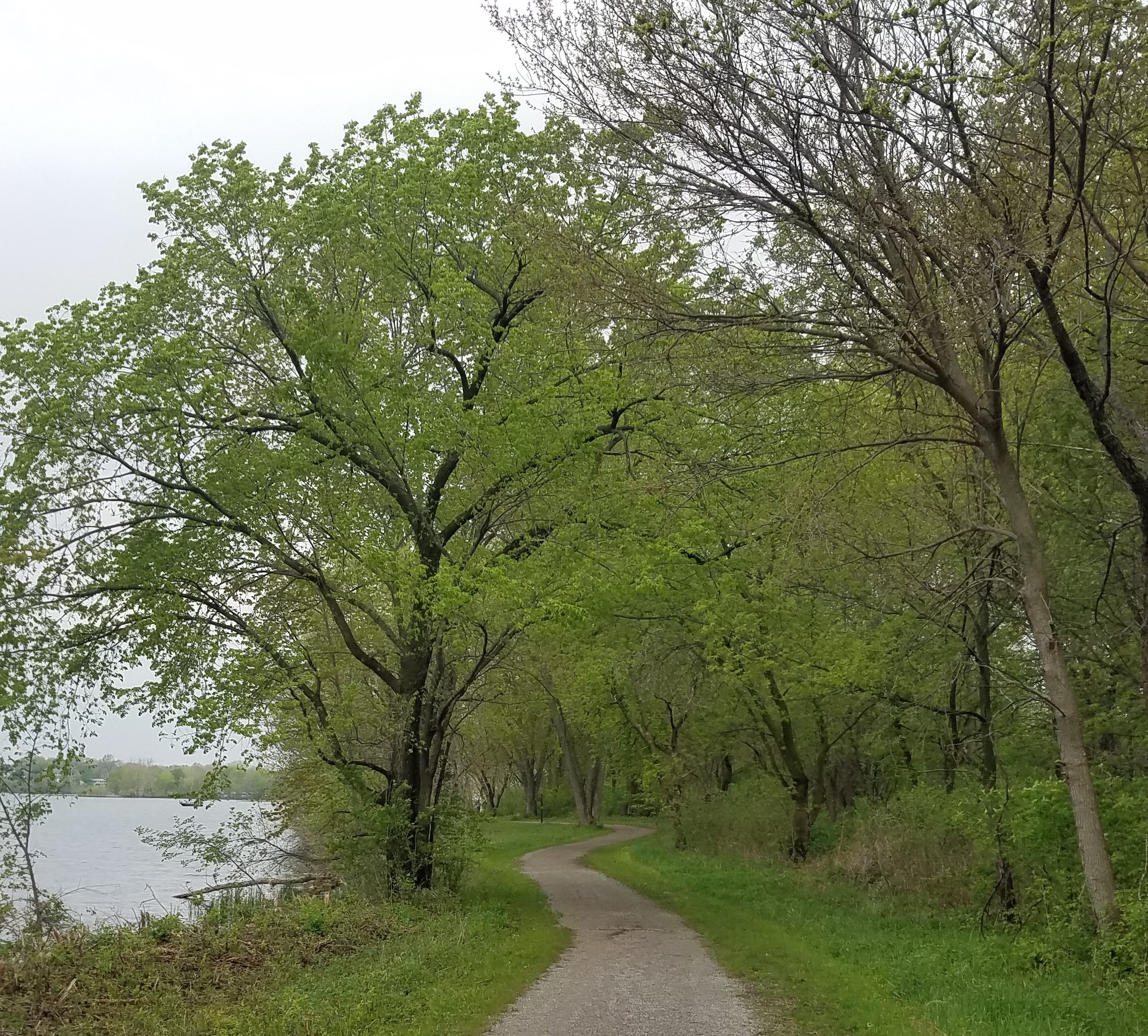
It is a brilliant day near the lake today. Wildflowers are blooming, and the ambient temperature hasn’t been too hot. For a while, I was able to walk the trail and just breathe.
Lake Macbride State Park covered in a thin haze of smoke from Canadian wildland fires, June 28, 2023.
On Tuesday, June 27, there were 66 wildland fires being tracked across parts of Ontario Province in Canada. As a result, smoke and particulate matter is spreading over much of the United States, and across the Atlantic Ocean to multiple European countries. It has rendered the air quality “very unhealthy.” What is there to do at this point but monitor our local air quality and moderate our time and activities outdoors? The underlying science and human behavior which favor conditions for the fires have been ignored so long, we transitioned to a mode of acceptance and now focus on coping with the disaster.
At least the scenery on the state park trail is nice.
I got into something while working in the yard. I believe the ailment is contact dermatitis and the little spot where I got it itches constantly. I put some ointment on it a couple times a day and should be fine after two to four weeks, according to the Mayo Clinic. I don’t know what I contacted, although I found some nettles out by the composter. I harvested the nettles and hung them in the garage to dry. There is a cup of nettle tea in my future.
The garden is really coming in. The freezer and refrigerator are almost full. I am much closer to the garden this year than previously. I never fail to marvel at what it can produce. For now, life on Earth is pretty good, despite the contact dermatitis.
Two days after a full moon, in pre-dawn darkness, it was difficult to see it rained yesterday. It hadn’t rained long, just enough to get the ground wet and start water flowing toward the ditch. It was not enough to seal cracks in the ground caused by a lack of moisture. The ditch near the road has hardly been used for runoff this spring. I hope the dry spell is broken.
After a hiatus, today I return to writing. Garden plot seven remains to be planted yet the hard work of putting in a garden is almost done. Already an abundance of vegetables was harvested even if my favorite hot peppers wait in the greenhouse to be planted.
At the point I realized our yard couldn’t produce enough grass clippings and leaves for garden mulch, and began laying down weed barrier to hold moisture and suppress weeds, everything changed. It was helped along by relenting to the need for fertilizer (composted chicken and turkey manure) and some pesticides used by my organic farming friends. Not everything improves with aging, yet my garden was made better by experience.
May was a month of stuff breaking. We scrambled to cover the expense of new appliances: washer, dryer, range, furnace, and air conditioner. We previously replaced the refrigerator, water heater, water softener, and our 2002 automobile. The new technology is clearly better. I can’t get over how quickly batches of water-bath canning jars come to temperature and boil. Our clothes get cleaner as well. All of this took time in May. We are over the hump, fingers crossed.
The acquisition of Twitter by Elon Musk created turbulence in my social media space. The main change is I notice more trolls. I know to block them without question, yet it is an annoyance. I tried Mastodon, Post, and Spoutible and none of them fills the same need as Twitter. Mastodon was too complicated with their decentralized server model. Spoutible and Post have a lot of nice people, yet the depth of relationship is lacking and may become an issue. The other legacy social media accounts (Instagram, LinkedIn and Facebook) are doing what they do without issue.
There wasn’t a lot to write about in Iowa Politics this spring. Republicans in the legislature had super majorities and could and did pass what they wanted. The trouble for a political blog writer is getting a handle on the changes and creating an approach that makes sense while Democrats are in the minority. One would have thought logic and reason would be the path, yet no. Republicans now take legislative action based on tropes and whims from the great beyond. To use logic serves their misinformation purposes. Building a story board will require more effort than usual as we prepare for the 2024 and 2026 elections.
Lack of rain is concerning. The Midwestern garden relies upon a consistent amount of rainfall spaced at predictable intervals. As the atmosphere and our oceans warm, more moisture is stored in the atmosphere. Rainfall we were used to became the exception rather than something upon which gardeners can rely. It leaves us with the unpredictability of life. When the dry spell breaks, we can breathe easier, at least for a little while.
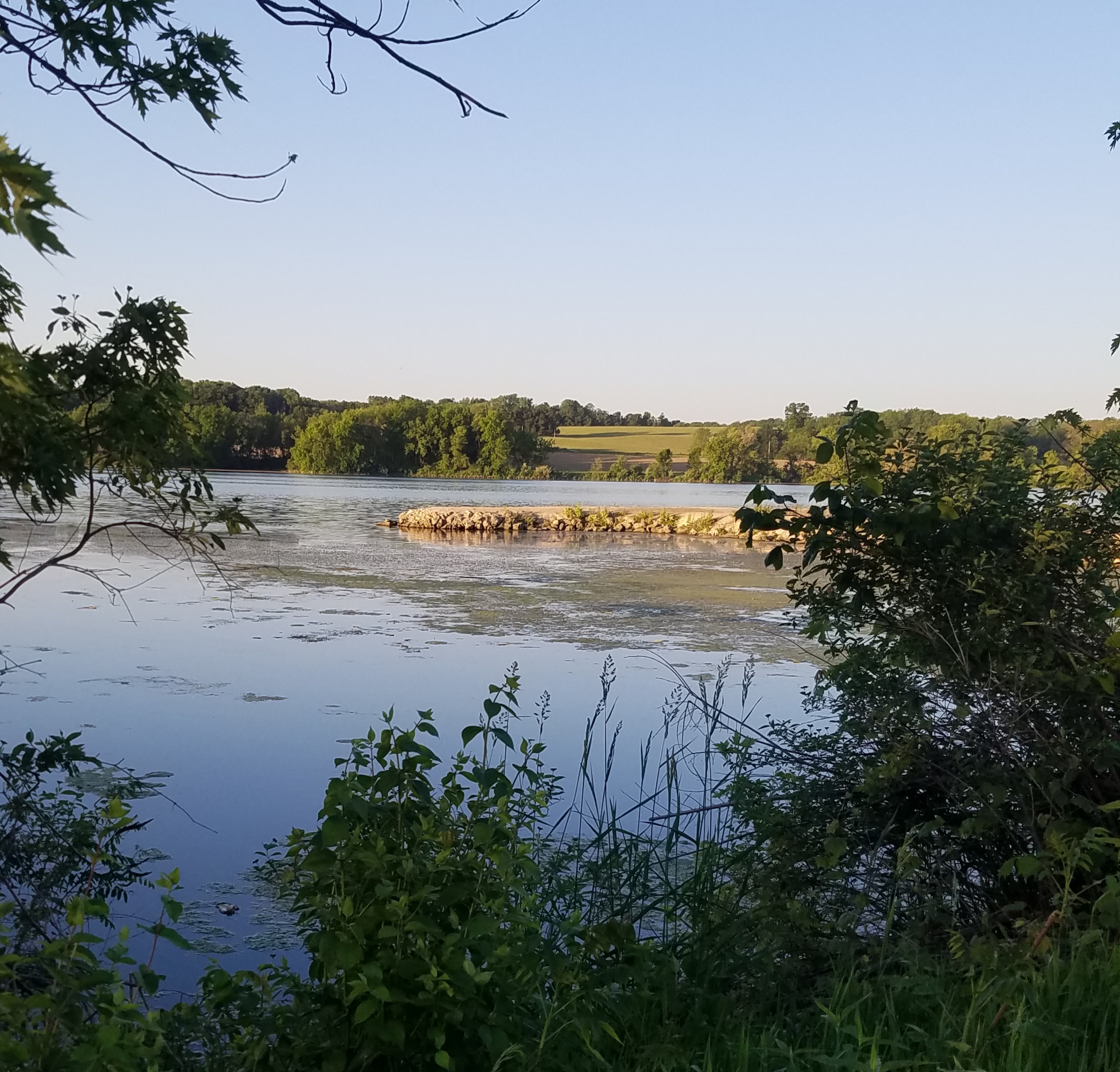
Lake Macbride from the North Shore Trail, May 27, 2023
Morning light illuminated this peninsula on Lake Macbride during my walk. One never knows how a multi-function mobile device will capture a photograph. I’m pleased with the results of this one.
The hard part is breaking away from preoccupations on a trail walk, to be aware of our surroundings enough to notice how light falls on the landscape. The results can be liberating. If the image comes out well, it’s a bonus. Increasingly, I seek the light on excursions off property.
Five of seven garden plots are planted, meaning I am running behind. Reasons have to do with weather, and with the pace at which I work. A five or six-hour shift with breaks every hour is what I can muster. Progress is steady, yet slow. Gardening is a tolerant activity and whatever one can do is better than the alternative. I do what I can.
Already there is a harvest. Leafy green vegetables, lettuce, spring onions, radishes, and herbs. I mixed fresh greens with last year’s frozen ones to make spring vegetable broth for canning. It is time to use up the freezer to make room for the new harvest. Spring broth is always best so I noted the month on the lids.
I forgot potatoes at the wholesale store so I drove to town on Saturday. My neighbor, who owns the grocery store, was there and he thanked me for the San Marzano tomato seedlings I gave him. I had extra. The grocery store wasn’t busy. Organized locals got their Memorial Day weekend shopping done by Friday. We had a good chat about tomatoes, gardening, and people in the community. The value of the trip was no small potatoes, although I got some of those, too.
My spouse is at her sister’s home for the week, so I’m on my own. As I age, I dislike being alone. While freedom to cook how I like is a perquisite of her absence, meal preparation takes only a small part of each day.
Today is the annual firefighters breakfast in town and I plan to open it up then move on to garden and yard tasks before the ambient temperature gets too hot. If all goes well, I’ll mulch tomatoes (which means mowing the lawn), build a brush pile, and trim around the foundation of the home to prepare the spot for the new air conditioner.
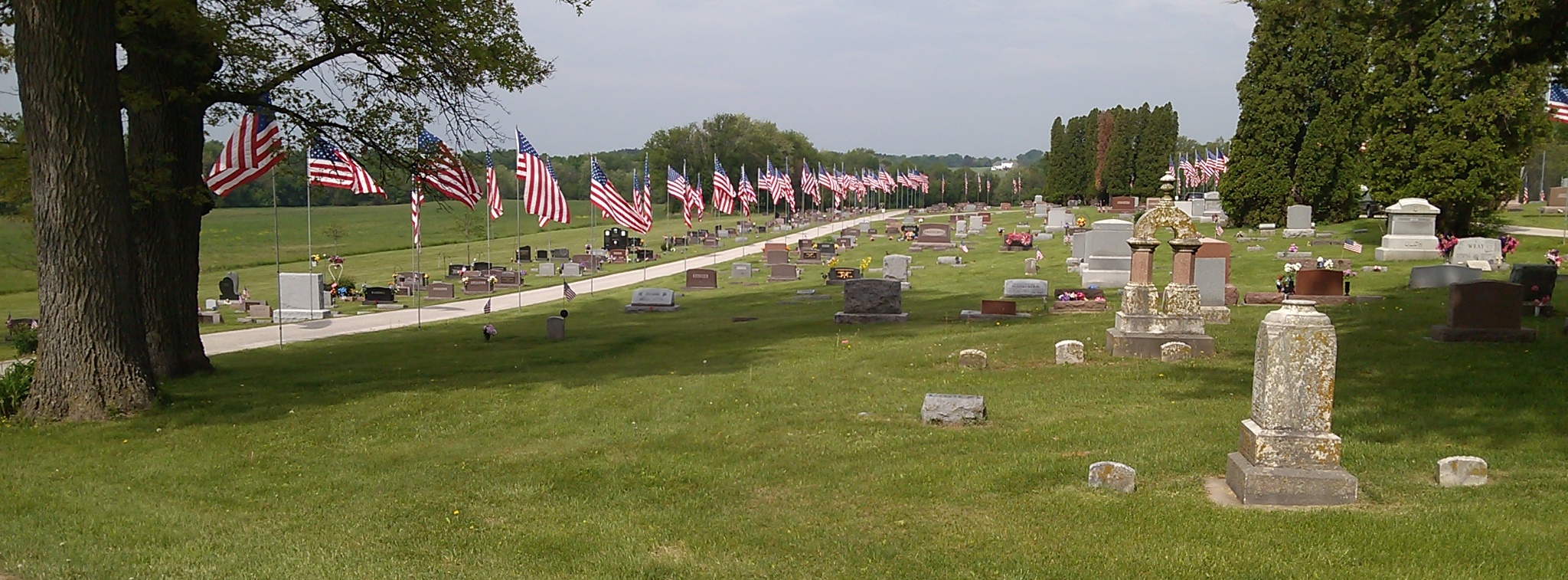
The flags are up at Oakland Cemetery, signifying local veterans who died. The Memorial Day service moved to the new veterans memorial in town. I’ll stop by the cemetery on my way to breakfast and see how light falls on the graves and flags. I know many of the names. I was active with many of them when they were living. That, too is part of aging in America.
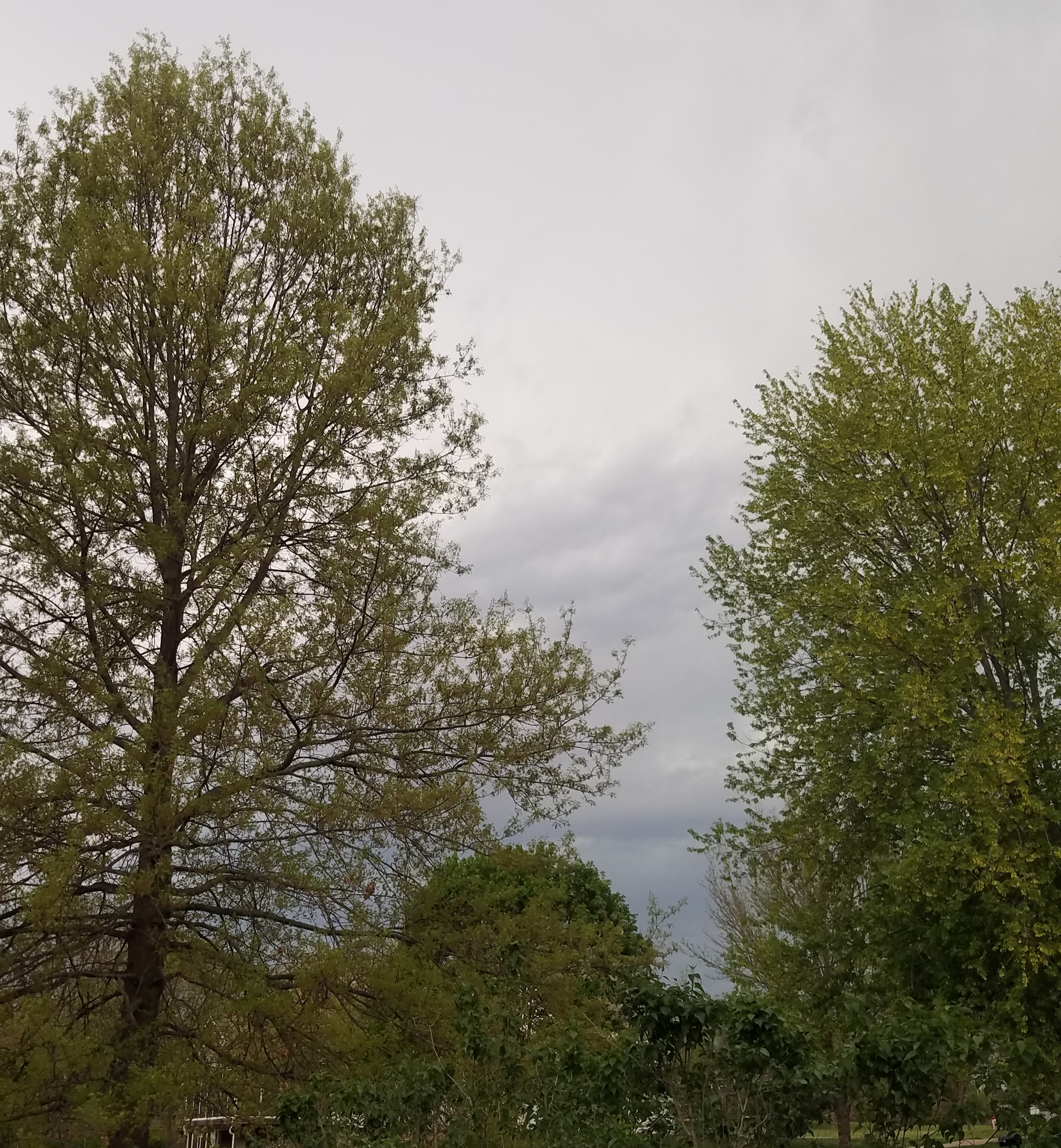
I’ve taken to opening the garage door and watching storm fronts roll in. Probably, I’m carrying baggage from the Aug. 10, 2020 derecho.
Multiple reasons have me running behind, with a short time to get the garden in by Memorial Day. I’ll be taking a break from writing to focus on spring and all. One never knows how many more springs we’ll get. I intend to enjoy this one.
Take care dear readers. Hope to see you again soon. Hope you enjoy what remains of Spring!
In 1820 most countries started out on a relatively equal economic footing. Translation: People and regions were poor around the globe.
Author Jeffrey D. Sachs described this world:
Life expectancy was extremely low; children died in vast numbers in the now rich countries as well as the poor countries. Many waves of disease and epidemics, from the Black Death of Europe to smallpox and measles, regularly washed through society and killed mass numbers of people. Episodes of hunger and extreme weather and climate fluctuations sent societies crashing.
The End of Poverty: Economic Possibilities for Our Time, by Jeffrey D. Sachs.
What changed, according to Sachs, was the onset of the Industrial Revolution. Why did this happen in Britain before China, which had been the technological world leader for a millennium? In part, British society was relatively open after the decline of serfdom, its traditions of free speech and open debate contributed to the implementation of new ideas, and Britain became one of the leading centers of Europe’s scientific revolution. “With Britain’s political openness, speculative scientific thinking was given opportunity to thrive, and the scientific advances on the Continent stimulated an explosion of scientific discovery in England,” he wrote.
The impact of these conditions of intellectual inquiry is old news. Yet today’s Americans should take note as legislatures around the country restrict tenure among university professors, ban books, control school curriculum, regulate who can use which bathroom, and remove funding from projects that contribute to understanding of our most significant problems. Lawmakers are putting a damper on open inquiry. Dumbing down and censorship do not represent a path to create the explosion of new ideas and technological innovation needed to survive and thrive in the years ahead. Who could even have imagined this might become a concern?
The deliberate destruction of knowledge is not new. Libraries and archives have been attacked since ancient times. Today, public libraries fight for their very existence as they are censored, deprived of funding, and subject to pressure from political, religious and cultural forces. Open inquiry in this context is hobbled by real constraints.
The latest hobble here in Iowa is elimination of funding for an important water quality sensor program at the IIHR Hydroscience and Engineering center at the University of Iowa’s College of Engineering. Erin Jordan of the Cedar Rapids Gazette covered the story here. “Iowa deploys about 70 sensors each year on streams and rivers across the state that measure nitrate loads and concentration so observers can tell whether water treatment plant upgrades, wetland improvements and agricultural conservation practices are working to reduce pollution,” Jordan wrote.
“Defunding progress reporting and monitoring is not the direction we should be going in our approach to nutrient pollution in Iowa,” Alicia Vasto, water program director for the Iowa Environmental Council told the Gazette. “Iowa taxpayers deserve accountability for the funding that is being spent on nutrient reduction practices.”
Hypoxia in the Gulf of Mexico, caused by nutrient runoff in Midwestern farming operations, is a problem. Closing down open inquiry into solutions to the problem is exactly the wrong direction.
We Americans are better off today than we were before the Industrial Revolution. The lesson that should be taught in schools is open inquiry into the problems of our day is as important as any curriculum item. Regretfully, my opinion may be viewed as that of just another advocate. In today’s society, the powers that be don’t want the rest of us to do too much thinking. Therein is the problem.
I’ve turned from society to soup. Not sure how I feel about that, yet the soup smells pretty darned good. The leafy green vegetables were harvested the same day, many of the vegetables were grown in the kitchen garden last season then preserved, and lentils and barley came direct from a super market. This soup made a fine dinner with five quarts leftover for the coming week and beyond.
As we age we spend more time alone. Children, if we have them, develop their own lives. In the Midwest, many of us work to age in place and the home becomes a quiet warehouse of memories and too much stuff no one needs or wants any more. To expect something different puts too much burden on our offspring. A key element of successful living after age seventy is learning to live well alone… and to let go of the possessions because you can’t take them with you.
After working a five-hour shift in the garden, I’m pretty tired for the rest of the day. Yesterday I came indoors for lunch and started the pot of soup. Most of the knife work was done before I put up the vegetables last year. All I had to do was peel potatoes and carrots, gather items from the freezer and pantry, and put everything in the pot with salt and a few bay leaves. It simmered all afternoon.
Loneliness is a normal part of aging. Because of connections formed over a lifetime, we live in a galaxy of friendship. From time-to-time we forget about our network, although we shouldn’t. When one makes so much soup, there is plenty to share.



 Journey Home
You must be logged in to post a comment.